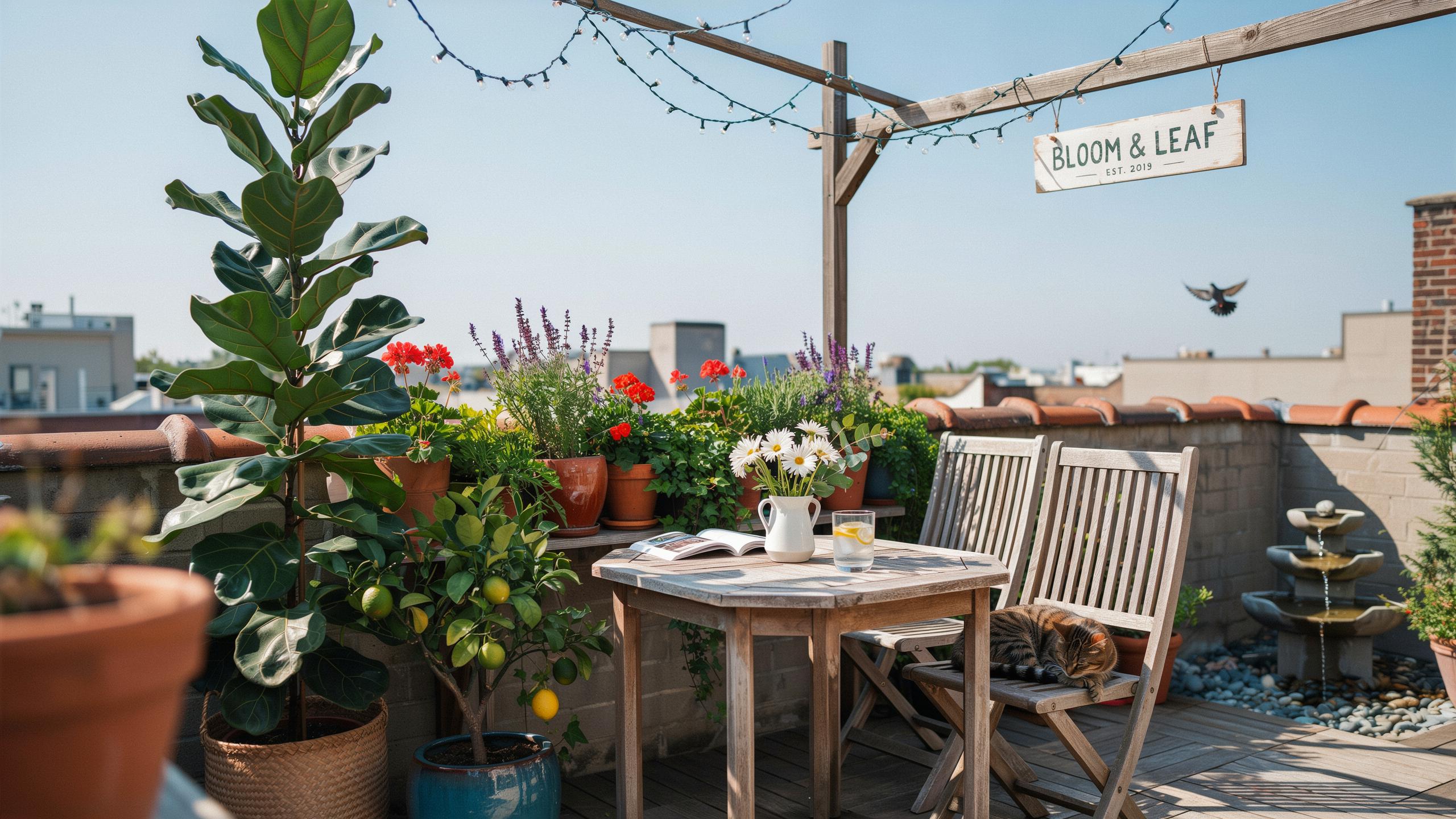
Maximizing Small Spaces With Creative Small Garden Patio Ideas
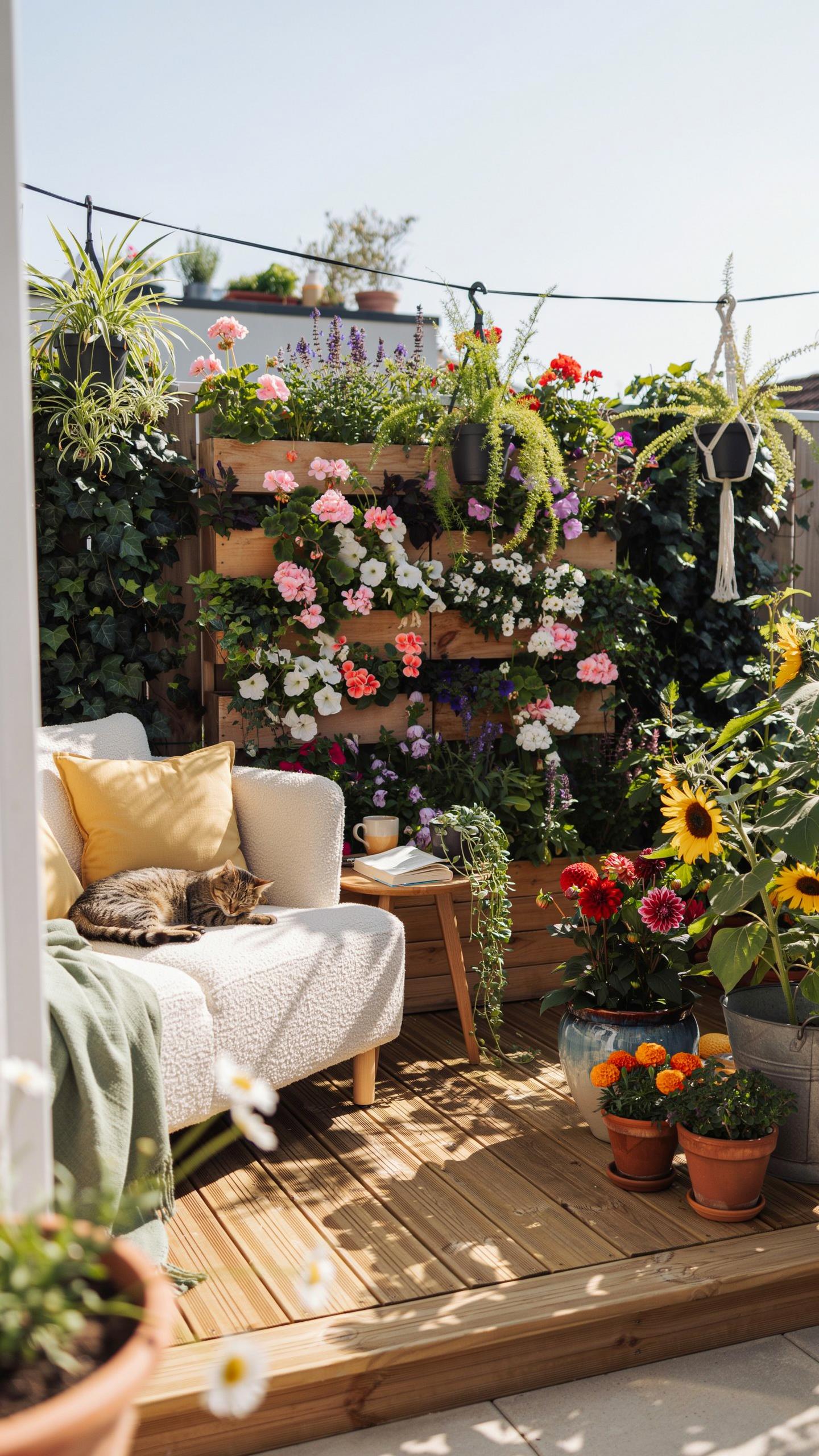
Vertical Planting Systems
Wall-mounted planters, trellises, and pocket gardens transform unused vertical surfaces into productive growing zones. This approach works because plants need sunlight and air circulation, not floor space. Vertical systems eliminate the constraint of limited square footage on patios. You attach structures to walls, railings, or fences and fill them with soil and plants. The result is functional growing space that doesn’t compete with your living area.
Herbs and flowers thrive in vertical setups when you choose the right system for your patio size. Wall pockets hold shallow-rooted plants like sedums and herbs effectively. Trellises support climbing plants and vining vegetables while keeping ground clear. These systems drain water downward, so place them where runoff won’t damage surfaces below. Start with lightweight options and expand as you refine what works for your specific patio conditions.
Multi Functional Outdoor Furniture
Dual purpose furniture eliminates wasted patio real estate and keeps your growing area organized. Benches with built in storage hold tools, soil, and plant supplies without requiring separate storage structures. Folding tables tuck away when you need open space for working with plants. These pieces work because they address two needs simultaneously: seating or work surfaces plus practical storage. You maintain functionality while preserving the square footage that matters for your garden operations.
Select furniture based on what you actually store and use on your patio. Measure your space before purchasing to ensure pieces fold or fit without blocking movement. Weather resistant materials like cedar, metal, or treated wood last longer in outdoor conditions. Organize your stored items logically so you locate tools and supplies quickly. This strategy keeps your patio operating efficiently without cluttering the growing area.

Cultivating Fresh Produce In A Tiny Vegetable Garden
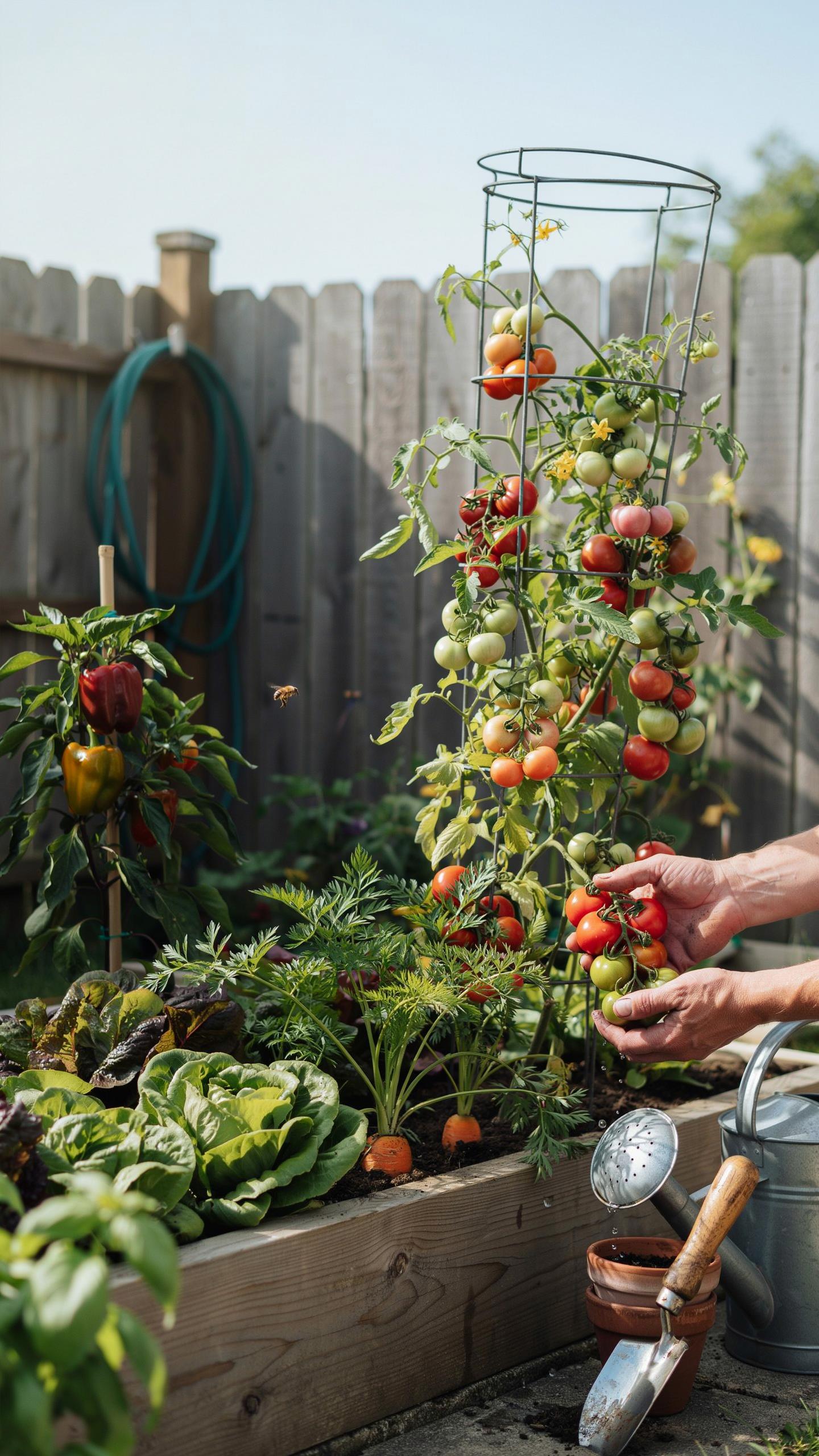
High Yield Dwarf Crop Varieties
Dwarf and compact vegetable varieties produce usable yields in containers without demanding ground space. Cherry tomatoes reach 3 to 4 feet tall and produce fruit prolifically in 5-gallon containers. Baby bell peppers grow 12 to 18 inches tall and fruit consistently in confined spaces. Bush beans mature in 50 to 60 days in pots and require minimal vertical support compared to pole varieties.
Select varieties bred specifically for container cultivation to maximize output per square foot of patio space. Seed catalogs and nursery labels identify container-suitable cultivars explicitly. These plants allocate energy to fruit production rather than excessive vine growth. You harvest more consistently from dwarf types because they mature faster and produce multiple flushes throughout the growing season.
Companion Planting In Containers
Pairing compatible vegetables and herbs in single containers reduces overall patio footprint while improving plant health. Basil planted with tomatoes repels spider mites and whiteflies through its natural volatile compounds. The basil roots occupy different soil depths than tomato roots, eliminating direct nutrient competition. Both species require similar watering schedules and sunlight exposure, simplifying maintenance routines.
Mix nitrogen-fixing herbs like oregano with heavy-feeding vegetables such as peppers to balance nutrient demand. Shallow-rooted lettuce pairs effectively with deeper-rooted bush beans in the same container. Space plants according to their mature canopy width to prevent crowding that reduces airflow and invites fungal issues. This approach produces more food weight per container than monoculture planting.
Transforming A Garden Flat With Smart Container Solutions
Portable Planters For Varying Sunlight
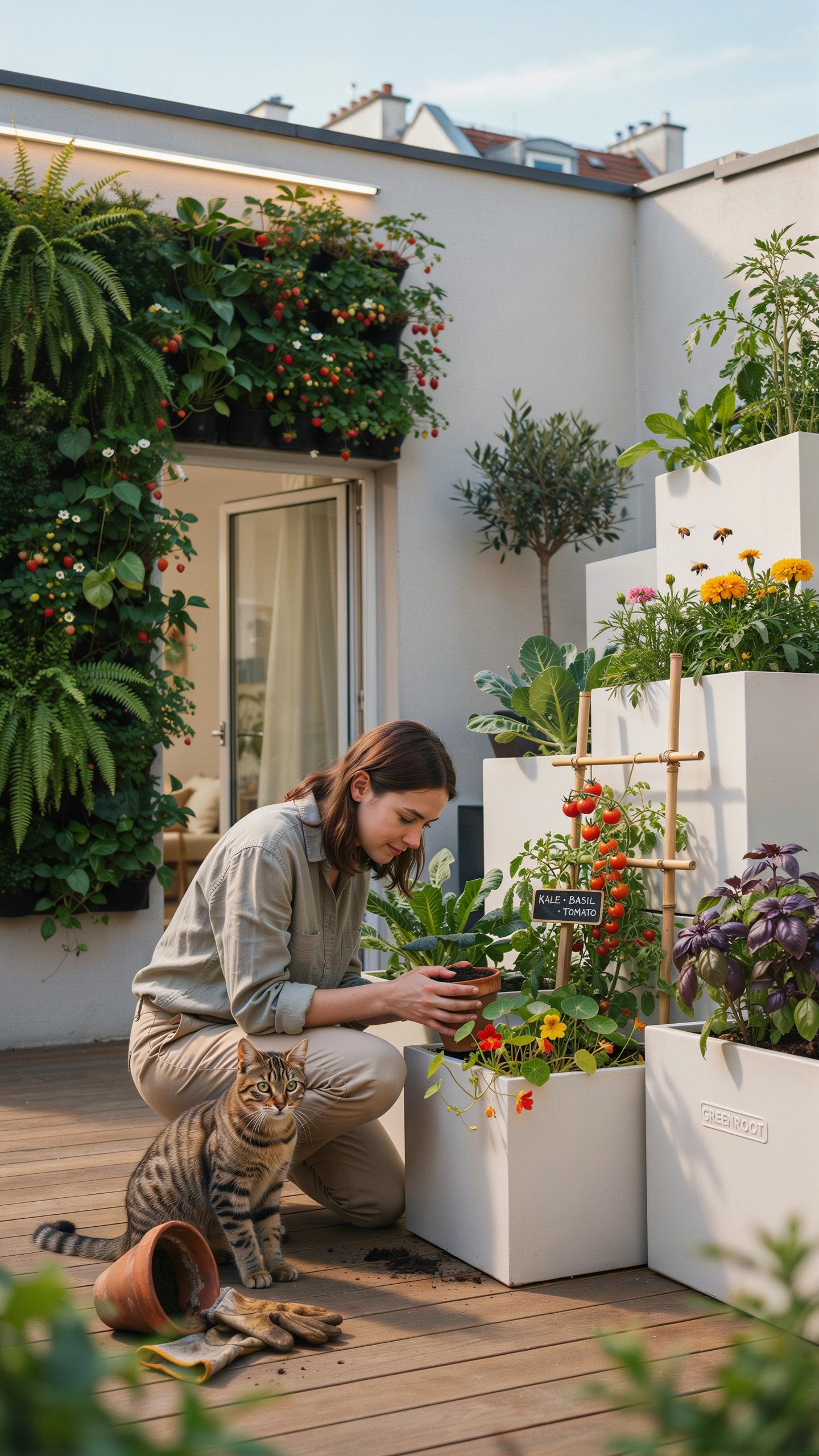
Flat dwellers face a hard constraint: limited and inconsistent sunlight. Wheeled planters solve this problem directly. Move containers throughout the day to chase available light. Lightweight plastic or resin pots weigh less than ceramic or concrete, reducing physical strain. Casters rated for outdoor use prevent rust and wheel failure. This mobility keeps sun-demanding plants like tomatoes and herbs productive on shaded patios.
Rolling planters eliminate the guesswork of plant placement. Monitor your patio’s light patterns over a week, then reposition containers accordingly. Morning sun differs from afternoon exposure. South-facing walls provide maximum hours of direct light. Even plants with moderate light needs perform better when repositioned twice daily during peak growing seasons.
Creating Depth With Layered Pots
Cramped patios need visual tricks to feel spacious. Stagger container heights using pot stands, shelving units, or tiered plant risers. Large pots anchoring the rear of a space push the background back. Small containers in the front draw the eye forward. This arrangement uses basic perspective principles to make confined spaces feel deeper and more planted.
Cluster pots in odd numbers, typically three or five, rather than symmetrical pairs. Vary pot materials and textures to add visual interest without adding square footage. Tall containers with trailing plants create vertical structure that compensates for limited ground space. This layering technique works on balconies, rooftops, and ground-level courtyards regardless of size constraints.
Charming City Yard Ideas For Private Outdoor Sanctuaries
Installing Strategic Privacy Screens
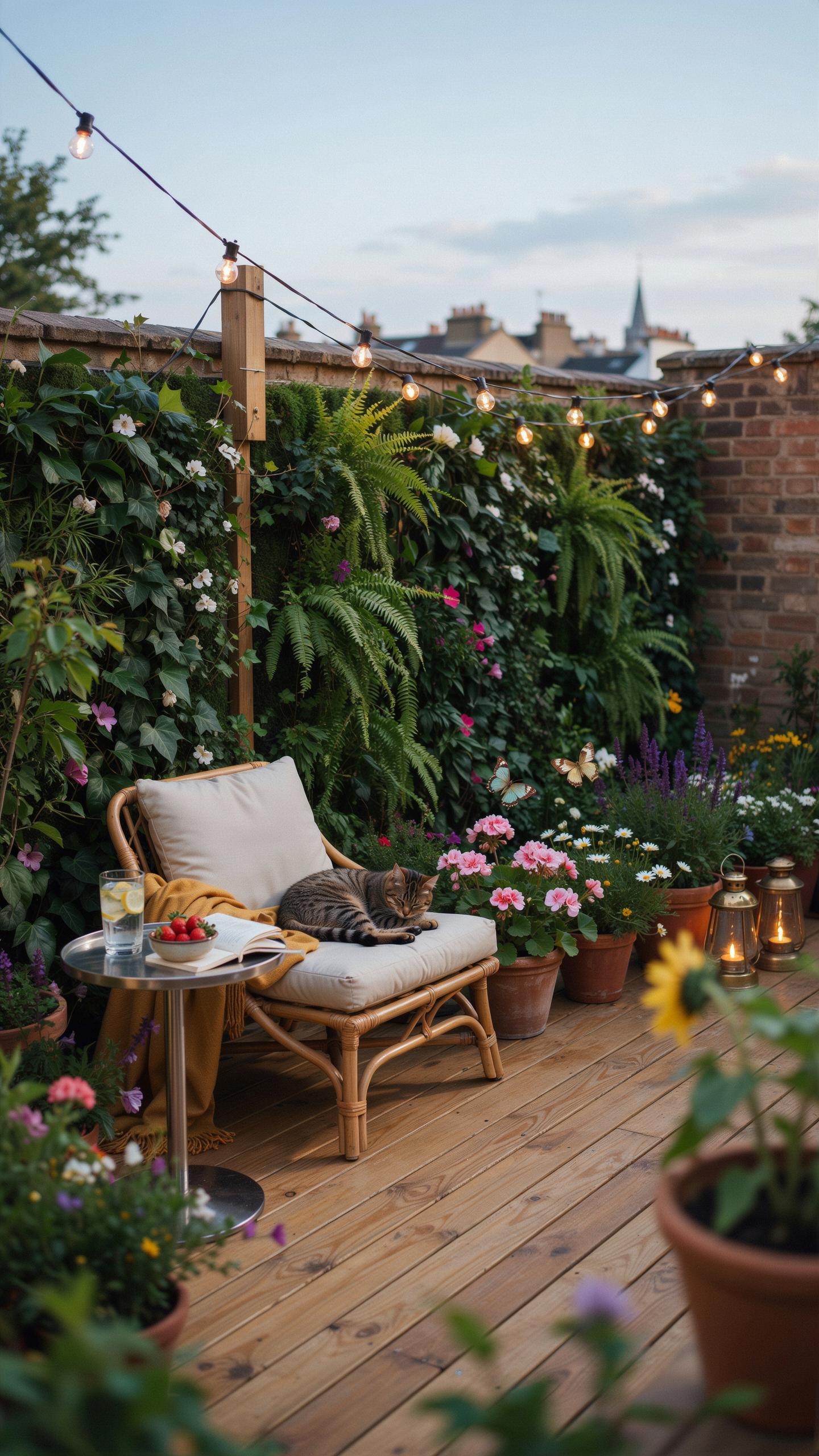
Privacy barriers block sightlines from adjacent properties and street-level traffic. Wooden lattices, bamboo fencing, and evergreen hedges create physical separation. These materials reduce visual clutter from neighboring buildings and parked cars. The barrier effect works because it interrupts direct lines of sight. Installation takes one to two weekends for most patio sizes.
Dense plantings work fastest for immediate privacy. Bamboo grows three to four feet annually in temperate zones. Wooden lattices support climbing vines that fill gaps within one growing season. Hedges require two to three years to reach full height. Choose materials based on your timeline and maintenance capacity. All three options provide functional privacy without major construction costs.
To plant a garden is to believe in tomorrow, and even the smallest patio holds the eternal magic of nature’s quiet pulse.
Integrating Soothing Water Features
Plug-in tabletop fountains and small bubblers mask urban noise effectively. City sounds carry between 70 and 85 decibels during peak hours. Running water produces a consistent 60 to 65 decibel masking sound. The trickling water covers harsh noises from traffic, sirens, and construction. Fountains require only an electrical outlet and regular water refilling.
Small water features occupy minimal patio space and cost between 40 and 300 dollars. Tabletop units weigh under 10 pounds and move easily. Stone bubblers integrate into landscaping permanently. Water circulation pumps consume 10 to 40 watts of electricity. Maintenance involves cleaning filters monthly and topping water levels weekly. The acoustic benefit justifies the modest operational cost.
Flexible Design Concepts For A Temporary Rental Garden
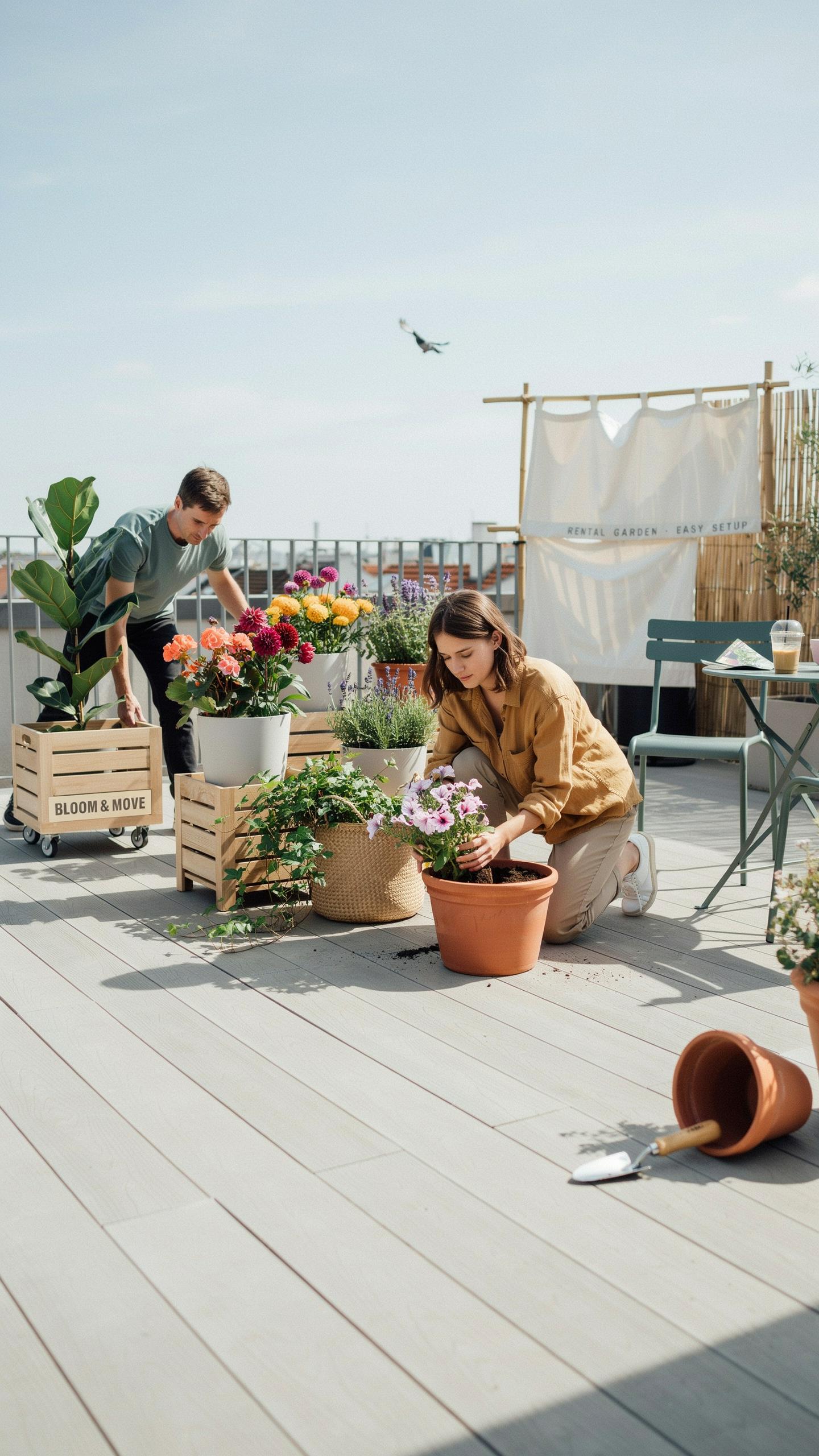
Essential Free Standing Garden Elements
Renters need garden solutions that survive lease termination without penalties. Permanent installations create problems when you move. Free-standing elements skip drilling, nailing, and adhesive damage that landlords charge to repair. These tools let you build a functional garden in weeks and dismantle it in hours.
- Double sided adhesive planters: Wall mounted containers using removable adhesive strips instead of hardware. They peel off cleanly without surface damage, leaving no residue on painted walls or siding.
- Free standing metal trellises: Vertical structures that anchor through weight distribution alone. No fasteners required. These support climbing plants and maximize growing space on compact patios.
- Interlocking deck tiles: Modular rubber or composite squares that connect without nails or screws. They create level planting surfaces over uneven concrete and lift away completely when you leave.
- Fabric grow bags: Breathable containers made from recycled materials that fold flat for storage and transport. They prevent root circling better than plastic pots and stack efficiently.
- Lightweight folding plant tier stands: Multi shelf structures that collapse for moving. These metal frames maximize vertical growing area without permanent installation on your patio surface.
Stack these elements to build depth and plant density on small patios. Combine them strategically to create visual impact while maintaining complete portability. Your setup takes minutes to assemble and breaks down just as fast when your lease ends.
Mobile Fabric Grow Bags
Fabric grow bags replace traditional pots for renters prioritizing mobility and root health. The breathable material stops roots from circling the container bottom. Healthy roots mean stronger plants with better yields and reduced transplant shock. Empty them, fold them flat, and stack them into a single box when moving day arrives.
These smart pots work with any plant type from vegetables to ornamentals. Water drains freely through the bottom and sides, preventing root rot that plagues container gardeners. The cost per bag runs lower than ceramic or plastic alternatives while delivering superior performance. Buy them in bulk, use them for seasons, then store them compactly between growing cycles.
Designing A Lush Urban Rooftop Garden Oasis
Wind Resistant Plant Selections
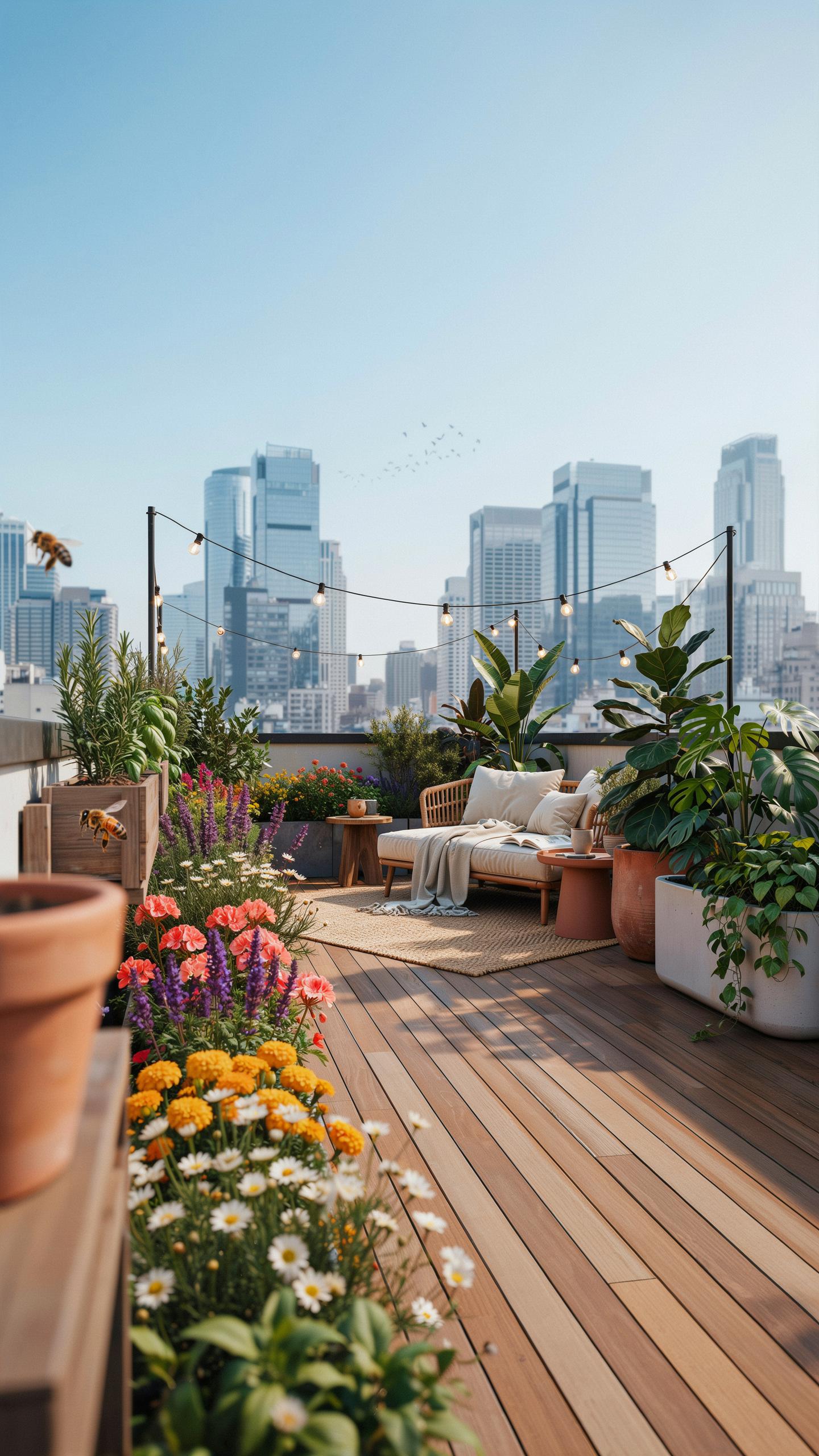
Rooftops expose plants to constant wind that kills tender varieties. Ornamental grasses bend without breaking. Lavender withstands gusts while thriving in poor soil. Dwarf conifers like juniper maintain compact forms and structural integrity. These species evolved in exposed environments, so they handle stress better than conventional garden plants.
Wind-resistant plants require less staking and support infrastructure. You save money on structural reinforcements and maintenance labor. Their root systems anchor deeper to grip soil against lateral force. Choose species rated for your local wind speeds to guarantee survival through storms and seasonal weather patterns.
Micro Irrigation And Smart Watering
Rooftop heat and wind evaporate water faster than ground-level gardens. Drip irrigation systems deliver water directly to root zones, cutting waste by up to 50 percent. Drip lines operate on timers that adjust for weather and season. This method prevents both overwatering and dehydration that kill rooftop plants quickly.

Automated systems save time and reduce human error in watering schedules. Install drip lines on a slope to follow your rooftop grade. Connect to a simple timer controlled by soil moisture sensors. Consistent root moisture prevents stress cracks in plant tissue and extends plant lifespan significantly.
Selecting The Right Soil And Drainage For Roof Gardens
Lightweight Soil Substrates
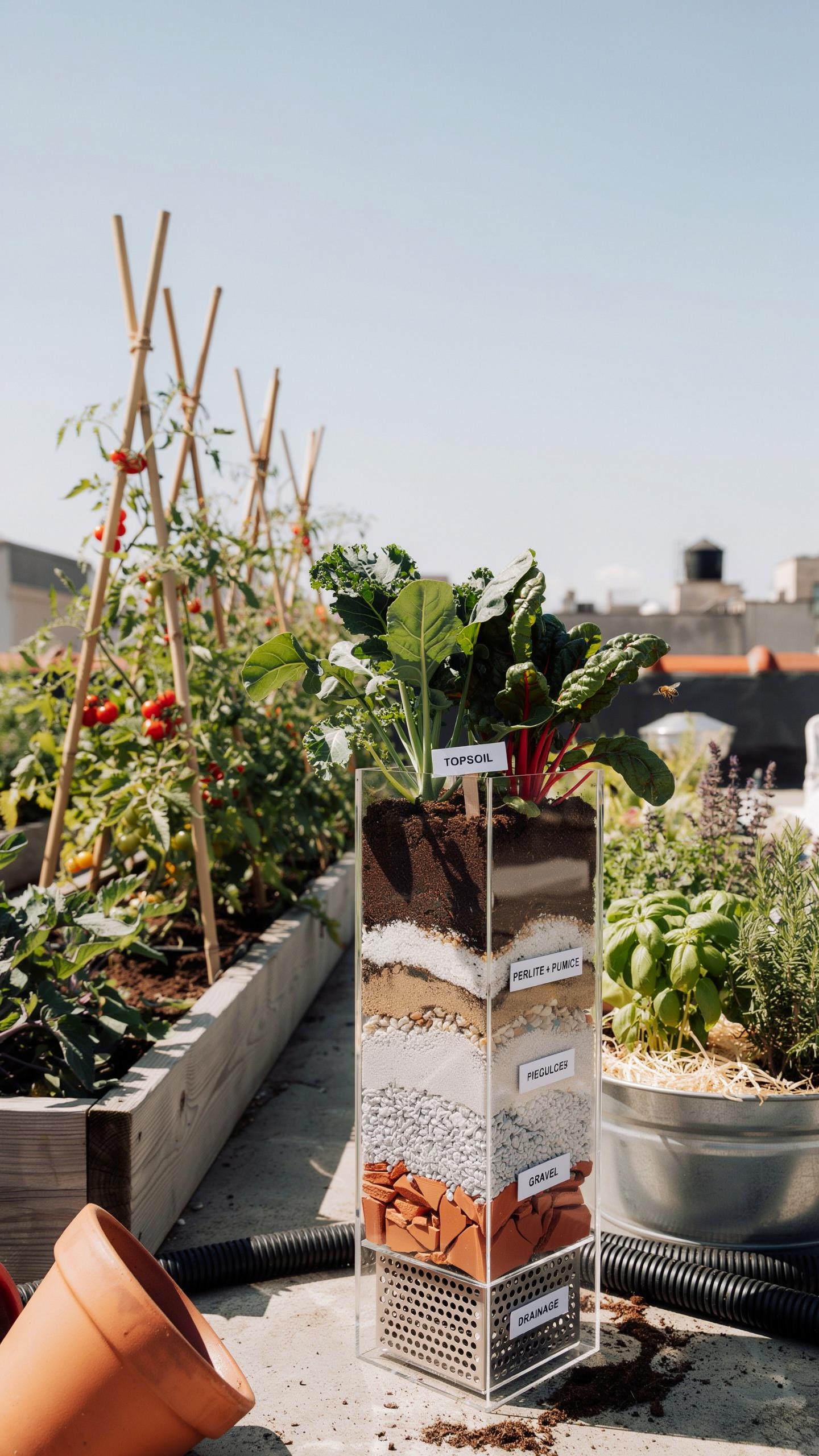
Standard garden soil weighs roughly 100 pounds per cubic foot when wet. Roof structures cannot support this load. Use potting mixes combining perlite, vermiculite, and coconut coir instead. These materials reduce weight by 40-50 percent while maintaining water retention. Perlite aerates soil and prevents compaction. Vermiculite holds moisture without waterlogging roots. Coconut coir replaces peat moss and provides organic matter that breaks down slowly.
Mix ratios depend on your plant types and local climate. A standard formula uses 40 percent coconut coir, 30 percent perlite, and 30 percent vermiculite for most roof gardens. Adjust the perlite ratio upward in wet climates to improve drainage. Test your mix before filling all planters. Lightweight substrates cost more upfront but prevent structural damage and root rot problems that cost far more to repair.
Advanced Planter Drainage Systems
Water pooling destroys roots and deteriorates waterproof membranes underneath your planters. Install a three-layer drainage system in every roof planter. Start with a gravel layer at the bottom, typically 2-3 inches deep. Add a filter fabric above the gravel to prevent soil from washing into the drainage layer. Top this with your potting mix. This setup channels excess water away from plant roots.

Drainage mats with raised dimples work faster than gravel alone for roof applications. These mats create air gaps that move water horizontally toward drainage outlets. Connect your planters to roof drains or install a slight slope in your planter beds to guide water toward collection points. Monitor drainage after heavy rain to ensure water moves within 24 hours. Poor drainage kills plants faster than any other factor in roof gardens.
Structural Considerations For A Home Rooftop Garden
Assessing Roof Weight Load Capacity
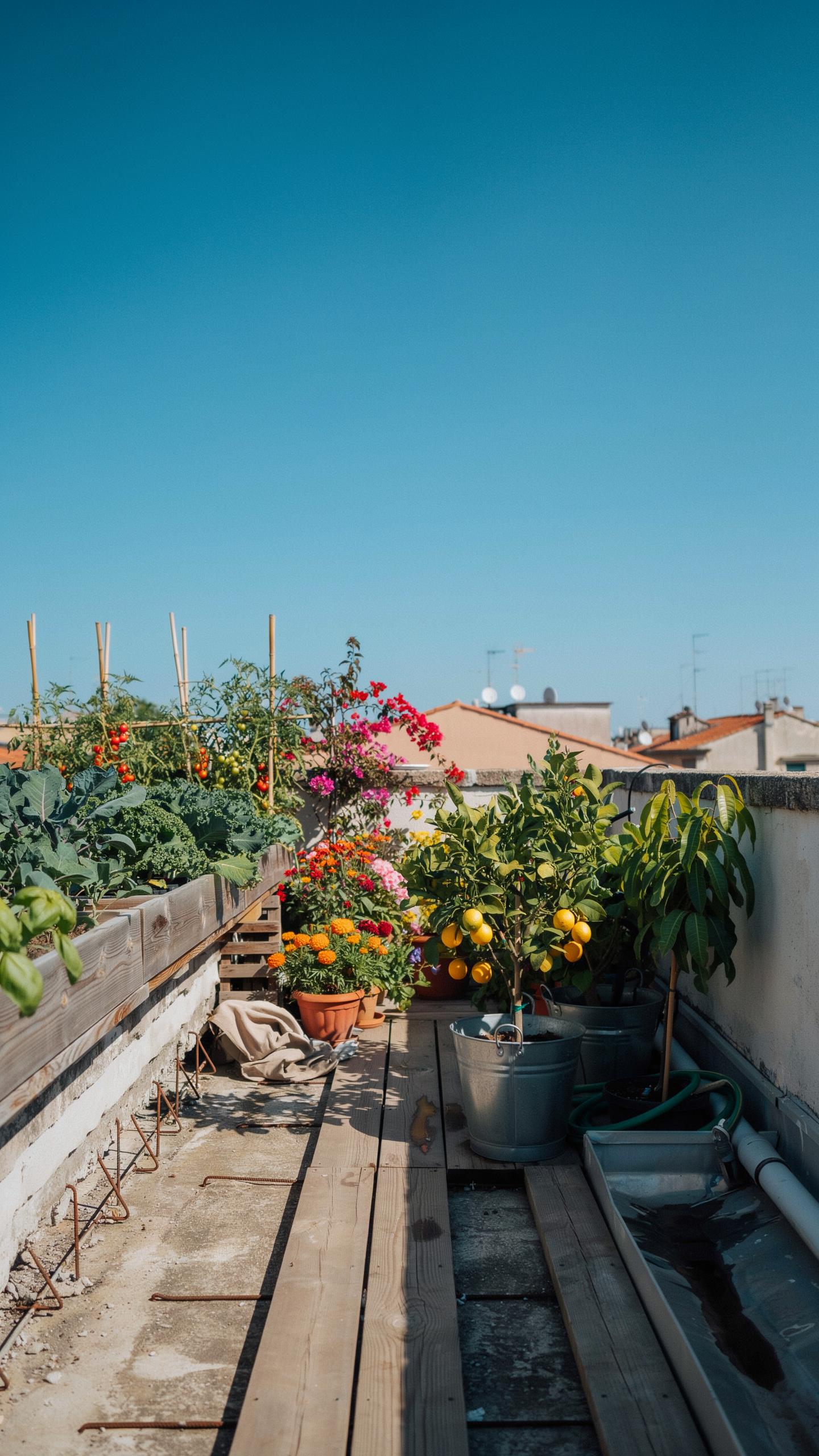
Before you buy a single plant or bag of soil, hire a structural engineer to test your roof’s weight capacity. Most residential roofs handle 20 to 40 pounds per square foot. Adding soil, water, and planters quickly exceeds this limit. The engineer provides a written report showing exactly what your roof can support. This step prevents collapse and protects your investment.
Your garden layout depends entirely on this capacity number. Place heavier elements like raised beds and water features over load-bearing walls. Distribute weight evenly across the roof surface. Skip this step and you risk structural failure, water damage inside your home, and liability issues. The engineer’s fee costs far less than repairing a compromised roof structure.
Waterproofing And Root Barriers
Install a heavy-duty waterproofing membrane before any soil touches your roof. This creates a protective layer between your garden and the building structure below. Choose membranes rated for root penetration resistance. Poor waterproofing leads to leaks that cause interior damage, mold growth, and expensive repairs. The membrane is your primary defense against moisture damage.
Add a physical root barrier above the waterproofing layer. This prevents aggressive plant roots from piercing the membrane over time. Many root barriers come as landscape fabric or plastic sheets designed specifically for this purpose. Stack your layers correctly: roof, waterproofing membrane, root barrier, then soil and planters. This layered approach protects your building’s structural integrity for decades.
Stylish City Patio Ideas For Modern Alfresco Living
Minimalist Aesthetic And Color Palettes
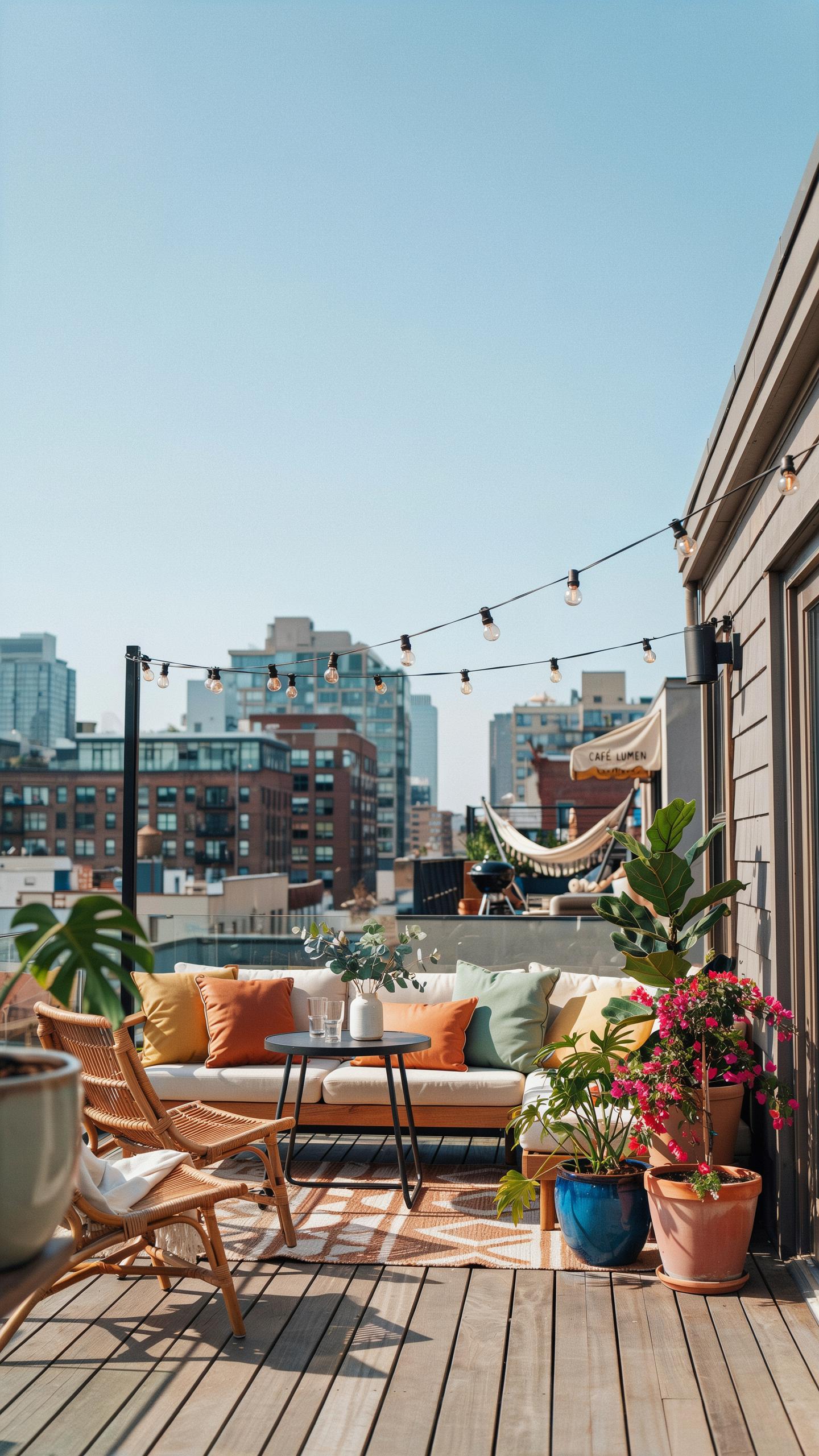
Minimalist design reduces visual clutter on confined patios. Neutral palettes like gray, white, and black make small spaces feel larger. Geometric planters in uniform shapes and materials create order. This approach works because your eye processes less information, making compact areas feel spacious and intentional.
Color discipline matters in urban settings. Limit your palette to two or three neutral tones, then add plants as your primary color source. Rectangular and cubic planters align with modern architecture. Clean lines eliminate visual noise. This strategy maximizes perceived square footage while maintaining a cohesive, professional appearance.
Ambient Night Lighting Solutions
String LED bistro lights and solar path lanterns extend your patio’s usable hours. Warm-toned lights create functional zones without harsh shadows. Position lights at eye level along perimeters to define space boundaries. Solar options eliminate wiring costs and reduce electricity consumption. Proper placement transforms underutilized evening space into viable entertaining areas.
Strategic lighting serves multiple functions simultaneously. Overhead string lights provide ambient illumination while solar lanterns guide foot traffic. Avoid overlighting, which creates glare and wastes energy. Layer your light sources at different heights. This tactic balances visibility with atmosphere while keeping maintenance simple and costs low.
Choosing Hardscape Materials For Urban Garden Ideas For Patios
Durable Materials For Urban Patios
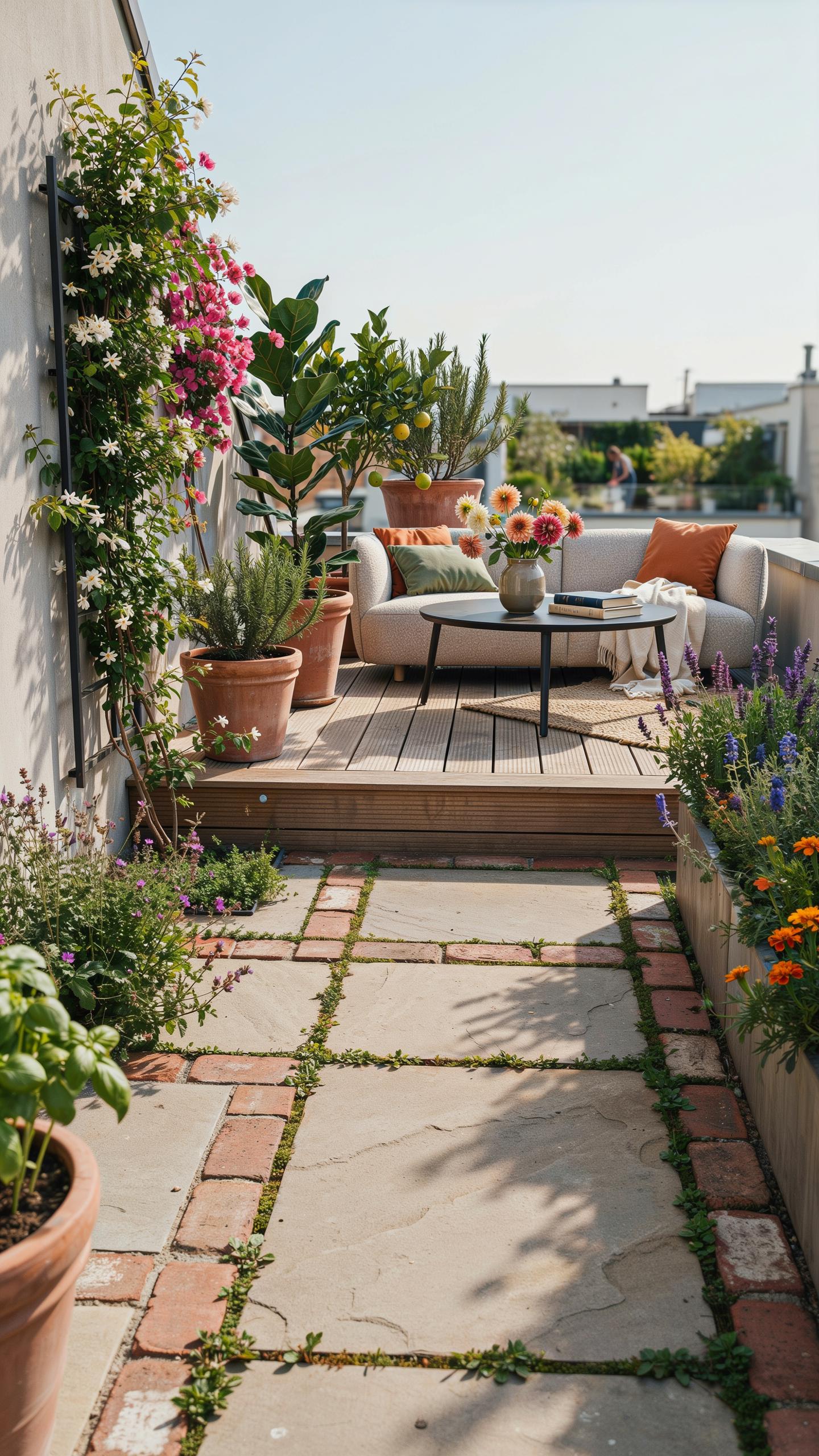
Your patio hardscape absorbs constant weather exposure. Select materials that survive freeze thaw cycles, UV rays, and moisture without degrading. The right surface prevents costly replacements and maintains garden functionality year-round.
- Composite decking boards: Made from wood fibers and plastic polymers, these resist rot, splintering, and insect damage while requiring minimal maintenance beyond occasional cleaning.
- Natural slate tiling: Quarried stone that withstands extreme temperatures and heavy foot traffic. Each piece is unique and ages gracefully without losing structural integrity.
- Interlocking acacia wood tiles: Pre-assembled wooden planks that snap together for quick installation. Acacia wood resists decay naturally and handles moisture better than softwoods.
- Weathered porcelain pavers: Dense ceramic material that doesn’t absorb water, preventing cracking in cold climates. Porcelain remains slip-resistant even when wet and fades minimally over decades.
- Lightweight concrete containers: Poured concrete offers design flexibility and supports heavy planting loads. Modern formulations include air entrainment for freeze-thaw protection in seasonal climates.
Match your material choice to your climate zone and home exterior. Urban spaces demand efficiency, so pick surfaces that reduce maintenance time and extend the lifespan of your garden infrastructure.
Sustainable Recycled Decking Options
Composite decking made from recycled plastics and wood fibers eliminates the need for traditional lumber harvesting. These materials trap plastic waste in functional form and reduce landfill volume. The manufacturing process creates a stable product that won’t splinter or rot within typical patio lifecycles.
Recycled composite decking requires no staining, sealing, or painting. You clean it with soap and water. This low-maintenance approach frees you to focus on actual gardening rather than surface upkeep. The material cost runs higher upfront, but elimination of yearly treatments justifies the investment over fifteen to twenty years of use.
Frequently Asked Questions

How do I start a small garden if I have limited space on my patio?
Starting a small garden begins with assessing your sunlight and floor space. Focus on vertical growth by utilizing wall planters, rail boxes, or tiered shelving to maximize every square inch. When exploring urban garden ideas for patios, prioritize hardy perennials and dwarf varieties that thrive in containers. Begin with just two or three pots to ensure you can manage the maintenance before expanding your lush, metropolitan outdoor sanctuary any further.
What are the best ways to incorporate edible plants into a patio layout?
You can seamlessly blend aesthetics and utility by practicing “edible landscaping” in your containers. Mix leafy greens like kale with colorful marigolds, or grow climbing cherry tomatoes up a stylish wooden trellis. These functional urban garden ideas for patios allow you to harvest fresh ingredients just steps from your kitchen. Ensure your edible plants are placed in the sunniest corner and use high-quality organic potting soil to promote healthy, flavorful growth.
Is it possible to create a beautiful urban patio garden on a tight budget?
Absolutely! Creating a stunning garden doesn’t require a massive investment. You can save money by upcycling household items into unique planters, such as vintage crates or sturdy buckets with drainage holes. Consider starting your plants from seeds or trading cuttings with neighbors rather than buying mature nursery stock. Focusing on sustainable and DIY elements is one of the most cost-effective ways to bring your personal vision of greenery to life affordably.