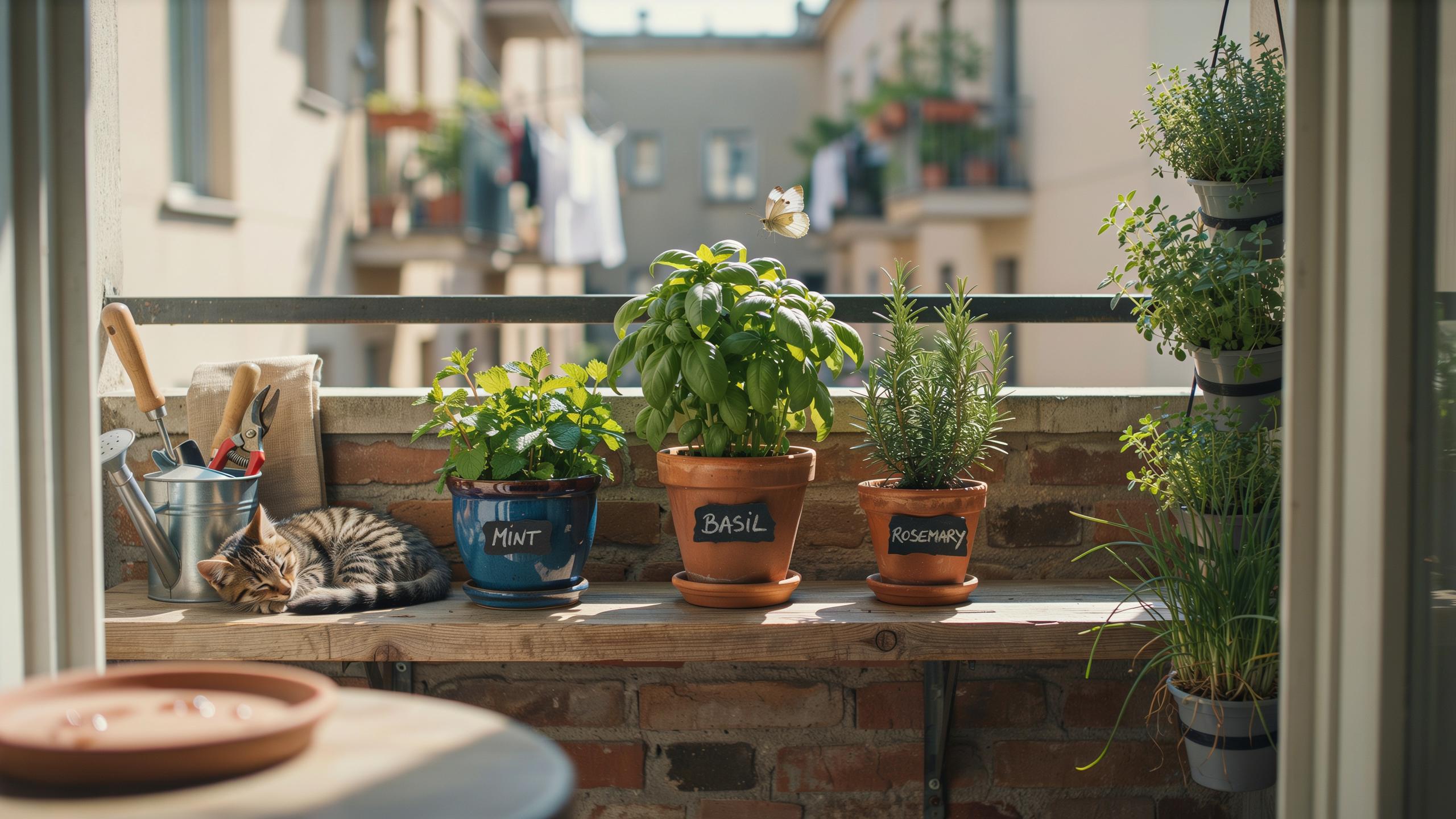
Assessing Your Options For An Outdoor Herb Garden Ideas Layout
Sunlight Requirements And Microclimates
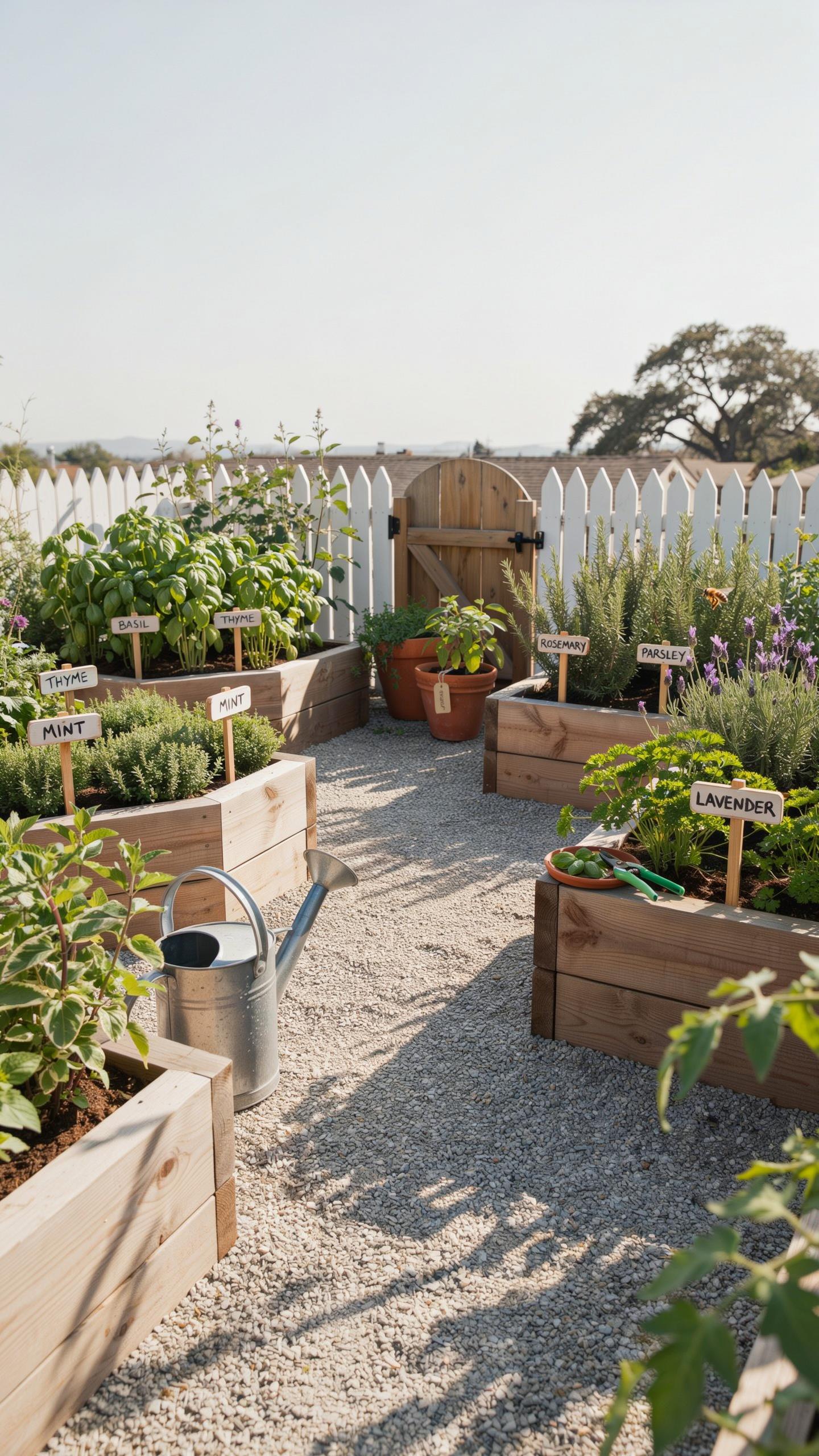
Most culinary herbs need six hours of direct sunlight daily to produce strong growth and flavor. Basil, rosemary, and oregano demand full sun exposure. Mint and chervil tolerate partial shade and actually benefit from afternoon protection in hot climates. Map your space by observing sunlight patterns throughout the day, noting which areas receive consistent direct rays versus dappled light.
Microclimates exist even in small spaces. South-facing walls reflect heat and intensify sun exposure. North-facing areas remain cooler and shadier. East-facing spots get morning sun without afternoon intensity. Place sun-hungry herbs where they catch maximum light and shade-tolerant varieties in protected corners. This strategic placement prevents common issues like leggy growth or poor flavor development from insufficient sun.
Wind Protection And Water Accessibility
Exposed balconies and rooftop patios create wind tunnels that accelerate evaporation from small containers. Strong winds dry soil in hours rather than days, stressing plants and forcing constant watering. Position your herb corner against building walls, railings, or windbreaks to reduce air movement. This simple placement cuts water loss and reduces maintenance frequency significantly.
Small containers hold limited soil volume, requiring more frequent watering than ground gardens. Position your herb setup within arm’s reach of a water source. Hose access or a nearby faucet eliminates the burden of carrying watering cans repeatedly. Proximity to water also allows quick response when soil dries faster than expected during heat spells or windy days.

Maximizing Tight Areas With Herb Garden Ideas Small Spaces
Utilizing Windowsills And Railings
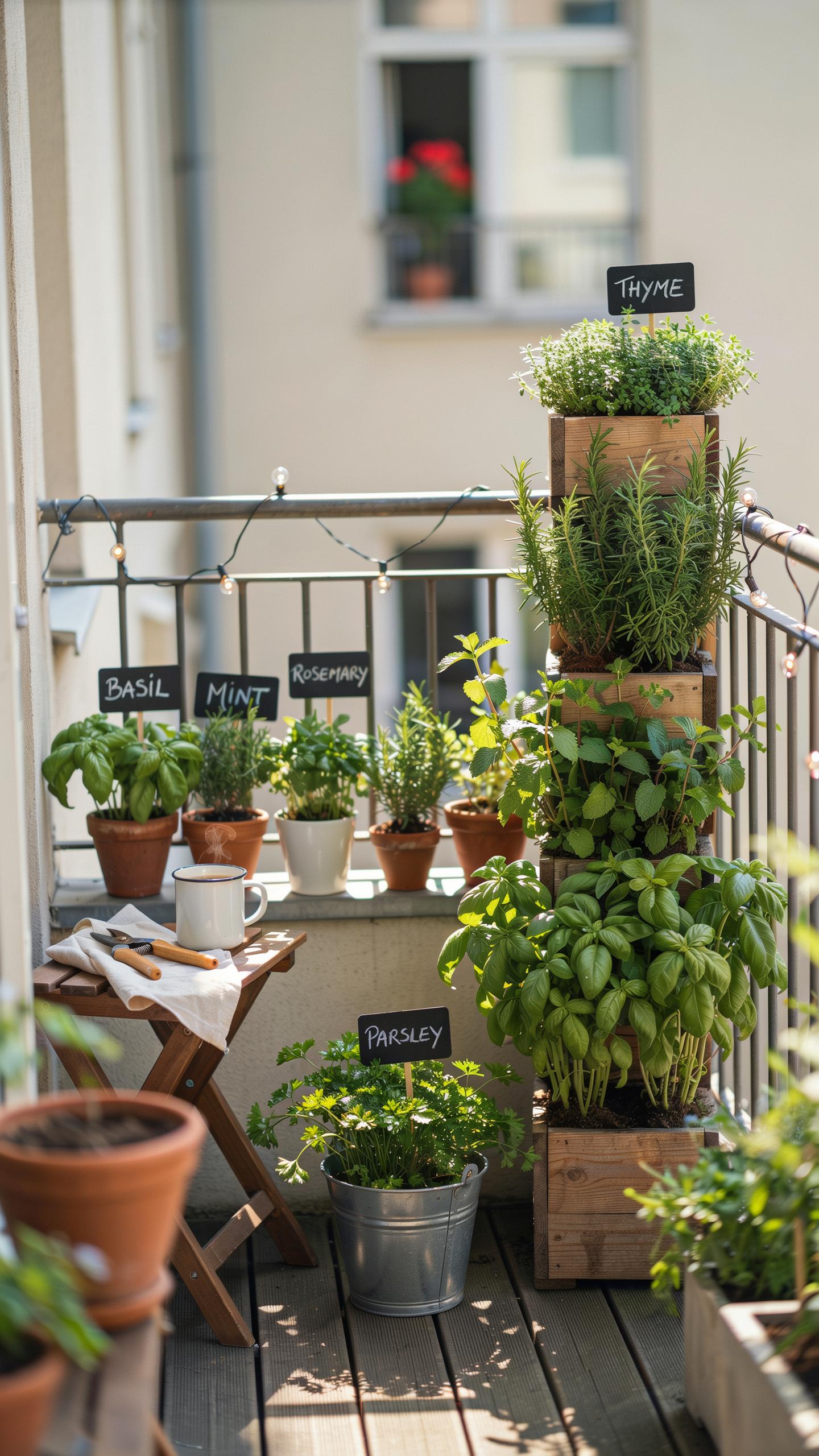
Windowsills provide direct sunlight and require zero floor space. Window boxes and railing planters attach securely to existing structures. Rosemary, thyme, and oregano tolerate the reflected heat from glass and metal. These herbs need six to eight hours of light daily, which most south and west-facing windows deliver. This setup works for apartments, condos, and homes with limited outdoor access.
Air circulation matters on windowsills. Trailing varieties cascade downward naturally, preventing moisture buildup on leaves. You harvest herbs without bending or stretching. Watering is straightforward since excess drains directly into containers below. Windowsill gardens produce enough fresh herbs for regular cooking within weeks.
The smallest patch of herbs is a garden of dreams where flavor and fragrance bloom in every corner. Even in the tightest spaces, a well-tended windowsill can nourish both the body and the soul.
Corner Shelving And Tiered Plant Stands
Tiered plant stands transform dead corner space into productive growing zones. Individual pots stack vertically, tripling or quadrupling growing capacity in one square foot. Each tier receives light exposure if positioned near a window. Spacing prevents leaves from touching, reducing fungal issues and pest problems. You access every plant easily for harvesting and maintenance.
Tiered stands accommodate mixed herb varieties with different light and water needs. Basil stays on lower tiers with consistent moisture. Rosemary moves to upper tiers where drying occurs faster. This flexibility maximizes survival rates across multiple herb types. Most stands cost between thirty and seventy dollars and last several years with basic care.
Going Vertical With A Vertical Herb Garden Design
Choosing The Best Vertical Structures For Herbs
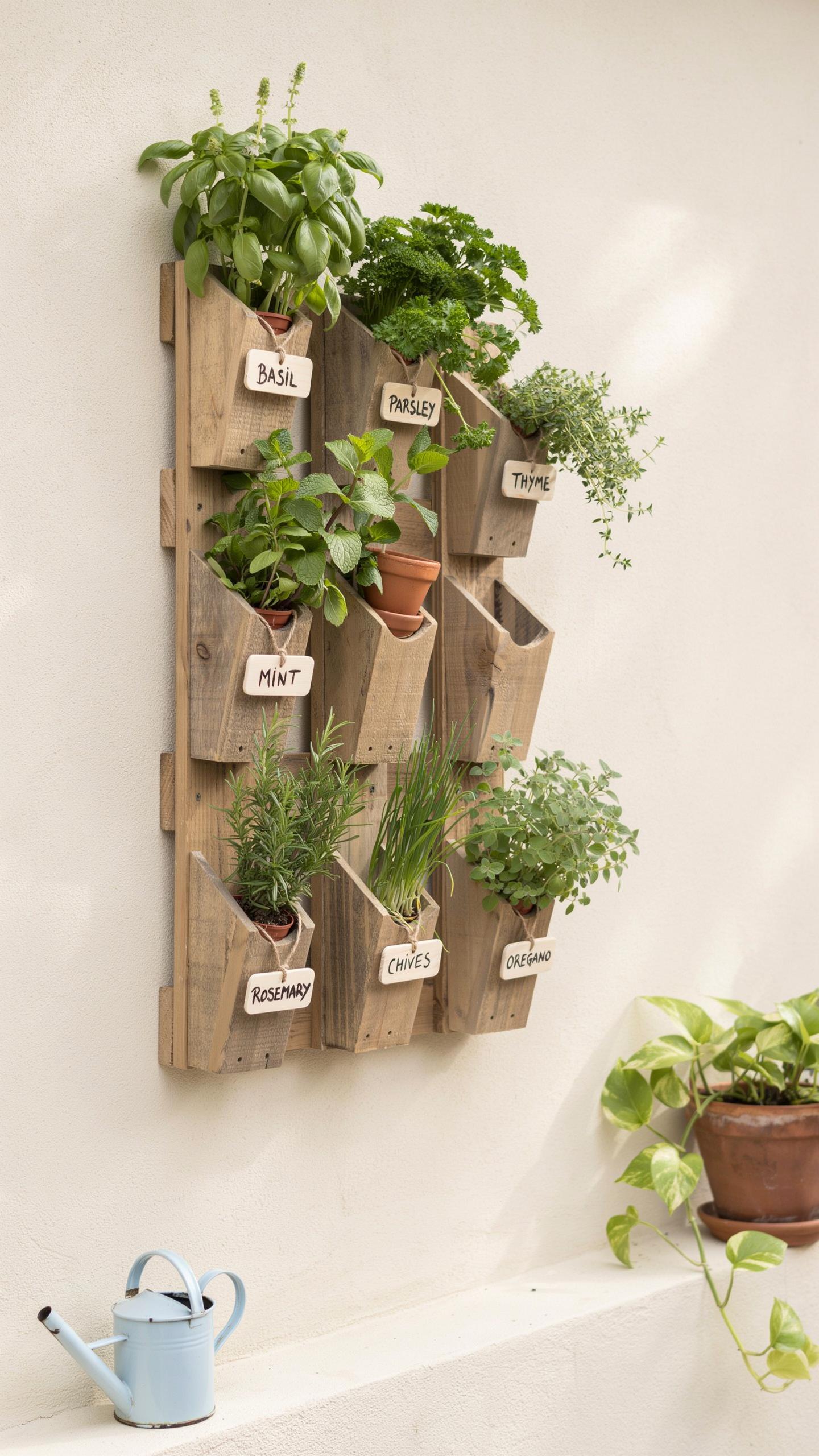
Vertical gardening solves the constraint problem by moving plants up instead of out. Wall-mounted pocket planters, hanging systems, and modified trellises maximize corner square footage without sacrificing growing capacity. Modular plastic wall planters offer adjustability and drainage control. Wooden pallets lined with landscape fabric work as cost-effective alternatives that hold soil securely while maintaining airflow.
Select structures based on your wall type and weight capacity. Lightweight plastic systems suit renters and weak walls. Wooden pallets handle heavier soil loads but require secure anchoring. Ensure drainage exits away from walls to prevent water damage. Position structures where your herbs receive adequate light, typically six to eight hours daily for most culinary varieties.
Top Herbs For Vertical Planting Systems
Shallow root systems make certain herbs ideal for vertical installations. These varieties thrive in confined spaces and adapt well to pocket planters and wall systems. Prioritize species that produce consistently and tolerate the unique conditions vertical gardens create. Root depth and growth pattern determine success more than popularity.
- Creeping Thyme: Trailing growth cascades over pocket edges naturally. Roots stay shallow and compact. Tolerates dry conditions between waterings. Produces year-round in most climates.
- Oregano: Compact root system fits small planting pockets easily. Requires minimal soil depth. Highly drought tolerant once established. Produces abundant foliage for harvesting.
- Chives: Grows vertically with minimal lateral spread. Root depth rarely exceeds six inches. Produces edible shoots continuously throughout seasons. Tolerates lower light than other herbs.
- Roman Chamomile: Low-growing habit prevents top-heavy weight issues. Spreads gently without stressing fixtures. Shallow roots adapt to pocket constraints. Flowers bloom consistently for tea production.
- Marjoram: Similar root structure to oregano. Compact growth fits tight vertical spaces. Drought tolerant with low maintenance needs. Produces flavorful leaves year-round in mild climates.

Match herb selection to your specific vertical system design and available light. Shallow-rooted herbs fail in deep containers but thrive in wall pockets. Trailing varieties work best on upper pocket rows where cascading growth displays naturally. Test one or two species first before filling your entire vertical structure to identify what performs in your specific conditions.
Planning Your Custom Small Space Garden Layout
Grouping Herbs By Water And Soil Needs
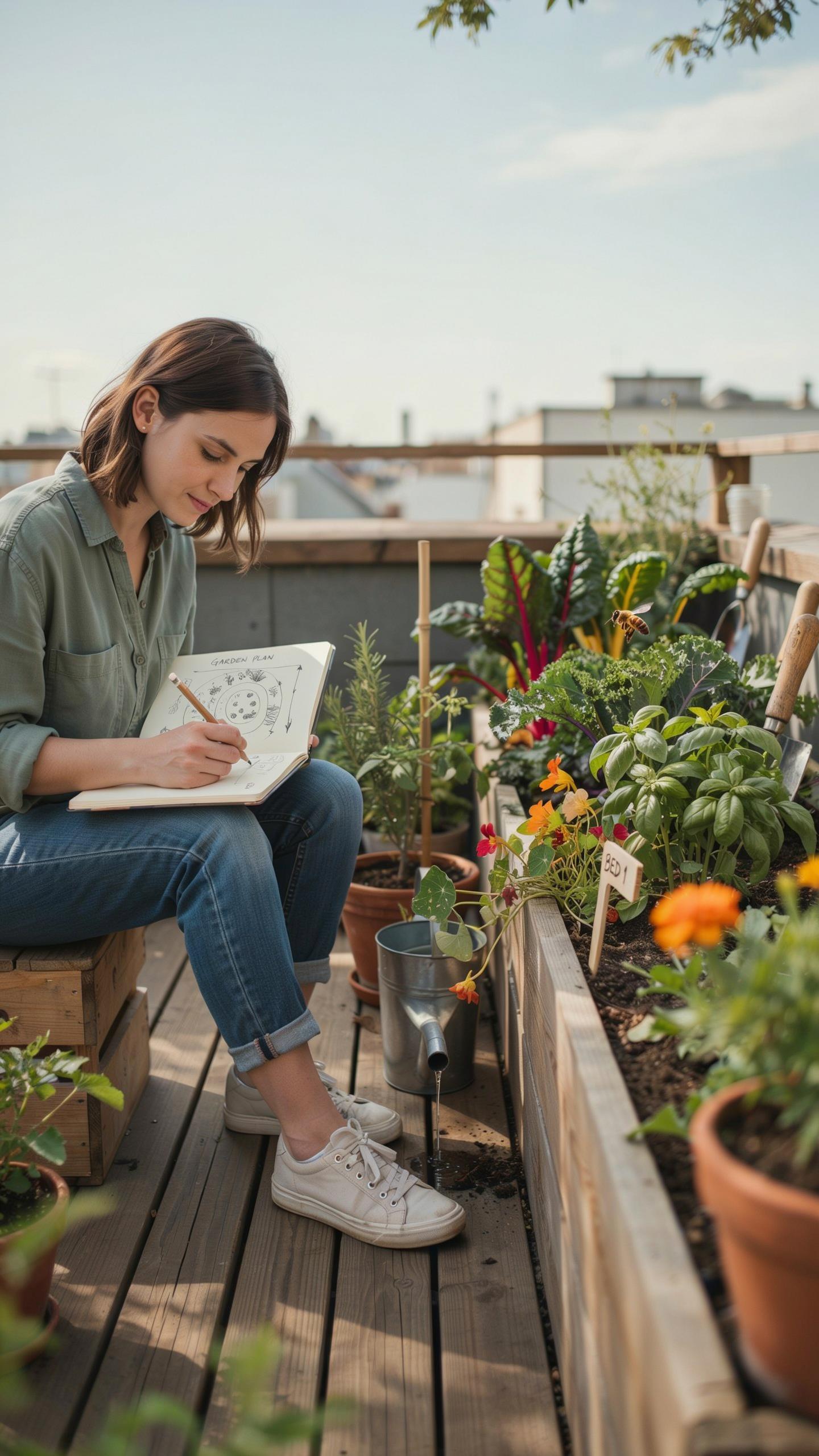
Mediterranean herbs demand different conditions than tender leafy varieties. Rosemary, lavender, and sage thrive in sandy, well-draining soil with minimal water. These plants rot in wet conditions. Group them together in one area of your herb corner to manage watering efficiently and prevent disease.
Basil, parsley, and cilantro need the opposite approach. These herbs prefer consistently moist, nutrient-rich soil. Cluster them in a separate zone where you can water more frequently without affecting drought-tolerant plants nearby. This separation prevents root diseases and eliminates guesswork about watering schedules.
Companion Planting For Pest Management
Physical placement of specific herbs creates natural pest barriers without chemicals. Chives and garlic chives produce strong sulfur compounds that repel aphids effectively. Position these pungent herbs at the perimeter of your herb corner to shield more vulnerable plants from infestation.

Basil acts as a thrip deterrent through its aromatic essential oils. Place basil plants adjacent to delicate herbs like cilantro or parsley to protect them. This strategy reduces pest pressure across your entire small space gardening herb corner and minimizes damage to tender growth.
Essential Steps For Your First Herb Garden Set Up
Selecting The Right Pots And Soil Medium
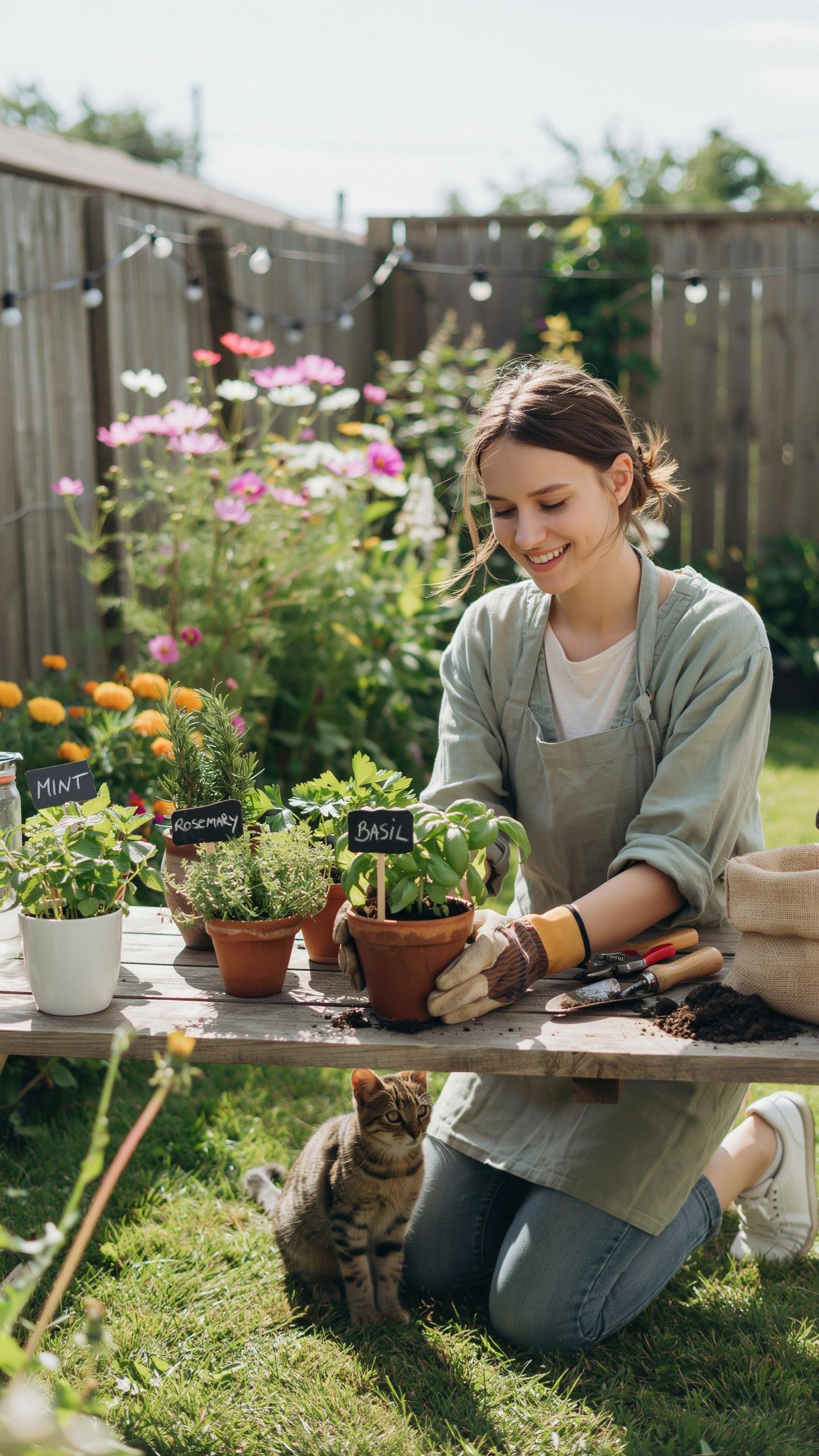
Drainage holes are non-negotiable. Without them, water pools around roots and causes rot within days. Select containers with at least one drainage hole per six inches of diameter. This prevents waterlogging and keeps your herbs alive.
Fill pots with organic potting mix amended with perlite or coarse sand. Standard garden soil compacts in containers and suffocates roots. The perlite or sand creates air pockets that allow water to drain quickly while retaining enough moisture for nutrient uptake. This combination is your baseline for herb survival.
Essential Tools For Small Space Herb Care
A compact herb garden demands efficient tools that maximize output in minimal space. You don’t need a full shed of equipment. These four tools handle ninety percent of maintenance tasks without taking up counter real estate.
- Micro tip pruning shears: Deliver precise cuts on delicate stems without crushing tissue, reducing disease entry points and promoting bushier growth patterns in confined containers.
- Narrow spout watering can: Directs water to soil directly, preventing wet foliage that invites fungal infections and allows you to control moisture delivery in tight spaces.
- Hand trowel: Enables clean transplanting between containers without disturbing root balls, essential when upgrading herbs to larger pots as they establish.
- Moisture meter: Eliminates guesswork on soil hydration levels, preventing both overwatering and underwatering that kill herbs faster than any pest.
These tools work together to maintain herb health without cluttering your growing area. Store them in a shallow drawer or hanging organizer next to your herb corner for quick access during daily maintenance routines.
Successful Tips For Growing Herbs At Home Indoors
Optimizing Indoor Supplemental Lighting
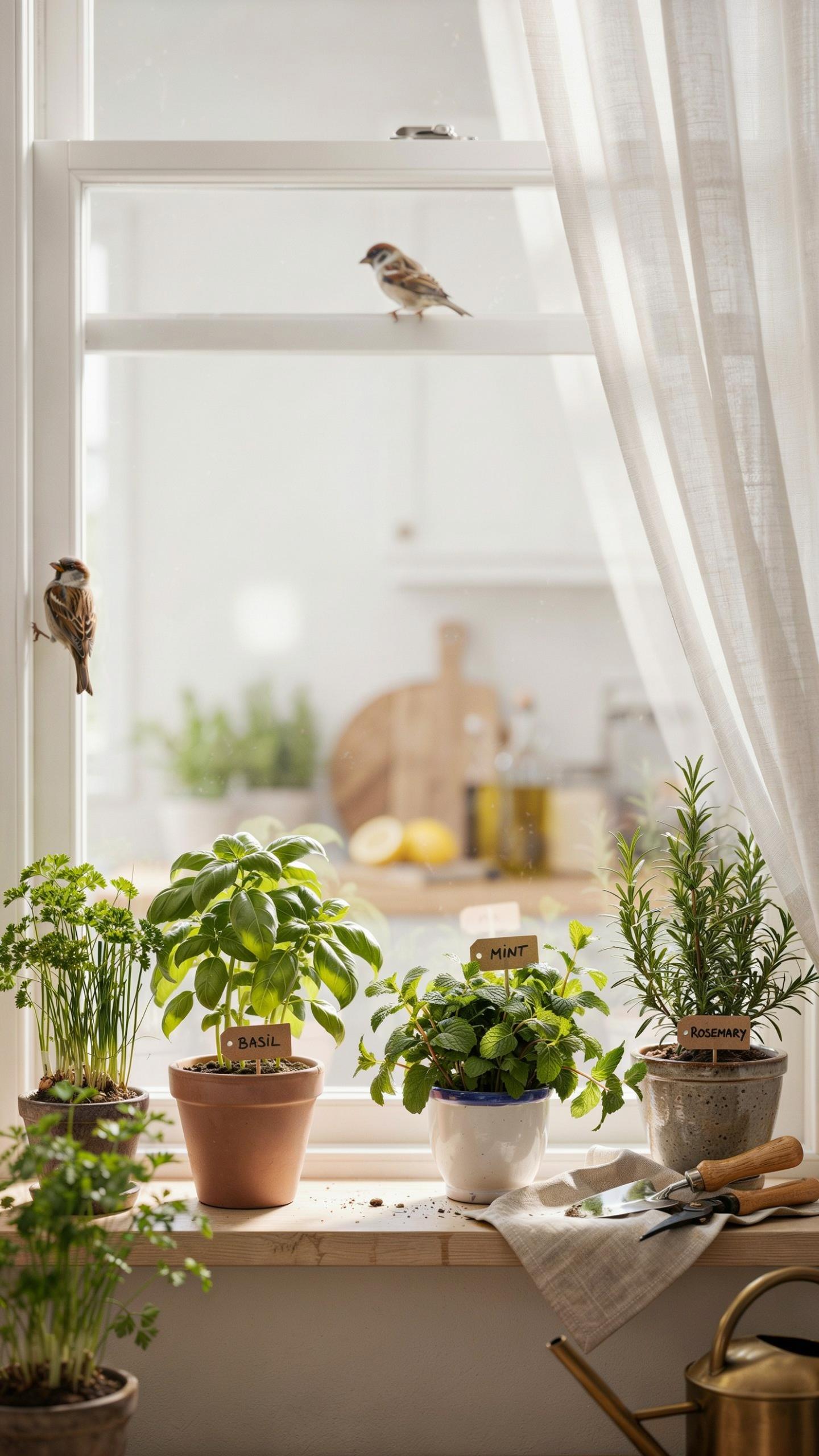
Natural window light drops significantly during winter months, making it insufficient for healthy herb growth indoors. Full-spectrum LED grow lights fill this gap by delivering the light wavelengths herbs need to photosynthesize efficiently. Position lights a few inches above your plants to maximize light absorption without causing heat stress or leaf burn.
LED grow lights consume less electricity than older fluorescent options and produce minimal heat, making them practical for small spaces. Run lights for 12 to 16 hours daily to mimic natural growing seasons. This duration prevents weak, elongated stems that develop when herbs stretch toward inadequate light sources.
Managing Air Circulation And Room Temperature
Stagnant indoor air creates humid pockets where fungal diseases thrive, particularly powdery mildew on basil and other herbs. A small fan set to low speed circulates air around plants without damaging delicate foliage. Position the fan to gently move air rather than create harsh, direct wind that stresses the plants.

Temperature control directly impacts how quickly herbs grow and their essential oil concentration. Keep your growing area between 65 to 70 degrees Fahrenheit, which replicates ideal spring conditions herbs prefer. Avoid placing herbs near heat vents, cold drafts, or exterior walls where temperature swings occur frequently throughout the day.
Caring For Your Indoor And Outdoor Herb Garden
Pruning Techniques To Stimulate Bushy Growth
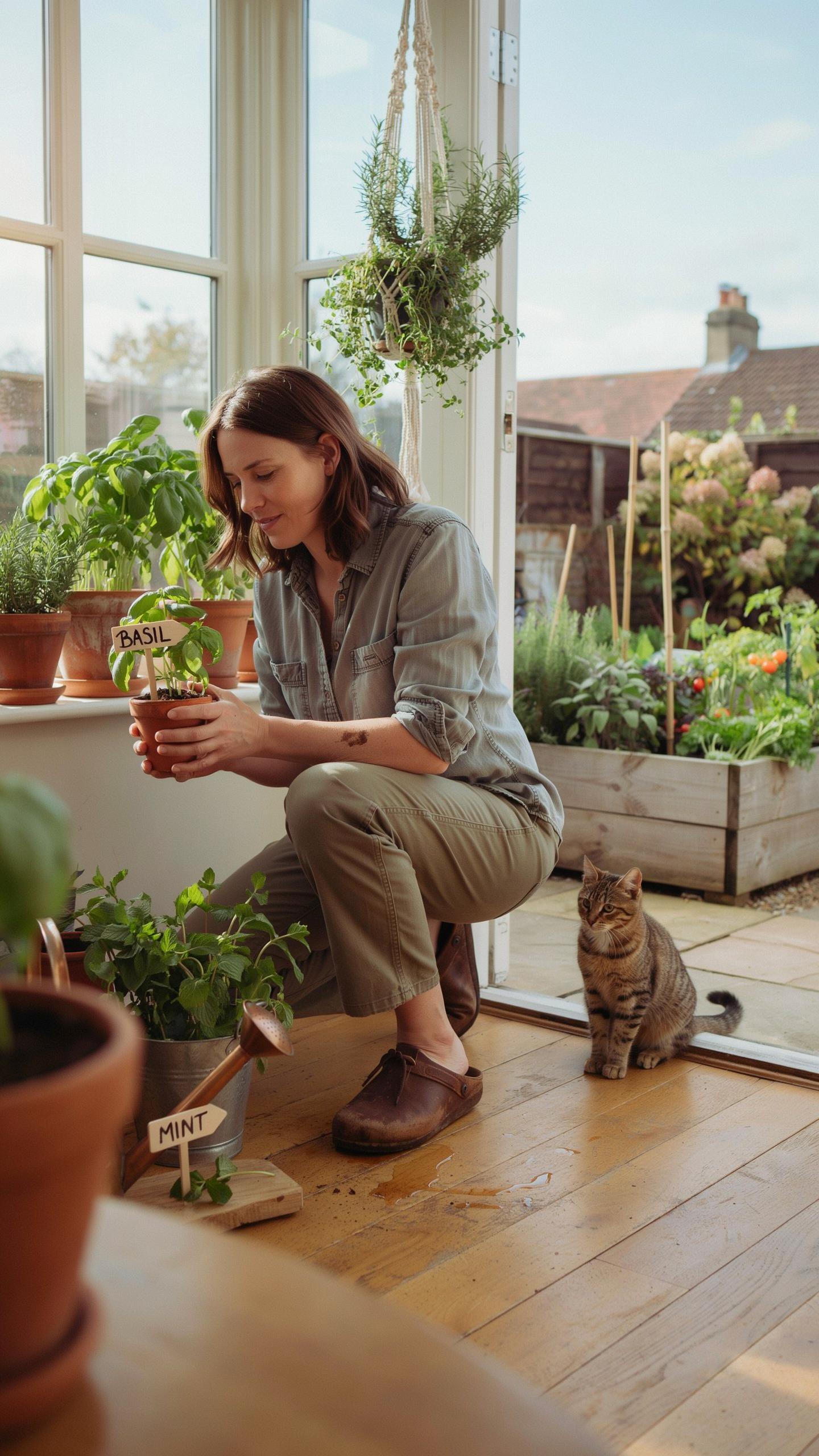
Regular harvesting functions as your primary pruning method. It prevents herbs from becoming woody and thin. Pinch back the top growing tips of basil, mint, and oregano just above a leaf node. This forces the plant to branch into two new stems. You double your harvestable material without extra effort.
Timing matters for pruning success. Start pinching when seedlings reach four to six inches tall. Continue this practice every two weeks during active growth. Never remove more than one third of the plant at once. This approach maintains plant health while maximizing your yield throughout the season.
Organic Fertilization Standards For Containers
Container herbs exhaust nutrients faster than ground planted herbs. Watering leaches minerals from limited soil volume rapidly. Apply half strength liquid organic seaweed or fish emulsion every four weeks. Stick to spring and summer feeding during active growth periods. This schedule prevents salt buildup that damages roots and stunts plant development.

Choose fertilizers with balanced nitrogen ratios for leafy herbs. Seaweed contains trace minerals that support overall plant vigor. Fish emulsion adds nitrogen without creating chemical residue. Test soil moisture before fertilizing to avoid overfeeding. Always follow product dilution instructions to prevent root burn and nutrient toxicity.
Harvesting And Enjoying Your Fresh Herbs
Best Practices For Sustained Harvesting
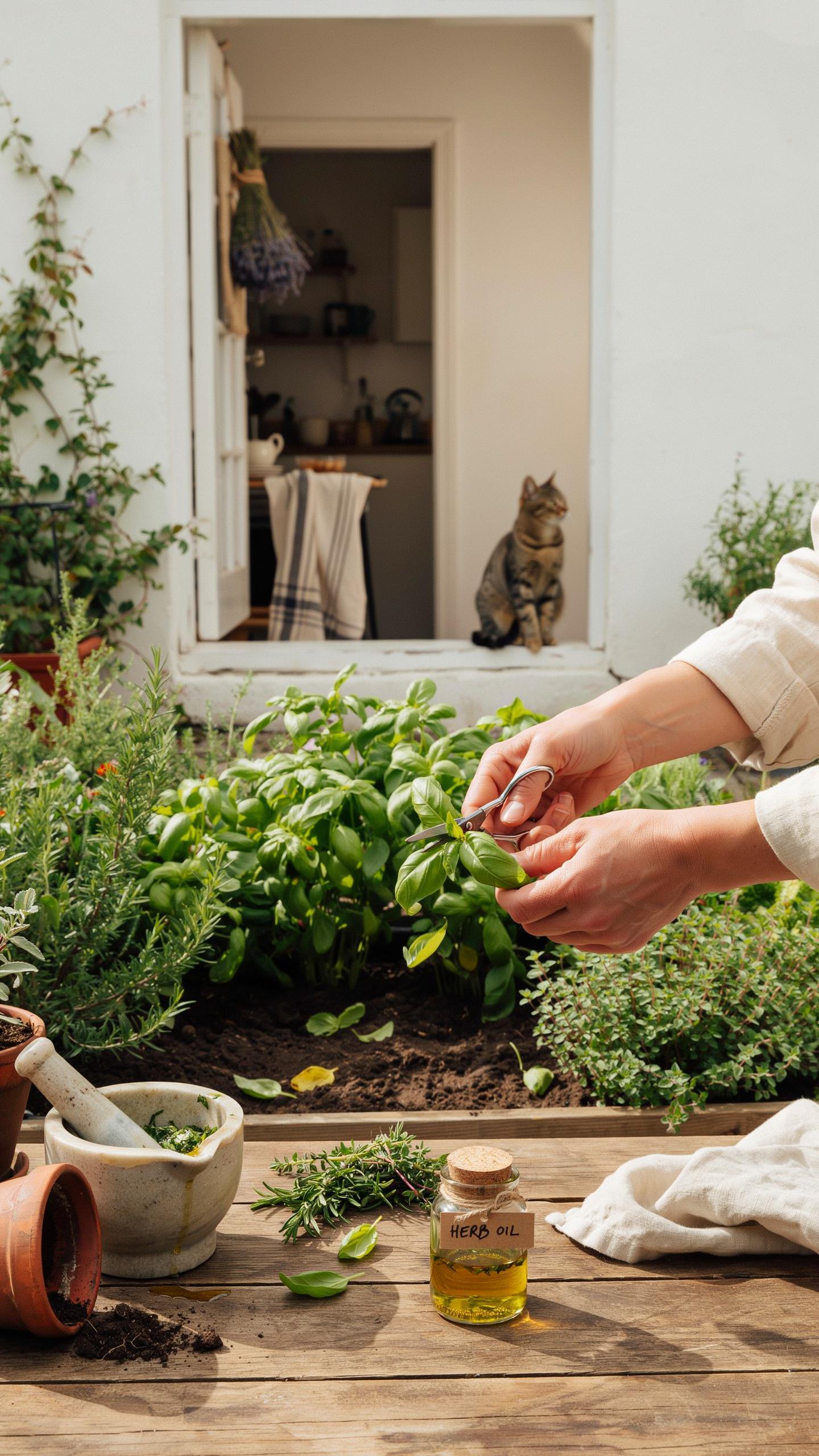
The one-third rule protects plant longevity. Never remove more than one-third of any single herb plant during one harvest session. This threshold allows the plant to recover and continue producing new growth. Removing more than this damages the plant’s ability to photosynthesize and regrow effectively.
Target the right leaf positions based on plant structure. For rosette-forming herbs like parsley, harvest the older outer leaves first. For upright woody herbs like rosemary or thyme, pinch from the top down. This selective approach encourages bushier growth and extends your harvest window throughout the growing season.
Optimal Times Of Day To Cut Herbs
Essential oil concentration peaks in early morning hours after dew dries but before intense sun exposure. This timing window delivers maximum aroma, potency, and culinary value. Harvesting outside this window means you capture weaker flavor profiles and reduced medicinal properties. The chemistry is straightforward: heat causes oil evaporation, and morning harvest avoids this loss.

Cut herbs between 8 AM and 10 AM for best results in most climates. At this time, plants have recharged overnight and essential oils remain stable. Avoid harvesting during midday heat or late afternoon when oil concentrations drop significantly. Evening harvests also work but deliver lower potency than morning cuts.
Frequently Asked Questions

Which herbs are best for a beginner starting a small garden in a limited area?
If you are new to small space gardening herb corner setups, start with resilient varieties like mint, chives, and basil. These herbs are incredibly forgiving and thrive in containers. Mint is particularly robust, though it should be planted in its own pot to prevent it from overtaking your other plants. These choices ensure a lush, green aesthetic while providing fresh flavors for your kitchen with very minimal maintenance required.
How can I maximize vertical room for my herbs if I have no floor space?
Utilizing verticality is the secret to a successful small space gardening herb corner. Consider installing floating shelves near a sunny window or using a hanging pocket planter on a balcony wall. Wall-mounted rail systems with S-hooks and small pots also work beautifully. By shifting your garden upward, you free up valuable floor real estate while ensuring your aromatic herbs receive the necessary sunlight and airflow they need to flourish indoors.
Can I create a functional herb garden on a very tight budget?
Absolutely! You can build an effective herb station without spending much by repurposing household items like tin cans, glass jars, or plastic yogurt containers—just remember to drill drainage holes. Starting from seeds rather than buying mature plants is another significant cost-saver. With a bag of quality potting soil and some recycled vessels, you can establish a charming, productive nook that proves gardening is accessible to everyone regardless of their budget.