
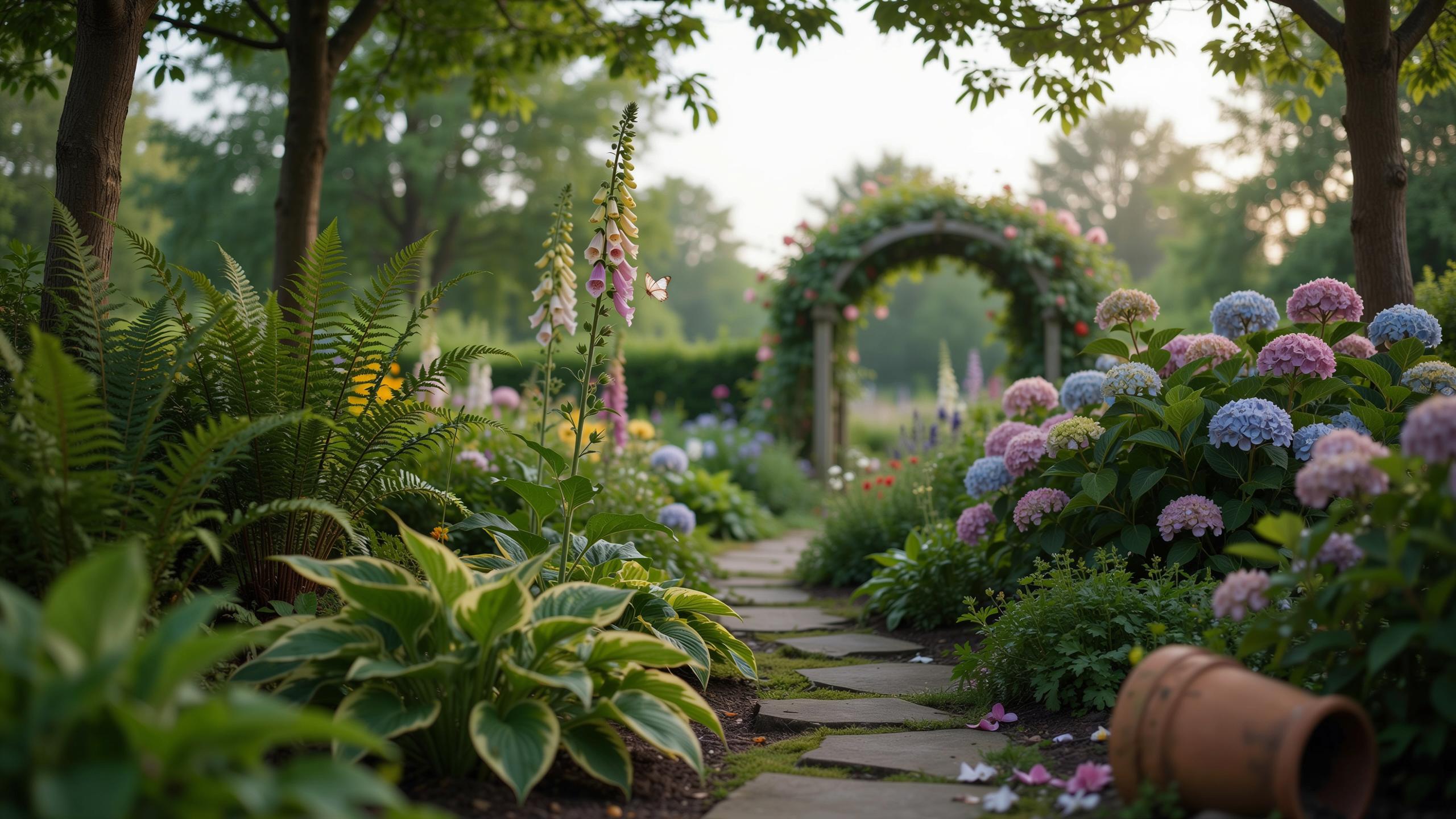
Embracing The Romance Of A Cottage Shade Garden
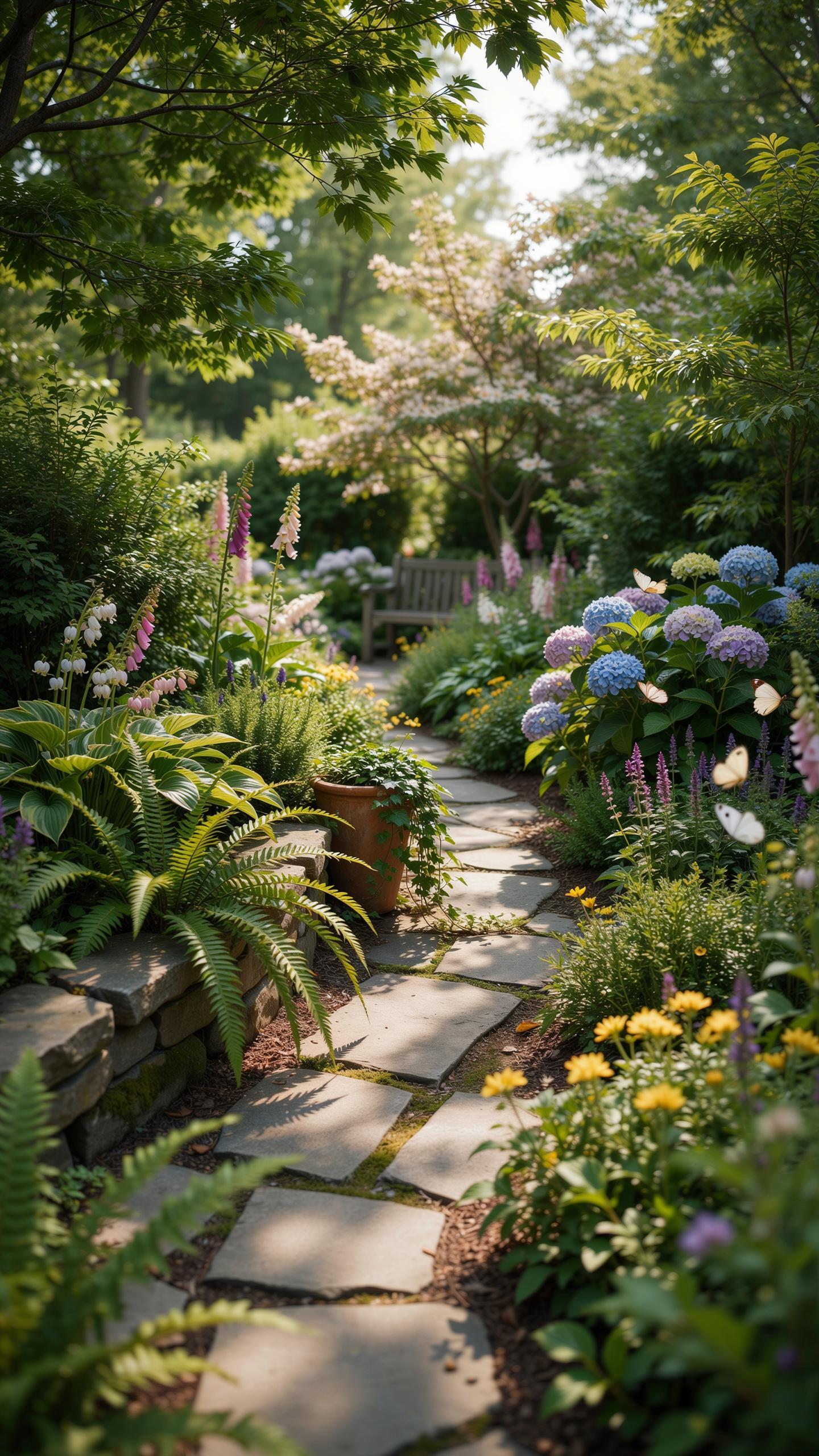
Defining The Cottage Style In Shadows
The cottage garden style emerged from practical 18th and 19th century English kitchen gardens. These spaces combined vegetables, herbs, and flowers in dense, unstructured plantings. The aesthetic prioritized function and abundance over formal design. Shade doesn’t eliminate this approach. Instead, it requires selecting plants that tolerate reduced light while maintaining the layered texture and informal density that defines the style.
Shade forces intentional plant selection but preserves the cottage garden’s core identity. Work with shade tolerant perennials, ferns, and hostas that create visual depth through varied foliage rather than bright flowers. Mix plants at different heights to build the characteristic crowded appearance. This strategy works because cottage gardens originally evolved in wooded regions where partial shade was the norm, not an exception.
Balancing Light And Moisture
Shade beneath tree canopies creates a specific microclimate. Dappled light reaches soil intermittently, reducing evaporation compared to full sun. This means soil moisture persists longer, which benefits shade plants but also demands drainage management. Heavy clay or compacted earth promotes root rot in dim conditions where air circulation diminishes. Amend soil with organic matter like compost or aged bark to improve structure and create an environment that mirrors woodland conditions where cottage shade plants naturally establish.
Organic matter serves dual functions in shaded beds. It improves drainage in wet seasons and increases water retention during drier periods. This buffer effect stabilizes the soil environment, reducing plant stress. Shade plants typically require less supplemental water than sun plants, but consistency matters more. Fluctuating moisture causes more damage than steady dampness. Establish a routine watering schedule early in the growing season until plants root deeply enough to access stable moisture from amended soil.

Essential Cottage Garden Shade Plants For Soft Color
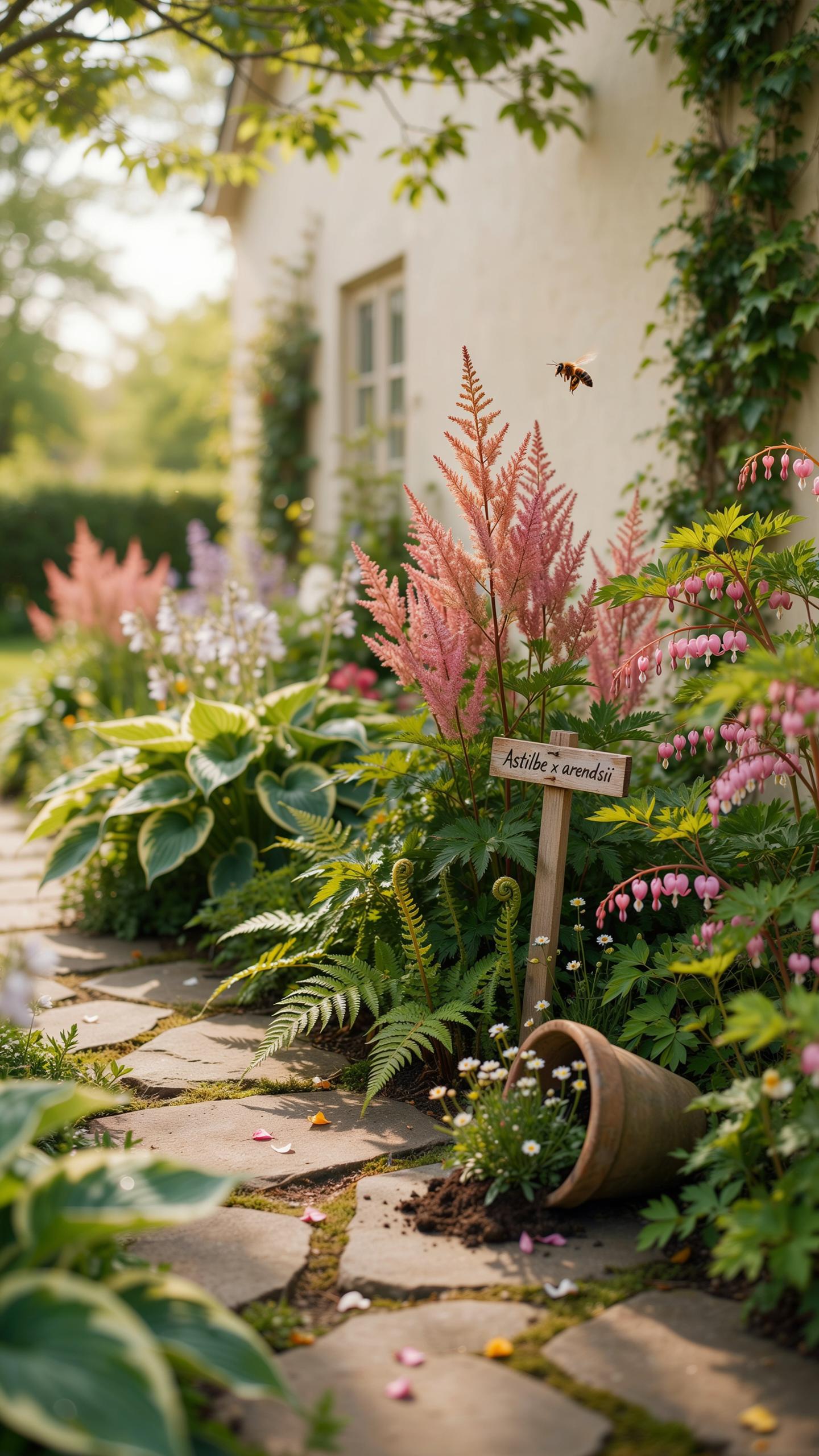
The Elegance Of Bleeding Hearts And Foxgloves
Lamprocapnos spectabilis and Digitalis purpurea deliver structural impact in shade gardens. Bleeding hearts produce heart-shaped flowers that dangle from arching stems, reaching 24 to 36 inches tall. Foxgloves tower above at 3 to 5 feet, displaying tubular blooms on dense spires. Both species demand cool, moist soil and establish quickly in dappled light conditions.
Spring emergence marks the primary bloom window for bleeding hearts, while foxgloves flower through early summer. These plants fill vertical space without requiring support structures. They tolerate neglect once established and reseed naturally in suitable conditions. Use them as anchor plants in shade borders where they command attention without competing for resources.
Hardy Geraniums And Astilbes For Continuous Blooms
Hardy geraniums spread laterally to suppress weeds while flowering from early summer through fall. Astilbes contribute feathery texture and bridge seasonal gaps with consistent color output. Geranium sanguineum produces pink to magenta blooms on 12 to 18 inch plants. Astilbe varieties reach 18 to 36 inches and tolerate moisture fluctuations better than many shade perennials.

Plant geraniums 18 inches apart to allow lateral growth and ground coverage. Astilbes perform optimally in soil amended with organic matter and consistent moisture. Both attract minimal pest pressure and require no deadheading to sustain flowering. Their combination creates a layered effect that fills gaps while maintaining the informal aesthetic cottage gardens demand.
Designing With Texture In A Shaded Cottage Garden
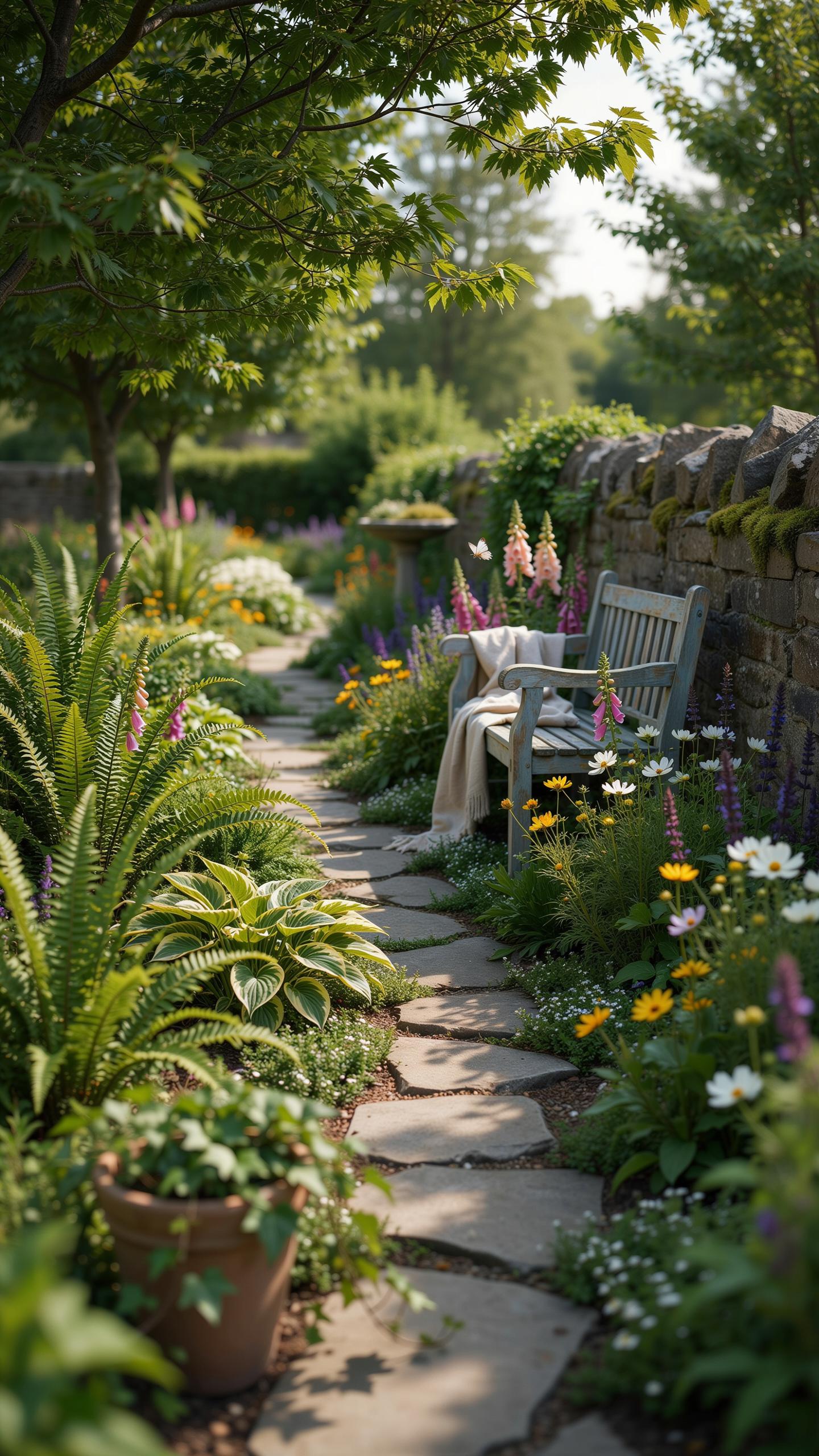
Incorporating Broad Leaved Hostas And Heucheras
Foliage drives shade garden success more than flowers do. Hostas deliver structural leaf forms in blue-green, chartreuse, and variegated patterns that hold up all season. Their broad leaves create visual weight and anchor planting schemes. Heucheras, called coral bells, add color contrast with foliage in burgundy, plum, amber, and lime tones. These plants thrive where canopy cover blocks direct sun. Their leaves catch dappled light and brighten dark soil areas without demanding blooms.
Both plants tolerate dry to consistently moist soil depending on the cultivar. Hostas spread gradually and rarely need division before five years. Heucheras prefer well-draining conditions and handle poor soil better than most shade perennials. Position hostas as focal points and use heucheras in groups of three for color impact. These two plants work together to create year-round visual interest without relying on seasonal flowers.
The Delicate Fronds Of Native Ferns
Ferns soften hard edges in shade gardens and replicate natural forest floor conditions. Species like Athyrium niponicum, the Japanese painted fern, display silvery-metallic fronds that reflect light into dim spaces. Their fine texture contrasts sharply with bold hosta leaves. Fern fronds emerge in spring and persist until frost, providing consistent visual texture for months.

Ferns establish slowly but settle into reliable performers once rooted. They tolerate shade depths that eliminate most perennials and adapt to variable moisture levels. Plant ferns in drifts of five or more to create movement and depth. Their airy presence prevents cottage gardens from feeling dense or cluttered, even when packed with shade plants.
Creating Structure With Shade Garden Plans Layout
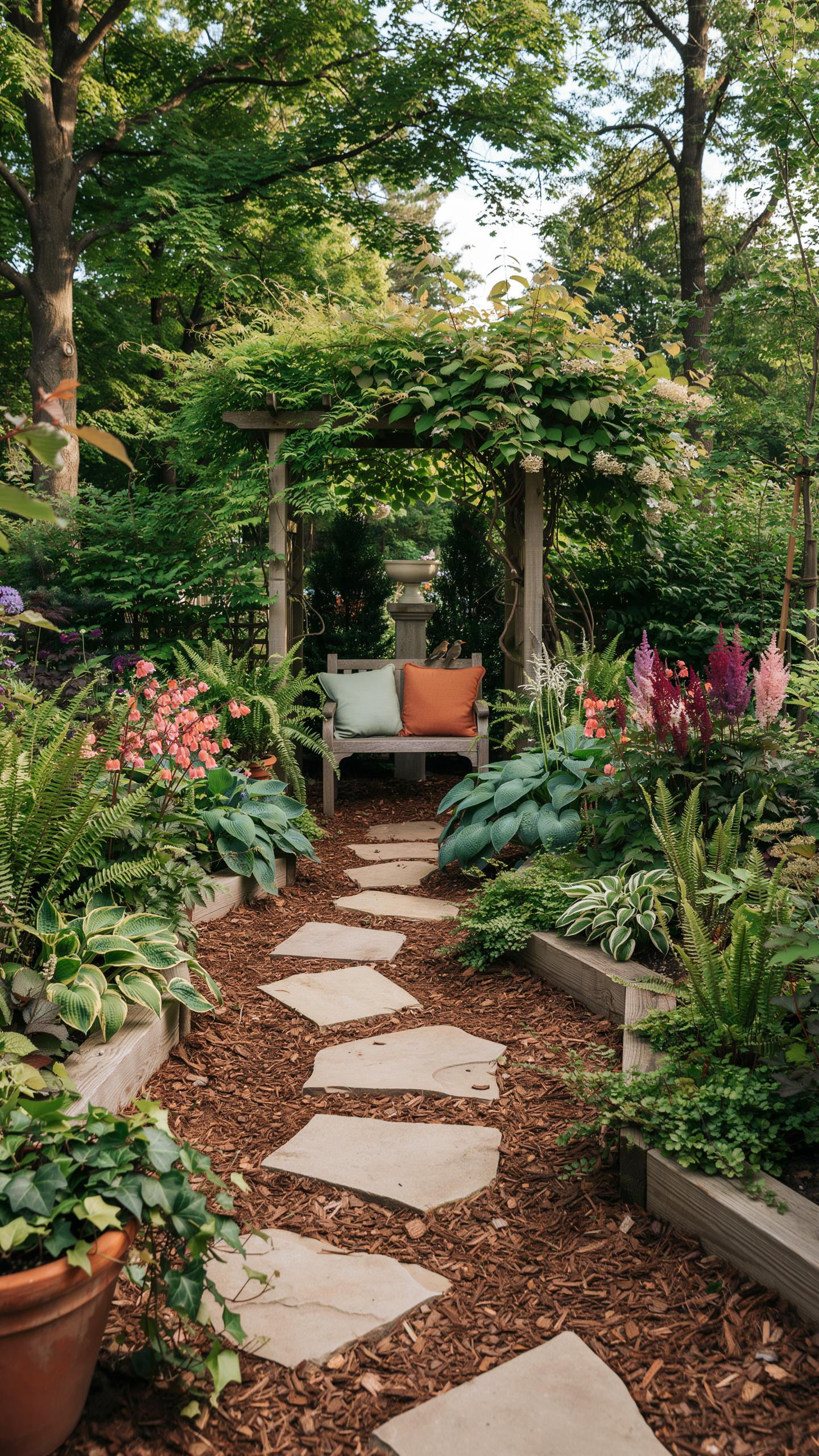
Step By Step Layering Strategy For Shaded Beds
Organize shade plants by height to build depth and prevent overcrowding at eye level. This three tier approach gives your garden visual structure and ensures every plant receives appropriate light exposure. Start with your tallest specimens at the back, work forward with mid height plants, then finish with low growers at the front. This system maximizes space and lets you see each plant clearly.
- Background Layer: Foxgloves reach 3 to 5 feet tall and produce vertical spikes that anchor the rear. Goatsbeard grows 3 to 4 feet wide and tall with feathery white plumes. Large ferns like ostrich ferns reach 3 to 4 feet and provide consistent textured backdrop throughout the season.
- Midground Layer: Bleeding hearts grow 2 to 3 feet tall with heart shaped foliage and dangling flowers. Hostas range from 1 to 3 feet depending on variety and offer bold leaf shapes. Astilbes reach 2 to 3 feet with feathery plumes and fine textured leaves that catch light.
- Columbines: These grow 2 to 3 feet tall with delicate nodding flowers in spring and airy foliage. They self seed readily in shade gardens and bridge the gap between midground and foreground plantings effectively.
- Foreground Layer: Sweet woodruff stays under 12 inches and spreads as a ground cover with tiny white flowers. Pulmonaria reaches 12 to 18 inches with spotted leaves and early spring blooms. Creeping phlox grows 4 to 6 inches and spreads horizontally to fill edges and front borders.
This layering prevents bare soil visibility and creates visual continuity from ground level to canopy. Each tier serves a functional purpose while contributing to overall design cohesion throughout the growing season.
The glory of gardening, hands in the dirt, head in the sun, heart with nature. To nurture a garden is to feed not just on the body, but the soul.
Pathways And Hardscaping In Soft Light
Winding stone paths guide foot traffic and define planting zones without requiring extensive maintenance. Weathered wooden benches positioned at path turns create focal points and break up dense foliage areas. These hardscape elements anchor the garden composition and prevent the shade bed from reading as one undifferentiated mass of plants.

Rustic materials work best in cottage gardens because they echo the informal aesthetic of the style. Stepping stones in irregular patterns feel more authentic than straight rows. Weathered surfaces develop patina over time and integrate naturally with aging plant material, creating visual harmony across the entire space.
Adapting The Classic English Cottage Garden Aesthetic
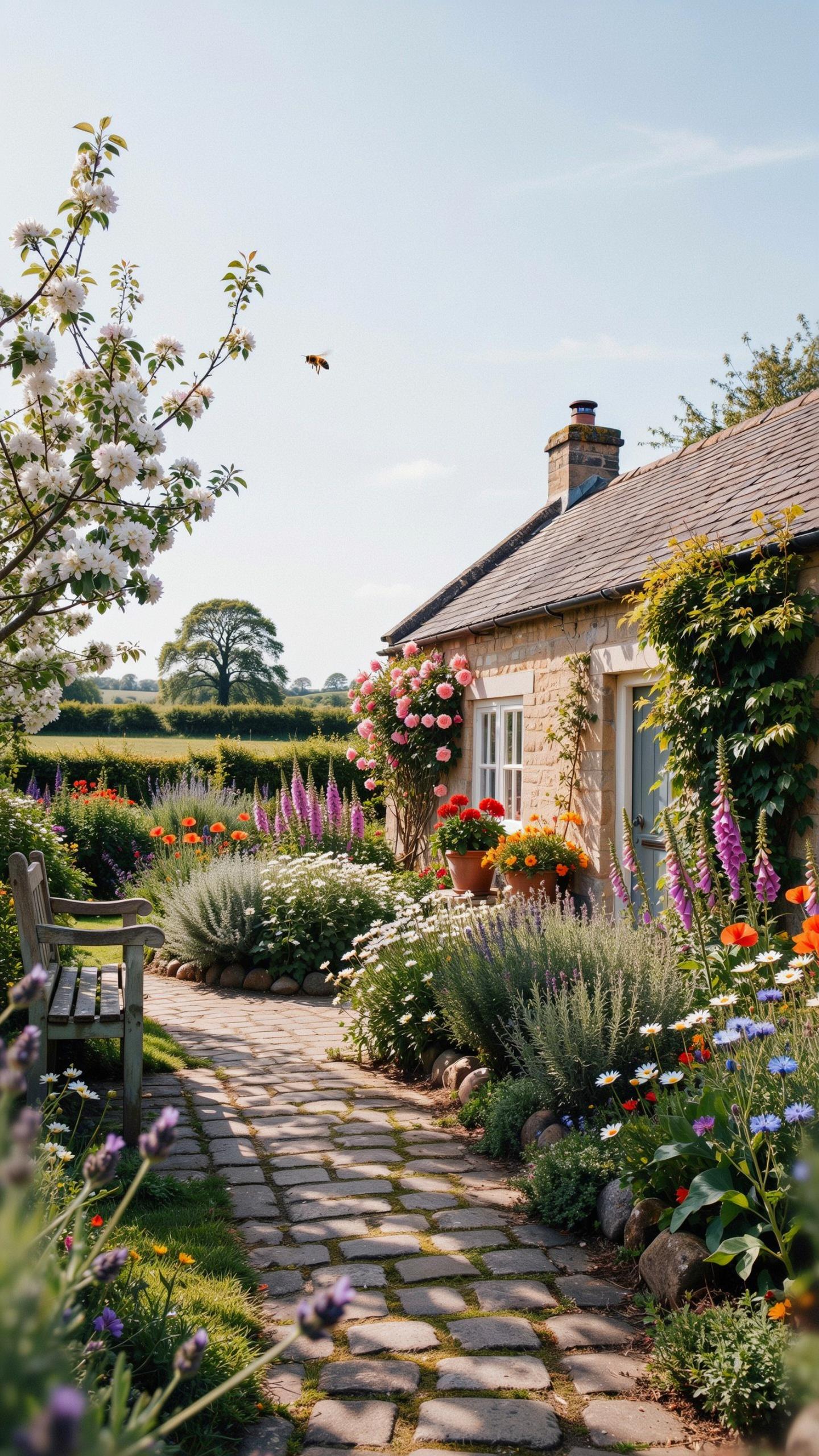
Scent And Mystery In The European Traditions
English woodland borders historically used fragrant ground covers like Convallaria majalis to engage the senses. Shade-loving plants with strong scent create the sensory foundation cottage gardens require. Fragrance compensates for reduced visual impact in low-light areas. Plants like hellebores and epimedium release scent when brushed or crushed, rewarding close inspection. This sensory layer transforms shaded borders from overlooked zones into intentional garden rooms with distinct character and purpose.
European tradition paired scent with mystery by placing fragrant plants in partial shade where visitors discover them gradually. This approach contrasts sharply with modern design, which often prioritizes visibility and instant impact. Historic gardens used scent as a wayfinding tool, drawing people deeper into garden spaces. The combination of fragrance and dappled light creates psychological depth that flat, visual-only plantings cannot achieve. This tactical use of scent solves the shade problem by replacing lost visual interest with olfactory engagement.
Using Heritage Varieties For Authenticity
Historic, non-hybridized species preserve the understated forms that define authentic cottage gardens. Antique primroses and hellebores display delicate structures and muted colors rather than the hyper-saturated tones modern cultivars produce. Heritage varieties evolved to thrive in specific microclimates over generations, making them reliable choices for shade conditions. Modern hybrids often prioritize novelty over performance, resulting in plants that require more intervention. Selecting species variants ensures your garden reads as organically established rather than trendy or artificial.

Heritage varieties solve a practical problem: they survived centuries of variable conditions, proving their resilience in shade. Antique primroses like Primula vulgaris produce smaller flowers in softer color ranges than newer selections. Helleborus niger and Helleborus argutifolius offer consistent performance without excessive watering or fertilizing demands. These plants establish quickly in shade because they evolved in European understory conditions. Using established species over modern cultivars reduces maintenance while strengthening the historical accuracy of your design.
Optimizing Moisture In A Shade Flower Beds Ecosystem
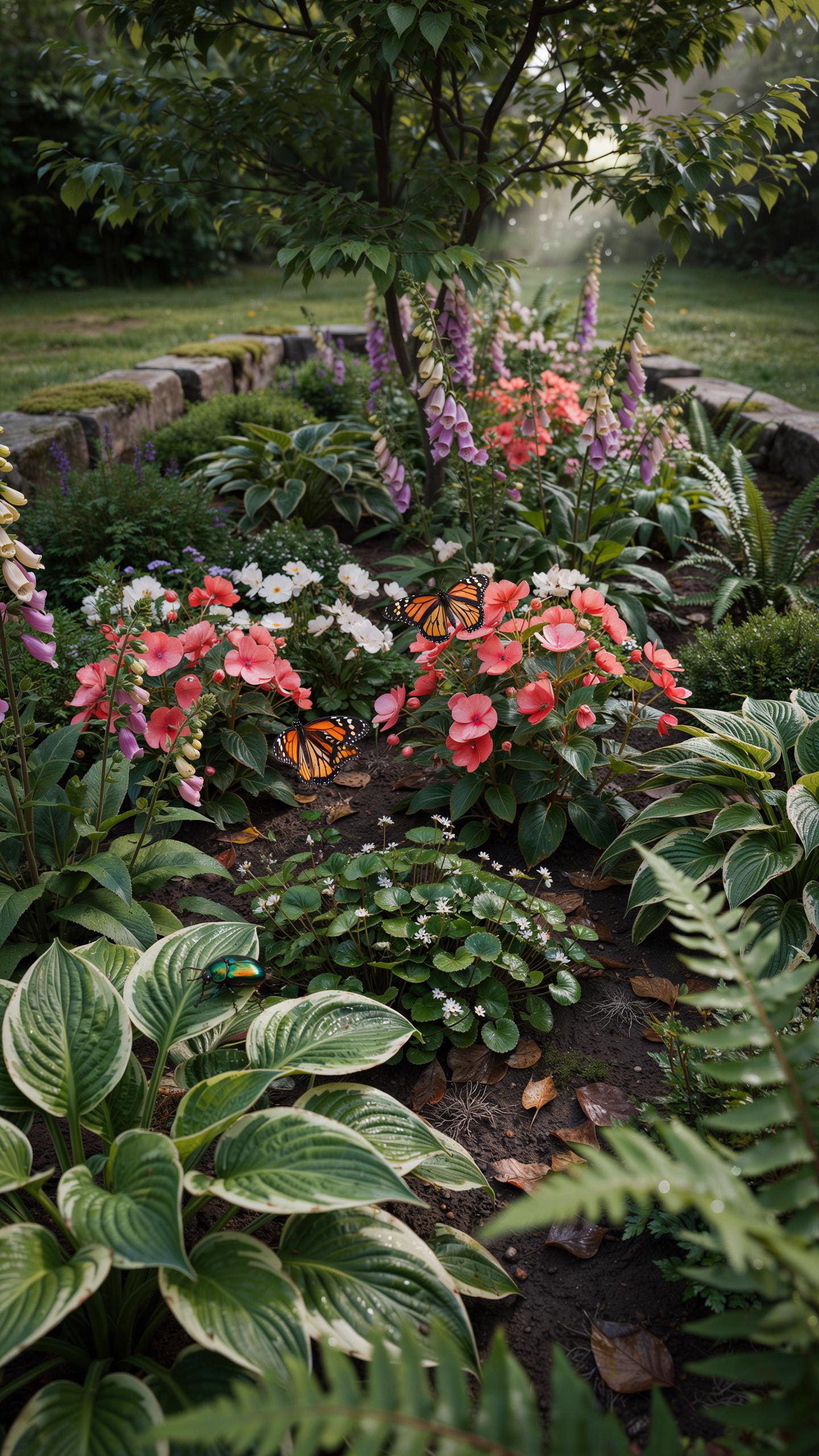
Humus Rich Soil Preparation
Shade plants evolved in forest environments where decomposing leaves create nutrient-dense, moisture-holding soil. This ecosystem requires intentional replication. Work 3 to 4 inches of compost into your beds before planting. Add composted bark in equal measure. This combination mimics the forest floor structure that shade plants depend on for survival and performance.
The payoff is measurable. Humus-rich soil holds moisture longer during dry periods, reducing irrigation frequency by 30 to 40 percent compared to standard garden soil. Shade plants have shallow root systems that cannot access deep moisture reserves. Your preparation directly determines whether plants survive summer stress or decline. Build this foundation before introducing plants.
Mulching Techniques For Moisture Retention
Apply 2 to 3 inches of organic mulch around shade plants immediately after planting. Pine needles work well in acidic soils. Shredded hardwood leaves function across most pH ranges. Mulch cools the root zone and cuts water evaporation significantly. Decomposing mulch feeds soil microbes that shade plants require for nutrient uptake and disease resistance.

Refresh mulch annually as it breaks down. Do not pile mulch against plant stems or tree trunks. Maintain a 3 to 4 inch gap to prevent rot and pest damage. This maintenance cycle keeps moisture stable, reduces weeding labor, and continuously improves soil structure where it matters most for shade plant performance.
Curating A Vibrant English Shade Garden Palette
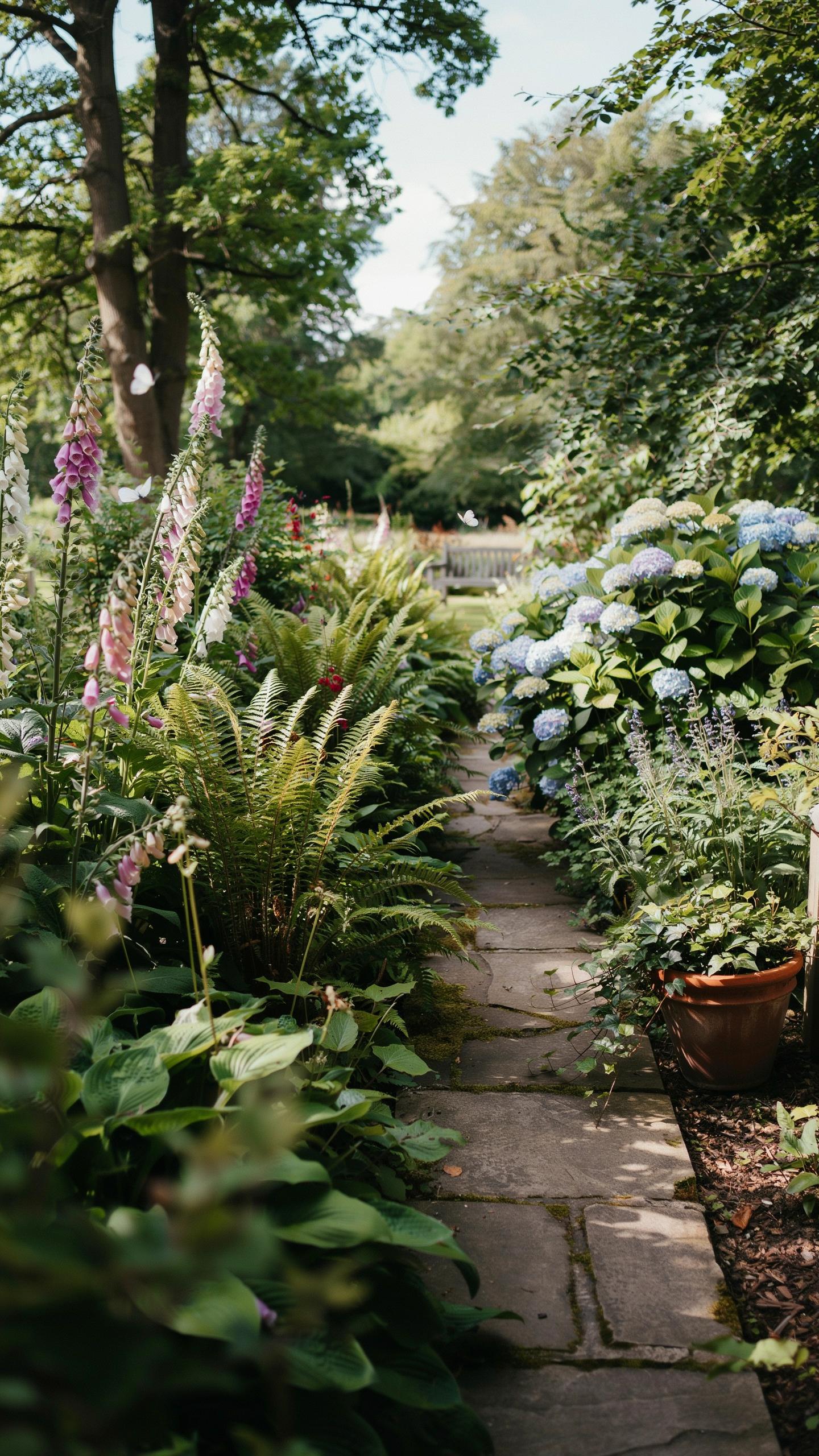
Cool Pastels Vs Deep Moody Tones
Pale colors work in shade because they reflect what little light exists. Soft pinks, whites, and pale blues bounce light around dark corners and make tight spaces feel more open. You gain functional brightness, not just visual appeal. This is physics, not decoration.
Deep burgundy foliage plants create contrast against these light tones. Dark leaves absorb light rather than reflect it, which sharpens the visual separation between plant masses. This contrast gives shallow shade gardens apparent depth and structure they lack naturally. Strategic placement of dark and light plants compensates for low light conditions.
Designing For Multi Seasonal Interest
Winter demands evergreen structure because deciduous plants disappear. Hellebores flower when nothing else blooms and hold foliage year round. They solve the problem of bare ground in cold months. Spring ephemeral bulbs layer in early color before tree canopy closes. This sequence prevents dead zones in your garden calendar.

Deciduous shrubs like hydrangeas bridge spring and winter. They hold soft color through autumn before dropping, extending the visual season by weeks. Choose species that retain dried flower heads or show architectural branch structure. These elements maintain visual interest when growth stops and create framework plants that anchor shade gardens across all four seasons.
Practical Care And Maintenance For A Partial Shade Garden
Essential Maintenance Tips For Shade Perennials
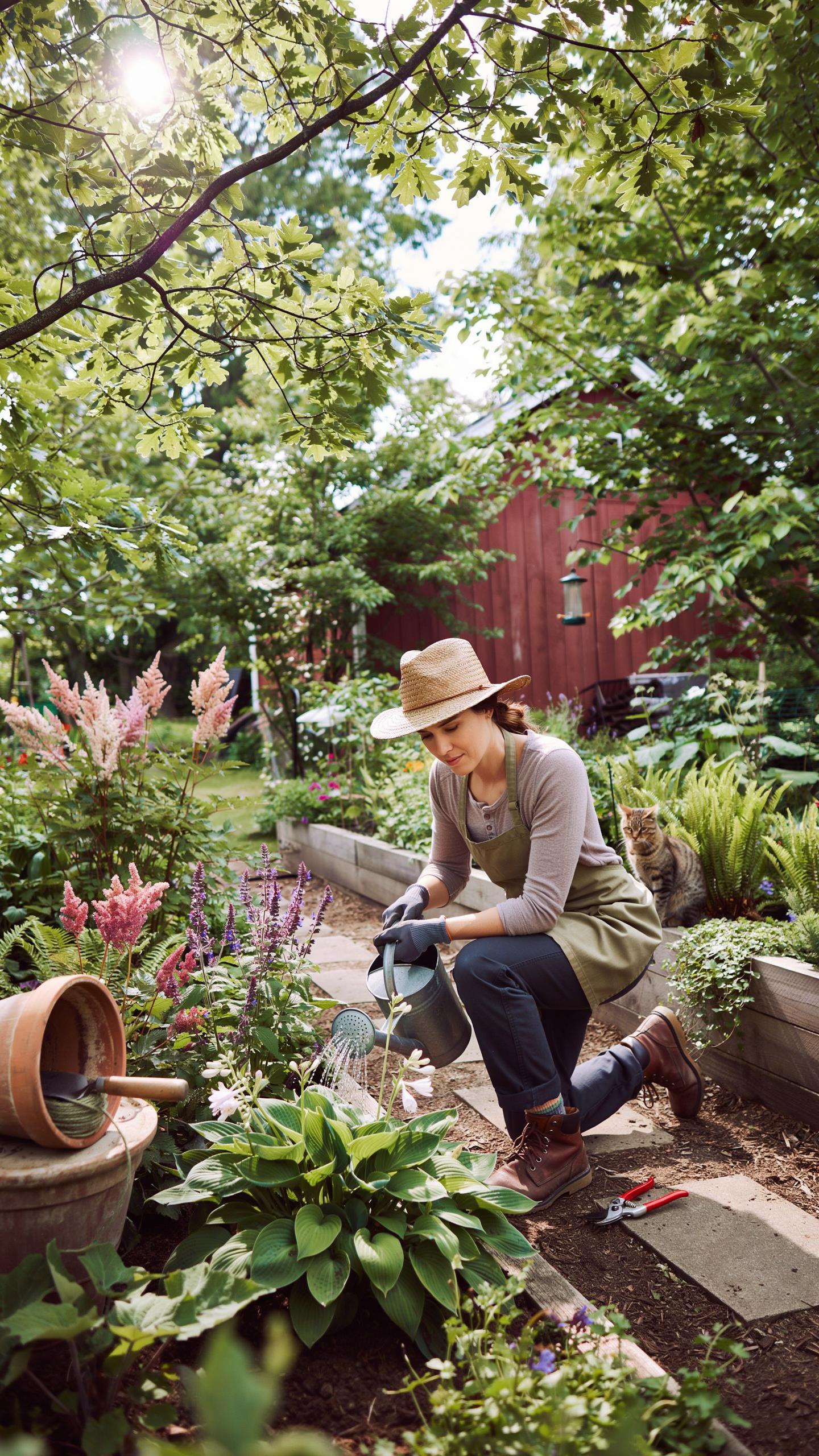
Spring ephemerals like hellebores and bleeding heart complete their life cycle before summer heat arrives. Cut them back once foliage yellows and dies back. This clears space for shade lovers that peak during summer months, preventing overcrowding and improving air circulation throughout the garden bed.
- Cut back spring ephemerals: Remove faded foliage after plants go dormant to open space for summer growers and reduce disease pressure in humid shade.
- Divide hostas in early autumn: Split crowded clumps every three to four years in fall when soil moisture remains adequate for root establishment.
- Divide primroses in early autumn: Separate congested primrose plants in September or October to rejuvenate vigor and expand plantings without purchasing new stock.
- Monitor slug and snail activity: Check leaf undersides and soil surface regularly in damp shade zones where mollusks cause serious damage to tender foliage and young growth.
- Remove dead leaves promptly: Clear fallen debris from garden beds weekly to eliminate slug and snail hiding spots and reduce fungal disease risk in stagnant air.
Slug and snail populations explode in partial shade because moisture lingers and light never fully dries the soil. Walk beds after rain and remove visible pests by hand. Handpicking works faster than baits and keeps chemical exposure out of cottage garden designs where food crops often grow nearby.
Pruning Surrounding Canopy Trees
Lower tree branches block dappled light from reaching shade plants below. Remove these branches to open the canopy and increase light penetration without removing the protective overhead structure. This single intervention transforms sterile, deep shade into productive growing space for shade perennials.
Thinning canopy branches also improves air movement around shade plants, reducing humidity that fuels powdery mildew and leaf spot diseases. Work gradually over several seasons rather than aggressive removal, which stresses trees. Prune dead or crossing branches first, then selectively remove lower limbs that don’t contribute to the tree’s structure or form.
Frequently Asked Questions

What are the best cottage garden shade plants for beginners?
If you are new to gardening, starting with hardy perennials like Hostas, Bleeding Hearts, and Foxgloves is a great choice. These classic cottage garden shade plants are incredibly resilient and provide that quintessential romantic look with minimal effort. They thrive in dappled light and return year after year, allowing you to build a lush, layered sanctuary without needing a professional green thumb or constant maintenance.
How do I design a layered look using cottage garden shade plants?
To achieve that effortless aesthetic, start by planting taller varieties like Delphiniums or Oakleaf Hydrangeas toward the back of your border. In the mid-section, incorporate mounded textures like Ferns or Coral Bells. Finally, edge your pathways with low-growing Sweet Woodruff or Primroses. Mixing different heights and textures ensures your cottage garden shade plants create a dense, enchanting woodland feel that maximizes visual interest in every corner of your yard.
Can I create a beautiful shaded cottage garden on a small budget?
Absolutely! One of the most affordable ways to fill your space is through plant division and seeds. Many shade-loving favorites, such as Forget-me-nots and Columbine, are prolific self-seeders that spread naturally over time. You can also ask fellow gardeners for divisions of Hellebores or Brunneras. Focus on buying a few “anchor” plants first, then use these budget-friendly propagation methods to fill the gaps for a flourishing, cost-effective landscape.