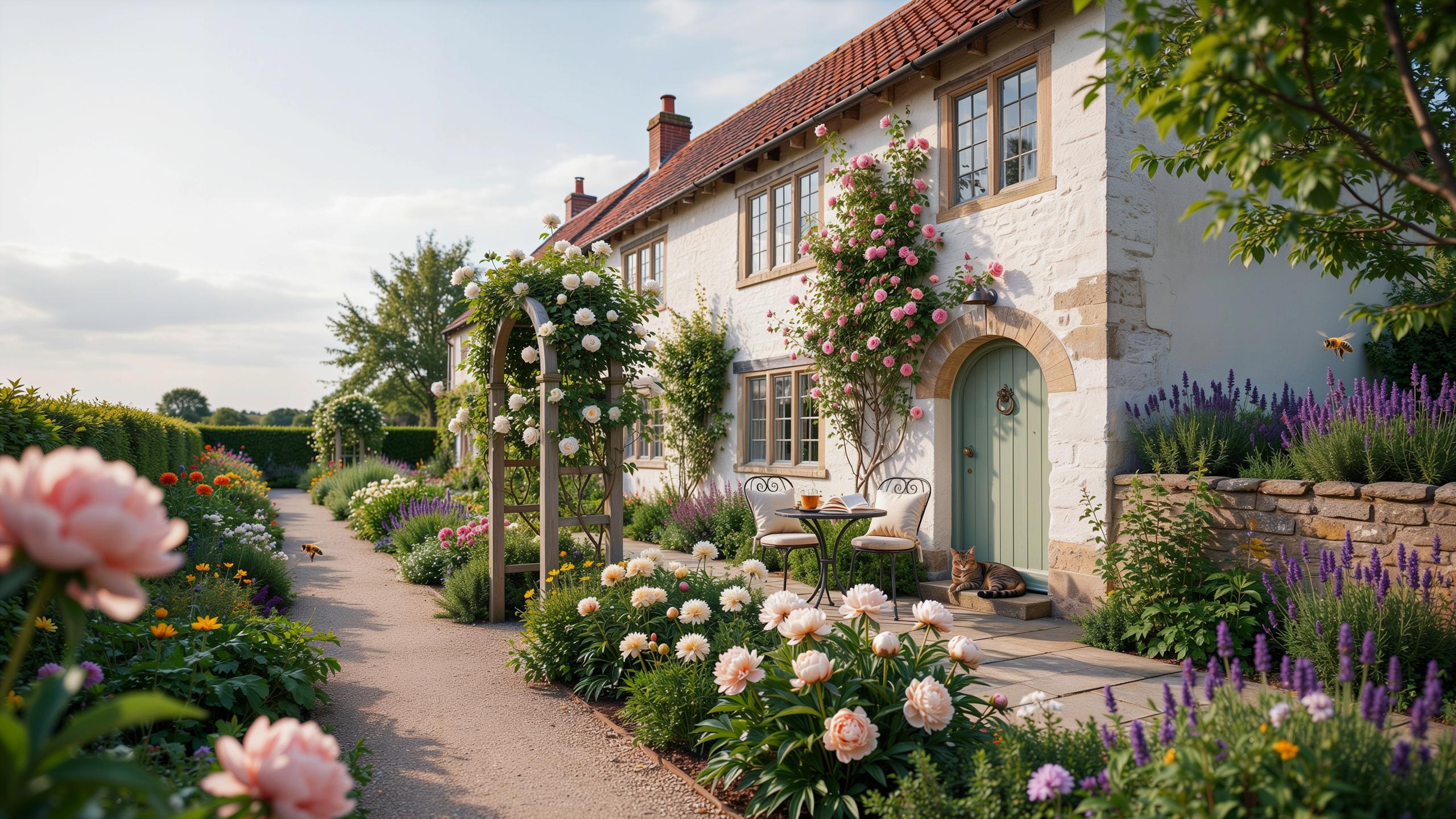
The Essence Of A Romantic Flower Garden
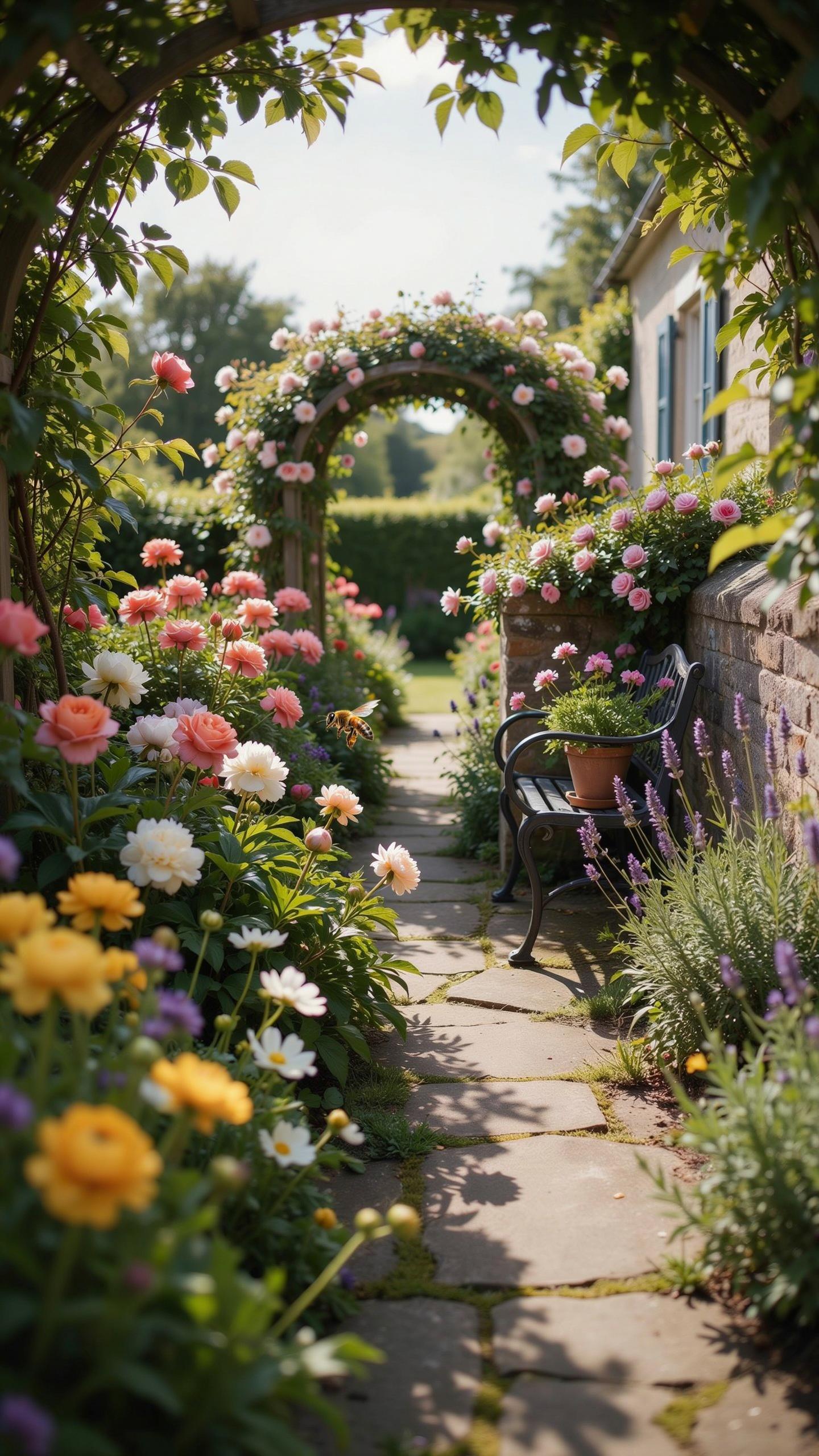
Defining Romantic Aesthetics
Romantic garden aesthetics emerged from 18th-century landscape design movements that rejected formal, geometric layouts. This style prioritizes softness, layering, and natural growth patterns. Dense plantings create depth. Curved pathways replace straight lines. Muted color palettes dominate the design approach. The goal is cultivating spaces that feel established and unhurried rather than manicured.
Structure in romantic gardens relies on repetition and abundance rather than symmetry. Plants overflow bed edges. Structures like arbors and trellises support climbing vines that soften hard surfaces. The design strategy emphasizes abundance over precision. This approach creates environments that feel inhabited by nature itself, not controlled by rigid planning.
Designing For Sensory Appeal
Romantic gardens engage multiple senses through strategic plant selection and placement. Fragrance becomes a primary design tool. Textural variety in foliage creates visual and tactile interest. Flower colors shift through seasons, maintaining engagement year-round. Sound design matters too: rustling grasses and leaf movement add dimension. The garden becomes a multisensory experience, not just a visual display.
Layering heights and bloom times ensures continuous sensory engagement. Ground covers anchor low spaces. Shrubs provide mid-level structure. Trees frame the garden ceiling. Succession planting means something flowers continuously. Morning fragrance differs from evening scents. This orchestrated approach transforms the garden into a living, evolving environment rather than a static backdrop.

An Essential Romantic Garden Style Plant List
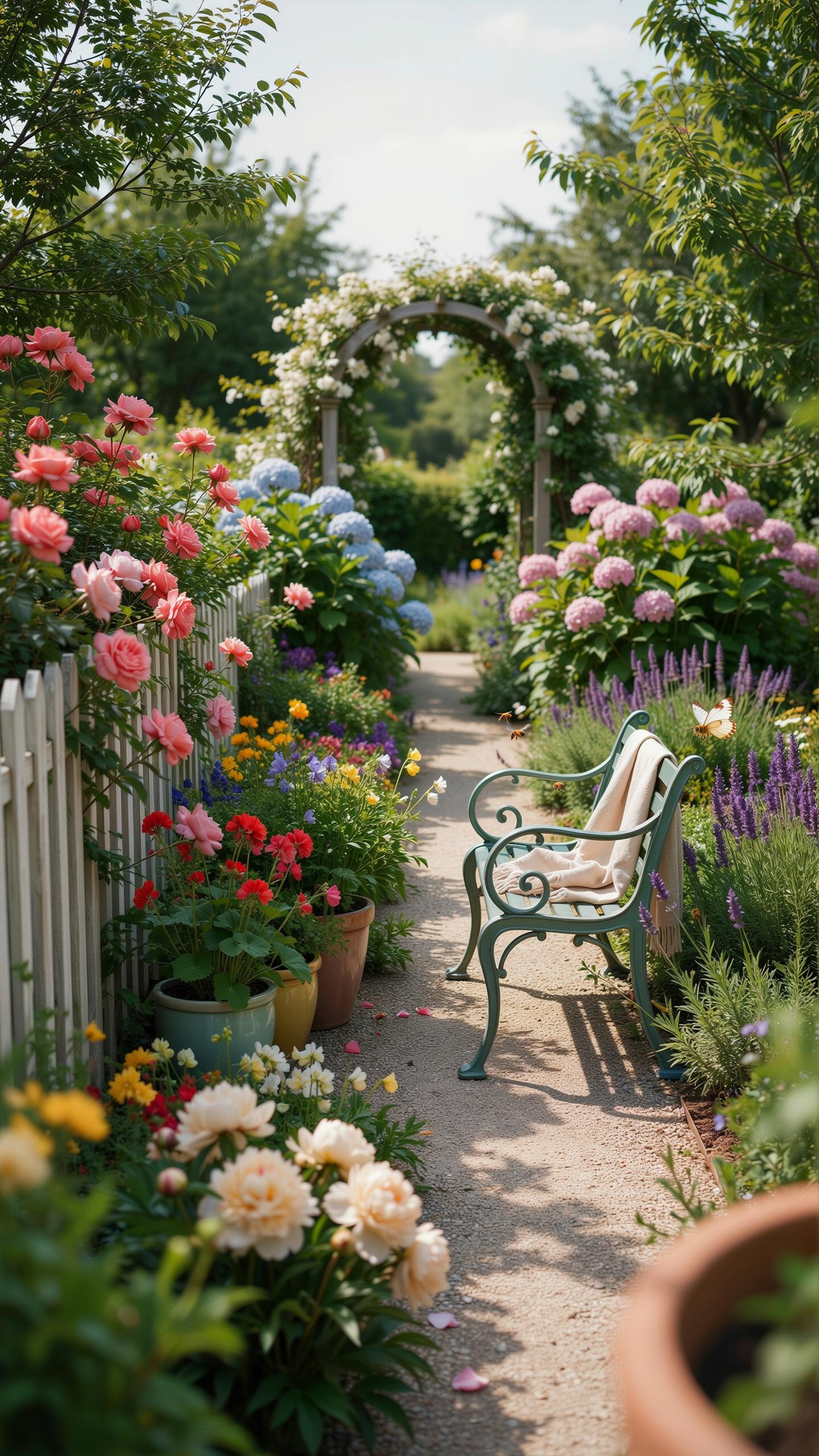
Colors And Textures
Romantic gardens rely on a restrained color palette. Whites, soft pinks, blush tones, and pale purples dominate. These colors create visual calm and establish the foundation for your design. Gray-green foliage acts as a neutralizer. Layering different leaf textures prevents monotony. Combine fine, feathery plants with broad-leafed specimens. This contrast gives structure without sacrificing the soft aesthetic.
Texture matters as much as color in romantic gardens. Combine smooth leaves with fuzzy, wrinkled, or serrated options. Ornamental grasses add movement and airiness. Climbing vines soften hardscapes and structures. Vary plant heights to create depth and interest. The goal is complexity through restraint. Dense plantings hide bare soil while maintaining an unforced appearance.
Selecting Key Blooms For Nostalgic Appeal
Select blooms tied to cottage garden tradition and historical cultivation. Roses represent the backbone of romantic gardens and have been cultivated for centuries. Lavender, peonies, and delphiniums carry strong associations with classic English gardens. These plants perform reliably across most climates. Their availability through nurseries makes them practical choices. Bloom timing varies, so stagger varieties for continuous color from spring through fall.

Include supplementary bloomers that extend the flowering season beyond primary selections. Foxgloves, sweet peas, and flowering shrubs like hydrangeas fill gaps. Underplant with bulbs like tulips and alliums for early color. This strategy ensures visual interest evolves throughout the year. Choose varieties suited to your specific hardiness zone. Research bloom times before purchasing to coordinate flowering cycles effectively.
Selecting The Best Cottage Garden Plants
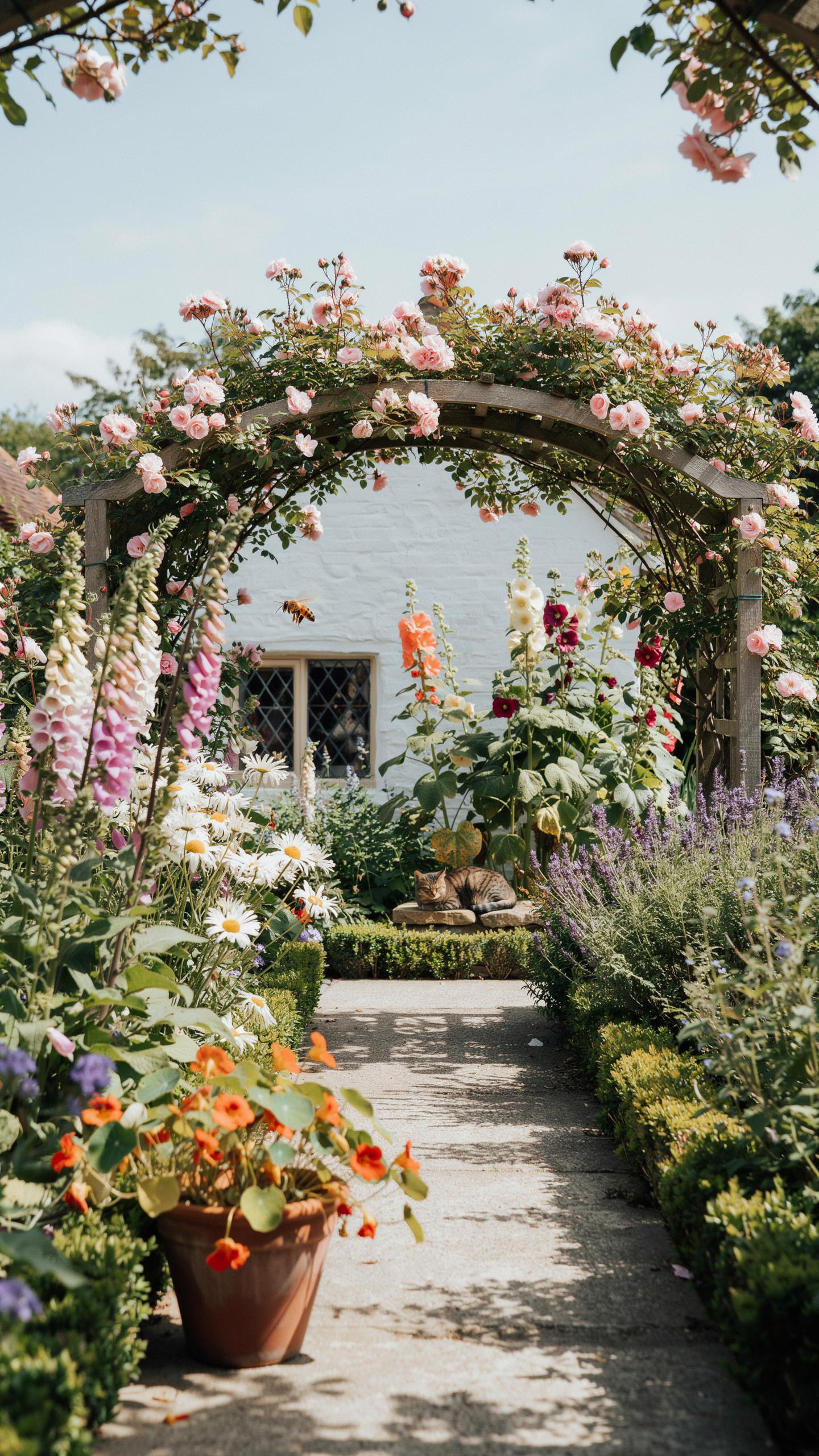
Classic Annuals For Quick And Vibrant Color
Annuals deliver predictable results in romantic gardens because they flower continuously from planting through frost. You get color fast without waiting for perennials to establish. Cosmos, zinnias, sweet peas, and nigella self-seed readily, meaning you replant less each year. They fill gaps between slower-growing shrubs and create layered color depth. Use annuals to test color combinations before committing to permanent plantings.
Plant annuals after your last frost date into prepared soil rich with compost. They need six to eight hours of direct sun daily to perform at full capacity. Deadhead spent flowers weekly to push continuous blooming through the season. Water consistently during dry spells since shallow roots demand regular moisture. Annuals cost less than perennials, making them ideal for budget-conscious garden redesigns.
Vintage Flowering Shrubs For Structural Elegance
Old garden roses, lilacs, and flowering currants form the bones of romantic gardens. These shrubs survived for generations because they thrive in varied conditions and need minimal fussing. They provide height, screening, and backbone structure that annuals cannot match. Lilacs bloom once yearly but deliver fragrance that fills entire gardens. Choose shrubs rated for your hardiness zone to ensure winter survival.

Shrubs establish faster when planted in autumn, giving roots time to develop before spring growth. Space them according to mature width, not current size, to prevent overcrowding. Prune immediately after flowering to maintain shape without sacrificing next year’s blooms. Most vintage shrubs tolerate poor soil and irregular watering once established. They outlive many other garden investments, making them cost-effective over twenty-year timelines.
Incorporating Hardy Cottage Garden Perennials
Low Maintenance Structure And Backbone Blooms
Cottage gardens evolved from practical kitchen gardens in rural England, where homeowners grew plants for food and medicine. This history shaped the plant selection toward hardy, self-sufficient species that required minimal intervention. Modern romantic gardens leverage this same approach by selecting perennials that establish quickly, tolerate variable conditions, and flower consistently without demanding fertilizer or frequent division.
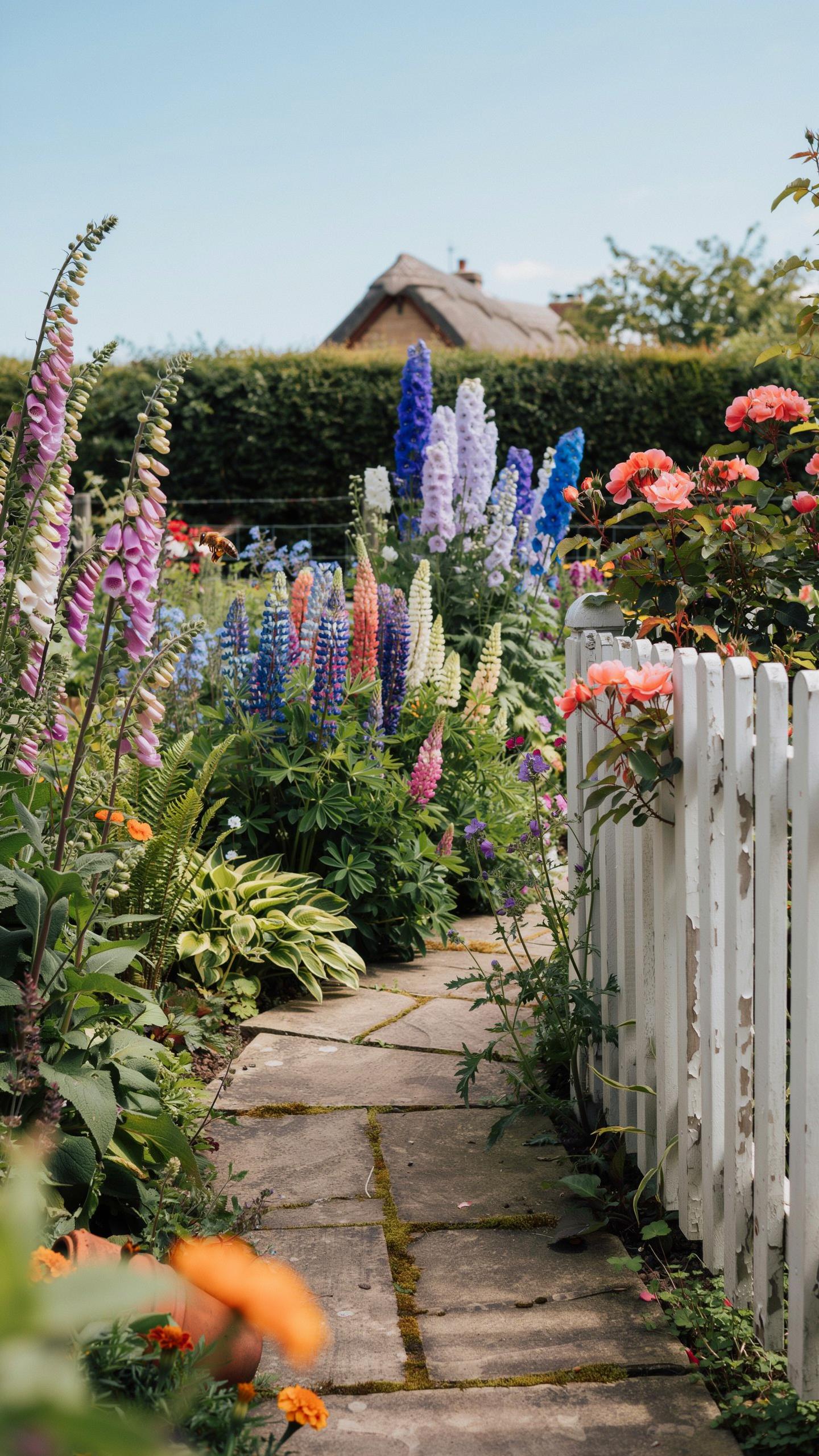
The structural backbone of cottage gardens relies on perennials that reach predictable heights and bloom windows. Plants like delphiniums, foxgloves, and salvias create vertical interest and anchor garden beds. These species handle poor soil, irregular watering, and neglect better than hybrid ornamentals. Selecting perennials with proven resilience eliminates constant maintenance while delivering the romantic garden aesthetic without the labor burden.
Reliable Returning Flowers That Return Each Year
Perennials designed for romantic gardens must survive winter dormancy, emerge reliably each spring, and flower without annual replanting. These plants store energy in their root systems, allowing them to return season after season. Gardeners choose perennials based on hardiness zone ratings, bloom timing, and growth habits that fit specific bed locations.
- Peonies: Bloom in late spring with large, fragrant flowers. Tolerate poor soil and neglect. Live 30 plus years with minimal care. Deer and pest resistant.
- Lavender: Flowers mid to late summer with purple spikes. Thrives in sandy or rocky soil. Attracts pollinators. Tolerates drought once established.
- Catmint: Blooms from early summer through fall. Produces purple blue flowers on bushy plants. Spreads reliably without invasiveness. Requires full sun and drainage.
- Coreopsis: Flowers continuously from early summer until frost. Low spreading habit suits cottage beds. Tolerates heat and poor soil. Self seeds for natural spread.
- Salvia: Species include blooms from spring through fall depending on variety. Attracts hummingbirds and butterflies. Handles dry conditions. Purple, pink, or red flower options.

These five perennials anchor romantic cottage gardens because they establish in year two, require division only every 5 to 7 years, and rarely need staking or deadheading. Plant them in groups of three or five for visual impact. Space them according to mature width to reduce crowding and disease pressure over time.
Emulating The Charm Of A British Cottage Garden
Traditional Elements UK
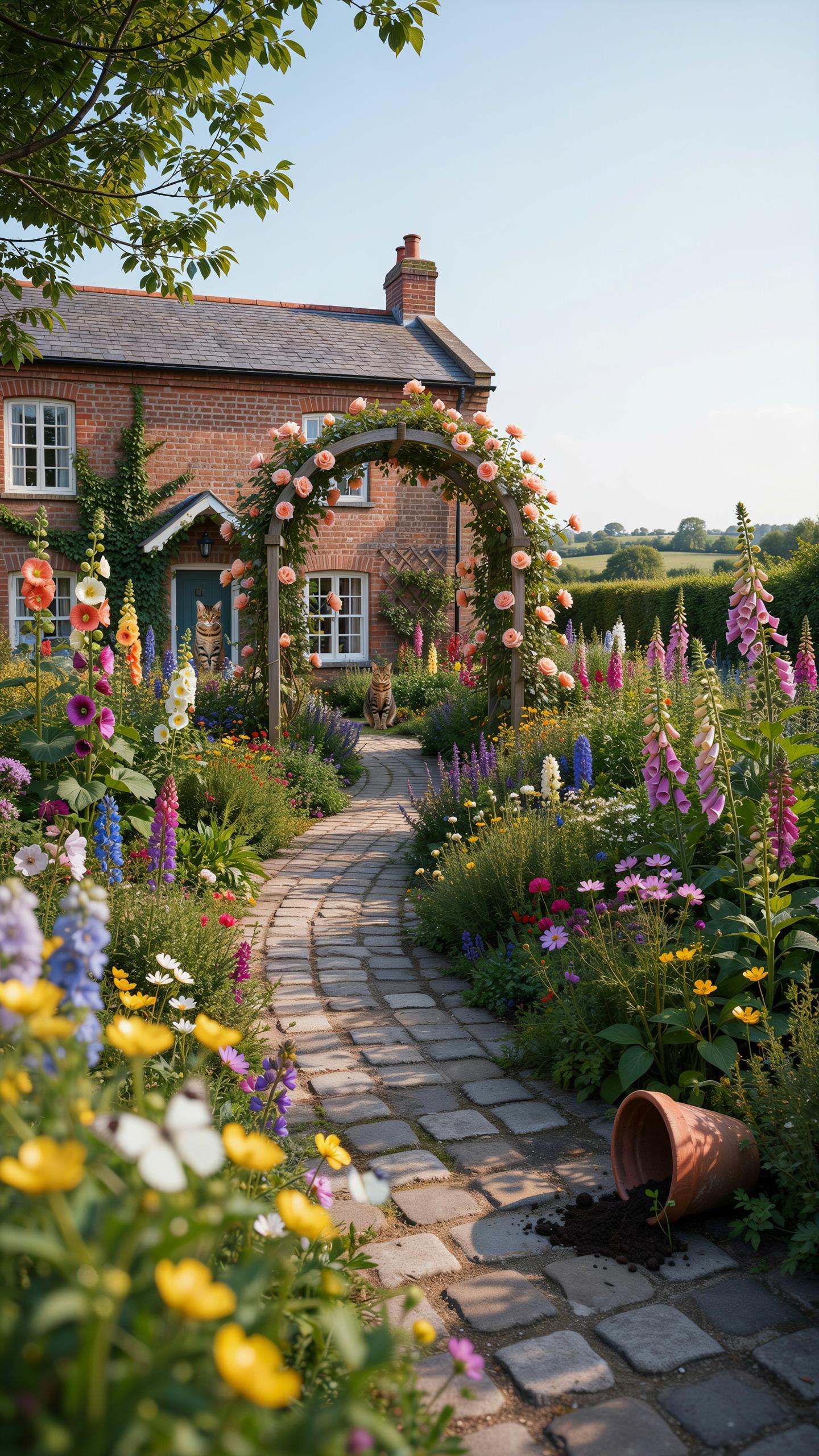
British cottage gardens developed from practical growing spaces into deliberate design statements during the Victorian era. Homeowners combined vegetable beds with flowering plants, creating dense, layered plantings rather than formal arrangements. Stone paths, wooden gates, and weathered benches became standard fixtures. These gardens prioritized function alongside aesthetics, allowing residents to grow food while maintaining visual interest year-round through strategic plant selection and placement.
The design philosophy rejected rigid symmetry in favor of organic clustering. Plants grew tightly together to maximize space and suppress weeds. Stone walls and hedgerows defined boundaries. Homeowners mixed perennials, shrubs, and climbing vines without concern for botanical classification. This approach created the textured, abundant appearance that defines cottage garden style today and remains the foundation for romantic garden design.
Pastel Color Palettes
Soft color combinations define romantic British cottage aesthetics. Pale pinks, lavenders, creams, whites, and muted blues dominate traditional schemes. These hues originated from available plant varieties rather than deliberate color theory. Early cottage gardeners worked with what thrived in their climate, creating naturally harmonious combinations. This restraint in color application produces calming effects and allows individual plant forms to stand out clearly.

Select pastel tones by observing how light hits your garden throughout the day. Morning sun intensifies cool tones like lavender and pale blue. Afternoon light warms creams and soft pinks. Group plants with complementary pale shades to create visual flow without harsh contrasts. Avoid bright magentas or neon oranges that clash with cottage garden authenticity. This disciplined approach to color ensures your romantic garden maintains coherence and timeless appeal.
Cultivating Joy With Essential Gardening Flowers
Essential Soil Preparation And Planting Tips
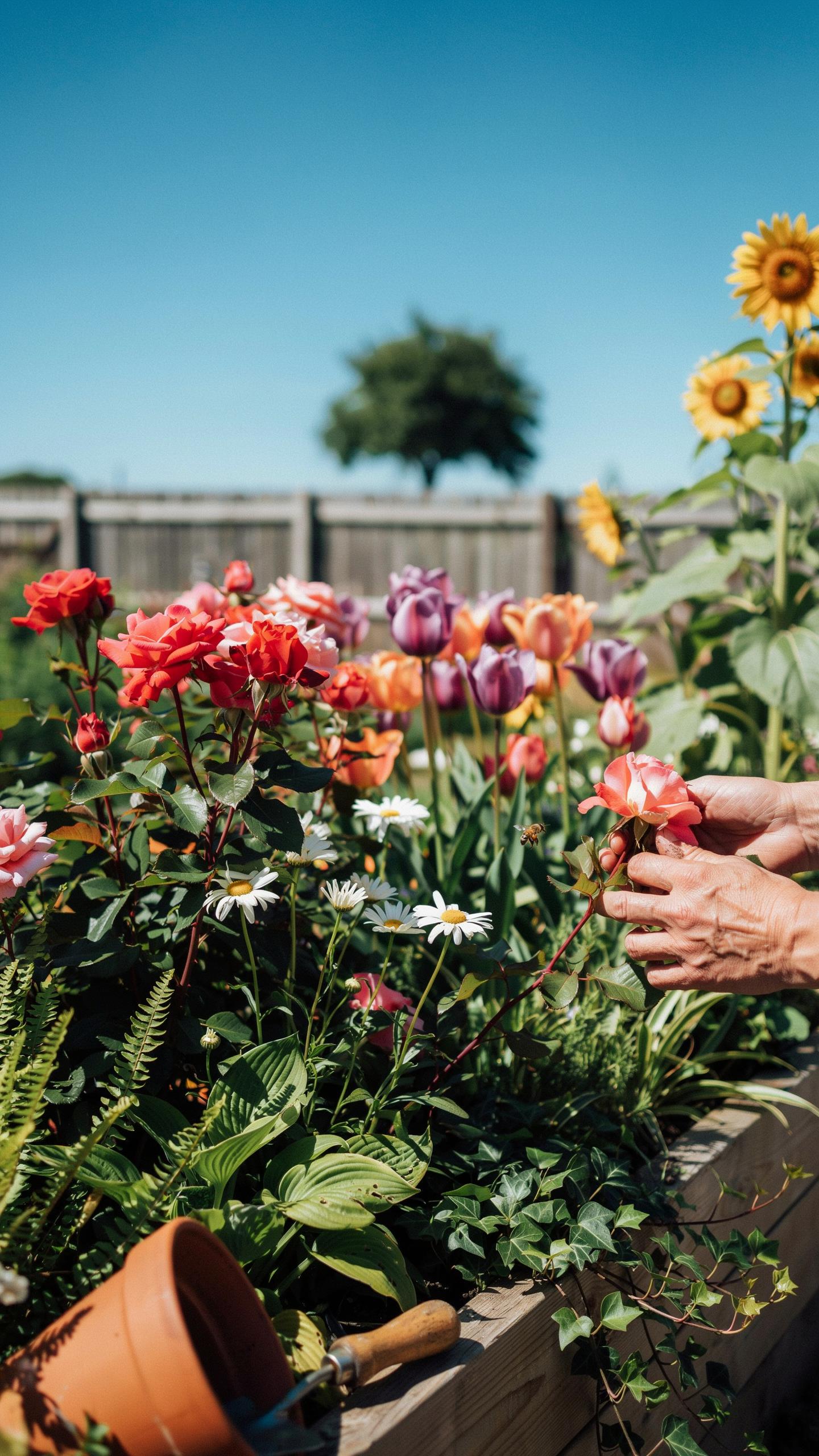
Romantic garden flowers demand soil that drains well while retaining nutrients. Test your soil pH before planting. Most cottage garden favorites like roses, lavender, and delphiniums thrive in neutral to slightly alkaline soil between 6.5 and 7.5 pH. Amend clay soil with organic matter to improve structure. Work compost or aged manure into the top 8 to 12 inches of soil before planting. This creates the foundation these plants need to establish strong root systems.
Spacing matters for air circulation and disease prevention. Plant specimens according to their mature width, not their current size. Crowded plants develop fungal issues and weaken. Dig holes twice the width of the root ball and just as deep. Set the plant so the soil line matches the nursery container. Water immediately after planting to eliminate air pockets and settle the soil around roots.
Best Maintenance Practices For Abundant Flowering
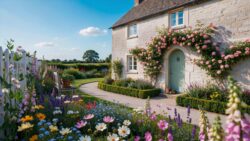
Deadheading extends bloom cycles and redirects energy into new flowers instead of seed production. Remove spent blooms as soon as they fade. This simple task keeps roses, peonies, and foxgloves producing flowers through the growing season. Cut stems above a healthy leaf node at a 45-degree angle. Consistent deadheading on roses can keep them flowering from June through the first frost in many regions.
Watering depth matters more than frequency. Water at the soil level early in the morning to reduce disease pressure. Most romantic garden plants need one inch of water per week from rainfall or irrigation. In dry periods, water deeply two to three times weekly rather than frequent shallow watering. Mulch around plants with two to three inches of organic material to retain moisture and moderate soil temperature.
Planning Your Perfect Cottage Garden Layout
Natural Paths Walkways
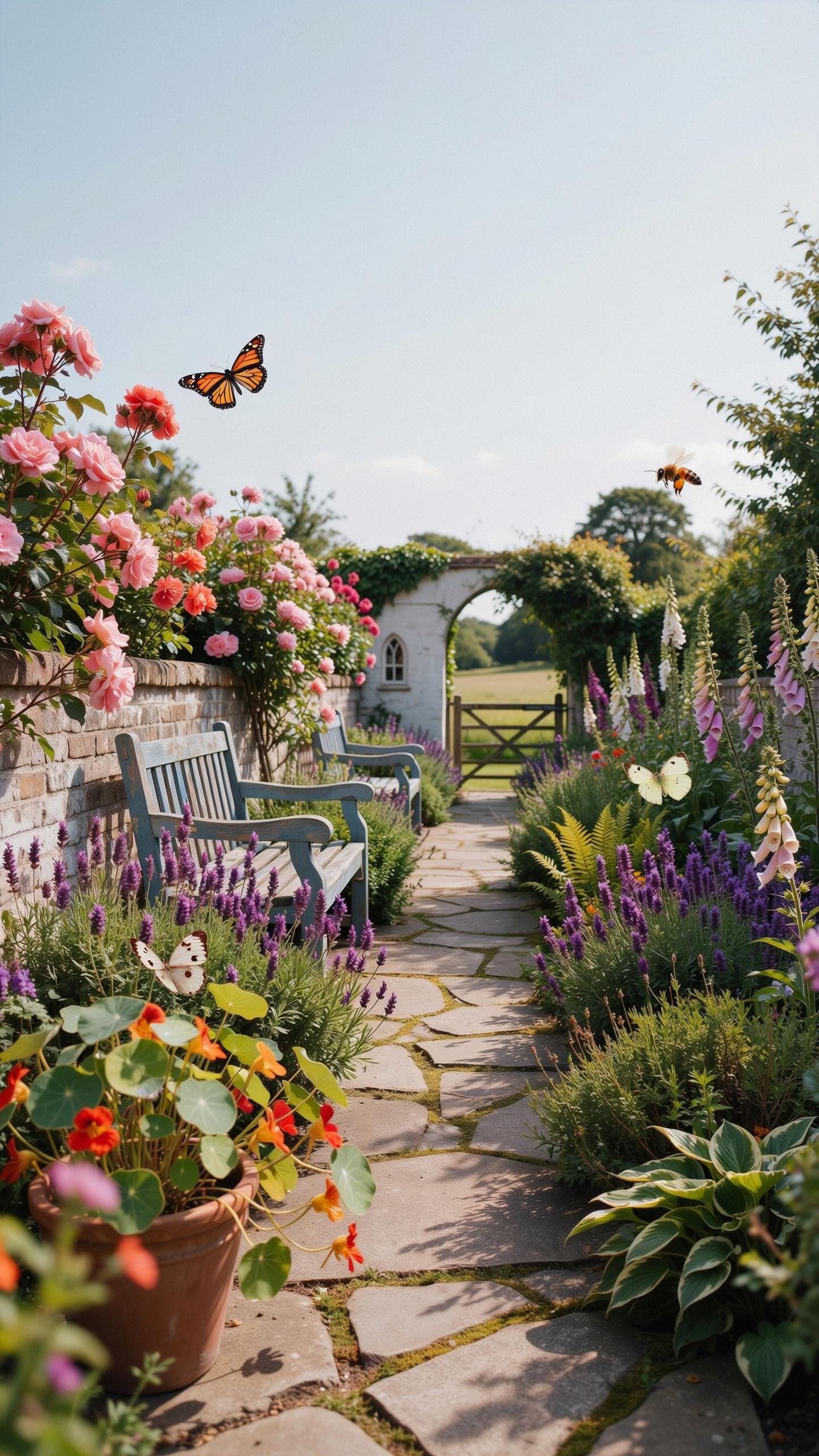
Crushed stone paths serve a functional purpose in cottage gardens. They define movement through planted beds, reduce foot traffic on soil, and prevent compaction around plant roots. Gravel shifts underfoot, signaling presence without visual harshness. Use locally sourced stone when possible to match regional aesthetics and reduce transportation costs. Lay landscape fabric beneath stone to suppress weeds and extend path life.
Width matters for walkway design. Primary paths need 3 to 4 feet of clearance for two people to walk side by side. Secondary paths can narrow to 2 feet. Edging with low plants or metal borders contains gravel and creates clean lines. Refresh crushed stone annually as pieces migrate and compact over seasons.
The garden suggests there might be a place where we can meet nature halfway. It is the gentle scent of lavender and the climbing rose that turn a simple house into a sanctuary for the soul.
Layering Heights For Natural Depth
Arrange plants by mature height to create visual depth and prevent tall specimens from shadowing shorter ones. Place tallest plants toward the back or center of beds, moving progressively shorter plants forward. This tiered approach maximizes light exposure and reduces disease pressure from poor air circulation. Heights typically range from 4 to 6 feet for backdrop plants down to 6 to 12 inches for borders.
Use intermediate height plants as transition layers between tall and short specimens. Mid-height perennials and shrubs running 2 to 3 feet tall fill visual gaps and soften hard transitions. Stagger planting positions within height categories to avoid rigid rows. Overlap plant forms slightly so foliage and flowers mask bare stems of neighboring specimens.
Mastering The English Cottage Garden Design Layout
Borders And Fences
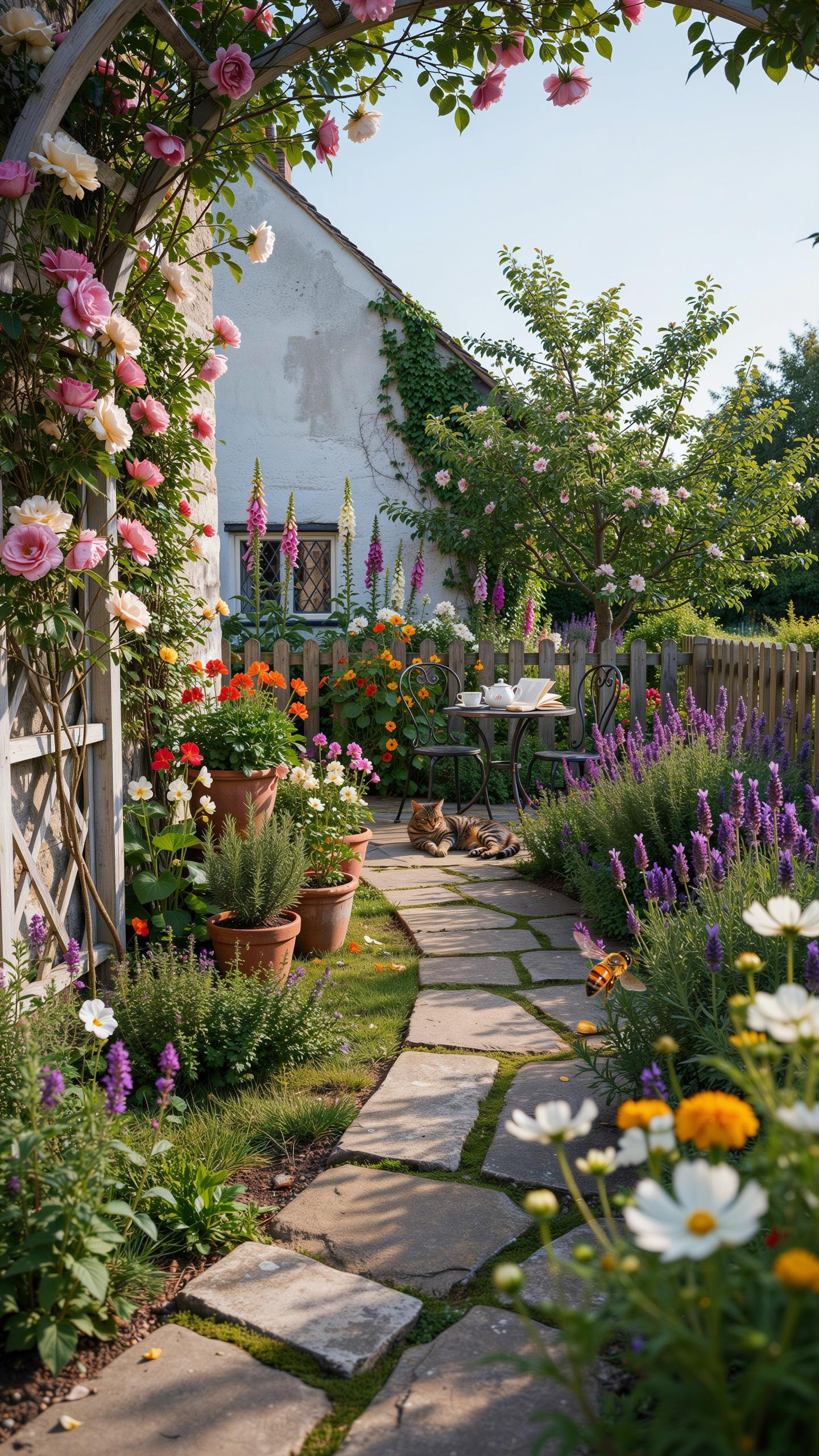
English cottage gardens rely on defined borders to separate planting zones from walkways and neighboring properties. Borders serve a functional purpose: they contain soil, prevent plant sprawl into pathways, and create visual compartments within the garden. Traditional cottage gardens use shallow borders, typically 2 to 3 feet deep, positioned along edges where they catch morning light and allow easy maintenance access.
Wood fencing and rustic gates frame cottage gardens and establish boundary lines that define the garden’s perimeter. These elements require regular maintenance to prevent rot and deterioration. Use untreated or naturally weathered wood rather than pressure-treated lumber, as cottage gardens emphasize authenticity and natural material aging. Picket fences, woven hurdles, and simple post and rail designs all work effectively in romantic garden styles.
Hardscape Elements
Stone pathways, gravel beds, and weathered pavers create functional hardscape that supports romantic garden layouts without competing visually with plantings. Stone materials age naturally and develop patina over time, enhancing the cottage aesthetic. Position hardscape elements to guide movement through the garden and reduce soil compaction around frequent walking routes.

Weathered accents like salvaged stone troughs, aged terracotta pots, and worn bench seats integrate seamlessly into cottage gardens. These elements contribute texture and focal points without requiring new construction. Source reclaimed materials from local suppliers or garden salvage operations to maintain authenticity and reduce environmental impact while building character into the garden space.
Creative Inspiration For A Flower Garden Idea
Small Cozy Nooks
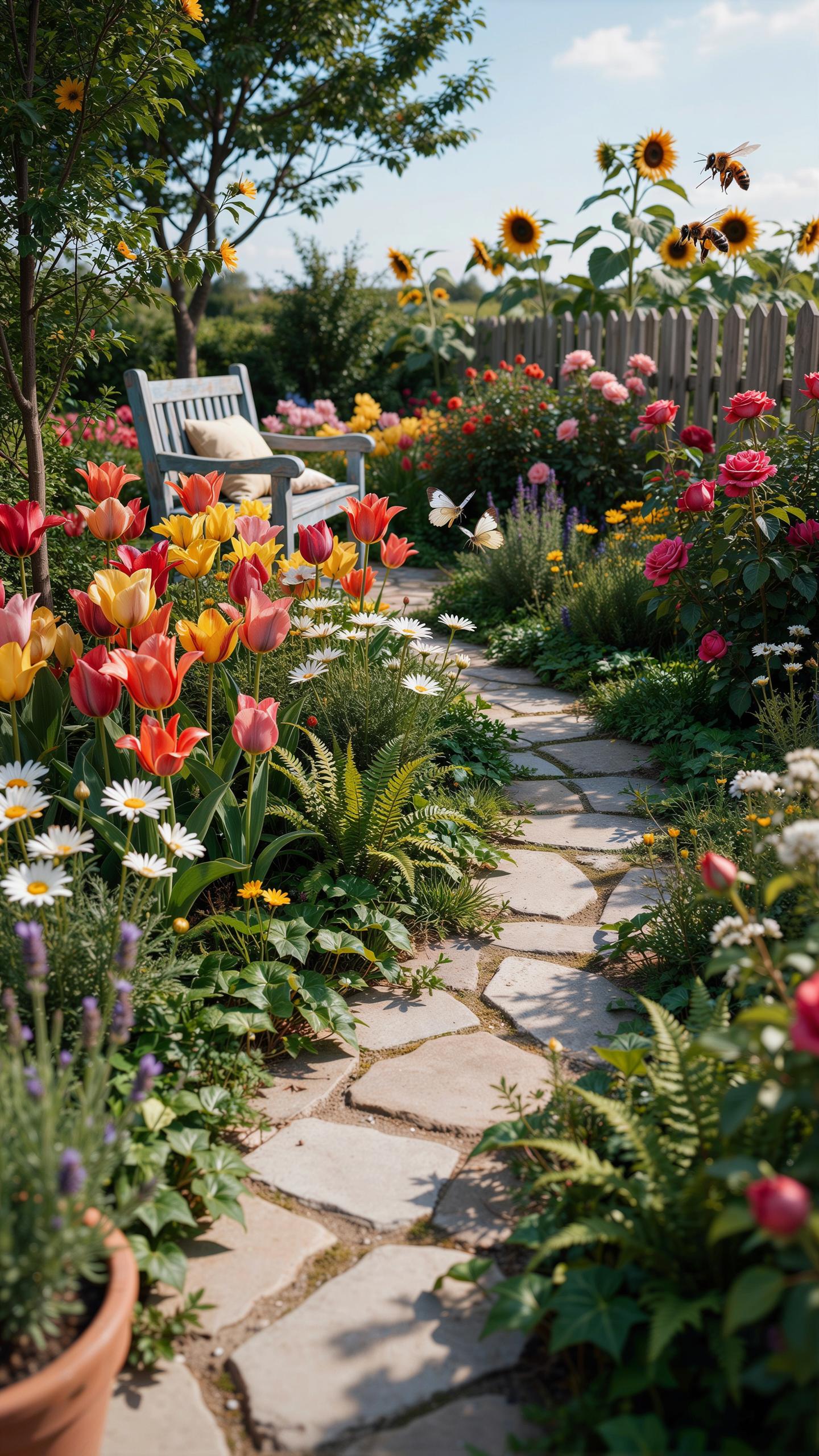
Small nooks work because they create defined spaces within your garden. Use hardscape elements like gravel paths, stone benches, or wooden arbors to mark boundaries. Plant dense shrubs and climbing vines around the perimeter. This containment strategy makes visitors pause and linger in specific areas.
Positioning matters for nook functionality. Place seating where it faces away from main garden views to create privacy. Orient benches toward focal points like flowering specimens or water features. Ensure paths lead visitors directly to these spots without confusion or dead ends.
Essential Accents To Elevate Your Outdoor Space
Accents serve as visual anchors that stop the eye and define garden character. Strategic placement of objects like urns, sculptures, or birdbaths breaks up plant masses and creates rhythm. These elements work hardest when positioned at eye level or on elevated surfaces.
- Stone Urns: Anchor corner spaces and ground-level planting beds. Pair with trailing plants like ivy or calibrachoa for visual weight and balance.
- Vintage Benches: Function as both seating and sculptural elements. Position them where sight lines intersect or at garden edges for maximum impact.
- Arbors and Trellises: Frame views and support climbing plants like clematis or roses. Install them perpendicular to main pathways to create visual transitions.
- Water Features: Provide sound and movement that draw attention. Place birdbaths or small fountains at focal points visible from multiple garden areas.
- Lanterns or Light Fixtures: Illuminate pathways and highlight specimen plants at dusk. Use them to create depth and guide movement through spaces after sunset.
Accent placement requires proportion and spacing discipline. Overcrowding dilutes impact and clutters sightlines. Space accents at least 8 to 10 feet apart in average gardens. This distance allows each piece to command attention while maintaining visual coherence throughout the space.
Beautiful Landscaping With Herbs Front Yards
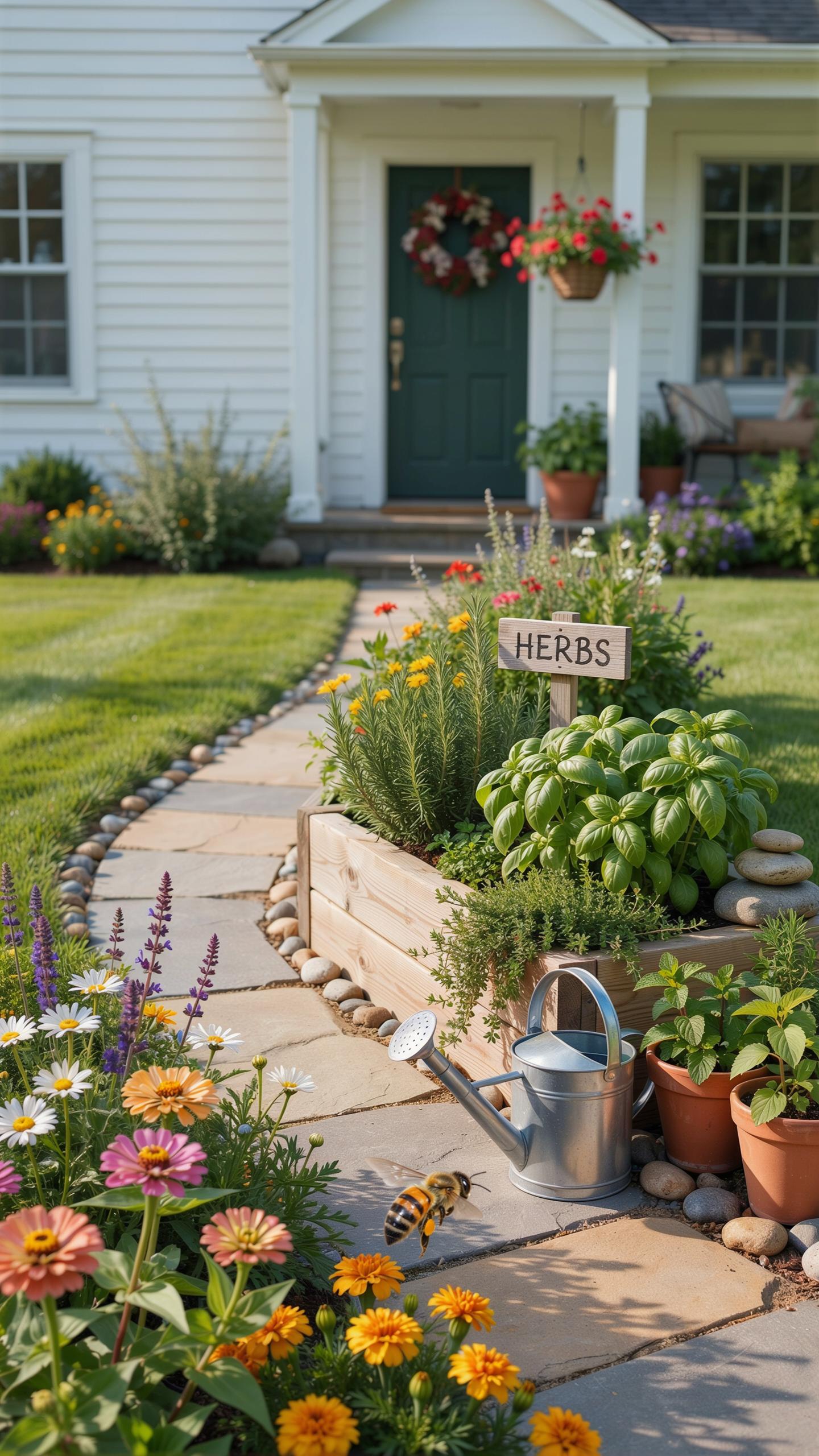
Edible Fragrant Borders
Herb borders serve dual functions in front yard design. They deliver fragrance and flavor while creating defined edges along walkways and entryways. Lavender, rosemary, and thyme tolerate foot traffic and poor soil. These plants require minimal maintenance once established. Plant them 12 to 18 inches apart to allow mature spread. Position taller varieties toward the back to prevent shading shorter plants.
Fragrant herbs release scent through leaf contact, not just flowers. Brushing against foliage as visitors approach your door amplifies the sensory impact. Oregano and marjoram perform well in full sun with adequate drainage. These species attract pollinators while providing culinary value. Harvest regularly to maintain compact growth and encourage dense foliage development.
Functional Groundcovers
Creeping thyme and woolly thyme function as living groundcovers that tolerate moderate foot traffic. They spread horizontally while remaining low, typically 2 to 4 inches tall. These herbs suppress weeds effectively and reduce maintenance costs. Both species prefer well-draining soil and full sun exposure. They establish quickly in poor conditions where grass struggles to grow.
Chamomile and creeping oregano provide alternative groundcover options for rocky or sloped areas. These herbs fill gaps between pavers and soften hardscape edges. They withstand drought better than turf grass once roots develop. Establish plantings from transplants rather than seed for faster coverage. Mow or trim annually to maintain uniform height and prevent woody growth.
Frequently Asked Questions

What are the essential characteristics of a romantic garden style for beginners?
Achieving this aesthetic starts with prioritizing soft textures, fragrant blooms, and a pastel color palette. For beginners, a romantic garden style plant list should focus on low-maintenance classics like lavender, peonies, and climbing roses. These plants create a whimsical, overgrown look that feels both intimate and timeless. By layering different heights and incorporating delicate foliage, you can easily transform even a small patio into a cozy, dreamy horticultural sanctuary.
How can I arrange plants to create a cozy and intimate atmosphere?
To cultivate a sense of intimacy, focus on vertical interest and curved pathways rather than rigid lines. Use your romantic garden style plant list to select climbing vines like clematis or jasmine to drape over trellises and doorways. Planting in dense, lush clusters creates a “secret garden” effect that feels enclosed and private. Hedging with fragrant shrubs also helps dampen noise, ensuring your outdoor space feels like a secluded, romantic retreat.
Can I achieve a romantic garden look on a limited budget?
Absolutely! You can build a stunning landscape affordably by focusing on perennials and self-seeding annuals. Many items on a romantic garden style plant list, such as foxgloves, cosmos, and hollyhocks, are inexpensive to grow from seed and will return year after year. Additionally, trading cuttings with neighbors or buying smaller “starter” plants allows you to fill your space with classic charm without overspending on mature, nursery-grown specimens.