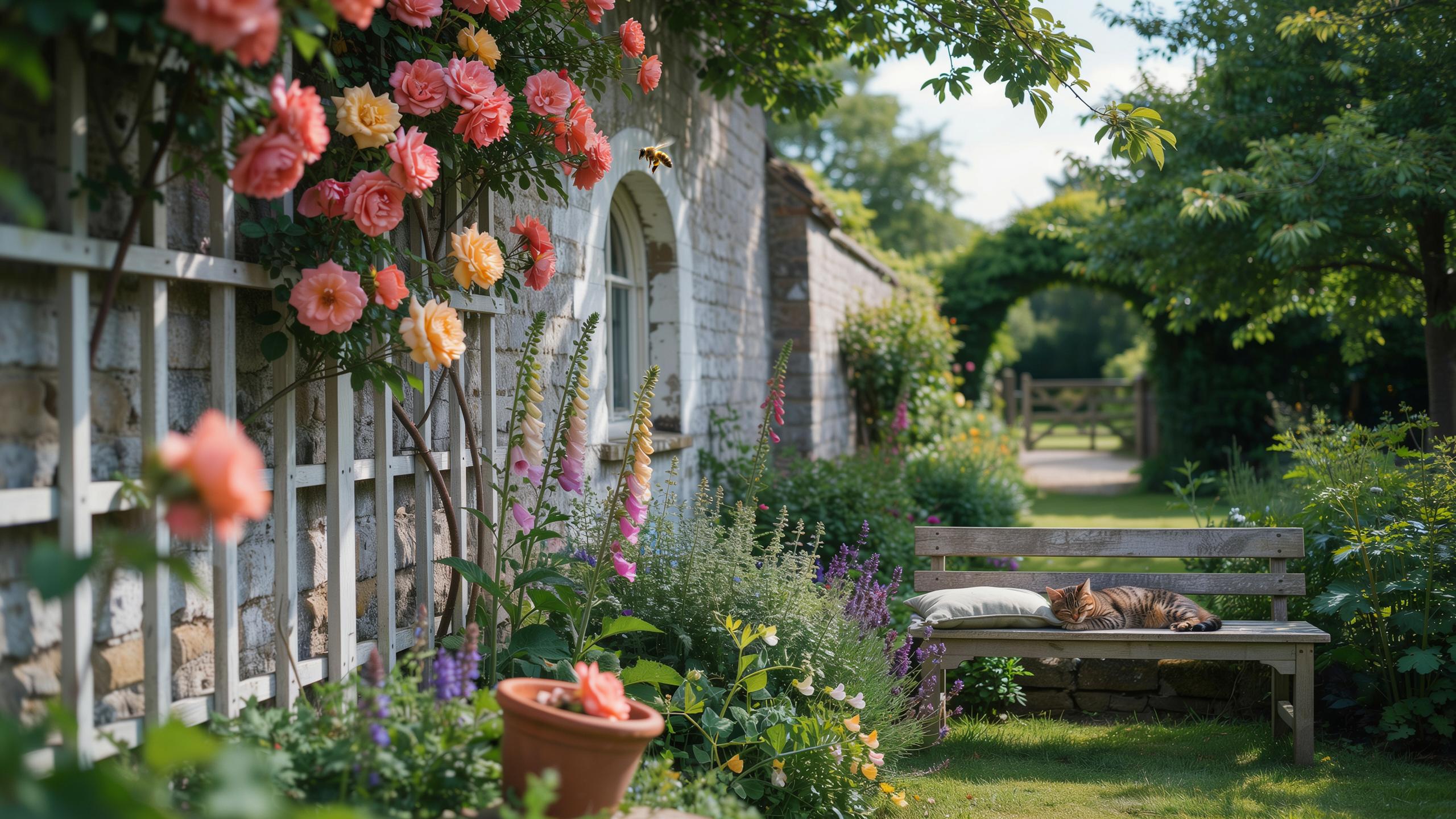
The Timeless Charm Of Cottage Garden Climbing Roses
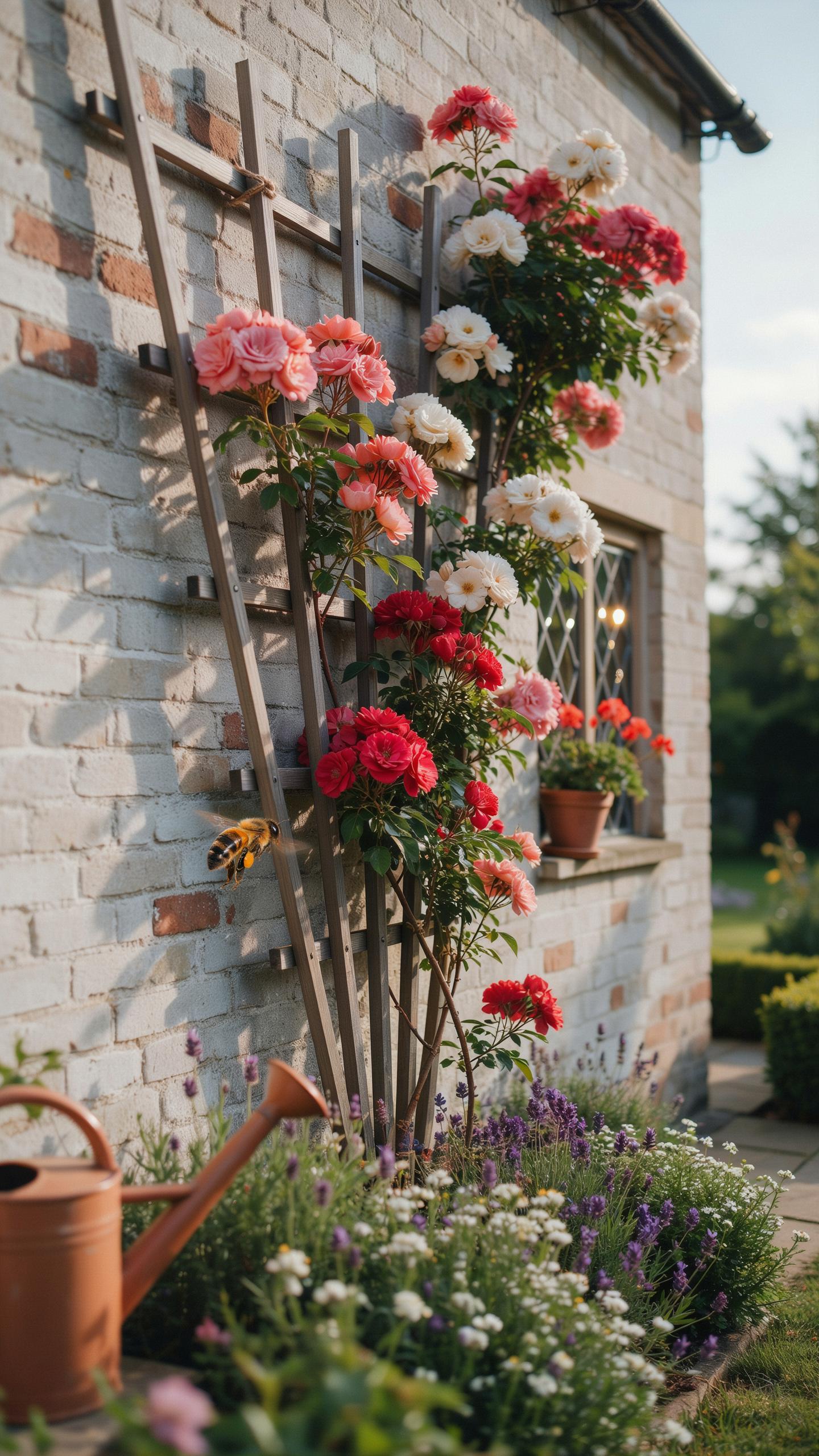
Defining The Cottage Aesthetic
Cottage garden climbing roses work as vertical elements in informal landscapes. These plants attach to structures like walls, fences, and archways. They cover hard surfaces with foliage and flowers. Climbers reach eye level and above, filling space that ground-level plants cannot. This vertical approach maximizes growing area in smaller gardens. The result is dense color and fragrance distributed throughout the garden space rather than confined to beds.
Climbing roses soften architectural lines of homes and outbuildings. They break up solid wall surfaces and create visual transitions between structures and gardens. The flexible canes weave through supports, adapting to whatever framework you provide. This adaptability makes them practical for gardens with varying conditions and layouts. Unlike rigid shrubs, climbers conform to your design intent rather than fighting it.
Why Romance Drives Climber Popularity
Climbing roses deliver visual abundance that ground-hugging varieties cannot match. Their long canes produce flowers at multiple heights simultaneously. Archways and pergolas draped with climbing roses create natural focal points. The growth pattern appears spontaneous and generous rather than controlled or geometric. This characteristic appeals to gardeners seeking informal rather than manicured aesthetics.
Climbers evoke historical garden styles from European countryside estates. Many heirloom varieties originated in 18th and 19th century gardens where they adorned structures routinely. The romantic associations stem from this documented history rather than modern invention. Gardeners select climbers specifically to replicate these traditional arrangements. The nostalgia factor directly influences plant selection and garden design decisions for cottage style gardens.

Creating An Authentic English Cottage Garden Atmosphere
Classic Plant Combinations With Roses
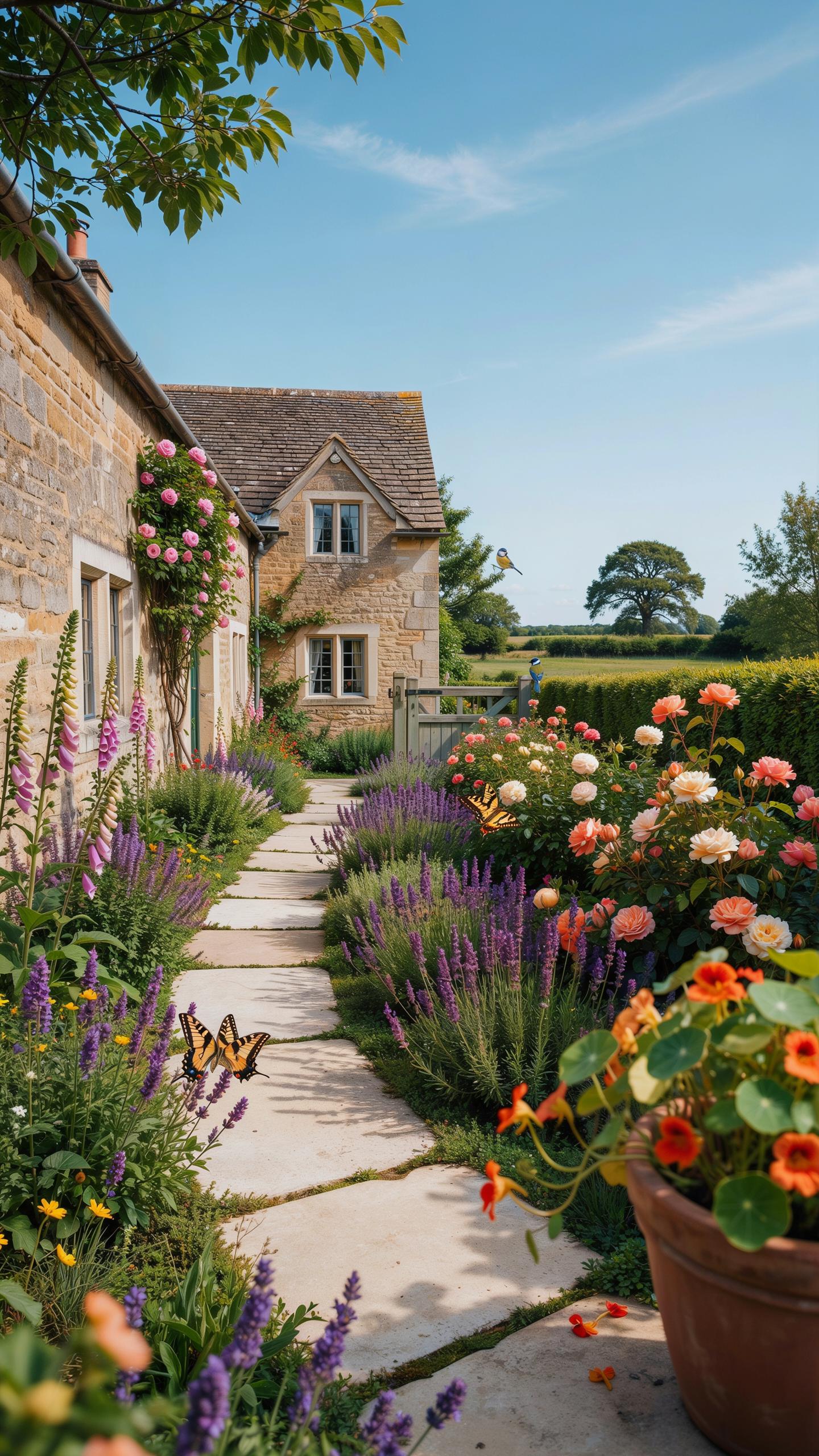
Pair climbing roses with traditional perennials to build authentic cottage garden structure. Purple lavender, delphiniums, and foxgloves work as functional companions. These plants reach heights that conceal bare woody stems at the rose cane base. The combination creates visual continuity and fills gaps in your planting scheme. Layer these perennials in front of roses to eliminate the stark appearance of exposed wood.
Spacing matters for this combination strategy. Plant lavender and foxgloves 18 to 24 inches from your rose base. Delphiniums need room for air circulation due to their height and density. This arrangement prevents competition for nutrients while maintaining the dense, full aesthetic cottage gardens demand. The perennials bloom at different times, extending your garden’s color window beyond the rose season.
Selecting Historic English Rose Varieties
David Austin roses deliver the structural and fragrance elements cottage gardens require. Varieties like ‘The Pilgrim’ and ‘Gertrude Jekyll’ produce multi-petaled blooms resembling old garden roses. Both release strong old rose fragrances that carry across garden spaces. These cultivars climb reliably and repeat bloom throughout the season. Their heritage appearance aligns with traditional English landscape design expectations.

‘The Pilgrim’ reaches 8 to 10 feet when trained on structures, making it suitable for tall walls or arbors. ‘Gertrude Jekyll’ climbs to similar heights with deeper color saturation. Both varieties tolerate partial shade better than many modern climbers. They require standard rose care including pruning and disease management. Select these varieties when historical authenticity and fragrance are primary design objectives.
Designing A Lush Climbing Rose Garden Layout
Structural Supports And Pathways
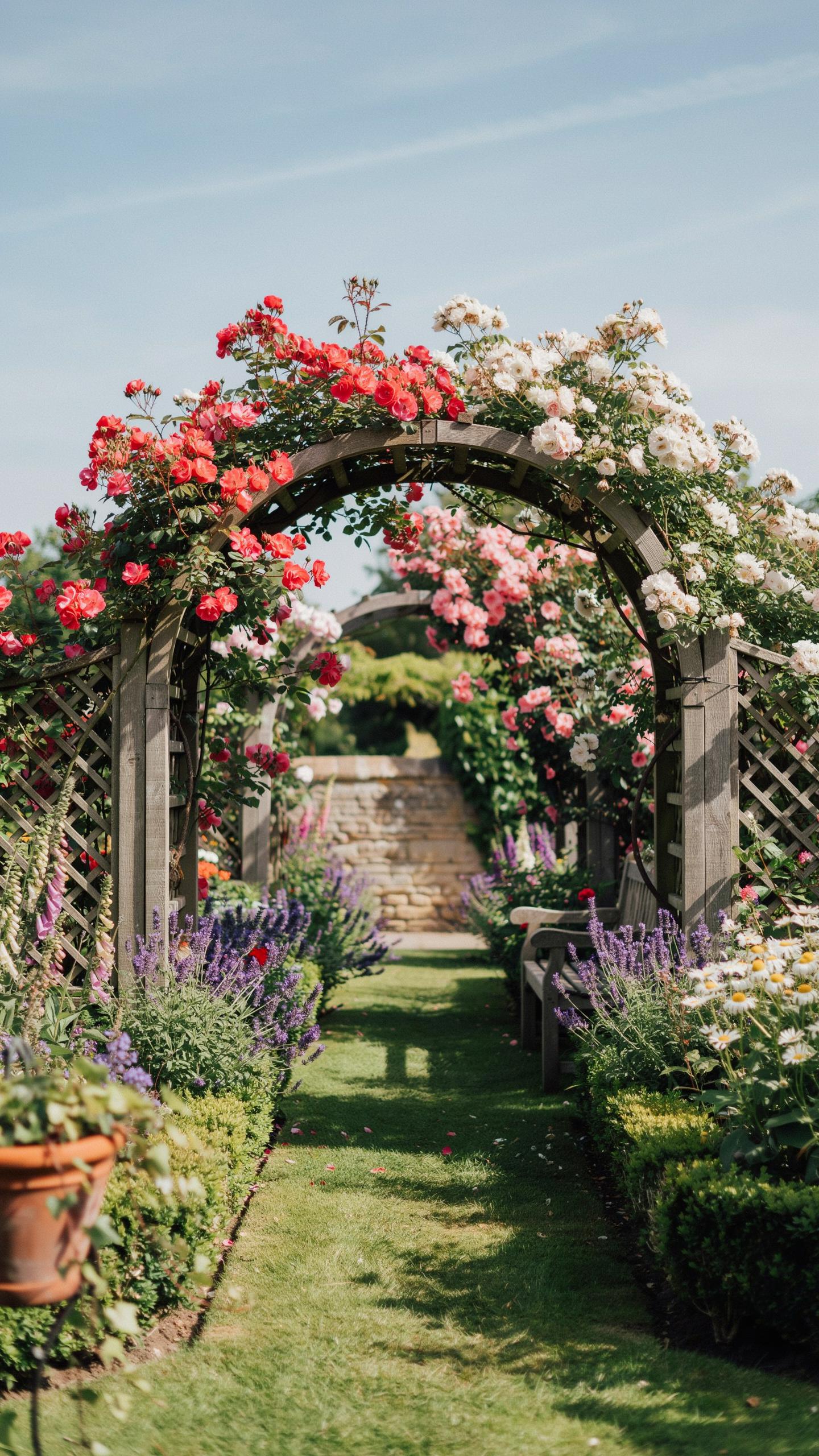
Climbing roses need solid infrastructure to produce maximum blooms. Cedar arbors, wrought-iron obelisks, and pergolas provide the framework roses need to grow vertically. These structures distribute weight evenly and withstand seasonal wind and rain. Choose materials based on your climate and maintenance capacity.
Horizontal cane training delivers results. When you weave canes along pathways horizontally instead of vertically, lateral shoots multiply significantly. More lateral shoots mean more flowering points along the entire structure. This technique transforms sparse vertical growth into dense, bloom-covered coverage. Position pathways to channel foot traffic while protecting emerging growth.
Essential Tools For Rose Garden Layouts
Designing a climbing layout requires specific structural components to ensure healthy growth and robust support:
- Sturdy Heavy Duty Wooden Or Metal Trellis Systems: Provide primary support framework that withstands mature rose weight while allowing air circulation through the structure.
- Soft Flexible Plant Ties: Secure canes without crushing bark or restricting nutrient flow through stems as the plant expands.
- Sharp Bypass Pruning Shears: Make clean cuts that heal quickly and resist disease entry compared to crushed or torn cane tissue.
- Heavy Duty Leather Gardening Gloves: Protect hands from thorns while maintaining grip strength during tie installation and pruning work.
- Garden Twine Or Soft Cordage: Alternative fastening material that adjusts as canes thicken without creating damaging pressure points.

Invest in quality tools upfront to reduce replacement costs and maintain precision throughout the growing season. Damaged tools create poor cuts that invite disease and slow your layout work. Replace shears annually or when edges dull to maintain cutting efficiency and plant health.
Inspiration From A French Country Rose Garden
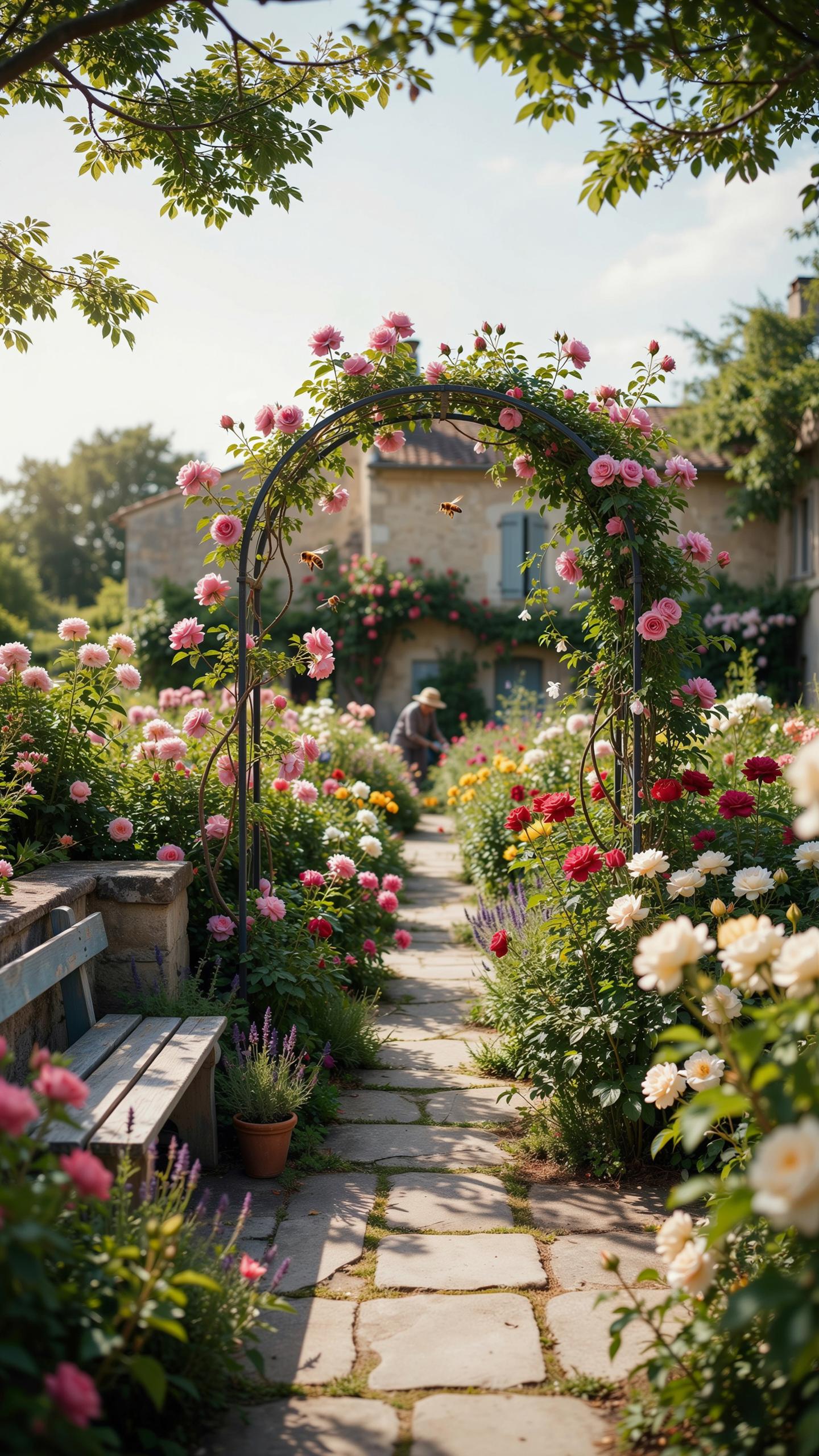
Soft Pastel Palettes And Symmetry
French country gardens operate on a proven color strategy. Soft blush pinks, creamy whites, and pale apricots dominate because they create visual harmony without competing for attention. This restraint matters. You pair these climbing roses with formal boxwood hedges to establish structure and contrast. The result is intentional design, not random planting.
The logic is straightforward: limiting your color palette forces you to focus on plant form and texture instead. Formal hedges anchor the design and provide year-round structure when roses rest. This approach works because it respects the garden’s architectural bones. You’re building a framework first, then softening it with roses.
Choosing Classic French Varieties
Eden, also called Pierre de Ronsard, delivers massive deeply cupped blooms in cream and pink. This cultivar performs reliably on walls and arbors, reaching 10 to 12 feet with proper support. Zephirine Drouhin, a bourbon climber, offers an advantage that matters: it has no thorns. Deep rose pink blooms cover the plant repeatedly throughout the season, and it tolerates partial shade better than most climbing roses.

Both varieties handle European climates and adapt well to North American regions with similar conditions. Eden requires moderate pruning to maintain shape and encourage blooming on new wood. Zephirine Drouhin performs best with minimal intervention, making it practical for low maintenance schemes. Choose based on your climate zone and available maintenance time, not aesthetics alone.
Enhancing A Rustic House With Climbing Roses
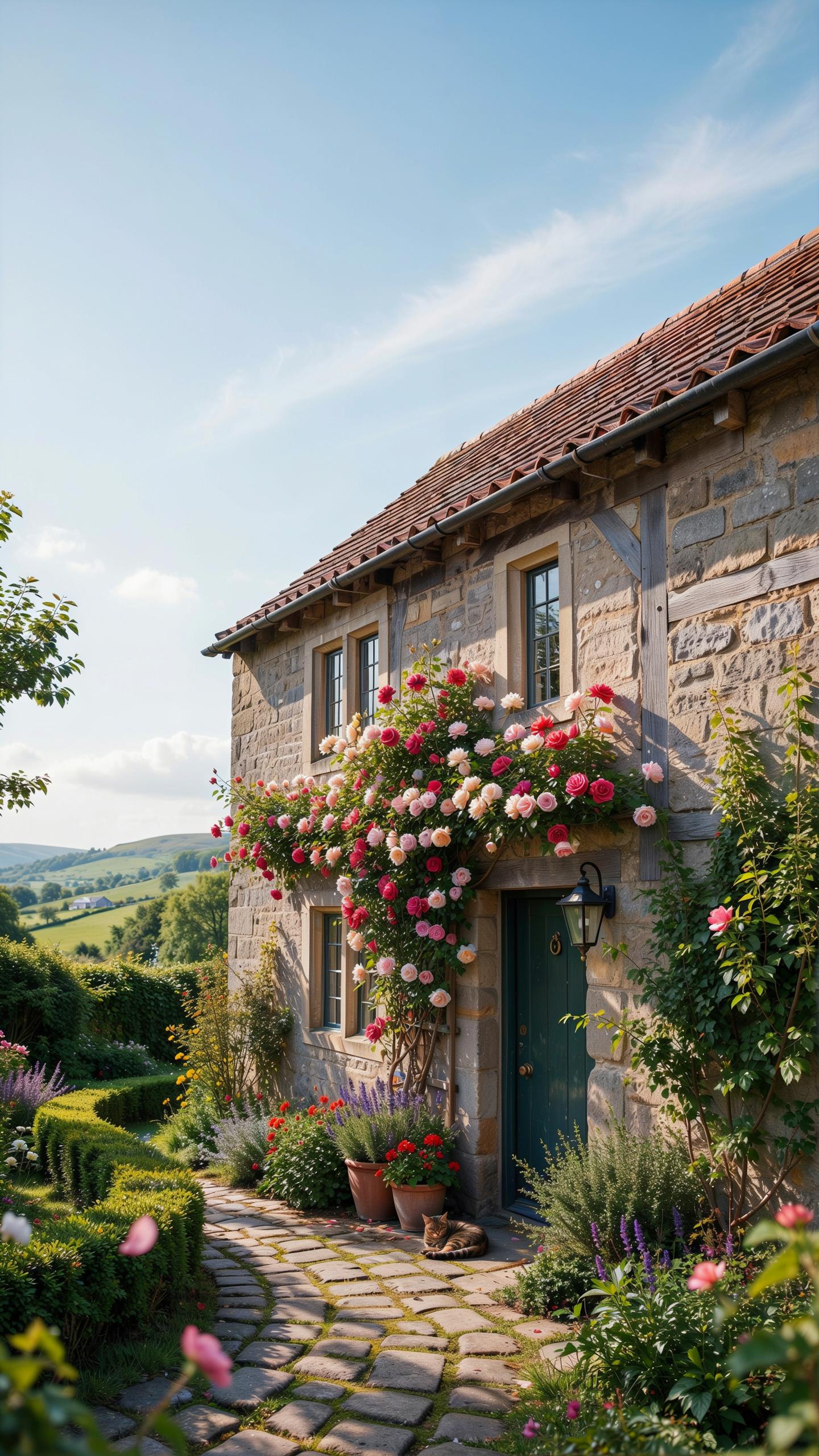
Accentuating Weathered Wood Textures
Climbing roses create visual contrast against weathered timber siding. Dark crimson varieties like Tradescant or deep reds stand out sharply against grey or brown wood. Butter-yellow cultivars such as Gloire de Dijon perform well against dark timber. The living texture of blooms plays against the static grain and weathering patterns of aged wood, creating architectural interest without renovation.
Weathered wood naturally absorbs and reflects light differently than new materials. Climbing roses exploit these variations by placing color in recessed areas and along vertical surfaces. The matte finish of aged wood provides a neutral backdrop that intensifies rose color saturation. This combination requires no additional treatments or finishes to achieve visual impact.
Training Canes Around Rustic Architecture
Heavy-duty screw eyes and galvanized wire form the foundation for supporting mature climbing roses on timber structures. Install screw eyes into solid wood beams and around window frames, spacing them 18 to 24 inches apart. Galvanized wire resists rust and withstands the weight of established plants without degrading the underlying wood surface. This infrastructure prevents canes from rubbing or pulling away from siding.

Route wire horizontally and vertically to guide cane growth along architectural features like porch beams and entryways. Secure new cane growth to wire as it emerges, training it gradually rather than forcing mature wood into position. The framework supports the plant’s mature weight while distributing load across multiple anchor points. Maintenance involves checking wire tension annually and adjusting as the plant expands.
Adorning A Stone House With Roses For Natural Contrast
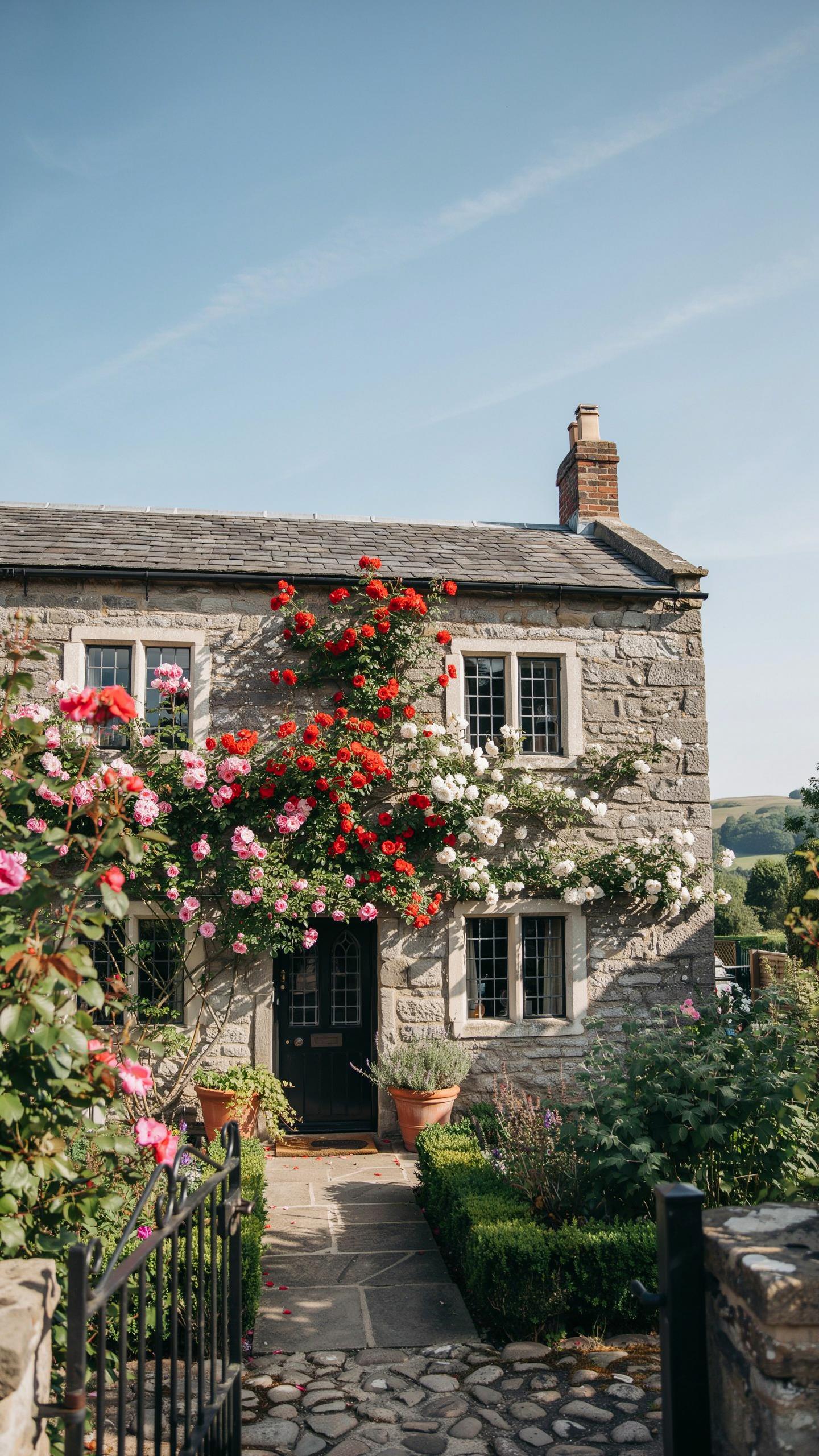
Soften Cold Masonry With Living Color
Stone walls create a hard visual boundary. Roses break that boundary by introducing organic texture and color. The contrast works because stone remains static while roses move with light and seasons. This dynamic relationship makes the house feel grounded rather than fortress-like. Climbing roses specifically exploit this by covering large wall areas, transforming cold surfaces into living backdrops.
The textural pairing matters tactically. Rough stone grain contrasts sharply with delicate rose petals and smooth foliage. This contrast draws the eye and makes both elements more noticeable. Stone anchors the composition while roses add movement and warmth. The result integrates the structure into its landscape instead of isolating it.
Thermal Considerations For Stone Walls
Stone absorbs heat during daylight and releases it slowly after sunset. South and west facing stone walls reach temperatures ten to fifteen degrees higher than ambient air on hot days. This thermal stress demands rose varieties bred for heat resilience. New Dawn and Cecile Brunner handle these microclimates effectively because they tolerate sustained high temperatures without dropping blooms or foliage.

Water management becomes critical in thermally stressed zones. Stones radiating heat dry soil faster around wall bases. You must water more frequently when roses grow against sun-exposed masonry. Mulching heavily around the root zone reduces moisture loss and keeps soil cooler. Morning watering allows plants to hydrate before heat peaks, improving their stress tolerance throughout the day.
How To Secure And Train Roses On House Wall Surfaces
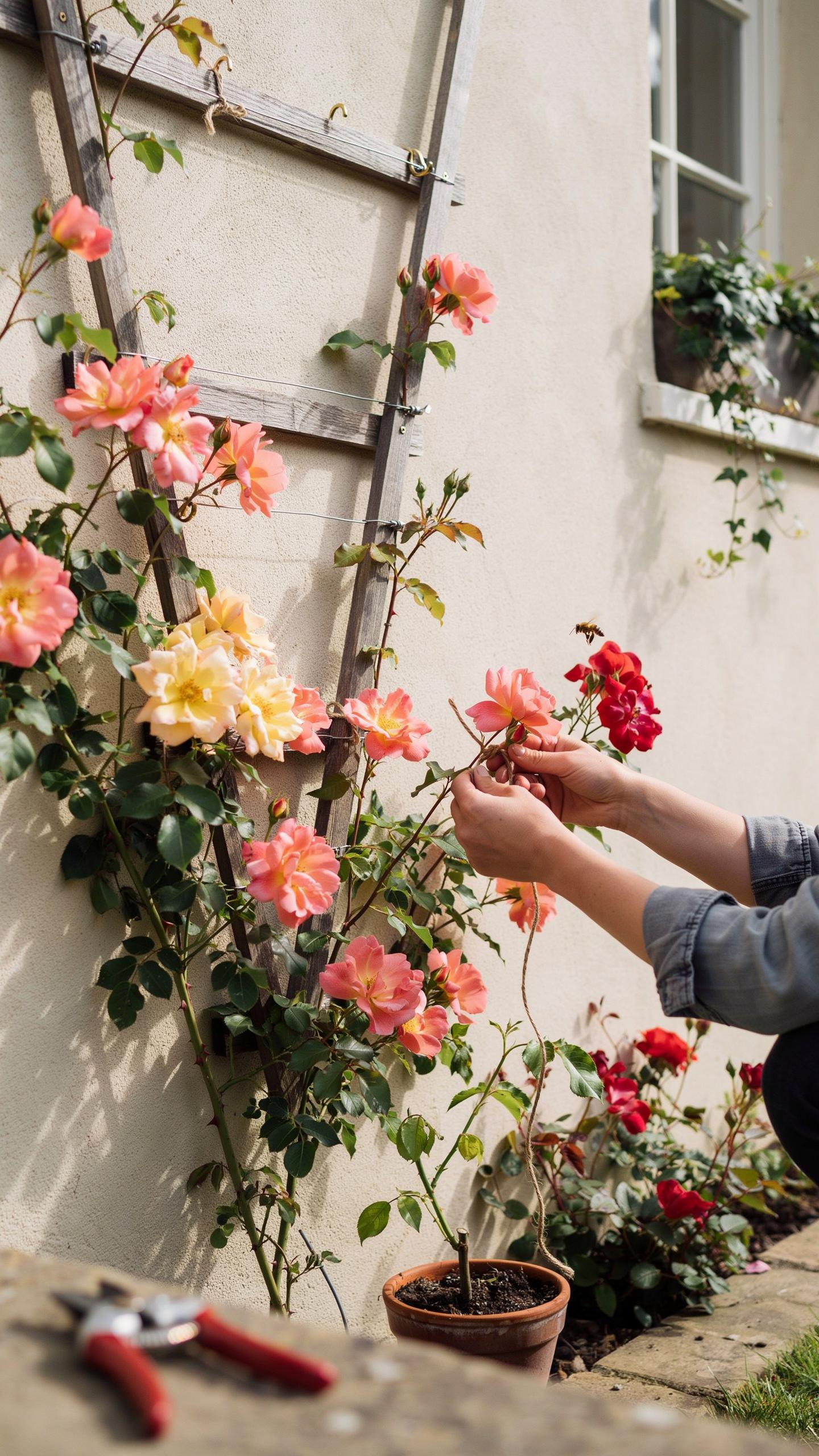
Best Trellis Systems For Wall Installations
Climbing roses need solid anchor points to handle cane weight and wind load. Your wall surface determines which system works best. Brick and stucco accept different fasteners than wood siding. Choose a system rated for your climate’s wind speeds and your rose variety’s mature weight.
- Tensioned Stainless Steel Wire Guide Kits: Anchor wires directly into brick or stucco using masonry anchors. Wires run horizontally or in a fan pattern. This system costs less than alternatives and allows easy cane repositioning as roses grow upward.
- Expandable Wooden Trellis Panels On Standoffs: Mount panels away from the wall on metal brackets. Wood panels accept tie materials easily and match cottage garden aesthetics. Replace panels every 8 to 10 years as wood degrades from moisture and UV exposure.
- Heavy Duty Masonry Eye Bolts With Concrete Anchors: Screw bolts directly into walls using concrete anchors rated for your wall composition. Each bolt handles concentrated load at a single point. Space bolts 18 to 24 inches apart vertically and horizontally for balanced support.
- Modular Metal Grid Panels For Air Circulation: These panels mount on standoffs creating air gaps behind foliage. Metal resists rust when made from galvanized or powder coated steel. Grids come in 2 to 4 foot sections for custom wall coverage.
- Combination Systems Using Multiple Methods: Layer wire with panels or combine bolts with grid sections. Hybrid approaches distribute load across the wall surface. This reduces stress on individual anchors and increases system longevity.
Inspect your chosen system twice yearly for rust, loose fasteners, or shifting panels. Replace corroded hardware before structural failure occurs. Test anchor strength by applying steady downward pressure to loaded sections.
The fragrance of cottage roses is the scent of home, weaving memories around every window and door. A house with climbing roses becomes a sanctuary where the soul finds rest among the blooms.
Preventing Wall Damage And Moisture Retention
Mount all trellis systems at least three to four inches away from the wall surface. This gap creates an air channel that prevents moisture from pooling behind dense foliage. Trapped moisture accelerates mold growth, wood decay, and damage to mortar joints or paint.

Roses trained directly against walls without spacing develop fungal diseases at twice the rate of properly spaced plants. The confined air promotes mildew and black spot infections. Metal standoffs or wooden spacer blocks create the necessary separation consistently across the installation.
Revitalizing An Old House With Climbing Roses
Integrating History With Botanical Growth
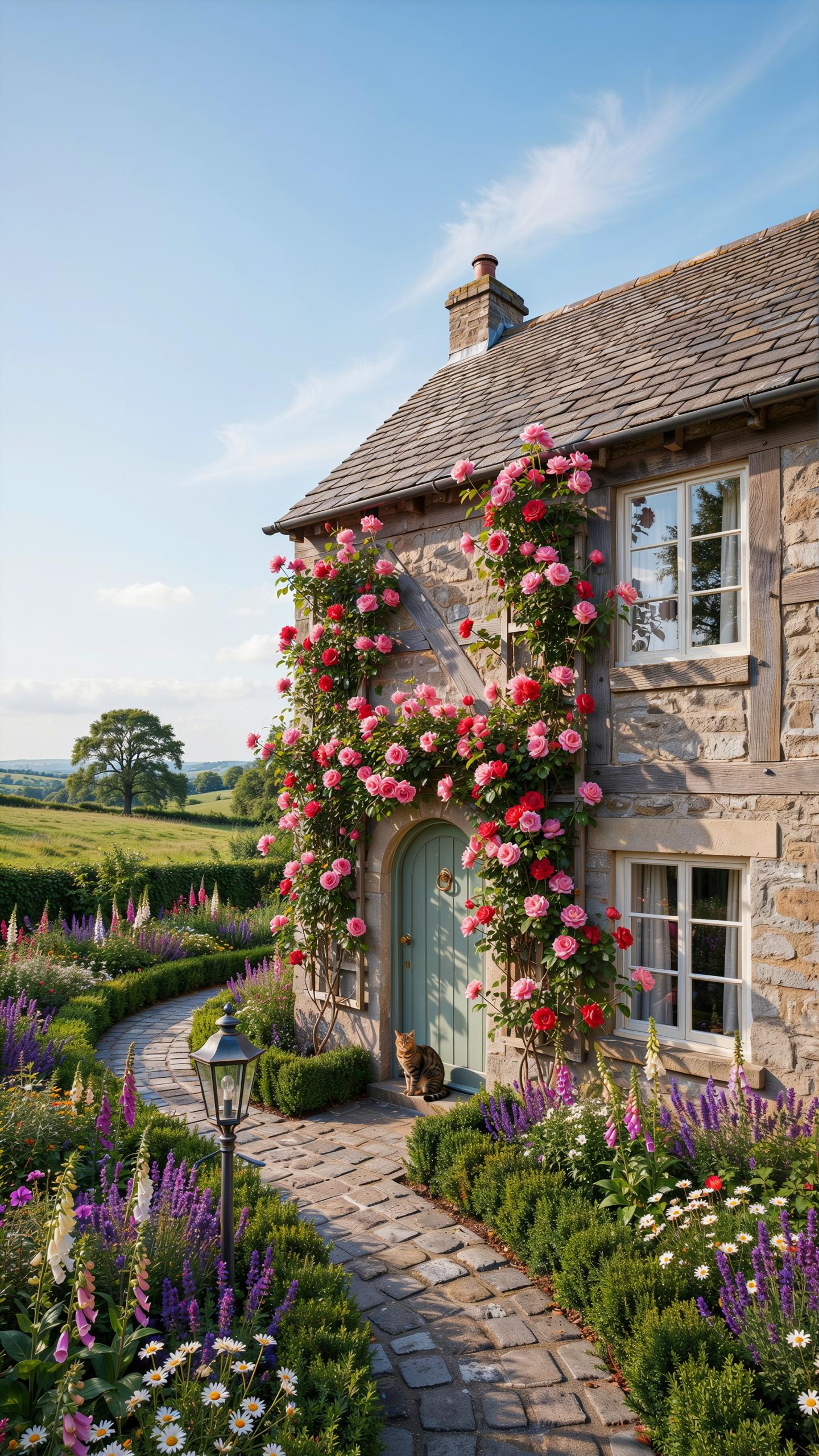
Heirloom climbing roses connect your garden directly to documented gardening practices from the 18th and 19th centuries. Non-remontant varieties bloom once annually in concentrated flushes, matching how older gardens functioned before modern repeat-flowering cultivars dominated. This approach respects the original aesthetic of period properties.
Varieties like Rosa ‘Madame Alfred Carrière’ and Rosa ‘Constance’ deliver single bloom cycles that align with historical estate gardens. These roses grew on Victorian and Georgian homes because they performed reliably in unsprayed conditions. Selecting these genetics preserves architectural authenticity while delivering proven performance on masonry.
Preventing Tree And Foundation Congestion
Position your climbing rose root ball minimum two feet from old foundation walls. Angle the plant toward the structure so stems reach the wall while roots expand into loose, uncompacted soil. This spacing prevents root damage to historic mortar joints and allows proper establishment.

Old foundations deteriorate when roots apply pressure or trap moisture against masonry. Planting distance gives roots room to develop laterally into healthy soil rather than competing with foundation materials. Your climbing rose establishes faster and stronger when roots access open ground with proper drainage and nutrients.
Creating Vintage Appeal With A Vintage House With Climbing Roses
Recreating Nostalgic Color Palettes
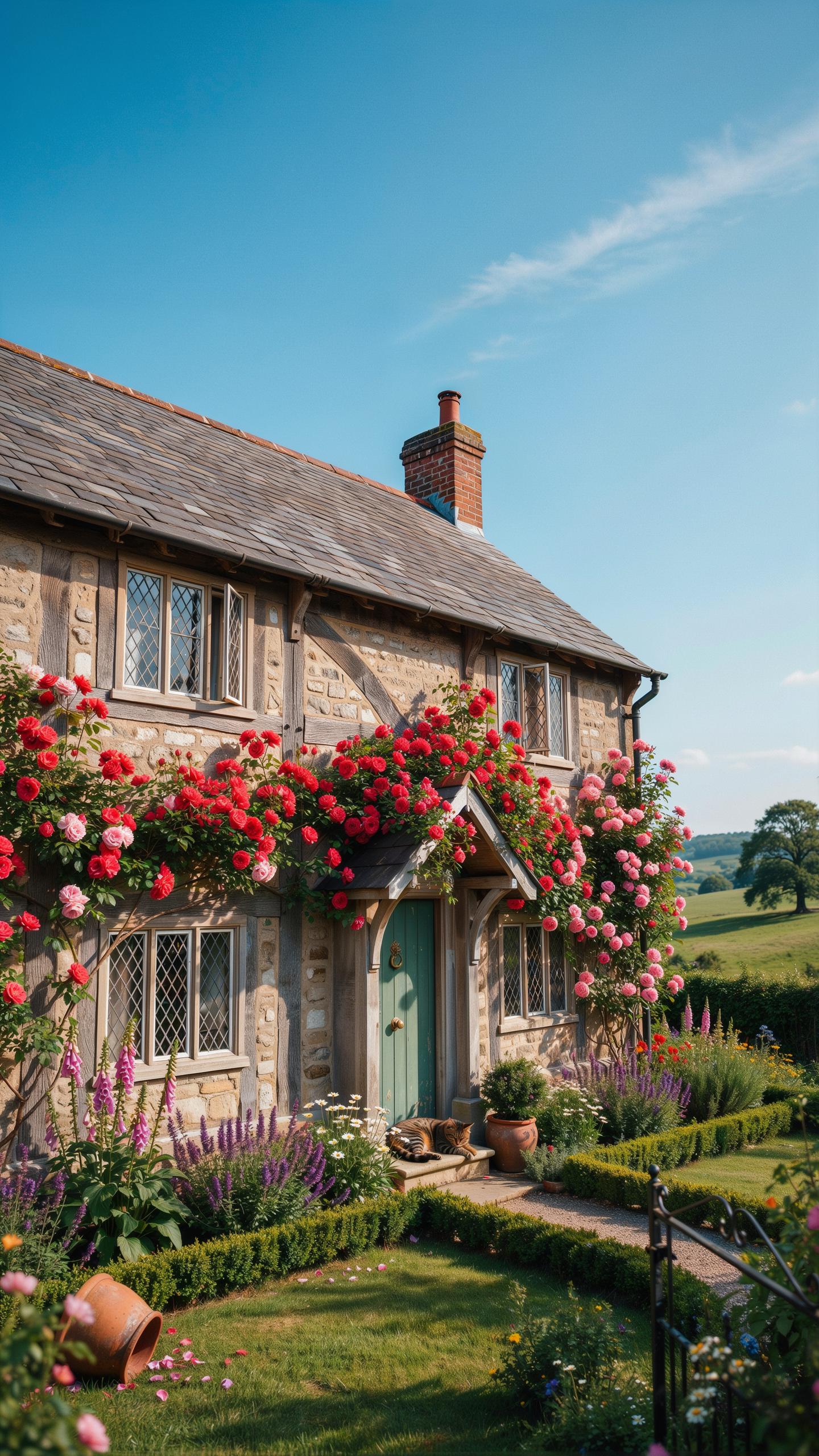
Heritage color schemes anchor vintage homes visually. Pastel peaches, dusty lavenders, and buttercream yellows align with Victorian and mid-century design principles. These shades complement climbing rose varieties like ‘Constance’ and ‘Lady of Shalott’. The right color pairing strengthens curb appeal and creates visual cohesion between house and garden.
Rose selection matters for achieving period authenticity. Old garden roses and English roses produce the muted tones that define vintage aesthetics. Modern hybrid climbers often display saturated reds and pinks that clash with heritage palettes. Match your climbing roses to your home’s original paint scheme or documented color history for maximum impact.
Maintaining Vintage Arbor And Fence Displays
Weathered picket fences and ornate iron gates frame climbing roses effectively. These structures provide essential support while maintaining the vintage character of your property. Roses like ‘Albertine’ and ‘Madame Caroline Testout’ grow vigorously and need sturdy infrastructure. Choose materials and designs that reflect your home’s era.
Pruning discipline prevents roses from obscuring your vintage structures. Remove crossing canes and dense inner growth to reveal the framework beneath. Cut back after flowering to maintain shape and encourage repeat blooms. Proper pruning lets architectural details stay visible while displaying the rose display prominently.
Frequently Asked Questions

Which varieties are best for someone starting their first rose garden?
If you are a beginner, look for vigorous, disease-resistant varieties like ‘Eden’ or ‘Cecile Brunner.’ These stunning cottage garden climbing roses are forgiving of novice mistakes and provide a romantic, overflowing look with minimal effort. Prioritize “repeat-blooming” types to ensure your home stays draped in fragrant petals from late spring through autumn, rather than just a single flush of flowers in the early summer.
How do I properly train climbing roses to cover a wall or trellis?
To achieve that quintessential aesthetic, you must lead the canes horizontally rather than letting them grow straight up. Gently tie the primary stems to your support structure using soft garden twine. This horizontal positioning encourages lateral shoots to develop, resulting in much more prolific blooming. With consistent training, your cottage garden climbing roses will eventually create a dense, flowery tapestry that completely transforms your exterior walls or garden arches.
Can I achieve a lush cottage look on a limited budget?
Absolutely! You can save money by purchasing “bare-root” roses during the winter dormant season instead of expensive potted plants in the summer. Additionally, instead of buying high-end wrought iron, you can DIY a rustic support system using inexpensive cedar stakes or reclaimed copper wire. Starting with smaller plants and focusing on proper soil health ensures your garden grows into a luxurious, high-end landscape without a massive upfront investment.