How To Plan A Cottage Garden In A Limited Space
Assessing Soil Quality And Sun Exposure
Check your yard’s sunlight first. Most cottage plants need six to eight hours of direct sun daily. Track sun patterns over two to three days to identify full sun, partial shade, and shaded zones. This determines which plants survive and which struggle or fail entirely.
Soil quality determines plant performance more than any other factor. Cottage gardens demand well-drained soil rich in organic matter. Test drainage by digging a hole, filling it with water, and observing how fast it drains. Add compost annually to build soil structure and nutrient content over time.
Mapping The Footprint Of Your Plot
Draw your yard to scale on paper before you dig anything. Mark existing features like trees, fences, utility lines, and structures. Indicate which areas receive full sun, partial sun, and shade. This simple map prevents costly mistakes and guides all future decisions about plant placement and pathways.
Curved pathways make small yards feel larger than straight lines do. Avoid rigid, geometric patterns that emphasize limited space. Position pathways to wind through planting beds rather than cut across them. This design approach creates depth and encourages visitors to explore what feels like a bigger garden than the actual square footage reveals.
Selecting A Classic Garden Designs Layout
The Charm Of Meandering Pathways
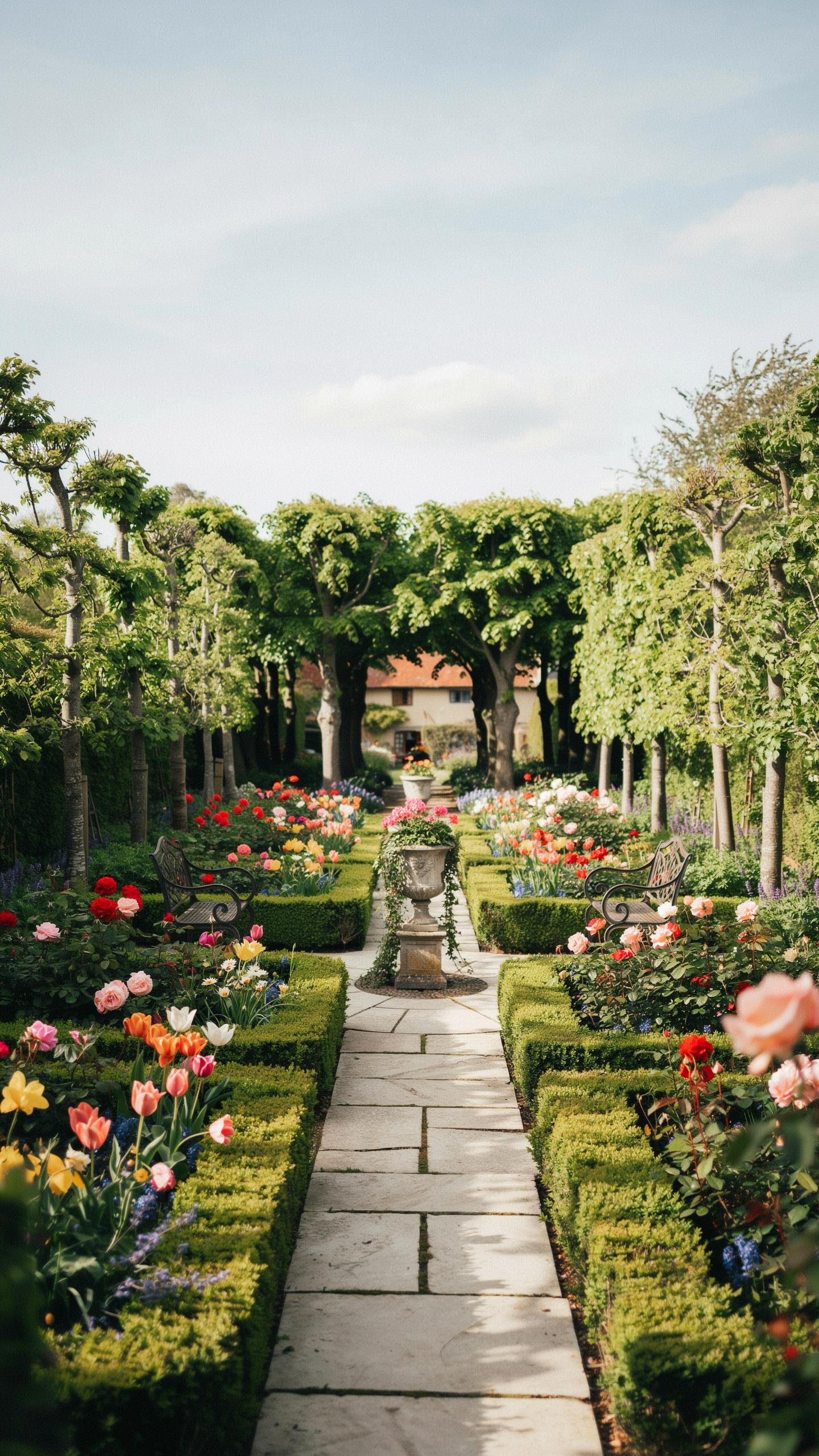
Winding paths serve a tactical function in small yards. They create visual breaks that make space feel larger than it actually is. Gravel and brick materials work well because they define movement without taking up planting area. The path curves around corners and behind plantings, forcing the eye to travel rather than scan the entire yard at once.
This layout strategy draws visitors deeper into the garden instead of letting them absorb its boundaries immediately. A meandering route also provides practical access to plants for maintenance and harvesting. You can hide the yard’s edges behind strategically placed beds and structures along the path route. This approach transforms a compact space into something that feels explored rather than constrained.
The glory of gardening: hands in the dirt, head in the sun, heart with nature. To nurture a garden is to feed not just on the body, but the soul.
Symmetrical And Geometric Bed Arrangements
Cottage gardens lean toward informal planting, but small yards demand structure to function. Geometric beds with clear borders contain plant growth and prevent spillover onto walkways. Rectangular, square, or triangular arrangements create visual order that counteracts the chaos of mixed plantings. Defined edges also simplify maintenance by making it obvious where one planting area ends and another begins.

Structured beds allow you to pack density into specific zones without creating access problems. Hard borders made from brick, metal, or stone act as physical boundaries that stop aggressive spreading plants. This arrangement maximizes usable space while maintaining the layered, full appearance cottages gardens require. Geometric planning also simplifies irrigation and weeding tasks in tight quarters.
Creating A Captivating English Cottage Garden Design
Layering Height With Traditional Florals
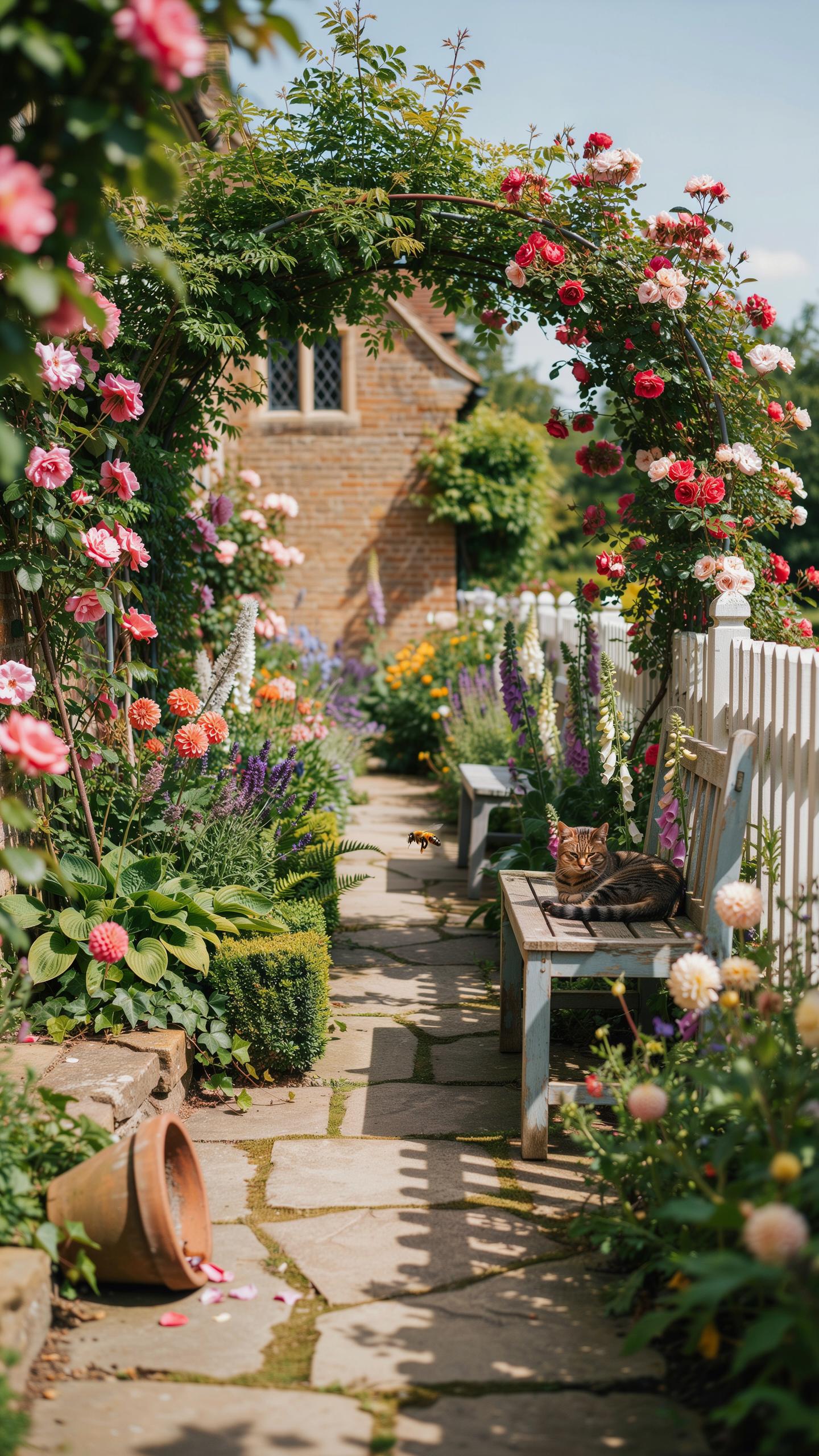
Plant tall flowers like delphiniums and foxgloves at the back of beds. Move to mid-sized shrub roses in the middle section. Place low-growing hardy geraniums at the front border. This tiered approach creates visual depth and prevents tall plants from blocking shorter varieties. Small yards benefit most from this strategy since it maximizes every square foot of growing space.
The height gradient solves a core problem in compact gardens: competition for light and visual interest. Taller specimens establish a backdrop that frames mid-level plants effectively. Front-row perennials receive adequate sunlight while the composition reads as intentional rather than crowded. This arrangement works regardless of garden shape or size constraints.
Integrating Historic Heirloom Varieties
Fragrant lavender, hollyhocks, and sweet peas define authentic English cottage gardens. These plants survived centuries of cultivation because they perform reliably across varied climates. Heirloom varieties provide multi-sensory appeal through scent, texture, and bloom color. They also connect gardeners to historical design traditions that emphasized practicality alongside beauty. Small yards gain character and authenticity by featuring these established performers.

Heirloom plants offer functional advantages beyond aesthetics. Many attract pollinators and beneficial insects essential for garden health. They require fewer inputs than modern hybrids and self-seed reliably for future seasons. Their proven track record means less guesswork about establishment rates or hardiness in your specific zone. This reduces maintenance burden while delivering the nostalgic cottage garden effect.
Essential Cottage Yard Landscaping Techniques
Choosing Hardscape Materials That Blend In
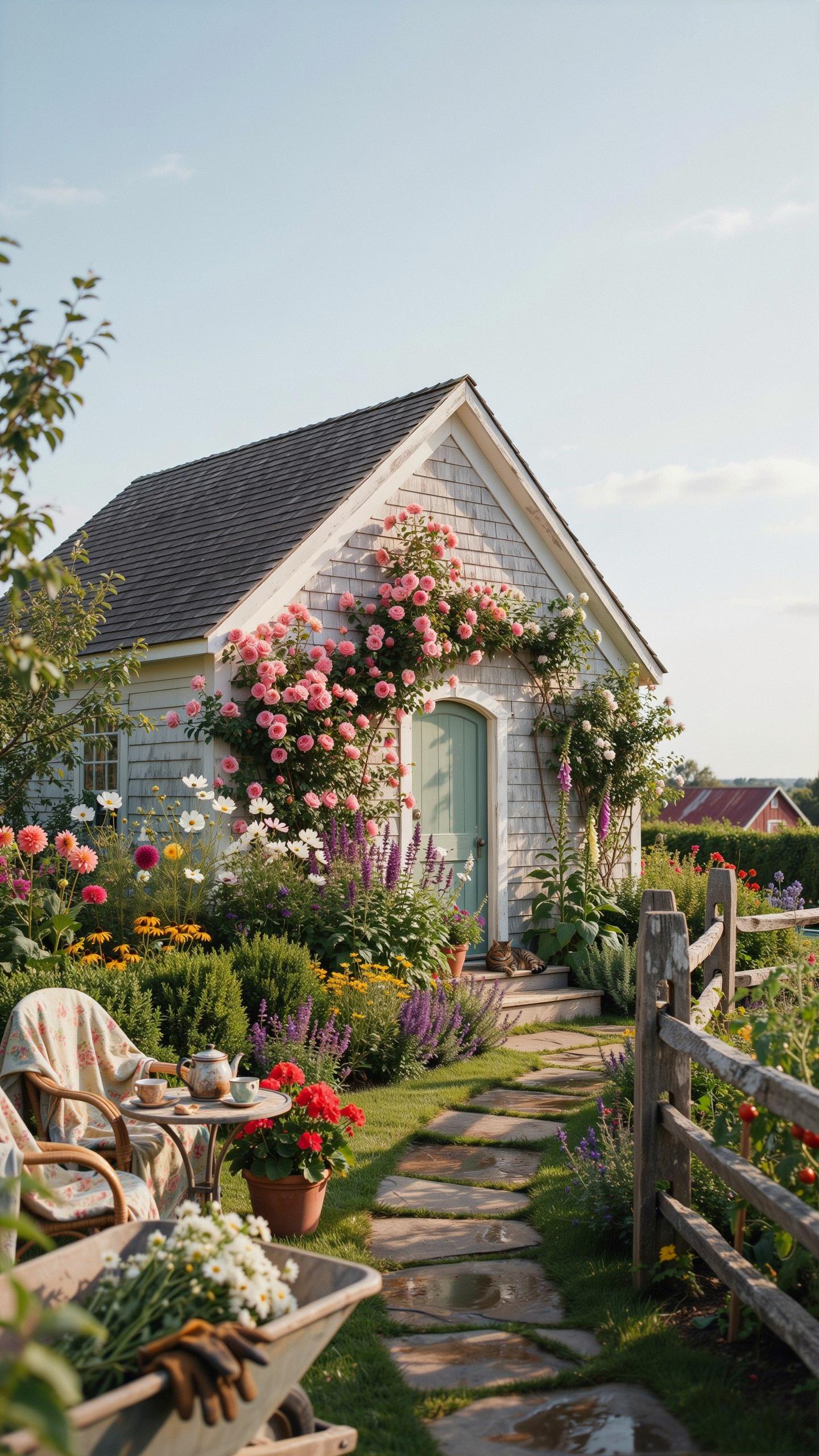
Natural hardscaping materials work because they age visibly and integrate into established landscapes. Weathered surfaces develop patina that reads as intentional rather than new. Small yards benefit from materials that don’t demand attention through bright colors or pristine finishes. Your hardscape choices anchor the entire garden design and influence how plants interact with built structures.
- Weathered Red Clay Bricks: Traditional cottage gardens used clay bricks for centuries. They soften over time and develop lichen growth. Clay bricks work well for pathways and edging in compact spaces without overwhelming visual clutter.
- Irregularly Shaped Flagstones: Random stone sizes create organic layouts that fit awkward yard dimensions. Flagstones weather naturally and develop character. They work better than uniform pavers for cottage aesthetics in tight spaces.
- Reclaimed Timber Borders: Salvaged wood provides authentic aging instantly without waiting decades. Wood borders define planting beds and contain soil effectively. They require maintenance but deliver the cottage look small yards need.
- Locally Sourced Pea Gravel: Gravel drains quickly and costs less than stone paths. It compacts gradually and needs raking annually. Local stone matches regional cottage traditions and reduces material transport costs.
- Salvaged Stone Pavers: Reclaimed stone carries history and blends faster than new materials. Old pavers have worn surfaces that disappear into established gardens. Use them for focal pathways where budget allows.
Material costs vary by region and availability. Reclaimed materials typically cost more upfront but deliver authenticity faster than new weathered options. Calculate total project expenses including installation labor before committing to specific hardscape choices.
Boundary Fencing And Rustic Arbors
Picket fencing defines cottage garden boundaries while remaining visually permeable. The open design doesn’t block sightlines or create fortress-like barriers in small yards. Traditional picket spacing allows air circulation and simplifies maintenance compared to solid screening options.

Rustic wooden arbors serve dual functions as vertical structures and entry points. Climbing plants attach to arbor frames and extend planting possibilities upward in compact spaces. Position arbors at garden entrances or path intersections to create focal points and define movement through the landscape.
Designing A Low Maintenance Simple Cottage Garden
Prioritizing Resilient Perennial Blooms
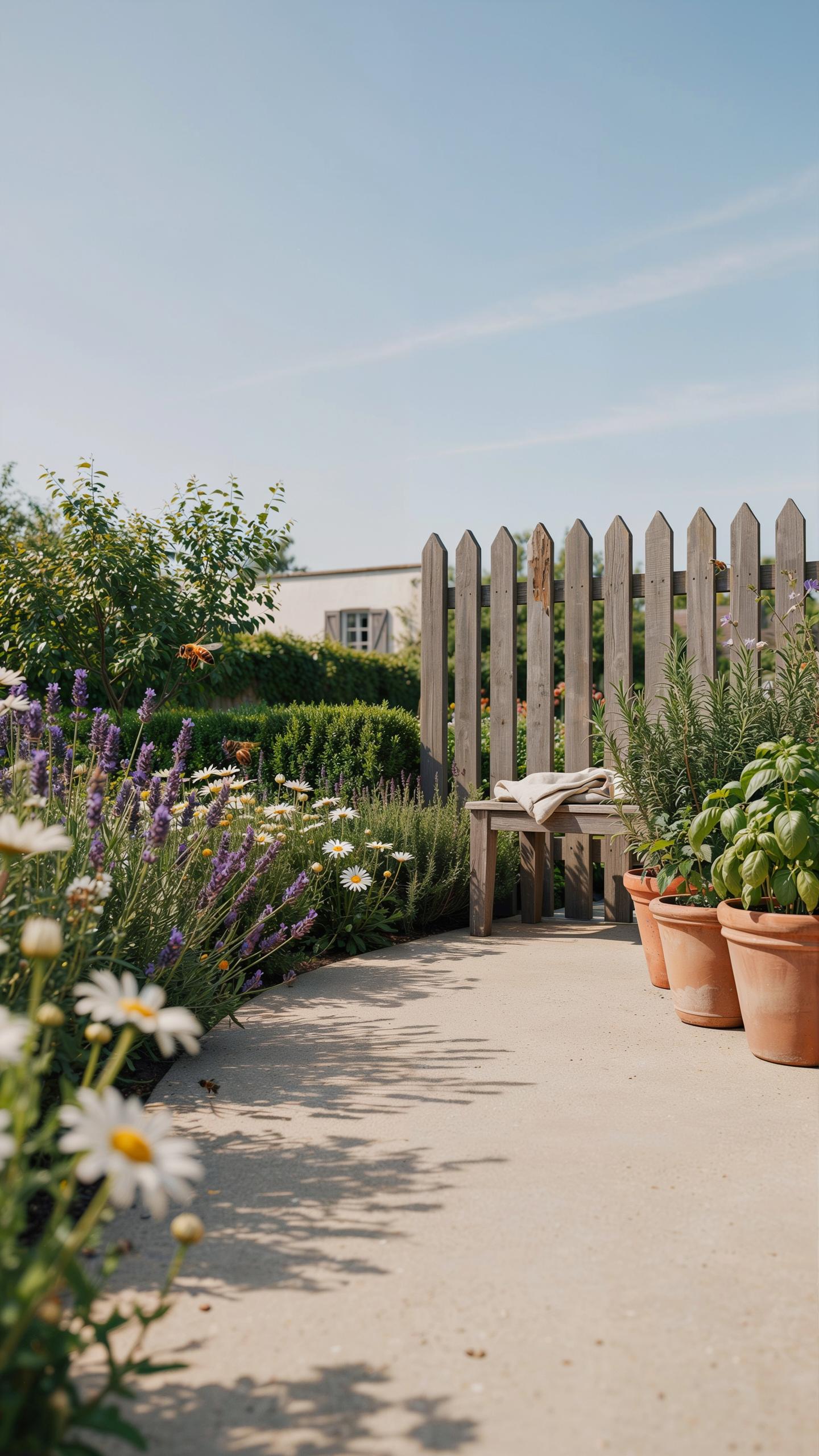
Hardy perennials deliver consistent results without the annual replanting cycle. Coneflowers, black-eyed Susans, and catmint establish themselves in year one and return reliably for years. These plants tolerate variable soil conditions and require minimal intervention once established in your yard.
Perennials reduce your maintenance budget significantly. You eliminate the cost and labor of sourcing, purchasing, and planting new annuals each season. This approach frees up time and money for other yard improvements while maintaining continuous blooms throughout growing months.
Utilizing Dense Planting To Crowdout Weeds
Close spacing creates a living barrier that blocks weeds before they take hold. Plants positioned densely together shade the soil surface, cutting water loss through evaporation. This natural suppression method eliminates the need for herbicides or constant hand weeding in small spaces.

Dense planting establishes a self-regulating ecosystem in confined areas. Understory plants form protective layers that reduce weed germination rates substantially. Your small yard becomes more productive because resources go toward desired plants instead of battling unwanted growth.
Adapting Ideas For A Modern Cottage Garden
Blending Contemporary Lines With Wild Plants
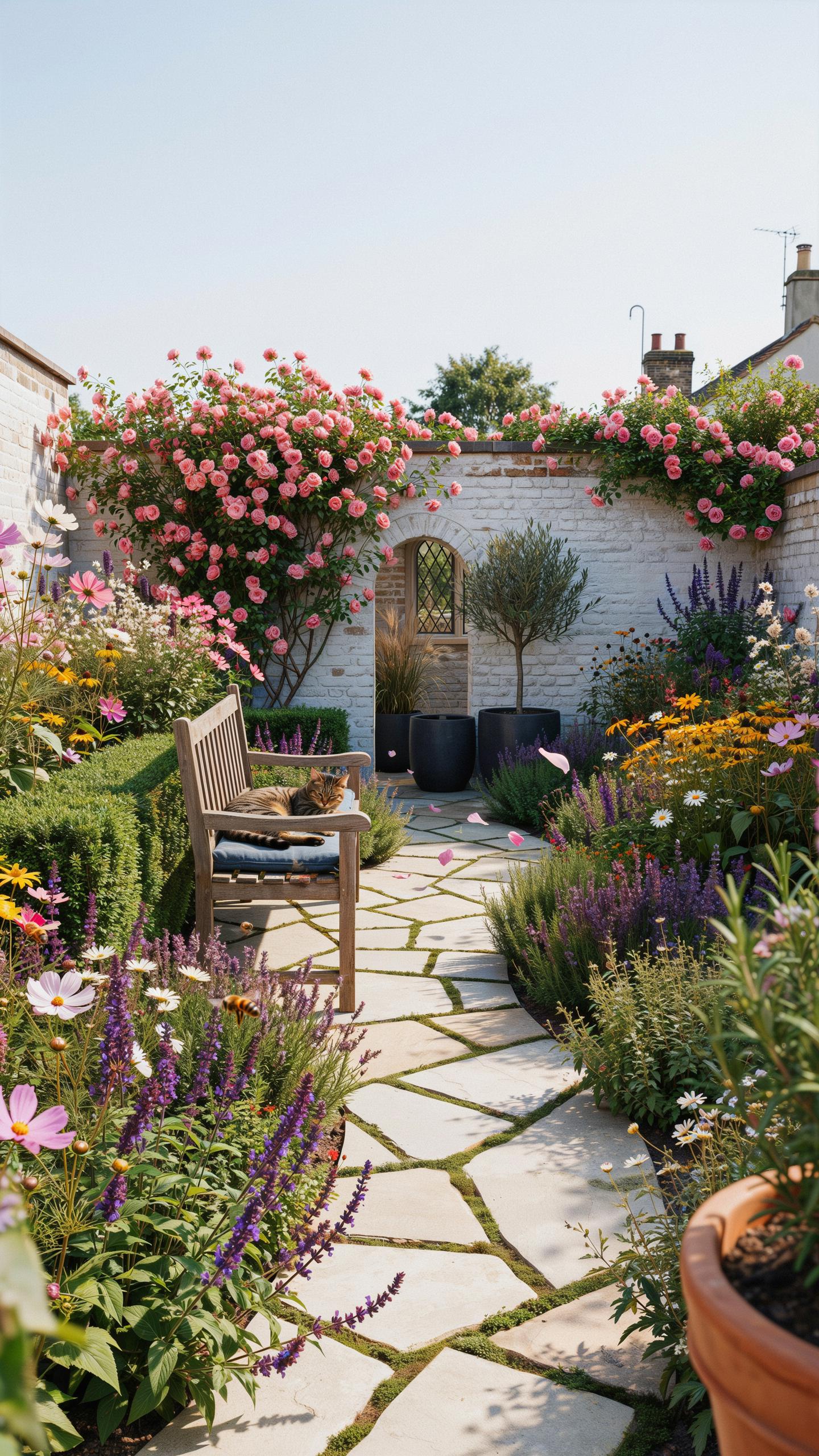
Modern cottage gardens succeed by pairing structured hardscaping with loose plantings. Concrete planters, steel edging, and minimalist pathways provide visual boundaries that contain the natural chaos of cottage plants. This contrast creates intentional tension rather than confusion. Small yards benefit from this approach because structure makes limited space feel deliberate, not cramped.
Sleek materials serve a practical function in compact areas. Metal raised beds, gravel in geometric patterns, and clean pergolas frame wildflower arrangements without requiring additional square footage. The restraint in hardscape design prevents a small garden from feeling overwhelmed. You maintain cottage character while gaining spatial breathing room that traditional designs sacrifice.
Curating A Restrained Color Palette
Modern cottage gardens abandon the traditional explosion of mixed colors in favor of controlled combinations. Selecting two or three harmonious hues creates visual calm and makes small yards read as larger. Monochromatic schemes with white flowers and silver foliage, or soft pastels within a narrow range, establish coherence. This discipline directly counters the perceived chaos that deters homeowners from attempting cottage styles on limited lots.
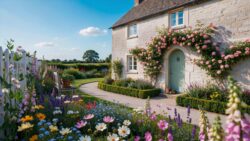
Restraint in color choices improves sightlines and spatial perception. When your eye moves through the garden without competing color zones, the area feels more organized and expansive. Repeating the same plants or color combinations throughout a small cottage garden reinforces unity. This tactical approach delivers cottage charm without visual fragmentation that cramped spaces amplify.
Translating Traditional Charm Into An English Cottage Style Garden
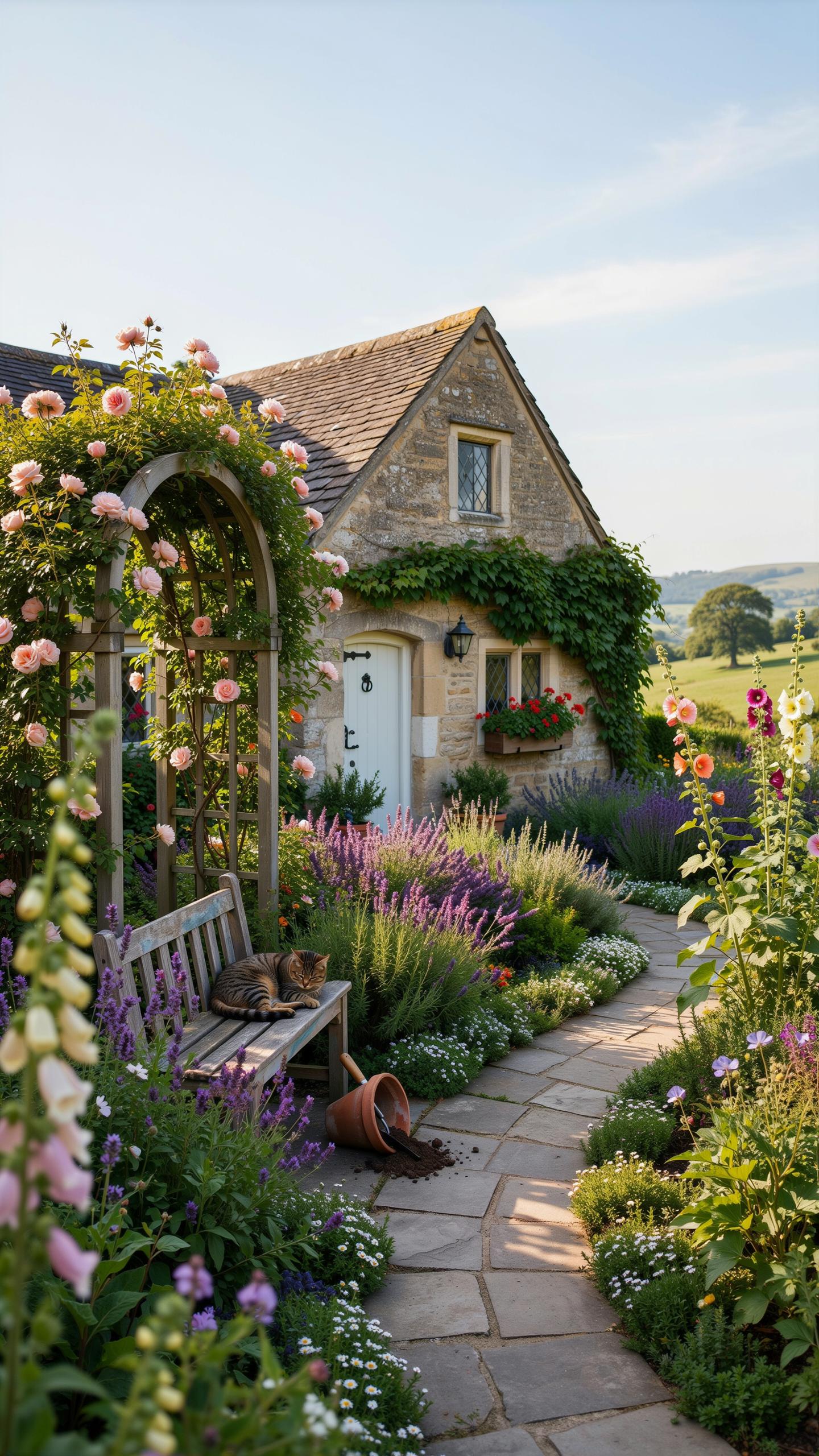
Fostering Romantic Fragrance And Sensory Appeal
Scent anchors cottage garden design to its historical roots. English cottage gardens from the 17th and 18th centuries relied on fragrant plants because they served practical purposes beyond aesthetics. Rosemary, thyme, and lavender were grown for cooking, medicine, and pest control. Old-fashioned rose varieties like damask and alba roses produce strong fragrance that modern hybrids often lack. Plant these densely near seating areas and pathways to maximize their impact in small spaces.
Fragrant herbs create functional zones within tight yards. Position rosemary and thyme along borders where foot traffic brushes against foliage, releasing scent. Old roses perform best in full sun with good air circulation. Layer fragrant plants at different heights so scent reaches you at various points throughout your garden. This sensory layering makes small yards feel larger and more immersive without requiring additional square footage.
Incorporating Functional Kitchen Garden Herbs
English cottage gardens historically blended food production with ornamental plantings out of necessity and efficiency. Your small yard can follow this proven model by scattering culinary herbs among flowering plants. Loose-leaf lettuce, runner beans, and parsley grow quickly and occupy minimal space. Their foliage adds texture and visual variety while delivering harvests for your kitchen. This mixed approach maximizes productivity without sacrificing the garden’s visual coherence.
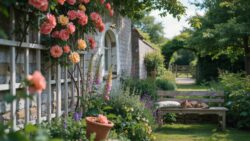
Integrate edibles strategically to maintain design flow. Tuck parsley and chives along bed edges where they serve as living borders. Train runner beans vertically on trellises or supports to save ground space. Plant lettuce in gaps between ornamental perennials for successive harvests throughout the season. This integration transforms your cottage garden into a working landscape that produces food while maintaining authentic historical character and charm.
Maximizing Charm In A Cozy Courtyard Garden
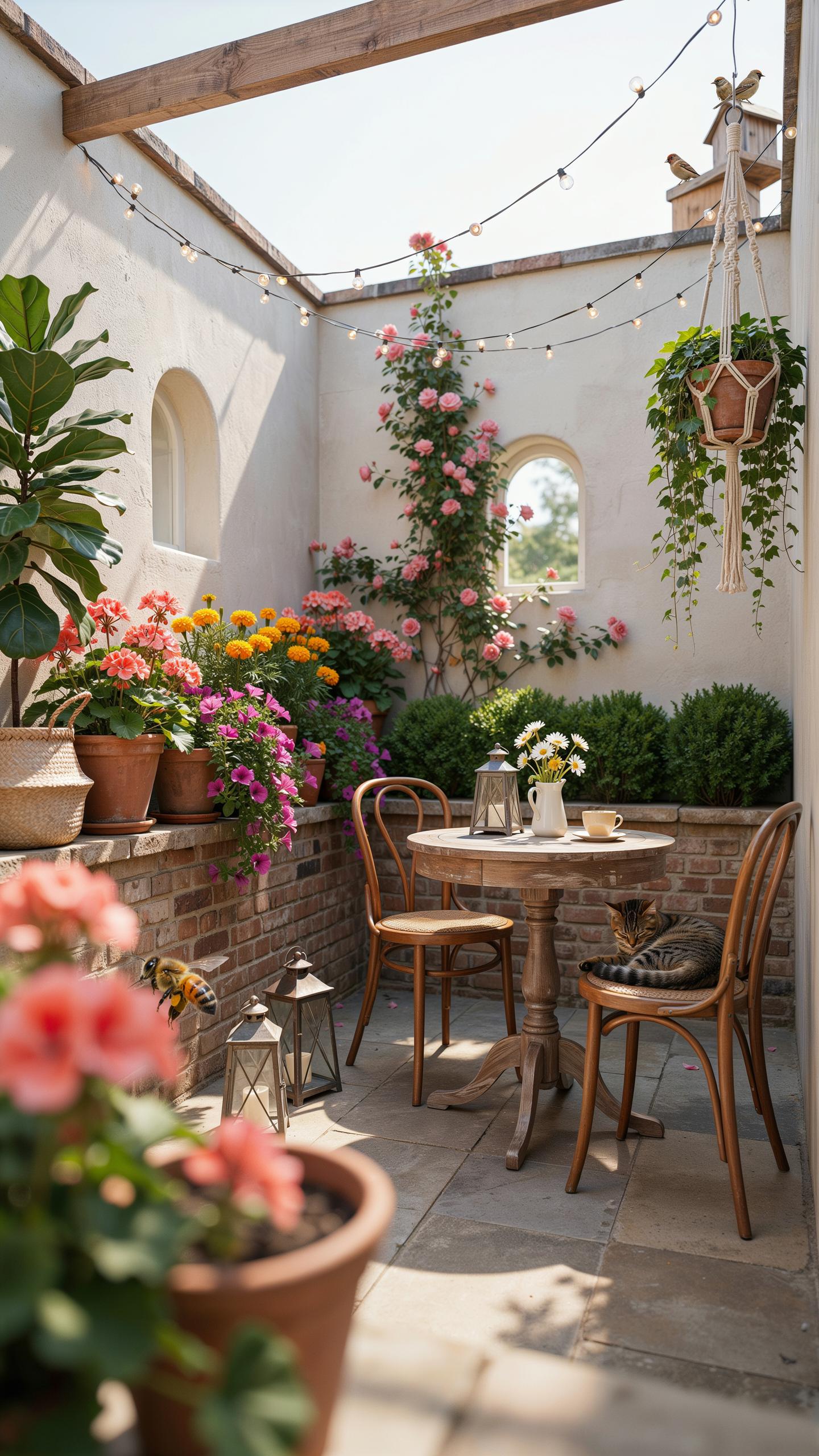
Potted Plants And Vertical Containers
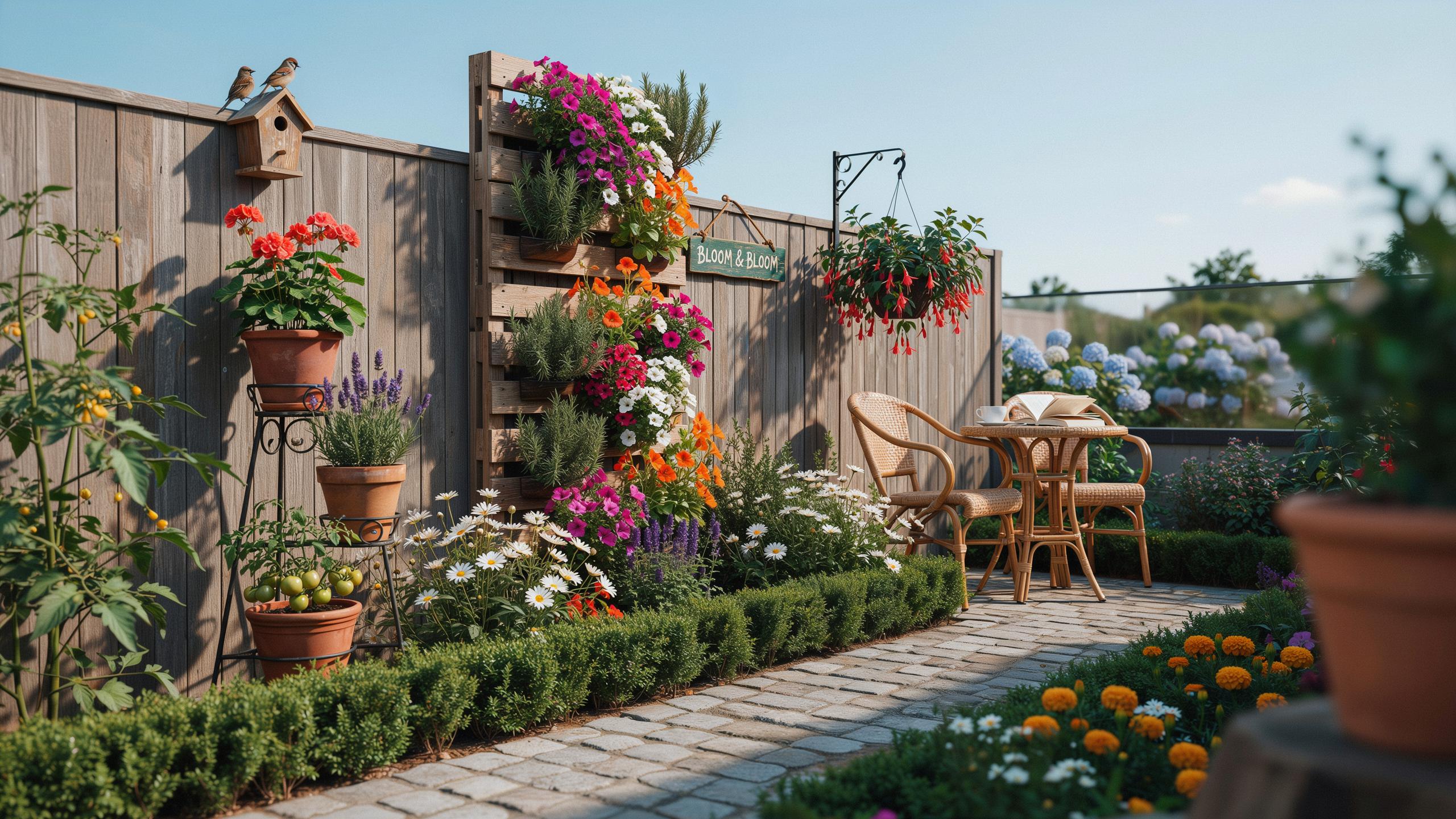
Container planting solves the ground space problem in small courtyards. Vertical growing methods let you pack more plants into tight areas without overwhelming the space. This approach works because plants grow upward rather than outward, leaving walkways clear and functional.
- Hanging baskets draped with trailing lobelia: These baskets cascade downward and fill overhead space. Lobelia produces blue, purple, or white flowers throughout the growing season with minimal maintenance required.
- Terracotta wall planters filled with herbs: Mount these directly on walls to grow culinary herbs like thyme, oregano, and parsley. They save ground space while keeping herbs within arm’s reach for cooking.
- Tiered plant stands to display colorful pansies: Stack multiple levels on a single stand to display dozens of pansies in one compact footprint. These stands work in corners or against walls without consuming valuable courtyard floor area.
- Climbing clematis grown on wall mounted trellises: Train clematis vines horizontally along walls using trellises. This vertical gardening technique adds height, texture, and seasonal flowers without taking up ground real estate.
Stacking containers vertically transforms limited courtyard space into a dense planting area. Most cottage gardens rely on layering and repetition, so combining multiple container heights creates that authentic garden feel within tight constraints.
Adding Water Features For Peaceful Ambience
Small water features work hard in compact courtyards. A wall mounted fountain or stone birdbath adds movement and sound that masks neighborhood noise. This transforms a small urban courtyard into a private sanctuary without requiring much floor space.

Water features provide practical benefits beyond aesthetics. The sound of moving water improves perceived tranquility and encourages wildlife like birds to visit. Both elements strengthen the cottage garden experience in minimal space while serving functional purposes that improve your outdoor environment.
Innovative Modern Cottage Garden Ideas For Small Spaces
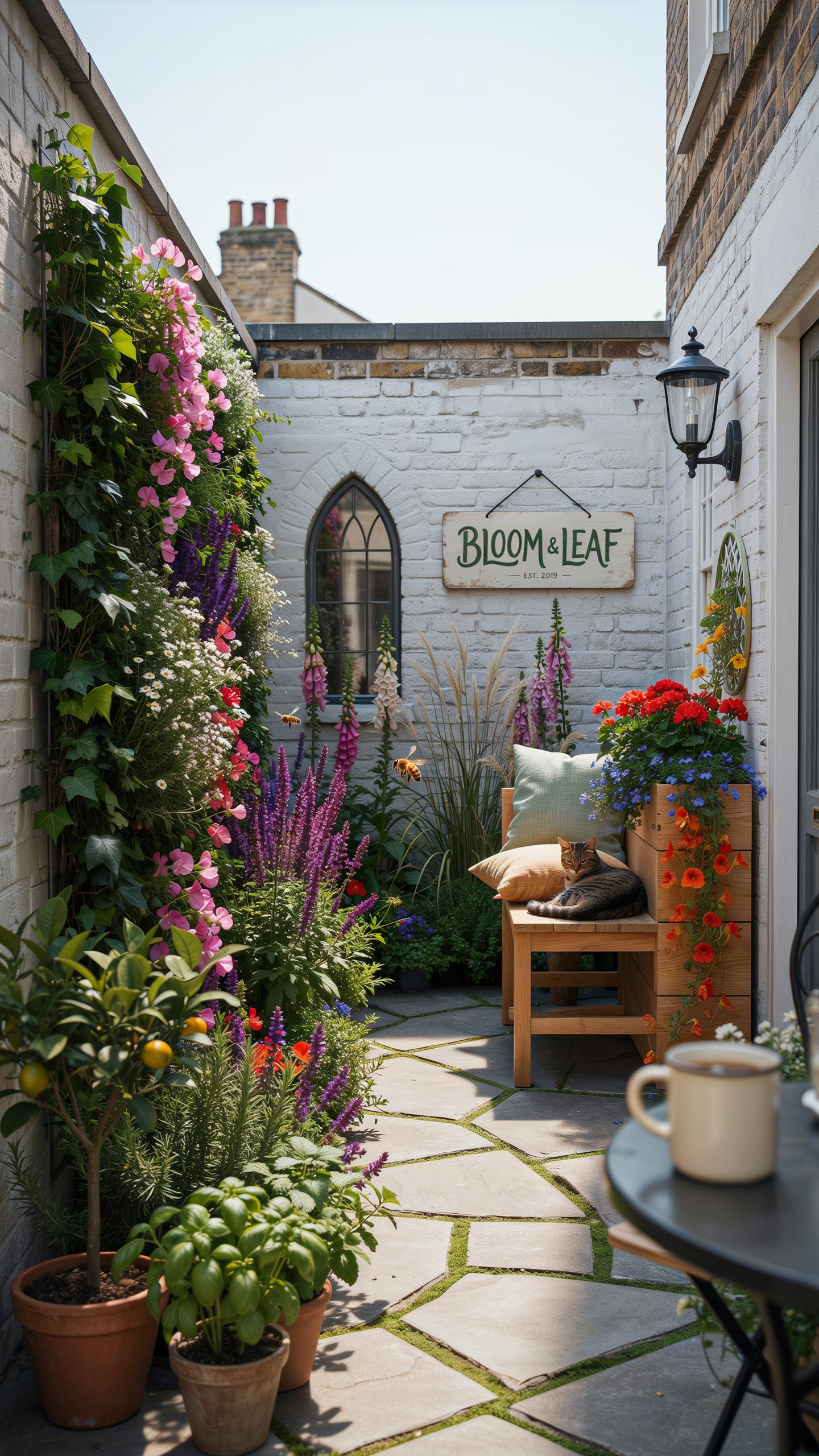
Integrating Wildlife Friendly Native Species
Native wildflowers attract pollinators your garden needs to produce food and flowers. Bees and butterflies visit native plants more readily because they co evolved with regional species. Choose plants already thriving in your climate zone to reduce maintenance and water demands while supporting local ecosystems.
Modern cottage gardens blend human enjoyment with ecological function. Native species provide nectar and pollen throughout growing seasons, sustaining beneficial insects that pollinate vegetables and ornamentals. This approach eliminates the need for synthetic pesticides while creating a self supporting garden that works with nature rather than against it.
Utilizing Illusion And Lighting Techniques
Garden mirrors expand perceived space by reflecting foliage and sky back into the yard. Position mirrors on boundary walls or fences at angles that bounce light deeper into the garden. This optical trick works because your brain processes reflected vegetation as additional garden area, making tight spaces feel open and dimensional.
Warm string lights transform small cottages gardens into functional evening spaces. Install lights overhead on wires strung between posts or along fences to create ambient illumination without harsh shadows. This strategy extends usable hours after sunset while maintaining the intimate, intimate atmosphere cottage gardens deliver in compact areas.
Frequently Asked Questions

What are the essential elements of a cottage garden for a small space?
To achieve this look, focus on dense planting and variety rather than stiff structure. Even in limited areas, you can implement cottage garden ideas for small yards by choosing classic perennials like lavender, foxgloves, and roses. Use vertical structures like obelisks or trellises to draw the eye upward, which helps the space feel larger and more lush without overcrowding your limited ground real estate.
How do I design a cottage garden layout in a tiny backyard?
Start by creating winding pathways using natural materials like gravel or weathered brick to add a sense of mystery and depth. Instead of traditional rows, group plants in informal clusters of varying heights. One of the best cottage garden ideas for small yards is to utilize “spillover” plants at the edges of paths, which softens harsh lines and creates that quintessential romantic, overgrown aesthetic typical of classic English landscapes.
Is it possible to create a beautiful cottage garden on a tight budget?
Absolutely! Cottage gardening is naturally budget-friendly because it celebrates imperfection and resourcefulness. You can save money by growing flowers from seeds, swapping perennial divisions with neighbors, or repurposing vintage items like old galvanized buckets as planters. Focus on fast-growing hardy annuals to fill gaps quickly. With a bit of patience and creativity, you can build a charming, high-impact outdoor sanctuary without spending a fortune on expensive landscaping.