Understanding The Essentials Of Indoor Plants Styling
The Science Behind Plant Growth And Interior Aesthetics
Plants convert light into energy through photosynthesis. This process requires specific light wavelengths, humidity levels, and air circulation. When you group plants together, you create microclimates that affect how each plant grows. The physical arrangement directly impacts plant health, which then determines the visual outcome in your space. Poor placement kills plants. Dead plants destroy your interior design.
Aesthetically, plant growth patterns respond to light direction and intensity. Plants lean toward light sources and develop fuller foliage on lit sides. This growth behavior becomes your design tool. You control how plants fill space by controlling their light exposure. Understanding this connection between biology and placement turns random plant placement into intentional design strategy.
How Visual Scale And Balance Influence Interior Layouts
Scale refers to the size relationship between plants and your room dimensions. A single small potted plant disappears in a large living room. Multiple plants of varying heights create visual weight that anchors spaces. Balance means distributing that visual weight evenly so your eye doesn’t get pulled to one corner. Asymmetrical balance works better than symmetrical arrangements in modern interiors. It feels intentional rather than staged.
Grouped plants establish focal points that draw attention and create room organization. Tall plants anchor background areas. Medium plants fill middle ground. Low plants define foreground space. This layered approach creates depth without clutter. The human eye processes grouped arrangements faster than scattered single plants. Your brain reads grouped plants as a unified design choice rather than decorative accidents.
The Science Behind Grouping Plants Together Indoors
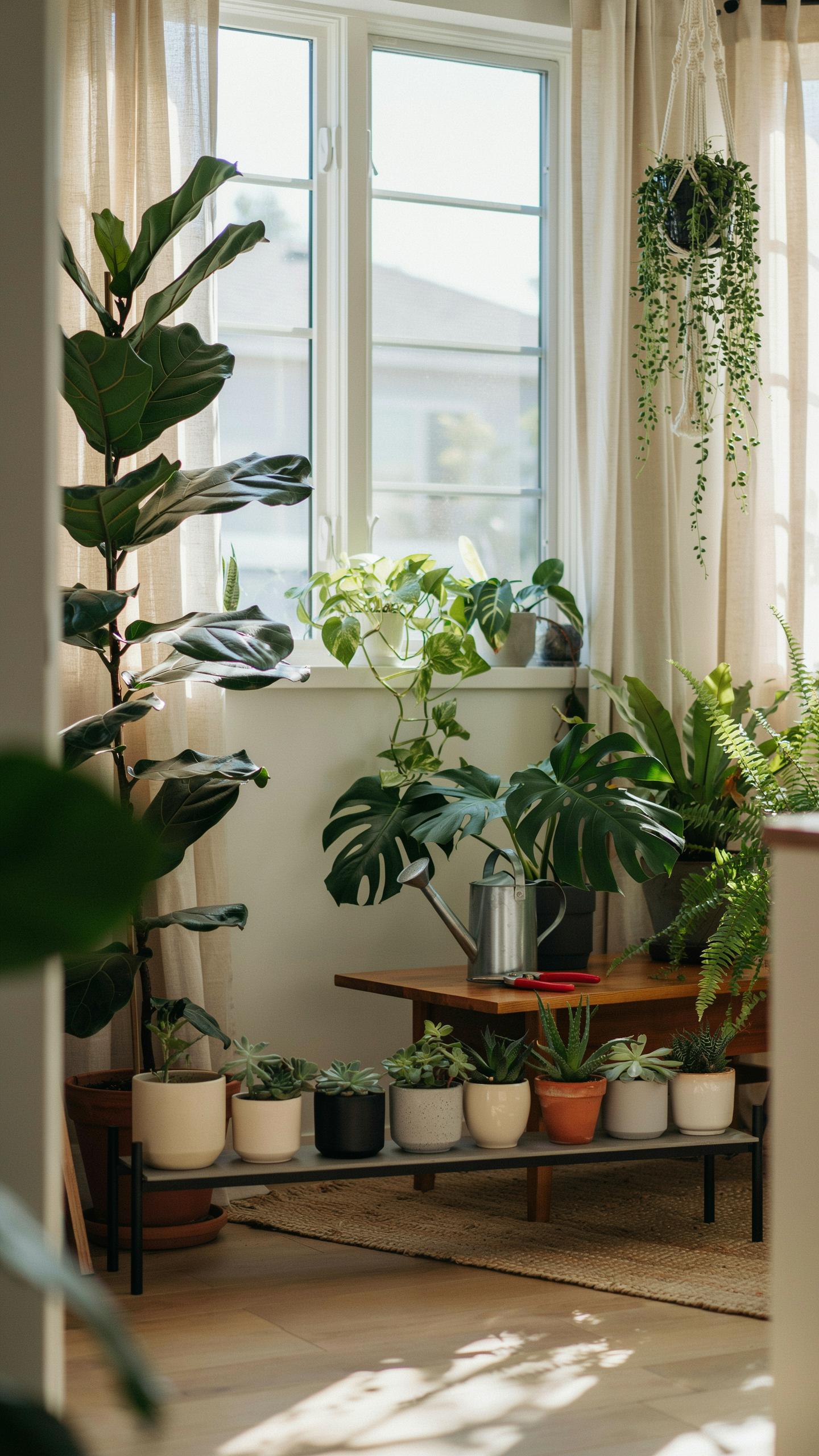
Creating Microclimates To Maximize Natural Humidity Levels
Grouped plants release moisture through transpiration, which increases ambient humidity around them. When plants sit close together, this moisture accumulates in the immediate area rather than dispersing throughout your room. This concentrated humidity reduces water loss from each plant’s leaves and soil, lowering your watering frequency while supporting healthier foliage.
The microclimate effect works because plants trap air between their leaves and stems. Denser groupings slow air circulation in that zone, preventing moisture from evaporating as quickly. This is particularly valuable for tropical plants that thrive in humidity ranges between 50 and 80 percent, which most homes fail to provide naturally without grouping strategies.
How Shared Ecosystems Minimize Your Daily Maintenance Routine
Grouped plants share watering schedules more efficiently than isolated specimens. Plants with similar water needs clustered together mean you water once in one location instead of traveling across multiple rooms. This consolidation reduces the number of individual watering decisions you make and cuts the time spent checking soil moisture across your space.
Grouped plants also regulate soil temperature more effectively through shared shading and air mass. Plants positioned near each other create a buffer against temperature fluctuations from windows, heating vents, and air conditioning systems. Stable soil temperatures slow evaporation rates, requiring less frequent watering while reducing plant stress from thermal shock.
Selecting The Best Indoor Plants For Cozy Living Spaces
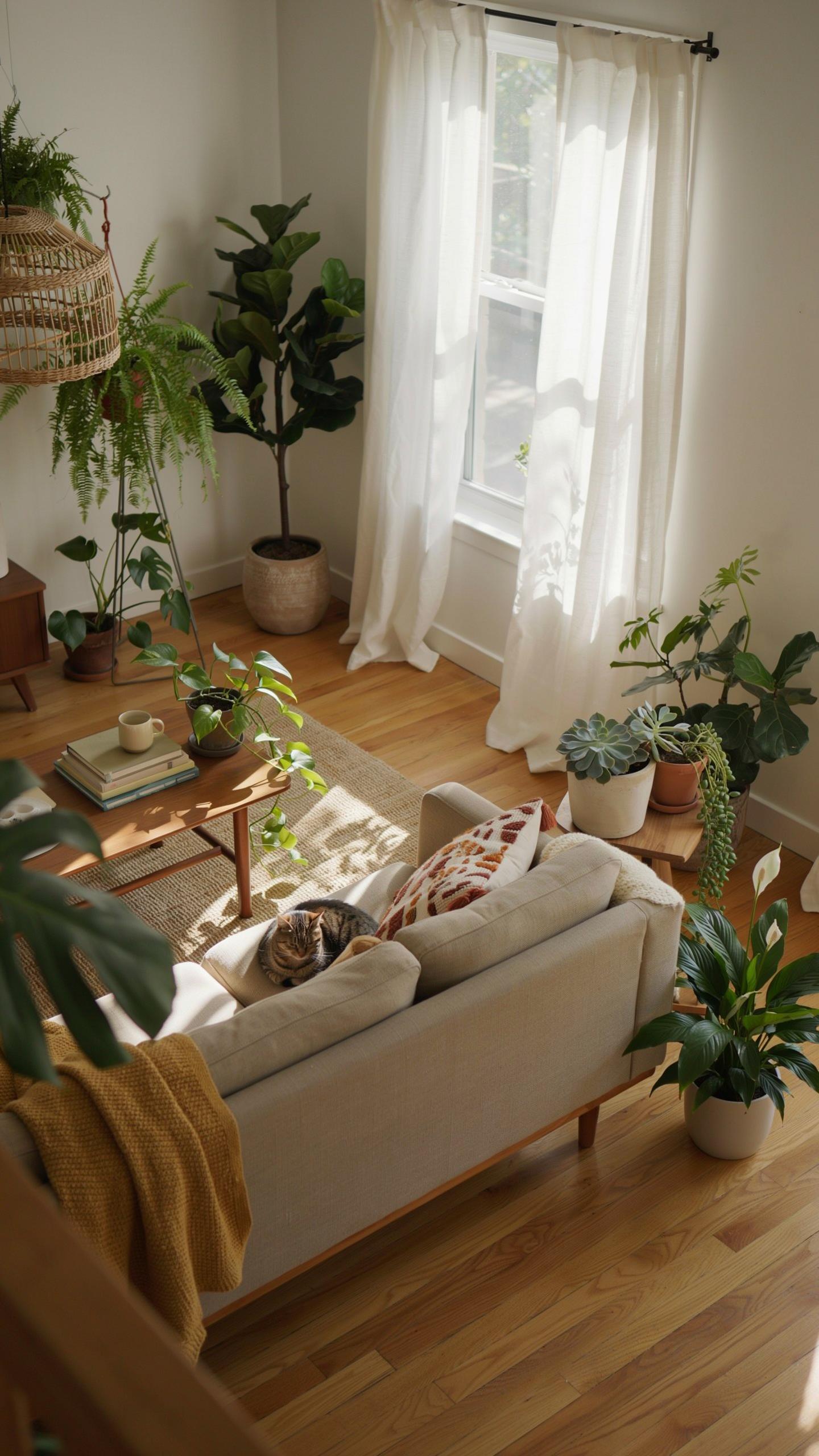
Foliage Monsters: Combining Monstera Deliciosa And Philodendrons
Monstera deliciosa and philodendrons serve as anchoring plants in grouped arrangements due to their size and visual presence. Both species tolerate moderate indoor light and irregular watering patterns. Monsteras develop fenestrated leaves as they mature, creating architectural interest. Philodendrons grow in vining or upright forms depending on variety. Place these plants at different heights within your grouping to establish visual hierarchy and depth without crowding the space.
Combining these two species works tactically because they share similar care requirements yet offer distinct growth patterns. Monsteras grow slower and more structured, while philodendrons vine aggressively or climb supports. Grouping them together reduces maintenance complexity since you water on the same schedule. Position the monstera as your tallest element and let philodendrons fill mid-level or trailing positions to maximize the cozy effect of layered foliage.
Top Low Light Tolerant Species Recommended For Relaxed Rooms
Low-light spaces demand plants that function without direct sun exposure. North-facing rooms, interior bedrooms, and spaces distant from windows present genuine challenges for most species. Selecting proven low-light tolerant plants eliminates the guesswork and prevents dead plant cycles that disrupt your styling scheme. These plants maintain steady growth in ambient indoor light, making them reliable for consistent grouping compositions.
- Pothos (Epipremnum aureum): Trailing vine that survives in minimal light. Grows slowly but steadily in dim corners. Requires water only when soil dries completely, making it forgiving for busy spaces.
- Snake Plant (Sansevieria trifasciata): Tolerates near-darkness and irregular watering. Provides vertical structural lines in groupings. Adds textural contrast to rounded foliage shapes without demanding attention.
- ZZ Plant (Zamioculcas zamiifolia): Handles low light and drought stress equally well. Grows upright with glossy compound leaves. Maintains appearance for weeks without watering during winter months.
- Cast Iron Plant (Aspidistra elatior): Named for extreme durability in tough conditions including low light. Dense, dark green foliage provides visual weight. Slow grower requiring minimal intervention once established.
- Parlor Palm (Chamaedorea elegans): Adds tropical structure without needing bright direct light. Grows to moderate height, filling upper layers of grouped arrangements. Tolerates dry indoor air better than other palms.
These low-light species cluster effectively because they share similar care demands and respond predictably to grouped placement. Combine them at varying heights and leaf textures to create visual interest without relying on light-dependent growth patterns. Your arrangement stays cohesive regardless of room orientation or seasonal light shifts.
Mastering The Fine Art Of Plant Arrangements Indoor
Using The Rule Of Three To Create Asymmetrical Visual Appeal
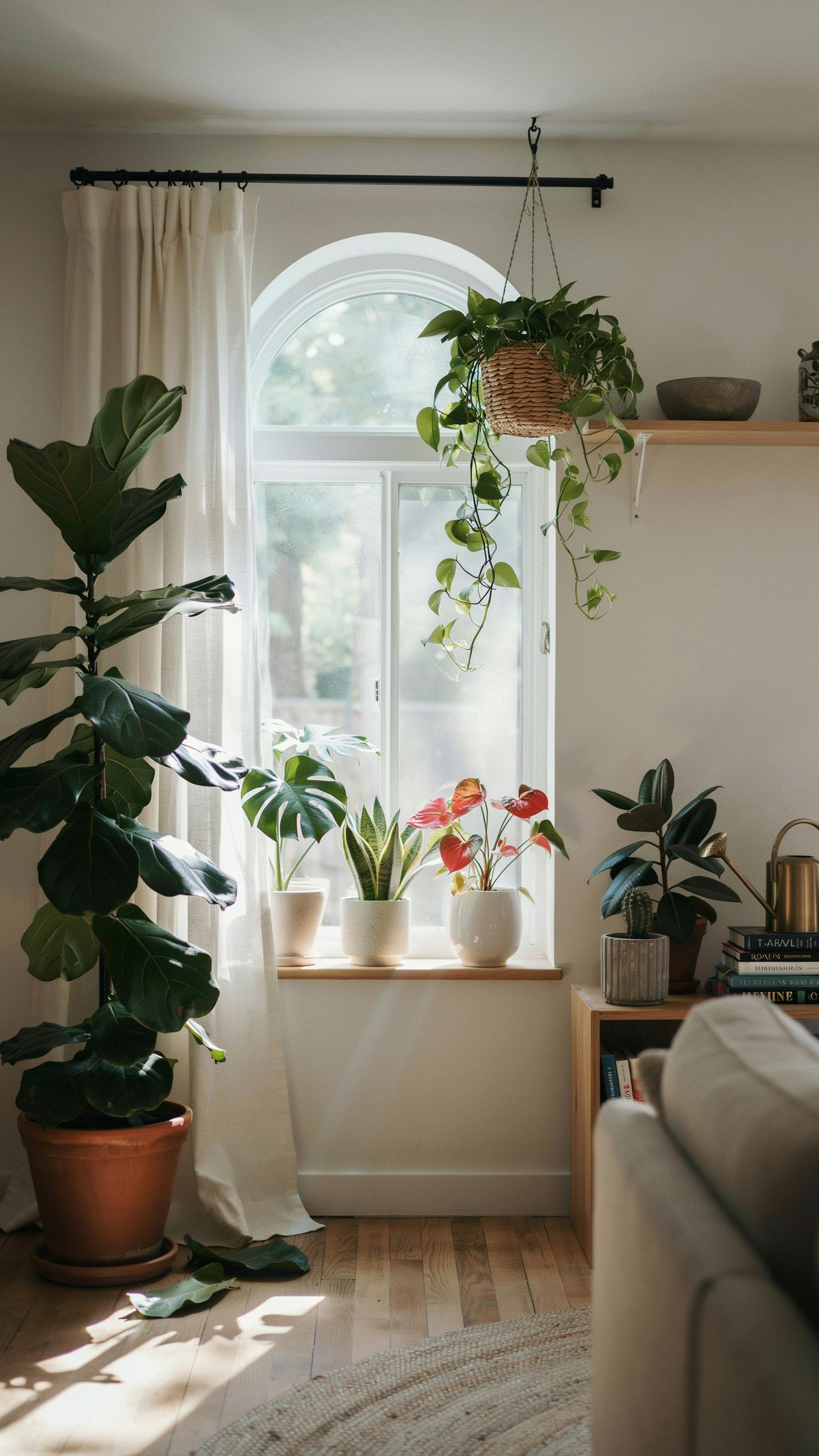
The Rule of Three is a design principle grounded in visual balance. Groups of three plants create focal points without feeling staged. Odd numbers force your eye to move across the arrangement rather than settle at a center point. This approach works across all interior spaces because it mimics natural plant distribution found in forests and gardens.
Asymmetry matters because it reflects how plants actually grow in nature. Two identical plants feel static and forced. Three plants at varying heights and distances create movement and depth on shelves, floors, or tables. Position the tallest plant slightly back, medium height to one side, and shortest forward. This staggered arrangement draws viewers through the space with purpose.
Styling With Diverse Textures From Variegated To Matte Leaves
Texture variety prevents monotony and adds visual weight to groupings. Combine matte leaf surfaces with glossy foliage, fine feathery fronds with broad leaves. Each texture reflects light differently, creating depth without adding more plants. Variegated leaves introduce color contrast while still maintaining textural interest within a single specimen.
Mixing textures serves a tactical function beyond aesthetics. Different leaf types indicate varying plant species with different watering and light needs. This forces you to pay attention to individual plant requirements rather than defaulting to one-size-fits-all care. Group plants with similar care demands together, then use contrasting textures to enhance the visual grouping’s impact.
Practical Methods For Arranging House Plants Correctly
Layering By Height With Tall Pedestals And Minimalist Low Pots
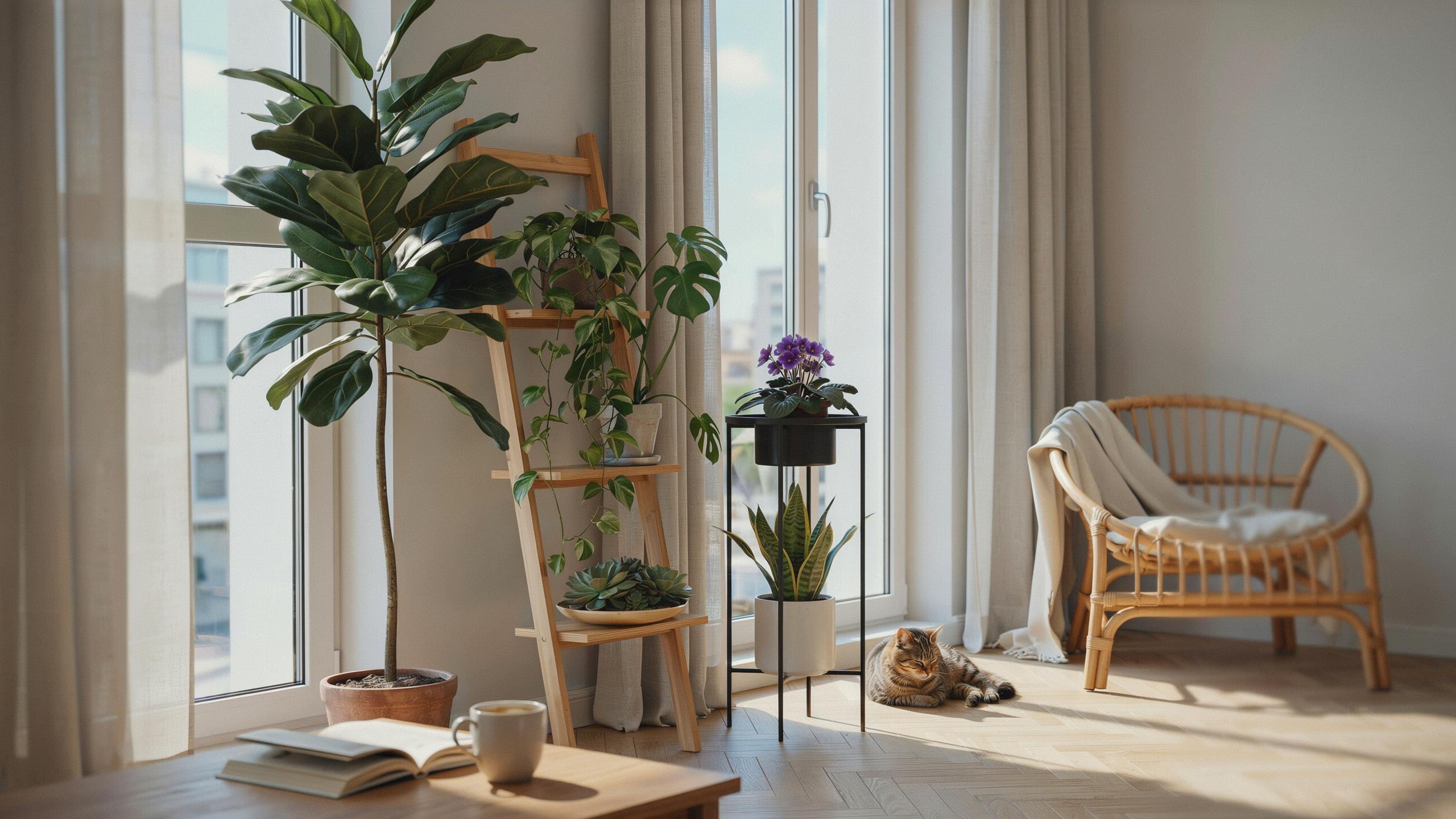
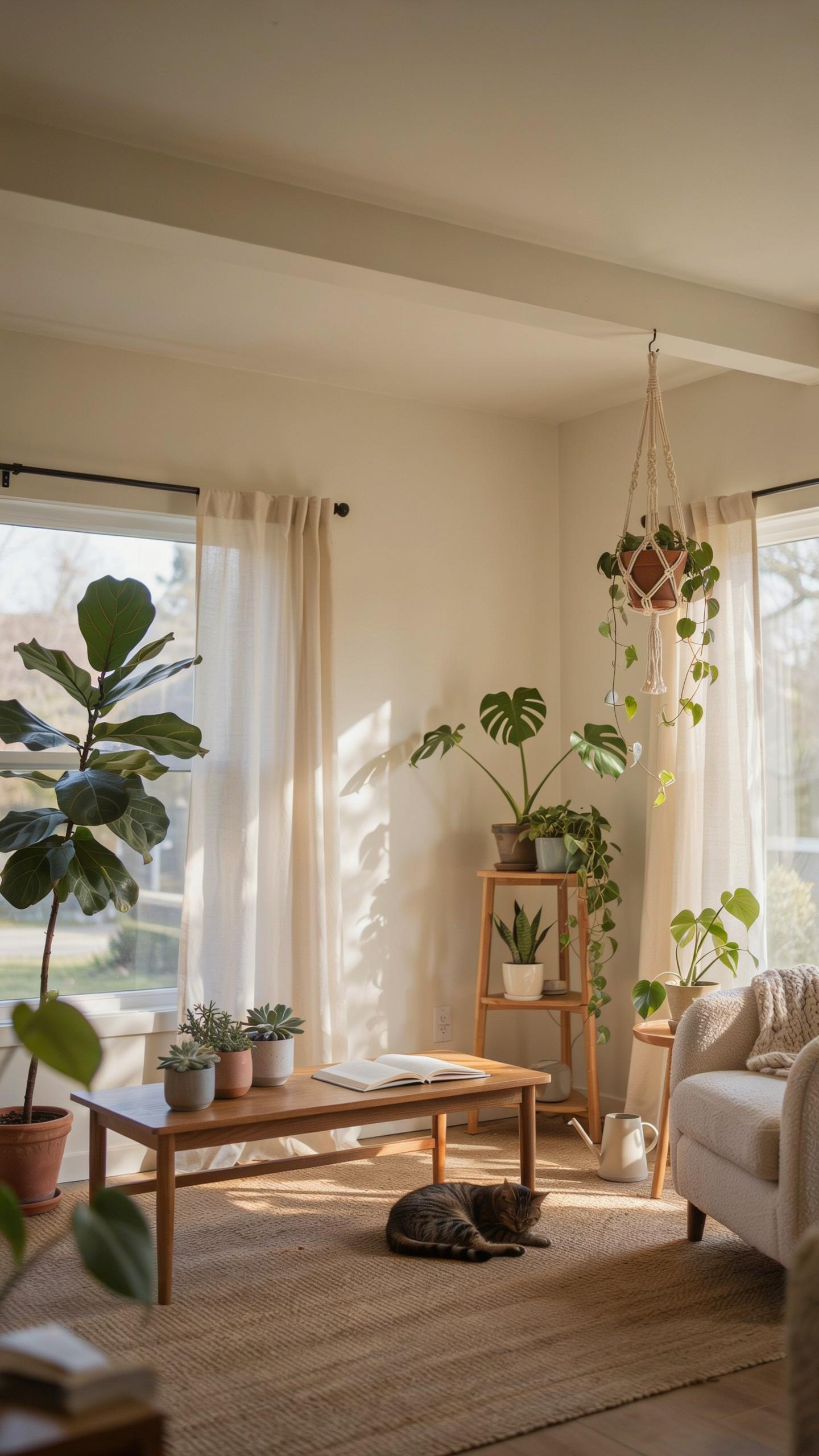
Height variation stops groupings from looking flat or monotonous. Tall plants on pedestals anchor the back or center of a group. Low-growing plants in shallow containers sit forward. This creates visual depth and prevents any single plant from dominating the entire arrangement. The eye moves naturally through the layers.
Pedestals lift tall specimens like fiddle leaf figs or snake plants 12 to 24 inches higher than surrounding plants. This elevation change forces the viewer to scan across multiple levels. Low pots keep trailing plants like pothos or string of pearls at eye level or below. The contrast between high and low elements makes even small groupings feel intentional and structured.
Managing Natural Light Exposure So Every Specimen Thrives
Group plants by their light requirements, not by appearance alone. High-light plants need spots within 3 feet of a south or west-facing window. Medium-light plants tolerate 3 to 8 feet from windows. Low-light tolerant plants survive in interior spaces away from direct sun. Mixing incompatible light needs in one group causes slow decline in some specimens.
Rotate plant groups seasonally as light angles shift throughout the year. Winter sun sits lower and travels shorter distances indoors. Summer sun reaches deeper into rooms and changes intensity. Moving grouped plants closer to or farther from windows every few months prevents some from weakening while others overgrow. This practice keeps all specimens performing at baseline health standards year-round.
Creative House Plant Combinations For Visual Contrast
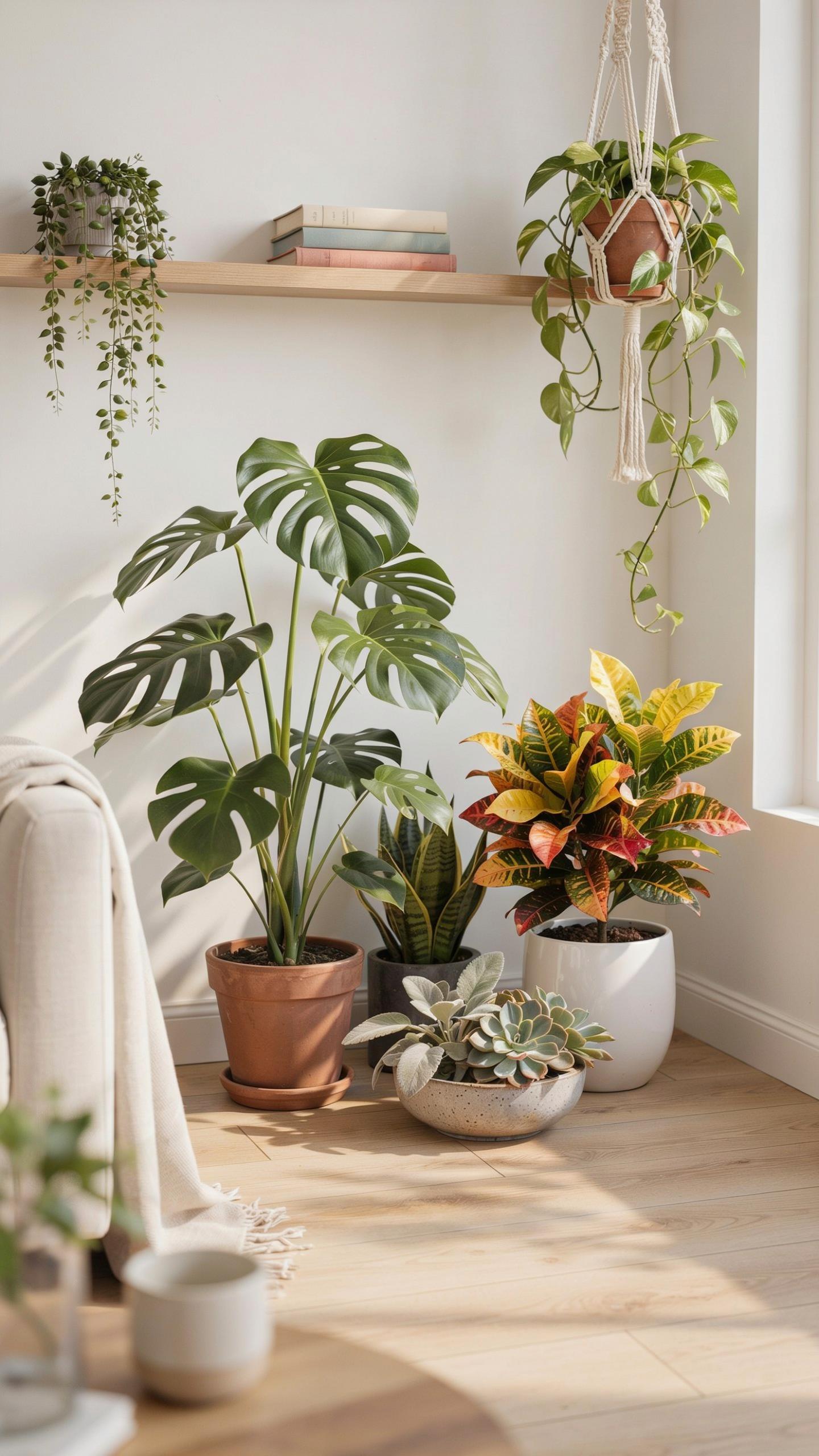
Contrasting Architectural Upright Leaves With Soft Draping Vines
Pairing plants with opposing growth patterns creates visual tension that prevents monotony. Upright plants like Dracaena or Snake plants establish vertical anchors. Trailing vines such as Pothos or String of Pearls soften edges and add movement. This contrast works because the eye travels between structured and flowing forms, creating depth in your grouping.
The technical reason this works involves negative space management. Upright specimens define boundaries and claim vertical territory. Trailing plants fill gaps and obscure hard lines between containers. Together they establish a complete visual composition that holds attention without requiring excessive plant variety or specialized knowledge to execute effectively.
Matching Vibrant Leaf Swirls Of Calatheas Alongside Bold Dracaenas
Calatheas display patterned foliage with curved markings and moving leaves throughout the day. Dracaenas offer solid color blocks in green, red, or cream tones. Grouping them creates a dynamic play between intricate detail and simplicity. The Calathea’s movement draws focus while the Dracaena provides visual rest, balancing the composition.
Both plants tolerate similar indirect light conditions and moderate watering schedules. This compatibility matters practically because grouped plants need aligned care requirements to thrive together. The color contrast between Calathea’s intricate patterns and Dracaena’s bold solids works in any interior because neither competes for visual dominance. They coexist through complementary visual roles rather than fighting for attention.
Innovative Plant Styling Ideas For Relaxed Modern Homes
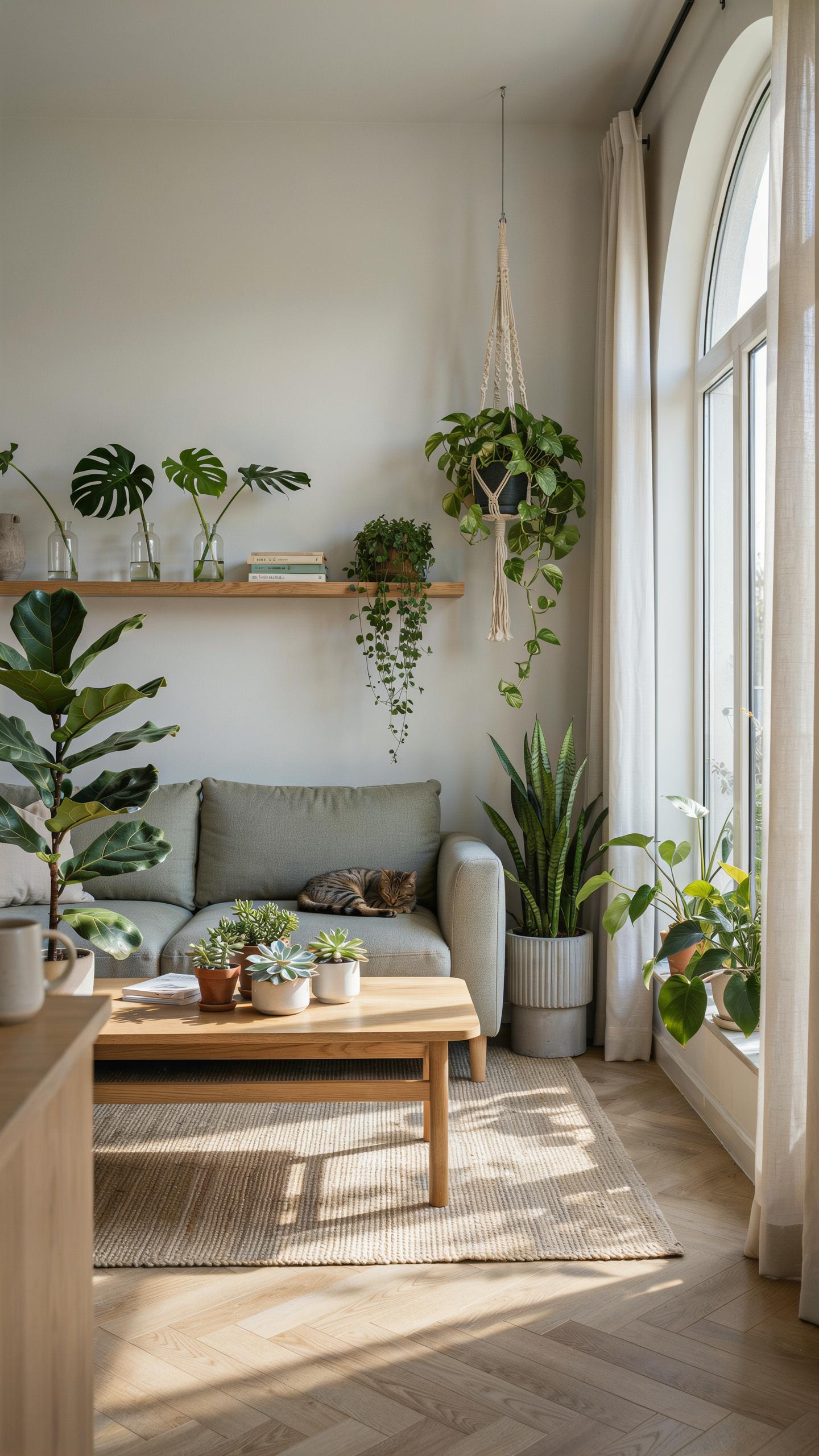
Elevated Decor Methods Using Floating Shelves And Macramé Hangers
Floating shelves create visual hierarchy in rooms by positioning plants at eye level and above. This method breaks up wall space and draws attention upward, making rooms feel larger. Install shelves at varying heights to display plants of different sizes. Proper weight distribution matters here. Shelves rated for 25 pounds hold multiple small plants or one large specimen. Anchor shelves into wall studs for stability and safety.
- Wall Studs: Install floating shelves directly into wall studs for maximum weight capacity and permanent support without damage.
- Staggered Heights: Position shelves at 12 to 24 inch intervals vertically to create rhythm and accommodate plants of varying heights.
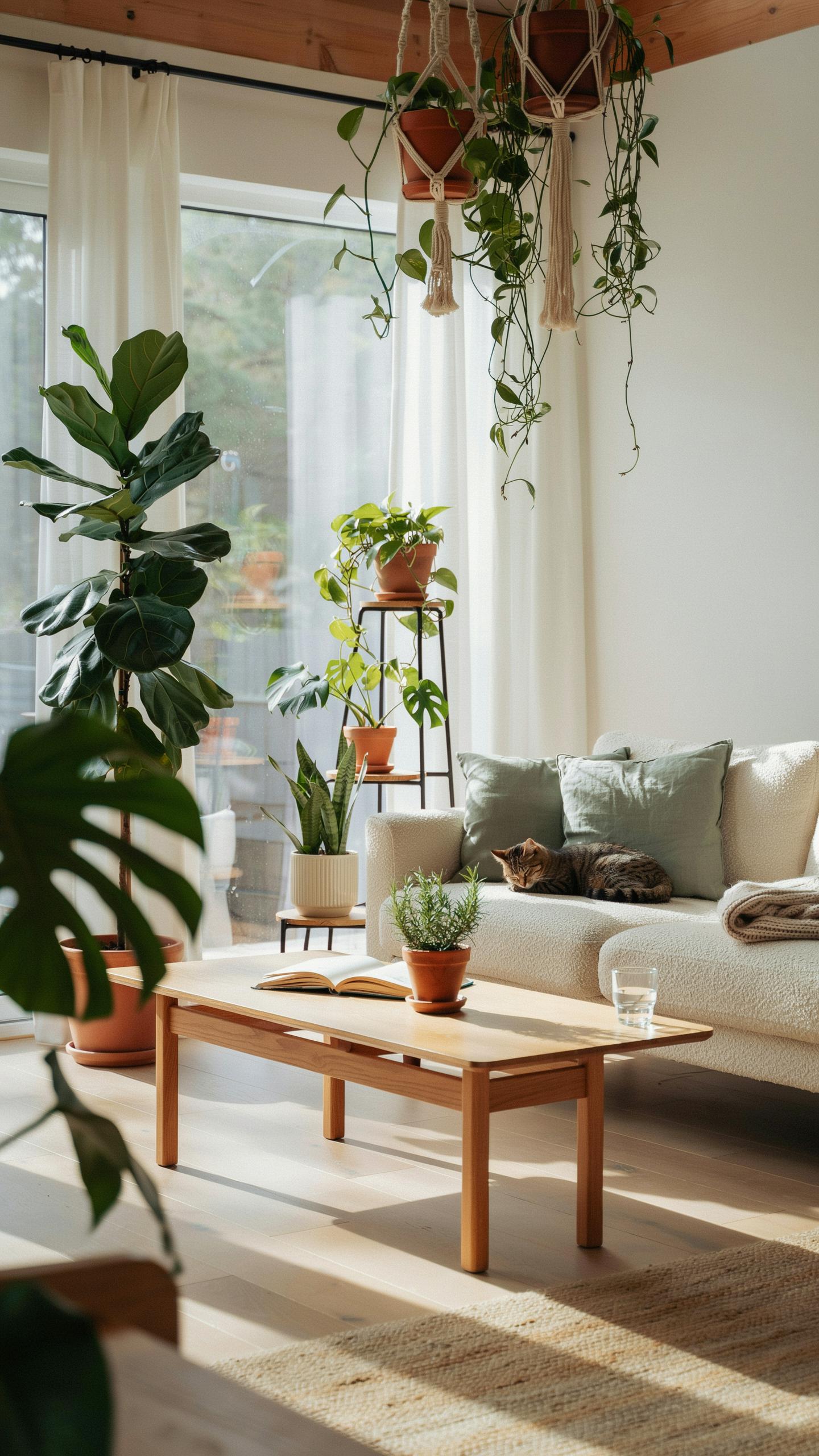
- Macramé Plant Hangers: Use cotton or jute rope hangers to suspend plants from ceiling hooks while adding texture to upper wall areas.
- Weight Capacity Planning: Check shelf ratings before purchasing plants. Heavy ceramic pots with soil add significant weight beyond the plant alone.
- Spacing Between Plants: Leave 6 to 8 inches between plants on shelves to prevent crowding and ensure adequate light reaches all specimens.
Macramé hangers work best for trailing plants like pothos or philodendrons. Modern macramé uses simple knot patterns that don’t demand complex skills to install. These hangers distribute weight evenly across the rope structure. They work with standard ceiling hooks rated for 15 to 20 pounds. Rotate hanging plants quarterly to ensure even light exposure and balanced growth patterns.
To create a home is to gather your green companions in small, leafy clusters that breathe life into every quiet corner. These gentle groupings turn a simple room into a sanctuary where the soul can finally rest.
Integrating Natural Terracotta And Sleek Ceramic Colors Into Your Decor
Terracotta pots offer functional benefits beyond aesthetics. The porous material allows soil to breathe and prevents overwatering by releasing excess moisture through pot walls. Terracotta works in rooms with inconsistent watering schedules. Natural clay tones range from rust to pale tan depending on the firing temperature and clay source. This material complements earth-tone walls and wooden furniture without creating visual clutter.
Ceramic pots provide design flexibility with glazed finishes in white, gray, and black. Glazed ceramics retain moisture longer than terracotta, benefiting plants that prefer consistent soil dampness. Mixing terracotta with ceramic creates contrast. Use terracotta for succulents and drought-tolerant plants. Reserve ceramic for moisture-loving species like ferns. Grouping pots by color creates cohesion in plant arrangements. Alternate between warm and cool tones strategically to guide the eye through a space.
Maintaining Your New Indoor Plant Styling Grouping Technique
How And When To Rotate Grouped Pots For Uniform Growth
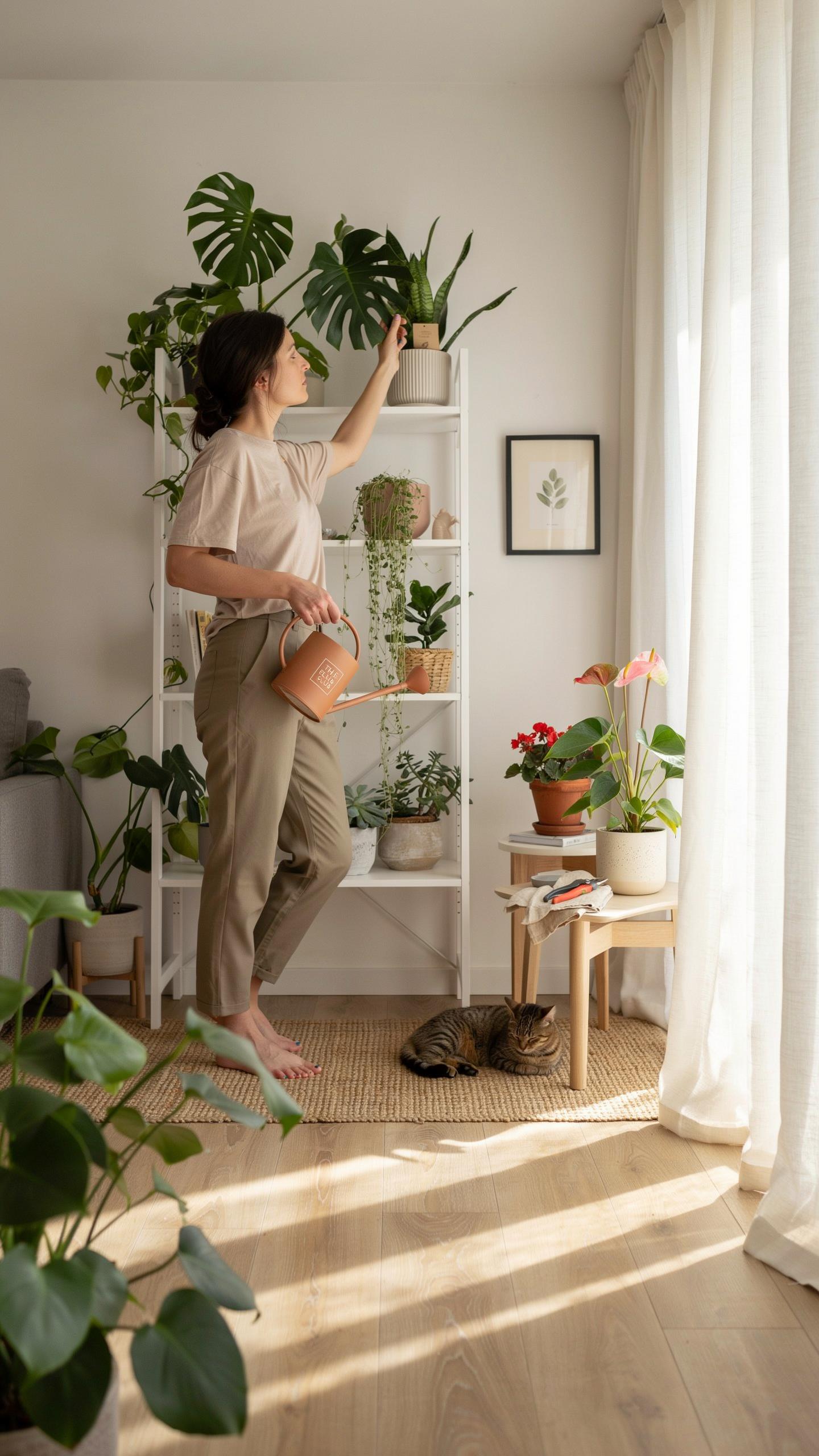
Rotate grouped pots every seven to ten days. Plants grow toward light sources, causing uneven development. Rotating the entire cluster ensures all plants receive equal light exposure. This prevents one side from becoming sparse or leggy. Mark your calendar or set a phone reminder to stay consistent with rotation schedules.
Most plants need rotation year-round, but growth slows in winter months. During low-light seasons, rotate every ten to fourteen days instead. This adjustment matches the plant’s natural reduced growth cycle. Watch individual plant stems and leaf direction. When new growth consistently points one direction, rotation timing needs adjustment.
Preventing Pests And Root Issues In Closely Positioned Clusters
Clustered pots trap moisture and create pest breeding grounds. Space containers one to two inches apart to allow airflow. Poor ventilation between pots encourages fungus gnats and spider mites. Check soil moisture regularly in grouped arrangements. Wet soil in multiple adjacent pots accelerates pest problems quickly.
Inspect plant stems and leaf undersides weekly when plants sit close together. Early pest detection stops infestations before they spread through your cluster. Root rot develops faster in grouped arrangements due to humidity retention. Use well-draining potting soil specifically formulated for container plants. Water individual pots based on soil dryness, not on a fixed schedule.
Frequently Asked Questions

What is the main benefit of using a specific grouping method for my houseplants?
Using a dedicated indoor plant styling grouping technique helps create a cohesive visual story rather than a cluttered mess. By clustering plants, you increase local humidity, which helps your greenery thrive while establishing a clear focal point in your room. This approach simplifies your decor strategy, making your living space feel intentionally designed and deeply relaxing rather than just a collection of random pots scattered around the house.
How do I choose which plants to group together for the best visual impact?
To master the indoor plant styling grouping technique, always follow the “rule of three” and vary heights. Combine a tall, architectural plant like a Fiddle Leaf Fig with a medium, bushy Fern and a trailing Pothos. Mixing different leaf textures and shapes adds depth, while ensuring all plants in the cluster share similar light and water requirements makes long-term maintenance much easier for a stress-free, lush indoor jungle.
Can I create a stylish plant cluster if I am on a tight budget?
Absolutely! You don’t need expensive designer ceramics to achieve a high-end look. Start by grouping affordable, easy-to-propagate plants like Spider Plants or Snake Plants. Use found objects like vintage crates, stacks of old books, or thrifted stools to create varying elevations. Uniformity in pot color—even if the shapes differ—can tie your budget-friendly collection together beautifully, proving that cozy style doesn’t require a massive financial investment.