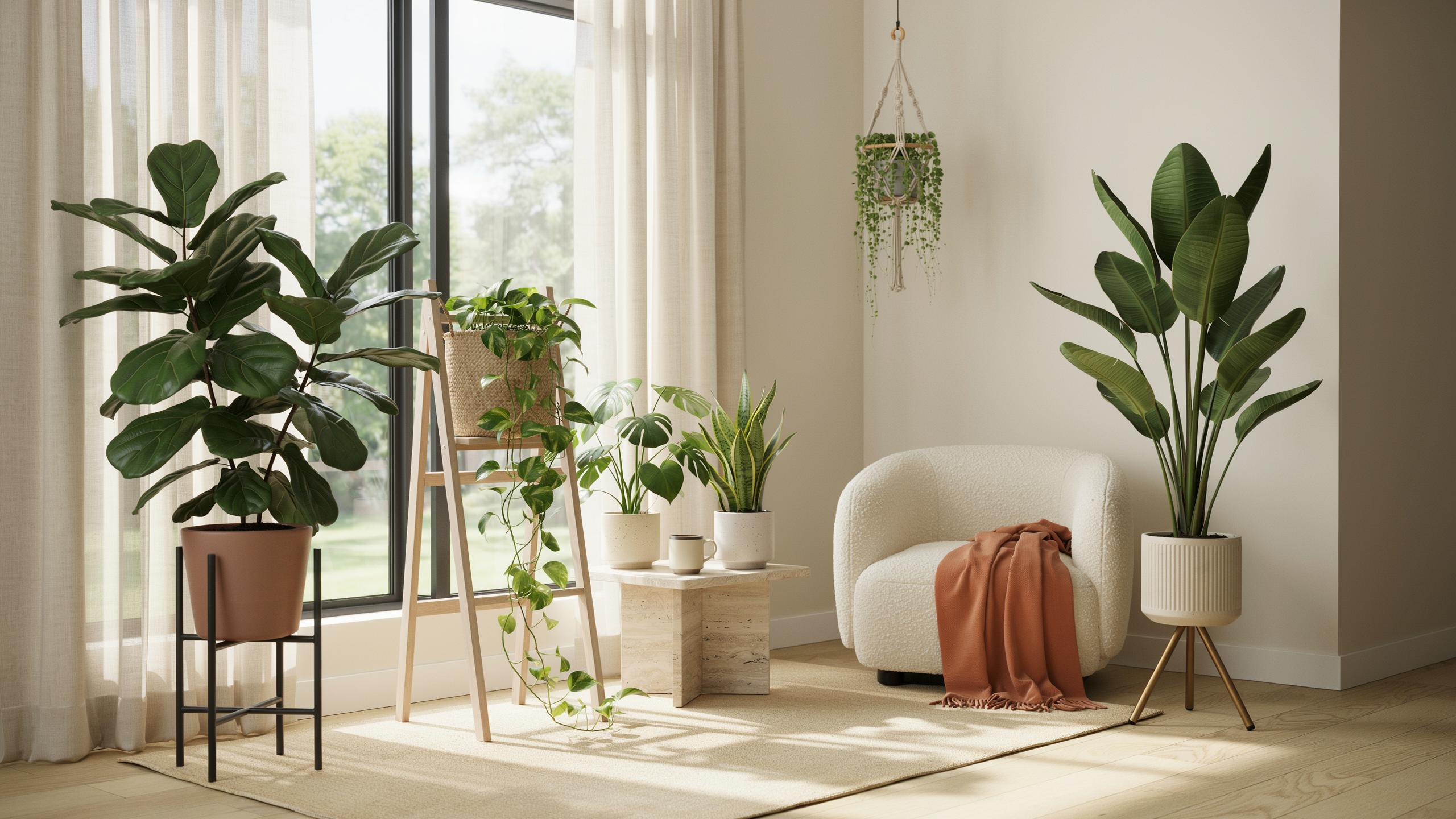
Elegant Plant Stands For Modern Spaces
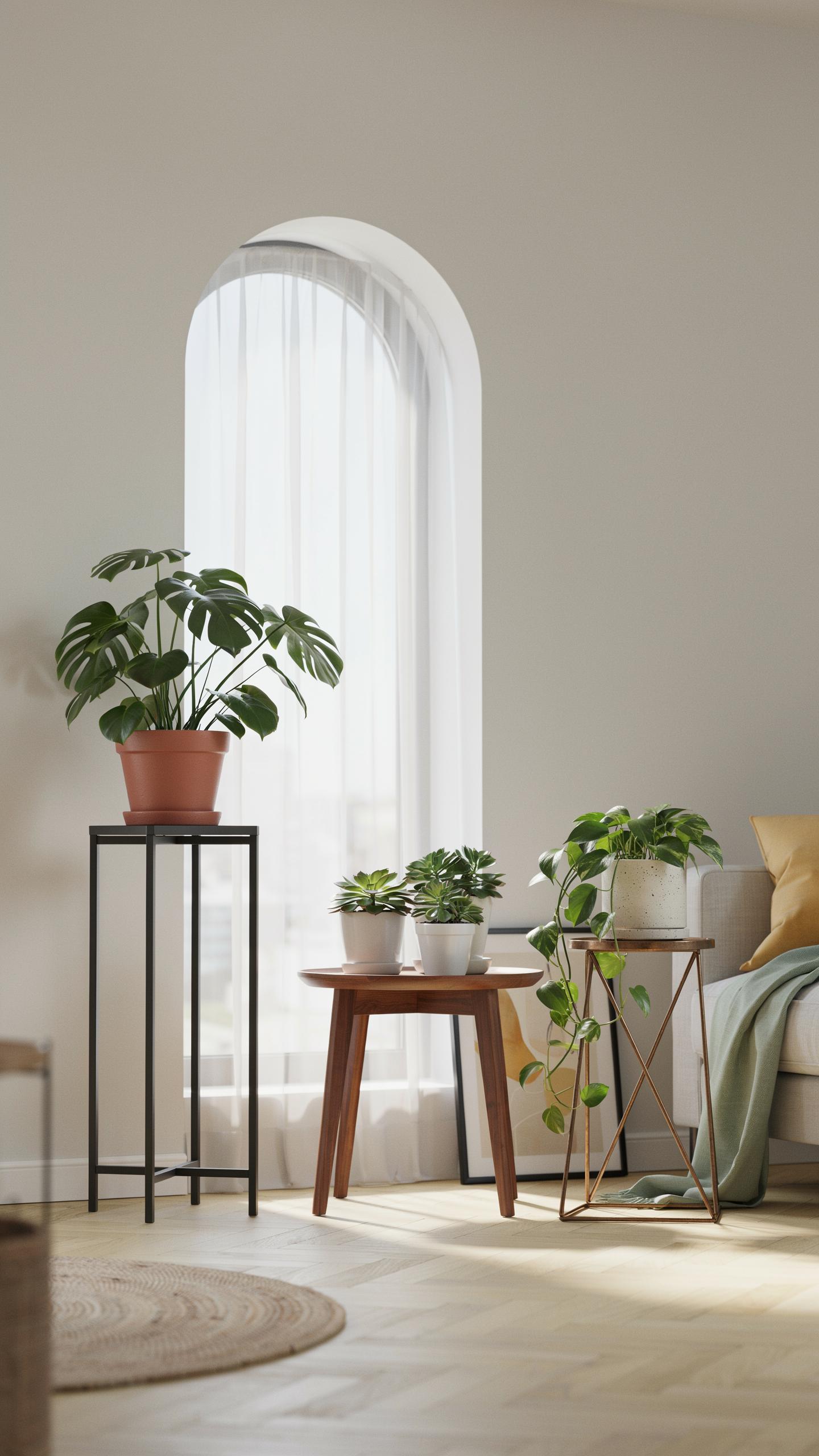
Pedestal Stands
Pedestal stands serve a specific function: they elevate single plants to eye level. This placement works strategically in modern living rooms where floor space matters. Peace lilies and snake plants benefit from this height because it showcases their form without demanding floor real estate. The stand itself disappears visually, letting the plant command attention. Low-light areas gain practical value here since the elevated position catches whatever ambient light exists in the room.
The pedestal design works because it creates visual balance in sparse modern interiors. One statement plant on a pedestal anchors a corner or empty wall without clutter. The stand’s narrow footprint makes it ideal for apartments and compact spaces. You position it where a side table would normally sit, but it occupies less visual weight. This approach trades surface area for vertical emphasis.
Mid Century Wood
Mid-century modern wooden stands emerged during the 1950s and 1960s with design principles that remain tactically sound today. Clean lines, tapered legs, and warm wood tones like walnut or teak define this category. These stands pair directly with neutral ceramic pots because the wood tone carries the visual interest. The construction prioritizes function over decoration, meaning the stand supports plants without competing for attention. Designers built these pieces to age well, making vintage finds and modern reproductions equally viable.
Wood tone selection matters strategically in modern spaces. Walnut and teak complement concrete, white walls, and gray upholstery without demanding visual adjustments elsewhere in the room. The tapered leg design keeps sightlines clear and makes rooms feel less crowded. These stands accommodate multiple pot sizes through their platform depth and leg spacing. You’ll find modern manufacturers producing accurate mid-century designs that match original specifications from that era.

Creative Inside Plant Stand Ideas For Small Apartments
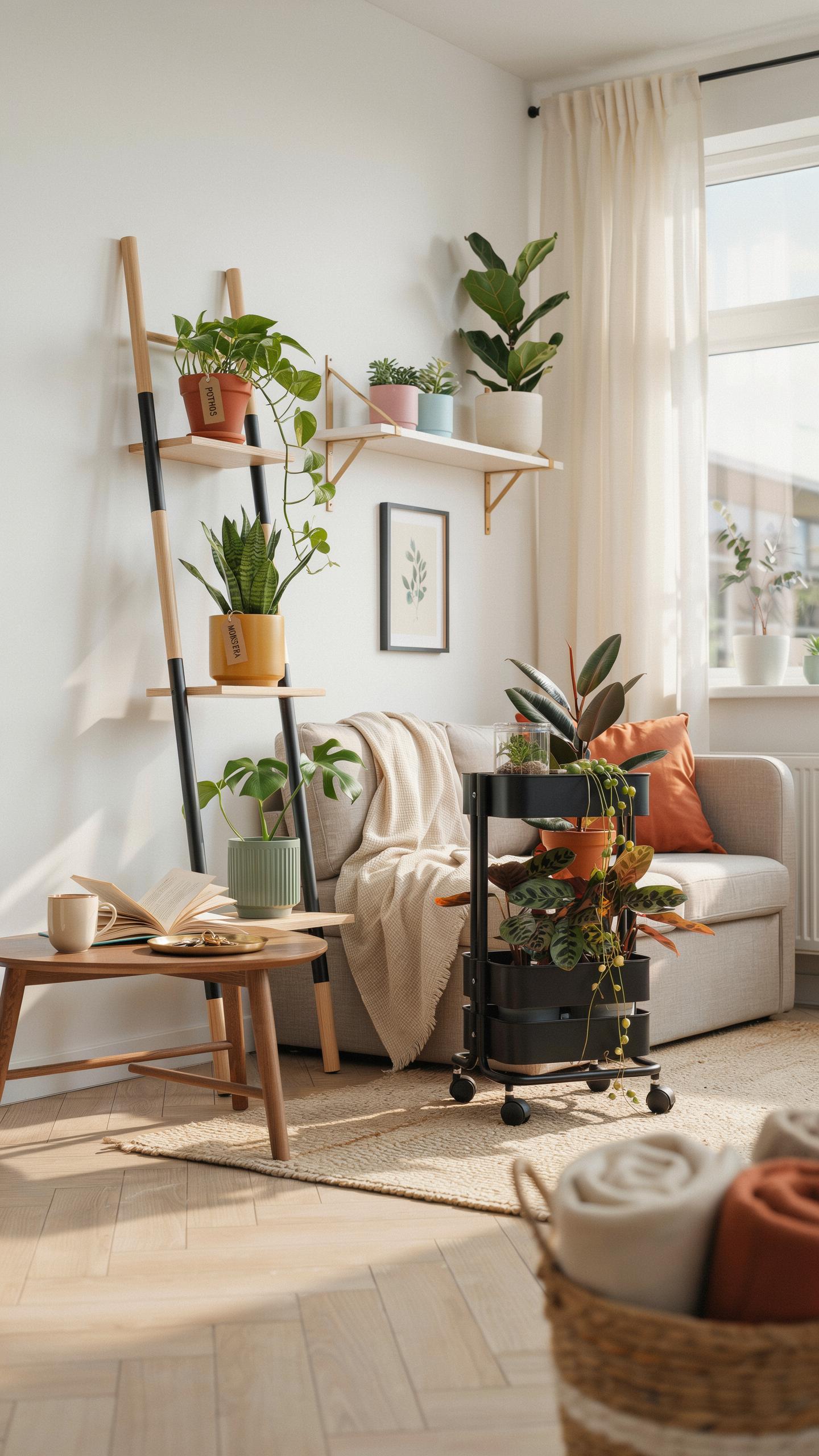
Corner Tiered Shelving
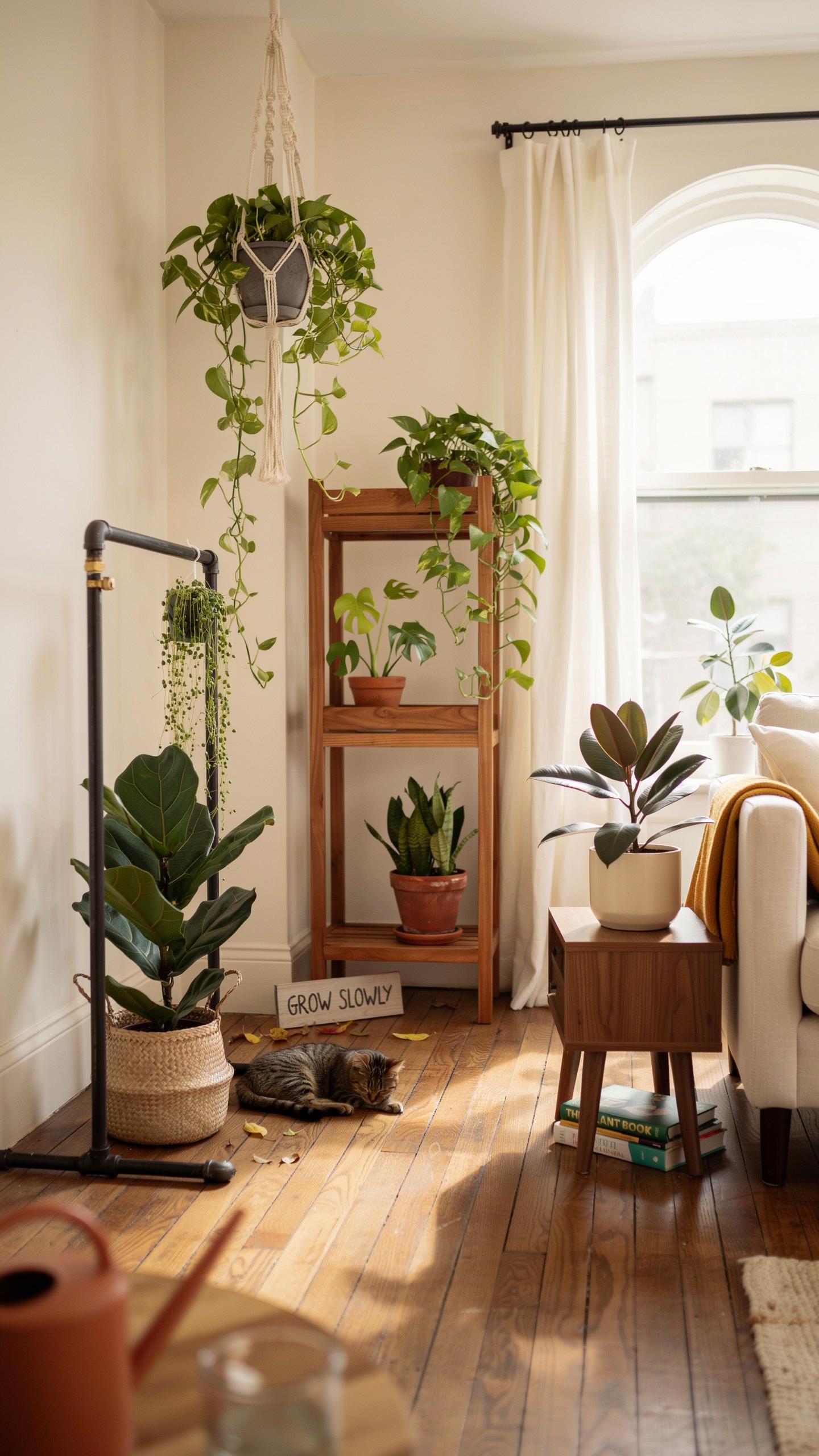
Corner tiered shelving units solve a real problem in small apartments. They use dead space that most people ignore. By stacking shelves vertically in corners, you fit multiple pots without consuming floor area. This approach works because corners are typically empty and unused in compact layouts.
The mechanics are straightforward. A tiered corner unit holds small to medium pots on each shelf level. Each tier sits at a different height, creating visual depth. You arrange plants by light needs and size on individual shelves. The vertical design means your total footprint stays minimal while plant capacity increases significantly.
There is a serene elegance in lifting a leaf toward the sun, turning a simple corner into a living memory of nature’s grace. Elevating our green friends on curated stands creates a sanctuary where the soul can truly breathe.
Window Mounted Trays
Window mounted trays attach directly to glass using suction cups or brackets. This placement gives plants direct access to natural light without taking up floor or table space. Acrylic shelves work best because they’re transparent and let light pass through to lower plants.
Installation involves two steps. First, clean the window glass thoroughly to ensure suction cups adhere properly. Second, arrange pots on the tray, placing taller plants on outer edges and smaller ones in the center. This setup keeps light-dependent plants like succulents and herbs at their optimal light exposure while freeing up valuable apartment space for furniture and movement.
Elevating Indoor Plants With Multi Tiered Shelves
Visual Depth Heights
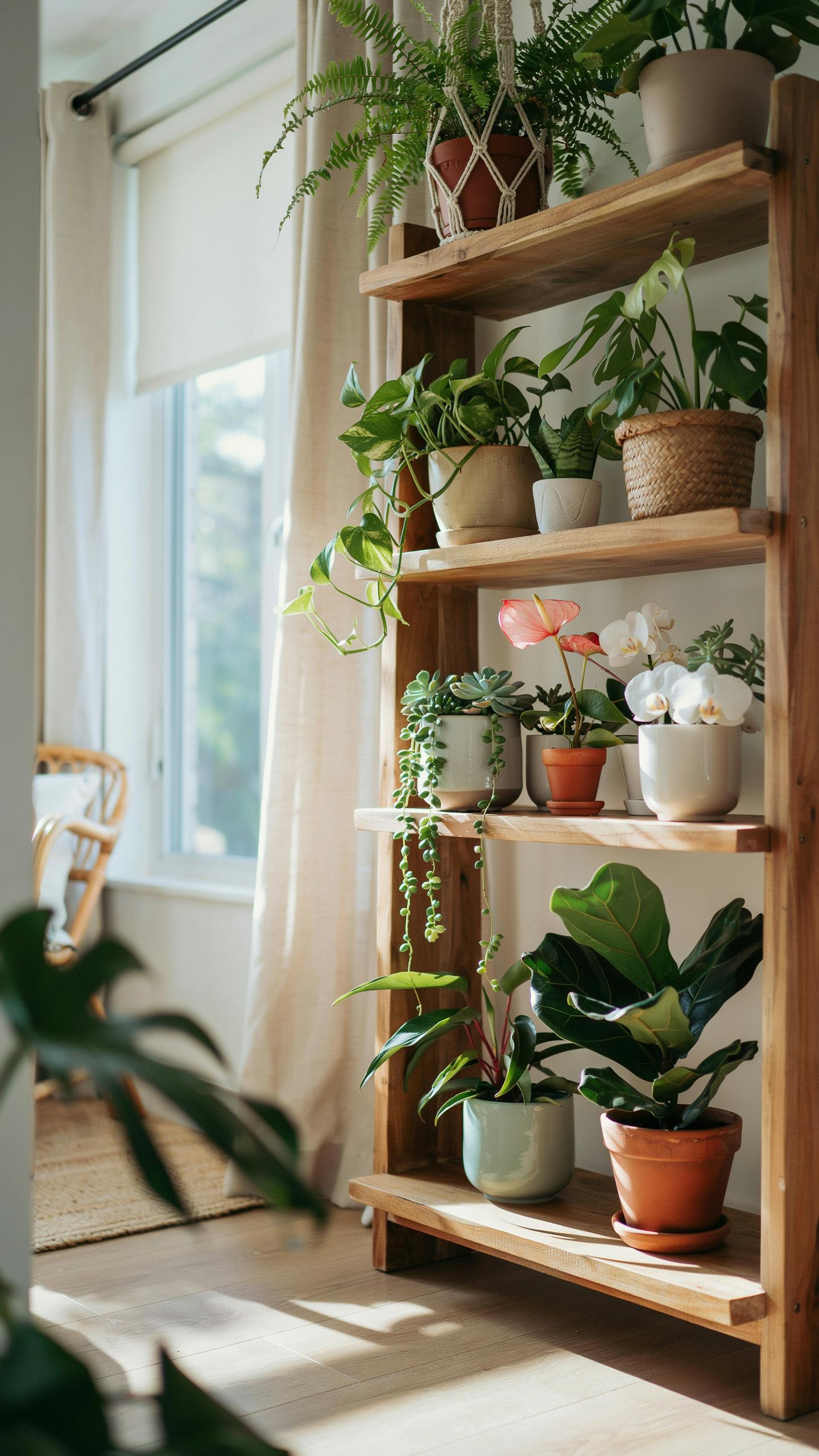
Multi-tiered shelving creates visual depth by placing plants at staggered heights. This arrangement breaks up monotony in a room and forces the eye to move across the display rather than fix on one focal point. Natural forest ecosystems organize plants vertically, with canopy trees towering above understory layers. Recreating this structure indoors makes spaces feel more intentional and layered.
Tiered stands work best when you space shelves at least 12-18 inches apart to give tall plants room without crowding. Vary your plant sizes across heights rather than placing all large specimens at the bottom. This strategy prevents visual weight from settling and maintains balance. The arrangement becomes a functional design element that anchors a room’s overall aesthetic.
Combining Vines Upright
Position cascading plants like pothos or heartleaf philodendron on upper tiers where they naturally trail downward over the edges. These vines reach lengths of 3-10 feet indoors, depending on light and care conditions. Place them where their trailing stems won’t obstruct walkways or lower-tier plants. The draping creates a layered, dynamic quality that static upright plants cannot achieve alone.

Below the vines, position upright growers such as ZZ plants, dracaenas, or snake plants on lower shelves. These species develop vertical profiles naturally and provide structural contrast to drooping foliage. The combination prevents your display from appearing top-heavy or unbalanced. Mixing growth habits on different tiers transforms a simple shelf into a cohesive plant composition.
Rustic Plant Stand Indoor Designs Using Reclaimed Wood
Upcycled Ladder Displays
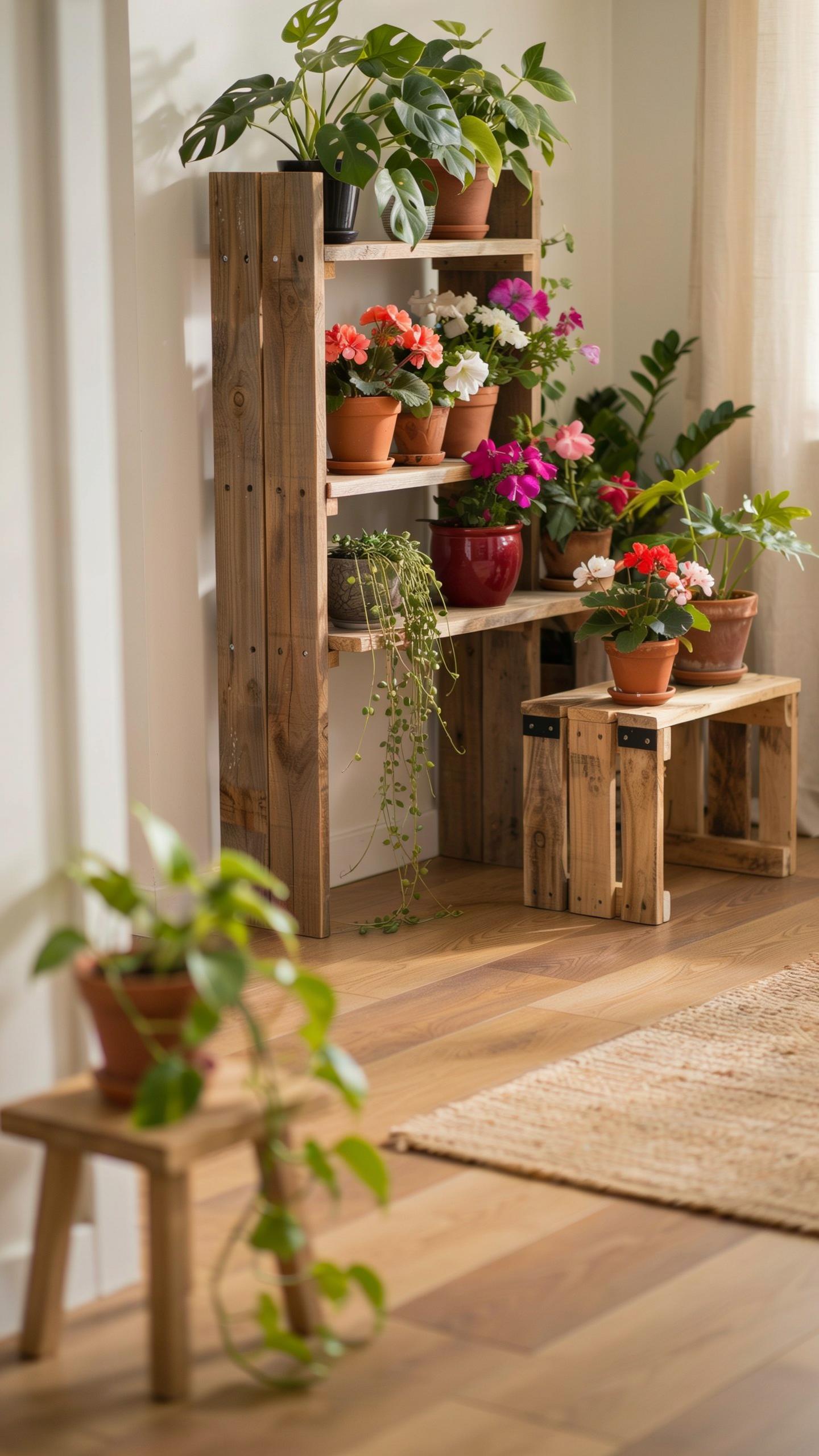
Wooden ladders function as practical plant stands because their horizontal rungs naturally space plants at different heights. This staggered arrangement maximizes light exposure and creates visual depth. Old ladders from hardware stores, estate sales, or salvage yards cost less than purpose-built stands. The rungs accommodate pots of varying diameters without modification.
Lean the ladder against a wall at a slight angle for stability. Place heavier pots on lower rungs and smaller containers higher up. Terra cotta pots work well on ladder rungs because their weight distributes evenly across the wood. This setup works in entryways, corners, or beside windows where plants receive adequate light.
Distressed Crates Pallets
Wooden crates and pallets create modular plant stands with individual compartments for each pot. Stack them horizontally to form a wide display or vertically for floor-to-ceiling coverage. Reclaimed crates from shipping or produce suppliers often cost nothing or minimal fees. The open structure allows air circulation around potted plants.
Secure stacked crates with wood screws or brackets to prevent shifting. Fill cubbies with potted ferns, pothos, or other shade-tolerant plants. The rough texture and weathered finish complement rustic and farmhouse interior styles. This approach works in bedrooms, living rooms, or office spaces where you need organized plant storage without bulk.
Sleek Metal Indoor Plant Stands For Minimalist Decor
Monochromatic Iron Frames
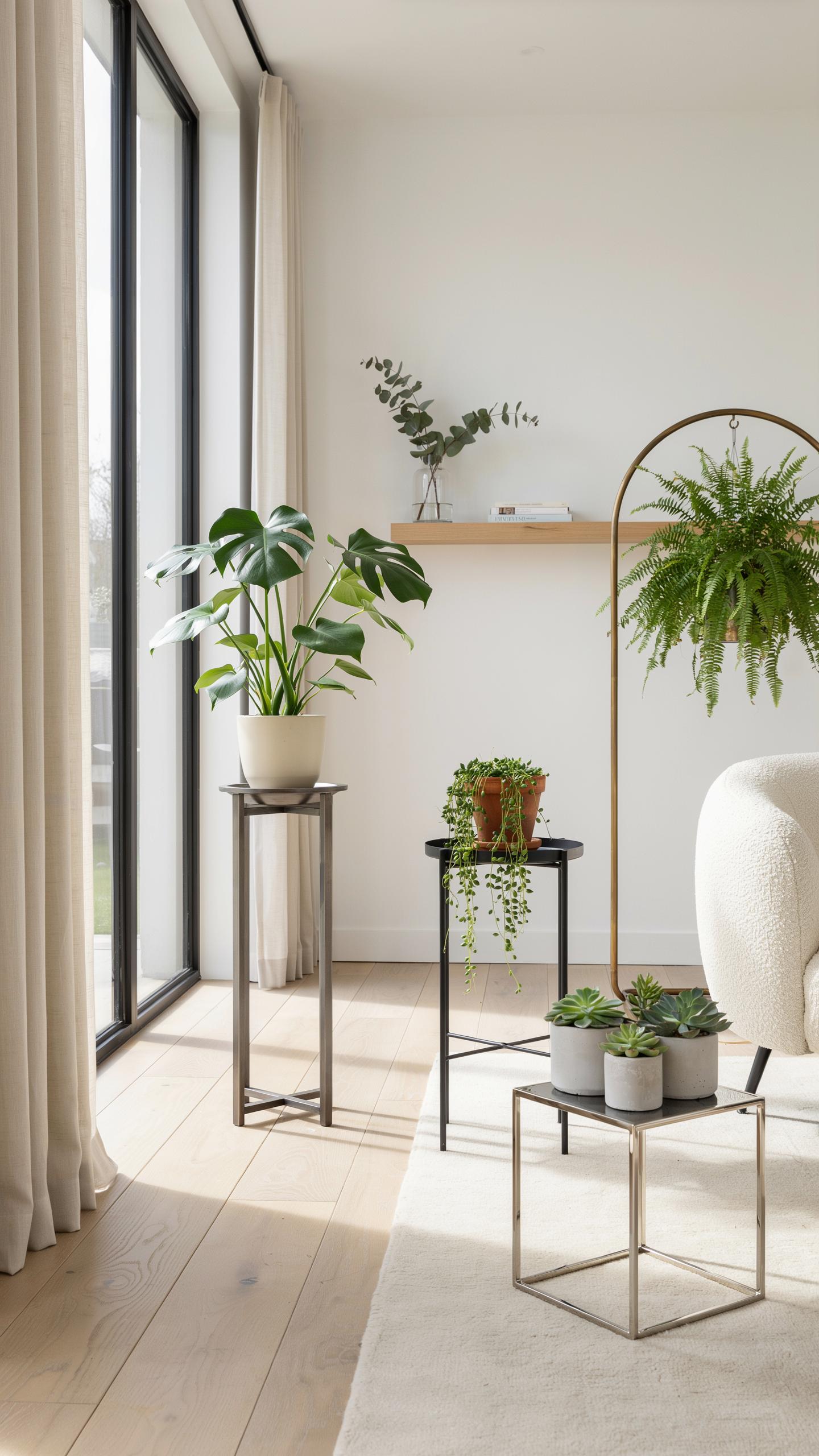
Black powder-coated iron stands deliver structural strength without demanding visual attention. The coating protects against rust while maintaining a matte finish that absorbs light rather than reflecting it. This approach works because it removes competing elements from your space, letting plants become the focal point instead of the stand itself.
Contemporary design prioritizes function over decoration. Iron frames support multiple plants across different heights without adding bulk to a room. The monochromatic palette integrates seamlessly with neutral walls, concrete floors, and modern furniture. You get reliable plant support that disappears into your overall aesthetic.
Geometric Brass Copper
Brass and copper stands feature angular shapes that introduce sophistication through form rather than ornamentation. These metals develop natural patinas over time, adding depth without requiring maintenance. Geometric designs work particularly well in cool-toned rooms because warm metallic finishes balance sterile color palettes.

The angular construction serves a tactical purpose beyond aesthetics. Geometric frames distribute plant weight efficiently across multiple contact points. Brass resists corrosion in indoor environments, making it practical for long-term use. Copper offers similar durability while developing distinctive surface character that distinguishes it from mass-produced alternatives.
How To Arrange Decor Plants Indoor For Maximum Visual Impact
Rule Of Three Foliage
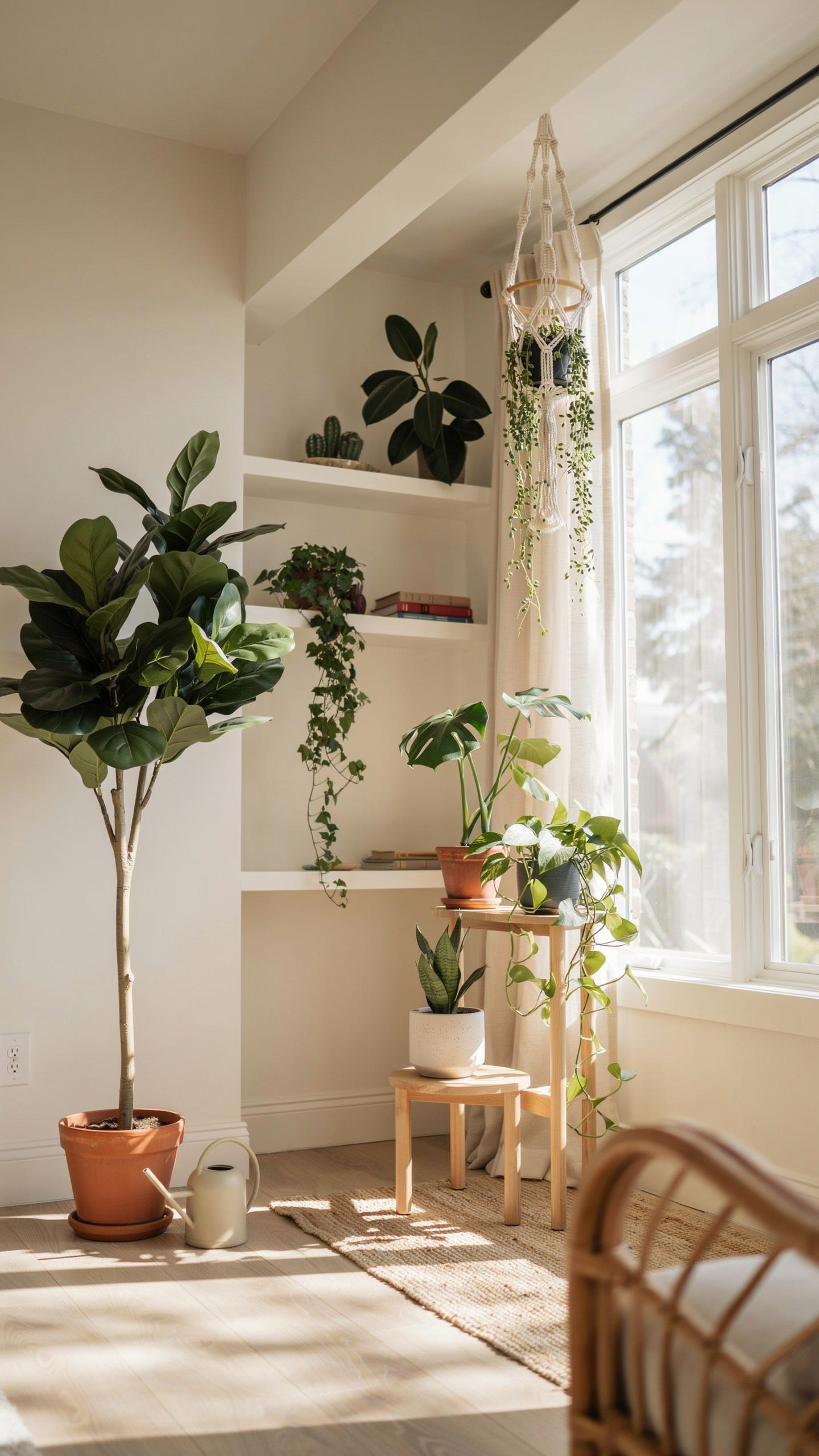
Grouping three plants together creates visual stability without feeling stiff. Odd numbers work because human eyes process them as intentional design rather than accident. Varying the heights ensures no single plant dominates the stand. Use one tall specimen, one medium, and one trailing or compact variety. This approach fills the stand’s vertical and horizontal space efficiently.
Different leaf shapes prevent monotony and direct viewer attention across the entire arrangement. Pair spiky plants like snake plants with rounded leaves like pothos. Combine feathery textures with broad surfaces. Container textures matter equally. Matte ceramic next to glossy metal creates tactile interest. This combination strategy forces the eye to work, which registers as intentional styling rather than random placement.
Balancing Colors Textures
Contrast drives visual interest in plant arrangements. A fiddle-leaf fig’s broad, waxy leaves function as a visual anchor. Boston ferns provide fine, delicate fronds that break up the heavy mass. This pairing creates depth because the eye distinguishes between foreground and background elements. The arrangement reads as intentional rather than coincidental.
Texture variation extends beyond leaf shape to stem structure and overall density. Thick, woody stems contrast with thin, wispy foliage. Dense compact plants balance trailing varieties. This mix prevents the arrangement from reading as one cohesive blob. The stand becomes a composition with distinct zones, each plant claiming its own visual territory while contributing to the whole.
Incorporating Smart Home Gadgets Into Your House Plants Display
Integrated LED Lights
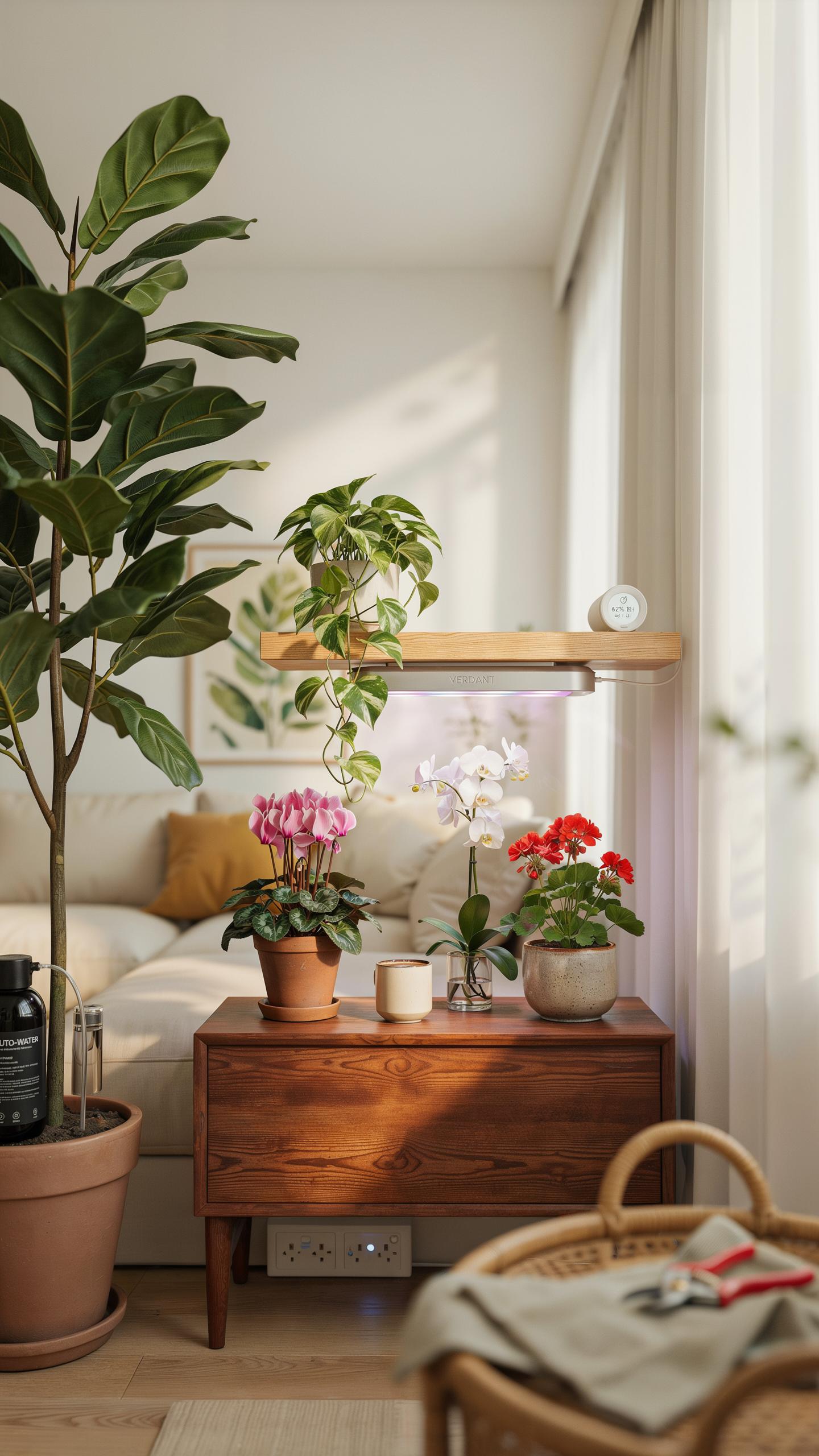
Modern plant stands now ship with built-in LED grow lights designed to emit specific light wavelengths. These lights target the spectrum plants need for photosynthesis, particularly blue and red wavelengths. Rooms with minimal natural light benefit most from this technology. The LEDs consume less electricity than traditional grow bulbs while producing less heat, reducing risk of leaf burn on sensitive species.
Placement matters for LED integration. Position the lights 6 to 12 inches above foliage, adjusting based on plant type and light intensity. Most integrated systems offer adjustable brightness settings. This control lets you customize light duration and strength without purchasing separate fixtures or rewiring your space.
Smart Humidifiers Monitors
Smart humidifiers paired with plant stands solve moisture control problems automatically. These devices measure ambient humidity and activate when levels drop, delivering consistent moisture without manual intervention. Tropical plants like monstera and philodendron thrive with humidity between 60 and 80 percent. A humidifier placed on or near your stand maintains these ranges effortlessly throughout seasonal changes.

Monitoring capabilities give you real-time data on growing conditions. Connected humidifiers send humidity and temperature readings to your phone, allowing remote adjustments. This removes guesswork from plant care. You catch dry air problems before plants show stress, preventing leaf browning and pest infestations common in low-humidity environments.
Selecting The Best Plants For Home Decor And Matching Stands
Heavy Pots Sturdy Stands
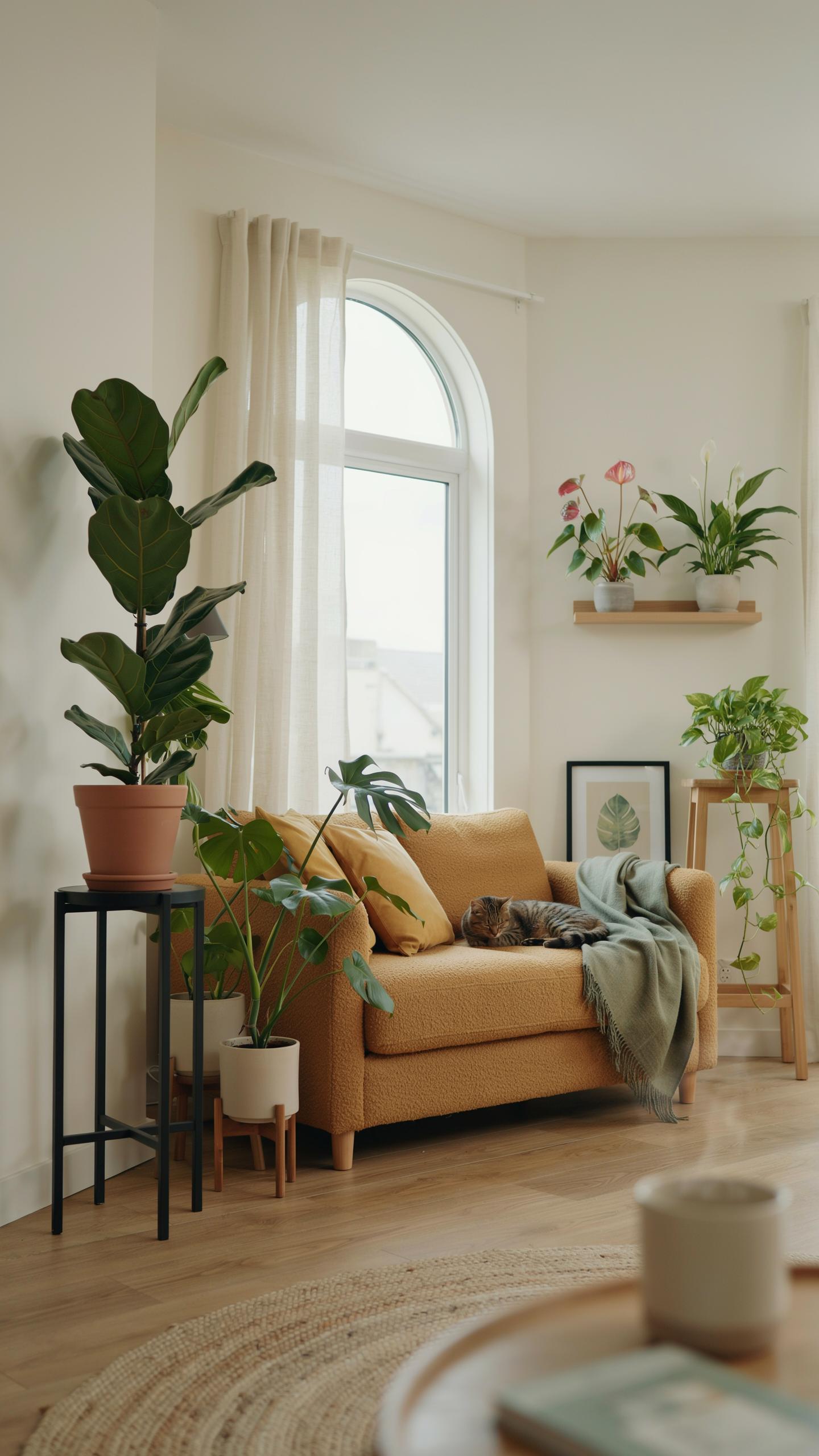
Large planters containing heavy plants demand stands engineered for load capacity. Monsteras and palms in ceramic pots create significant weight. A low, wide-based stand distributes this load safely. Center of gravity matters. Narrow or tall stands topple under weight.
Wide bases prevent tipping and rolling. They contact more floor surface. This increases friction and stability. Match stand dimensions to pot diameter. Oversized stands look wrong. Undersized stands fail functionally.
Best Easy Care Plants
Beginner plants survive neglect and adapt to indoor environments. They tolerate low light and inconsistent watering. These species establish quickly in styled setups. They maintain appearance for months without intervention.
- Snake Plant (Sansevieria): Thrives in low light, stores water in leaves, tolerates dry conditions, minimal watering needed, architectural form suits modern stands.
- ZZ Plant (Zamioculcas zamiifolia): Handles poor light, survives weeks without water, glossy leaflets catch light, dense growth pattern fills stand space effectively.
- Pothos (Epipremnum aureum): Grows in any light condition, trails or climbs depending on support, adapts to temperature fluctuations, forgiving watering schedule.
- Cast Iron Plant (Aspidistra elatior): Named for durability, endures neglect and low light, slow growth requires less pruning, compact growth suits tiered stands.

These plants deliver results without fussing. They stay healthy on styled stands for extended periods. Pick stands that complement their growth patterns and mature size.
DIY Styling Tips For Custom Indoor Plant Styling Plant Stands
Steps Build Style Stand
Building a tiered plant stand requires planning and execution. Start by measuring your floor space and sketching the height profile you need. This prevents costly mistakes and ensures the stand fits your room. Pick durable wood planks or salvaged shelves that can handle moisture and weight without warping.
- Measure and sketch: Document available floor space and desired height profile before purchasing materials or starting construction work.
- Select materials: Use solid wood planks or reclaimed shelves rated for weight capacity of 50 pounds or more per tier.
- Secure joints: Install heavy-duty metal brackets and wood screws at all connection points to prevent wobbling or collapse.
- Sand and seal: Sand all edges smooth, then apply moisture-resistant varnish to protect wood from water damage and rot.
- Load strategically: Place your heaviest pots on the base tier and lighter cascading plants on upper levels for stability.
Proper weight distribution prevents tipping and extends the stand’s lifespan. Place heavier ceramic pots with soil on lower tiers where they belong. Trailing plants and lightweight containers go higher up. This approach keeps your display stable while maximizing visual impact.
Repurposing Household Objects
Bar carts, decorative stools, and stackable shelving units transform into functional plant stands instantly. These items already have the structure you need. They cost less than custom builds and add character to your space through existing design elements.
Vintage bar carts work exceptionally well because their wheels allow repositioning and their tiered surfaces hold multiple plants. Wooden stools provide a single elevated platform for statement plants. Stacked books or crates create adjustable heights without permanent installation. The key is selecting sturdy objects that won’t collapse under soil and pot weight.
Frequently Asked Questions

Why should I use plant stands instead of just placing pots on the floor?
Using stands is a game-changer for interior design because it creates visual layers and depth. Lifting your greenery off the ground protects your flooring from moisture and improves air circulation around the leaves. Additionally, indoor plant styling plant stands allow you to position sun-loving species closer to window light, ensuring your botanical collection thrives while looking professionally curated and organized.
How do I mix and match different styles of plant stands without it looking messy?
The secret to cohesive indoor plant styling plant stands is finding a common thread, such as material or color palette. Try grouping three stands of varying heights—short, medium, and tall—to create a dynamic “cluster” effect. Stick to a consistent theme, like mid-century modern wood or minimalist black metal, to ensure the arrangement feels intentional. This variety adds architectural interest while keeping your living space looking balanced and sophisticated.
Can I achieve a high-end look with plant stands on a tight budget?
Absolutely! You can find affordable, stylish options at thrift stores or discount home retailers that look incredibly expensive with a little DIY effort. A simple coat of spray paint in matte black or metallic gold can instantly elevate a basic wooden or wire stool. Using everyday furniture, like sturdy crates or old step ladders, is a clever way to display your foliage beautifully without breaking the bank.