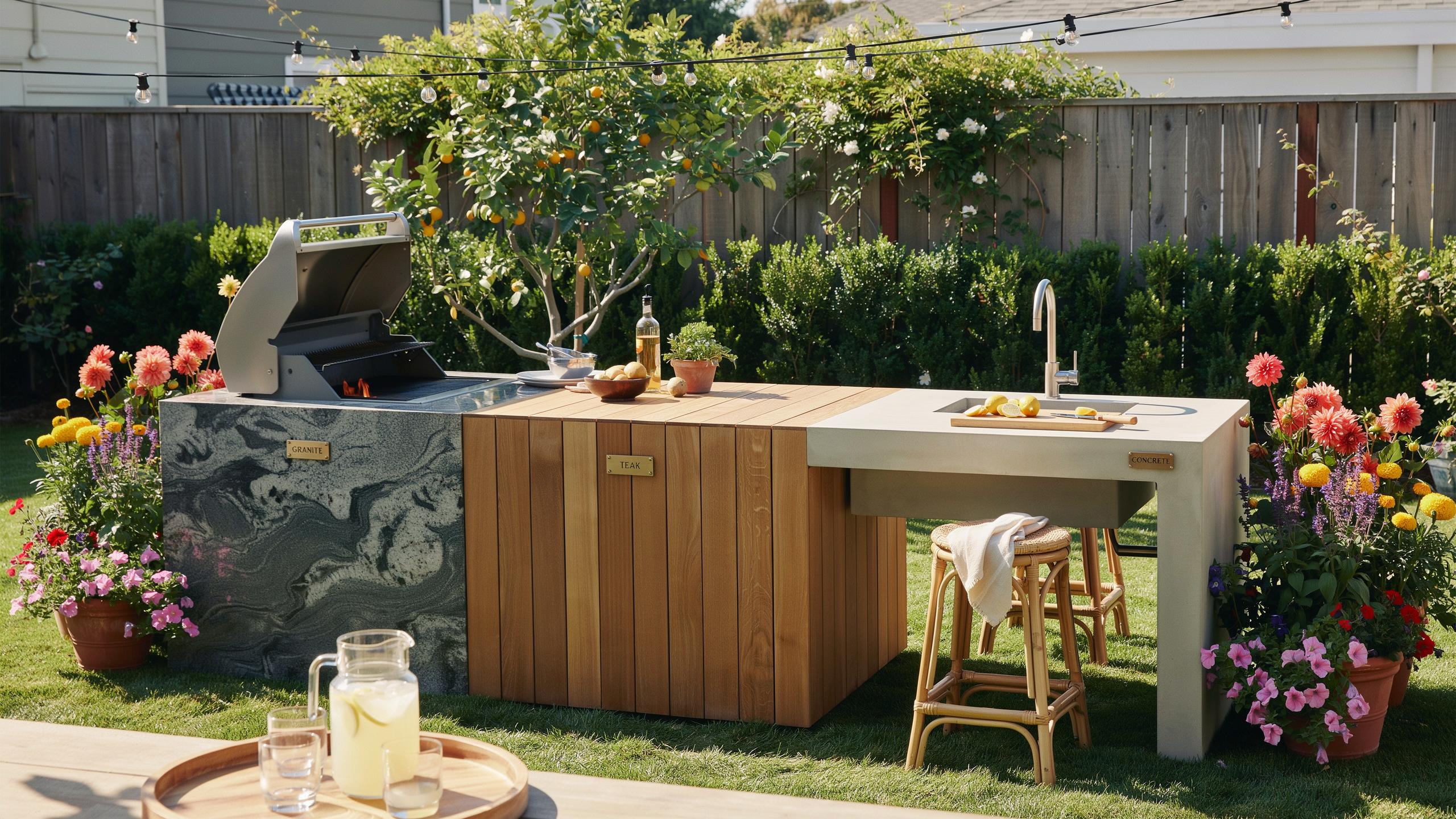
Demystifying Outdoor Kitchen Counter Materials For Beginners
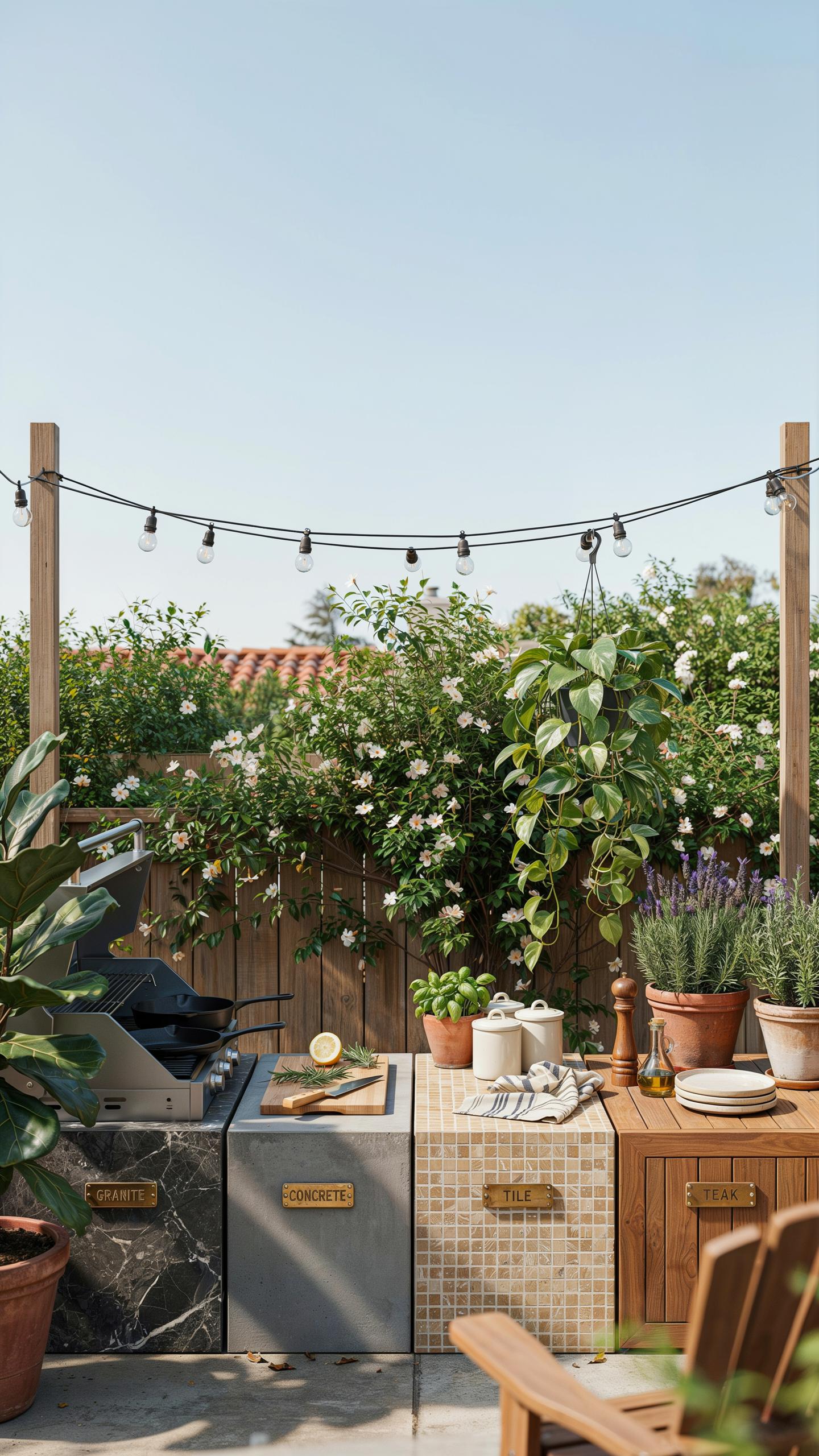
Why Choosing The Right Material Matters For Durability
Exterior counters face relentless conditions that indoor surfaces never encounter. UV radiation fades colors and degrades material bonds. Temperature swings cause expansion and contraction cycles that crack weak surfaces. Rain, snow, and humidity penetrate poorly sealed materials and trigger structural failure. The wrong choice means replacing your counters in three to five years instead of ten to fifteen.
Material durability directly impacts your total cost of ownership. Concrete cracks without proper sealing. Wood rots despite treatment. Laminate delaminates at the edges. Granite and engineered stone resist these failures because their density and non-porous nature repel moisture and UV damage. You invest upfront in quality to avoid constant repairs and premature replacement cycles.
Basic Criteria For Evaluating Outdoor Kitchen Countertops Ideas
Start by assessing your local climate. High humidity environments demand non-porous materials like granite, quartzite, or stainless steel. Arid regions tolerate concrete and wood more effectively. Temperature swings between seasons matter because materials expand and contract at different rates. A material that works in Florida will fail in Colorado without proper installation adjustments.
Budget and maintenance requirements must align with your lifestyle. Stainless steel costs more upfront but requires minimal maintenance. Concrete is affordable but needs resealing every two to three years. Granite sits in the middle price range with moderate maintenance demands. Installation complexity varies significantly. Some materials like laminate install quickly with basic tools. Others like stone require professional placement. Match material choice to your willingness and ability to maintain it over time.

Granite And Natural Stone Options For Countertops For Outdoor Kitchens
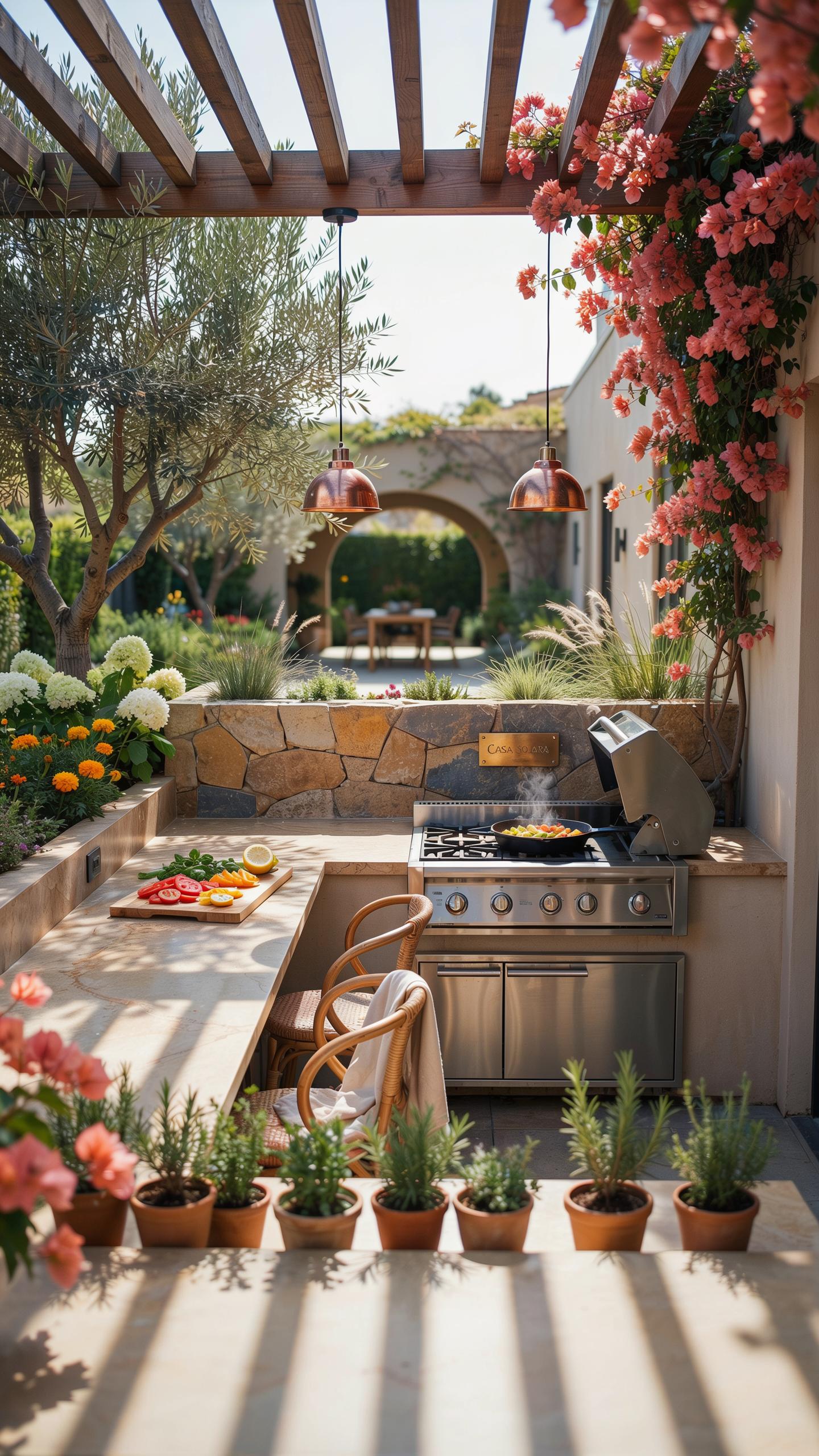
The Resilience Of Natural Granite Under Extreme Weather Conditions
Granite performs reliably in outdoor environments because of its dense mineral composition and natural heat resistance. The stone withstands UV exposure, temperature swings, and moisture without degrading. When sealed properly, granite repels water absorption, prevents bacterial growth, and resists staining from acidic foods and grease that break down weaker materials.
Granite requires periodic resealing, typically every one to three years depending on climate and usage. This maintenance step keeps the stone protected and extends its functional life. Without resealing, granite absorbs liquids and becomes vulnerable to permanent discoloration and damage from freeze thaw cycles in cold climates.
Alternative Stone Materials Like Soapstone And Quartzites
Soapstone offers distinct advantages for outdoor kitchens because it is naturally non porous and heat resistant. The material requires no chemical sealers, eliminating a maintenance step that granite demands. Soapstone develops a patina over time from weathering and use, which some owners prefer for aesthetic reasons while others view it as aging.

Quartzite provides a harder, more durable surface than soapstone but still demands periodic sealing. This engineered stone resists scratching and staining better than soapstone, making it suitable for high use areas. Quartzite costs more than soapstone but less than premium granite, positioning it as a middle ground option for outdoor countertops.
Affordable Concrete And DIY Outdoor Countertop Ideas
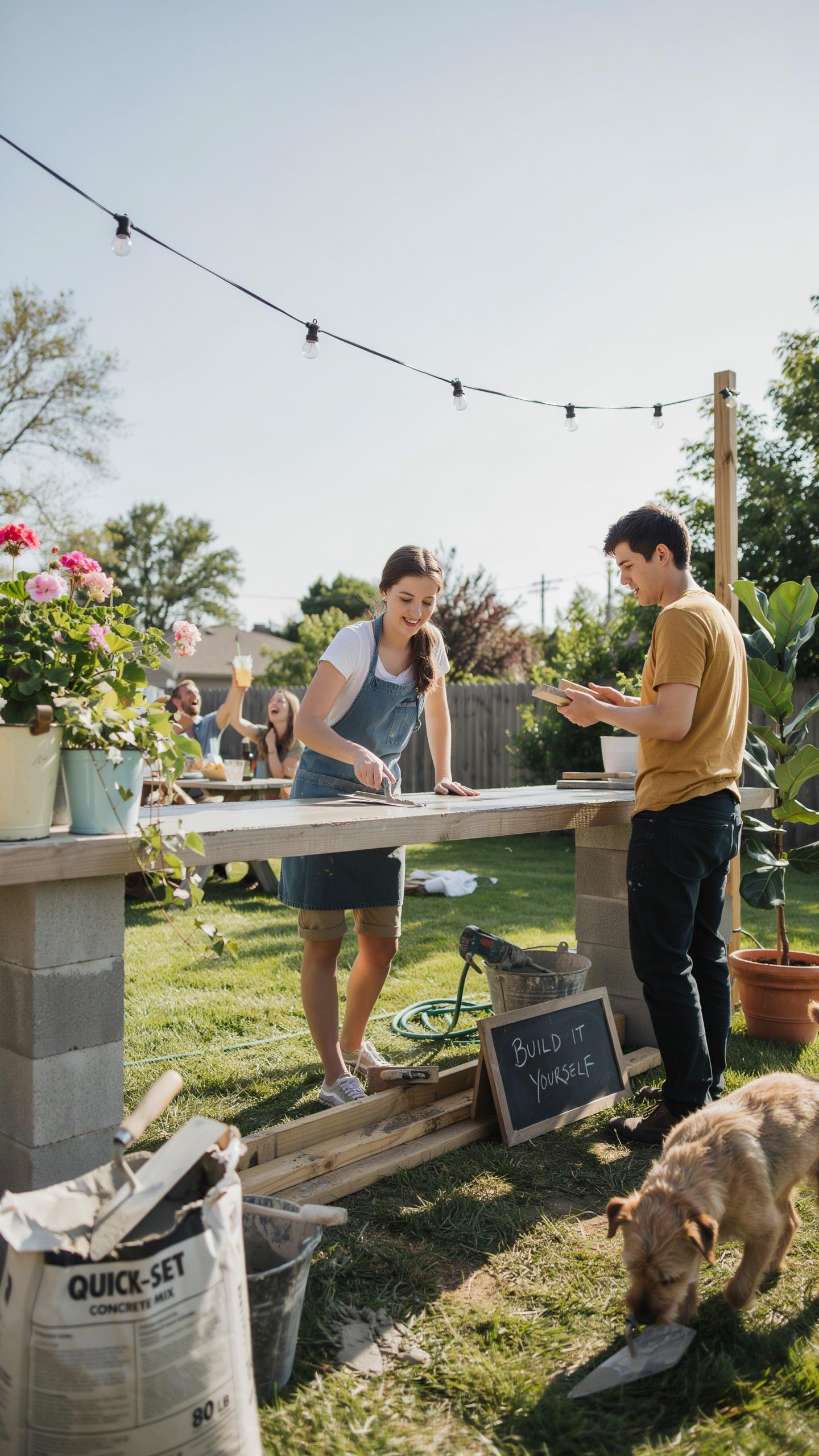
Pouring Your Own Concrete Slab For A Custom Finish
Concrete lets you build countertops in any shape or thickness you need. You control the design from start to finish. Staining, polishing, and texturing options give concrete the appearance of expensive stone at a fraction of the cost. Proper reinforcement with steel mesh or rebar prevents cracking under outdoor temperature swings.
Concrete requires sealing every one to three years depending on climate exposure. Water penetration causes spalling and surface deterioration without protection. The material handles heat well and resists staining if sealed correctly. DIY pours demand attention to detail during mixing, pouring, and curing phases to avoid structural failure.
Essential Tools Needed For A Basic Concrete Countertop Pour
Gathering the right tools before starting saves time and prevents mistakes during the pour. Quality equipment ensures your countertop sets properly and lasts years without major repairs. Cutting corners on tools or materials compromises structural integrity and finish quality.
- Heavy duty melamine boards: Form the mold that shapes concrete while it cures. Melamine resists moisture and releases concrete cleanly without sticking or warping.
- Concrete mixing equipment: A powered mixer handles large batches efficiently. Hand mixing works for small projects but takes significantly longer and produces inconsistent results.
- Reinforcing steel mesh or rebar: Strengthens concrete against cracking from temperature changes and weight loads. Position reinforcement in the middle third of the slab thickness for maximum effectiveness.
- Concrete sealer: Protects poured concrete from water damage, UV exposure, and staining. Choose penetrating sealers for matte finishes or topical sealers for glossy protection.
- Safety gear: Gloves, eye protection, dust masks, and steel toe boots prevent injuries. Concrete powder irritates skin and lungs during mixing and finishing work.

Invest in a quality concrete sealer from the start. Cheap sealers fail quickly and force expensive reapplication. Test your sealer on scrap concrete before treating finished countertops. Plan sealer reapplication into your annual maintenance schedule.
Using Tile Outdoor Kitchen Countertop Designs On A Budget
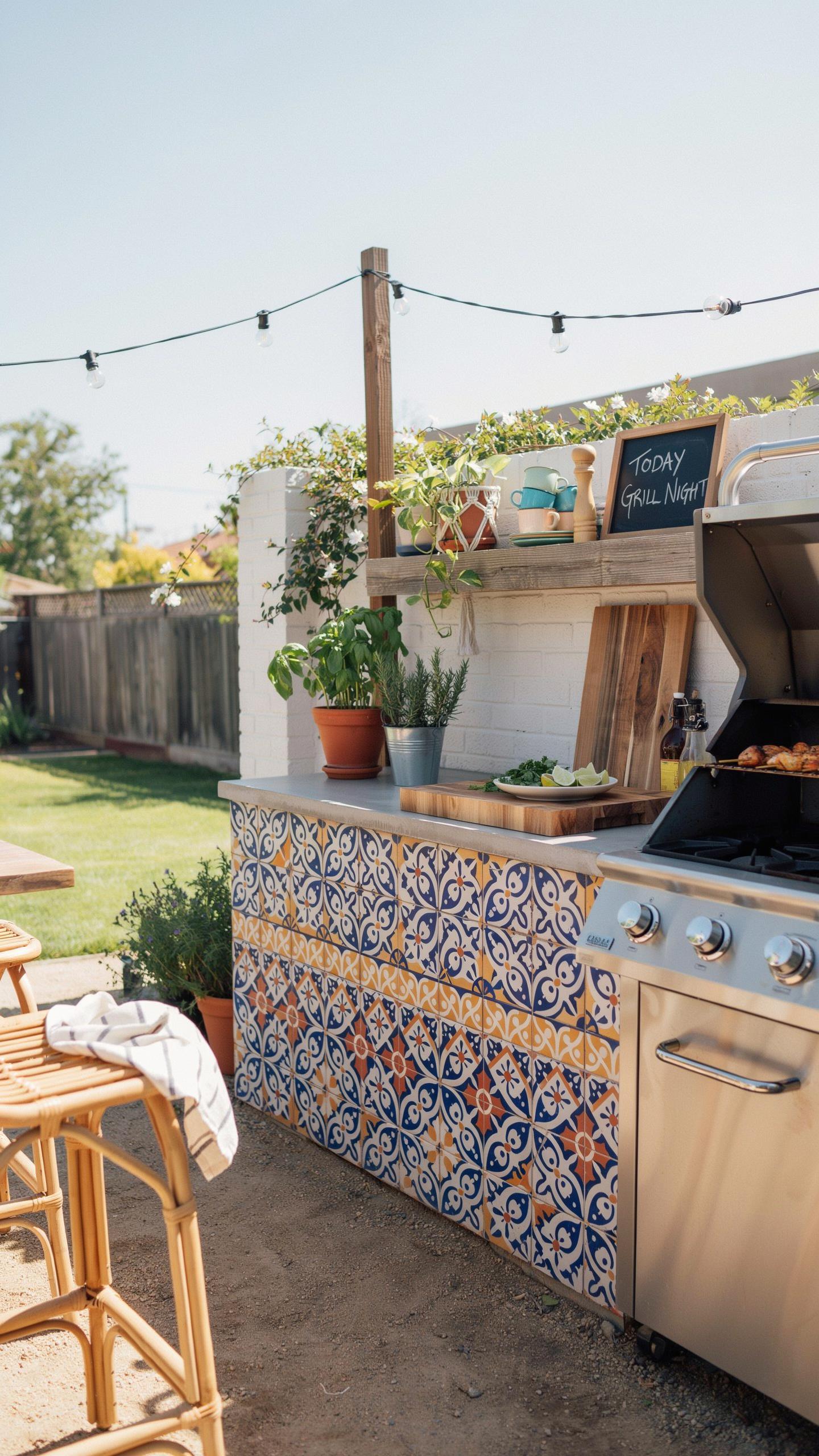
Selecting Porcelain Versus Ceramic Tile For Exterior Environments
Porcelain tile outperforms ceramic tile in outdoor kitchens because it absorbs less water. Ceramic absorbs up to 3 percent of moisture, while porcelain absorbs less than 0.5 percent. This difference matters during freeze thaw cycles. Water trapped inside ceramic expands when frozen, causing cracks and spalling that compromise your counter.
Porcelain’s low porosity makes it frost resistant and naturally durable. You get a budget friendly surface that lasts 10 to 15 years or longer with basic maintenance. The material costs less than stone or concrete alternatives while delivering superior weather resistance. For beginners, porcelain tile eliminates the guesswork and delivers predictable performance.
Grout Selection And Sealing Techniques To Prevent Water Penetration
Polymer modified grout performs better than standard grout in outdoor applications. This formulation resists cracking and reduces water absorption compared to conventional Portland cement grout. Apply exterior grade penetrating sealer over the grout joints after installation cures. The sealer creates a protective barrier that prevents moisture from migrating behind the tile surface.

Water penetration behind tile causes the bond to fail and rots the substrate frame underneath. Reapply sealer every 2 to 3 years depending on weather exposure and foot traffic. This maintenance step costs under 50 dollars and prevents thousands in repair costs. Skipping sealing guarantees long term water damage that spreads beyond the counter area.
Cheap Outdoor Countertop Ideas To Keep Your Project Under Budget

Utilizing Prefabricated Stone Remnants For Cost Effective Surfaces
Stone yards stock leftover granite and quartz pieces from indoor kitchen fabrication. These remnants sell at 40 to 60 percent below full slab pricing. Smaller outdoor workspaces fit perfectly within remnant dimensions. You get legitimate stone material without the premium price tag that new fabrication demands.
Remnant inventory changes constantly, so you need flexibility on size and color selection. Visit local yards in person rather than ordering online. Inspect pieces for cracks or damage before purchase. Installation costs remain identical to full slabs, so material savings translate directly to your bottom line.
Utilizing Pressure Treated Wood And Exterior Grade Sealers
Pressure-treated lumber delivers affordability when stone exceeds your budget. Marine-grade varnish protects wood from moisture and UV damage. The material costs roughly 30 to 50 percent less than stone options. Wood provides a functional surface with a natural appearance suitable for rustic or transitional designs.

Resealing every 12 to 18 months is mandatory for longevity. Plan maintenance into your ownership timeline. Wood expands and contracts with temperature swings, so install with proper spacing. This trade off between lower upfront cost and higher maintenance demands suits beginners who value immediate savings over zero attention requirements.
Innovative Outdoor Counter Ideas Using Solid Surfaces And Composites
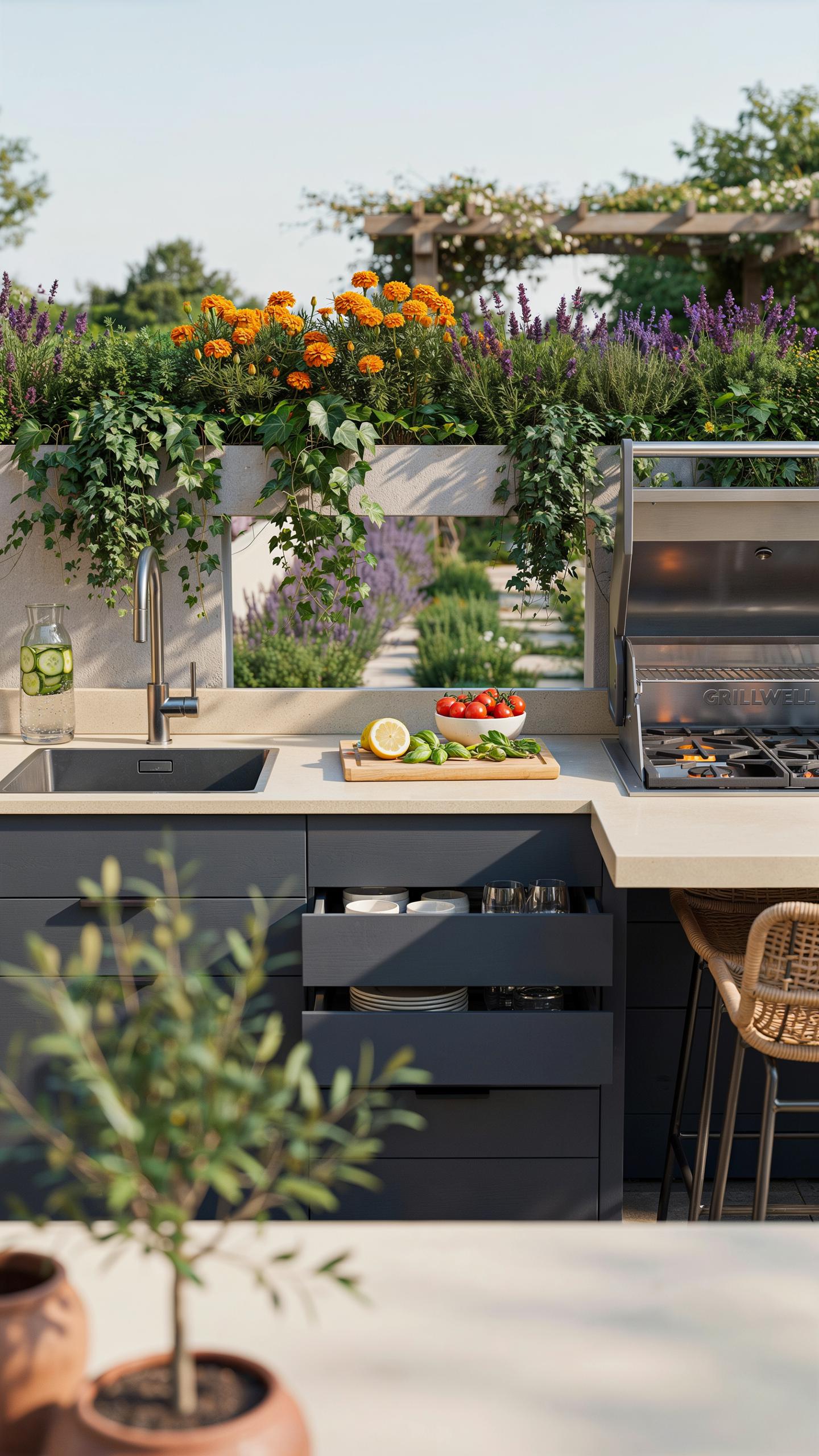
Evaluating Acrylic Solid Surfaces And Engineered Performance Materials
Acrylic solid surfaces deliver non-porous construction that blocks water penetration and dust accumulation. The seamless fabrication means no seams trap debris or harbor bacteria. These materials accept heat from outdoor appliances without cracking or warping like natural stone can.
UV exposure degrades acrylic surfaces over time, causing yellowing and color fading. Purchase only formulations specifically rated for outdoor use. Check the manufacturer’s specifications for UV resistance claims before selecting a product for full sun exposure.
The Benefits Of Stainless Steel Surfaces In Modern Designs
Stainless steel provides superior corrosion resistance and hygiene properties tested in commercial kitchen environments for decades. The material integrates flush with outdoor grills and appliances for a cohesive appearance. Cleaning requires minimal effort with basic soap and water, making maintenance straightforward.

Direct sunlight heats stainless steel rapidly, creating burn risk when touching the surface. Fingerprints show clearly on polished finishes, requiring frequent wiping to maintain appearance. Brushed finishes mask marks better and perform identically in function and durability.
Essential Design Tips For Planning Your Outdoor Kitchen Counter
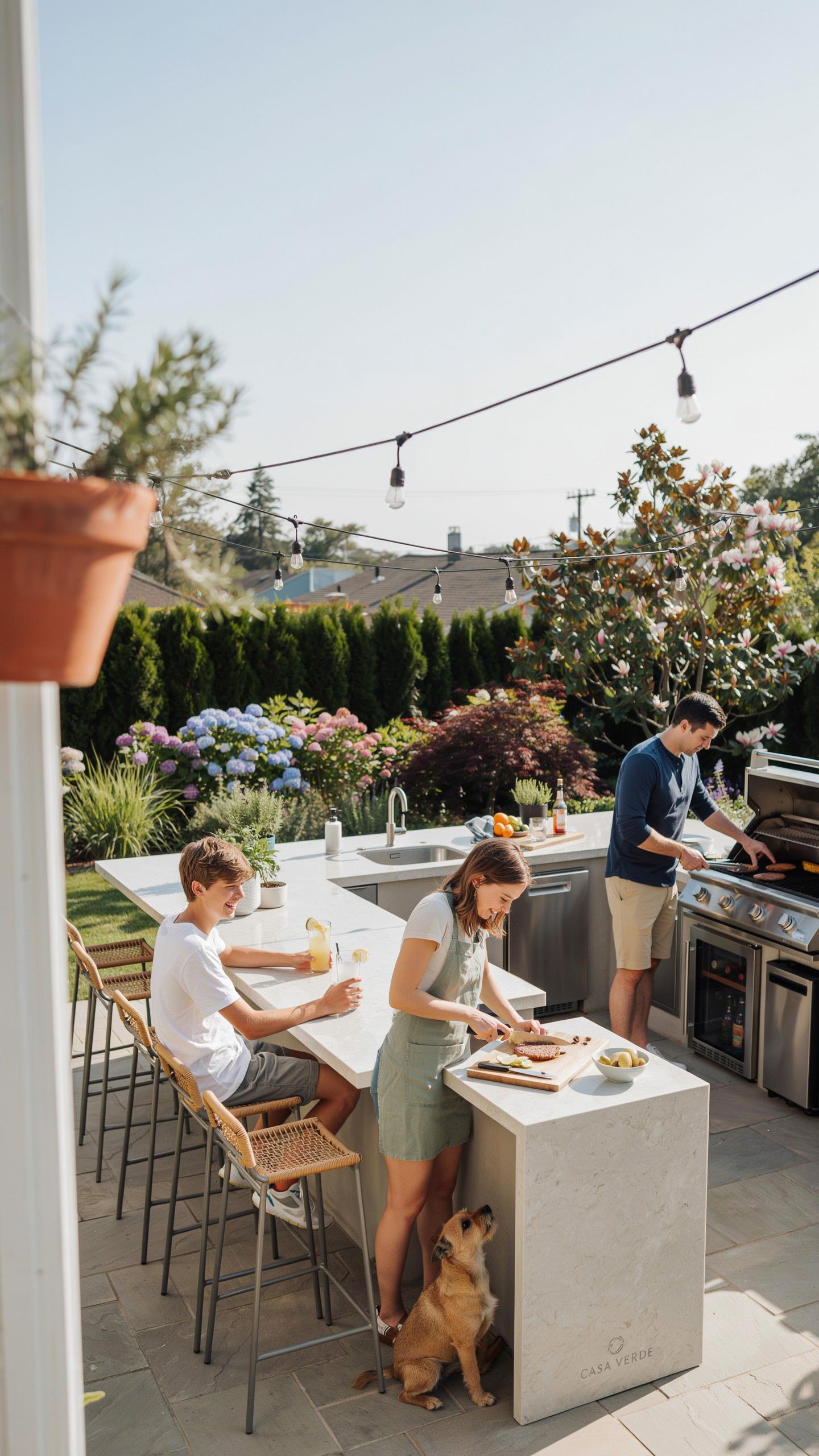
Determining The Ideal Counter Height And Workspace Layout
Set your prep counter at 36 inches high. This matches standard kitchen heights and keeps your back comfortable during food preparation. Bar seating areas go up to 42 inches. This height works for eating and socializing without feeling cramped or awkward for seated guests.
Plan for at least 24 to 36 inches of open counter space directly beside your grill. This gives you room to stage ingredients, set down tools, and work without reaching across hot surfaces. Interrupted space creates workflow problems. Keep this zone clear of sinks, storage, or decorative items that slow you down.
Building your first outdoor kitchen is like planting a garden; with simple stone or tile, you create a lasting place for memories to grow. Start with the basics and let the sun-warmed counters become the heart of your family’s backyard stories.
Integrating Built In Grills Sinks And Outdoor Prep Areas
Measure your drop-in grill, sink, and side burner before cutting countertop openings. Incorrect measurements force costly reinstalls or leave visible gaps that collect debris. Write down exact dimensions and double check them. Bring the equipment to the site if possible and test fit everything.

Leave thermal expansion gaps around hot appliances like grills and side burners. Stone and tile crack under stress from temperature swings. A quarter inch gap prevents fractures and keeps your counter looking intact for years. This gap is non negotiable with materials like granite and marble.
Maintenance And Longevity Of Your Outdoor Kitchen Countertop Ideas
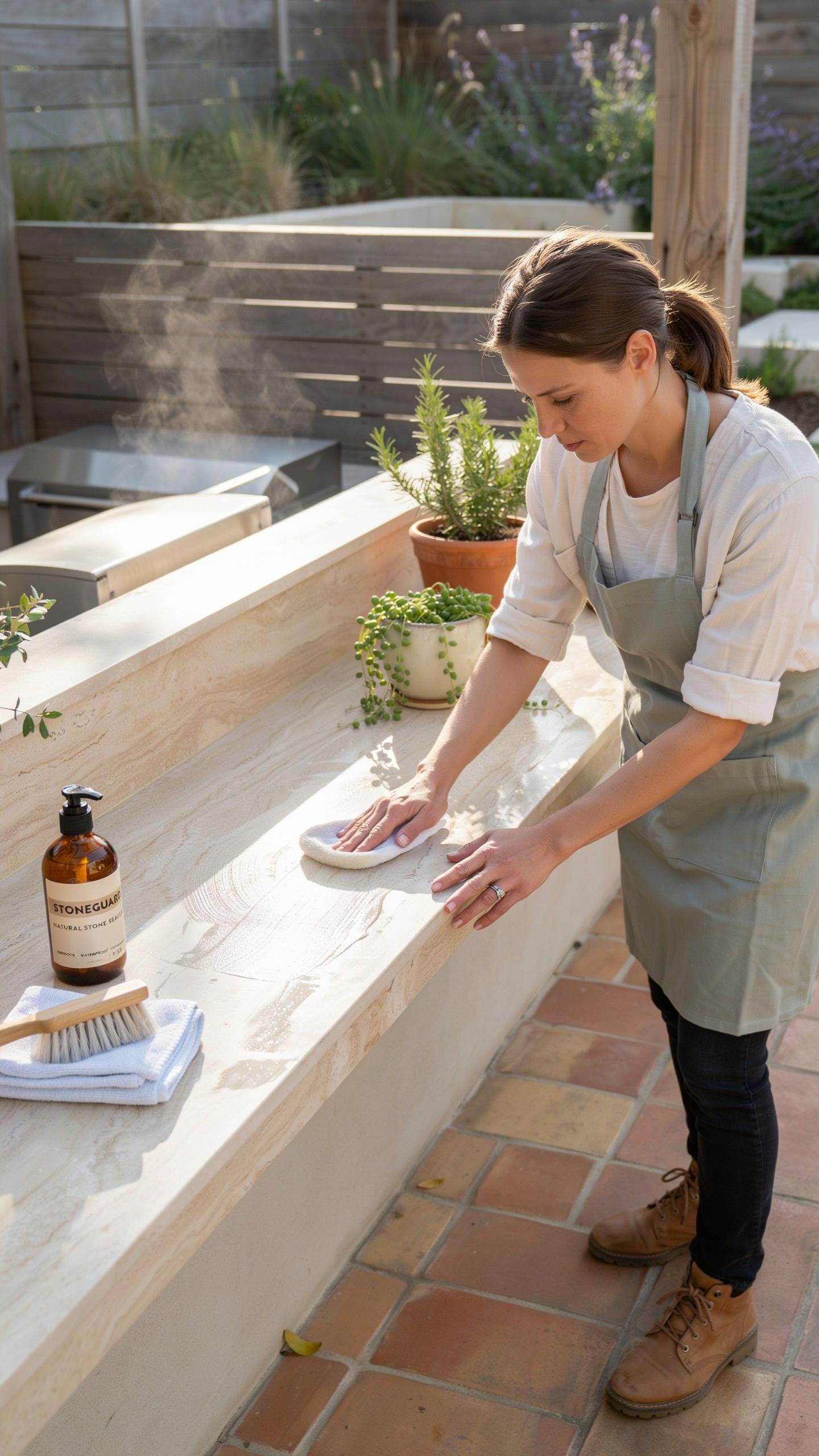
Seasonal Cleaning Routines To Protect Against External Damage
Wash outdoor counters regularly with mild soap and water. This removes dirt, debris, and contaminants before they cause permanent damage. Skip abrasive scrubbers and harsh chemicals that strip protective coatings and degrade most counter materials. Simple water and dish soap work effectively for routine cleaning without risk.
Remove fallen leaves, pollen, and chemical splatters immediately. These substances sit on surfaces and cause staining, etching, and discoloration over time. Stone counters are especially vulnerable to acidic substances like bird droppings and tree sap. Quick cleanup prevents buildup that becomes difficult to remove and causes lasting surface damage.
A Simple Maintenance Checklist For Year Round Countertop Care
Follow these steps to extend your countertop lifespan and maintain appearance. Regular attention catches problems early before they require expensive repairs or replacement. Consistency matters more than intensity when protecting outdoor surfaces from weather exposure and daily use.
- Clean Spills Immediately: Wipe up food, beverages, and chemicals right away to prevent staining and etching on all counter materials.
- Reapply Protective Sealers Annually: Most stone and concrete counters need resealing each year to maintain water resistance and stain protection.
- Cover The Island During Winter: Use fitted covers or tarps to shield countertops from freeze thaw cycles, snow, and ice accumulation damage.
- Avoid Cutting Directly On Stone: Always use cutting boards to prevent knife marks, scratches, and chipping on granite, marble, and limestone surfaces.
- Inspect For Cracks And Damage: Check counters monthly for new cracks, chips, or seal breakdown so you can address issues promptly.

Establish these habits before problems start. Your countertop material will perform better and maintain its function longer when you address maintenance proactively rather than reactively.
Frequently Asked Questions

What are the best outdoor kitchen design counter materials for someone just starting out?
For beginners, the most reliable outdoor kitchen design counter materials are granite and concrete. Granite is incredibly durable, naturally UV-resistant, and handles temperature fluctuations without cracking. If you prefer a more industrial look, pre-cast concrete is a fantastic alternative. Both options provide a professional finish while remaining easy to maintain, ensuring your first backyard renovation project stands the test of time against harsh weather elements.
Are there any budget-friendly countertop options for a DIY outdoor kitchen?
If you are working with a tighter budget, tile countertops are an excellent choice for affordability and customization. Ceramic or porcelain tiles offer a wide range of styles and are much cheaper than large stone slabs. Another cost-effective route is using pressure-treated wood frames topped with concrete pavers. These accessible solutions allow you to achieve a high-end look without the premium price tag often associated with luxury outdoor builds.
How do I maintain and clean outdoor kitchen countertops to keep them looking new?
Regular maintenance depends on the material, but a few habits apply across the board: wipe up spills promptly, avoid leaving standing water, and use a pH-neutral cleaner rather than harsh chemicals that can dull the finish. Stone countertops like granite benefit from an annual sealant reapplication to maintain their weather resistance. Concrete surfaces should be resealed every one to two years depending on climate exposure, and tile grout lines need occasional scrubbing to prevent staining from outdoor use.