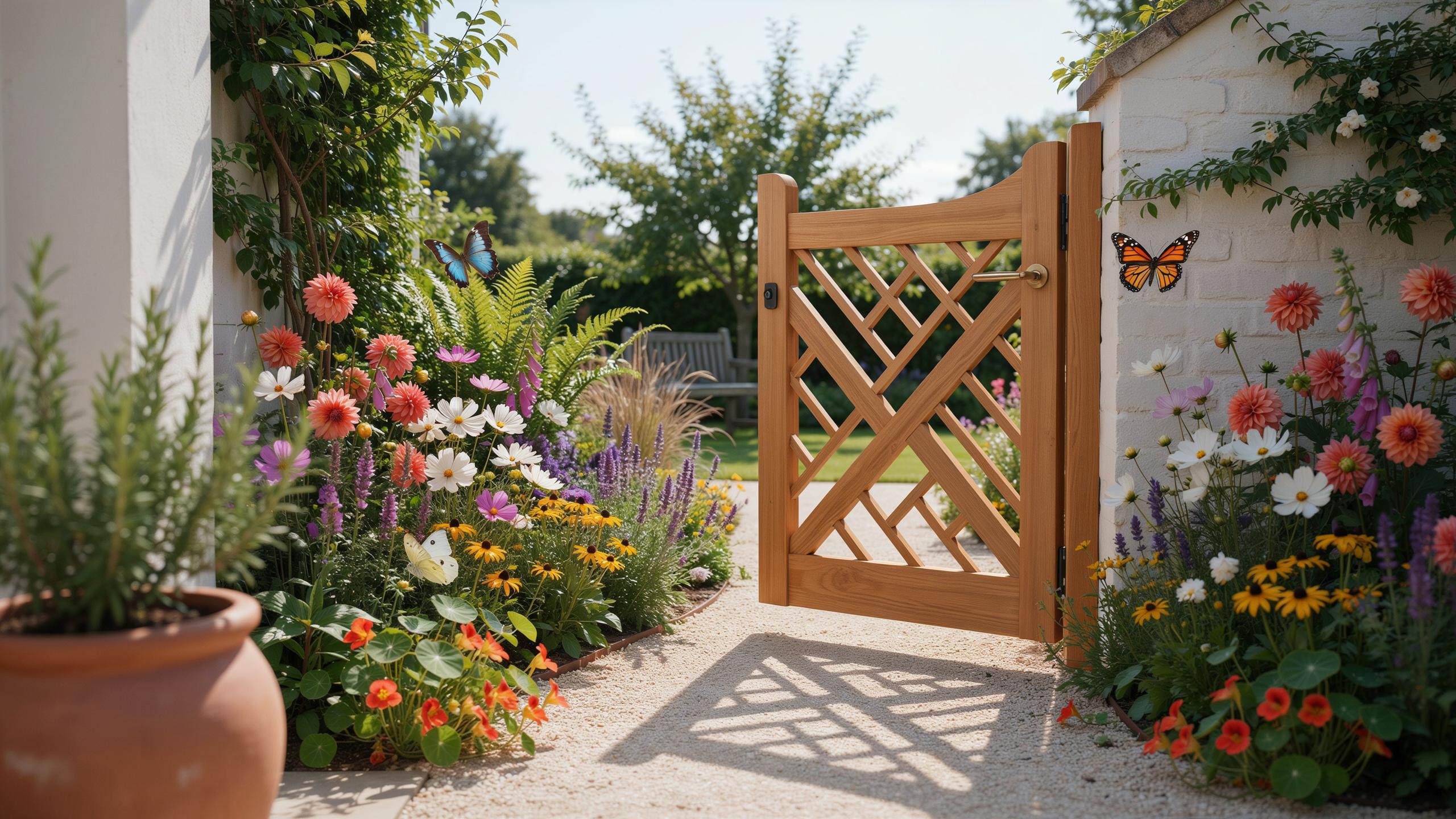
The Timeless Charm Of A Cottage Garden Gate In Modern Landscapes
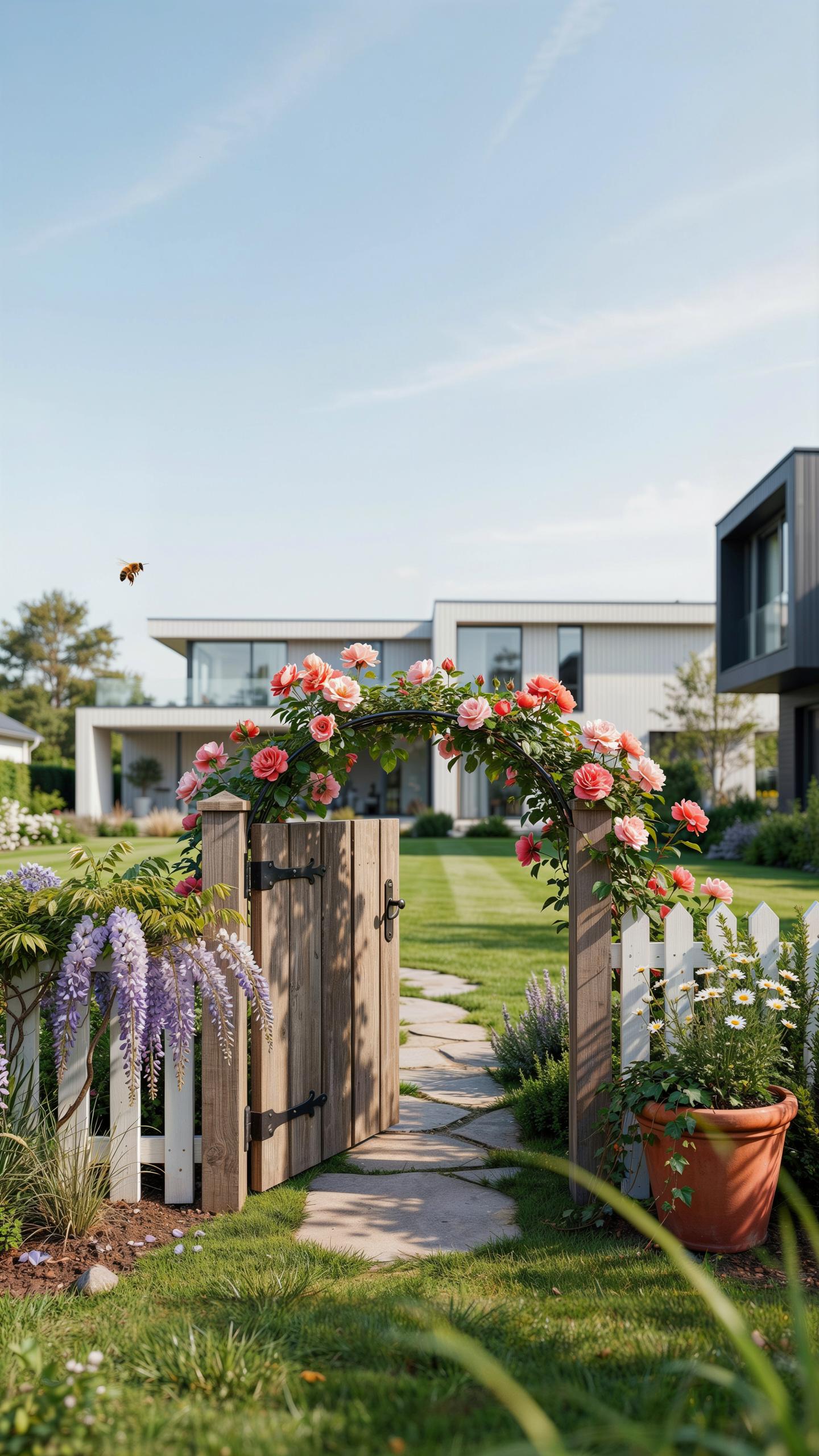
Blending Old And New
Cottage garden gates originated in rural England during the 18th and 19th centuries. These gates served practical purposes: containing livestock and marking property boundaries. The traditional design features picket construction, simple latches, and modest ornamentation. Modern cottage gates borrow these structural elements but strip away unnecessary detail. Contemporary versions use the same materials—wood and metal—but incorporate cleaner lines and refined proportions. This approach respects historical precedent while eliminating excess decoration that clutters modern spaces.
The strategy here is functional retention with aesthetic refinement. Keep the picket or slatted framework that defines cottage style. Replace ornate post caps and elaborate hinges with streamlined hardware. Paint colors shift from muted Victorian palettes to neutral tones that complement modern exterior finishes. The result is a gate that reads as cottage in DNA but operates as contemporary architecture. This balance works because it honors form without copying every decorative flourish from historical examples.
Visual Appeal And Framing
A cottage gate functions as a visual anchor for your landscape entry. Proper placement creates a threshold that signals transition from street to private space. The gate frames sightlines and draws attention to pathways, plantings, or architectural features beyond it. Height matters tactically: gates between three and four feet tall maintain visual connection while establishing clear boundaries. Materials affect perception too. Wood gates appear warm and approachable. Metal gates read as more refined or formal. Both work in cottage design depending on surrounding architecture and landscape context.
Placement depth determines framing effectiveness. A gate set close to the road feels utilitarian. A gate positioned 10 to 15 feet from the street creates a defined entry courtyard and adds perceived property depth. This setback frames views into your garden and creates a deliberate pause before arrival. Sight lines from the gate toward the house entrance guide visitors intuitively. Consider what the gate frames when viewed from the street and from inside the property. Strategic positioning transforms a functional barrier into an intentional design element that anchors your entire outdoor composition.
Innovative Cottage Gate Ideas For Small And Large Entries
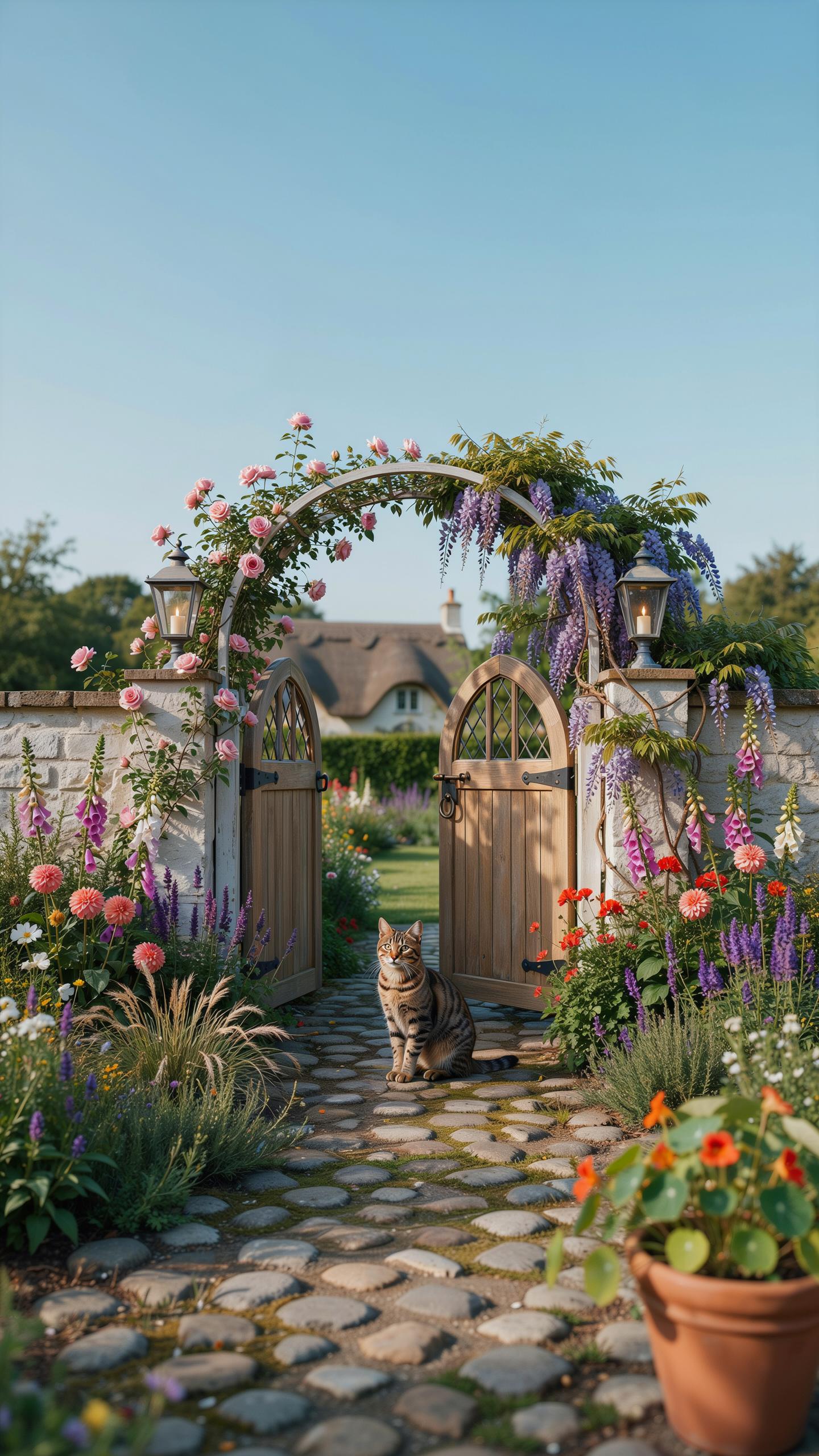
Space Saving Solutions
Narrow garden paths demand gates that don’t consume walkway real estate. Swinging gates require clearance on one side, typically needing 90 degrees of swing space. Sliding gates move parallel to the fence line and eliminate this requirement entirely. Both options work in tight spaces when you choose the right mechanism and materials.
Single-leaf swinging gates work best for paths under 3 feet wide. Sliding gate hardware comes in track-mounted systems that hang from above or run along ground-level guides. Ground-level tracks collect debris but cost less. Overhead systems stay cleaner but require stronger posts to support the weight and hardware load.
Grand Entrance Designs
Double gates create visual impact and accommodate larger property openings. Wide cottage properties benefit from symmetrical double-leaf gates that swing outward or inward from a center post. Matching panels flanking a central divider establish formal entry points without looking modern or industrial.

Double gate widths typically range from 8 to 12 feet, accommodating vehicle and pedestrian traffic. Cottage aesthetics favor wood construction with matching railings and fence sections on either side. Wrought iron accents or hardware reinforce the traditional character while practical hinges and latches handle daily use.
Inspirational Garden Gates Ideas To Elevate Your Front Yard
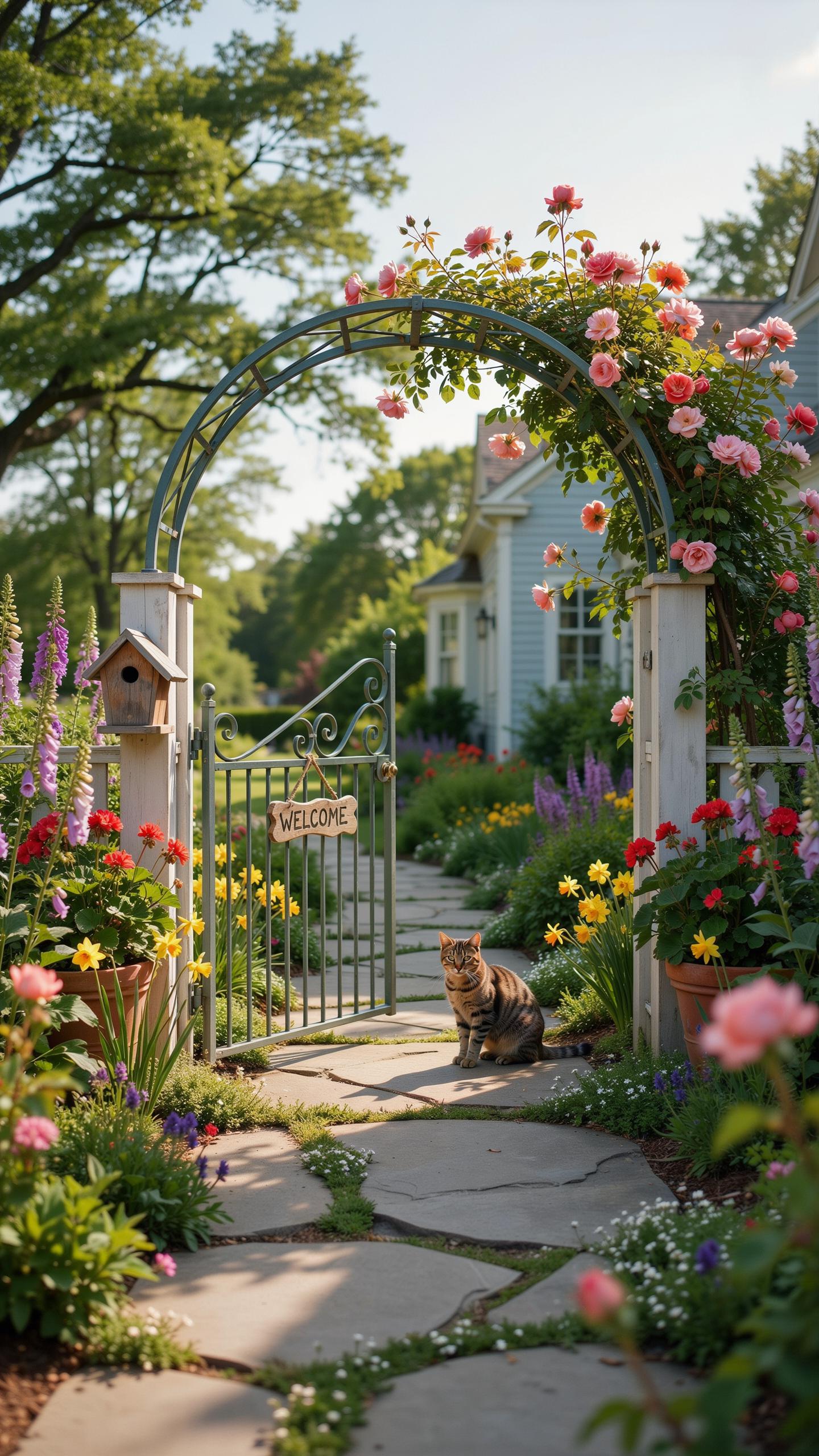
Street Appeal Tips And Tricks
Your gate functions as the first visual checkpoint for your home. Paint color matters because it either harmonizes or clashes with your exterior. Match your gate to your home’s trim, door, or primary facade color. If your house uses whites and creams, your gate should follow suit. Dark gates work against light exteriors and light gates work against dark homes. This coordination creates visual continuity that reads as intentional design.
Gate style communicates your home’s character before visitors reach your door. A simple picket gate suggests traditional sensibility while a modern horizontal slat gate reads contemporary. Your gate materials and finish should match your home’s overall maintenance level and aesthetic era. Weathered wood gates suit rustic homes. Crisp painted gates suit manicured properties. The gate sets expectations about what lies beyond it.
Matching Gardening Fences
Your entry gate must align with surrounding boundary fencing in material and scale. If your perimeter uses wood picket fencing, your gate should use identical wood species, board width, and spacing. Mismatched materials create visual fragmentation that damages curb appeal. Stone or brick boundary walls demand gates built from compatible materials like wood frames with metal hardware or metal gates with stone posts.
Gate height relative to surrounding fencing determines visual balance. Your entry gate typically stands slightly taller than perimeter fencing to mark the access point as distinct. If your boundary fence measures four feet, your gate should measure four to five feet. This proportional relationship feels natural rather than awkward. Consistent finishing treatments across gate and fence materials reinforce cohesive design.
Selecting The Perfect Wood And Metal Materials For Your Garden Gate
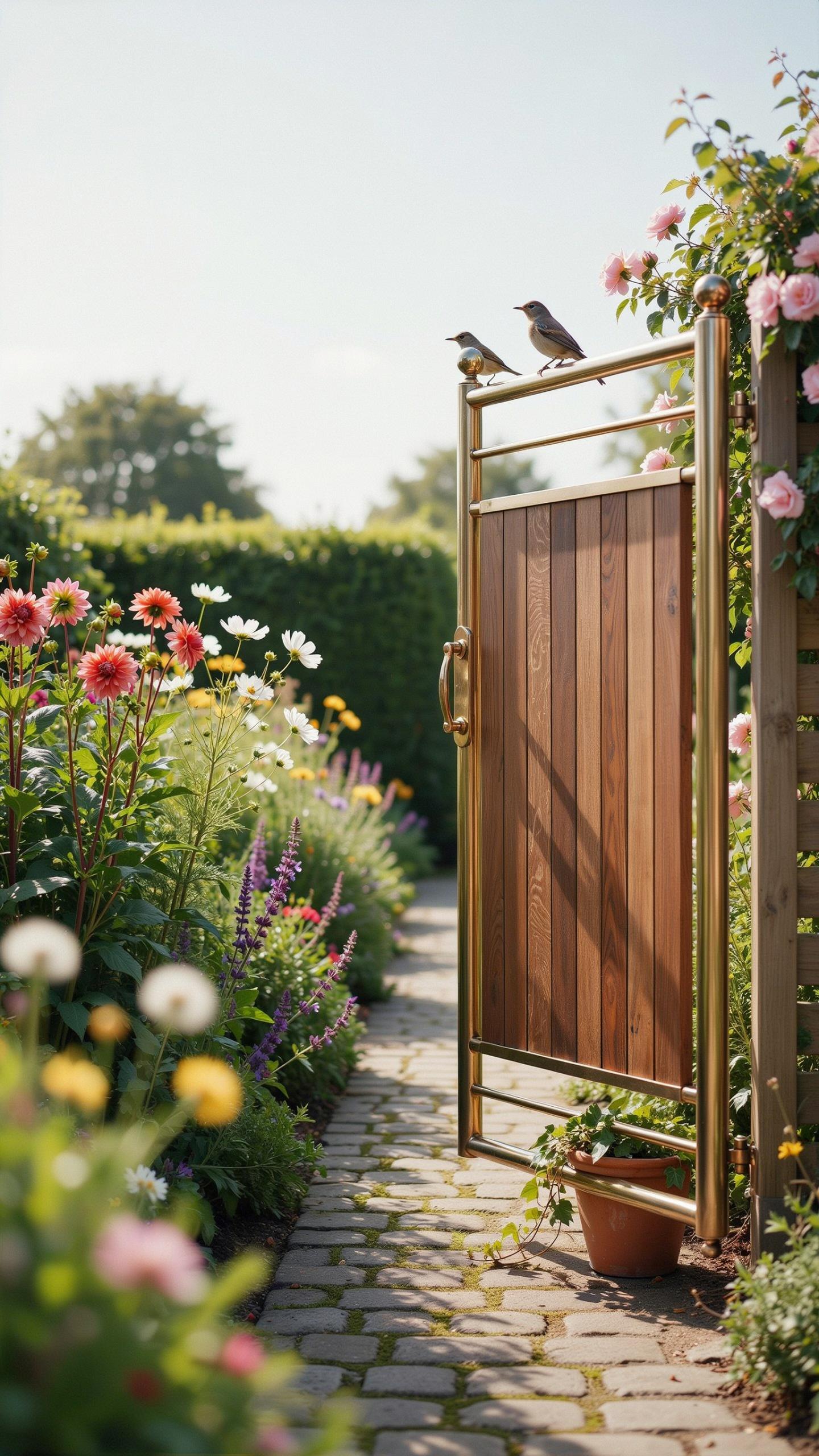
Durable Wood Types For Gates
Wood selection determines how long your gate functions before rot and weathering take over. Choose species that naturally resist moisture and insect damage rather than relying on treatments alone. The right wood species handles freeze-thaw cycles, standing water, and UV exposure without failing structurally.
- Teak: Naturally high oil content resists rot and insects without treatment. Expensive but lasts 25+ years outdoors. Common in premium gate construction.
- Cedar: Moderate rot resistance from natural oils. More affordable than teak. Requires periodic sealing to extend lifespan beyond 15 years.
- Redwood: Similar properties to cedar with good weather resistance. Readily available in North America. Holds paint and stain effectively for protection.
- Cumaru: Brazilian hardwood with extreme rot resistance. Harder than teak, resists insects well. Higher cost limits residential use to high-end projects.
- Pressure-Treated Pine: Chemically treated to resist decay. Most affordable option. Performs adequately but lacks the longevity of naturally durable species.
Paint or stain protects wood regardless of species, but acts as a secondary defense layer. Wood with inherent durability needs less maintenance and fewer refinish cycles over its lifetime. This reduces labor costs and downtime for gate repairs.
Wrought Iron And Steel Crafting
Wrought iron dominated cottage gate design through the Victorian era and remains the standard for security and aesthetics. Modern fabricators still use traditional forging techniques alongside welding to create decorative elements and structural components. The material handles weight without sagging and withstands weather when properly finished.

Steel offers a lower-cost alternative to wrought iron with comparable strength. Mild steel requires protective coatings like paint or powder coating to prevent rust. Both materials support intricate scrollwork, finials, and ornamental details that define cottage gate character without compromising function or safety.
Enhance Privacy With Stylish And Solid Cottage Gates
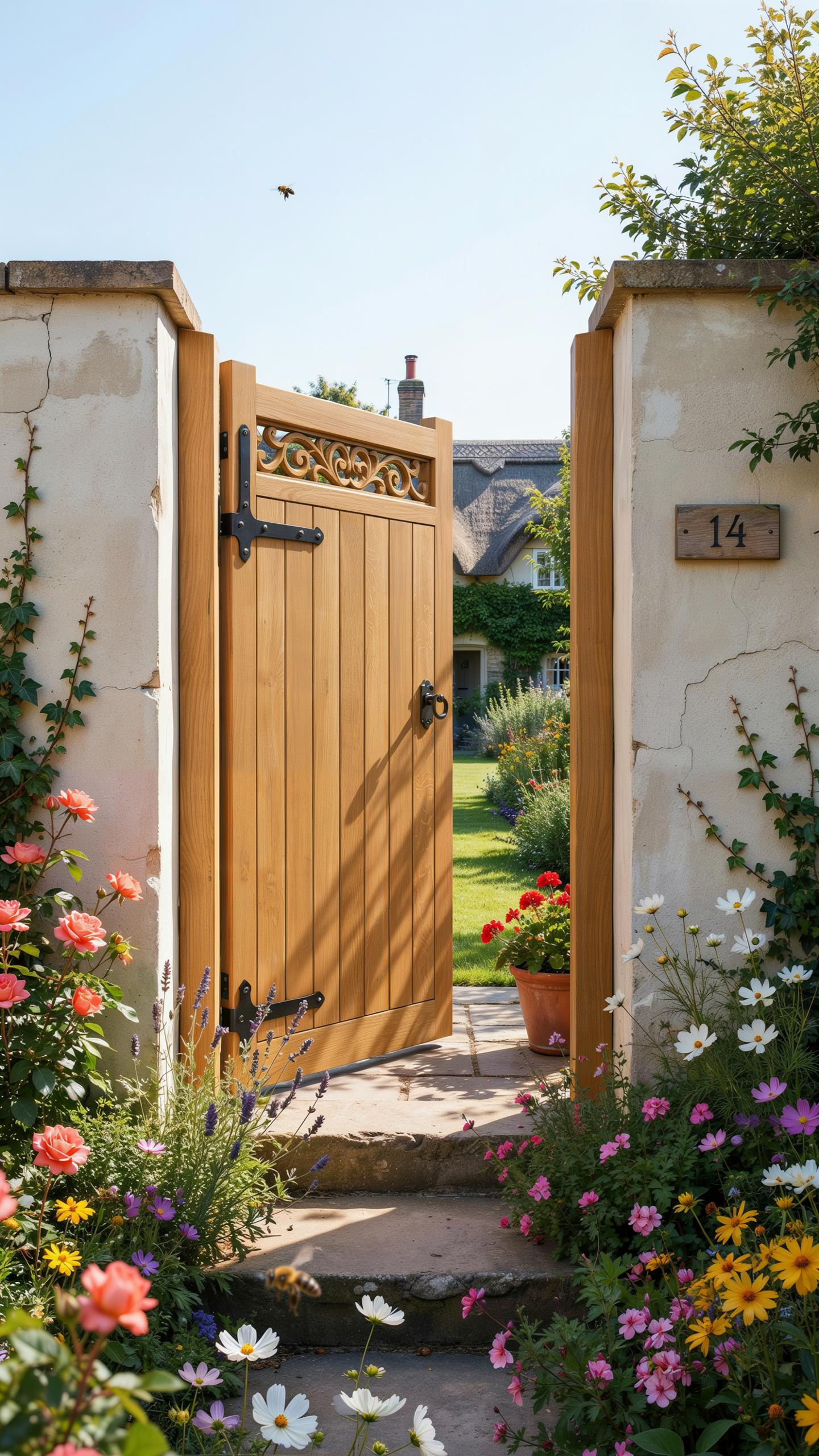
Solid Wood Paneling Designs
Tongue-and-groove boards and board-on-board construction block sightlines from streets and neighboring properties. These methods stack boards vertically or horizontally with overlapping edges. The overlaps prevent gaps from forming as wood expands and contracts with moisture changes. This approach delivers complete privacy without requiring extra materials or complex fastening systems.
Board-on-board designs use two layers of boards attached to horizontal rails. The outer boards overlap the inner boards, creating depth and visual texture. This method handles weather better than single-layer construction because water runs off the overlapping surfaces. Homeowners achieve privacy while maintaining the solid, grounded aesthetic cottage gardens demand.
Integrated Peek Windows
Small windows and iron grates interrupt solid panels while maintaining privacy through their elevated placement and limited size. Speakeasy windows measure typically 8 to 12 inches square and sit 4 to 5 feet above ground level. This height prevents most ground-level viewing while allowing homeowners to see approaching visitors. The small scale keeps the gate’s privacy function intact.

Decorative iron grates serve dual purposes in cottage gates: they add visual interest and allow air circulation through otherwise solid sections. Cast iron or wrought iron grates come in geometric and botanical patterns that suit cottage aesthetics. Positioning grates in the upper third of the gate maintains sight privacy for seated occupants while adding architectural character to the entry.
Creative Garden Gate Ideas Featuring Arbors And Pergolas
Arbor Structures As Gateways To Gardens
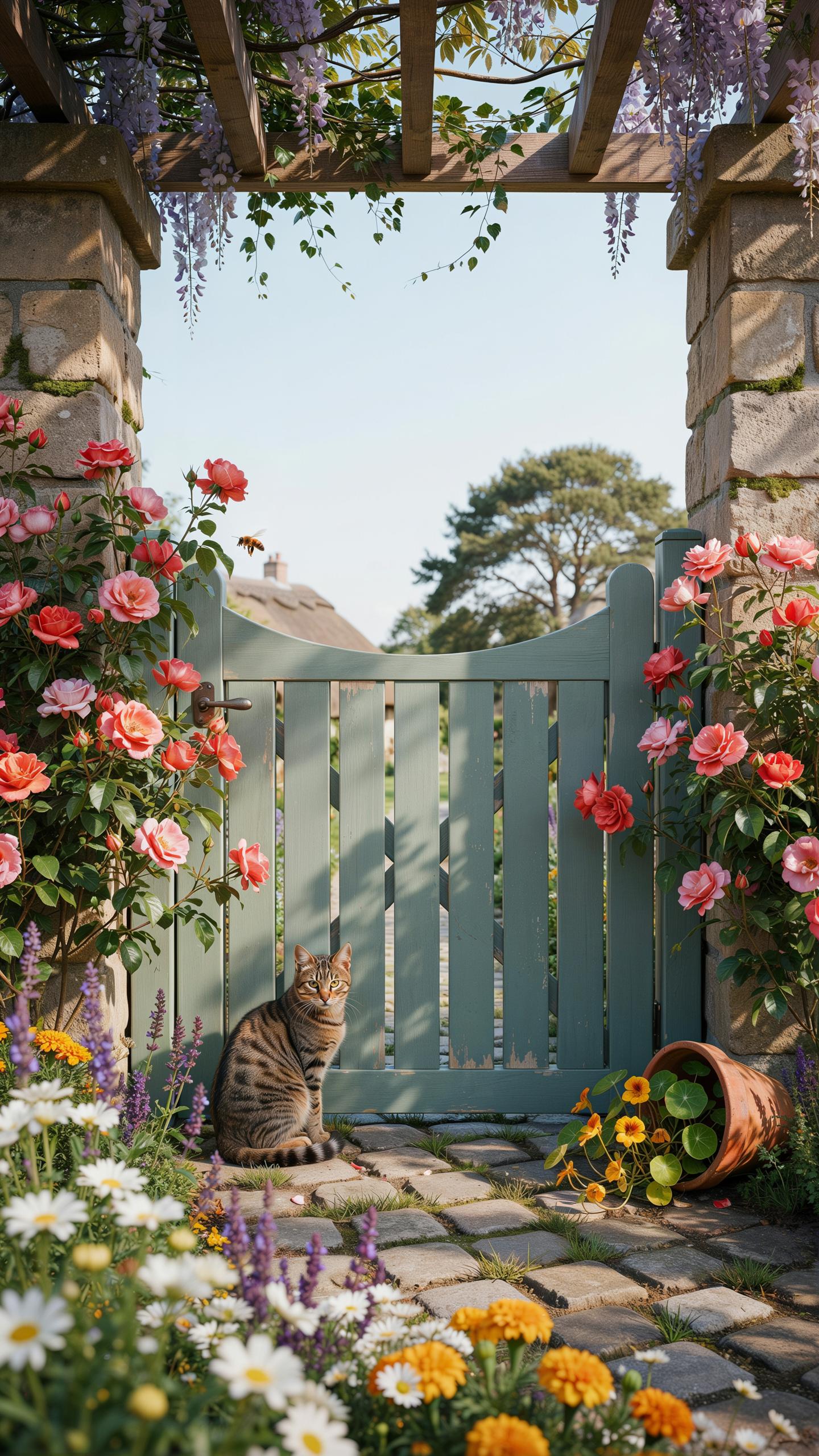
Arbors function as physical thresholds that mark garden entry points. They create overhead coverage using timber framing, typically 7 to 8 feet tall, which establishes visual separation between spaces. The structure itself signals transition without requiring a functional gate. Wood selection matters: cedar and pressure-treated lumber resist rot and weather damage over time.
Install arbors on posts set 2 to 3 feet into the ground for stability. Anchor them to existing hardscape or buried footings to prevent movement. The overhead beams create shadow patterns that guide foot traffic through the opening. This approach works for both formal and informal garden styles without expensive hardware or locking mechanisms.
Anchoring Vines To Entryway Lattices
Lattice panels mounted vertically on arbor sides provide climbing structure for vines. Use pressure-treated or cedar lattice with openings between 4 and 6 inches to balance plant support with visibility. Attach lattice securely with bolts or lag screws spaced every 12 inches. Vines eventually mask the lattice framework while maintaining the gate threshold function.

Select vines based on your climate and maintenance tolerance. Clematis, climbing hydrangea, and honeysuckle establish quickly on lattice systems. Tie young vine growth horizontally across lattice to encourage lateral branching and denser coverage. The vines anchor themselves through tendrils or twining growth, creating a living screen that performs better than bare lattice alone.
The Classic Appeal Of Painted Cottage Style Gates
Color Palettes For Cottage Gates
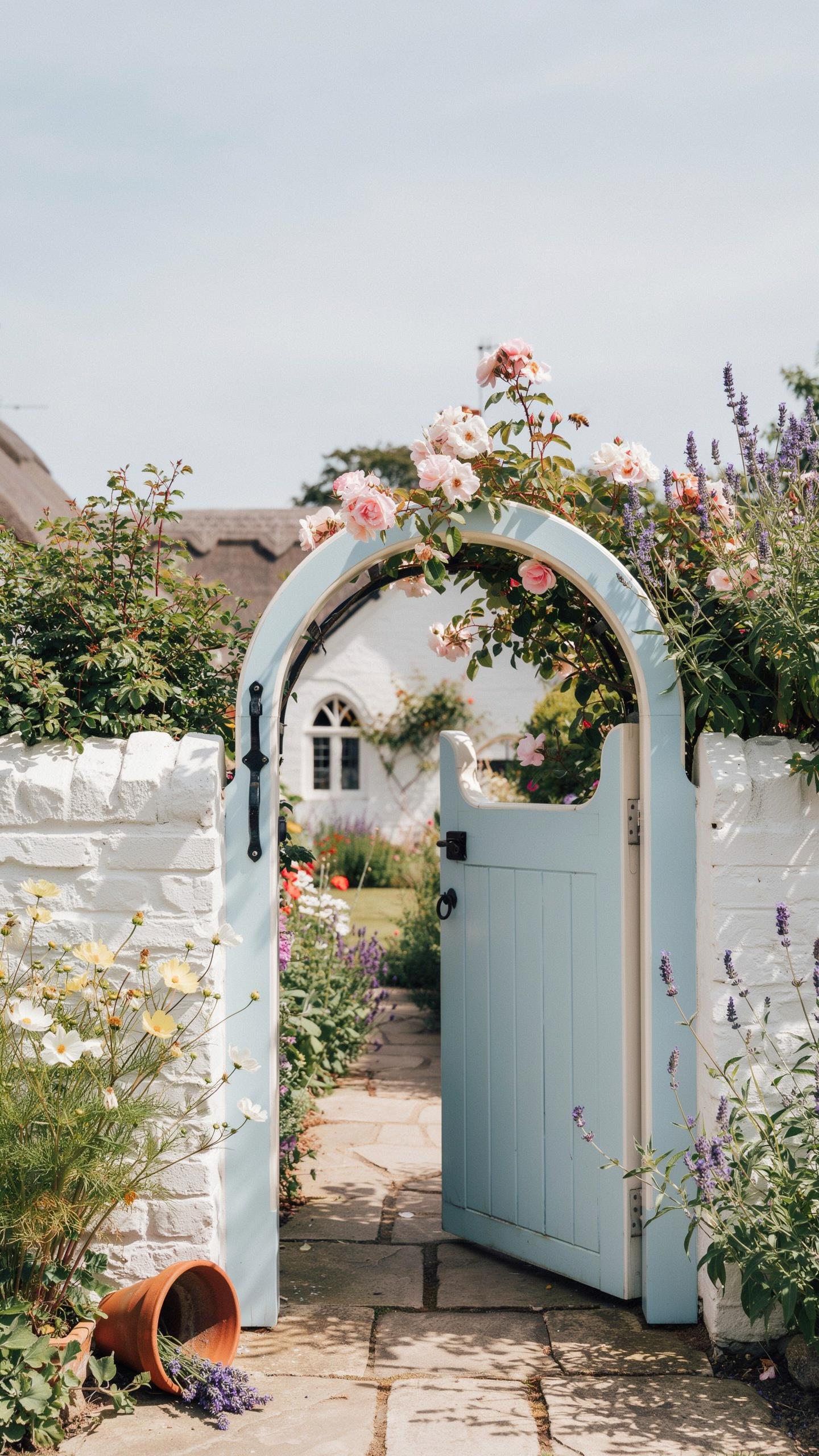
English cottage gardens historically featured gates in muted, earthy tones that complemented natural landscapes. These colors emerged from practical limitations of early paint formulations and regional pigment availability. Modern cottage gate design draws directly from this palette, prioritizing timeless appeal over trend-driven choices. Color selection drives visual hierarchy and sets expectations for garden aesthetics before visitors enter.
- Sage Green: A soft, grayed green that references traditional countryside estates. Works across most architectural styles and pairs naturally with climbing plants and stone walls.
- Cream And Off White: Provides contrast in shaded garden entries while reflecting available light. Creates visual softness compared to pure white and resists showing dirt accumulation as quickly.
- Soft Blue Gray: Derives from historical paint formulations used in English manor houses. This neutral tone bridges modern and traditional aesthetics without appearing cold or industrial.
- Dusty Black: A matte, desaturated black rather than pure jet black for authentic period appearance. Common in Victorian-era cottage gates and maintains sophistication without harsh contrast.
- Warm Taupe: Combines brown and gray undertones for dimensional appearance in natural light. Complements both modern and historical gate materials without dominating surrounding plantings.
These color choices work because they age gracefully and mask minor imperfections that develop over seasons. Selecting pigments with proven longevity ensures your gate maintains visual impact across years of weather exposure.
A gate is not just a boundary, but a beautiful threshold between the rush of the world and the peace of home. A modern cottage gate frames nature with style, inviting us to rediscover the quiet joy of a garden path.
Weatherproof Finishes And Maintenance
Exterior gate paint selection determines how quickly wood deteriorates and color fades under UV exposure and moisture. High-quality acrylic latex paints outperform budget options by maintaining flexibility as wood expands and contracts with temperature swings. Oil-based formulations adhere well but yellow over time and trap moisture beneath surface layers, accelerating rot.
Sealers applied beneath and over paint create the primary defense against wood degradation. Water-based polyurethane sealers offer UV protection and breathability, preventing moisture entrapment that causes peeling. Two coats of quality sealer under paint and one coat after final paint application establish durability standards. Maintenance intervals depend on climate exposure. Gates facing direct sun or salt spray require repainting every four to six years, while sheltered gates extend to eight to ten years between applications.
Crafting A Charming Garden Gate Hardware And Accents
Vintage Latch And Hinge Hardware
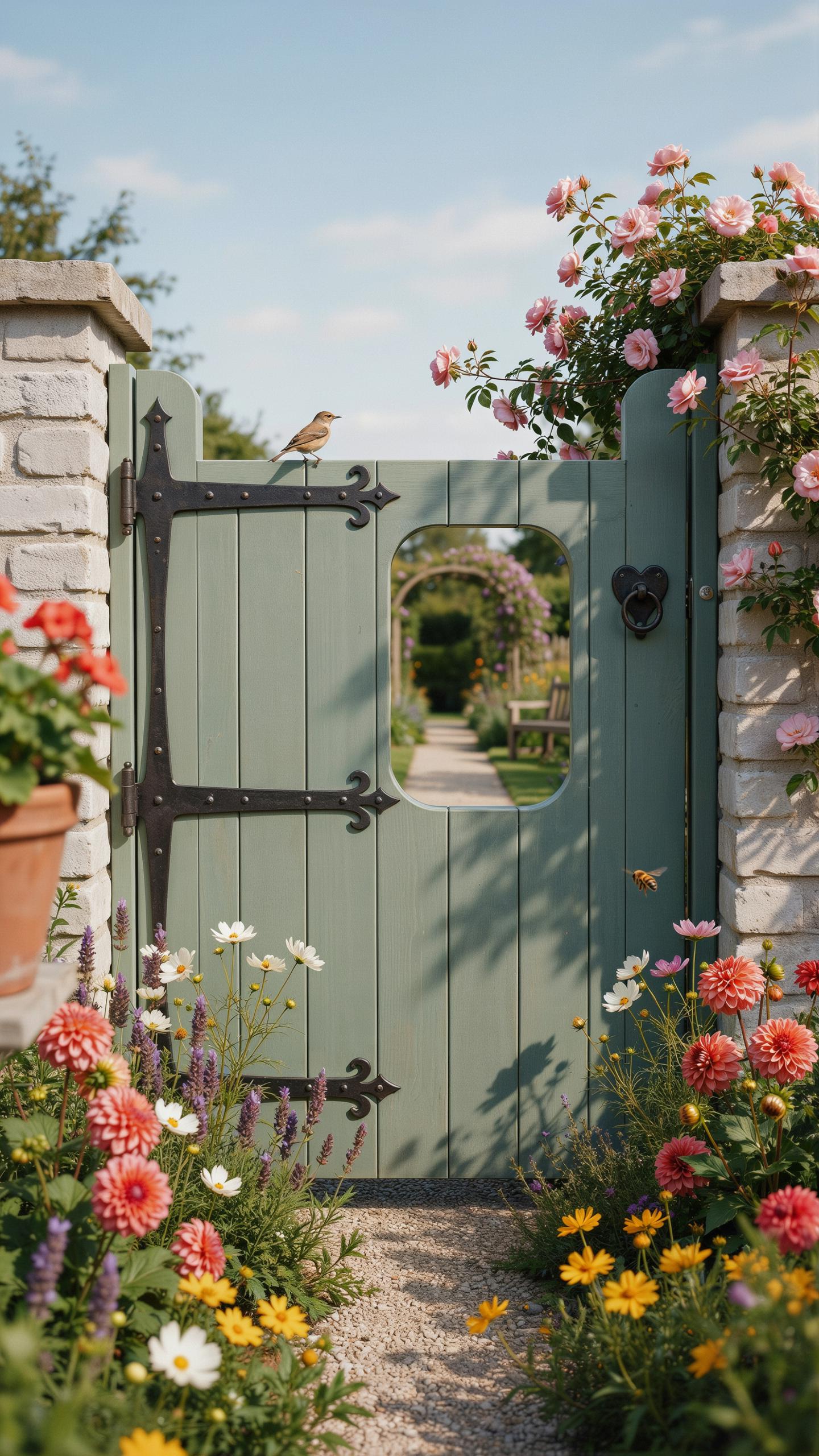
Thumb latches and ring turn drops originated in medieval ironwork traditions. These mechanisms function as both operational hardware and visual anchors for cottage gates. Thumb latches use a lever arm you press downward to release the gate, while ring turn drops rotate to secure the gate shut. Heavy strap hinges distribute weight across a wider surface area than butt hinges, reducing stress on gate posts over time.
Select hardware based on your gate’s weight and material. Wrought iron hardware resists rust better than mild steel when properly finished. Cast iron offers durability but requires maintenance to prevent corrosion. Match hardware finish to your gate wood tone and overall exterior color scheme. Galvanized or powder-coated finishes extend hardware lifespan by five to ten years compared to bare metal.
Decorative Lighting For Nighttime Ambience
Low-voltage path lanterns consume between 4 to 20 watts per fixture, operating safely on 12-volt systems. Install them along gate approaches to create functional lighting without overwhelming your landscape. Top-mounted lights mounted directly on gate posts or tops illuminate the gate structure itself and improve security visibility. These fixtures also guide foot traffic safely to your entrance after dark.

Position lights to avoid creating harsh shadows across your gate face. Mount lights 6 to 8 feet above ground level for optimal sight lines. LED bulbs in warm color temperatures (2700K to 3000K) complement cottage aesthetics while reducing energy consumption. Wire path lights underground in conduit to protect cables from weather damage and foot traffic.
Designing A Charming Garden Gate With Flowers And Climbing Plants
Scented Climbing Roses And Clematis
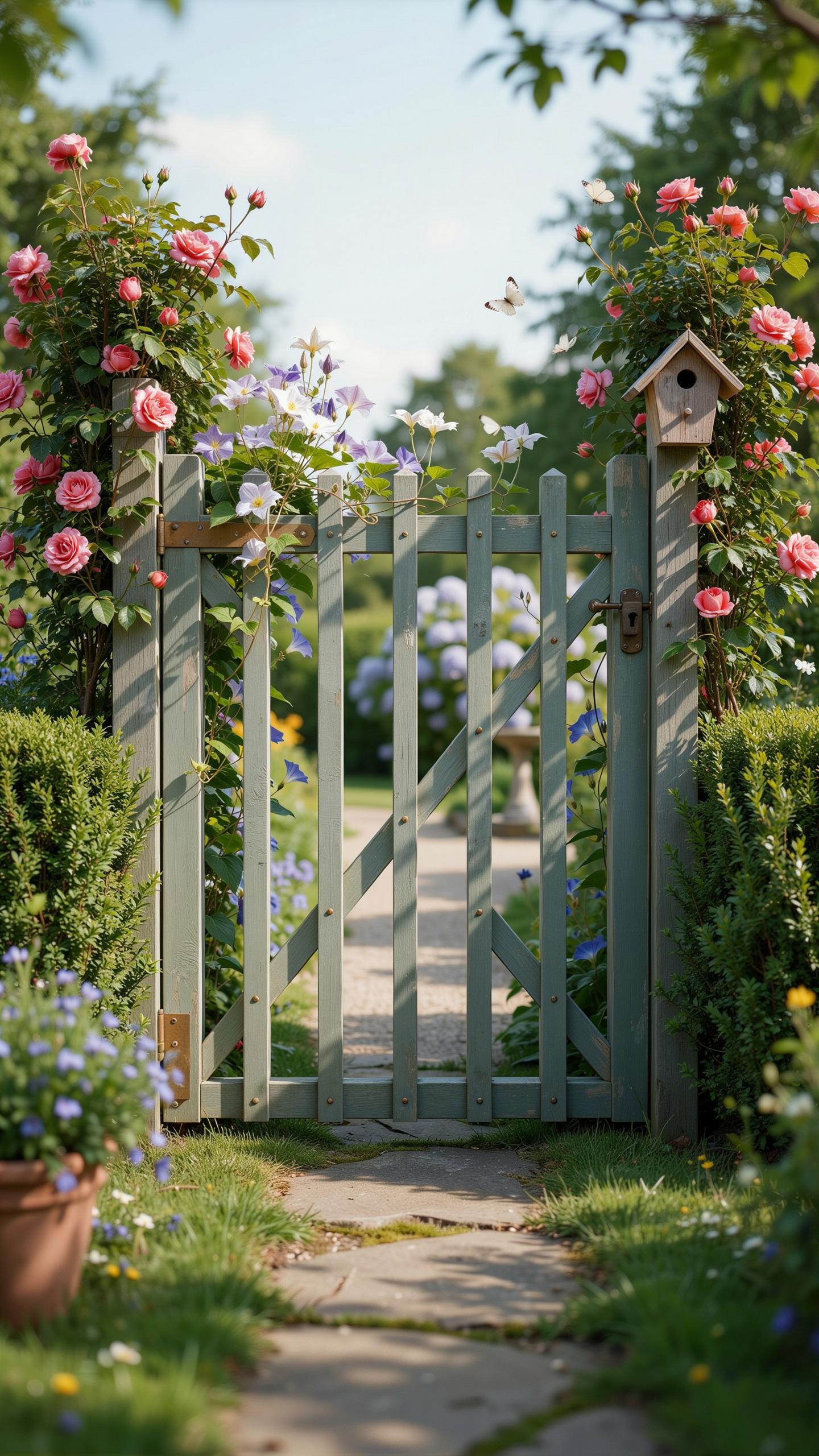
Climbing roses and clematis deliver consistent coverage and fragrance when trained properly over gate structures. Choose repeat-blooming varieties to extend flowering seasons. Train stems horizontally along the gate frame to encourage lateral shoots and fuller coverage. Secure growth with soft ties to prevent damage. Most climbing roses require annual pruning after flowering to remove deadwood and maintain shape.
Clematis performs best with consistent moisture and afternoon shade in hot climates. Plant roots in cool soil while allowing vines to climb into sunlight. Support clematis with sturdy training wires or mesh attached to the gate frame. Combine late-flowering clematis varieties with repeat-blooming roses to stagger bloom times. Both plants tolerate container growing if space limits ground planting options.
Year Round Color With Companion Planting
Evergreen groundcovers maintain visual structure during winter months when deciduous plants drop foliage. Ivy, euonymus, and boxwood serve as reliable backdrops for seasonal changes. Plant these low-growing plants at gate post bases to frame entrances consistently. Water establishment is critical for the first season. Once established, evergreens require minimal maintenance beyond occasional trimming.
Seasonal annuals and perennials inject color into the evergreen framework. Select plants with staggered bloom times to ensure continuous color from spring through frost. Tall annuals like cosmos and zinnias add height variation. Lower plantings of pansies and violas fill gaps near ground level. Replace annuals seasonally to refresh the display without replanting permanent structures.
Frequently Asked Questions

What defines a modern cottage garden gate compared to traditional styles?
A modern cottage garden gate design blends the whimsical, romantic charm of English countryside aesthetics with clean lines and contemporary materials. While traditional gates often feature intricate wrought iron or rustic pickets, modern versions prioritize simplified silhouettes, sleek hardware, and sophisticated paint palettes like charcoal or soft sage. This approach maintains that welcoming, floral-framed entrance while ensuring your outdoor space feels current, organized, and effortlessly stylish.
How do I choose the right color for my cottage garden gate?
Selecting the right hue is essential for a cohesive cottage garden gate design. For a modern look, consider contrasting the gate with your home’s exterior. Soft pastels like cornflower blue or dusty rose create a dreamy, vintage feel, while deep navy or forest green provides a bold, contemporary focal point. Always test your paint against your blooming flowers to ensure the colors complement your seasonal plantings throughout the year.
Can I create an impressive garden entrance on a limited budget?
Absolutely! You can achieve a high-end cottage garden gate design without a massive investment by upcycling a basic wooden gate with fresh paint and modern black hardware. Adding an affordable wooden arbor above the gate for climbing roses or jasmine instantly elevates the look. Focus on symmetry and lush surrounding greenery to create a sense of luxury and privacy that feels expensive but remains incredibly budget-friendly.