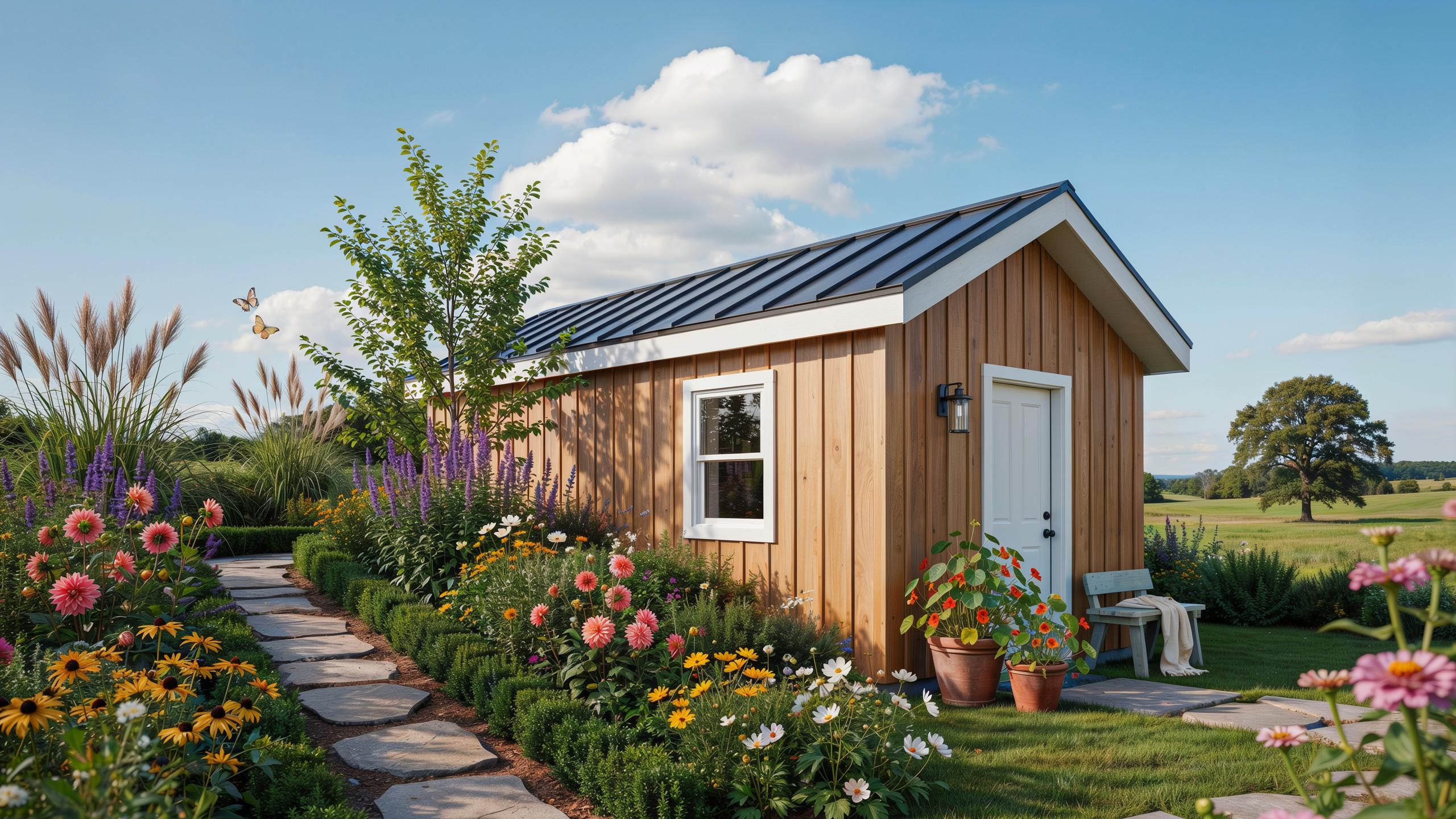
Choosing The Best Siding For Small Houses
Durability And Weather Resistance
Small houses experience the same weather stress as larger structures, but their compact framing demands siding materials that won’t add unnecessary weight. Vinyl siding withstands temperature swings from minus 40 to 160 degrees Fahrenheit without warping. Fiber cement boards resist moisture penetration and UV damage for 25 to 30 years. Metal panels shed water efficiently and won’t rot. James Hardie and similar manufacturers engineered these products specifically to handle moisture without swelling or deteriorating.
Thermal protection matters on tiny houses because exterior walls take up proportionally more surface area relative to interior space. Materials with integrated insulation properties reduce heating and cooling demand. Vinyl siding with foam backing delivers R values between 0.6 and 1.0. Fiber cement alone provides minimal insulation but pairs well with rigid foam boards underneath. Metal corrugated panels reflect heat during summer months. Your framing stays protected when siding manages moisture before it reaches the wall cavity.
Cost Effective Siding Materials
Vinyl costs between 2 and 10 dollars per square foot installed, making it the lowest entry point for tiny house exteriors. Manufacturing improved vinyl formulations over the past 20 years, eliminating brittleness issues common in early products. Installation requires basic carpentry skills and standard tools. Maintenance involves annual washing with a garden hose. Vinyl won’t require painting, staining, or sealing.
Engineered wood products like LP SmartSide cost between 5 and 12 dollars per square foot installed. These materials combine wood fibers with resin, creating density that resists rot and insects better than solid lumber. They accept paint directly without primer in most cases. Repair is straightforward because damaged sections unscrew without disturbing neighboring panels. Both vinyl and engineered wood eliminate the ongoing labor costs that traditional cedar siding demands over 20 year ownership periods.
Enhancing Your Tiny House Exterior Design
Balancing Texture And Depth
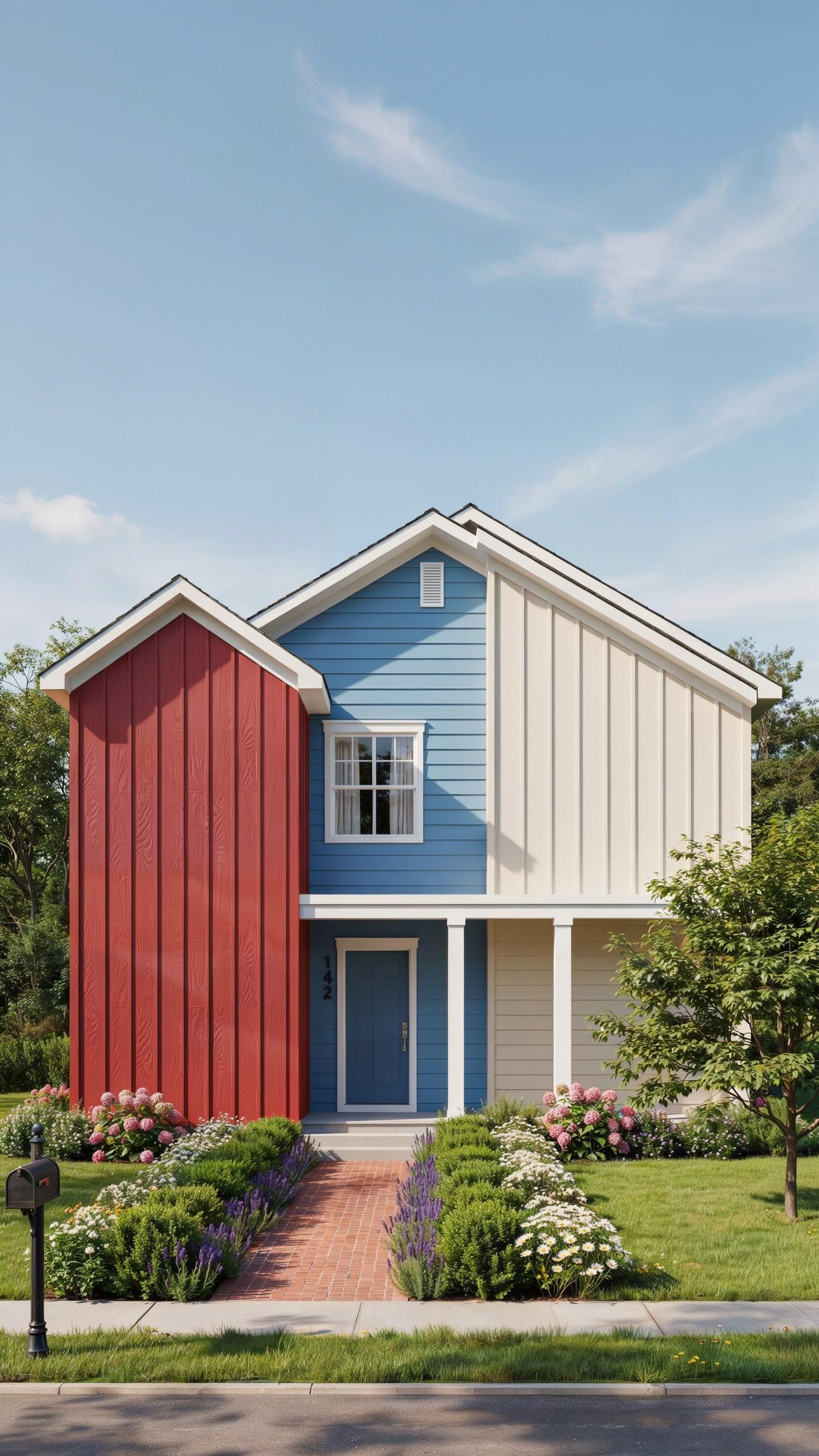
Mixing siding textures solves a core problem in tiny house design: visual monotony makes small structures look even smaller. Horizontal lap siding provides clean lines and works well for most climates. Vertical board-and-batten creates contrast and draws the eye upward, making walls appear taller. Layer these two styles strategically on different walls or sections.
Textural variety breaks up flat surfaces and adds architectural interest without expanding the footprint. A combination approach costs more upfront but pays dividends in curb appeal and perceived size. The contrast between smooth horizontal boards and pronounced vertical battens creates shadow lines that add depth. This technique works across all climates and complements both modern and traditional tiny house styles.
Integrating Windows And Doors
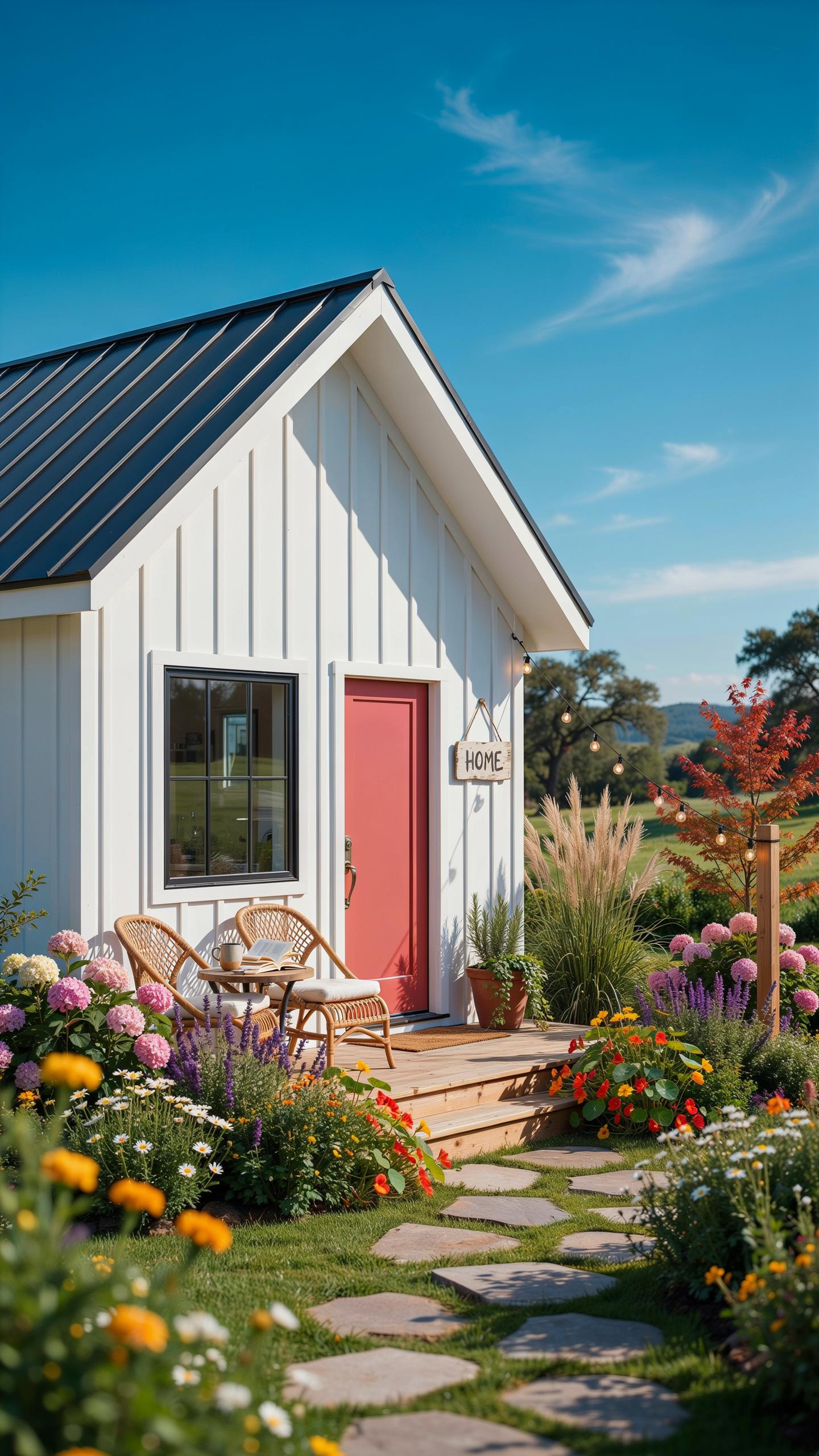
Trim work acts as the bridge between your siding and openings. Choose trim colors that either match your siding for seamless flow or contrast sharply for definition. Darker trim around light siding creates framing that highlights windows and doors as focal points. Proper alignment of trim with siding patterns ensures a finished, intentional appearance.
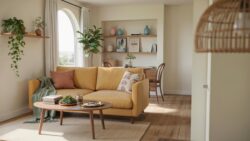
Strategic window and door placement maximizes sight lines to outdoor space, blurring the boundary between interior and exterior. Oversized windows relative to wall area work well on tiny homes because they expand the perceived interior volume. Trim coordination grounds these openings visually and prevents them from appearing as awkward holes in the facade. Quality trim installation directly impacts how polished your entire exterior reads.
Cohesive House Design Exterior Elements
Roofline And Siding Harmony
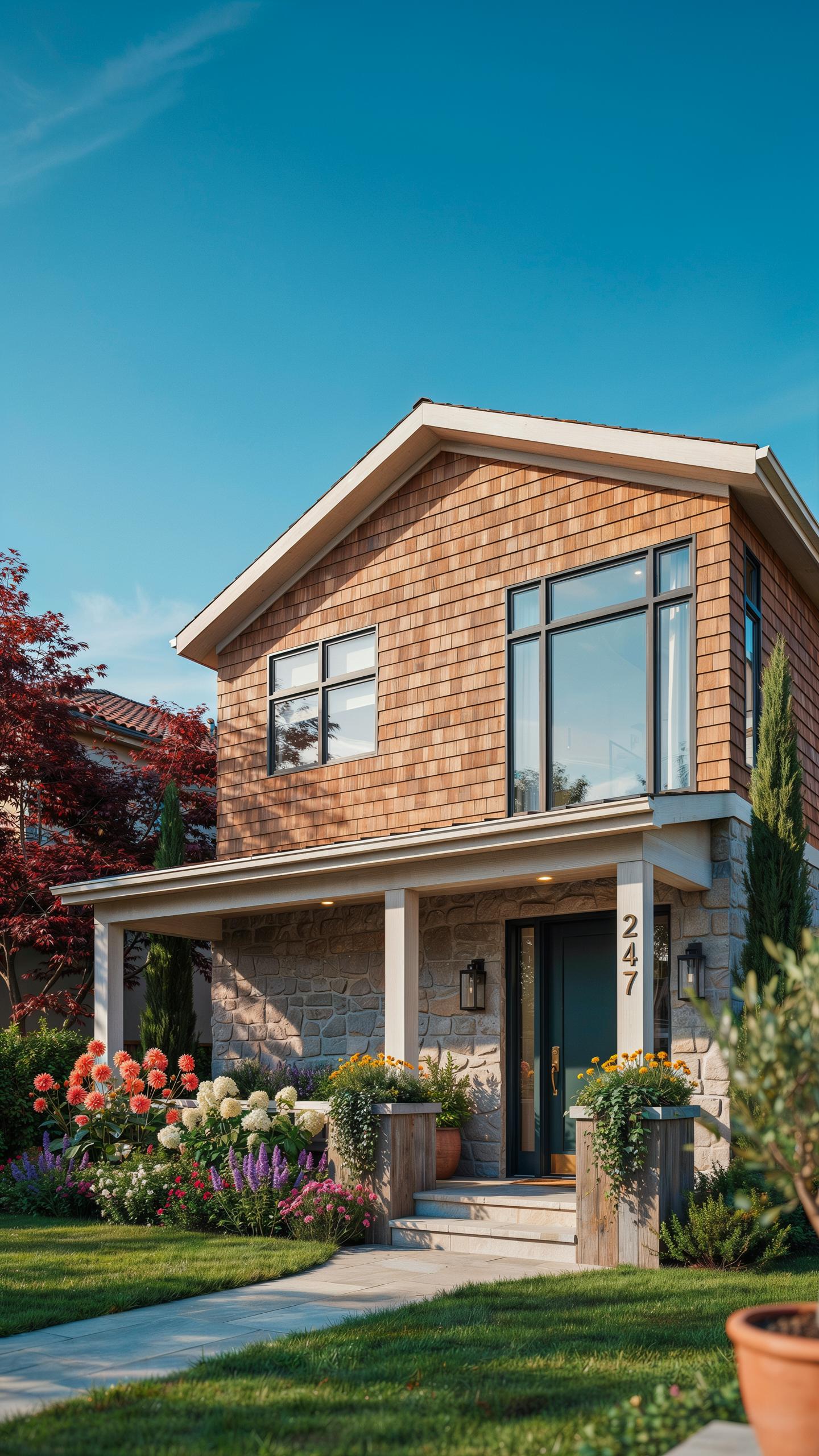
Your roof pitch and siding profile must work together visually and functionally. Metal standing seam roofs shed water quickly and pair logically with fiber cement panels because both handle weather exposure similarly. The vertical lines of modern siding complement the clean geometry of standing seam metal. This pairing creates visual continuity rather than competing design elements fighting for attention.
The slope of your roof determines water runoff patterns, which affects how siding performs beneath eaves and gutters. A steep roof sheds rain faster, reducing moisture contact with walls below. Matching material choices ensures both roof and siding age at similar rates. You avoid the problem of replacing one element years before the other, which creates visual mismatches and maintenance headaches.
A small house is a place where every board is chosen with love and the siding reflects the beauty of the surrounding trees. It is the simple textures of home that truly invite the soul to rest in the open air.
Outdoor Living Integration
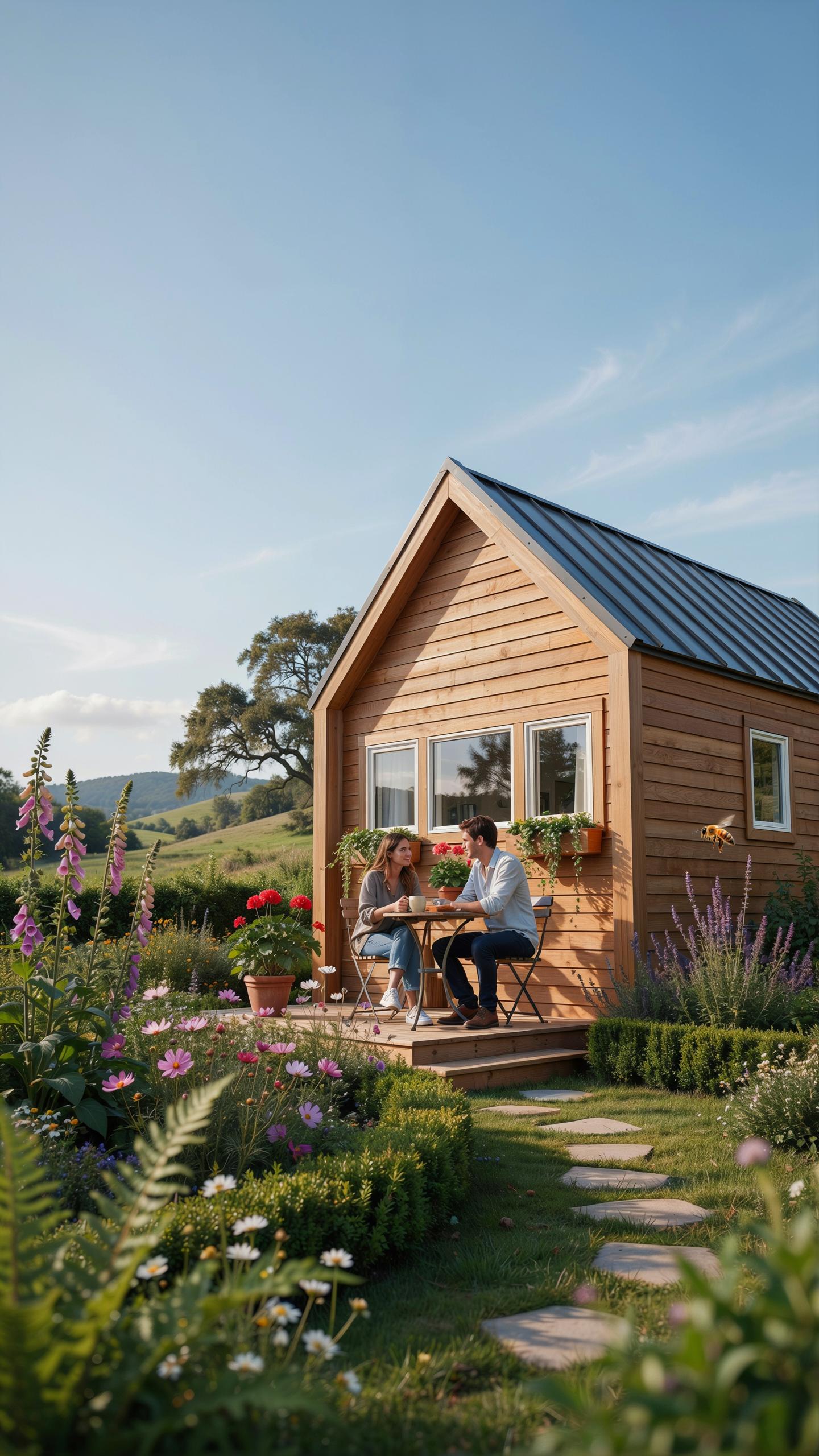
Extend your siding material to outdoor structures like decks and patios to eliminate visual breaks in your design. Using the same wood species or composite material for both walls and deck surfaces creates spatial continuity. Your eye reads the house and outdoor living area as one unified zone rather than disconnected elements. This approach works because matching materials signal intentional design rather than coincidence.
Material consistency affects maintenance schedules and replacement costs over time. If you choose composite decking to match composite siding, both resist rot and require similar cleaning protocols. Wood species must match in grain and treatment type to avoid color variations between vertical walls and horizontal surfaces. This practical alignment prevents the common problem of weathered, mismatched exteriors within five to ten years.
Finding Your Tiny House Inspiration
Modern Minimalist Aesthetics
Scandinavian design strips away excess and focuses on what works. Clean lines dominate the exterior. Light wood tones like pine, spruce, or ash reflect northern European building traditions. These materials age well and require predictable maintenance. The design philosophy prioritizes functionality over decoration, which reduces construction complexity and long-term upkeep costs on tiny homes.
Natural light-toned wood siding lets the surrounding landscape become the visual focal point. This approach works because it doesn’t compete with trees, water features, or terrain. The simplicity also means fewer color conflicts with seasonal changes. Tiny homes benefit from this restraint because limited square footage demands that every design choice earn its place.
Rustic And Traditional Cabins
Log cabin construction uses whole or hewn logs stacked horizontally and notched at corners for structural integrity. Cedar shake shingles offer similar aesthetic appeal with easier installation on standard framing. Both materials develop natural weathering patterns over time, which means the exterior improves visually without active maintenance. These styles work best in forested or mountainous regions where they align with the environment.

Cedar shake and log styles communicate durability and permanence. They perform well in wet climates because both materials shed water effectively when properly maintained. Wooded settings validate these choices because they echo the surrounding ecosystem. Tiny homes with rustic exteriors integrate into natural landscapes rather than contrast against them, reducing visual discord on smaller properties.
Planning A Tiny House Exterior Makeover
Repairing Existing Substrates
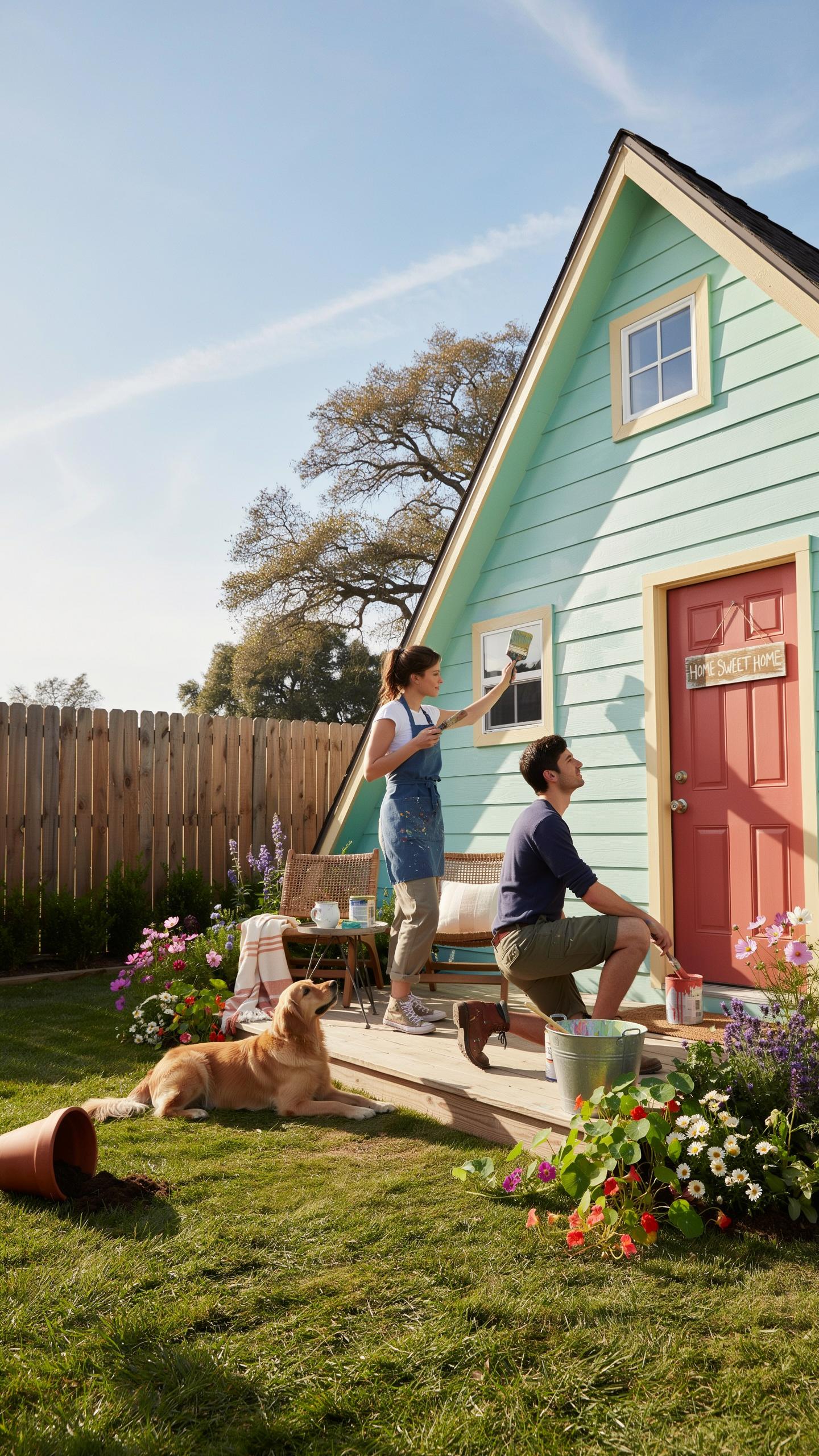
Inspect your substrate before ordering siding materials. Look for soft spots, discoloration, and areas where the sheathing gives under finger pressure. These indicate moisture damage or rot that compromises the foundation for new siding installation and shortens material lifespan.
Replace damaged sheathing and vapor barriers immediately. Moisture trapped behind new siding accelerates decay and creates mold conditions. Proper substrate preparation prevents costly callbacks and ensures your exterior investment performs as intended for decades.
Essential Siding Installation Tools
Successful siding installation requires specific equipment for accurate work and secure fastening. Invest in tools that handle cuts, measurements, and fastening without compromise. Quality tools reduce installation time and eliminate gaps that allow water infiltration.
- Circular saw or miter saw: Makes precise crosscuts and angle cuts on fiber cement, vinyl, and wood siding materials without chipping or cracking edges.
- Pneumatic nailer or coil nailer: Drives fasteners at consistent depths and speeds for uniform appearance and secure panel attachment across the entire exterior.
- Level and chalk line: Ensures courses run straight and plumb, preventing visible waviness and water flow problems that develop over time.
- Tape measure and layout square: Maintains accurate spacing and alignment for cuts and fastening locations throughout installation phases.
- Caulk gun and sealant: Fills gaps between panels and at terminations to prevent moisture entry at vulnerable connection points.

Organize tools before starting to minimize setup delays and maintain workflow momentum. Having backup fasteners and blades prevents mid-project stops that disrupt installation rhythm and compromise work quality.
Creative Tiny House Exterior Makeover Ideas
Adding Accent Walls
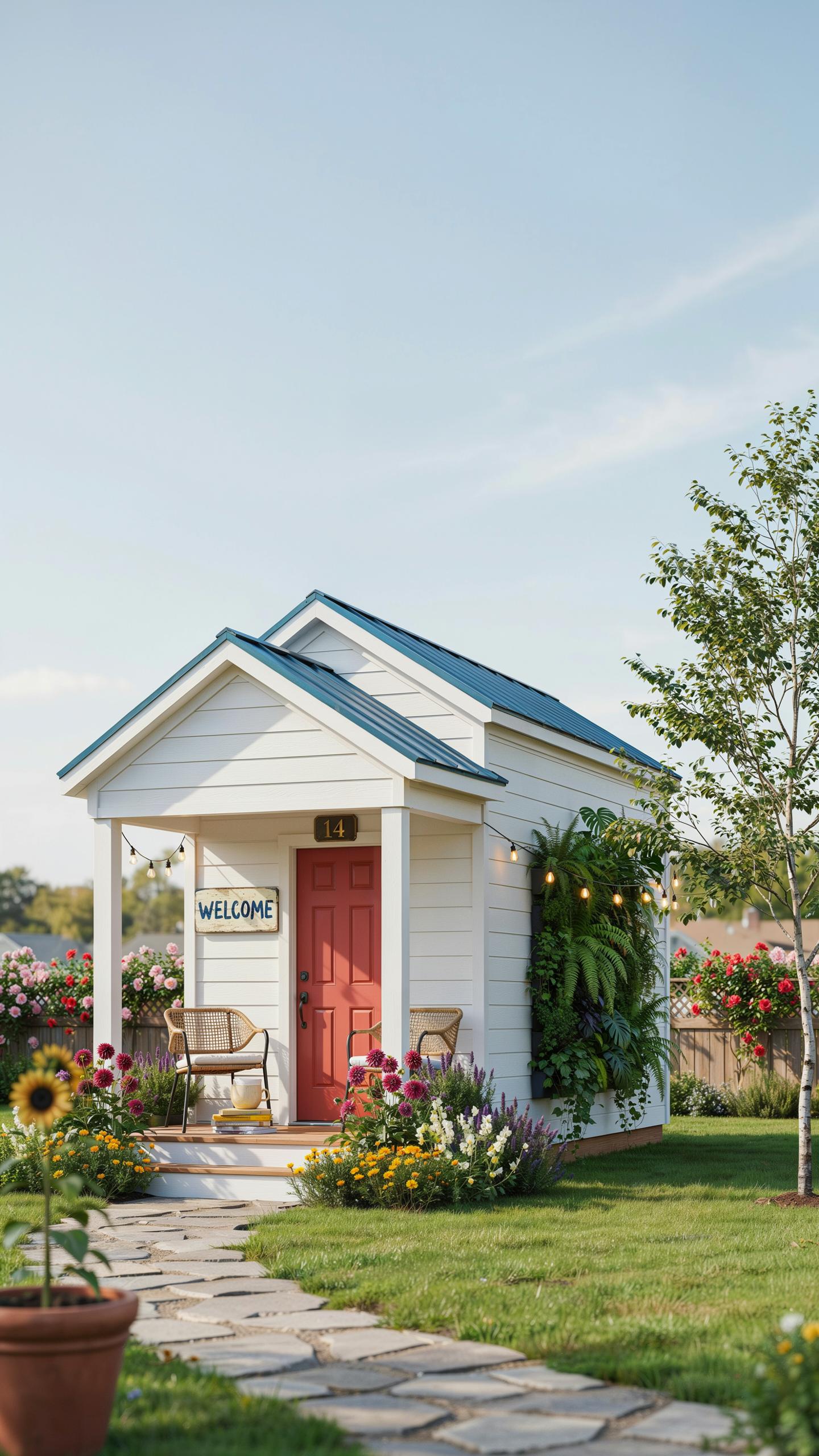
A single accent wall creates visual impact on a tiny house. Choose your front facade or entry alcove as the focal point. Cedar shingles add texture and age well outdoors. Metal panels reflect light and require minimal maintenance. This contrast breaks up monotonous rectangular shapes and draws attention where you want it.
The payoff is immediate and measurable. Your small footprint gains perceived depth and character. Accent walls cost less than residing the entire structure. They allow you to test a new material before committing fully. This approach works because it concentrates visual interest rather than spreading it thin across the whole exterior.
Siding Layout Techniques
Strategic siding placement changes how people perceive your home’s dimensions. Vertical layouts make structures appear taller. Horizontal patterns emphasize width. Mixed layouts add visual complexity without increasing square footage. Experiment with these positioning methods to alter your tiny house proportions.
- Vertical Board and Batten: Draws the eye upward, making low-profile structures feel taller. Space boards 12 to 16 inches apart with narrow batten strips between them.
- Horizontal Lap Siding: Creates width perception. Install boards at slight angles to catch shadows that emphasize breadth across the facade.
- Diagonal Patterns: Adds movement and disguises boxy shapes. Requires precise cuts but delivers strong visual impact on compact structures.
- Checkerboard or Block Patterns: Combines two siding materials in alternating squares. Creates depth and breaks up flat surfaces effectively on small footprints.
- Herringbone Layout: Angles boards in opposing directions. Popular in Scandinavian design, it maximizes visual interest on limited wall space.

These layouts work because they manipulate perception through line direction and shadow play. Your tiny house gains architectural complexity without renovation costs. Layout techniques remain one of the most cost-effective ways to transform plain exteriors into custom-looking structures.
Selecting Tiny House Exterior Color Schemes
Light Vs. Dark Siding Shades
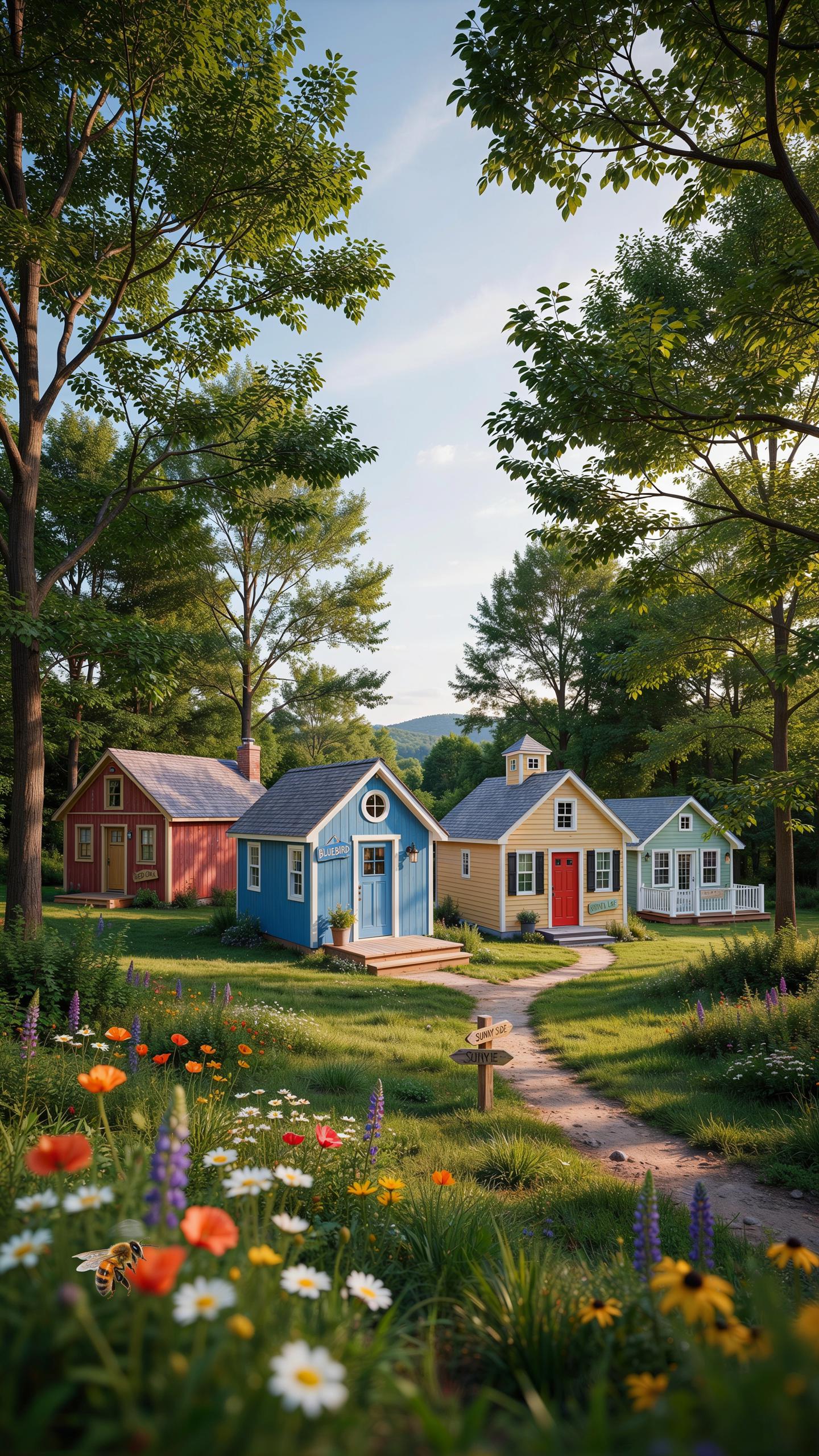
Light siding colors reflect solar radiation and create visual expansion in compact spaces. Whites, creams, and pale grays physically bounce sunlight away from the structure, reducing heat absorption while making the footprint appear larger than actual square footage. This optical effect works because light wavelengths scatter rather than concentrate on surfaces, a principle that applies regardless of climate zone or siding material.
Dark siding absorbs thermal energy and establishes a defined perimeter around your structure. Charcoal, navy, and deep brown tones create visual weight and modern definition. Dark colors work strategically in tiny house design when you want the building to recede into its landscape rather than dominate it. Choose dark shades based on regional sun exposure and cooling requirements, not purely for aesthetics.
Choosing Complementary Trim Tones
Trim selection controls visual hierarchy and breaks monotony on small exterior surfaces. Neutral trim in white or gray maintains cohesion and creates clean sight lines that enhance perceived spaciousness. This approach works across all siding types and requires minimal maintenance since neutral tones hide weathering better than bold accent colors.

Contrasting trim on doors, windows, and eaves adds personality without overwhelming tight dimensions. A dark siding with cream trim or light siding with charcoal accents creates definition and focal points. Use trim strategically on high-visibility areas like entry doors and window frames where contrast delivers maximum visual impact without cluttering the overall design.
Adapting Styles For A Mobile Tiny House Camper
Lightweight Siding Solutions
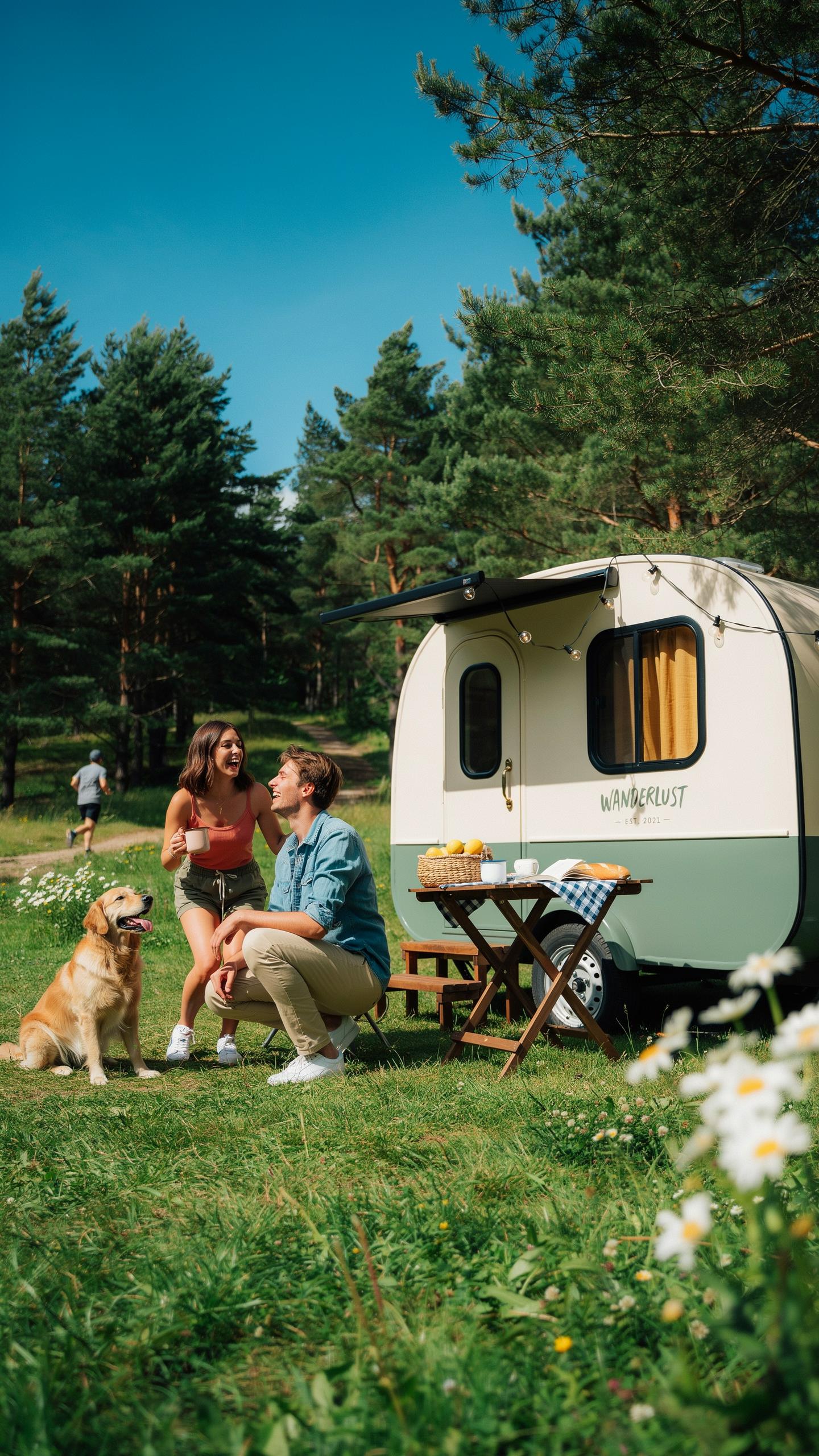
Mobile tiny houses operate under strict weight constraints. Every pound counts when towing on highways. Thin-gauge aluminum siding weighs significantly less than traditional materials like fiber cement or wood, making it the industry standard for trailers. Engineered composite panels offer another option, combining durability with reduced weight. These materials prevent you from exceeding manufacturer towing limits while maintaining structural integrity.
Material selection directly impacts fuel efficiency and towing vehicle requirements. Heavier siding forces you into larger tow vehicles or requires upgraded suspension systems, increasing overall project costs. Vinyl and metal cladding options deliver protection without unnecessary bulk. Choose materials rated for mobile applications to ensure your house design remains transportable across state lines without legal or mechanical issues.
Securing Cladding For Highway Travel
Road vibration and wind loads stress siding attachments during transit. Standard fasteners fail under sustained highway conditions. High-wind rated fasteners, typically rated for 150+ mph wind resistance, secure panels against movement and rattling. Specialized construction adhesives rated for mobile applications work alongside mechanical fasteners to create redundant attachment systems that prevent panel separation.
Installation technique matters as much as material choice. Fasteners must penetrate structural framing, not just substrate layers. Seal all fastener penetrations to prevent water infiltration during travel. Space fasteners closer together on mobile units than stationary homes, typically every 12 to 16 inches rather than standard 24-inch spacing. This density distributes forces across more connection points, preventing concentrated stress on individual fasteners.
Frequently Asked Questions

What are the most popular materials for tiny house exterior siding?
When exploring tiny house design ideas exterior siding options, most homeowners choose between wood, vinyl, or fiber cement. Cedar is a classic choice for a rustic, natural look, while metal siding offers a modern, industrial aesthetic that is incredibly durable. For those prioritizing low maintenance, fiber cement provides a great balance of beauty and weather resistance, ensuring your small home remains protected and stylish for years to come in any climate.
How do I choose the right siding to make my small outdoor space feel larger?
To create an expansive feel, consider using horizontal lap siding or vertical board and batten. Vertical lines draw the eye upward, creating an illusion of height that complements various tiny house design ideas exterior siding layouts. Choosing lighter colors like cream, soft grey, or sage green can also help reflect light, making your tiny home and its surrounding outdoor living area feel much more open, airy, and inviting to guests.
Are there any budget-friendly siding options that still look high-end?
Absolutely! Engineered wood and high-quality vinyl are excellent cost-effective choices that mimic the look of expensive natural timber. You can also achieve a boutique look by using “mixed media” techniques, such as applying premium cedar accents only on the front facade while using affordable metal panels on the sides. This strategic approach allows you to save money while still achieving the beautiful, high-end curb appeal typically seen in professional designs.