Understanding The Importance Of An Autumn Garden Cleanup

Supporting Soil Health For Next Season
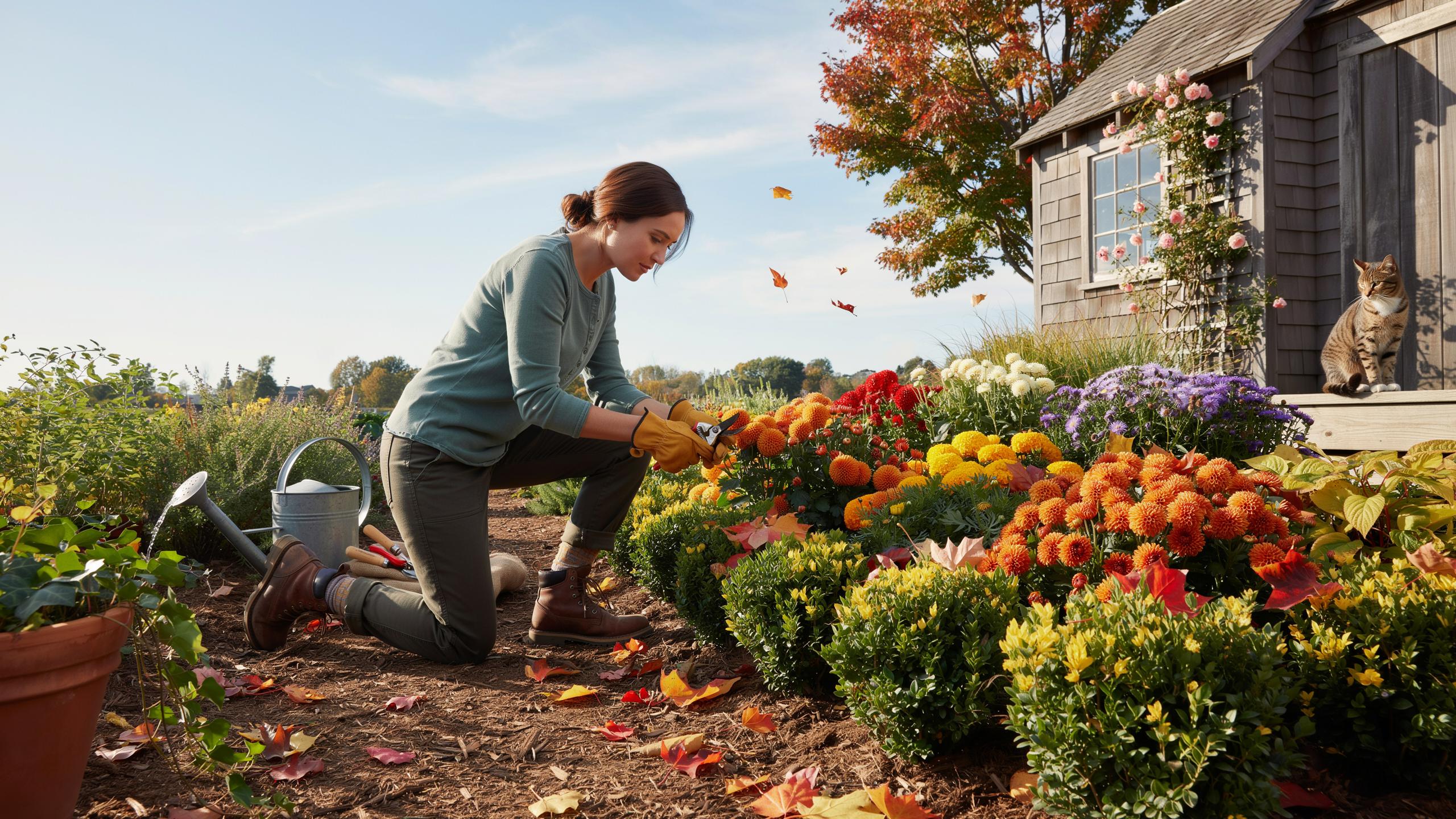
Fall cleanup removes dead plant material that blocks soil access to air and water. Decomposing leaves and stems consume nitrogen as they break down, depleting the nutrients your spring plants need. Clear debris, then add compost or aged manure. This organic matter feeds soil microbes and improves structure. Spring growth depends on what you do in autumn.
Adding organic matter in fall gives it months to integrate into your soil. Microorganisms work through winter, breaking down amendments and releasing nutrients slowly. By spring, your soil is richer and more friable. Plants establish faster and grow stronger. This cycle repeats year after year, building soil quality over time.
Preventing Pests And Diseases Over Winter
Infected leaves harbor fungal spores and insect eggs that survive freezing temperatures. Remove diseased foliage now and dispose of it in trash, not compost. Leaving it behind means reinfestation in spring. Many common garden diseases like powdery mildew and rust overwinter on dead plant material. Cleanup breaks this cycle.
Insect larvae and pupae hide under leaf litter and in plant debris. Fall removal eliminates their shelter before they enter dormancy. This reduces pest populations significantly. You spend less time treating infestations next growing season. Prevention through cleanup is cheaper and more effective than managing outbreaks later.

Essential Steps For An Effective Fall Garden Clean Up
Step By Step Fall Garden Cleanup Protocol
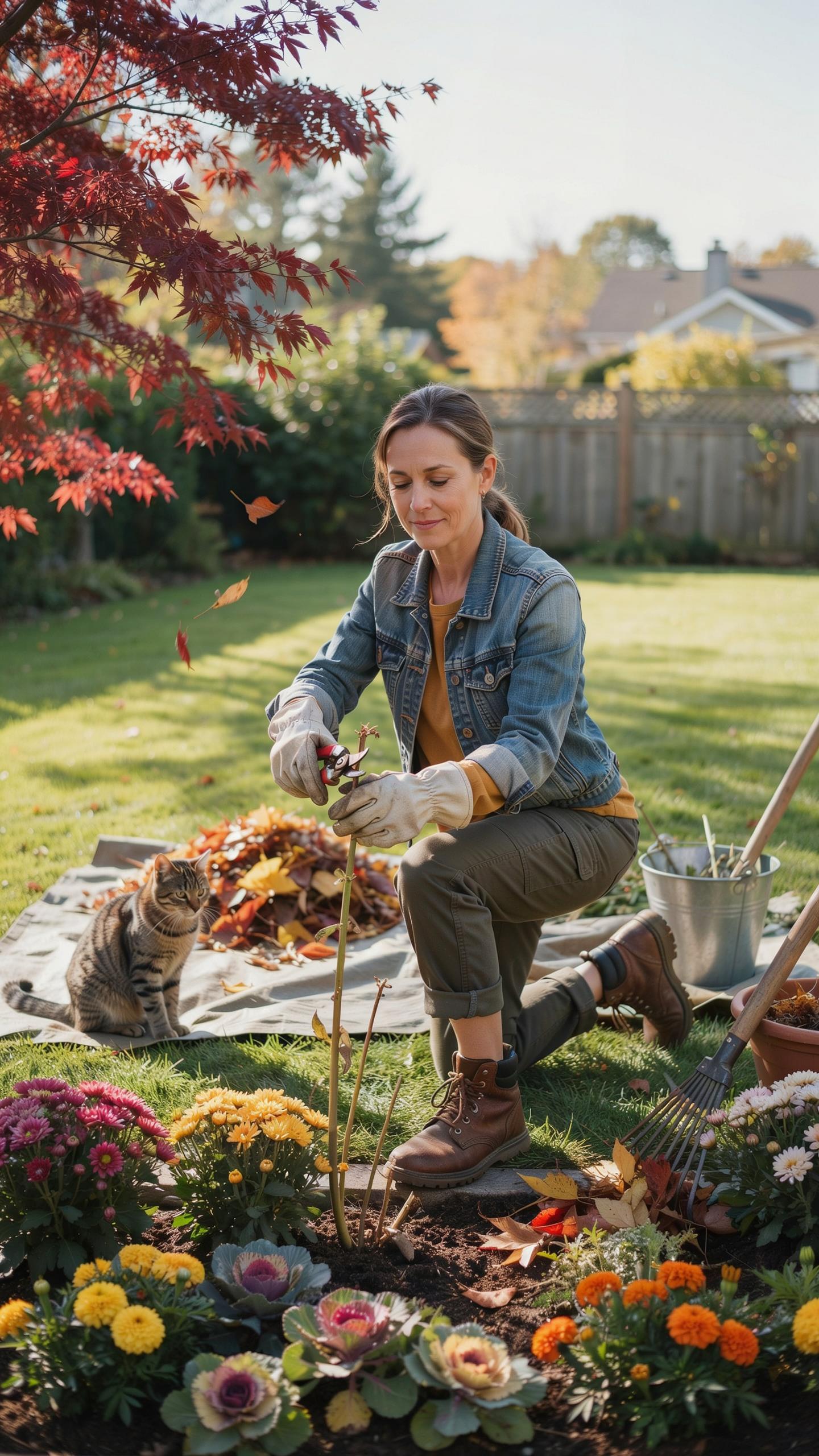
Fall cleanup prevents disease carryover and removes habitat for pests that overwinter in plant debris. Start your cleanup in early fall when plants finish producing but before hard frost arrives. Working systematically through beds ensures you catch all problem areas and don’t miss critical tasks.
- Remove Dead Annuals: Pull out spent annuals, tomatoes, and peppers completely. These plants won’t regrow and harbor fungi and insect eggs through winter months.
- Cut Back Perennials: Cut perennials to ground level or leave 3 to 4 inches for winter protection depending on hardiness zone requirements.
- Rake Leaves From Beds: Remove fallen leaves from planting areas to eliminate slug and pest hiding spots that survive cold temperatures.
- Clear Weeds: Pull all weeds before they set seed. Fall weeds germinate quickly and establish stronger root systems than spring varieties.
- Clean Garden Tools: Wash and dry all tools after use. Sanitize pruners and shears with bleach solution to prevent disease transmission between plants.
- Remove Diseased Material: Bag and discard any plants showing signs of fungal infection, powdery mildew, or pest damage rather than composting them.
Completing these tasks creates a clean slate for spring planting and reduces next season’s pest and disease pressure significantly. Consistent fall cleanup cuts your spring workload and establishes healthier growing conditions before the new season begins.
Managing Your Backyard Compost Pile
Healthy compost accepts only disease-free plant material. Diseased leaves, stems infected with powdery mildew, and plants affected by blight must go in the trash. Your compost pile won’t reach temperatures high enough to kill most pathogens, so contaminated material spreads disease when you apply finished compost to your garden beds.

Most fallen leaves, grass clippings, and spent vegetable plants work in compost when they show no disease symptoms. Add brown materials like shredded leaves and straw in higher ratios during fall to balance nitrogen-rich green waste. Turn your pile weekly if possible to speed decomposition before winter slows the process. Avoid composting weeds that have set seed or perennial weeds with intact roots, as they survive the composting process and germinate in your garden later.
Designing And Creating A Fall Garden For Late Season Color
Selecting Autumn Blooming Florals
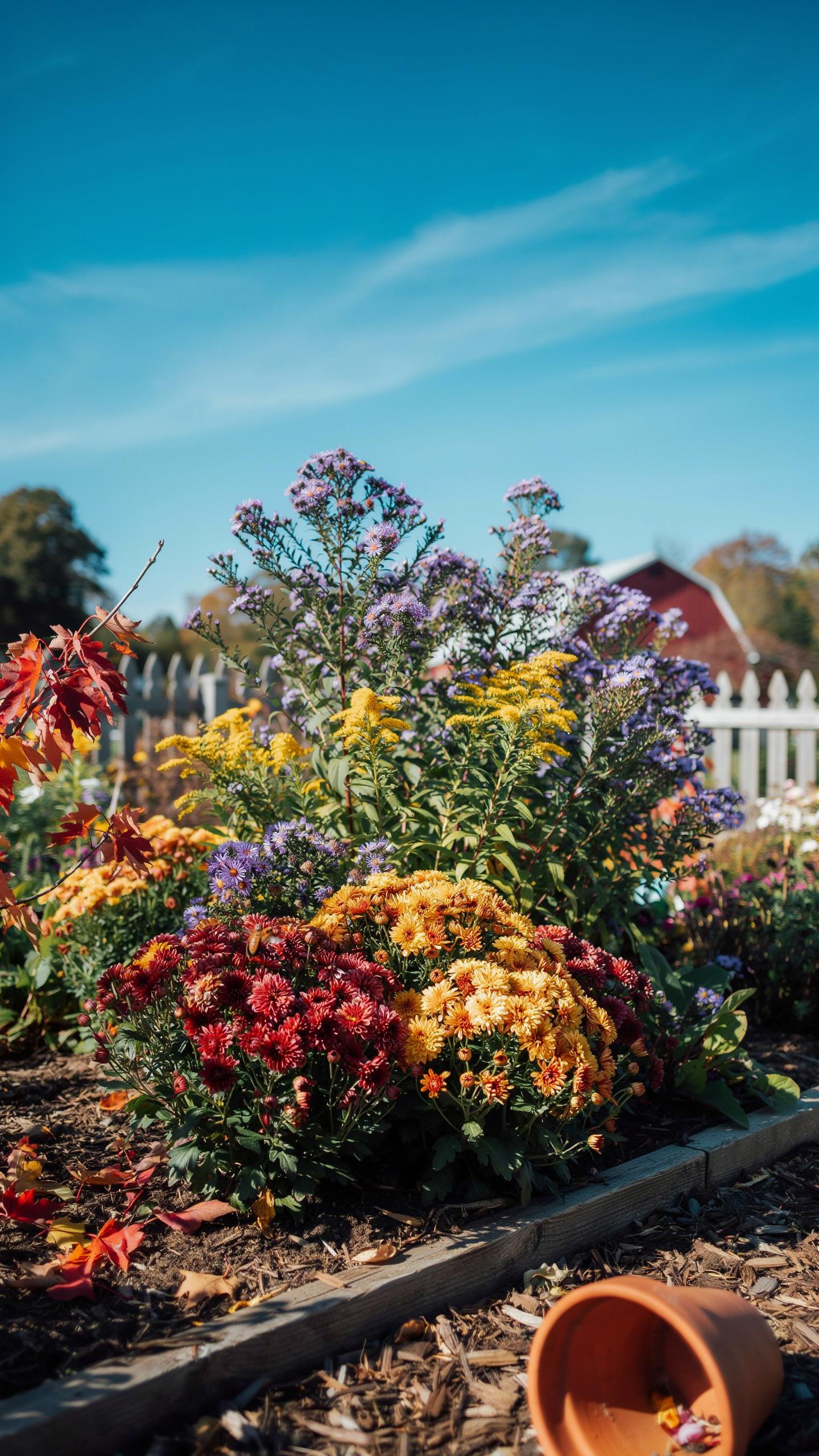
Chrysanthemums and Asters are your workhorses for fall color. These hardy perennials tolerate frost and continue blooming as temperatures drop. Plant them in early fall to establish roots before winter arrives. They need full sun and well-draining soil to perform effectively through the season.
Chrysanthemums flower in red, yellow, purple, and white. Asters bloom later and come in similar color ranges. Both plants require minimal maintenance once established. Deadheading spent flowers extends bloom time through November in most climates.
Integrating Cool Season Ornamental Grasses
Ornamental grasses deliver structure when other plants fade. Species like Miscanthus, Panicum, and Calamagrostis remain upright through fall and into winter. Their dried foliage creates visual interest and provides texture that contrasts with lower perennials. They also move with wind, adding dynamic motion to static garden beds.

Plant ornamental grasses in mid to late summer for fall establishment. Position them where they backlight with morning or afternoon sun to highlight their forms. Cut them back to ground level in early spring before new growth emerges. Most varieties tolerate poor soil and require minimal water once their root systems develop.
Proactive Garden Prepping For Winter Weather

Protecting Cold Sensitive Plants
Tender plants cannot survive hard freezes without protection. Burlap and frost cloth act as insulators, trapping heat near the plant while blocking cold winds. These materials allow water and air circulation while reducing temperature swings that damage foliage and stems. Install protection before the first hard freeze hits your region.
Timing matters more than perfection. Apply covers in late afternoon when temperatures drop, then remove them during warm daylight hours. This cycle prevents heat buildup that stresses plants. Focus protection efforts on plants you cannot replace or those with significant investment. Hardier species need no covering.
Adding Protective Mulch Layers
Mulch regulates soil temperature and prevents freeze thaw cycles that uproot plants. Apply organic mulch like shredded bark, wood chips, or compost in three to four inch layers around plant bases. Keep mulch six inches away from tree trunks to prevent rot and pest damage. This barrier protects root systems from sustained freezing.

Organic mulch breaks down over time, enriching soil while providing ongoing winter protection. Reapply mulch annually to maintain effective depth. Mulch also suppresses weeds and reduces spring watering needs as it retains moisture. Start mulching in mid fall before soil temperatures drop significantly.
Implementing A Practical Fall Clean Up For Lawn And Turf Care
Aerating And Overseeding Cooled Turfs
Fall aeration works because cool soil temperatures and increased moisture create ideal conditions for grass seed germination. Core aeration removes soil plugs to break up compaction, which restricts root growth and water penetration. This process directly improves drainage and allows roots to expand deeper into the soil profile where they access more nutrients and water reserves.
Overseed immediately after aeration so seed makes direct contact with exposed soil. Cool season grasses germinate best when daytime temperatures drop below 70 degrees Fahrenheit and nighttime temperatures stay above 50 degrees. Spring dormancy and summer heat stress become non-factors because the seedlings establish strong root systems through fall and winter before facing stress.
Managing Fallen Leaves Efficiently
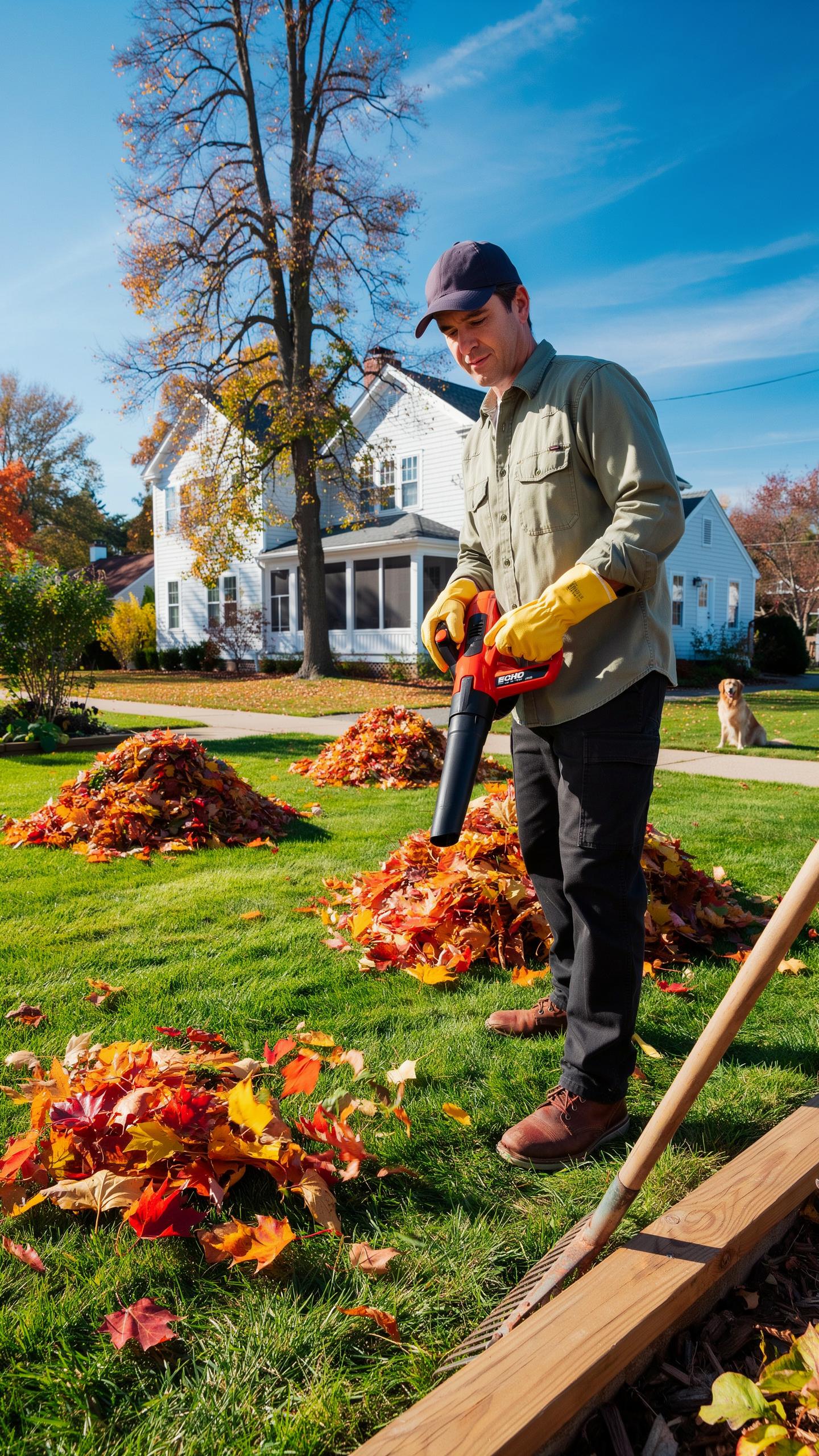
Mulch leaves directly into your lawn with a mulching mower. This returns nitrogen and organic matter to your soil while reducing yard waste removal. Shred leaves into small pieces so they break down quickly and don’t smother grass underneath. Most leaves decompose within weeks in fall conditions.

Gather leaves to create leaf mold, a nutrient-dense soil amendment that takes one to two years to fully decompose. Layer leaves in a bin or pile, keeping them moist and turning occasionally to speed breakdown. Use finished leaf mold to amend garden beds and containers, improving soil structure and water retention without chemical fertilizers.
Your Complete Fall Yard Maintenance Checklist
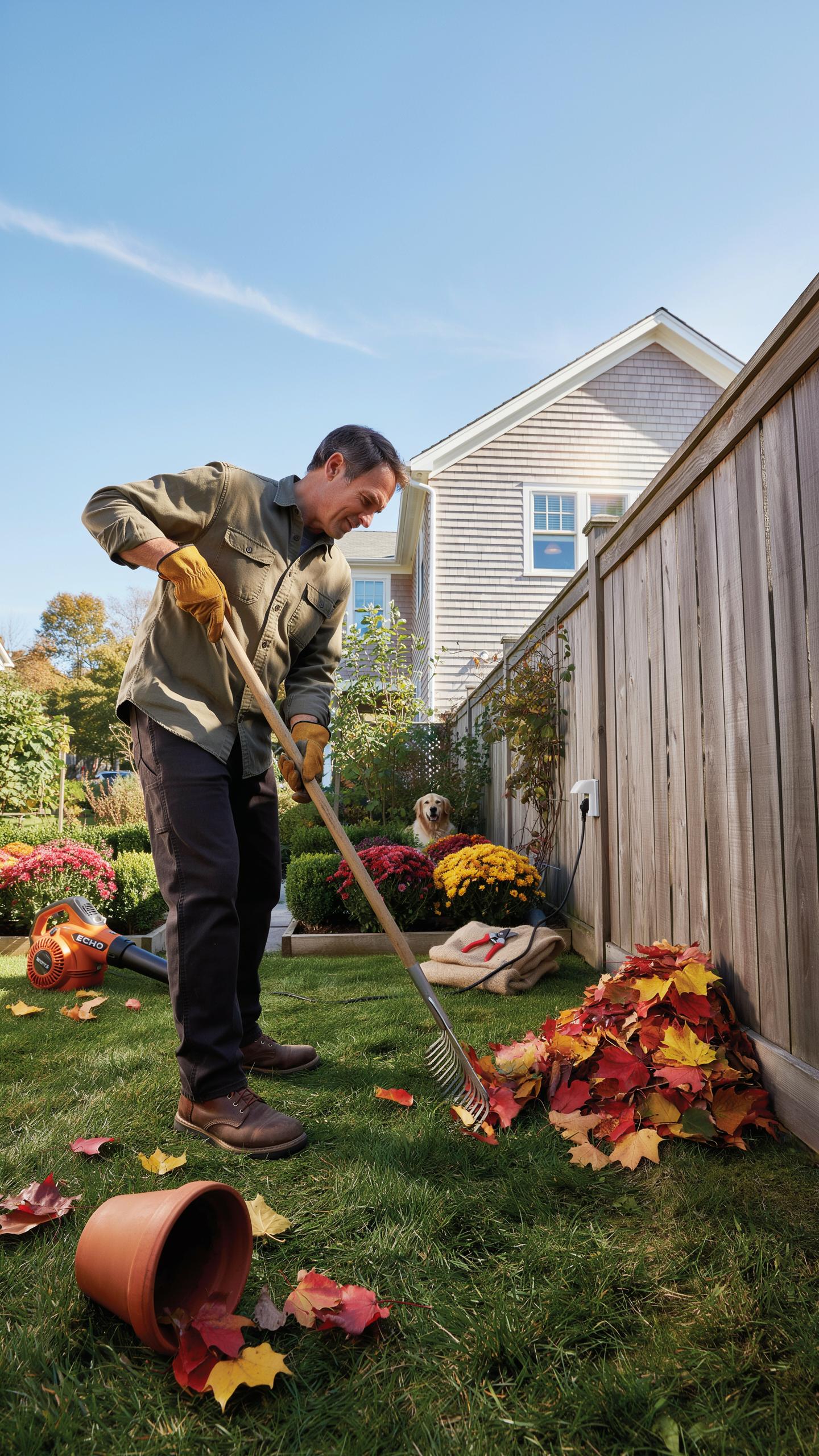
Essential Fall Yard Maintenance Tasks
Fall maintenance protects your property through winter and prevents damage that compounds over time. Structural issues, debris accumulation, and exposed hardscapes deteriorate faster when neglected during the transition season. Address these tasks before temperatures drop and ground freezes.
- Clean gutters and downspouts: Remove leaves and debris that block water flow. Clogged gutters cause water to back up under roofing and damage fascia boards and siding over time.
- Inspect roof for damage: Look for missing or cracked shingles, gaps around vents, and flashing issues. Water penetration during fall rains and winter snow creates interior damage and mold growth.
- Seal cracks in driveway and walkways: Fill concrete cracks with appropriate sealant before freeze-thaw cycles expand them. Freezing water inside cracks causes concrete to break apart and creates trip hazards.
- Trim tree branches near structures: Remove branches hanging over the roof, gutters, or siding. Dead or weak branches fall during winter storms and damage your home or create safety issues.
- Power wash patios and decks: Remove algae, mold, and debris buildup that accelerates wood rot and creates slip hazards. Clean surfaces last longer and are safer for foot traffic during wet fall weather.
Complete these tasks by mid-fall before weather becomes severe. Waiting until late fall or early winter limits your window for safe work and increases contractor costs.
Shutting Down Outdoor Irrigation Systems
Your irrigation system requires winterization to prevent burst pipes and water damage. Water left inside hoses and sprinkler lines expands when frozen, cracking plastic components and damaging metal fittings. Blowing out lines and draining systems costs nothing compared to pipe replacement.

Start by turning off the main water supply to your irrigation system. Disconnect and drain all hoses, coiling them for storage. Open each sprinkler valve and blow compressed air through the lines to remove standing water. This step matters most in climates where temperatures drop below freezing. Insulate outdoor spigots with foam covers to prevent freeze damage to your home’s water line connections. Leave spigot covers on through winter and remove them in spring once frost risk passes.
Practical Autumn Garden Cleanup Tips For Pruning And Dividing
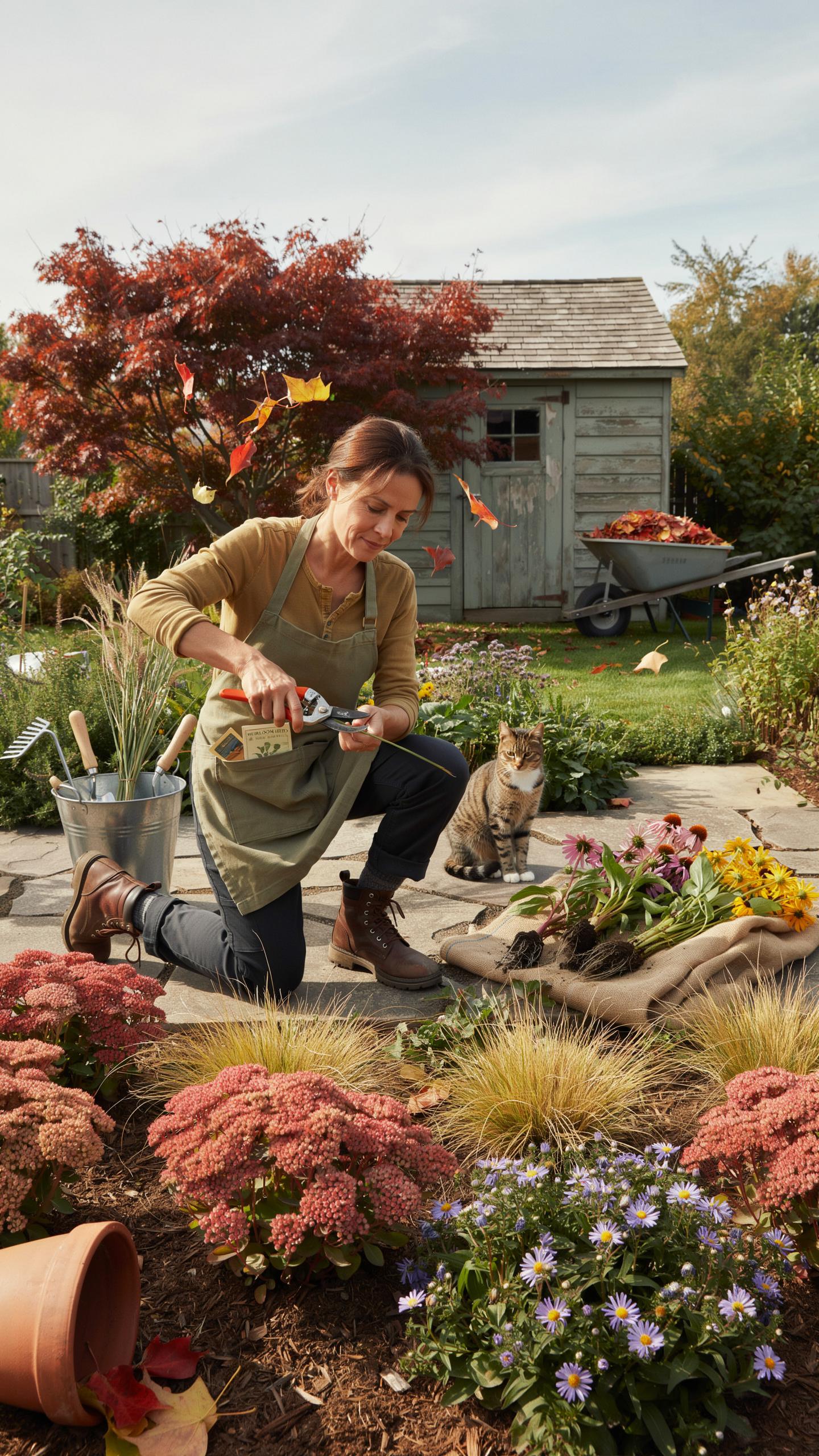
Pruning Perennials And Woody Shrubs
Fall pruning demands specificity. Prune spring-flowering shrubs like forsythia and lilac immediately after they finish blooming in late spring, not in autumn. Delay pruning summer bloomers and tender shrubs until spring to avoid winter damage. Cut back dead perennial foliage after the first hard frost when plants go dormant. Leave ornamental grasses and seed heads standing through winter to provide food and shelter for birds and overwintering insects.
Leave woody shrubs unpruned in fall unless they show disease or damage. Autumn pruning triggers new growth vulnerable to frost kill. Instead, mark problem branches now and prune them in late winter or early spring. Dead or diseased wood should come off immediately regardless of season. This approach protects plant health while maintaining wildlife habitat through the cold months.
Dividing Overcrowded Spring Bulbs And Perennials
Divide perennials in fall when soil remains workable but temperatures cool. Daylilies, hostas, coneflowers, and black-eyed Susans tolerate fall division and establish roots before winter. Dig clumps completely, shake off excess soil, and separate sections by hand or with a sharp spade. Replant divisions at the same depth they grew originally. Water thoroughly after planting to settle soil and eliminate air pockets.

Fall division improves plant vigor by reducing competition for water and nutrients. Separated perennials flower more prolifically in their first spring after division. Space divisions according to their mature width to prevent future overcrowding. This timing allows roots to establish in cool, moist fall soil before dormancy, giving divided plants a strong start for spring growth.
Effortless Fall Garden Cleaning And Tool Preservation
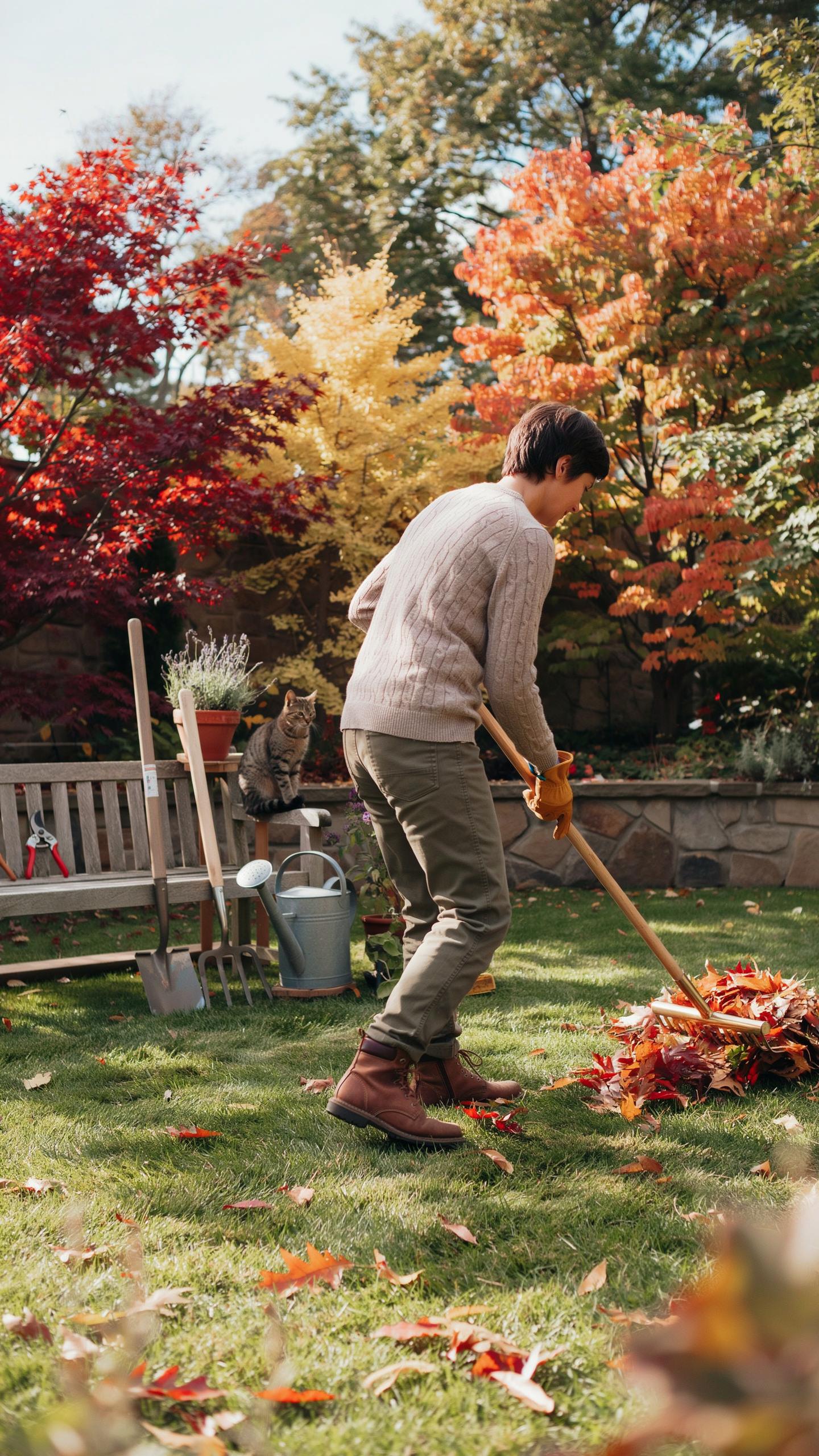
Sterilizing And Sharpening Hand Tools
Clean your pruners, spades, and saws before winter storage. Dirt and plant residue harbor pathogens that spread disease to next year’s plants. Wipe blades with a cloth soaked in a 10 percent bleach solution or rubbing alcohol. This kills bacteria and fungi without damaging metal.
Sharpen dull blades using a whetstone or file. Dull tools tear plant tissue instead of cutting cleanly, creating entry points for disease. After sharpening, apply a light coat of oil to metal surfaces. Oil prevents rust during months of storage and keeps tools ready for spring use.
Design your fall garden with the same care as a spring bloom, for even the earth needs a soft place to rest and renew its beauty. In the garden of life, the beauty of autumn is found in the tending of what remains.
Storing Garden Pots And Planters Properly
Empty all clay, ceramic, and terra cotta pots before the first freeze. Water trapped inside these porous materials expands when frozen, causing cracks and permanent damage. Turn pots upside down to drain any remaining moisture. Stack them in a dry location like a garage or shed where temperatures stay above freezing.

Plastic and resin pots tolerate cold better but still benefit from indoor storage. Drain water from all containers and remove soil or debris. Store pots in a clean, dry space away from direct sunlight. Stacked pots take minimal space and remain in good condition for the next growing season.
Utilizing A Fall Gardening Checklist Pdf For Structured Success
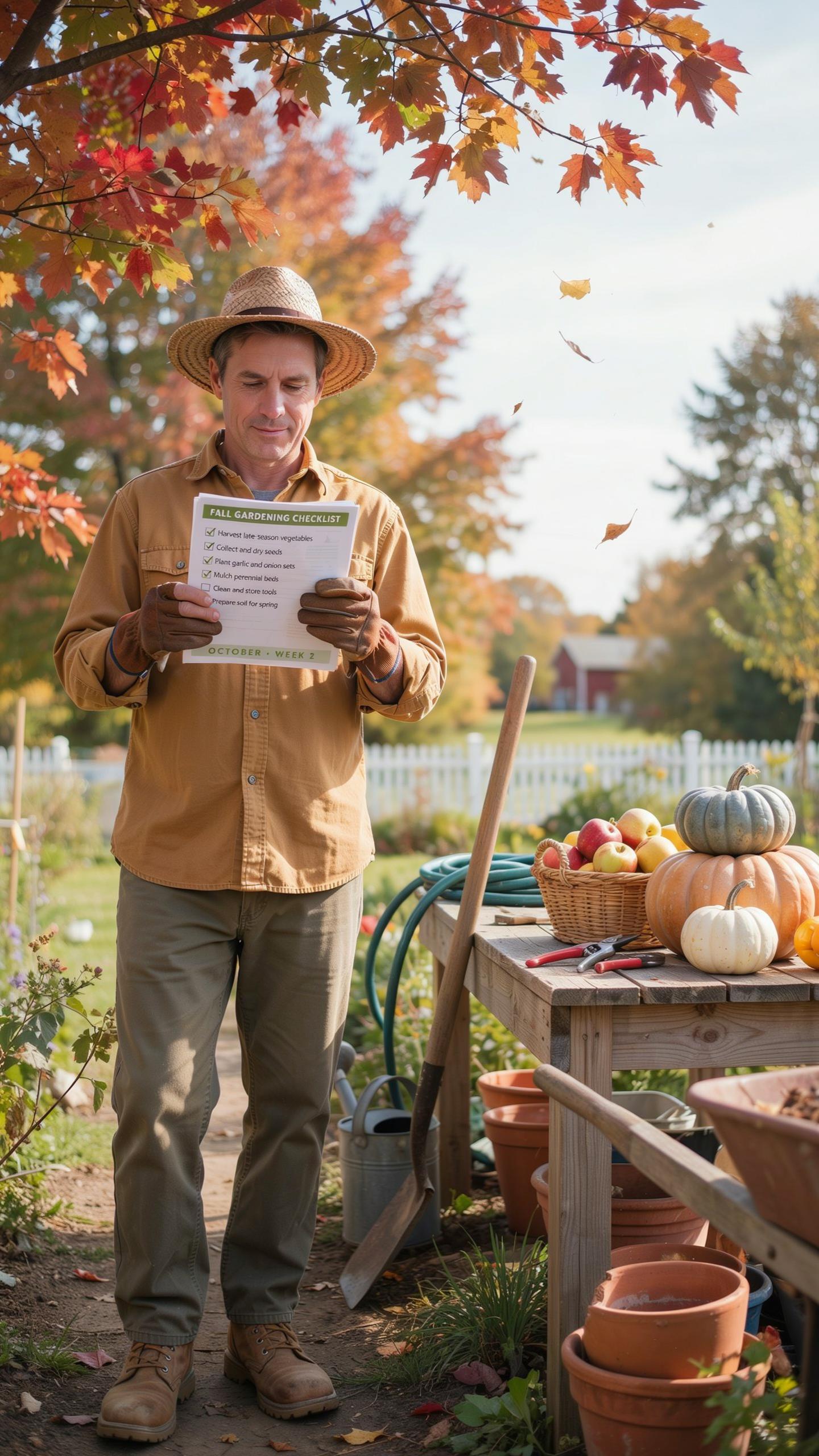
Streamlining Tasks With A Printable Tracker
A printable PDF checklist transforms fall garden work from scattered tasks into a managed workflow. You check off completed items, track what remains, and maintain momentum across multiple weekends. This removes the mental load of remembering what needs attention. Print multiple copies and post one at your garden entrance for quick reference during work sessions.
Digital PDFs work equally well if you prefer mobile access. Use your phone to mark tasks complete as you finish them. The visual progress from checking items off creates accountability and prevents duplication of effort. You stay focused on actionable work rather than deciding what comes next.
Setting A Realistic Autumn Gardening Schedule
Map your fall tasks across four to six weekends before your area’s first hard frost date. Check your local frost calendar to identify your deadline, then work backward from that date. Assign heavier jobs like leaf cleanup and soil amendment to earlier weekends. Save lighter tasks like deadheading and final inspections for the end of your schedule.
Breaking work into manageable chunks prevents exhaustion and garden neglect. One weekend of focused effort beats sporadic, half finished projects. Prioritize tasks that directly impact plant survival: mulching, planting spring bulbs, and removing diseased material come first. Schedule lighter maintenance work only after critical survival tasks finish.
Planting Bulbs And Garlic For Spring Harvest

Planting Spring Blooming Ornamental Bulbs
Fall is the optimal window to plant spring-blooming bulbs like tulips and daffodils. These bulbs require a cold period to break dormancy and flower properly. Plant them in autumn when soil temperatures drop below 60 degrees Fahrenheit. This timing allows roots to establish before winter freeze arrives.
Choose a location with well-draining soil and at least six hours of direct sunlight. Plant bulbs at a depth roughly three times their height. Space them four to six inches apart to prevent overcrowding. Water thoroughly after planting to settle soil and eliminate air pockets around the bulbs.
Sowing Garlic Cloves For Summer Bounty
Plant individual garlic cloves in late October through November for summer harvest. Garlic needs prolonged cold exposure to develop proper bulb size and clove separation. Split bulbs into individual cloves just before planting. Plant pointed end up at a depth of two inches into loose, fertile soil.
Garlic thrives in beds with excellent drainage and full sun exposure. Space cloves six inches apart in rows that are twelve inches apart. Apply two to three inches of organic mulch after planting to insulate soil and suppress weeds. Harvest the following June or July when foliage yellows and falls over naturally.
Frequently Asked Questions

Why is a fall garden care checklist important for beginners?
Starting a fall garden care checklist is essential because it sets the foundation for a vibrant landscape next spring. For beginners, this seasonal transition is the best time to enrich the soil, protect perennials from frost, and plant bulbs. By following a structured plan, you ensure your outdoor space remains healthy during the dormant winter months, preventing costly plant losses and making your spring gardening tasks much more manageable and enjoyable.
How do I properly prepare my flower beds for the winter season?
To refresh your space effectively, start by removing spent annuals and any diseased foliage that could harbor pests. Next, apply a two-inch layer of organic mulch to insulate plant roots against freezing temperatures. Incorporating this step into your fall garden care checklist helps retain moisture and regulate soil temperature. Finally, give your perennials a deep watering before the first hard frost to ensure they stay hydrated throughout the long winter.
Can I refresh my garden for autumn without spending a lot of money?
Absolutely! You can achieve a beautiful seasonal look on a budget by composting your fallen leaves to create “black gold” for future fertilizer. Dividing overcrowded perennials is another free way to expand your garden beds. Instead of buying expensive new decor, focus on cleaning your existing tools and structures. Using a simple fall garden care checklist allows you to prioritize free maintenance tasks that significantly improve your home’s curb appeal and plant health.