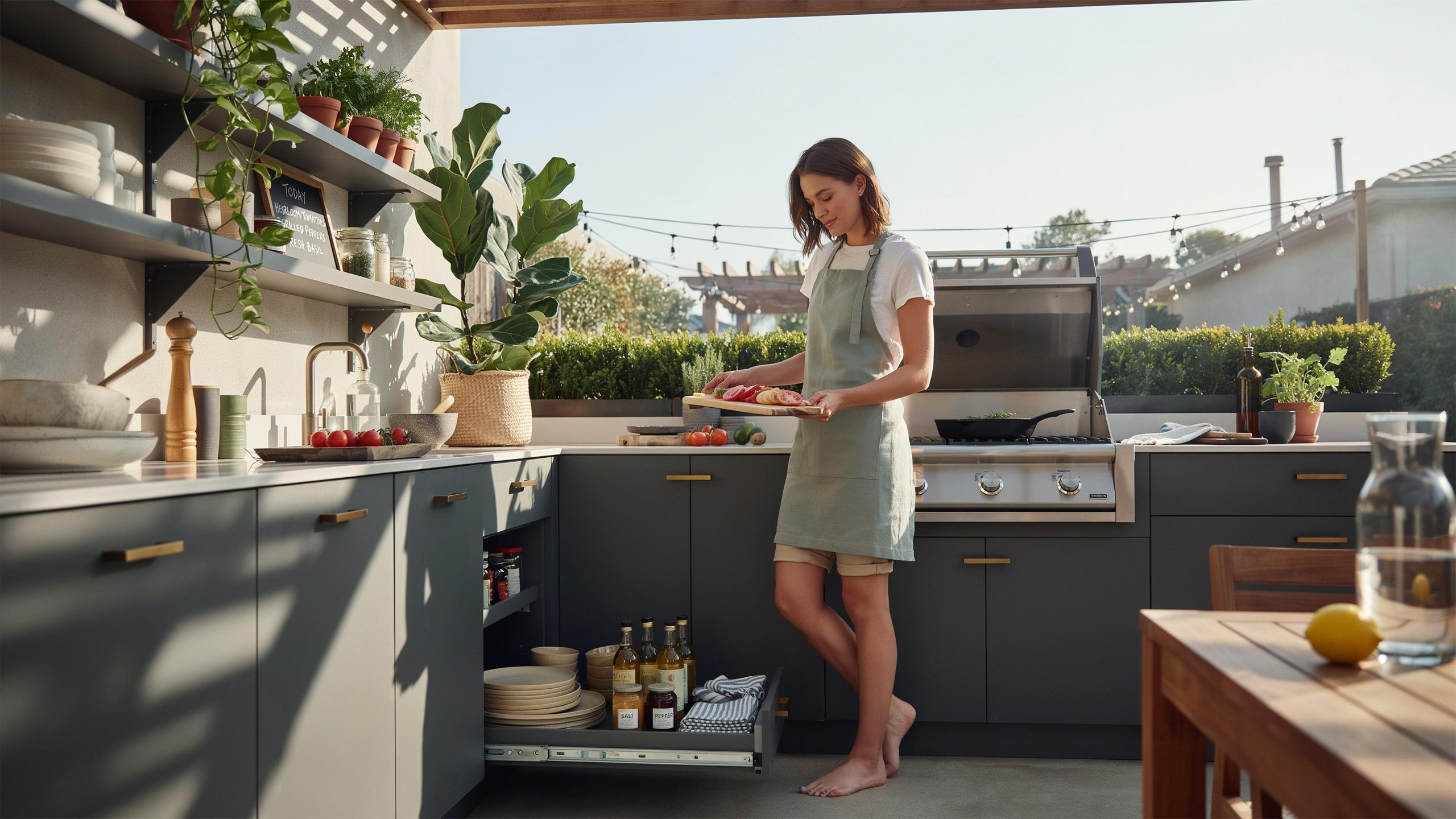
Essential Principles Of Outdoor Kitchen Organization
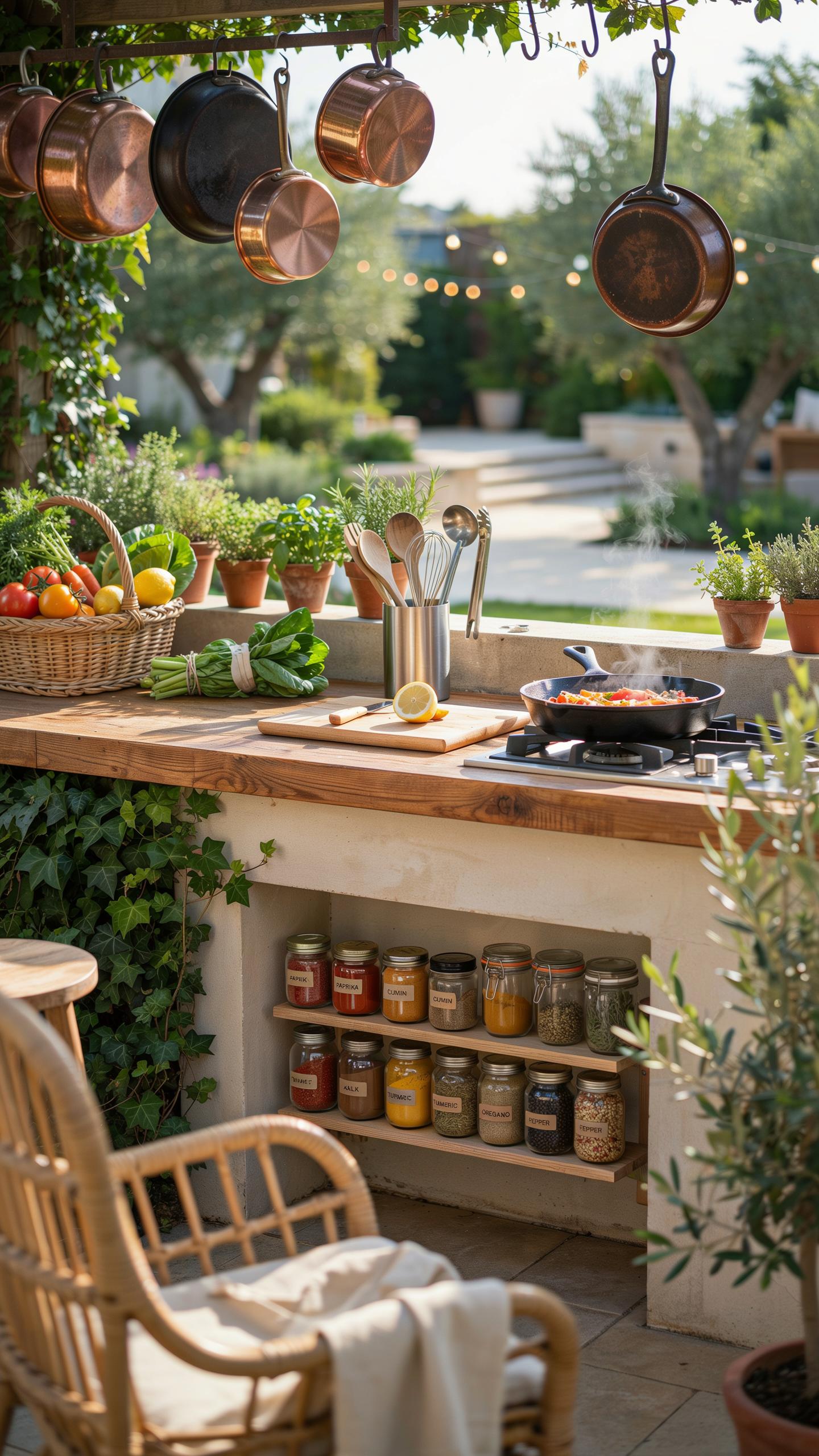
Zone Based Kitchen Layouts
Divide your outdoor kitchen into four distinct zones: hot, cold, wet, and dry. The hot zone contains your grill or cooktop. The cold zone holds your refrigerator or cooler. The wet zone includes your sink. The dry zone stores non-perishable items and tools. Positioning storage near each zone reduces movement and improves cooking efficiency.
This zoning system mirrors professional kitchen design standards. Chefs organize commercial kitchens by task to minimize wasted steps. Your outdoor kitchen functions the same way. Store grilling utensils near your grill. Place plates and serving dishes near your cold storage. Keep cleaning supplies at your sink. This approach cuts preparation time and prevents you from carrying items across your entire cooking space.
Clutter Free Countertop Strategies
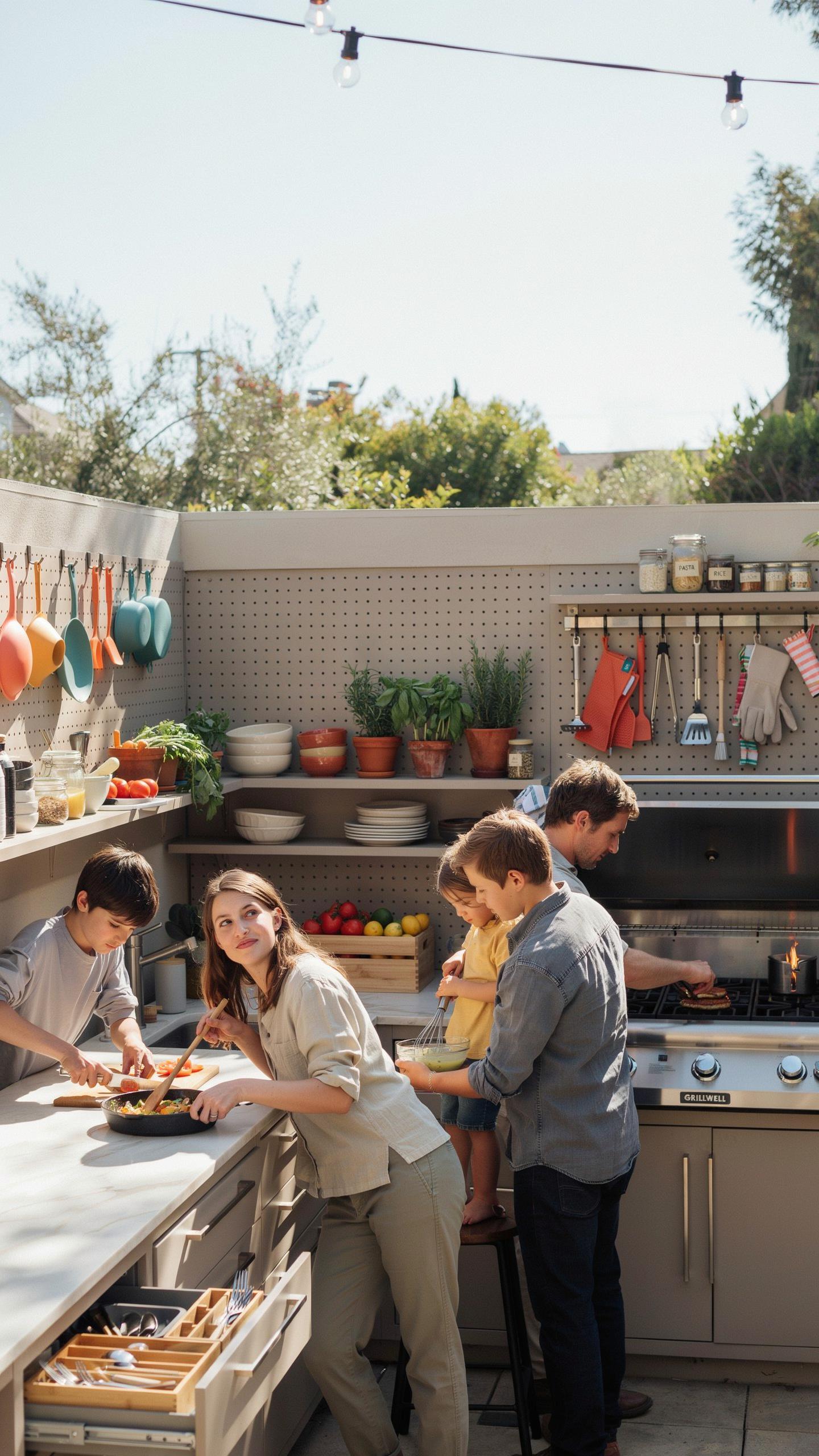
Clear countertops speed up your workflow and make your kitchen feel larger. Use vertical wall space for hanging storage. Install pegboards, magnetic strips, or wall mounted shelves above your prep area. Under counter drawers hide daily tools like tongs, spatulas, and knives. Closed storage keeps cleaning supplies and dish towels out of sight while staying accessible.
Designate specific drawer and shelf locations for each item category. This system prevents clutter from accumulating on surfaces. Your countertops become functional prep areas instead of catch all spaces. When you finish using a tool, return it immediately to its designated spot. This discipline maintains usable workspace and extends the life of your outdoor kitchen investment.
Smart Outdoor Kitchen Storage Ideas For Small Spaces
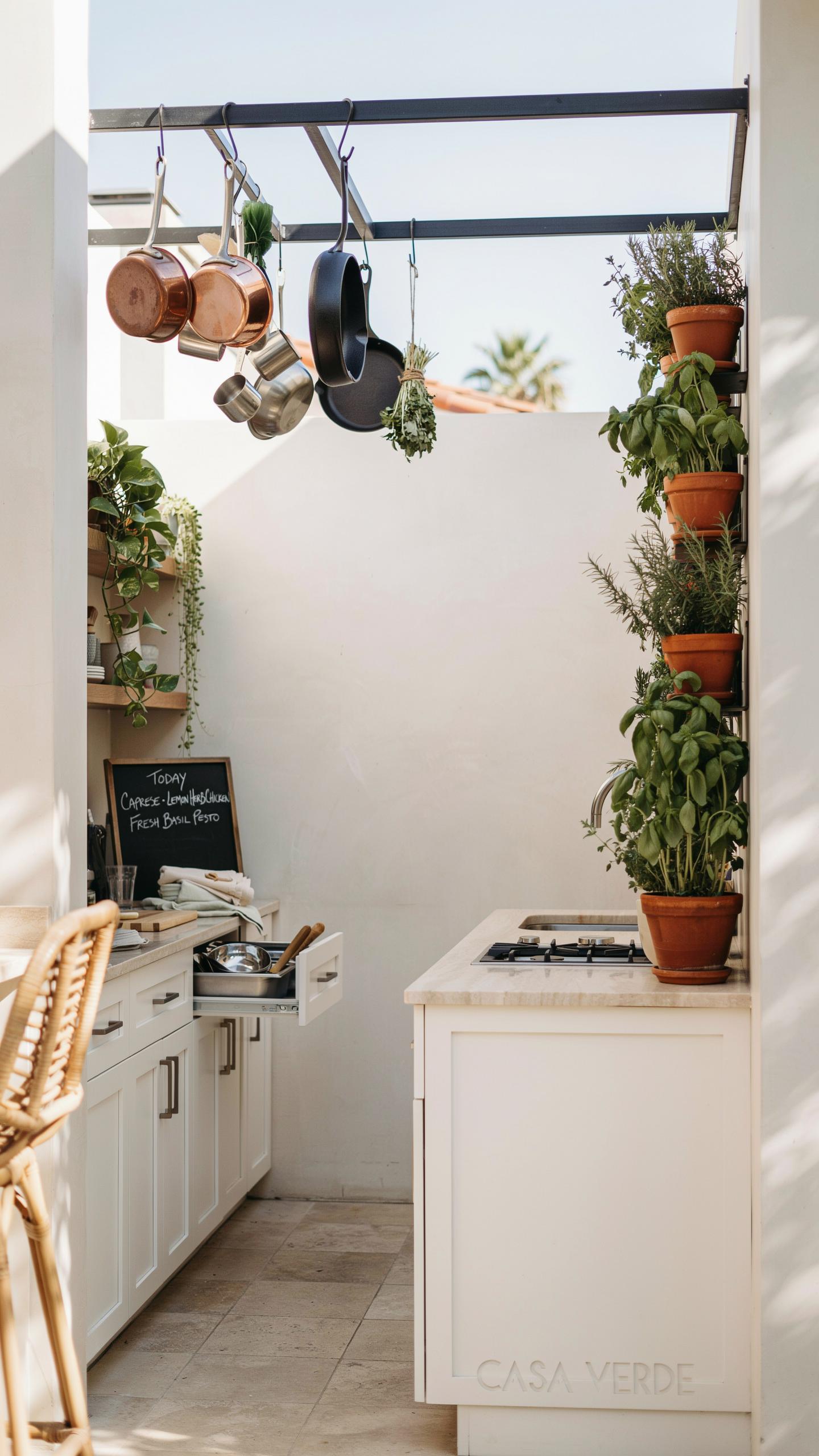
Utilizing Vertical Storage Solutions
Mount magnetic tool strips directly onto stainless steel backsplashes or wall panels. These strips hold metal utensils securely without taking up counter real estate. Pegboards offer flexibility because you reposition hooks as your tool collection changes. Wall-mounted spice racks attach to backsplashes and keep seasonings within arm’s reach during cooking.
Vertical storage multiplies usable space in compact outdoor kitchens. A six-foot backsplash with strategic mounting can hold thirty to forty items. Install strips at consistent heights for visual order and safe access. This approach works because gravity keeps items secured while you work.
Multi Functional Furniture And Pull Outs
Rolling prep carts with built-in shelves solve the storage problem without permanent installation. You move these carts to where you need them, then wheel them into a garage or storage area when entertaining ends. Pull-out trash bins mount inside cabinetry and slide out during use. This design keeps waste out of sight and maintains a clean cooking zone.
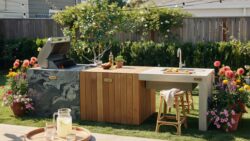
Multi-functional pieces reduce the outdoor kitchen footprint while increasing capacity. A cart with three shelves stores twice the items of a single cabinet shelf. Pull-out systems prevent spills on deck surfaces and simplify cleanup routines. These solutions work for renters and homeowners who value flexibility and mobility.
Innovative Outdoor Cabinet Ideas And Material Choices
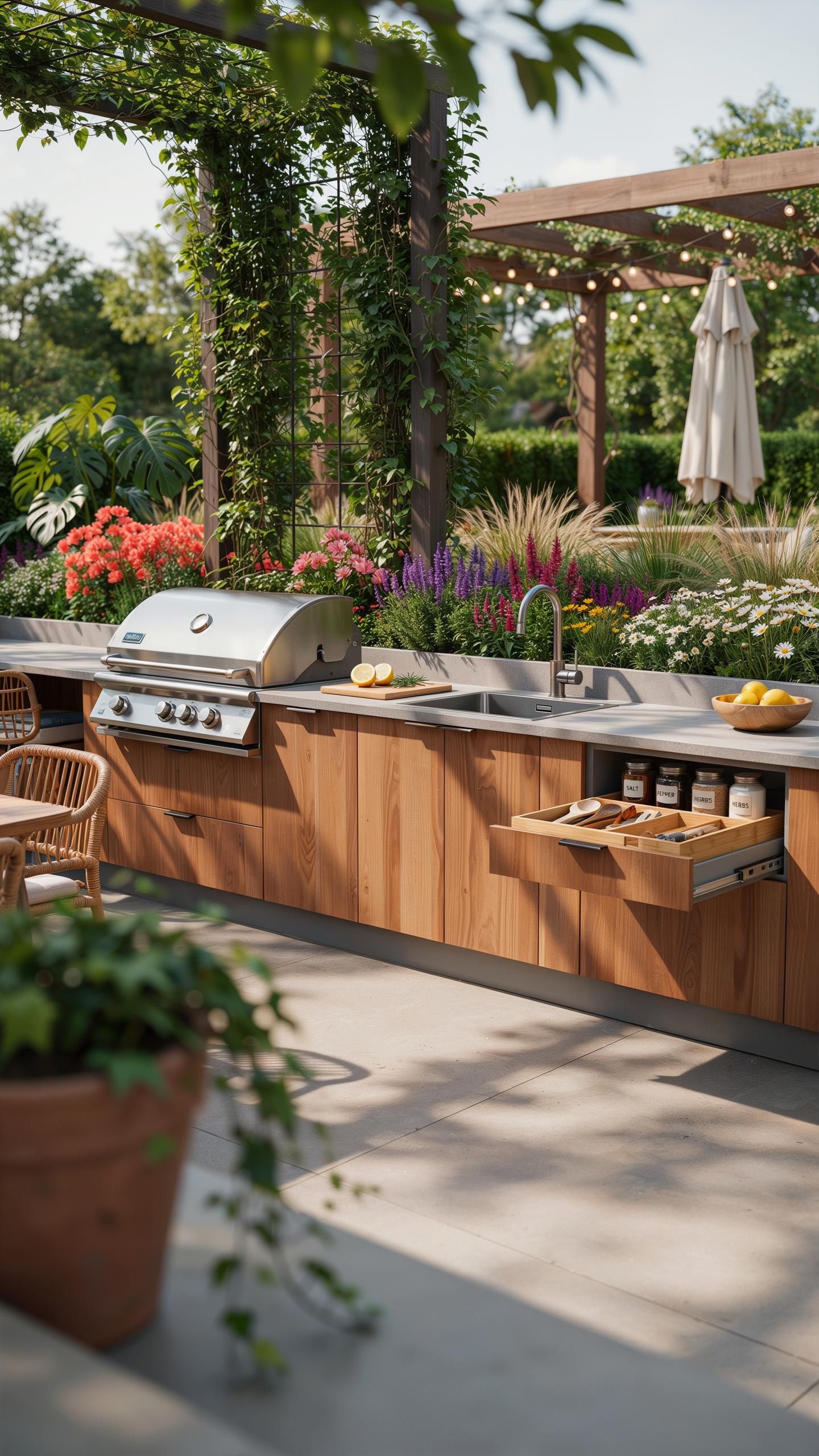
Marine Grade Polymer And HD Polyethylene
High-density polyethylene cabinets resist water infiltration where wood fails. HDPE does not absorb moisture, eliminating rot and mold that destroy traditional cabinetry. UV stabilizers built into marine-grade polymer prevent color fading and material degradation. This material maintains structural integrity across temperature swings and humidity fluctuations that damage conventional storage.
HDPE cabinets require no sealant reapplication or protective coatings. They withstand salt spray environments near coastal properties without corrosion. Cleaning involves basic soap and water with no special maintenance protocols. The material costs more upfront but eliminates replacement cycles that plague standard outdoor cabinetry over ten to fifteen years.
Stainless Steel And Masonry Options
Commercial-grade 304 stainless steel resists rust in wet environments where standard metals corrode quickly. This alloy contains chromium and nickel that form a passive oxide layer, protecting the underlying metal. Stainless steel handles temperature extremes without warping or structural failure. It supports heavy cooking equipment loads without bending or sagging over time.

Stone-veneer masonry islands provide thermal mass that regulates cooking zone temperatures. Masonry construction integrates with built-in grills and burners as permanent fixtures. Stone surfaces reflect heat rather than absorb it, keeping cabinet interiors cooler. Both materials demand upfront installation work but deliver decades of reliable performance without material replacement or refinishing cycles.
Sleek Aesthetics Modern Outdoor Kitchen Storage Trends
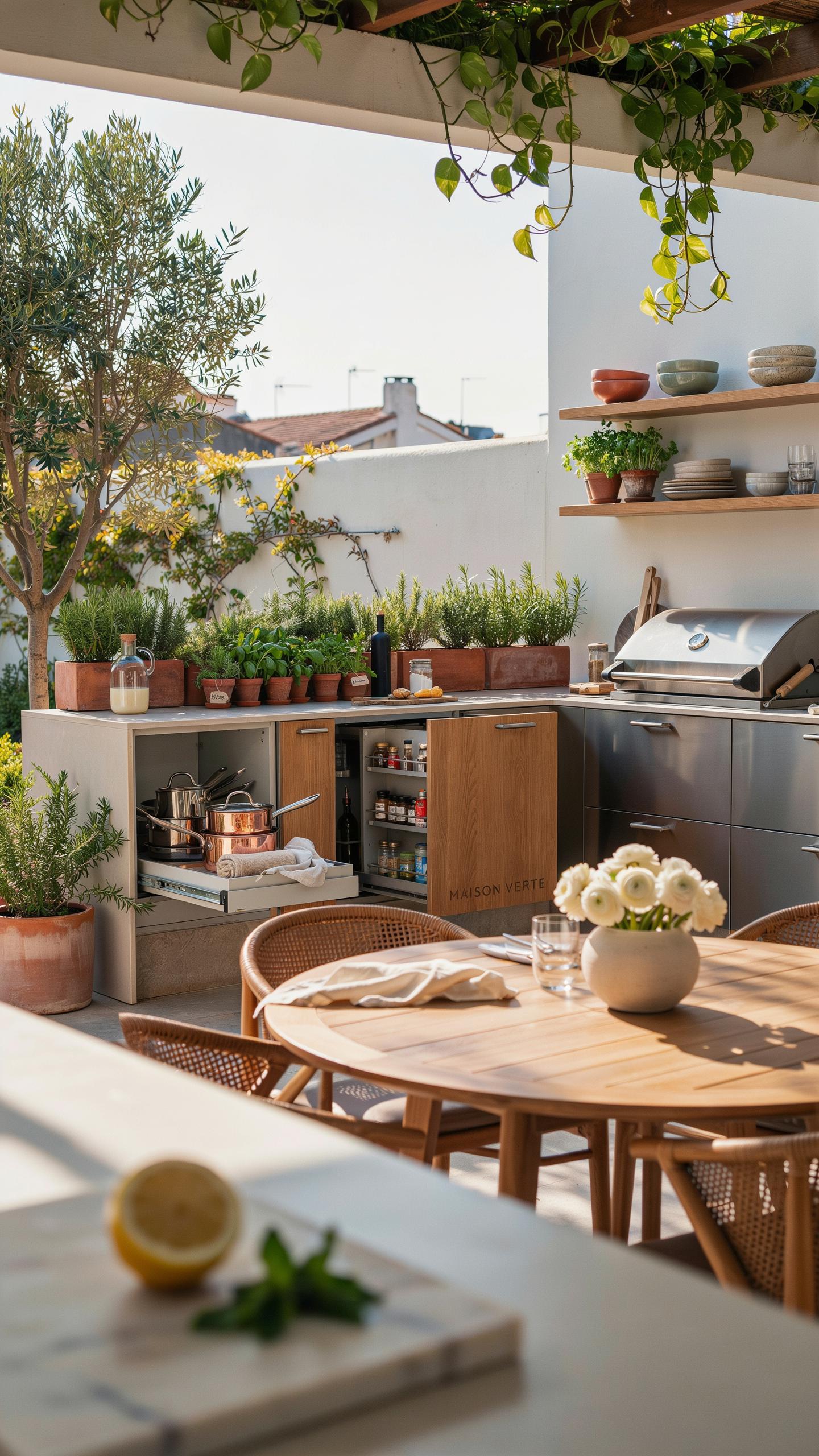
Minimalist Handleless Cabinetry
Slab-door cabinets with push-to-open latches eliminate visual clutter in outdoor kitchen spaces. This design approach removes protruding hardware that catches on clothing and collects debris. Push latches function through magnetic or spring-loaded mechanisms, allowing doors to open with finger pressure alone. The result mirrors high-end indoor kitchen design without sacrificing outdoor durability.
Handleless cabinetry works best with stainless steel or powder-coated aluminum frames that resist corrosion. These materials maintain their appearance through seasonal weather exposure. Cabinet depth and spacing matter for functionality. Ensure push latches align properly for consistent operation across multiple seasons of expansion and contraction from temperature fluctuations.
Integrated Smart Storage Lighting
Motion-activated LED strip lighting improves functionality in deep drawers and dark cabinet interiors where items become invisible during evening use. Activate lights automatically when cabinet doors open, eliminating manual switches. LED strips consume minimal power and generate negligible heat, making them safe for food storage areas. Install strips along interior perimeters for even illumination across all storage surfaces.

Quality LED strips deliver 3000 to 4000 Kelvin color temperature for accurate item visibility without harsh glare. Motion sensors require 6 to 12 inches of clearance from obstructions to detect movement reliably. Battery-powered units eliminate wiring complexity, though hardwired options provide consistent operation without maintenance. Test lighting performance during actual evening entertaining to confirm visibility matches your storage layout.
Designing A Durable Outdoor Kitchen With Cabinets
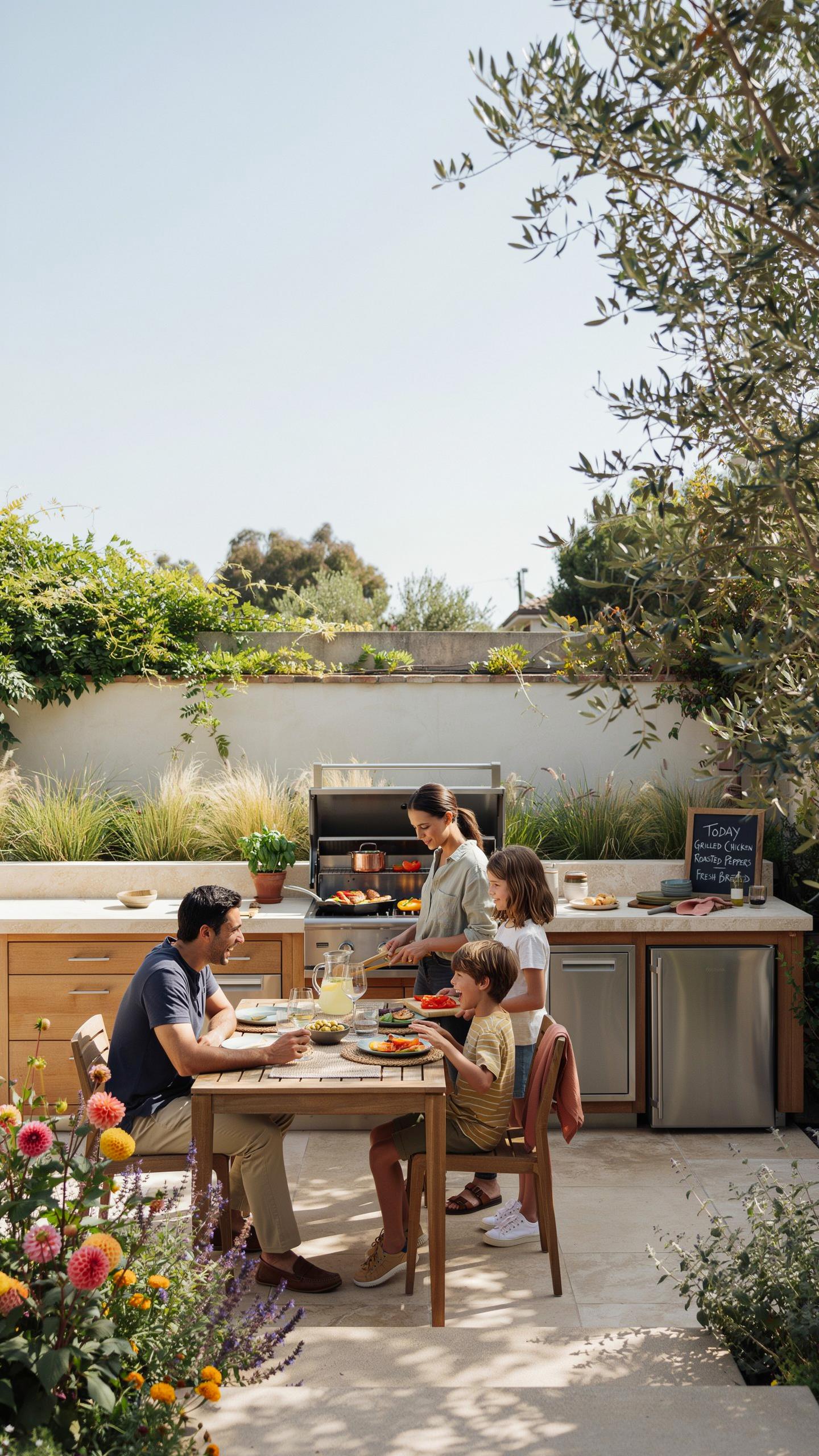
Weatherproofing And Gasket Seals
Water and debris penetration destroys outdoor cabinets from the inside out. Heavy-duty rubber gasket seals create an airtight barrier around door edges. Tight-fitting doors prevent rain, dust, pests, and pollen from entering storage compartments. This seal matters more than material choice because water finds every gap.
Install gaskets on all cabinet doors and drawer fronts without exception. Check seals quarterly for cracks, compression loss, or displacement. Replace degraded gaskets immediately to maintain protection. Proper weatherproofing extends cabinet lifespan by years and protects your tools and equipment inside.
Must Have Cabinet Hardware Specifications
Hardware fails faster than cabinet bodies in outdoor environments. Marine-grade 316 stainless steel hinges resist saltwater corrosion and hold weight reliably. Soft-close heavy-duty drawer slides prevent slamming and reduce stress on cabinet frames. Magnetic door latches keep doors secure in wind without requiring manual locks.
- Marine Grade 316 Stainless Steel Hinges: Withstand coastal conditions and UV exposure without rust. Superior to standard stainless steel grades in saltwater environments.
- Soft Close Heavy Duty Drawer Slides: Prevent slamming damage and reduce operational wear. Support maximum weight capacity for outdoor storage demands.
- Magnetic Door Latches: Secure doors in high wind conditions automatically. Eliminate mechanical latch failure points and corrosion risks.
- Corrosion Resistant Powder Coated Pulls: Handle temperature swings and moisture exposure without degrading. Choose pulls rated for marine or outdoor use specifically.
- Stainless Steel Fasteners: Replace all bolts, screws, and brackets with 316 stainless steel grade. Standard fasteners rust and weaken cabinet integrity quickly outdoors.

Invest in commercial-grade hardware rated for outdoor kitchens. Cheap hardware fails within one season and requires complete replacement. Your cabinet investment depends on hardware quality matching the cabinet durability.
Maximizing Utility In An Outdoor Kitchen With Storage Accessories
Custom Built In Drawer Organizers
Deep-drawer peg systems solve a specific problem: cast iron cookware and heavy grates shift during use, creating damage and safety hazards. Adjustable dividers let you configure compartments for your exact equipment. This approach keeps items stationary and accessible without wasting vertical or horizontal space in your outdoor kitchen layout.
Heavy cookware requires fastened positioning. Peg systems anchor cast iron to prevent sliding when you open drawers or move equipment. Dividers sized for serving plates and cooking grates mean every item has a designated spot. This method eliminates the guesswork of storage and cuts setup time before cooking.
A place for everything, and everything in its place, is the secret to a home that breathes with ease. These thoughtful corners turn a simple backyard into a sanctuary where every meal feels like a cherished memory.
Dry Pantry Storage Inserts
Ambient humidity degrades spices and corrodes paper goods in outdoor environments. Sealed, airtight metal storage units create a controlled microclimate within your stone island. These inserts maintain dryness by blocking moisture infiltration while keeping contents visible and organized.
Metal construction reflects heat rather than absorbing it, which protects contents from temperature swings common in outdoor spaces. Integrating these units into your stone island creates a unified appearance while preserving food quality. Position them away from direct sun exposure and water splash zones for maximum effectiveness.
Creative Outdoor Kitchen Cupboard Ideas For Style And Function
Frosted Glass And Open Shelving Styles
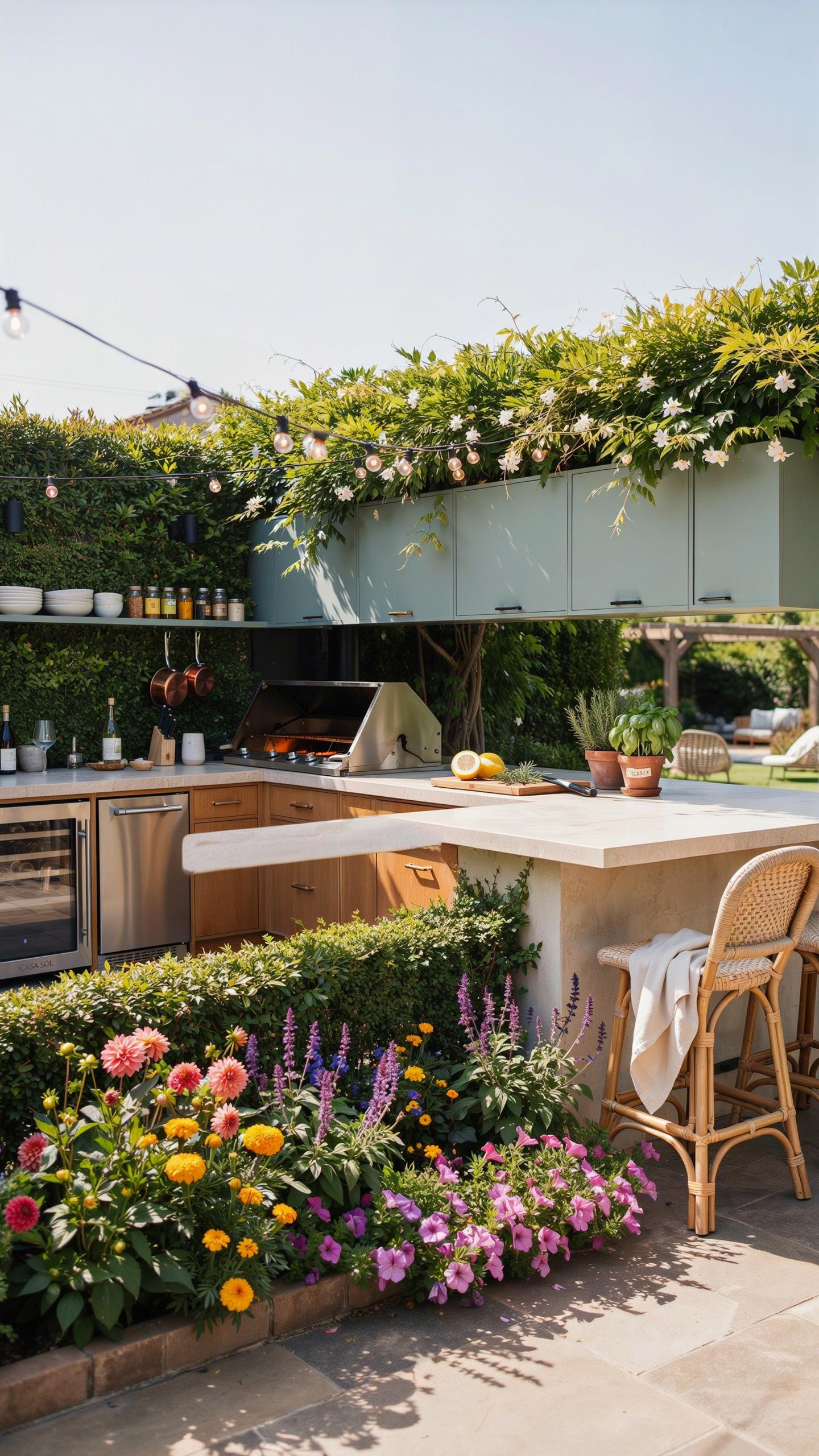
Frosted tempered glass cabinet fronts serve a dual purpose in outdoor kitchens. They conceal less attractive items while allowing you to display quality glassware and dishware. This approach breaks up the visual weight of solid cabinetry and creates depth without sacrificing weather protection for stored goods.
Open concrete shelving works alongside closed storage to balance your design. Concrete withstands temperature swings and UV exposure better than many materials. Pair open shelves with frosted glass doors on lower cabinets to maximize both display potential and protected storage in a single layout.
Corner Cupboard Space Optimization
Blind corner pull out trays transform wasted corner space into functional storage. These trays slide out on tracks, giving you full access to items at the back of L shaped or U shaped islands. Install them at standard heights to reach items without bending or reaching awkwardly into deep spaces.

Lazy susans fit corner cabinets and rotate to bring items forward. They eliminate the dead zone that typically forms in corner storage. Pair them with doors that open at ninety degrees for maximum accessibility and quick item retrieval during food prep or entertaining.
Optimizing Your Outdoor Bbq Area And Grill Station
Essential Accessories For The Grill Zone
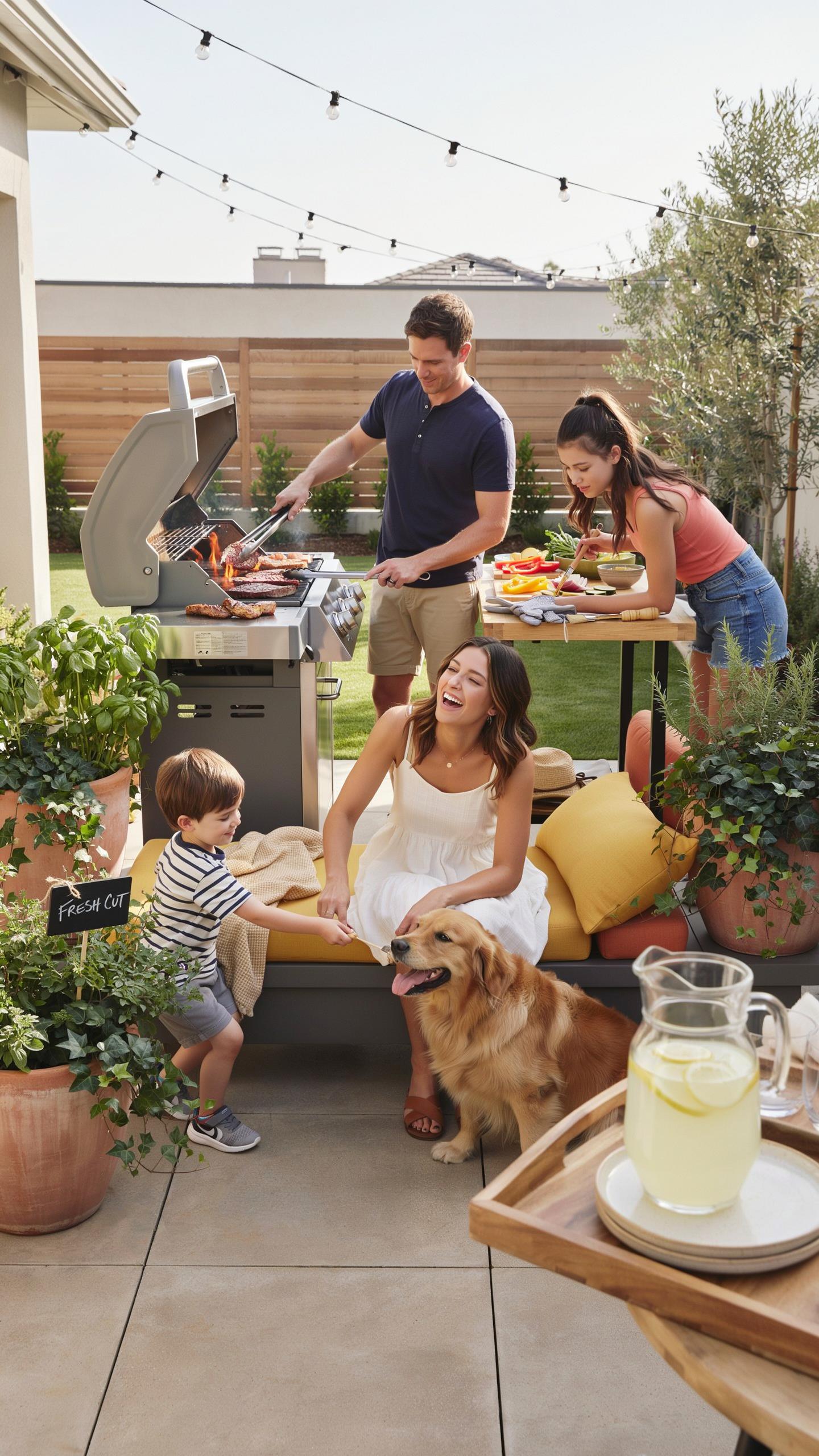
Keep your grilling zone running without interruption. Organize accessories so you grab them without leaving your station. This reduces cooking time and prevents food from overcooking while you search for tools. Efficiency means better results and less wasted effort during service.
- Extra propane tanks or natural gas line access valves: Store backup tanks in a dedicated cabinet away from direct heat. Check regulators monthly for leaks using soapy water to detect gas escape.
- Heavy duty brass grill brushes: Mount on wall hooks or magnetic strips near the grill. Replace every 2 to 3 seasons when bristles wear down from regular use.
- Long handled turning tongs and spatulas: Use a magnetic strip or utensil holder mounted on the grill frame. Stainless steel handles resist corrosion better than aluminum in humid climates.
- Wood chips for smoking: Store in airtight containers in a cool, dry cabinet. Keep oak, hickory, and fruit wood types separate for easy selection during prep.
- Heat resistant silicone oven mitts: Hang on carabiners attached to the grill frame or nearby hooks. Silicone withstands 500 degrees Fahrenheit and cleans faster than fabric alternatives.
Position these items within 18 inches of your grill. You work faster when everything sits within arm’s reach. This layout cuts down on unnecessary movement and keeps your focus on the food.
Integrated Trash And Recycling Chutes
Install pull out bins directly beneath your prep surface or grill counter. Position them close to where you trim meat, prepare vegetables, or discard spent charcoal. This setup eliminates the need to carry waste across your outdoor space.

Chutes work best when installed at a 45 degree angle into bins below. Size your bins based on cooking frequency and guest volume. A two bin system handles one trash stream and one recycling stream without forcing you to sort waste after each gathering.
Frequently Asked Questions

Why is specialized storage so important for an outdoor kitchen?
Proper planning is essential because your backyard environment is much harsher than your indoor kitchen. Investing in high-quality outdoor kitchen design storage solutions ensures that your cooking tools, linens, and fuel sources remain dry and free from pests. By using weather-resistant cabinetry and sealed gaskets, you protect your investment from moisture and rust, creating a functional, organized cooking space that lasts for years despite exposure to the elements.
How can I maximize organization within my new outdoor kitchen cabinets?
To optimize your space, use a mix of deep pull-out drawers for bulky pots and slim vertical dividers for baking sheets or grilling planks. Integrating clever outdoor kitchen design storage solutions like magnetic tool strips and adjustable shelving allows you to customize the layout based on your specific needs. Grouping items by task—such as a dedicated cleaning zone or a grilling station—streamlines your workflow and keeps high-traffic areas clutter-free.
Are there any budget-friendly ways to add storage if I cannot afford custom cabinetry?
Absolutely! You can enhance your setup without a full renovation by using freestanding weather-proof rolling carts or stainless steel utility shelving. Incorporating heavy-duty plastic bins inside existing structures or adding wall-mounted hooks for utensils can provide excellent organization on a budget. These accessible alternatives offer flexibility and allow you to expand your storage capacity incrementally as your needs grow, proving that sophisticated design doesn’t always require a massive investment.