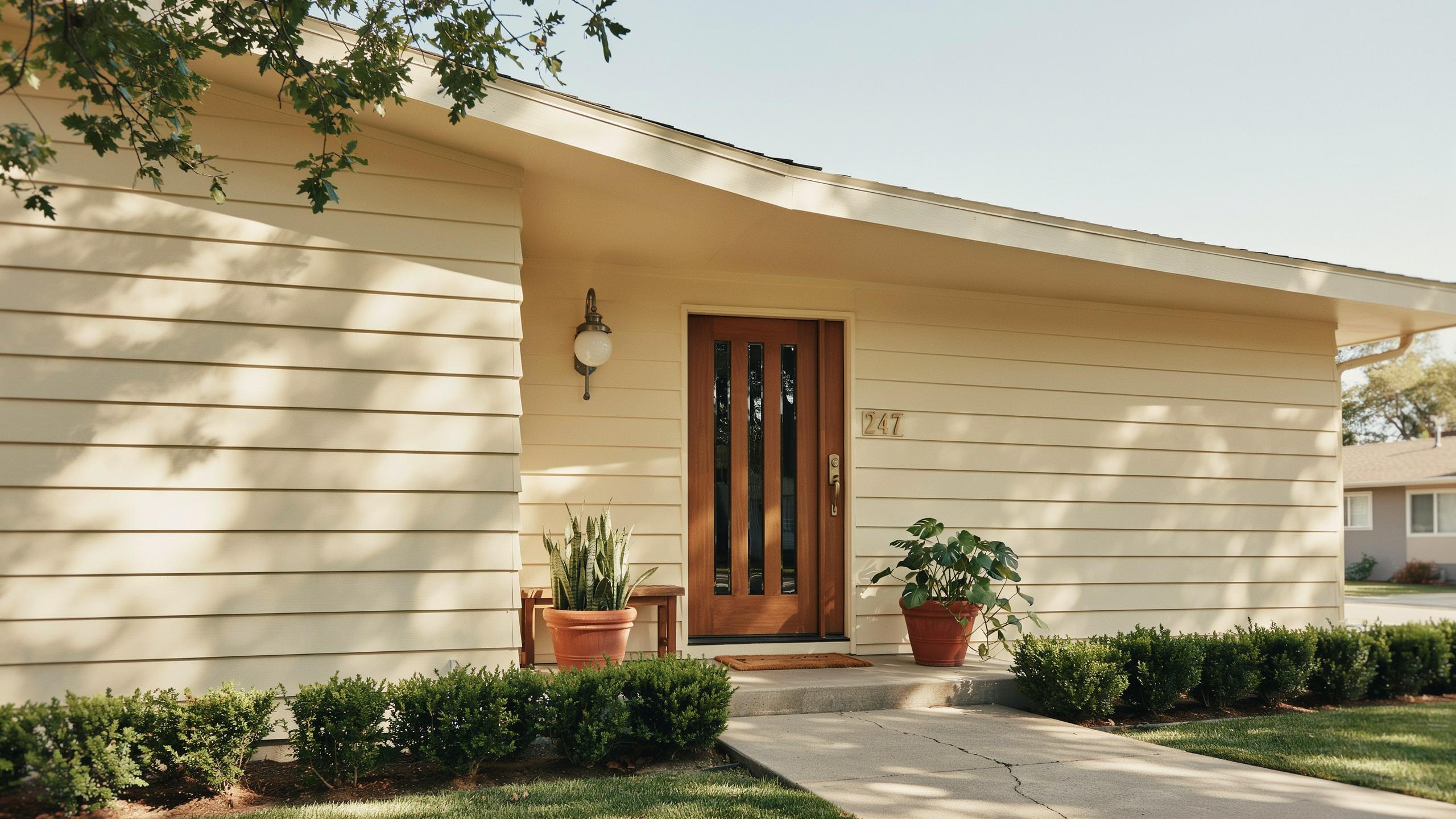
Understanding Mid Century Modern Door Styles And Aesthetics
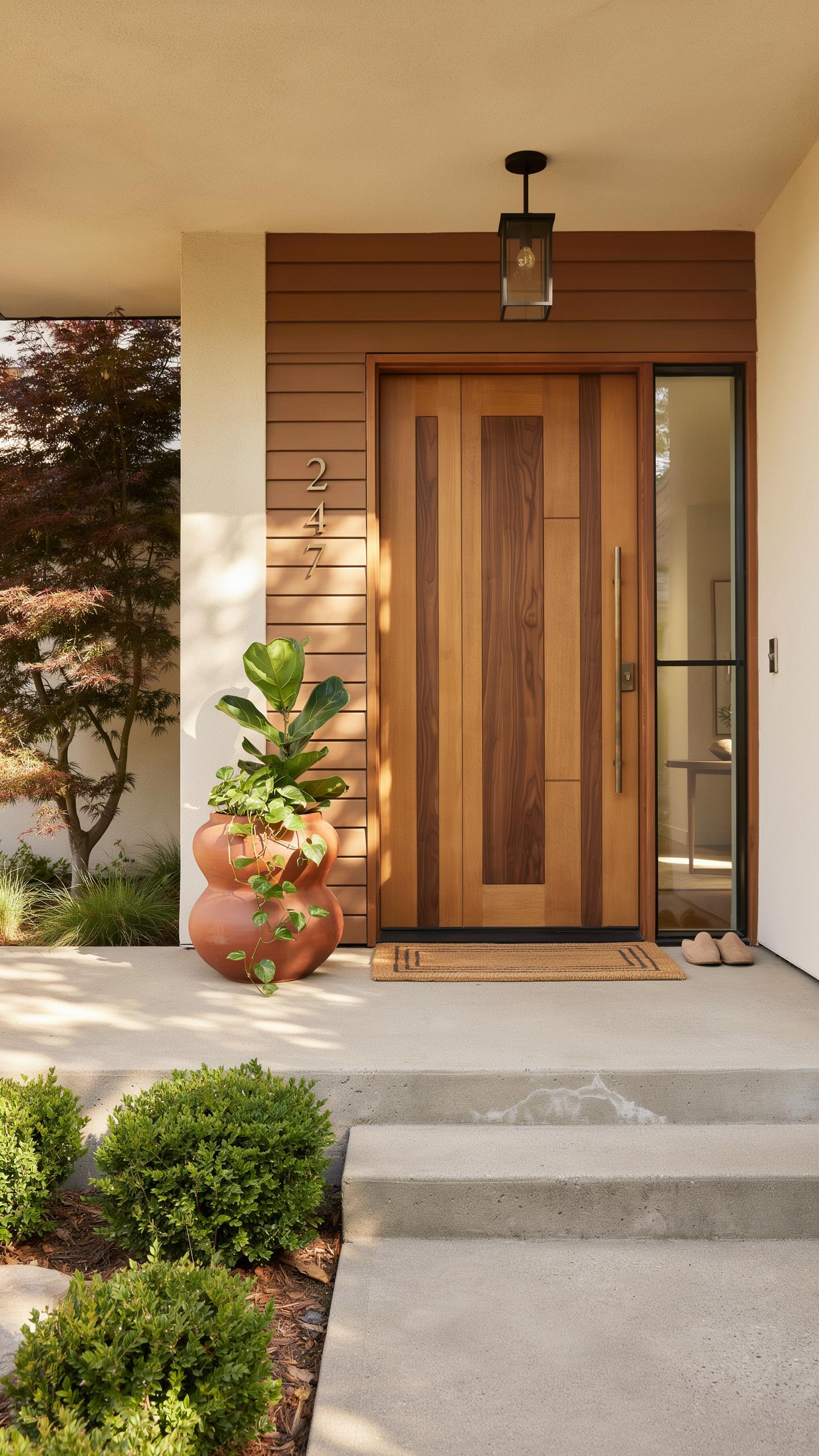
Definition Of Mid Century Architecture
Mid-century modern design emerged from the mid-1930s through the mid-1960s. The movement prioritized clean lines, geometric forms, and honest material expression. Doors functioned as intentional design elements that dissolved boundaries between interior and exterior spaces. They rejected historical ornamentation in favor of structural clarity and purposeful simplicity.
Exterior doors became transition points rather than mere barriers. Designers integrated them into the overall home composition through proportional relationships and material continuity. The style reflected post-war optimism and industrial manufacturing capabilities. Natural materials like wood remained central, but fabrication methods emphasized precision and repeatability over hand-craftsmanship.
Key Architectural Characteristics
Authentic mid-century entryways feature flat panels without raised or recessed details. Asymmetrical window configurations replaced symmetrical patterns common to traditional doors. Wood grain runs horizontally or vertically as a design element, never as applied decoration. Construction emphasizes visible joinery and structural logic over applied ornamentation or applied trim.
These doors typically measure eight feet tall and three feet wide, maintaining human scale proportions. Hardware appears minimal and functional, often flush-mounted to preserve clean surfaces. Glazing patterns use rectangular lites arranged in geometric grids rather than curved or diamond shapes. Material choices favor solid wood, steel frames, or aluminum, selected for durability and maintenance efficiency rather than visual richness.

Choosing The Ideal Mid Century Modern Front Doors On A Budget
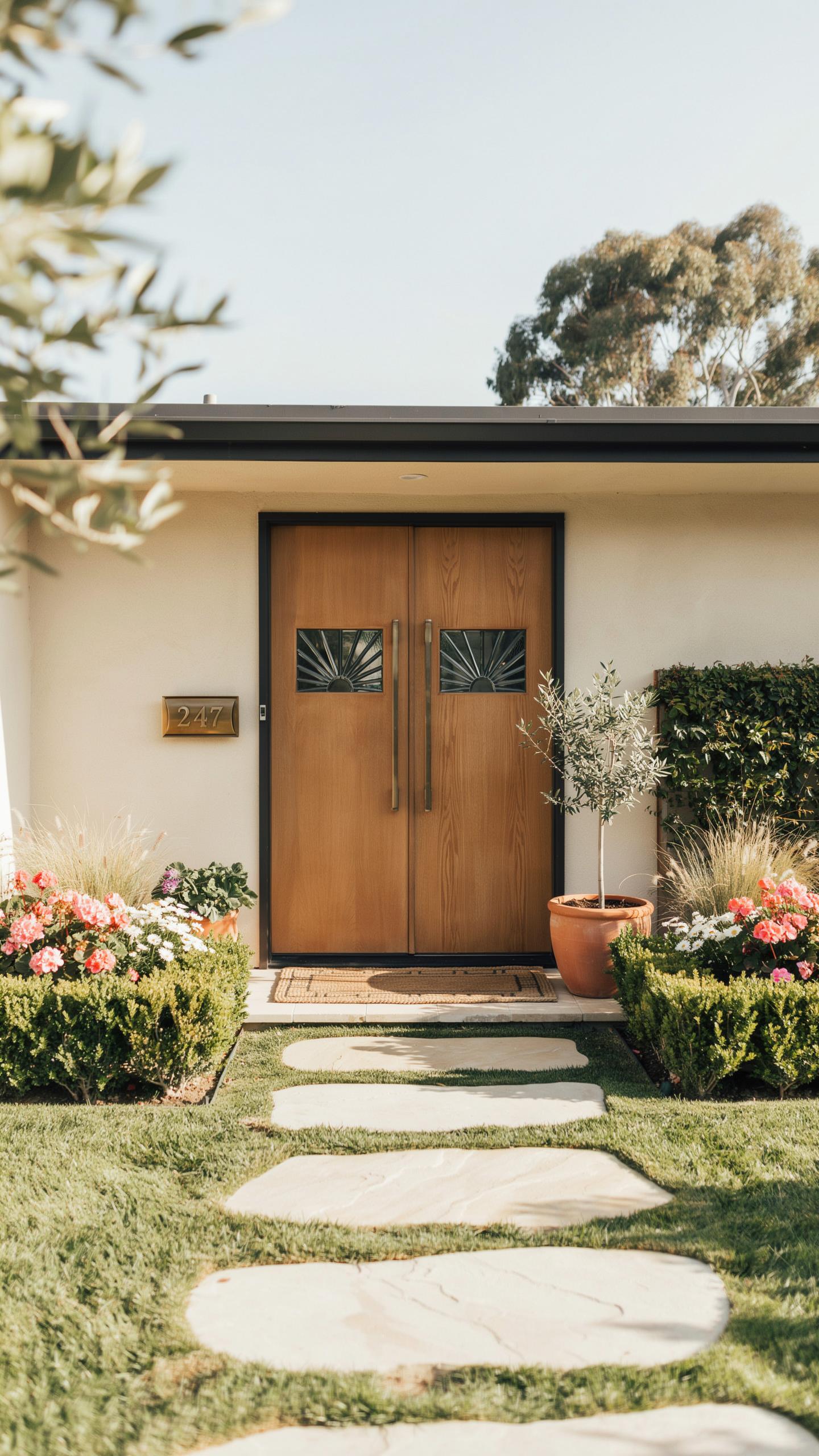
Affordable Material Alternatives
Solid wood doors dominated mid century design, but cost and maintenance make them impractical for budget projects. Engineered wood delivers the authentic mid century aesthetic at half the price. These doors use a plywood or hardboard core with a wood veneer exterior, matching the flat planes and clean lines that define the era. They resist warping better than solid wood and require less ongoing maintenance.
Fiberglass and steel doors offer the best value for durability and energy efficiency. Steel doors accept paint finishes that replicate mid century colors and hardware mountings without the expense of solid wood. Fiberglass mimics wood grain when painted and provides superior insulation. Both materials accommodate the minimalist hardware and geometric door designs central to mid century architecture. Installation costs remain identical across all three materials, making the material choice purely about upfront expense and long term maintenance.
Smart Sourcing Strategies
Architectural salvage yards stock genuine mid century doors at prices 40 to 60 percent below new retail. Homeowners replacing doors during renovations often sell quality vintage pieces through these channels. Online marketplaces and local surplus stores regularly list original mid century doors with authentic hardware intact. Search specifically for doors from the 1945 to 1970 period when mid century design dominated residential construction. Time spent sourcing beats budget spent on new reproductions.
Inspect salvage doors for structural integrity before purchase. Check for solid cores, functional hardware, and paint or finish condition. Doors with minor surface wear are acceptable since mid century design tolerates honest aging. Transport presents logistical challenges with salvage pieces, so factor shipping or local pickup into your budget calculation. Authentic vintage doors require minimal restoration to achieve period-accurate results.
Popular Mid Century Modern Door Styles For Every Budget
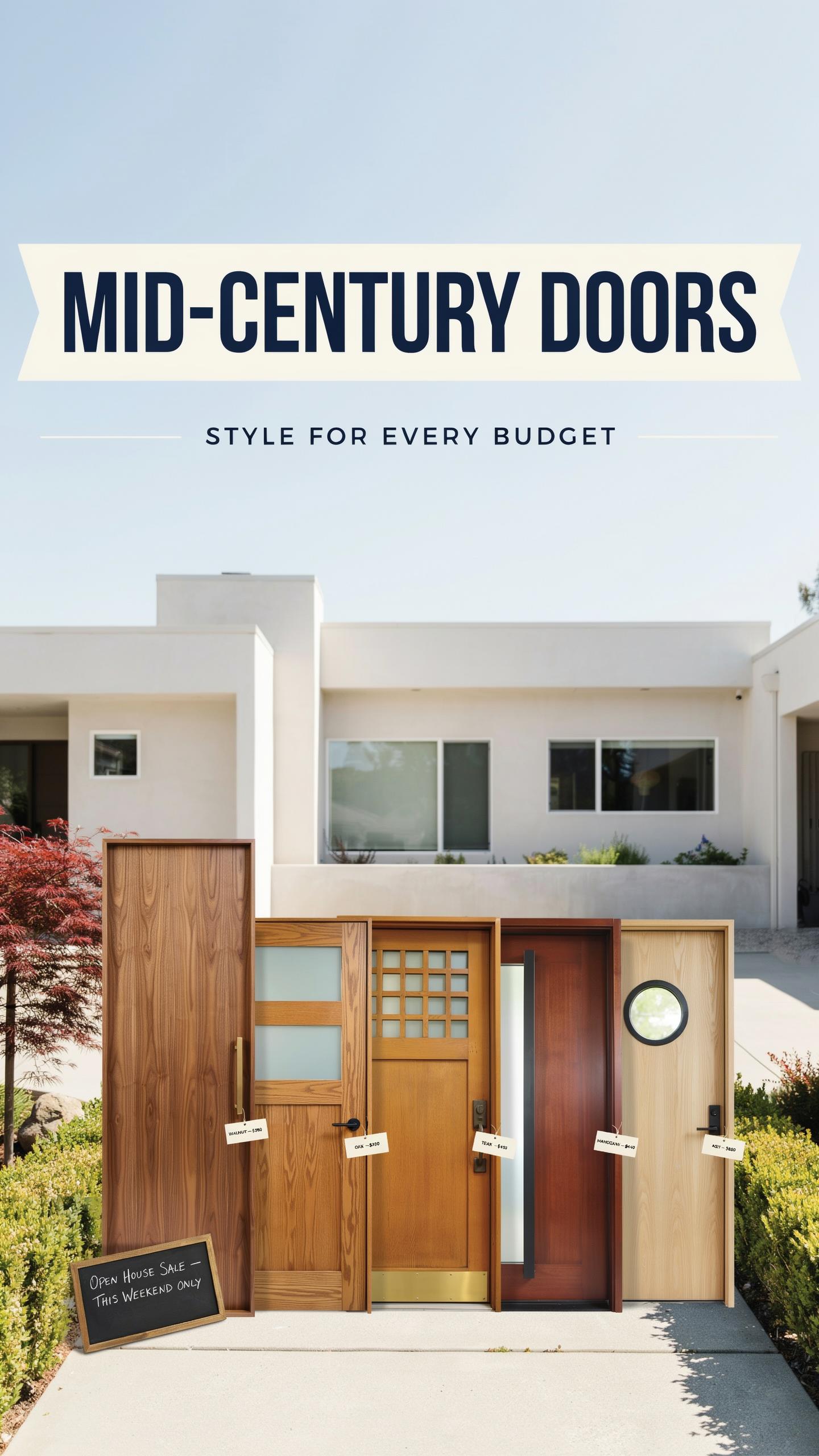
The Flush Panel Door With Geometric Cutouts
The flush panel door features a flat, unbroken surface interrupted only by geometric window cutouts. Small rectangular or circular panes stack vertically or horizontally across the upper portion. This design emerged during the 1950s as manufacturers perfected flat-panel construction. The configuration balances light penetration with sightline privacy at eye level.
Flush panel doors cost less than multi-panel alternatives because they require fewer joinery points and materials. The geometric cutouts define the aesthetic without adding construction complexity. You source these doors through standard lumber suppliers or salvage yards at competitive prices. This style pairs effectively with modern siding materials like horizontal wood or fiber cement.
The Bold Five Panel Horizontal Design
The five panel horizontal door divides the door surface into five distinct sections using horizontal muntins or recessed panels. Four panels typically occupy the upper half, while one larger panel anchors the bottom. This configuration became standard on ranch homes between the 1950s and 1970s. The horizontal emphasis visually widens narrow entryways and complements low pitched rooflines common in mid century design.
Five panel doors remain widely available through home centers and door manufacturers at reasonable price points. Horizontal glass panes in the upper panels admit light while lower solid sections provide security and durability. The design accommodates standard frame sizes without custom modifications. Install this style with simple hinges and basic hardware to maintain authentic mid century proportions and keep project costs down.
Creating A DIY Mid Century Door On A Dime
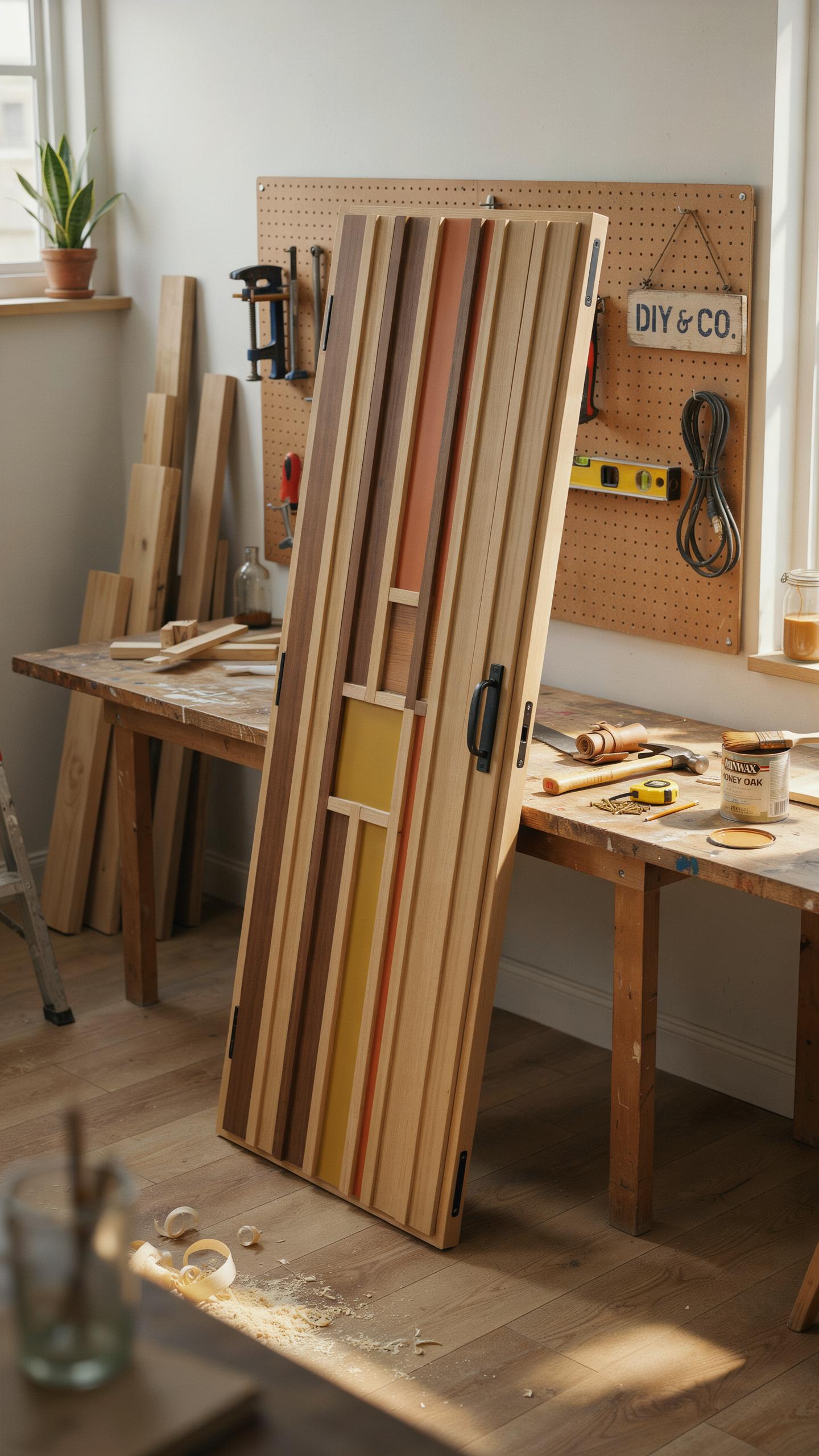
Step By Step DIY Retrofitting Process
Start with a standard flat slab door as your base. Measure and mark geometric panel layouts on the door face using painter’s tape. Cut wood trim to size with a miter saw, creating clean 45-degree angles at corners. Apply outdoor-grade wood glue to trim backs and secure with finishing nails.
- Measure twice, cut once: Accurate measurements prevent wasted materials and ensure panels align properly with door proportions.
- Miter corners at 45 degrees: This angle creates the clean, professional appearance characteristic of mid-century design.
- Use painter’s tape as guides: Tape helps you visualize panel layouts before committing to permanent changes.
- Sand all trim edges: Smooth edges prevent splinters and allow paint to adhere evenly across surfaces.
- Prime before painting: Primer seals wood grain and ensures exterior paint adheres properly to trim and door surfaces.
Paint the door and trim with outdoor-grade paint in colors typical to the era: solid neutrals, soft pastels, or contrasting trim tones. Allow full cure time between coats. Mid-century doors typically featured one or two accent colors rather than multiple contrasting panels.
Good design belongs to everyone, and a simple coat of paint or a sleek backplate can honor the soul of a classic home without breaking the bank.
Essential Materials And Tools For The Project
Gather supplies before starting work. You need a flat hollow core or solid core slab door, decorative wood trim casing in 1×2 or 1×3 dimensions, outdoor grade wood glue, painter’s tape, a miter saw, weather resistant exterior paint, primer, finishing nails, and a hammer or nail gun.
- Flat slab door: Hollow core costs less but solid core provides better durability and sound dampening for exterior applications.
- Wood trim casing: Select pine or cedar for affordability. Hardwoods cost more but resist weather better over time.
- Outdoor grade wood glue: Standard wood glue fails in wet conditions. Waterproof formulas withstand rain and temperature swings.
- Miter saw: Essential for cutting 45-degree angles. A hand miter box works for budget projects but cuts slower.
- Exterior paint and primer: Choose products rated for direct-to-wood application to skip additional prep steps.
Invest in quality exterior paint rated for your climate zone. Poor paint fails in two to three years, forcing repainting. Weather-resistant formulas last five to seven years minimum. This upfront cost saves money on maintenance over time.
Selecting The Perfect Midcentury Front Door Paint Colors
Iconic Mid Century Paint Palettes
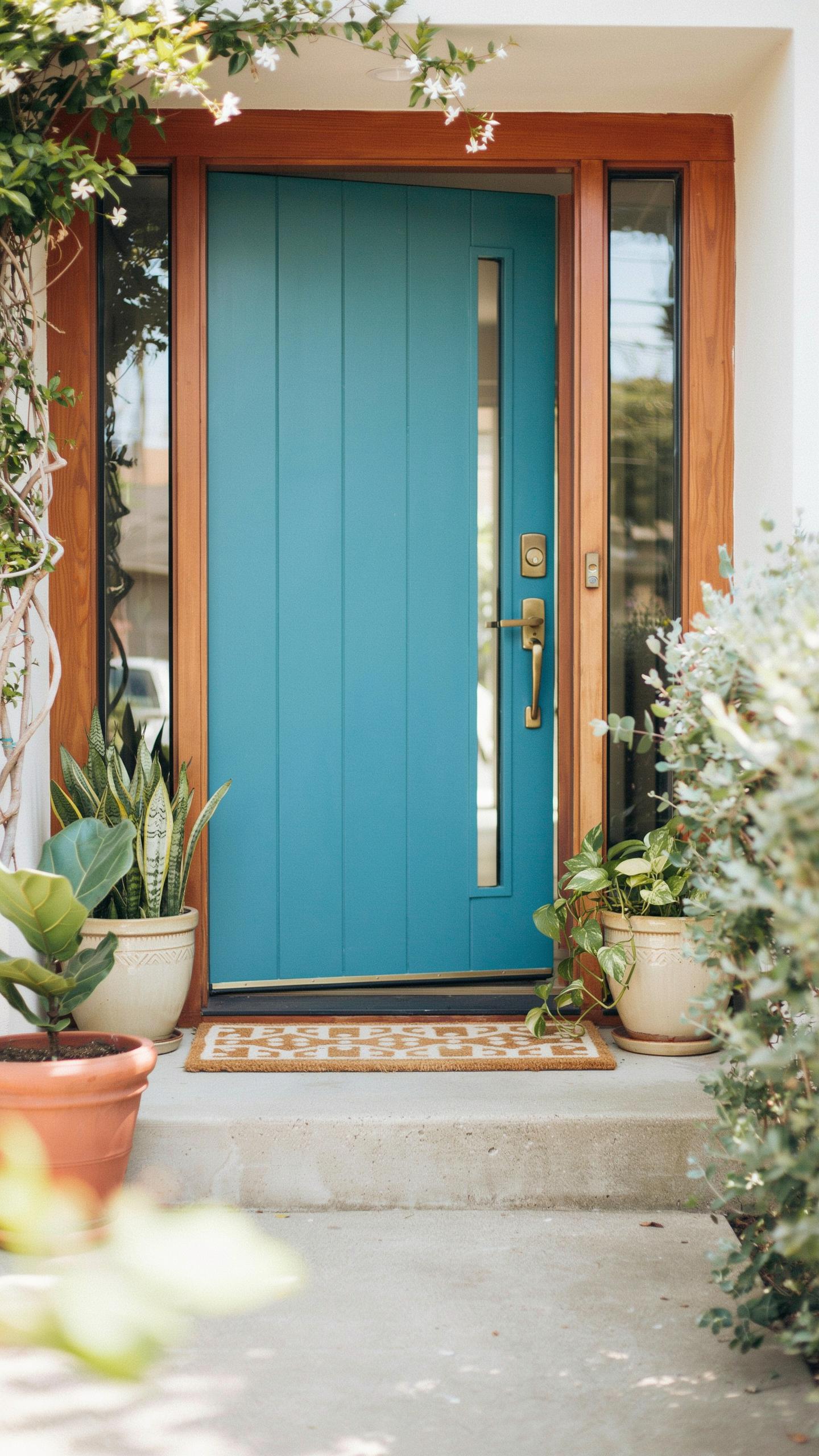
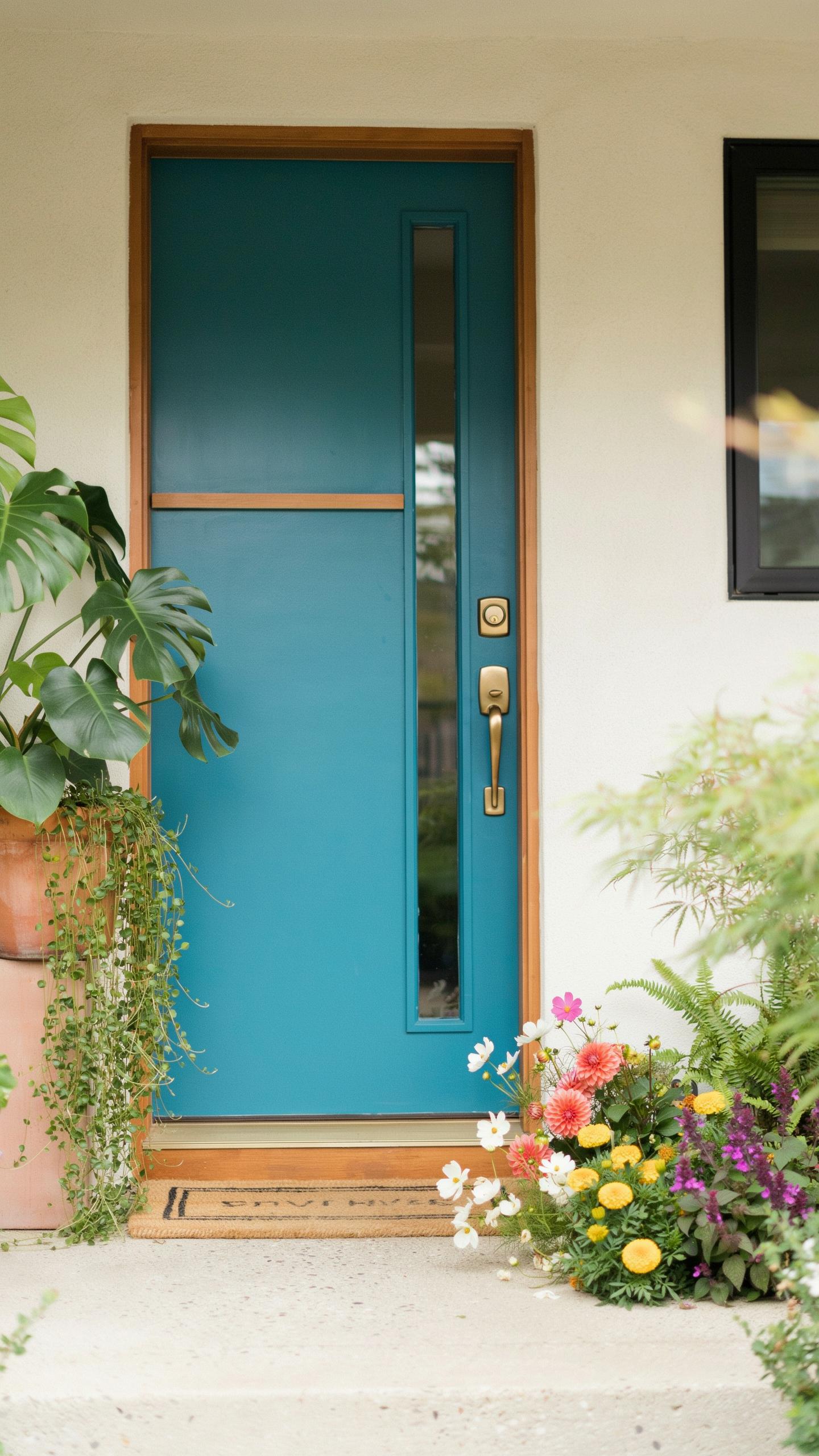
Mid-century designers used front doors as bold statement pieces. Turquoise, pumpkin orange, mustard yellow, and chartreuse dominated the era. These colors worked against neutral backdrops like charcoal gray or off-white siding. The contrast created visual hierarchy and drew attention to the entry point. Color choice directly reflected the modernist principle of intentional design decisions.
The psychology behind these color selections was practical. Bright hues signaled optimism and forward thinking, values central to mid-century culture. Homeowners chose these colors deliberately, not by accident. Against muted siding, vibrant door colors became functional design elements that improved curb appeal and wayfinding. This approach remains budget-friendly because paint is the cheapest way to transform a door’s impact.
Choosing The Right Exterior Paint Finish
Semi-gloss and satin sheens outperform other finishes on exterior doors. Semi-gloss provides maximum durability and scuff resistance. Satin offers similar protection with slightly less shine. Both finishes shed water effectively and resist weather damage. They highlight the clean geometric planes of mid-century door frames without creating harsh glare that flat or high-gloss finishes produce.
Paint sheen affects how your door ages. Semi-gloss and satin finishes show fewer dust particles and dirt accumulation than flat paint. They require less frequent repainting and hold color accuracy longer. Choose semi-gloss for maximum protection in harsh climates. Choose satin for moderate climates where you want protection with reduced reflectivity. Either option costs the same as lower-quality finishes.
Designing An Eye Catching Mid Century Modern Front Door Entrance
Framing The Entryway With Landscaping
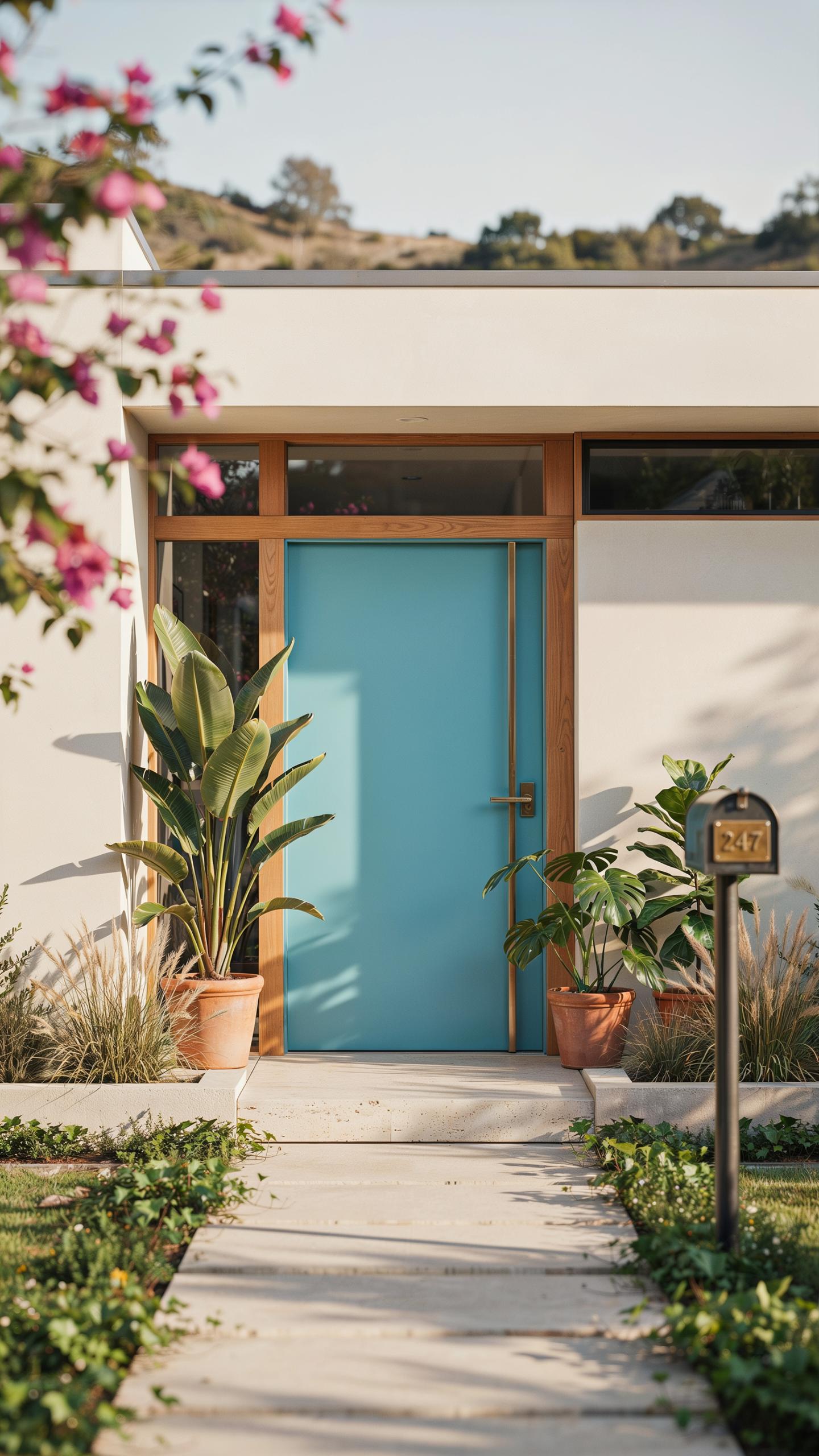
Mid century design demands restraint in plant selection. Choose structural plants that hold their form year round without excessive pruning. Ornamental grasses, snake plants, and structural ferns work because they provide clean lines and geometric interest. Avoid flowering shrubs and dense plantings that contradict the movement’s minimalist principles and clutter the entry composition.
Container choice matters as much as plant selection. Use concrete planters, metal boxes, or simple ceramic vessels in neutral tones. Mount them symmetrically on either side of the door to reinforce the geometric balance central to mid century architecture. This approach costs less than complex landscaping while delivering authentic period accuracy and immediate visual impact at your entry.
Selecting Period Correct House Numbers
Install house numbers in sans serif typefaces like Helvetica or similar clean, geometric fonts from the mid century era. These fonts align directly with the design movement’s rejection of ornamental serif styles. Mount numbers horizontally or vertically on a simple wood plaque positioned adjacent to your door. The plaque material should echo your door’s wood tone or complement your entry’s color palette without introducing visual noise.
Proper placement strengthens overall entry composition. Position numbers at eye level, roughly 48 to 60 inches from ground to plaque center. Keep the plaque finish simple: natural wood, painted solid colors, or subtle stain that matches your door or trim. This tactical approach costs under 100 dollars while completing the geometric logic of mid century modern entry design and improving practical wayfinding.
Upgrading Hardware And Accessories For A Midcentury Modern Front Doors Look
Finding Retro Escutcheons And Handlesets
Hardware defines your door’s visual impact. Vertical pull bars and starburst backplates deliver authentic midcentury character. Satin brass, brushed chrome, and matte black finishes match the period’s material palette. These hardware styles replace generic modern handles and transform basic doors into design statements. Source from reproduction manufacturers or salvage yards specializing in vintage architectural pieces.
Escutcheon quality matters because poor hardware undermines solid doors. Look for weighted metal construction, not hollow stamped pieces. Proper installation requires drilling precise holes and using quality fasteners. Misaligned hardware looks cheap and breaks functionality. Measure your door thickness before ordering to ensure components fit correctly.
Modern Security Meets Vintage Styling
Contemporary smart deadbolts and period hardware work together. Choose brass handlesets with clean lines paired with rectangular profile keyless entry systems. Modern technology hides inside vintage casings. This approach maintains aesthetic integrity while adding convenience and security. Many smart lock brands offer finishes that complement midcentury hardware styles.
Blending eras requires intentional product selection, not accidental mixing. Test smart locks before purchase to confirm they mount under vintage plates without gaps or exposed screws. Install the smart lock on the interior side while keeping visible hardware period-appropriate. This strategy solves the authentic look versus modern function dilemma on residential doors.
Extending The Aesthetic Coordinating With Your Mid Century Interior Door
Maintaining Consistency From Exterior To Interior
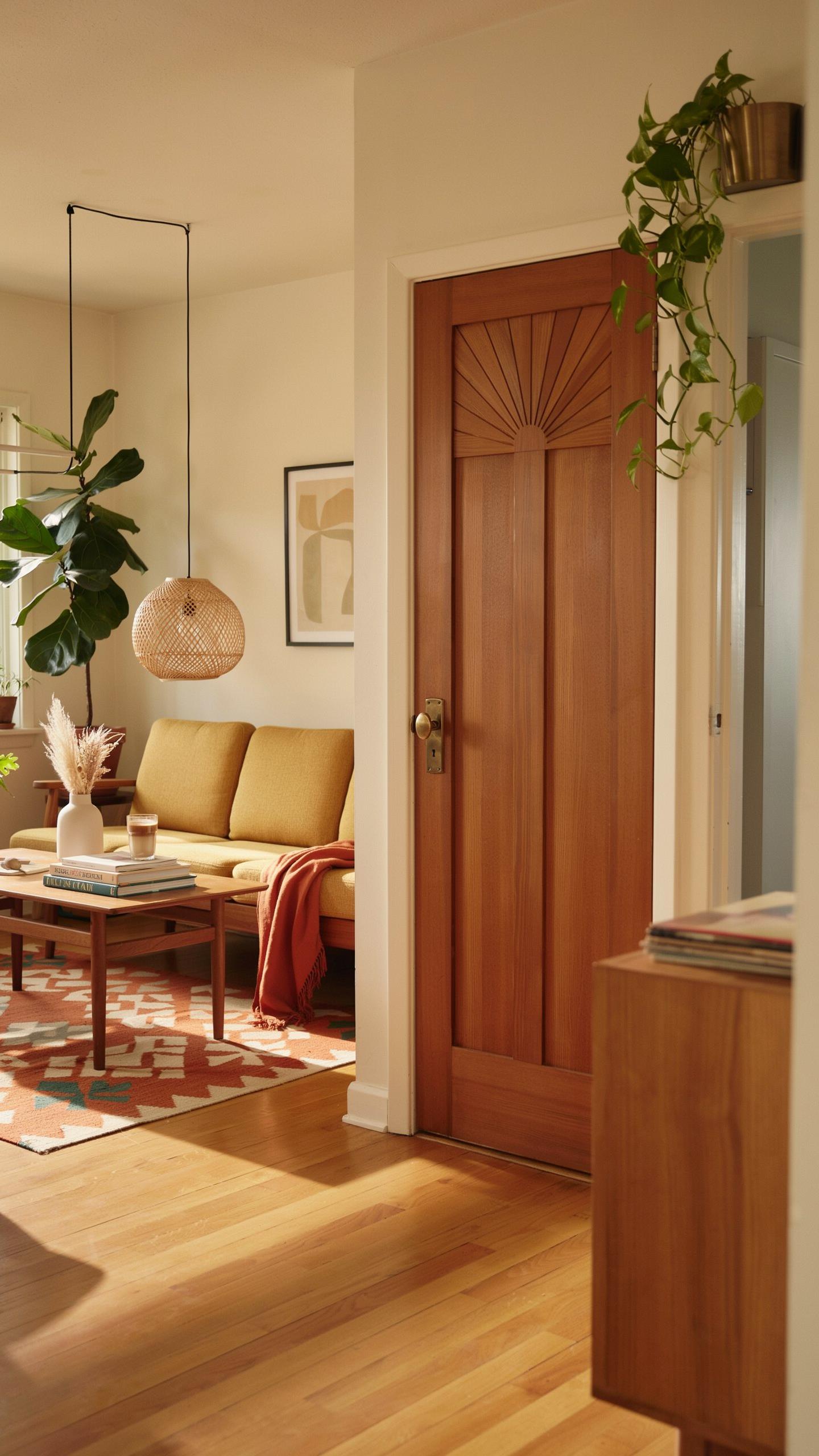
Your exterior door sets the design language for your entire home. Mirror that choice with interior entry doors using matching materials and hardware. Flat-panel doors with warm wood stains or identical brass pulls create visual continuity. This approach grounds the mid-century aesthetic throughout your floor plan without requiring expensive renovations.
Interior doors should echo exterior proportions and materials. If your front door features a specific wood tone, match it on bedroom and office entries. Consistent hardware finishes between exterior and interior reinforce the design intent. This coordination costs nothing extra since you’re making the same material choices anyway.
Selecting Glass And Finishes For Indoor Privacy
Frosted and textured glass panels served practical functions in mid-century office design and residential spaces. They filter light while blocking sightlines, making them ideal for bedrooms and home offices. These glass styles maintain period authenticity while solving real privacy needs. Install them in interior doors to honor the era’s design logic.
Obscured glass options range from acid-etched to ripple patterns, all available through standard suppliers today. These finishes work with both wood and metal frames typical of mid-century doors. They cost marginally more than clear glass but eliminate privacy concerns. The design maintains integrity while adapting to modern living requirements.
Frequently Asked Questions

What are the defining characteristics of a mid century home exterior door design?
A mid century home exterior door design typically features clean, geometric lines and a minimalist aesthetic. Key elements include asymmetrical window panes, bold hardware in finishes like brushed brass or matte black, and vibrant pops of color such as teal or orange. This style focuses on simplicity and functionality, aiming to create a seamless transition between the indoor living space and the natural outdoor environment typical of post-war architecture.
What paint colors work best for a mid-century modern front door?
Saturated, slightly muted tones work best for this style, think burnt orange, avocado green, teal, or a deep mustard yellow. These colors echo the era’s original palette without feeling like a costume. Pairing a bold door color with a neutral exterior, such as white, gray, or warm wood siding, keeps the overall look balanced rather than overwhelming.
Can I add mid-century style to a standard modern door without full replacement?
Yes, you can get much of the look through smaller updates. Swapping standard hardware for brushed brass or matte black fixtures, adding a geometric window insert, or repainting in a period-appropriate color all move a plain door toward mid-century character without the cost of replacing it entirely. A simple wood slat overlay is another popular way to add texture and visual interest to an existing flat door.