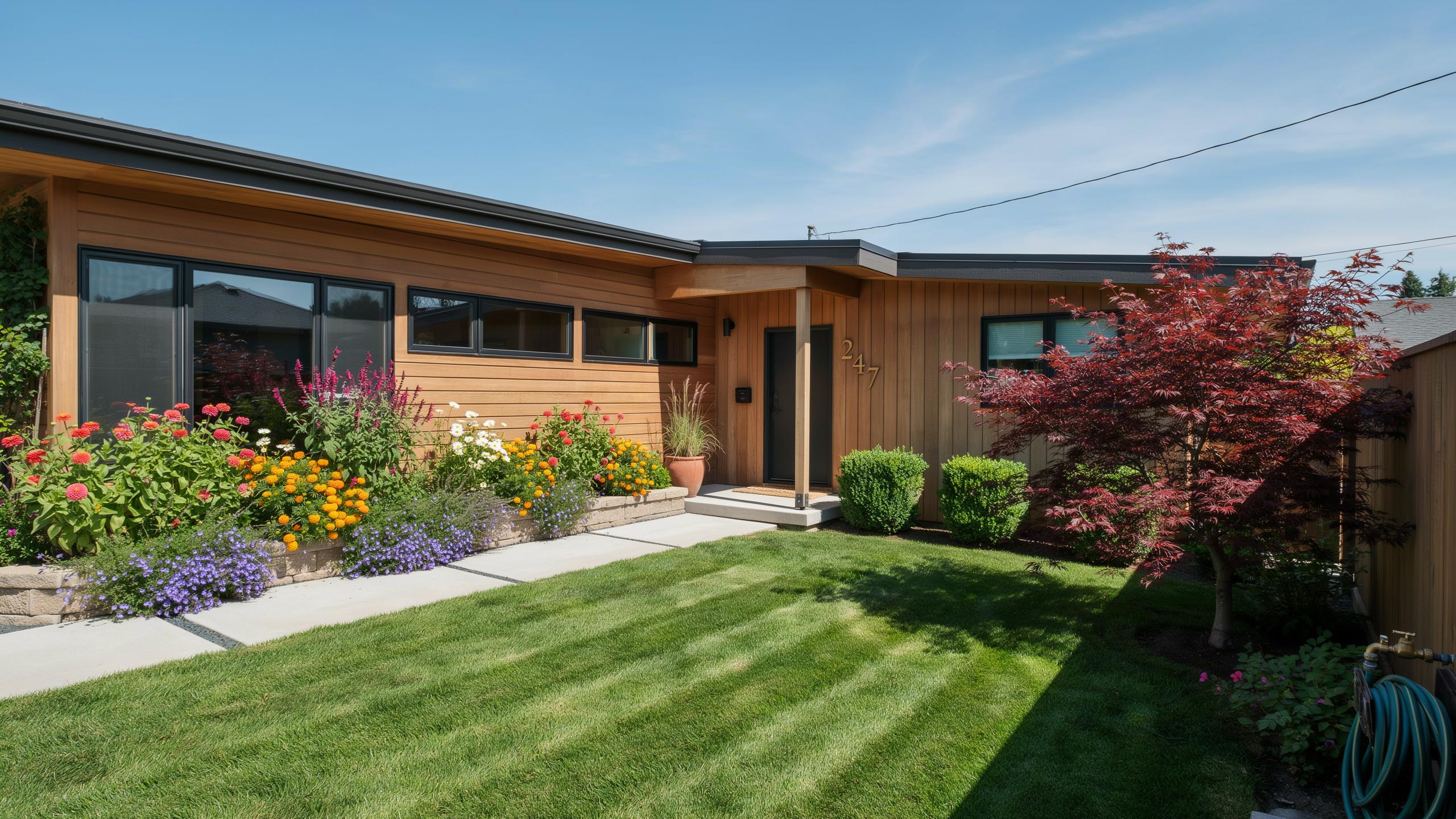
Embrace Mid Century Modern Landscape Design Principles
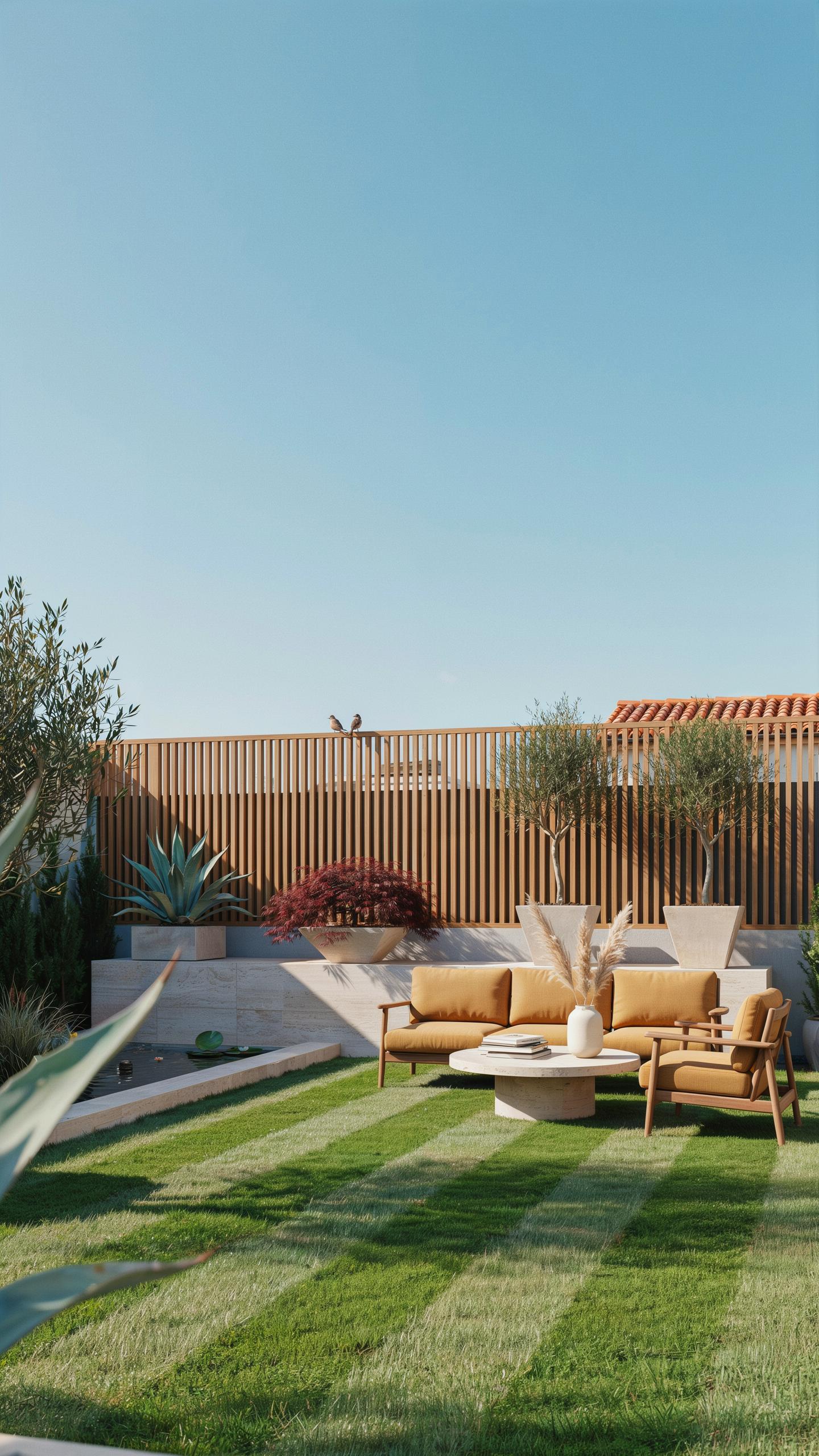
Understanding Asymmetry
Mid century landscape design rejected formal symmetry in favor of asymmetrical layouts. This approach came from modernist design movements of the 1950s and 1960s that emphasized function over ornamentation. Asymmetry creates visual interest while maintaining balance through careful placement of plants, hardscape elements, and focal points. The layout appears natural rather than rigid, making spaces feel more livable and less staged.
Asymmetrical gardens use different elements on each side of a space to achieve equilibrium. A large tree on one side balances a grouping of shrubs on the other. This technique eliminates the predictability of matching plantings and opens up sight lines. Asymmetry also allows you to work with your property’s existing features rather than fighting against them, making installations more practical and cost effective.
Blurring Boundaries
Mid century design connected interior spaces to outdoor areas through thoughtful sight lines and material choices. Designers used large windows, sliding glass doors, and consistent flooring materials to erase the visual separation between inside and outside. This approach reflected post war priorities around family living and entertaining. The goal was making outdoor space feel like an extension of the home rather than a separate zone.
Hardscape materials tie the connection together. Concrete patios, gravel pathways, and decking extended from the home’s foundation using colors and textures that echoed interior finishes. Minimal fencing or low walls maintained sightlines while providing boundaries. Landscape plantings framed views rather than blocked them, so people inside could see and access the garden easily. This strategy transformed outdoor areas into functional living zones that families used daily.
Selecting The Best Plants For Mid Century Home Landscaping
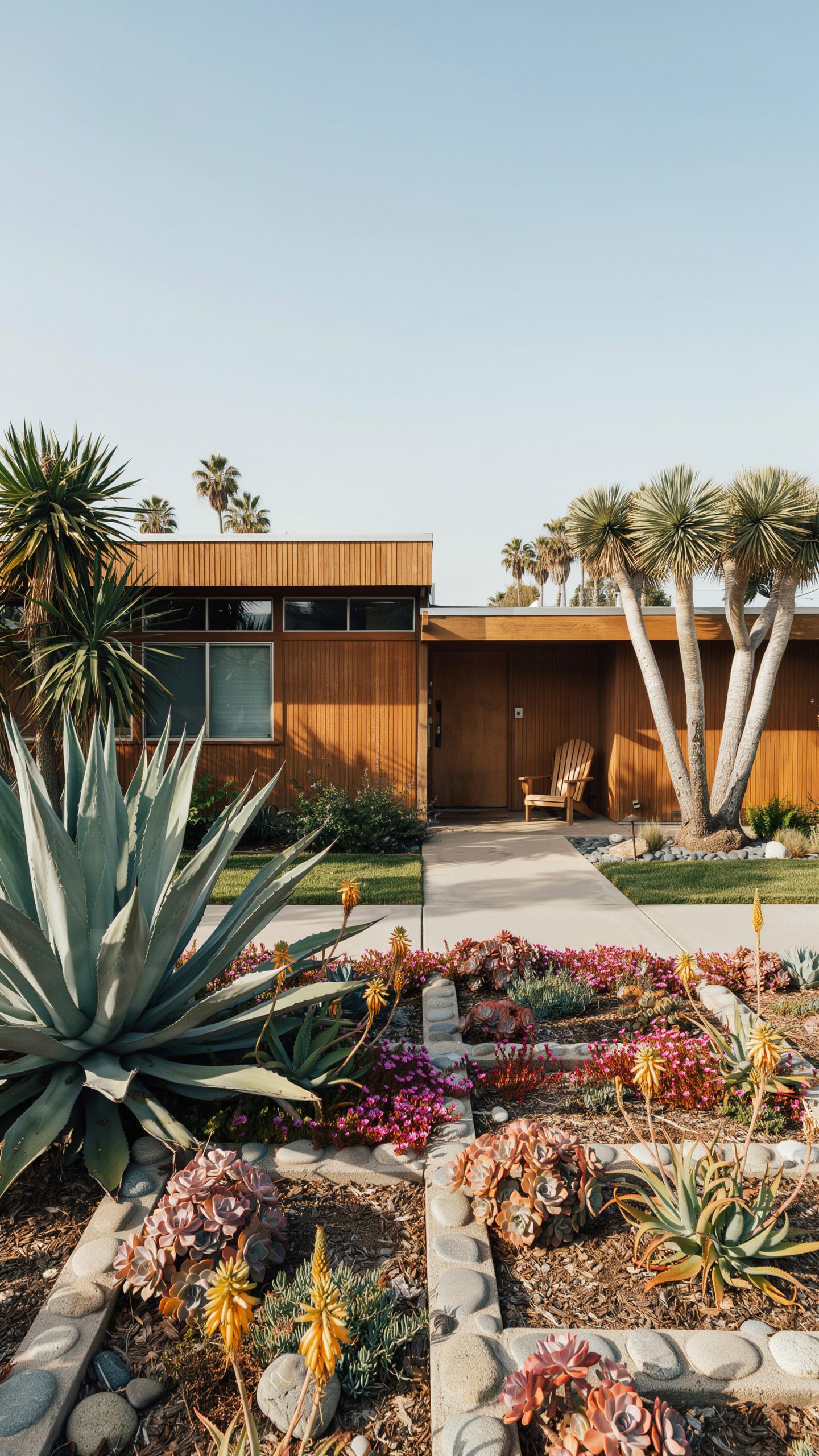
Architectural Plants
Mid century design demands plants that function as living structures. Choose species with defined forms, strong silhouettes, and year-round presence. Architectural plants anchor the landscape and work with hardscape elements rather than hiding them. They support the clean lines and geometric principles that define the era. Think vertical accent, not filler.
Columnar junipers, boxwoods, and ornamental grasses deliver the sculptural quality mid century design requires. These plants maintain their shape without constant pruning and complement modern hardscaping. Select varieties suited to your climate zone for reliability. Avoid plants that sprawl or require heavy maintenance to stay presentable. Your plant selection should reinforce design intent, not fight against it.
Native Grass Groundcover
Native grasses and groundcovers reduce maintenance while fitting mid century design principles. They handle regional weather without supplemental care and establish quickly on prepared soil. These plants work at ground level to define spaces and soften hardscape transitions. Choose species that stay within defined borders and resist invasive spreading. Your groundcover strategy should simplify upkeep, not complicate it.

Regional natives vary by location, so research what thrives in your specific zone. Prairie dropseed, fescue varieties, and native sedge work across many regions as practical options. Groundcovers like creeping thyme or native junipers provide low-profile coverage. Install on prepared, well-draining soil with proper spacing for mature width. Mature plants require minimal fertilizer, chemical inputs, or supplemental water once established.
Inspiring Mid Century Modern Landscaping Ideas For Curbside Appeal
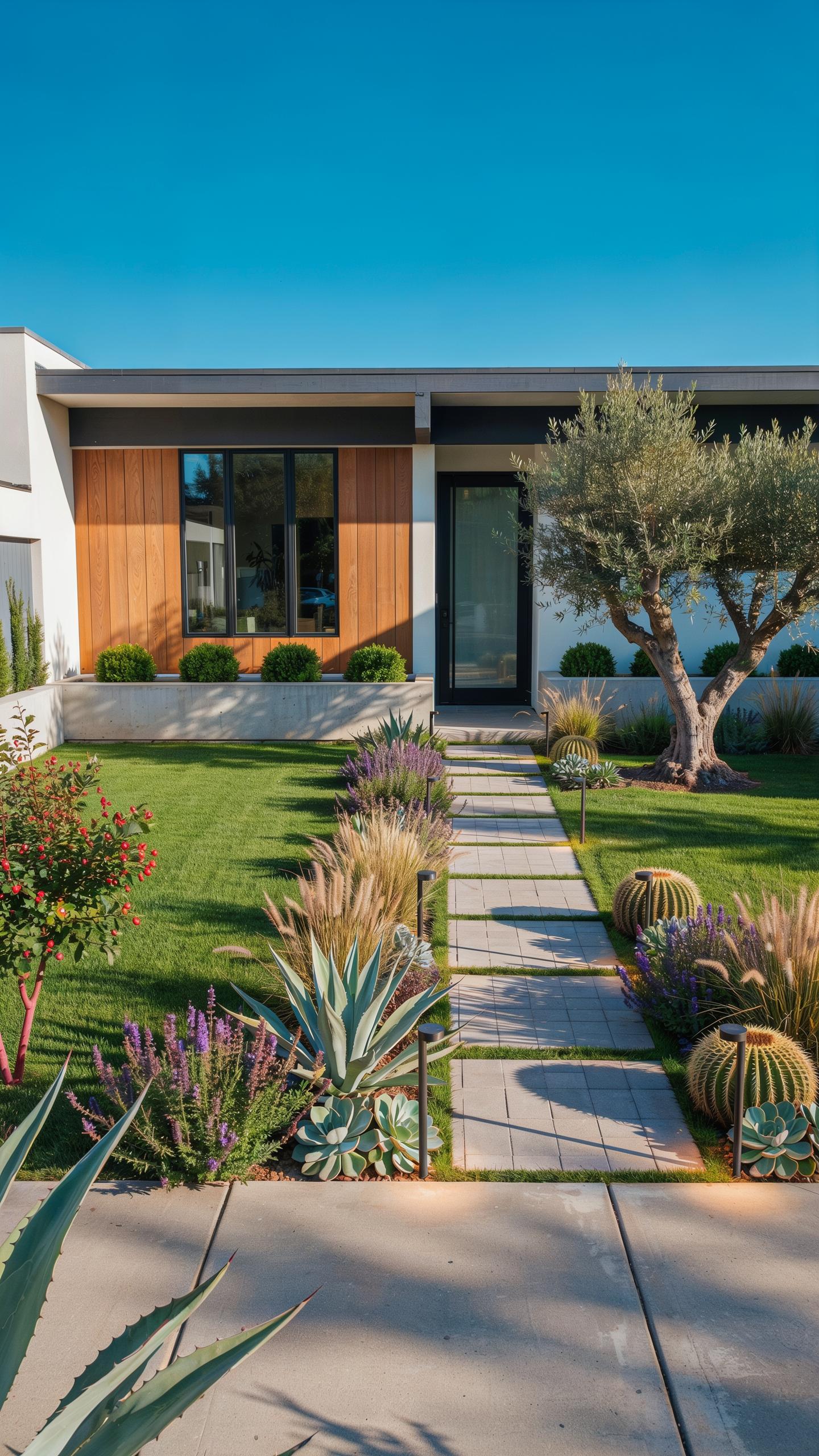
Front Walkway Drama
Concrete pavers define mid century walkways through geometry and function. Designers used straight runs, geometric patterns, and clean edges to create visual movement toward the entry. Pavers in rectangular or square shapes replaced curved paths common in earlier styles. This approach reduces maintenance while establishing clear sightlines that complement modernist home architecture. The pathway becomes a transitional space that announces the home’s design intent.
Material choice matters for walkway performance. Standard concrete pavers, six to twelve inches wide, withstand foot traffic and weather cycles. Spacing between pavers allows for drainage and accommodates ground movement. Designers avoided ornamental borders in favor of flush installations. This straightforward approach aligns with mid century principles: form follows function, and every element serves a purpose beyond decoration.
Focal Point Specimens
Specimen trees anchor mid century landscapes as sculptural elements rather than background fill. A single tree positioned in the front yard creates a focal point that draws the eye and defines spatial zones. Common choices included crabapples, flowering cherries, and Japanese maples, selected for distinctive branching patterns and seasonal interest. These trees worked as living architecture, their forms echoing the clean lines of modernist houses. Strategic placement leveraged the tree’s silhouette against the home’s facade or sky.
Tree selection required understanding mature size and maintenance demands. Mid century designers preferred trees that reached fifteen to thirty feet, visible from the street without overwhelming the property. Proper spacing from the home, typically eight to twelve feet minimum, prevented root damage and allowed the tree’s form to read clearly. Specimen trees rarely needed heavy pruning when positioned correctly. This restraint reflected the era’s design philosophy: select quality materials and let them perform their role.
Functional Mid Century Front Yard Landscaping Ideas
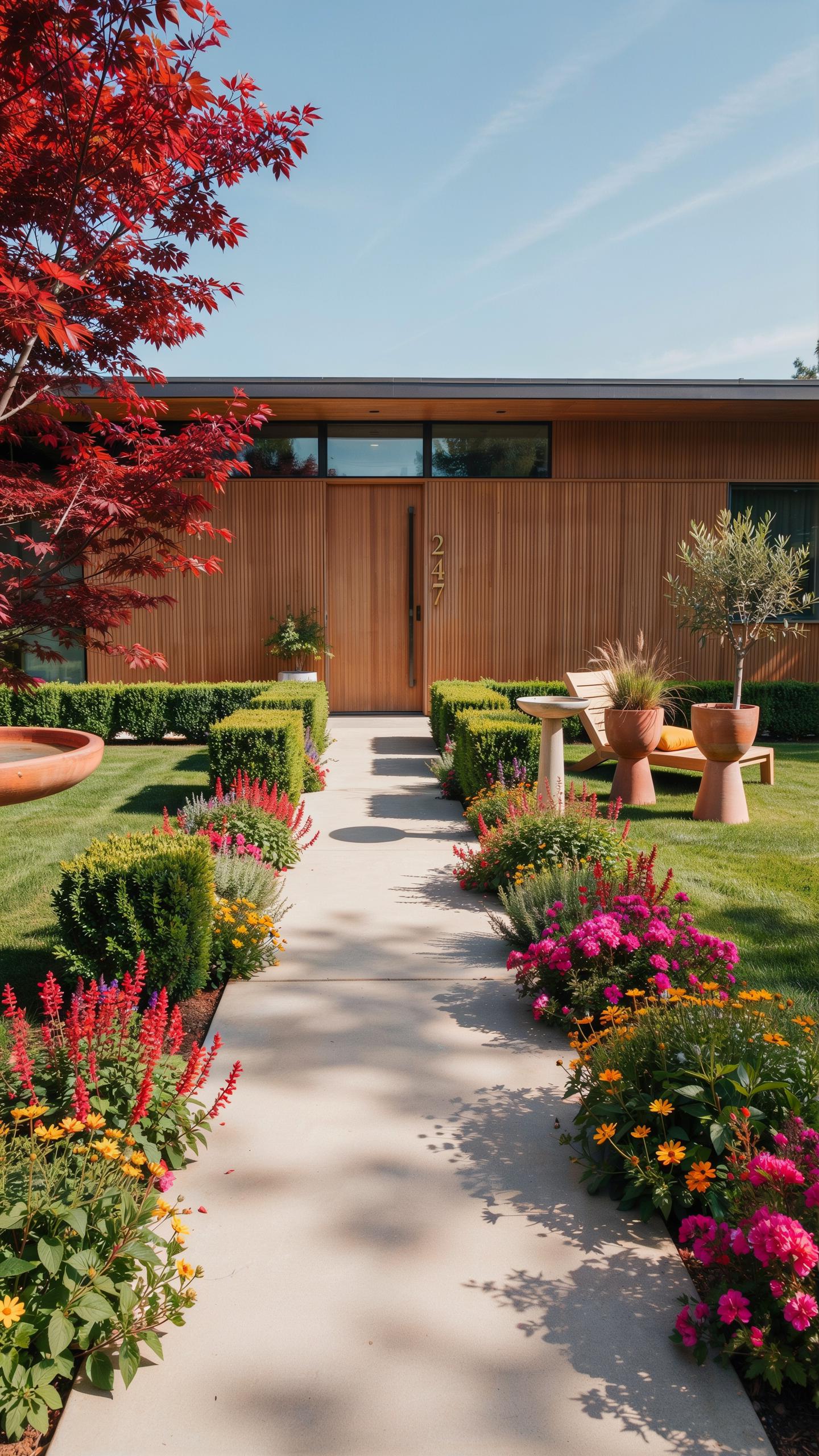
Symmetrical Asymmetry
Mid century design rejected rigid formality while maintaining visual balance. Asymmetrical layouts use offset concrete pads to create movement and flow. Place the main entry pad slightly left or right of center, then anchor it with secondary pathways. This approach respects the horizontal lines characteristic of the era while avoiding static, dated symmetry. The entryway becomes functional and intentional rather than ceremonial.
Concrete pads serve dual purposes in mid century landscapes. They define movement patterns and reduce maintenance demands. Set pads at grade level or slightly raised to integrate with natural terrain. Vary pad widths between 24 and 36 inches to accommodate foot traffic while maintaining proportion. Offset positioning creates visual interest without sacrificing the clean lines that define the aesthetic.
Essential MCM Elements
Mid century front yards require specific structural components to read authentically. A solid entry sequence anchors the design and communicates intentionality. These elements establish hierarchy, guide movement, and reinforce the era’s design philosophy without ornamental excess.
- Concrete Entry Pad: A 4 by 6 foot slab positioned near the front door. Provides practical footing and establishes the primary entry point with minimal visual weight.
- Low Planters or Raised Beds: Built-in or freestanding boxes, typically 12 to 18 inches tall. Creates soft edges and plantings without blocking sightlines or cluttering the yard.
- Horizontal Wooden Screens or Fencing: Simple slat or board designs in vertical or horizontal orientation. Defines space, provides privacy, and echoes architectural lines of the home.
- Gravel or Decomposed Granite Paths: Loose materials between hardscape elements. Reduces lawn maintenance while maintaining the clean aesthetic typical of mid century design.
- Strategic Specimen Trees or Shrubs: Single accent plants positioned for visual impact without crowding. Creates focal points and softens architectural forms with organic shapes.
These components work together to create functional entry sequences. They establish clear pathways and visual organization. Combine them based on your yard’s orientation, existing structures, and maintenance capacity. The goal is supporting daily life while respecting mid century design principles that prioritize simplicity and honest material use.
Designing With Mid Century Landscape Ideas For Outdoor Living
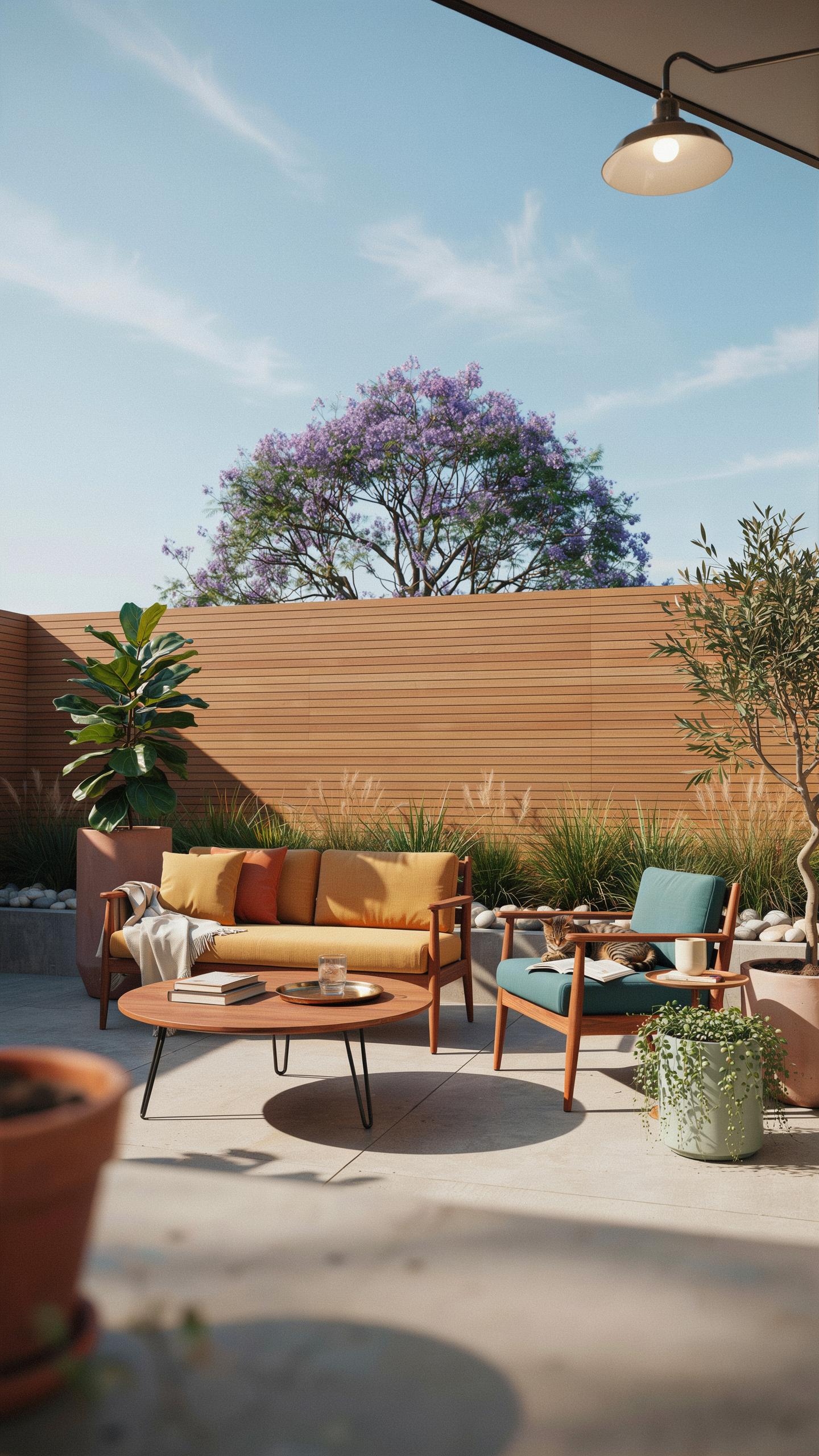
Cozy Patio Nooks
Mid century design prioritizes function over decoration. Patio nooks work best when positioned to capture afternoon sun while offering shade during peak heat. Place seating areas near existing structures or plant screens to define boundaries. This creates a contained outdoor room without walls. Size matters. A nook needs just enough space for two to four people comfortably seated.
Furniture selection drives usability. Mid century pieces feature clean lines, tapered legs, and minimal ornamentation. Metal frames with wood or woven seats perform well outdoors when properly maintained. Avoid overstuffed cushions that absorb water and deteriorate quickly. Low-profile seating aligns with the design period’s horizontal emphasis. Arrange pieces to encourage conversation while maintaining sightlines through your landscape.
Fire Features Mcm
Minimalist fire pits anchor outdoor gathering spaces without demanding visual attention. Mid century landscaping rejected ornate designs in favor of geometric forms. A simple circular or rectangular pit in steel or concrete fits the aesthetic. Placement matters strategically. Position fire features away from tree canopies and structures. Keep them accessible from main living areas but far enough to prevent heat damage to plants.
Scale determines effectiveness. A fire pit should serve eight to ten people comfortably while maintaining safe clearance distances. Mid century designers favored built-in seating walls alongside fire features rather than scattered furniture. Use natural stone or poured concrete edges to reinforce the horizontal lines prevalent in the era. This approach reduces clutter while defining the gathering area clearly.
Implementing Sustainable Mid Century Yard Landscaping
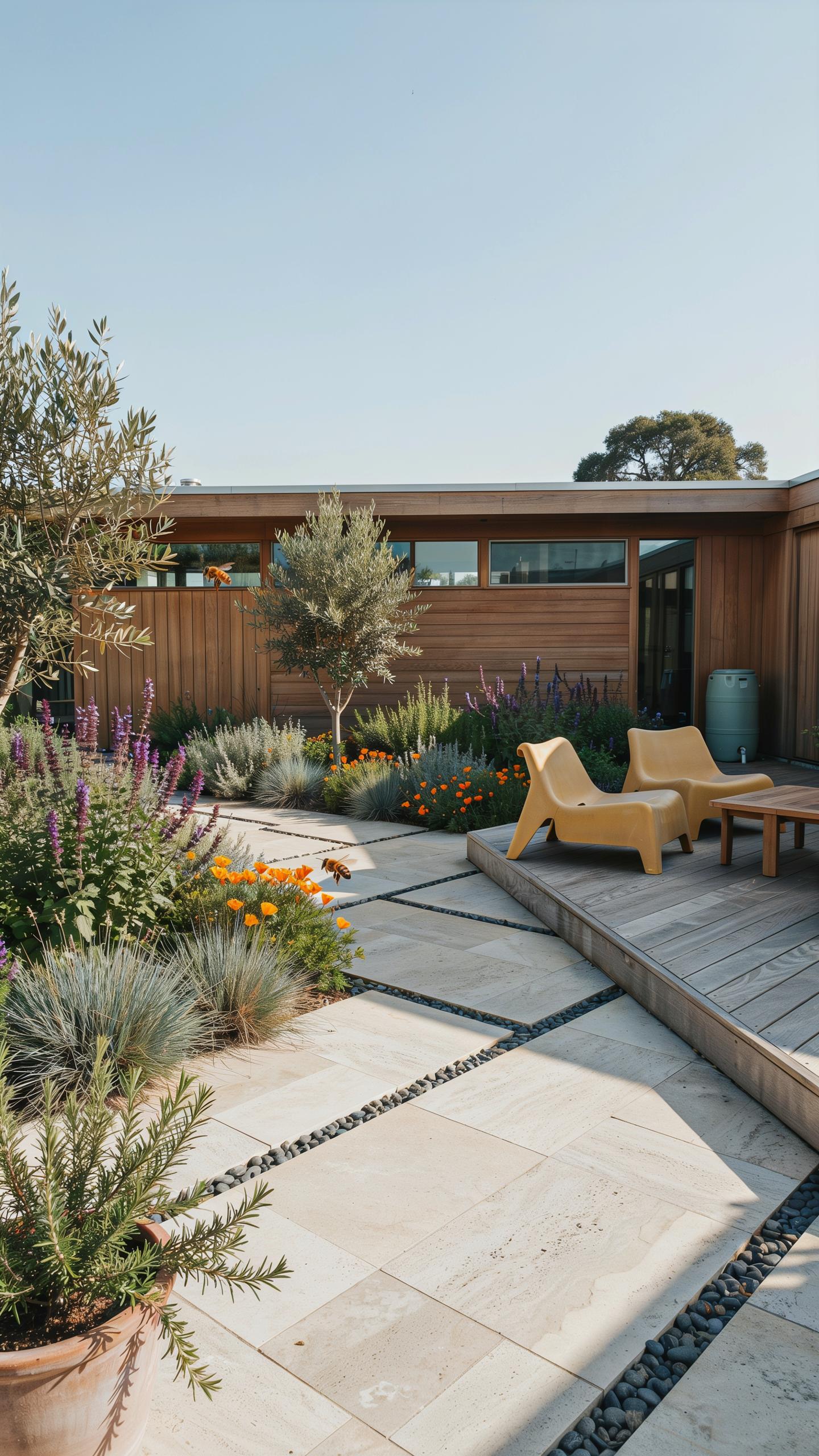
Xeriscaping MCM
Xeriscaping reduces water consumption in mid century yards through plant selection and soil management. This approach aligns with mid century modernism’s efficiency principles. Choose native plants adapted to your climate. They require less irrigation once established. Group plants by water needs. Amend soil with organic matter to retain moisture. Mulch planting beds to reduce evaporation and suppress weeds.
Mid century landscapes benefit from xeriscaping’s low maintenance demands. Modernist design emphasized clean lines and functional spaces, not resource-heavy grounds. Reduce lawn areas in favor of hardscape and drought-tolerant plantings. Ornamental grasses, sedums, and native shrubs handle dry conditions without frequent watering. This approach cuts landscape maintenance costs while preserving the mid century aesthetic of open, organized yard space.
Permeable Materials
Gravel and permeable pavers drain rainwater effectively while supporting mid century design principles. Crushed stone and decomposed granite work as permeable base layers beneath paving. Permeable pavers allow water infiltration while maintaining clean sight lines typical of modernist landscaping. Install these materials over proper base preparation to prevent settling and ensure consistent drainage.

Permeable materials reduce runoff and support soil recharge in mid century yards. Standard concrete pavers require grout that prevents water penetration. Permeable alternatives like pervious concrete, porous asphalt, or open-jointed pavers let water pass through to soil below. Use these materials for patios, walkways, and driveways. They maintain the flat, geometric forms that define mid century exterior spaces while managing water responsibly.
The Core Elements Of Mcm Landscape Design
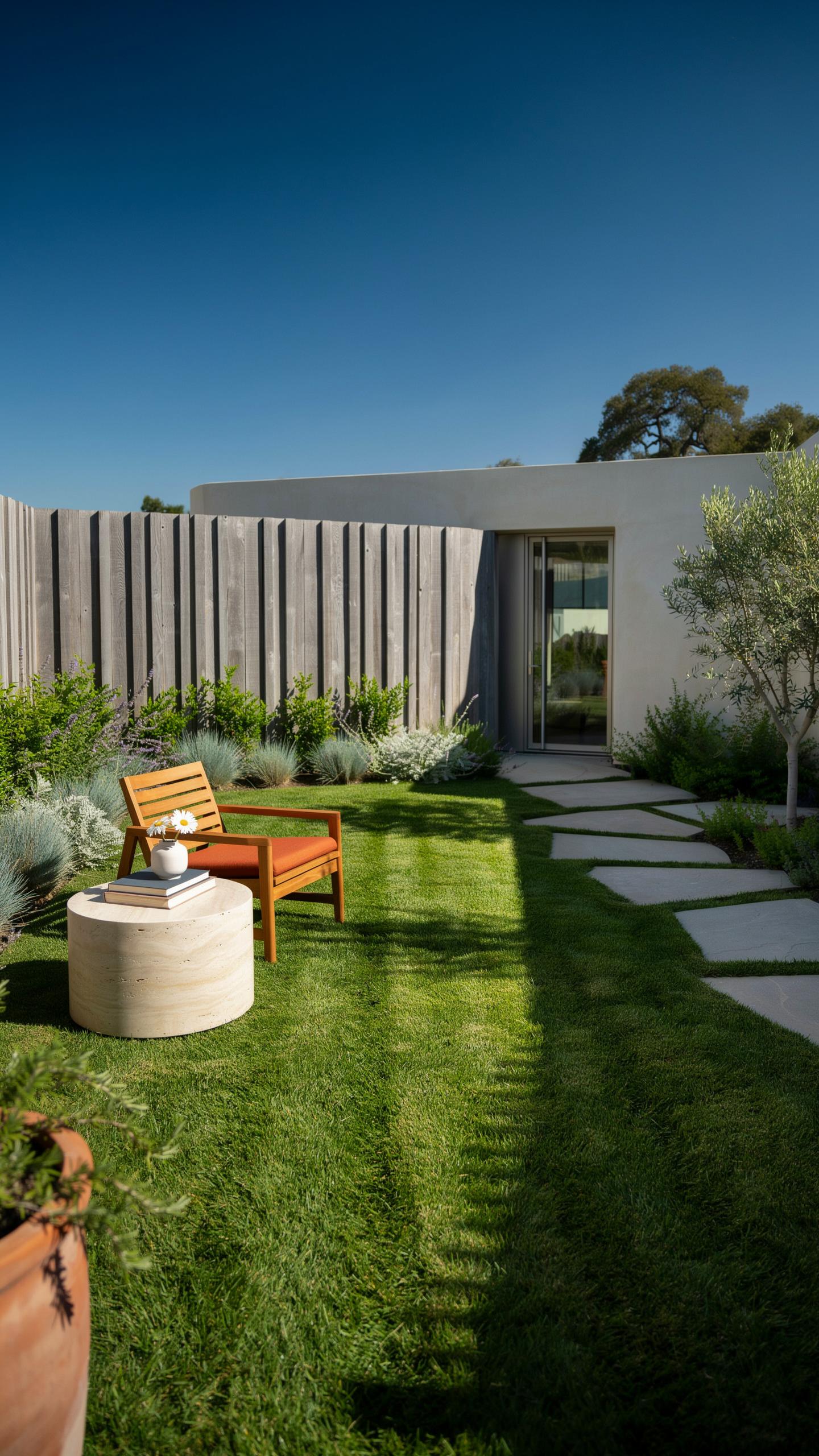
Hardscape Materials
Concrete, redwood, and brick form the foundation of mid-century modern landscaping. These materials deliver clean lines and low maintenance. Concrete works as the primary surface for patios and pathways. It accepts trowel finishes that range from smooth to textured. Redwood fencing and screens define spaces without visual clutter. Brick edging and raised beds add structure and warmth to plantings.
The material choices reflect the era’s focus on function over decoration. Concrete costs less than stone and ages gracefully. Redwood resists rot and weathers to a silvery gray that reads modern. Brick provides horizontal striping that emphasizes the ground plane. These three materials work together to create the restrained, purposeful feel that defines mid-century landscape design.
Restrained Palette
Mid-century modern landscapes reject color maximalism. Designers used greens, grays, and earth tones as the dominant palette. Foliage provided the visual interest, not flower beds. Concrete and hardscape surfaces stayed neutral gray or warm tan. This approach keeps the eye focused on form and structure rather than seasonal color shifts.

The color restraint serves a tactical purpose. It prevents the landscape from overwhelming the home’s architecture. Neutral hardscapes age without looking dated or faded. Green plants offer subtle variation without demanding attention. This discipline makes the space feel intentional and calm, supporting the lifestyle of relaxed living that mid-century design promised.
Practical Steps For Landscaping Mid Century Modern Backyards
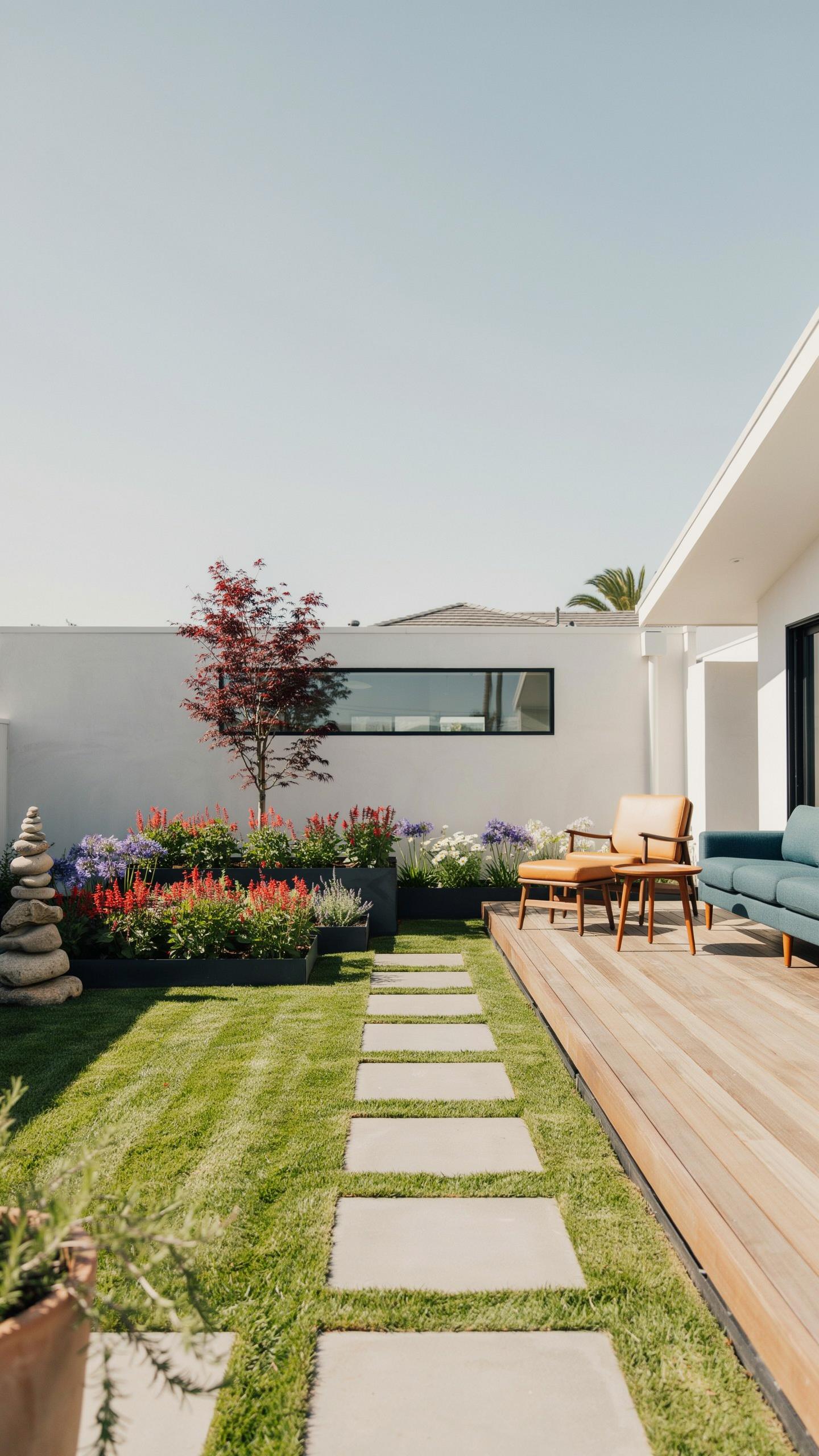
Zoning Your Backyard For Recreation, Relaxation, And Dining
Mid century design divides outdoor space by function rather than aesthetics. Separate your yard into distinct zones: dining near the house, recreation in the middle, and relaxation at the perimeter. This approach comes from the era’s emphasis on efficient living spaces that served multiple purposes without visual clutter or wasted square footage.
Use hardscaping to define zones without walls. Concrete pads, gravel beds, and slight elevation changes create boundaries that feel intentional. Mid century landscaping avoided solid walls that blocked sight lines and made yards feel cramped. Instead, designers used flooring materials and subtle grade changes to guide movement while maintaining open sightlines throughout the entire outdoor room.
Installing Slatted Wood Privacy Screens And Horizontal Fencing
Horizontal slat fencing defines mid century modern yards because it matches the home’s architectural lines. These screens filter views instead of blocking them completely, reducing wind while preserving sight lines. The spacing between slats allows light and air to move through, preventing the yard from feeling enclosed. This design choice directly reflects mid century residential architecture’s emphasis on clean horizontal planes.
Install screens at property edges where privacy matters most. Construct them from cedar or pressure treated lumber in 4 to 6 inch gaps between slats. Position screens to frame views selectively rather than hide everything. The goal is creating private zones while maintaining the open, connected feeling that defines mid century exterior design principles.
Aesthetic Enhancements With Landscape Mid Century Modern Decor
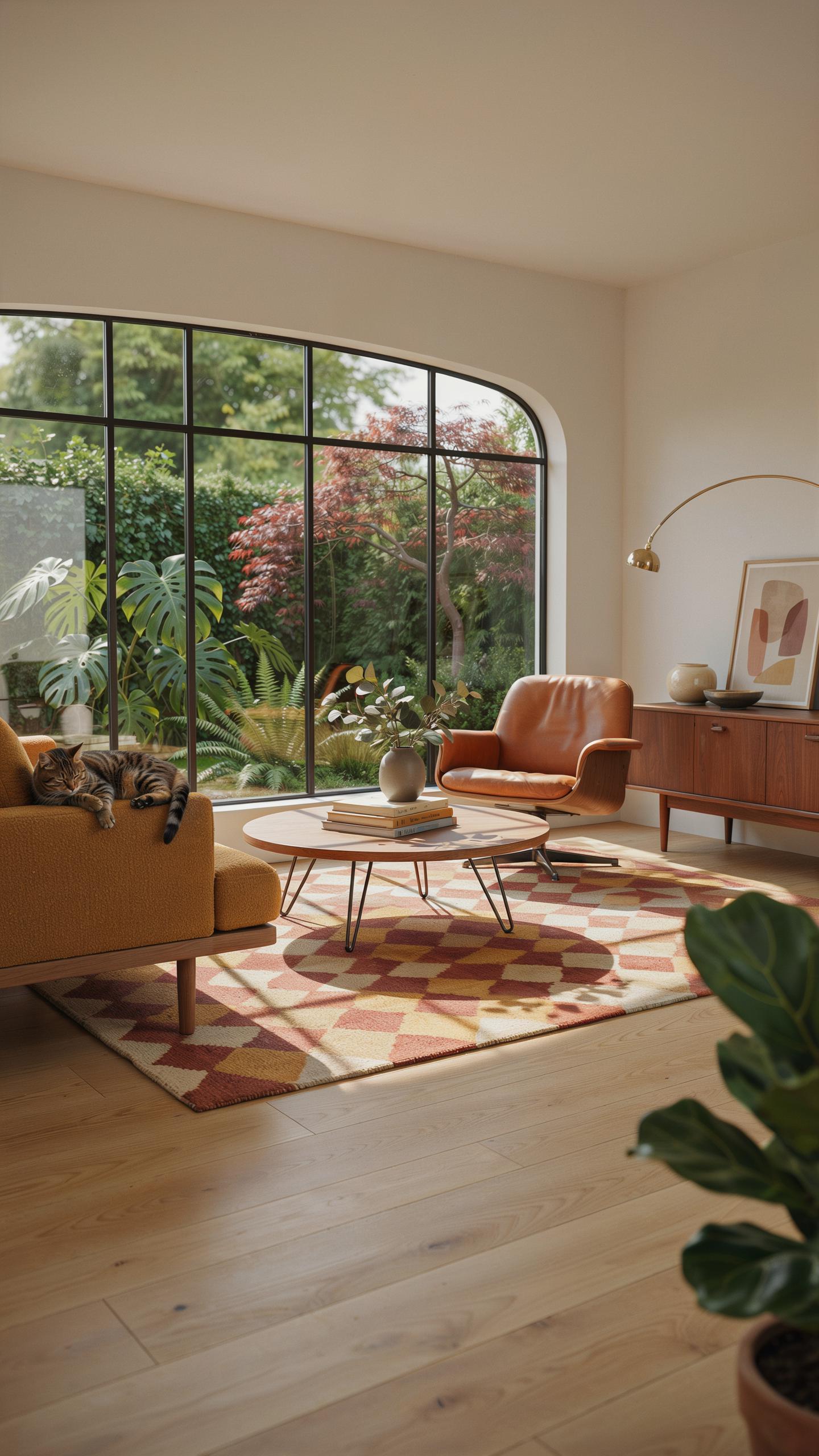
Vintage Lighting
Mid century outdoor lighting prioritizes function over decoration. Spherical and bullet fixtures emerged during the 1950s and 1960s as practical solutions for illuminating patios and walkways. These forms reduce glare and direct light downward efficiently. Materials like aluminum and powder-coated steel resist weather while maintaining clean lines.
Choose fixtures with simple geometric shapes and minimal ornamentation. Bullet lights mount on posts or walls and cast focused beams. Spherical fixtures provide ambient glow for seating areas. Install them at consistent heights along property edges to create visual rhythm. Avoid ornate designs that contradict modernist principles.
The architecture of the home should be a canvas for nature, where low-slung lines and textured gardens invite the soul to rest. A true home is where the transition between the glass and the greenery becomes a seamless path to tranquility.
Modernist Planter Guide
Mid century planters emphasize geometric forms and functional materials. Select pots made from concrete, ceramic, or fiberglass to align with period aesthetics. These materials age well and withstand outdoor conditions. Scale matters: use larger planters as focal points and smaller ones for accent groupings around seating areas.
- Concrete Cubes: Durable and affordable. Available in various sizes. Neutral color complements any landscape. Ideal for specimen plants or topiaries.
- Tapered Cylinders: Narrower at the base, wider at the top. Clean proportions work in rows or clusters. Common in authentic mid century designs.
- Rectangular Troughs: Long horizontal form suits contemporary arrangements. Groups multiple plants in single container. Works well along pathways or property lines.
- Spherical Bowls: Round shapes echo period lighting fixtures. Creates visual continuity across outdoor spaces. Best for low-growing shrubs or groundcovers.
- Tapered Urns: Classic form with subtle geometry. Provides height variation in landscape compositions. Works as anchor points in garden layouts.
Placement strategy determines planter effectiveness. Position containers near entry points, seating areas, and along sight lines. Avoid random placement that disrupts the ordered feeling mid century design demands. Group odd numbers of planters together for balance.
Maintaining Your Mid Century Home Exterior Landscaping
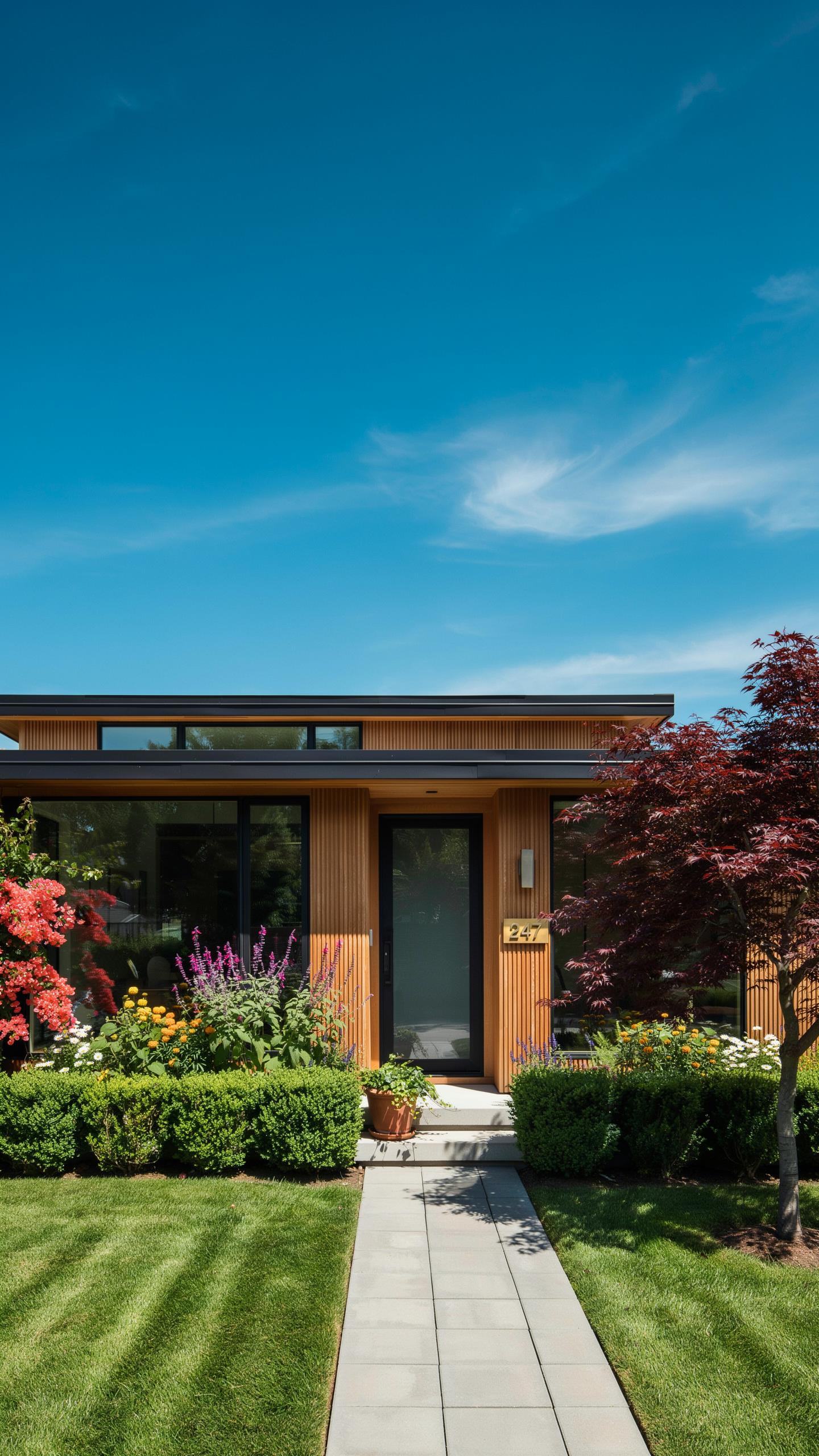
Clean Lines Pruning
Mid century landscape design relied on geometric plant forms to anchor the home’s modern aesthetic. Pruning maintains these intentional shapes rather than allowing plants to grow wild. Junipers, boxwoods, and privets tolerate shearing well and hold their form through seasons. Regular pruning every 8 to 12 weeks during growing season keeps plants tight and defined. This pruning strategy directly supports the visual architecture the original design intended.
Graphic silhouettes demand consistent maintenance to remain effective. Plants that drift away from their intended shapes break the clean sight lines that define mid century yards. Prune from spring through early fall when plants actively grow and recover quickly. Hand pruning with sharp shears produces cleaner cuts than power equipment for detailed forms. Stop pruning six weeks before your first frost to let plants harden for winter.
Hardscape Upkeep
Exposed concrete patios and walkways define mid century outdoor spaces. Concrete surfaces weather and develop algae, moss, and staining over time. Regular washing with a garden hose and stiff brush removes organic growth without damaging the surface. Seal concrete every 2 to 3 years to prevent water infiltration and reduce staining. This maintenance extends the life and appearance of your hardscape significantly.
Natural wood elements like pergolas and fencing require different care than concrete. Check wood annually for rot, particularly at ground contact points where moisture collects. Sand rough areas and apply wood stain or sealant every 3 to 4 years depending on climate exposure. Replace rotted boards immediately to prevent structural compromise. Proper maintenance keeps these elements functional and preserves the authentic mid century character they provide.
Frequently Asked Questions

What are the essential elements of mid century home exterior landscaping?
To achieve a classic look, focus on clean lines, geometric layouts, and a seamless connection between indoor and outdoor spaces. Mid century home exterior landscaping often incorporates structural plants like yuccas or agaves paired with organic textures like river rocks and gravel. The goal is to complement the home’s horizontal architecture while maintaining a minimalist aesthetic that feels both sophisticated and welcoming for a relaxed lifestyle.
How can I incorporate hardscaping into my mid century garden design?
Successful mid century home exterior landscaping relies heavily on functional hardscaping. You can achieve this by installing concrete pavers with asymmetric gravel gaps or creating low-slung retaining walls made of stacked stone or concrete blocks. These structures define outdoor “rooms” and pathways, providing the crisp linear framework necessary to balance out the lush, architectural greenery typically found in iconic 1950s and 60s residential garden designs.
Is it possible to create a mid century landscape on a tight budget?
Absolutely! You can achieve a high-end look without a massive investment by focusing on mass plantings of affordable ornamental grasses and using locally sourced crushed stone for ground cover. Opt for a few “statement” plants like architectural succulents to act as focal points. Recycling vintage breeze blocks for a decorative screen or DIY-ing a simple wooden slat fence can also provide that signature retro charm without breaking the bank.