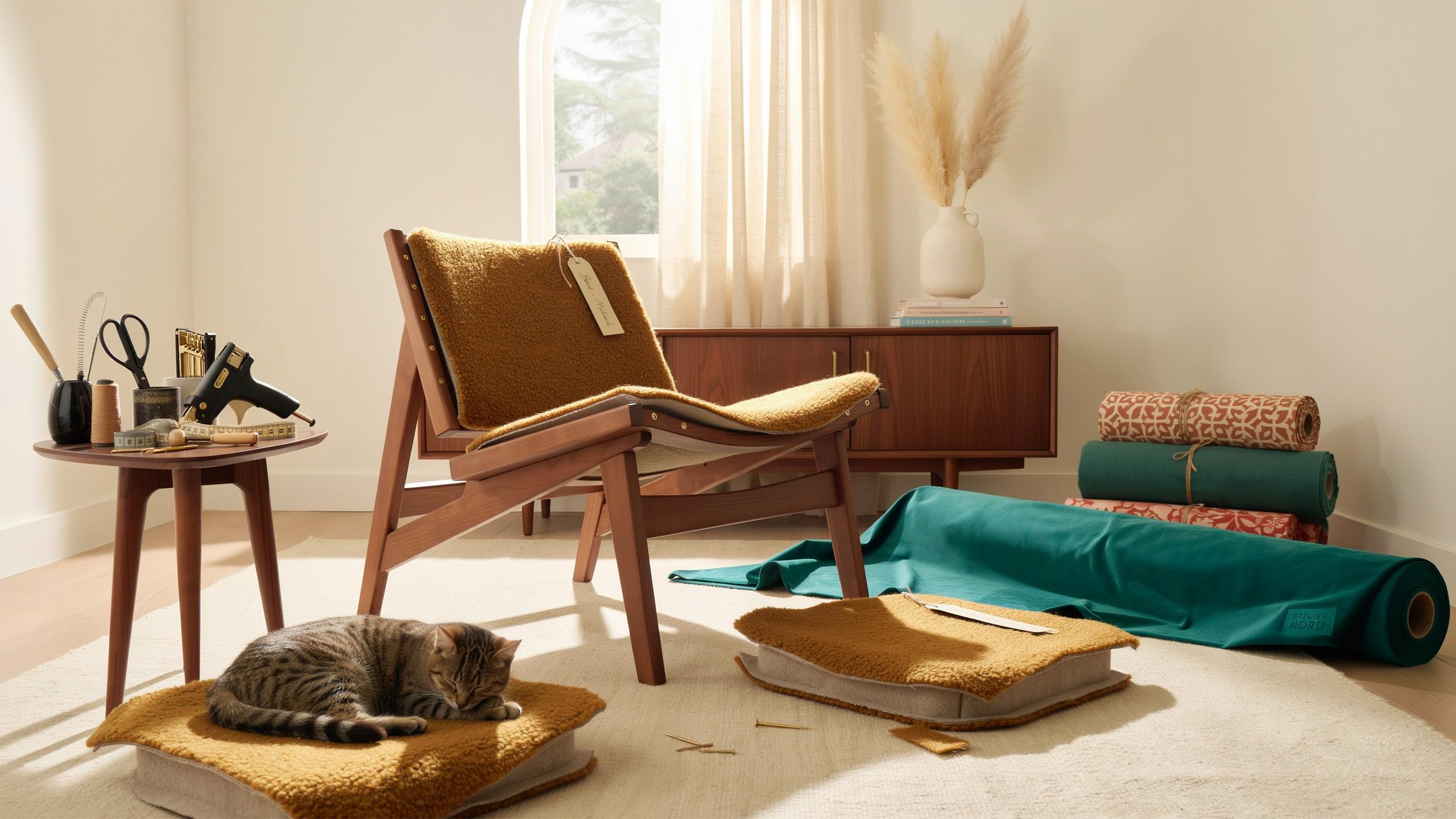
Exploring Creative Mid Century Upholstery Ideas
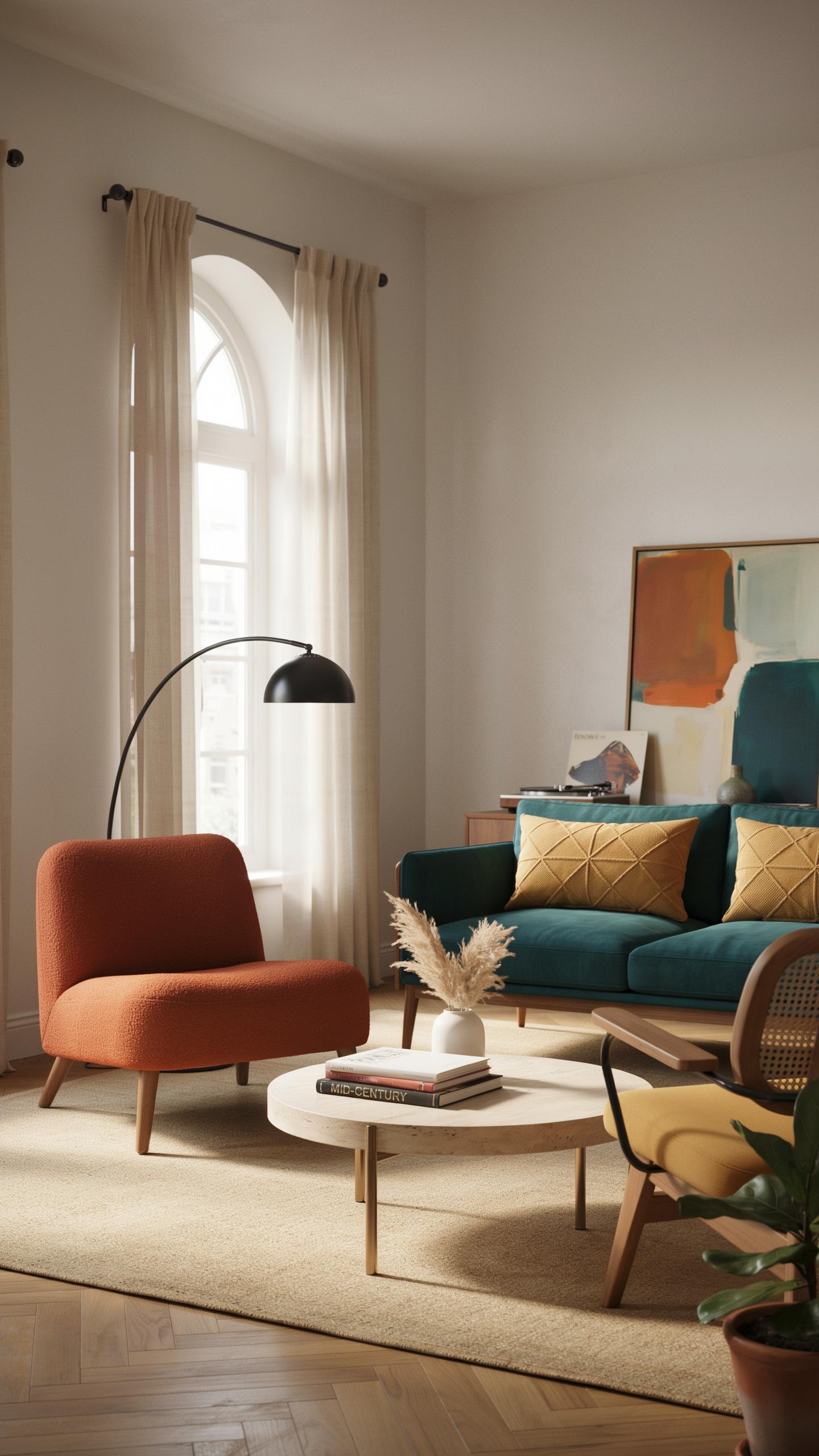
Embracing Classic Organic Shapes And Textures
Mid-century designers prioritized form over ornament. Their chairs featured curved backs, tapered legs, and sculptural armrests that defined the era. Selecting fabrics matters because the wrong choice hides these structural achievements. Choose textiles that respect the bones of the piece rather than compete with them.
Solid colors and subtle textures work best on statement-making frames. A linen or wool blend in neutral tones lets the curves do the talking. Avoid busy patterns that fragment the visual line. When the structure itself is the design, fabric becomes a supporting player, not the main event. Your upholstery should complement the silhouette, not obscure it.
Combining Warm Wood Tones With Vibrant Textiles
Mid-century frames typically used teak, walnut, or oak. These woods carry warm undertones that contrast sharply with textiles. The goal is strategic tension between wood and fabric color. This contrast stops the eye and makes both elements stronger.
Pair dark walnut frames with lighter textile colors like cream, pale gray, or muted blue. Lighter oak frames can handle jewel tones like emerald or burnt orange. The wood acts as an anchor while the fabric provides visual interest. This balance prevents the piece from feeling flat or one-dimensional. Test swatches against your frame before committing to fabric.

Selecting Distinctive Vintage Chair With Geometric Fabric Designs
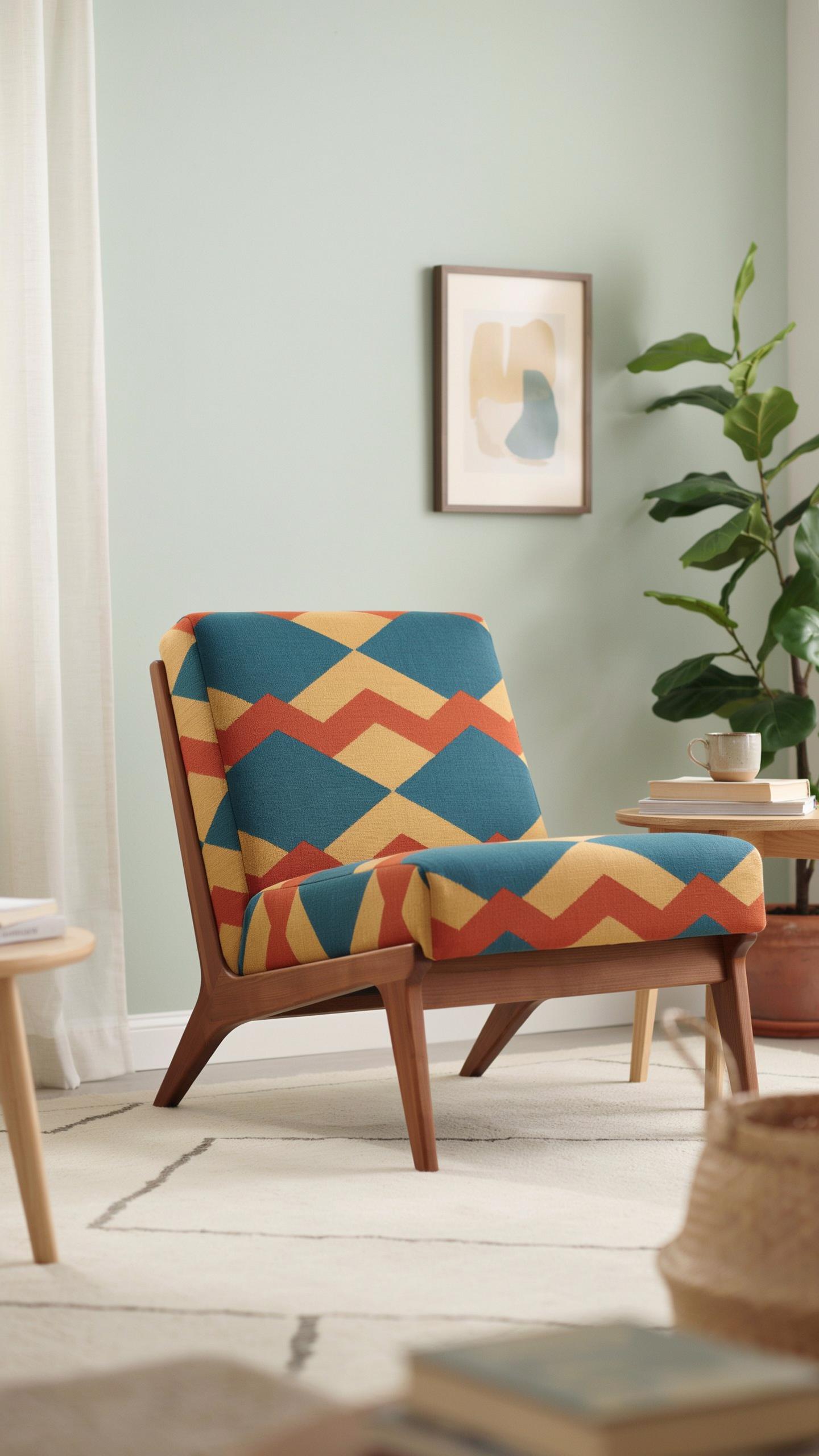
Understanding Era Appropriate Geometric Patterns
Mid-century designers favored three core geometric approaches. Atomic patterns featured starburst and boomerang motifs reflecting post-war optimism. Abstract geometrics used bold lines and irregular shapes drawn from modernist art movements. Grid patterns employed clean repetition for structured visual impact. These designs emerged from 1945 through 1965 as manufacturers responded to industrial production capabilities and consumer demand for contemporary aesthetics.
Authenticity matters when matching patterns to your chair’s construction date and style category. Danish modern pieces paired with subtle geometric weaves. American designs often featured bolder atomic prints. Italian production ran toward abstract compositions. Examine your chair’s frame joinery and construction methods to identify its origin region and era, then source fabrics reflecting that specific market’s design language.
Modern design is not a style, but an attitude. Restore the soul of your heirloom with simple, clean lines to capture that timeless, polished grace.
Scaling Patterns To Fit Your Chair Dimensions
Pattern scale directly impacts visual balance on different chair sizes. Large atomic prints overwhelm small wingback frames. Tiny grids disappear on expansive sectional cushions. Measure your seat cushion width, backrest height, and arm panel dimensions before selecting fabric. A single pattern repeat should span roughly four to six inches on standard lounge chairs and two to three inches on compact accent seats for proper visual proportion.

Align geometric repeats strategically across seams and panel edges to maintain design continuity. Place pattern centers on cushion faces rather than off-center positioning. This requires calculating fabric yardage carefully before cutting. When patterns cross seams, plan for partial repeats at transition points. Professional upholsterers use pattern matching guides to mark alignment points before stretching fabric over frames, preventing visual breaks that disrupt the geometric integrity of your design selection.
Inspirational Mid Century Modern Armchair Ideas For Home Decor
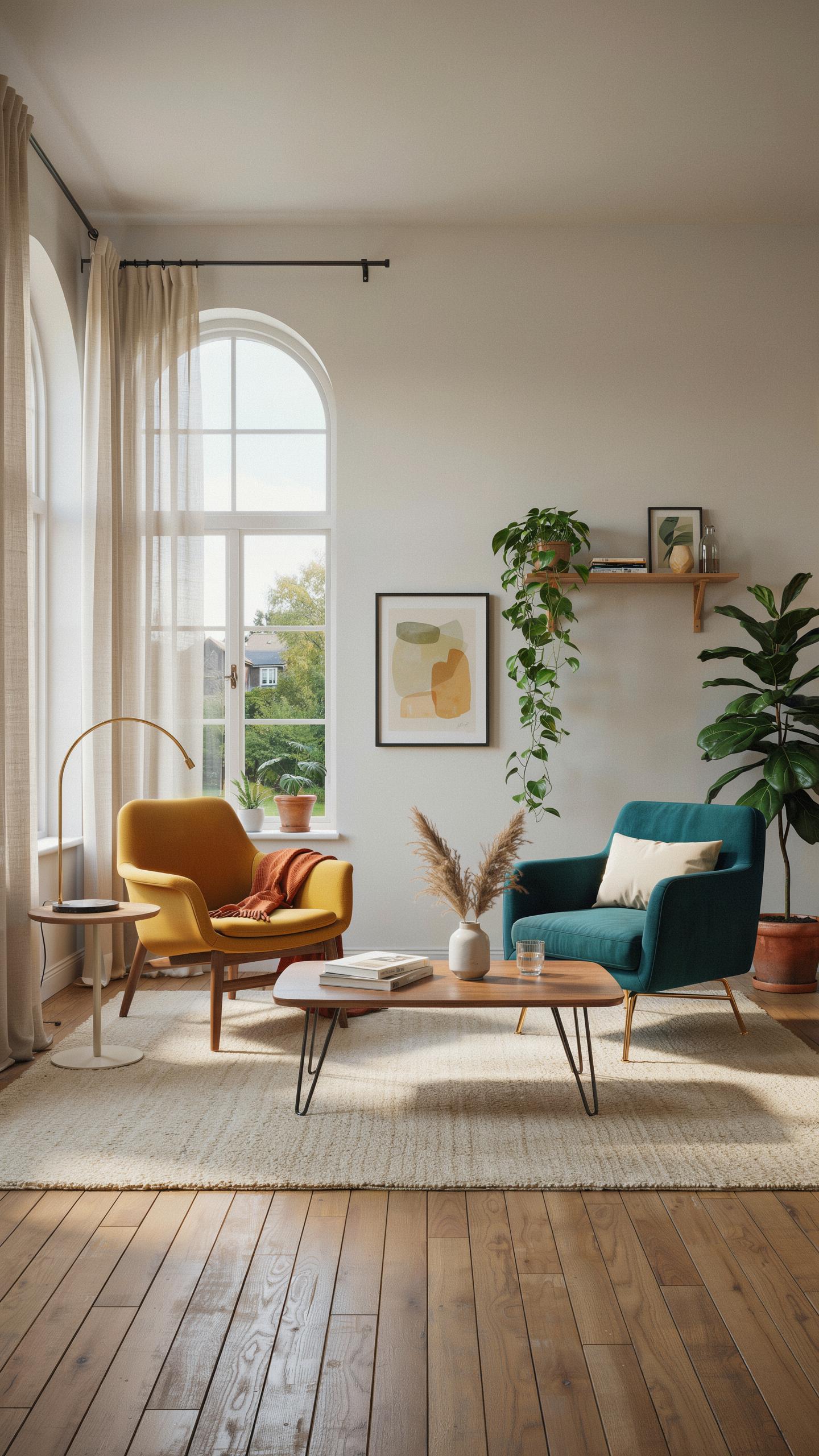
Creating Focal Points With Bold Accent Chairs
A single reupholstered mid-century armchair functions as a room anchor. Choose upholstery that contrasts with surrounding walls and furniture. High-saturation colors like mustard, teal, or burnt orange draw the eye immediately. Pair bold fabric with the chair’s existing wood frame to maximize visual impact without overwhelming the space.
The chair’s placement matters as much as its fabric choice. Position it where natural light hits the upholstery to showcase color and texture. Avoid corners and dead zones. A well-placed accent chair becomes the first thing visitors notice and directs traffic flow through the room logically.
Blending Functionality And Retro Minimalist Style
Mid-century design prioritizes comfort through proper seat depth and back support. Select high-density foam and natural latex for cushioning that lasts. Minimize decorative elements on the frame itself. The upholstery carries the visual weight while the structure remains stripped down and efficient.

Textile selection drives this balance forward. Choose neutral fabrics like linen, wool blends, or quality cotton for durability and ease of maintenance. Avoid synthetic materials that trap heat and deteriorate faster. Clean lines in both frame construction and fabric pattern keep the chair functional while honoring minimalist principles that defined the mid-century era.
Innovative Modern Reupholstered Chairs Mixing Old And New
Introducing Contemporary Textile Technology To Retro Frames
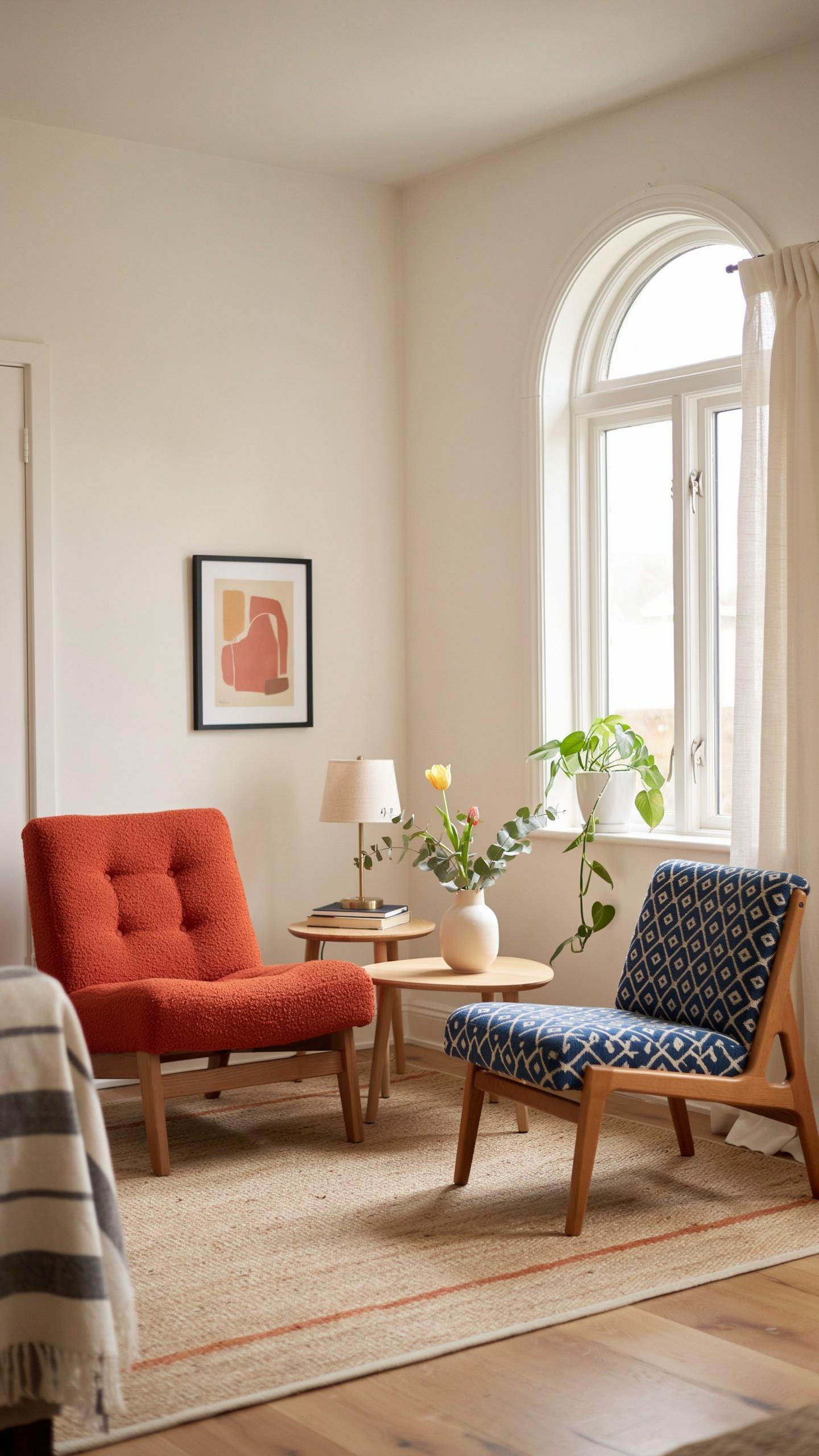
Performance fabrics solve the core problem mid-century frame owners face: original upholstery deteriorates while modern living demands durability. Microfiber, solution-dyed polyester, and acrylic blends resist staining, fading, and wear without altering the chair’s authentic silhouette. These textiles handle spills, pet damage, and sunlight exposure that would destroy vintage fabric. The frame remains structurally unchanged, preserving the original design intent while extending functional life.
Modern performance fabrics maintain the visual weight and drape that define mid-century proportions. Manufacturers now produce these textiles in colorways matching period palettes, from burnt orange to teal to neutral grays. Installation techniques remain identical to traditional upholstery, so the chair’s architectural lines stay intact. You get contemporary protection wrapped around authentic design, eliminating the false choice between preservation and practicality.
Experimenting With Bold Color Blocking Techniques
Color blocking divides the chair into distinct zones using contrasting hues on seat, back, and arms. Mid-century frames have clear geometric sections that naturally accommodate this approach. A walnut frame chair with a teal seat, gray back, and cream arms creates visual interest without compromising the original form. This technique emerged during the design era itself, reflecting modernist thinking about color as structural element rather than decoration.

Executing color blocking requires planning seam placement before cutting fabric. Identify where natural breaks occur in the frame’s construction, then map your color zones to these divisions. Use complementary colors from mid-century palettes to maintain period authenticity while adding contemporary energy. The contrasting colors emphasize the chair’s geometric bones and make the piece a functional art object in your space.
Step By Step Guide How To Reupholster A Mid Century Modern Chair
Essential Tools And Materials Needed For Success
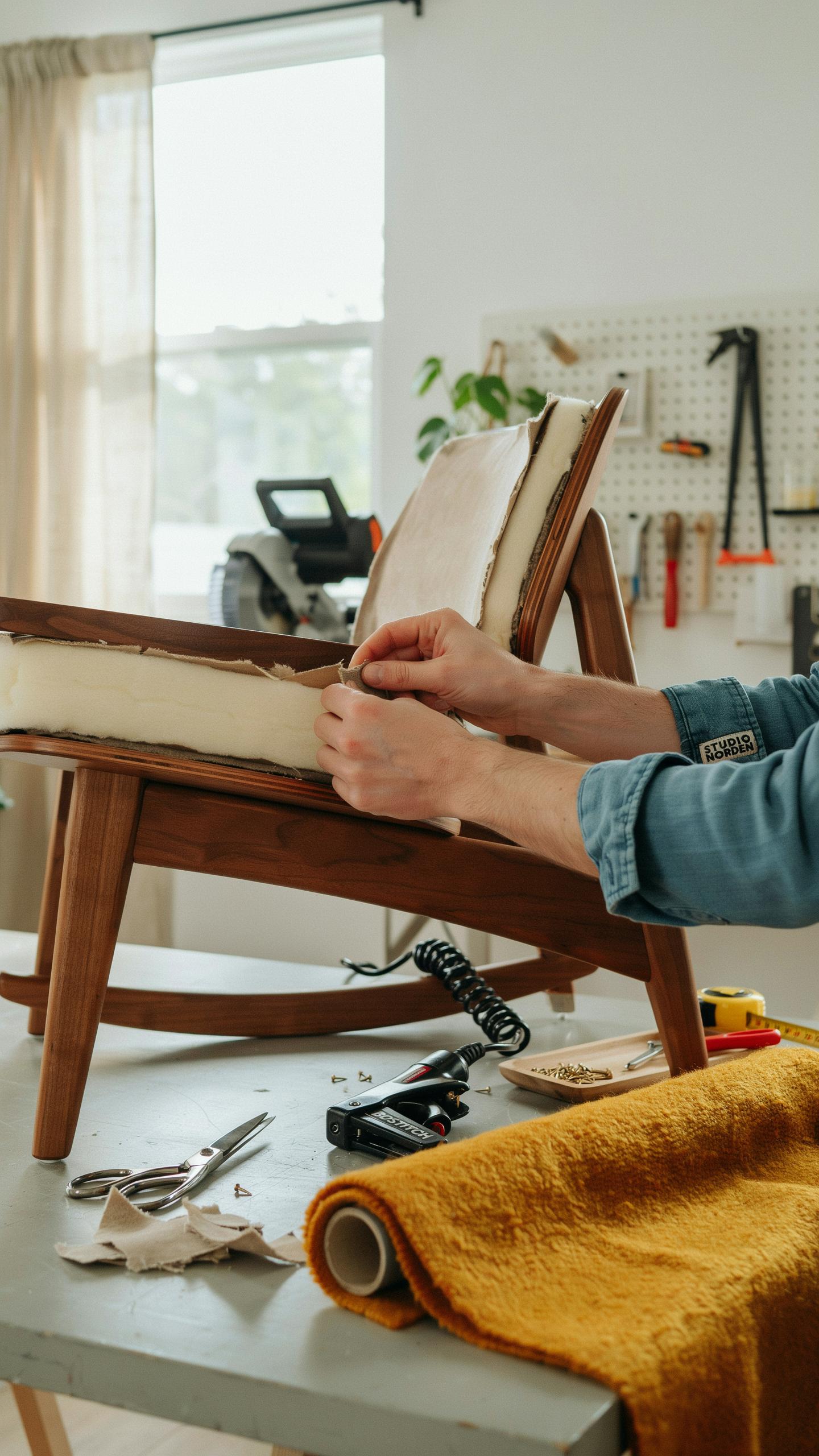
You need specific tools to strip, rebuild, and upholster mid century frames without damage. Most mid century chairs feature hardwood frames with mortise and tenon joints that demand careful handling. Invest in quality equipment upfront. Cutting corners on tools ruins frames that took decades to build.
- Flathead screwdrivers and pneumatic staple removers: Remove staples holding original fabric without prying into wood grain or splitting delicate frame members.
- Upholstery hammer and magnetic staple gun: Drive staples consistently and straight into frame rails without bouncing or angled penetration that weakens joints.
- Fabric shears and utility knife: Cut batting and fabric cleanly to prevent fraying edges that compromise seams and finished appearance.
- Eight way hand tie webbing and jute: Reinforce seat and back suspension systems that original mid century construction used for proper support and bounce.
- High quality upholstery fabric and batting: Source period appropriate materials or modern equivalents that match original weight and drape characteristics of 1950s and 1960s textiles.
- Tack strip, cardboard edge guard, and muslin: Protect raw edges and provide clean lines that define professional level reupholstery work on visible frame edges.
Source batting that matches original density. Modern polyester batting differs from vintage cotton batting that mid century manufacturers used. Check the existing frame structure before purchasing fabric to confirm yardage requirements accurately.
Stripping Down The Old Fabric Carefully
Start by photographing every angle of the original chair before removing anything. Document how fabric wraps around arms, legs, and cushions. This reference prevents mistakes during reconstruction. Remove staples systematically from bottom rails upward. Work slowly around curves and corners where frames experience structural stress.

Pull the old fabric away gently after staples are out. Mid century frames often feature glued joints that staples stabilize. Aggressive pulling can separate mortise and tenon connections or crack veneer on legs. Preserve the original webbing if it remains intact and supports the seat properly. Replace webbing only if you see sagging, tears, or separation from frame members.
Practical Tips To Reupholster Mid Century Chair Projects Smoothly
Best Practices For Handling Original Hardware And Foam Replacement
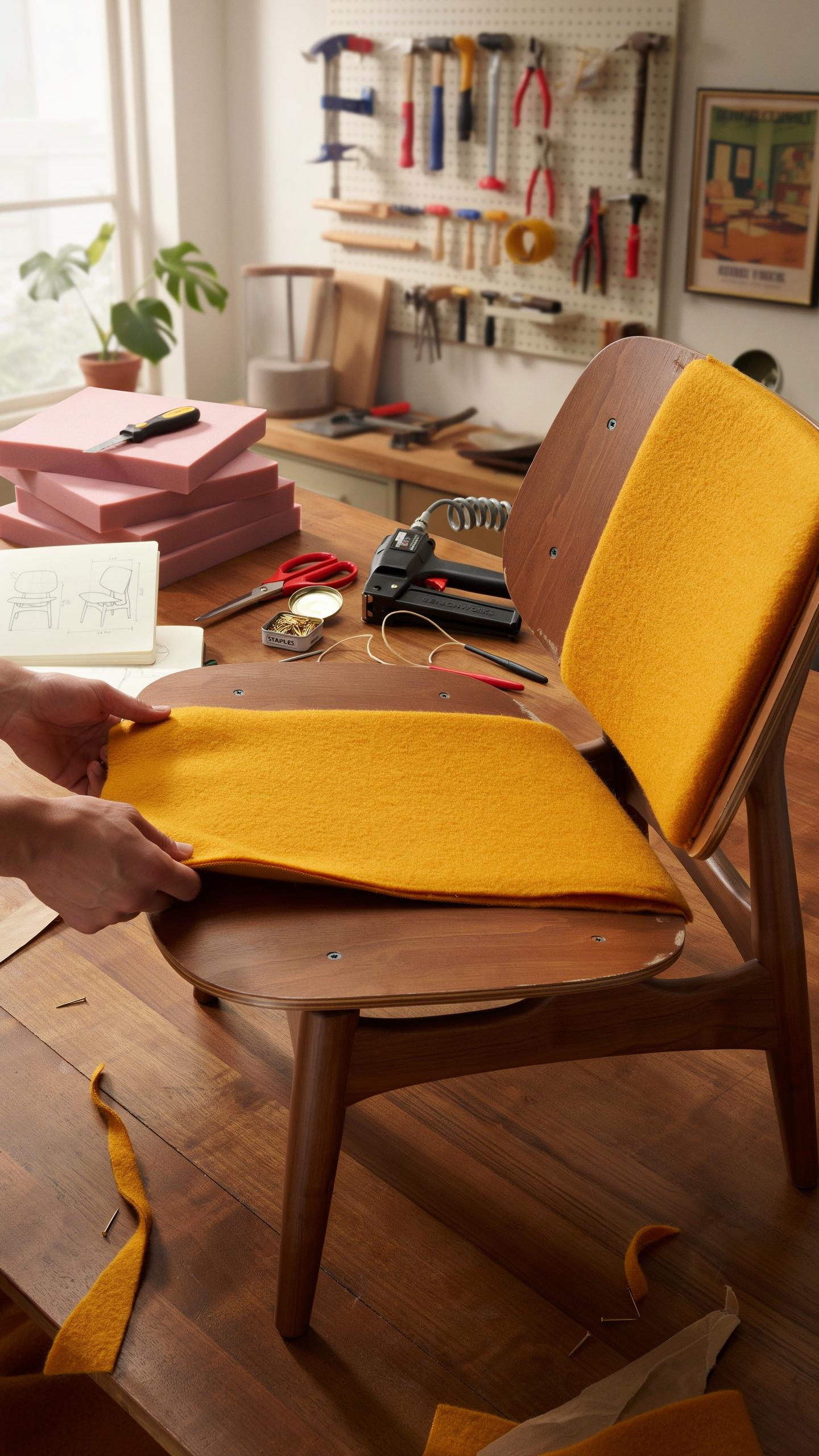
Original hardware from mid century chairs often includes wooden legs, metal brackets, and corner blocks that define the period. Preserve these components whenever possible because replacement hardware rarely matches the original construction quality or aesthetic authenticity. Document hardware placement with photos before disassembly to ensure accurate reinstallation during final assembly.
- Wooden legs and frame components: Clean thoroughly with a soft brush and mild soap solution. Avoid stripping or refinishing unless absolutely necessary, as original patina adds value and authenticity to the piece.
- Metal corner brackets and plates: Remove carefully with appropriate screwdrivers to prevent stripping screw heads. Store in labeled containers to prevent loss during the reupholstery process.
- Original coil springs and webbing: Inspect for rust, tears, or compression loss before deciding replacement is necessary. Many mid century chairs use eight-way hand-tied springs that function adequately if base structure remains sound.
- Foam deterioration assessment: Press firmly on existing foam to check for permanent compression or breakdown. Deteriorated foam loses its cushioning ability and creates lumps, warranting replacement with modern high-density foam of equivalent thickness.
- Webbing replacement guidance: Use traditional jute webbing for period-accurate restoration rather than synthetic alternatives. Apply webbing in a tight grid pattern using upholstery tacks or staples for proper support structure underneath new padding.
Deteriorated foam requires complete replacement to restore comfort and structure. High-density foam rated for furniture use provides appropriate support without compromising the chair’s original proportions. Measure existing foam thickness precisely and replicate it exactly to maintain the design integrity mid century craftsmen intended for the piece.
Achieving Tight Corners And Smooth Seams Every Time
Fabric tension determines whether your finished chair looks like amateur work or professional restoration. Start by anchoring fabric at the chair’s center point on each side, then work outward toward corners in small increments. Pull fabric with consistent pressure using your hand to guide it, then secure with staples spaced one inch apart for control.

Corners require a specific folding technique that eliminates bulk while maintaining clean lines. Fold fabric diagonally at each corner, creating a triangle point that sits flush against the frame. Staple this point first, then fold the two resulting flaps inward and staple them individually, creating a seam that appears tailored and intentional rather than makeshift or loose.
Timeless Retro Furniture Upholstery Ideas For Living Spaces
Working With Classic Earth Tones And Muted Pastels
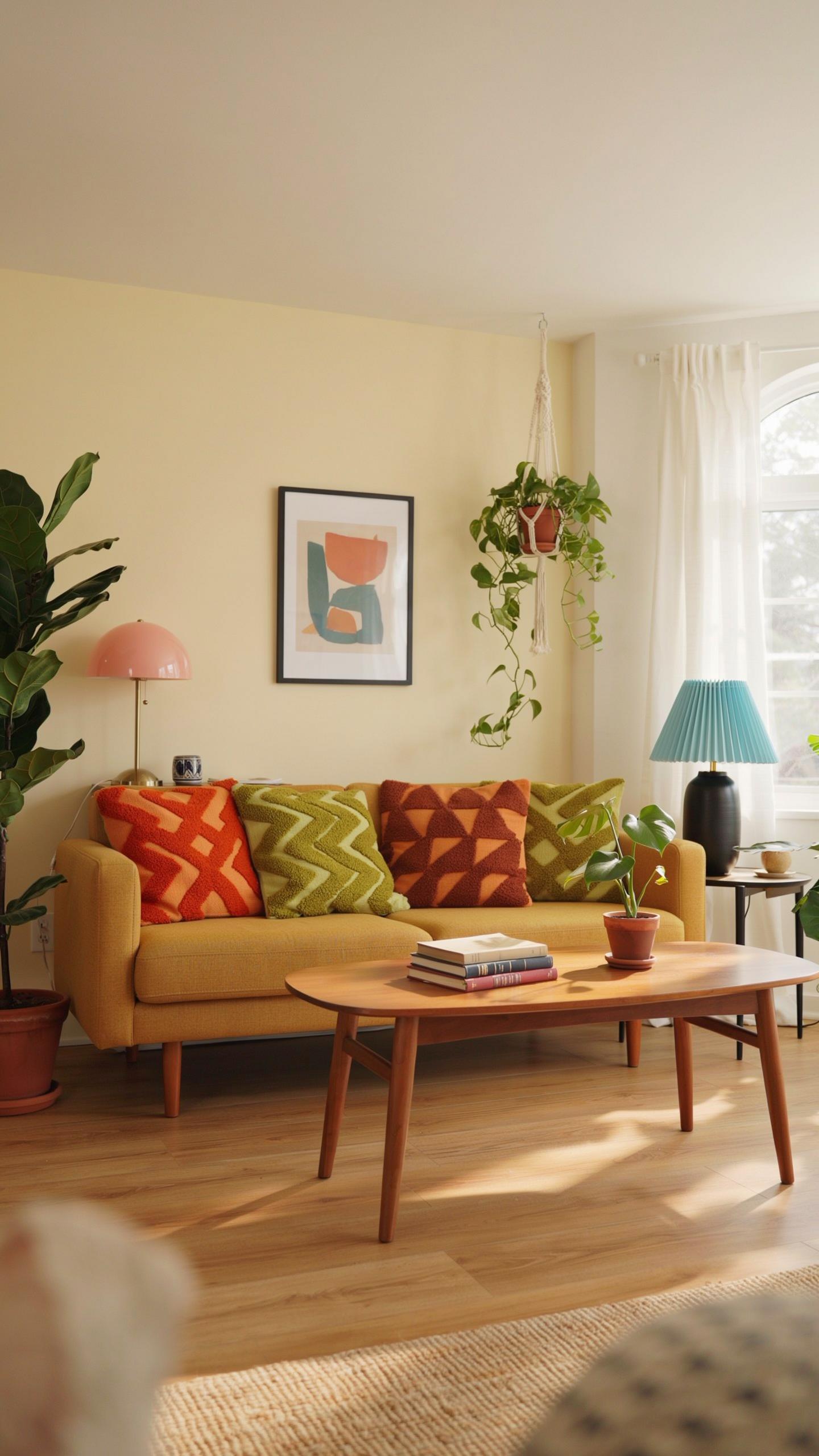
Mid-century design relied on specific color palettes rooted in post-war aesthetics and manufacturing capabilities. Olive greens, mustards, burnt oranges, and soft blues dominated the era because these colors matched both natural materials available and consumer preferences of the 1950s and 1960s. These tones work on reupholstered pieces because they reflect authentic design intent from the period.
When selecting fabric colors for your reupholstered mid-century furniture, source swatches in these traditional hues first. Test them against your existing room lighting and wall colors before committing to full yardage. Muted tones reduce visual fatigue and create the understated sophistication that defines mid-century interiors. Earth tones pair well with wood frames and metal legs typical of period pieces, maintaining design coherence without requiring additional accessories to sell the aesthetic.
Curating Harmony Between Reupholstered Pieces And Room Decor
Your reupholstered furniture must work within your existing architectural environment. Mid-century design emphasizes clean lines and functional forms that complement both period and contemporary elements when fabric choices align with your room’s dominant colors. Assess your lighting type, wall finishes, and existing furniture before selecting upholstery fabrics.

Match your reupholstered pieces to room proportions and function. A newly upholstered sofa in muted blue works better in spaces with warm wood tones and simple wall treatments than in rooms with competing patterns or bright accent colors. Use the furniture’s frame and legs as visual anchors, then select fabric that either echoes your architectural details or provides subtle contrast. This approach maintains visual balance without forcing design trends that contradict your space’s natural character.
Unique Retro Armchair Ideas To Elevate Your Interior Aesthetic
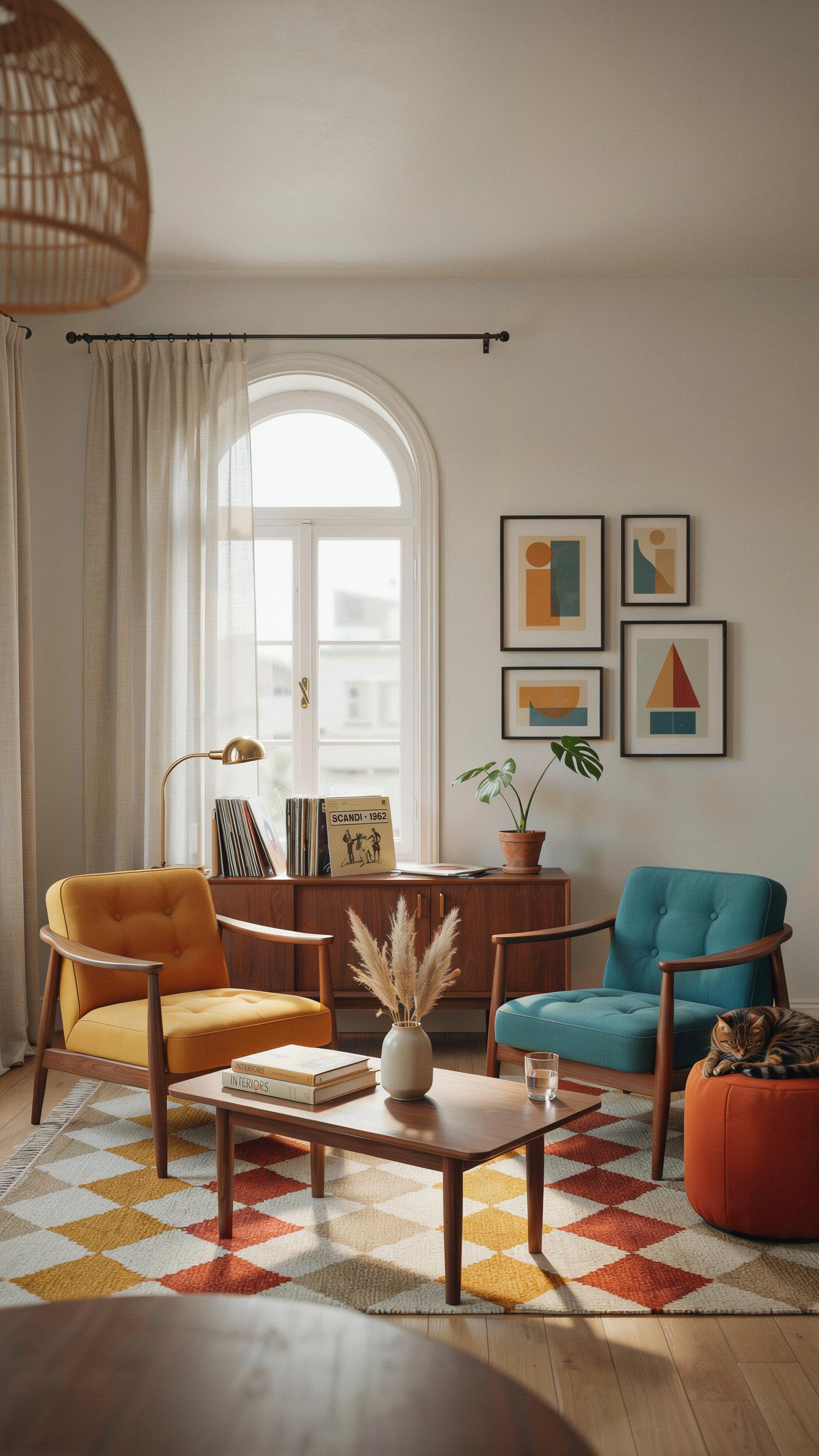
Utilizing Heritage Textiles Like Boucle And Classic Tweed Weaves
Boucle and tweed fabrics anchor mid-century reupholstery projects because they match the era’s construction methods and material availability. Boucle features looped fibers that create surface texture without adding bulk, making it ideal for armchair frames designed in the 1950s and 1960s. Tweed’s tight weave provides durability for high-use seating while delivering authentic period aesthetics. Both materials hide wear patterns better than smooth fabrics, extending the visual life of reupholstered pieces.
These textiles require specific upholstery techniques that account for their weight and fiber structure. Boucle demands tighter stapling patterns because the looped fibers can shift under tension. Tweed’s dense construction means you need sharp shears and proper blocking techniques to avoid fraying at seams. Source vintage or reproduction boucle and tweed from suppliers specializing in mid-century materials to ensure color and weave consistency with original designs.
Incorporating Sleek Leather And Vinyl For Industrial Mid Century Vibes
Leather and vinyl became status materials in mid-century office furniture, particularly in executive spaces during the 1950s and 1960s. Real leather develops patina over time and requires minimal maintenance, making it practical for armchairs in active living areas. High-quality vinyl mimics leather aesthetics while offering easier cleaning and lower cost, and modern vinyl formulations no longer crack like vintage versions from that era.

Install leather or vinyl using upholstery-grade adhesive and tack strips rather than stapling alone, since these materials don’t grip staples as effectively as fabric weaves. Ensure proper padding underneath to prevent the material from stretching during use. Specify at least 1.2mm thickness for durability, and inspect seams monthly during the first year to confirm they hold properly under sitting pressure and natural material movement.
Comprehensive Retro Chair Renovation Ideas For Beginners
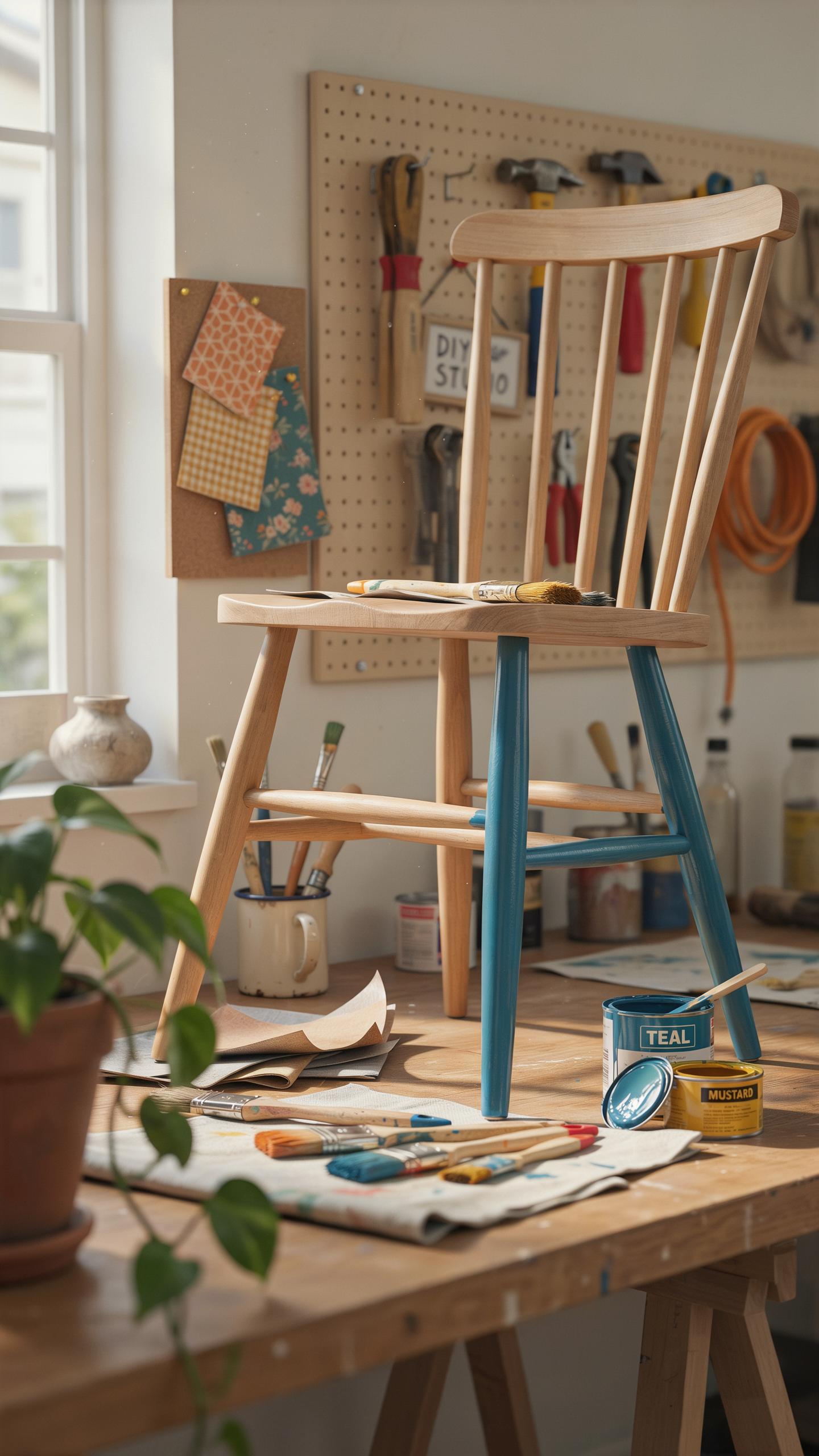
Restoring The Underlying Wood Finish Before Fabric Installation
Mid century furniture typically features exposed wood on legs, arms, and frames. This wood needs cleaning and finishing before you install new fabric. Dirt, old finish residue, and stains accumulate over decades. Strip these away using appropriate methods for the wood type and existing finish. Sand the wood after stripping to prepare it for a new finish.
Match your wood finish to the original style of the piece. Most mid century designs used natural stain or lacquer rather than paint. Apply stain or finish in thin coats to avoid buildup. Test your chosen finish on an inconspicuous area first. Proper wood preparation ensures your reupholstered piece looks intentional and cohesive, not patched together.
Inspecting And Repairing Internal Sagging Springs And Straps
Sagging occurs when webbing and springs deteriorate under body weight over time. Inspect these support systems by removing the old fabric and backing. Check jute webbing for tears, rot, or loose stapling along the frame. Coil springs should sit firmly on the webbing with no gaps or broken coils. Replace compromised webbing and springs before installing new fabric.
Jute webbing typically runs in perpendicular strips across the frame. Reweave new webbing following the original pattern and tension it evenly. Springs must sit centered on the webbing with proper spacing between each coil. Re-tension springs using a specialized tool to maintain consistent height and support. This foundation work prevents your new upholstery from sagging prematurely and maintains the frame’s intended silhouette.
Perfecting Your Mid Century Furniture Style Reupholstery Finish
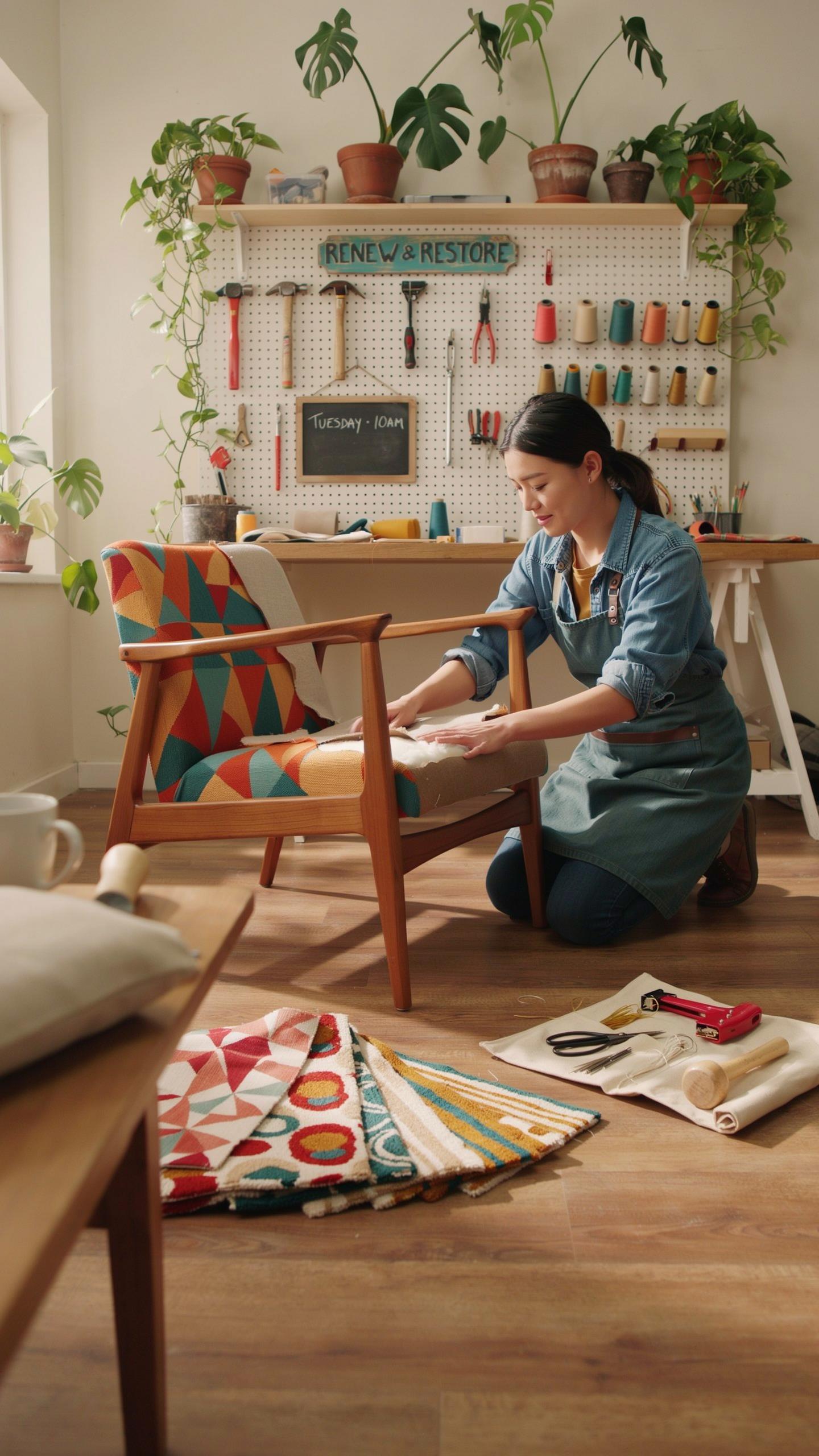
Adding Professional Touches With Piping And Decorative Welts
Piping and welts define the edges where fabric panels meet on mid century pieces. These trim elements serve a functional purpose by reinforcing seams while creating visual separation between upholstery sections. Double welts, standard on many vintage designs, provide structural integrity and authentic period detailing that distinguishes professional work from amateur attempts.
Choose piping that either matches your fabric or contrasts intentionally. Matching piping creates a streamlined appearance typical of minimalist mid century design. Contrasting piping, often in black or a complementary color, emphasizes the chair’s architectural lines and was common in Scandinavian and American modernist furniture. Install welts along all seams using a piping foot on your sewing machine or hand stitch for precision on curves and corners where machine work becomes difficult.
Protecting And Maintaining Your New Upholstery For Longevity
Fabric protectors extend upholstery life by repelling moisture and preventing stains from setting. Apply a commercial fabric protectant like Scotchgard after your reupholstery work completes. These products create a barrier without changing fabric appearance or feel, and they remain effective through multiple cleanings before reapplication becomes necessary.
Establish a maintenance routine that includes regular vacuuming with an upholstery attachment to remove dust and debris. Blot spills immediately with a clean cloth rather than rubbing, which drives liquids deeper into fibers. For mid century pieces, professional dry cleaning every two to three years maintains fabric condition and prevents buildup that dulls color and texture over time.
Frequently Asked Questions

Is it worth reupholstering vintage mid-century modern furniture?
Absolutely. Investing in mid century furniture style reupholstery is often better than buying new because vintage frames were built with superior hardwoods and craftsmanship. By refreshing the fabric, you preserve a high-quality piece of design history while updating its look for modern interiors. It allows you to maintain the iconic structural integrity of the era while eliminating decades of wear, ultimately increasing the piece’s longevity and market value.
How do I choose the right fabric for a mid-century reupholstery project?
Look for fabrics that echo the era’s textures, like nubby boucle, tweed, or a rich velvet, which read as authentic without looking dated. Solid colors or subtle geometric patterns tend to suit mid-century silhouettes better than busy florals. Durability matters too, since these frames are meant to last decades, so a higher rub-count fabric is worth the investment for pieces that will see daily use.
Should I reupholster the piece myself or hire a professional upholsterer?
Simple pieces like a single seat cushion or a straightforward armchair are reasonable DIY projects if you’re comfortable with a staple gun and some patience. Pieces with tufting, curved backs, or complex piping are best left to a professional, since mistakes are difficult to undo and can damage a valuable vintage frame. If the piece has real sentimental or resale value, the cost of a professional is usually worth protecting that investment.