Achieving Indoor Outdoor Harmony With Mid Century Modern Home Flooring
Designing The Perfect Transitional Threshold
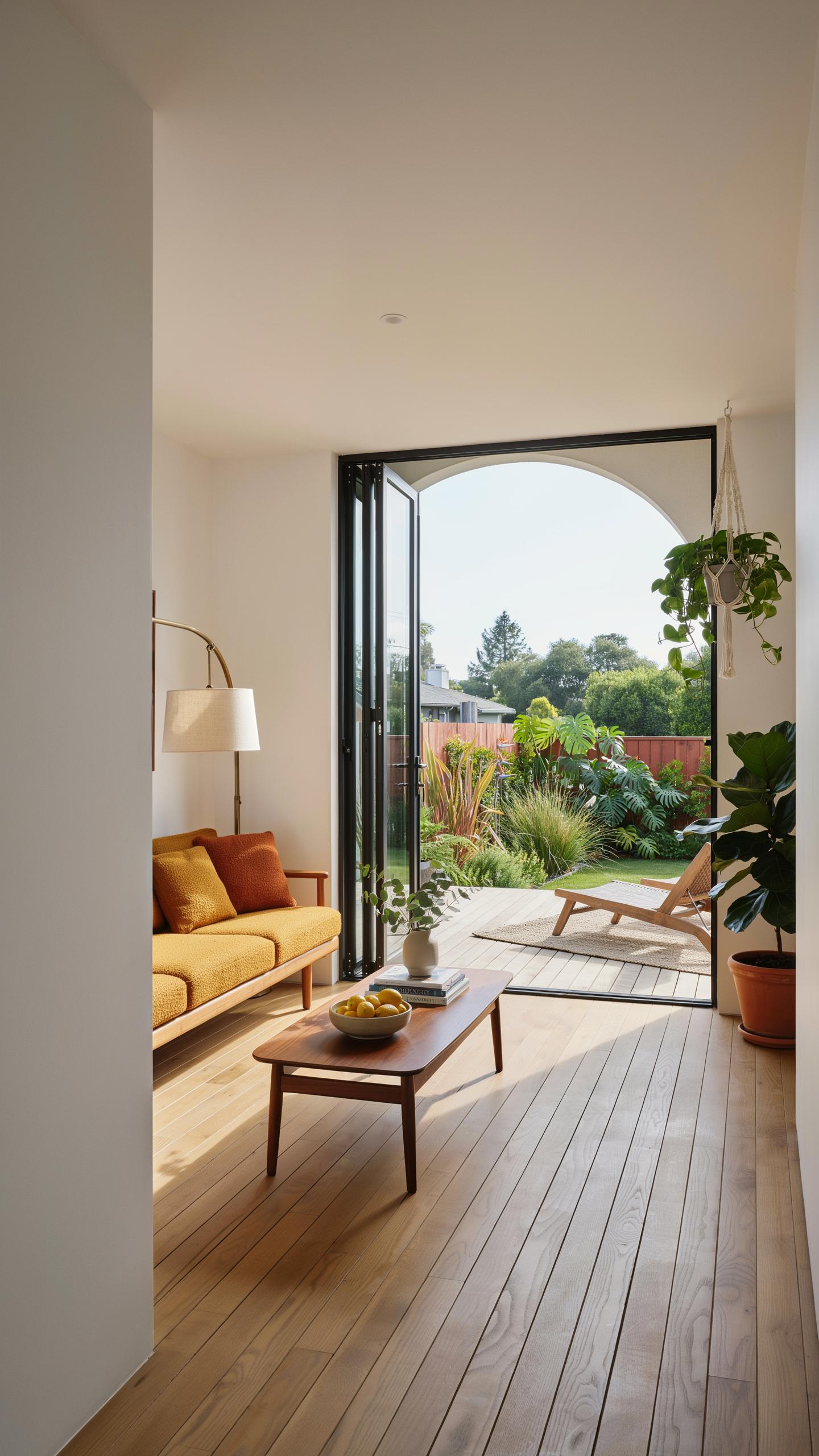
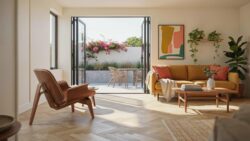
Mid century modern design prioritizes clean lines and functional transitions between spaces. The threshold between indoor and outdoor areas requires matching flooring heights to eliminate trips and visual breaks. Align your indoor floor level with your patio surface by calculating substrate depths and base materials. A level transition signals intentional design rather than an afterthought. Use flooring that extends from inside to outside without interruption to reinforce spatial continuity.
Color consistency matters more than material matching in mid century modern design. Select outdoor flooring in the same color family as your indoor floors to create visual flow. Concrete stains, tile glazes, and stone finishes can replicate interior tones on exterior surfaces. Avoid stark contrasts that fragment the space visually. The threshold itself becomes invisible when colors align, allowing your eye to travel freely between zones.
Visually Expanding Your Space With Uniform Materials
Mid century modern interiors use consistent material palettes to make rooms feel larger. Apply this principle across your indoor outdoor boundary by repeating floor tones and textures. Polished concrete, sealed tile, or composite decking in matching shades create an unbroken visual plane. The human eye perceives uniform surfaces as single spaces rather than separate rooms. This expansion effect costs nothing beyond thoughtful material selection during initial planning.
Texture uniformity enhances the expansion effect without requiring identical materials. A smooth interior floor can pair with a slightly textured outdoor surface that matches in color and tone. Concrete, porcelain tile, and sealed wood all work together when their undertones align. Matte finishes create visual coherence better than high gloss surfaces that create obvious material distinctions. Your space feels 20 to 40 percent larger when the floor reads as one continuous plane.
Embracing Warmth With A Great Mid Century Modern Wood Floor
Selecting Durable Species For Transitional Decks
Mid century modern design favors clean lines and natural materials that age visibly. Teak, redwood, and cedar deliver this aesthetic while offering genuine weather resistance. Teak contains natural oils that repel moisture and insects, making it the most durable option for outdoor spaces. Redwood and cedar resist rot better than most softwoods but require more maintenance than teak. Choose based on your climate and willingness to maintain the finish over time.
The mid century era prioritized honest material expression, meaning wood species that show their age fit the design philosophy. These three species develop silver-gray patina outdoors, which aligns with the period’s aesthetic values. Redwood and cedar cost less than teak but demand regular sealing. Your choice depends on budget constraints and the specific outdoor environment you are protecting.
Proper Sealing And Maintenance For Outdoor Woods
High quality exterior sealers are non negotiable for outdoor mid century wood flooring. Penetrating oil sealers preserve the wood’s grain visibility while offering water protection. These sealers soak into the wood rather than creating a surface film, maintaining the authentic mid century appearance. Reapply penetrating sealers every one to three years depending on weather exposure and foot traffic intensity.
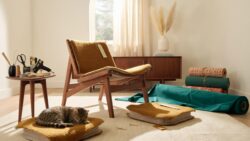
UV damage fades wood color faster than moisture does, so sealers with UV blockers serve dual purposes. Water based polyurethane sealers offer durability but create a visible surface coating that changes the wood’s character. Traditional finishes like linseed oil deliver authentic period aesthetics but require more frequent reapplication. Plan your maintenance schedule before installation to ensure you can commit to the upkeep your chosen species demands.
Elevating Patios With Terrazzo Mid Century Modern Patterns
Historical Significance Of Terrazzo In MCM Architecture
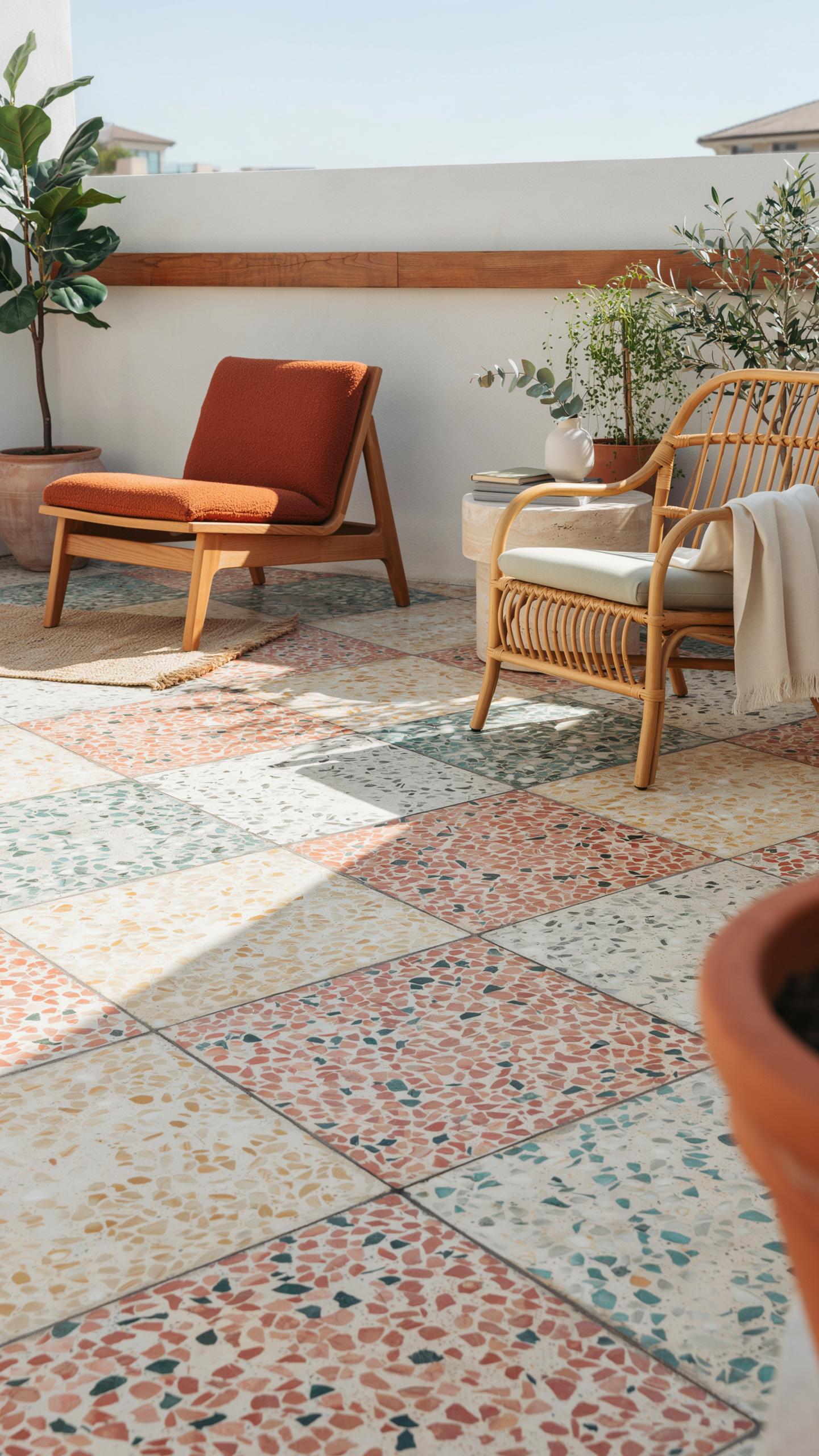
Terrazzo gained traction during the mid-century modern period because it solved practical problems while delivering visual sophistication. Architects and designers valued terrazzo for its durability, seamless integration between interior and exterior spaces, and ability to reflect the era’s emphasis on honest material expression. The material’s polished surface and embedded stone chips aligned with MCM principles of blending function with aesthetic refinement.
Terrazzo appeared prominently in mid-century residential and commercial projects throughout the 1950s and 1960s. Its popularity stemmed from postwar manufacturing advances that made terrazzo production more accessible and affordable than previous decades. The material’s low maintenance requirements and longevity made it practical for high-traffic areas, positioning it as the logical choice for designers who wanted durability without aesthetic compromise in open-air living spaces.
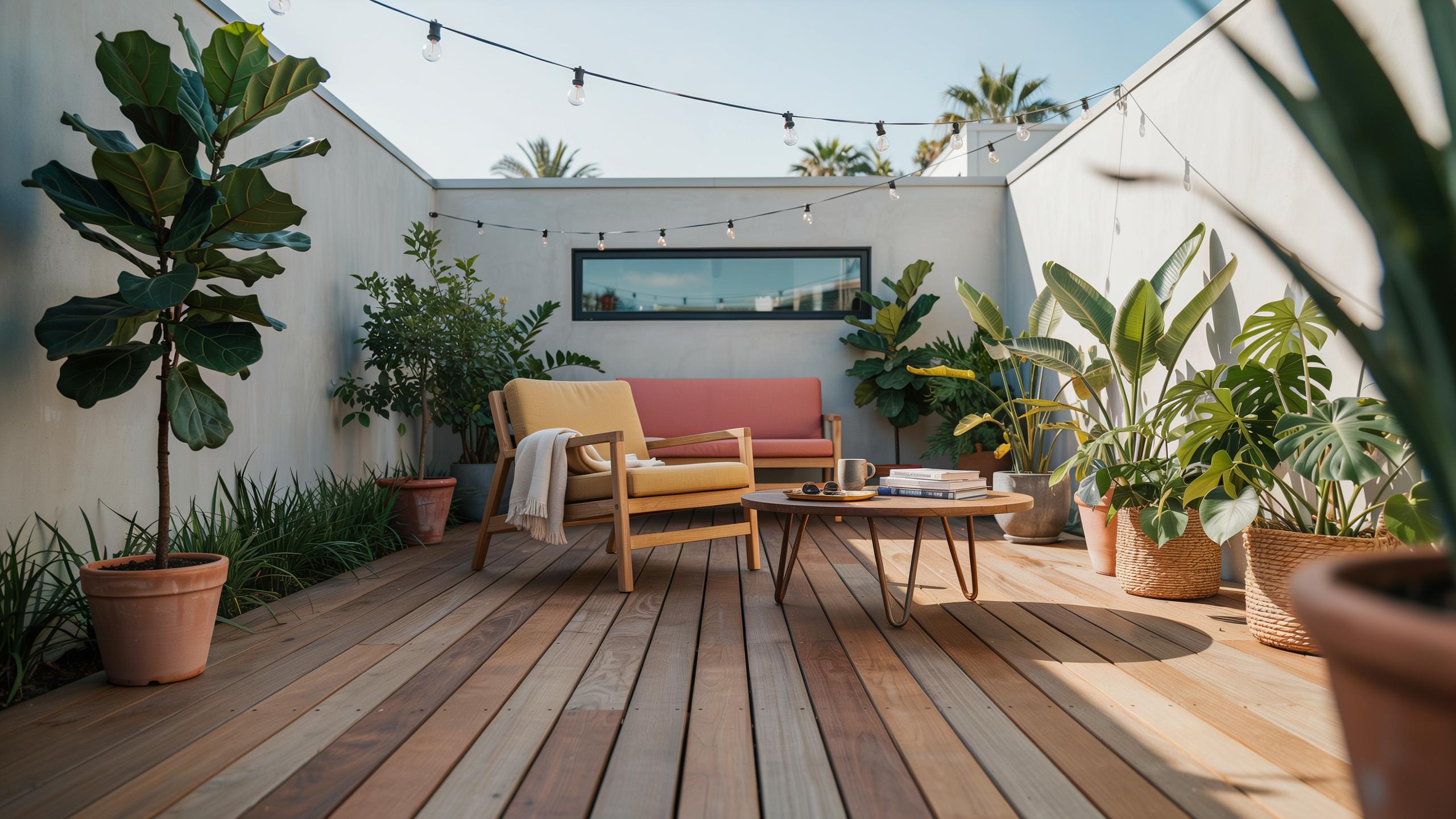
Natural materials and clean lines underfoot erase the boundary between our living rooms and the sky. A simple deck should be a quiet stage for the beauty of the outdoors to perform.
Modern Terrazzo Style Pavers For Exterior Use
Contemporary precast terrazzo patio stones replicate the authentic terrazzo look without requiring on-site installation by skilled specialists. These pavers come pre-finished with polished surfaces and embedded aggregates in period-accurate color combinations. Manufacturers engineer them to withstand freeze-thaw cycles, UV exposure, and foot traffic, making them reliable for patios in various climates. The modular format allows straightforward installation over existing concrete or properly prepared base layers.
Modern terrazzo-style pavers deliver practical advantages for outdoor applications. They resist staining better than natural stone, require minimal sealing compared to traditional terrazzo, and allow simple individual replacement if damage occurs. Homeowners can source these pavers in authentic MCM patterns including speckled gray, charcoal with light aggregate, and neutral earth tones that complement mid-century design schemes without extensive maintenance commitments.
The Versatility Of Mid Century Floor Tile For Covered Patios
Selecting Weather Resistant Ceramic And Porcelain Options
Porcelain tile outperforms ceramic for covered patios in freeze-thaw climates. Porcelain has lower water absorption rates, typically under 0.5%, compared to ceramic’s 3-10%. This density prevents moisture penetration and cracking during temperature swings. Specify tiles rated for freeze-thaw resistance per ASTM C1026 standards. Matte finishes replicate period-appropriate aesthetics while modern production achieves non-slip surfaces through textured glazes or unglazed options. Verify slip resistance ratings meet DCOF requirements for safety on covered outdoor spaces.
Glazed porcelain tile with satin or matte finishes captures authentic mid-century visual character without sacrificing durability. Unglazed porcelain offers superior grip underfoot, critical for wet covered patios. Request samples in your climate zone before purchasing full quantities. Thickness of 12mm or greater handles freeze-thaw cycles better than thinner tiles. Installation requires proper substrate drainage and mortar designed for exterior conditions to prevent failure beneath the surface.
Key Geometric Patterns And Colors To Consider
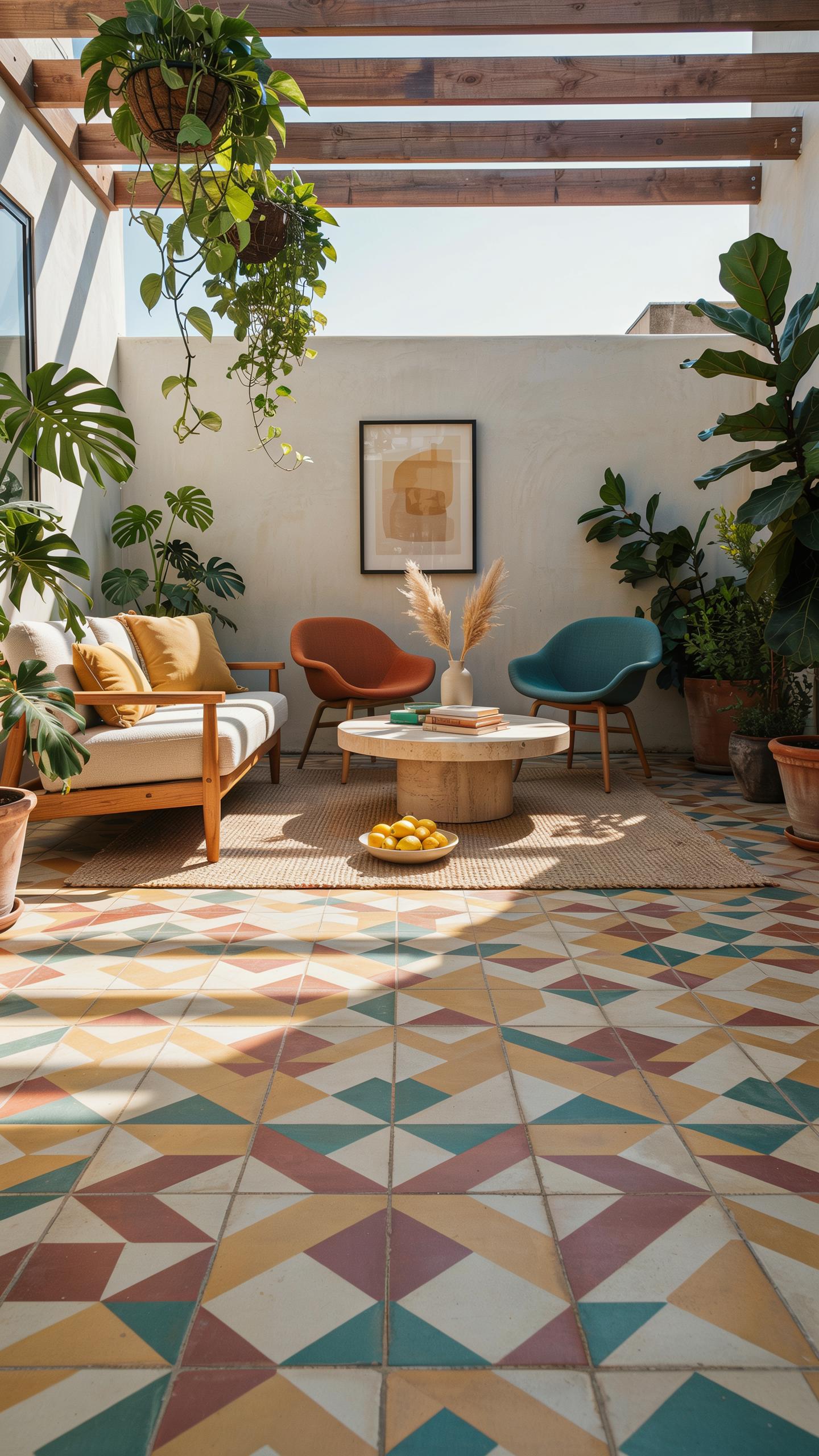
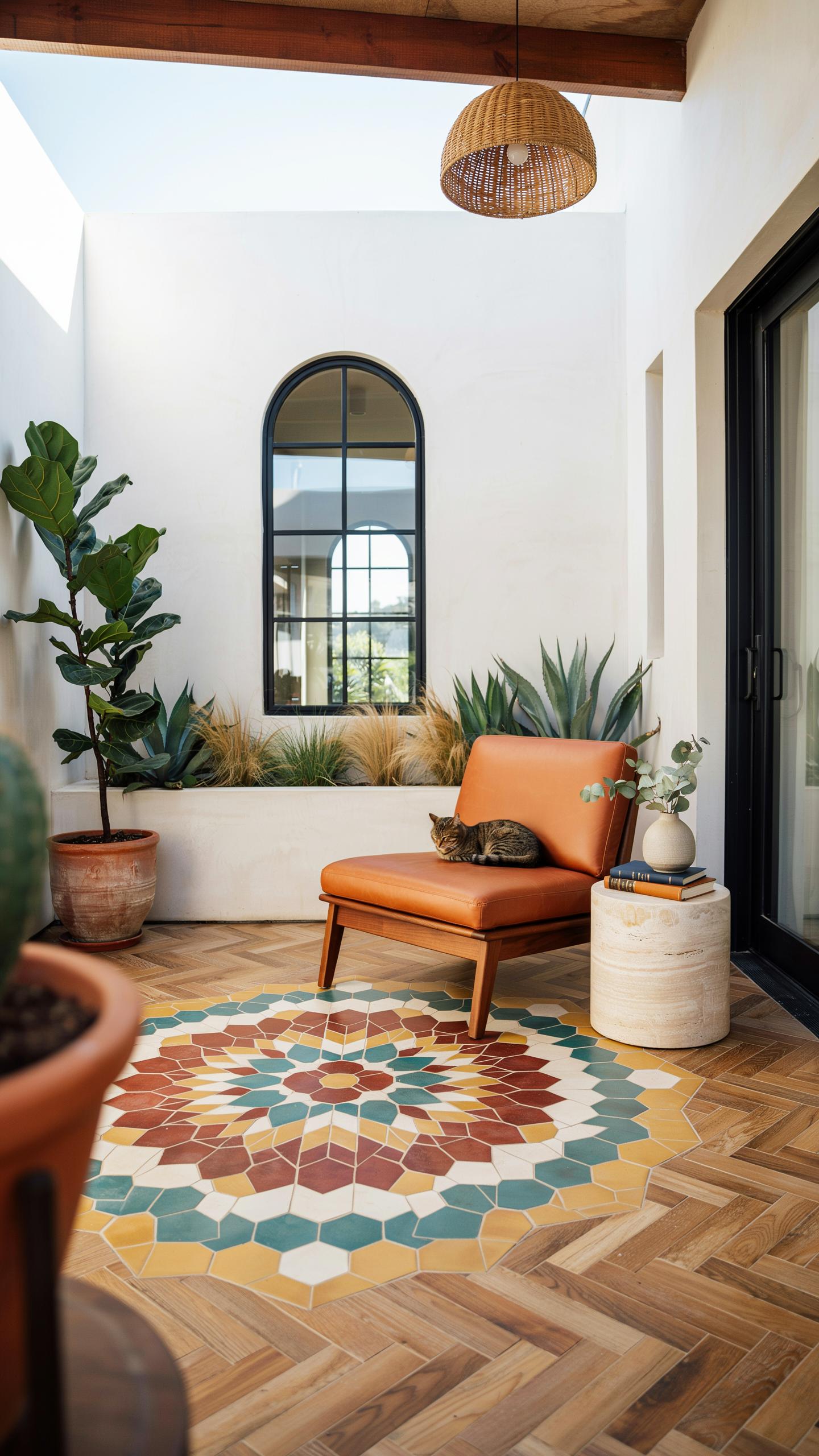
Mid-century design embraced mathematical geometry and bold color blocking. Tile patterns from this era draw directly from modernist principles emphasizing clean lines and proportional relationships. Covered patios benefit from layouts that create visual continuity with interior spaces while establishing distinct outdoor zones through pattern variation.
- Stacked Vertical Grids: Rectangular tiles arranged in running bond or grid patterns create rhythm and directional flow. Common in 1950s-1960s residential design, this layout works well for rectangular patio spaces.
- Brick Bond Patterns: Offset rectangular tiles mimic brick masonry while maintaining a modern aesthetic. This pattern provides visual interest without the complexity of intricate geometric designs.
- Hexagonal Layouts: Six-sided tiles arranged in honeycomb formation represent classic mid-century geometry. Typically available in 4-8 inch sizes, hexagons work particularly well for irregular covered patio shapes.
- Checkerboard Two Color Schemes: Alternating contrasting tiles in black-white, navy-cream, or earth tone combinations reflect period color palettes. This pattern requires precise installation but delivers strong visual impact.
- Diagonal Runs: Tiles laid at 45-degree angles create dynamic visual movement. This technique appeared frequently in 1950s-1960s residential projects and suits square patio footprints.
Color selection should reference actual mid-century palettes: warm grays, charcoals, ochres, terracotta, and muted blues dominated flooring choices. Avoid oversaturated colors as modern manufacturing produces pigments far brighter than original tile stocks. Test full tile samples under your site’s lighting conditions for minimum one week before committing to the pattern.
Innovative Midcentury Flooring Ideas For Courtyards
Blending Concrete Slabs With Natural Accents
Concrete slabs became the foundation of midcentury modern design because they offered clean lines and affordability. Designers arranged oversized square pavers in grid patterns to create visual order and rhythm. This grid layout simplified construction while establishing the geometric principles that defined the era’s aesthetic approach to outdoor spaces.
Surrounding concrete with natural elements balanced the hardscape’s severity. River rocks, gravel, and groundcover plants softened grid edges while maintaining the design’s ordered character. This combination reinforced the midcentury philosophy of merging human-made materials with nature rather than replacing it entirely.
Alternative Natural Materials For Retro Accents
Midcentury designers paired concrete with specific natural materials to establish authentic courtyard borders and transition zones. These materials offered texture, warmth, and visual interest while anchoring the design to regional landscapes.
- Slate: Provides dense, flat surfaces in gray and charcoal tones. Slate splits naturally into thin sheets, making it practical for border applications and steppers within gravel fields.
- Brick: Offers warm earthiness in red, tan, and brown. Brick’s modular size and traditional production made it accessible during the midcentury period and remains cost-effective for edging applications.
- Flagstone: Delivers irregular polygonal shapes in neutral grays and sandstone hues. Flagstone’s natural fracture patterns create visual movement while maintaining the ordered aesthetic midcentury design required.
- Decomposed Granite: Compacts firmly into stable surfaces with warm, natural coloring. This material bridges concrete and softer groundcovers while supporting the era’s preference for permeable, maintenance-conscious solutions.
- Stone Setts: Small cubic stones originally used in European courtyards. Setts create detailed grid patterns that echo concrete’s geometric language while introducing texture and traditional craftsmanship.
Layering these materials created depth without visual chaos. Designers used natural materials as accents rather than primary surfaces, supporting the midcentury principle of restraint and purposeful material selection in outdoor spaces.
Capturing The Classic Mid Century Modern Floor Aesthetic With Polished Concrete
The Minimalist Appeal Of Raw Concrete Surfaces
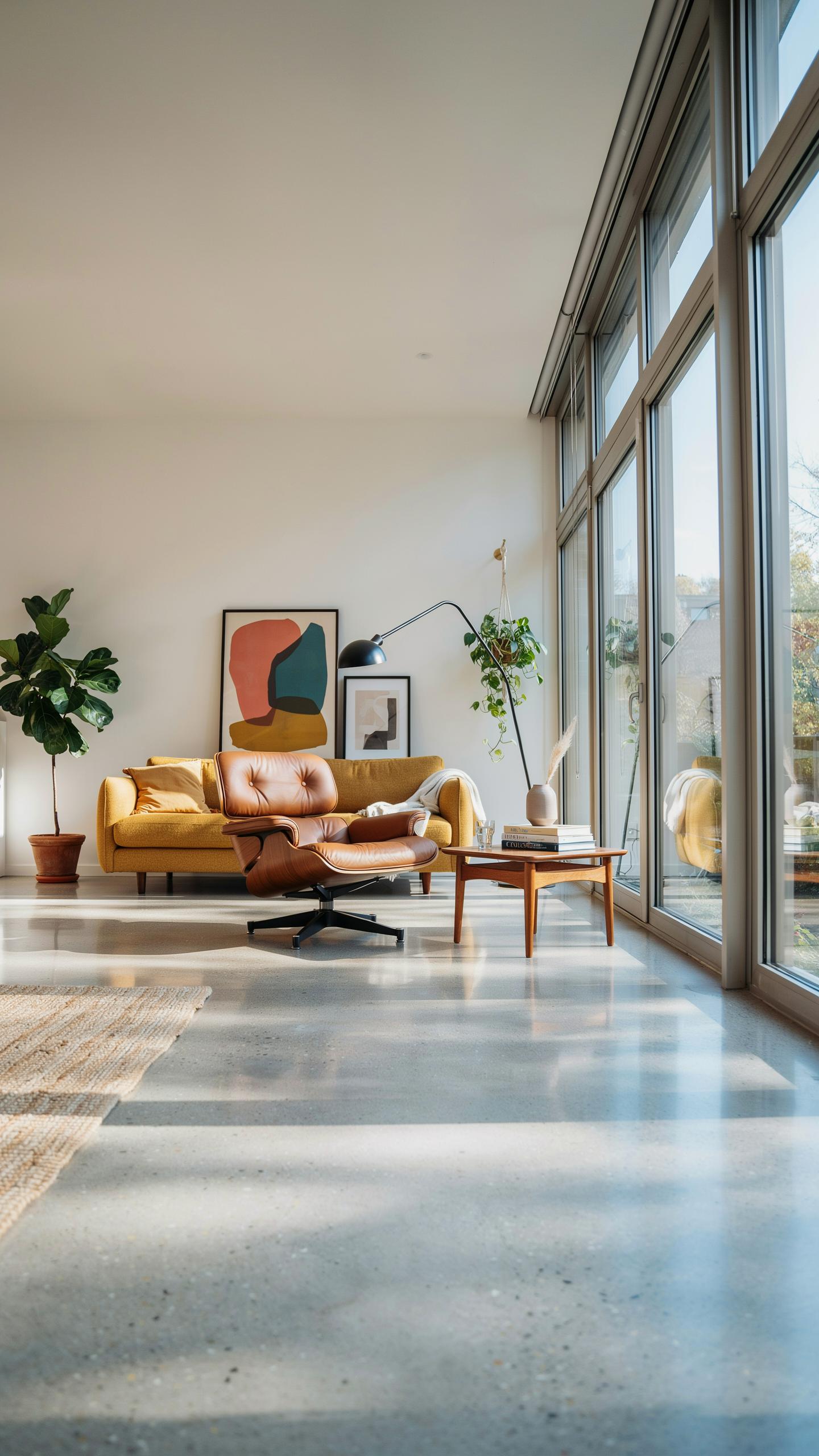
Concrete became a staple in mid century modern design because it aligned with the movement’s core principle: form follows function. Designers rejected ornamental flooring in favor of materials that served a purpose and showed their true nature. Polished concrete delivers this philosophy directly. The surface exposes aggregate, color variations, and the material’s inherent texture without disguise or pretense.
Stained and acid-washed concrete finishes offer tactical control over appearance while maintaining the industrial honesty the movement demanded. Acid washing creates subtle color shifts and reveals the stone composition beneath the surface layer. Dyes penetrate concrete uniformly or create intentional patterns. These techniques cost less than replacing flooring and work with existing slabs, making them practical for homeowners modernizing older structures or planning new construction.
Seamless Visual Lines From Living Room To Lanai
Poured-in-place concrete eliminates thresholds and transitions that break visual continuity. A single slab can extend from interior living spaces directly onto outdoor patios without seams, steps, or material changes. This uninterrupted floor plane was central to mid century modern design strategy. It erased the boundary between inside and outside, supporting the era’s emphasis on open living and connection to landscape.
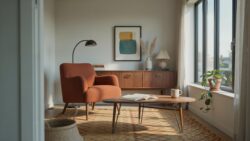
The continuity serves practical purposes beyond aesthetics. No grout lines trap debris or create maintenance headaches. Water flows predictably across a unified surface. Installing radiant heating beneath concrete works seamlessly across interior and exterior zones. Homeowners achieve functional clarity and visual calm simultaneously, which defines mid century modern design at its core.
Sustainable Mid Century Modern Flooring Options For Modern Atriums
Utilizing Eco Friendly Sourced Materials
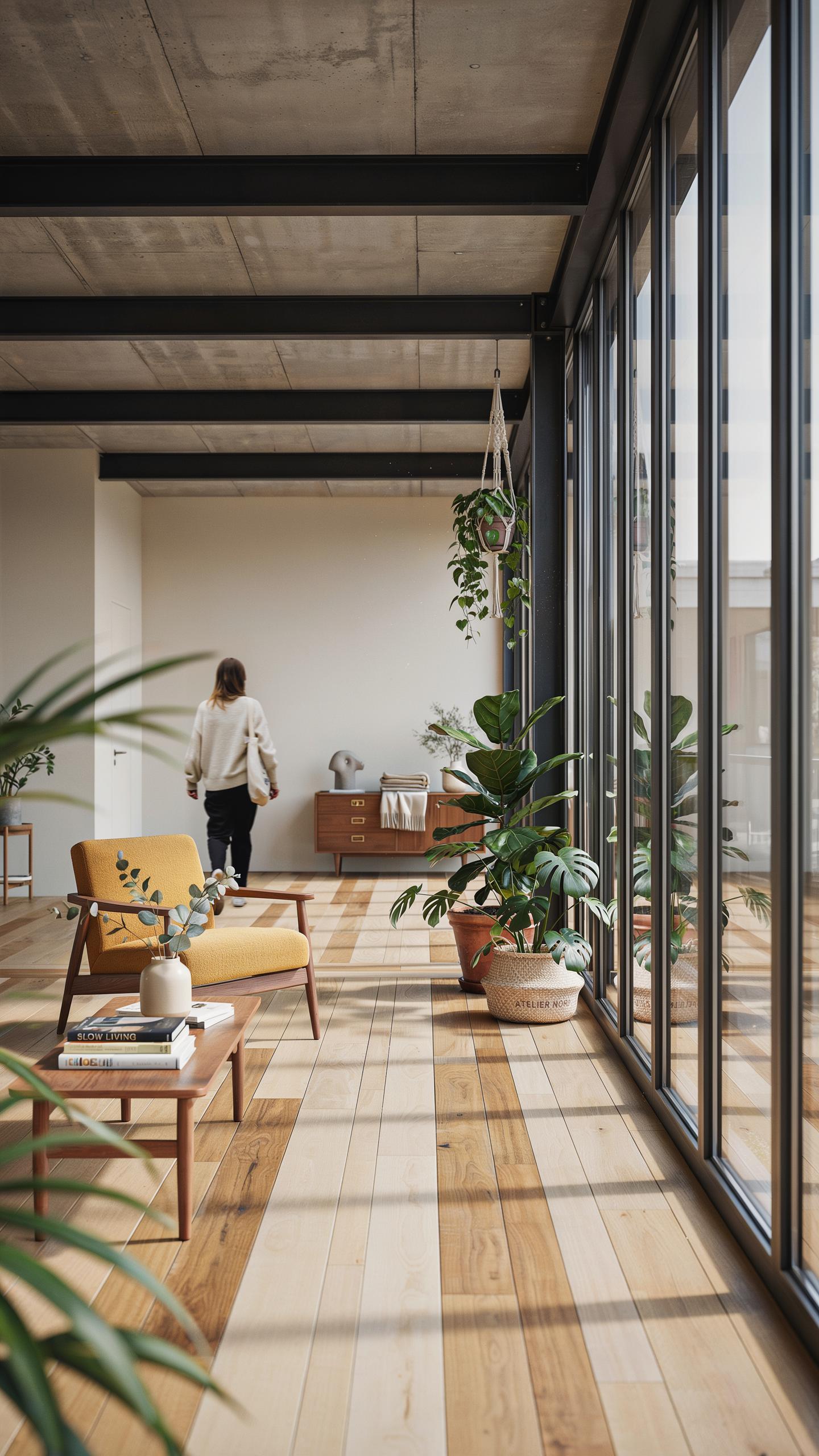
Mid century modern design emerged during a period when architects and designers began questioning industrial waste and advocating for responsible material use. Sustainably harvested hardwoods like teak and walnut became popular choices because they offered durability while respecting forest management practices. Today, reclaimed wood flooring directly echoes this MCM philosophy by repurposing materials from old structures, reducing new extraction demands while delivering authentic period aesthetics to atriums.
Recycled composite materials now provide practical alternatives that maintain MCM visual principles without relying solely on virgin timber. These composites combine recycled plastics and wood fibers to create stable, low maintenance surfaces suitable for transitional indoor outdoor spaces. They resist moisture damage better than solid wood, making them ideal for atriums exposed to humidity and temperature fluctuations while honoring the movement’s core environmental values.
The Biophilic Connection Of Earthy Elements
Natural stone tiles ground atrium spaces in the MCM principle of connecting interiors with landscape design. Slate, limestone, and granite offer thermal mass properties that moderate temperature shifts typical in semi enclosed areas. These materials age visibly, developing patina that strengthens the visual bond between built structure and natural surroundings that MCM designers intentionally cultivated.
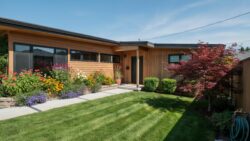
Stone flooring transitions smoothly between native plantings and architectural surfaces, creating unified visual flow that MCM aesthetics demanded. Neutral earth tones in stone complement organic shapes and materials characteristic of the movement. The tactile and thermal qualities of natural stone reinforce biophilic design principles by maintaining sensory connection to natural materials and environmental processes.
Low Maintenance Midcentury Flooring For Seamless Living
Cleaning And Maintaining Exterior Surfaces
Pressure washing works best for concrete slabs and pavers used in midcentury outdoor spaces. Set pressure between 1500 to 2000 PSI to avoid surface damage. Sweep regularly to remove debris that traps moisture and causes staining. For tile surfaces common in midcentury designs, use pH neutral cleaners to prevent grout degradation and discoloration over time.
Sealed concrete requires different maintenance than unsealed pours. Reapply concrete sealer every two to three years depending on climate and foot traffic. For natural stone pavers popular in the 1950s and 1960s, avoid acidic cleaners that etch surfaces. Moss and algae growth indicates moisture problems requiring improved drainage underneath the flooring structure.
Adapting Mid Century Design For Daily Lifestyle Demands
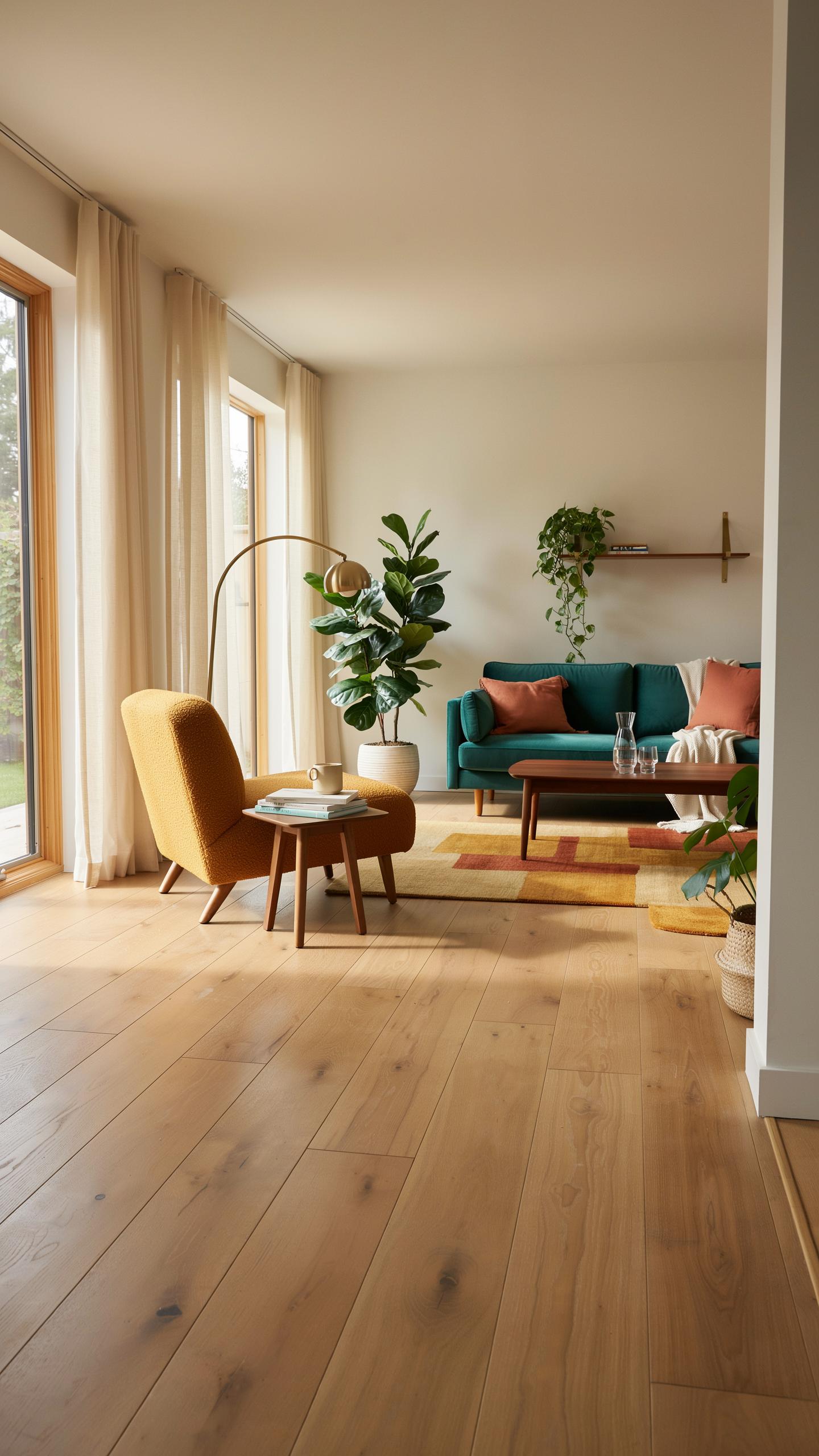
Midcentury outdoor flooring materials like flagstone and clay brick absorb water and stain easily. Apply penetrating sealers that protect against moisture without changing the authentic appearance. Modern polyurethane coatings create durable protective layers while maintaining the clean lines and minimal aesthetic central to midcentury design principles.
Pet claws and high foot traffic damage unsealed surfaces quickly. Polished concrete with protective coatings handles pet wear better than natural stone. Kids’ activities require slip resistant surfaces that don’t compromise design intent. Commercial grade sealers rated for heavy use provide practical durability while preserving the honest material expression that defines midcentury modern style.
Frequently Asked Questions

What defines mid century modern home flooring for an outdoor setting?
Outdoor mid century modern home flooring is defined by clean lines, organic textures, and a seamless transition between the indoors and nature. Typical materials include large-format concrete pavers, natural slate, or geometric stone tiles. The goal is to create a minimalist, functional surface that emphasizes a horizontal plane, allowing your patio to feel like a natural extension of your home’s interior living area while maintaining a timeless, sophisticated aesthetic.
How do I choose the right layout for my mid century modern patio tiles?
To achieve an authentic look, opt for a grid or stacked bond pattern rather than staggered joints. This linear arrangement emphasizes the structural simplicity inherent in the style. When installing mid century modern home flooring outside, ensure you use narrow grout lines in a matching color to create a continuous, monolithic appearance. This reinforces the “inside-out” flow that is a hallmark of iconic 1950s and 60s residential architecture.
Are there affordable ways to get a mid century look without a full renovation?
Absolutely. If a complete stone installation isn’t in your budget, you can use concrete stains or porch paints to mimic the look of high-end materials. Stenciling a simple geometric starburst or atomic pattern onto an existing slab is a cost-effective alternative. Additionally, interlocking deck tiles in a light teak or redwood finish provide a warm, modular feel that captures the era’s spirit without the high cost of custom masonry.