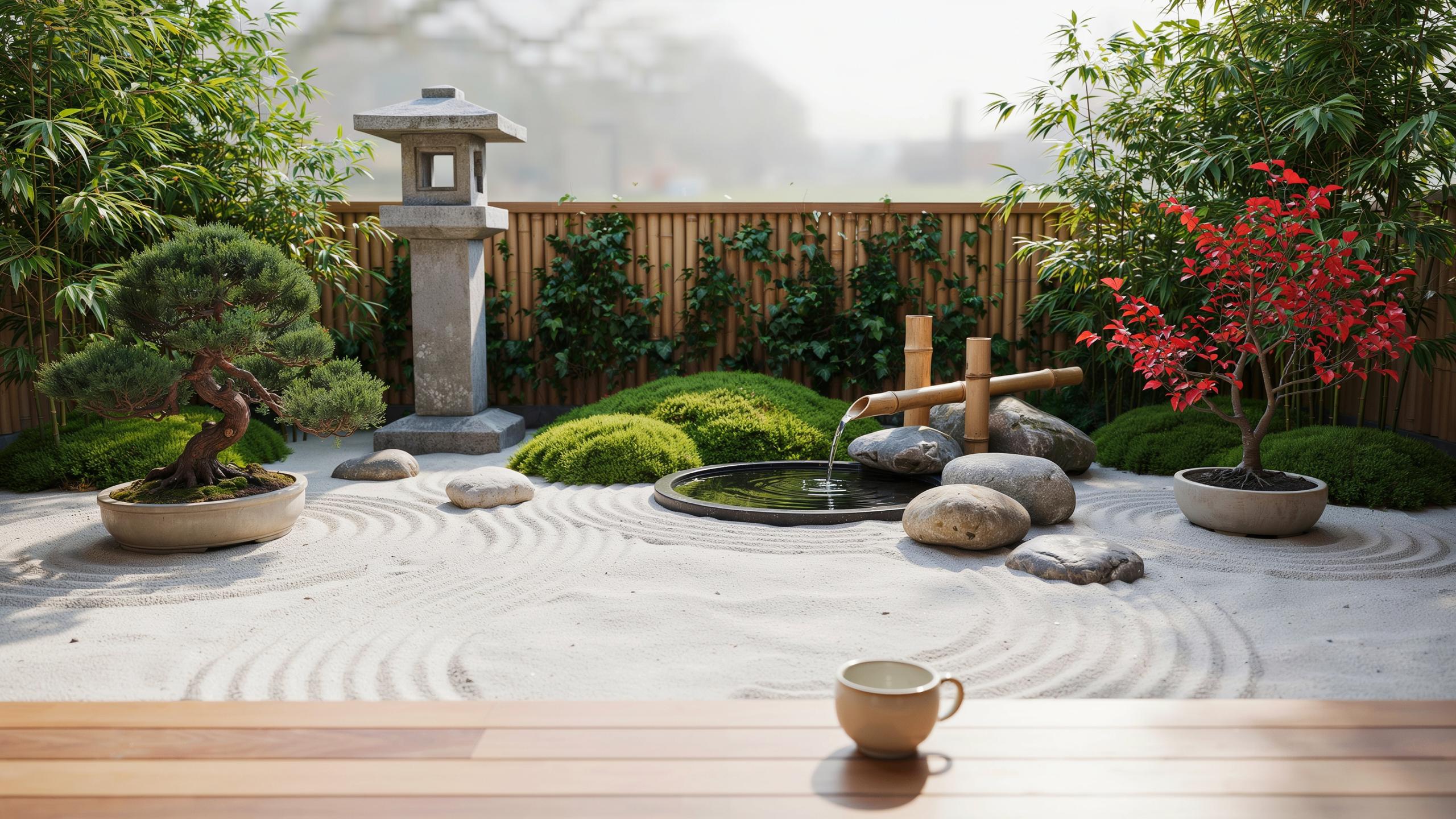
What Is A Zen Garden Design And Where Did It Originate
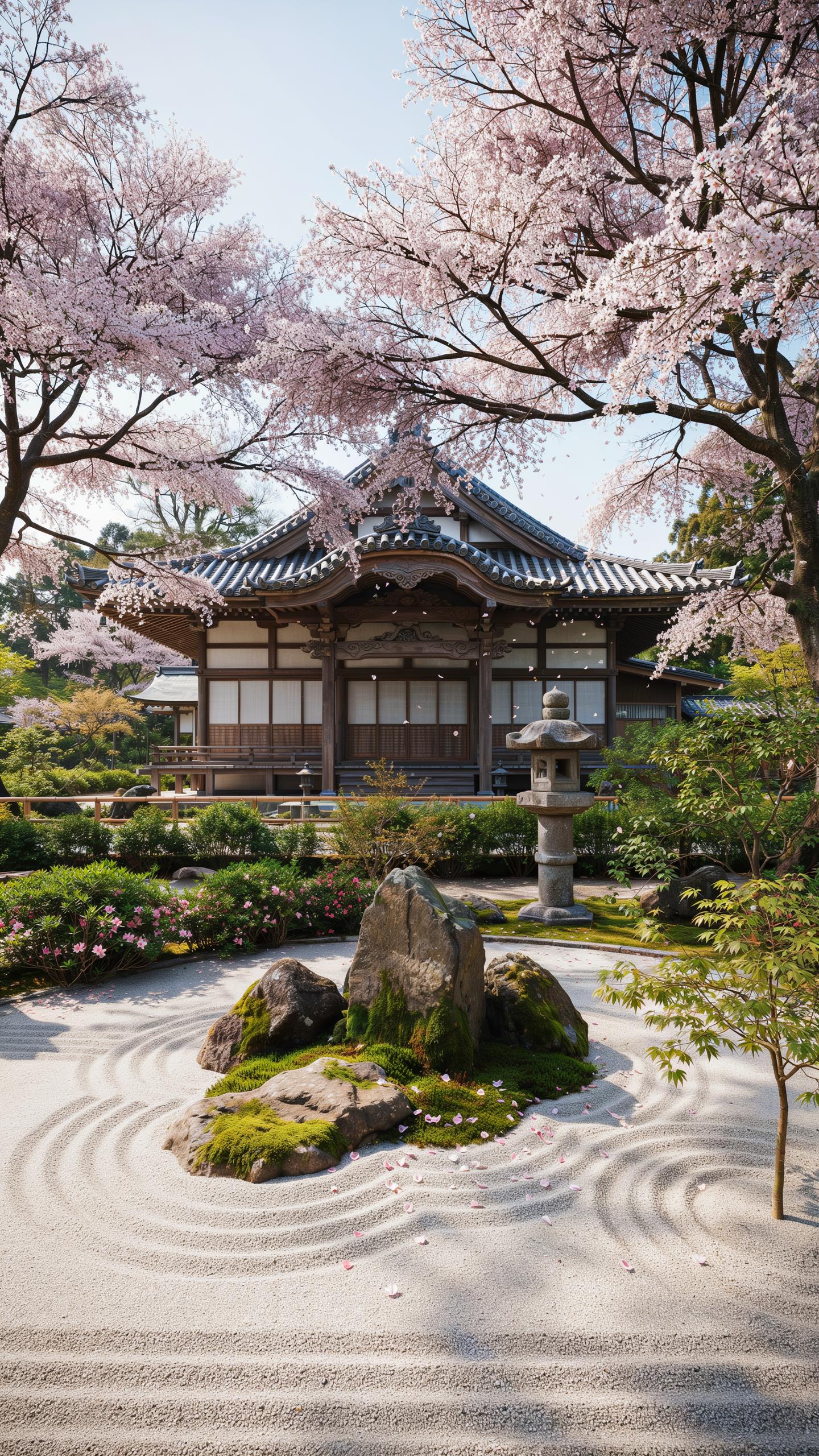
The Historical Roots Of The Japanese Zen Garden
The Japanese Zen garden appeared during the Muromachi period between the 14th and 16th centuries. Buddhist monks created these spaces for silent meditation and mental discipline. They moved away from the lush pond gardens of earlier eras. Instead, they built dry landscapes known as karesansui. These gardens used only rocks and gravel to represent the natural world. This shift reflected a move toward minimalist religious practice.
Zen monks built these gardens within temple grounds to help practitioners focus the mind. The most famous example sits at Ryoan-ji in Kyoto. Medieval designers stripped away water and plants to eliminate distractions. They used gravel to mimic the flow of rivers or oceans. Every placement followed strict rules of balance and depth. This historical approach changed how people viewed outdoor spaces. It turned gardens into tools for serious psychological work.
How Japanese Zen Philosophy Shapes Garden Aesthetics
Zen philosophy dictates the layout of every rock and grain of sand. The concept of Ma emphasizes the importance of empty space. This empty space gives the mind room to rest and breathe. Designers use asymmetry to avoid the perfection found in man-made objects. This reflects the reality of nature. The garden acts as a physical map of internal peace. It forces the viewer to find meaning in simplicity.
Wabi-sabi is another core principle that drives the design choices. This philosophy finds beauty in things that are imperfect or old. Weathered stones and moss show the passage of time. Designers do not hide age or wear. Instead, they highlight these traits to show the truth of life. This practical application of philosophy ensures the garden remains a functional tool. It is not a decorative display but a space for quiet reflection.

Core Elements That Define A Traditional Zen Garden Layout
The Role Of Gravel Sand And Raked Patterns In A Zen Garden
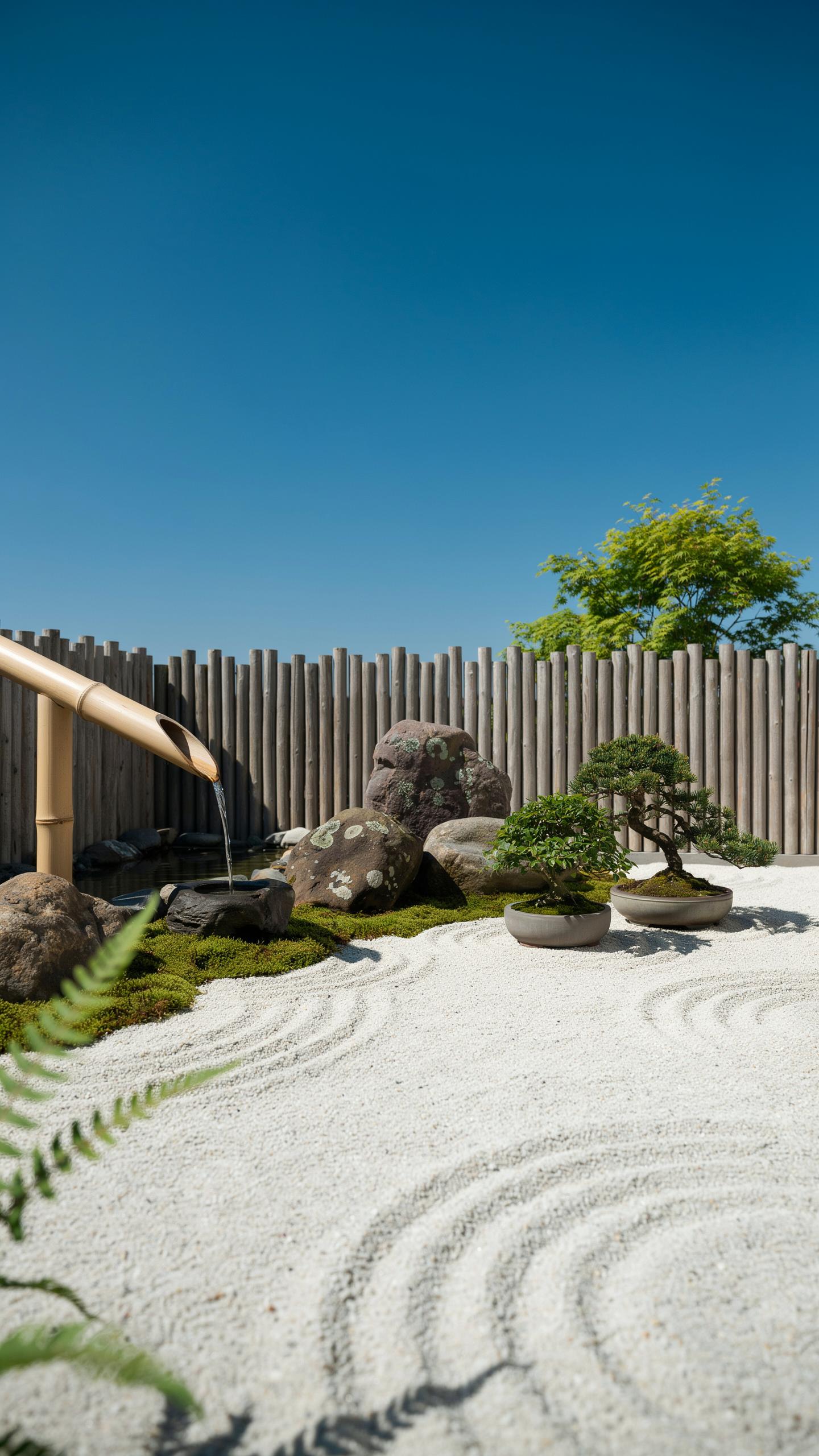
Gravel and sand represent the element of water in a karesansui layout. Designers select crushed granite or small river pebbles for durability and texture. These materials hold their shape better than fine beach sand when exposed to wind and rain. The light color reflects sunlight to brighten shaded courtyard spaces. Proper installation requires a depth of three to four inches for stability.
Raking creates patterns known as samon to simulate moving water. Straight lines represent calm seas while concentric circles around rocks denote ripples or waves. Monks originally used these patterns as a meditative practice to focus the mind. You must use a wide wooden rake with deep teeth to achieve distinct ridges. Maintain these lines weekly to keep the garden surface looking crisp and intentional.
Rocks Moss And Minimalist Plantings In Zen Garden Design
Rocks function as the skeletal structure of the garden layout. You must group them in odd numbers to avoid artificial symmetry. Vertical stones often represent mountains or deities while flat stones mimic islands or landmasses. Professionals bury stones deep in the ground to make them look like ancient outcroppings. This technique provides a sense of permanence and weight to the overall landscape design.

Moss serves as the primary ground cover because it thrives in damp shaded conditions. It adds a green contrast to the neutral stone without creating visual clutter. Limit additional plantings to evergreen shrubs like boxwood or pine to ensure year round structure. Prune these plants into rounded shapes to harmonize with the organic curves of the rocks. Minimalist planting keeps the focus on the negative space.
How To Plan Your Zen Garden Layout From The Ground Up
Mapping Out Space, Flow, And Focal Points In Your Garden Layout
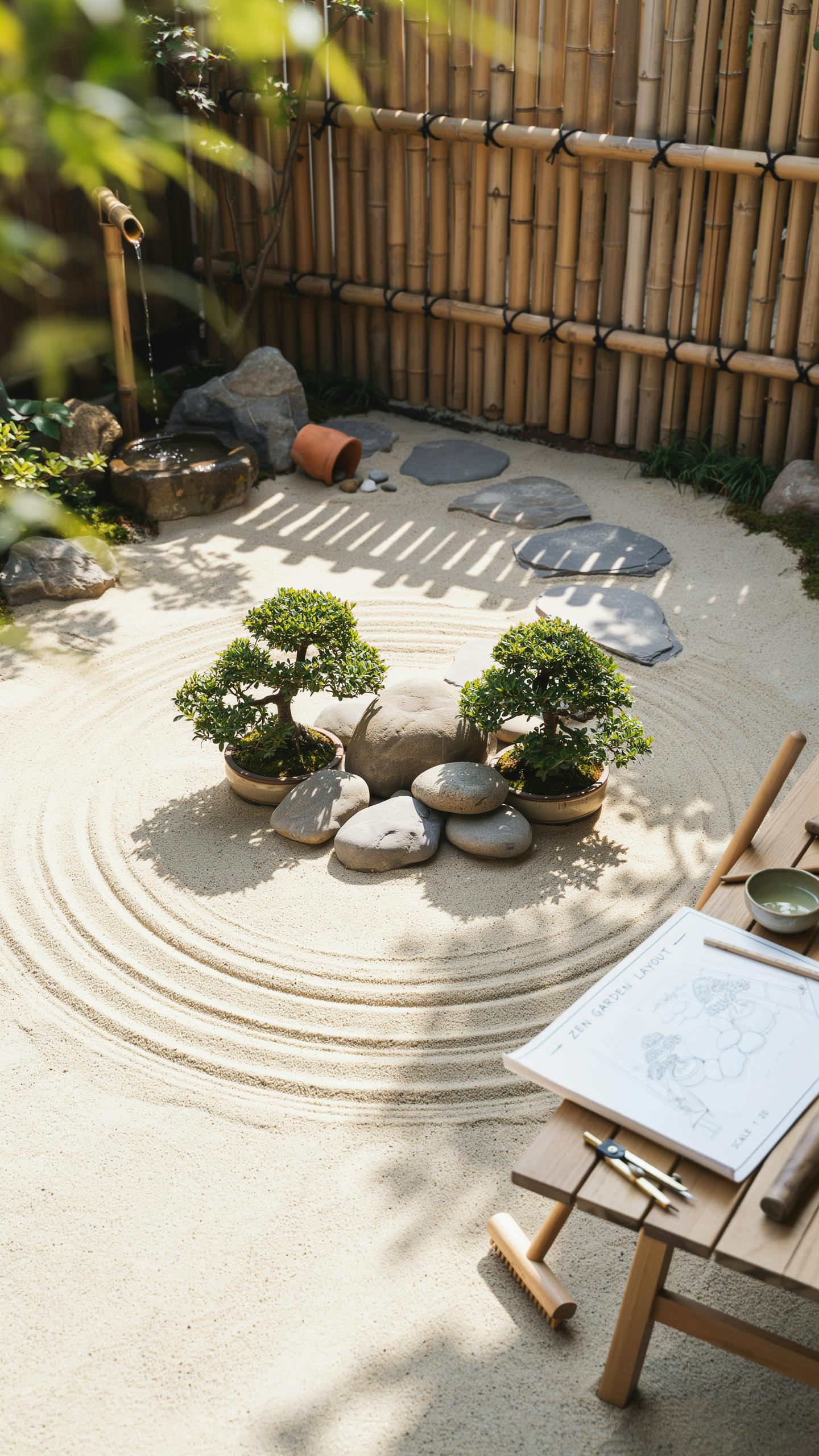
Successful zen garden design layout requires a clear boundary. You must define the perimeter using stone walls or bamboo fences. This physical edge contains the energy of the space. Decide where the viewer will stand. Traditional Karesansui gardens are viewed from a single porch or platform. This fixed perspective dictates exactly where you place every stone and island of moss.
Balance remains more important than symmetry in this Japanese style. You should use a triad of stones to create a visual anchor. Position the largest rock first to become the primary focal point. Arrange smaller stones to support the main piece. Ensure the negative space between objects feels intentional. Open areas of raked gravel represent water and provide the necessary room for the mind to rest.
Essential Materials And Tools To Begin Building Your Zen Garden
Select materials that reflect the local environment while staying true to historical standards. You need crushed granite or fine gravel rather than beach sand. Hard gravel holds the ridges of your rake patterns much longer and resists wind displacement. You must also source weathered rocks that look like they have existed for centuries. Avoid using bright colors or polished stones that distract the eye.
- Crushed Granite: This material serves as the foundation for the dry landscape. Use light gray or white granite to represent the surface of the sea. Decomposed granite works best for holding crisp rake lines through various weather conditions.
- Igneous Rocks: Choose heavy, dark stones with natural wear and moss growth. These rocks represent mountains or islands. Ensure you bury at least one third of each stone underground to make them appear rooted and permanent in the landscape.
- Wooden Rake: You need a specialized wide-tooth rake with deep tines to create the iconic ripple patterns. These tools allow you to simulate the movement of water around stone islands. The weight of the rake determines the depth and clarity of your circular waves.
- Landscape Fabric: Install a heavy duty weed barrier beneath your stone layer. This prevents soil from mixing with your clean gravel. It also stops invasive plants from breaking through your patterns. Durable fabric ensures your garden requires minimal maintenance over many years.
- Edging Materials: Use cedar planks or stacked stone to create a crisp border. This edge keeps the gravel contained and separated from surrounding grass or soil. A strong border maintains the structural integrity of your design even during heavy rainfall or routine foot traffic.

Prepare your site by removing all existing vegetation and leveling the ground. Compacting the subsoil prevents the heavy rocks from sinking unevenly over time. Once the base is flat and the fabric is down, spread your gravel to a depth of four inches. This thickness provides enough material for deep raking without exposing the underlayment. Proper depth is the secret to a professional and durable finish.
Small Zen Garden Ideas For Limited Spaces And Compact Yards
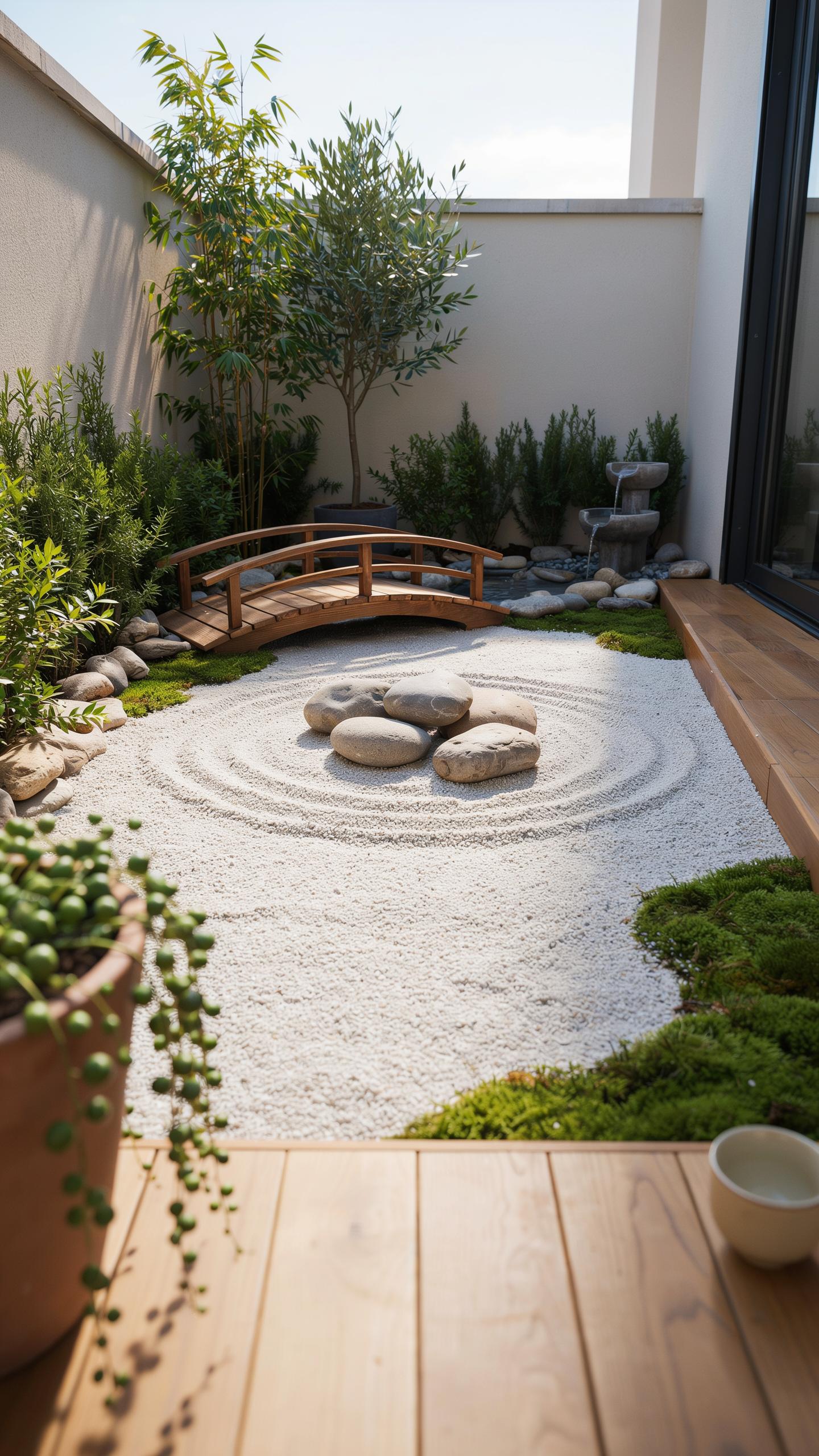
Designing A Small Zen Garden That Feels Open And Uncluttered
Scale dictates every move in a compact zen garden design layout. You must select rocks that fit the area without crowding the edges. Large boulders consume too much visual mass. Use smaller gravel sizes like 2mm to 4mm fine crushed granite. This creates a larger sense of scale across the ground plane. Clear boundaries prevent the design from bleeding into other zones.
Use the Miegakure principle to manage sightlines in tight yards. This technique hides parts of the garden to make it feel larger. Place one vertical stone or a small boxwood shrub to block a full view. Your eyes will imagine more space behind the obstacle. Keep the center clear of tall plants to maintain a low profile. Flow remains the primary goal for small areas.
Container And Tabletop Zen Garden Concepts For Tiny Spaces
Container gardens offer a portable way to apply zen principles indoors or on balconies. Use shallow stone or wood basins to hold the rakeable sand. Dark slate containers provide high contrast against light colored sand. This visual weight grounds the piece in a modern room. You must use washed silica sand or fine quartz to ensure the rake patterns hold their shape.

Tabletop gardens function as active meditation tools rather than just decor. Set one central stone to represent a mountain or an island. Place it off-center to respect the rule of asymmetry. Real moss adds a living element without requiring a full irrigation setup. Mist the moss regularly to keep the color deep green. Avoid plastic ornaments to maintain the integrity of the natural materials used.
Creating A Zen Corner Inside Your Home Or On A Balcony
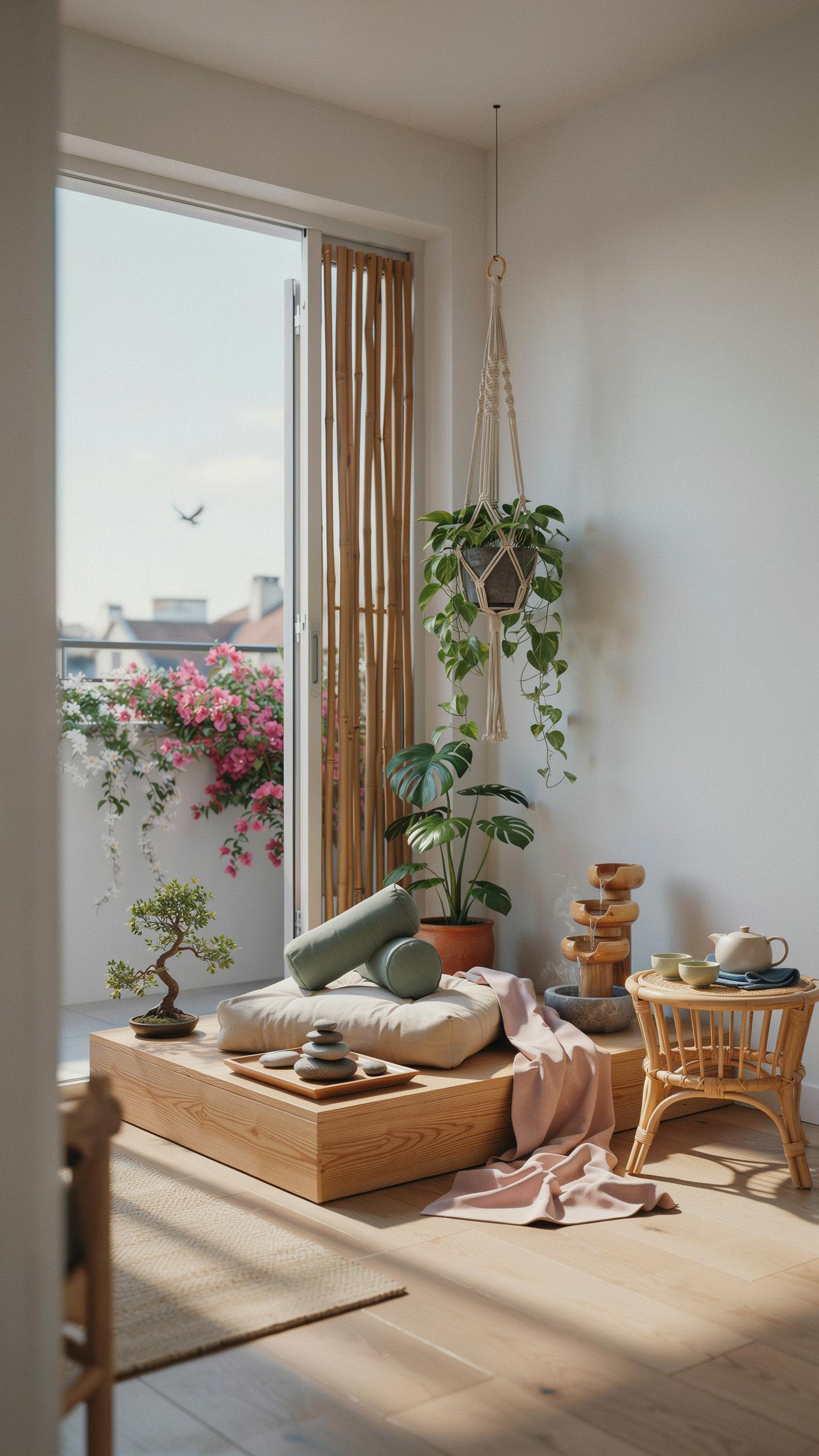
Choosing The Right Spot For An Indoor Or Balcony Zen Corner
Identify a low traffic area to maintain the tactical purpose of a zen garden. Indoor spaces require a flat surface away from main walkways to prevent dust and debris from disturbing the sand patterns. Select a corner with consistent natural light but avoid direct glare. Proper visibility from a seated position is vital. This mimics the traditional viewing angle found in Japanese temple gardens.
Balcony layouts must account for wind and drainage factors. Position the garden against a solid wall to shield fine sand or gravel from gusts. Ensure the floor can support the weight of stone and substrate. If the balcony faces north or south, adjust the placement to catch soft light. The goal is a controlled environment. Tactical placement allows for easy maintenance and uninterrupted meditation sessions.
A garden is a silent teacher of grace, echoing the gentle patterns of a home where the soul can finally rest. The art of layout is not in what we add, but in the peaceful space we rediscover between the stones.
DéCor And Plant Pairings That Reinforce A Zen Corner Atmosphere
Use materials that reflect authentic Muromachi period aesthetics. Stick to a neutral color palette of grey, black, and white. Select weathered stones or dark river rocks to create focal points. Avoid plastic or bright colors as they break the mental focus. High quality fine grain gravel works best for indoor raking. It holds the line patterns better than standard sand and produces less airborne dust.
Pair these hardscape elements with low light plants for indoor success. Sansevieria or small Sanshou moss varieties handle indoor air well. For balconies, use Acer palmatum in pots to add vertical scale. Keep plants pruned to maintain clean lines. Do not overpopulate the space. A single well placed plant provides better focus than a crowded collection. Minimalist choices preserve the intended empty space known as Ma.
Authentic Japanese Zen Garden Features You Can Recreate At Home
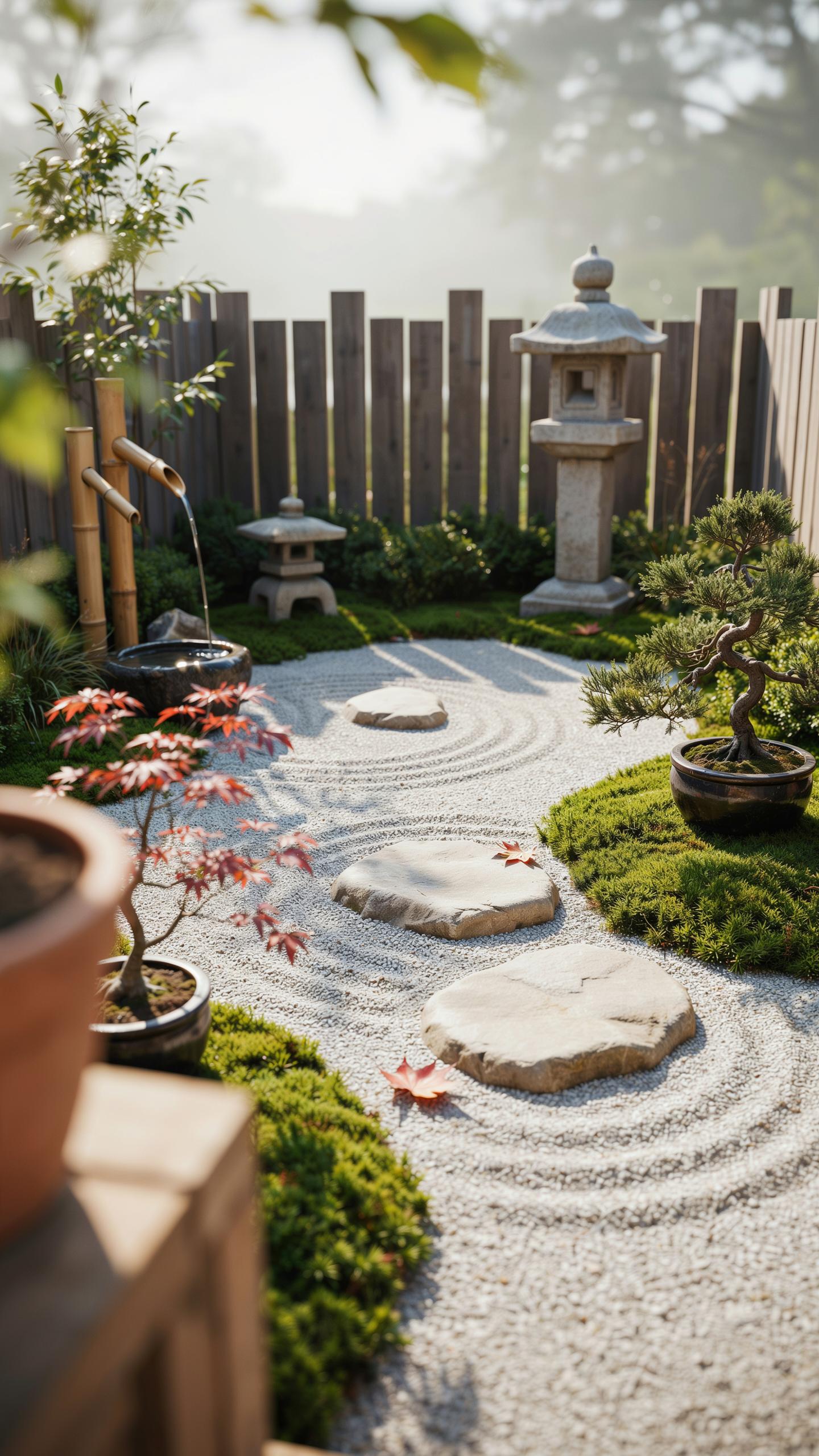
Incorporating Water Features And Stone Lanterns From Japanese Zen Tradition
Stone lanterns provide a focal point in a zen garden design layout. These structures originally lit the path to temples. You must choose a style that fits your space. Tachi-gata lanterns are tall and stand on a pedestal. Oki-gata lanterns are small and sit directly on the ground. Place them near water or at path intersections to guide the eyes.
Water features add sound and movement to the space. Use a tsukubai or a stone washbasin for authenticity. These basins allow guests to perform a ritual cleaning. Proper placement near a stone lantern creates visual balance. The sound of dripping water masks city noise. Keep the design simple. Avoid flashy fountains that disrupt the quiet atmosphere of the garden layout.
Using Bamboo, Bonsai, And Native Plants To Honor Japanese Zen Aesthetics
Plants in a zen garden serve as symbols of nature. Use bamboo to create privacy screens or borders. It grows fast and provides vertical structure. Choose clumping varieties to prevent spreading. Bamboo adds a gentle rustling sound in the wind. This sound helps people focus and relax. Arrange bamboo along the perimeter to define the edges of your garden layout clearly.

Bonsai trees represent the beauty of age and survival. These miniature trees require precise pruning and care. They act as miniature versions of wild forest scenes. Place them on top of stone walls or wooden stands. Use moss to cover the soil around the base. Native plants like Japanese Maple add color during autumn. Keep the plant selection limited to maintain a clean look.
Practical Tips For Maintaining Your Zen Garden Design Year Round
Seasonal Care Routines That Keep Your Zen Garden Looking Its Best
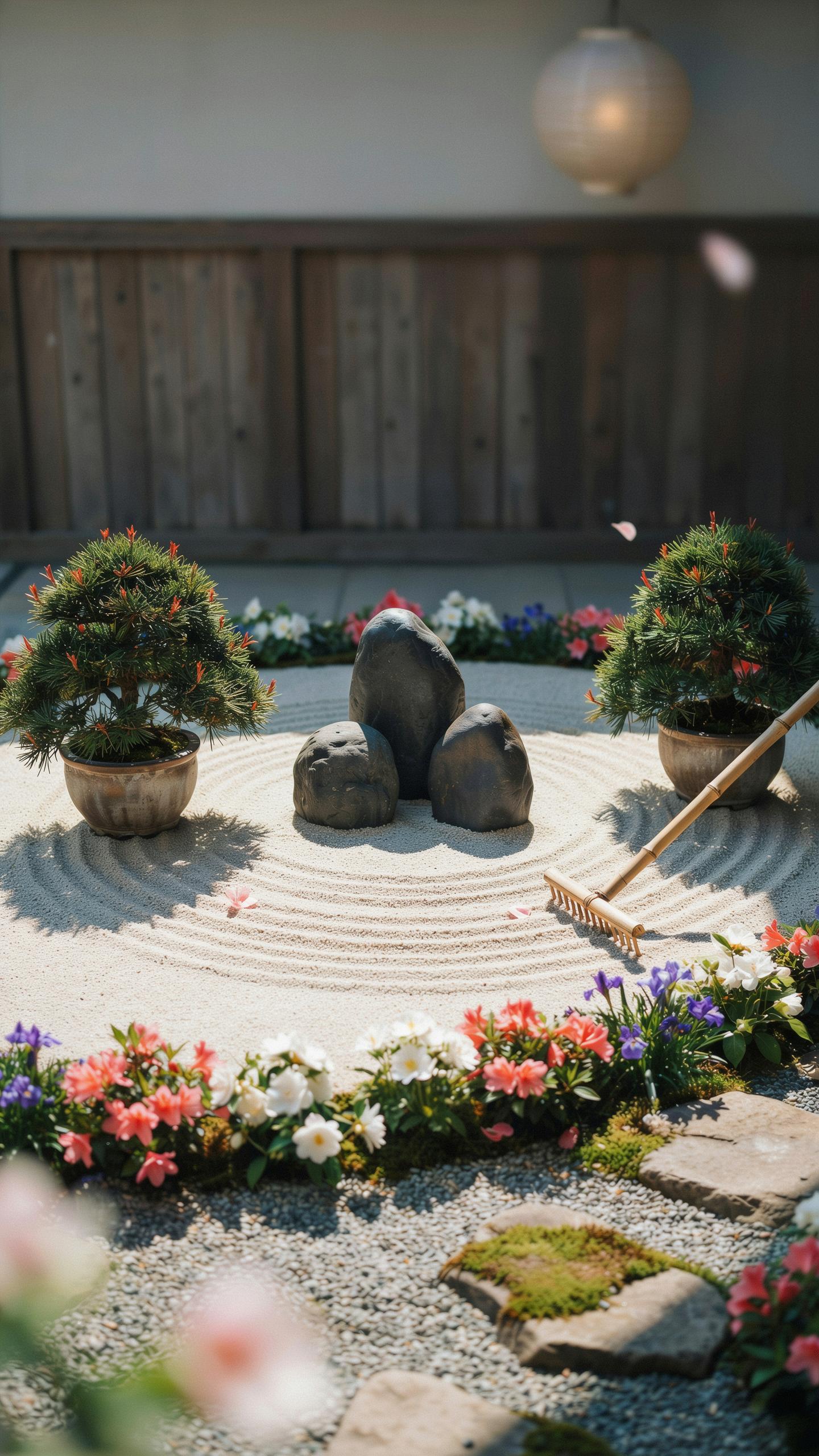
Spring and summer require aggressive weed management to preserve clean lines in the sand or gravel. Small weeds disrupt the visual flow of the karesansui. Pull them by hand immediately to avoid disturbing the underlying base layer. Check stone placements after heavy rains. Water may shift small pebbles or cause erosion around the base of larger feature rocks. Correct these shifts to maintain the intended balance.
Winter and autumn demand debris removal to prevent organic staining on stones. Remove fallen leaves and twigs daily using a soft broom or blower. Do not let organic matter rot on the gravel surface. This prevents permanent discoloration of light-colored minerals. If you live in a freezing climate, ensure your stone types can handle thermal expansion. Covering the sand during heavy snow prevents deep compaction and keeps the pattern intact.
Top Maintenance Tips To Preserve The Calm Of Your Zen Garden
Regular maintenance preserves the structural integrity of your zen garden layout. You must treat the sand or gravel as a living element of the design. Motion creates the texture that defines the space. Consistent care prevents the garden from looking neglected or messy. Follow a strict schedule to ensure the minerals and stones remain in their peak aesthetic condition throughout every season.
- Daily Debris Clearing: Use a fine-tined rake or a specialized blower to remove organic materials like leaves and pine needles. This prevents tannins from leaching into the white gravel and causing yellow stains. Consistency prevents buildup that makes deep cleaning much harder later.
- Weekly Raking Cycles: Re-draw your ripple patterns every seven days to keep the edges crisp and the furrows deep. This process aerates the top layer of gravel and prevents crusting from rain. Use a wooden rake specifically designed for the depth of your mineral substrate.
- Edge Definition Control: Maintain a hard border between the gravel area and any moss or stone paths. Trim moss or grass that creeps into the rock sections. Clear boundaries are essential for the minimalist aesthetic found in traditional Muromachi period dry landscapes.
- Stone Scrubbing Techniques: Clean large boulders with water and a soft brush to remove bird droppings or algae growth. Do not use harsh chemicals that might strip the natural patina. Preserving the natural color of the stone maintains the historical authenticity of the garden design.
- Substrate Leveling: Add fresh gravel or sand every two years to replace material lost to wind or foot traffic. Ensure the new material matches the original mineral type and color exactly. Proper depth is necessary to achieve the deep shadows required for high-contrast patterns.

Focus on precision during every maintenance session to avoid degrading the design. Use specific tools for different tasks to ensure accuracy. Rakes with wide teeth create deeper lines that catch the light better. Soft brushes help clean stones without scratching the surface. Your attention to these small details preserves the meditative quality of the space. Professional upkeep ensures the garden serves its primary tactical purpose.
Common Mistakes To Avoid When Designing Your Zen Garden Layout
Overcrowding Elements And Losing The Essence Of Minimalist Zen Garden Design
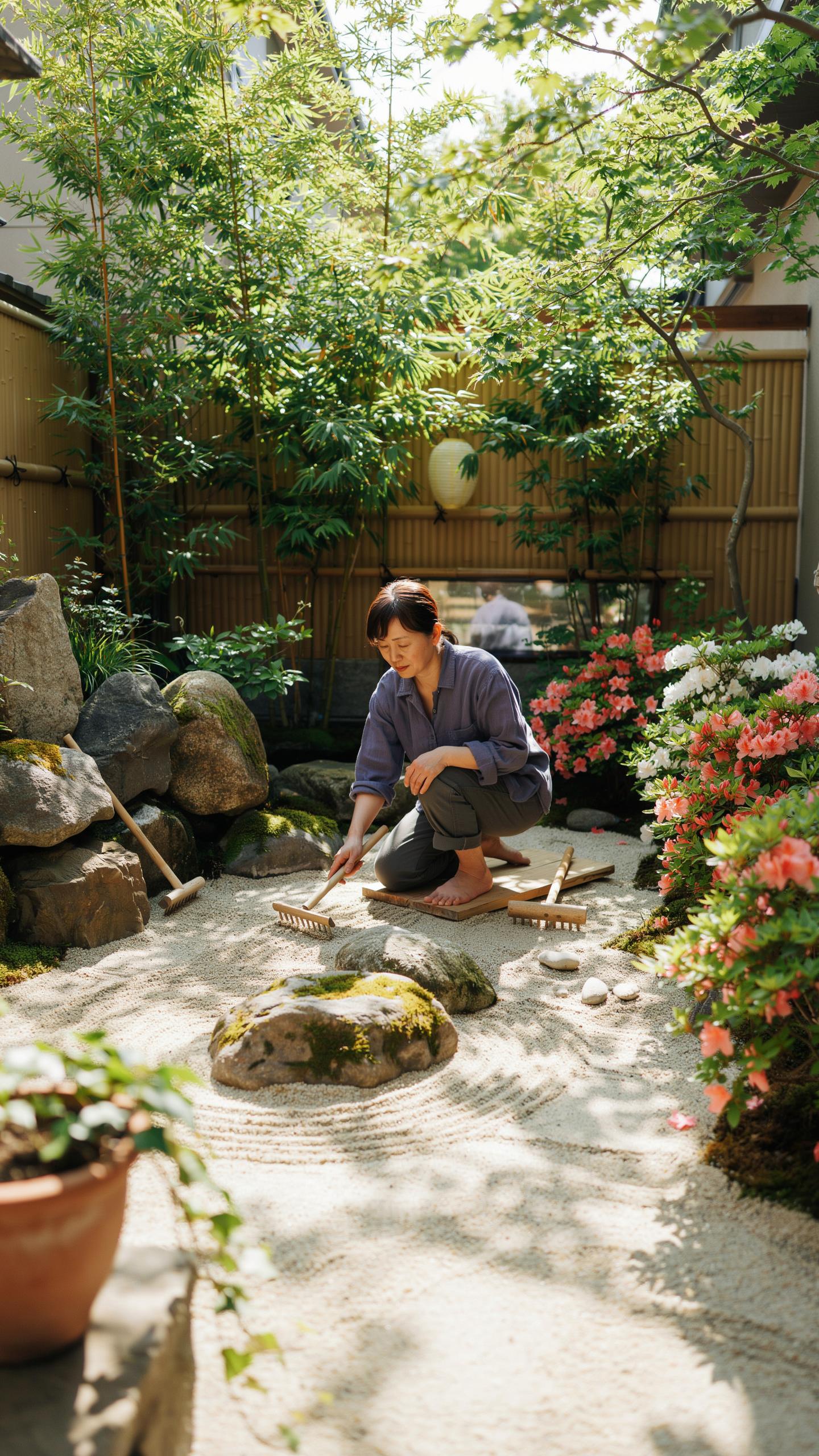
Clutter destroys the primary purpose of a Karesansui garden. Many designers try to fit too many stones or plants into a small area. This creates visual noise and prevents the mind from finding focus. Authentic Zen spaces rely on Ma, which means the intentional use of empty space. You must prioritize open gravel areas over excessive ornamentation to maintain a true meditative environment.
Place every object with precise intent. If a rock does not serve a structural or symbolic purpose, remove it. Overcrowding makes the raked gravel patterns look messy and cramped. These patterns represent water and need room to flow around obstacles. Keep your plant selection limited to a few hardy species like moss or small conifers. This restraint ensures your design remains clean and functional.
Ignoring Scale, Proportion, And Symmetry In Your Garden Layout
Poor scale ruins the illusion of a miniature landscape. Large rocks in a tiny patch of gravel feel heavy and oppressive. Conversely, small pebbles in a vast space look like litter. You must match the size of your boulders to the total square footage of the garden. Research the Sakuteiki, the oldest gardening manual, for guidance on stone placement. It emphasizes natural balance over artificial arrangements.

Symmetry is a common mistake that signals human interference. Zen philosophy prizes fukinsei, or asymmetry. Standard grid patterns feel stiff and unnatural. Instead, group stones in odd numbers like three or five to mimic natural mountain ranges. Position these groups off-center to create a dynamic visual path. This technique forces the viewer to engage with the space instead of just glancing at a static image.
Frequently Asked Questions

What are the essential elements needed for a basic Zen garden?
To create a traditional zen garden design layout, you primarily need four elements: rocks, gravel or sand, plants, and architectural features like bridges or lanterns. Rocks represent mountains, while raked gravel symbolizes flowing water. Keeping the design minimalist is key to achieving a meditative atmosphere. By focusing on these core components, you can transform any corner of your yard into a peaceful sanctuary that promotes mindfulness and relaxation.
How do I maintain the raked patterns in a Zen garden?
Maintaining a crisp zen garden design layout requires a specialized wooden rake and a bit of patience. Start by smoothing the surface of the fine gravel or sand, then pull the rake in long, fluid motions to create circular or linear ripples. It is best to perform this task early in the morning when the air is still. Regular raking not only keeps the space looking beautiful but serves as a meditative practice itself.
Can I create a Zen garden if I have a small budget or limited floor space?
Absolutely! You do not need a massive backyard to enjoy a calming retreat. Many people opt for desktop versions or small balcony containers to incorporate these principles into their homes. By using affordable materials like pea gravel and locally sourced stones, you can build a stunning miniature landscape. Focus on scale and simplicity to ensure your compact area feels intentional and uncluttered, proving that peace is accessible regardless of your budget.