What Is A Vertical Garden Irrigation System And How Does It Work
The Core Mechanics Behind A Vertical Garden Watering System
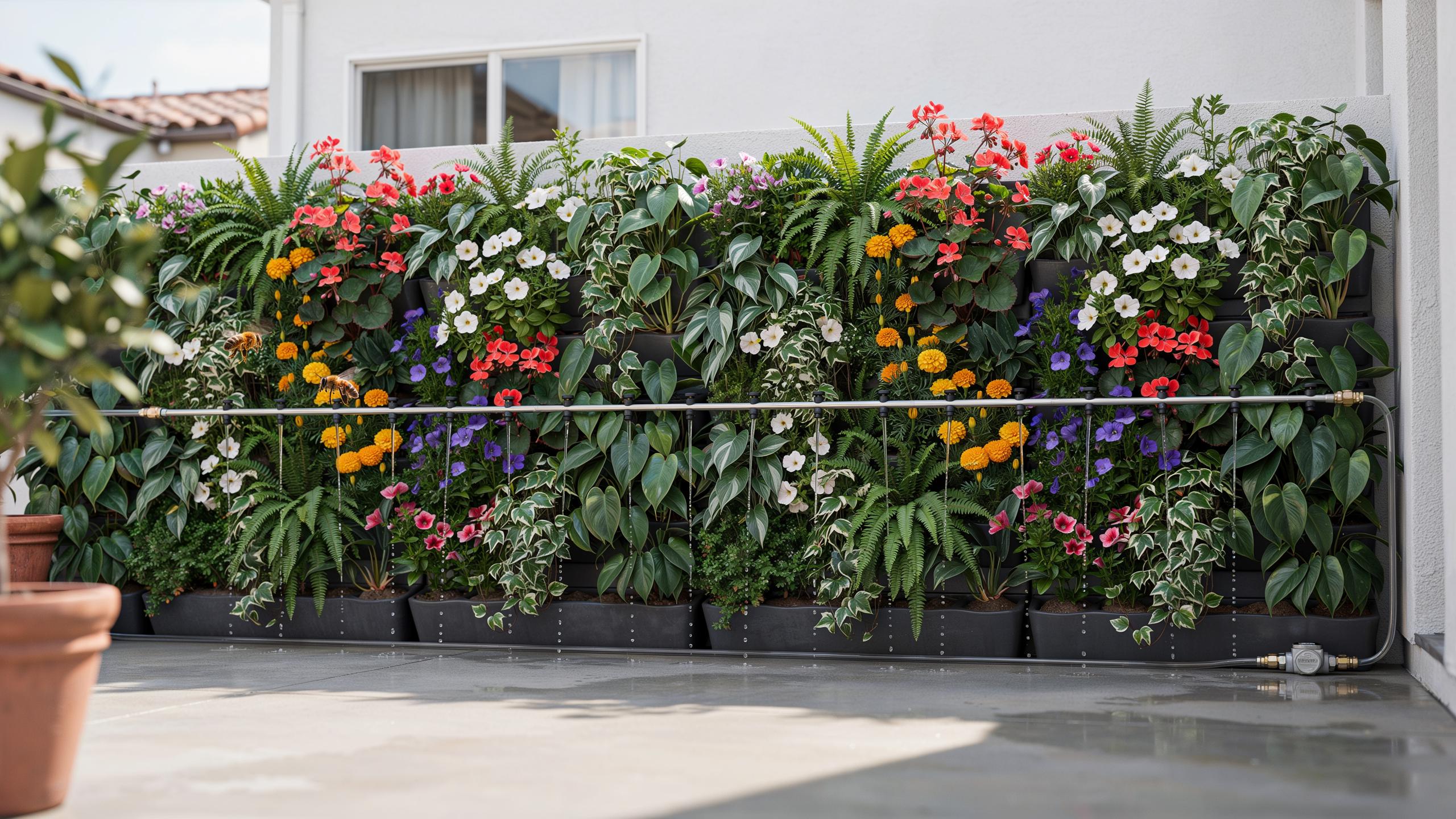
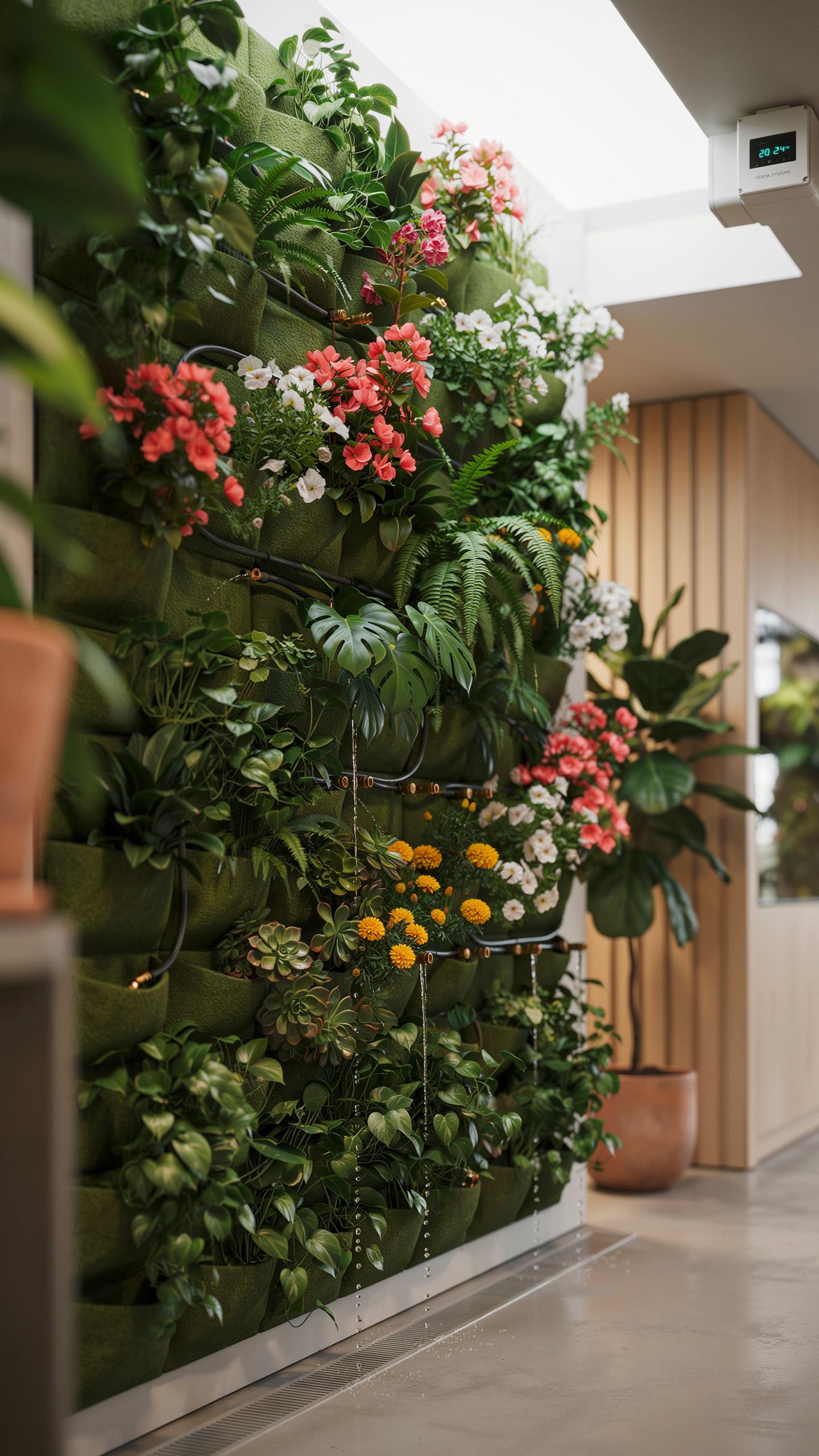
A vertical garden irrigation system automates water delivery to plants grown on upright surfaces. The primary goal is consistent moisture without soil erosion or water waste. Standard systems use a pump to push water through tubes. Emitters then release water directly at the root zone of each plant. This setup prevents foliage disease and ensures every plant receives the same amount of liquid.
Modern systems often integrate timers and pressure regulators to maintain efficiency. Pressure regulators stop the tubes from bursting or leaking. Timers allow for short, frequent watering cycles that match the limited water-holding capacity of vertical growth media. This mechanical approach replaces manual labor and reduces human error. It creates a controlled environment where plants thrive in a space-efficient manner regardless of their height.
How Water Moves Through A Living Wall Structure
Gravity dictates water movement in a vertical system. Most designs use a top-down approach where water starts at the highest point. It سپس trickles down through the growing media or felt layers to the bottom. Designers call this a recirculating or drip-trace system. In recirculating setups, a basin collects excess water at the bottom. A pump then sends it back to the top.
Hydroponic vertical walls utilize capillary action or saturating mats. These materials wick moisture across the entire surface area evenly. This ensures that the plants at the bottom do not get drowned while the ones at the top stay dry. Well-designed structures include drainage channels to prevent water stagnation. Stagnant water causes root rot and system failure. Control over this flow determines the long-term health of the wall.

The Key Benefits Of Installing A Vertical Garden Irrigation System At Home Or In Your Office
Water Efficiency And Conservation Advantages Over Traditional Garden Watering
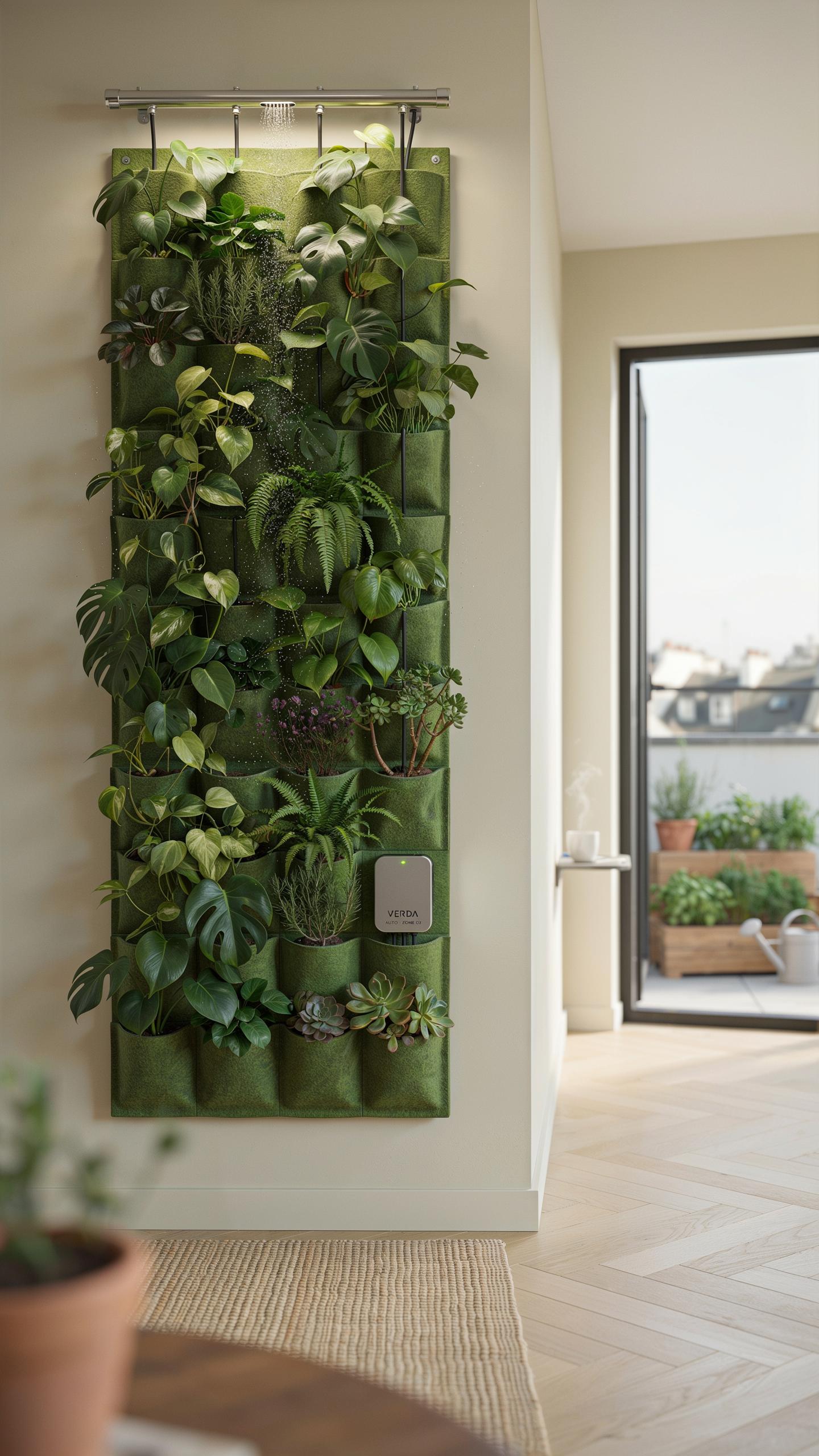
A vertical garden irrigation system saves more water than manual hose watering. Most systems use drip lines or emitters that deliver water directly to the root zone. This method stops water from evaporating before it hits the soil. Traditional watering often wastes fifty percent of the liquid through runoff. Precision delivery ensures your plants use every drop without creating a mess on your floors.
Modern systems use gravity or low pressure pumps to move water through the structure. Recirculaton setups catch excess water in a bottom reservoir and pump it back to the top. This closed loop creates a sustainable cycle that uses far less water than ground gardens. You lower your utility bills and reduce environmental impact. It is a tactical choice for drought prone areas or indoor spaces.
Nature’s beauty thrives when we lend it a helping hand through the wisdom of the past. A timeless vertical garden irrigation system worth trying today is the perfect bridge between our heritage and a flourishing future.
How Consistent Moisture Delivery Keeps Your Plants Healthier Longer
Plants thrive when soil moisture stays at a steady level. Manual watering creates a cycle of stress where soil gets too wet and then too dry. A dedicated irrigation system maintains the right balance around the clock. Constant moisture prevents the root systems from shrinking or rotting. Healthy roots lead to faster growth and more vibrant foliage in your living wall.
Automated timers eliminate human error from the maintenance schedule. You do not have to remember to water your plants every day. The system delivers specific amounts of water at the best times for absorption. This consistency prevents wilting and leaf drop in sensitive species. Your indoor air quality improves because the plants remain at peak health. Professional grade irrigation makes vertical gardening possible for busy people.
Drip Irrigation Explained The Most Popular Method For Vertical Gardens
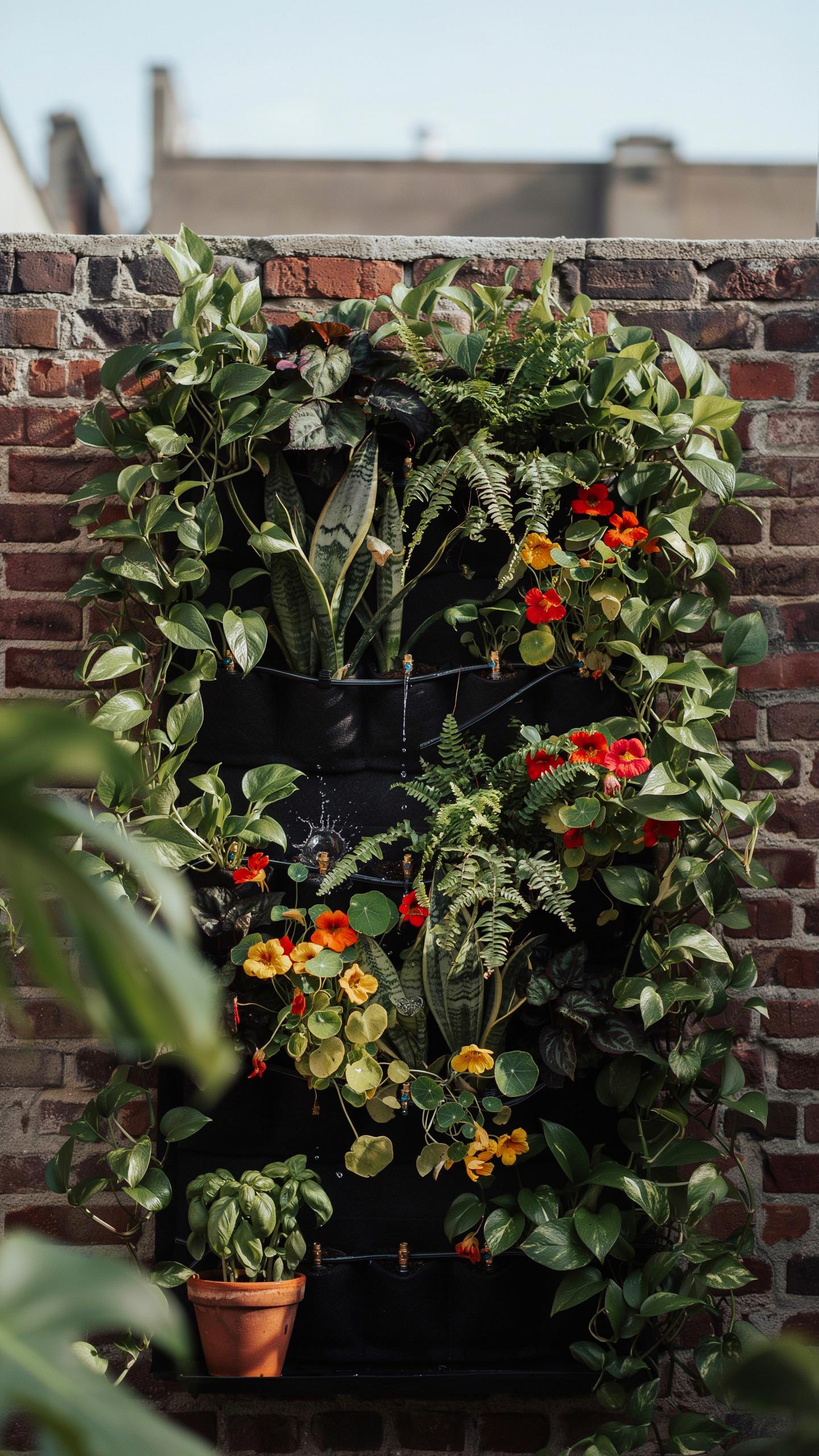
How Drip Irrigation Delivers Water Directly To Plant Root Zones
Drip irrigation uses a network of tubes and emitters to move water across a vertical surface. The system relies on low pressure to push water through small holes. These emitters sit at the base of each plant. Water exits the tube slowly and sinks into the growing medium. This path ensures the liquid reaches the roots before it can evaporate or run off.
Gravity creates challenges in vertical setups because water naturally flows downward. Designers solve this by using pressure compensating emitters. These devices regulate the flow so top plants and bottom plants receive the same amount of water. This precise delivery allows the root zone to stay moist without becoming over saturated. Constant levels of moisture prevent transplant shock and encourage deep root growth in small containers.
Why Drip Irrigation Outperforms Overhead Watering In A Vertical Setup
Overhead watering causes significant waste in vertical gardens. Spraying water from the front leads to heavy runoff and uneven coverage. Much of the water hits the leaves and bounces off. This leaves the roots dry while the foliage stays wet. Wet leaves often lead to fungal diseases and rot. Drip systems eliminate these risks by keeping the water off the plant surfaces and on the roots.
Efficiency is the primary reason professionals choose drip systems for high walls. These systems use up to fifty percent less water than traditional spraying. Precision delivery prevents the soil from eroding out of the vertical pockets. It also stops water from staining the wall or structure behind the garden. You maintain total control over the environment. This tactical approach saves money and preserves the structural integrity of your installation.
Self Watering Wall Garden Systems A Hands Free Approach To Plant Care
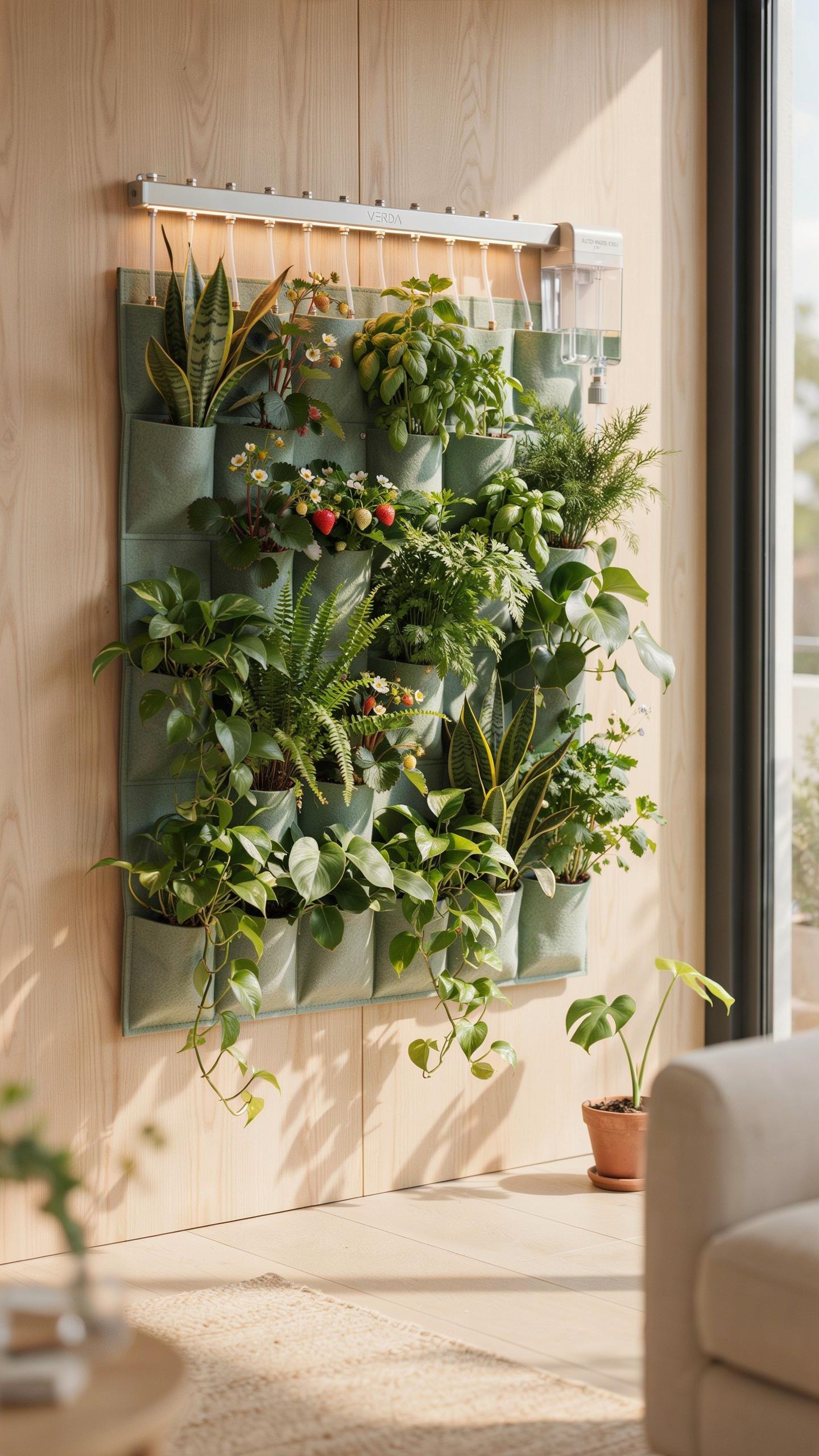
How A Self Watering Wall Garden Reservoir System Functions Day To Day
These systems use a passive irrigation method called capillary action. A water reservoir sits at the base or behind the planting modules. Wicking material connects the soil directly to this water source. The soil pulls moisture upward as it dries out. This process maintains a consistent level of hydration without manual intervention. It prevents the common cycle of overwatering and drying.
You must monitor the reservoir level every few weeks. Modern units often include a float indicator to show water depth. High evaporation rates in dry climates will empty the tank faster. Unlike drip lines, these systems do not require pumps or electricity. Gravity and physics handle the distribution. This setup reduces water waste because the sealed reservoir prevents evaporation. It keeps the roots cool.
Best Plant Types That Thrive In A Self Watering Wall Garden Environment
Tropical plants perform best in these consistent moisture conditions. Species like Pothos and Philodendron adapt well to wicking systems. These plants enjoy steady hydration and do not require a dry-out period. Ferns also thrive because they prefer high humidity and damp soil. The constant water supply prevents the fronds from browning. You should avoid succulents and cacti that need dry roots to survive.
Leafy greens and herbs also yield high results in these vertical setups. Basil and mint require frequent watering to prevent wilting. A self watering system provides the volume they need for rapid growth. Ensure you use a high-quality potting mix designed for wicking. Standard garden soil is too heavy and will compact over time. Light airy mixes allow oxygen to reach the roots while the water moves upward.
Setting Up An Automatic Irrigation System For Your Vertical Garden
Step By Step Guide To Installing An Automatic Irrigation System On A Vertical Wall
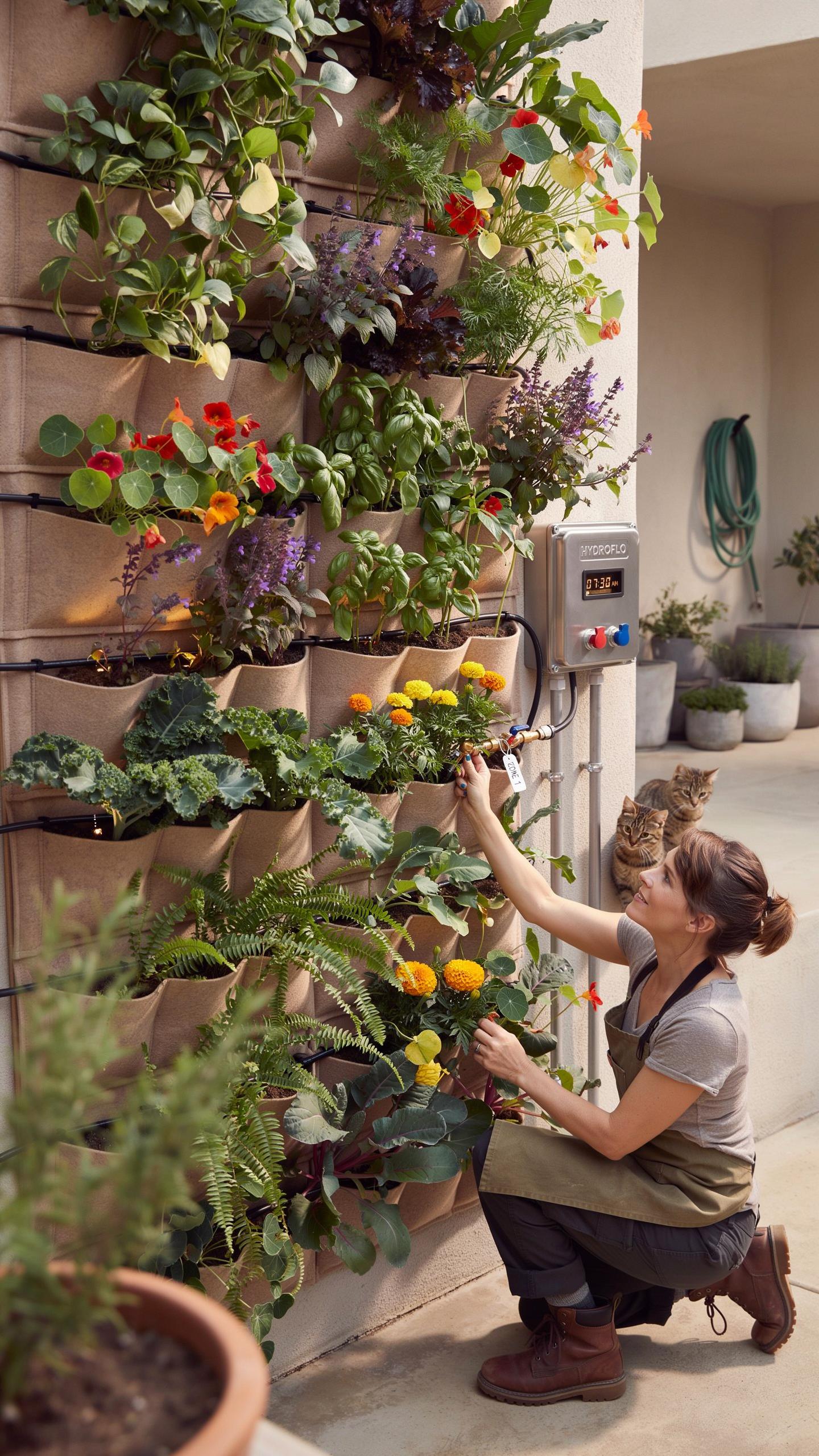
Mounting a vertical garden irrigation system requires a structured plan to prevent water damage and plant loss. You must first secure a waterproof barrier to the wall surface. Next, install the main supply line along the top or side of the structure. Connect the lateral drip lines to each row of planters. Ensure every connection is tight to avoid leaks.
- Mount the Backing: Fix a rigid plastic or PVC sheet to the wall. This layer creates a necessary air gap and prevents moisture from rot or mold growth on the building structure.
- Install Main Reservoir: Place a pump in a bottom tank for closed-loop systems. For open systems, connect a pressure regulator directly to your main water spigot to protect the drip lines.
- Run Vertical Headers: Attach 1/2-inch poly tubing vertically along the side of the frame. Use T-connectors to divert water into horizontal sub-lines for each level of the living wall.
- Insert Drip Emitters: Punch holes into the horizontal tubing above each plant. Insert pressure-compensating emitters to ensure every plant receives the same amount of water regardless of its height.
- Test the Layout: Run the water without plants first. Check for clogged emitters and dry spots. Watch the drainage flow to ensure excess water collects in the tray or returns to the tank.
Gravity pulls water downward, creating higher pressure at the bottom of the wall. You must use pressure-compensating emitters to fix this imbalance. These devices regulate the flow rate so the top row gets as much water as the bottom. Finish the install by securing all lines with UV-rated zip ties. This prevents the tubing from sagging or shifting over time.
Timers, Sensors, And Controllers That Make Automation Reliable And Accurate
Reliable automation depends on high-quality controllers that manage frequency and duration. A digital tap timer is the basic entry point for small walls. More advanced systems use smart controllers with WiFi connectivity. These tools allow you to adjust watering schedules from a phone. Accurate timing prevents the growing medium from drying out, which happens fast in vertical setups.
Soil moisture sensors add a critical layer of precision to your strategy. These probes measure the actual water content in the root zone. They signal the controller to skip a cycle if the soil is still wet. This prevents root rot and saves water. Hardwired sensors offer better reliability than wireless versions in dense foliage. Use these tools to maintain a perfect balance of moisture.
Understanding Vertical Drainage Why It Matters For Plant Health And Wall Protection
How Proper Vertical Drainage Prevents Root Rot And Structural Water Damage
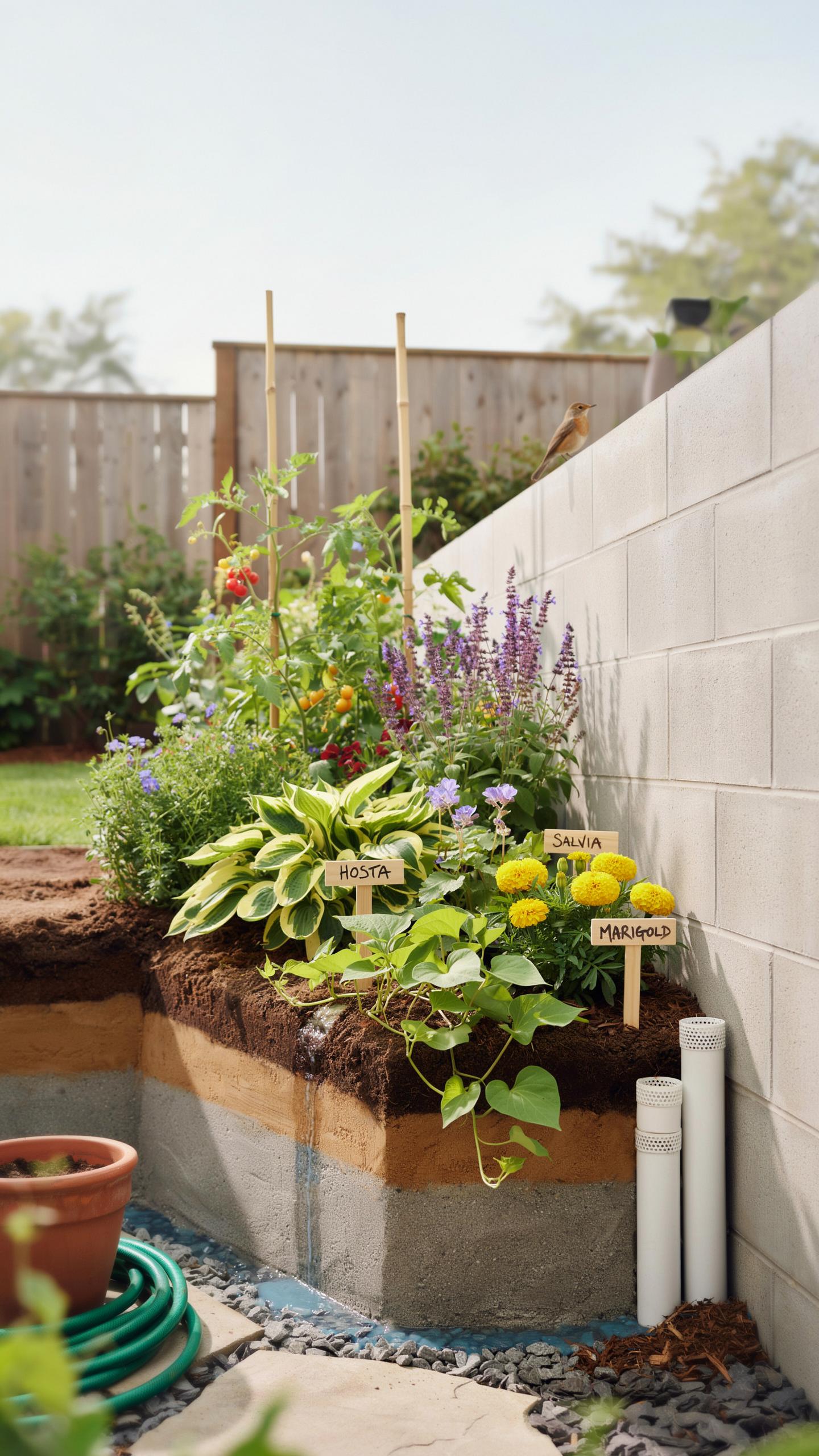
Vertical systems face a unique gravitational challenge. Water naturally moves downward which causes upper cells to dry fast while lower levels become saturated. Excess water trapped at the base deprives roots of oxygen. This leads to anaerobic conditions and rapid root rot. You must install a clear path for runoff to exit the system. Stagnant moisture kills plants and ruins your investment quickly.
Structural protection is the second critical factor. Water seeping behind a vertical garden destroys drywall and causes mold growth on masonry. You must use a waterproof backing board like expanded PVC or high-density polyethylene. This creates a hard air gap between the damp grow medium and the building envelope. Effective drainage keeps the structure dry while allowing the irrigation cycle to function.
Designing A Drainage Layer That Works With Your Irrigation Output
Your drainage capacity must exceed your irrigation flow rate. If your pump delivers two liters per minute your drainage layer must handle that volume without backing up. Use coarse materials like lightweight expanded clay pebbles or specialized synthetic mats. These materials create large voids that allow water to pass quickly. This design prevents the growing medium from becoming a heavy mud that blocks airflow.
Properly designed layers guide excess water into a collection basin or floor drain. In closed systems you must filter this runoff before it returns to the reservoir. Fine mesh screens stop silt and root debris from clogging your pump. Aligning your drainage speed with your dripline output ensures a healthy wet-dry cycle. This balance keeps the root zone fresh and protects your wall from long-term moisture damage.
Choosing The Right Black Vertical Garden Planter For Your Irrigation Setup
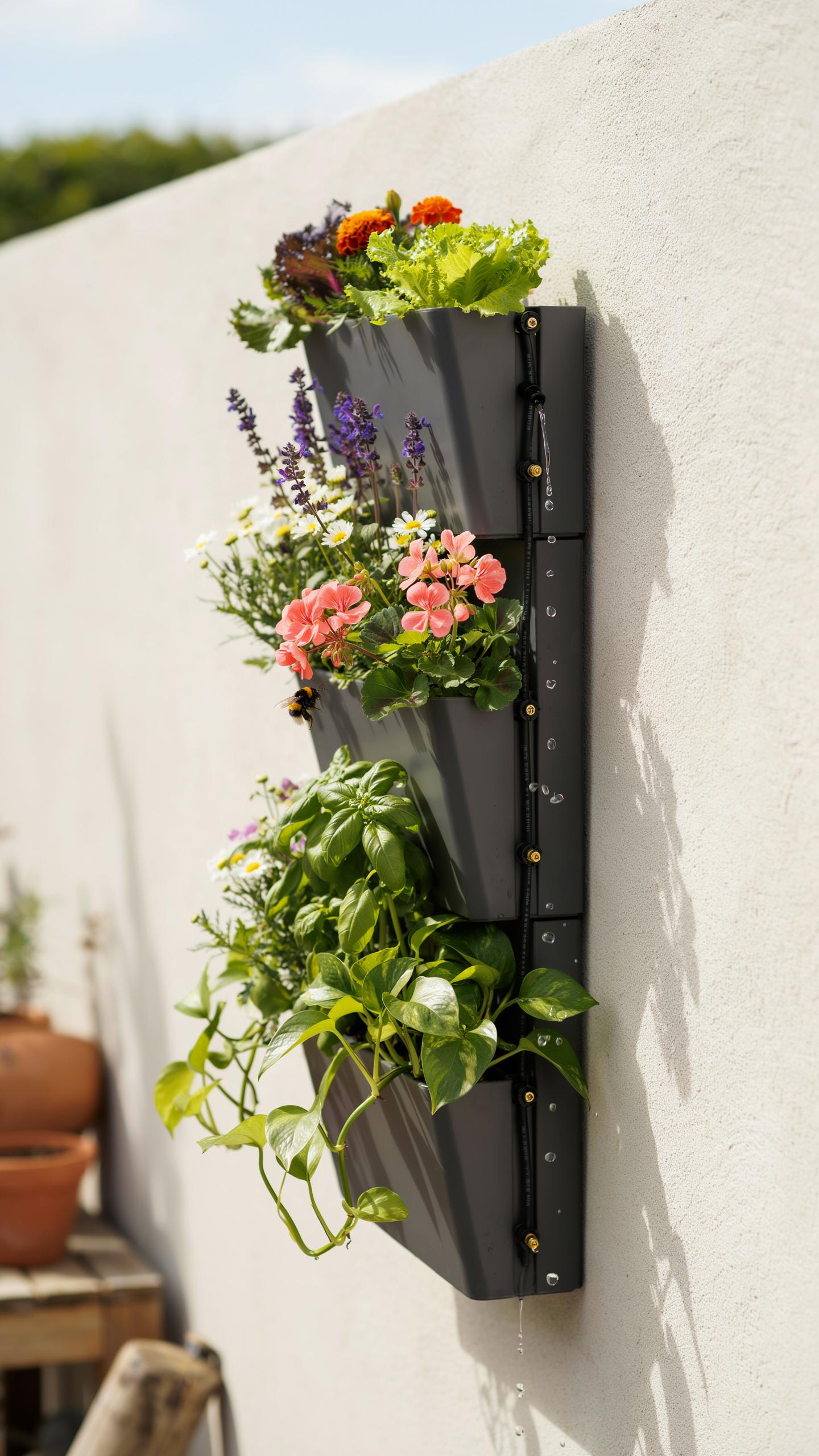
Why The Black Vertical Garden Planter Design Complements Modern Irrigation Systems
Black vertical garden planters optimize heat absorption to stabilize soil temperature in early growth phases. The dark pigment hides essential irrigation components like micro-tubing and emitters. High-density polyethylene materials used in these planters resist ultraviolet rays and chemical corrosion. This durability ensures the structure remains intact under constant water pressure. Solid dark tones create a clean visual line that masks salt buildup from hard water.
Minimalist design principles prioritize function over aesthetics in modern layouts. Black planters integrate seamlessly into steel or concrete industrial frameworks. They provide a high-contrast backdrop that makes green foliage appear more vibrant. Using dark containers simplifies the hide-and-run tactics of routing mainline hoses. Professional installers choose black units because they match standard poly-pipe colors. This coordination reduces visual clutter in complex vertical garden irrigation system architectures.
Key Features To Look For When Selecting A Planter Compatible With Drip Or Automatic Systems
Selecting the wrong container leads to water waste and structural failure. A vertical garden irrigation system requires specific hardware interfaces to function at peak efficiency. You must evaluate the internal volume and drainage exit points before purchasing. Ensure the material can handle the weight of saturated soil and mechanical fasteners. Cheap plastics will crack under the pressure of expanding wet roots and sun exposure.
- Pre-drilled Portals: Quality planters feature manufacturer-installed entry and exit holes for 1/4 inch tubing. These ports prevent you from damaging the structural integrity of the container during setup. They ensure the lines sit flush against the back wall.
- Integrated Reservoirs: Internal water storage decks prevent immediate runoff and capture excess liquid from upper tiers. This feature allows the pump to run shorter cycles while maintaining moisture. Sub-irrigation layers protect roots from sitting in stagnant water.
- UV-Stabilized Materials: Exposure to direct sunlight degrades standard plastics and causes thin walls to warp. Heavy-duty black polymers withstand high heat without leaching chemicals into the soil. Choose food-grade materials if you plan to grow edible crops vertically.
- Modular Mounting Brackets: Vertical systems need secure attachment points to handle the weight of water-heavy soil. Look for reinforced rear panels that allow for variable mounting heights. This flexibility helps you align the planter levels with your main irrigation supply lines accurately.
- Overflow Drainage Channels: High-efficiency systems must direct excess water away from the building facade. Effective planters include specific channels that guide drainage to the next level down or a collection tray. This prevents localized flooding and protects your exterior walls from moisture.
Standardization is your greatest asset when scaling a vertical installation. Uniform planter dimensions allow you to calculate exact flow rates for every emitter in the circuit. Variable sizes cause pressure drops and uneven watering across the vertical plane. Test the fit of all grommets and gaskets before mounting the units. Reliable hardware simplifies maintenance and ensures your automated system operates without constant manual intervention.
Maintenance Tips To Keep Your Vertical Garden Irrigation System Running Efficiently Year Round
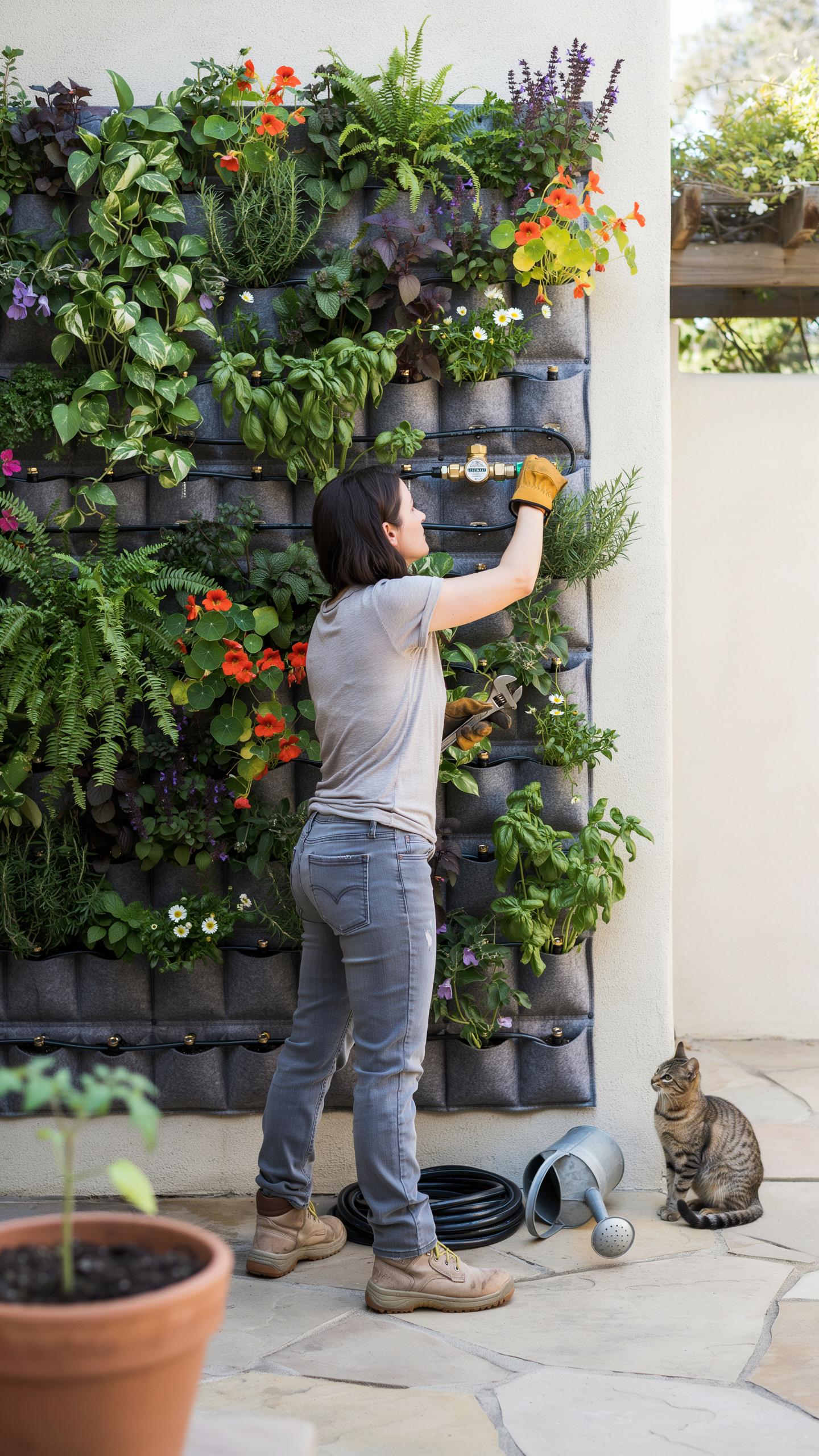
Common Irrigation Problems In Living Wall Systems And How To Fix Them
Clogged emitters represent the most frequent point of failure in vertical fertigation. Mineral buildup from hard water or algae growth inside the lines restricts flow to the upper tiers. You must flush the manifold monthly to clear debris. Use a localized vinegar solution or a commercial descaler to dissolve calcium deposits. Replace any emitters that show visible cracking or permanent blockage to prevent localized plant death.
Uneven water distribution often stems from incorrect pressure regulation. Gravity pulls water to the bottom of the wall, leaving the top plants dry and the bottom plants drowned. You should install pressure-compensating drippers to ensure every plant receives the same volume regardless of height. Check for leaks at every joint and elbow. Seal loose fittings immediately with waterproof tape or new O-rings to maintain system integrity and water pressure.
Seasonal Adjustments To Your Watering Schedule For Optimal Plant Growth
Evaporation rates change based on the sun angle and ambient temperature. During summer months, you must increase frequency but keep durations short to prevent runoff. High heat requires midday pulses to cool the root zones. Monitor soil moisture daily using a digital probe. Adjust your digital controller to add extra cycles when the temperature exceeds ninety degrees. This prevents wilting and maintains the health of your foliage.

Winter requires a drastic reduction in water volume. Dormant plants consume less moisture and excess water leads to root rot in cold soil. You should clear lines of standing water if you expect freezing temperatures. Ice expansion will rupture PVC pipes and plastic connectors. Switch your timer to a manual mode or a reduced winter program. Constant monitoring ensures the substrate remains slightly damp without becoming a saturated breeding ground for fungus.
Frequently Asked Questions

What is the best type of vertical garden irrigation system for a beginner?
For those just starting out, a gravity-fed drip kit is the most user-friendly vertical garden irrigation system to implement. These systems use elevated water reservoirs to naturally distribute moisture through tubing to each plant level. They are incredibly simple to assemble, require no electricity, and eliminate the guesswork of manual watering, making them a perfect entry point for anyone looking to maintain a lush, healthy green wall with minimal technical effort.
How do I properly set up a drip-line vertical garden irrigation system at home?
To set one up, start by mounting your planters and running a main supply line along the side of the structure. Insert micro-emitters into the tubing at each plant location to ensure even distribution. Connect the line to a digital hose timer and a pressure regulator to prevent leaks. This automated vertical garden irrigation system ensures your plants receive consistent hydration at optimal times, preventing both root rot and dehydration in tight spaces.
Are there any affordable DIY options for watering a vertical garden on a budget?
Absolutely! You can create a cost-effective setup by repurposing plastic bottles or PVC pipes with small holes drilled into the bottom. By stacking these containers, water can trickle down from the top unit to the bottom via gravity. While it lacks the high-tech sensors of a commercial vertical garden irrigation system, this recycled approach is highly effective and accessible, allowing you to grow a beautiful herb or floral wall without a large investment.