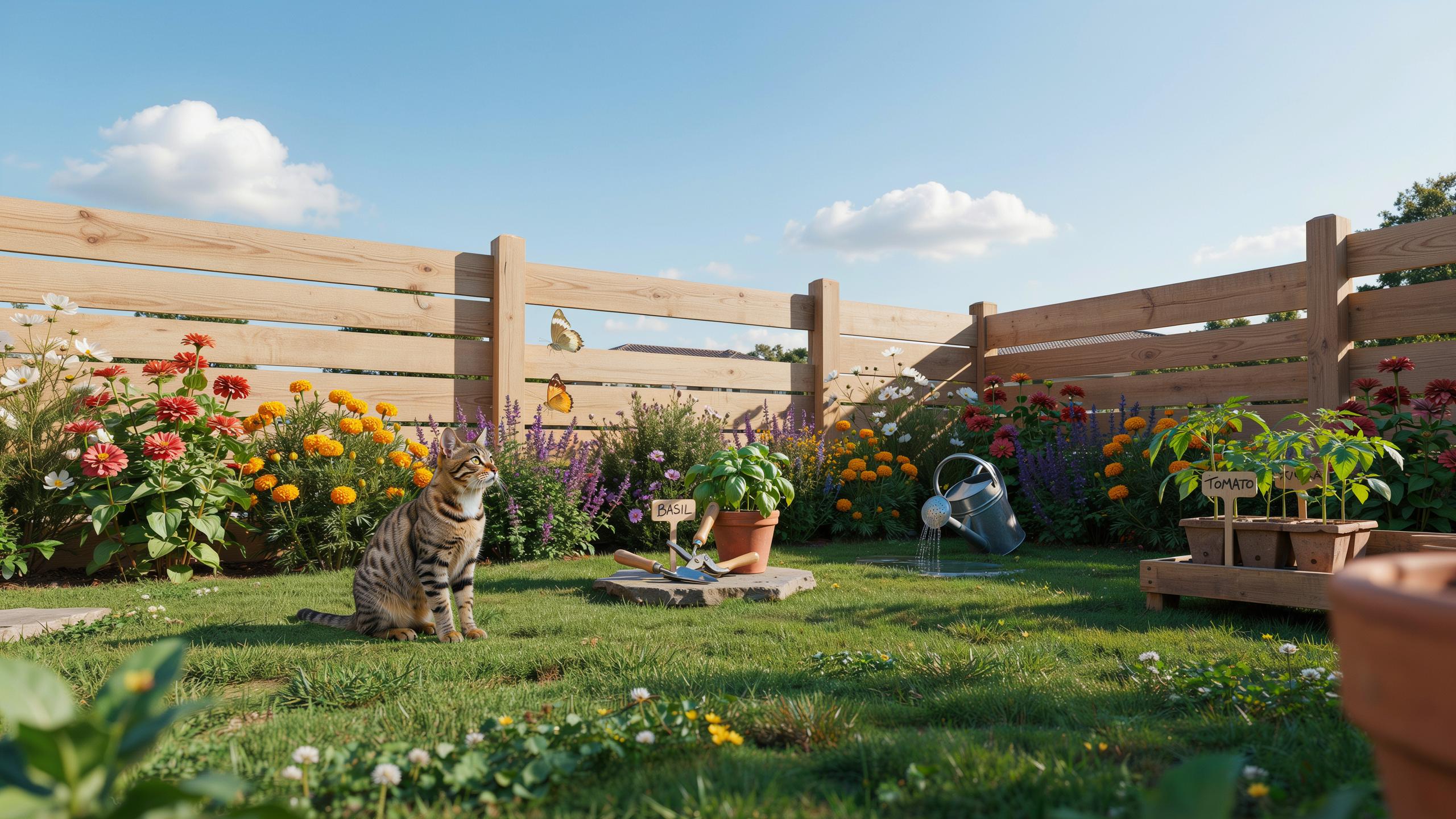
Fencing Designs Ideas For The Modern Homeowner
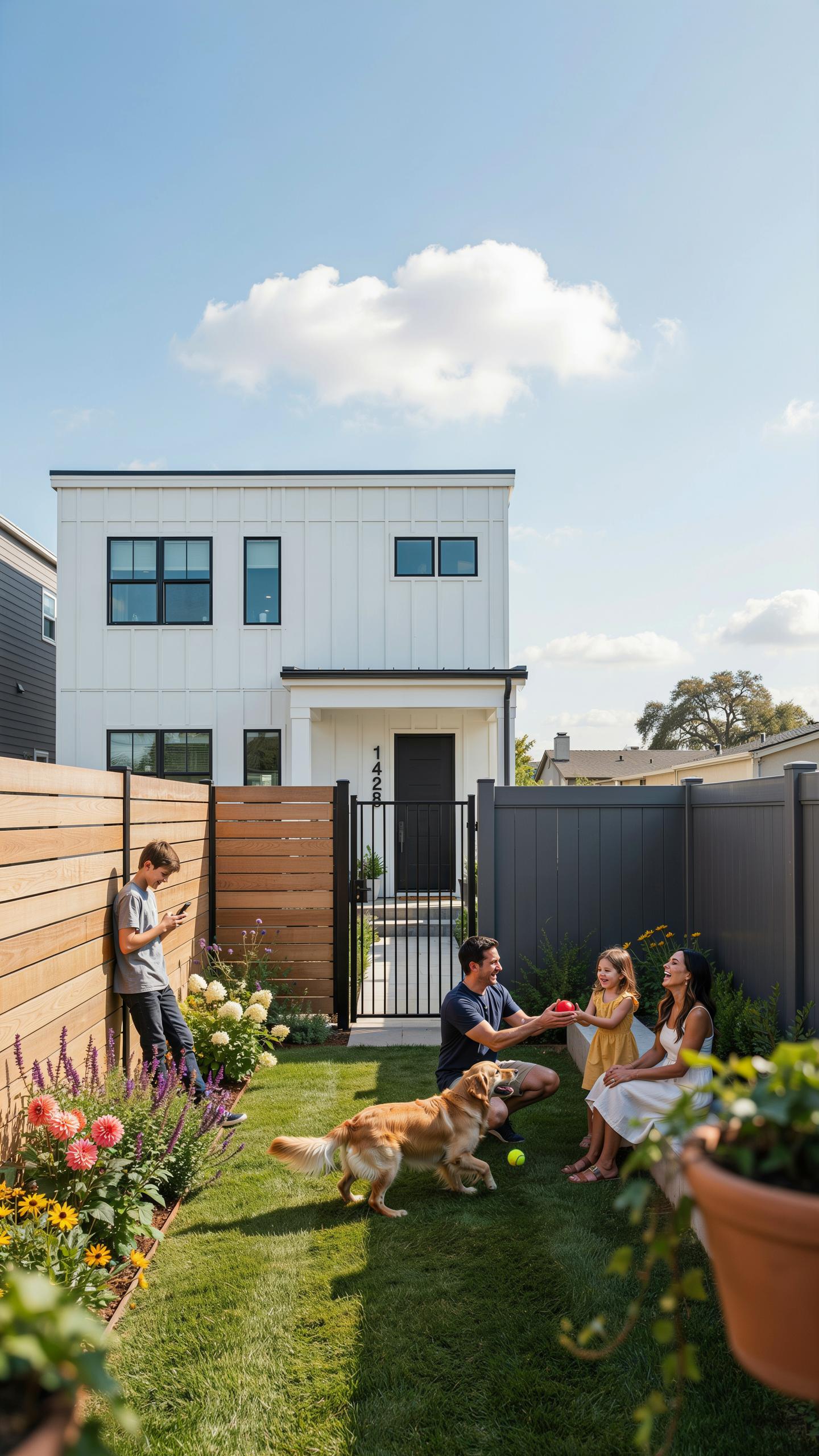
Understanding Modern Principles
Modern design emerged from early 20th century movements that rejected ornamental excess. Clean lines, geometric forms, and functional purpose drive modern aesthetics. Your fence should accomplish its job without unnecessary decoration. Materials matter. Steel, composite, and wood in their natural state define modern fencing. The goal is visual clarity and structural honesty that frames your landscape without competing for attention.
Balance between industrial and natural elements separates modern fencing from other styles. Concrete posts with horizontal wood slats work. Metal frames with living plant walls work. The principle is simple: expose the structure, let materials speak for themselves, and maintain sight lines throughout your property. Minimalism here means every component earns its place by function or visual weight.
Evaluating Your Space
Measure your property lines first. Know exact distances, elevation changes, and existing structures. Your fence must work within these constraints, not fight them. Document where sun hits throughout the day. Morning light from the east and afternoon heat from the west affect material durability and how shadows fall across your fence line. Existing trees, shrubs, and landscape features determine whether your fence complements or conflicts with what’s already there.
Study your home’s architectural style and existing materials. Modern fencing works best when it echoes your house’s design language. If your home features clean lines and minimal ornamentation, your fence should follow suit. If neighboring properties have competing aesthetics, you still control your side. Assess how the fence will age in your climate. Wind exposure, moisture levels, and temperature swings determine which materials perform best and how often maintenance becomes necessary over time.
Modern Mediterranean Fence Design Elements
Stucco And Warm Stone Accents
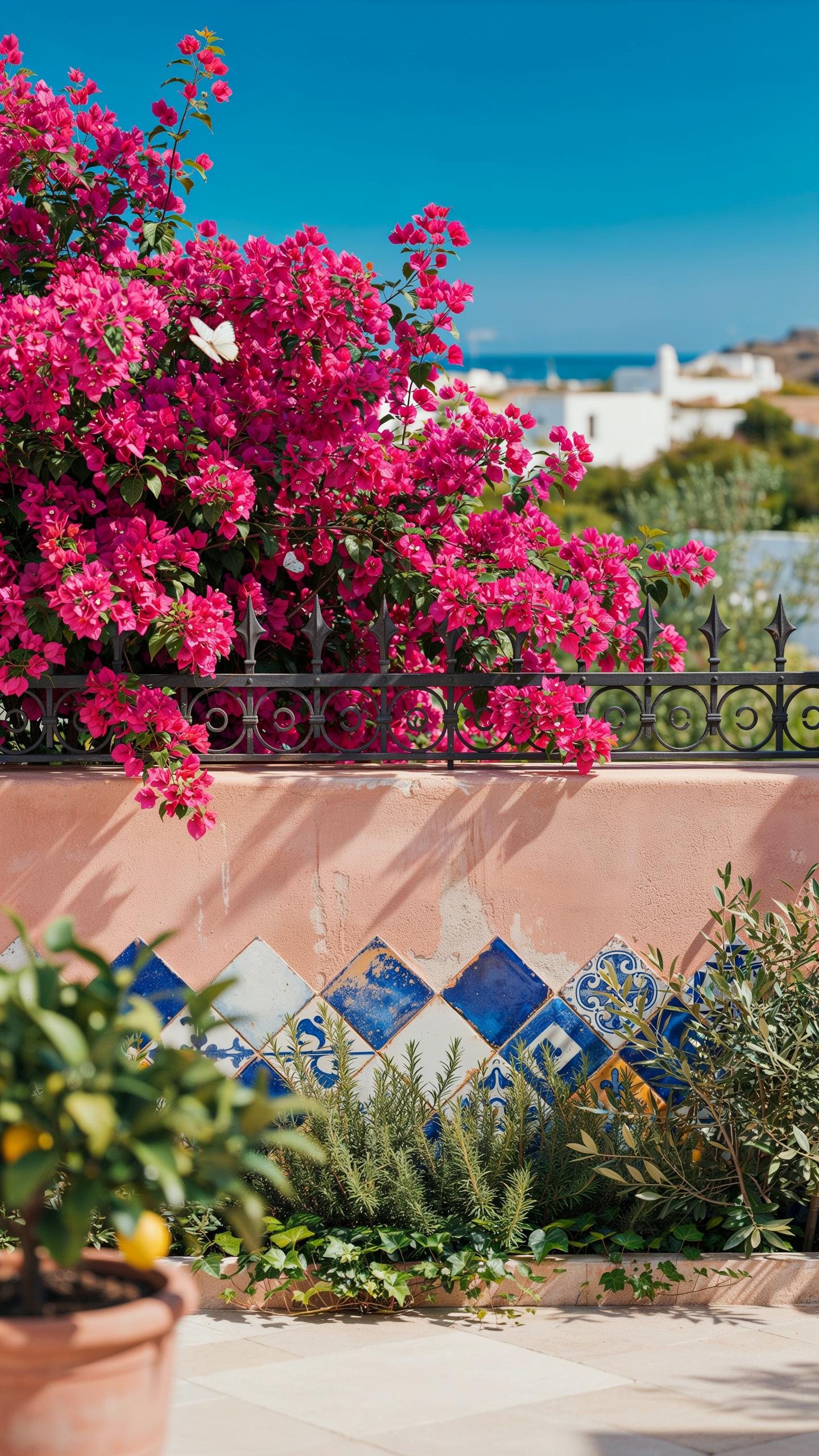
Whitewashed stucco creates a durable, low-maintenance fence surface that reflects heat and ages gracefully. The material consists of cement, lime, and sand applied in layers over masonry. This approach handles weather exposure effectively and requires only occasional recoating every five to ten years depending on climate conditions.
Warm stone pillars anchor the fence structure while providing visual weight and texture contrast. Use natural stone or cast stone in cream, tan, or buff tones to complement stucco walls. Position pillars at intervals of six to eight feet to support fence panels and create rhythm along the perimeter. This combination delivers authentic Mediterranean character without relying on hollow aesthetic choices.
Wrought Iron And Terracotta Pairings
Black wrought iron grilles mounted over masonry walls create defined visual boundaries while maintaining sight lines through the property. Wrought iron resists rust better than mild steel when properly maintained and offers flexibility in decorative patterns. Install grilles securely into masonry joints using appropriate fasteners to ensure stability and longevity in various weather conditions.
Terracotta planter pots positioned along the fence base soften hard lines and add functional greenery. Group pots in clusters of three or five for visual impact rather than spacing them uniformly. The warm orange tones of terracotta complement both whitewashed walls and black iron components, tying the fence design together through material harmony rather than pattern repetition.
Tropical Garden Fence Design And Lush Backdrops
Bamboo And Reeds Construction
Bamboo grows fast and requires minimal processing to become fence material. You layer poles horizontally or vertically to create screening that blocks wind and sight lines effectively. Woven reed panels offer similar function with a lighter visual weight. Both materials age naturally, developing patina rather than requiring maintenance. Installation is straightforward for beginners using standard fasteners and posts.
Bamboo species vary in diameter and strength, so select material based on your climate zone and wind exposure. Reeds break down faster than bamboo in wet climates, making bamboo the superior choice for high moisture areas. Cost remains low compared to composite or metal fencing. These materials integrate seamlessly with tropical plant schemes because they’re organic in origin and appearance. Expect 5 to 10 year lifespan before replacing panels, depending on local weather conditions.
Integrating Dense Broadleaf Foliage
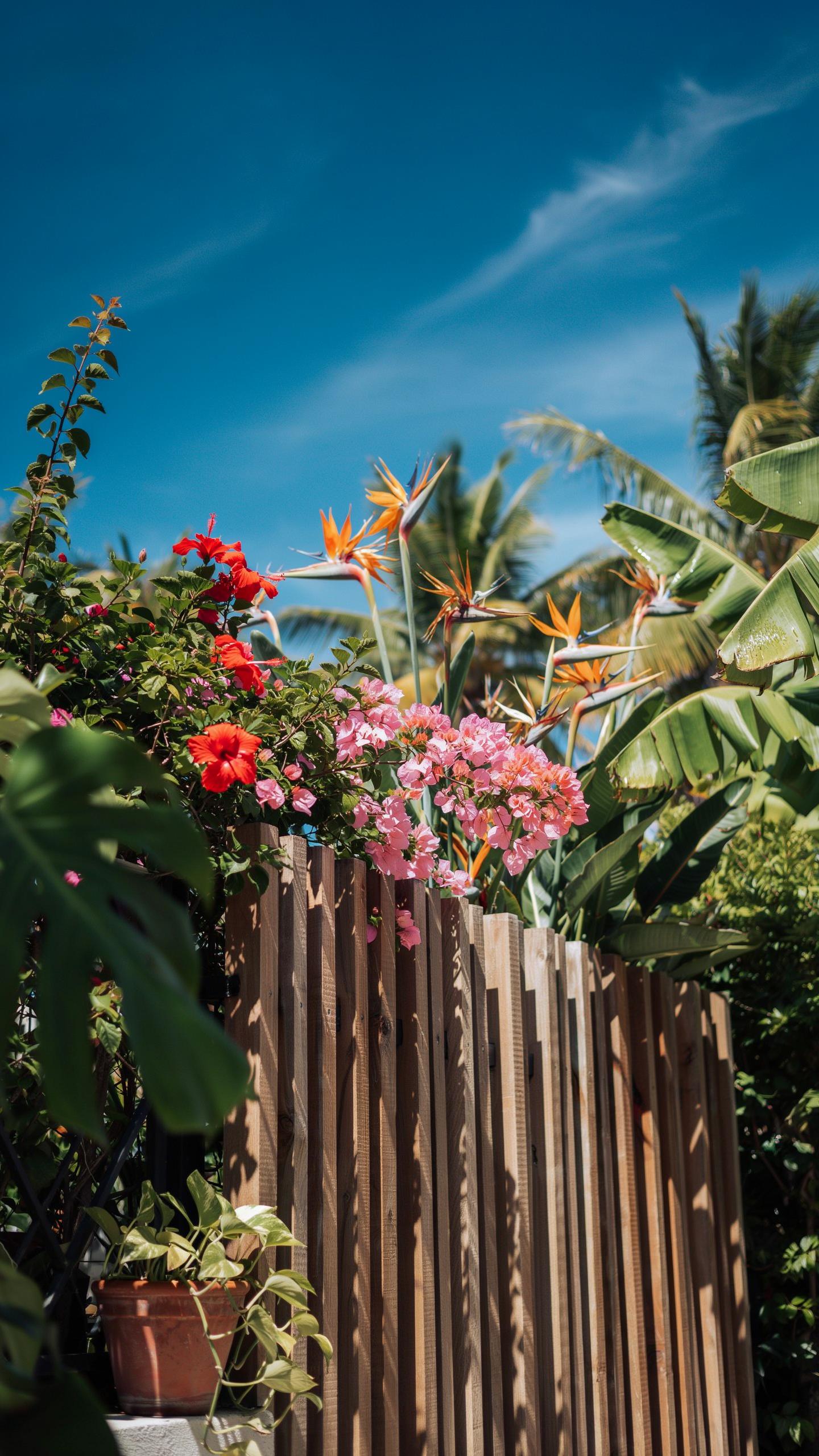
Monstera, banana palms, and bird of paradise species thrive in warm zones and fill vertical space quickly. Position plants 12 to 18 inches from the fence line to prevent root damage and allow air circulation. Dense foliage covers structural elements and creates privacy screens that soften hard edges. These plants grow upward, not outward, so they don’t consume excessive ground space. Layer different heights to maximize visual depth and coverage.
Plant selection depends on your USDA hardiness zone and sunlight exposure at the fence line. Full sun areas support banana palms and bird of paradise. Partial shade suits monstera better. Combine fast-growing species with slower varieties for balanced coverage over time. Water frequency increases in warm zones, so plan irrigation near fence lines. This approach delivers privacy and aesthetic value within one or two growing seasons.
Timber Fence Design With A Contemporary Twist
Selecting The Right Wood Materials
Wood species choice determines fence lifespan and maintenance demands. You need rot resistance, weather tolerance, and stable appearance over years. The wrong species fails in five years. The right one lasts twenty. Material selection is your first tactical decision.
- Red Cedar: Naturally resists decay and insects without treatment. Develops silver-gray patina over time. Ideal for mild climates. Costs moderate. Requires periodic sealing for color retention.
- Redwood: Similar decay resistance to cedar with richer color. Performs well in coastal regions. Higher cost than cedar. Contains natural tannins that inhibit rot and fungal growth.
- Treated Pine: Budget option with chemical preservatives for durability. Resists rot when properly treated. Affordable for large installations. Less visually appealing initially but weathers predictably.
- Ipe Wood: Extremely dense hardwood from South America. Lasts 25 plus years with minimal maintenance. High cost and difficult to cut. Best for high budget projects requiring longevity.
- Teak: Premium option with natural oils providing superior weather resistance. Rare and expensive. Minimal maintenance needed. Best reserved for statement fence sections rather than full installations.
Beginners should start with red cedar or treated pine. Both deliver results without steep learning curves. Cedar offers faster visual appeal. Treated pine offers budget efficiency. Match your choice to your climate and maintenance capacity.
Horizontal Slat Geometry
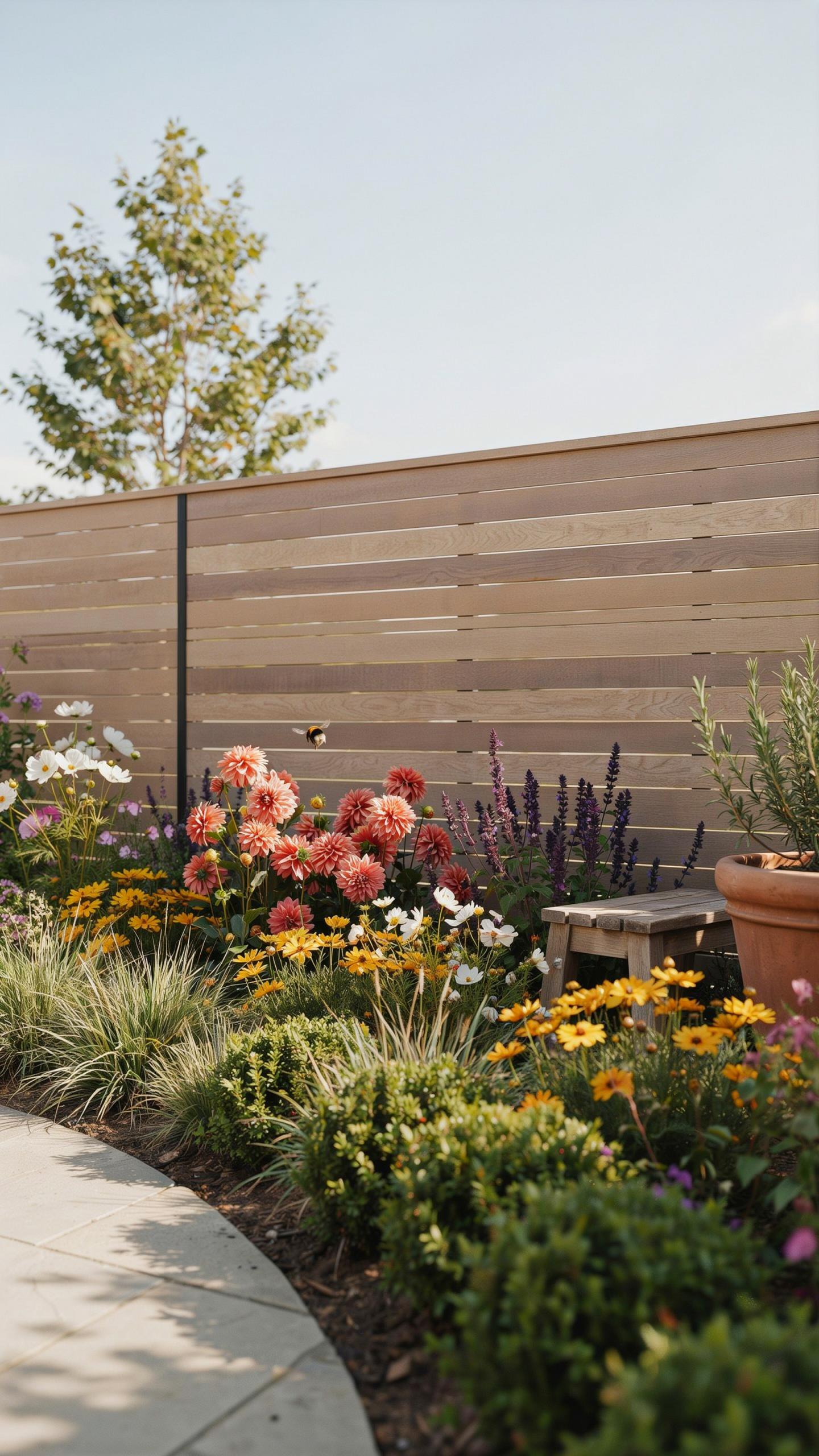
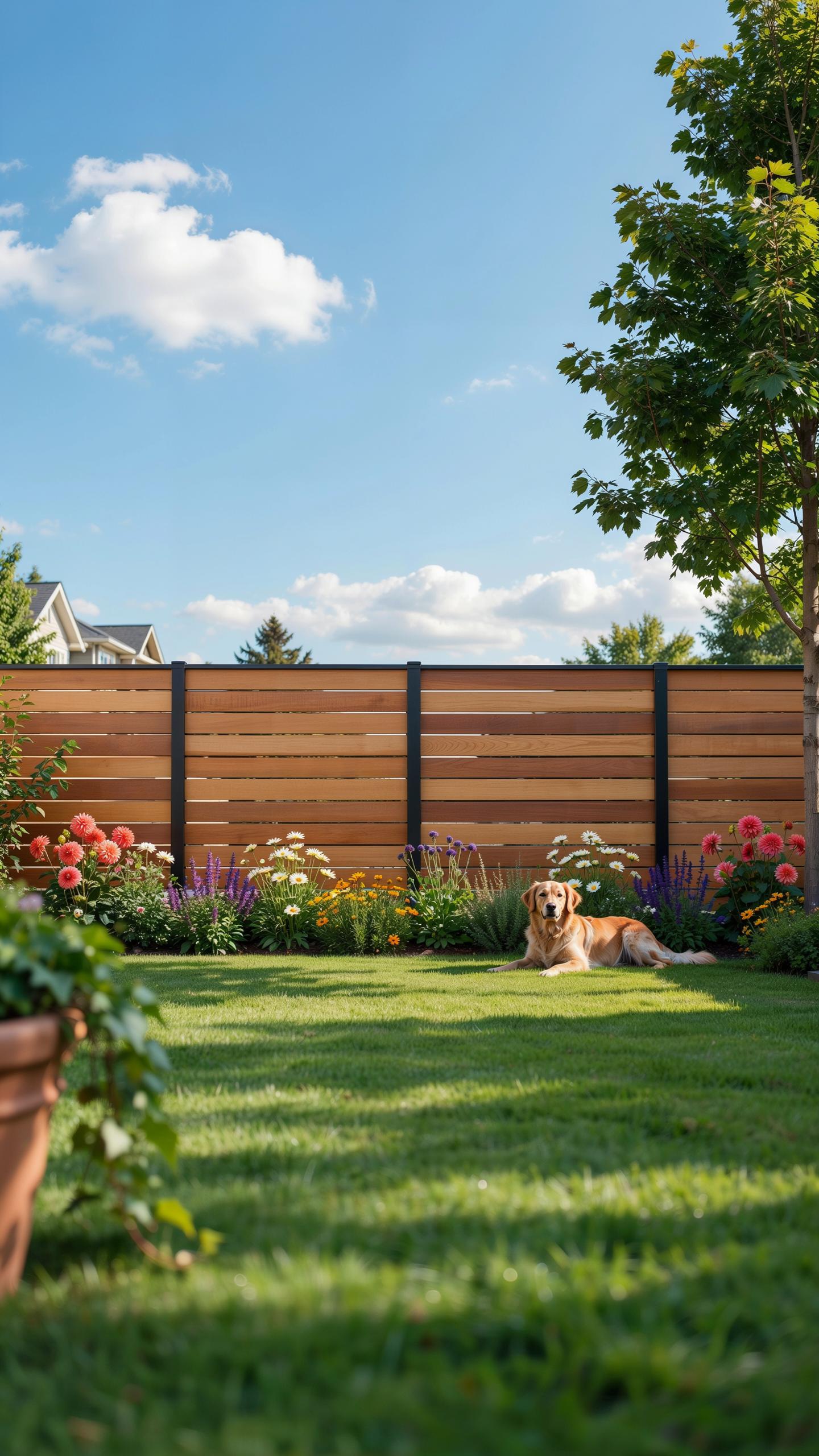
Horizontal slats create optical width in constrained spaces. The eye travels side to side rather than up and down. This lengthens perceived distance. Small urban gardens gain spaciousness instantly. This is a proven design principle, not speculation.
Install planks with consistent 2 to 4 inch spacing between slats. Spacing affects light penetration and privacy balance. Wider gaps increase sight lines and airflow. Narrower gaps enhance privacy while maintaining the horizontal visual flow. Adjust spacing based on your privacy requirements and design preference.
Selecting A Sleek Contemporary Fence For Your Yard
Metal And Composite Innovations
Aluminum frames paired with composite wood panels deliver practical performance. Aluminum resists rust and requires no painting. Composite panels engineered from wood fiber and plastic resist rot, splinters, and fading. This combination handles temperature swings and moisture without warping. You replace panels individually if damaged, not entire sections.
Maintenance drops to occasional cleaning with a hose. UV stabilizers in quality composite materials hold color for 15 to 20 years. Aluminum frames maintain structural integrity across seasons. The initial investment costs more than wood alone, but replacement cycles stretch longer. This tradeoff favors buyers who value time over upfront spending.
Mixed Material Aesthetics
Dark metal posts anchoring light timber slats create visual contrast that reads as intentional design. The metal frames support the wood while the opposing colors establish hierarchy. Steel or aluminum posts stay clean looking longer than painted wood. Timber slats weather naturally, developing patina that shifts tone gradually over years.
This pairing works because each material performs its job without compromise. Metal posts handle structural load and weather exposure effectively. Wood slats provide warmth and soften the industrial edge of metal. The result functions as a fence while working as a visual anchor point in the landscape. Beginners execute this approach easily since materials connect through standard fastening methods.
The Bold Statement Of A Black Garden Privacy Fence
Creating Visual Depth With Dark Hues
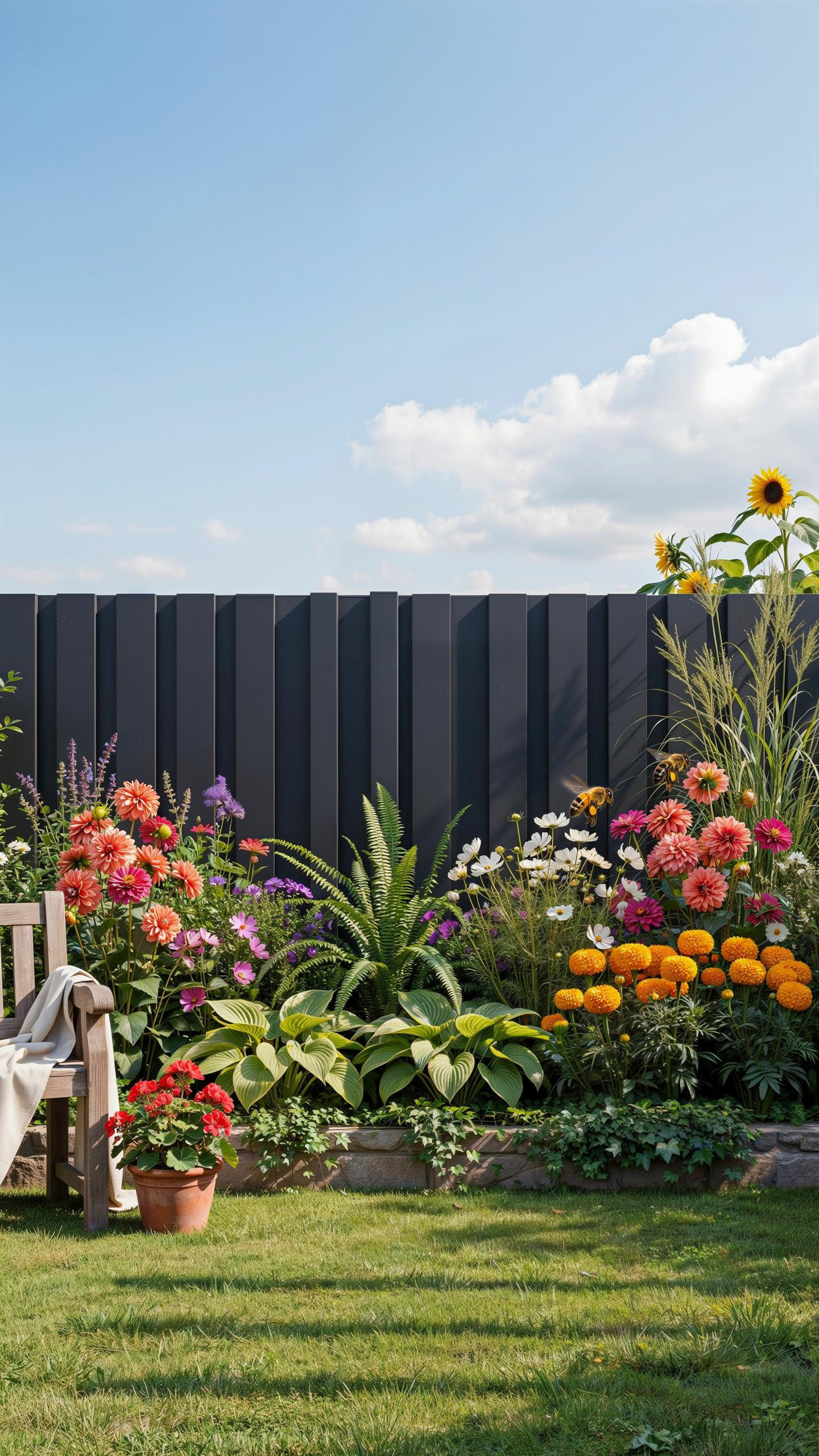
A matte black fence absorbs light rather than reflects it. This quality forces your eye to focus on what sits in front of the fence, not the barrier itself. Green plants and flowering shrubs gain visual prominence against dark backgrounds because of color contrast. The dark surface recedes into the landscape, making your garden feel larger than its actual dimensions.
Black fencing works because of fundamental color theory. Light colors advance visually while dark colors recede. When you paint a fence black, you eliminate it as a visual focal point. Instead, your landscaping becomes the dominant element. This technique applies regardless of garden size or plant selection.
Your garden should be a place where the soul feels at home, and even the simplest modern frame can turn a wild patch into a sanctuary. Build your borders with love, for a garden is a grand adventure that begins with just one beautiful fence.
Enhancing Seclusion And Solitude
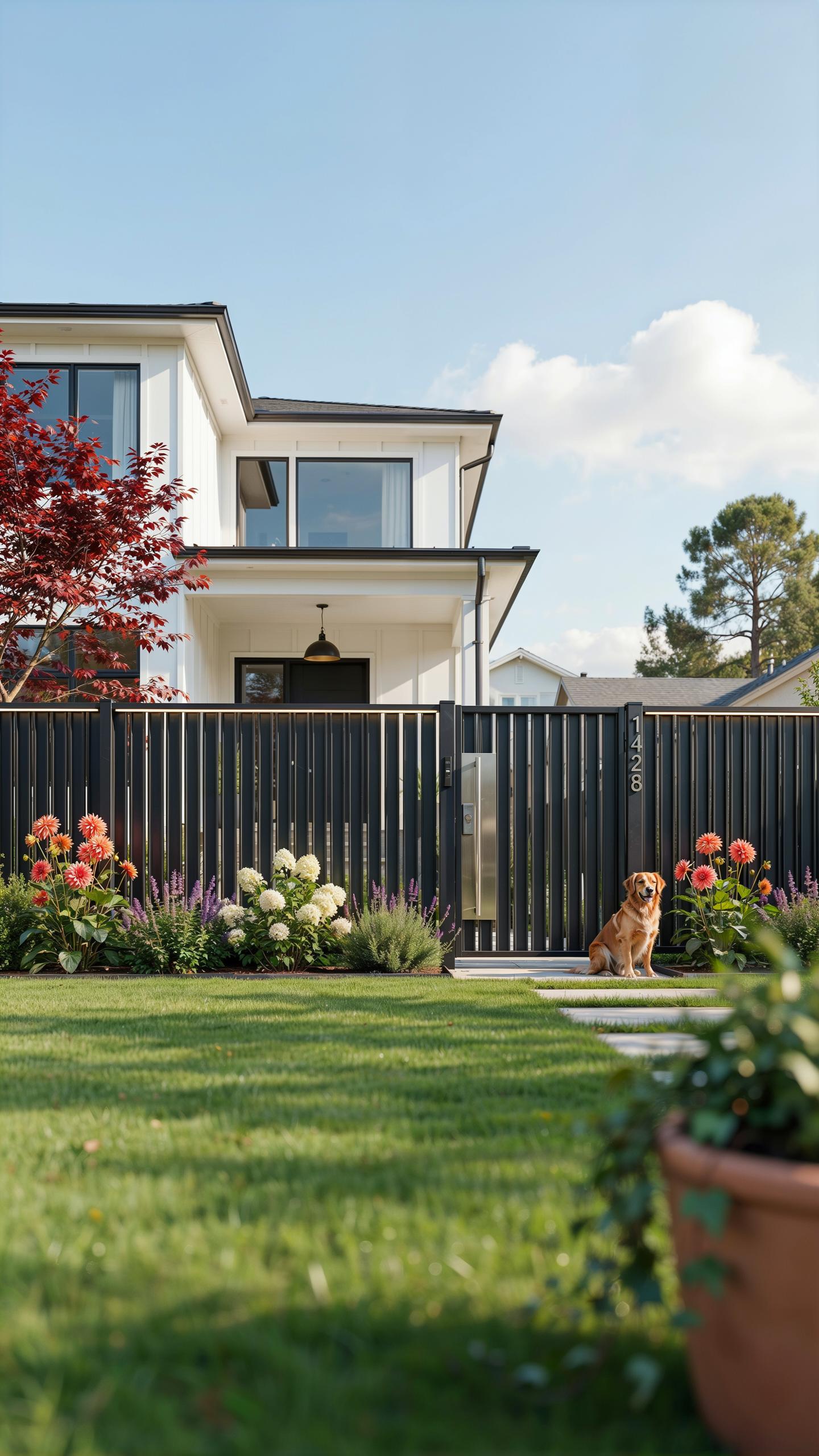
Solid panel fencing in black or charcoal creates a complete visual barrier between your property and neighboring areas. The opaque nature of solid panels blocks sightlines entirely. This setup delivers genuine privacy, not the filtered privacy you get from slat fencing or lattice designs. Your outdoor space becomes a contained environment separated from external distractions.
Black solid panels also reduce noise transmission more effectively than lighter colored fencing. The dense material and dark finish absorb sound waves. You create a sheltered zone where external activity becomes less noticeable. This combination of visual privacy and sound dampening transforms your yard into a functional retreat space.
Designing A Functional Modern Perimeter Fence
Establishing Clear Property Boundaries
Mark your property lines before selecting materials or installing posts. Check local zoning codes and setback requirements in your municipality. Most areas require fences between three and six feet from property lines. Contact your city or county assessor’s office to confirm exact boundary locations. Survey records provide legal documentation if disputes arise with neighbors.
Modern fencing emphasizes clean lines and minimal ornamentation along these boundaries. Use straight posts, horizontal rails, and consistent spacing to define edges without visual clutter. Avoid decorative elements that distract from the property perimeter. The fence itself becomes the statement, not additional embellishments. This approach aligns with minimalist design principles that dominate contemporary residential aesthetics.
Balancing Security With Architectural Style
Modern fencing achieves security through material density and structural integrity rather than height alone. Metal frames with composite or metal infill panels provide strength without bulk. Secure latching systems integrate flush into the design, maintaining sleek profiles. Reinforced hinges and locking mechanisms remain hidden or minimal in appearance. This strategy protects your property while preserving visual simplicity.
Consider materials that resist tampering and weathering over time. Aluminum frames with powder coating resist corrosion and maintain color consistency. Metal mesh or slatted infill deters climbing while allowing sight lines. Stainless steel hardware prevents rust and maintains refined aesthetics. These choices deliver functional security without compromising the modern design language your fence communicates to the street.
Optimizing Curb Appeal With A Stylish Parking Fence
Delineating Driveways And Carports
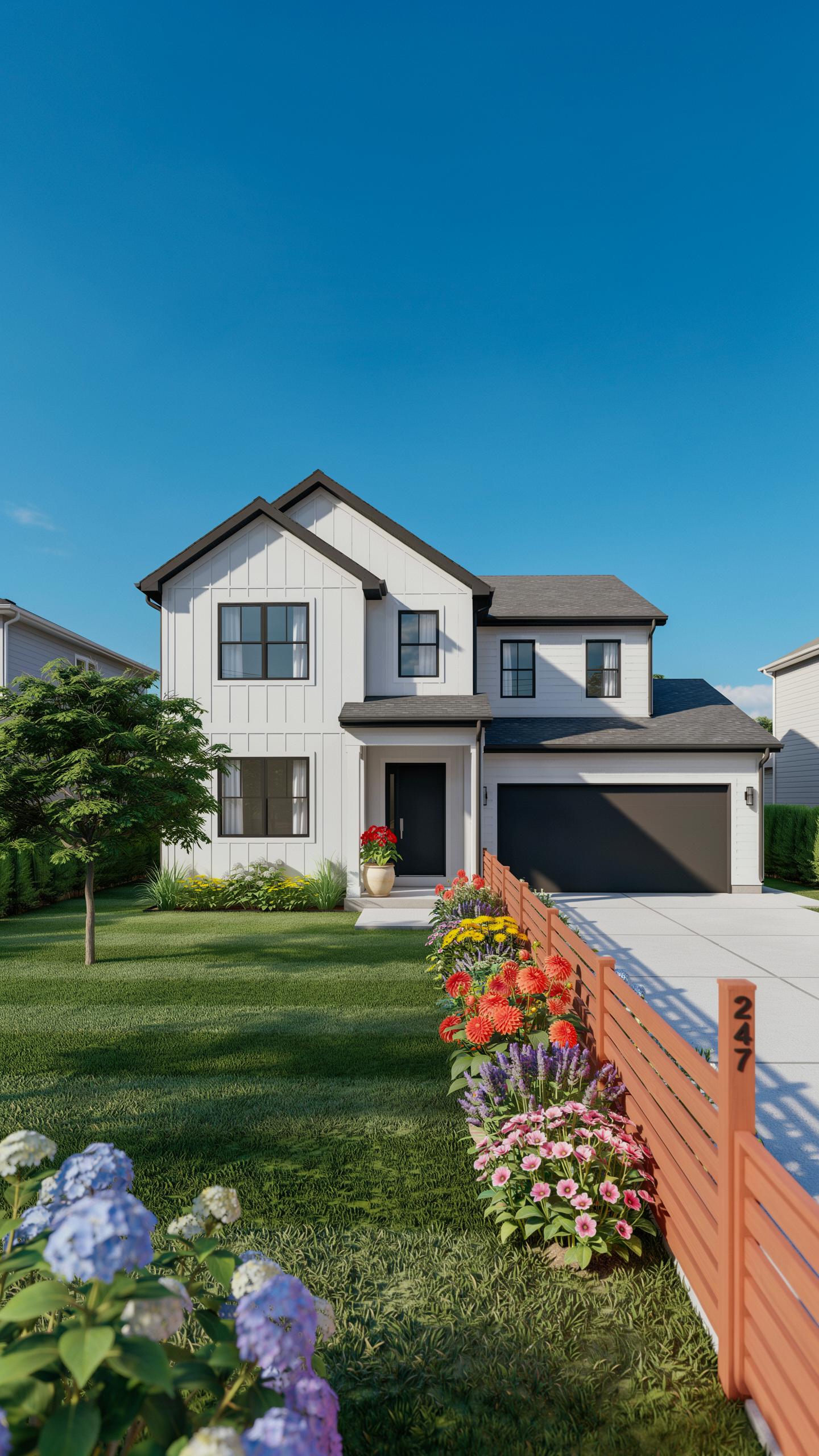
Low-profile barriers separate parking zones from garden space without blocking sightlines. Open-slat panels work well here because they define boundaries while maintaining visual connection to the lawn. Steel or composite materials hold up to vehicle proximity and weather exposure. Height between 2 and 3 feet keeps the fence functional without dominating the front yard.
Modern garden fencing around driveways uses horizontal slat patterns, board-on-board designs, or cable systems. These styles create clear delineation while matching contemporary home aesthetics. The fence sits close enough to the driveway edge to prevent vehicles from encroaching on planted areas. This approach preserves the garden’s integrity while organizing parking zones efficiently.
Ensuring Driver Visibility And Safety
Open-air fence designs eliminate blind spots that create parking hazards. Horizontal gaps between slats allow drivers to see pedestrians, property lines, and obstacles. This visibility prevents backing accidents and keeps the front yard feeling open rather than enclosed. Slatted panels achieve this safety benefit while maintaining the modern garden aesthetic.
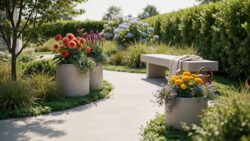
Corner posts and transition points need careful placement to avoid blocking driver sightlines during entry and exit maneuvers. Fencing height should not exceed eye level when seated in a vehicle. Cable or metal picket systems provide structure without solid panels that obstruct views. Safety and design work together when you prioritize sight lines in your fence layout.
Low Front Fence Ideas For An Welcoming Entryway
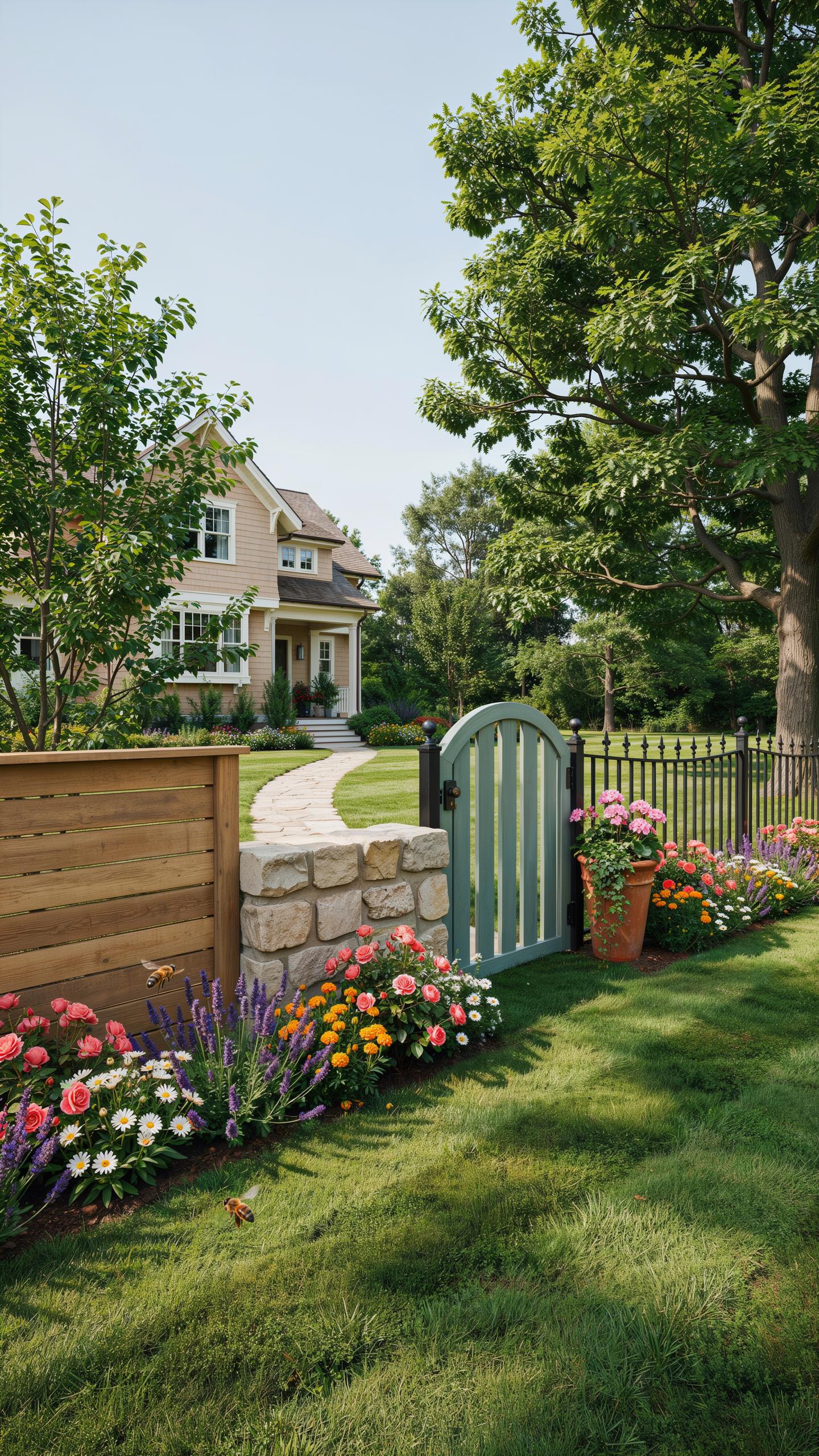
Top Low Profile Fence Styles
Low-profile fencing solves a core problem: you need boundary definition without blocking sightlines from the street. These styles work because they establish your garden zone while maintaining visibility and approachability. Pick the style that matches your home’s existing architecture and your maintenance capacity.
- Picket Style Slat Panels: Vertical or horizontal slats spaced 1-3 inches apart. Install at 24-36 inches high. Offers classic definition with minimal visual obstruction. Works with most home styles and costs less than solid fencing.
- Gabion Stone Baskets: Steel mesh cages filled with stone, rock, or salvaged materials. Stack to 24-40 inches. Provides industrial aesthetic while allowing light and air flow. Requires no painting or staining maintenance.
- Mid Century Horizontal Timbers: Thick wood rails mounted horizontally on posts, typically 2-3 rails at varying heights up to 36 inches. Emphasizes clean lines and open space. Requires periodic sealing but creates strong visual impact.
- Woven Wire Grids: Metal framework with woven wire or rope infill, mounted at 24-30 inches. Supports climbing plants and maintains complete visibility. Popular for contemporary and modern garden designs.
- Metal Post And Rail: Steel or aluminum posts with horizontal rails, 24-36 inches tall. Minimal material means maximum transparency. Suits minimalist and contemporary homes.
Low-profile borders establish clear property edges without creating fortress barriers. Your front fence becomes a design feature rather than an obstacle. Neighbors see into your garden, which encourages conversation and community connection.
Encouraging Neighborhood Interaction
Waist-high fencing or lower preserves the visual connection between your property and the street. People walking past can see your garden work and landscaping choices. This transparency builds community and discourages crime by keeping yards visible from sidewalks.
Lower boundaries also make your home appear more confident and welcoming. You signal that you have nothing to hide and value neighborhood presence. This approach works particularly well in established residential areas where open frontage is the neighborhood norm.
How To Install Modern Garden Aesthetic Fencing Easily
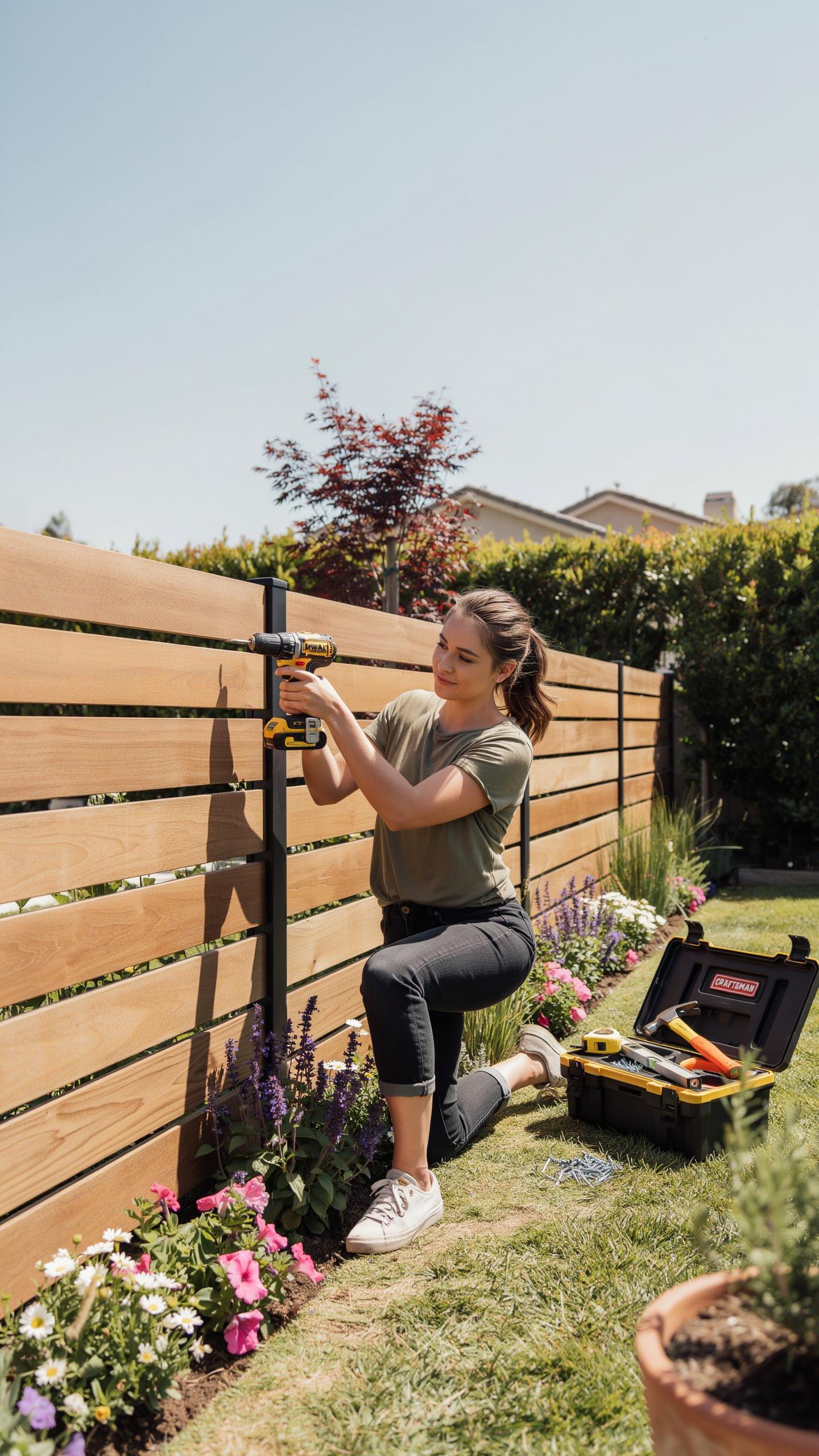
Securing Posts And Ensuring Level Lines
Dig post holes to uniform depth. Use a post hole digger or auger to maintain consistent sizing across all holes. Depth depends on fence height and soil type, but typically ranges from 24 to 36 inches. Measure each hole before setting posts to catch mistakes early. Mark hole locations with spray paint or chalk to maintain proper spacing and alignment before you start digging.
Set posts in concrete for stability. Pour concrete mix into each hole around the post base. Use a level to verify the post stands plumb before concrete hardens. String lines between corner posts establish your reference line for middle sections. Run the string taut and check that each post aligns with it. This method catches off-plumb posts before you attach rails or panels.
Applying Protective Finishes And Seals
Choose finishes based on your material and climate. Cedar and composite materials require different sealants than metal or vinyl. Exterior-grade stains penetrate wood while preserving grain visibility. Clear polyurethane sealants protect wood from moisture without color change. Paint provides maximum UV protection but requires more maintenance. Test products on scrap material first to confirm the final appearance matches your design vision.
Apply finishes after installation completes and concrete cures fully. Wait seven days minimum for concrete to harden before adding stain or sealant. Use a brush or sprayer for even coverage across all surfaces. Apply two coats for optimal protection against weather exposure. Recoat every two to three years depending on climate intensity and material type. This schedule prevents UV damage and wood rot before they compromise structural integrity.
Frequently Asked Questions

What are the key elements of a modern garden aesthetic fencing design?
Achieving a modern garden aesthetic fencing look starts with clean, crisp lines and a minimalist color palette. Beginners should focus on horizontal slats, which visually expand a small yard, or dark charcoal and black finishes that make greenery pop. The goal is to create a seamless backdrop that emphasizes architectural plants and structured landscaping while maintaining a sense of privacy and sophisticated simplicity throughout your outdoor living space.
How can a beginner install modern fencing without professional help?
For those new to DIY, the easiest way to install modern garden aesthetic fencing is by using pre-assembled modular panels or composite kits. These systems often feature “tongue and groove” components that slide into place with minimal tools. Start by ensuring your post holes are deep and level, then attach the panels horizontally. This streamlined approach saves time and ensures a professional, high-end finish even if you lack advanced carpentry skills.
Are there budget-friendly ways to achieve a contemporary fence look?
Absolutely! You can achieve a high-end look on a budget by using standard pressure-treated pine and staining it in a rich ebony or warm teak finish. Another affordable hack is using wire mesh panels framed with dark wood for an industrial vibe. By prioritizing inexpensive materials and focusing on geometric layouts, you can create a stunning visual statement that looks expensive without overspending on premium hardwoods or custom metalwork.