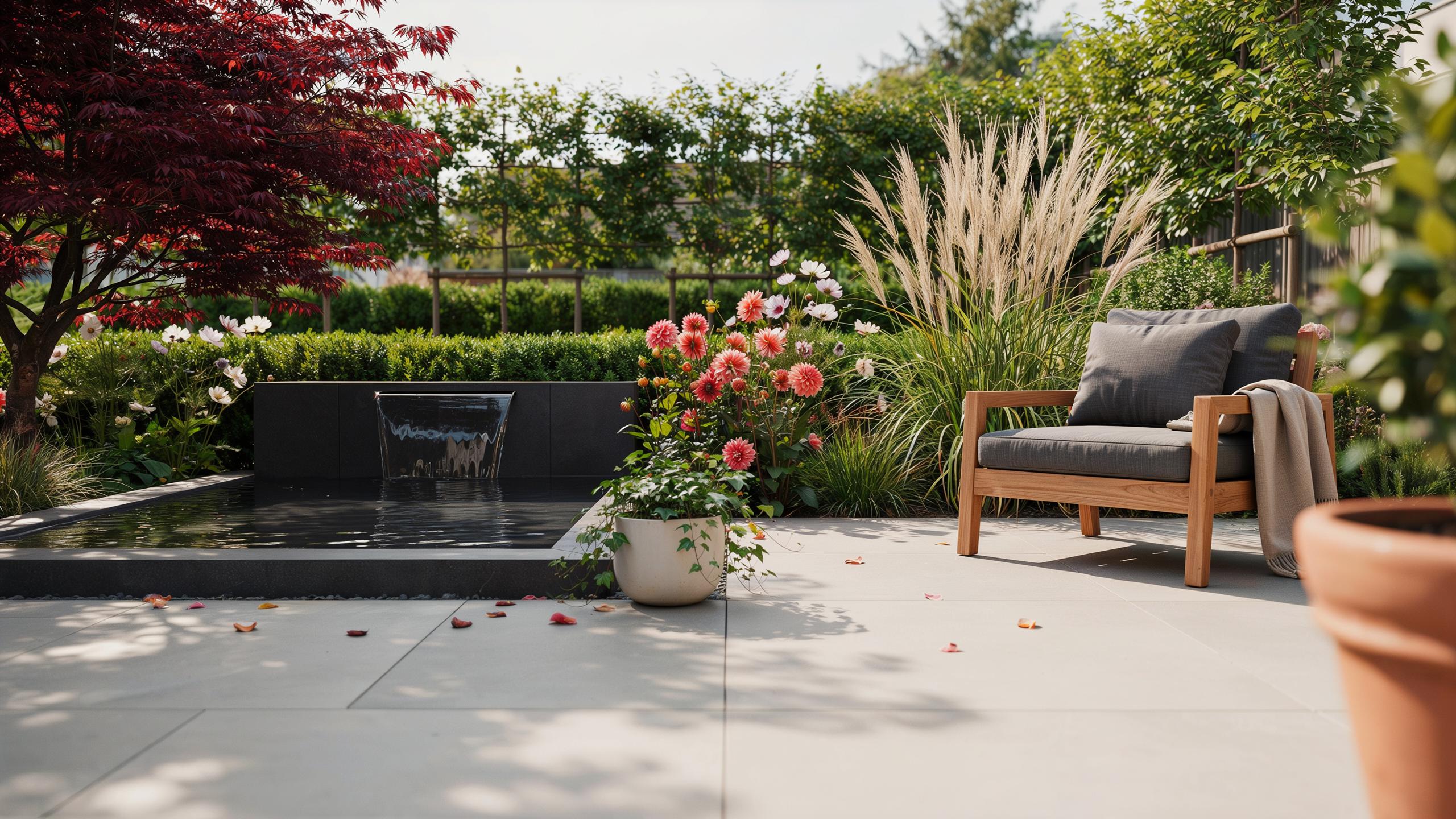
Embracing The Modern Garden Aesthetic Water Feature Trend
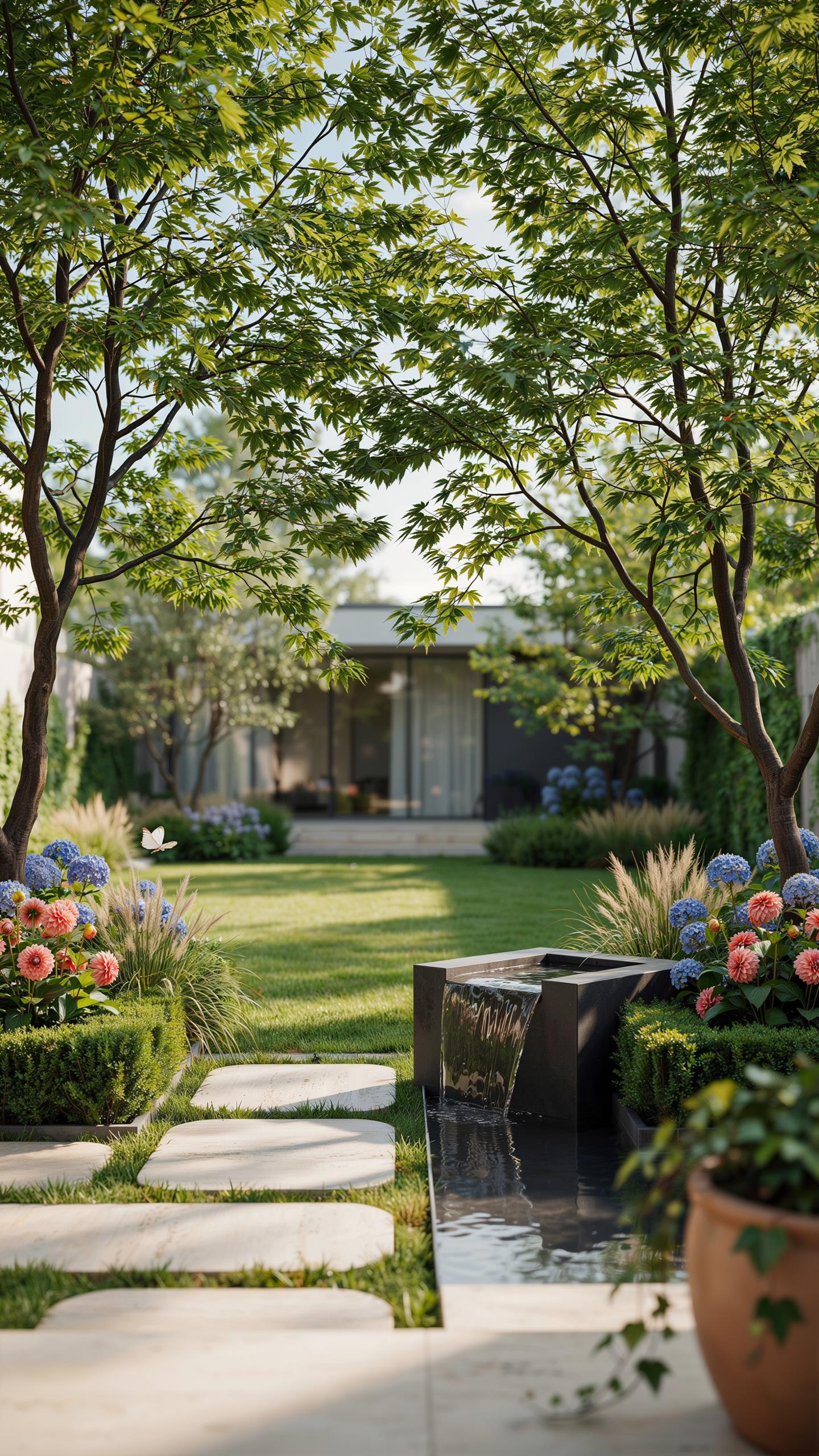
The Rise Of Minimalist Outdoor Design
Minimalist outdoor design strips away ornament to expose function. Clean lines, geometric shapes, and restrained plant selection define contemporary gardens. This approach emerged from mid-20th century design movements that rejected excess. Concrete, steel, and natural stone replace decorative embellishments. Negative space becomes as important as planted areas. Water features fit seamlessly into this framework because their simple forms serve both aesthetic and practical purposes.
The subtraction strategy works because fewer elements demand attention. Each component earns its place through utility or visual weight. A rectangular reflecting pool or linear water channel achieves more impact than busy, ornamental designs. This restraint creates clarity. Viewers process the space faster. The mind relaxes when it encounters order. Modern gardens feel intentional and controlled, qualities that support relaxation rather than distract from it.
Why Water Is The Ultimate Relaxed Living Element
Running water masks unwanted noise from traffic and neighbors. The acoustic properties of flowing water operate at frequencies that human ears perceive as calming. This phenomenon does not depend on belief or preference. Physical sound waves interact with the environment predictably. Studies in environmental psychology document that natural water sounds lower cortisol levels and reduce perceived stress. Gardens near highways or dense neighborhoods benefit most from this noise-masking capability.
White noise from water features creates psychological safety. The brain interprets consistent, natural sound patterns as non-threatening. Humans evolved listening to streams and rainfall for survival signals. That hardwired response persists. A recirculating fountain or small cascade provides continuous acoustic stimulation without variation that triggers alertness. This consistency allows the nervous system to downshift. Relaxation follows naturally when external stimuli feel stable and familiar.

Choosing The Perfect Modern Water Feature For Your Space
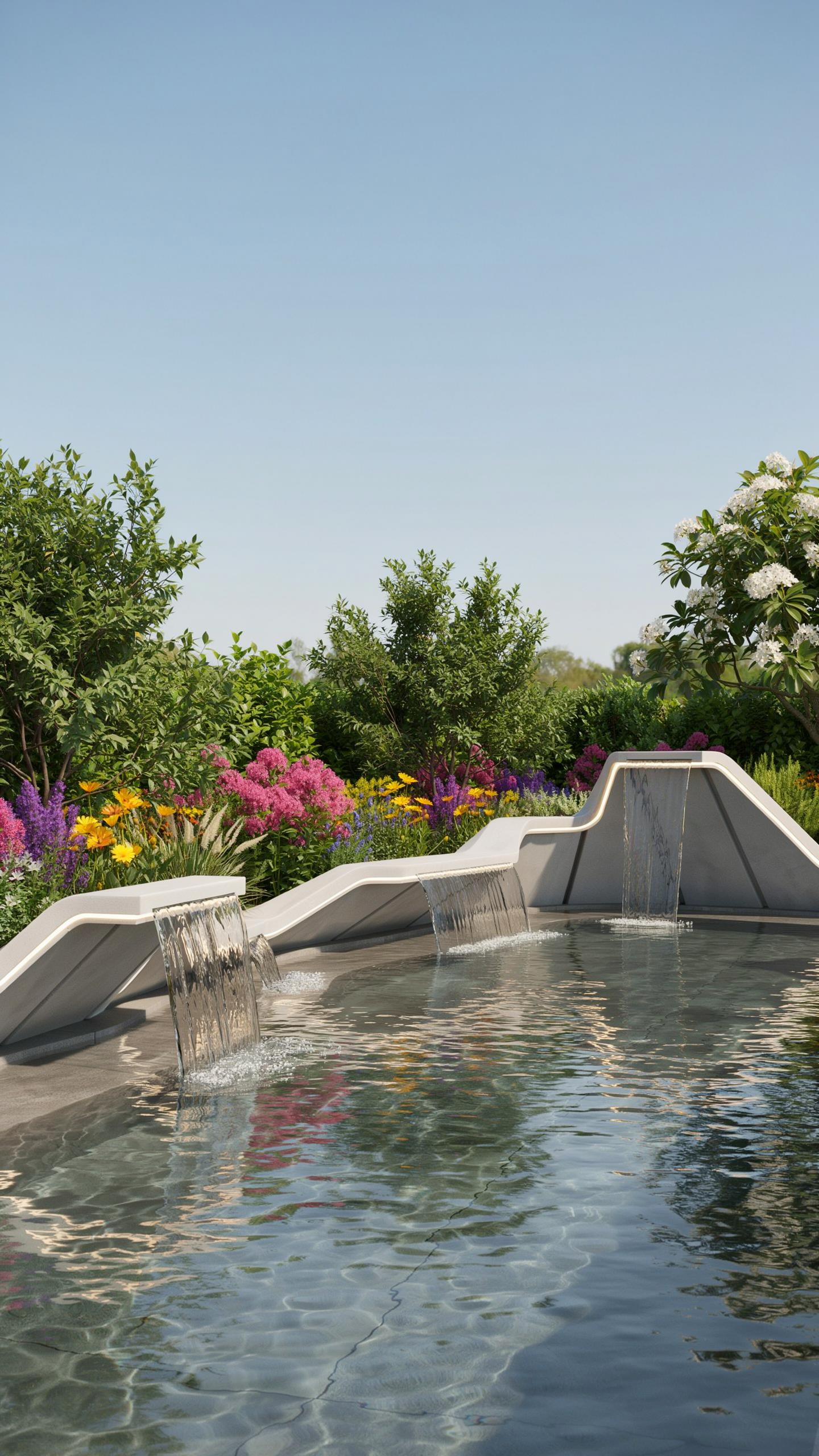
Sizing And Scale Considerations For Urban Yards
Water feature scale directly impacts how your yard functions. A fountain that dominates a 200-square-foot patio creates visual chaos and blocks movement. Match the feature’s footprint to the open space surrounding it, leaving at least 40 percent of your yard clear for seating and circulation paths.
Small urban yards benefit from vertical water features. Wall-mounted cascades and narrow channel streams occupy minimal ground space while delivering visual and audio impact. A 3-foot-wide feature suits most city lots without consuming the entire outdoor room or forcing awkward furniture placement around it.
Matching Materials With Contemporary Home Architecture
Your water feature material must align with your home’s exterior finish. Steel cladding on your house calls for weathered steel in your water installation. This consistency creates visual continuity and signals intentional design rather than random selection.
Natural stone water features work with multiple architectural styles. Basalt, granite, and slate all age gracefully and complement contemporary materials like board-formed concrete and composite cladding. Polished slate reflects light and pairs effectively with minimalist designs using clean lines and neutral color palettes.
The Architectural Appeal Of Concrete Fountains
Industrial Chic And Brutalist Design Influences
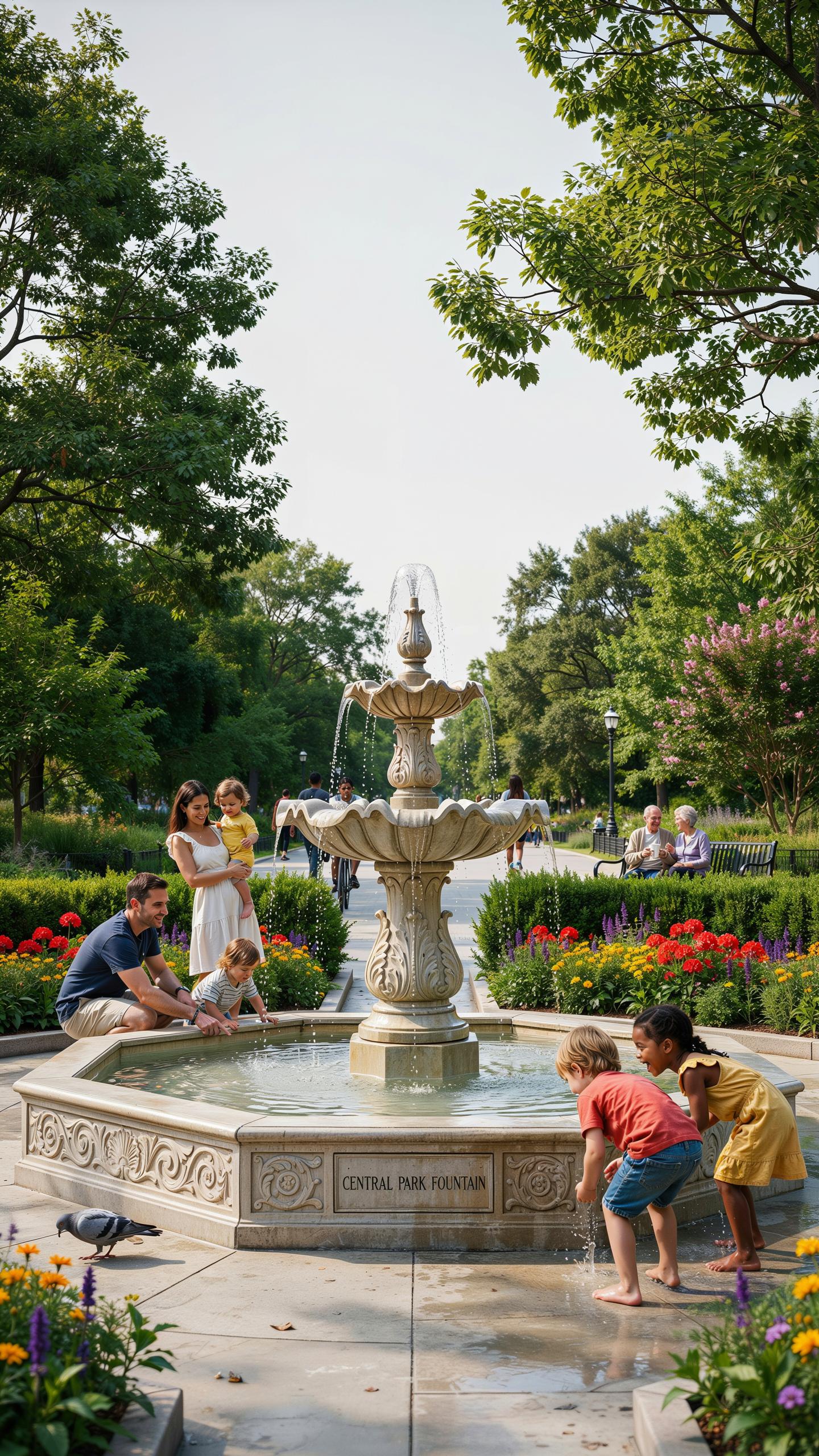
Concrete entered garden design during the mid-20th century as modernist architects rejected ornamental materials. Brutalism, which emerged in the 1950s and 1960s, celebrated raw concrete’s honest structural form and geometric precision. Cast concrete fountains reflect this movement’s core principle: expose the material itself rather than hide it behind decoration.
Brutalist design influenced residential landscapes by normalizing bold, unfinished surfaces in outdoor spaces. Concrete fountains embody this aesthetic through clean lines, chunky proportions, and visible casting seams. This approach eliminates the need for applied finishes or decorative overlays, making the fountain a straightforward architectural element that anchors modern garden layouts through form alone.
Top Benefits Of Cast Concrete In Outdoor Landscapes
Concrete fountains withstand freeze-thaw cycles, UV exposure, and prolonged moisture without structural failure. Most cast concrete resists cracking and erosion when properly installed, performing reliably across climate zones for decades without replacement or major repairs.
- Exceptional durability against harsh seasonal weather conditions: Concrete tolerates temperature swings and moisture exposure that compromise wood, metal, or ceramic alternatives over time.
- Seamless integration with modern poured concrete patios: Concrete fountains coordinate visually and structurally with existing hardscape, creating unified design continuity across outdoor zones.
- Ability to be custom molded into sleek artistic shapes: Casting allows designers to create geometric forms, sculptural profiles, and integrated basins without fabrication constraints that limit other materials.
- Low maintenance requirements over decades of active use: Concrete fountains need occasional cleaning and pump servicing but avoid rust, rot, or material degradation that demands constant upkeep.
- Cost efficiency compared to stone or specialty materials: Concrete production scales affordably while delivering comparable durability and aesthetic presence of higher-cost alternatives.

Concrete fountains function as permanent landscape investments. Their material stability and design flexibility make them practical choices for homeowners prioritizing long-term performance and minimal intervention.
Designing With A Sleek Garden Fountain Modern Aesthetic
Symmetrical Vs Asymmetrical Water Play
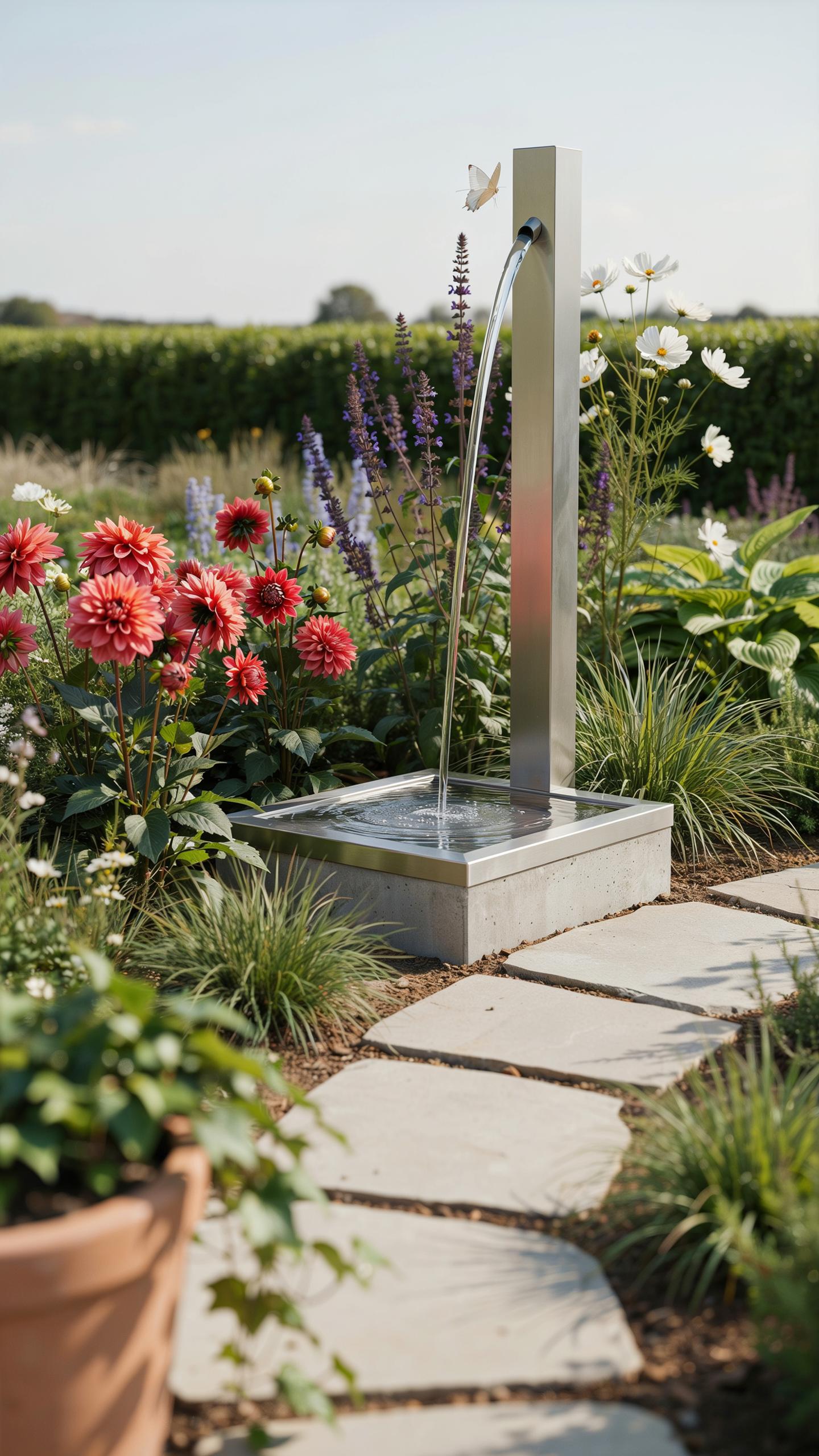
Symmetrical water fountains follow mirrored layouts that create predictable, orderly movement. This approach stems from formal garden design traditions and establishes visual calm. Symmetry communicates control and balance, making spaces feel intentional and structured. Modern gardens use symmetry when the goal is peaceful, contemplative environments. The water patterns remain consistent, predictable, and easy to maintain mechanically.
Asymmetrical fountains break from center-point design to create visual interest and movement. Water cascades at varied heights and angles, pulling the eye across the garden. This approach aligns with contemporary design philosophy that values organic, less rigid compositions. Asymmetry works well in modern spaces because it feels less formal and more dynamic. Both approaches function equally well, the choice depends on whether you want calm or energy.
Integrating Subdued LED Lighting For Evening Ambiance
Warm colored LED lights positioned underwater highlight water movement without creating harsh glare. Directional lighting focuses on the water itself rather than spreading light across the entire garden. This prevents light pollution and keeps illumination contained to your garden space. Underwater LEDs reveal water texture, ripples, and cascade patterns that disappear at dusk. The effect transforms a static daytime feature into an active evening focal point.
LED systems offer practical advantages over traditional lighting. They consume minimal electricity, last 25,000 to 50,000 hours, and generate little heat. Warm white light in the 2700K to 3000K color range suits garden settings better than cool white tones. Installing lights below the water surface creates reflection effects on surrounding foliage. Dimmers allow you to adjust intensity based on time of year and personal preference.
Choosing A Modern Backyard Fountain For Multi Sensory Therapy
Acoustics: From Gentle Trickles To Bold Cascades
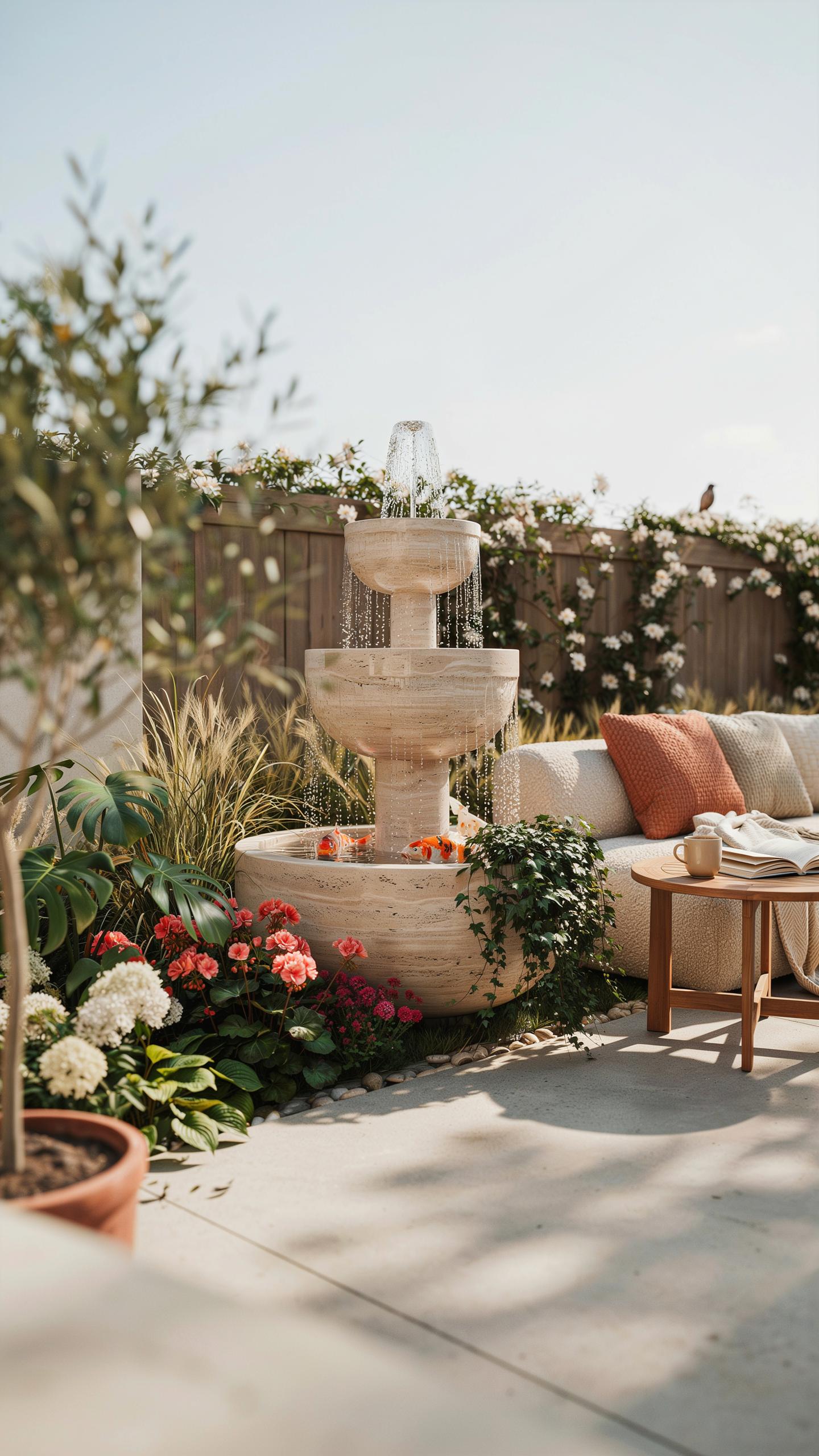
Water sound output depends on two mechanical factors: fall height and basin design. A drop from six inches produces a soft trickling sound around 40-50 decibels. Increase that to two feet, and you get a louder cascade at 60-70 decibels. The basin material and shape determine how water disperses and breaks against surfaces, which directly controls pitch and resonance characteristics throughout your garden space.
Adjust your fountain’s acoustic profile by modifying spillway geometry and cascade layers. Narrow spillways concentrate water into tight streams, creating higher-pitched sounds. Wider basins slow water velocity and soften impact noise. Rock-lined basins absorb and scatter sound differently than smooth concrete or stone surfaces. Test your installation at different times to hear how ambient noise and wind conditions interact with your fountain’s acoustic output.
Attracting Local Birdlife For A Dynamic Ecosystem
Design shallow bathing zones between one and three inches deep for safe bird access. Native birds require depth consistency to control submersion and escape quickly from predators. Position drinking edges at basin rims where birds perch while accessing water. Avoid steep sides and slippery surfaces. Create gentle slopes that let birds wade gradually into deeper sections without losing footing or visibility.

Install your fountain in open sight lines away from dense shrub cover. Birds need clear visual access to approach water and detect threats. Place the feature within fifteen feet of native plantings so birds have escape routes. Use natural stone basins rather than plastic or metal surfaces, which can harbor bacteria and temperature extremes. Maintain water circulation to prevent stagnation and mosquito breeding while preserving the clean conditions birds and pollinators require.
Investing In A Luxury Garden Water Feature As A Focal Point
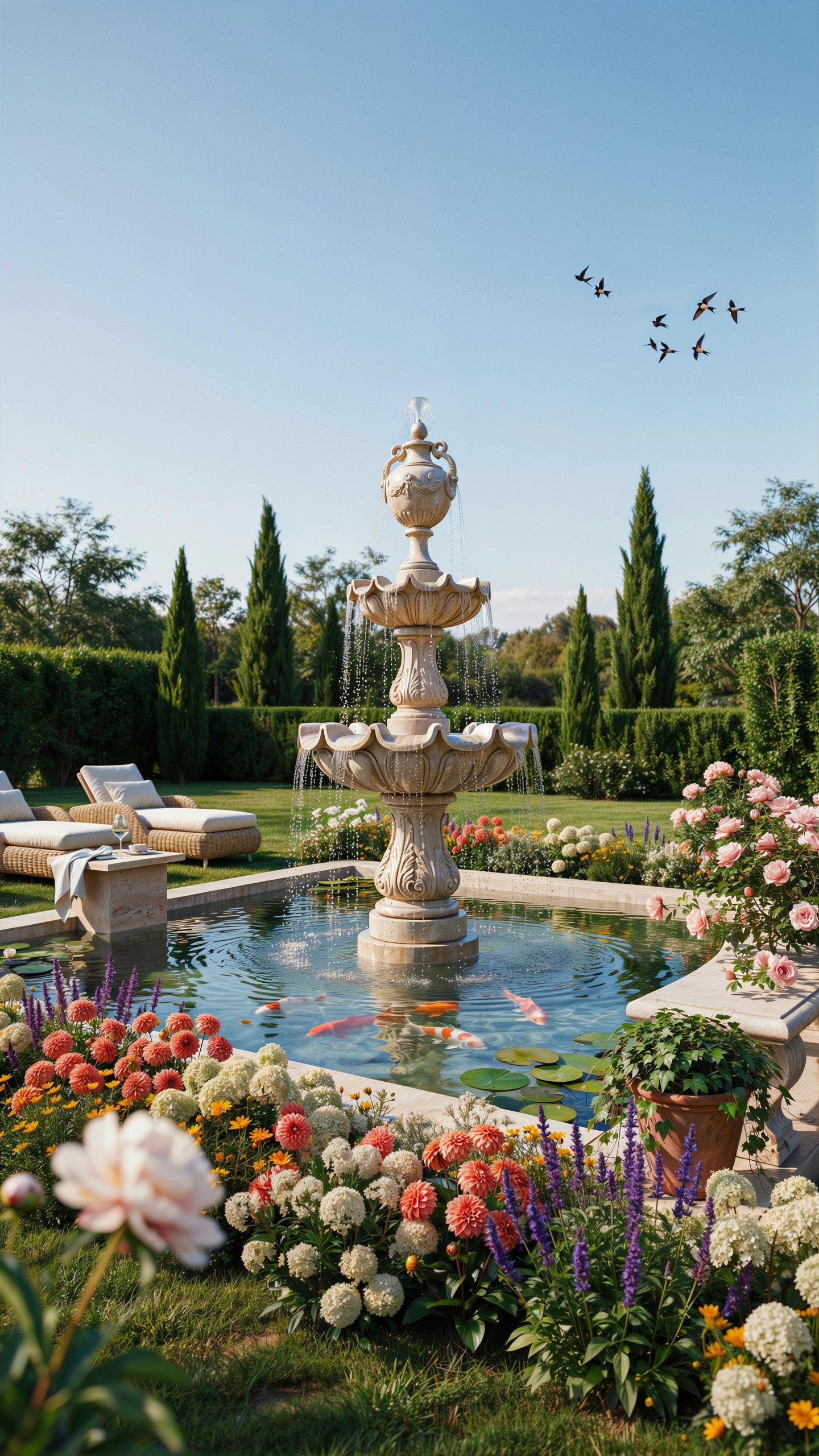
The Art Of The Infinity Edge And Mirror Pools
Infinity edge pools use a hidden catch basin below the visible water line to create a continuous surface that appears to blend into the landscape. The water recirculates through the basin back to the pool, maintaining the illusion of boundless depth. This technique originated in modern landscape design during the mid-20th century and remains a standard method for high-end installations. The visual effect doubles perceived space by reflecting sky and surrounding vegetation without interruption.
The mirror pool variant operates similarly but prioritizes stillness over circulation. Still water creates a perfect reflective surface that amplifies light and extends sightlines. Both approaches demand precise grading, reliable pump systems, and regular maintenance to prevent algae and debris buildup. Installation costs run significantly higher than standard pools due to engineering requirements and finish details. Property owners gain a focal point that commands attention while requiring careful planning for climate and seasonal adjustments.
The sound of water is worth more than all the poets’ words. In the quiet of a garden, the soul finds its modern sanctuary and its oldest memories.
Commissioning Custom Sculptural Water Artworks
Working with local stone sculptors and metal artisans begins with defining your garden’s spatial constraints and aesthetic direction. Share reference images, material preferences, and functional requirements. Sculptors assess site drainage, soil stability, and water flow patterns before sketching concepts. Request detailed drawings and material samples before committing to fabrication. This collaborative phase determines whether the final piece integrates seamlessly or creates visual conflict within your garden layout.
Custom water sculptures cost between five thousand and fifty thousand dollars depending on scale, material complexity, and artist reputation. Stone sculptures require weather-resistant varieties like granite or limestone. Metal pieces demand corrosion-resistant alloys such as stainless steel or sealed bronze. Artists handle installation logistics, plumbing integration, and seasonal winterization protocols. Year-round functionality depends on proper drainage systems and material maintenance schedules tailored to your climate zone.
Practical Installation Tips For Your Home Water Feature
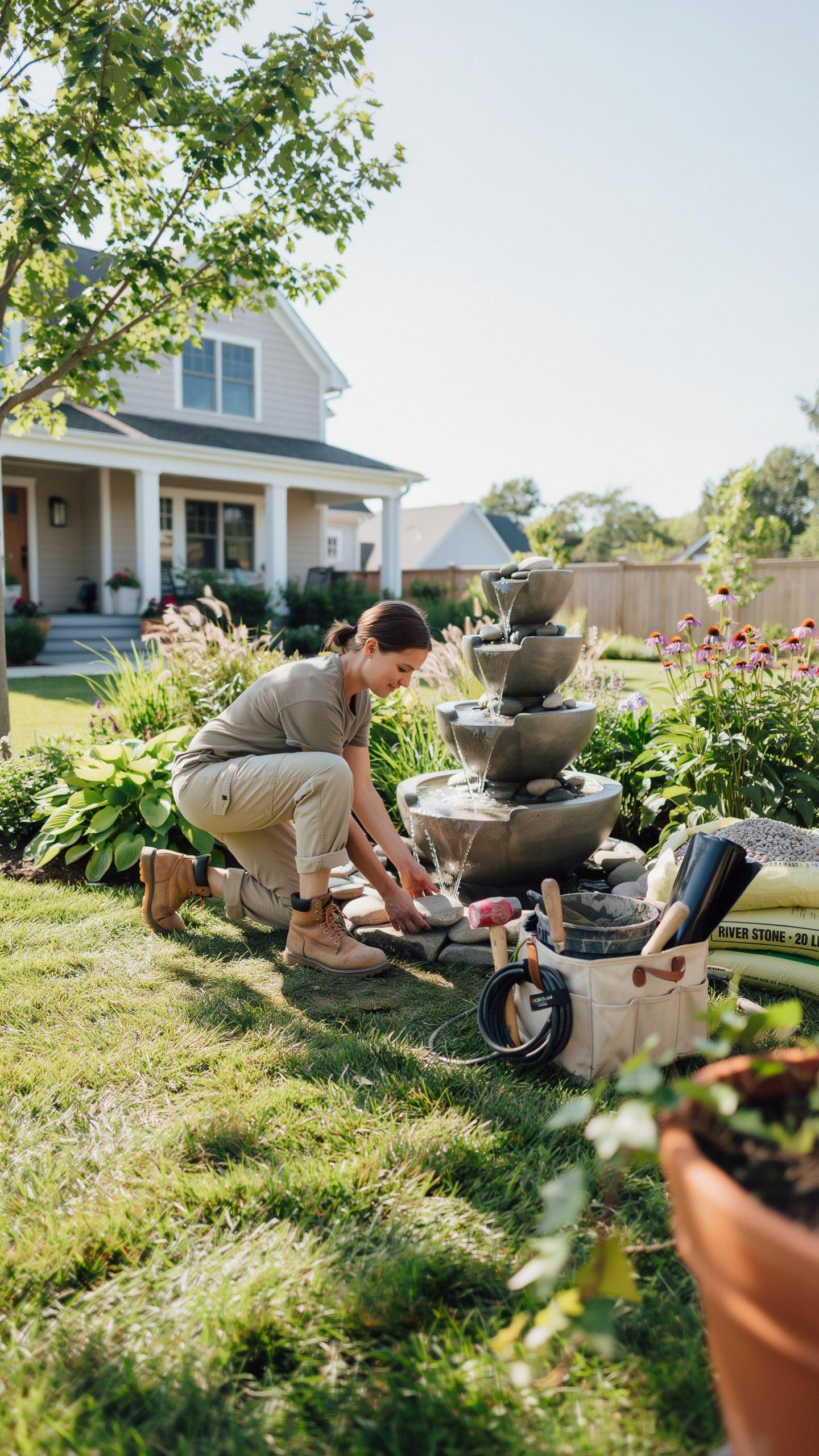
Essential Pre Installation Checklist For Homeowners
Before your water feature arrives, handle these preparation steps. They determine whether your feature runs safely and lasts. Skip them and you risk damage, poor performance, or safety hazards.
- Verify GFC Protected Outlet Proximity: Locate an outdoor electrical outlet within 25 feet of your installation site. GFC protection cuts power instantly if water contacts the circuit, preventing electrocution. Standard outlets lack this safety feature.
- Level The Ground Thoroughly: Use packed gravel or concrete pads to create a stable base. Uneven ground causes water to pool unevenly, stressing pump seals and creating mosquito breeding grounds.
- Test Local Water Hardness: Check your water’s mineral content through your municipal water report or a hardware store test kit. Hard water builds mineral deposits on pumps and reduces circulation efficiency over time.
- Plan Heavy Equipment Access: Clear a direct path for delivery trucks and lifting equipment. Water features weigh 200 to 800 pounds depending on size and material. Blocked access forces manual carrying and increases damage risk.
- Measure Available Space Accurately: Document your installation zone’s length, width, and height. Verify clearance from structures, trees, and underground utilities before delivery arrives.
These steps take two to three hours. They eliminate 90 percent of installation problems. Complete them before scheduling delivery.
Choosing Between Solar Powered And Hardwired Pumps
Solar pumps operate independently from your home’s electrical system. They cost less to run and eliminate extension cord risks. However, they underperform on cloudy days and require seasonal adjustments. Output drops significantly in winter months across most climates.

Hardwired pumps provide consistent 24/7 performance regardless of weather. They pump stronger and maintain better circulation. Installation requires a licensed electrician and GFC outlet, adding upfront cost. Your pump runs year round at full capacity without performance dips, making them ideal for zones with limited sunlight.
Creative Plant Pairings For Your Modern Garden Water Feature
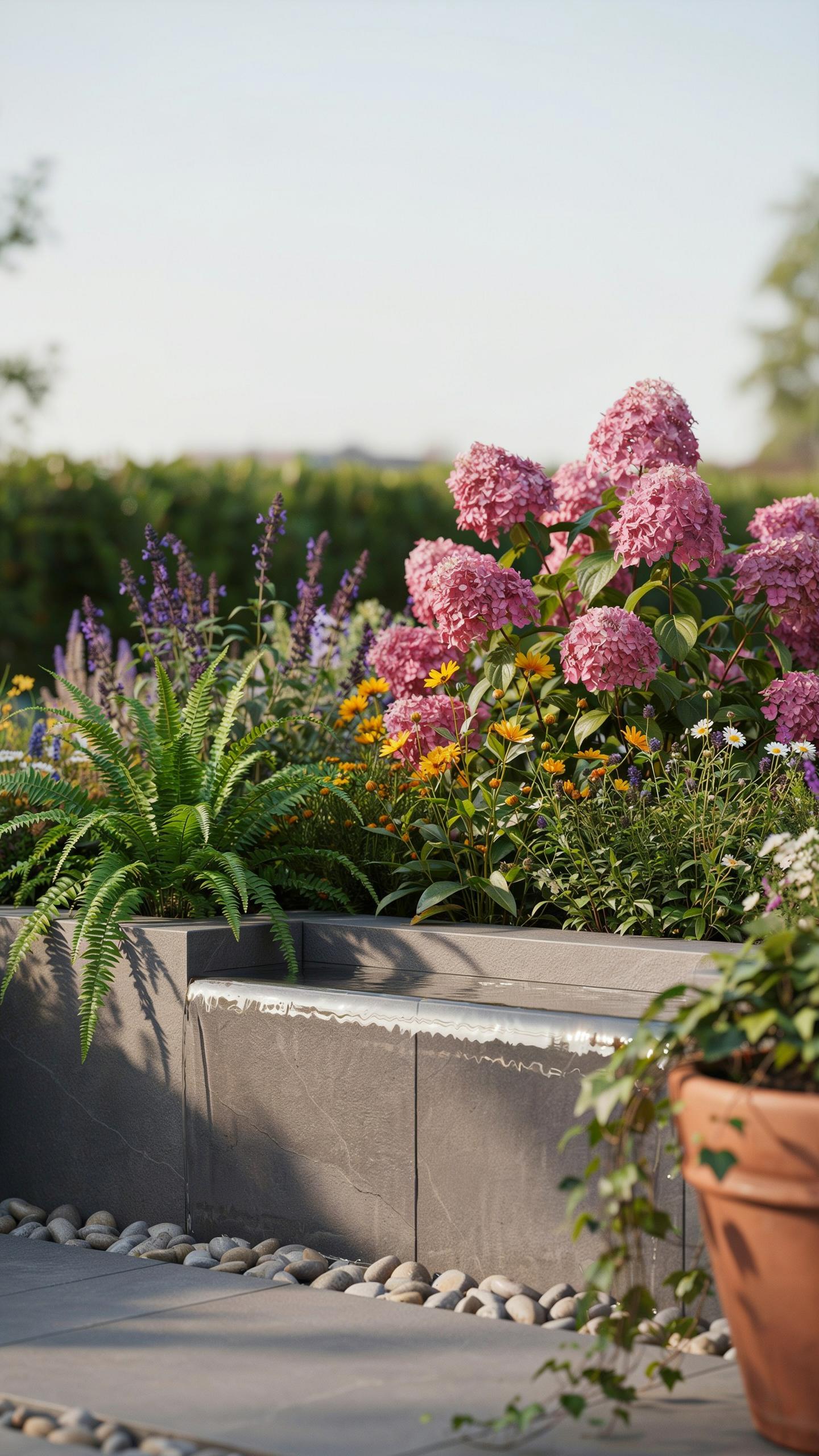
Softening Hard Lines With Architectural Foliage
Rigid stone and concrete basins dominate modern water features. These materials establish clean geometry that defines contemporary garden design. Plants counterbalance this hardness through form and movement. Tall vertical reeds create visual lift without cluttering space. Structural hostas provide architectural mass with defined leaf shapes. Weeping ornamental grasses introduce motion and softness at basin edges. This pairing works because contrast draws the eye and prevents monotony in minimalist landscapes.
Placement matters more than plant count. Position reeds behind the basin to frame it vertically. Set hostas at mid-distance to bridge the hardscape and distant views. Allow ornamental grasses to cascade over basin edges to break linear transitions. This layering technique, common in Scandinavian and Japanese garden design traditions, creates depth without visual clutter. The result feels intentional rather than accidental. Water movement then becomes a focal point instead of fighting competing plant forms.
Moisture Loving Specimens For Splash Zones
Splash zones around fountains create unique growing conditions. Constant misting and humidity support plants that struggle elsewhere in typical gardens. Marginal water plants like pickerel rush and water iris thrive in saturated soil near basin perimeters. Damp soil flora including astilbe, cardinal flower, and Japanese sweet flag tolerate wet feet without rotting. These species evolved in wetland ecosystems where water proximity is constant. They perform predictably in controlled moisture environments.

Select plants based on your climate zone and water chemistry. Pickerel rush handles standing water better than most marginal plants. Astilbe requires partial shade to prevent leaf scorch when misting occurs continuously. Cardinal flower demands acidic to neutral soil pH. Test your fountain’s discharge water periodically to catch mineral buildup that affects pH over time. Rotate plant selections seasonally to maintain visual interest while respecting each specimen’s dormancy requirements. This approach keeps the feature dynamic while ensuring plant survival rates remain high.
Seasonal Maintenance For Long Lasting Garden Fountains
Winterizing Techniques To Prevent Freezing Damage
Freezing water expands and damages fountain components. Start by shutting off the pump system completely. Drain all water from the basin, pump housing, and any connected lines to eliminate expansion risks. Remove submersible pumps and store them indoors in a dry location. This prevents internal corrosion and extends pump lifespan significantly.
Cover the fountain structure with heavy duty tarps or weatherproof covers rated for winter conditions. Secure covers tightly to prevent wind damage and water pooling. For stone or concrete fountains, apply a concrete sealer before winter arrives. This extra layer reduces moisture penetration into porous materials that freeze and crack. Check covers monthly to ensure they remain secure throughout the season.
Eco Friendly Ways To Control Algae And Mineral Scaling
Algae growth and mineral deposits cloud water and create odor problems. Natural enzymes break down organic matter without harming beneficial backyard wildlife. Barley straw extract inhibits algae development through natural compounds and requires no chemicals in your garden ecosystem. Deploy extract products according to manufacturer dosing instructions for consistent results.
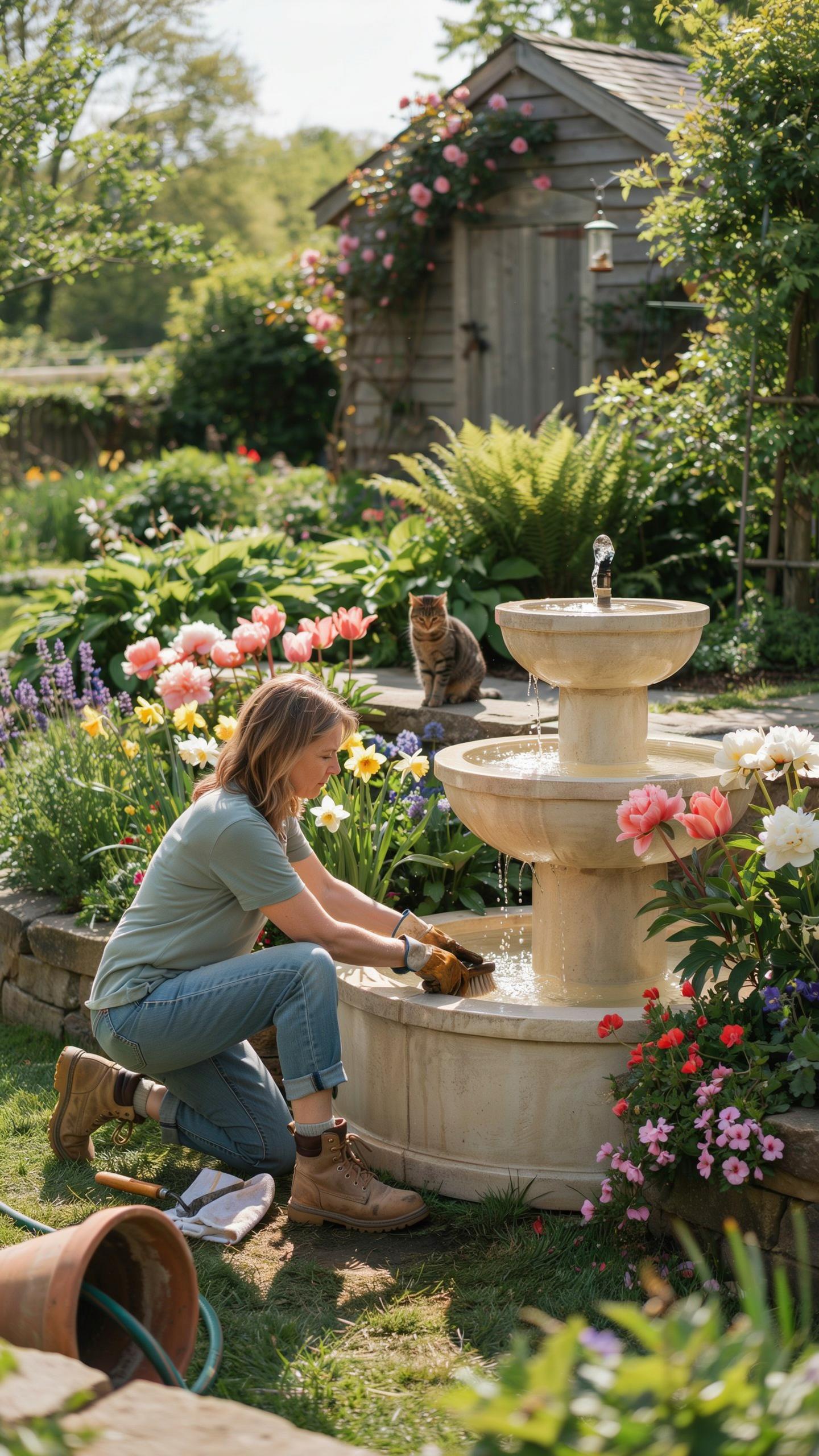
Skim debris and dead leaves from the water surface weekly to reduce organic buildup that feeds algae. This simple routine prevents mineral deposits from accumulating on fountain surfaces. For existing scaling, use a soft brush and vinegar solution to dissolve mineral buildup. Change water every four to six weeks during the growing season to maintain clarity and reduce chemical accumulation in your garden feature.
Frequently Asked Questions

What are the key elements of a cozy modern garden aesthetic water feature?
A cozy modern garden aesthetic water feature focuses on clean lines balanced by organic textures. Unlike traditional ornate fountains, these designs prioritize minimalism, using materials like weathered steel, slate, or smooth concrete. To achieve that relaxed living vibe, look for features with low-profile spillways and soft LED lighting. This combination creates a sophisticated focal point that feels warm and inviting rather than cold or overly industrial.
How do I maintain a water feature to keep it looking modern and clean?
Consistency is key to preserving a modern garden aesthetic water feature. You should regularly clear debris like leaves to prevent pump clogs and use a UV clarifier or eco-friendly treatments to keep the water crystal clear. To maintain the crisp, contemporary look, gently scrub the basin walls once a month to prevent algae buildup, ensuring the minimalist surfaces remain a beautiful and tranquil part of your outdoor space.
Can I create a minimalist water feature effect on a limited budget?
Absolutely! You don’t need a custom architectural installation to enjoy this style. A simple DIY recirculating bowl made from a lightweight resin planter provides a high-end look at a fraction of the cost. By choosing a matte black or charcoal finish and surrounding the base with smooth river rocks, you can easily replicate the high-end appeal of a designer installation while still achieving that peaceful, relaxed living atmosphere in your backyard.