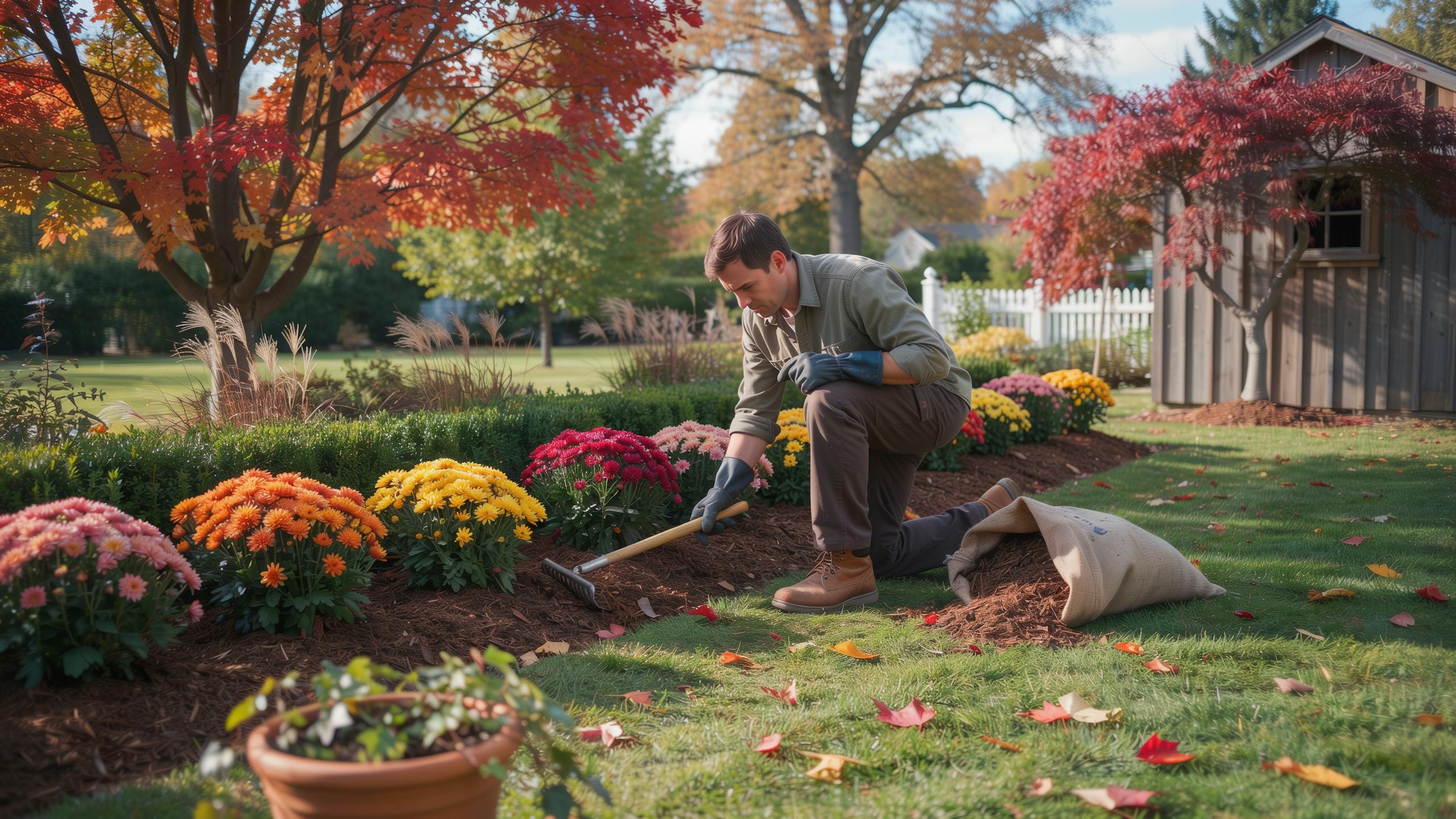
Essential Mulch Care Tips For Gardens This Autumn
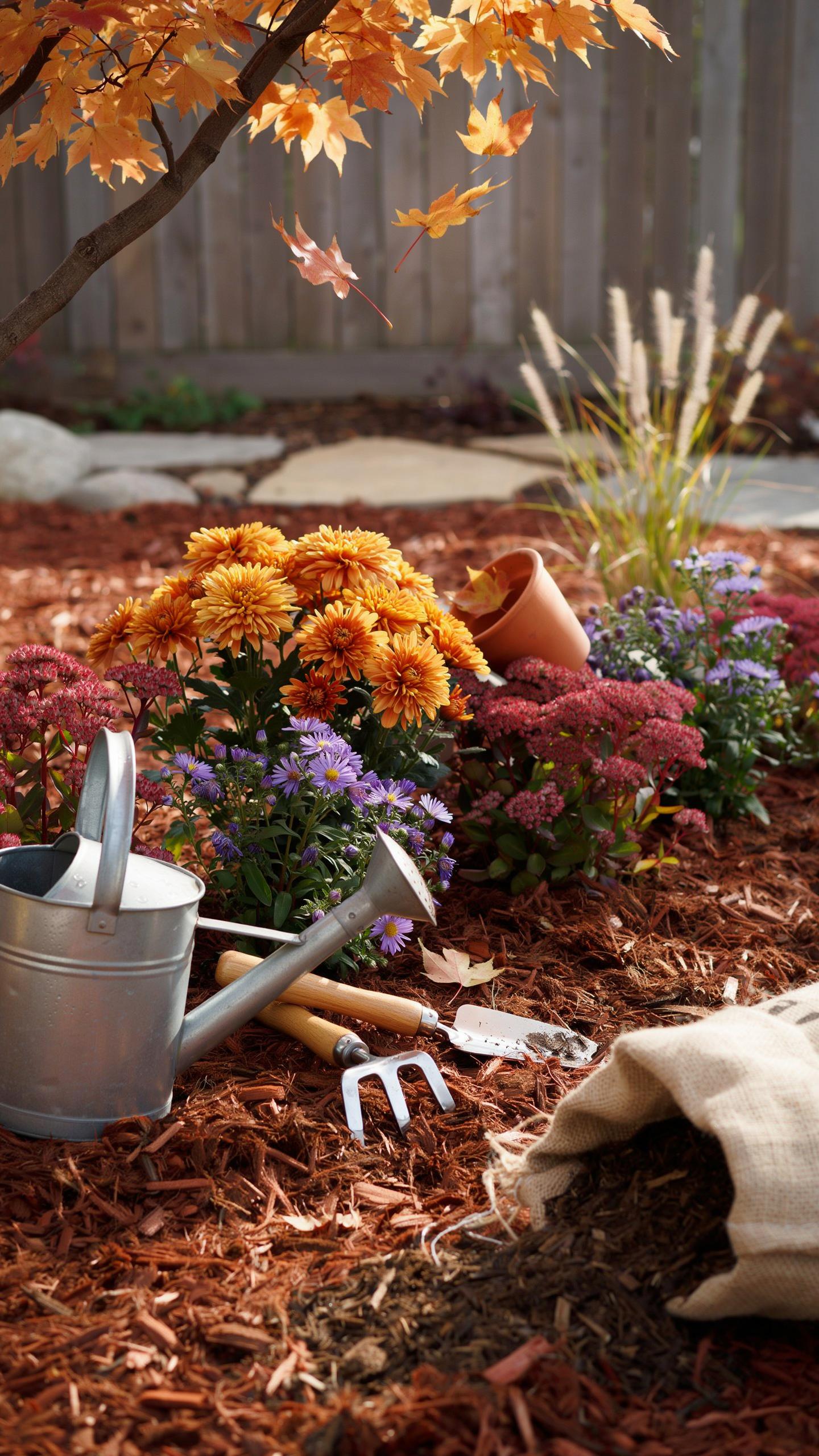
Moisture Retention Strategies
Autumn mulch application creates a barrier that slows water evaporation from soil. Apply mulch before the ground freezes to insulate root systems and maintain consistent moisture levels through winter. This prevents roots from experiencing the stress of repeated freeze-thaw cycles that cause dehydration damage to perennials, shrubs, and trees.
Spread mulch two to three inches deep around plant bases, leaving space between the mulch and stems. This depth retains soil moisture effectively without creating conditions for rot or fungal issues. Water your garden thoroughly before applying mulch, ensuring soil contains adequate moisture to sustain plants through dormancy.
Top Garden Mulch Application Mistakes To Avoid
Common errors compromise soil health and plant survival during fall and winter months. Gardeners often apply mulch too thick, creating compacted layers that restrict water penetration and encourage pest habitats. Others ignore weeding before application, allowing seeds to germinate under ideal mulch conditions and establishing invasive plants.
- Mulch Volcano Effect: Piling mulch directly against woody plant stems creates moisture retention near bark, promoting rot, decay, and pest entry points that weaken plant structure.
- Excessive Depth: Applying mulch thicker than three inches compacts soil, reduces oxygen availability to roots, and creates waterlogged conditions that kill root systems.
- Skipping Weed Removal: Applying mulch over existing weeds provides perfect germination conditions, resulting in established weeds that spread rapidly beneath the mulch barrier.
- Wrong Mulch Type: Using fresh wood chips instead of aged mulch introduces nitrogen-hungry organisms that deplete soil nutrients needed for plant health.
- Improper Timing: Applying mulch too late in autumn prevents adequate settling and moisture distribution before ground freeze occurs.
Inspect your mulch layer monthly during autumn and winter. Redistribute settled mulch to maintain consistent depth and remove any mulch touching plant stems. This simple maintenance prevents disease and ensures your garden enters spring with healthy soil and established plants.
Using Leaves As Mulch To Protect Your Soil
Natural Insulation Benefits
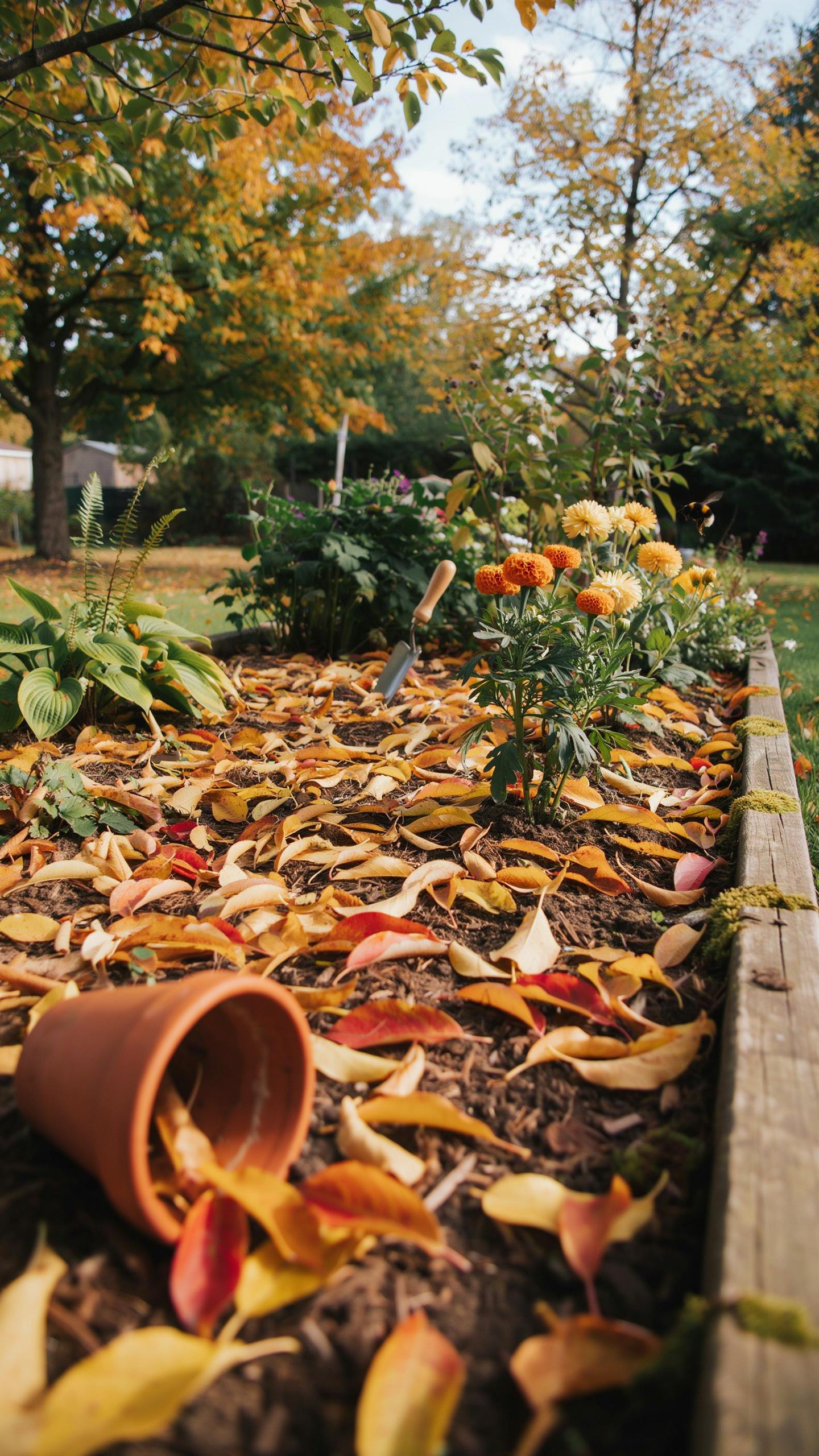
Fallen leaves create a physical barrier that slows heat loss from soil during temperature swings. This layer buffers soil from rapid freezes and thaws that damage plant roots and kill beneficial microorganisms. Perennials and shallow-rooted plants survive winter better under leaf cover. The insulation effect reduces soil temperature fluctuations by several degrees, protecting dormant root systems from stress.
Leaf mulch works because air pockets trapped between leaves resist heat transfer. Winter frost heaves push plants upward when soil freezes and thaws repeatedly. A leaf layer prevents this upheaval by stabilizing soil temperature near the root zone. This protection matters most for newly planted perennials and tender plants in colder zones.
Nutrient Recycling In Autumn
Decomposing leaves break down over fall and winter, releasing nitrogen, phosphorus, and potassium into soil. Fungi and bacteria colonize the leaf layer and accelerate this nutrient release. By spring, the soil gains organic matter and improved structure. This natural recycling eliminates the need for some commercial fertilizers while building soil health.

Leaves contain minerals plants absorbed during the growing season. When leaves decay in place, those nutrients return to the soil rather than leaving your yard. The decaying process also increases soil porosity and water retention capacity. Spring plantings access these released nutrients immediately, giving seedlings a nutritional boost without additional inputs.
How To Mulch Leaves Efficiently For Your Garden Beds
Shredding Techniques And Tools
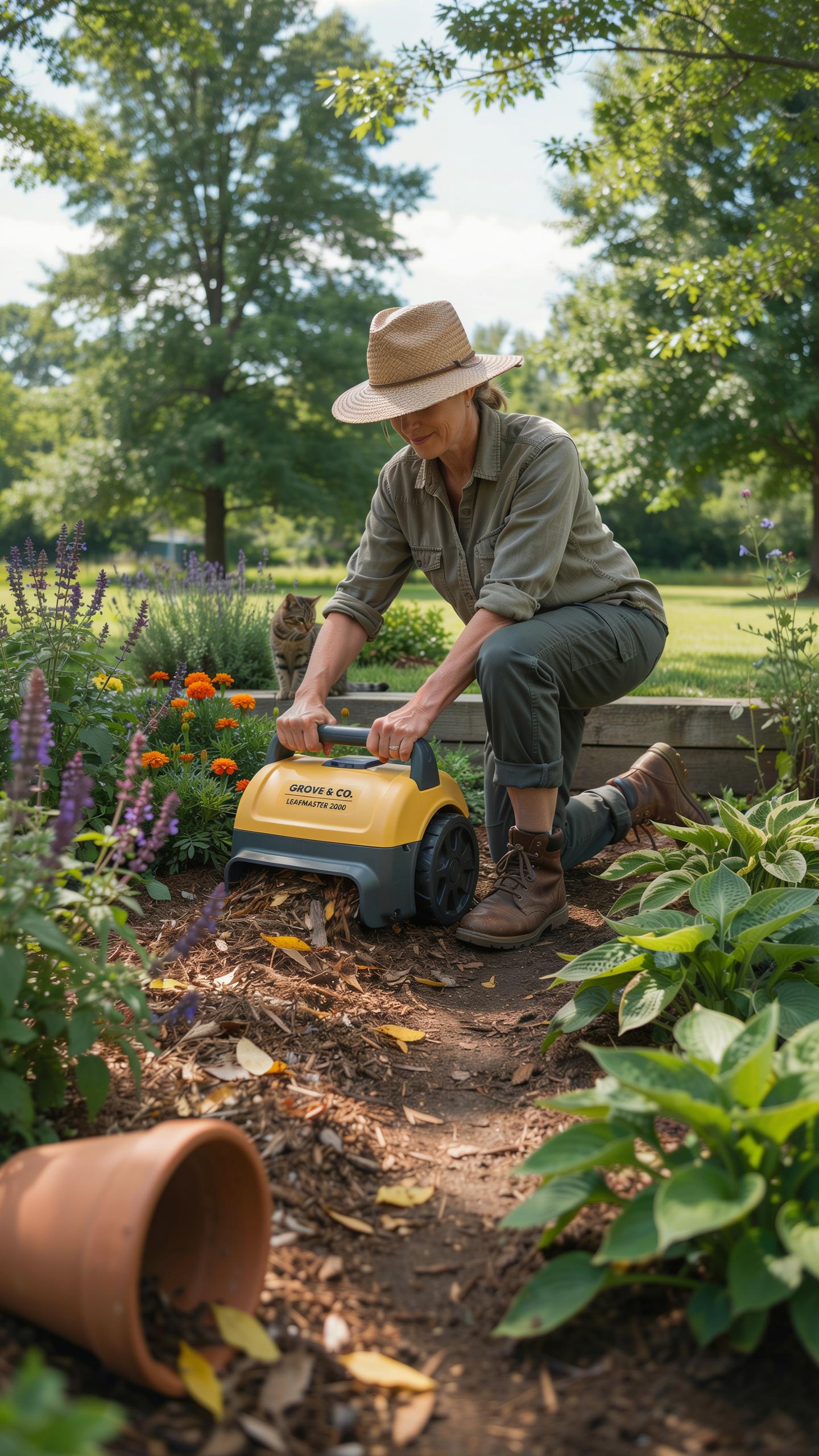
A lawn mower with a bagging attachment shreds leaves quickly and effectively. Run the mower over leaf piles multiple times to reduce them to quarter-inch pieces. This prevents matting when you apply them to beds. A dedicated leaf shredder works similarly but processes larger volumes in one pass without requiring grass collection.
Shredding breaks down leaf structure and accelerates decomposition in your soil. Small pieces also distribute evenly across garden beds without creating air pockets. This uniform coverage provides consistent insulation for plant roots throughout winter. The reduced volume means you transport and store less material overall.
Proper Shredded Leaf Storage
Store shredded leaves in dry, ventilated containers or aeration bags to prevent moisture buildup and decomposition during storage. Bins with drainage holes work well. Keep storage areas accessible so you can retrieve leaves easily when you need to apply them to beds in late autumn and early winter.

Proper storage maintains leaf quality for weeks or months. Moisture encourages premature breakdown and fungal growth, which reduces mulching effectiveness. Aeration bags allow airflow while containing material. Dry, stored leaves remain friable and easy to spread when you apply them, ensuring consistent coverage across all garden bed areas.
Creating Quality Homemade Mulch From Yard Waste
Blending Organic Ingredients
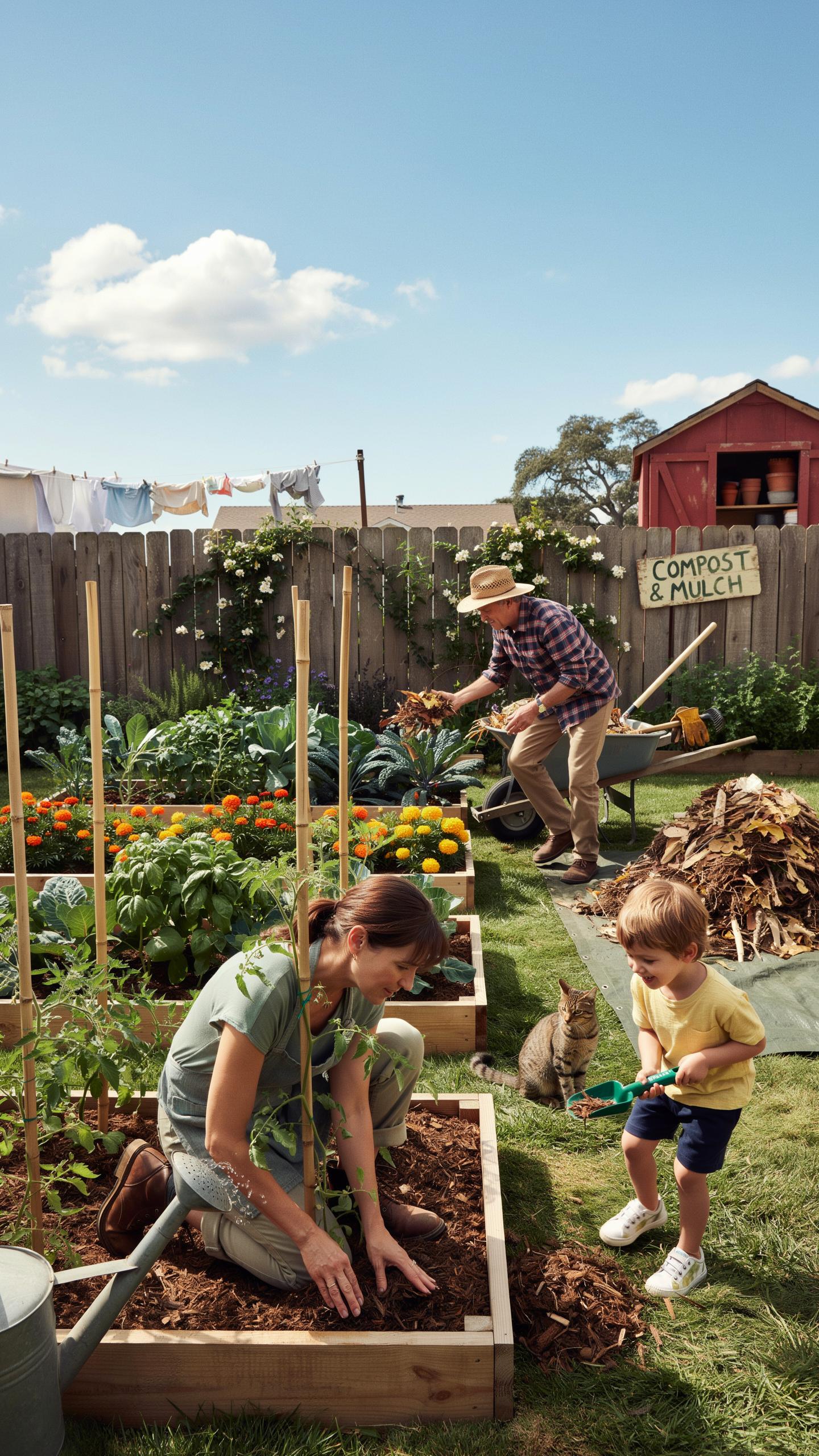
Shredded twigs, pine needles, and grass clippings create a functional mulch layer without purchasing commercial products. Shredded twigs break down slowly and provide structure. Pine needles acidify soil over time, which benefits acid loving plants. Grass clippings decompose quickly and add nitrogen. Mix these materials in roughly equal parts to balance decomposition rates and nutrient content.
This blend protects soil from temperature swings and reduces moisture loss during fall and winter. The varied particle sizes allow air circulation while the organic matter gradually feeds your soil. Apply this mixture two to four inches deep around plant bases, keeping it six inches away from tree trunks to prevent rot and pest issues.
Composting Your Yard Waste
Partially decomposed compost functions as an effective fall mulch layer. Collect leaves, grass clippings, and plant debris throughout autumn. Let these materials break down for several weeks rather than waiting for finished compost. This partially decomposed state provides both insulation and nutrient availability when you need it most before winter.

Spread your compost mulch three to four inches deep over garden beds in late fall. The material continues decomposing through winter, releasing nutrients slowly into the soil. This approach eliminates waste disposal costs while building soil structure and fertility simultaneously for the growing season ahead.
Affordable DIY Mulch Ideas For Budget Friendly Gardening
Utilizing Cardboard And Newspaper
Layer non-glossy newspaper and cardboard directly over soil before adding organic mulch materials. This double barrier blocks winter weeds from pushing through and traps moisture in the soil during cold months. The paper decomposes over time, enriching your soil structure. Avoid glossy newspaper sections since inks contain chemicals that break down slowly.
Cardboard works faster than newspaper because of its thickness. It creates a stronger weed barrier and lasts longer before decomposing. Wet the cardboard before laying it down to keep it in place during fall winds. This method costs nothing if you save boxes from deliveries or ask local retailers for their recycled cardboard stock.
Sourcing Free Local Materials
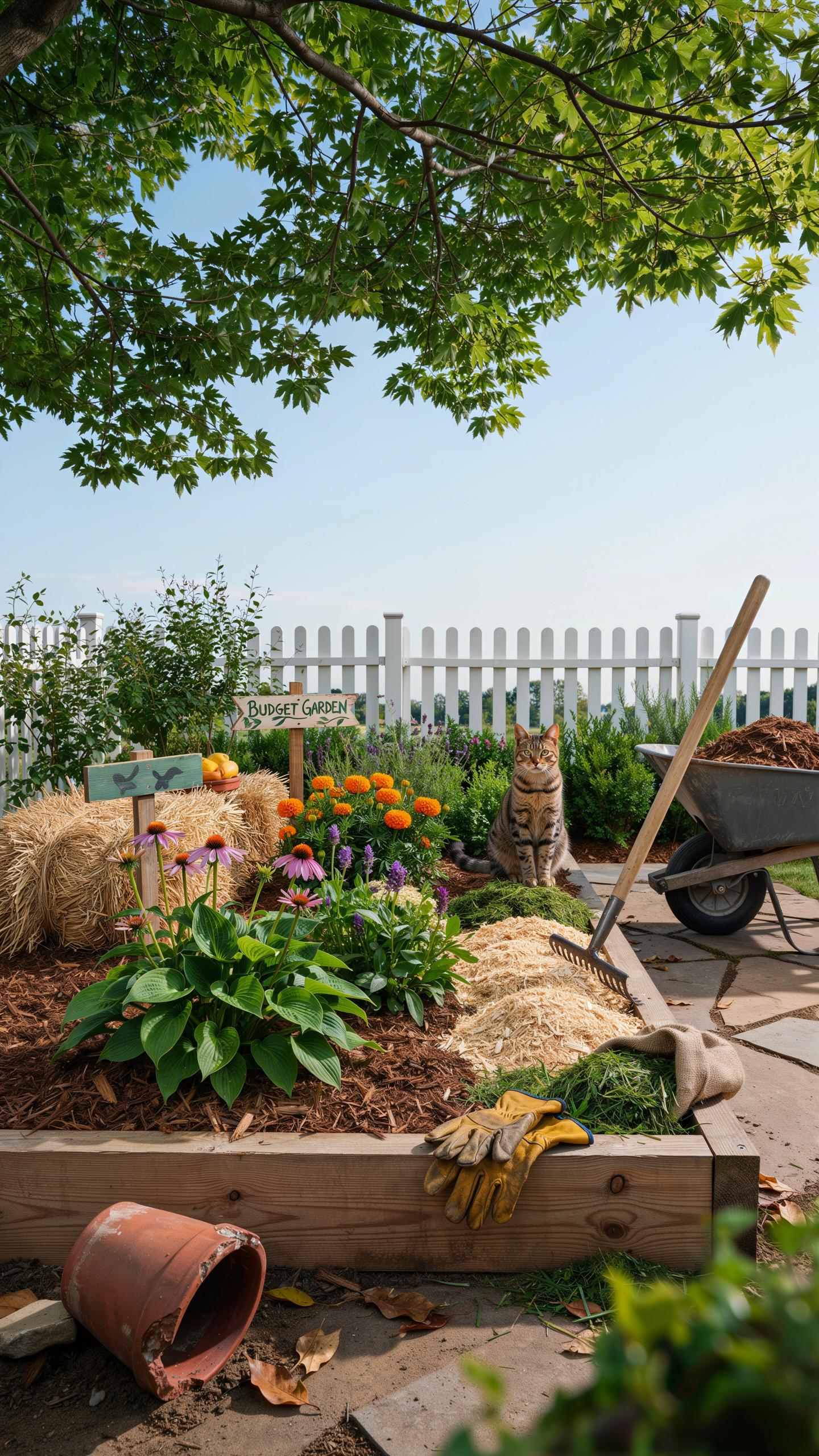
Tree trimming services and utility companies generate massive amounts of wood chips during their regular work. Call your local arborist or municipality to ask if they drop chips at residential locations. Many communities welcome the opportunity to avoid disposal fees. Pine straw becomes available in fall when landscape maintenance crews clear pine needles from properties.

Check with neighbors who have trees removed or land cleared. They often want free removal of debris. Wood chips from non-treated wood work best for vegetable gardens. Avoid chips from diseased trees or treated lumber. Free straw bales sometimes appear at feed stores after autumn livestock preparations conclude.
Maximizing Soil Health With Leaf Mulch Applications
Boosting Beneficial Soil Microbes
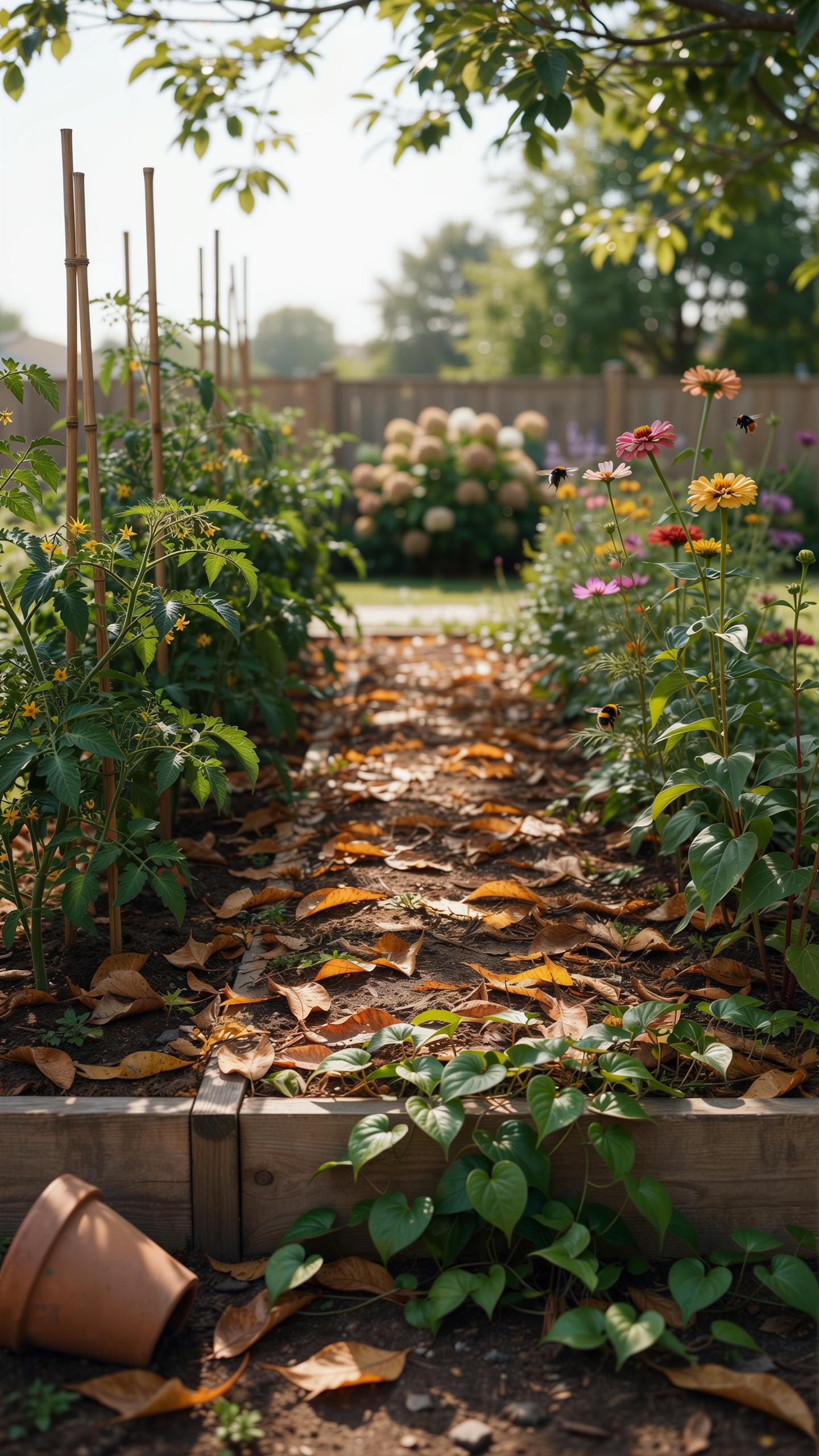
Decomposing leaf fragments create habitat for earthworms and mycorrhizal fungi. These organisms break down organic matter and form networks that connect to plant roots. The result is improved nutrient availability and water transport. This biological activity happens naturally as leaves age in your soil.
Earthworms process leaf matter and create channels that improve soil drainage and aeration. Fungal networks expand root reach, allowing plants to access nutrients farther from the plant base. Both organisms thrive in fall leaf mulch environments. Your soil becomes more productive without added chemicals or interventions.
Improving Clay And Sandy Soil Structure
Clay soils compact easily and restrict root penetration and water movement. Leaf mulch introduces organic matter that wedges between clay particles, creating air pockets. Over multiple seasons, this repeated application loosens compacted layers. Sandy soils drain too quickly and hold minimal moisture for plant use.

Decayed leaf material acts like a sponge in sandy soils, absorbing and retaining water that roots access during dry periods. Both soil types benefit from the gradual breakdown of organic foliage. Fall applications give leaves time to integrate through winter and spring. Your soil structure improves measurably with consistent, seasonal leaf mulch use.
Choosing The Right Organic Mulch For Winter Protection
Straw And Pine Needles
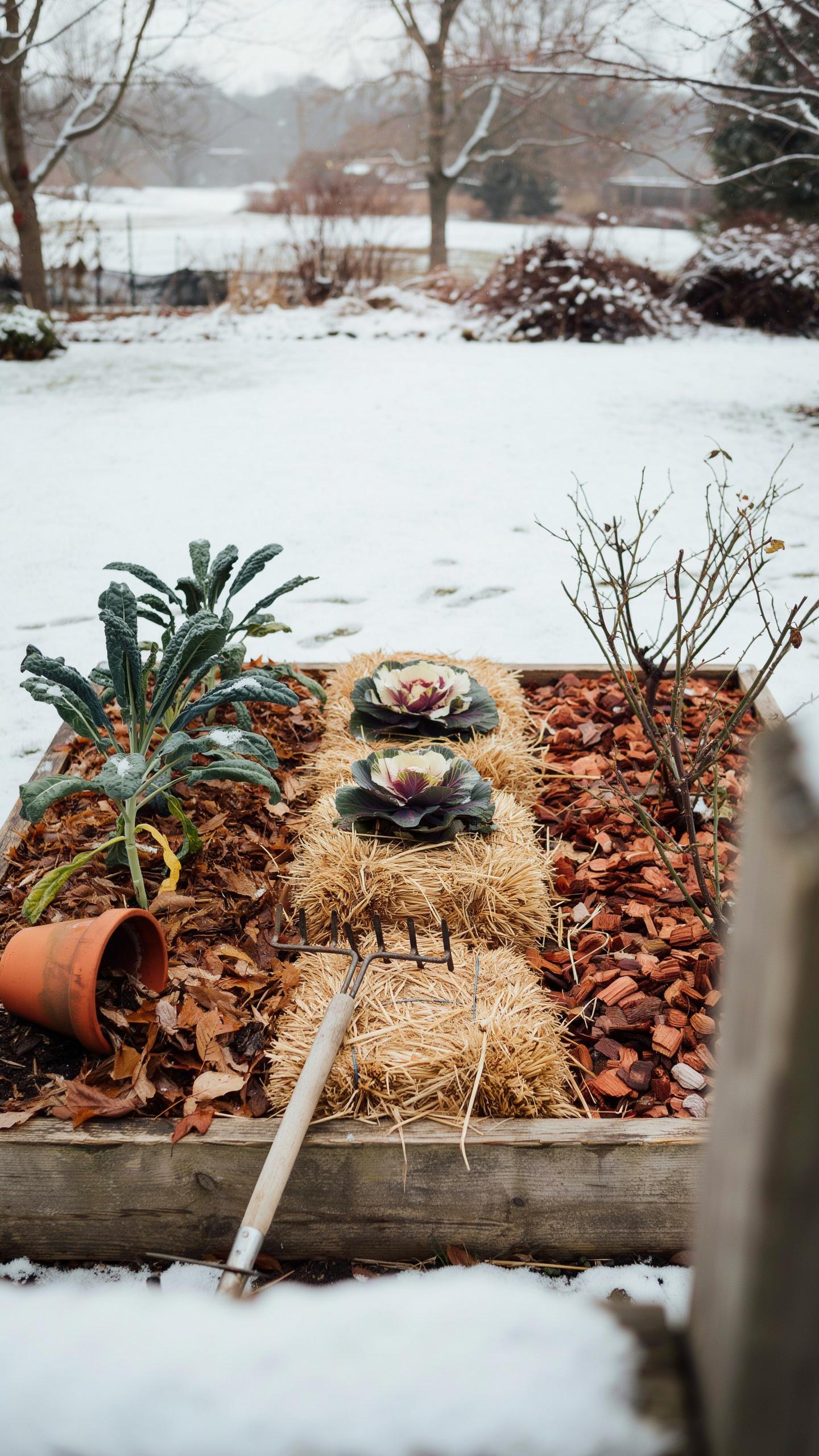
Clean straw works well for fall mulching because it breaks down slowly and allows water to penetrate soil. Straw protects strawberry plants from frost heave, which occurs when soil freezes and thaws repeatedly, pushing plants upward. Pine needles serve acid loving shrubs like azaleas and rhododendrons. Both materials are lightweight, so they won’t compact soil or suffocate emerging spring growth.
Apply straw at three to four inches deep around strawberries before the first hard freeze. Pine needles naturally acidify soil over time, which benefits plants requiring lower pH levels. Remove excess straw in spring to prevent disease and rot. These materials decompose gradually, requiring replacement every one to two seasons depending on climate conditions.
To tuck your garden in for the winter with a heavy coat of mulch is to honor the quiet heartbeat of the earth. We nourish the soil today so that the legacy of our labor may bloom again in the spring.
Compost And Aged Manure
Decomposed compost insulates plant roots while feeding soil organisms throughout winter dormancy. Aged manure has spent enough time breaking down that it won’t burn plants or introduce pathogens. Both materials add organic matter that improves soil structure and water retention. Apply either option at two to three inches deep around perennials and shrubs in fall.

Soil microbes remain active in winter, especially during mild spells, consuming the organic matter you add. This microbial activity creates humus, the stable carbon compound that binds soil particles together. Never use fresh manure in fall gardens since it contains high nitrogen and can damage dormant plants. Choose materials fully decomposed or aged at least six months before application.
Comparing Leaf Mulch Vs Wood Mulch For Fall Landscaping
Decomposition Rates And Longevity
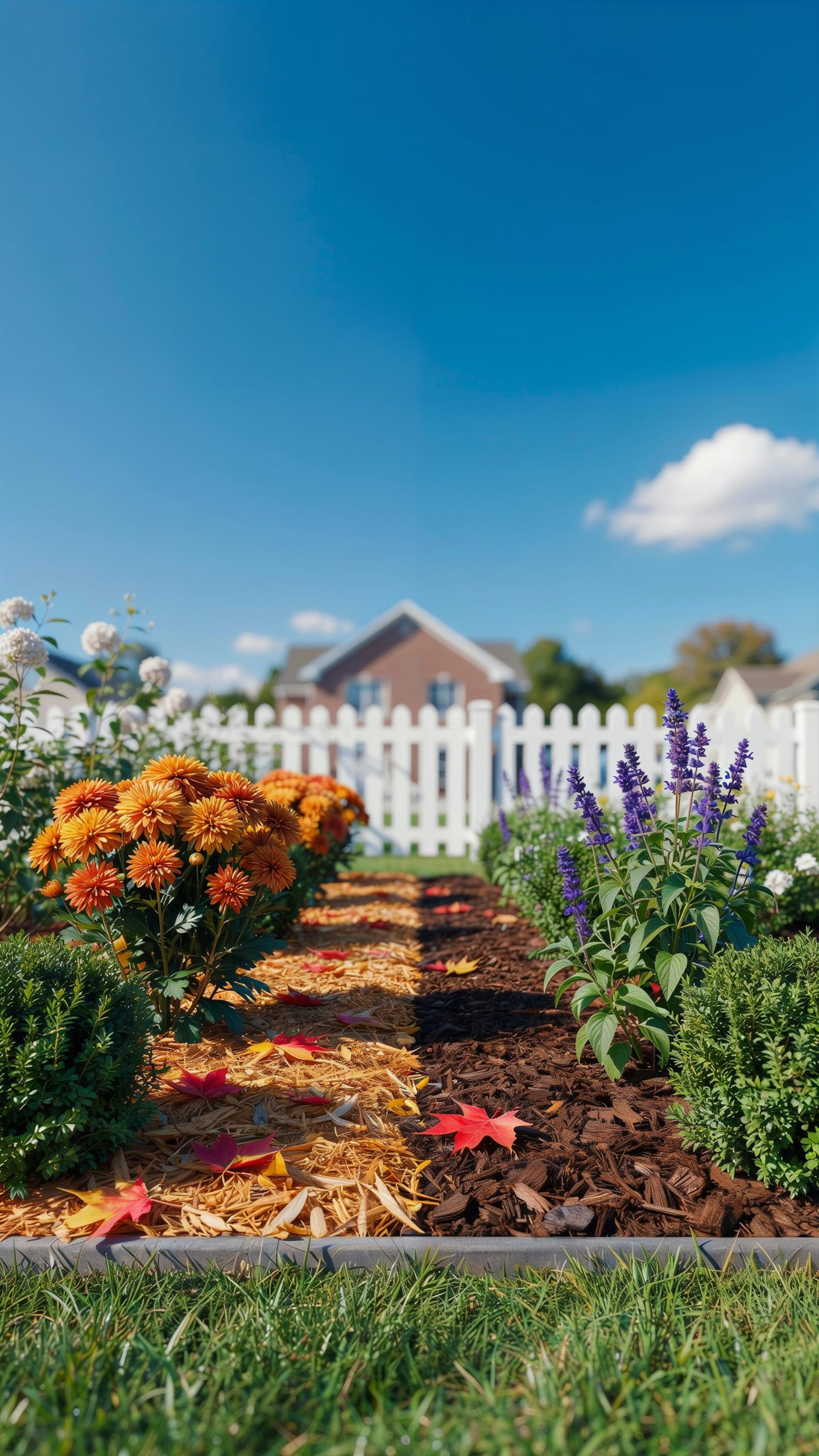
Leaf mulch breaks down fast. You get results in one to two seasons. This rapid decomposition adds organic matter to soil quickly, improving structure and water retention. The tradeoff is obvious: you reapply annually. Wood chips last three to five years before significant breakdown occurs. They stay put longer, suppressing weeds consistently and reducing your maintenance frequency.
Choose leaf mulch when you need soil improvement now. Vegetable gardens and perennial beds benefit from the quick nutrient cycle. Wood chips work better where you want stability. They hold their shape in high-traffic areas and ornamental zones. Wood chips also regulate soil temperature more effectively over extended periods.
Aesthetic Appeal And Placement
Wood chips deliver visual polish in front-facing beds. Their uniform appearance suits ornamental landscape designs and formal garden layouts. Homeowners expect clean, structured mulch in visible zones. Leaf mold looks scattered and informal by comparison. Reserve leaf mold for vegetable gardens, shade gardens, and naturalized pathways where appearance takes a backseat to function.

Leaf mold works strategically in woodland settings and cottage gardens. It blends naturally with forest floor conditions. Apply it where guests don’t focus their attention. Wood chips command attention through their structured appearance. Use them to frame trees, edge walkways, and define bed boundaries. The contrast between materials guides eye movement and creates intentional garden zones.
Implementing Fall Garden Care Mulching Tips Successfully
Timing Your Autumn Mulch Application
Wait until after the first hard frost before you apply mulch. A hard frost means temperatures drop below 28 degrees Fahrenheit for several hours. Applying mulch too early traps warm soil underneath, which attracts rodents seeking shelter. They nest in the debris and damage plants and bulbs throughout winter.
Apply mulch when soil temperatures cool consistently. This timing prevents pest populations from establishing in your garden beds. Most regions see suitable conditions two to four weeks after the first hard frost. Check your local first frost date and plan accordingly for optimal protection.
Essential Tools For Autumn Mulching
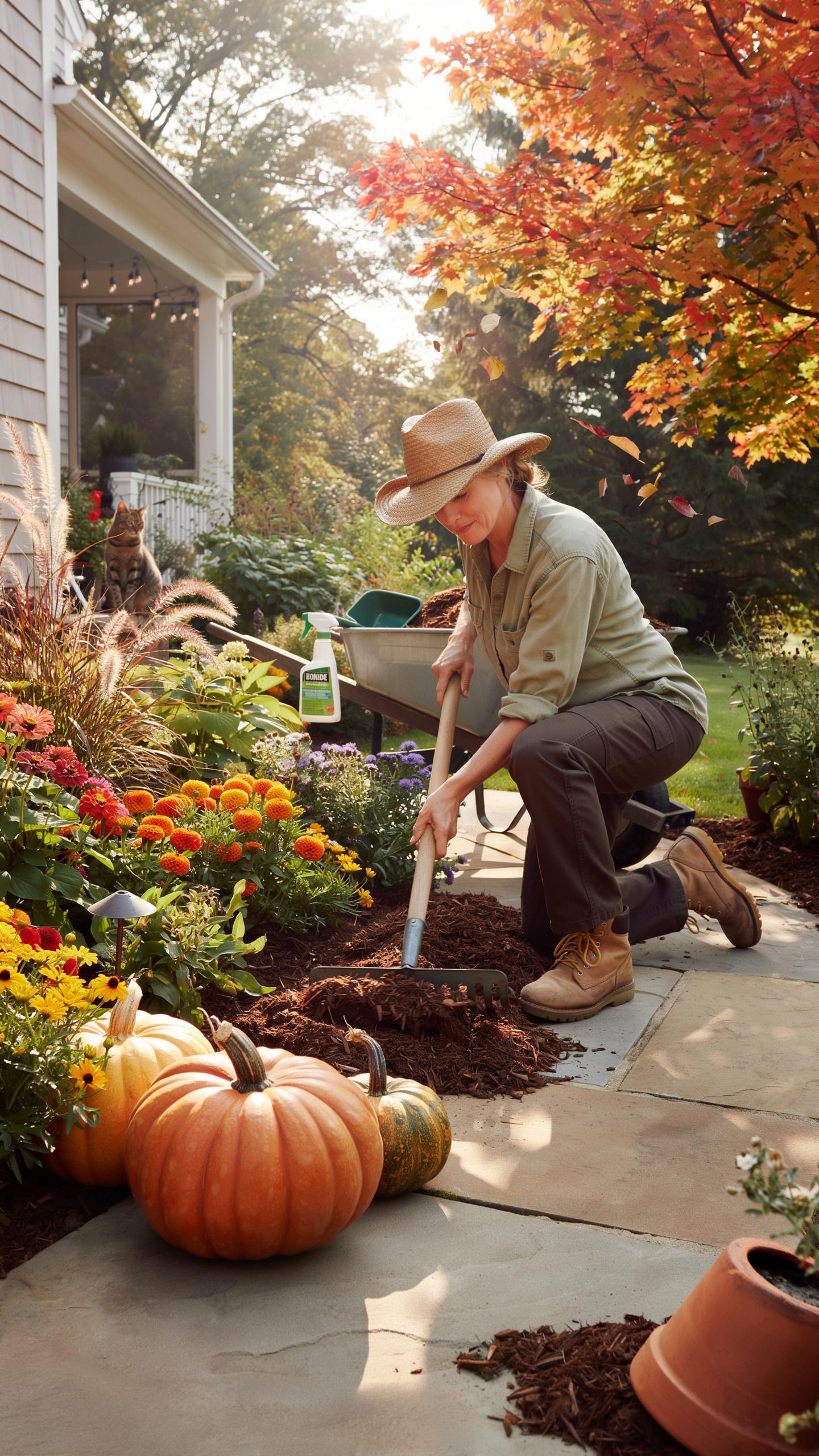
You need specific tools to work efficiently and safely during autumn mulching tasks. The right equipment reduces strain on your body and speeds up the job significantly.
- Heavy duty rakes: Move mulch quickly across beds and break up clumped material. Choose rakes with sturdy metal tines that won’t bend under leaf and debris loads.
- Durable wheelbarrow: Transport mulch from storage to garden beds in bulk. A wheelbarrow with solid wheels handles uneven terrain without tipping or getting stuck.
- Protective gardening utility gloves: Guard your hands from splinters and sharp mulch pieces. Quality gloves provide grip and durability throughout repetitive raking and spreading tasks.
- Garden fork: Break apart dense mulch piles and turn material for even distribution. A fork works better than a shovel for this specific function.
- Work boots: Protect your feet from falling tools and uneven ground hazards. Sturdy boots prevent slips on wet autumn soil and debris.
Having these tools ready before you start saves time and prevents work delays. Set up your equipment near the mulch pile and garden beds you plan to work on first.
Frequently Asked Questions

Why is mulching so important for a garden during the autumn season?
Mulching serves as a protective thermal blanket for your soil as temperatures drop. By following essential fall garden care mulching tips, you can prevent soil erosion from heavy rain and suppress opportunistic winter weeds. Additionally, a thick layer of organic mulch regulates soil temperature, protecting delicate perennial roots from the damaging freeze-thaw cycles that occur in many climates, ensuring your plants emerge healthy and vibrant when spring finally arrives.
How should I properly apply mulch to my flower beds before winter hits?
Start by clearing away any diseased foliage or stubborn weeds from your garden beds. Apply a layer of organic material approximately two to three inches deep around your plants, but be careful to keep the mulch a few inches away from tree trunks and plant stems to avoid rot. These practical fall garden care mulching tips ensure moisture stays in the ground without suffocating your plants’ main structures during the dormant months.
What are some low-cost or free materials I can use for garden mulching?
You don’t need to spend a fortune to protect your landscape. Shredded fallen leaves are an incredible, nutrient-rich resource that costs absolutely nothing. You can also utilize pine needles, straw, or even untreated wood chips from local arborists. Using these recycled materials is a sustainable way to nourish your soil over time while providing excellent insulation for your beds, making professional-level garden maintenance accessible for every homeowner on a tight budget.