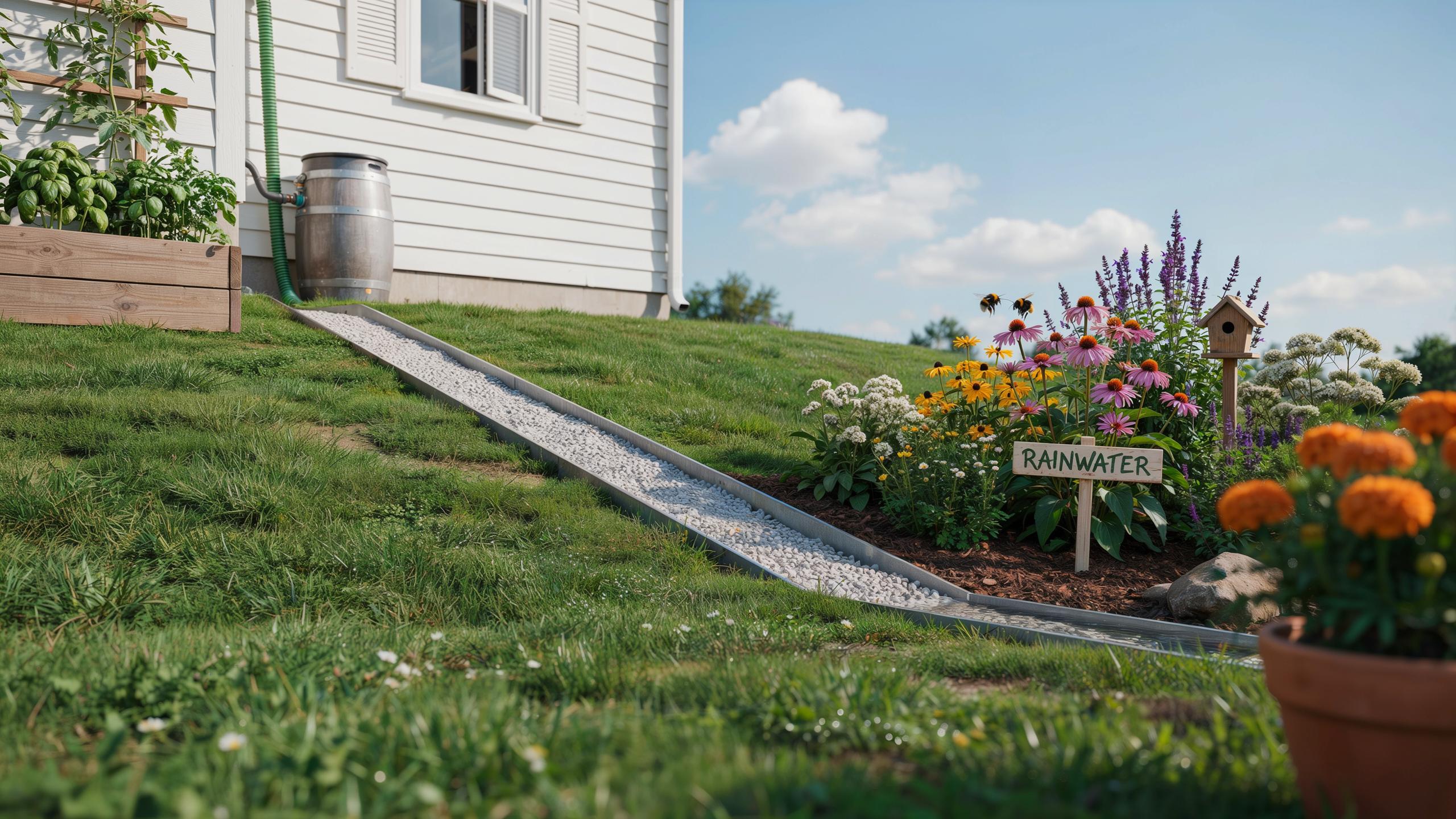
Why Backyard Drainage Matters More Than Most Homeowners Realize

The Real Damage Poor Drainage Does To Your Property Over Time
Water behaves as a destructive force when it lacks a clear path. Chronic moisture causes soil saturation that shifts the ground underneath your yard. Over months or years, this movement creates uneven terrain and sinkholes. Improper runoff also erodes organic matter and topsoil. You lose the ground you stand on because water carries the sediment away during every rain storm.
Structural decay occurs when water sits against wood or masonry. Siding and decks rot when they remain damp for long periods. Retaining walls fail because hydrostatic pressure builds up behind the stones. This pressure pushes with immense force against your hardscaping. Fixing these issues costs more than installing a drainage system. You must address the water before it breaks your most expensive investments.
How Standing Water Affects Your Lawn Plants And Home Foundation
Standing water kills your lawn by suffocating the roots. Grass needs oxygen to survive and saturated soil blocks air flow. This leads to root rot and fungal diseases that spread across the grass. Puddles also attract mosquitoes and other pests that thrive in stagnant pools. Your expensive landscaping plants will die if their roots sit in water for more than a few days.
The home foundation faces the greatest risk from poor drainage. Water pools near the base and seeps into small cracks. In cold climates, this trapped water freezes and expands, making the cracks larger. This cycle eventually leads to basement leaks and structural instability. Keep water away from the house to avoid a collapsed foundation. A dry perimeter is the only way to protect your home.

Reading Your Yard How To Identify Backyard Drainage Problems Before You Dig
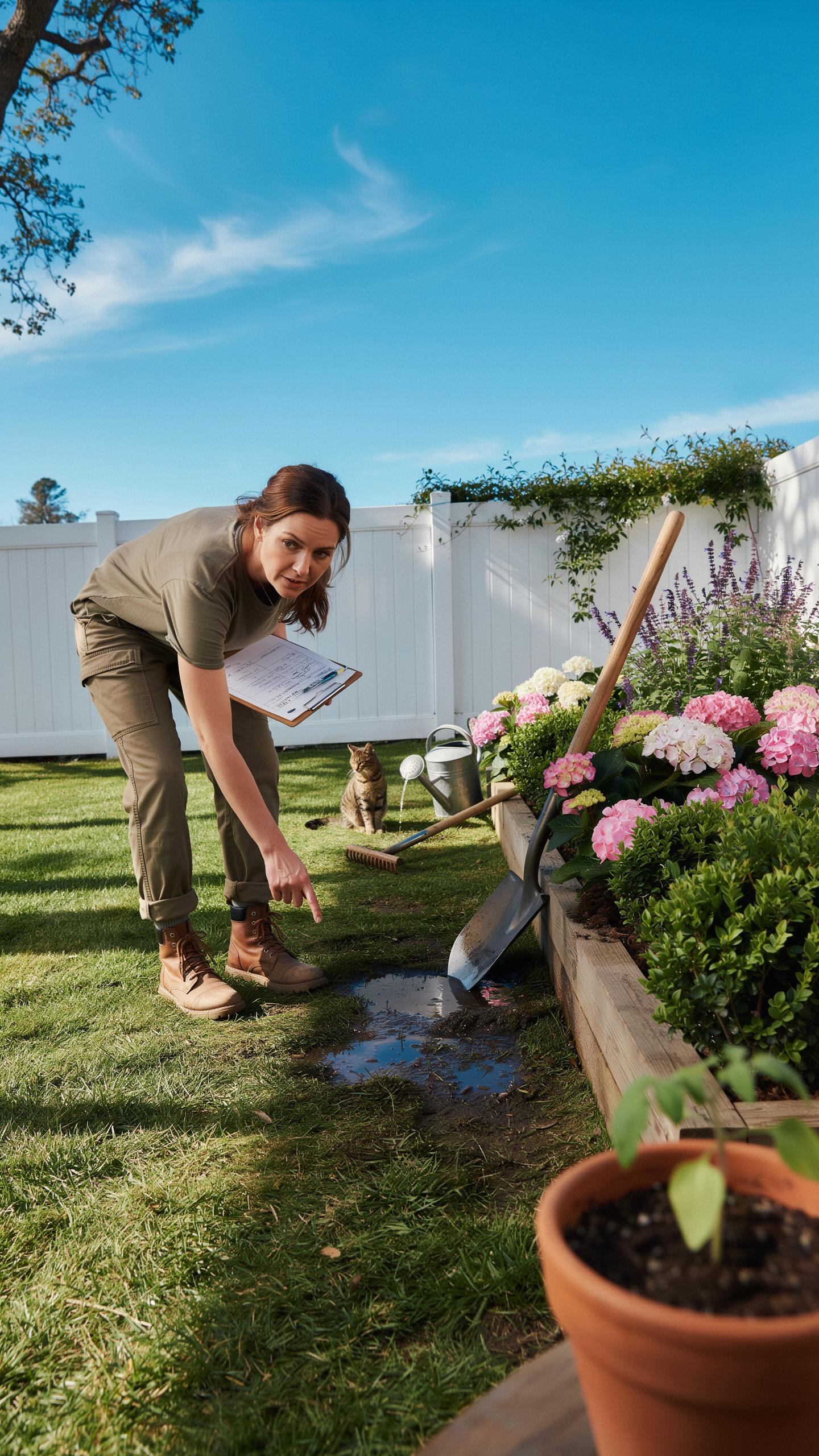
Simple Signs That Tell You Where Water Is Pooling And Why
Vibrant green patches of grass often signal hidden water issues. These spots grow faster than the surrounding lawn because water sits just below the surface. Check for spongy soil under your feet days after a rainstorm. Mosquitoes and dragonflies also gather in these damp zones. Look for mold or algae growing on nearby fences and foundation walls. These marks indicate high local humidity and poor air circulation.
Surface runoff carves visible paths through your mulch and topsoil. Inspect your yard for small trenches or exposed tree roots after heavy rain. These washouts show exactly where gravity pushes water. Silt deposits on your patio or walkways reveal where the flow stops and drops debris. Use these physical clues to map your yard. You must understand these natural water highways before you choose a specific drainage system or digging site.
How Soil Type And Yard Slope Influence Your Yard Drainage Plan
Soil composition dictates how fast water disappears. Clay soil feels heavy and sticky. It holds water like a bowl and prevents deep infiltration. Loam provides the best balance for natural drainage. Sandy soil drains too fast and can cause erosion. You can test your soil by digging a hole and filling it with water. Timing the drainage rate tells you if you need a French drain or a dry creek bed.

The slope of your land determines the speed and direction of surface water. Even a one percent grade moves water effectively away from a house. Steep slopes require retaining walls or heavy rock to stop soil loss. Flat yards often suffer from ponding because the water has nowhere to go. You must measure the rise and run of your yard. Accurate measurements ensure your new pipes have enough pitch to carry water out.
French Drain Ideas That Are Affordable And Surprisingly Easy To Install
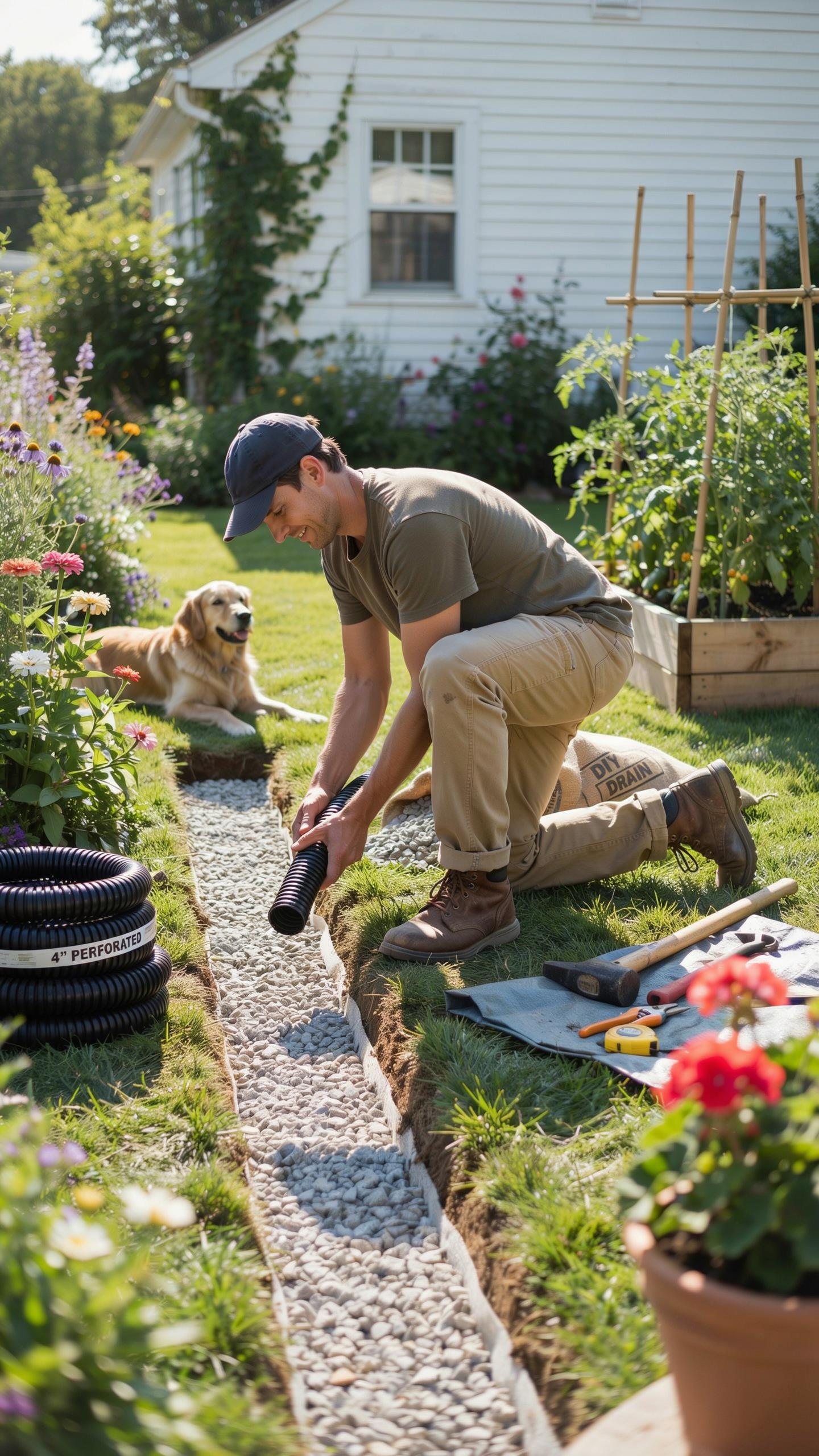
What A French Drain Is And How It Works To Redirect Water Underground
A French drain is a sub-surface drainage system designed to manage groundwater. It consists of a sloped trench filled with gravel and a perforated pipe. Gravity pulls excess surface water into the gravel bed. The water then enters the pipe through small holes. This system prevents soil saturation by providing an easy path for water to travel away from your home.
This design dates back to Henry Flagg French in the mid-1800s. He popularized the concept to improve farm drainage. Today, homeowners use it to keep basements dry and eliminate standing water in yards. Proper installation requires a consistent downward slope of at least one percent. This ensures water moves continuously toward a safe discharge point like a storm drain or dry well.
Budget Friendly French Drain Installation Tips For The Average Homeowner
Homeowners can save significant money by performing the labor themselves. The primary costs involve gravel, perforated pipe, and non-woven drainage fabric. Renting a power trencher saves time but manual digging is the cheapest option. Always call local utility companies before you dig to locate underground lines. Use a laser level or a simple string level to verify the trench has a proper downward slope.
- Perforated PVC Pipe: Choose rigid PVC over flexible corrugated pipe for better durability. Rigid pipe resists crushing and is easier to clean with a snake if clogs occur. It costs slightly more but lasts much longer in the ground.
- Non-Woven Geotextile Fabric: Wrap the entire gravel bed and pipe in this fabric. It acts as a filter to keep silt and soil out of the system. This step prevents the drain from clogging and failing within a few years of installation.
- Angular Drainage Rock: Use one-inch washed river stone or crushed granite for the fill. This clean rock provides large air gaps for water to flow quickly. Avoid using fine sand or small pea gravel as these materials can block the pipe holes.
- Pop-Up Emitters: Install a pop-up emitter at the end of the drain line. This device stays closed to keep out debris and rodents when it is dry. It opens automatically under water pressure to release the captured water onto a safe surface.
- Standard Trench Depth: Dig your trench approximately twelve to eighteen inches deep. This depth remains below the frost line in many regions and provides enough space for both the pipe and a thick layer of gravel. Proper depth ensures the system functions during heavy rain.

Strategic material selection keeps the project within a tight budget. Purchase gravel in bulk from a local quarry rather than buying individual bags at a hardware store. Bulk delivery is cheaper for large volumes. Ensure you place two inches of gravel under the pipe and at least six inches over it. This configuration maximizes the intake area and protects the pipe from surface pressure.
Creative Water Drainage Ideas For Yards That Double As Landscape Features
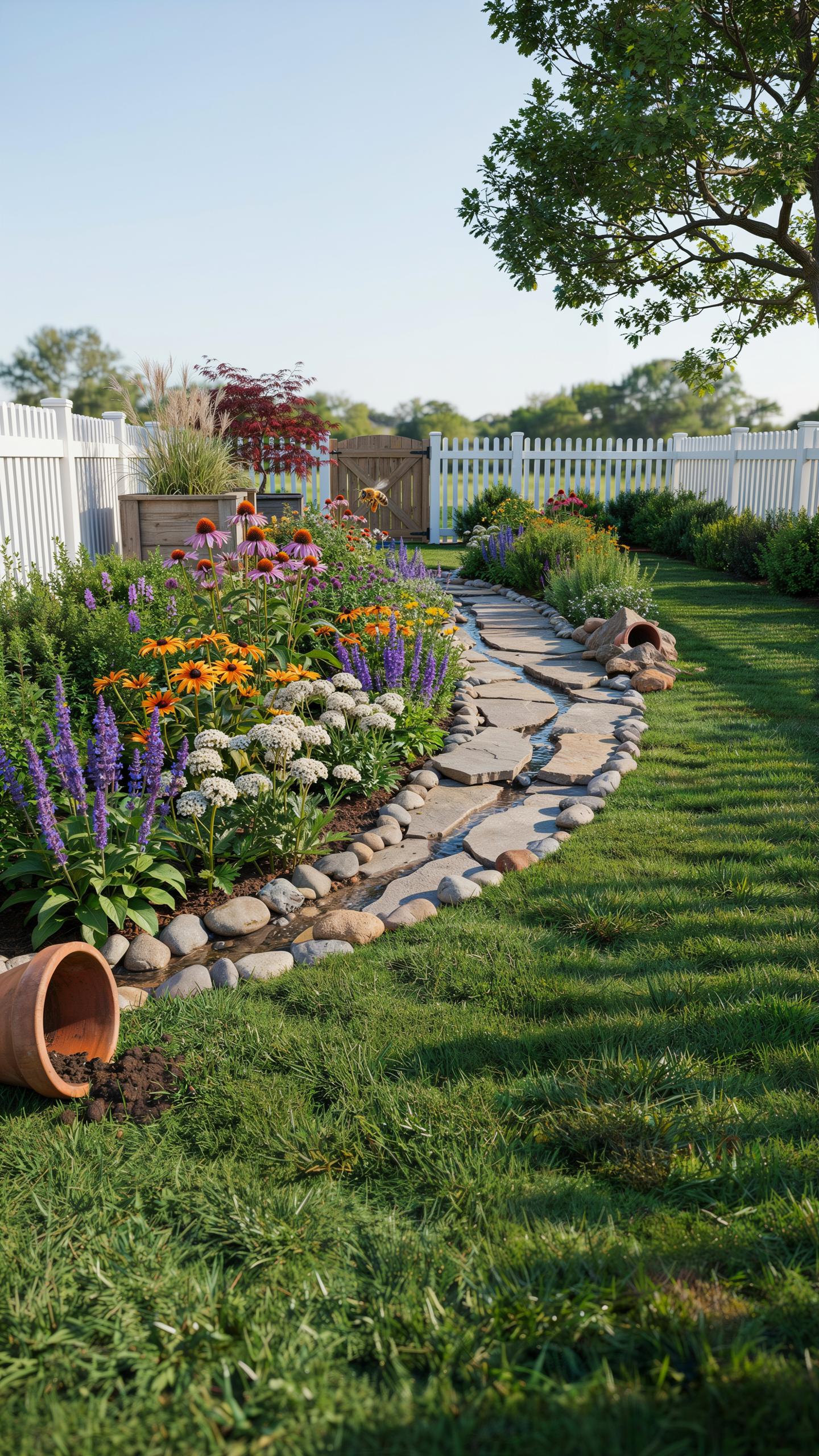
Dry Creek Beds: A Natural Looking Solution That Channels Runoff Beautifully
Dry creek beds mimic natural riverbeds to direct surface water away from structures. This technique uses a graded channel lined with landscape fabric and varying stone sizes. Larger river rocks stabilize the center while smaller gravel fills the gaps. You must ensure the path follows the natural slope of your land. Proper depth prevents water from overtopping the banks during heavy rain.
Designers use this method to solve erosion problems on hillsides. The stones slow down fast-moving water and protect the soil underneath. Use smooth, rounded stones for an authentic look and angular rocks for better grip on steep grades. Maintain the feature by removing debris and leaves that block the flow. This solution works best when the exit point leads to a safe drainage area.
Rain Gardens And Swales: Functional Water Drainage Ideas That Boost Curb Appeal
Rain gardens are shallow depressions planted with native vegetation that capture and soak up runoff. These gardens act like natural filters for pollutants before water enters the ground. Select deep-rooted plants that tolerate both wet and dry conditions. The soil mix should contain sand and organic matter to speed up infiltration. This method reduces the load on local municipal storm sewer systems.

Swales are long, wide channels that move water slowly across a property. Unlike pipes, swales allow water to sink into the ground as it travels. Line the swale with turf grass or heavy gravel to prevent the water from carving out a trench. Engineers recommend a gentle slope of about one percent for maximum efficiency. Well-built swales prevent standing water and mosquito breeding sites in your backyard.
Landscape Drainage Solutions Using Grading And Resloping On A Tight Budget

Understanding Yard Grading And Why Even A Small Slope Change Makes A Big Difference
Grading refers to the pitch of the ground around your home. Proper grading directs water away from foundations and toward designated exit points. Gravity is the most effective tool for backyard landscaping drainage solutions. A standard slope of two percent is the industry benchmark. This means the land drops one inch for every four feet of horizontal distance. This subtle change prevents water from pooling.
Water follows the path of least resistance. Flat yards allow water to saturate the soil and seep into crawlspaces. By altering the surface angle, you control where the runoff travels. Small adjustments prevent costly structural damage and soil erosion. You do not need massive elevation changes to see results. Consistently sloping the soil away from the house ensures the landscape stays dry during heavy rain events.
How To Regrade A Small Section Of Your Yard Without Hiring A Contractor
DIY regrading starts with identifying the low spots in your lawn. Use a string level and wooden stakes to mark the desired slope. Dig up the existing turf and set it aside for later use. Clear away debris and loose rocks from the work area. You must ensure the ground is dry before moving any dirt. Compacted wet soil creates lumps that ruin the final grade.

Spread clean fill dirt into the low areas to create the new pitch. Use a metal rake to smooth the surface and maintain a consistent decline. Tamp the soil firmly to prevent future settling. You can use a hand tamper or a heavy water roller for this task. Once the grade is set, replace the turf or plant grass seed. This method provides an immediate and low cost drainage fix.
Permeable Surfaces And Ground Cover As Low Cost Drainage Ideas For Any Yard
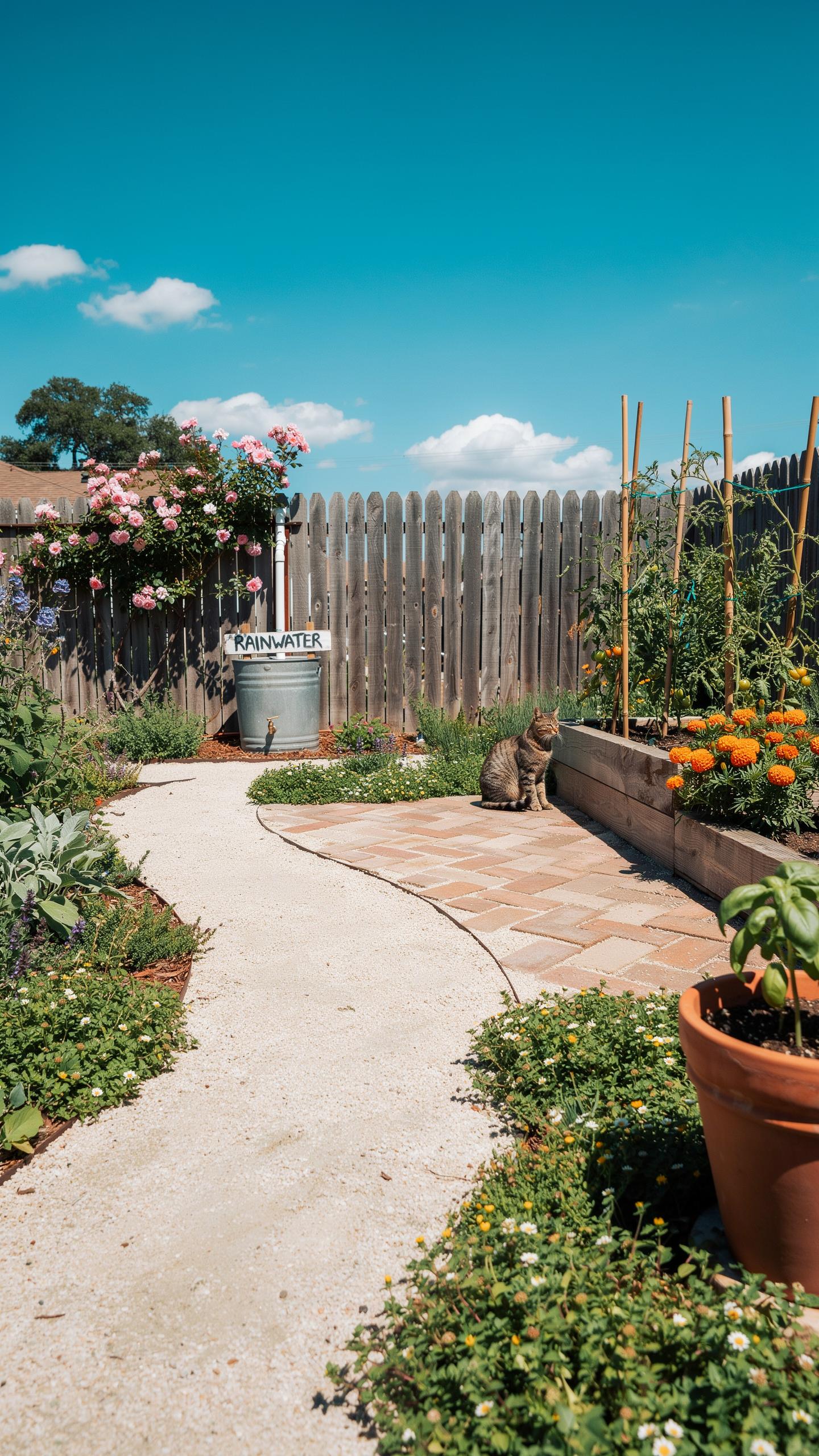
How Permeable Pavers And Gravel Paths Help Reduce Surface Water Runoff
Permeable pavers and gravel paths stop water from pooling on your lawn. Traditional concrete blocks water flow and forces it to run off into low spots. Permeable surfaces allow rain to soak directly into the ground through the gaps between materials. This process recharges the groundwater and reduces the load on your local storm drains. You should choose open-graded aggregates for the best results.
Installation requires a sub-base of crushed stone to create storage space for water. You must avoid fine sand that clogs the system over time. Use geotextile fabric to keep the soil from mixing with your gravel. This setup stabilizes the ground while maintaining high infiltration rates. Smart drainage starts with choosing materials that breathe. It is a cost-effective way to manage heavy rainfall without installing expensive pipes.
Ground Cover Plants That Absorb Excess Moisture And Protect Soil Stability
Ground cover plants function as biological pumps for your backyard. Their root systems create tiny channels in the soil that let water penetrate deeper. Lush vegetation also breaks the impact of falling rain to prevent surface erosion. Selecting the right species depends on your regional climate and soil type. These plants drink up excess moisture before it can flood your patio or crawl space.

Dense roots act as a natural anchor for loose dirt on slopes. You should prioritize native species because they adapt better to local rainfall patterns. Creeping Jenny or certain sedges thrive in wet conditions and stabilize the earth. This method is cheaper than building retaining walls or high-end drainage systems. Strategic planting turns a muddy mess into a functional part of your yard drainage plan.
Backyard Drainage Ideas Using Downspout Extensions And Catch Basins
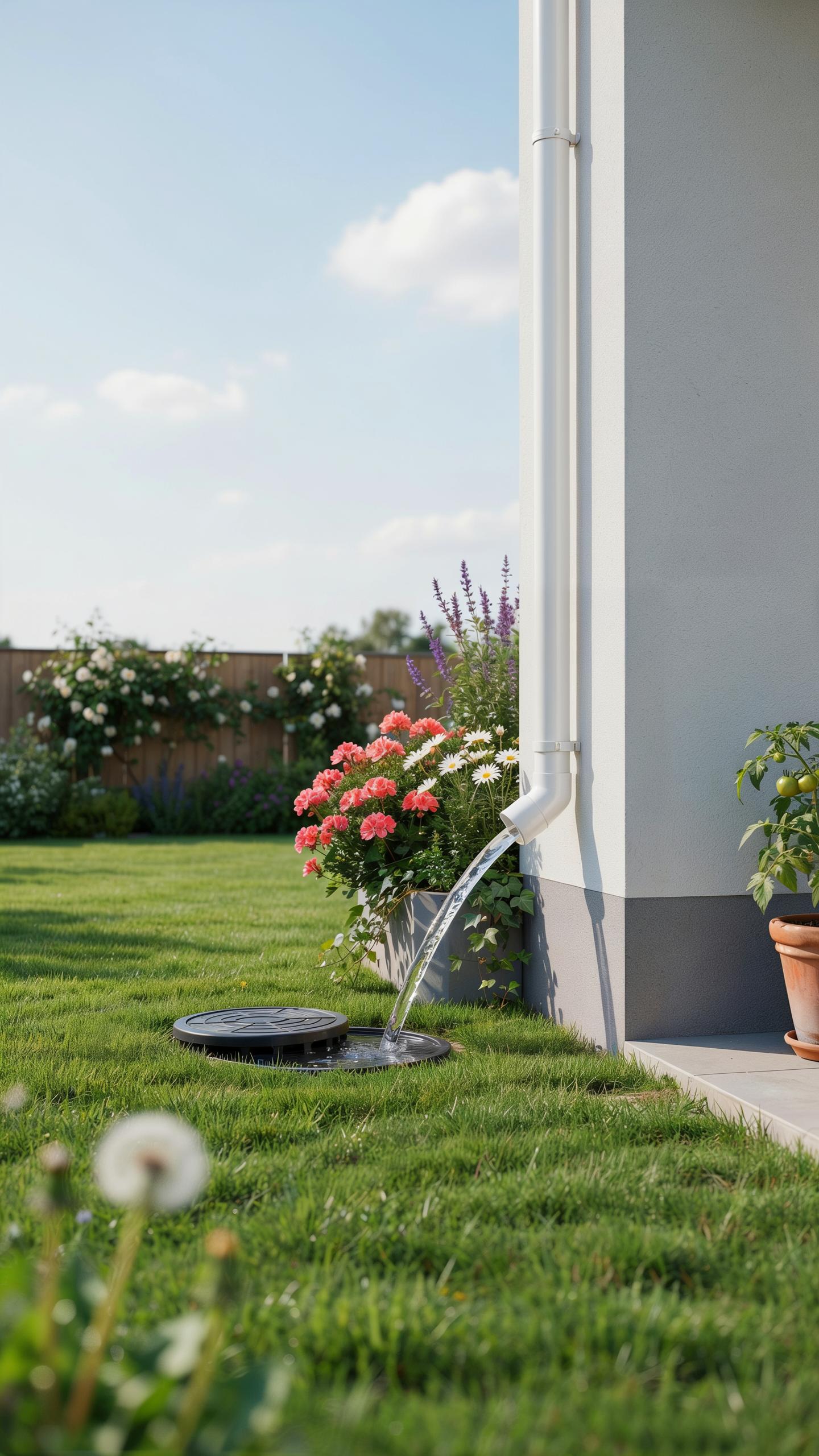
Why Your Gutters And Downspouts Are The First Line Of Defense Against Yard Flooding
Roof runoff creates the highest volume of concentrated water on your property. A standard one-inch rain produces nearly 600 gallons of water per 1,000 square feet of roof. If your downspouts drop this volume directly at the foundation, you guarantee soil erosion and basement leaks. Managing this water at the source prevents common backyard landscaping drainage solutions from becoming overwhelmed by unnecessary surface flow.
Strategic placement of downspout extensions moves water at least six to ten feet away from your home. This distance ensures gravity pulls the liquid into the lawn or a dedicated drainage system rather than back toward the footer. Professionals use rigid PVC or corrugated piping buried underground for a permanent fix. Surface extensions are cheaper but require frequent maintenance to remain effective during heavy storms.
There is a simple joy in tending to the earth and guiding the waters where they belong with your own two hands. You do not need a fortune to mend the garden and keep your little patch of paradise dry and sweet.
Installing A Simple Catch Basin To Manage Concentrated Water Drainage In Problem Spots
Catch basins act as localized collection points for water that pools in low areas. These plastic boxes sit level with the ground and feature a grate on top to filter out debris. You install them at the lowest point of a slope where gravity naturally pulls runoff. This tool stops standing water before it can saturate the soil or kill your grass during wet seasons.
- Excavation: Dig a hole slightly larger than the basin dimensions to allow for stabilization. Deep holes ensure the grate sits just below the grass line for maximum intake. Clear all large rocks from the base area to prevent future cracking or shifting of the plastic unit.
- Base Preparation: Add two inches of crushed stone or gravel to the bottom of the hole. This layer provides a solid foundation and prevents the basin from sinking over time. Compact the stone firmly to ensure the unit remains level after several heavy rain events or soil shifts.
- Piping Connection: Attach a solid or perforated drainage pipe to the outlet port of the basin. Use waterproof tape or mechanical couplers to secure the connection. This pipe must slope downward at a minimum of one percent to carry the collected water toward a safe discharge point at the curb.
- Backfilling: Fill the gaps around the installed basin with dirt or additional gravel. Tamp the material down in layers to prevent air pockets that cause surface sinking later. Firm soil support keeps the basin from moving when you run a lawnmower over the grate or walk near the unit.
- Grate Placement: Secure the top grate to prevent leaves and large twigs from entering the system. Check the grate monthly for debris buildup that blocks water flow. Properly maintained grates keep the internal pipes clear and prevent the entire drainage network from backing up during a flash flood.

Connect the basin outlet to a dedicated buried line to move the water away. Use solid PVC pipe for the run to prevent roots from entering the system and causing clogs. The discharge point should be a pop-up emitter or a dry well located far from the house. This setup creates a closed-loop system that keeps your yard dry and prevents the soil from turning into mud.
Choosing The Right Plants To Support Your Backyard Landscape Drainage Strategy
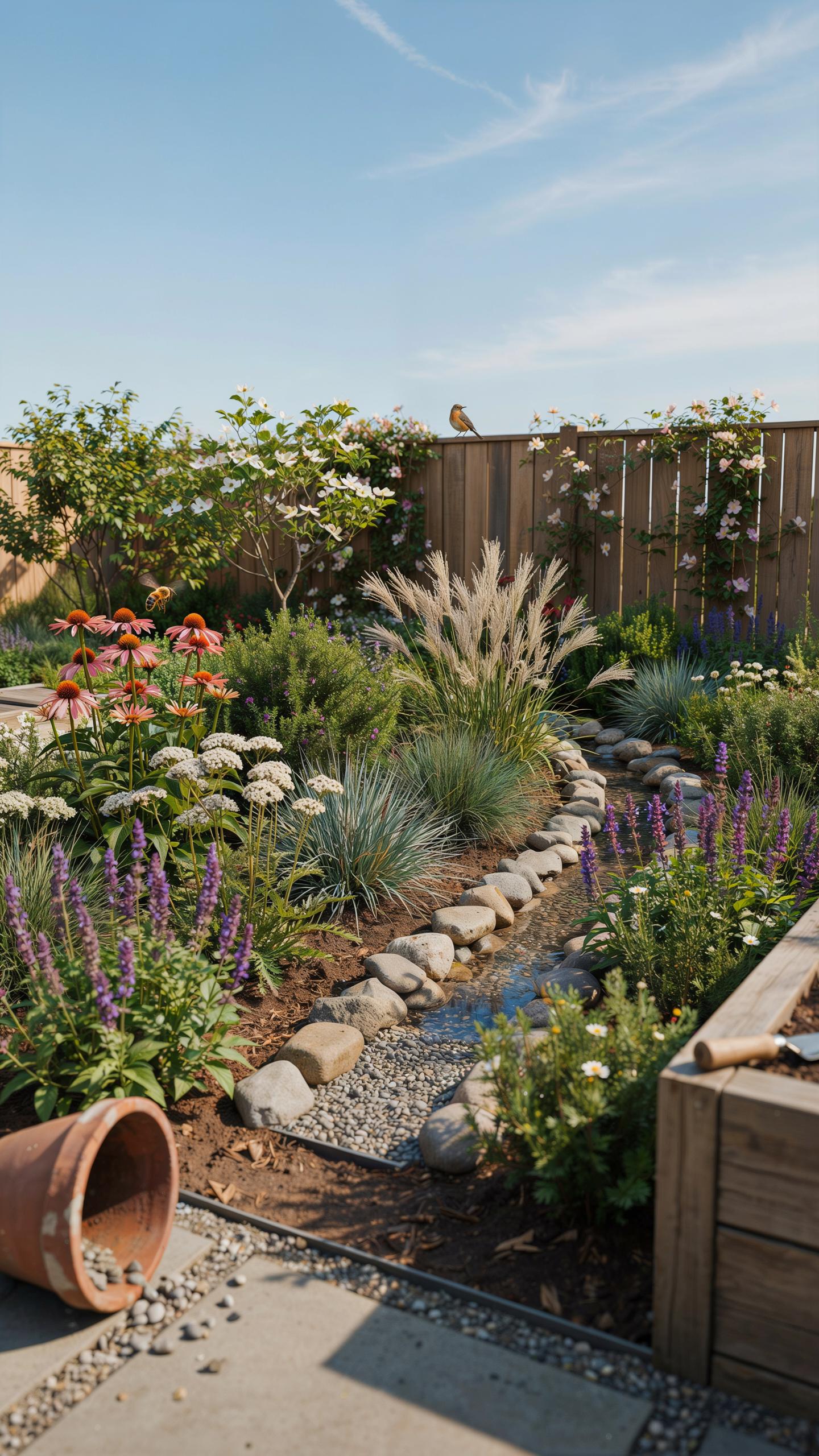
Deep Rooted And Water Tolerant Plants That Naturally Improve Soil Drainage Over Time
Deep rooted plants act as biological pumps for your yard. These species penetrate compacted soil layers that stop water flow. Vertical root growth creates permanent channels called macropores. These channels allow surface water to reach deeper subsoil layers quickly. This process reduces surface ponding and prevents topsoil erosion during heavy rain. You must choose native species to ensure long term survival.
Water tolerant plants thrive in saturated conditions where other plants rot. These species transpire large volumes of water through their leaves. This natural evaporation process dries out wet soil faster than gravity alone. Selecting the right plants creates a self sustaining system. It reduces the need for mechanical pumps or expensive subsurface pipes. Constant root growth also improves soil structure and organic matter levels over time.
How Strategic Planting Zones Can Work Alongside Your Existing Drainage Infrastructure
Strategic planting zones maximize the efficiency of your hardscape drainage. Place moisture loving plants at the exit points of French drains or downspouts. This creates a functional rain garden that absorbs runoff before it leaves your property. Grouping plants by water needs prevents overwatering and optimizes soil moisture. This layout supports your grates and pipes by catching overflow during peak storm events.

Vegetation also protects the structural integrity of your digging work. Roots stabilize the soil around gravel trenches and dry creek beds. This prevents silt from clogging your drainage pipes and fabric. Well placed shrubs act as windbreaks to increase evaporation on wet surfaces. You should align your planting rows with the natural slope of the land. This tactic slows down fast moving water and prevents localized flooding.
Planning Your Backyard Drainage Project Costs Priorities And Where To Start
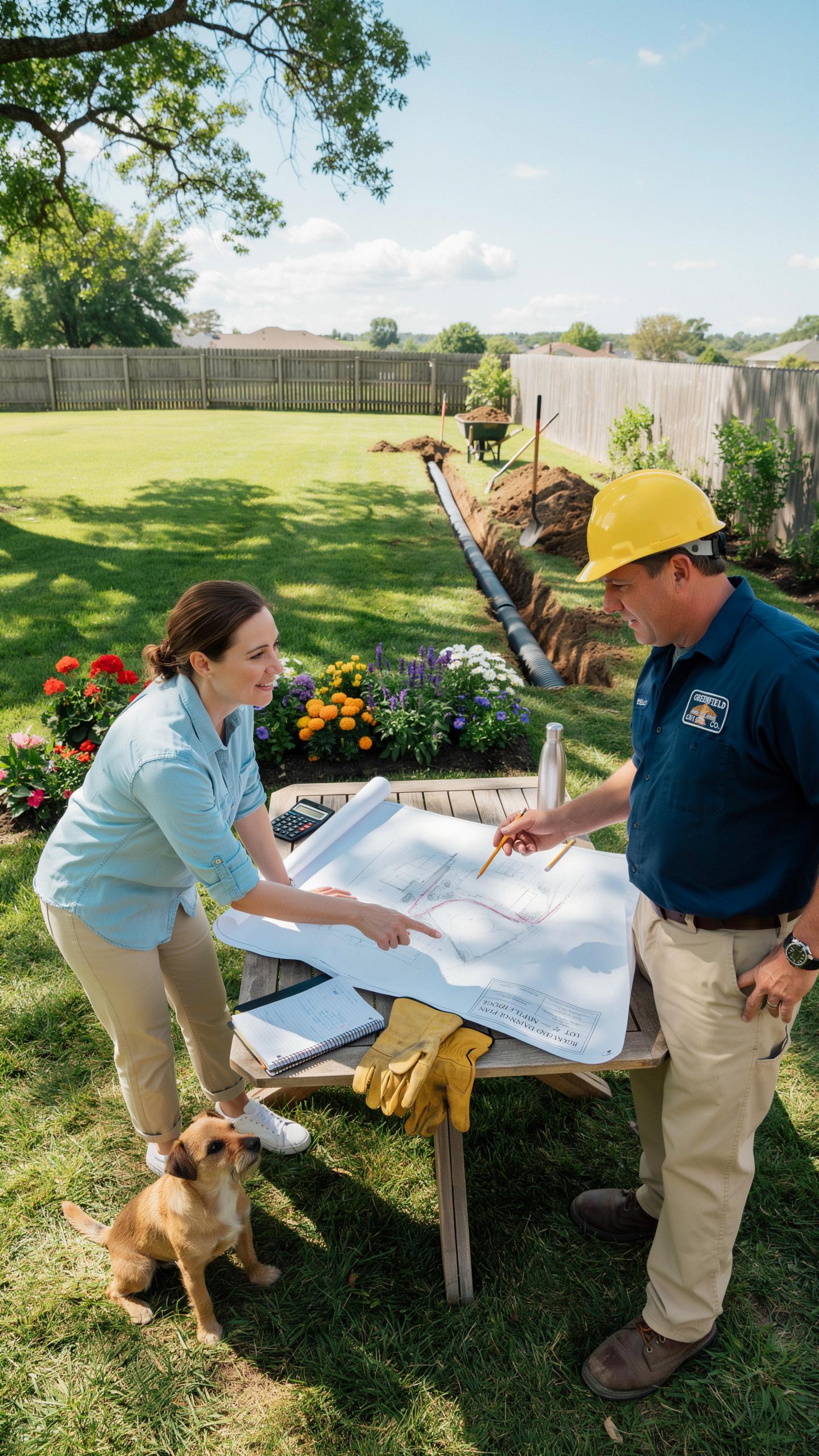
Realistic Cost Breakdown For DIY Vs. Professional Backyard Drainage Solutions
DIY drainage projects primarily incur material costs. A standard French drain requires gravel, perforated pipe, and filter fabric. These materials typically cost between three and ten dollars per linear foot. Backyard owners save significantly on labor by digging trenches themselves. Buying bulk gravel from a local yard reduces costs. Renting a power Trencher for one day usually costs less than two hundred dollars.
Professional installations include high labor markups and heavy machinery fees. Contractors charge between thirty and one hundred dollars per linear foot. This price covers site grading, soil disposal, and expert laser leveling. Professionals provide insurance and performance guarantees that DIYers lack. Complex systems involving sump pumps or deep dry wells require high voltage electrical work. Professionals handle these technical risks but double the total project cost.
How To Phase Your Drainage Project Over Time To Stay Within A Comfortable Budget
Strategic phasing prevents massive upfront expenses. Start by fixing surface water issues first. Clean existing gutters and install downspout extensions to move water away from the foundation. These low cost steps often solve forty percent of backyard pooling. Buy plastic extensions at any hardware store for under twenty dollars. Use this initial phase to observe water flow patterns during heavy rain storms.
Address underground solutions in the second phase. Map out a primary trench line that follows the natural slope of the yard. Dig and install one section of pipe at a time as budget allows. Focus on the most saturated areas first to see immediate results. Use temporary grass seed to stabilize soil between phases. This method spreads the cost of gravel and pipe over several months or seasons.
Frequently Asked Questions

How do I know if my yard needs a drainage intervention?
You likely need a fix if you notice stagnant water pooling on your lawn for more than 24 hours after a storm. Other red flags include spongy turf, dying plants near low spots, or basement dampness. Identifying these signs early allows you to implement simple backyard landscaping drainage solutions before soil erosion or foundation damage occurs, saving you significant time and money on major structural repairs down the road.
What is the easiest way to redirect water away from my home?
One of the most effective DIY methods is installing a French drain. This involves digging a shallow trench, lining it with landscape fabric, and filling it with perforated pipe and gravel. By creating a clear path for runoff, you can guide excess moisture toward a natural exit point or a rain garden. This is among the best backyard landscaping drainage solutions for beginners who want a functional yet discreet result.
Are there any low-cost ways to fix drainage without hiring a professional?
Absolutely! You can achieve great results by simply extending your downspouts or creating a dry creek bed using inexpensive river rocks. Swales are another affordable option; these are shallow, grassy depressions that naturally channel water away from high-traffic areas. By using recycled materials or local stone, you can solve your water issues beautifully and effectively without the heavy price tag of an engineered commercial drainage system.