The Material Deception: Why Toilet Paper Rolls Aren’t “Junk”
Perceived Value In Art Materials
You’re here because you want permission to call something art without spending money on it. That’s not weakness, it’s economics. The real mechanism at work is material hierarchy, a ranking system your brain runs automatically based on cost and scarcity. Expensive materials signal legitimacy. Cheap materials signal shortcuts.
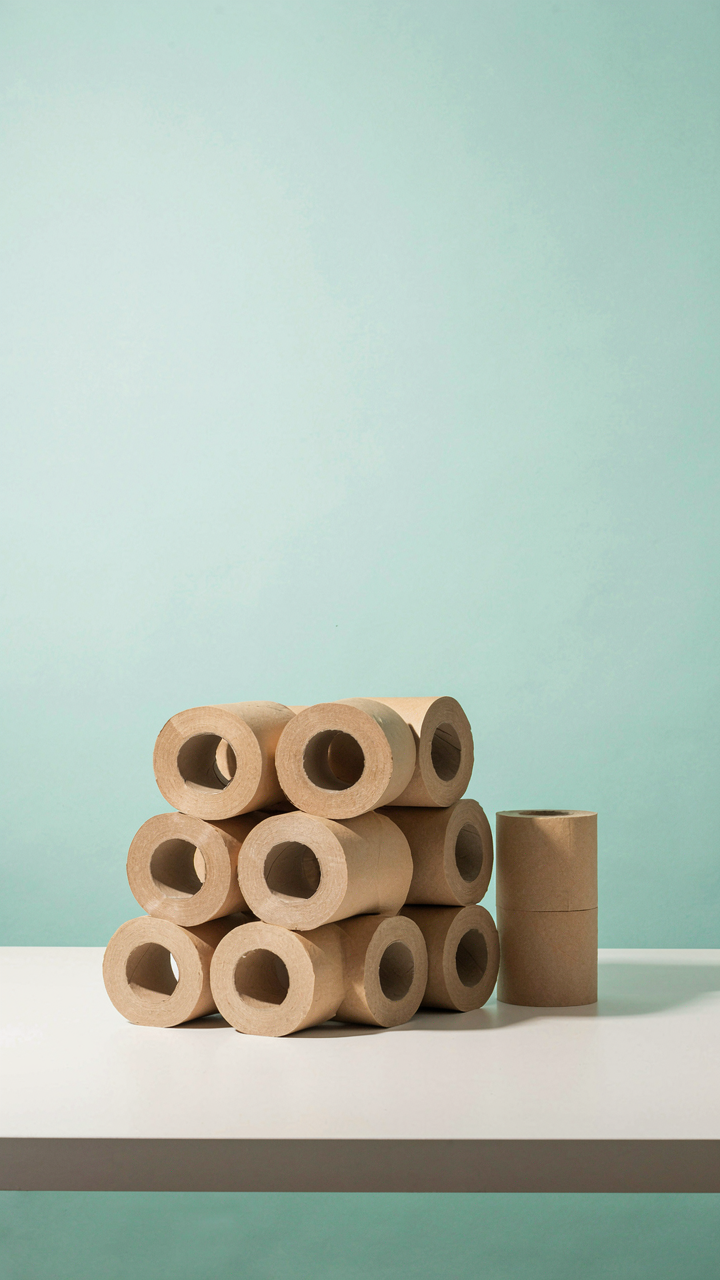
Toilet paper rolls break this pattern because they have structural integrity built into their design. The cardboard cylinder was engineered to hold tension without collapsing. Architects and designers recognize this fact. Museums have featured cardboard as a primary material, not an afterthought. The cylinder’s strength-to-weight ratio makes it viable for wall-mounted work that lasts years without degradation when sealed properly.
The Geometry Of The Cylinder
Borrow a term from architecture called load distribution. A cylinder spreads force evenly across its curved surface, which is why tunnels, pipes, and domes dominate industrial design. Toilet paper rolls operate on the same principle. Stack them, layer them, or compress them flat, and the material adapts to the structural demand you place on it.
This adaptability is what separates toilet paper rolls from genuinely useless waste. You can create dimensional depth through stacking. You can flatten them into abstract shapes by cutting and crushing. The geometry forces you into design decisions with real consequences. When you build with a cylinder, you’re not hiding behind material cost. You’re solving spatial problems the same way engineers do.
The Bauhaus Imperative: Form Follows Function In Toilet Paper Roll Art
Constraint As Design Language
You want this section to validate that your recycled craft hobby is sophisticated, not wasteful. Here’s the real mechanism: constraint forces decision-making. Bauhaus designers understood this in the 1920s. A toilet paper roll has fixed dimensions, fixed material, fixed weight. You cannot ignore these facts. You must work within them or the structure fails. This is not a limitation. This is the entire design problem solved for you.

Most craft advice tells you to “let your creativity flow” and “break the rules.” That’s backwards. The roll’s cylindrical form, cardboard density, and structural integrity are not obstacles to overcome. They are the design brief. When you accept the roll’s actual properties instead of fighting them, your decisions become clearer. You stop wasting time on ideas that won’t hold weight. You build instead of daydream.
From Tube To Load Bearing
Architecture borrowed structural engineering from physics, and physics teaches load distribution. A single toilet paper roll tube collapses under pressure. Stack or brace multiple tubes, and they become load-bearing. This principle separates amateur wall art from pieces that survive. A flat collage of painted rolls fails. Overlapping rolls arranged in depth with internal supports succeeds.
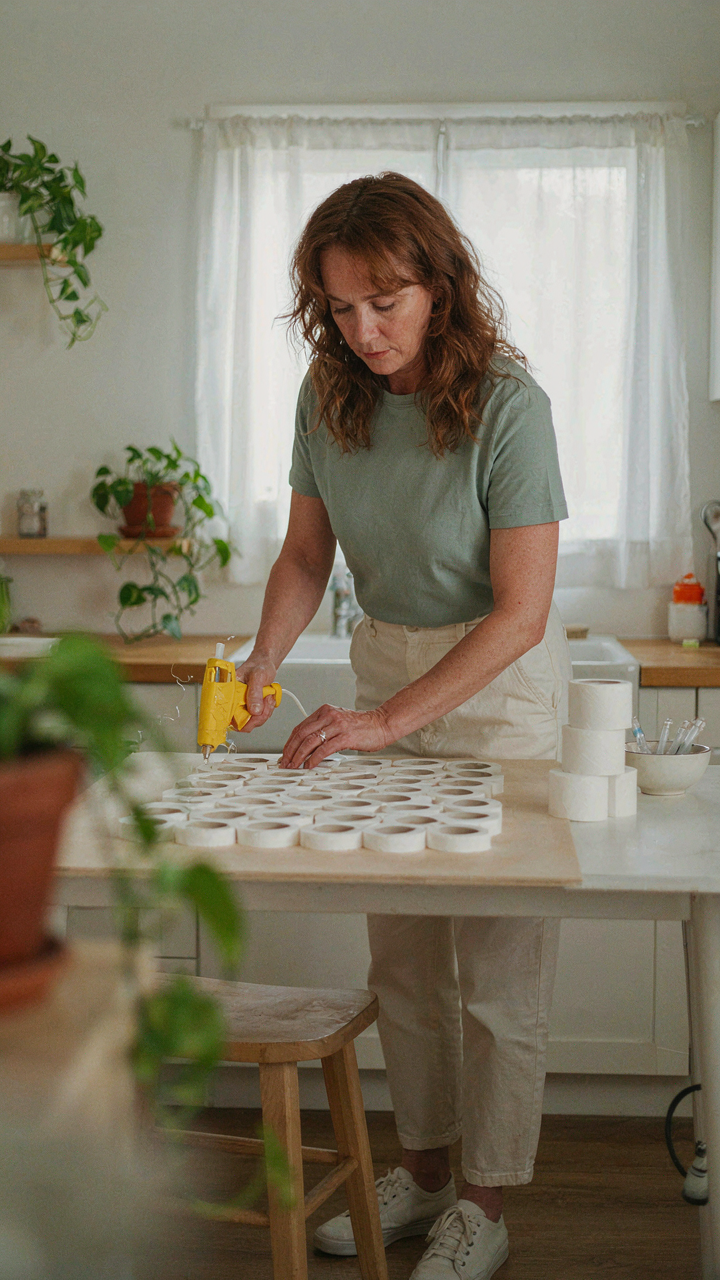
The difference matters because gravity is not negotiable. Build your pieces assuming they will sit on a wall for years. Use hot glue sparingly on contact surfaces. Reinforce joints with paper tape on the interior. Test weight distribution before mounting. This is not overthinking. This is the step that determines whether your piece stays mounted or becomes a floor piece in three months.
The “Origami Logic” Protocol: Precision In Recycled Paper Crafts
How Simple Cuts Create Intricate Patterns
You want to believe toilet paper rolls magically transform into gallery-worthy art without real skill. They don’t. The mechanism is borrowed directly from origami and paper engineering: constraint breeds complexity. Limited material forces intentional design. A single strategic cut, folded at the right angle, cascades into patterns that look intricate but follow one rule: each fold multiplies the visual surface area.
- Spiral cuts: A continuous cut around the tube’s circumference creates nested rings. Stack or layer them for depth without adding material.
- Radial slits: Vertical cuts from edge to center, then folded outward, generate star or flower forms. The number of slits determines petals.
- Nested cylinders: Cut the tube into rings, then layer them at angles. Each ring becomes a plane that catches light differently.
- Accordion folds: Parallel cuts paired with precise valley and mountain folds create rhythm. The fold direction controls whether patterns advance or recede.
- Relief cuts: Remove sections entirely rather than folding them. This creates shadow and silhouette, the fastest path to visual impact.

The geometry scales. One tube tests your hand control and teaches fold behavior. Five tubes teach you how patterns compound. Ten tubes teach you when repetition becomes visual noise. Precision matters because paper forgives nothing: a quarter inch off ruins the symmetry everything depends on.
Geometric Tessellations: Mathematical Approaches To Design
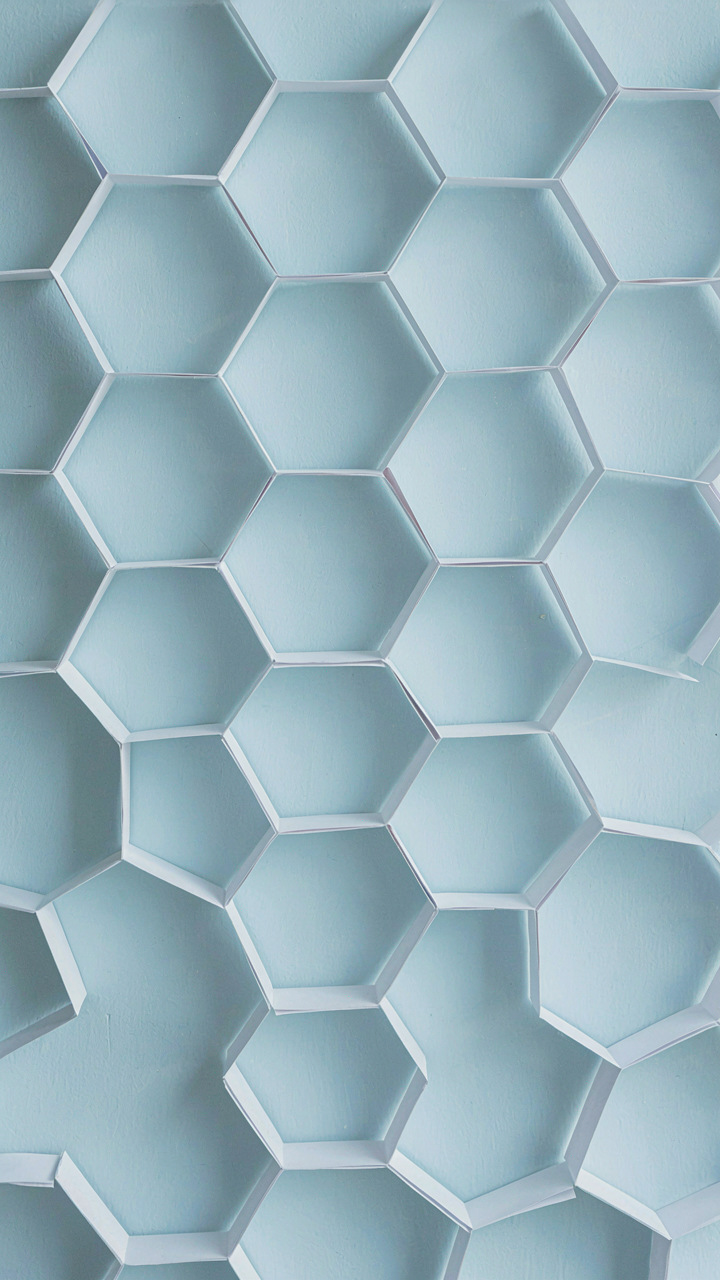
Tessellation is the language of tiling—one field borrows it from crystallography, the study of how atoms arrange into repeating structures. Toilet paper roll wall art uses the same principle: lock units together so no gaps exist and no overlaps occur. Most people avoid this entirely and just glue random tubes to a wall. That’s why most toilet paper roll art looks amateurish.
The real work starts when you recognize that each tube is a cylinder, not a flat object. Cylinders don’t tessellate cleanly on a 2D surface like squares do. You must either flatten them into strips, nest them at angles, or arrange them so their curves create the illusion of continuity. Mathematical precision here means measuring the compressed width of each flattened tube, calculating the angle needed for nesting, and mapping your design on graph paper before cutting. A hexagonal arrangement of tubes, each rotated slightly inward, creates a honeycomb structure that reads as a unified pattern rather than scattered objects. Execute the layout as a protocol: measure the distance between tube centers, establish anchor points, and mount in order from a fixed corner.
Color Theory For Toilet Paper Roll Home Decor: Beyond Spray Paint
How Light Hits Layered Cardboard
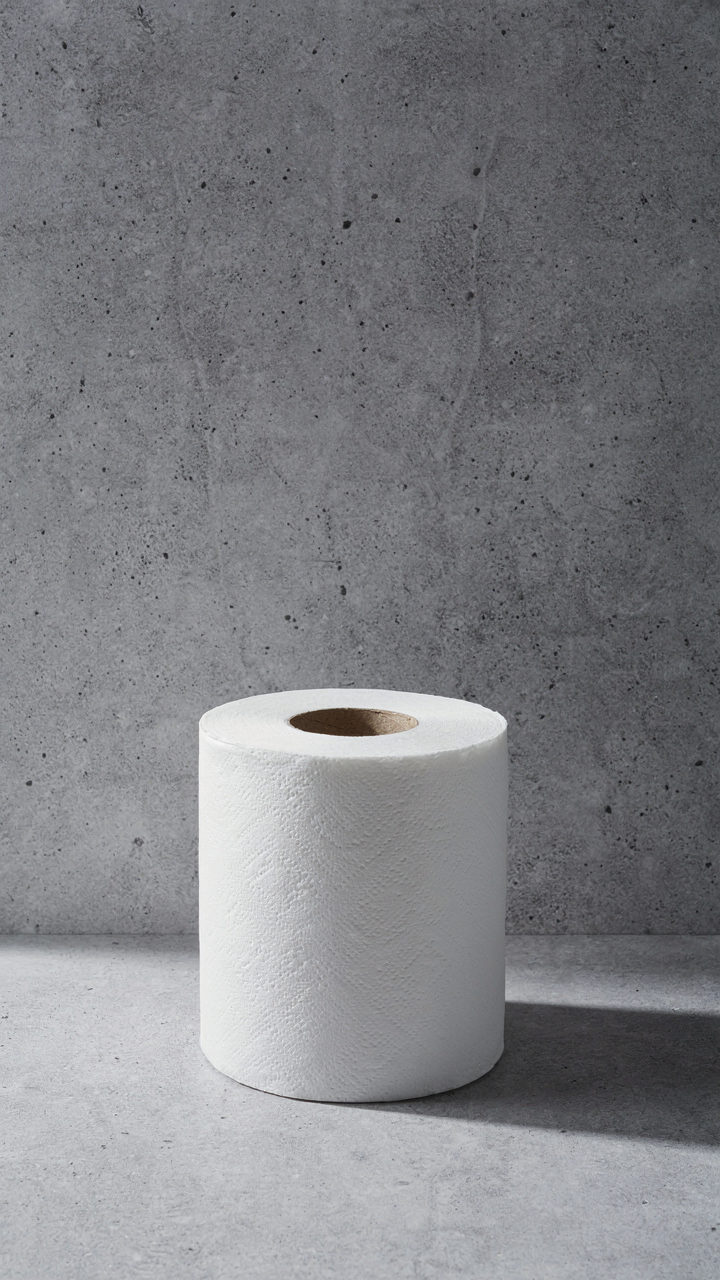
You want this to look intentional, not like you ran out of wall space. The mechanism is this: toilet paper rolls have natural cylindrical geometry that creates shadow zones. Lighting design from photography applies here—you control depth through pigment placement on convex surfaces, not flat planes. Most people spray one color and call it done. That’s the mistake. The cardboard absorbs paint unevenly, so lighter pigments on the tube’s facing curve and darker tones in the recessed areas create actual three-dimensional reading. You’re not decorating. You’re controlling how light behaves on your wall.

Paint application matters more than color selection itself. Apply base color to the entire roll, let it dry fully, then dry-brush a second tone across only the raised portions. This creates shadow simulation without needing actual depth. The cylinder’s natural geometry does half the work. A matte finish on dark tones and semi-gloss on highlights amplifies the illusion further. Layer strategically—don’t chase coverage. One roll can hold three to four distinct pigment zones before the design collapses into visual noise.
Shadow And Depth Without Dimension
Negative space is the design element people skip because it feels like doing nothing. It’s the opposite. Arrange rolls with intentional gaps between clusters, then use that absence as compositional backbone. The wall color showing through becomes a design material. Black or deep charcoal behind sparse roll arrangements creates aerial perspective—rolls appear to float forward. This is borrowed from painting composition, where negative space determines figure hierarchy. Most toilet paper roll art treats the background as an accident. Treat it as a deliberate choice.
Install rolls at varying distances from the wall using small foam spacers or backing boards. A one-inch gap versus a half-inch changes shadow perception dramatically. Lighting angle matters more than brightness. Side-lighting from a single source creates cast shadows that define the arrangement’s geometry without requiring additional paint layers. Position your light source at forty-five degrees to the wall. This standard angle maximizes shadow definition. The rolls themselves now function as light modulators. Your eye reads depth from shadow shape, not pigment alone.
The Micro Sculpture Method: Elevating DIY Toilet Paper Art
Shaping Layering And Textural Considerations
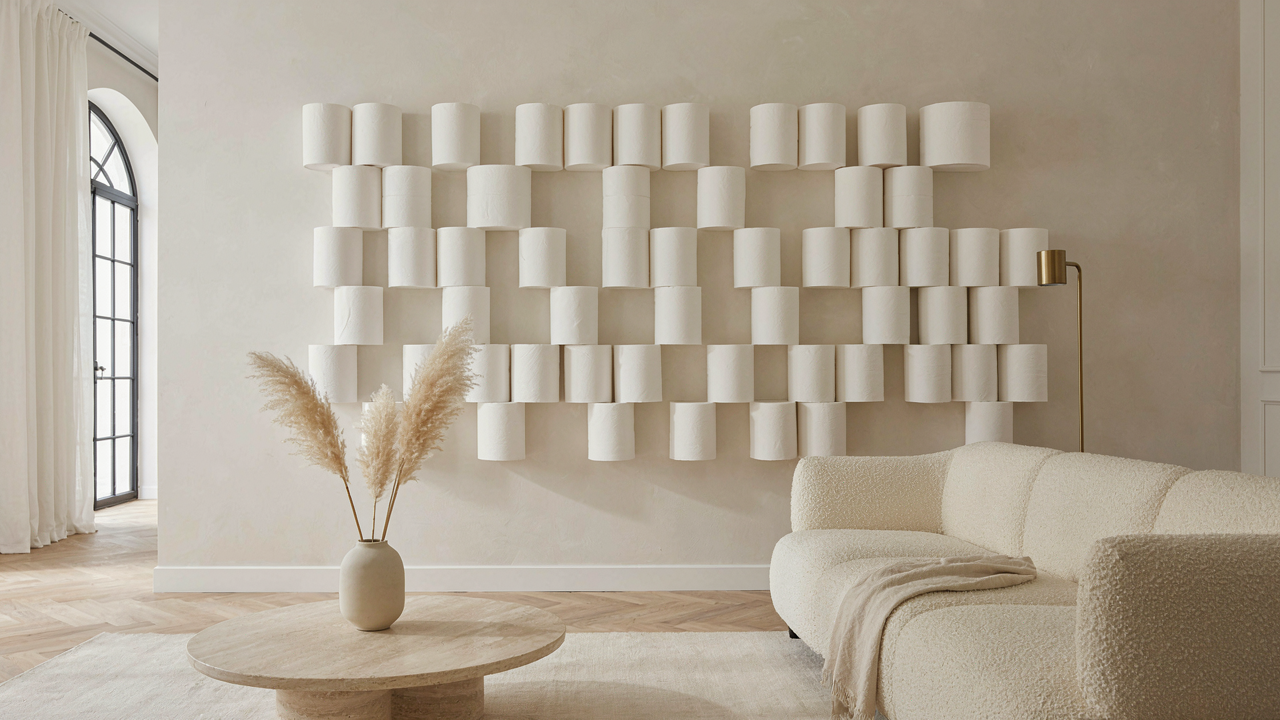
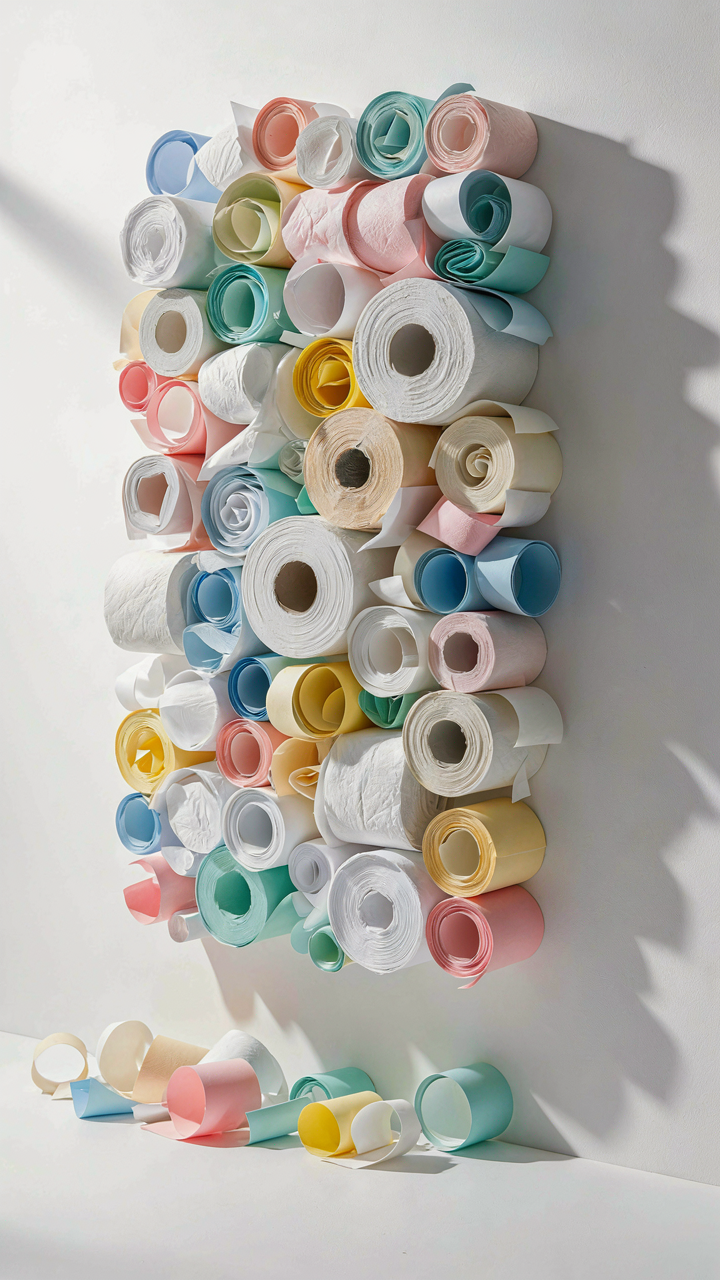
You want this to look intentional, not like craft hour at a daycare. The real mechanism is density control. Architecture uses load-bearing principles to determine where material concentrates and where it opens up. With toilet paper rolls, you control visual weight the same way: compress some sections, leave others hollow, stack strategically. Most people just glue rolls flat to the wall. That’s decoration. Actual micro-sculpture requires you to cut, curl, and compress individual rolls into distinct shapes before assembly, then layer them so light hits the piece differently from each angle.

Start by understanding that a single toilet paper roll has structural limits. Cut it into rings, quarter-sections, or spiral strips depending on the shape you need. Compress sections between your palms to flatten them into organic forms. Stack compressed pieces perpendicular to each other to create depth and shadow variation. The texture comes from how the paper folds catch light, not from painting or embellishing. Glue strategically at contact points only, not across entire surfaces, so internal structure remains visible and the piece breathes.
From Individual Unit To Cohesive Sculptural Statement
The mistake people make is treating each roll as independent. You need a unifying principle first. Decide whether your statement is geometric (ascending heights, repeating angles), organic (flowing curves building toward a focal point), or modular (identical units arranged in pattern). This decision determines how individual units cluster. Don’t build randomly and hope it works. Map the composition on paper, establish a visual hierarchy, then execute roll by roll according to plan.
Cohesion requires intentional rhythm. Repeat specific shapes or compressed forms at intervals. Vary scale so smaller units draw the eye through larger ones. Create a clear focal point where density peaks, then let complexity decrease toward the edges. The whole piece should read as one statement, not a collection of separate experiments. Test placement before final gluing. A cohesive sculptural statement means someone viewing your wall doesn’t see individual toilet paper rolls; they see a deliberate composition that commands attention through structure alone.
Curator’s Eye: Framing And Presenting Toilet Paper Wall Decor
The Frame Decides The Work
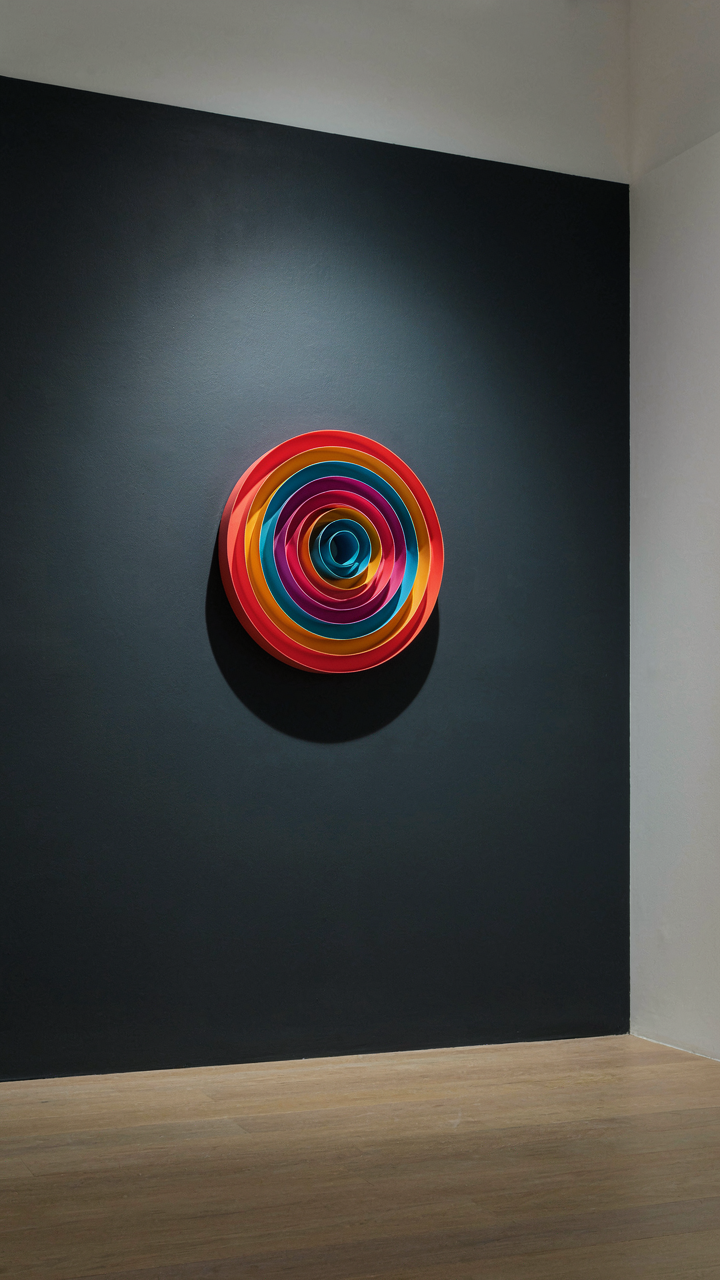
You want people to take this seriously because you made it, not because toilet paper inherently deserves wall space. The mechanism is simple: context determines perception. Borrowing from gallery curation, your roll art needs what museums call “visual containment.” A cheap plastic frame around a toilet paper roll sculpture doesn’t elevate the object. A clean wooden frame, mounted at eye level with 3 inches of negative space around it, does. The frame is the translator between material and meaning.

Most people skip framing because they think it’s pretentious. It’s not. It’s the difference between an art project and an artwork. Install a frame that contrasts your wall color. If your wall is white, use dark wood or black metal. If your wall is dark, use natural wood or white frames. The frame edge should be at least two inches wide. This proportional logic is what separates casual decoration from intentional display.
How Light Rewrites The Piece
Lighting architecture matters more than the roll art itself. In design, we call this “emphasis through illumination”—the principle that directing light toward an object automatically signals importance. A single warm LED strip mounted above your framed piece creates shadow definition and depth that overhead ceiling lights destroy. The rolls read as sculptural rather than flat.
Position light at a 45-degree angle from above. This angle creates the most dramatic shadow play without washing out texture. Cool white light (5000K) makes the piece feel clinical and modern. Warm light (2700K) makes it feel intimate and intentional. Your wall color affects this too. A dark accent wall behind the piece forces light to do the work of separation. Without contrast, even perfect lighting looks like decoration you hung because space was empty.
The “Chaos Theory” Of Toilet Paper Roll Decor: Emergent Complexity
How Simple Rules Build Visual Depth
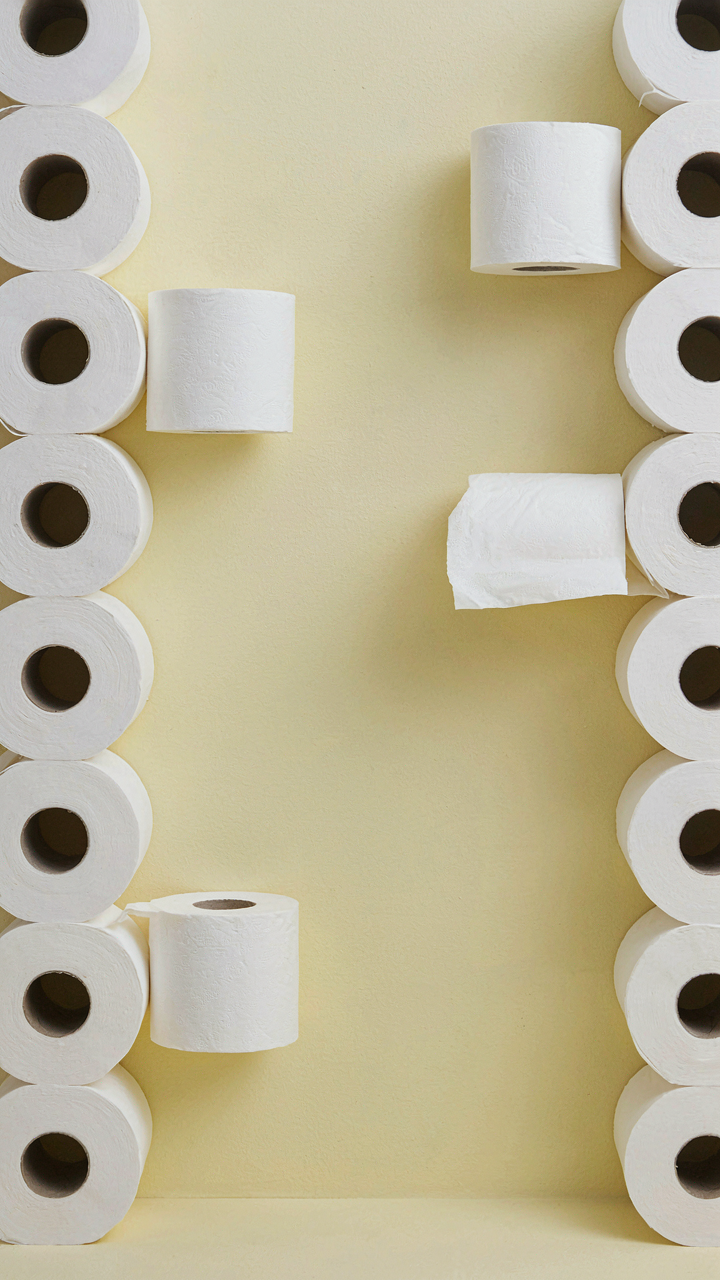
You want this section to validate that your scattered, intuitive approach to hanging paper rolls actually works. The mechanism is emergence from biology: simple organisms following basic rules create complex ecosystems. Toilet paper rolls follow the same pattern. Stack three rolls, the eye sees depth. Add one more at a slight angle, visual tension increases. Add five more in loose formation, suddenly the wall reads as intentional composition instead of clutter. The rules are stupidly simple: repetition, variation in spacing, and rotation. The output feels sophisticated because you’re not actually designing anything complicated.

The common advice tells you to plan layouts in advance. That’s wrong. Emergence requires iteration. Mount rolls one at a time, step back, mount another based on what the wall tells you it needs. Some walls need denser clustering on one side. Others need sparse distribution. You’re not following a template. You’re reading feedback and responding. The moment you predraw a grid, you kill the mechanism that makes this work.
The Pattern That Organizes Itself
Self-organization in design means the system finds its own order without top-down control. Stop thinking of each toilet paper roll as an isolated element needing a designated spot. Think of the whole wall as a field where rolls naturally gravitate toward equilibrium. Color clustering happens on its own if you place similar-toned rolls near each other. Density variation emerges when you leave gaps and fill them strategically. The wall balances itself.
Most people make everything uniform and call it clean. That’s static. Real visual impact comes from introducing one rule that lets the system reorganize itself around constraints. Use only three colors instead of ten. Use only two hanging angles instead of infinite variation. Those constraints force the composition to find coherence. The rolls self-organize around scarcity. You end up with dynamic impact because the eye has clear pathways to follow, not chaos masquerading as art. Install rolls in vertical columns first, then introduce horizontal ones at thirty-percent intervals to break symmetry and trigger visual interest.
Beyond The Hobby: Monetizing Your Toilet Paper Art
The Market Position Nobody Admits Exists
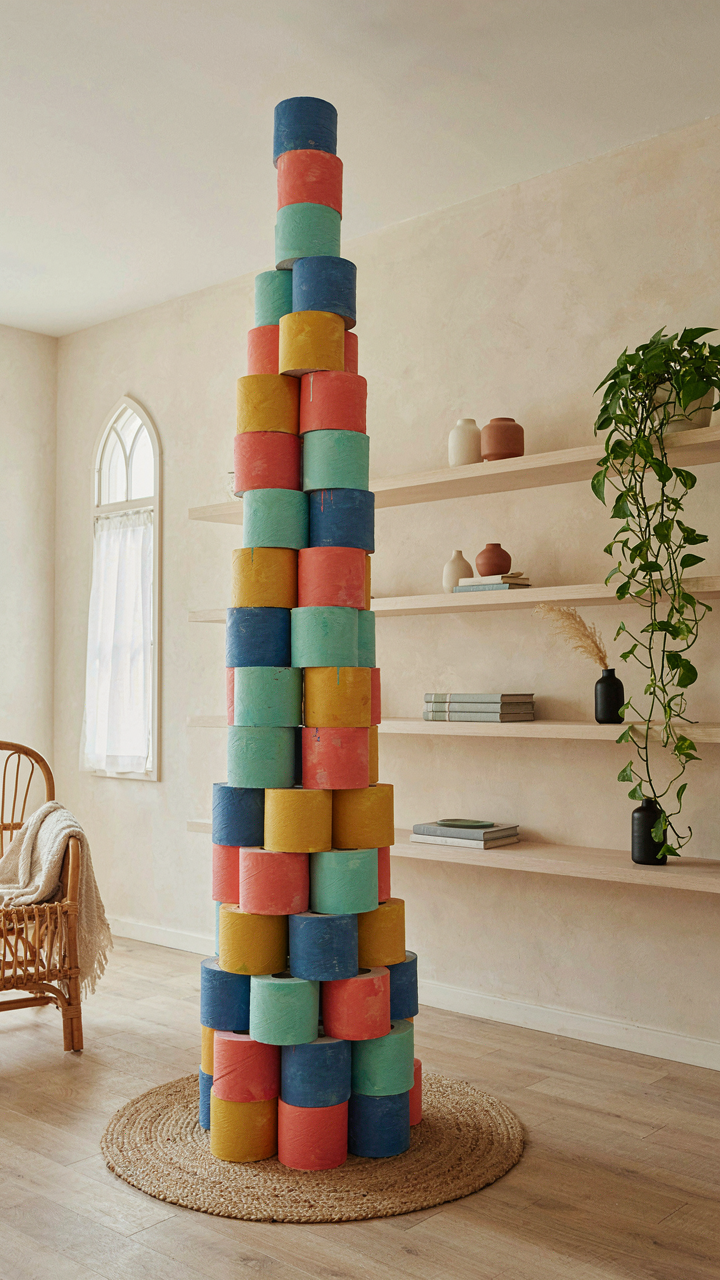
You want to know if anyone will actually pay for this. That’s not shallow, it’s the only question that matters. The mechanism is simple: repurposed material art occupies a price floor determined by material cost plus perceived effort, not by artistic merit. Toilet paper roll art sits in a narrow band. The raw materials cost almost nothing. Buyers know this. Your pricing power comes entirely from positioning it as intentional design, not craft project surplus.

The market for toilet paper roll art exists in a specific lane: sustainable design consciousness plus Instagram-native aesthetics. This isn’t the fine art world. It’s the home decor segment where buyers actively seek pieces that signal environmental awareness without requiring gallery-level investment. Position the work as “upcycled sculptural installation” rather than “thing made from trash.” The framing determines the price bracket. Galleries and boutique home decor shops that specialize in eco-conscious pieces are your distribution channel, not craft fairs.
Collectors Who Actually Buy
The collector of toilet paper roll art isn’t a hobbyist looking for cheap decoration. They’re buyers with specific constraints: limited wall space, interest in sustainable materials, and the need for conversation pieces that justify their cost. Economics calls this market segmentation by preference intensity. Your toilet paper art becomes valuable only to people who genuinely prefer this medium’s aesthetic and values, not to people who’d buy anything cheaper. Identify who these buyers actually are before you make anything for sale.
Collectors emerge in two clusters: interior designers specifying sustainable accent pieces for commercial and residential projects, and individual buyers aged 28-45 with demonstrated spending on ethical brands and minimalist decor. Study their buying patterns through Pinterest boards, Instagram hashtags focused on upcycled design, and home decor communities like Design*Sponge or Apartment Therapy. Target your sales channel toward them specifically. Don’t post to generic art platforms. Place your work where sustainable design buyers already congregate, then document which pieces generate inquiries and why.
The Real Obstacle Isn’t The Material; It’s Your Permission To Defy Conventional Aesthetic Hierarchies
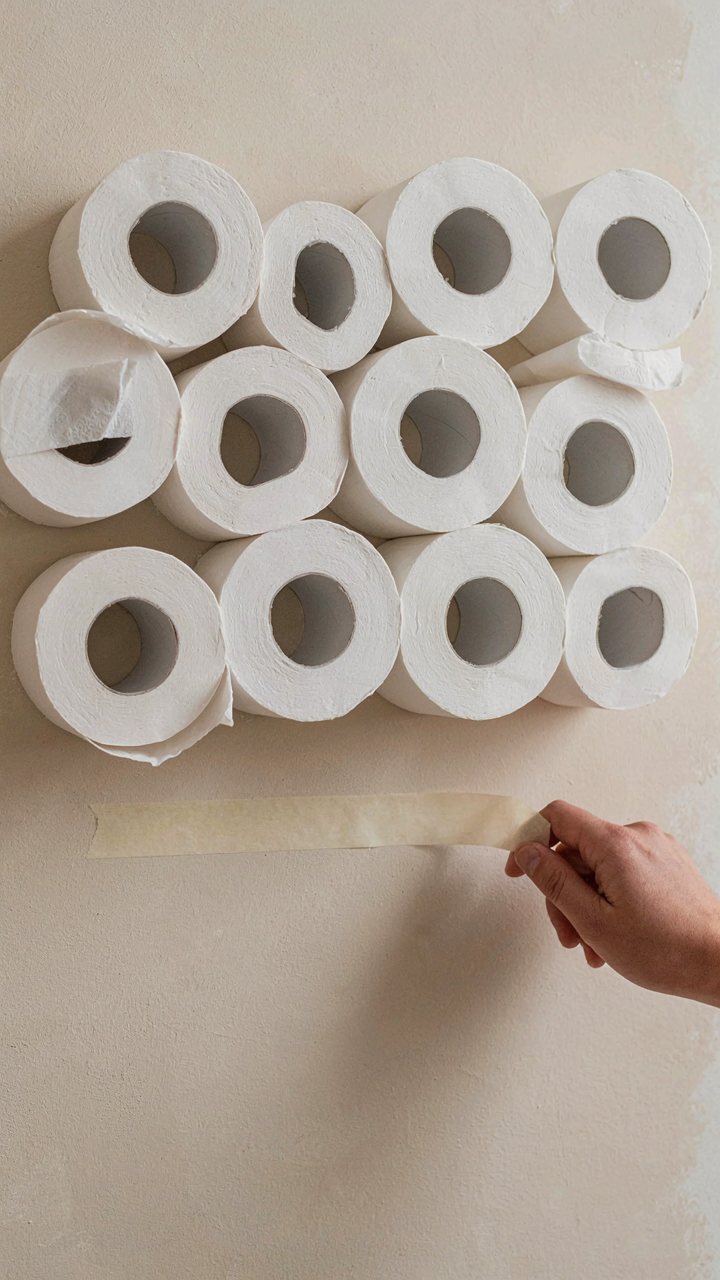
You’ve been trained to believe expensive equals valid. Gallery-quality means legitimate. That’s a scam. Toilet paper roll wall art works because it violates that permission structure. It makes you choose function over status. Today, grab ten rolls and tape them to your wall. Not to make art. To prove to yourself that you can. What matters isn’t the material you use—it’s your willingness to stop asking permission from people who don’t live in your space.