Beyond Hobbycraft: The Brutalist Aesthetics Of Recycled Can Crafts

The Unfinished Surface Holds More Value
You want permission to stop pretending imperfection is a flaw. Here’s the mechanism: tin can lanterns derive their visual weight from entropy. In thermodynamics, entropy measures disorder, and a recycled can’s dents, scratches, and patina represent time’s actual imprint on material. Mass-produced lanterns simulate this through artificial aging. Recycled cans don’t simulate anything. The surface tells a factual history you can’t manufacture. This authenticity triggers recognition in the viewer’s nervous system before conscious thought arrives.
The common advice says to sand and polish recycled cans until they gleam. Wrong move. Polishing erases the information that makes the object compelling. A can that held beans for three years carries texture that speaks louder than chrome. When light passes through holes punched in a weathered surface, the shadows don’t fall evenly. That irregularity is the point. The lantern becomes a document of use rather than a decoration pretending to be handmade.
Raw Material Speaks Louder Than Craft
Brutalism as a design movement rejected ornament entirely, favoring exposed structure and materiality. A tin can lantern operates on the same principle: the material itself is the design. You don’t need carved handles, decorative bands, or painted patterns. The can’s cylindrical form, the metal’s inherent reflectivity, and the way punctured holes create light patterns communicate everything necessary. Adding embellishment dilutes the signal. The best tin can lanterns use the can’s original branding or rust patterns as visual anchors, requiring zero additional styling.
When you position a weathered tin can as a light source, you’re not decorating. You’re revealing. The dents become geometry. The rust becomes color. The original label, if visible, becomes historical context. This approach costs nothing beyond the can itself and a nail to punch holes. The restraint is what separates a tin can lantern from amateur craft. Work only adds noise to what the material already communicates.
The Unseen Design Principles Of Homemade Lanterns Diy

Where Light Stops And Shadow Begins
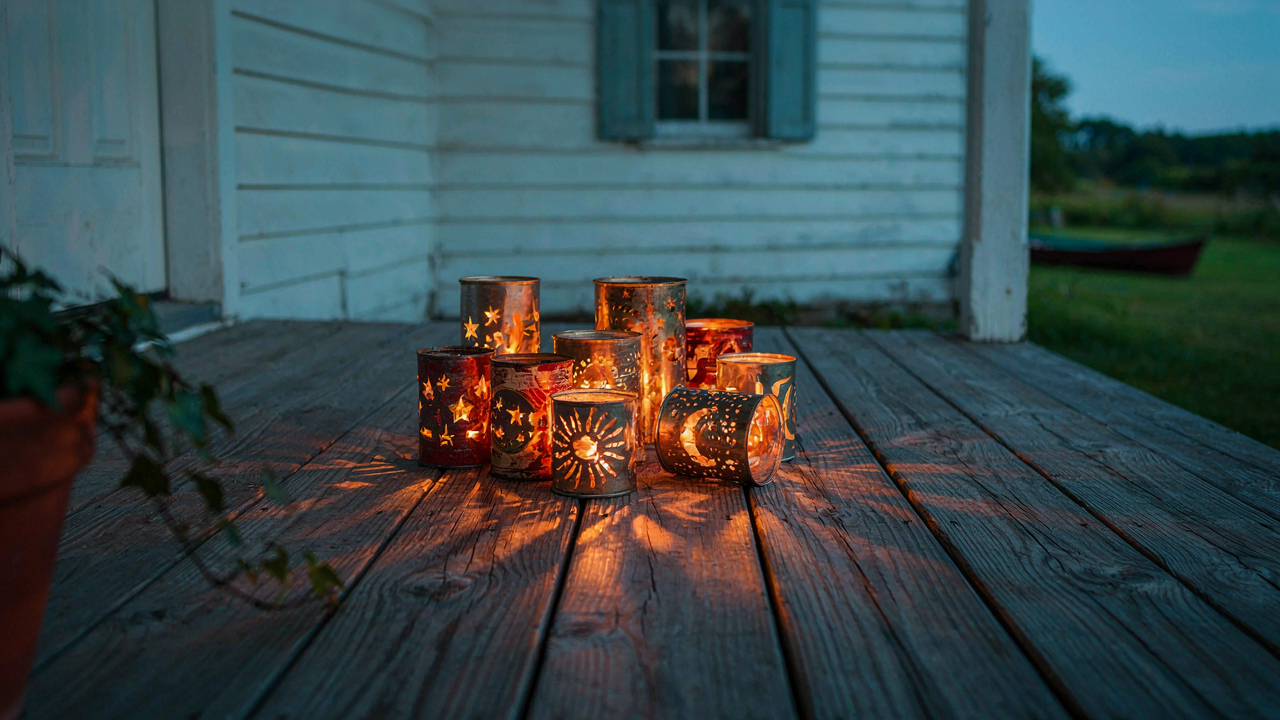
You want this to look intentional, not like you punched random holes in a can. That’s the real motive. Here’s what actually happens: negative space and shadow operate as graphic design elements, not accidents. When candlelight passes through perforations, it creates two visual layers simultaneously—the lit areas grab attention while the dark zones between them anchor the composition. Most DIY guides skip this entirely and just say “poke holes.” They’re wrong.

The shadow pattern you create on the surrounding surface matters more than the holes themselves. A tight cluster of small perforations produces a dense, almost textile-like shadow map. Spread them further apart and you get clear geometric shapes that read from ten feet away. The human eye tracks defined edges, so placement determines whether your lantern reads as intentional design or as damage. This is why spacing and diameter consistency directly control perceived quality.
How Metal Translates Light Into Pattern
Physics calls this diffraction and scattering—light bends and spreads as it passes through openings smaller than its wavelength. A tin can with perforations works like a pinhole camera in reverse: the metal becomes the aperture. A standard tea light produces roughly 12 lumens, but the can doesn’t just transmit that light straight through. The metal edges absorb some energy, scatter some sideways, and concentrate the rest into distinct hot spots on whatever surface faces the holes.
The thickness of the tin matters here. Standard food cans run 0.17 millimeters thick, which creates a narrow channel for light. Thicker metal widens this channel and softens the shadow edges—useful if you want ambiguity. Thinner tin produces sharper projections with higher contrast. A single-hole design at different distances from your light source shifts from a tight dot to a soft bloom. Position the candle three inches from the perforated surface for sharp patterns, six inches for diffusion.
Tin Can Lanterns DIY: An Exercise In Material Constraint

Work With What Stops You
You want this project to feel intentional, not cheap. That’s the real reason you’re reading this. Working with material constraints isn’t about poverty, it’s about economics: you extract maximum output from minimum input. A tin can has one job—hold liquid—but its cylindrical steel walls, heat tolerance, and structural rigidity make it hostile to light in specific ways. That hostility becomes your design problem. You punch holes in the can, and those holes become the variable. Their size, spacing, and pattern determine light diffusion, shadow quality, and whether your porch reads as thoughtful or abandoned.

The mechanism is simple: scarcity forces specificity. When you can’t buy ten different lantern styles, you solve for one thing extremely well. A standard tin can costs nothing. A drill bit costs less than a coffee. You’re not constrained by budget, you’re constrained by decision. That constraint kills the paralysis that kills most projects. You pick a hole pattern, execute it, light it. The can doesn’t apologize for being a can. That’s the entire appeal.
Limitations Become The Language
Everyone says constraints breed creativity. That’s lazy thinking and also true, but incomplete. Constraints don’t breed creativity, they breed clarity. The tin can lantern succeeds because it abandons the language of “ambient lighting” and speaks in the language of puncture. Light leaks through specific holes. Shadows land on specific spots on your porch. You can’t soften or diffuse or warm the light through material quality because there is no material quality. You have thin steel and air.
This forces you into geometric thinking. You’re not decorating, you’re programming light output through hole placement. A random scatter of punctures reads as chaotic. A grid reads as industrial. A spiral reads as intentional. Your limitations demand that you think like a designer instead of a consumer. That’s where the actual satisfaction lives. You’re not buying a lantern and placing it on a porch. You’re building a light-distribution system with a can and a drill.
The “Punched Light” Protocol: Mastering Tin Can Lights

Where Light Goes Dark And Pattern Emerges
You want this to look intentional, not like you stabbed a can with a nail in your garage. The real reason you care about hole placement is control—not over the light itself, but over where shadows land on the surfaces you’re trying to illuminate. Think of it as a projection problem, borrowed from optics: each hole functions as a point source, and the distance between holes determines whether your light scatters or concentrates. Close holes create diffuse ambient glow. Spaced holes create defined pools of light with defined dark zones between them.

The pattern you punch into the can dictates the entire mood. Vertical rows create linear light trails suitable for marking a walkway. Clustered patterns throw concentrated pools onto a specific object—a plant, a chair, a section of railing. Scattered randomness reads as accident. Deliberate spacing reads as design. The hole diameter matters less than consistency and intent. Punch all holes the same size in the same direction, and the light output stays predictable.
The Precision That Separates Intention From Accident
Most people skip the actual technique and wonder why their lanterns look sloppy. You need a center punch, a hammer, and a work surface that won’t move. A center punch—not a nail—creates a precise divot that stops the drill bit from skating across the curved surface of the can. Without this step, your holes wander and cluster accidentally instead of intentionally.
Use a hand drill or cordless drill set to low speed with a bit sized between 1/16 and 1/8 inch diameter. Drill from inside the can outward so metal burrs face inward, leaving smooth light-casting edges on the outside. Mark hole locations with a marker or pencil beforehand. A template made from paper wrapped around the can ensures pattern consistency across multiple lanterns. Sand any rough burrs after drilling to prevent snagging hands and to clean the light path.
Repurpose Tin Cans: Reclaiming Value From Discarded Waste
Why Buying New Is The Real Cost
You want to feel resourceful without actually changing your spending habits. That’s the mechanism here. Economics calls this substitution effect: when you buy a tin can lantern instead of a mass-produced fixture, you’re not reducing consumption—you’re just shifting where your money goes while keeping the same psychological reward. The real cost isn’t the lantern. It’s the decision to stop treating objects as disposable.

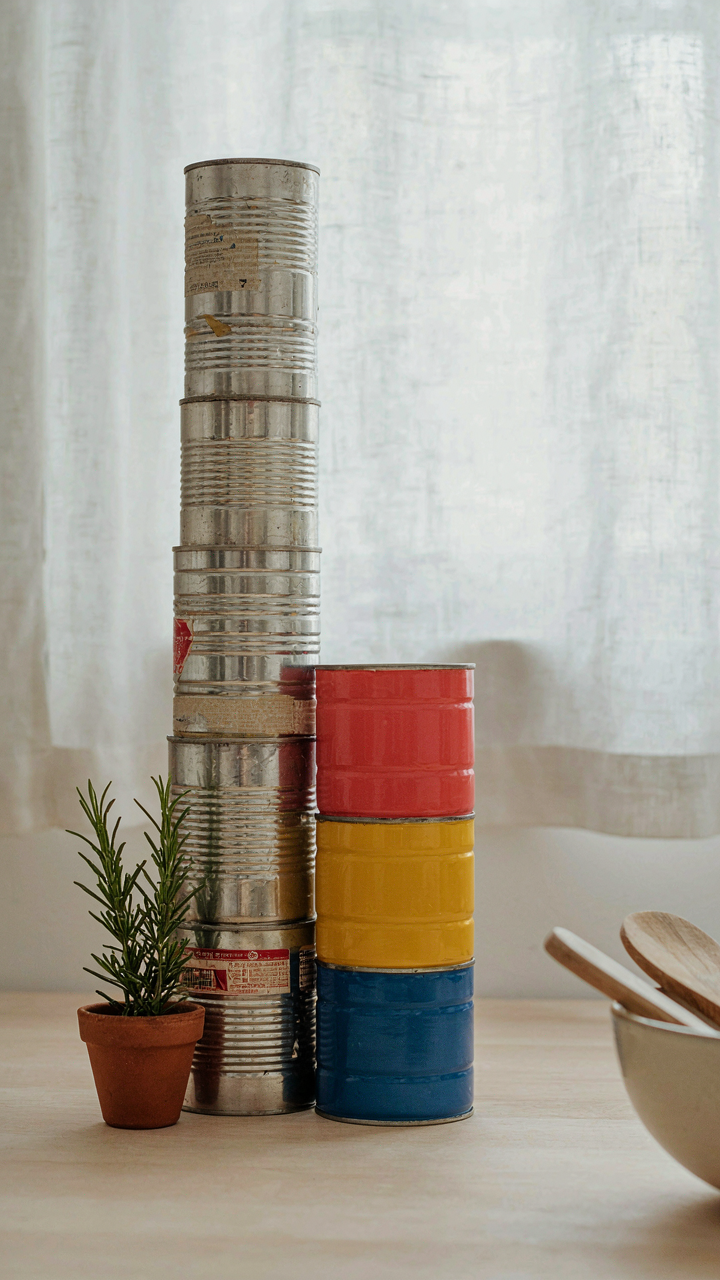
A tin can costs nothing because you already own it. The lantern that sits on your porch came from soup, beans, or tomatoes you consumed anyway. This reverses the default pattern where you buy a product, use it once, and replace it. With tin cans, you extract a second function from something already in your waste stream. No new purchase required. That’s not virtue signaling—that’s arithmetic.
The Math Of Linear Waste
Environmental impact lives in the supply chain, not the product itself. Manufacturing a commercial lantern involves extraction, molding, shipping, and packaging. A tin can already traveled that path for food. Reusing it means you skip the entire upstream cost and only pay for the labor of drilling holes and adding a candle. Single-use consumption assumes each product has one life. Tin cans prove that assumption wrong.
The lantern you make today from a discarded can prevents one purchase tomorrow. Repeat this action monthly and you’ve eliminated twelve retail transactions annually. No recycling line, no melting process, no new production. The can goes from your kitchen to your porch. That’s the mechanism: reuse eliminates the environmental footprint of creation entirely because the object already exists.
The Primitive Light Source: Unpacking The Allure Of A Tin Can Lantern
Why Enclosed Light Hits Different
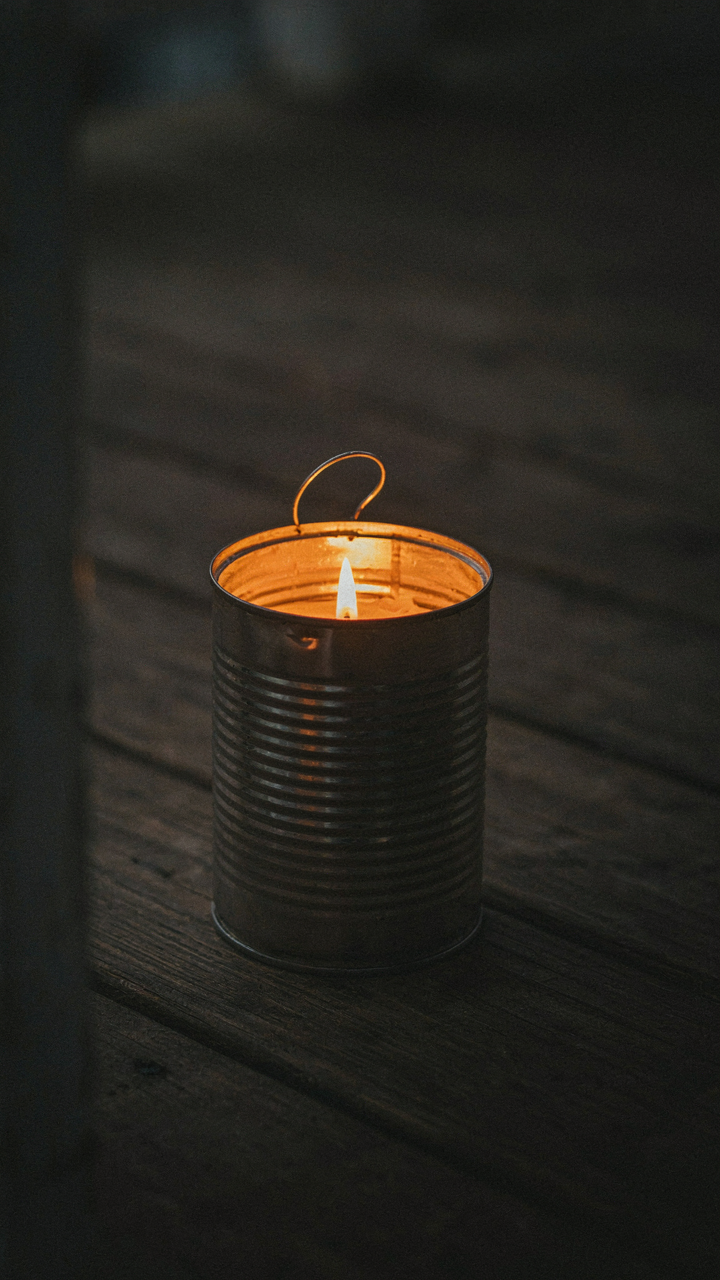
You want this because it signals you’ve opted out of the grid. That’s the real mechanism at play here. Borrowed from environmental psychology, tin can lanterns operate as a “bounded light source”—your eye perceives containment as safety. A bare flame reads as chaos. Fire trapped inside metal reads as control. The can’s walls create a defined perimeter your brain interprets as intentional design, not survival desperation. That distinction matters on a porch.

The physics is straightforward. Metal conducts and radiates heat outward while the interior surfaces reflect flame light in multiple directions. You get more usable illumination from a smaller fuel source than an open flame produces. Early miners understood this when they mounted candles in tin holders underground. The mechanism hasn’t changed. Your porch doesn’t need it to. What changed is that now you’re choosing constraint instead of having it forced on you.
Control Through Containment
Fire evolved humans into tool users. Enclosed fire evolved us into architects. A tin can lantern isn’t primitive because it’s simple—it’s primitive because it reduces fire to its essential variable: contained combustion in the presence of oxygen and fuel. You control the opening size, which controls airflow, which controls burn rate and heat output. Remove the can and you lose all three controls at once.
This is why gas lanterns with mantles eventually replaced open flames for outdoor use. But they’re also why tin can lanterns persisted in camping, military, and agricultural contexts. The mechanism is portable, replicable, and requires zero infrastructure. You punch holes, add fuel, add light source, and the system works. What you’re really paying for when you buy a “rustic” tin can lantern is permission to use something that actually functions on its own terms instead of apologizing for its simplicity.
Crafts With Cans: Building Resilience, Not Just Decor

Constraint Forces Innovation
You want to feel resourceful without actually being constrained. That’s the real draw here. Military logistics teaches a concept called “force multiplication”—doing more with less by removing waste. A tin can lantern does this literally: a vessel designed for one purpose becomes illumination through a single constraint: a nail pattern and a candle. No electricity required. No buying new fixtures. The constraint itself becomes the design.

This is why tin can lanterns matter beyond aesthetics. They train the mind to see materials as interchangeable solutions rather than single-use objects. A spent paint can, a bean tin, a coffee container—each holds the same potential. You begin noticing waste differently. The mechanism isn’t about being poor; it’s about recognizing that abundance often masks inefficiency. When you build with what you have, you stop accepting defaults.
Function Before Form
Most DIY porch lighting advice treats tin can lanterns as a rustic aesthetic choice. That’s backward. The real value is structural: a can provides wind protection that open flames don’t, extending burn time and controlling light spread. The perforated pattern isn’t decoration—it’s engineering. You punch holes to direct light where you need it while the metal container shields the flame from lateral wind. This is why candles in open air flicker and die, but candles inside punched metal burn stable.
The survivalist mindset doesn’t obsess over “looking tough.” It obsesses over systems that work when conditions fail. A tin can lantern requires zero infrastructure. No wiring. No bulbs to burn out. No cord to trip over on a dark porch. You make the light, you control the light, you replace the fuel. The process of building it teaches you how to maintain it. That’s the real resilience—not independence as fantasy, but independence as a repeatable skill.
The DIY Tin Can Manifesto: A Rejection Of Consumerist Decor
Cozy Is A Sales Job
You want permission to skip buying expensive outdoor lighting because it feels cheaper to make it yourself. Here’s the mechanism: “cozy” and “ambiance” aren’t design principles. They’re marketing terms engineered to make you feel inadequate without a product. Retailers package these feelings into $60 lanterns and string lights because the actual object doesn’t justify the price. The emotion does.

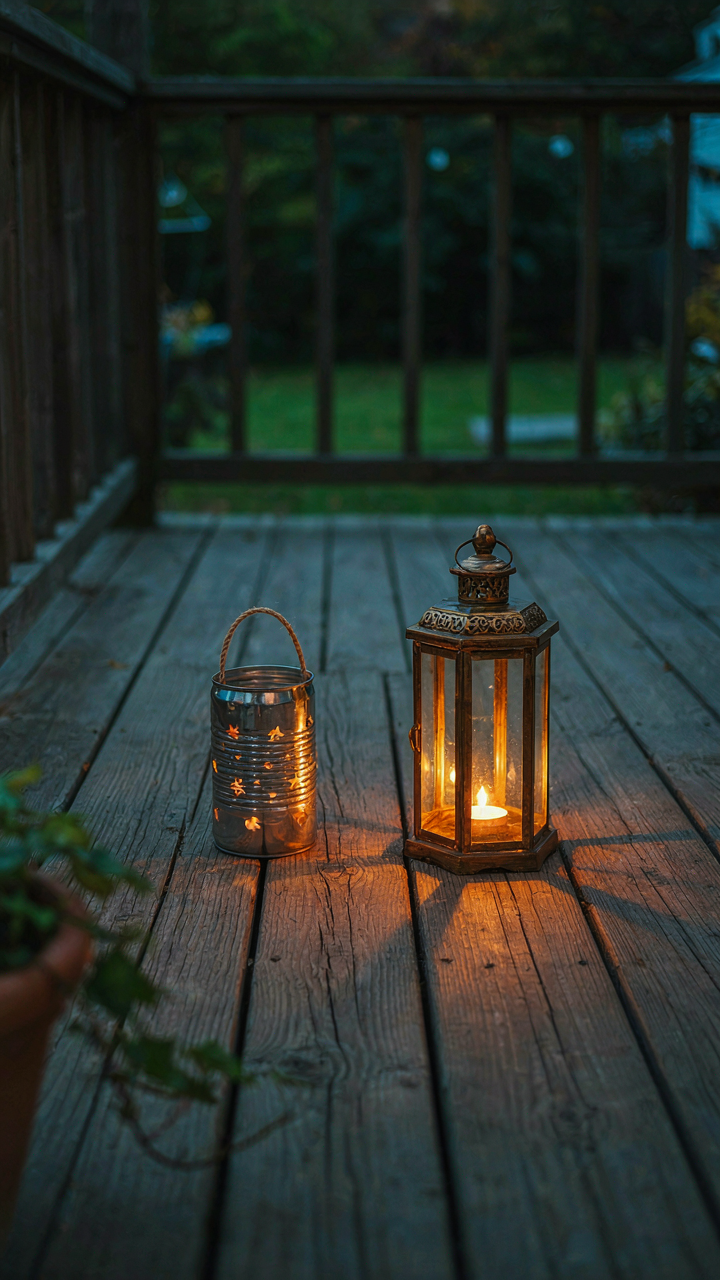
Tin can lanterns expose this fraud. A pierced can with a candle inside delivers identical light quality to a manufactured alternative costing ten times more. The difference isn’t functional. It’s that one came from a factory with a brand attached. Once you see this, you can’t unsee it. The lantern does one job: hold flame and cast light. It does that job well whether it cost you nothing or everything.
Make What You Actually Need
Building something yourself isn’t empowerment theater. It’s supply chain economics applied to your porch. Using economics terminology, you’re eliminating the middleman markup and the distribution chain’s inefficiency. A tin can lantern removes every layer between raw material and finished product. You compress months of manufacturing, shipping, and retail markup into one afternoon.
- Sourcing: Gather used tin cans from your kitchen or ask restaurants for food-service cans. Zero cost and immediate availability beats waiting for delivery.
- Piercing patterns: Mark designs with a marker, then punch holes with a nail and hammer. Precision isn’t required; asymmetrical patterns actually cast better light diffusion.
- Mounting options: Solder a wire handle to the can’s rim, or thread steel wire through pre-punched holes. Both methods are reversible and require no permanent modifications to your porch.
- Fuel source: Standard tea lights or votive candles burn 4-6 hours per fill. Keep extras stocked so you’re never dependent on retail availability during peak season.
- Weatherproofing: Coat finished cans with clear polyurethane or leave them raw to develop natural patina. Both protect against rust without compromising light output.
The real power is removing dependency. You no longer wait for sales. You no longer pay markups. You build what you need when you need it, then iterate based on what actually works on your specific porch, at your specific latitude, in your specific season. That’s the mechanism: self-sufficiency is faster than consumption.
Recycled Can Crafts: Beyond The Craft Store Industrial Complex

Where To Actually Find Materials
You want to feel resourceful without the friction of actual resourcefulness. Here’s the mechanism: supply chains create waste streams, and those waste streams sit in places you already visit. Economics calls this negative inventory cost—material with zero value to its current holder. Tin cans operate the same way. Restaurants discard cases daily. Food service operations generate thousands. Your own kitchen produces them weekly if you eat canned goods at all.

Skip the curated craft supply mythology. Get cans from restaurants, catering businesses, or institutional kitchens directly. Ask. Most give them away because disposal costs money. Coffee shops produce large cans. Beverage distributors have pallets. Food banks receive overstock. The sourcing step isn’t about hunting—it’s about knowing where the discard happens and asking before it hits the dumpster.
Finishing That Holds Up Through Seasons
The generic advice says paint and seal everything. That misses the actual durability problem: moisture infiltration at seams and the base, not the painted surface. Rust starts from the inside out when water pools. Use food-grade mineral oil or beeswax on the interior before any exterior work. This creates a vapor barrier that prevents capillary action drawing moisture into the can’s body. The exterior finish matters far less than internal protection.
For exterior durability, use enamel paint rated for metal. Two thin coats outperform one thick coat because thick application traps air pockets that fail under temperature cycling. After paint dries fully, seal the seams with clear silicone caulk where the base meets the wall. This single step stops the primary failure point. Install drainage holes at the base if the lantern holds anything wet. Let it cure three days before outdoor use.
The Cozy Trap: Rejecting Aspirational Decor For Raw, Intentional Light
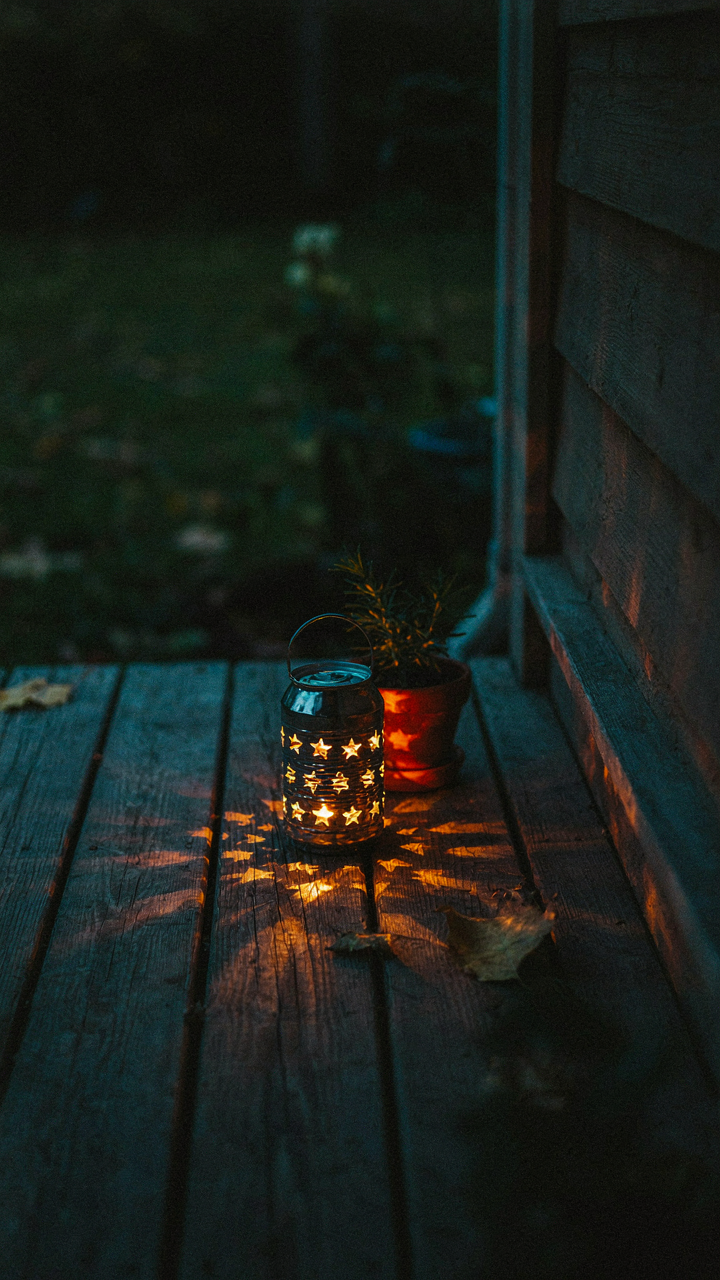
Most people buy tin can lanterns to look intentional. They buy the aesthetic without the actual shift. Real coziness isn’t about owning the right objects. It’s about choosing light that serves your life instead of your Instagram feed. Tonight, punch holes in a can, drop a candle inside, and sit with it. Notice what happens when you create something instead of consume it. Intentionality isn’t an Instagram caption. It’s a lit match in your hand.