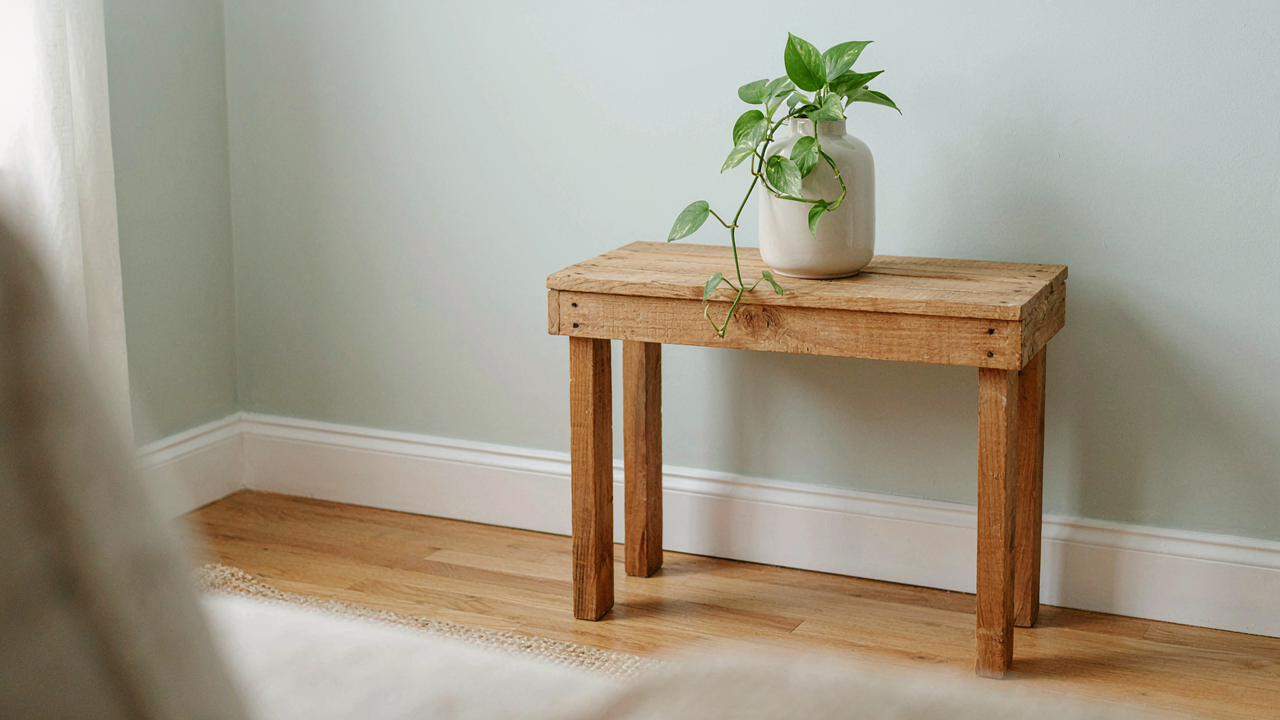
The Inconvenient Truth Of Rustic Interiors
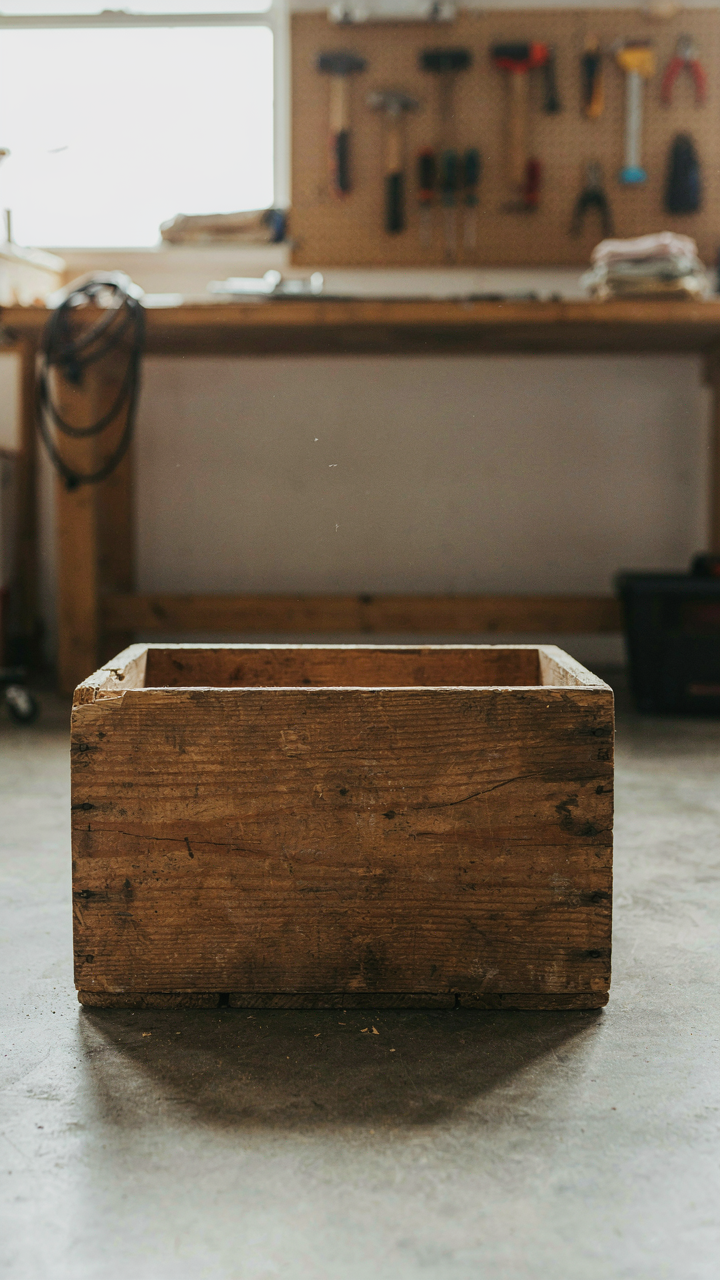
Resourcefulness Over Aesthetics
You want rustic to feel authentic because authenticity signals taste and depth. Here’s what nobody tells you: rustic isn’t a look you buy. It’s a constraint-driven decision-making process where material availability and function dictate form, not the other way around.
A wooden crate side table exists because someone needed a surface and had crates available. That’s the mechanism. The appeal comes from visibility of that trade-off, not from curated “rustic” styling. When you reverse this and start with “I want rustic,” you’ve already lost. You’re shopping for a feeling instead of solving a problem.
The Trap Of Manufactured Decay
Most advice tells you to hunt for authentic aged wood and distressed finishes. That’s backwards thinking. Manufactured distress is the opposite of rustic philosophy because it divorces the wear pattern from actual use history.
A wooden crate that’s genuinely weathered shows honest marks: stress fractures where weight compressed the wood, darkening from decades of outdoor storage, nail holes sized to actual fasteners used during loading. A factory-distressed crate shows random surface scratches designed to look generic. The difference is testable. Rustic works when the object’s damage tells a true story about how it was used, not when it matches a designer’s Pinterest board. Inspect grain direction, check nail placements against historical fastening practices, and verify wood species match what was actually shipped in crates during that era.
Wooden Crate Nightstand: Repurposing, Not Just Decorating
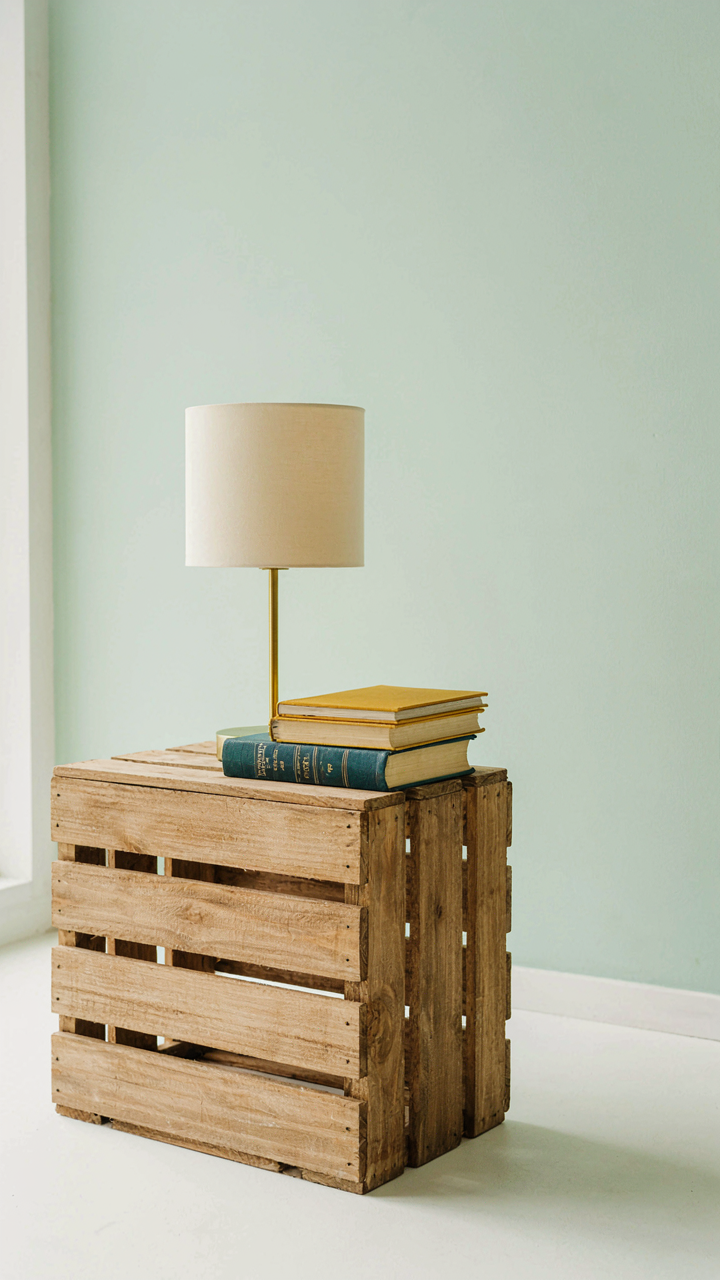
From Shipping To Statement
You want to feel resourceful without actually changing your consumption habits. Here’s what matters: wooden crates were engineered for load-bearing, not aesthetics. They moved cargo across continents for over a century, which means the wood was selected for density and the joinery for stress tolerance. That’s not decoration. That’s infrastructure you’re borrowing.
The original purpose of wooden crates reveals their actual value proposition. Manufacturers stacked these boxes with hundreds of pounds of goods inside. The wood didn’t crack. The joints didn’t separate. This wasn’t accidental durability. It was the result of selecting appropriate timber species and nailing patterns that distributed force efficiently across the structure.
The Honest Frame
Everything modern design tells you about “authenticity” is backward. What makes a crate work as a nightstand isn’t that it looks rough or industrial. It’s that the thing was never optimized for looking like anything. You’re not recontextualizing a failed object. You’re adopting an object that succeeded at being exactly what it was built for.
Most people soften crates with fabric or paint, destroying the mechanism that makes them functional. The load-bearing strength comes from how the wood meets at corners and how nails hold lateral stress. Modify that geometry and you’ve converted utility into decoration. Instead, sand the surfaces smooth, seal the wood, and mount it without altering the frame structure. The nightstand works because you kept the original engineering intact.
Beyond The “DIY Crate Table” Craze: Structural Integrity First

When A Crate Fails To Hold Weight
You want to build this because it looks cheap and intentional at the same time. Here’s what actually matters: a wooden crate side table is a load-bearing structure, and load-bearing structures fail when their materials can’t distribute force evenly across their base. Most crates ship goods, not human weight or stacked objects. The wood thickness, nail quality, and joint construction on a shipping crate differ fundamentally from what you need for furniture. Inspect before you commit money and time.
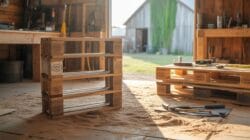
Start by examining the wood itself. Look for soft spots by pressing a fingernail into the edges and corners where moisture collects. Check if the wood grain splinters easily or if nails have rusted and weakened their hold. Original pallet crates often use thinner lumber than furniture-grade wood. If the wood sounds hollow when tapped, the cellular structure has deteriorated. If nails are exposed and loose, the crate is already failing. Don’t sand over problems and hope they disappear.
Locking Down Stability And Longevity
Reinforcement is not optional if you want this table to survive actual use. The real work happens at the joints where wood meets wood and fastener meets wood. Screws hold better than nails because they create friction along their entire shaft, not just at the tip. Add diagonal bracing on the underside to prevent racking, which is when a square base tilts into a parallelogram under lateral pressure. L-brackets on interior corners triple the rigidity of a standard crate construction.
- Cross-bracing with 2×2 lumber: Add diagonal supports on two opposite sides of the crate base to prevent the frame from shifting when weight shifts laterally or when someone leans on the table.
- Pocket hole joinery: Drill angled holes from inside faces, then countersink screws at the joints rather than relying on surface nails that pull through under stress.
- Corner gussets and L-brackets: Bolt metal reinforcement plates at all four interior corners where the vertical posts meet the horizontal base to absorb and distribute impact loads.
- Wood filler and epoxy on splits: Inject epoxy into existing cracks to lock wood fibers together before they separate further and compromise the joint.
- Threaded inserts for legs: If adding adjustable feet, use threaded inserts rather than wood screws directly into end grain, which will strip and fail within months.
Apply reinforcements before finishing. Sand the surface after you’ve locked down the structure, not before. This sequence prevents you from creating cosmetic improvements on a foundation that will eventually wobble or collapse. The difference between a table that survives five years and one that survives fifteen is whether you reinforce at the joints, not whether you stain it well.
The “Entropy Protocol” For Crate Furniture Design
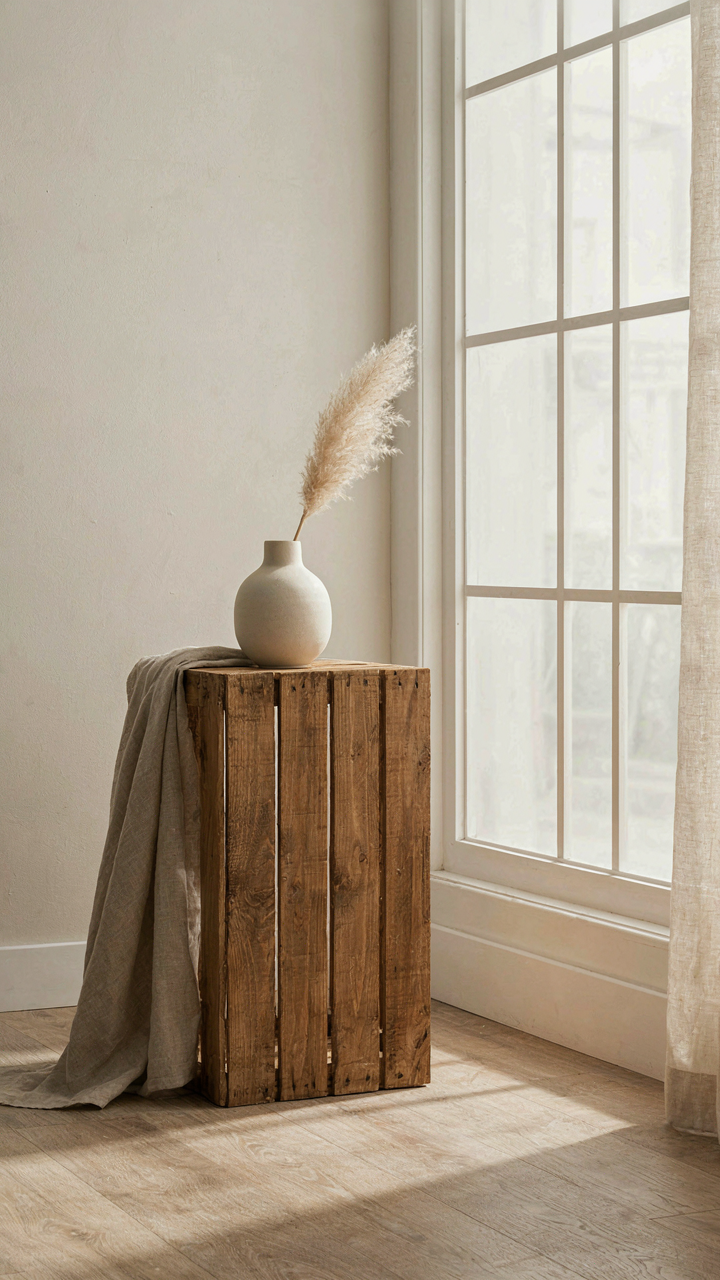
Material Decay Works For You, Not Against You
You want a wooden crate side table that looks intentional, not abandoned. The real mechanism here is thermodynamics applied to furniture: wood doesn’t degrade randomly. It follows predictable patterns of energy loss through exposure, use, and time. Borrowing from physics, entropy in wooden crate design means managing how materials shed their original state. A poorly sealed pine crate fractures and splinters. A properly finished one ages into character. The difference is material selection and surface treatment, not luck.

The common advice says “leave it rustic and raw.” That’s lazy. Raw wood invites fast degradation, moisture damage, and structural failure that reads as neglect, not design. Instead, apply a clear matte finish or linseed oil that lets the grain show while controlling how the wood weathers. This slows decay to a pace you control. The finish becomes the throttle on entropy itself.
Engineered Wear That Deepens Value
A wooden crate side table that gets softer and more fragile with age loses function and appeal. A wooden crate side table engineered for managed wear gains patina. The distinction matters tactically. Choose wood species with tight grain structure like reclaimed fir or pine that shows use as darkening and smoothing, not splintering. Apply finishes that darken under handling, making touch points visible over years. Reinforce stress points—corner joints, leg bases, load-bearing edges—before assembly, not after failure forces repair.
Distressing techniques most people use are cosmetic theater. They sand surfaces to fake age, then apply stain to fake darkening. Real wear happens through specific contact patterns. Design the table so handles occur where you want patina. Route edges slightly so they round naturally under hand contact rather than catching and fraying. Set fasteners deep enough that they stay tight through decades of movement. This turns normal use into visible evidence of function, which is the actual mechanism that makes old furniture valuable.
Crates As Bedside Tables: Function Over Form

Open Versus Enclosed Storage
You want the rustic look without admitting you need the extra storage space—that’s the real math here. The mechanism is simple: open crates expose everything, enclosed ones hide it. Open configurations use the crate’s internal structure as visible shelving, typically two to three horizontal divisions depending on crate dimensions. Enclosed models involve adding a wooden backing, door, or fabric panel. The trade-off isn’t aesthetic preference. It’s about what you actually reach for at night versus what you tolerate seeing every morning.

Open crates force daily confrontation with clutter. You see every book, phone charger, and half-empty water glass the moment you wake. Enclosed designs—adding plywood backing or a simple door—demand you commit to construction work upfront, but they buy you permission to be disorganized. Most people choose open because they’re cheaper and faster to assemble, then resent the visual noise within weeks. The real play is matching the configuration to your actual sleep-hour habits, not to what photographs well.
What Actually Belongs Within Arm’s Reach
The bedside table isn’t a catch-all shelf pretending to be organized. It’s an operational station for five to seven items maximum, selected by frequency of use at night and on waking. Common advice says put a lamp, book, and water glass there and call it minimal. That’s incomplete. You need to inventory the things you touch in the dark—your phone, glasses, medication, whatever your specific routine demands—and only those items earn placement.
A wooden crate’s size forces a hard constraint most people need. Standard crates measure roughly 14 to 16 inches on each side, which limits capacity by physics, not willpower. This is your real advantage. Load it beyond seven items and the crate fails as a bedside tool because you can’t locate anything without turning on a light. The protocol: place your crate, live with it for three nights, remove anything you didn’t touch after dark, and treat that remaining set as your permanent bedside inventory. Everything else migrates to a dresser or closet.
Rustic Crate Nightstand: The Unvarnished Truth About Finishes
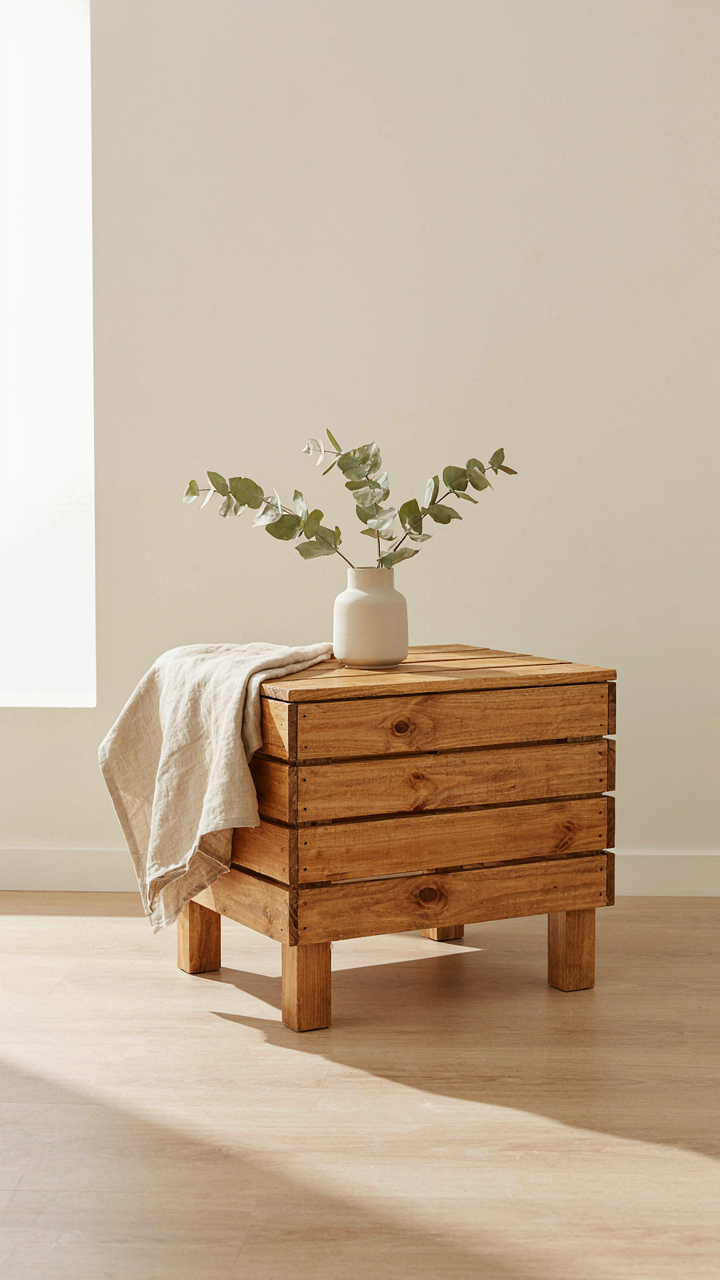
Let The Wood Speak For Itself
You want the finish to disappear so people focus on you instead of the table. That’s the real game. The mechanism is simple: raw wood signals authenticity because it demands nothing. It asks the viewer to accept imperfection, which reads as confidence. A wooden crate side table with no coating exposes grain variation, knots, and color shifts that factory furniture hides under polyurethane. These marks become proof the piece is real, not mass-produced.

The strategy here borrows from materials science: accept the substrate’s natural state rather than mask it. Leaving wood unfinished means accepting its cellular structure unchanged. Dust settles in the grain. The surface develops a patina from handling. This isn’t a flaw in execution. It’s the intended outcome. Your wooden crate side table becomes a record of use, not a sterile object frozen in time. That’s what rustic interiors actually sell.
Seal Without Staging
Everyone tells you to stain and polyurethane your wooden crate side table. That advice is wrong. A coat of stain flattens the visual complexity you started with. It makes cheap pine look intentionally cheap. The real move is a clear protective seal that hardens the wood surface without darkening it. Food-grade mineral oil, tung oil, or matte polyurethane all work. The goal is preservation, not transformation.
Apply one thin coat, wait the specified cure time, and stop. A wooden crate side table with a single seal layer protects against water rings and spills without visually overriding the wood’s original character. The seal sits on top of the grain rather than soaking in and altering tone. Reapply annually or after heavy use. This protocol keeps the piece functional without making it look refinished every six months. The wood changes slowly, naturally, in front of people who use it.
Bedside Table Box Crate Rustic: Integration With Existing Elements
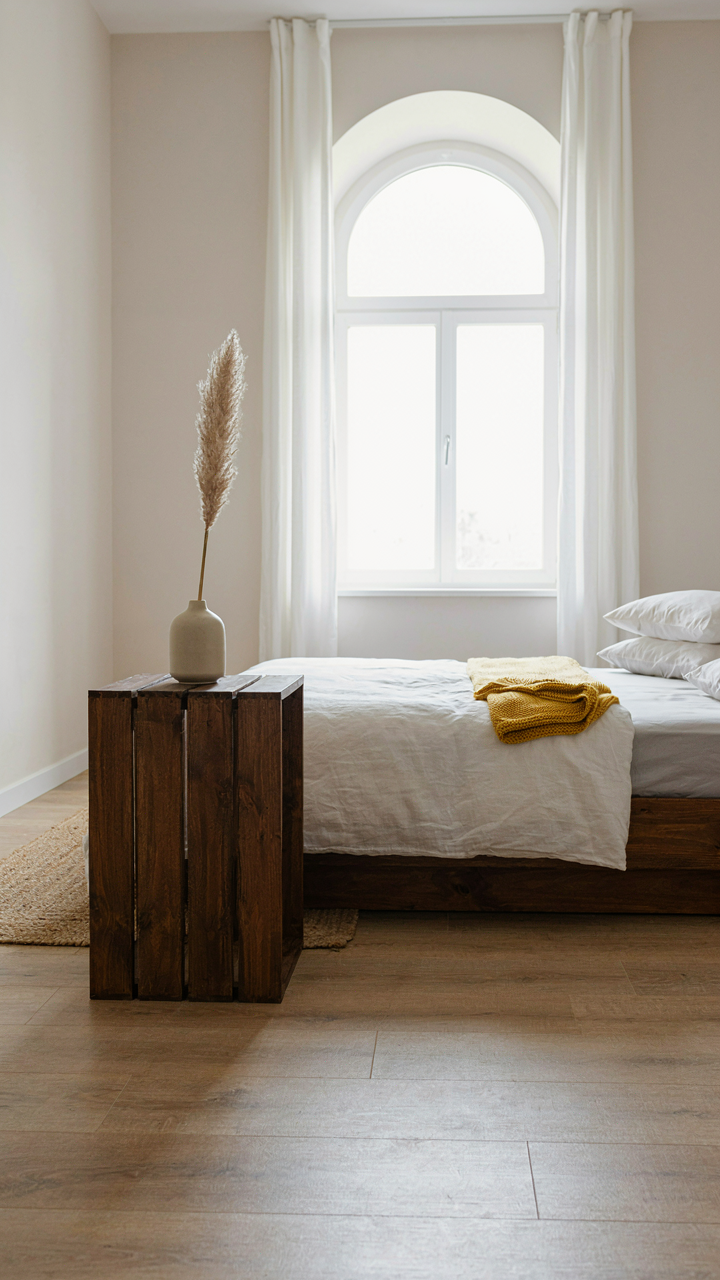
Matching Wood Tones Across Your Space
You want the crate to disappear into the room so nobody questions your design choices. That’s the real fear underneath this question. The mechanism is simple: wood absorbs and reflects light differently based on grain density, finish type, and age. A new pine crate next to reclaimed oak reads as a mismatch because the surface reflectivity doesn’t align. Match the crate’s finish to existing pieces first, not the color alone.

Stain and weathering are the control variables here. If your bed frame uses a dark walnut stain, apply the same stain to your crate. If your nightstand has a matte oil finish, use matte on the crate too. The wood species underneath matters far less than the surface treatment. Sand the crate to the same grit level as your other furniture before finishing. This creates visual continuity that reads as intentional, not accidental.
Pairing Rustic Wood With Clean Lines
Most design advice tells you to avoid mixing rustic and modern. It’s wrong. In visual hierarchy theory, contrast creates focal points. A wooden crate beside a platform bed with steel legs doesn’t clash if you understand that the crate becomes the texture anchor while the bed frame provides the geometric reference. The juxtaposition works because each element does one job clearly.
Position the crate so its rough edges or knots face outward as intentional texture against smooth, minimal surfaces. Use a solid color lamp or simple ceramic piece on top of the crate to reinforce the modern side of the equation. The crate stops reading as “chaotic rustic clutter” and starts reading as “deliberate textural contrast.” Pair it with one modern element per surface to establish the visual rule you’re setting.
Crate Side Table Bedroom: The Art Of Stacking And Arrangement
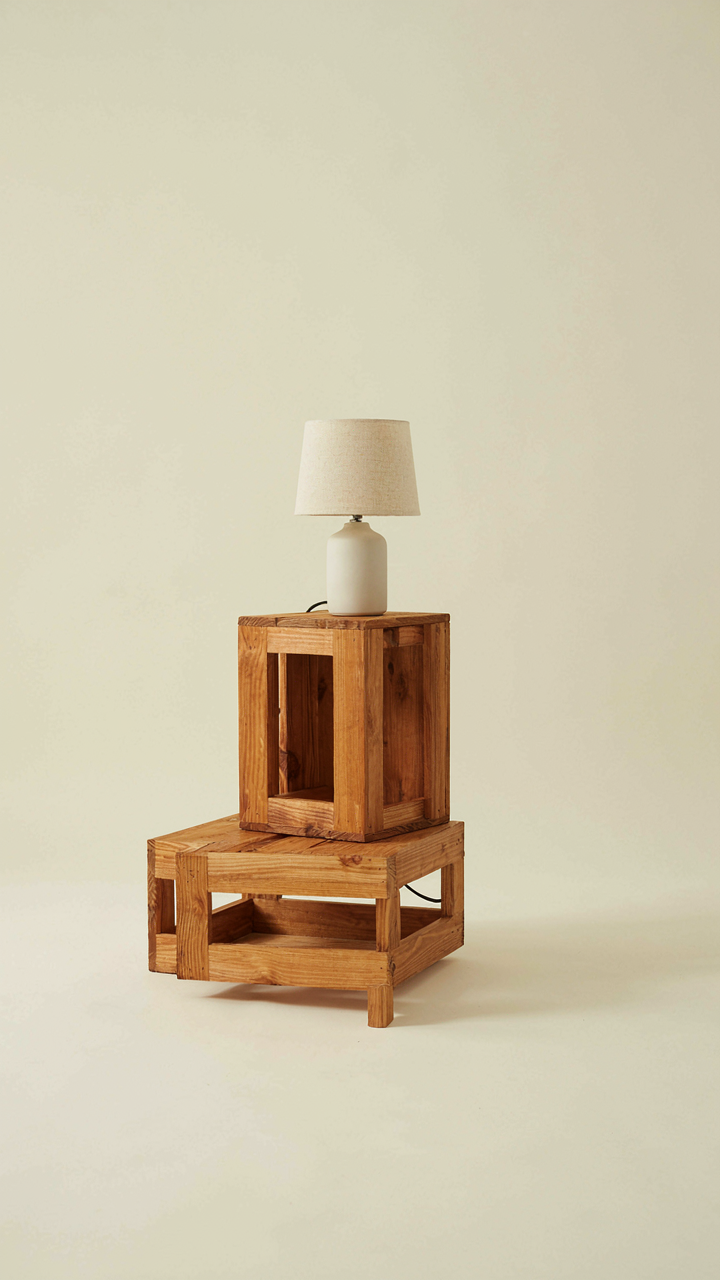
Modular Design Creates Varied Heights And Storage
You want this to look intentional instead of like you ran out of furniture budget. The real mechanism is borrowed from architecture: load-bearing walls. Each crate in a vertical stack functions as a load-bearing unit, and the arrangement determines both visual weight distribution and actual functional capacity. Stack strategically and you create usable storage at multiple heights without needing separate pieces.
Stacking crates vertically or at angles shifts the table from static object to sculptural element. A single crate feels incomplete. Two crates offset creates visual interest and solves the depth problem most bedside tables have. Three crates stacked introduces genuine storage while maintaining the rustic appearance. The height variation you create becomes the design feature itself, not an afterthought.
Anchoring And Stability For Stacked Configurations
This is where most people fail. They assume wooden crates just lock together through gravity alone and wonder why the stack shifts when they set a lamp down. Stacking requires deliberate mechanical connection, not faith. Use L-brackets, corner braces, or wooden dowels drilled through adjacent crate frames to create actual structural integrity.
- L-Brackets On Interior Corners: Mount galvanized or matte black L-brackets on the inside corners where crates meet. Use wood screws into the frame. This prevents horizontal sliding and resists the lateral force of daily use.
- Wooden Dowels Through Frames: Drill matching holes through stacked crate sides and insert 5/8-inch wooden dowels. This distributes vertical load across multiple points instead of concentrating stress on corner joints alone.
- Base Platform Weight: Place the bottom crate on a solid wooden platform slightly larger than the crate footprint. This lowers the center of gravity and prevents tipping from uneven weight distribution on the top surface.
- Wall Anchoring For Tall Stacks: If stacking more than three crates, secure the back frame to the bedroom wall with a single heavy-duty bracket. Prevents forward tipping when drawers open or when leaning weight applies.
- Shims For Level Surfaces: Check the stack with a level after assembly. Insert wooden shims under the base crate where floor irregularities exist. Uneven bases guarantee eventual shifting and eventual failure.
The stability question separates working tables from frustrating pieces you eventually move to storage. A properly anchored stack holds lamps, phones, and daily contact without movement. Test by pressing down hard on the top corner from different angles before final placement. If you feel play, the connections aren’t tight enough yet.
Wooden Crates Nightstand: Avoiding The “Craft Fair” Aesthetic
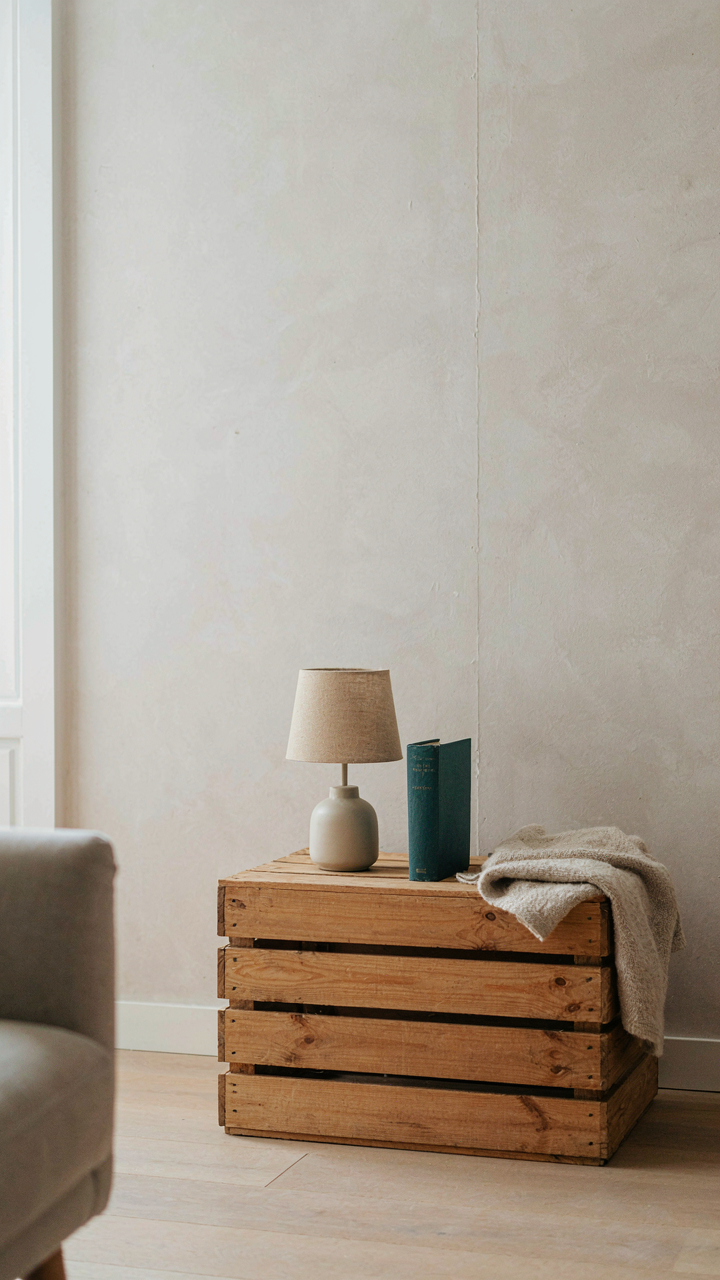
Character Over Novelty
You’re worried people will see your wooden crate nightstand and think you’re trying too hard—that it reads as a Pinterest project instead of an intentional design choice. The mechanism is simple: authenticity lives in restraint, not in maximizing the crate’s “rustic” qualities. Most people do the opposite. They sand the crate smooth, stain it a trendy color, add rope handles, slap on vintage hardware, and call it done. They’ve added so many signals of “rusticness” that the object screams desperation. Real character emerges when you stop decorating the crate and start using it as a functional foundation.

The crate itself needs to disappear into the room. Leave the wood untreated or use a single, matte finish that matches your existing palette. Pair it with a simple lamp, a single book, maybe a small object you actually use. The nightstand shouldn’t perform being rustic—it should perform being useful. This requires removing options, not adding them. If your wooden crate nightstand looks designed rather than salvaged, you’ve failed the test.
Materiality Over Messaging
Industrial design teaches us about the concept of “honest materials”—showing what a thing actually is, not what you want people to think it is. Your wooden crate either is wood aged by time or it isn’t. Staining, distressing, or aging it artificially sends a false message that undermines trust in the object itself. Buyers notice the difference between a reclaimed pallet and a newly milled crate treated to look old. The dishonesty compounds.
A wooden crate nightstand that lasts through trend cycles is one that you’ll still want in five years because its material integrity remains unchanged. Choose wood species that improve with age and light exposure. Keep finishes minimal. Avoid anything that requires maintenance or looks dated once the current design moment passes. Your crate’s worth isn’t in how “authentic” it appears—it’s in whether the materials genuinely support function and survive use without demanding attention.
The True Value Proposition Of Crate Side Tables
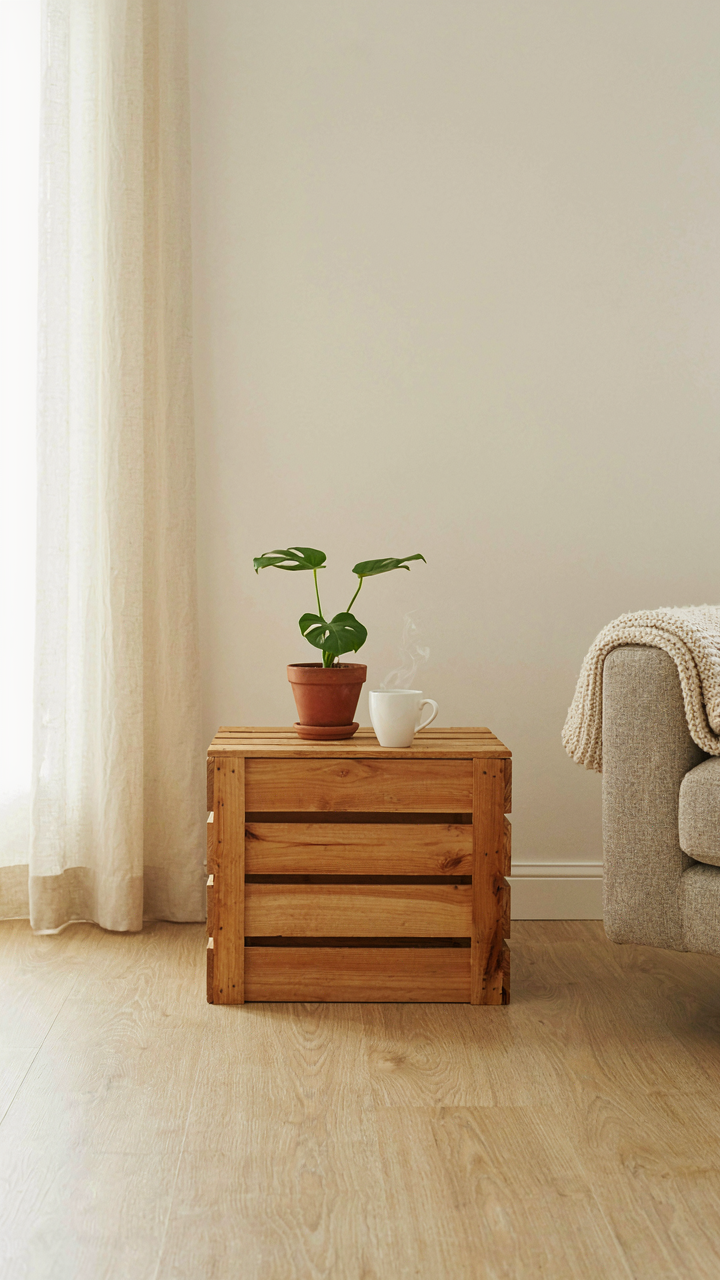
When Budget Isn’t The Real Issue
You want permission to buy cheap furniture without feeling like you’re settling. That’s the real motive here. Borrowing from economics, a crate side table operates as a Giffen good in reverse: as the price drops, perceived value shouldn’t collapse, yet it does in most minds. The mechanism is simple. Cost-effectiveness means you get functional storage and surface area for 30 to 80 dollars. Perceived cheapness is a status signal your brain attached to that price tag. They’re not the same thing.
A solid wood crate holds weight, sits level, and serves its purpose identically whether you assembled it yourself or paid a designer 400 dollars for the “concept.” The materials perform. The construction works. What changed is only the price and the story you tell yourself about owning it. This matters because rustic interiors explicitly embrace repurposing and rough finishes. Spending less in this aesthetic isn’t a compromise; it’s alignment with the design’s actual values. Strip the narrative, and you’re left with a piece of furniture doing exactly what you need.
Material Cycles And Actual Environmental Math
Sustainability claims are lazy without mechanism. When you repurpose a wooden crate, you remove a material from the waste stream and reset its use cycle instead of sending it to decomposition or incineration. That’s the environmental math at work. A new side table manufactured overseas, shipped in bulk, and assembled at retail requires extraction, processing, transportation, and packaging. A reclaimed or repurposed crate skips most of that pipeline.
Wood itself is a renewable resource when sourced from managed forests, but the energy cost of manufacturing, finishing, and logistics is where most environmental damage happens. A crate side table cuts that overhead dramatically. The durability question matters too: if the piece lasts five years versus fifteen, the per-year environmental cost inverts completely. This isn’t about feeling virtuous; it’s about reducing actual material throughput. When you buy or build a crate table, you’re lowering the total energy expenditure of your furniture footprint, which means measuring impact per month of use, not per purchase event.
Your Design Challenge Isn’t About Rustic Looks; It’s About Confronting Your Aversion To True Material Honesty
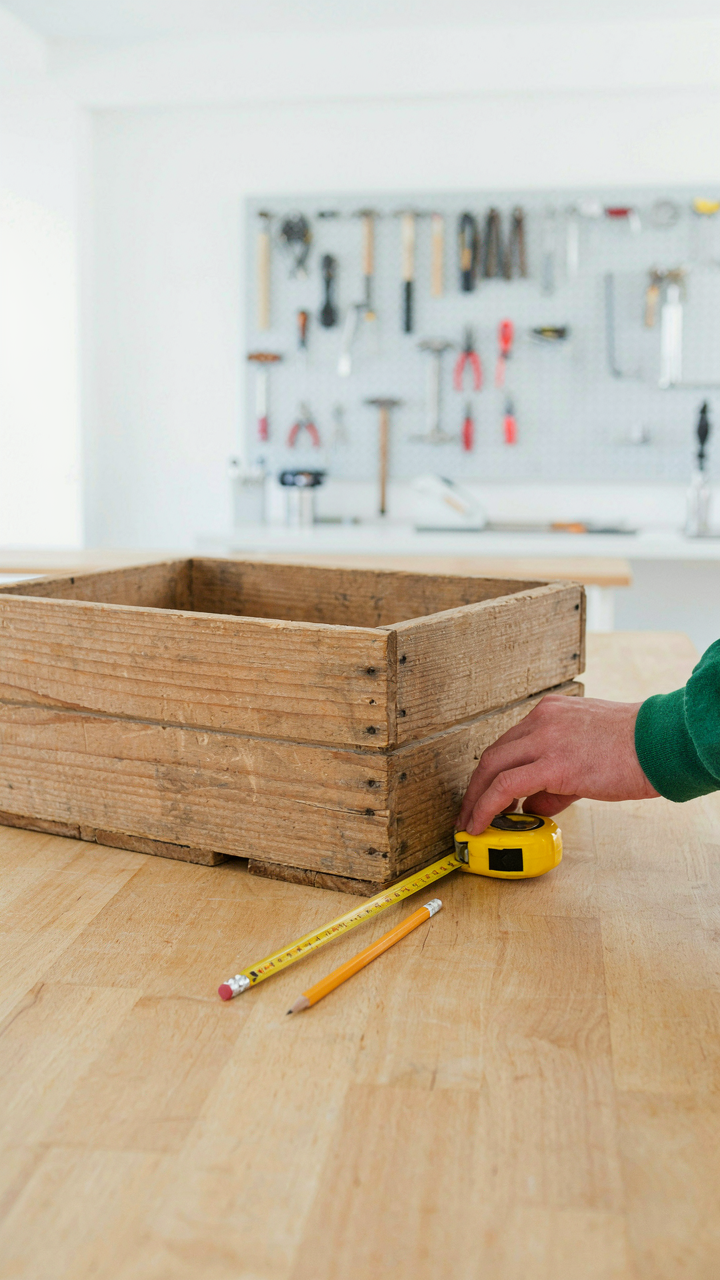
Most people buy a wooden crate side table because they like how it looks. That’s backwards. You buy one because you’re finally willing to live with something real. No veneer. No pretense. Just wood that shows its age and joints that tell a story. Stop designing around what Instagram tells you rustic means. Go find an actual crate today, measure your space, and commit to it without apologizing. The gap between wanting authenticity and actually living it is where most people quit, but that’s where real interiors get built.