The Mason Jar Storage Fallacy: More Jars, More Problems

Accumulation Without System Collapses Fast
You want the visual satisfaction of an organized space without admitting you’re buying jars to feel in control. Here’s the mechanism: mason jars are cheap and aesthetically neutral, so they become a default solution for anything you can’t categorize. Without a defined system before you buy, you accumulate containers faster than you fill them with purpose.
Most people stack jars by size or fill them randomly based on whatever’s lying around. This creates chaos disguised as organization. You end up with half-full jars of dried goods you forgot about, duplicates of the same item in different jars, and a cabinet that looks full but wastes space. The jar itself becomes clutter when it doesn’t serve a specific function tied to how you actually work.
The Real Cost Of Unclear Storage Logic
Economics calls this “hidden cost”—expenses you don’t see on the price tag. With mason jars, the hidden cost is time spent searching, duplicating purchases, and reorganizing when your system fails. You lose track of inventory because jars hide their contents. You buy dried pasta again because you couldn’t see the half-full jar in the back. You waste shelf space with jars sized wrong for what you store.
The damage compounds when you combine unclear labeling with unclear categories. A jar labeled “spices” tells you nothing. A jar labeled “cumin” that sits next to five other spice jars creates a lookup problem every time you cook. Each decision deferred becomes a small tax on your attention. The solution requires deciding what you store and why before the first jar arrives on the shelf.
The Workflow First Mason Jar Protocol

Map Your Actual Process, Not Your Aspirational One
You want mason jars to make you look organized. That’s the real reason you’re reading this. But storage fails because people design systems around how they wish they worked, not how they actually work. The mechanism here is workflow mapping from industrial engineering: you identify each step in your process, then position storage at the friction point where it prevents backtracking.

In your kitchen, this means watching yourself cook for three days. Where do you reach first? Where do you stop mid-task because you can’t find something? That’s where a mason jar cluster belongs. In a craft room, the same principle applies. Your storage layout should match your actual hand movements and decision points, not some Pinterest vision of symmetry. Place jars where they intercept the work, not where they look balanced on a shelf.
Anchor Jars To Recurring Decision Points
Storage doesn’t stick unless it interrupts habit with friction that feels good. This is behavioral design: you remove the cost of the desired action below the cost of the alternative. If you store baking staples in mason jars on the counter where you mix, reaching for them becomes cheaper than opening cabinets. The system works only when the jar location saves time compared to your old method.
In craft rooms, this means positioning jars at the entry point of your workflow. Buttons, beads, thread spools, and fabric scraps should sit at arm level where you begin assembling, not stored three steps away. Your daily habits reshape themselves around proximity, not willpower. The protocol: identify your three most frequent tasks in each space, place mason jar clusters within two feet of where those tasks start, then use them consistently for two weeks until they become automatic.
Beyond Pinterest: Functional Jar Storage Ideas

The Wall Stack That Actually Works
You want proof your storage system is smart. That’s the real reason you’re reading this. Here’s what matters: vertical storage isn’t about aesthetics. It’s about density. Economics calls this square footage optimization. You’re extracting maximum utility from limited wall space. Two jars on a shelf occupy the same footprint as ten jars in a vertical wall-mounted grid. The mechanism is simple: mount shallow shelves or pegboard strips at arm height, then stagger jar sizes so nothing blocks access. Small jars front, medium in the middle, large in back. This eliminates the reach-and-shuffle that wastes five minutes every time you need something.
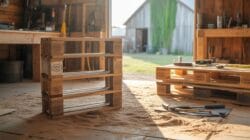
Most people fill shelves randomly and call it organized. Wrong. A functional wall stack requires intentional placement based on frequency of use and jar weight. Heavy jars with dense contents belong on lower shelves. Lightweight craft supplies go higher. Your most-used items sit between shoulder and waist height. This positioning reduces decision time and prevents wasted movement. Mount your wall system so the middle shelf aligns with your outstretched arm. Measure twice, drill once.
The Label System That Sticks
Labeling systems fail because people treat them as decoration instead of information architecture. This is backwards. A label’s only job is to eliminate the moment you stand in front of your jars asking what’s inside. Use a consistent naming convention: category first, then specific item, then date. For craft supplies, write “Thread Embroidery Red Silk 2024.” For kitchen pantry, write “Flour All Purpose 2024.” The date matters because it flags what you actually use. After six months, patterns emerge. You’ll stop buying items that never get touched.
Print labels on a thermal label maker or write them in permanent marker on masking tape. The tool doesn’t matter. Consistency does. Every label goes in the same spot on every jar, at the same angle. This removes micro-decisions your brain makes each time you scan. Your eye knows exactly where to look. Update labels when contents change. A jar that stored buttons last month might hold screws this month. The label must reflect current reality, not historical contents. When you grab a jar, you should know its contents without opening it.
Large Mason Jars: The ‘Bulk Storage’ Delusion
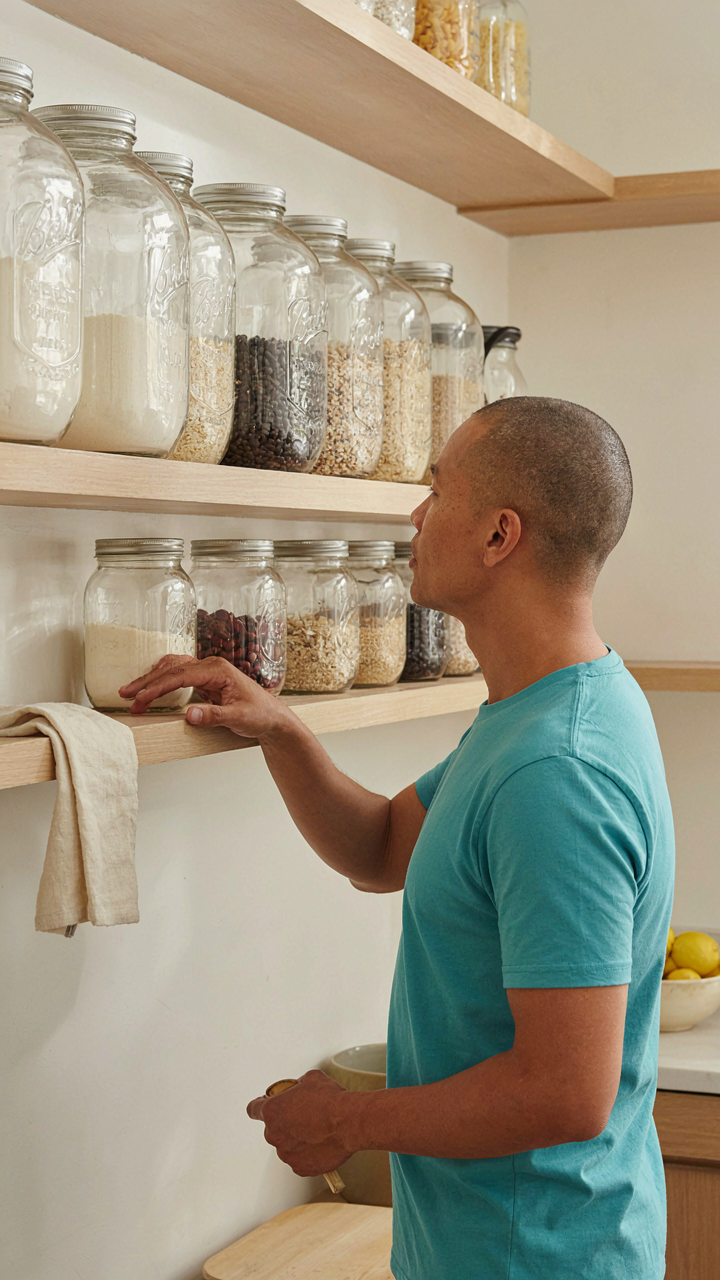
When Large Jars Create More Clutter
You want to feel like you have your life organized, and large mason jars promise exactly that: one container instead of five. But here’s the mechanism nobody states: bulk storage only works when the item actually moves. Large jars occupy shelf real estate at a cost. If you’re storing flour you use weekly, that’s rational. If you’re storing something you touch twice a year, you’ve just created expensive decoration that blocks access to things that matter.

The real problem is surface area mathematics. A single large jar takes up the same footprint as two medium jars but holds three times the content. This sounds efficient until you need to retrieve the middle item without disturbing everything else. Large jars also impose a visibility tax: you can’t scan the contents at a glance the way you can with smaller containers stacked in rows. You end up opening the jar to check what’s inside, defeating the organizational purpose.
Strategic Use Of Large Mason Jars For High Volume Items
Large mason jars earn their place only when you meet three conditions: high turnover, single-item storage, and actual volume savings over your current method. This is inventory management principle applied directly. You stock large when demand is predictable and consistent. Bulk pasta, rice, or pet food in large jars makes sense because you use it steadily and refill on schedule. Herbs, spices, or craft supplies you dip into monthly do not qualify.
The protocol is simple. Identify items you purchase in bulk and consume within three months. Calculate the jar cost against traditional packaging waste. Label clearly with contents and purchase date. Store large jars on lower shelves where they won’t topple, and only fill them when the previous batch is half-empty. This prevents long-term storage of forgotten items that turn stale or lose potency.
The Kaizen Of Mason Jar Organization

Continuous Improvement In Jar Systems
You want this section to work because you’re tired of jar chaos and need permission to believe it matters. Here’s the mechanism: Kaizen is a Japanese manufacturing principle that treats systems as perpetually incomplete. You apply it to mason jar storage by abandoning the idea that one setup solves the problem forever. Instead, you run small experiments. Store spices one way for a month. Notice friction points. Adjust. Repeat. This isn’t motivation theater. It’s structural learning built into your workflow.

The common advice says organize once and you’re done. That’s incomplete. Your needs shift. Seasons change. You acquire new jars or repurpose old ones. Kaizen embeds adaptation directly into the system so you don’t default back to chaos. Spend fifteen minutes every six weeks auditing your jars. Ask one question: what am I reaching for less? What position wastes motion? Move one category. Document the result mentally. The system compounds because you’re not fighting against entropy. You’re steering with it.
Regular Audits And Intentional Repurposing
Audits fail because people treat them as guilt sessions, not data collection. The mechanism is simple: you can’t optimize what you don’t measure. Pick one category of jars monthly. Count them. Examine what’s actually in each one. Discard anything expired, dried out, or forgotten. Note which jars sit untouched for weeks. These tell you something. Either the item doesn’t belong in your workflow, the jar placement is wrong, or you don’t need that volume. Mark one jar for repurposing immediately. Move it to a different room or function.
Repurposing isn’t sentiment. It’s triage. A quart jar holding three tablespoons of something is a failure of calibration, not evidence of virtue. Replace it with a smaller vessel or consolidate multiple near-empty jars into one. The freed jars move to craft storage, travel containers, or gifting. Every six months, sell or donate jars that no longer fit your actual system. This forces you to acknowledge what you genuinely use versus what you keep for theoretical future projects. Your storage improves because you remove false options, not because you buy more containers.
Empty Mason Jar Storage Ideas: The Inventory Problem

Why Empty Jars Matter More Than You Think
You’re storing empty jars because you hate waste and want to feel resourceful. The real mechanism is simpler: empty jars represent trapped capital sitting on a shelf. Borrowing from inventory management, your empty jars are dead stock. They occupy space without generating value until deployed. Most people treat them as clutter instead of a working asset. The difference between hoarding jars and managing them is intentionality. You need a system that makes empty jars useful on demand, not just available someday.

Empty jar accumulation happens fast because buying pre-filled is cheaper per unit than buying blanks. People keep them by default rather than deciding their actual utility. The real cost isn’t shelf space, it’s the mental friction of not knowing what you have. When you need a jar, you either waste time searching or buy a new one, defeating the purpose entirely. The solution is visibility and defined capacity limits, not more storage.
The Buffer Stock Approach
Buffer stock is an economics term for inventory held to absorb unexpected demand fluctuations. Applied here, it means keeping a calculated number of clean, dry empty jars on hand for actual use cases. Most advice says “save all jars” which creates clutter. Instead, count backwards from your real needs. How many jars do you actually use per month for storage, gifting, or projects? Double that number. That’s your buffer stock target.
- Pantry reserves: Keep 4-6 quart jars for dried goods rotation. Calculate based on how often you replenish staples like grains or legumes.
- Craft project backlog: Store 3-5 small jars if you do regular DIY work. Empty jars expire in usefulness if you don’t craft monthly.
- Gifting inventory: Maintain 2-3 decorated jars if you give homemade goods. Track what sizes recipients actually want before holding backups.
- Seasonal cycling: Keep 2-4 jars for seasonal tasks only. Pickle jars in late summer, herb storage jars in spring. Purge the rest after season.
- Specialty sizes: Reserve 1-2 wide-mouth and 1-2 narrow-mouth jars as spares. Specialty sizes clog systems faster than standard quarts.
Set a hard ceiling: calculate your buffer stock number and donate or recycle jars beyond it immediately. Store your buffer stock in one designated container or cabinet section so you see the actual count. When you pull a jar for use, you replace it within two weeks or downsize your buffer. This prevents the slow drift back into hoarding. Track your buffer stock like inventory, not like sentiment.
Home Canning Organization Ideas: The Production Line
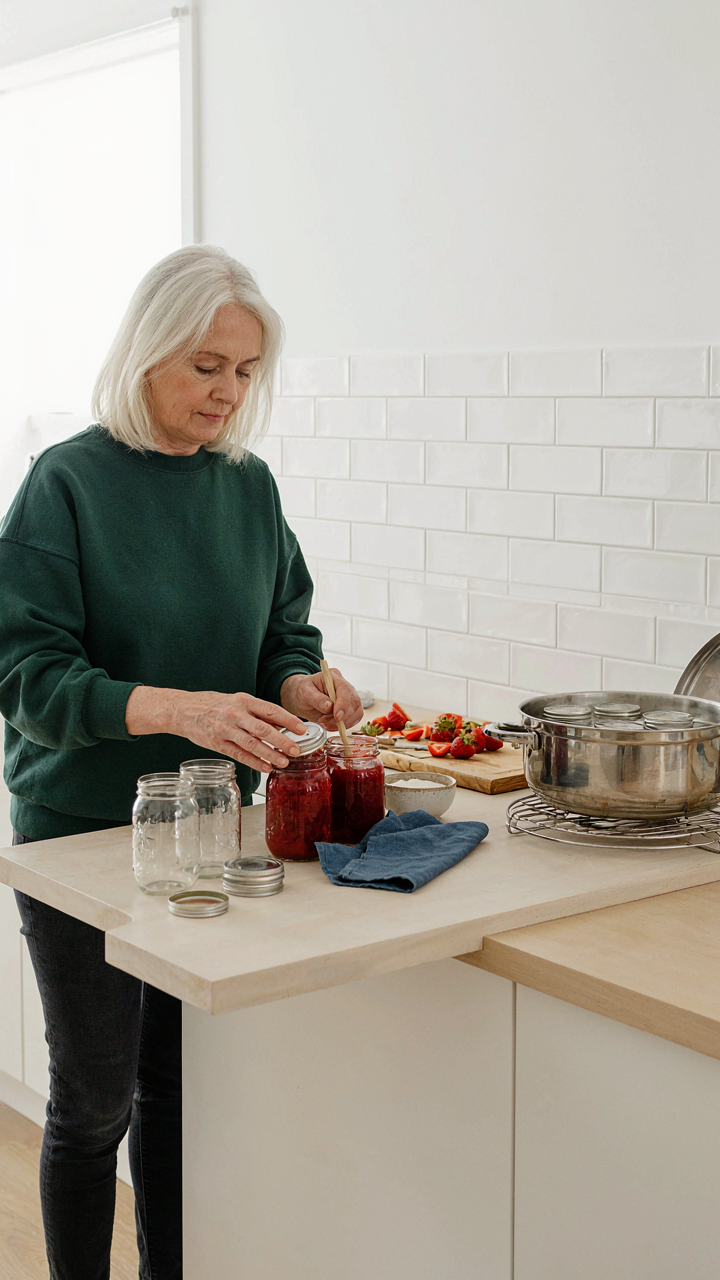
Batching And Sequencing Work
You want to feel organized so you can Instagram it later. But the real win is cutting wasted motion. Manufacturing borrowed the term “batch processing” to describe grouping identical tasks together instead of switching between them constantly. Apply this to canning: prep all your jars at once, then all your lids, then all your fill work. Never prep one jar, fill one jar, process one jar. The cognitive load of task-switching kills throughput and introduces errors.

Group work by the jar itself as the unit, not by the step. Set up three zones on your counter: preparation, filling, and processing. Move jars through each zone as a batch before resetting your station. This eliminates the friction of mentally recalibrating for a new task every ninety seconds. Your hands work faster because your brain isn’t negotiating between different motions. Batch processing cuts canning time by roughly thirty percent compared to random sequencing.
Reducing Setup And Teardown Time
Most canning advice focuses on technique. Nobody talks about the dead time between tasks, which is where your session actually dies. That’s where you lose focus, motivation, and sometimes forget what comes next. Lay out every tool and ingredient for the entire batch before you start. Lids, jars, funnel, ladle, towels, labels, storage containers. Nothing gets hunted mid-process.
Create a fixed station that stays prepared between sessions. Store your jars inverted in a single cabinet. Keep lids in one drawer. Assign your filling tools to one corner of your workspace. The setup becomes routine, not a rebuild every time. You save fifteen to twenty minutes per session simply by eliminating the search phase. Changeover time between prep and filling should take under two minutes. If it takes longer, your station layout is wrong.
Mason Jar Storage Ideas Organizations: The Antifragile System

When Your System Breaks, It Gets Better
You want a storage system that doesn’t collapse when life interrupts it. That’s the real concern. Antifragility is a concept from risk management: systems designed not just to survive disruption but to gain from it. Your mason jar storage thrives on disruption when you build redundancy into the structure itself, not as backup, but as the primary design.

Most people organize jars by category, then panic when they need a jar size that doesn’t exist or when they relocate. Build flexibility into placement instead. Use open shelving with varied jar heights rather than fixed slots. Store duplicate sizes across different zones. When you move jars around to accommodate new items, the system adapts rather than breaks. This is the mechanism: loose organization beats tight organization because tight systems fail completely when conditions change.
Duplicate Capacity Across Multiple Zones
Redundancy in jar storage means keeping the same jar sizes in different locations, not for backup purposes, but for operational flow. Kitchens benefit from having small mason jars near the stove for spices and near the pantry for dry goods. Craft rooms need medium jars at the work table and small jars in a mobile cart. This isn’t waste. It eliminates the friction of retrieving a jar from the wrong room, which is what actually kills systems people claim they’ll maintain.
The second mechanism is adaptability within each zone. Use adjustable shelving, not fixed dividers. Label jars by content, not by assigned position. When you introduce a new item or change quantities, jars move without triggering a reorganization. Store jars in graduated clusters rather than perfect rows. The system absorbs change without requiring you to redesign it. This keeps the structure alive over months and years.
The Frictionless Kitchen & Craft Room

Distance Kills Access Speed
You want to feel organized without actually changing your behavior. The real problem is that every step between you and a jar is a friction point that compounds. Borrow from logistics: “lead time” is the delay between deciding you need something and acquiring it. With mason jars, lead time is physical distance plus decision complexity. A jar stored three feet away gets used half as often as one within arm’s reach from your work surface, regardless of how neatly it’s labeled.

Proximity forces usage. Place jars at eye level within eighteen inches of where you actually work, not in a cabinet across the room or on a decorative shelf. The jar that lives next to your cutting board gets refilled and restocked. The one in a corner cupboard becomes invisible the moment you close the door. Measure the distance from your dominant hand position to your current storage location. If it’s more than two steps, redesign the layout.
One Motion, Not Three
Most advice about jar storage misses the real cost: cognitive load and decision paralysis waste more time than physical searching. You don’t need a pretty label system you maintain. You need instant recognition without thinking. Clear glass jars let you see contents instantly. Opaque containers force you to read, open, or guess. The friction isn’t just grabbing the jar. It’s the mental pause that happens when you can’t immediately identify what’s inside.
Stack identical jars in a single column by height or by frequency of use, tallest or most-used in front. One glance tells you what’s there and what’s running low. Remove any jar that doesn’t live in the same spot every single day. Consistency beats decoration. The moment you automate where a jar belongs, you stop thinking about it, and speed becomes automatic.
The Real Obstacle Isn’t Finding Space; It’s Your Refusal To Acknowledge Friction In Your Creative And Culinary Processes

You don’t need more mason jar storage ideas. You need to stop pretending friction doesn’t exist. Every time you reach for a container and can’t find the lid, you’re signaling that your system sucks. Mason jars only work when you design them around your actual workflow, not some Pinterest fantasy. Grab five jars today. Label them. Use them for one week. Watch where the system breaks. Fix it. Your kitchen doesn’t need perfection. It needs honesty.