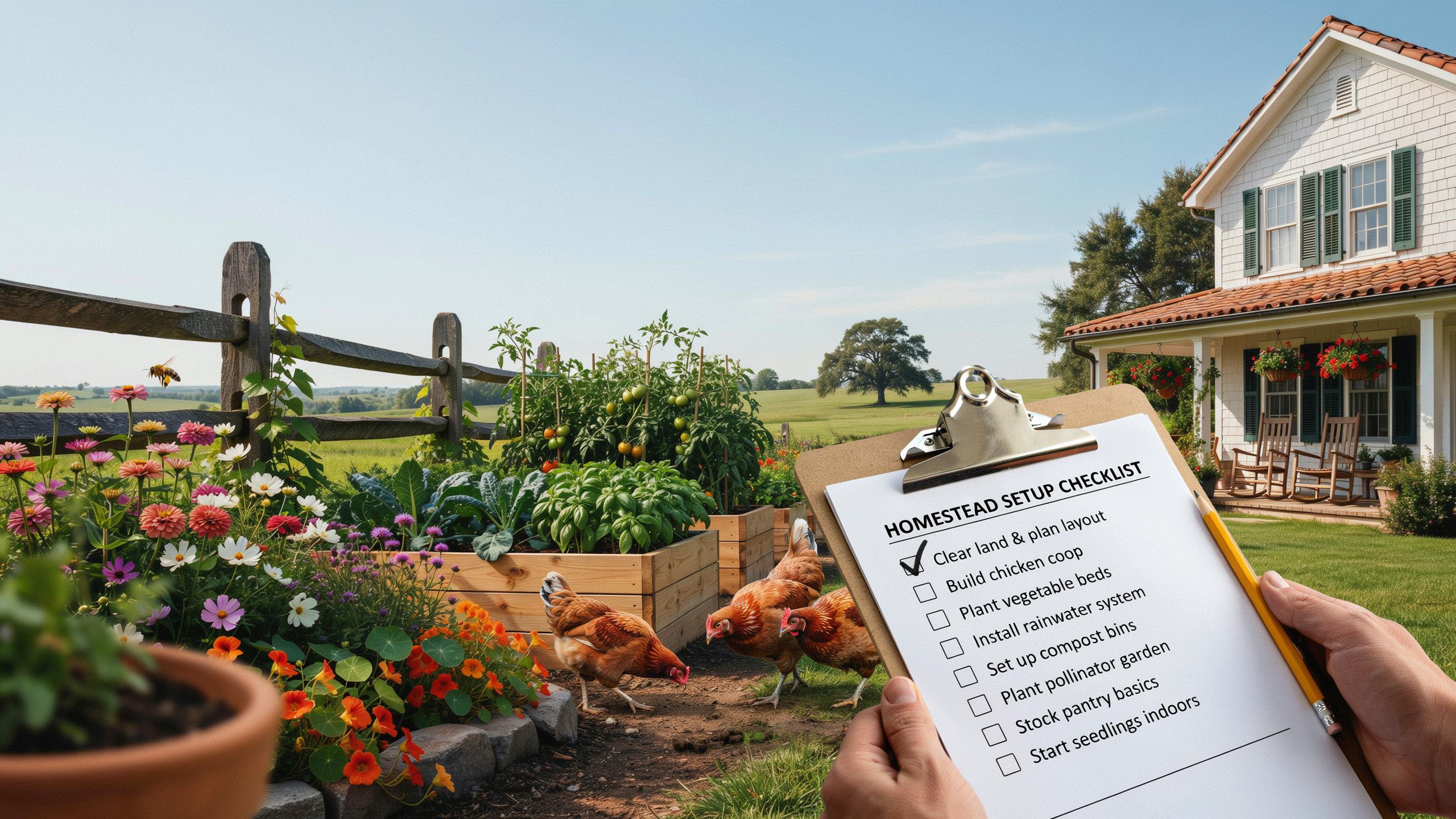
Essential Checklist For Starting A Homestead Journey
Assessing Your Budget And Local Zoning Regulations
Your finances determine what you can actually build and maintain. Start by calculating total startup costs: land purchase, infrastructure, equipment, and operating expenses for your first year. Most homesteaders underestimate costs by 30 to 50 percent. Get a clear number on paper before you commit capital.
Zoning regulations vary drastically by location and directly impact what activities you can pursue. Check local ordinances for livestock limits, structure setbacks, water rights, and agricultural use designations. Many areas prohibit certain animals or restrict farming operations. Contact your county assessor and planning department to understand restrictions before purchasing property.
Defining Your Short Term And Long Term Goals
Short term goals span your first one to two years and dictate immediate priorities. Decide what you want to produce first: food, animals, timber, or income streams. Be specific about output targets. Vague goals create wasted resources and failed projects.
Long term goals shape your five to ten year trajectory and infrastructure investments. Consider whether you want full food self sufficiency, off grid living, commercial production, or retirement sustainability. Your answer determines land size requirements, water systems, and permanent structures you need to build. Align goals with available capital and labor capacity to avoid overextension.
Actionable Homesteading Ideas For Beginners This Season
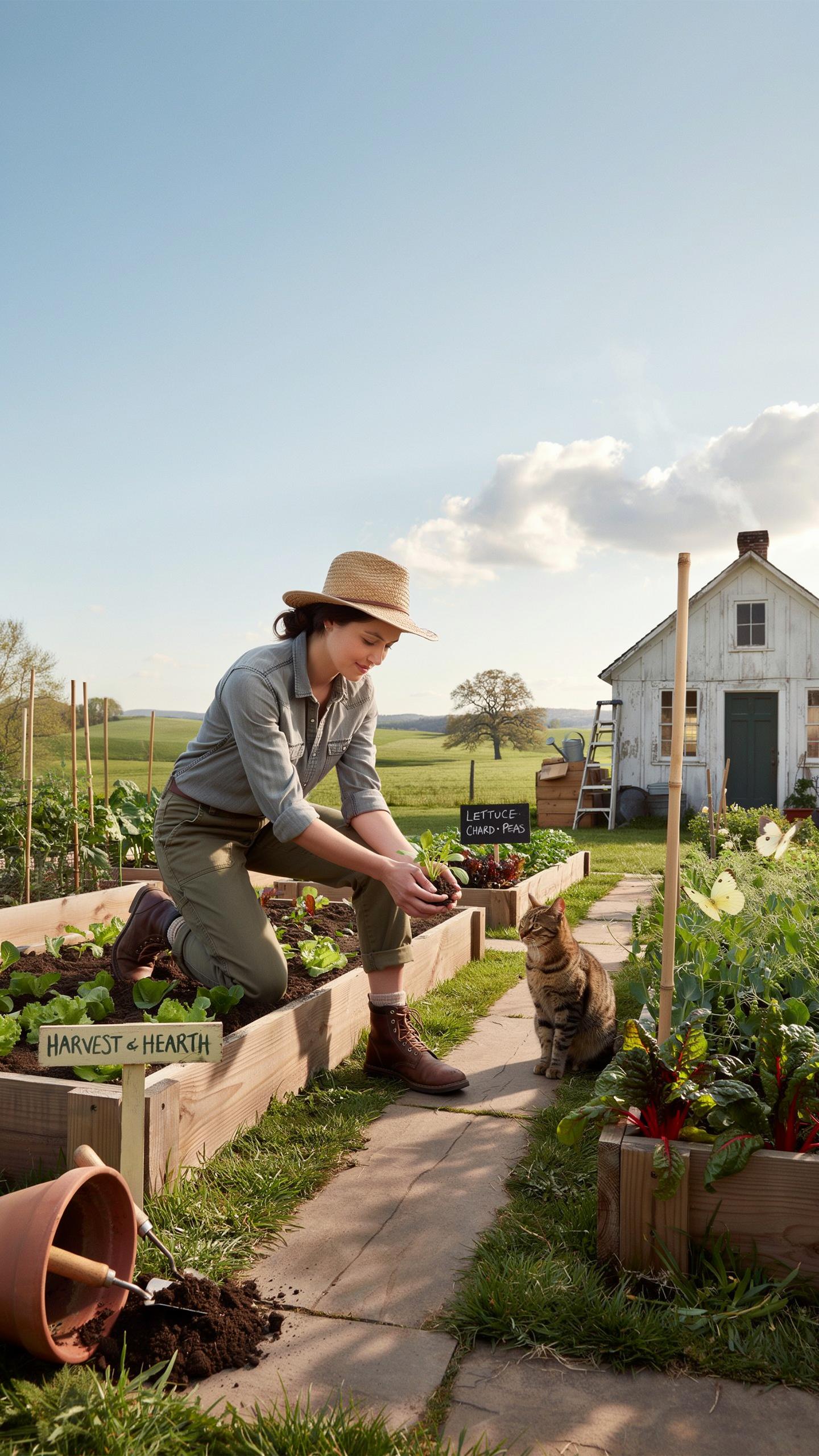
Small Scale Gardening Projects
Start with microgreens and container gardening because they require minimal space and deliver results in weeks, not months. Microgreens grow in shallow trays indoors under basic lighting. Container gardening lets you place vegetables on patios, balconies, or small yards. Both methods eliminate soil preparation costs and reduce pest management complexity compared to traditional gardens.
Microgreens produce harvestable crops in 7 to 14 days from seed. You need only trays, quality soil, seeds, and water. Container gardening works with standard pots, raised beds, or grow bags filled with potting mix. Start with cold-hardy crops like lettuce, spinach, and kale in spring and fall. Warm-season containers handle tomatoes, peppers, and herbs effectively during summer months.
Backyard Poultry Basics
Chickens deliver the fastest return for beginners because they require basic shelter, daily feeding, and water management. A small coop houses three to six birds comfortably. Chickens produce eggs within five to seven months and handle most climates. They eat kitchen scraps, insects, and commercial feed, reducing your food costs while generating consistent egg production.

Build or purchase a coop with predator protection using hardware cloth and secure latches. Provide nest boxes, roosts, and ventilation to prevent disease. Establish a daily routine of feeding, water refills, and egg collection. Start with established breeds like Rhode Island Reds or Orpingtons because they tolerate variable conditions and produce reliably. Check local zoning laws before purchasing birds to avoid code violations.
Designing A Master Farm Checklist For Daily Operations
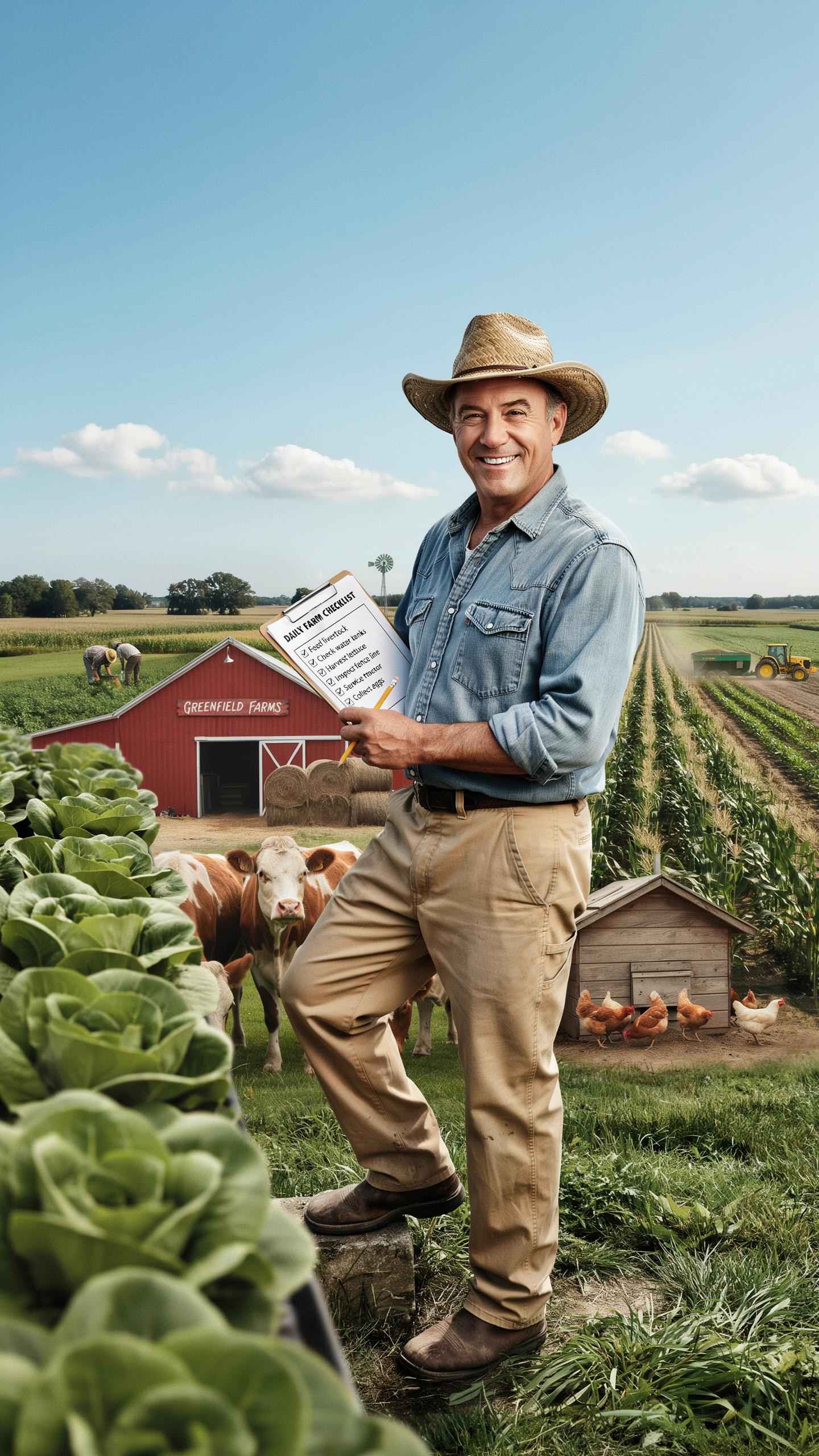
Morning And Evening Chores
You need morning and evening routines to catch problems before they become costly. Start by checking animal water sources first thing. Animals die from dehydration faster than starvation. Count livestock to confirm nothing escaped or got injured overnight. Feed animals on a fixed schedule so they regulate their digestion and behavior. Check fencing for breaches and repair them the same day you find them.
Evening chores mirror morning tasks with added focus on security. Close all animal enclosures before dark to protect against predators. Remove uneaten feed to prevent pest attraction and spoilage. Inspect for signs of illness or injury when animals are calm and gathered. Document any issues in a farm log so you track patterns over time and plan veterinary visits accordingly.
Seasonal Maintenance Schedule
Infrastructure fails when you ignore seasonal demands. Spring means clearing drainage systems, inspecting roof integrity on structures, and checking gate hinges for rust or damage. Summer heat stresses water systems and equipment, so flush lines and service pumps before peak demand. Fall requires winterization of exposed pipes and equipment storage preparation.
Winter maintenance focuses on preventing structural collapse from snow and ice. Check building supports and roof load capacity before heavy weather arrives. Drain all outdoor water lines to prevent freeze damage. Service heating systems for animal shelter before temperatures drop. Spring thaw reveals damage from winter stress, so inspect foundations and repair settling or frost heaving as soon as ground conditions allow work.
The Ultimate Self Sufficient Homestead Checklist For Food Security
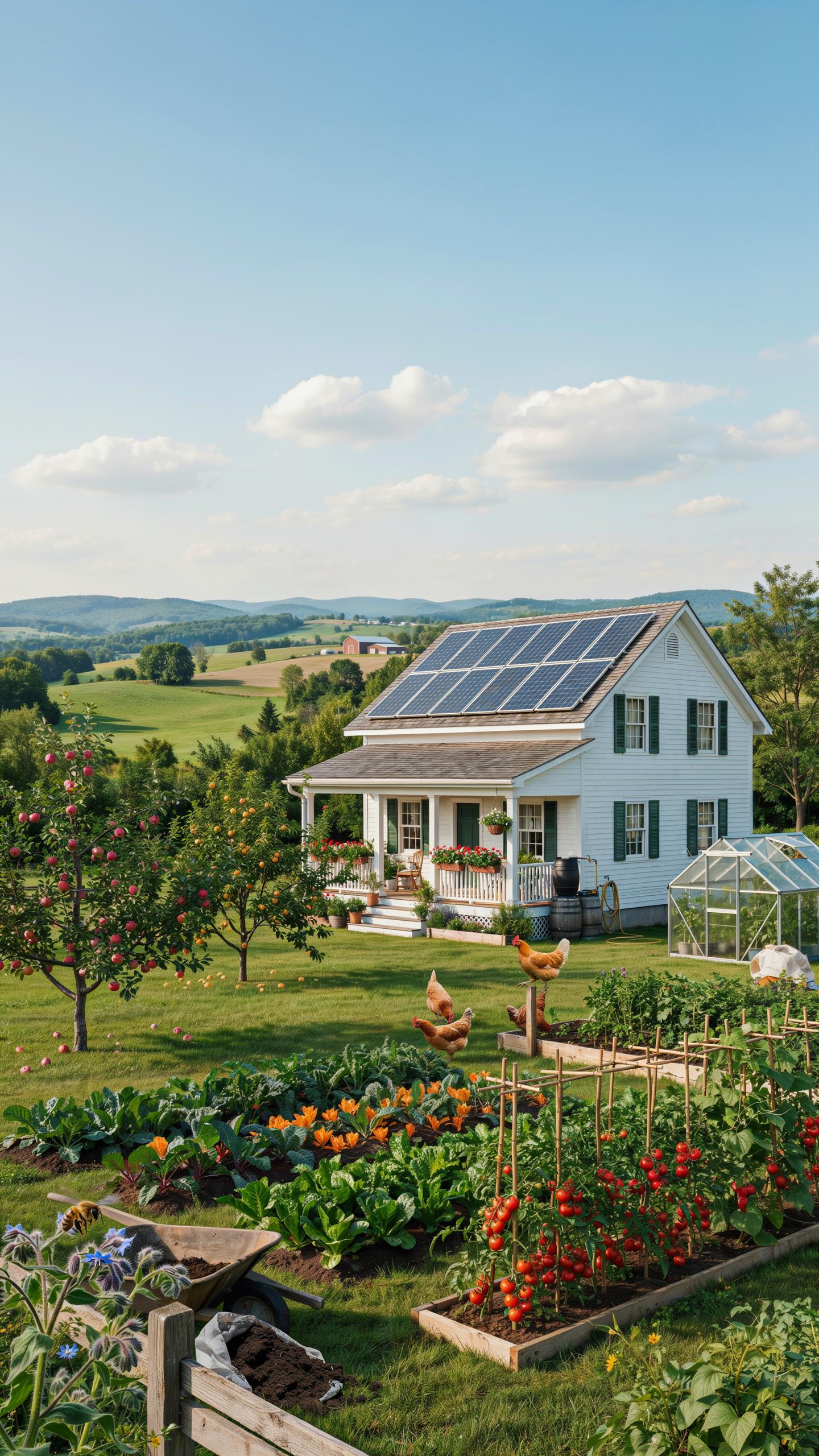
Year Round Food Production
Carbohydrates and proteins form the foundation of food security. Root crops like potatoes, turnips, and beets store for months in cool conditions. Legumes provide nitrogen fixation and dried beans last years without refrigeration. Grains require space but deliver calories efficiently. Stack these production methods across seasons to eliminate dependency on external supply chains.
Winter production demands cold frames or hoop houses. Kale, spinach, and other brassicas tolerate frost and produce through cold months. Spring and fall allow faster growth cycles for warm season crops. Summer heat demands water management and shade strategies. Plan three to four production cycles yearly to maintain consistent carbohydrate and protein availability.
Water Harvesting And Storage Systems
Rainwater harvesting captures what falls on your property naturally. Calculate roof area multiplied by annual rainfall to determine collection potential. One inch of rain on 1,000 square feet yields approximately 600 gallons. Gutters channel water to storage tanks or cisterns. First flush diverters remove debris before water enters storage systems.

Filtration systems remove sediment and pathogens before consumption or irrigation. Sand and gravel layers create mechanical filtration. UV treatment or boiling eliminates biological contamination. Store water in food grade containers away from direct sunlight to prevent algae growth. Redundant systems prevent complete failure if one tank fails or requires maintenance.
Strategic Homestead Planning Ideas To Maximize Land Use
Zone Planning Principles
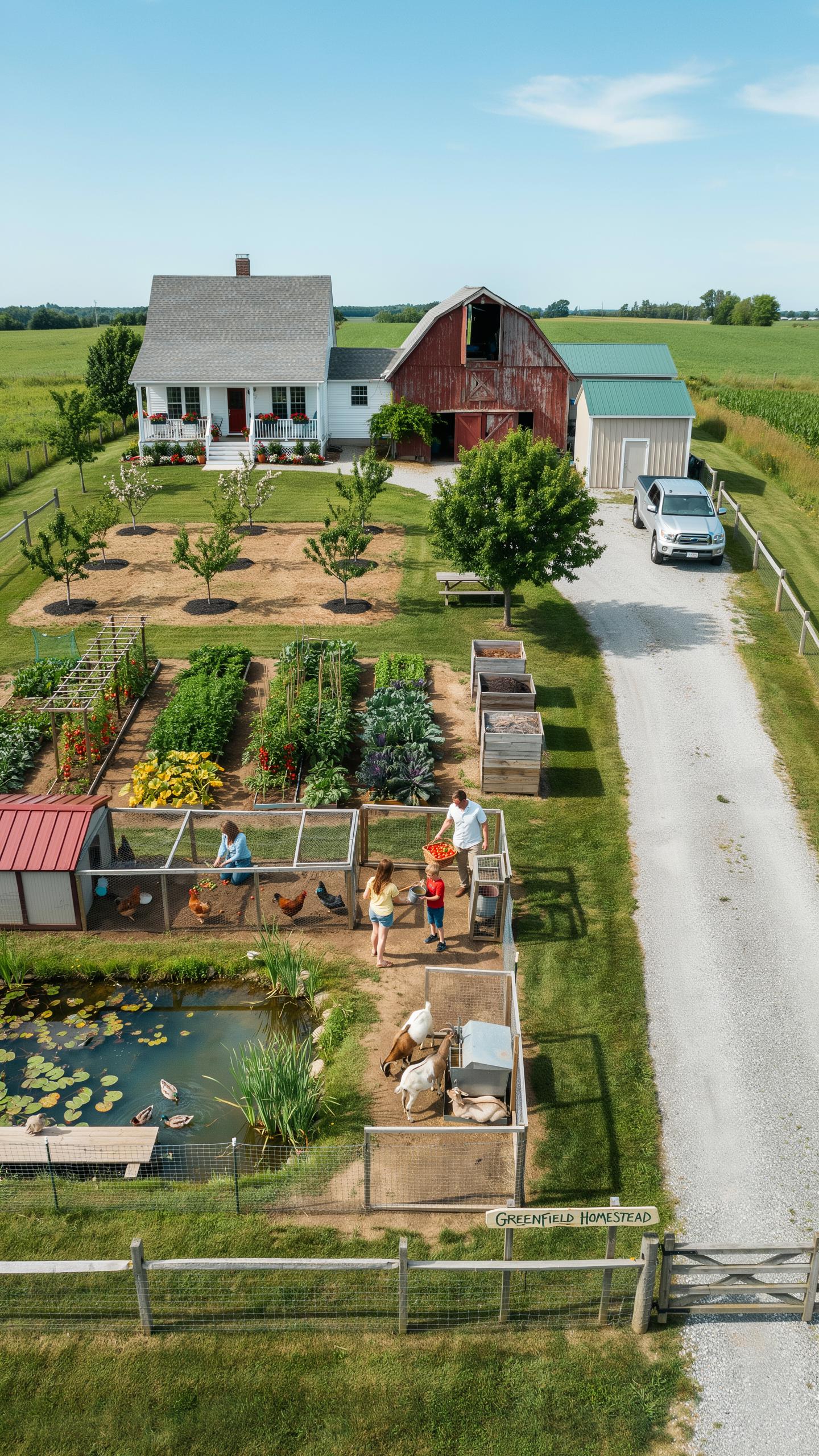
Permaculture zoning organizes your property by frequency of use and management intensity. Zone 0 is your home. Zone 1 sits closest to your house and holds daily-use plants like herbs and vegetables. Zone 2 contains perennial crops and small livestock requiring weekly attention. Zone 3 holds larger animals and less-managed food production. Zone 4 is semi-wild managed forest. Zone 5 remains untouched wilderness for observation and wildlife habitat.
Apply zones based on your actual movement patterns and resource access. Place high-maintenance systems near water sources and structures you visit daily. Position lower-maintenance systems farther out as labor decreases with distance. This layout reduces wasted steps, cuts water delivery costs, and improves your ability to catch problems early. Your zone map prevents scattered development and keeps operations efficient.
Sun And Wind Analysis
Document your property’s sun exposure across all seasons before placing anything permanent. South-facing slopes receive maximum winter sun in northern climates. North-facing areas stay cooler year-round. East-facing zones catch morning light. West-facing areas experience afternoon heat intensity. Spend time on your land at different times of day and seasons to observe how light moves across your property.
Wind patterns directly impact building placement, crop protection, and animal comfort. Prevailing winds in your region determine erosion risk and create opportunities for wind breaks using trees or structures. Position livestock shelters perpendicular to winter winds to reduce heating costs. Place greenhouses where they capture sun but avoid funneling wind corridors. Survey your actual microclimate before committing to infrastructure that you cannot easily move.
Creative Wilderness Farm Layout Ideas For Remote Terrain
Contour Farming And Swales
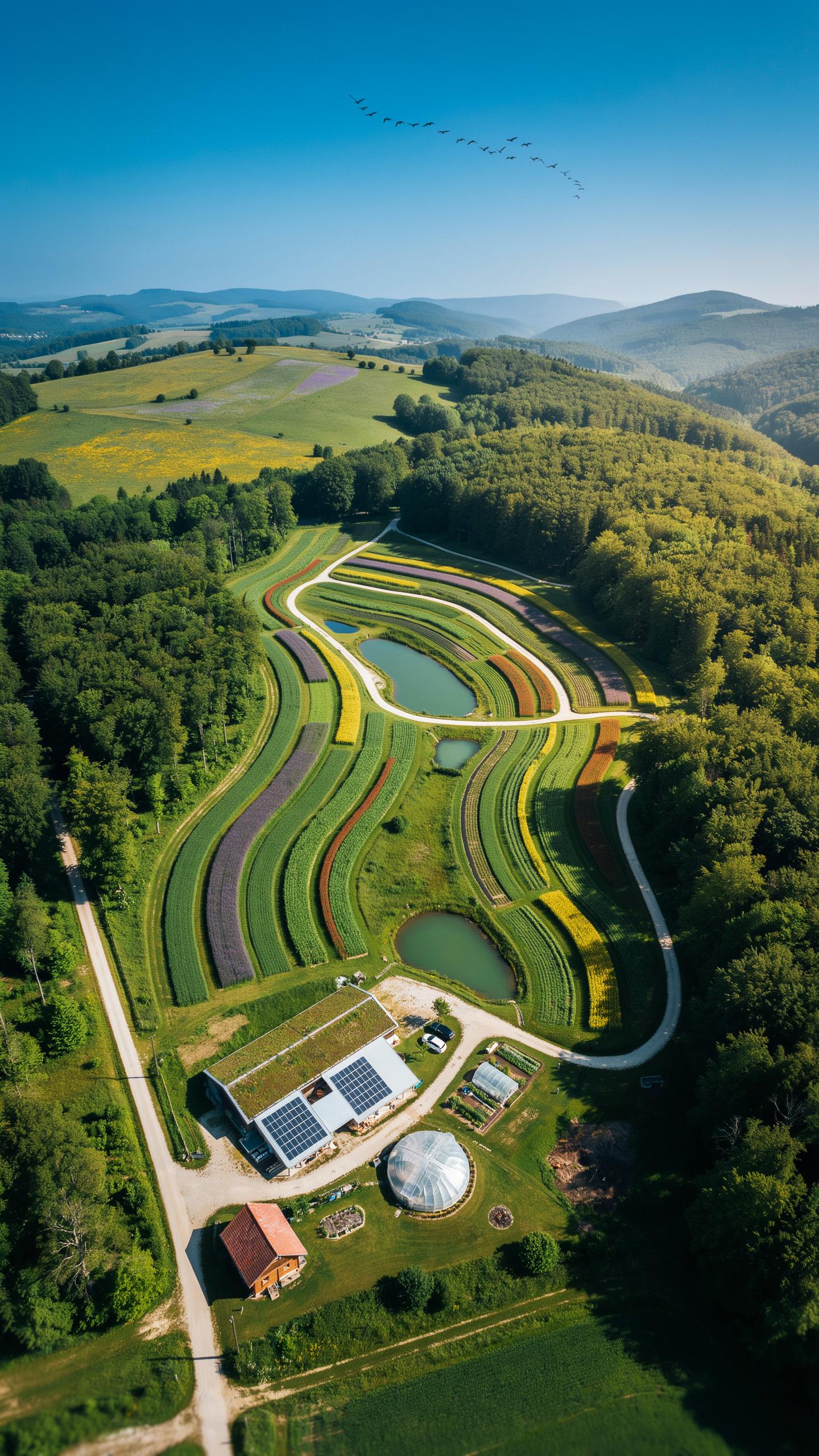
Sloped terrain demands water management before you plant anything. Contour farming follows the natural elevation lines of your land, which slows water runoff and keeps soil in place. Swales are shallow, level-bottomed ditches dug along contours that capture and infiltrate water into the ground. This prevents erosion and builds soil moisture retention.
Swales work on slopes between 2 and 10 degrees. You dig them perpendicular to the slope’s fall line, spacing them 30 to 50 feet apart depending on grade steepness. Water moves slowly through the swale instead of racing downhill, giving it time to soak into soil rather than carve gullies. This reduces both erosion and your irrigation needs over time.
Defensible Space Forestry
Wildfire defensible space is mandatory in forested homesteads. You create zones of reduced fuel around structures by removing dead trees, pruning lower branches, and thinning dense vegetation. This slows fire spread and protects structures from radiant heat. The first 5 feet closest to buildings must be clear of dead plant material entirely.
Extend defensible space to 30 feet from buildings where you thin trees significantly and remove branches up to 10 feet high. Beyond 30 feet, create a gradual transition zone up to 100 feet where you remove diseased trees and thin dense stands. Check local forestry guidelines for your specific fire zone. Many states provide free assessments to identify fuel hazards on your property.
Maximizing Production On A 1 Acre Homestead Layout
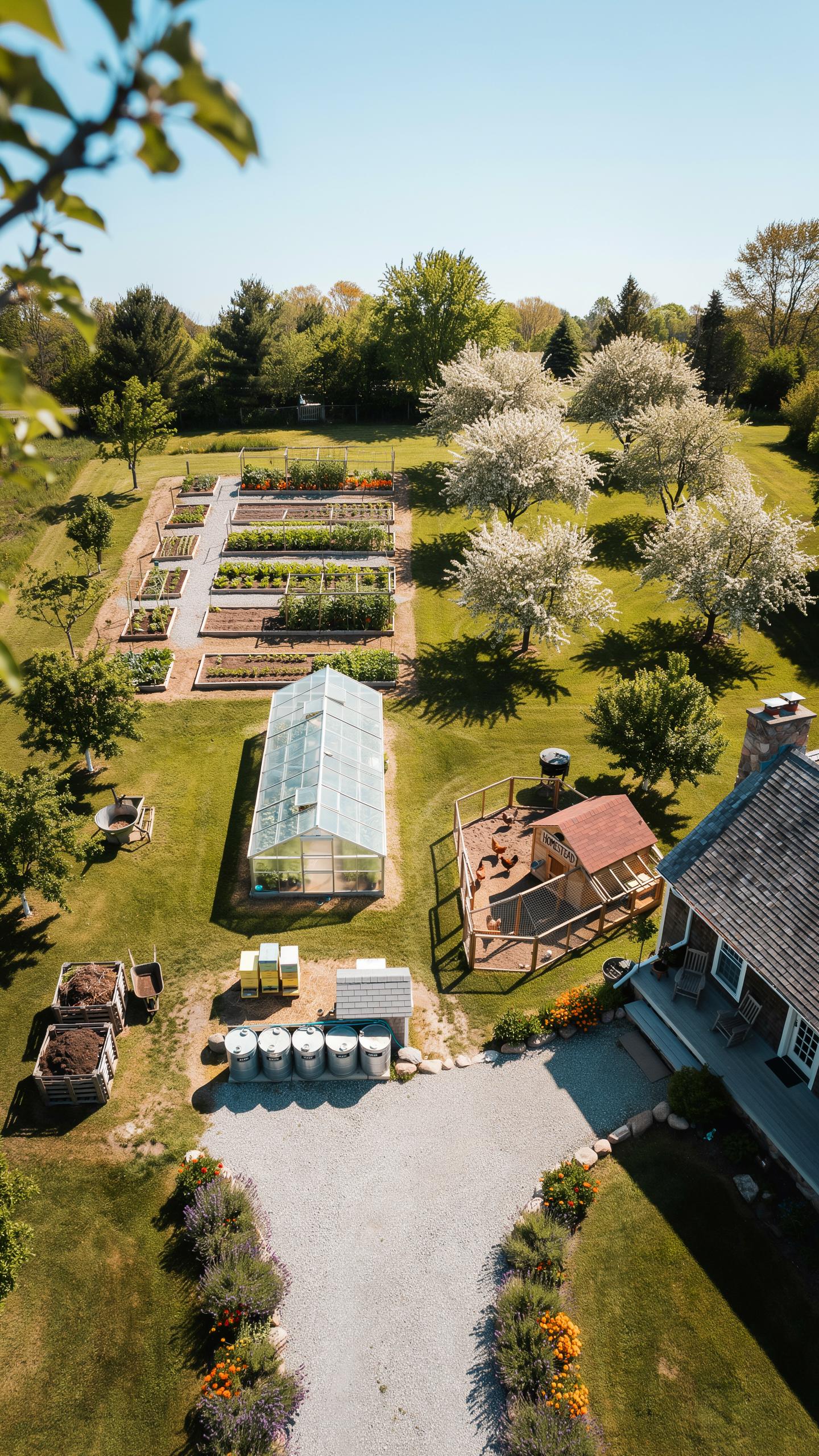
Intensive Planting Methodology
Biointensive planting reduces spacing between crops to increase yield per square foot. This method relies on deep soil preparation, typically 24 inches, to encourage root development downward rather than outward. You prepare beds, amend soil heavily with compost, and plant at closer intervals than conventional farming. The technique works because roots access nutrients vertically instead of spreading horizontally. Plan for 60% of your acre in plant beds and 40% in paths and infrastructure.
- Deep Bed Preparation: Till or dig beds to 24 inches minimum. Break up compacted layers to allow roots to penetrate deeply. This single step doubles production capacity on small plots.
- Compost Integration: Add 4 to 6 inches of finished compost before planting. High organic matter feeds soil biology and retains moisture. This reduces irrigation needs by 30 to 40 percent.
- Reduced Plant Spacing: Space plants at 60% of conventional distances. Lettuce moves from 12 inches to 6 inches between plants. Tomatoes shift from 3 feet to 2 feet depending on variety.
- Succession Planting: Sow crops every two weeks instead of all at once. You harvest continuously from May through October instead of one large harvest. Maximizes bed productivity across the season.
- Vertical Growing Systems: Train vining crops up trellises and stakes. Beans, peas, and cucumbers grow upward to save ground space. Vertical crops produce 3 to 4 times more per square foot than sprawling varieties.
Dense planting increases shading, which raises humidity and reduces pest pressure on some crops. You monitor moisture daily because roots compete for water in tight quarters. Drip irrigation or soaker hoses deliver water directly to soil, preventing disease and runoff. Expect to invest 3 to 4 hours weekly in maintenance during peak season.
Multi Purpose Animal Integration
Small livestock on 1 acre requires rotational grazing to prevent land degradation. Chickens, rabbits, and goats serve multiple roles: egg or meat production, manure generation, and weed control. Position mobile coops and pens to cycle animals through areas before vegetation depletes. Each animal type demands specific shelter, feed access, and water infrastructure. Start with chickens before adding ruminants, which consume more resources.

Chickens produce the best return on investment for small spaces. Six to twelve birds generate eggs, pest control, and manure year-round. They require 3 to 4 square feet of coop space and 8 to 10 square feet of run area per bird. Rabbits occupy minimal space, reproduce quickly, and convert feed to meat efficiently. Goats graze rough vegetation and clear brush but need shelter and fencing that withstands their behavior.
Step By Step Homesteading Checklist For Spring Infrastructure
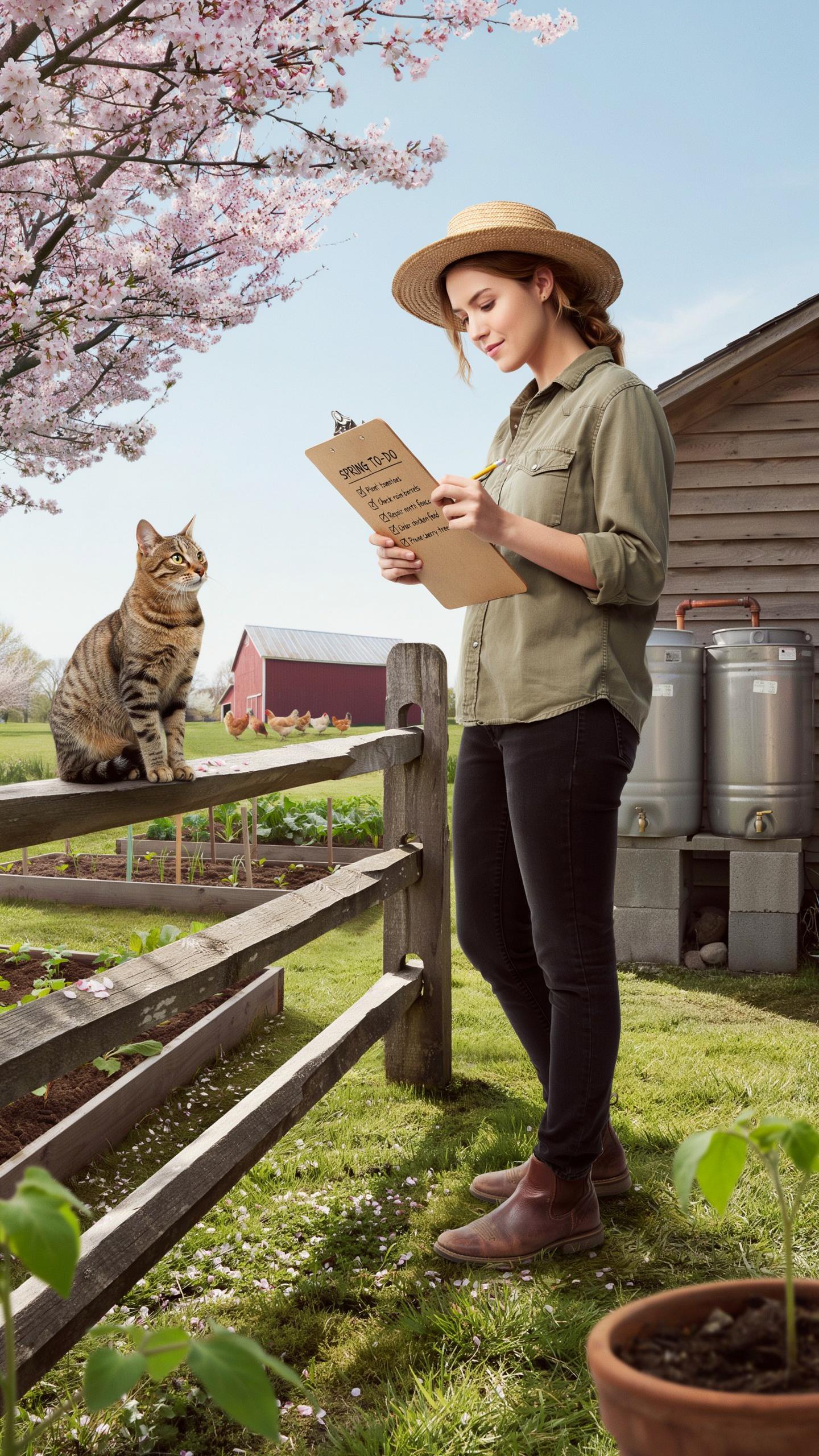
Essential Tools For Setup Success
Spring prep demands specific tools that handle both ground work and water management. You cannot build functional infrastructure without the right equipment on hand. Start with basic hand tools, then add powered equipment based on your land size and budget constraints.
- Shovel and Spade: Standard digging tools for soil work, bed preparation, and trench digging. Choose a spade for edging and a rounded shovel for moving bulk material efficiently.
- Wheelbarrow: Essential for transporting compost, mulch, soil amendments, and materials across your property. A two-wheeled model handles rough terrain better than single-wheel designs.
- Mattock and Hoe: Break compacted soil and remove rocks with a mattock. Use a hoe for weeding beds and breaking up clumps before planting season.
- Garden Fork: Separate and aerate compost piles, turn soil, and move hay or straw. This tool outperforms a shovel in loose organic material.
- Rope and Stakes: Mark property boundaries, establish garden rows, and support trellising systems. Use quality rope rated for outdoor use to avoid rot and breaking.
Your tool collection grows as you identify specific tasks on your property. Buy tools based on actual work needs rather than guessing what you might use. Quality hand tools last decades when maintained properly, making them a solid investment.
The glory of gardening: hands in the dirt, head in the sun, heart with nature. To nurture a garden is to feed not just the body, but the soul.
Soil Regeneration Tactics
Spring soil work determines your growing season success. Cold soil from winter dormancy needs amendment and biological activity restoration before planting. Your spring timeline sits between final frost dates and planting windows, creating a critical intervention period.
Compost application jumpstarts microbial populations depleted over winter. Spread two to four inches of finished compost across beds and work it into the top six inches of soil. This practice rebuilds organic matter, improves water retention, and feeds beneficial microorganisms. Cover crops planted in fall and turned under in spring add nitrogen while breaking compacted layers. Legume crops like clover or vetch fix atmospheric nitrogen into usable forms for your plants. Till or chop these crops and let them decompose for two to three weeks before planting.
Test your soil before applying amendments to avoid over application of specific nutrients. Spring moisture levels support microbial decomposition better than summer heat. Use this window to establish long term soil building practices that compound each season.
Understanding Land Boundaries And The Homestead Act Map Legacy
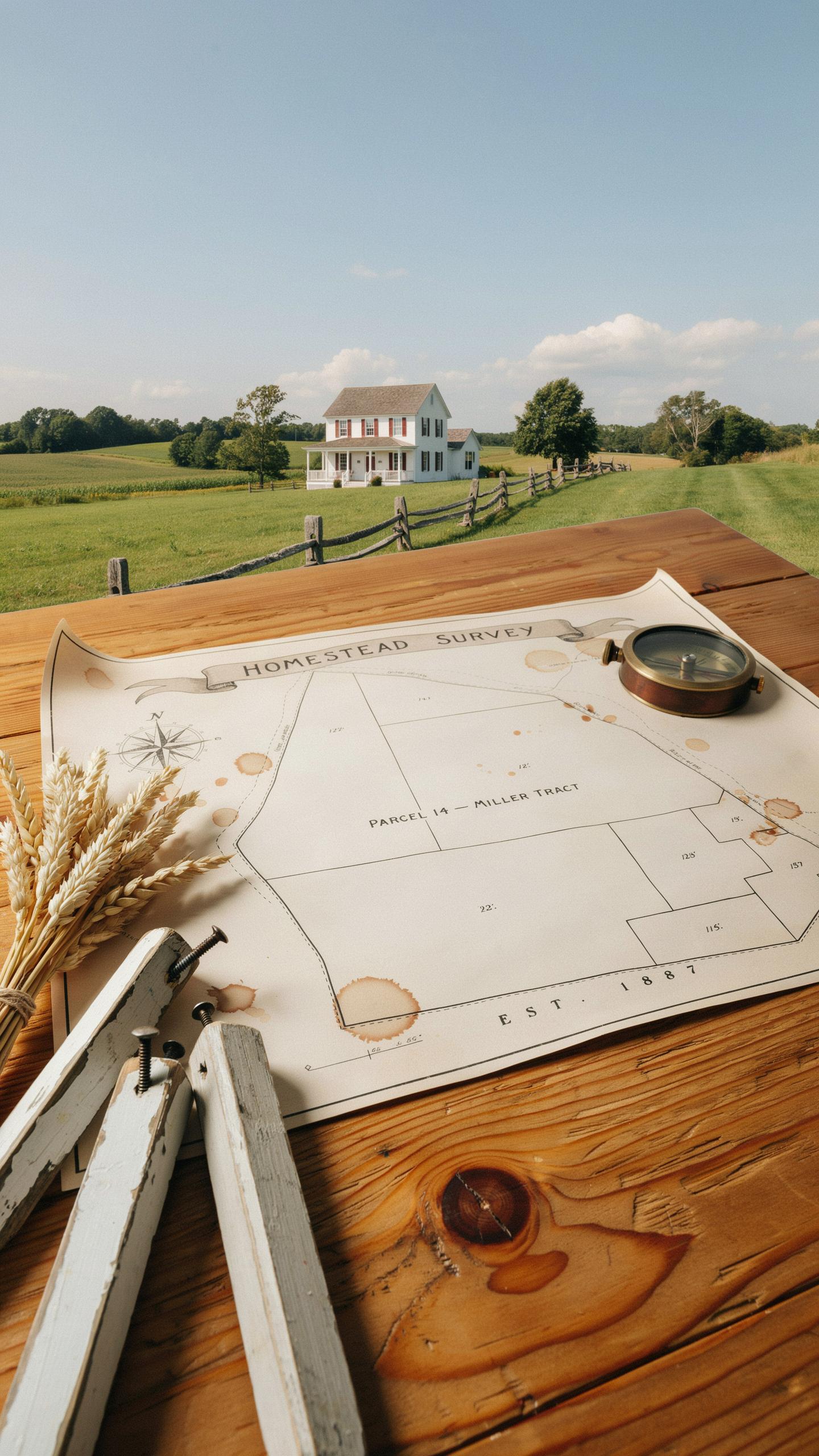
Historical Homestead Allotments
The Homestead Act of 1862 distributed 270 million acres across the United States to settlers who met specific conditions. The government surveyed this land using the Public Land Survey System, which divided property into townships, ranges, and sections. This systematic grid created the foundation for property boundaries still recognized today. Your current deed likely traces back to these original surveys, even if your land wasn’t directly homesteaded.
Understanding this historical framework matters because it affects property rights, water access, and mineral rights on your homestead. Old survey markers, called section corners, still exist on many properties. You can locate these markers to confirm exact boundary lines. County assessors maintain records of historical land grants and transfers. Researching your property’s lineage reveals easements, restrictions, or encumbrances from original homestead terms that may still apply.
Geographical Research Tools
Modern GIS mapping technology allows you to verify property boundaries without hiring expensive surveyors for initial research. The USGS Topoographic Map Viewer provides detailed historical and current landscape data. County assessor websites typically offer parcel maps showing dimensions and neighboring properties. State land office databases contain original survey records and plat maps from the Public Land Survey System era.
Cross-reference multiple mapping sources to catch discrepancies before formal surveying. Online tools like Google Earth Pro let you measure distances and identify boundary markers. County recorder offices provide digital access to deed descriptions and survey documents. These resources cost nothing or minimal fees. Compile this data before bringing in a licensed surveyor, which reduces billable hours and focuses their work on verification rather than initial research.
Structuring Your Long Term Homestead Property Setup Checklist
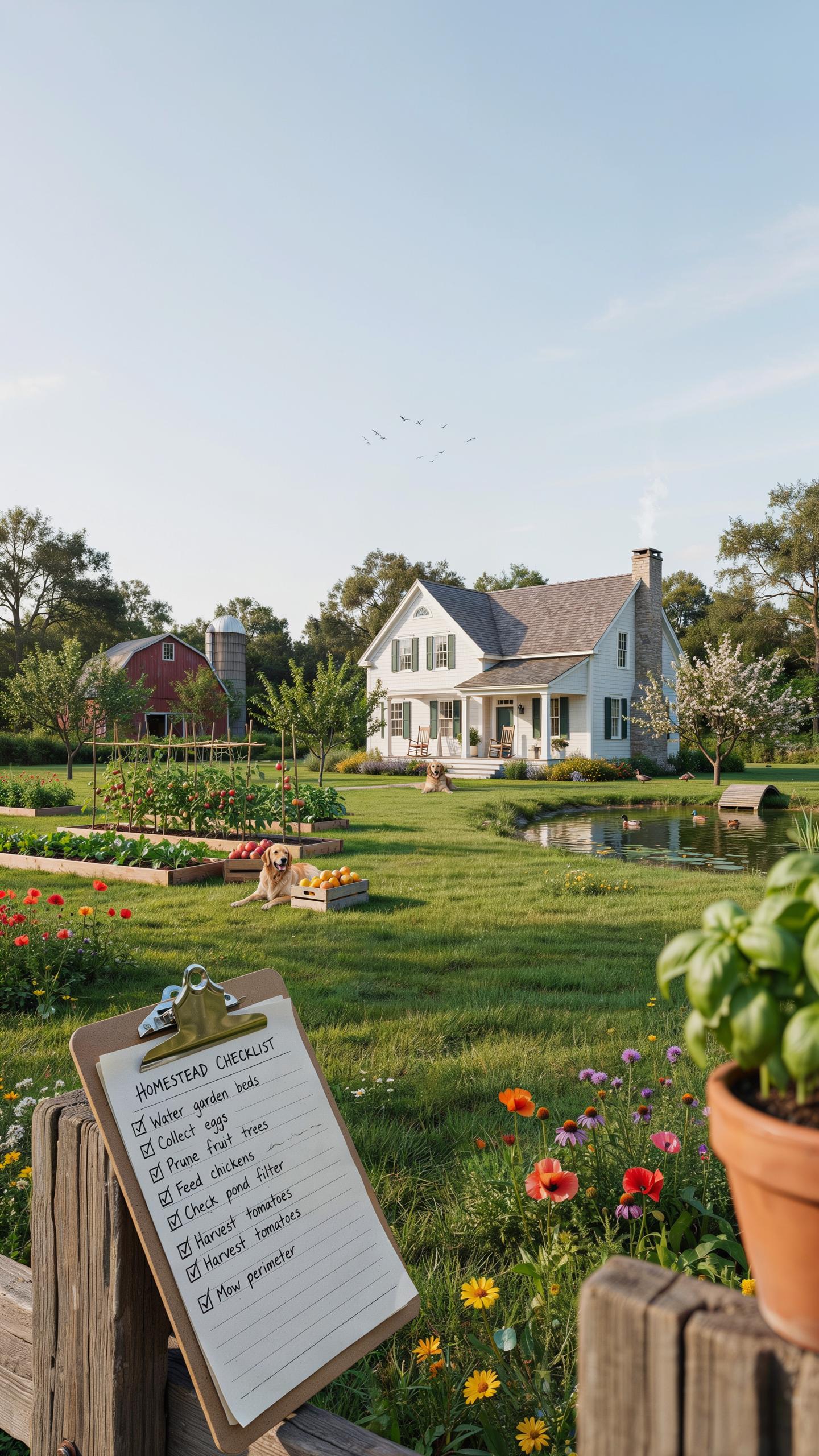
Power Infrastructure Roadmap
Off-grid solar systems require phased deployment based on your actual power consumption, not theoretical maximums. Start by documenting daily loads for three months, then size your battery bank to handle your longest cloudy period. Most homesteads operate efficiently with a hybrid model combining solar arrays, battery storage, and a backup generator rather than relying solely on one source.
Backup generators serve a specific role in off-grid systems: they charge depleted batteries during extended poor weather and handle surge loads that exceed battery capacity. Diesel or propane generators last longer than gasoline models and maintain reliability in cold climates. Size your generator to match your battery charge rate, not your total home load, to avoid oversizing and wasting fuel during partial-load operation.
Permanent Perennial Agriculture
Orchards and perennial food systems mature over years, so placement decisions made today define your property’s productivity for decades. Plant fruit trees on south-facing slopes to maximize sunlight exposure and allow cold air drainage to lower frost risk. Space trees according to mature width, not nursery size, to prevent future competition for water and nutrients.
Perennial windbreaks reduce soil erosion, lower heating costs, and create microclimates that extend your growing season. Establish windbreaks on your property’s downwind side using native species adapted to your climate zone and soil type. These systems require three to five years to establish full effectiveness but provide ongoing returns once established without annual replanting costs.
Frequently Asked Questions

What are the first steps for someone starting a new homestead this season?
Starting your journey begins with a clear homestead property setup checklist to prioritize your goals. Focus first on observing your land’s natural patterns, such as sun exposure and water drainage. Begin small by establishing a reliable water source and a manageable kitchen garden. By focusing on these foundational elements early on, you can create a functional and beautiful layout that grows sustainably without feeling overwhelmed by the transition to country living.
How do I organize my land layout for maximum efficiency and beauty?
To organize your land efficiently, use your homestead property setup checklist to zone areas based on frequency of use. Place daily necessities like herb gardens and chicken coops closest to your home for easy access. Further out, designate space for larger livestock or orchards. Integrating winding paths and native flowering perennials between these zones ensures your property remains visually stunning while remaining a highly productive environment for your seasonal chores and harvests.
Is it possible to set up a stunning homestead on a limited budget?
Absolutely! You can create a breathtaking property without overspending by repurposing reclaimed materials for garden beds and fencing. Focus on high-impact, low-cost projects like composting and seed saving to build soil health and future crops for free. Prioritize the essential tasks on your checklist first, such as basic infrastructure, and allow the decorative elements to evolve over time as your skills and resources grow naturally with each passing season.