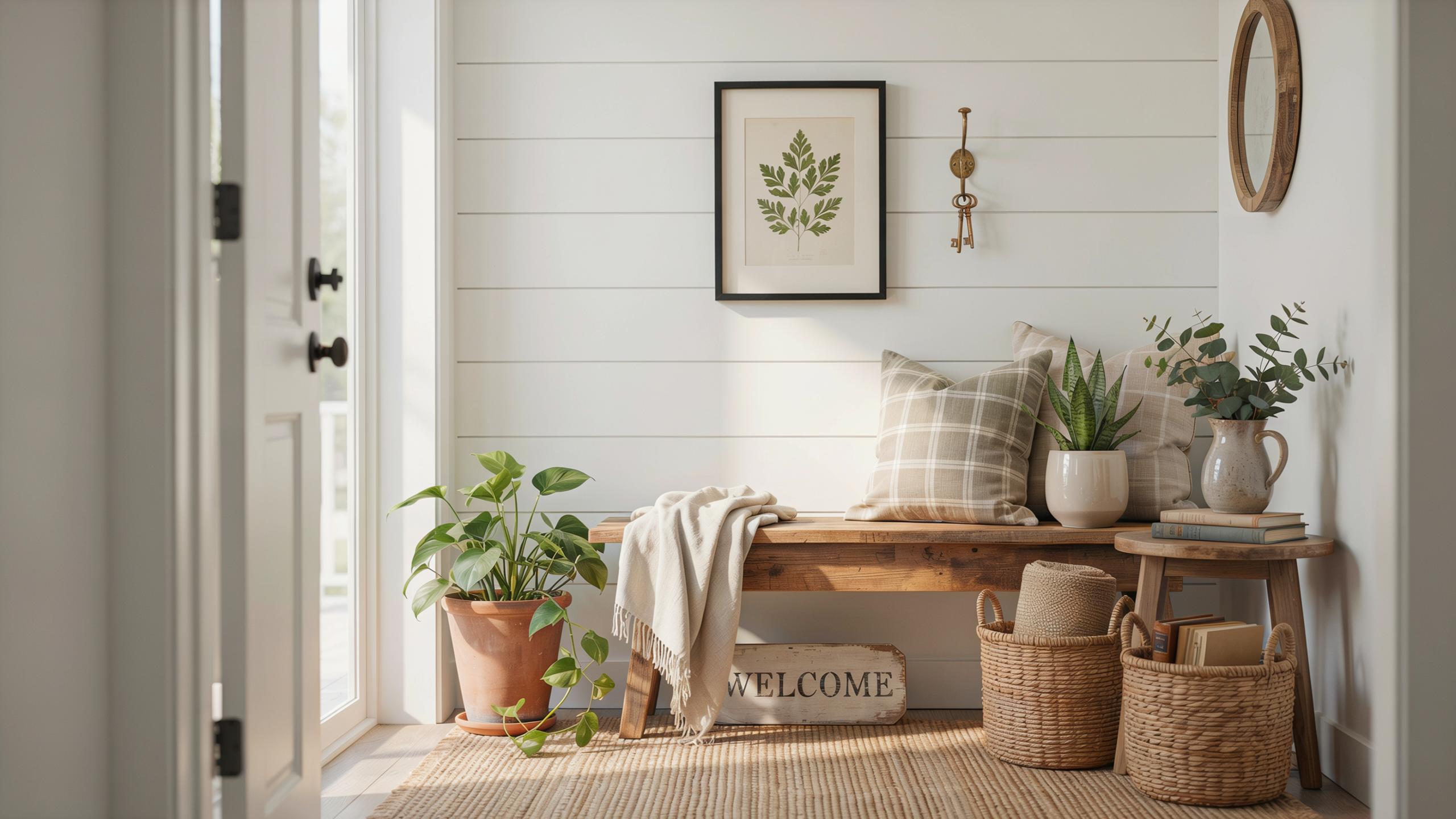
Finding Your Entryway Inspiration The Basics Of Farmhouse Style
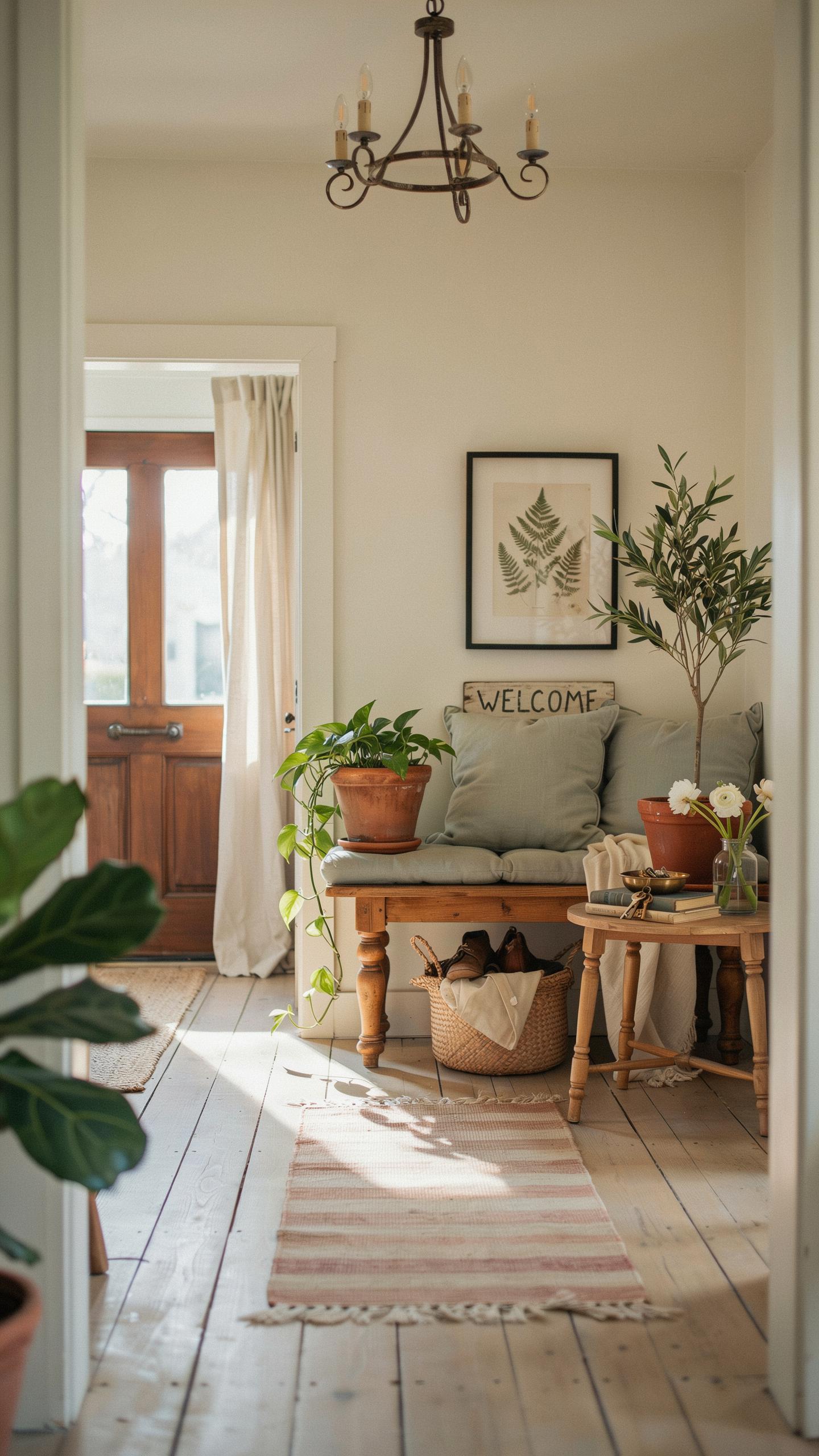
Defining The Warm And Welcoming Farmhouse Aesthetic
Farmhouse design emerged from practical rural architecture, not modern invention. It prioritizes function over decoration. The style centers on comfort, simplicity, and accessible elegance. Natural materials dominate. Colors stay neutral and muted. Clutter disappears. Every object serves a purpose or adds genuine visual value. This approach creates spaces that feel lived-in rather than staged.
The farmhouse aesthetic rejects trends. It draws from agricultural heritage and rural living conditions. Worn surfaces tell a story. Open layouts facilitate movement and gathering. Lighting comes from natural sources first, supplemented by simple fixtures. Scale matters. Proportions feel balanced and human-sized, not grand. Your entryway should feel like someone actually uses it daily, not a museum display.
Key Materials And Textures To Look For
Distressed wood forms the foundation of farmhouse design. Use reclaimed barn wood when budget allows, or new wood treated to show age. Woven baskets provide storage and texture simultaneously. Galvanized metal brings industrial functionality to the aesthetic. These three materials create immediate recognition as farmhouse style. They combine naturally without forcing contrast. Rope, linen, and cotton textiles add softness. Stone or concrete flooring grounds the space authentically.
Layer these materials strategically in your entryway. A distressed wooden console with galvanized metal legs and woven baskets underneath establishes the look immediately. Hang rope-accented mirrors or metal-framed mirrors on walls. Use natural fiber door mats. Keep surfaces rough or weathered rather than smooth and polished. This texture contrast makes spaces feel substantial and genuine rather than decorated.
Essential Elements Of A Classic Farmhouse Entryway
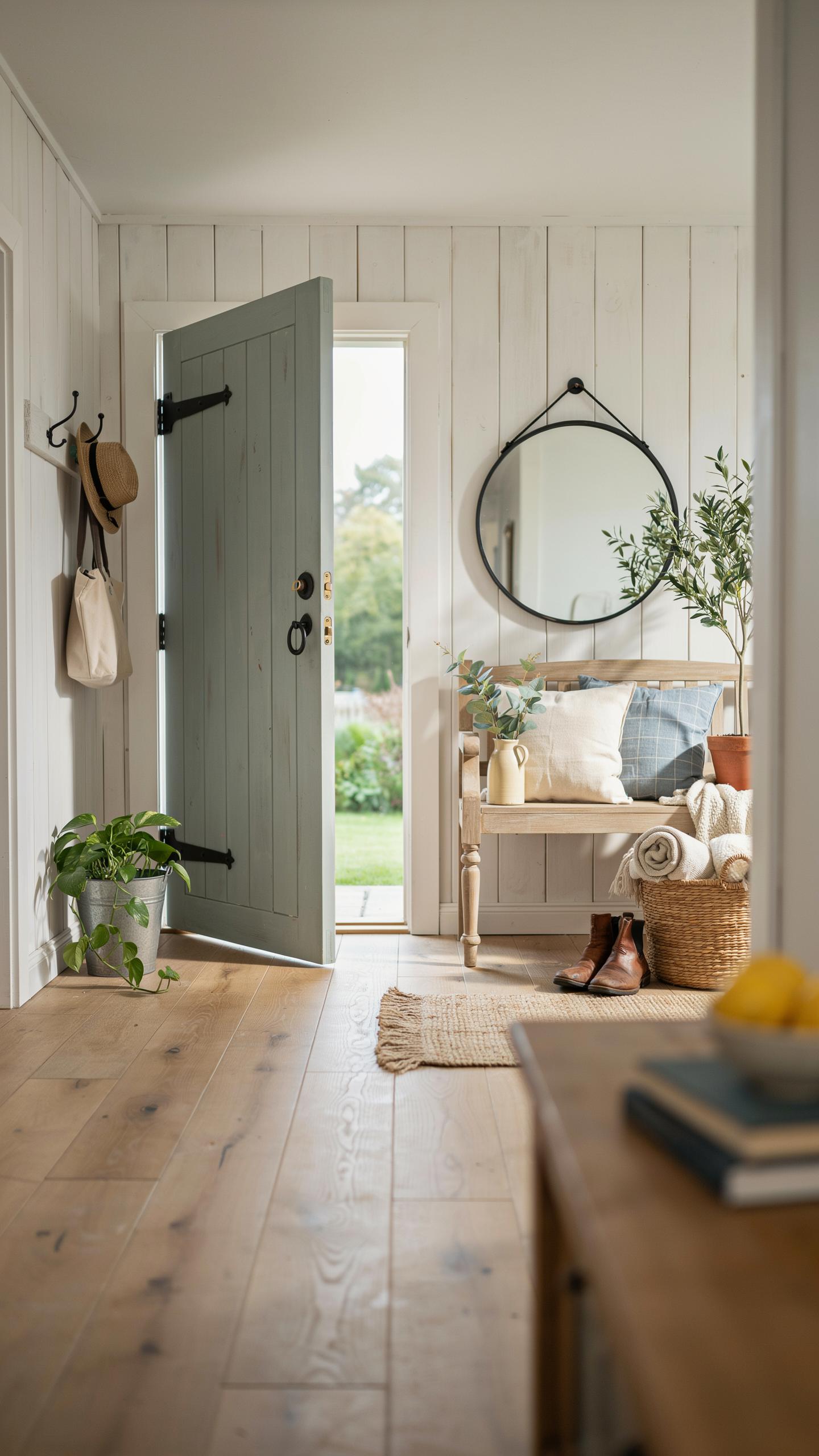
Choosing The Perfect Console Table
A wooden console table serves as your entryway’s functional anchor. It handles daily necessities like keys, mail, and bags while displaying decor. Choose solid wood or reclaimed materials for authenticity. The table should sit 30 to 36 inches high and fit your wall space without blocking foot traffic.
Console tables in farmhouse style typically feature simple construction. Look for turned legs, minimal ornamentation, or weathered finishes. Position your table against the entry wall to define the space and create a landing zone. This setup forces visitors to slow down and acknowledge your entryway design.
Incorporating Statement Wall Mirrors
Large mirrors expand visual space and bounce natural light into dark entryways. Round mirrors, cathedral-style frames, and windowpane designs work well in farmhouse settings. Hang your mirror at eye level on the wall above your console table. A mirror 24 to 36 inches wide provides impact without overwhelming the area.

Mirrors serve dual purposes in farmhouse entryways. They reflect light to make compact spaces feel larger and brighter. Choose frames made from wood, metal, or a combination to match your console table. Windowpane mirrors mimic vintage barn and farmhouse architectural details, grounding your space in authentic farmhouse character.
Creative Entry Ways Ideas For Beginners
Quick Ways To Add Farmhouse Accents On A Budget
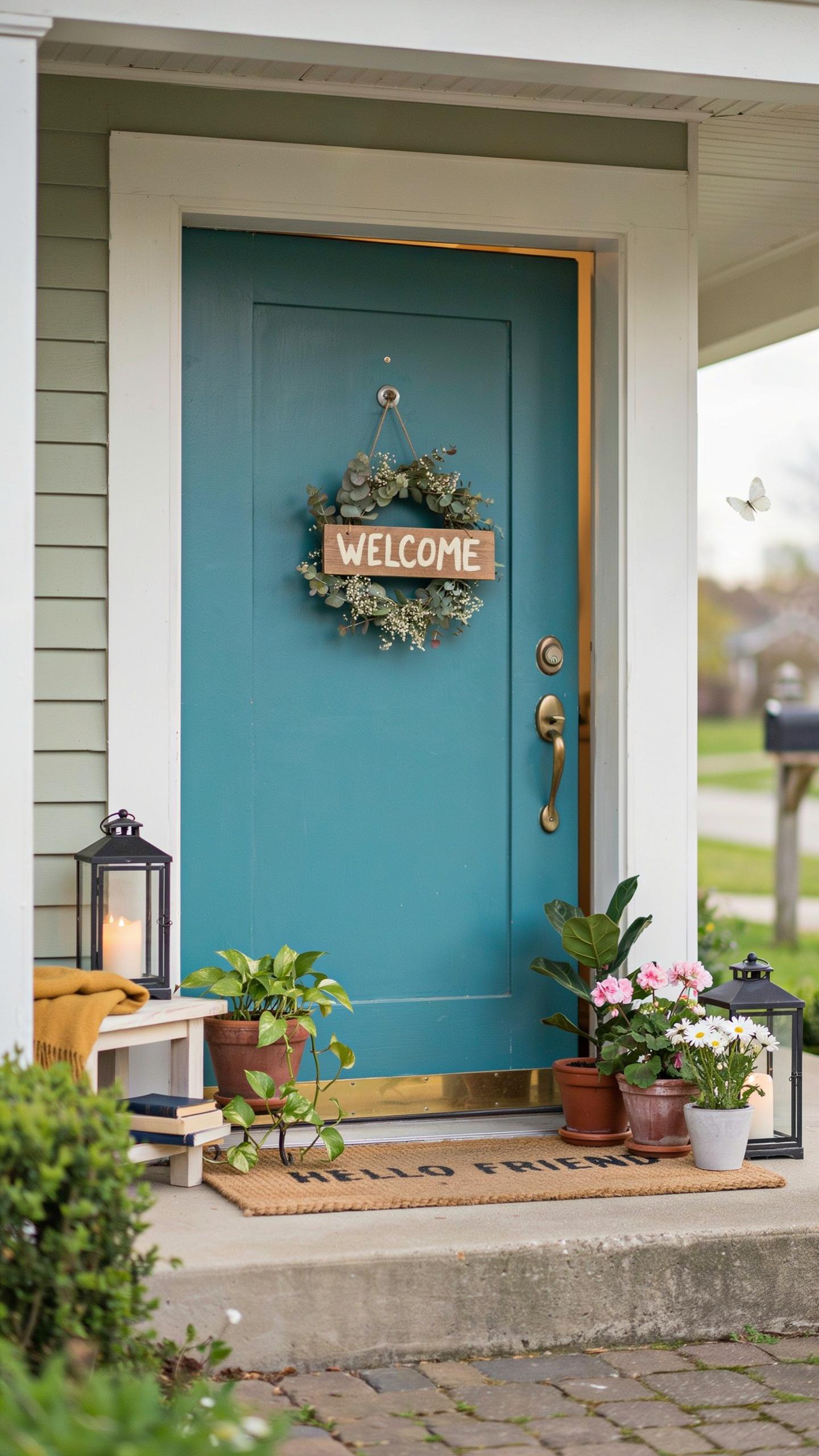
Mason jar vases cost under five dollars and function as legitimate decor pieces. Fill them with dried branches, faux eucalyptus, or leave them empty for texture. Modern farmhouse signs made from reclaimed wood or MDF board provide focal points without breaking budgets. Miniature artificial eucalyptus plants cluster well on tables and shelves, requiring zero maintenance while delivering the farmhouse aesthetic that defines this style movement rooted in rural practicality.
Budget constraints don’t stop entryway transformation. Thrift stores stock vintage metal buckets, old wooden crates, and worn frames for under ten dollars each. Stack these items on your entry table or floor corner to build layers. Paint coordination matters more than expense here. Stick to white, cream, and soft gray tones to anchor farmhouse identity without purchasing premium items from specialty retailers.
A Step By Step Guide To Decorating Your First Tabletop
Begin by establishing a base layer using a wooden tray or table runner in neutral tones. This grounds your composition and defines the workspace. Group items in odd numbers, typically three or five pieces, because asymmetrical arrangements feel intentional rather than accidental. Height variation prevents flatness, so position tall elements like vases in the back and shorter items toward the front for visual depth and dimension.
- Anchor with height: Place a 12 to 18 inch vase or candlestick in the back third of your table to establish vertical interest.
- Layer textures: Combine smooth ceramic, rough wood, and woven elements to create tactile variety that defines farmhouse design.
- Add metallics sparingly: One brass or iron piece prevents monotony while maintaining farmhouse authenticity without trendy excess.
- Use negative space: Leave areas empty on your tabletop to avoid visual clutter and give the eye places to rest.
- Repeat colors minimally: Stick to two or three colors maximum to maintain cohesion and prevent the arrangement from feeling scattered.

Neutral tones create farmhouse coherence without special skills. White, cream, beige, and soft gray work together naturally. Introduce one accent color sparingly through dried botanicals or a single decorative object. Step back frequently to assess balance. Your entryway table should guide visitors into your home with quiet confidence, not demand attention through clutter or complexity.
Rustic Entry Way Ideas Bringing Warmth With Distressed Wood
Finding And Restoring Salvaged Wooden Pieces
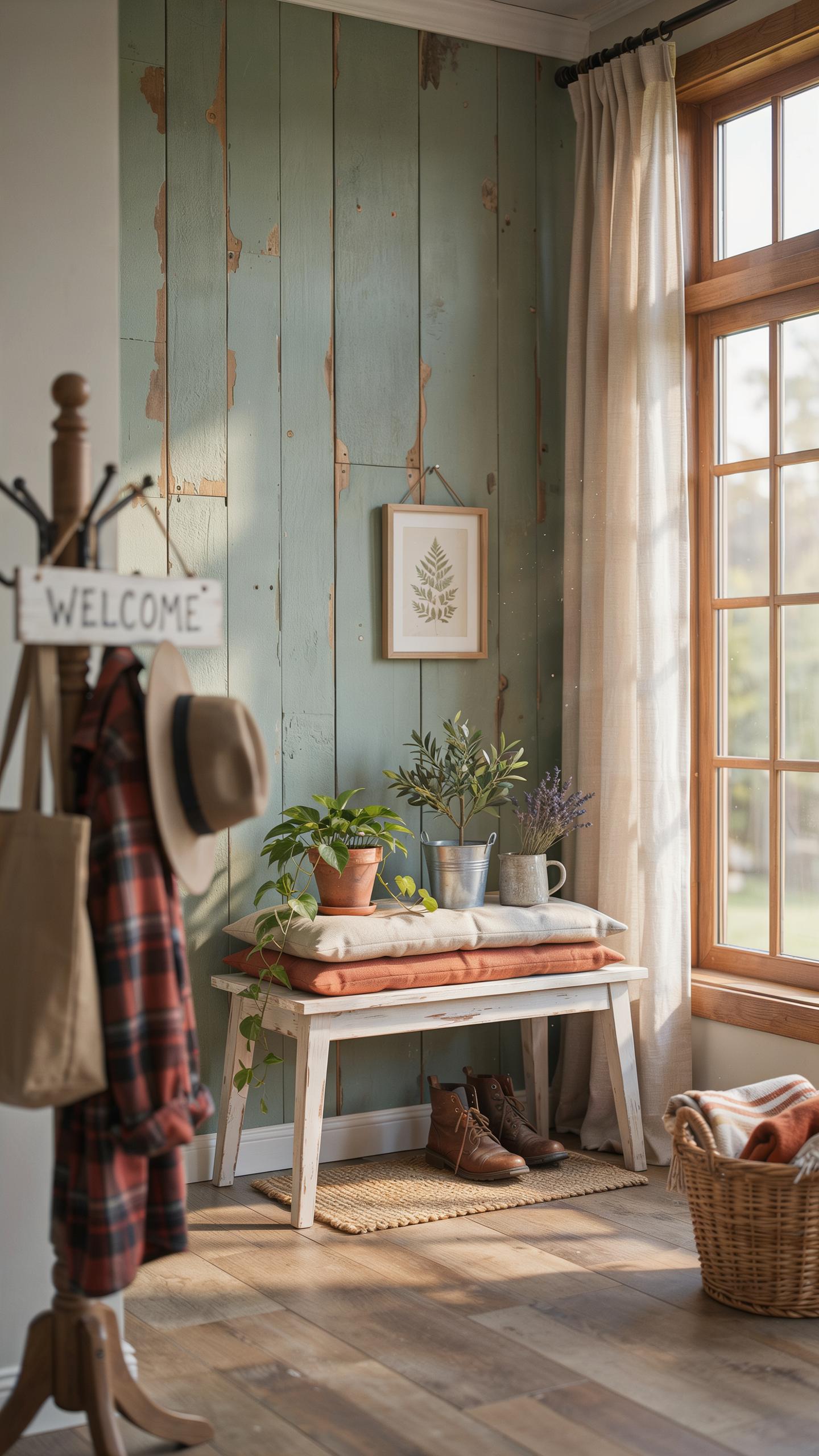
Salvaged wood delivers authenticity that new materials cannot replicate. Barn doors, reclaimed wood frames, and old crates carry the actual patina of age and use. Source these pieces from salvage yards, architectural salvage shops, or online marketplaces. The weathered finish requires minimal intervention to fit farmhouse design standards.
Restoration focuses on structural integrity rather than perfection. Clean salvaged wood with a wire brush to remove loose debris and dirt. Apply a clear matte finish or leave the wood bare to maintain its worn character. Mismatched grain patterns and surface imperfections enhance farmhouse authenticity. Skip heavy sanding or refinishing that erases the historical appeal of the material.
Combining Iron And Wood For A Modern Industrial Twist
Black metal hardware paired with warm wood tones creates visual balance in entryways. Iron brackets, hinges, and coat hooks ground the space with industrial elements while wood keeps it inviting. This combination emerged from functional design choices in early 20th century industrial spaces and remains relevant today.
Install iron fixtures at consistent heights to establish rhythm across your entry. Choose matte black finishes over shiny chrome to maintain cohesion with distressed wood. The contrast between cool metal and warm wood tones prevents the space from feeling too casual or too refined. This approach works in both traditional farmhouse and contemporary rustic settings.
Entranceway Ideas To Make A Great First Impression
Drafting The Perfect Seasonal Welcome Mat Layout
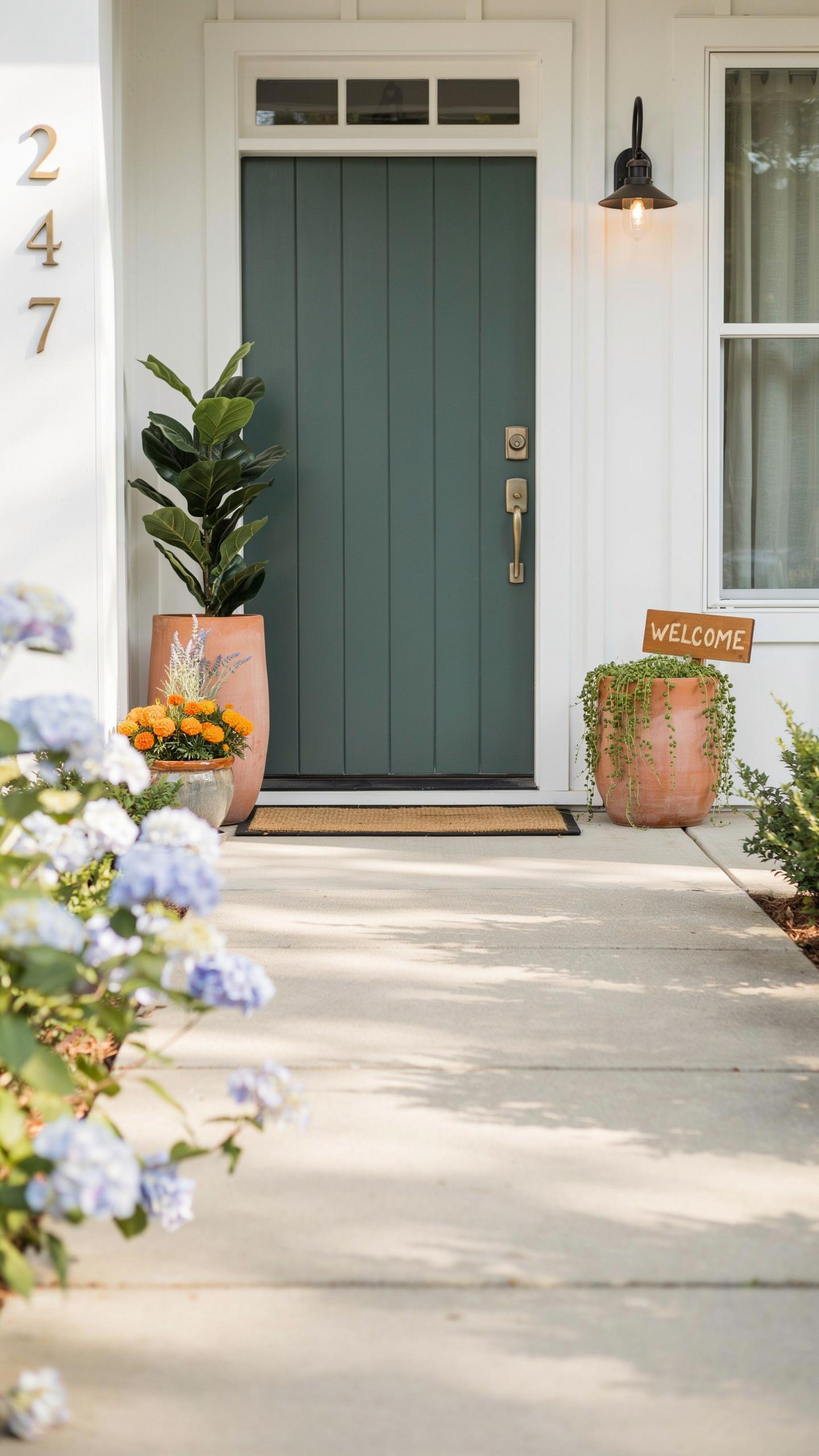
Layer a patterned outdoor rug under a classic coir fiber welcome mat to create visual depth at your threshold. The bottom rug anchors the space and prevents the welcome mat from shifting. Coir mats absorb moisture effectively and last longer than alternatives. This two-layer approach defines your entryway without requiring renovation or major expense.
Rotate your bottom rug seasonally to refresh the look. Winter calls for darker tones or geometric patterns that hide dirt. Spring and summer benefit from lighter colors or neutral palettes. Change the welcome mat text to match the season for minimal cost and maximum impact.
Refreshing Your Front Door Color Palette
Choose classic farmhouse paint colors like soft sage, charcoal gray, or clean antique white for your front door. These colors complement traditional farmhouse architecture and resist trendy shifts. Soft sage connects to rural agricultural roots. Charcoal gray provides contrast on light home exteriors while maintaining period authenticity.
Paint quality matters more than color choice. Use exterior-grade paint rated for UV protection and moisture resistance. Apply two coats for durability and color accuracy. Test your chosen color on a large cardboard sample and observe it at different times of day before committing.
Functional Charm Designing An Entry Way With Coat Hooks
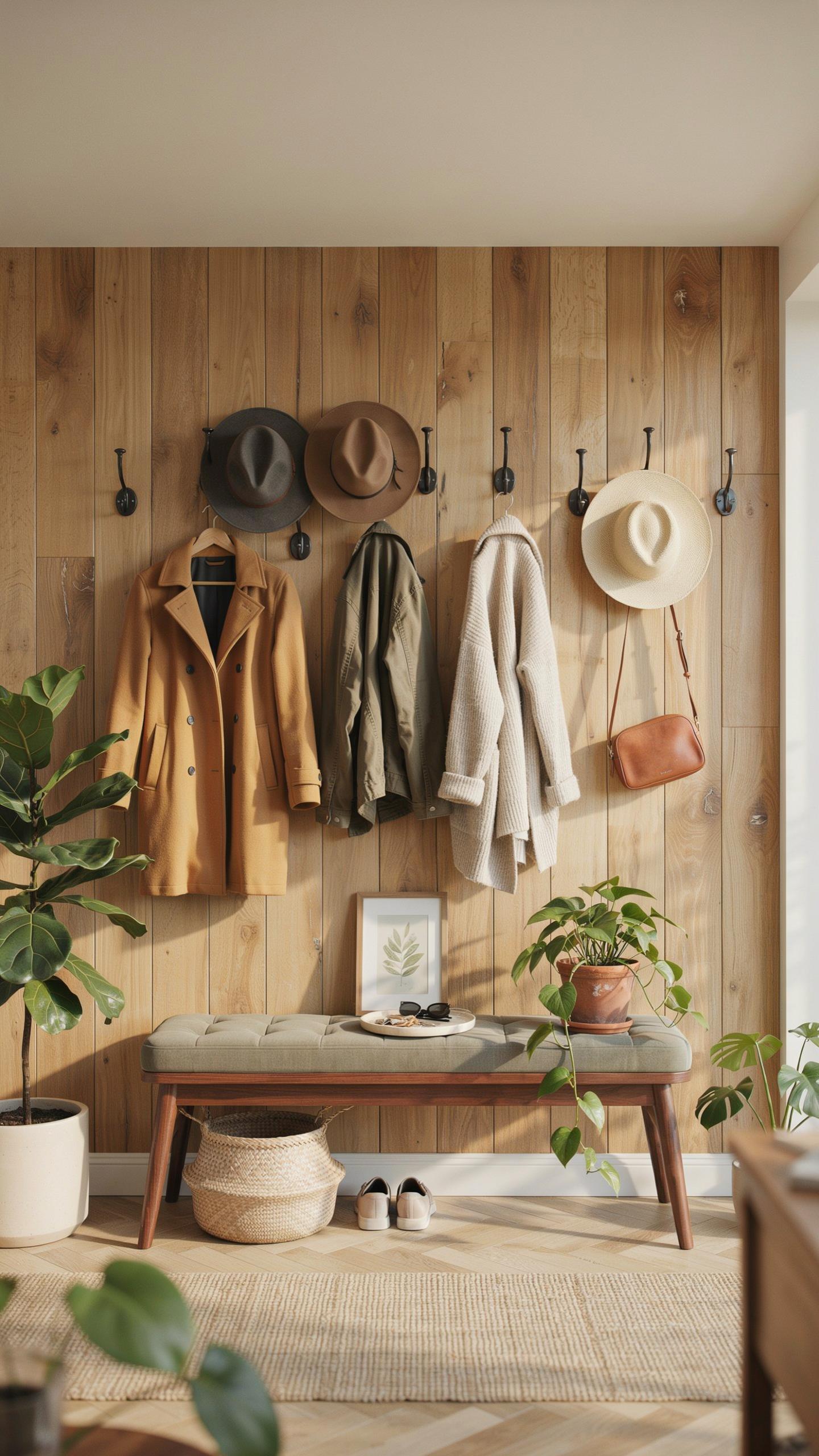
Selecting Hook Boards That Blend Style And Practicality
Wooden hook racks with cast iron hooks solve a core problem in farmhouse entryways: you need storage that works and looks intentional. Wood species like pine, oak, or reclaimed barn wood handle the visual weight. Cast iron hooks resist rust and support heavy coats without sagging. Mount the board at 60 to 72 inches from the floor to accommodate hanging coats while staying accessible.
The farmhouse aesthetic pulls from rural utility, where function drove design choices. Simple wooden boards with basic hardware reflect this practical heritage. Install your hook board near the entry door, not across the room. This placement captures wet coats and bags immediately upon entry. Choose hardware with minimal ornamentation to maintain the uncluttered farmhouse look.
Tips For Arranging And Styling Hanging Items
Balance works by mixing practical items with styled objects. Hang coats on the outer hooks, then position straw hats or woven market bags on inner hooks. This arrangement creates visual rhythm while keeping daily-use items accessible. Avoid clustering all heavy items on one side, which throws off the board’s appearance and strains mounting hardware.
Decorative elements like market bags filled with dried lavender or small baskets add texture without sacrificing function. The key is using items that serve double duty: they organize and they fill visual space. Keep the arrangement loose enough to accommodate seasonal changes. Winter means heavier coats dominate. Spring brings lighter layers. Your styling adapts to what actually gets used and worn.
Front Entrance Mudroom Ideas For Busy Families
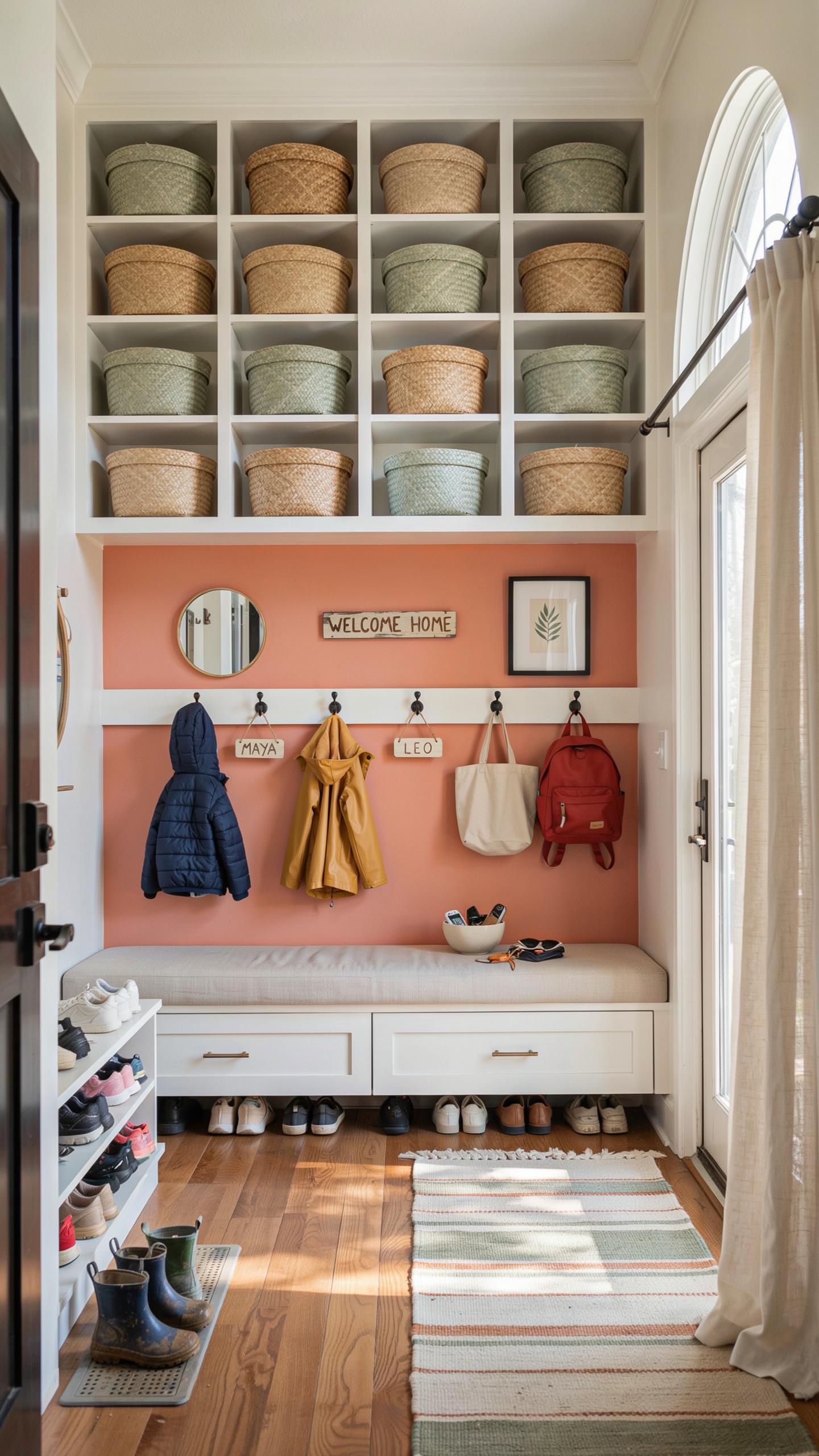
Integrating Storage Benches And Cubbies
A wooden storage bench serves two functions in a farmhouse mudroom. It provides seating for putting on shoes and removes clutter from sight. Pair the bench with matching wicker baskets underneath to organize items by family member or category.
Cubbies mounted on walls above the bench maximize vertical space. Each cubby holds backpacks, hats, or seasonal gear. This setup keeps high-traffic zones clear while maintaining the farmhouse aesthetic through natural materials and simple construction.
Essential Organizing Tools For The Perfect Mudroom Set Up
A functional mudroom requires specific storage items that address common pain points. Shoe trays prevent dirt from spreading onto floors. Umbrella stands keep wet items contained. Labeled storage bins help family members locate what they need without asking questions.
- Metal Shoe Trays: Shallow trays catch mud and moisture. Place them near the entry door for immediate shoe placement before entering living areas.
- Umbrella Stands: Contain wet umbrellas in one spot. They prevent water damage to floors and walls while keeping entryways organized.
- Labeled Storage Bins: Clear labeling eliminates guesswork about item location. Use consistent sizing for a cohesive appearance on shelves or in cubbies.
- Wall Hooks: Install hooks at varying heights for coats, bags, and accessories. Farmhouse designs use simple metal or wooden hooks.
- Bench Seating With Lift Top Storage: Combines surface space for shoes with hidden storage underneath. Keeps items accessible yet out of view.

These tools work together to create a system where every item has a designated place. Your family knows exactly where to find and store necessary items, reducing morning chaos and maintaining order throughout the day.
Maximizing Space With Cozy Small Entryways
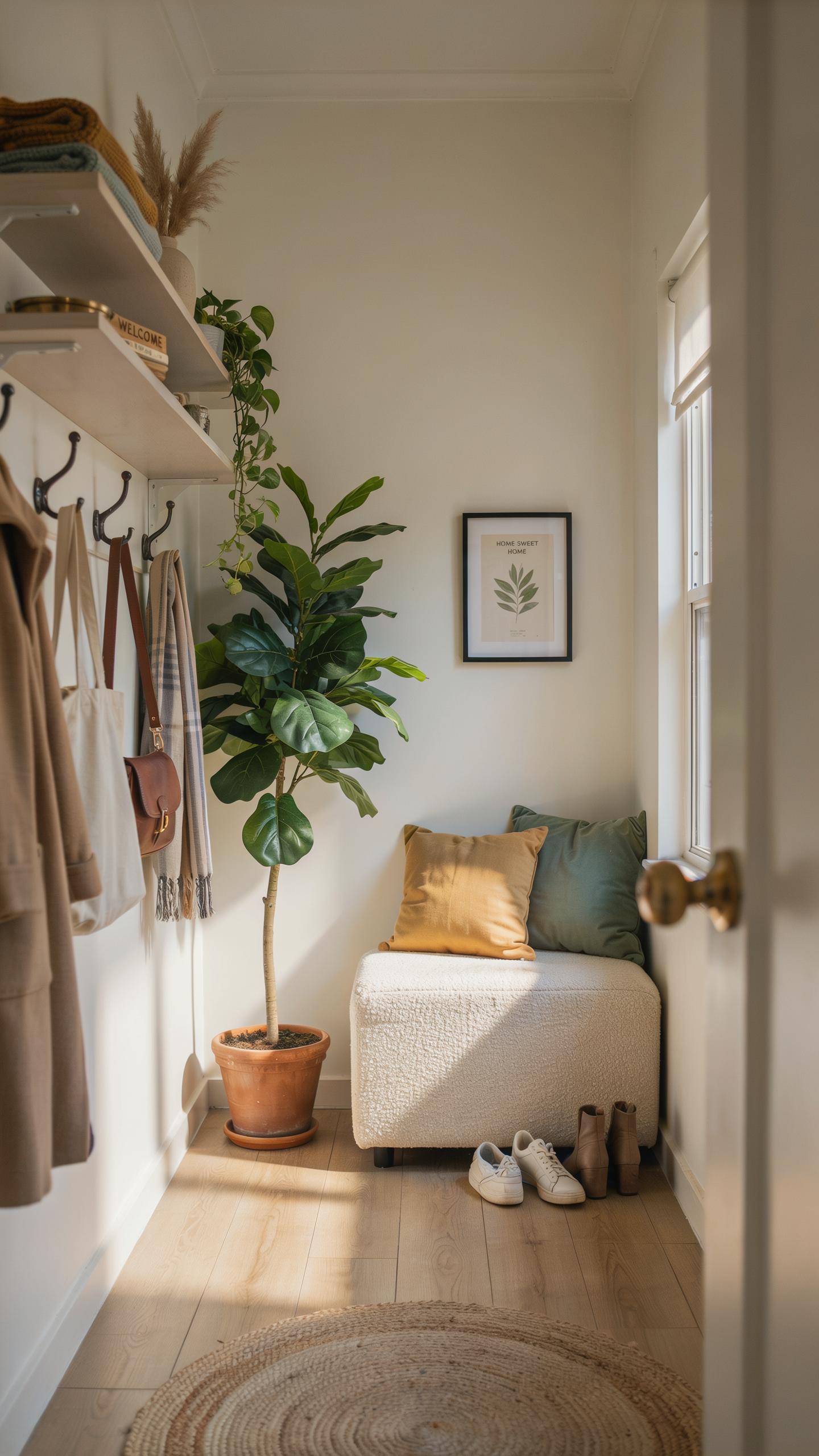
Utilizing Vertical Space For Storage And Art
Small entryways demand upward thinking. Floating rustic wall shelves mounted at eye level and above store items without consuming floor space. High-hanging hooks pull the visual focus upward, making tight spaces feel taller. This approach solves the storage problem while keeping pathways clear and functional.
Vertical storage works because it exploits unused wall real estate. Farmhouse design embraces exposed wood shelving and wrought iron hardware that anchor these installations visually. Pairing storage with artwork on the same walls creates a cohesive display that doesn’t clutter. Scale matters: smaller shelves and hooks suit cramped spaces better than large, bulky alternatives.
The entryway is where the heart of the home begins, and a few simple touches are all you need to welcome your family back to a simpler time. Even the smallest rustic details can create a sanctuary that feels both timeless and true.
Selecting Compact Furniture For Narrow Foyers
Semi-circle console tables fit snugly against walls without protruding into traffic paths. These pieces offer surface area for keys, mail, and decor without the footprint of traditional rectangular tables. Slim entryway benches serve dual purposes: seating for putting on shoes and subtle storage underneath. Width matters more than depth in narrow spaces.
Furniture placement determines whether a small foyer functions or frustrates. Tuck benches and tables flush against one wall to maintain clear passage. Choose pieces with open legs rather than solid bases to create visual lightness. Farmhouse designs often use reclaimed wood or metal frames that feel substantial while remaining space-conscious.
Simple Styling Tips For Your Entryway Decor Farmhouse Look
Mixing Neutral Color Palettes
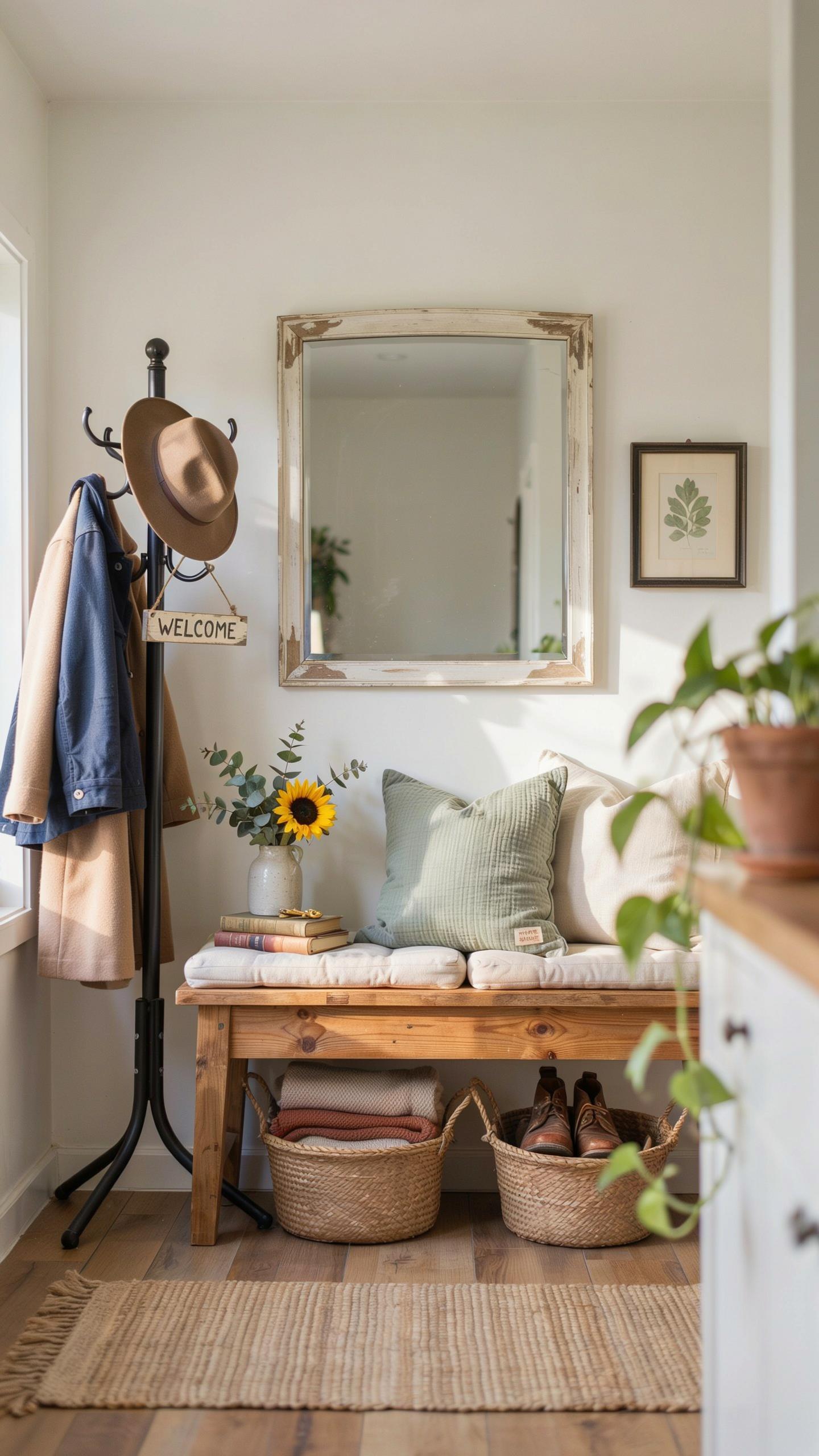
Soft whites, warm beiges, and muted grays create the foundation of farmhouse design. These colors reflect light and expand small spaces. They establish visual calm at your entry point. Neutral palettes reduce visual clutter and allow architectural details to stand out. Paint walls in these tones or use them as your base layer.
The farmhouse aesthetic originates from rural architecture where limited resources dictated simple, practical color choices. These neutral tones aged well on buildings exposed to weather and sunlight. Modern farmhouse design maintains this restraint. Stick to two or three neutral shades maximum in your entryway to avoid diluting the effect.
Adding Cozy Textiles For Extra Warmth
Layer cream-colored runner rugs, neutral pillows, and soft throw blankets throughout your entryway. Textiles add tactile interest and break up hard surfaces like wood floors and painted walls. They signal comfort and occupation rather than sterility. Textiles also absorb sound and make the space feel more intimate and welcoming.
Choose natural fiber materials like cotton, wool, and jute whenever possible. These materials align with farmhouse roots and offer durability. Place a runner rug along your entryway floor to define the space and protect underlying surfaces. Drape a throw blanket over a bench or chair to encourage visitors to settle and stay.
Frequently Asked Questions

What are the essential elements needed to create a farmhouse home decor entryway?
To start your farmhouse home decor entryway, focus on a balance of rustic textures and functional pieces. Begin with a wooden console table or a simple bench as your focal point. Add “lived-in” touches like galvanized metal bins for storage, a woven seagrass rug for texture, and soft neutral tones. These foundational elements create that classic, welcoming aesthetic without overwhelming a beginner who is just starting their decorating journey.
How can I style a small foyer to achieve a cozy farmhouse look?
Styling a small space requires maximizing vertical real estate. Hang a large windowpane mirror or reclaimed wood coat hooks to draw the eye upward. Incorporate a slim farmhouse home decor entryway table if space allows, or use a wall-mounted shelf to display small greenery and vintage signs. By keeping the floor clear and using light, airy colors, you can achieve a cozy country vibe even in the tightest quarters.
Can I achieve a farmhouse entryway aesthetic on a tight budget?
Absolutely! Farmhouse style celebrates the beauty of repurposed and vintage finds. You can easily save money by scouting local thrift stores for old wooden crates to use as shoe storage or a weathered mirror that needs a simple coat of white paint. Incorporating natural elements like dried lavender or eucalyptus in a glass jar is another inexpensive way to elevate your farmhouse home decor entryway without spending a fortune.