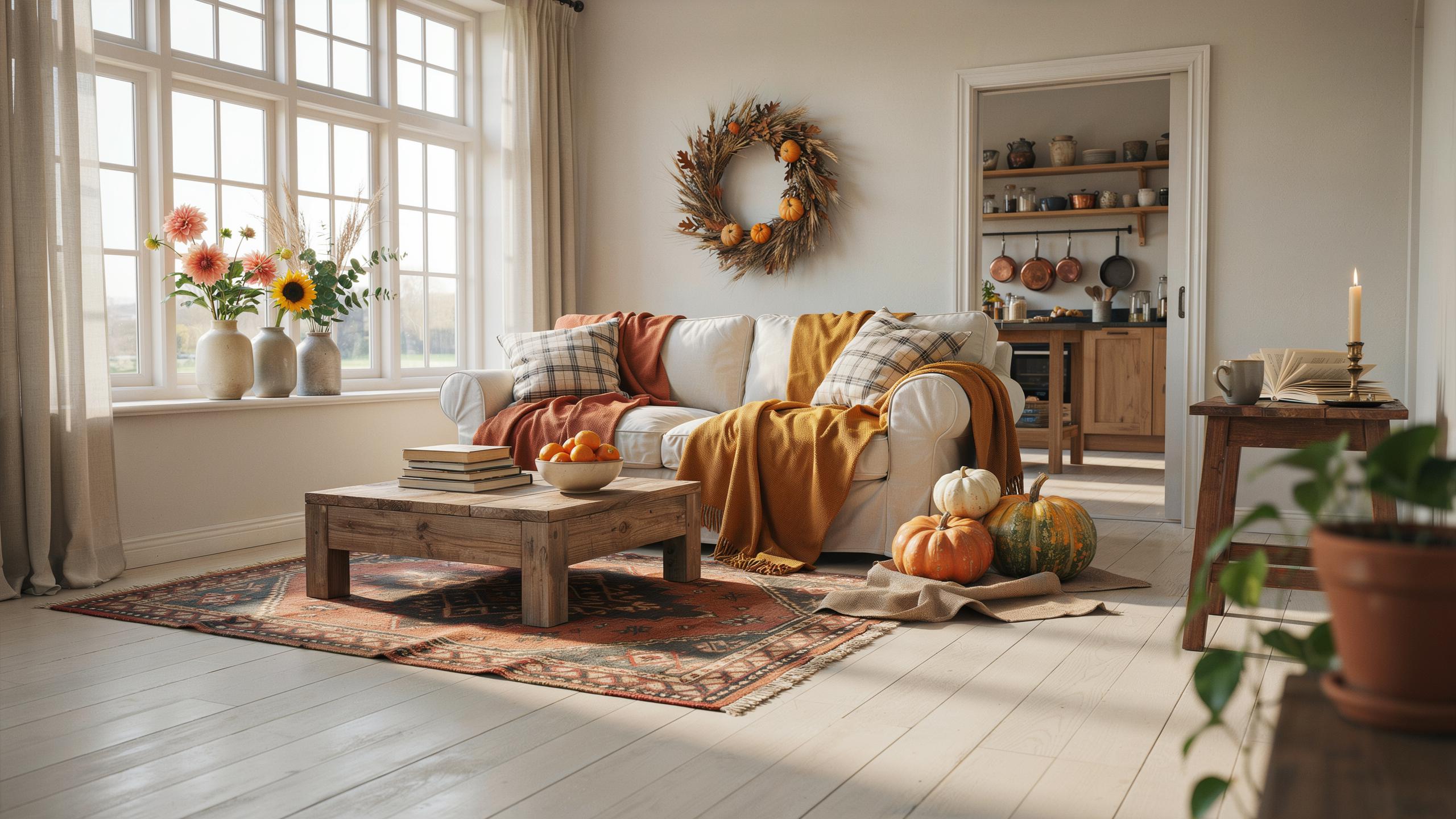
Embracing Autumn Warmth With Rustic Autumn Ambiance
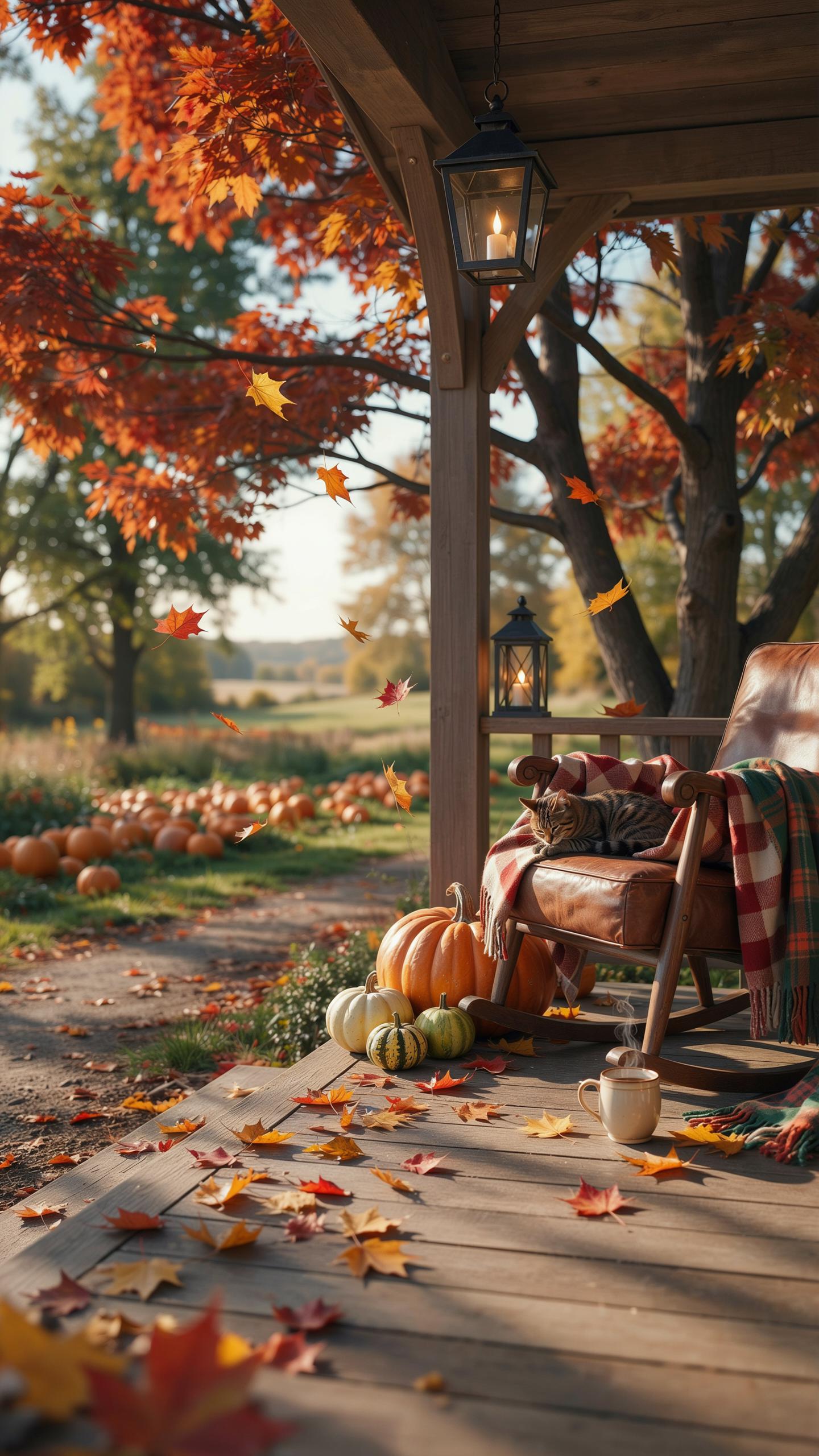
Natural Elements For Cosy Interiors
Dried wheat sheaves, acorns, and preserved maple leaves work as functional decor because they cost less than fresh flowers and last months without maintenance. These materials tie directly to farmhouse design roots, which emerged from rural agricultural settings where natural harvest materials served both practical and aesthetic purposes.
Position dried wheat in glass vases or bundle them with twine for mantels and entryways. Acorns fill shallow bowls on coffee tables or sidebars. Preserved leaves work in framed displays or scattered across shelving. These elements require no watering, no replacement schedule, and they naturally coordinate with existing wood furniture and stone accents in farmhouse interiors.
Warm Colour Palettes For The Season
Terracotta, deep amber, and muted mustard tones shift your visual environment without requiring structural changes or major purchases. These warm hues reflect historically accurate color schemes found in traditional farmhouse design, which drew from natural earth pigments and harvest produce visible in rural communities.
Apply these colors through throw blankets draped over sofas and chairs, where they provide both visual warmth and functional comfort. Accent pillows in these tones layer onto existing neutral furniture, allowing quick seasonal swaps. Curtains, table runners, and wall art in these warm hues reinforce the seasonal shift without permanent commitments to your space.
Cozying Up Your Entryway With Fall Deco
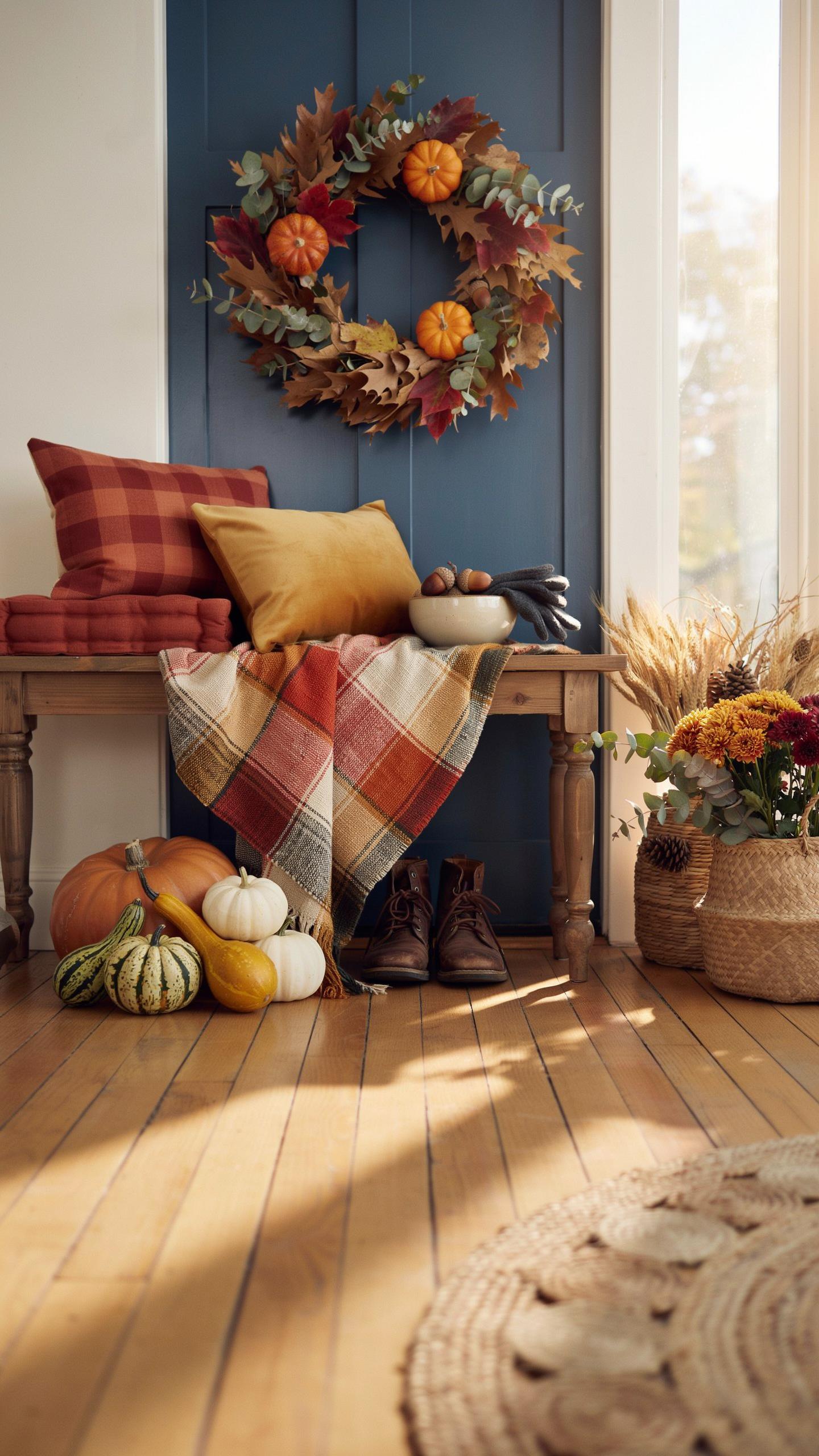
Charming Porch Displays With Heirloom Pumpkins
Heirloom pumpkins work as a functional fall display because they’re available from late August through November in most regions. White, green, and orange varieties create visual contrast without clashing. Arrange them on front steps in odd numbers, which farmhouse design favors for balance. This approach costs less than rotating full seasonal collections and delivers immediate curb appeal.
Heirloom pumpkins last longer than standard decorative gourds because of their thicker skin and lower water content. Place them in shaded areas of your porch to extend their display life from four to eight weeks. This placement protects them from direct sun exposure and temperature fluctuations that cause premature deterioration and softening.
Welcoming Wreaths And Doormats
Grapevine wreaths hold dried materials better than foam bases because the branches naturally grip stems and berry clusters. Dried corn husks and wheat provide texture while staying stable in outdoor conditions for the entire fall season. Hang your wreath using a sturdy hook rated for at least five pounds to handle wind and weather stress.

Coir doormats absorb moisture and trap debris effectively on farmhouse porches. A layered doormat system uses one mat outside your door and one inside your entryway. This setup reduces tracked dirt and protects your flooring. Coir naturally breaks down over two to three years of regular use, so plan replacement annually for high-traffic entries.
Setting A Grateful Table With Fall Thanksgiving Decor
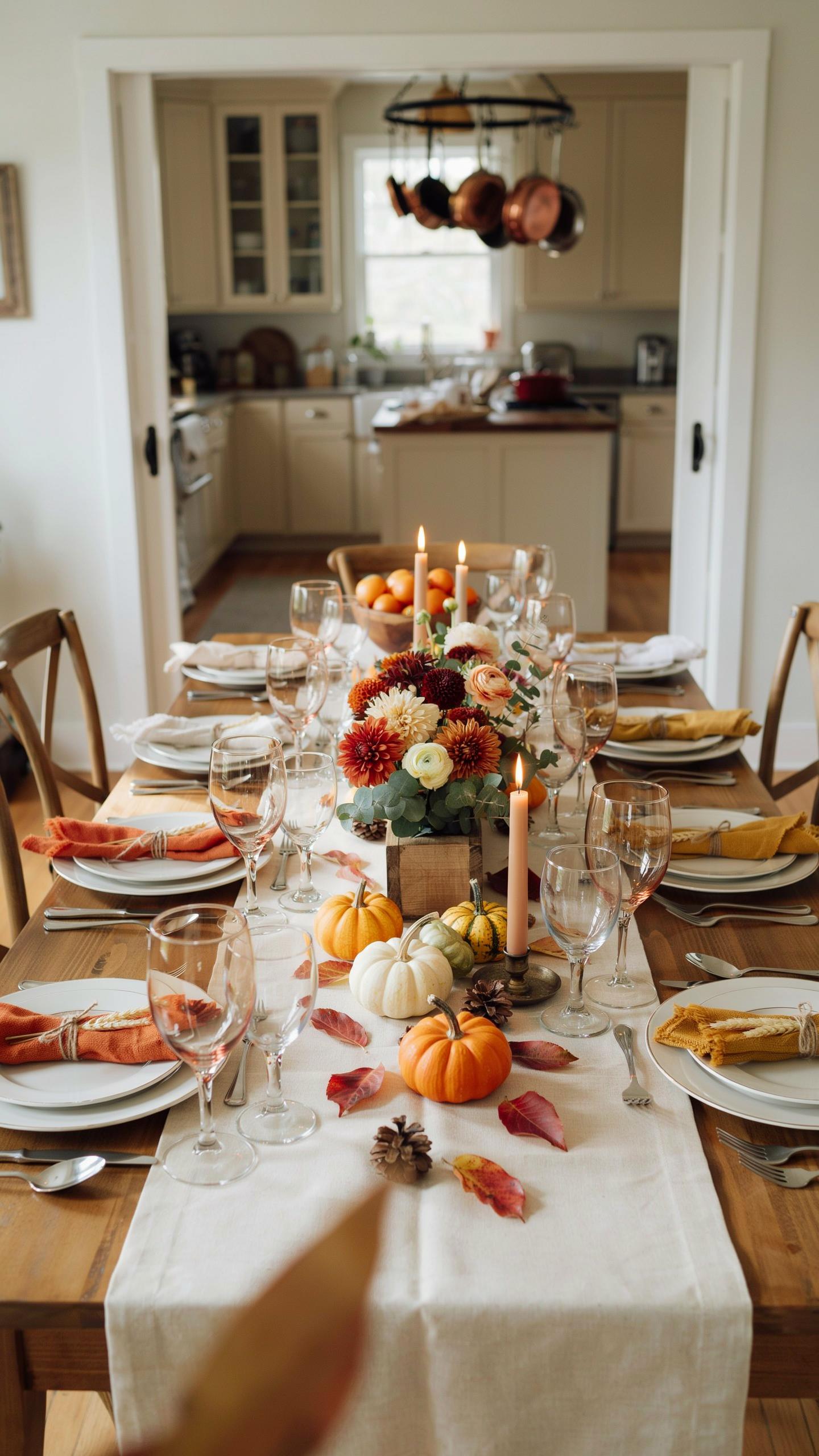
Essential Elements For A Farmhouse Thanksgiving Tablescape
A farmhouse Thanksgiving table requires specific foundational pieces that work together to create visual cohesion and authentic rustic style. Start with items that reflect the farmhouse aesthetic: natural materials, neutral tones, and functional design. These elements establish the baseline for a dining experience that feels intentional rather than random.
- Burlap or linen table runner: Provides a neutral base layer that anchors the table design. Natural fiber runners add texture without competing for visual attention from place settings or centerpieces.
- Solid brass or matte black candlesticks: Metallic accents in farmhouse spaces work best in muted finishes. These options hold candles safely while maintaining the understated aesthetic that defines the style.
- White ceramic pumpkins: Serve as sculptural elements that reference the season without relying on orange or carved jack-o-lantern imagery. White pumpkins align with neutral farmhouse color palettes.
- Eucalyptus sprigs: Add greenery that feels organic and garden-sourced. Eucalyptus dries well and maintains color for weeks, making it practical for extended fall decorating.
- Personalized wooden place cards: Ground the table in handcrafted details that guests notice immediately. Wood place cards reinforce the farmhouse connection to natural, worked materials.
These foundational pieces combine to create a Thanksgiving table that feels both polished and approachable. The combination works because each item serves a purpose beyond decoration, maintaining the farmhouse principle that form follows function.
Layering Textures And Table Linens
Layering textures creates visual depth and prevents farmhouse tablescape from appearing flat or one-dimensional. Rattan charger plates add structural pattern beneath dinner plates, while soft cotton napkins provide contrast through their smooth finish and drape. This combination of hard and soft materials reflects how farmhouse design actually works in functional spaces.
Neutral tones amplify the textural contrast rather than competing for attention. White napkins against natural rattan chargers create clear visual separation without introducing competing colors. This approach keeps the table readable and prevents sensory overload. The layering technique applies throughout farmhouse design, whether on walls, shelves, or tabletops. By combining materials with different tactile qualities, you build interest that sustains attention across the meal. This strategy works because it respects the viewer’s cognitive load while delivering sophisticated results.
Staging Your Space Using Farmhouse Baskets Decorating Ideas
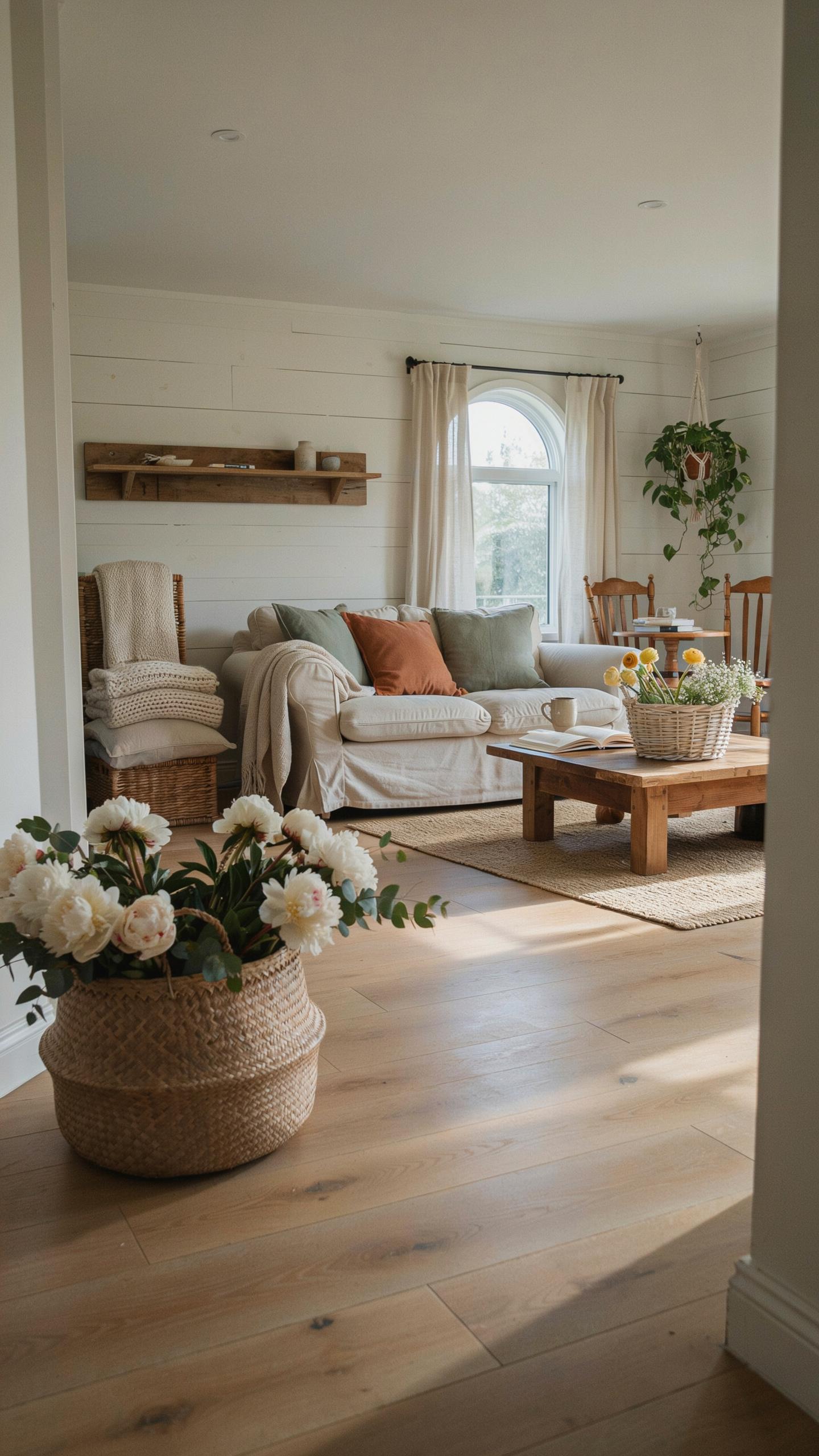
Displaying Blankets And Pillows In Large Woven Baskets
Rolled blankets and pillows in oversized baskets solve two problems at once. You gain accessible storage while creating intentional visual texture in your room. Seagrass and woven baskets hold bulk without looking cluttered. Position them near seating areas where you actually use throws and pillows. This approach keeps seasonal items within reach during temperature changes.
Large woven baskets handle weight better than smaller decorative options. Chunky knit throws benefit from basket storage because air circulates around the fibers. Baskets prevent wrinkles and crushing that occurs with folded storage. Rotate basket placement seasonally to refresh your room layout. This practical method transforms functional storage into a design element.
The magic of a farmhouse home is that it breathes with the seasons, inviting the beauty of the outdoors in to refresh the soul. Every simple accent tells a story of comfort and the timeless rhythms of nature.
Creating Eye Catching Wall Hangings With Flat Tobacco Baskets
Tobacco baskets mount flat on walls to create shallow display surfaces. These split wood baskets originated as functional farm equipment and transition well into home decor. Their natural material and woven construction align with farmhouse design principles. Mount them at eye level or slightly above for best visual impact. The basket structure provides natural framing for seasonal wreaths.

Seasonal wreaths positioned in basket centers anchor your wall display. Swap wreaths quarterly to refresh the look without removing baskets. Spring florals, summer greenery, fall foliage, and winter evergreens each serve the display function. The basket rim protects walls from wreath damage. This layering technique maximizes visual interest using minimal wall space.
Creating A Serene Environment With A Natural Christmas Scheme
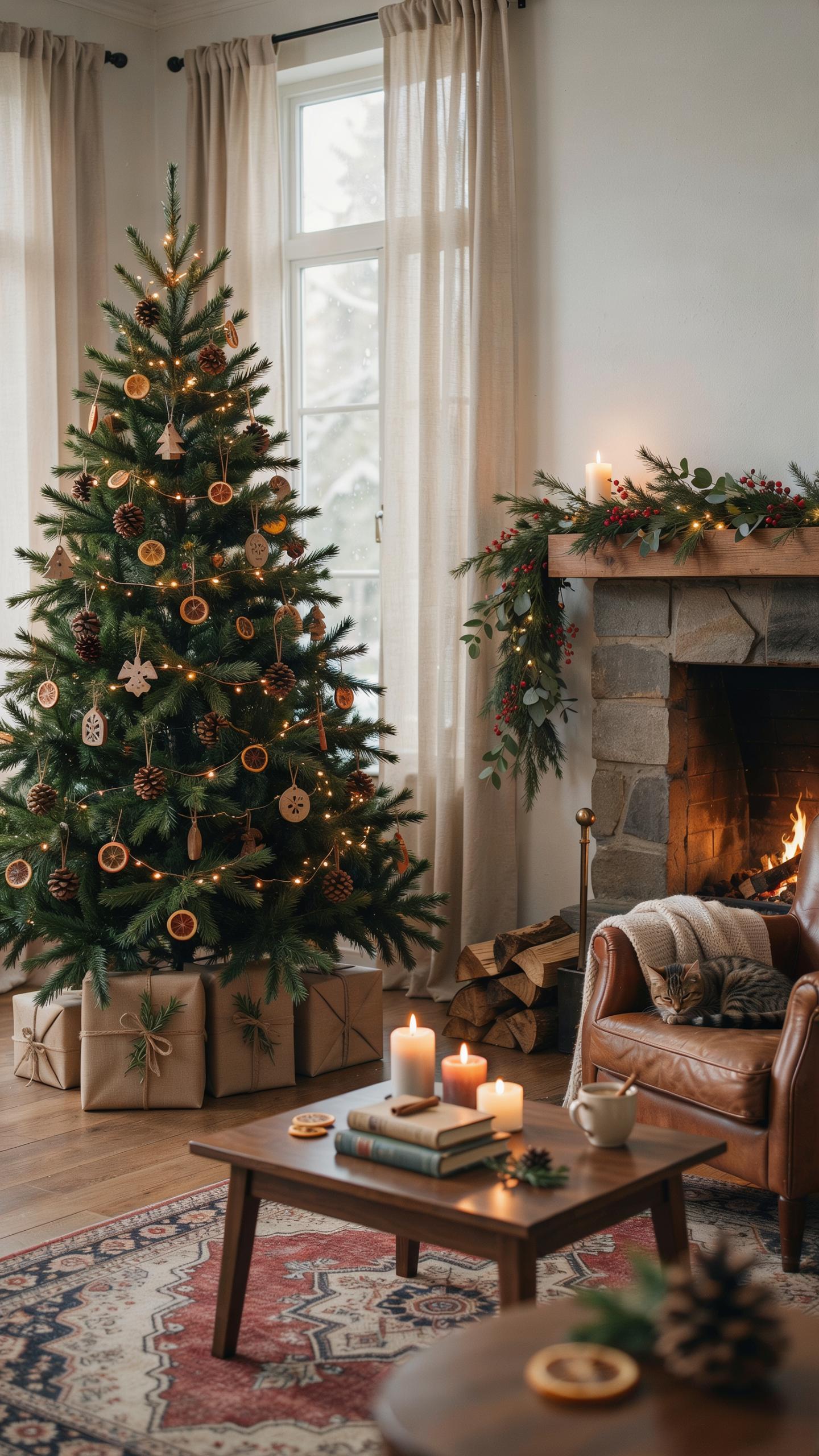
Decorating With Fresh Pinecones And Cedar Trimmings
Fresh cedar branches and large pinecones work as functional decor elements on fireplace mantels. Cedar releases natural oils when handled, creating subtle fragrance without synthetic additives. Pinecones provide visual texture and scale. These materials cost less than manufactured ornaments and source directly from outdoor spaces or garden suppliers.
Farmhouse design emphasizes materials that bridge indoor and outdoor spaces. Evergreen branches retain their appearance for weeks when kept cool and misted lightly. Position pinecones at varying heights to create depth on your mantel. This approach aligns with farmhouse principles of using what nature provides rather than relying on mass produced alternatives.
Incorporating Undyed Fabrics And Warm Lighting
Tree skirts and stockings made from undyed linen, cotton, or wool establish visual consistency in natural Christmas schemes. These materials complement cedar and pinecone displays without competing for attention. Undyed fabrics show texture through weave patterns rather than dyes. Warm white lights at 2700 Kelvin temperature enhance the understated aesthetic farmhouse decor demands.

Linen and wool perform functionally in holiday settings. Wool resists wrinkles and maintains structure around tree bases. Linen creates soft folds that complement mantel arrangements. Warm lighting emphasizes fabric texture and wood grain, core elements of farmhouse design. This combination builds cohesion across your entire seasonal display without visual chaos.
Designing A Unique Focal Point With A Boho Christmas Tree
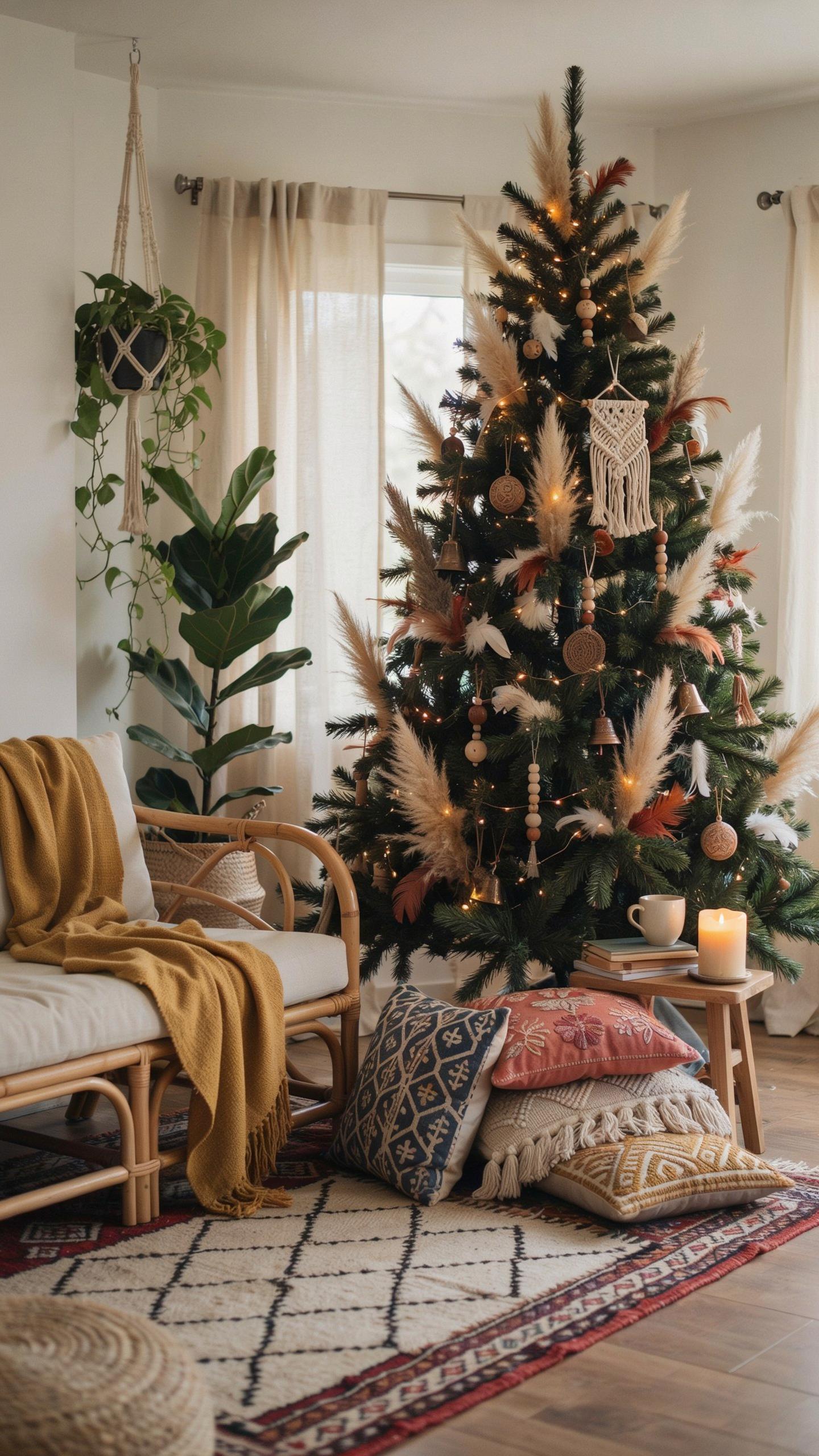
Integrating Macrame Ornaments And Dried Florals
Macrame ornaments replace traditional glass baubles with functional textile elements. Handmade macrame pieces hang from branches and create visual depth without weight concerns. Wooden bead garlands add organic texture while complementing natural materials. Dried pampas grass, baby’s breath, and wheat stalks tuck into tree branches for authentic boho styling without requiring water or maintenance.
This combination works because each material reflects light differently. Macrame casts soft shadows. Wood beads catch light warmly. Dried florals create negative space between dense evergreen branches. The layered approach prevents monotony and builds visual interest across all tree depths and angles.
Selecting A Textured Neutral Tree Skirt
A woven rattan tree collar or heavily fringed cotton skirt anchors your boho setup visually. Rattan works best for larger trees because it provides substantial coverage without bulk. Fringed cotton skirts drape naturally and hide tree bases effectively. Both options maintain neutral color palettes that don’t compete with your ornament choices.

Texture matters more than color in boho design. Rough rattan fibers catch light. Fringe moves with air currents and adds subtle dimension. These tactile qualities ground the free-spirited aesthetic of your tree. Neutral tones like cream, tan, and natural brown harmonize with macrame and dried materials without jarring contrast.
Sprucing Up The Mantle With Traditional Christmas Deco
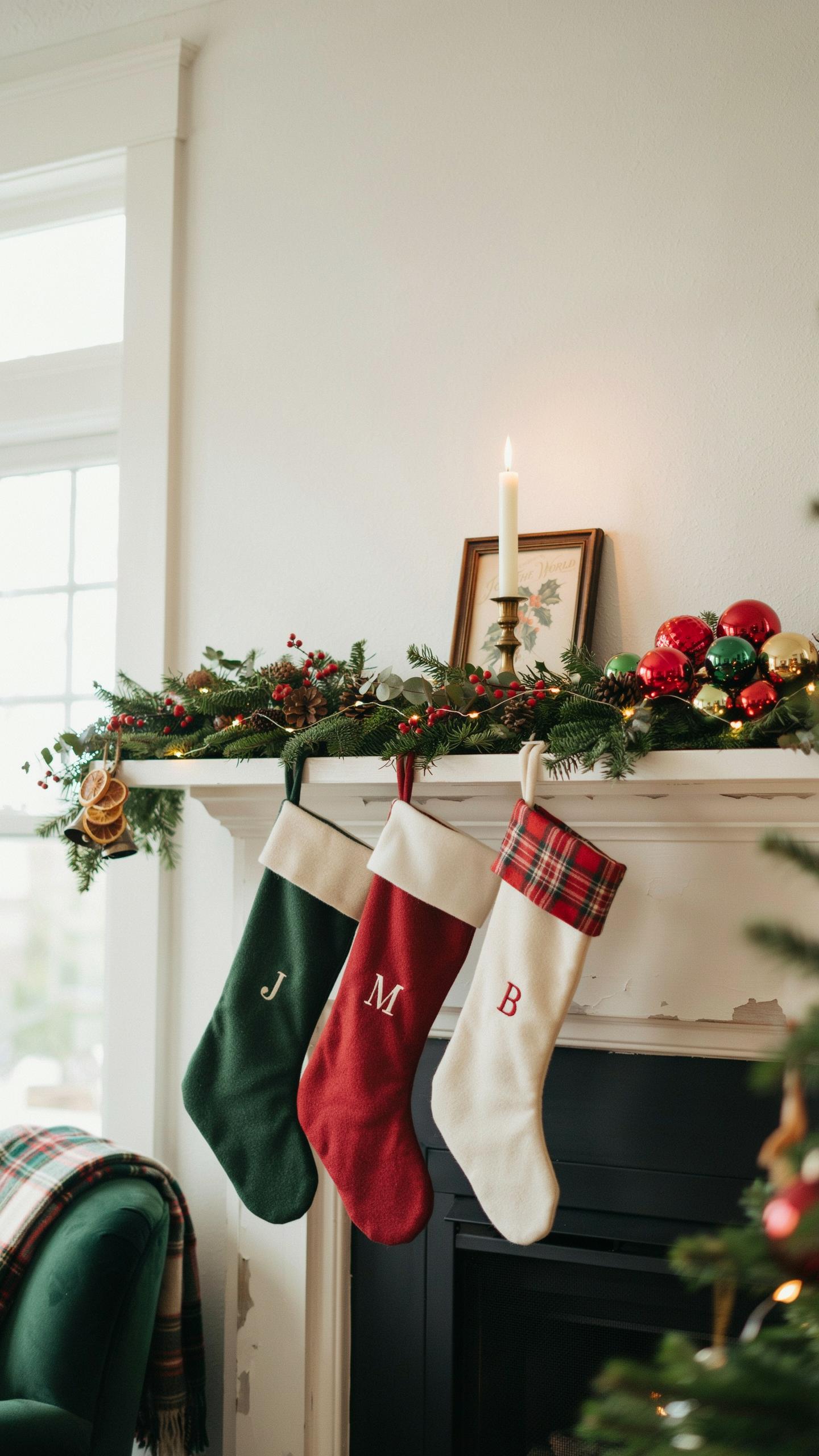
Hanging Knit Stockings From Cast Iron Holders
Cable-knit stockings hung from cast iron stocking holders create a functional display on your mantelpiece. Cast iron holders grip fabric securely without damage and withstand repeated seasonal use. Space stockings evenly across the mantel for visual balance. This setup works on any fireplace type, including gas and electric units.
The stocking arrangement serves a practical purpose beyond decoration. It establishes a focal point that draws the eye and anchors your entire mantel design. Cast iron’s durability means you reuse the same holders year after year. This approach keeps costs down while maintaining authentic farmhouse aesthetics.
Weaving Twinkle Lights Into Thick Fir Garlands
Douglas fir garlands provide dense foliage that conceals micro-LED string lights effectively. Weave lights horizontally through the garland base, spacing them every six to eight inches. Micro-LEDs generate minimal heat, making them safe for fresh greenery. The garland’s thickness prevents lights from creating hot spots or visible gaps.

Layering lights into garland creates depth and distributes illumination evenly across your mantel. This technique hides cords and power sources from view. Fresh fir garland lasts three to four weeks indoors with proper hydration. The combination of evergreen scent and soft lighting delivers functional ambiance for winter months.
Bringing Rustic Holiday Decor To Every Room
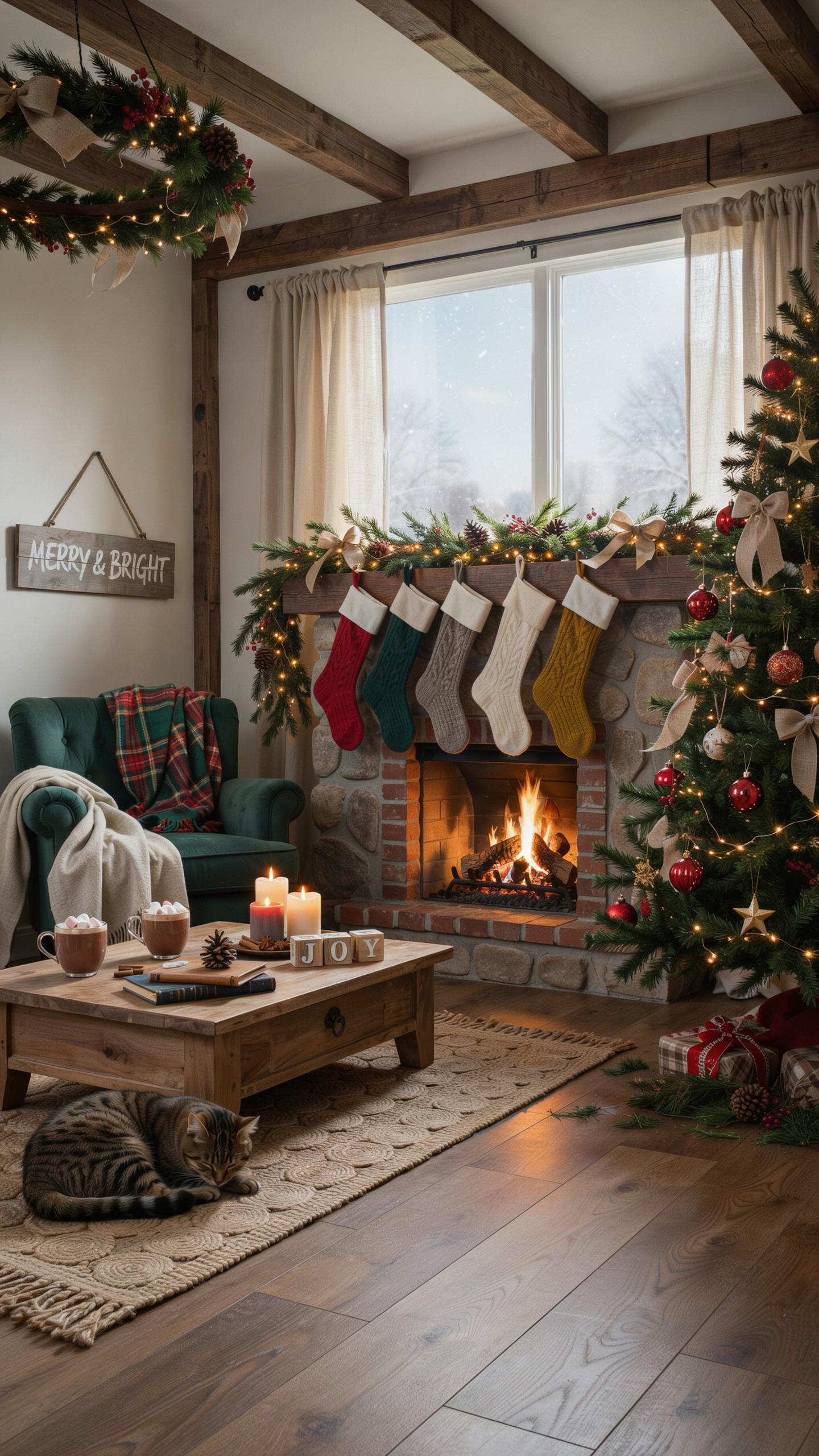
Quick Ways To Add Rustic Cheer To Your Home
Secondary living areas need seasonal updates that don’t demand major renovation work. These simple strategies distribute rustic holiday elements throughout your home without overwhelming individual spaces. Each tactic uses affordable materials and requires minimal installation time.
- Small Potted Miniature Pine Trees In Galvanized Metal Buckets: Group potted evergreens in clusters on side tables or entryway corners. The galvanized metal container reinforces industrial farmhouse aesthetics while protecting surfaces from moisture damage and soil spillage.
- Mini Boxwood Wreaths On Kitchen Cabinet Doors With Red Ribbons: Mount small wreaths directly onto cabinet fronts using adhesive hooks or wire. Red ribbon adds seasonal color contrast while boxwood maintains visual interest through the entire winter season.
- Vintage Brass Bells On Wooden Bead String Along Open Shelving: Thread brass bells onto natural wood beads and drape across shelves. This approach adds functional texture while keeping hands free for displaying other seasonal pieces and dishware.
- Red And White Grain Sack Striped Hand Towels: Replace standard bathroom linens with grain sack patterned towels during holiday months. Grain sack fabric patterns reference early 20th century agricultural textiles and work across traditional and modern farmhouse designs.
- Layered Wooden Crates With Greenery And Candles: Stack reclaimed wooden crates and fill with boxwood clippings and pillar candles. This creates vertical visual interest in corners and alcoves while maintaining the weathered farmhouse aesthetic.
These additions work across kitchens, bathrooms, bedrooms, and hallways without requiring permanent installation or structural changes. Rotate items between rooms to maximize your existing seasonal inventory.
Using Distressed Wood Signs And Accents
Weathered wooden signs featuring seasonal phrases anchor rustic holiday decor in hallways and entryways. Distressed finishes mimic authentic aging rather than appearing artificially replicated. This technique works because the worn surface texture communicates genuine vintage origins rather than mass production.

Modern farmhouse design relies heavily on distressed wood because the finish bridges contemporary interiors with historical agricultural aesthetics. Displays of these signs in entry spaces establish the home’s design direction immediately. The worn patina and hand-painted lettering create focal points that don’t compete with other seasonal elements.
Arranging Festive Greenery With Christmas Arrangements
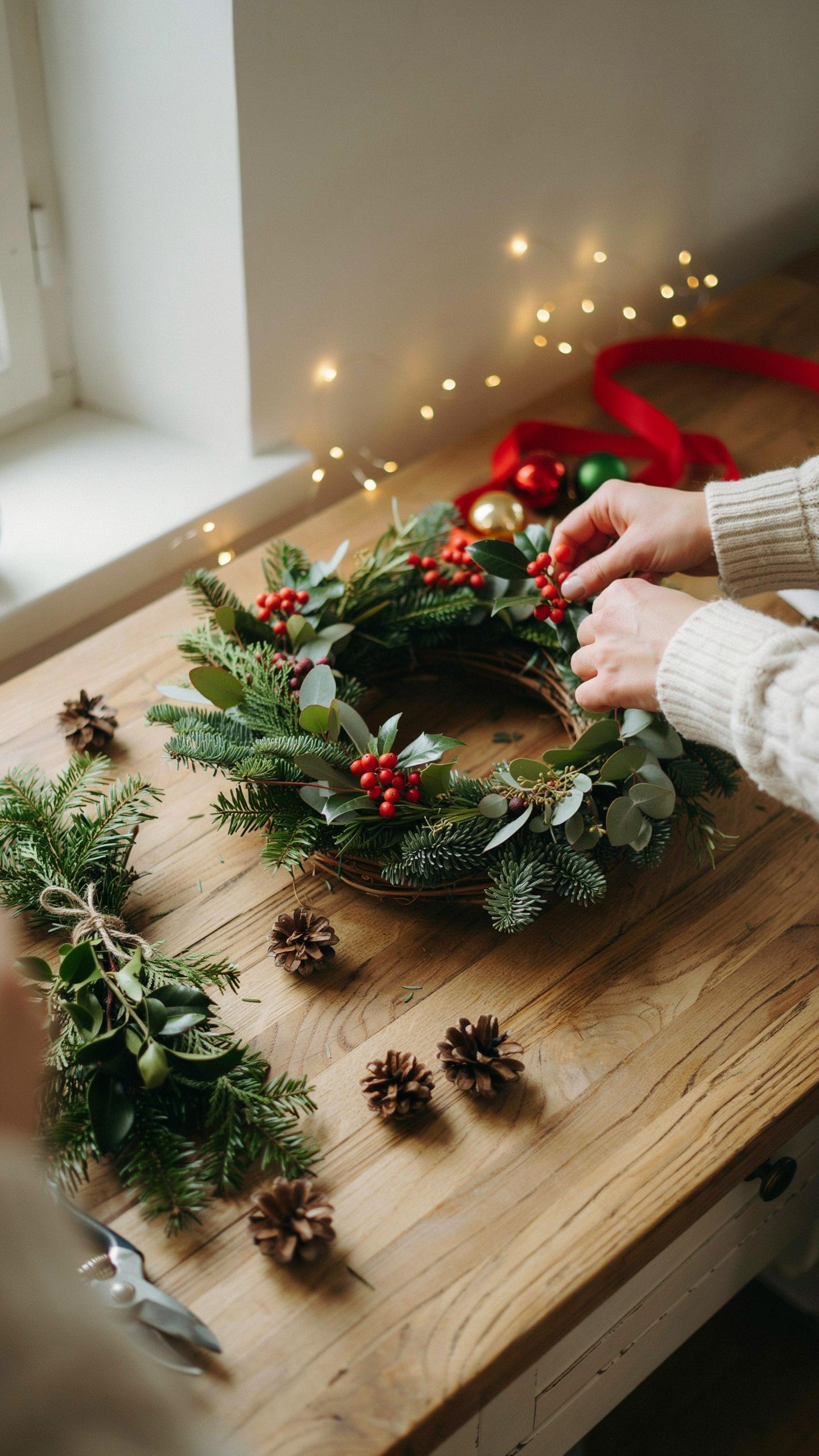
Styling Fresh Evergreen Bouquets In Stoneware Crocks
Stoneware crocks hold evergreen arrangements because they provide weight and stability for woody stems. Fill crocks with silver dollar eucalyptus, pine boughs, and holly berries. These materials last longer than delicate flowers and handle the weight without tipping. Place arrangements on sideboards or kitchen islands where they anchor the room visually.
Holly berries add color contrast that reads from a distance. Pine and eucalyptus create volume quickly without requiring many stems. This combination works because the foliage stays green for weeks indoors. Stoneware itself fits farmhouse aesthetics and requires no additional containers or wrapping.
Assembling Floating Candle Bowls With Cranberries
Clear glass bowls showcase the layers of water, cranberries, and cedar sprigs. Float tea lights on the water surface to create ambient light without fire risk. The cranberries sink and stay submerged, creating visual depth. Cedar adds fragrance that disperses through the room naturally.
This setup requires minimal maintenance and lasts three to five days before water needs changing. Cranberries prevent candles from drifting across the bowl surface. The combination of elements costs less than cut flower arrangements. Guests see movement in the water and appreciate the intentional design.
Frequently Asked Questions

What are farmhouse home decor seasonal accents and how do they work?
Farmhouse home decor seasonal accents are transitional pieces used to update your living space as the weather changes. This style focuses on bringing natural, rustic elements indoors, such as wooden crates for autumn or linen throws for summer. By swapping out small items like pillows, greenery, or centerpieces, you can maintain a cozy, lived-in aesthetic that feels fresh and relevant to the current season without a total room overhaul.
How can I display farmhouse home decor seasonal accents without cluttering my home?
To prevent a cluttered look, focus on one or two focal points per room, such as a mantel or dining table. Use a tiered tray or a large wooden bowl to group your farmhouse home decor seasonal accents together. This creates a cohesive “vignette” rather than scattering items everywhere. Remember to follow the “one-in, one-out” rule: when you bring out your spring florals, store away your winter pinecones to keep surfaces clean.
Can I achieve a seasonal farmhouse look if I am on a tight budget?
Absolutely! The beauty of the farmhouse aesthetic is its reliance on simple, organic materials. You can find affordable accents by foraging in your own backyard for branches, pinecones, or dried wildflowers. Thrift stores are also goldmines for vintage pitchers and baskets that can be repurposed throughout the year. DIY projects, like painting old mason jars or sewing ticking-stripe pillow covers, offer a high-end look for just a few dollars.