What Is Patio Container Gardening And Why It Works So Well
Understanding The Basics Of Patio Container Gardening
Patio container gardening uses individual vessels to grow plants on hard surfaces. You do not plant into the ground. Instead, you use pots, troughs, or planters. These containers hold a specific growing medium. This medium provides nutrients and drainage. This method allows you to control the soil quality and water levels. It makes gardening possible in urban environments with no natural soil.
Historical use of containers dates back to ancient Egypt and Rome. They used clay pots to move plants between locations. Today, technology offers better materials like resin and fiberglass. These modern pots manage heat and moisture more effectively. You must select the right pot size for the root system of each plant. Success depends on light exposure and consistent irrigation schedules for each vessel.
Why Container Gardening Outperforms Traditional Garden Beds In Small Spaces
Traditional garden beds require significant land and heavy physical work. Container gardening solves this by maximizing vertical and horizontal space. You can move pots to follow the sun or protect plants from frost. This mobility is impossible with fixed beds. You also avoid soil-borne diseases often found in natural ground soil. Containers allow you to create microclimates for different species in one area.
Managing weeds is much easier in containers compared to ground plots. You spend less time on maintenance and more time on yield. High-density planting works well in pots because you control the nutrient density. Compact designs yield more produce per square foot than sprawling gardens. This efficiency makes it the primary choice for modern urban layouts. It reduces water waste by targeting the root zone directly within the pot.
How To Plan A Container Garden Design That Looks Intentional
Mapping Out Your Patio Space Before Choosing Containers
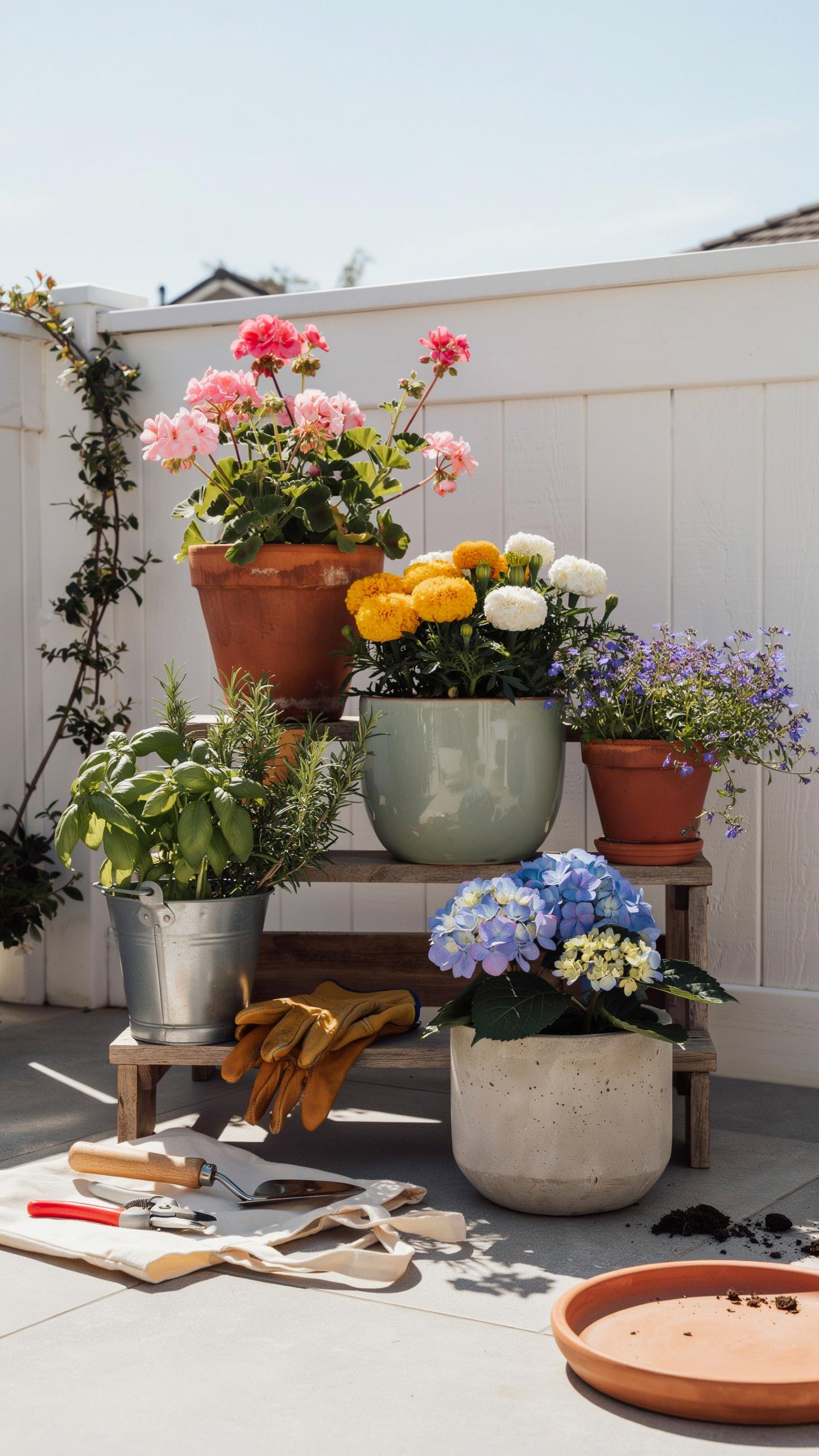
Measure your patio dimensions before buying any pots. Mark the areas that receive full sun and those in deep shade. Identify high traffic paths where people walk. You must keep these routes clear for safety and movement. Check the locations of outdoor water faucets and electrical outlets. Placing heavy containers far from water sources creates unnecessary daily labor and maintenance strain.
Determine the primary view of the garden. Most people look at their patio from a glass door or a seating area. Place your largest focal points at these specific sightlines. Account for the weight capacity of your deck or balcony. Large ceramic pots filled with wet soil weigh hundreds of pounds. Use lightweight resin or fiberglass containers if your structure has strict weight limits.
Using Color, Height, And Texture To Build A Cohesive Container Garden Design
Adopt the thriller, filler, and spiller method to manage vertical space. Thrillers provide height and serve as the central focus of the pot. Fillers add mass and cover the soil surface. Spillers cascade over the edges to soften hard lines. Use at least three different heights across your layout to create visual depth. Grouping pots in odd numbers like three or five looks more professional.
Repeat specific colors and materials to unify the design. Stick to a limited color palette of three hues to avoid a cluttered appearance. Mix leaf textures like broad, glossy hostas next to fine, wispy grasses. This contrast creates interest without needing flowers. Choose container materials that match your home architecture. Terracotta fits Mediterranean styles while weathered steel suits modern industrial spaces. Consistency in pot material prevents a disjointed look.
Best Garden Planter Ideas For Every Patio Style And Budget
Choosing Planter Materials That Suit Your Climate And Aesthetic
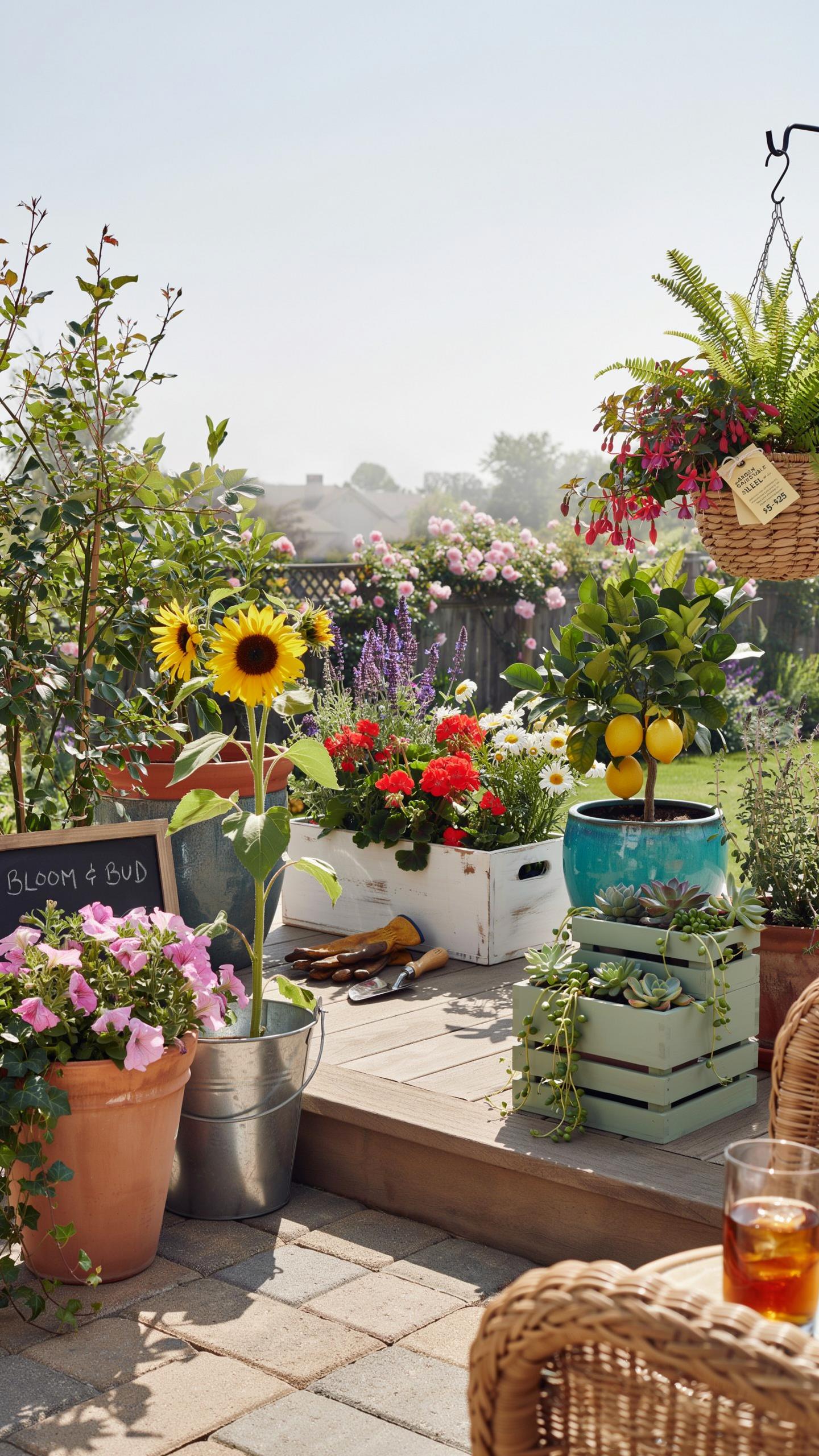
Material choice dictates the lifespan of your patio container garden layout. Terracotta offers classic Mediterranean appeal but breathes heavily. This porous nature dries out soil fast in hot climates. It also cracks in freezing winters when water expands inside the walls. Glazed ceramic provides better water retention and handles temperature shifts well. Choose high-fired stoneware for maximum durability in cold northern regions.
Metal planters suit industrial and modern minimalist designs. Galvanized steel resists rust and lasts for decades. Be careful with dark metals in direct sun. They conduct heat and can cook plant roots quickly. Wooden containers offer a natural look for rustic styles. Cedar and redwood resist rot without toxic chemicals. Use plastic or resin for lightweight needs on balconies. These materials mimic stone but cost much less.
Creative Garden Planter Ideas That Go Beyond The Basic Round Pot
Break the visual monotony of your layout with varied geometries. Square and rectangular troughs create clean lines. They act as natural room dividers on open patios. Use tall chimney pots or pedestal urns to add vertical interest. These shapes elevate plants to eye level. This technique creates a focal point without taking up extra floor space. Grouping different heights makes a small collection feel like a full garden.
Repurposed objects provide unique character on a budget. Use galvanized cattle troughs for large scale edible gardens. These deep basins hold enough soil for root vegetables. Cleaned wooden crates work for seasonal floral displays. Ensure every non-standard container has drainage holes drilled into the bottom. Standing water kills most plants through root rot. Proper drainage remains the most critical factor for success in any unconventional vessel you choose.
Top Container Gardening Ideas To Make Your Patio Pop With Life
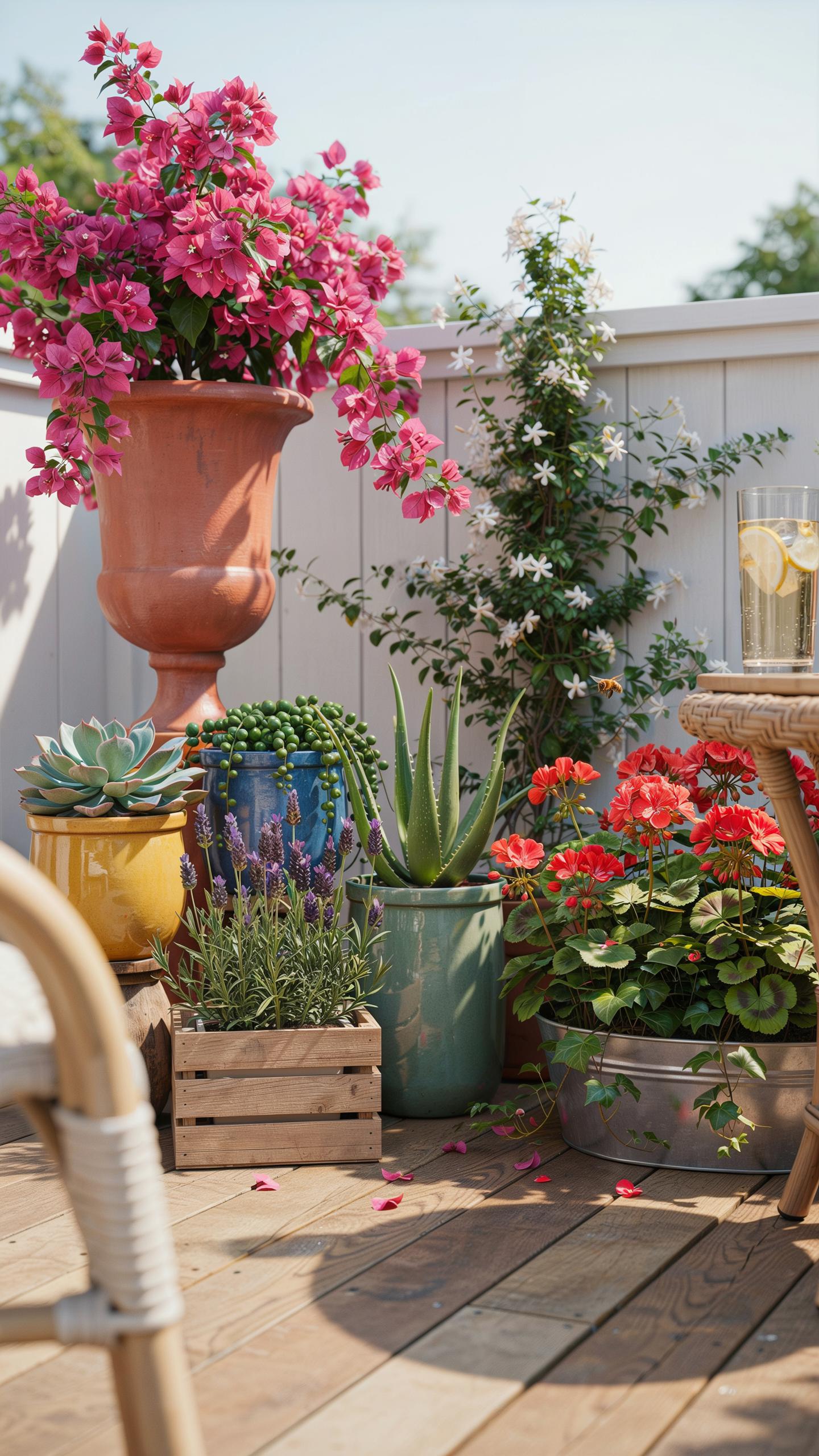
Mixing Annuals And Perennials For Season Long Color And Interest
Successful patio layouts rely on structural stability and recurring blooms. Perennials provide the permanent architectural framework and reappear each spring. These plants establish the height and density needed for a balanced visual scale. Use them as the anchor in large pots to reduce yearly replanting costs. Their consistent presence ensures the patio never looks barren during early growth stages.
Annuals fill the gaps with high-intensity color and rapid growth. These plants bloom continuously until the first frost kills them. Deploy annuals around the base of perennials to hide soil and add texture. This strategy allows you to change the color palette every season without replacing the entire garden. Proper drainage and nutrient-rich soil are critical for these mixed environments to thrive.
The glory of gardening: hands in the dirt, head in the sun, heart with nature. To nurture a garden is to feed not just the body, but the soul.
Themed Container Gardening Ideas That Create A Unified Patio Atmosphere
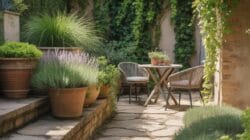
Themed gardens simplify the design process by limiting the plant and material palette. A Mediterranean theme uses terracotta pots and drought-tolerant herbs like rosemary or lavender. This approach mirrors historical European terrace designs and requires minimal water. Keeping one specific style creates a cohesive look across the entire patio surface. It prevents the space from feeling cluttered or visually disorganized.
Modern minimalist layouts prioritize monochromatic pots and structural plants like snake plants or ornamental grasses. This style emphasizes clean lines and geometric shapes. Use repeated plant species in identical containers to guide the eye along the patio perimeter. Consistency in pot material such as concrete or metal reinforces the tactical design. Following a strict theme ensures every added element serves a specific aesthetic goal.
Growing Container Gardening Vegetables On Your Patio Successfully
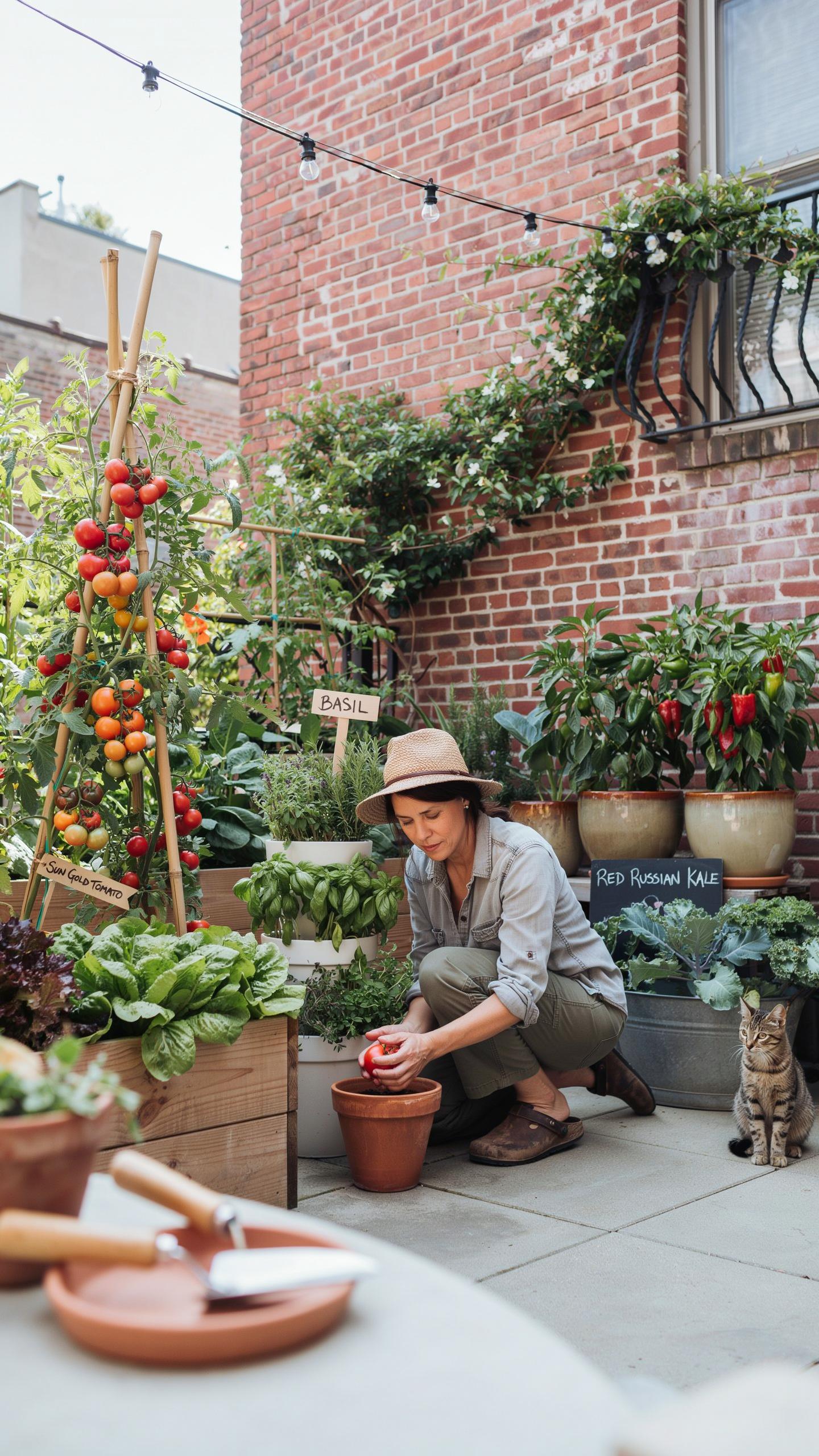
Which Vegetables Thrive Best In Container Gardening Environments
Successful patio container garden layout starts with selecting species that adapt to confined root zones. High-yield crops must tolerate limited soil volume and rapid temperature fluctuations. Modern plant breeding offers patio-specific varieties like indeterminate tomatoes and bush cucumbers. These plants provide maximum caloric density per square foot. Focus on crops that mature quickly to increase your seasonal harvest cycles.
- Determinate Tomatoes: These varieties grow to a fixed height and fruit all at once. They require less staking than larger vining types and fit perfectly in five gallon buckets. Select varieties like Roma or Celebrity for heavy yields.
- Leafy Greens: Lettuce and spinach have shallow root systems that work in wide, flat troughs. They grow well in partial shade often found on covered patios. Harvesting outer leaves allows the plant to produce food continuously.
- Bush Beans: Standard pole beans require tall trellises that catch wind on balconies. Bush varieties stay low and compact while producing heavy crops. They fix nitrogen in the soil which helps maintain the health of your container ecosystem.
- Summer Squash: Compact zucchini varieties thrive in large pots with at least twelve inches of depth. They produce large leaves that provide natural mulch for the soil surface. Use high-capacity containers to support their heavy water requirements during summer.
- Peppers: Bell and chili peppers love the heat retention of clay or ceramic pots. They have a sturdy structure that rarely needs intensive support systems. Peppers are highly productive in small spaces and resist most common container pests.
Vertical space utilization is a strategic necessity for small footprints. Trellising snap peas or cucumbers along patio railings increases your total yield without using more floor space. Choose dwarf or “midget” cultivars developed specifically for home gardeners. These plants maintain the same fruit size as standard varieties but feature shorter internodes. This prevents the leggy growth that typically topples larger garden pots.
Soil Drainage And Feeding Tips For Productive Vegetable Containers
Standard garden soil is too heavy for container gardening. It packs down and suffokes roots in a confined space. You must use a high-quality soilless potting mix containing peat moss or coconut coir and perlite. This ensures the medium stays light and airy for root respiration. Proper drainage holes are non-negotiable for preventing root rot and salt buildup from fertilizers.
Vegetables are heavy feeders that deplete pot nutrients within weeks. You must implement a regular feeding schedule using water-soluble fertilizers or slow-release granules. Containers lose minerals every time you water them. Monitor moisture levels daily because pots dry out faster than ground soil. High-performance layouts often include drip irrigation to maintain consistent hydration levels. Consistency prevents fruit cracking and blossom end rot.
Smart Garden Pot Ideas To Maximize Limited Patio Real Estate
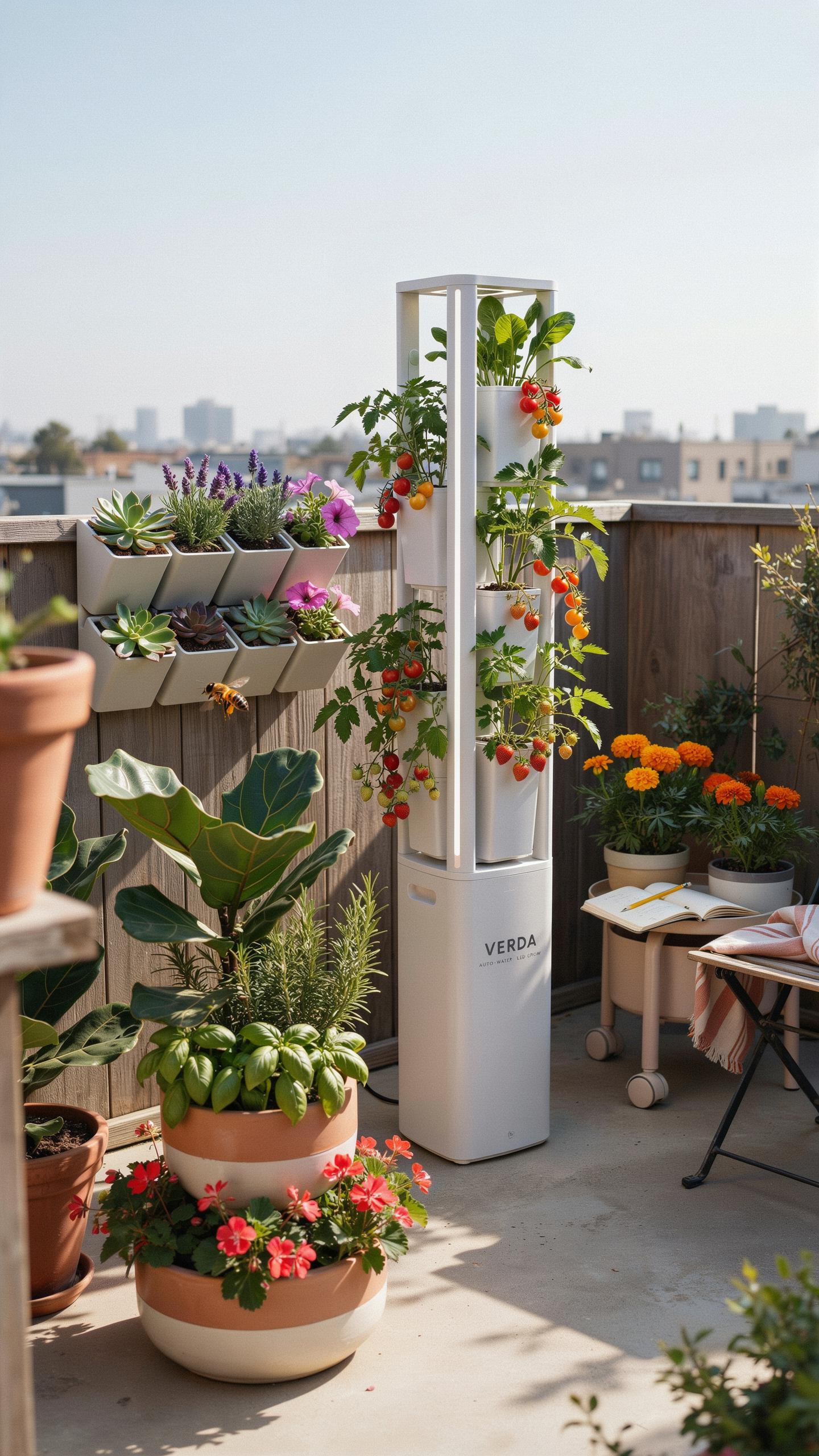
Vertical Stacking And Tiered Garden Pot Ideas For Tight Patios
Vertical gardening techniques solve the problem of small floor footprints. You must utilize the vertical plane to increase planting density. Use tiered plant stands or wall-mounted pocket systems to move foliage upward. This approach mimics the French Potager style where space efficiency is a priority. Stepped shelving allows sunlight to reach every level. It also simplifies irrigation by letting water gravity feed toward lower containers.
Select heavy-based metal or solid wood stands to prevent wind toppling. Position the tallest structures against a load-bearing wall to provide wind protection and stability. Choose pots with uniform shapes for stacked systems to ensure weight distribution remains centered. This strategy creates a living wall effect without permanent construction. Vertical arrangements also improve air circulation around plants. Better airflow reduces the risk of fungal diseases in crowded environments.
How Pot Size And Grouping Arrangements Affect Visual Balance
Successful layouts rely on the Rule of Three to create visual stability. Group pots in odd numbers to avoid stiff and unnatural symmetry. Place the largest container in the back or center to serve as an anchor point. Arrange smaller vessels around this anchor to create a cohesive cluster. This tactic draws the eye through different heights. It makes a small patio feel like a curated garden.
Match pot volume to the root requirements of each specific plant species. Large pots hold more soil and retain moisture longer than small ones. Mixing different sizes helps regulate the local microclimate for sensitive plants. Position heavy ceramic pots at the corners of your layout to define the space. Use lighter fiberglass or resin pots for the inner layers. This mix allows for easy reconfiguration as the growing season progresses.
How To Style Potted Plants On A Patio For Maximum Visual Impact
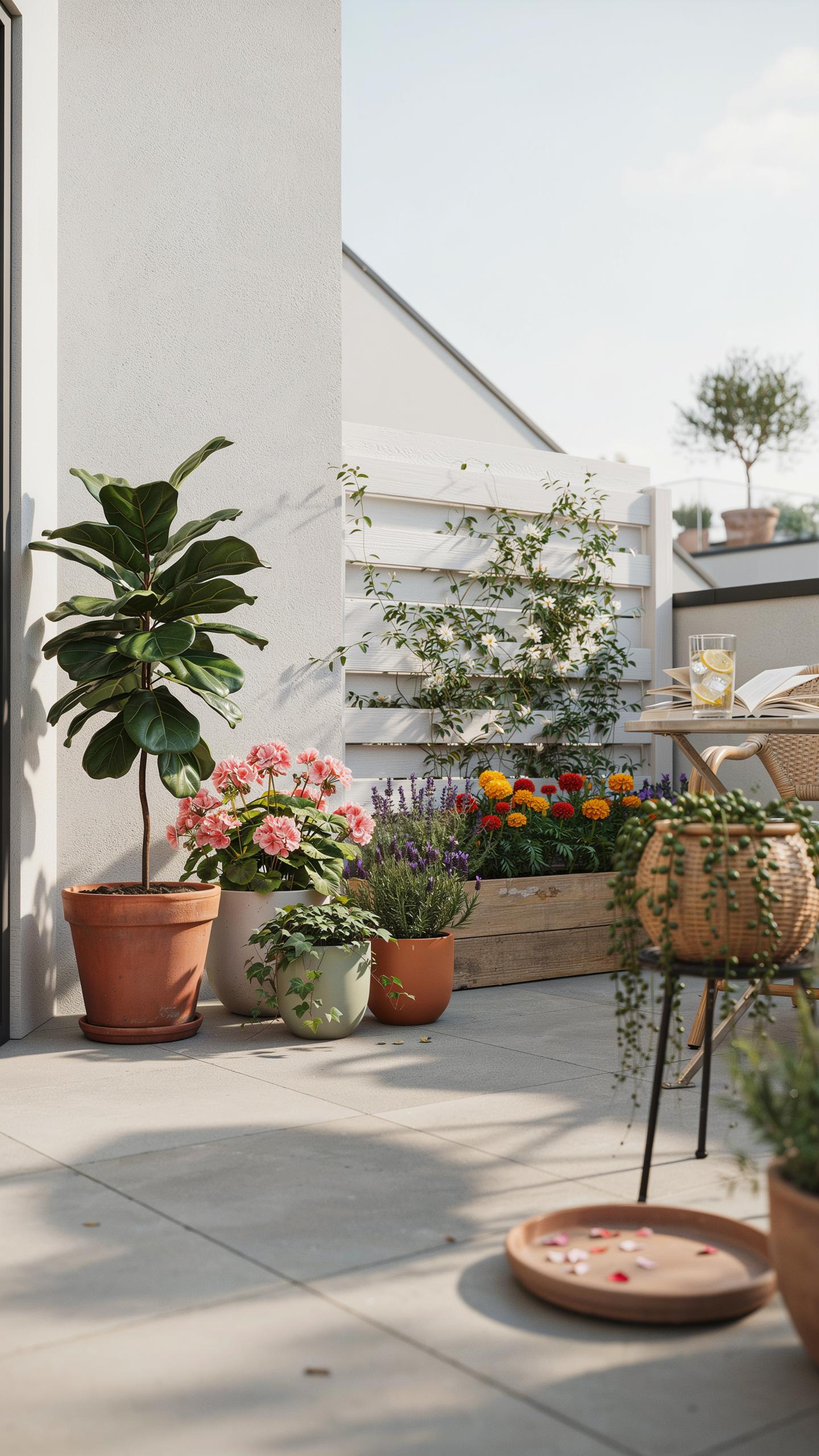
Arranging Potted Plants On A Patio Using The Thriller, Filler, Spiller Method
Professional designers use the thriller, filler, spiller method to create height and depth. Place a tall, bold plant in the center as the thriller. Use vertical plants like ornamental grasses or dracaena to draw the eye upward. Position mid-sized plants called fillers around the base to add volume. These plants cover the soil and hide the stems of the taller thriller plant.
The final layer is the spiller. Select trailing plants like lobelia or ivy to hang over the edges of the pot. This technique softens the rim and connects the container to the ground. Ensure all three types have identical sunlight and water needs within the same pot. Proper spacing prevents overcrowding and keeps the arrangement healthy. Follow these rules to build a balanced patio container garden layout.
Seasonal Swapping Strategies To Keep Your Potted Patio Looking Fresh Year Round
Strategic seasonal swapping keeps the patio functional and attractive through all four seasons. Use a permanent evergreen as a structural base in large pots. Replace surrounding annuals as temperatures change. Use pansies or bulbs for spring color. Transition to heat-tolerant flowers like zinnias during the summer peak. This method saves money because you only replace a few plants instead of the entire container system.
Winter requires hardy choices to maintain visual interest. Use bare branches or cold-resistant kale to fill empty gaps after the first frost hits. Monitor local frost dates to time your transitions perfectly. Keep extra nursery pots ready for quick replacements if a plant dies. Efficient rotating ensures your layout never looks tired. Focus on durability and climate-appropriate species to maximize the lifespan of every design choice you make.
Apartment Gardening Building A Lush Container Garden On A Balcony Or Small Patio
Weight, Wind, And Sun Considerations Unique To Apartment Gardening Spaces
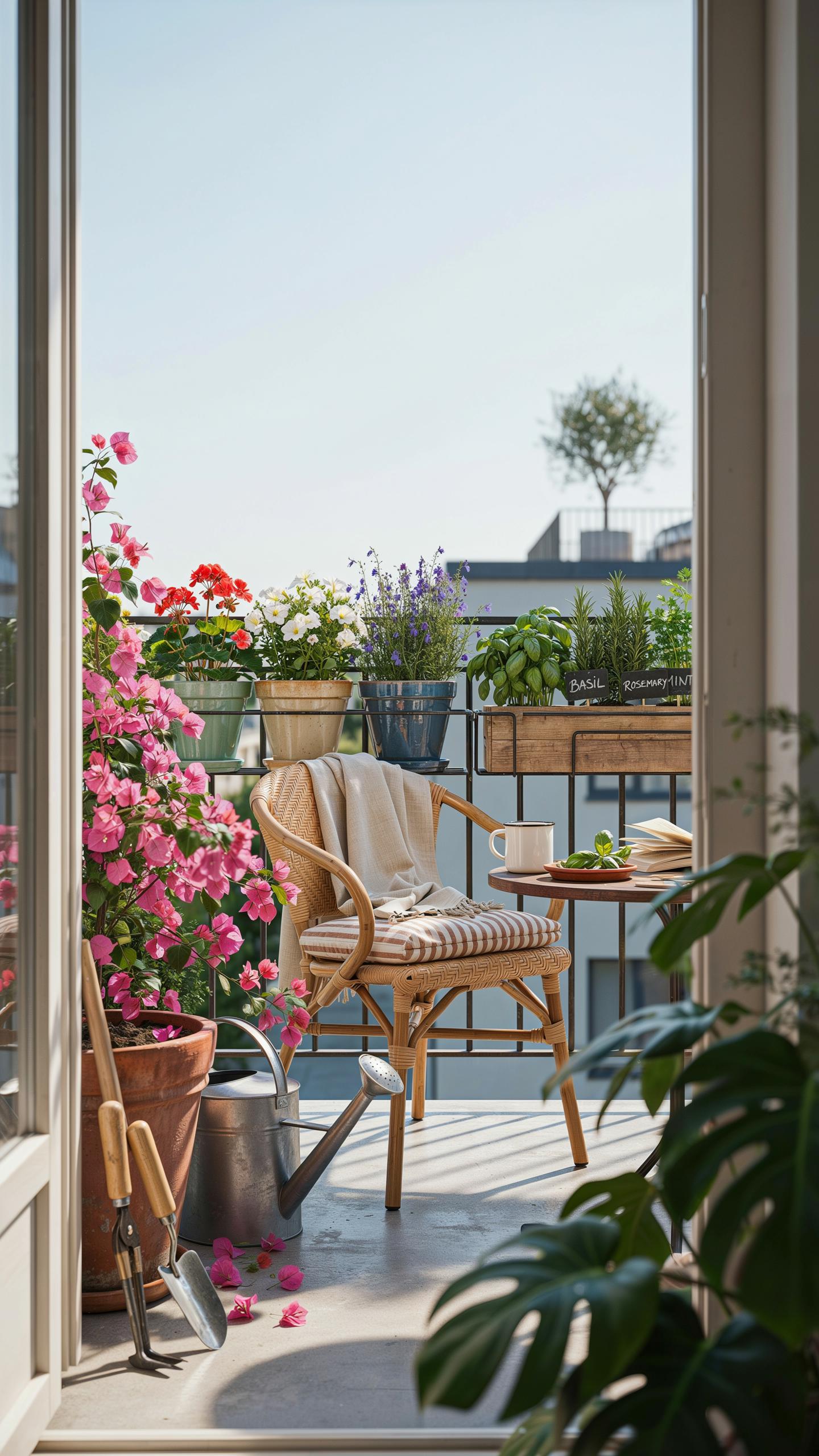
Structural load limits dictate your layout. A gallon of water weighs over eight pounds. Saturated soil in heavy ceramic pots can compromise balcony safety. Use lightweight fiberglass or resin containers instead of stone. Spread the weight across the floor joists. Move heavy items toward the building walls. This strategy protects the integrity of your outdoor space and prevents structural failure.
High altitude balconies face intense wind and sunlight. Wind dries out soil and topples tall pots. Secure containers with heavy gravel at the base or use brackets. Buildings reflect heat and increase the ambient temperature. Check the sun exposure at different times of day. Concrete walls hold heat long after sunset. Install shade cloth or use self-watering pots to prevent plant dehydration.
Compact Plant Varieties And Railing Planters Built For Apartment Gardening
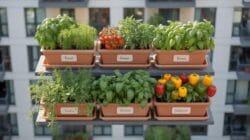
Vertical space is your primary asset. Railing planters maximize your footprint without taking up floor space. Choose industrial grade brackets that lock onto the rail. These units must withstand strong gusts. High quality railing boxes use drainage plugs to prevent dripping on neighbors below. This setup allows for a dense garden in a small area while maintaining good air circulation.
Select determinate or dwarf plant varieties for tight spaces. These plants reach a set height and stop growing. They thrive in smaller root volumes compared to standard versions. Look for patio specific cultivars of tomatoes, peppers, and herbs. These varieties produce high yields in limited soil. Proper plant selection ensures your layout remains manageable. It prevents your balcony from becoming a disorganized and overgrown jungle.
Plant Container Ideas That Blend Function With Decorative Style
Repurposed And Upcycled Plant Container Ideas That Add Character To Your Patio
Upcycling transforms discarded objects into functional garden assets. Old industrial bins and wooden crates provide structural depth to a patio container garden layout. Use galvanized steel troughs for a cold, modern look. These heavy materials stabilize the garden against high winds. Drilled drainage holes are mandatory for any repurposed vessel. Without proper drainage, soil becomes waterlogged and roots rot quickly.
Vintage aesthetics draw from the mid-century modern and industrial eras. Use reclaimed terracotta pots to add age and texture. Wooden wine barrels offer large volume for deep-rooted shrubs. Line porous wooden containers with plastic to prevent rot. Ensure all used materials are free from toxic chemicals or lead paint. Authentic materials create a grounded feel that plastic cannot replicate. Select items that withstand UV exposure and freezing.
Self Watering And Smart Plant Containers That Simplify Maintenance
Self-watering containers use sub-irrigation to deliver moisture directly to roots. This system uses a reservoir located at the bottom of the pot. Capillary action pulls water upward through the soil as needed. This method reduces water waste from evaporation. It also ensures consistent moisture levels during extreme heat. Reservoirs allow you to leave the garden unattended for several days without risking plant death.
- Sub-Irrigation Planters: These units feature a built-in water tank and wicking system. They prevent surface evaporation and keep soil moisture even. This design is ideal for thirsty vegetables and leafy greens that wilt quickly in direct sun.
- Hydroponic Tower Systems: Vertical smart towers use pumps to circulate nutrient-rich water. They maximize vertical space in small patio layouts. These systems often include timers to automate the feeding cycle for high-yield harvests in tight quarters.
- Soil Moisture Sensors: Smart sensors connect to mobile apps via Bluetooth or Wi-Fi. They track hydration, sunlight, and temperature in real time. These tools alert you when specific plants need attention, removing the guesswork from daily maintenance routines.
- Self-Draining Modular Troughs: These containers link together to manage excess runoff. They prevent water from pooling on patio surfaces and causing stains. This setup is perfect for maintaining clean stone or wood decking while supporting high-density plant arrangements.
- Automated Drip Kits: Small-scale drip systems attach to a standard outdoor faucet. They use a programmable timer to deliver precise amounts of water to each pot. This setup reduces labor and ensures no plant is overlooked during busy schedules.
Smart containers integrate technology into traditional gardening. High-end models include sensors that monitor nutrient levels and light exposure. Integrated overflows prevent drowning during heavy rain. Using these tools allows for a more dense patio container garden layout. You can pack more plants into a small area when irrigation is automated. Professional-grade materials ensure these systems last for many growing seasons without failing.
Essential Care Routines To Keep Your Patio Container Garden Layout Thriving
Watering Schedules And Fertilizing Practices For Container Grown Plants
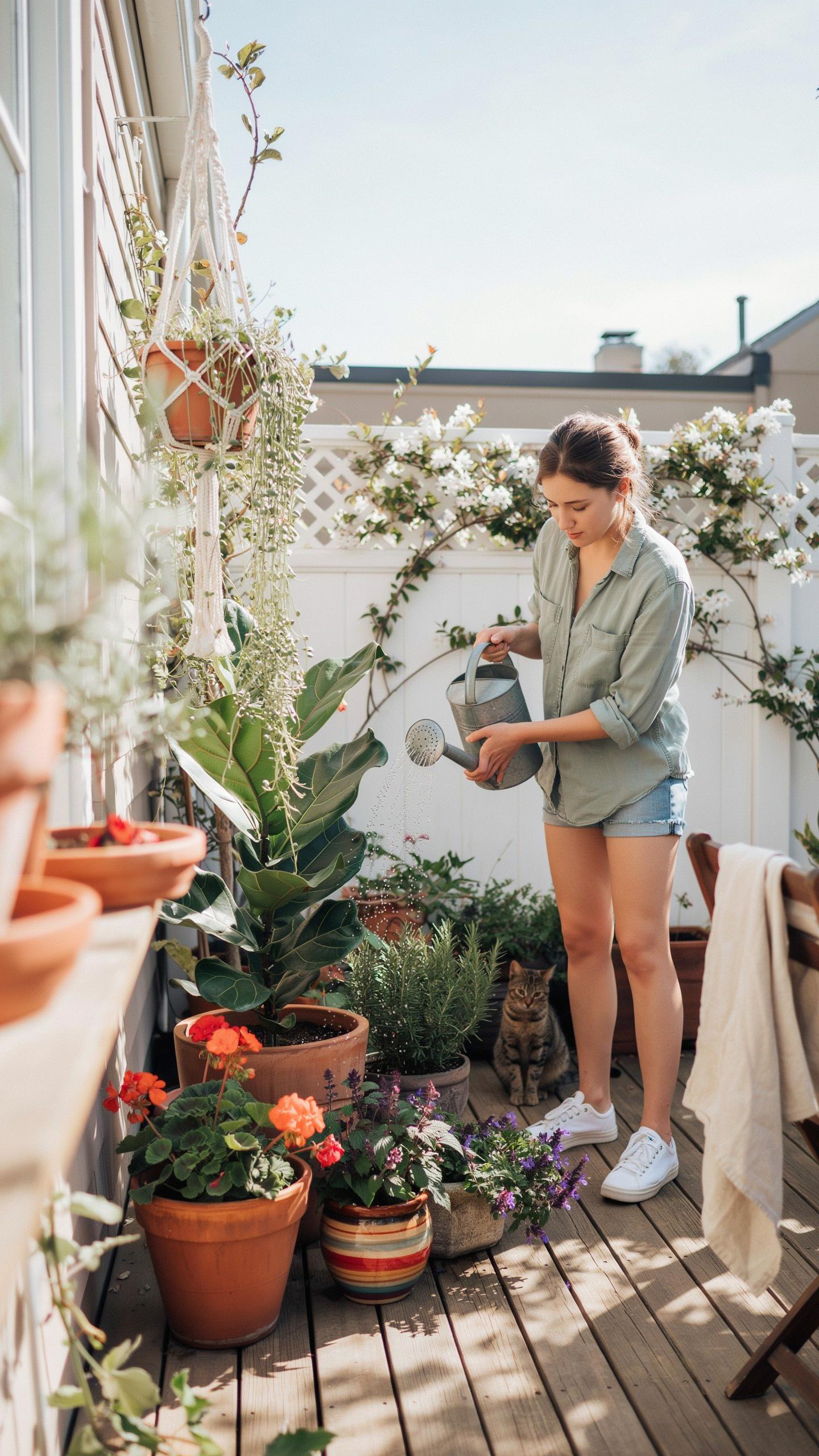
Container plants require more frequent watering than ground plants due to limited soil volume. High evaporation rates in porous pots like terracotta demand daily checks. You must saturate the soil until water exits the drainage holes. This process flushes out salts and ensures the entire root ball receives moisture. Check the soil depth daily with your finger to determine immediate hydration needs.
Nutrients leach quickly from potting media during irrigation. You must replace these minerals to maintain plant health and growth. Use a water-soluble fertilizer every two weeks during the peak growing season. This schedule provides a consistent supply of nitrogen, phosphorus, and potassium. Slow-release granules offer a steady backup but do not replace liquid feeding for heavy-blooming species in small pots.
Seasonal Maintenance Tasks To Protect And Refresh Your Container Garden Layout
Deadheading remains the most critical task for continuous blooming throughout the season. Remove spent flowers to prevent the plant from producing seeds. This redirects energy back into new bud development and root growth. Prune leggy stems to encourage a compact and bushy shape. Keeping foliage dense improves the visual impact of your layout and prevents the plants from looking sparse.
Prepare your containers for winter to avoid losing expensive pottery or perennial plants. Clean all empty pots with a mild bleach solution to kill lingering pathogens. Store porous materials like ceramic or clay in a frost-free area to prevent cracking from ice expansion. Move hardy plants to sheltered locations or wrap pots in burlap. Tactical winter storage ensures your layout remains ready for the next spring.
Frequently Asked Questions

How do I choose the best plants for a beginner patio container garden?
When starting out, the best approach is to group plants with similar sunlight and water requirements. For a successful patio container garden layout, beginners should look for “thriller, filler, and spiller” combinations. Choose a focal point plant like a fountain grass, surround it with colorful petunias, and add trailing ivy. This simple formula ensures your pots look professionally designed while remaining easy to maintain throughout the growing season.
What is the most effective way to arrange pots for a professional look?
To create a professional patio container garden layout, vary the heights and textures of your pots. Use plant stands or upturned crates to elevate smaller containers behind larger ones, creating a lush, tiered effect. Always group pots in odd numbers, such as three or five, which is more pleasing to the eye. This layered arrangement adds visual depth and makes even a small outdoor space feel like a curated botanical sanctuary.
Can I create a stunning garden layout on a tight budget?
Absolutely! You can achieve a high-end look without spending a fortune by upcycling everyday items like wooden crates, old buckets, or terracotta pots found at thrift stores. Focus on buying affordable “filler” plants in bulk and using high-quality potting soil to ensure longevity. By focusing on a cohesive color scheme rather than expensive designer planters, your DIY layout will look intentional, sophisticated, and beautiful all summer long.