Why Backyard Landscaping Around A Pool Changes How You Live Outdoors
The Connection Between Thoughtful Landscaping And Everyday Outdoor Comfort
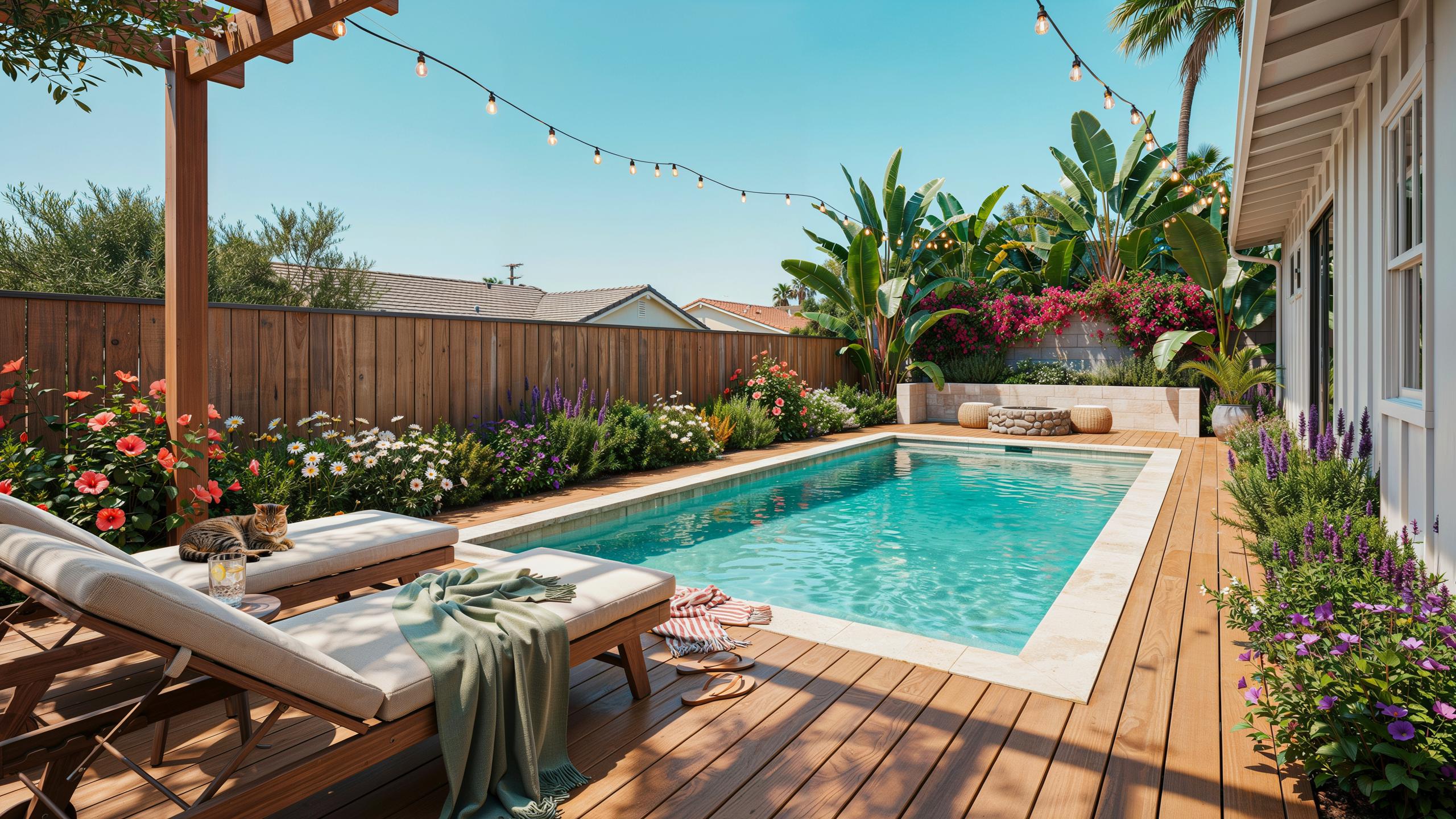
Proper backyard landscaping around a pool dictates how you use the water and the land. Bare concrete creates heat islands that discourage use during peak daylight hours. Strategic planting and hardscaping manage ground temperatures and provide necessary shade. Physical layout determines movement patterns. If the path from the house to the pool feels natural, you will use the space more often for daily tasks.
Landscaping also serves as a functional barrier against wind and noise. Tall hedges or stone walls block gusts that cause heat loss in heated pools. These features also dampen neighborhood noise to create a private environment. Selecting durable materials like non-slip stone and salt-tolerant plants reduces maintenance labor. Low maintenance needs increase your actual relaxation time. Good design turns a high-maintenance asset into a passive retreat.
How Pool Surroundings Influence The Overall Mood Of Your Backyard Space
Visual cues in your landscaping set the tone for your outdoor experience. Minimalist designs with clean lines and monochromatic palettes create a Modernist aesthetic. This style promotes focus and order through simplicity. Historical movements like the California Modern style use native plants and open layouts to blend the pool with the horizon. These choices affect your mental state by removing visual clutter and chaotic patterns.
Mood is also a byproduct of sensory input from your environment. Soft textures like ornamental grasses contrast with hard masonry to soften the space. Strategic lighting extends the utility of the pool into the night and highlights architectural focal points. This prevents the backyard from becoming a dark void after sunset. Properly scaled greenery prevents the pool from looking like a utility tank. It anchors the water feature into the natural landscape.
Exploring Pool Landscape Ideas That Balance Beauty And Function
Choosing A Design Theme That Complements Your Homes Architectural Style
Your pool area must match your home to maintain property value. A Mid-Century Modern house requires clean lines and geometric pool shapes. This style emphasizes flat planes and open spaces. Use simple materials like poured concrete or smooth stone. Avoid ornate details that clash with minimalist architecture. Matching the pool deck to your home exterior creates a visual connection. This strategy makes your backyard feel like a natural extension.
Mediterranean homes pair well with clay tiles and arched features. These designs often include natural stone and earthy tones. Traditional homes benefit from brick pavers and classic rectangular pools. Always look at the materials used on your main house structure. Repeat those textures in your poolside structures. This repetition provides a professional and intentional look. It prevents the pool from looking like an afterthought. Consistency is the primary goal for high-end results.
A pool is a liquid focal point for the garden, a place where the water’s edge offers a quiet sanctuary for the soul. The best landscape is one that feels like a warm embrace from nature herself.
Blending Hardscape And Softscape Elements For A Cohesive Pool Setting
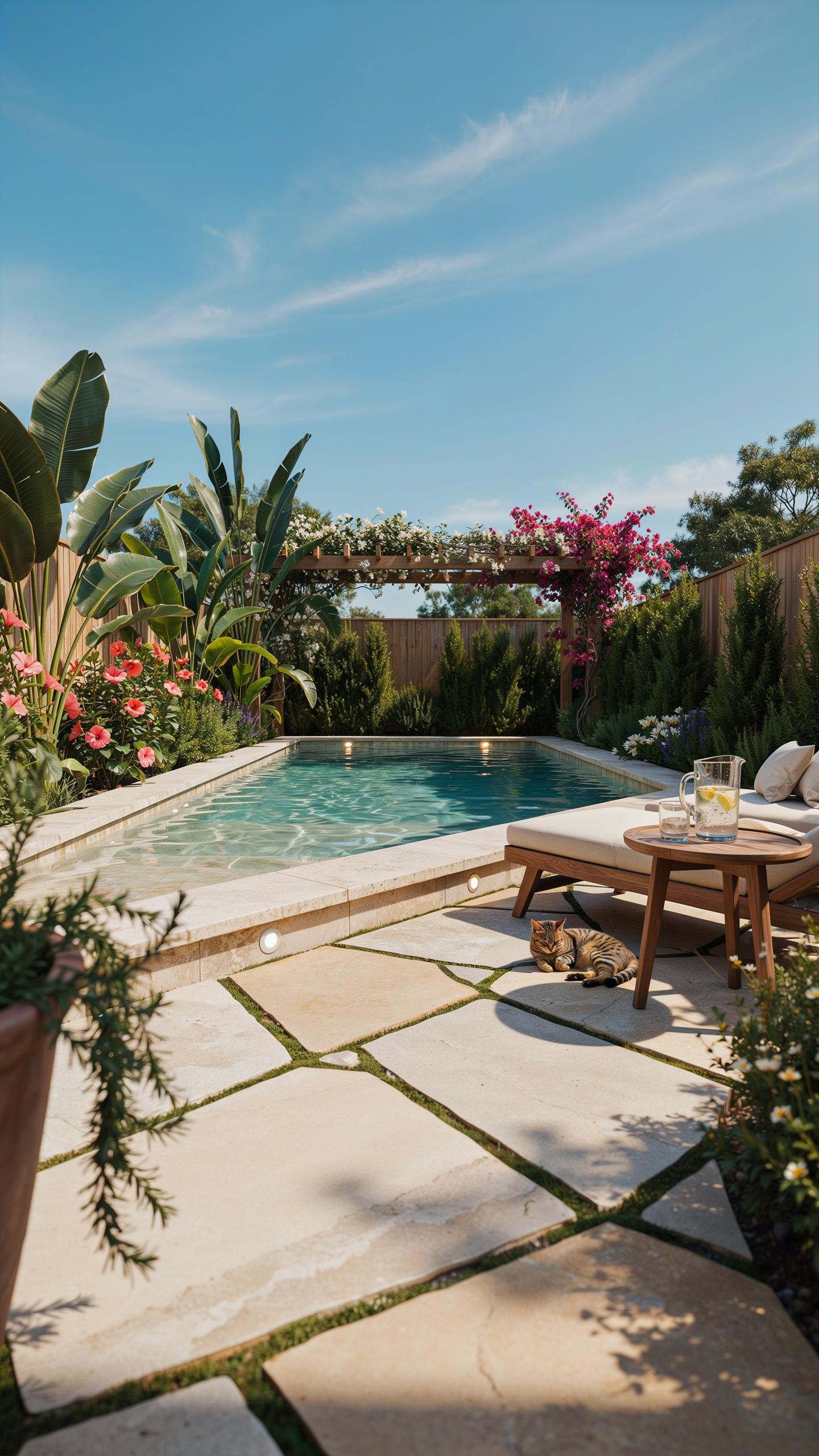
Hardscaping provides the structure and safety required for a functional pool area. Use non-slip materials like travertine or textured concrete for the primary deck. These surfaces handle water well and prevent accidents. Stone walls and pavers define the perimeter and manage foot traffic. Proper drainage is essential during the hardscape installation phase. Plan for slopes that direct water away from the pool and the house foundation. This preserves your investment over time.
Softscaping adds the living layers that soften sharp stone edges. Select plants that do not drop heavy debris into the water. Large-leafed tropicals or ornamental grasses reduce maintenance time. Place taller plants behind the hardscape to create a privacy screen. Use mulches that do not wash away during heavy rain. Rocks or heavy gravel stay in place better than light wood chips. Balancing these hard and soft elements creates a stable and inviting environment.
Backyard Landscaping With Pool Laying The Groundwork For A Relaxed Layout
Planning Traffic Flow And Open Zones Around Your Pool Deck Area
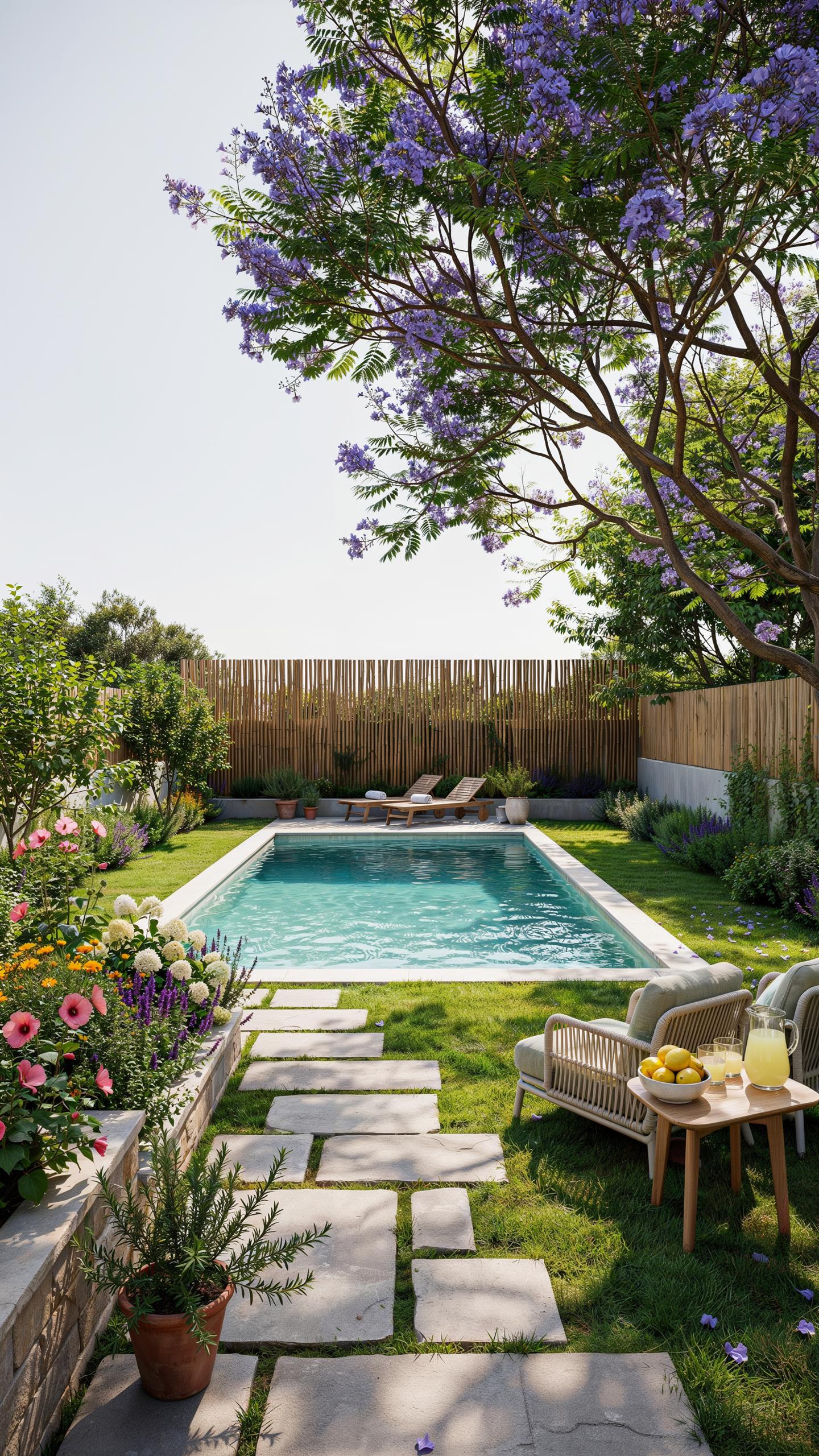
Traffic flow determines how people move between the house and the water. You must identify primary paths to prevent bottlenecks. Keep these routes at least four feet wide for comfort. Natural desire lines often dictate the best placement for walkways. Observe how people walk from the back door to the pool steps. Clear paths reduce the risk of trips on uneven turf.
Open zones provide space for lounging and socializing. Situate these areas away from high-traffic splash zones to keep furniture dry. Professionals use the concept of secondary sightlines to place seating. This ensures supervisors can see the entire pool surface easily. Strategic placement of hardscaping creates distinct rooms within the yard. Proper layout prevents the area from feeling crowded during large gatherings or daily use.
Essential Safety And Zoning Considerations Before You Begin Landscaping
Local building codes mandate specific safety features for every pool installation. You must check requirements for fence heights and gate latches before planting. Dense hedges cannot replace legal barriers in most jurisdictions. Ensure your landscaping plan maintains a clear zone around the perimeter. This prevents children from using planters or boulders to climb over safety fences. Safety remains the highest priority in layout design.
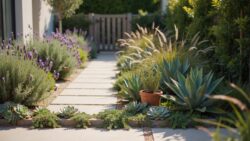
Utility lines often run beneath the ground near pool equipment. You must locate all electrical and plumbing conduits before digging planting holes. Deep-rooted trees can damage underground pipes or crack the pool shell over time. Maintain a five-foot buffer between large specimens and the water edge. Zoning laws also regulate water runoff and drainage. Your grading must direct rainwater away from the pool and the house foundation.
Pool Landscaping Ideas Inground Designing Around Below Grade Pools
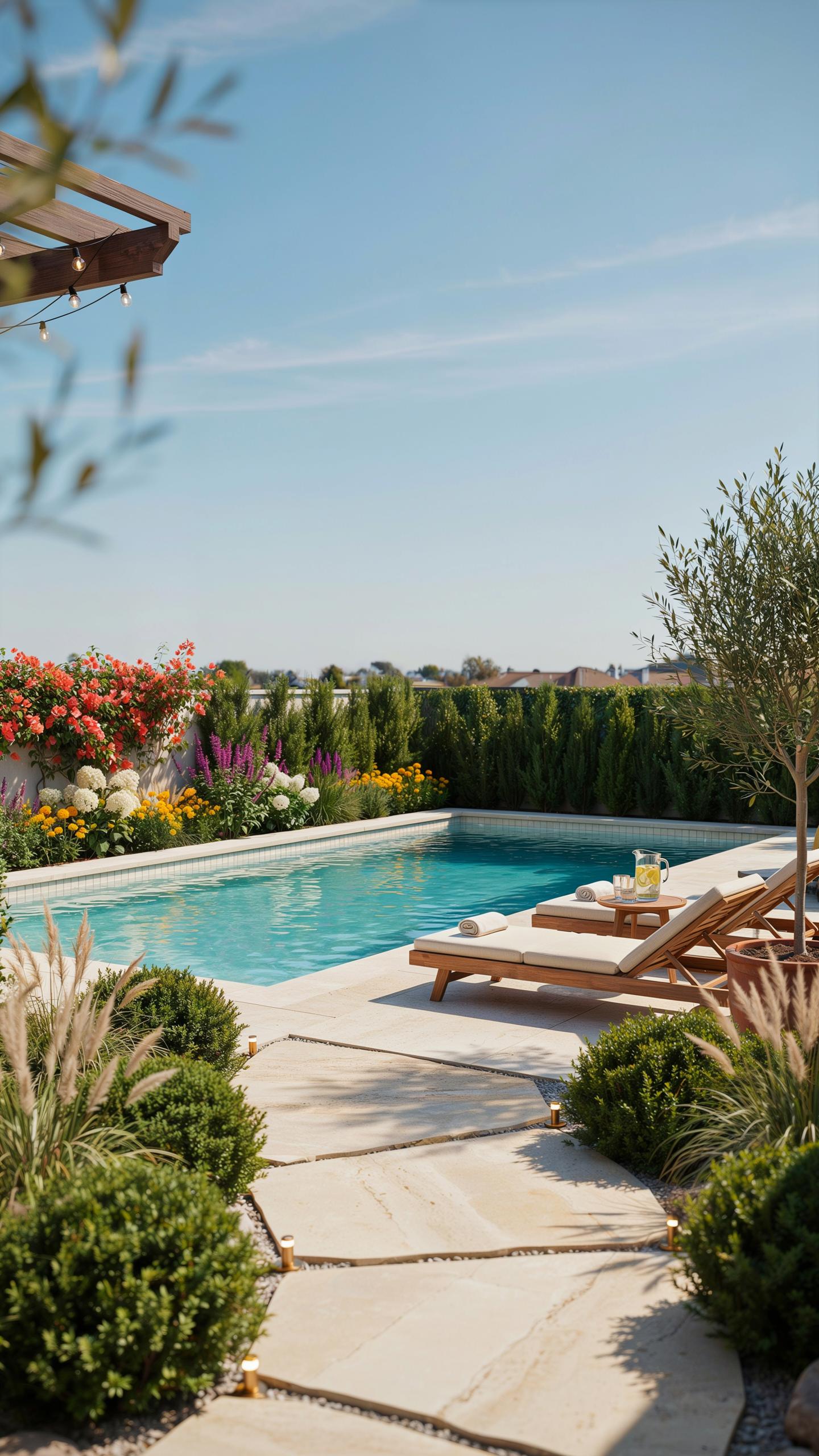
How Inground Pool Shapes Influence The Surrounding Landscape Design
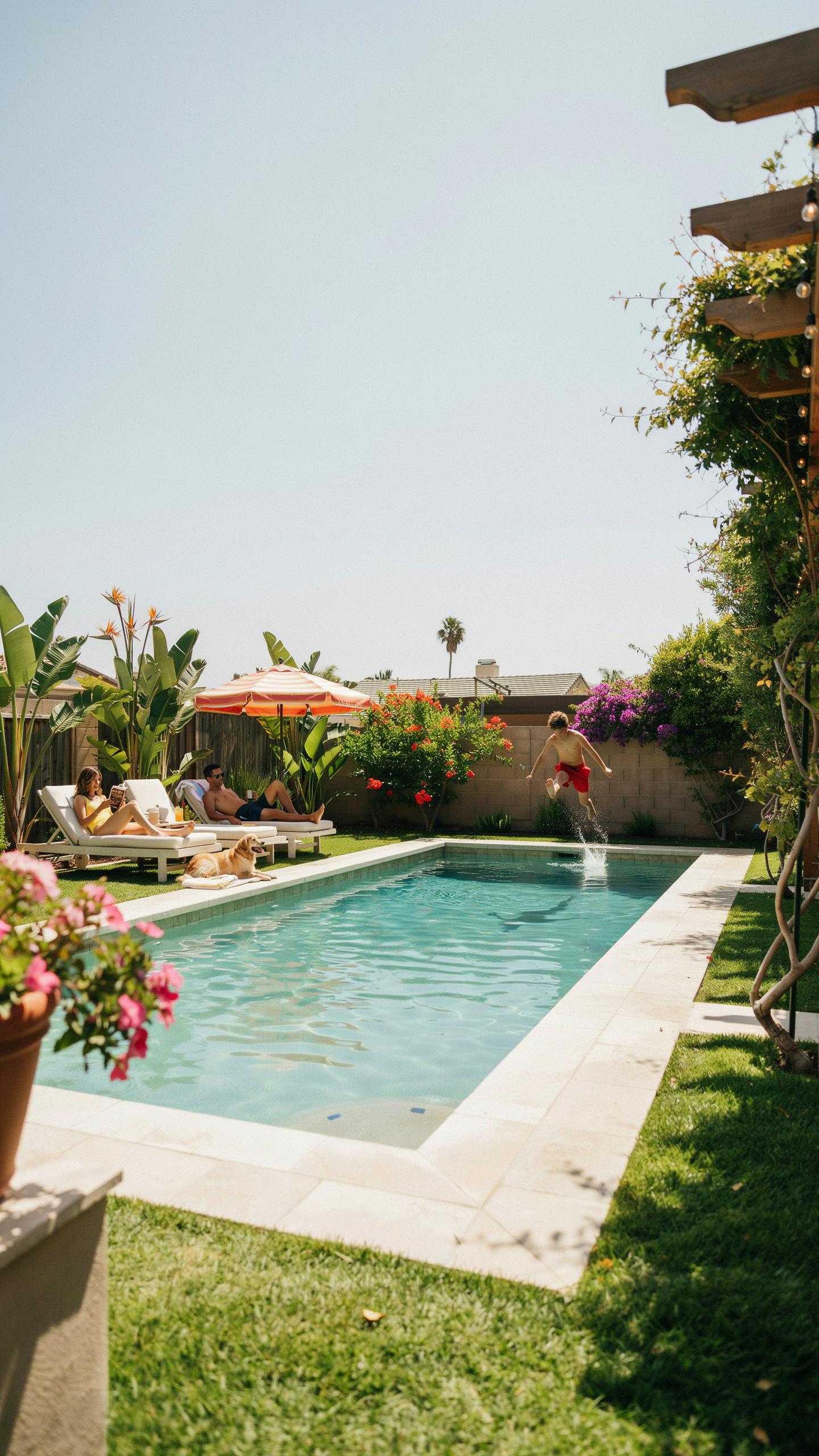
Rectangular pools dictate a formal and symmetrical layout. These linear shapes align with modern and classical architectural styles. You must use straight paths and sharp angles in the surrounding greenery to maintain this look. Geometric pools require clean edges and structured plant beds. This layout maximizes space efficiency in smaller yards. It creates a disciplined environment that highlights the pool as a central focal point.
Freeform pools mimic natural bodies of water. These shapes require curved landscape beds and organic transitions. You should use irregular stone placement and varied plant heights to complement these soft lines. This approach works best for tropical or rustic themes. The surrounding design must flow with the curves of the shell to look intentional. Avoid straight lines here as they clash with the fluid nature of the water edge.
Best Ground Cover And Paving Materials For The Inground Pool Perimeter
Select pool decking based on heat absorption, slip resistance, and durability. The perimeter material must handle constant water exposure and foot traffic. Natural stone and pavers provide the best longevity for inground structures. You need a flat surface that allows for proper drainage away from the pool shell. Choose light colors to keep the surface cool under direct sunlight and ensure safety for all users.
- Travertine Pavers: This natural stone stays cool under foot even in high heat. It absorbs water quickly to prevent puddles and offers a high grip surface. It is a premium choice for luxury inground installations due to its durability and timeless look.
- Stamped Concrete: This material offers a cost-effective way to mimic stone or brick. Specialists pour the concrete and apply patterns before it sets. You must apply a non-slip additive to the sealer to prevent falls when the surface gets wet from splashing.
- Concrete Pavers: These units are easy to install and replace if one cracks. They come in various shapes that fit together like a puzzle. Pavers allow for ground movement without causing large visible cracks across the entire pool deck area during temperature changes.
- Turf and Grass: Real or synthetic grass provides a soft contrast to hard paving. It creates a natural look that blends the pool into the rest of the yard. Use synthetic options to avoid getting grass clippings and mud inside the pool filtration system.
- Stone Tile: Large format tiles create a sleek and modern aesthetic. You must select tiles specifically rated for outdoor use and wet environments. Ensure the installer uses a waterproof substrate and proper pitch to move water toward the designated yard drains.
Ground cover plants fill the gaps between hardscape elements. Use low-growing species that do not shed leaves or debris into the water. Creeping perennials or ornamental grasses work well near the water line. These plants soften the transition from stone to soil. They also help with erosion control on tiered landscapes. Stick to salt-tolerant and chlorine-tolerant varieties to ensure the plants survive regular splashes from the pool.
Landscaping Around Pool Plants Borders And Natural Privacy Screens
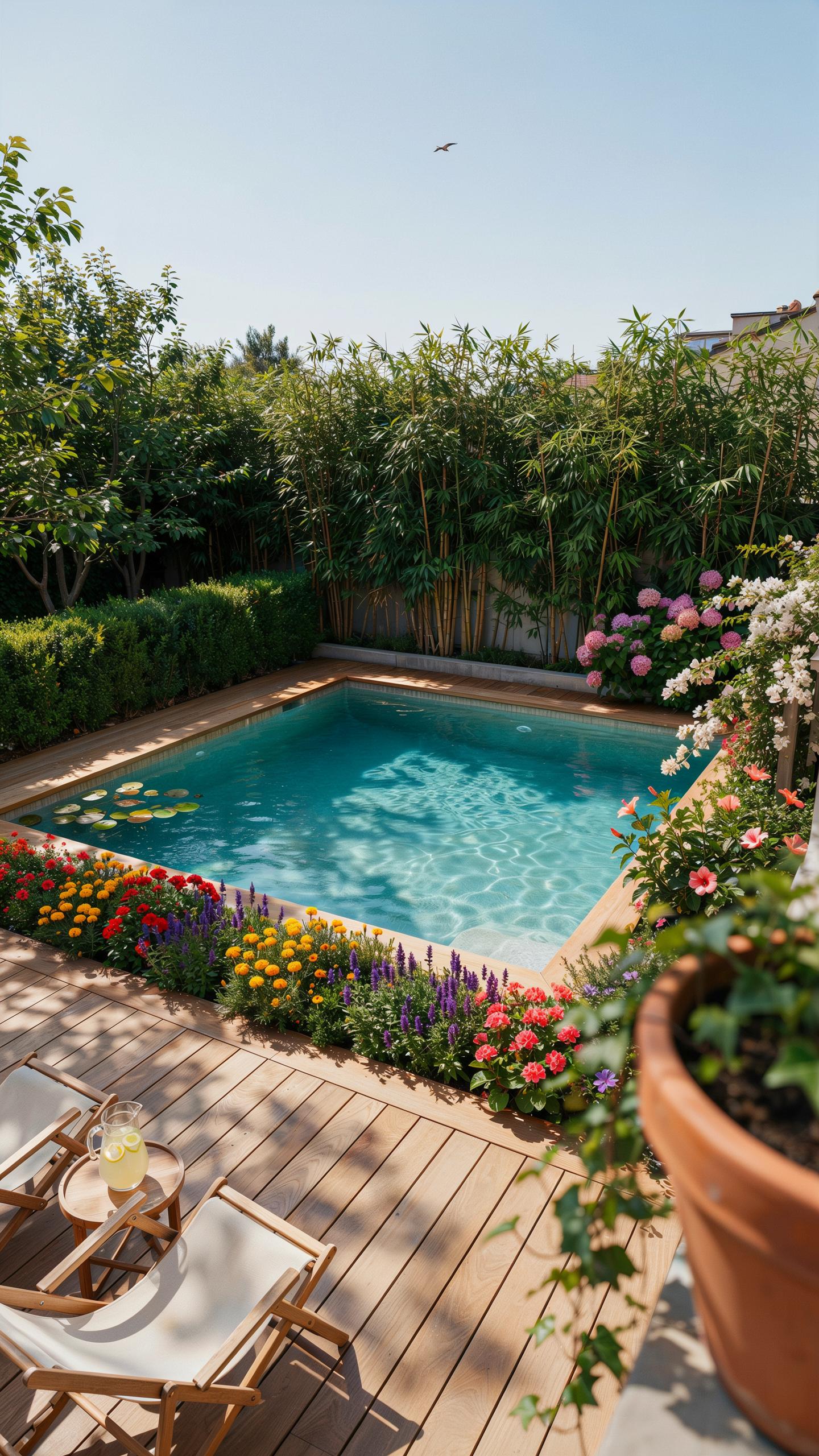
Selecting Pool Friendly Plants That Minimize Debris And Maintenance
Smart plant selection prevents pool filter clogs and water chemistry shifts. Deciduous trees drop leaves annually and create heavy manual labor. You must choose evergreen varieties or plants with large waxy leaves. These types shed less organic matter into the water. Plants with small needles or tiny flowers increase maintenance costs. Select species that thrive in high humidity and tolerate occasional splashes of chlorinated or salt water.
Root systems pose a direct threat to pool shells and underground plumbing. Avoid planting invasive creepers or trees with aggressive lateral roots near the water line. Focus on drought-tolerant species that maintain their structure throughout the year. Strategic placement reduces the need for constant pruning. Succulents and ornamental palms work well because they lack shedding bark or messy fruit. Choose plants that stay compact to keep walkways clear and safe.
Using Hedges, Ornamental Grasses, And Shrubs To Frame Your Pool Naturally
Hedges provide a functional windbreak and sound barrier for your pool area. Dense evergreens like boxwood or privet allow you to create clean lines and formal borders. These living walls block the view from neighbors without the cold look of metal fencing. Properly spaced shrubs define the perimeter and direct the flow of foot traffic. This layout keeps people on designated paths and protects your smaller decorative plants.
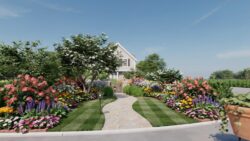
Ornamental grasses add texture and movement to the pool landscape. Species like fountain grass or maiden grass grow quickly and require very little water. They create soft edges against hard concrete or stone paver decks. These grasses reach heights that offer mid-level privacy when planted in clusters. Use them to fill gaps between larger shrubs and ground cover. This layered approach creates a thick visual shield that looks balanced and professional.
Outside Pool Ideas Creating Destination Zones Beyond The WaterS Edge
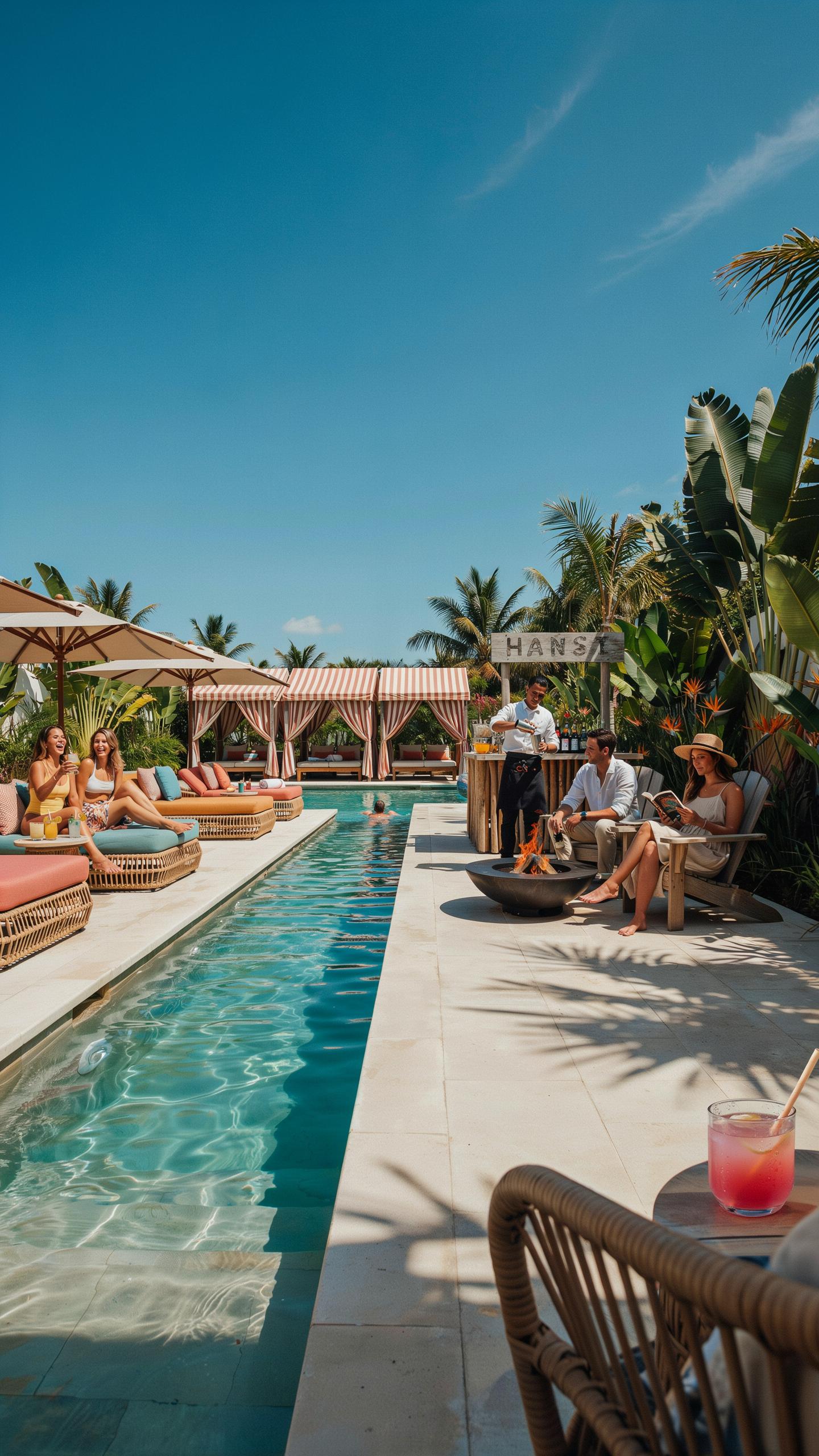
Designing A Shaded Lounge Area With Pergolas, Sails, Or Mature Canopy Trees
Sun exposure causes deck surfaces to reach temperatures that burn skin. You must integrate shade structures to increase usability during peak hours. Pergolas provide a permanent architectural frame for climbing vines or retractable fabrics. Tensioned sail shades offer a modern look with high UV protection. These structures define the lounge area as a distinct room. This separation improves the flow of your backyard.
Select materials based on local climate demands. Pressure-treated wood resists rot but requires yearly sealing. Aluminum offers a low-maintenance alternative that does not rust near chlorinated or salt water. For natural shade, plant mature canopy trees at least fifteen feet from the pool edge. This distance prevents root damage to the pool shell. Deciduous trees provide summer cooling but drop debris. Evergreens offer year-round privacy and less mess.
Incorporating Outdoor Kitchens, Fire Features, And Seating Nooks Near The Pool
Strategic placement of an outdoor kitchen reduces foot traffic through your home. Locating the grill and prep station downwind from the pool prevents smoke from drifting into the water. Use non-slip stone or concrete pavers for the flooring. These materials handle grease spills and water splashes safely. Stainless steel appliances withstand outdoor humidity. Position the dining area close to the kitchen but away from splash zones.

Fire features extend the use of your pool area into the evening. A built-in fire pit creates a natural gathering point for guests. Use natural gas or propane for instant heat without the mess of wood ash. Place seating nooks in quiet corners for private conversation. Sunken fire pits offer a high-end look and wind protection. Always maintain a five-foot clearance between fire features and any flammable landscaping or structures.
Landscape Ideas Around Pool Water Features And Decorative Accents That Elevate The Space
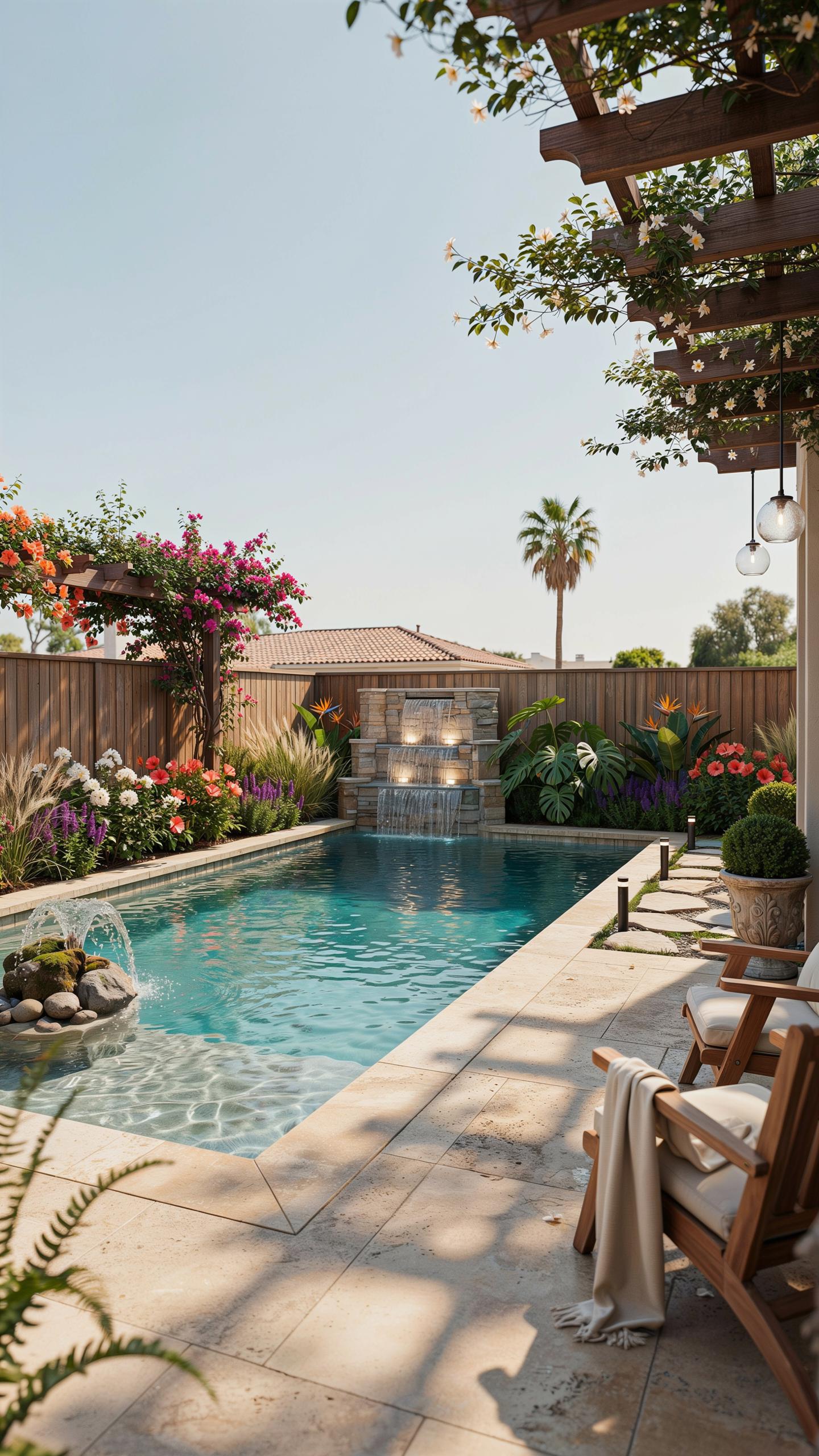
Adding Waterfalls, Fountains, And Rock Features To Enhance Pool Ambiance
Natural rock waterfalls and sheer descents provide critical acoustic benefits for backyard landscaping around a pool. These features mask neighborhood noise through constant water movement. Use indigenous stone like flagstone or quartz to ensure the structure withstands chemical exposure and freeze-thaw cycles. Properly installed stone cascades regulate water temperature by increasing aeration. Contractors must secure these features to the pool beam to prevent shifting over time.
Fountains and bubblers offer vertical interest and cooling benefits without requiring massive footprints. Scuppers and deck jets integrate directly into the coping or surrounding patio. These elements move water to prevent stagnation and algae growth in corners. High-quality pumps and dedicated valves allow for flow control. Choose materials like copper or cast stone to match the architectural style of the home. Functional water features increase property value and improve water circulation efficiency.
Using Decorative Lighting To Extend Poolside Enjoyment Into The Evening Hours
Effective poolside lighting focuses on safety and visibility first. Low-voltage LED systems consume minimal energy while providing high lumen output. Install path lights along walkways to prevent trips and falls. In-grade well lights highlight the texture of stone walls or large specimen trees. Avoid glare by pointing fixtures away from sitting areas. Use warm-toned bulbs to maintain a relaxed atmosphere. Correct placement ensures the entire perimeter remains secure and usable.
Strategic accent lighting defines the pool shape after dark. Submersible LED fixtures illuminate the water from within the shell. Nicheless lights fit into standard returns for easy maintenance. Moonlighting involves placing fixtures high in trees to cast soft shadows across the deck. This technique mimics natural light patterns. Smart controllers allow you to dim zones or change colors via mobile apps. Durable brass or stainless steel housings prevent corrosion from pool chemicals and moisture.
Pool Landscaping Ideas For Small Medium And Large Backyard Spaces
Maximizing A Compact Backyard With Smart Pool Landscaping Techniques
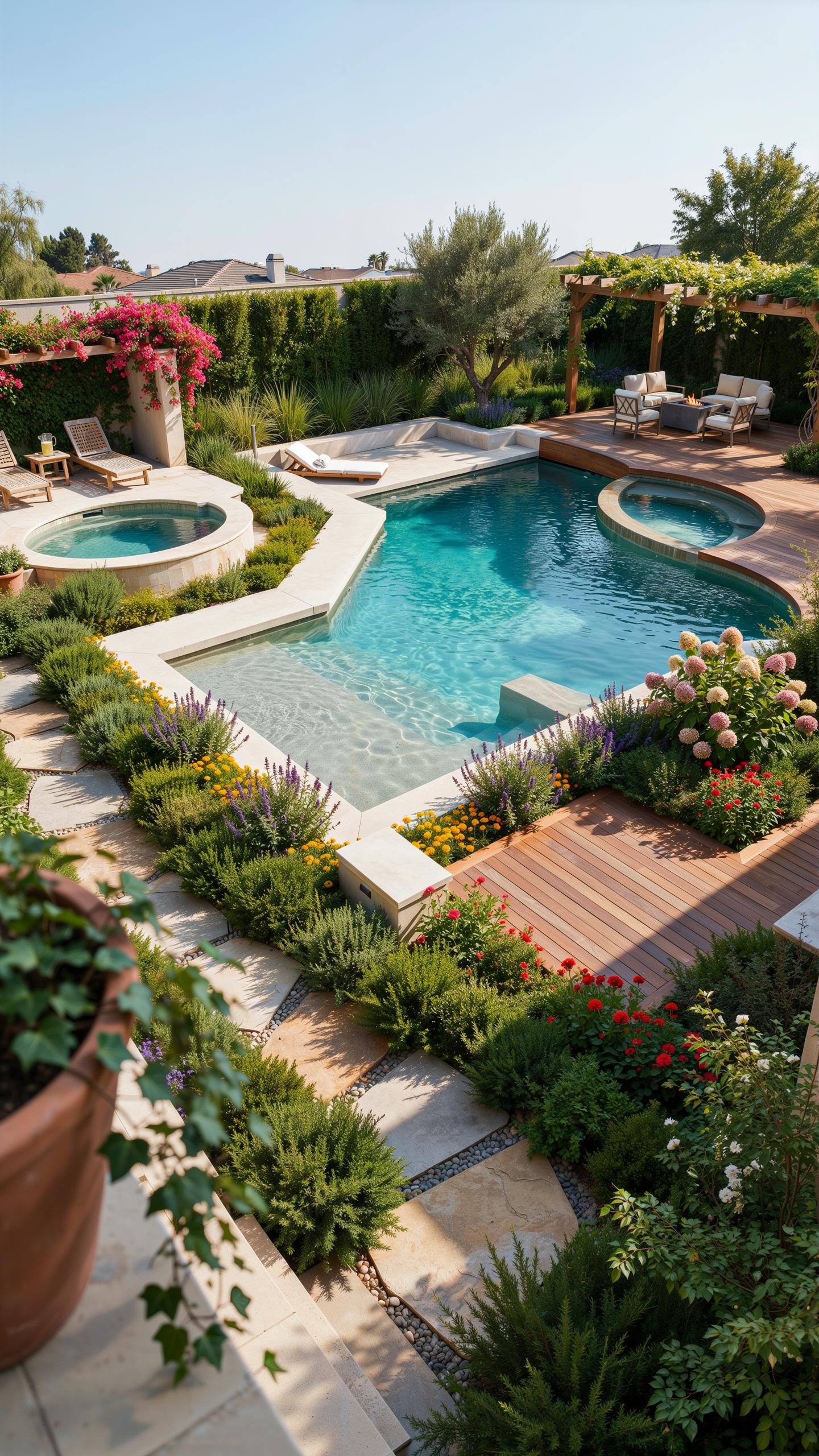
Efficiency dictates every design choice in small spaces. Use vertical planting to save ground area. Install narrow evergreen trees like Italian Cypress to provide privacy without consuming square footage. Select light colored stone for the pool deck. This reflects sunlight and makes the area feel larger. Avoid bulky furniture that blocks paths. Choose multi-functional storage benches to keep the deck clear.
Scale matters more than style in tight quarters. Use oversized pavers with minimal grout lines to reduce visual clutter. Install glass fencing instead of wood or metal bars. This removes visual barriers and merges the pool with the rest of the yard. Stick to a monochromatic color palette for plants. Too many colors create a chaotic look. Keep the perimeter clean to ensure safe movement.
Scaling Up Your Landscape Design When Space And Budget Allow For More
Large backyards require distinct zones to function properly. You must define separate areas for swimming, dining, and lounging. Use hardscaping transitions like stone steps or different textures to mark these shifts. Large plots allow for massive rock formations and deep planting beds. Plant layered heights to create a natural forest effect. This adds depth and prevents the yard from looking flat.
- Custom Water Features: Install sheer descent waterfalls or rock grottos to add movement. These features create white noise that blocks outside traffic sounds. Large spaces handle the scale of these structures without feeling crowded or overwhelmed.
- Outdoor Kitchen Units: Build a permanent masonry station with a grill and sink. Place it near the dining zone but away from the pool splash zone. Use durable granite or concrete counters for longevity and easy cleaning in any weather.
- Natural Stone Boulders: Place large limestone or granite rocks around the pool edge. These act as natural diving platforms or seating areas. They anchor the landscape and provide a rugged contrast to the smooth water surface and glass tile.
- Automated Fire Pits: Integrate a gas fire feature into the pool deck design. This extends the use of the backyard into cold months. Fire provides a focal point and creates a gathering spot far from the damp pool edge.
- Pergola Structures: Construct a heavy timber pergola to provide shade over the lounge area. Use cedar or redwood for natural rot resistance. These structures add vertical interest and define the relaxation zone within a sprawling landscape design.
Maintenance planning is critical for expansive designs. Install an automatic drip irrigation system for the large planting beds. This ensures even watering without manual labor. Use LED lighting to highlight architectural plants and walkways at night. Large spaces need multiple light layers for safety and aesthetics. Strategy ensures the high budget translates into long term value and a usable outdoor living environment.
Pool Area Landscaping Maintenance Tips To Keep Your Poolside Looking Its Best
Seasonal Care Routines For Plants, Hardscape Surfaces, And Pool Surrounds
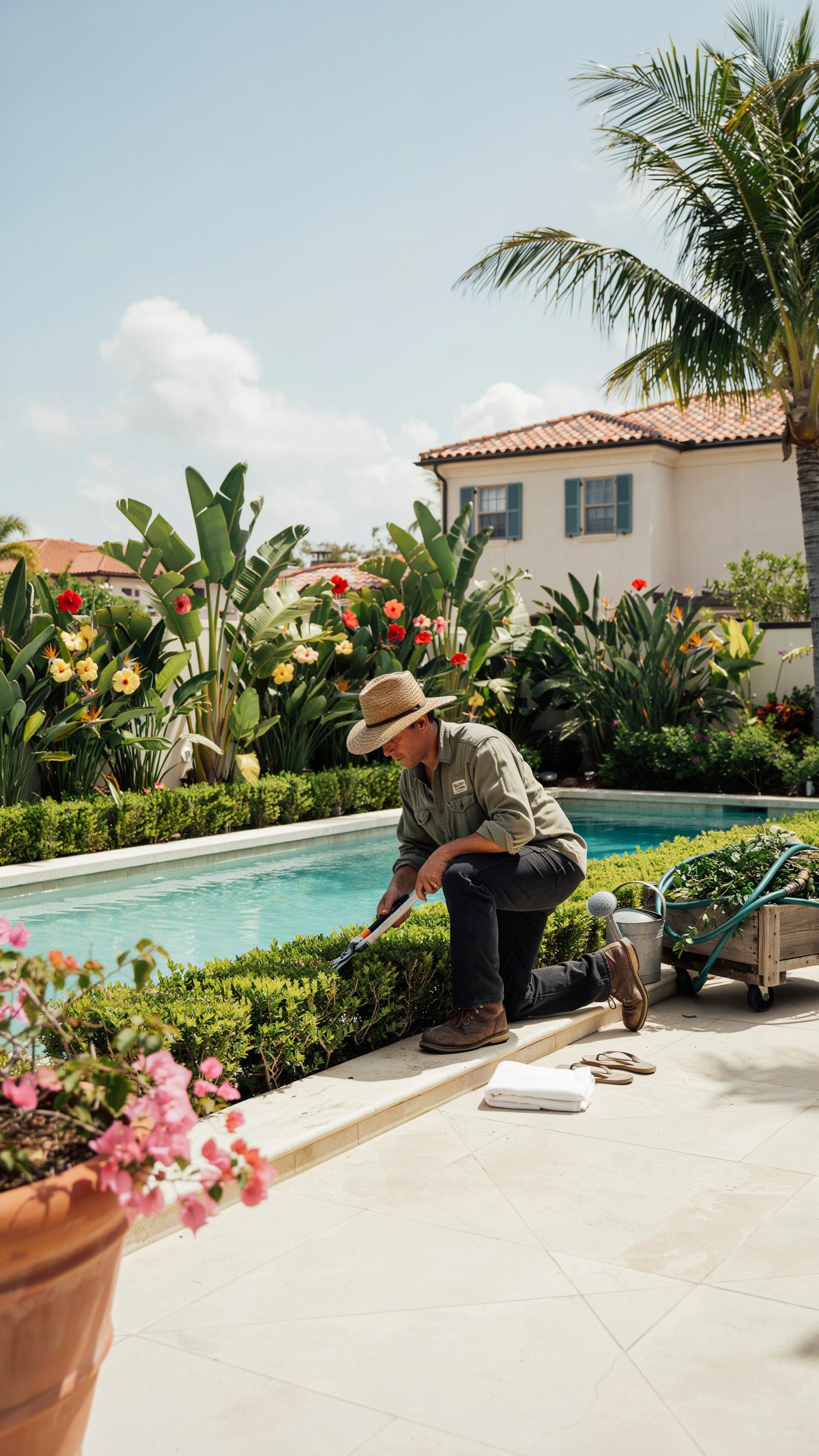
Modern pool maintenance requires a disciplined schedule to prevent structural decay. Spring focuses on clearing organic debris before it stains stone surfaces. Check pavers for shifting or cracked grout caused by winter freeze-thaw cycles. Apply new stone sealant every three years to block chlorine and salt penetration. Prune overhanging branches to reduce phosphate loads in the water. This prevents algae blooms and lowers chemical costs.
Fall routines center on protecting plumbing and perennial roots. Trim back ornamental grasses after they turn brown to stop seeds from clogging the skimmer baskets. Blow out debris from expansion joints to prevent ice damage. Clear all leaf litter from deck drains to ensure proper runoff during winter storms. Consistent cleaning prevents permanent mineral buildup on tile lines. These steps extend the life of high-end hardscape materials and equipment.
Low Maintenance Landscaping Strategies That Save Time Without Sacrificing Style
Strategic plant selection reduces weekly labor. Use evergreen shrubs like Boxwood or Yew to avoid seasonal shedding. These plants provide a clean perimeter without dropping leaves into the pool. Focus on slow-growing species to minimize pruning sessions. Install heavy decorative gravel or river rock over weed fabric instead of wood mulch. Mulch floats away during heavy rain and enters the pool filtration system.
Incorporate automated drip irrigation to manage plant hydration efficiently. This system delivers water directly to the roots and keeps the pool deck dry. Dry decks prevent slips and reduce the growth of mold or mildew. Use large format porcelain pavers because they resist stains better than natural stone. Porcelain has a low absorption rate which means less scrubbing for the owner. These choices ensure the backyard looks professional with minimal effort.
Modern Pools And Contemporary Landscape Design Sleek Styles For TodayS Backyards
Key Design Principles Behind Modern Pool And Landscape Aesthetics
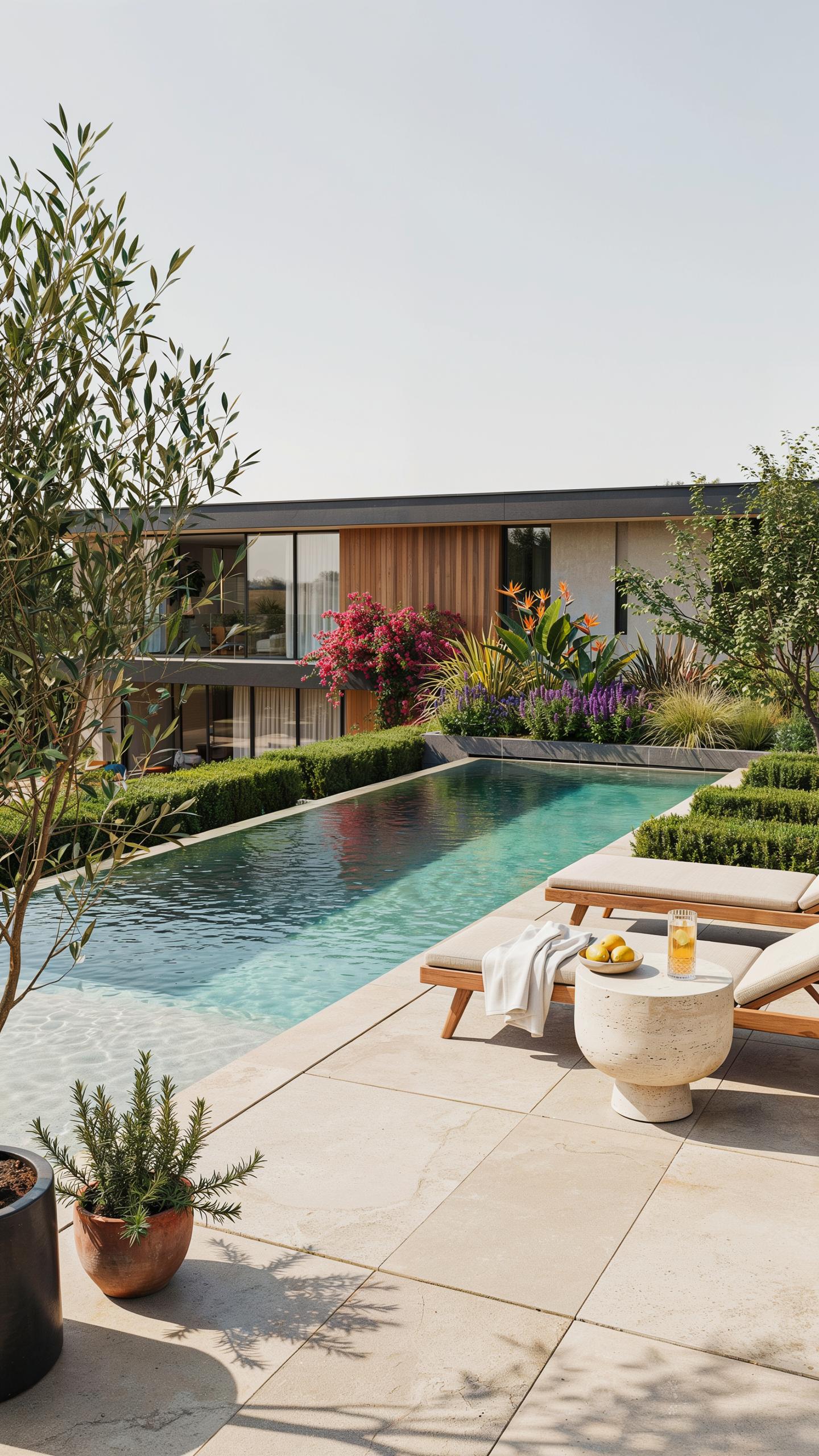
Modern pool design prioritizes geometry and minimalism. Designers use clean lines and rectangular shapes to create a sense of order. This style stems from the Mid-Century Modern movement. It emphasizes a seamless transition between the house and the yard. You must align the pool edge with the home architecture. Material choices like poured concrete or smooth stone reinforce this structured look.
Tactical landscape placement utilizes negative space. You should avoid cluttering the pool perimeter with small pots or varied plant types. Instead, use mass plantings of a single species for impact. This creates a bold visual statement without distraction. Hardscaping dominates the layout to reduce maintenance and increase usable area. Focus on symmetry or intentional asymmetry to guide the eye toward the water feature.
Sustainable And Eco Friendly Landscaping Choices That Suit Modern Pool Settings
Sustainable landscaping reduces water waste and chemical runoff. Use native plants that thrive in your local climate without extra irrigation. These species support local pollinators and require less fertilizer. Modern aesthetics favor grasses and succulents for their structural form. Permeable pavers allow rainwater to soak into the ground. This prevents drainage issues and reduces pressure on local storm systems.
Choose local stone and recycled materials to lower the carbon footprint of your project. Timber decking should carry certification from the Forest Stewardship Council. LED lighting systems cut energy use significantly compared to traditional bulbs. You can integrate smart controllers to manage pump speeds and lighting schedules. These choices lower long term operating costs while protecting the environment. Efficiency and style now work together in high end designs.
Frequently Asked Questions

What are the best plants to use for a cozy poolside atmosphere?
To create a sanctuary, focus on layered greenery that provides both texture and privacy. Soft ornamental grasses, lush ferns, and fragrant jasmine are excellent choices for backyard landscaping around a pool. These plants add a sense of enclosure without being overwhelming. Always opt for salt-tolerant and chlorine-resistant varieties that don’t shed excessive debris, ensuring your water stays clean while your lounge area feels like a secluded tropical retreat.
How can I integrate lighting into my pool landscape for better evening ambiance?
Effective lighting is key to achieving a relaxed evening vibe. Start by layering different light sources, such as recessed LED pavers along the deck and solar-powered spotlights focused on architectural trees. String lights or flickering lanterns can add a warm, festive glow to your seating areas. Proper lighting design enhances your backyard landscaping around a pool, making the space safer for nighttime swimming while highlighting the natural beauty of your garden.
Is it possible to create a high-end cozy look on a limited budget?
Absolutely! You can achieve a sophisticated look by focusing on high-impact, low-cost additions. Use decorative gravel or mulch to define garden beds and invest in oversized outdoor floor pillows or affordable weather-resistant rugs to create a “room” feel. Succulents and perennials offer long-term value as they return each year. Simple DIY projects, like building a stone fire pit area, can instantly elevate your space without the need for a professional renovation.