The Scarcity Myth: Why New Lumber Is For Amateurs
The Real Price You’re Actually Paying
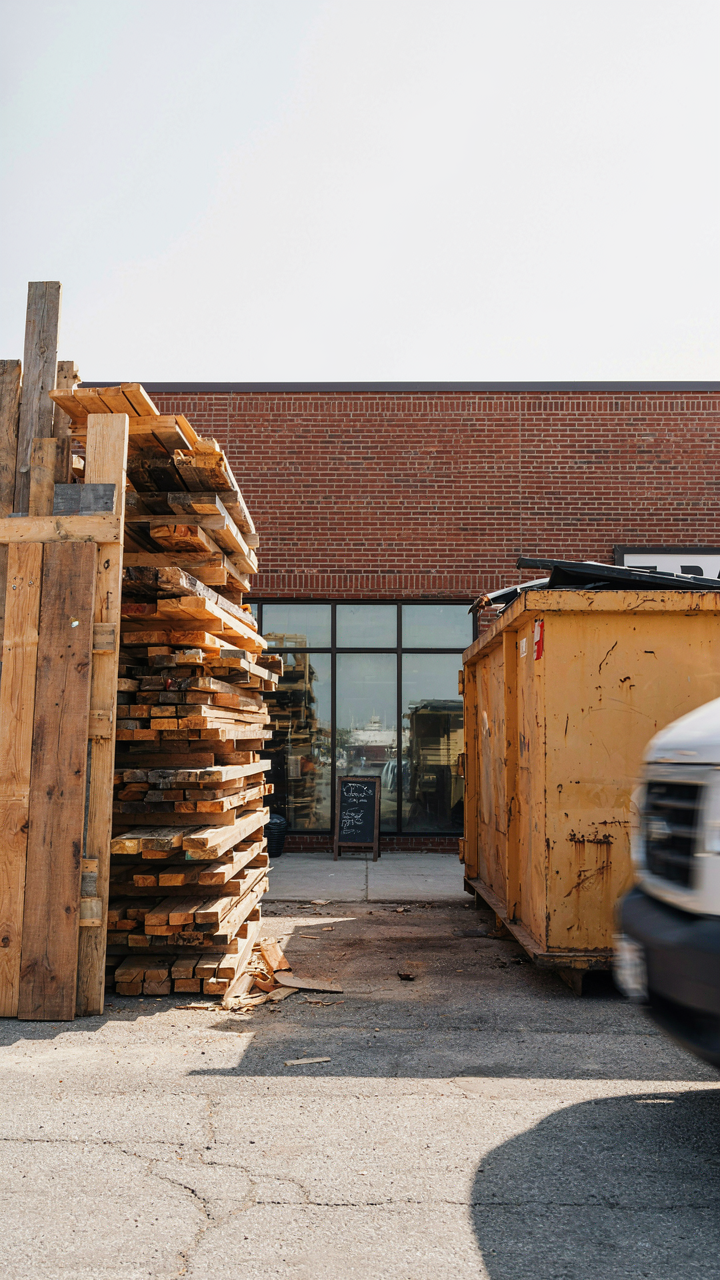
You want permission to save money without feeling cheap. Here’s the mechanism: new lumber prices anchor your perception of what’s possible, so you never actually calculate the full cost of the convenience tax you’re paying. A 2×10 pressure-treated board from a big box store runs $15 to $25 depending on length and region. Scrap wood from construction sites, demolition projects, or pallet deconstruction costs zero to five dollars per board, often free if you haul it yourself. The delta isn’t marginal.
But the real advantage isn’t just the material cost. Salvaged wood forces you to design around what exists rather than buying standardized dimensions and calling it a plan. You work backwards from inventory instead of forwards from a wish list. This constraint produces better proportions for smaller patios because you’re not forcing oversized commercial lumber into residential spaces. The planter box that costs forty dollars in materials versus ninety dollars teaches you something about restraint.
Virgin Timber Versus Reclaimed Economics
Economics teaches us opportunity cost: the value of what you give up by choosing one path over another. Every board of virgin lumber represents a tree-to-sawmill-to-distributor-to-you supply chain where extraction, processing, and transport consume fuel and labor. Reclaimed wood skips that chain entirely. It’s already been processed, shaped, and moved. You’re reassigning its utility instead of creating new demand in the extraction economy.
The environmental math is straightforward without needing activism as your motivation. Old-growth scrap from a 1970s deck teardown has better rot resistance than most pressure-treated lumber sold today. Reclaimed dimensional lumber often comes from when mills cut larger stock, so a salvaged 2×10 has actual depth that new lumber sometimes doesn’t. You get superior material and eliminate transportation impact by using what’s already here. Check demolition contractors, pallet recovery operations, and architectural salvage yards within twenty miles of your location to establish your actual supply chain before designing your boxes.
The “Found Object” Protocol: Curating Your Scrap Wood Stash

Wood That Won’t Rot In Six Months
You want to feel resourceful without actually risking your porch looking like a failed project by August. The real mechanism: wood density and lignin content determine decay speed, not sentiment. Softwoods like pine break down fast outdoors. Hardwoods like oak and cedar resist rot longer because their cell structure sheds water and resists fungal colonization. Pressure-treated lumber lasts longest but requires careful sourcing to avoid post-2003 arsenic contamination. Reclaimed hardwoods from barns or old furniture often outperform new softwood by years.

Treated wood made before 2004 contains copper arsenate. New pressure-treated stock uses copper quaternary compounds, safer but still worth sealing. Examine the grain and weight first. Heavy wood with tight rings signals density. Check for soft spots by pressing a nail or screwdriver into the end grain. If it punctures easily, the wood is already compromised. Avoid anything with active mold, deep cracks radiating from the center, or a spongy texture.
Processing Wood Without Poisoning Your Garden
The standard advice about “just sand it down” misses the actual risk. Grinding or sanding old treated wood releases particulates into your lungs and soil. Pressure washing removes surface contamination but doesn’t eliminate embedded toxins. The real protocol depends on the wood’s age and treatment type. Pre-1980 treated wood often contains pentachlorophenol. Anything from 1980 to 2004 contains CCA arsenic. Post-2004 lumber uses safer compounds. If you can’t verify the source, assume it’s treated and plan accordingly.
- Identify the source first: If wood came from a construction site, demolition, or commercial treatment facility, assume it’s chemically treated and isolate it. Document what you can about its age and previous use.
- Pressure wash at low pressure: Use under 1500 PSI to avoid forcing contaminants deeper into wood grain. Wash in a contained area so runoff doesn’t contaminate soil where you’ll plant food crops.
- Let it dry completely: Wet wood accepts sealant poorly and traps moisture inside, accelerating rot. Store washed wood under cover for at least two weeks before assembly or sealing.
- Seal all surfaces, not just visible sides: The end grain absorbs water fastest. Use penetrating oil or exterior wood stain on every cut edge, interior surface, and bottom to block moisture entry consistently.
- Use a containment layer for food crops: Line the interior with landscape fabric or food-grade plastic if you’re growing edibles. This prevents root contact with potentially contaminated wood surfaces over multiple seasons.
Once sealed, treated wood won’t leach into soil water, but the barrier still requires maintenance. Reapply sealant every two to three years depending on climate. Check the bottom corners each spring, where water pools and sealant fails first. If you notice flaking finish or soft wood beneath, strip and reseal that section immediately. The containment layer becomes your actual crop protection, making it non-negotiable for anything you’ll eat.
Beyond The Rectangle: Deconstructing Planter Design Principles
How Modular Thinking Beats Custom Chaos
You want your planter to look intentional, not like you assembled it drunk on a Saturday. That’s the real fear underneath all this. Architecture solved this problem decades ago through modularity—the principle that a system works better when broken into repeatable units that snap together predictably. A scrap wood planter box is a modular unit. Stack them, arrange them, scale them. One good box design handles five different porch configurations.
The mechanism is constraint breeds clarity. When you commit to one base dimension—say 24 inches—every scrap piece you source either fits or doesn’t. No guessing. No waste. You’re not designing a planter each time. You’re repeating a proven formula. This is why modular furniture outlasts bespoke pieces. Consistency in construction beats inspiration every time. Build one prototype, nail the joinery, then replicate it.
What Actually Breaks Under Real Conditions
The common advice says use cedar or redwood for rot resistance. Partially true. Incomplete. Rot resistance matters less than load distribution when your planter sits on a porch. Imperfect scrap materials—mixed wood types, varying thicknesses, old reclaimed boards—fail under uneven weight because you can’t predict how stress travels through inconsistent density.
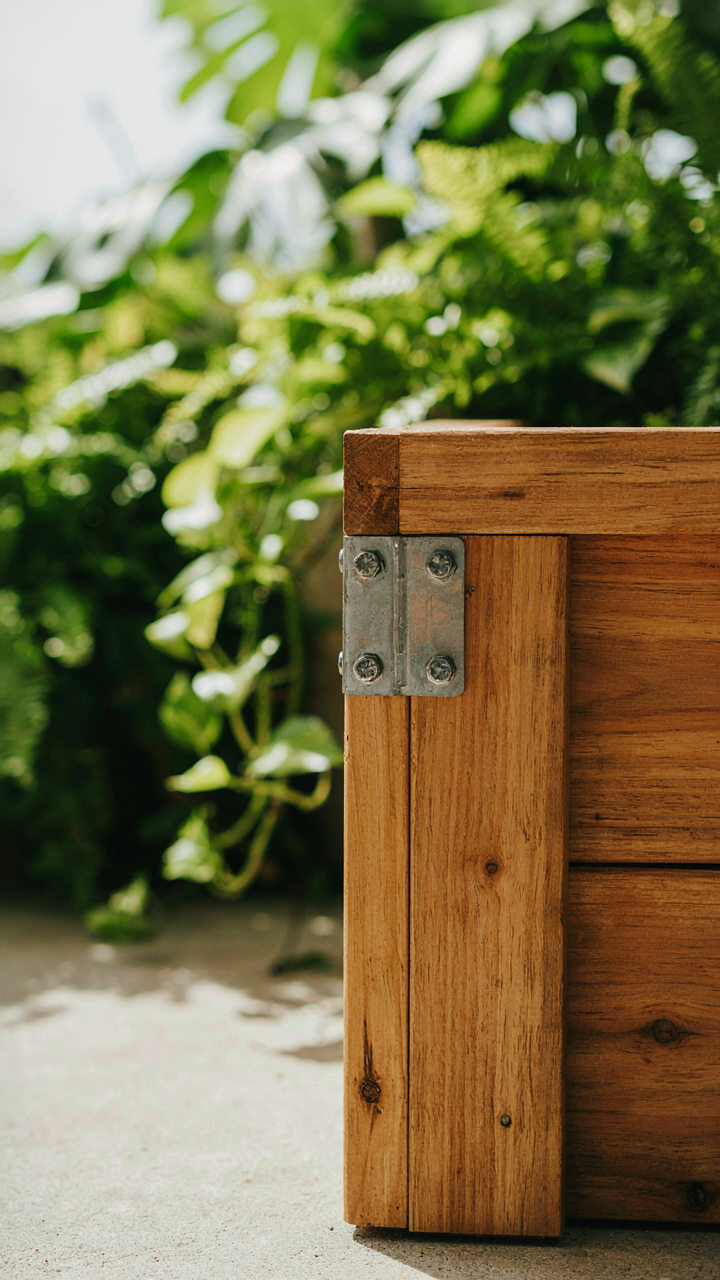
The real answer: engineer for the actual point of failure. A planter filled with soil weighs 300 to 400 pounds. That weight concentrates at corners and long unsupported edges. Use butt joints reinforced with corner braces on boxes over 24 inches wide. Tie bottom boards to side boards with lag bolts, not nails. Bolt through-connections beat surface fasteners on scrap wood every single time because they transfer stress across grain lines instead of along them.
The Imperfection Advantage: Embracing Patina And Character In Diy Wood Planters Outdoor
Why Aged Wood Looks Better Than New
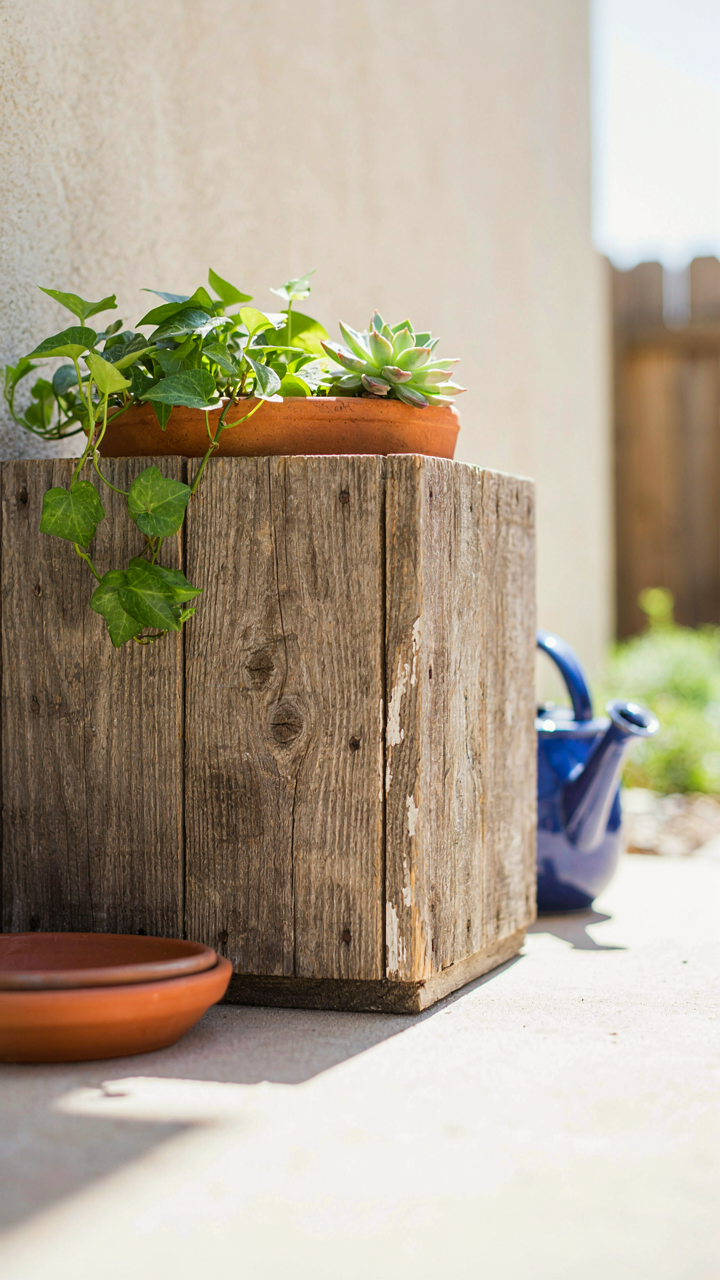
You want permission to build something that looks intentional instead of cheap. That’s the real reason you care about this section. The mechanism is simple: weathered wood signals time and restraint. New lumber screams effort and budget constraints. Wabi-sabi, the Japanese design philosophy rooted in impermanence and incompleteness, inverts the Western obsession with pristine surfaces. It values visible wear as proof of authenticity. Scrap wood planters embody this principle because the wood already carries its history into your space.

The visual payoff is immediate. Knots, discoloration, and surface cracks become design features instead of flaws. You stop hiding the material’s past and start displaying it. This shift in framing costs nothing but changes everything about how the planter reads in your outdoor space. Builders who understand this use reclaimed barn wood or salvaged fence boards intentionally, not as budget filler. The patina becomes the aesthetic.
Structural Reality Of Aged Lumber
Common advice says old wood is weak. That’s incomplete. Aging wood actually increases density in certain conditions, particularly if it dried slowly and evenly over years. This density makes it harder and more rot-resistant than freshly milled green lumber. However, the catch matters: only wood that aged in dry conditions gains this advantage. Scrap wood exposed to moisture cycles, UV damage, or insect activity degrades faster than protected new wood.
The durability math shifts based on grain structure and the specific wood species. Dense hardwoods like oak or cedar hold up longer than softwoods like pine, regardless of age. For a porch planter, your actual variable isn’t pristine versus patina. It’s whether the scrap wood spent five years in a dry shed or five years partially buried near a downspout. Inspect the wood grain closely. If it’s hard and tight-grained when you cut into it, the structural integrity is there. If it crumbles or feels soft, age has deteriorated it beyond usefulness.
Tools Of The Unconventional: Minimalist Approach To DIY Planters
The Hand Tools That Actually Work
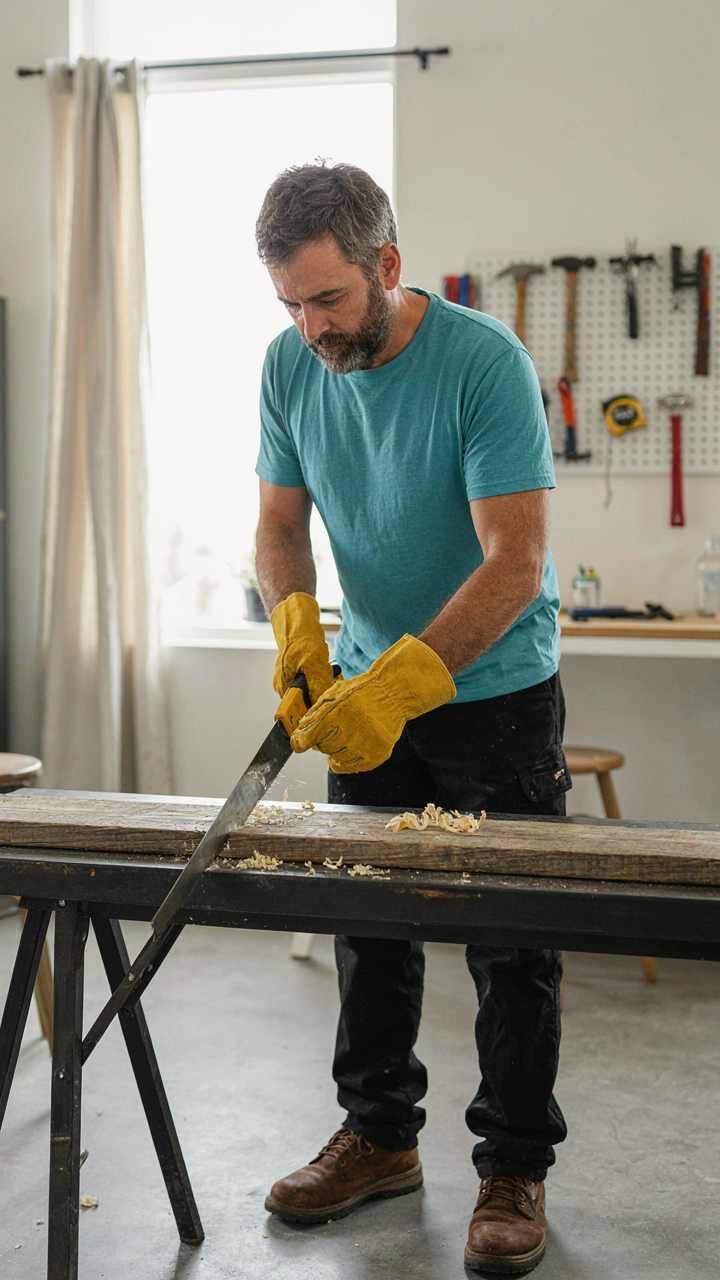
You want to believe you need less equipment than you do, because owning fewer things feels smarter. But the real mechanism is this: the wrong tool doesn’t just slow you down, it forces you to compensate with muscle and angle adjustments that destroy both the wood and your accuracy. Scrap wood demands precision because it has built-in flaws you’re already working around.

A sharp tool cuts cleanly through grain variations that dull tools tear and splinter. You’ll spend less time fighting the material and more time building. Here’s what actually moves the needle:
- Handsaw or Japanese Pull Saw: Cuts scrap wood faster than power tools for small boxes. Japanese saws cut on the pull stroke, reducing binding on irregular grain patterns.
- Hammer and Nail Set: Drives fasteners without splitting delicate reclaimed lumber. The nail set prevents head marks on visible surfaces.
- Carpenter’s Square: Ensures box corners are true 90-degree angles. Prevents racking that makes lids stick and drainage uneven.
- Drill with Bits: Pre-drilling prevents splits in thin scrap pieces. A countersink bit hides fastener heads for finished appearance.
- Chisel Set (4-Piece Minimum): Cleans out joints and removes old hardware from reclaimed wood without unnecessary material loss.
The minimalist approach isn’t about owning the fewest tools. It’s about owning only the tools that solve specific problems scrap wood creates. You skip the circular saw because a handsaw works fine for planter boxes and keeps you connected to what you’re building.
Handling Reclaimed Materials Without Getting Hurt
The standard safety talk bores people into ignoring it. Here’s why reclaimed wood demands different protocols: old wood harbors contaminants you can’t see. Previous coatings, treatments, and embedded metal create hazards that new lumber doesn’t have, period.
Pressure-treated wood from before 2004 contains arsenic. Lead paint flakes off in dust. Hidden nails and staples snap cutting tools and send shrapnel at your face. You inspect every board visually and by feel before cutting, running your hands across both sides to catch fasteners. Wear a P100 respirator when sanding, not a cloth mask. Metal detectors exist specifically for finding embedded hardware in reclaimed wood. Use them. If you find metal, mark it, photograph the location, and plan your cuts around it. Gloves protect your hands from splinters that carry contamination into cuts. Eye protection is non-negotiable because one ricochet ends your DIY career.
Function Over Form: Engineering For Life In DIY Wooden Planters Outdoor
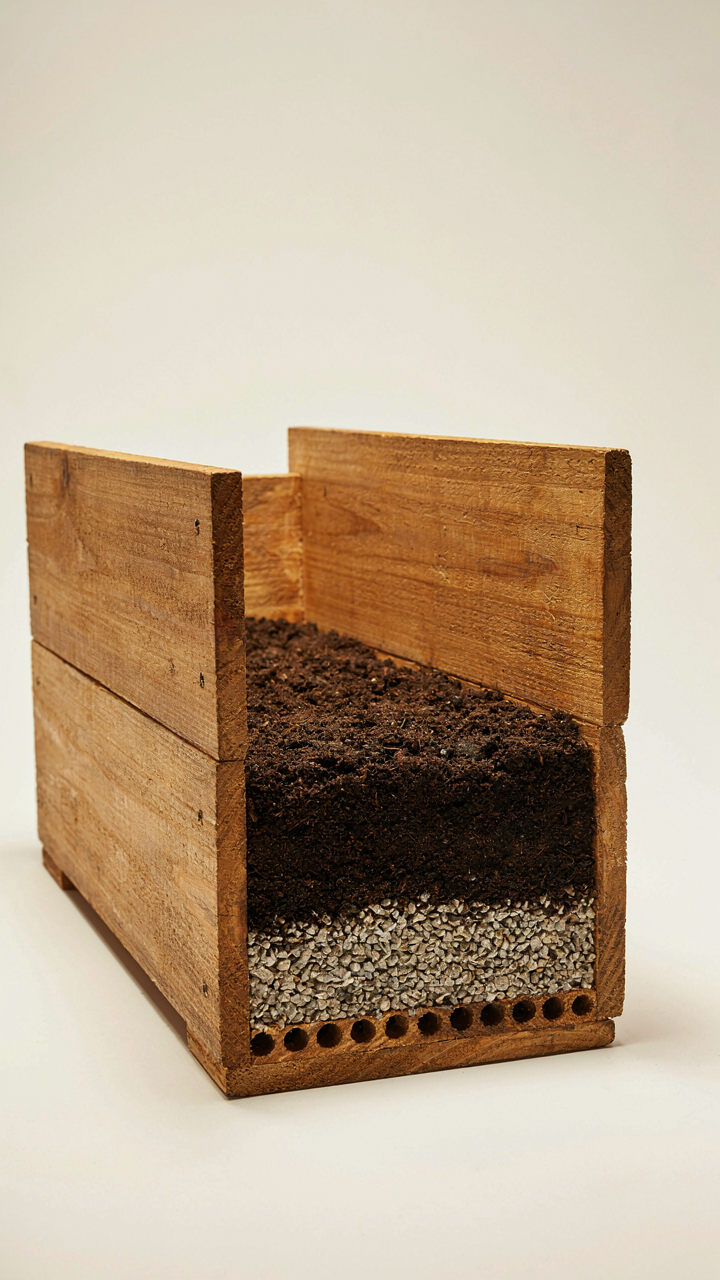
Water Movement Through Soil And Wood
You want your planter to last because replacing it feels like failure. Here’s what actually matters: water moves through soil via capillary action and gravity, and wood rots when it stays wet. Borrow from soil physics. A scrap wood planter box is a vessel competing against two forces at once—water pushing down from above and moisture wicking up from below through the wood itself. Most people drill drainage holes and call it done. That’s incomplete.

The real mechanism is this: water needs an exit path that prevents pooling on the soil surface and blocks the wood from absorbing moisture from the bottom. Drill holes in the floor of your planter, then elevate the box on feet or spacers so air circulates underneath. Add a layer of gravel at the bottom before soil. This stacks the deck against rot by ensuring water drains through the soil column and away from the wood structure itself. The wood stays dry. The soil drains predictably.
Soil Composition Dictates Plant Performance
Stop treating soil as filler. What you put inside the planter determines whether your plants thrive or whether you waste money replacing dead specimens every season. Heavy clay-based soils compact, hold water too long, and suffocate roots in containers. Scrap wood planters are shallow compared to in-ground gardens, so soil quality matters more, not less.
Build a soil blend: one part compost, one part perlite or coarse sand, one part topsoil or coconut coir. This ratio provides nutrient density, aeration, and drainage. Match your plant selection to the depth of your planter. Shallow boxes work for herbs and sedums. Deep boxes handle tomatoes and larger perennials. When you pair the right soil to the right plant in the right depth, the system becomes self-sustaining instead of a constant problem-solving loop.
The Anti Mass Production Blueprint One Of A Kind DIY Planter Box
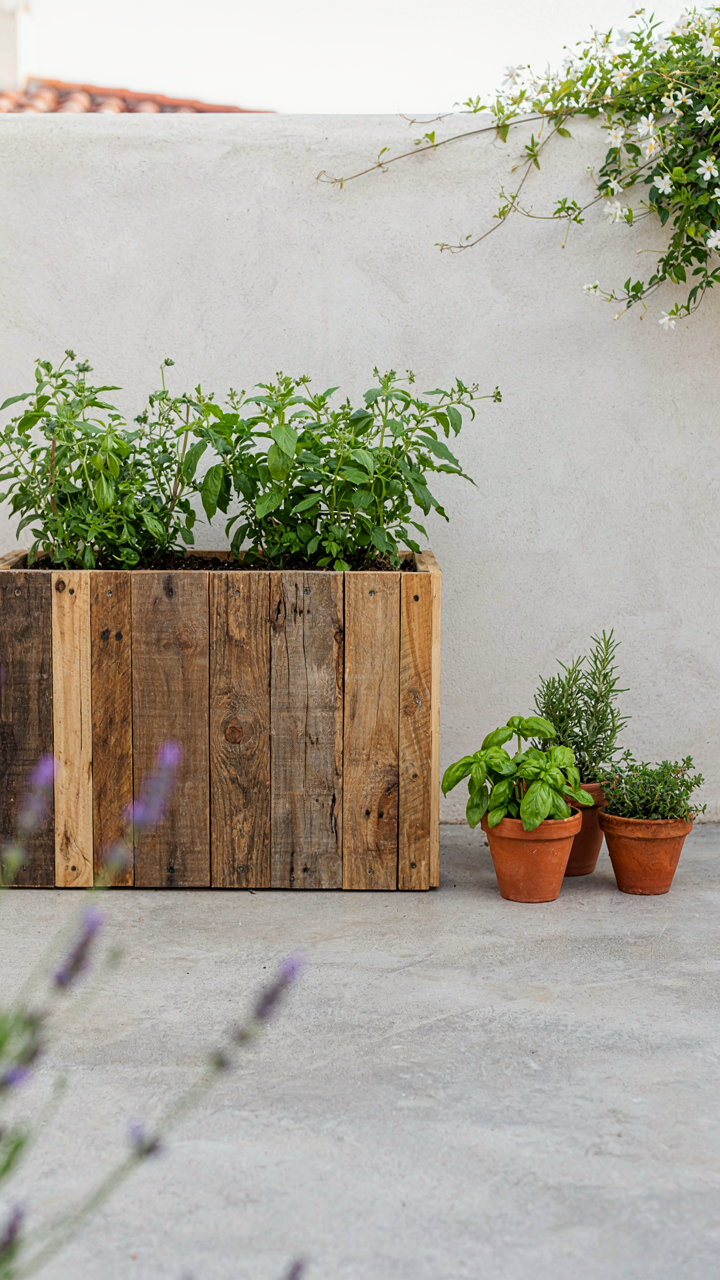
Working With What You Actually Have
You want permission to build something without buying a kit. That’s the real ask here. The mechanism is simple: constraint forces decision-making. When you work with actual scrap wood in front of you, you stop shopping for the “perfect” dimensions and start solving the problem with materials that exist. No endless scrolling. No waiting for delivery. No compromise between what you want and what’s available.

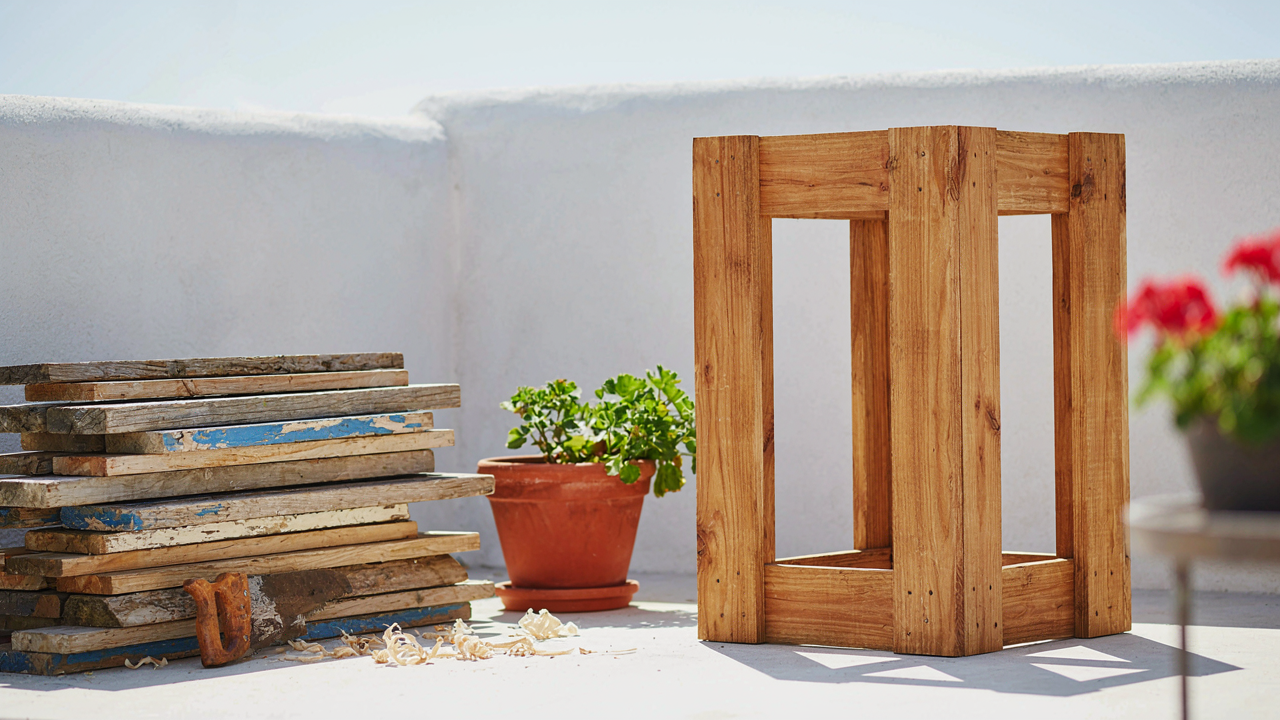
Scrap wood comes in random widths, lengths, and thicknesses. Instead of fighting this, build your design around it. A two by four here, a one by six there, a piece of reclaimed fencing somewhere else. Your planter box becomes a direct output of your constraints, not a template you’re forcing wood into. This is how actual builders work, not how Pinterest tutorials frame it.
Principles That Transfer To Your Next Build
Economics calls this the principle of scalability: taking the logic of one system and applying it to different scales. For scrap wood planter boxes, that means identifying the structural rules that worked on your first box, then applying those same rules to the next one using different available materials. You’re not copying a design. You’re copying a decision-making process.
Your first box taught you how to join corners without warping, how to space drainage holes for your soil type, how to orient grain to prevent rot. These principles work whether you’re building a 24 inch wide box or a 48 inch one. Document what actually happened, not what you think should happen. Then use that knowledge to make faster, better decisions with your next batch of scrap. Each build compounds into a refined system only you understand.
The Legacy Of Scraps: Building For Resilience, Not Replacement

Design That Outlasts Trends
You want permission to build something that won’t look dated in three years. The real mechanism: thoughtful design outlasts material decay because it solves a problem instead of chasing aesthetics. Scrap wood planters survive longer when they’re built around function first, form second.

The durability paradox is this: wood rots from neglect, not age. A poorly designed box with tight corners traps water and accelerates failure. Proper pitch on the bottom, drainage holes positioned away from stress points, and wood selection based on local climate determine lifespan far more than the wood’s origin. A planter built from reclaimed barn wood lasts decades if the design accounts for water movement and seasonal wood movement.
Adaptation Without Starting Over
Think like a biologist studying adaptation. In evolutionary terms, a planter’s fitness isn’t measured by permanence but by its capacity to change without collapse. Scrap wood planters excel here because modularity is built in. You can replace a rotted board, upgrade a drainage system, or add height without dismantling the entire structure.
The wrong approach is treating a planter as finished. The right approach builds in upgrade points from the start. Removable corner supports allow board replacement without reconstruction. Adjustable legs accommodate settling soil or uneven patios. Redesign the interior liner instead of the box itself. This isn’t maintenance. This is intentional impermanence that extends functional life by years.
The Obstacle Isn’t The Wood; It’s Your Addiction To External Validation

You’ll never build scrap wood planter boxes because you’re waiting for permission. You’re scanning Instagram for the “perfect” design instead of grabbing wood from behind the hardware store and nailing it together. Stop researching. Stop comparing. Go find three pieces of scrap wood today and cut them. Imperfect planters beat perfect plans every single time.