The Futility Of “Perfect” Vegetable Garden Planning

Static Plans Ignore How Gardens Actually Work
You want a plan because it feels like control. But the real mechanism here comes from systems theory: entropy. A garden isn’t a machine with fixed inputs and outputs. It’s an ecosystem where soil biology shifts, pest populations spike unpredictably, weather deviates from averages, and plant genetics express differently based on microclimate conditions you can’t fully map. A static plan treats your garden like a spreadsheet. Reality treats it like a living organism that responds to forces outside your prediction model.
Most gardeners lock themselves into a seasonal blueprint in January, then spend May through September fighting it. They planted tomatoes in zone C because “that’s where they go,” but zone C has poor drainage this year. They committed to a spacing pattern that looked good on paper but didn’t account for how the oak tree expanded its shade. The plan became a cage instead of a framework. The moment you defend the plan instead of adapting to conditions, you’ve already lost momentum and harvests.
Fragility Hides In Rigid Structures
Monoculture thinking kills gardens quietly. When you design one perfect layout and execute it identically each season, you optimize for one narrow set of conditions. That means your system breaks catastrophically when anything shifts. A late frost, a new pest, a soil nutrient depletion, or simply year-to-year weather variation exposes how brittle perfection actually is. Gardens designed for resilience look messy and unpredictable to people seeking certainty.
The mechanism is simple: variation beats optimization in complex environments. Stagger your plantings across three weeks instead of one date. Plant the same crop in three different locations instead of one bed. Use multiple varieties instead of one heirloom. Space plants 10% tighter and 10% looser in different sections. These redundancies cost nothing and catch you when single-point failures occur. The real planting plan isn’t a document. It’s a decision protocol you execute weekly based on what you observe, not what you predicted.
The Redundancy Protocol: Your Anti Fragile Allotment Garden Layout

When One Planting Fails, The Other Succeeds
You want to feel secure about feeding yourself without obsessing over conditions you can’t control. The real mechanism is borrowed from systems engineering: redundancy. Build overlap into your planting schedule so crop failure in one window doesn’t crater your harvest. Plant lettuce every two weeks instead of once. Sow beans in three separate blocks ten days apart. When frost kills the first round, the second produces. When heat bolts the early seeding, the late one thrives.

Most gardeners plant everything at once, then complain about gluts and gaps. That’s not a vegetable garden planting plan, that’s wishful thinking. Staggered planting turns your garden into a steady-state operation instead of a feast-famine cycle. You control timing, not chance. Pick a crop. Divide your seed packet into thirds. Plant, wait ten days, plant again, wait ten days, plant the final batch. That’s the protocol.
Many Crops Beat One Crop Every Time
Monoculture works for industrial farms with crop insurance and chemical interventions. Your backyard garden operates on different economics. When you plant only tomatoes across fifty square feet and a disease or pest finds them, you lose the entire block. When you plant tomatoes, basil, onions, and beans in the same space using the same labor, one failure doesn’t collapse your season.
Diversity also solves the soil problem that most gardeners ignore. Different root depths, different nutrient demands, different pest vulnerabilities. A tomato doesn’t compete with lettuce at the same soil layer. Beans fix nitrogen while tomatoes extract it. This isn’t poetry, it’s logistics. Your vegetable garden planting plan survives on mixed crops because mixed systems absorb shocks. Rotate families across your beds year to year and build in four to five different crops per growing season minimum.
Resource Allocation: Beyond The Garden Bed Layout
Sunlight As Prime Capital
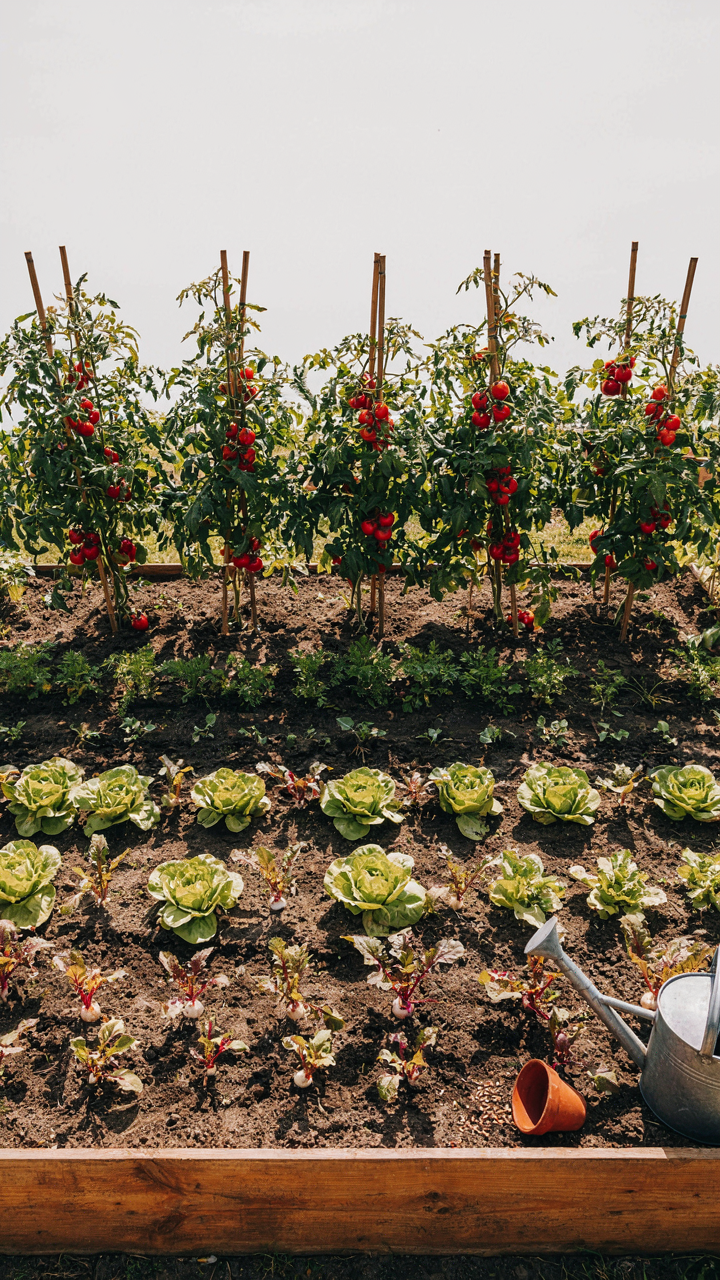
You want the layout to look balanced, so you distribute beds evenly across the space. That’s the trap. Sunlight is the actual currency in a vegetable garden, and you allocate it first or you waste a growing season. Use the concept of “capital allocation” from finance: the scarcest resource determines everything else. In gardens, that resource is direct sunlight hitting soil during peak photosynthesis hours.

Map your site from 9 AM to 3 PM across the year’s critical growing months. North-facing areas stay shaded. South-facing zones get six to eight hours minimum. Tall crops cast shadows, so position them on the garden’s north edge to shade-tolerant plants only. High-value crops like tomatoes, peppers, and eggplants get the hottest, clearest zones. Leafy greens tolerate partial shade. This isn’t preference; it’s physics determining yield.
Water And Nutrient Cycles
The common advice treats watering and feeding as separate tasks you perform on schedule. Wrong. Systems thinking from biology reveals the real structure: water moves nutrients into root zones, and soil biology mineralizes organic matter into available nutrients. These are locked together. You don’t optimize one without breaking the other.
Build closed-loop by composting garden waste back into beds and collecting rainwater runoff into storage. This reduces external inputs and creates predictable nutrient cycles tied to your garden’s own debris. Mulch heavily between plants to slow evaporation and keep soil biology active. Amend soil before planting based on a soil test, not guessing. Track what leaves each bed through harvests and replace it proportionally through compost or targeted amendments. The mechanism is simple: measure outputs, return inputs in matching quantities.
The Buffer Zone Principle In Vegetable Garden Layout Design
How Companions Disrupt Pest Cycles
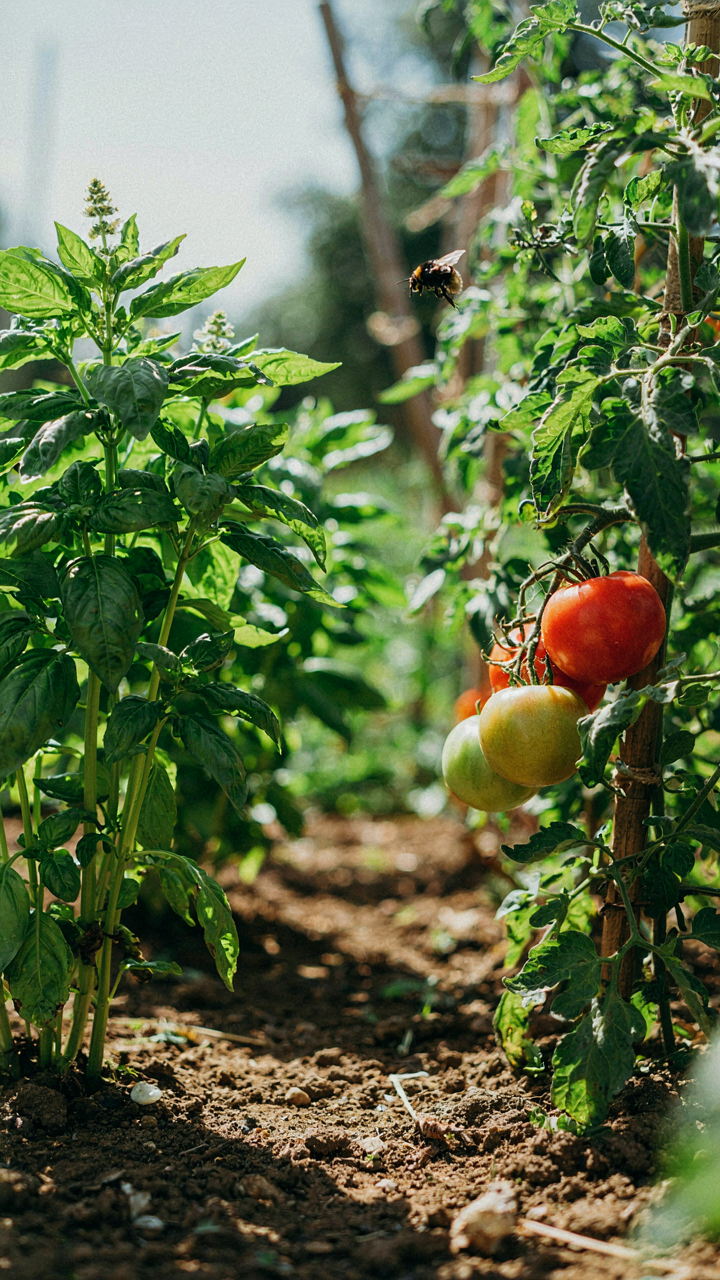
You want a garden that runs itself so you don’t have to spray or fuss, but that’s not why you really care about this section. You want to look competent. The real mechanism is biological interference. In ecology, we call it niche competition. Apply that to your beds: when you plant basil next to tomatoes, you’re not creating harmony. You’re flooding the space with two different scent profiles that confuse pest insects looking for their host plant. Basil masks the tomato’s chemical signature. Carrot root flies can’t lock onto carrots surrounded by onions because the onion’s sulfur compounds overwhelm the carrot’s signal. This works because pests navigate by smell and taste, not visual search.

The common advice says companions “help each other” or create a “balanced ecosystem.” That’s incomplete. What actually happens is resource denial and sensory disruption. Plant marigolds between brassicas not for luck, but because marigold volatiles interfere with cabbage moth host-finding behavior. The pest arrives, finds noise instead of signal, and moves on. Space matters here: companions must be close enough that their scent clouds merge, typically within 12 to 18 inches. Plant them too far apart and you lose the interference effect entirely. The layout becomes decoration, not defense.
Trap Crops Direct Pressure Elsewhere
Sacrificial planting is military strategy applied to garden beds. You establish a decoy target to redirect an enemy’s resources away from your main asset. Plant nasturtiums on the garden perimeter before planting cabbage in the center. Aphids find the nasturtiums first, colonize them, and never reach your brassicas. This only works if the trap crop is more attractive to the pest than your food crop and positioned to intercept pest movement before it reaches vulnerable plants.
The trap works because pests follow chemical and visual cues in a specific sequence. They land, feed, reproduce. If they find abundance on the edge, they stop searching inward. Place a row of radishes around your lettuce patch. Flea beetles prefer radishes when both are equally available. They’ll concentrate their damage on the expendable crop while your lettuce grows. The sacrifice is deliberate and counted into your yield calculation. You lose the radishes, keep the lettuce. Document which pests target which crops in your specific zone so you can design your trap system with precision, not guesswork.
Soil As Your Primary Asset: The Garden Layout Vegetable Engine

Biology Beneath The Surface
You care about this because you think the soil matters less than the plan. It doesn’t. Borrow a term from soil microbiology: succession. Just like ecological succession moves from pioneer species to climax community, your soil moves from dead medium to living ecosystem. Most gardeners treat soil as inert substrate. They’re wrong. Microbial colonies, fungal networks, and bacterial populations determine nutrient availability far more than NPK ratios printed on bags.

The mechanism is simple. Microbes break down organic matter into plant-available forms. Fungi extend root reach through hyphal networks. Bacteria cycle nitrogen. Without active biology, you have dirt. With it, you have a system that feeds itself progressively. Build microbial populations first through organic matter addition and minimal disturbance. Everything else in your planting plan depends on this foundation working.
Mulch Never Stops Working
The common advice treats mulch as decoration. It’s actually a retention protocol that runs year-round. Mulch suppresses soil temperature swings, preserves moisture during dry periods, and feeds microbes as it breaks down. Bare soil loses biology fast. Covered soil builds it. Deploy mulch thickly around every bed, maintaining two to three inches through the season. Refresh it annually with aged compost or shredded leaves.
Cover crops fill winter gaps where beds sit exposed. Plant winter rye, hairy vetch, or clover in fall after harvest. They hold nitrogen, prevent erosion, and add organic matter when tilled under in spring. Never leave soil bare. Each exposed month without cover costs you microbial biomass and nutrient cycling capacity. The beds that stay covered year-round outproduce the others by measurable margins within two seasons.
Harvesting As Feedback: The Cybernetic Loop Of Steady Production

Your Yield Tells You What Works
You want steady harvests because inconsistency feels like failure. Here’s what nobody says plainly: your garden is a feedback system from cybernetics, where output directly controls your next input. In cybernetics, negative feedback is the corrective signal that keeps a system stable. In your garden, the harvest is that signal. When you harvest less than planned, you adjust planting density, timing, or variety selection. When you harvest more, you scale up. Most gardeners treat planting as a one-time decision, then blame weather or luck when yields disappoint. That’s backwards.

Track what actually comes out of the ground, not what you hoped would. Measure yield by weight or count per variety per planting date. This data is your control mechanism. Without it, you’re guessing. With it, you’re steering. Your next planting decision becomes automatic: repeat what worked, modify what didn’t, eliminate what failed. The garden stops being mysterious.
Iteration Replaces The Master Plan
The myth is that you plan once, then execute. Real production systems don’t work that way. You plant, harvest, measure, adjust, repeat. Each cycle is shorter than the last because you’re gathering real data instead of assumptions. A spring planting teaches you about frost dates, soil warmth, and pest pressure specific to your location. Summer plantings test succession intervals. Fall plantings reveal what thrives when daylight shrinks. One planting season gives you data. Two seasons give you patterns. Three seasons give you a system.
Stop waiting for the “perfect plan.” Start with what makes sense on paper, execute it, measure what happens, then fix it. Build a simple table: planting date, variety, spacing, days to harvest, actual yield, problems encountered. Add one row per planting. After three cycles, patterns emerge that no article can give you because they’re local to your site. Your second year of planting will be twice as efficient as your first because you stopped treating it as theory and started treating it as a feedback loop requiring constant small adjustments.
The Minimalist Tool Approach For Best Vegetable Garden Layout

The Broadfork As Your Leverage Point
You want to believe you need less work to get better results. You don’t. But physics says you can redistribute the same effort more efficiently. In physics, a lever multiplies force by increasing distance from the fulcrum. A broadfork operates on this principle: instead of a spade’s concentrated point breaking soil vertically, tines spread across twelve to fourteen inches apply lifting force horizontally, fracturing compacted earth with a fraction of the energy a shovel demands. The mechanism is friction reduction through distribution.

Most gardeners waste motion digging individual planting holes before understanding their soil structure. A broadfork walks you backward in two-foot passes, loosening the entire bed at once. This creates uniform rooting depth across your garden layout, eliminating the random compaction pockets that kill crop performance. You step once, you pull the handle back, and eight to twelve inches of soil lifts and settles. That’s one cycle per two feet. The real advantage isn’t speed. It’s predictability. Better soil structure means roots find consistent resistance and moisture at depth, which means your planting plan actually performs as designed.
Fewer Tools, Stronger System
Standard advice says to collect tools until you have options. That’s how you end up owning thirteen shovels and using three. The real pattern is this: complexity in tools creates decision paralysis and maintenance drag. A smaller toolkit forces specificity. You stop thinking about which fork to grab and start thinking about what the soil actually needs today.
Build your layout around five core tools: broadfork, rake, hoe, shovel, and a sturdy hand cultivator. Each serves one primary function without overlap. The broadfork loosens compacted ground. The rake levels and removes debris. The hoe breaks up clods and creates furrows. The shovel handles amendments and pathways. The hand cultivator manages weeds and shallow cultivation between plants. When something breaks, you notice immediately and either fix it or replace it. You don’t have a backup version masking the problem. This friction keeps your garden responsive. You know what works because your system is transparent.
Beyond The Grid: Flexible Veggie Patch Layout Strategies
Staggered Planting For Unbroken Supply
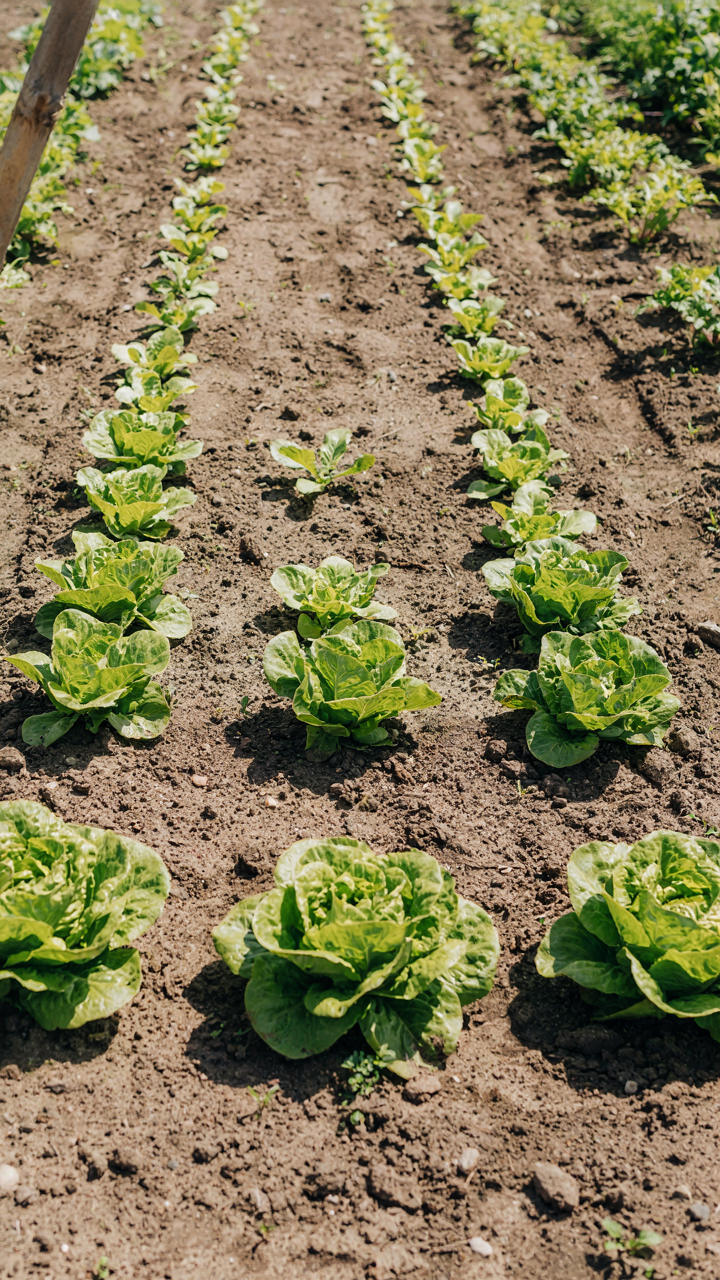
You want to believe one planting date gives you continuous harvest. It doesn’t. Succession planting works because crop maturity follows a fixed timeline—lettuce takes 45 days, not whenever you need it. The mechanism is simple: plant the same crop every 10 to 14 days instead of once. Each planting matures independently, overlapping harvest windows instead of creating gaps.
- Lettuce and Greens: Plant every 10 days for rolling harvests across 6 to 8 weeks, hitting peak production during cool seasons.
- Beans and Peas: Sow in 14-day intervals to maintain pod production through summer without exhausting a single planting cycle.
- Radishes: Mature in 25 to 30 days, so planting every 2 weeks creates overlapping batches ready in quick succession.
- Carrots: Stagger sowings 3 weeks apart to prevent feast-famine cycles and manage storage workload across the season.
- Brassicas: Plant broccoli, cabbage, and kale in waves 3 to 4 weeks apart to extend harvest from 8 weeks to 16 weeks.

The timing trap catches most gardeners: they assume one planting spreads harvest across weeks. It spreads harvest across days before production stops. Stagger plantings, and you eliminate the dead zone between “nothing ready” and “everything at once.” Track planting dates on paper—don’t rely on memory.
Going Vertical For Real Space Gains
Vertical gardening gets marketed as decoration. That’s wrong. It’s applied density. Grow tomatoes, cucumbers, beans, and squash up trellises or stakes to use airspace you’re already paying for but leaving empty. You triple production per square foot because the plant occupies vertical planes instead of sprawling horizontal ground.
The mechanic matters: vining crops grow tall naturally, so supporting them vertically aligns with their physiology, not against it. Determinate tomatoes and bush beans resist verticalization. Indeterminate tomatoes, cucumbers, pole beans, and winter squash varieties climb easily and reward the structure. Weak ties fail. Use cloth strips or soft twine tied loosely around the stem—wire and rope cut tissue as plants bulk up. Install trellises before planting, not after. Retrofit support systems damage root systems and waste weeks. Space stakes or trellises 6 inches from the garden bed edge to prevent root competition and allow air circulation underneath.
The Illusion Of Control: Sample Vegetable Garden Layout Fallacies

Microclimates Trump Template Designs
You want a layout you can copy and paste because it feels safer than thinking. Here’s the mechanism: most gardeners treat their plot as uniform space when it’s actually a collection of distinct microclimates. A template garden plan ignores this entirely.

Microclimates are real. The south-facing corner gets four more hours of direct sun than the north fence line. The low spot holds moisture longer after rain. The area near a wall radiates heat at night. These aren’t minor details. They dictate what actually grows and when. Copying a sample layout from someone two zones over or with different soil drainage creates waste and frustration. Your garden has its own rules. Read them first.
Site Conditions Dictate Layout Logic
The common advice says “plant tomatoes here, lettuce there” based on crop type alone. That’s incomplete. Site conditions override crop preference every time.
A plot with full morning sun and afternoon shade doesn’t follow the same rules as one with unbroken southern exposure. Wet clay soil changes planting depth and spacing compared to sandy loam. Wind exposure changes which plants need staking support. The real vegetable garden planting plan emerges only after you map your actual conditions: sun patterns across seasons, water drainage, soil composition, wind direction, and existing structures. Then you fit crops to conditions, not conditions to crops. This reversal is where most plans fail. Start site assessment before you place a single seedling.
The Real Scarcity Isn’t In Your Soil; It’s In Your Rigid Expectations

Most people kill their gardens by obsessing over perfection instead of iteration. You don’t need the flawless vegetable garden planting plan. You need one you’ll actually adjust. Plant something today. Watch what fails. Fix it next season. The gardeners with year-round harvests aren’t smarter than you. They stopped waiting for ideal conditions and started learning from failure instead. A bad plan executed beats a perfect plan that never gets planted.