The Vertical Fallacy: Why Your Small Vertical Garden Isn’t Working
Light Exposure Kills More Crops Than Neglect
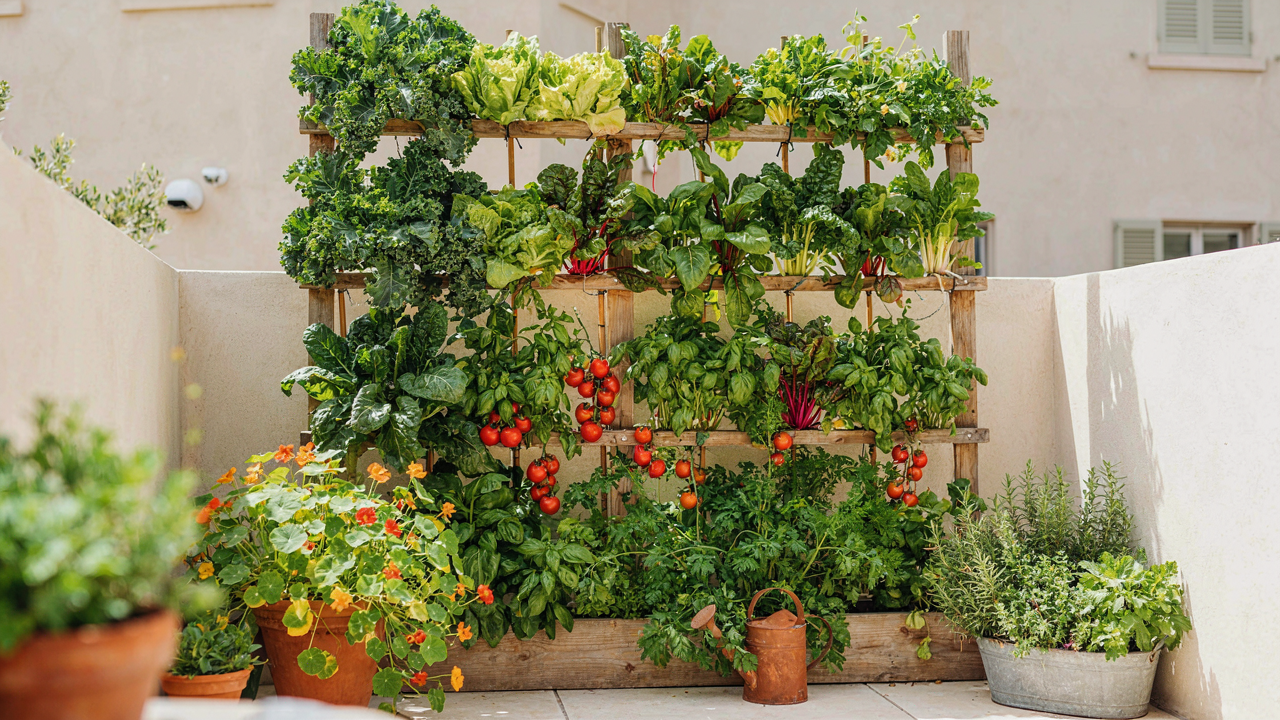
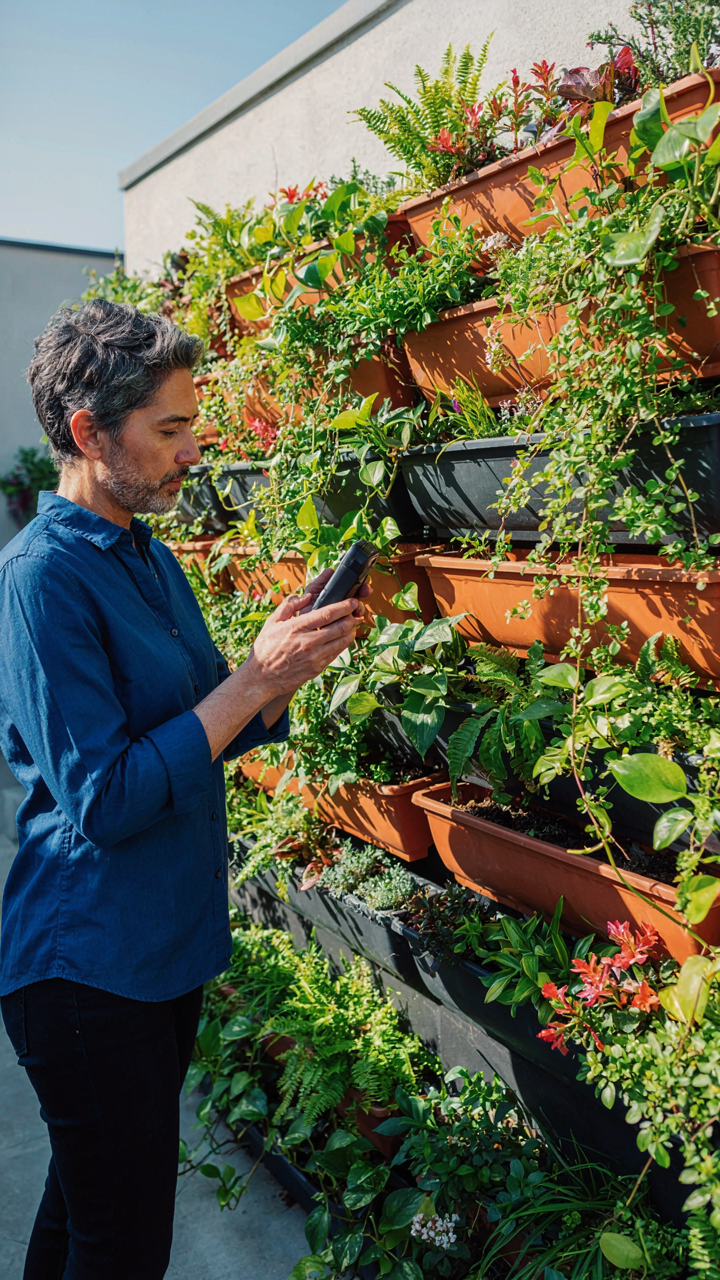
You want to believe vertical gardening solves the space problem without solving the physics problem, and that’s where most setups die. Light doesn’t travel sideways well. A plant on the third tier of a vertical wall receives fundamentally different light intensity and angle than one on the first. Lower tiers become shade zones regardless of your garden’s proximity to the sun. Leafy greens tolerate partial shade. Fruiting plants like tomatoes and peppers do not.
The real constraint is not the wall itself but the shadow your own structure casts. A vertical garden installed on the east side of a fence blocks afternoon light. The same setup on the west side starves morning light. Most people install these walls perpendicular to their primary light source instead of parallel, cutting usable daylight hours by half. Measure your actual hours of direct sunlight before building, not after.
Water Physics Breaks Standard Designs
Gravity moves water down, not up, and your system either accounts for this or fails silently. The advice to “water from the top and let it cascade” ignores drainage reality. Water travels fastest through the path of least resistance, which means it bypasses the middle pockets entirely and floods the bottom tier. Plants in the middle dry out while roots at the base rot. This isn’t user error, it’s bad hydraulic design pretending to be a feature.
Drip irrigation retrofitted to vertical systems adds cost and complexity most people skip. The cheaper alternative: accept that you need to hand-water each tier individually, or build a tiered system where each level has its own drainage line running to a collection basin below. A properly designed vertical garden produces yield. A cascade system produces frustration and dead plants.
Root Depth Constraints Nobody Mentions
Vertical gardens force root systems into compressed spaces that contradict plant biology. Tomatoes require twelve to eighteen inches of soil depth to produce reliably. Cucumbers need similar depth. Most vertical pockets, bags, or modular systems offer four to six inches. Plants survive in shallow media. They don’t thrive. They allocate energy to stress responses instead of fruit development, giving you smaller yields from taller structures.

The mechanism is simple: shallow roots mean shallow nutrient uptake and rapid water stress between watering cycles. A six-inch pocket dries out in one day during heat. A twelve-inch bed dries out in three. You’re not farming. You’re maintaining a daily life support system that produces token vegetables. Match your crops to your actual depth capacity before installation, or choose crops like lettuce and herbs that tolerate shallow media.
Gravity’s Game: Engineering For Upward Growth, Not Just Stacking
Water Flow Without The Guesswork
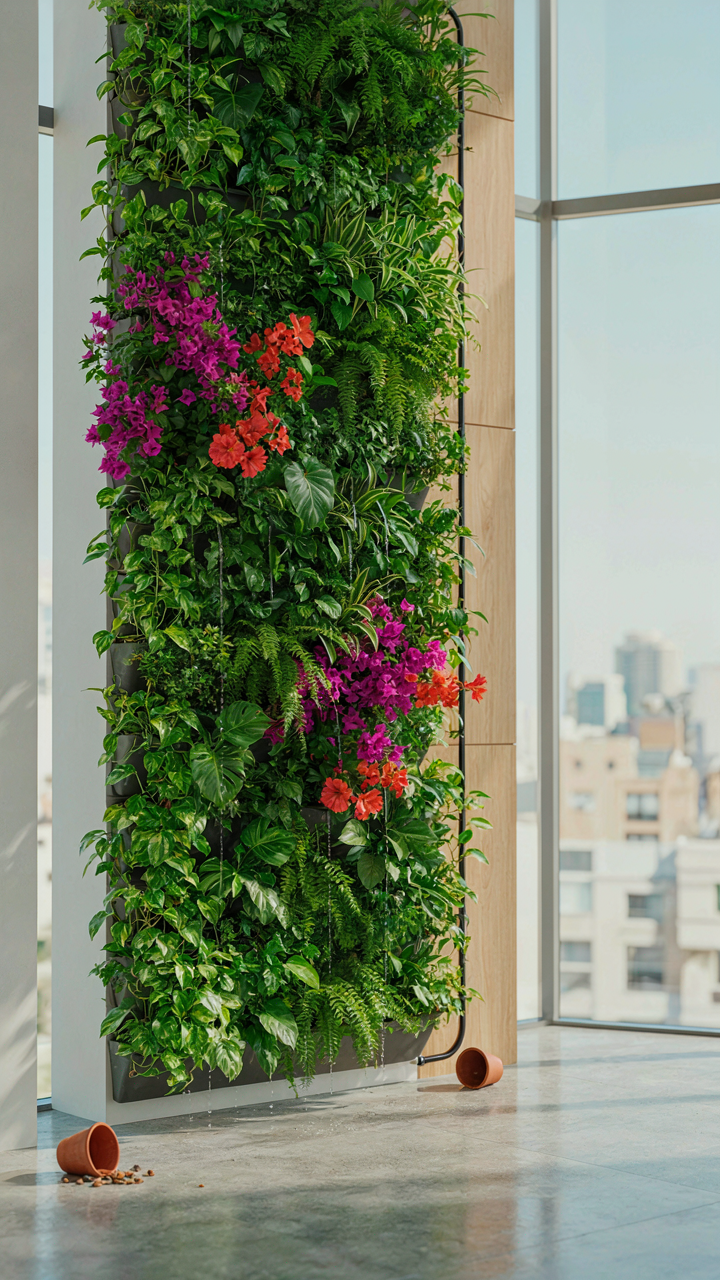
You want your vertical garden to look effortless. That’s why most people ignore how water actually moves through a stacked system. Hydrodynamics—the physics of fluid movement—reveals the real problem: gravity pulls water down, but it doesn’t pull it evenly. Water takes the path of least resistance, which means it pools in some zones and starves others entirely.
Start from the top. Every layer of your vertical system needs its own water entry point or a distribution method that forces water to spread horizontally before dropping to the next level. Drip lines with emitters placed at intervals work. Soaker hoses laid across shelves work. What doesn’t work is pouring water at the top and hoping it trickles down like rain. That creates runoff channels and dead zones. The mechanism is simple: control the water’s horizontal spread first, then let gravity handle the vertical descent. Without that sequence, your bottom plants drown while your top plants crack from stress.
Load Bearing Doesn’t Forgive Shortcuts
Vertical gardens fail structurally not because they’re vertical, but because people underestimate the total weight of wet soil. Soil density changes dramatically when saturated. A cubic foot of dry potting mix weighs around 40 pounds. Saturated, it hits 60-80 pounds. Multiply that across multiple levels and your brackets, supports, and anchoring points carry far more than anyone calculated. Common failure: mounting to drywall alone. Drywall anchors fail around 25-50 pounds per anchor. One medium-sized pocket with wet soil exceeds that instantly.

The real requirement is penetrating the structural frame of your house or yard structure. Into studs for wall-mounted systems, or into concrete footings for freestanding frames. Use lag bolts or structural screws rated for your soil’s wet weight plus a safety margin of at least 50 percent. Calculate total load, divide by the number of anchor points, verify each anchor’s rated capacity, then install one step above what you need. Your vertical garden will shift slightly with wind and water movement. That stress compounds over months. Anchor for double the load you think you need.
The Biomimicry Protocol: Learning From Nature’s Vertical Systems
How Forest Canopies Stack Light Without Fighting
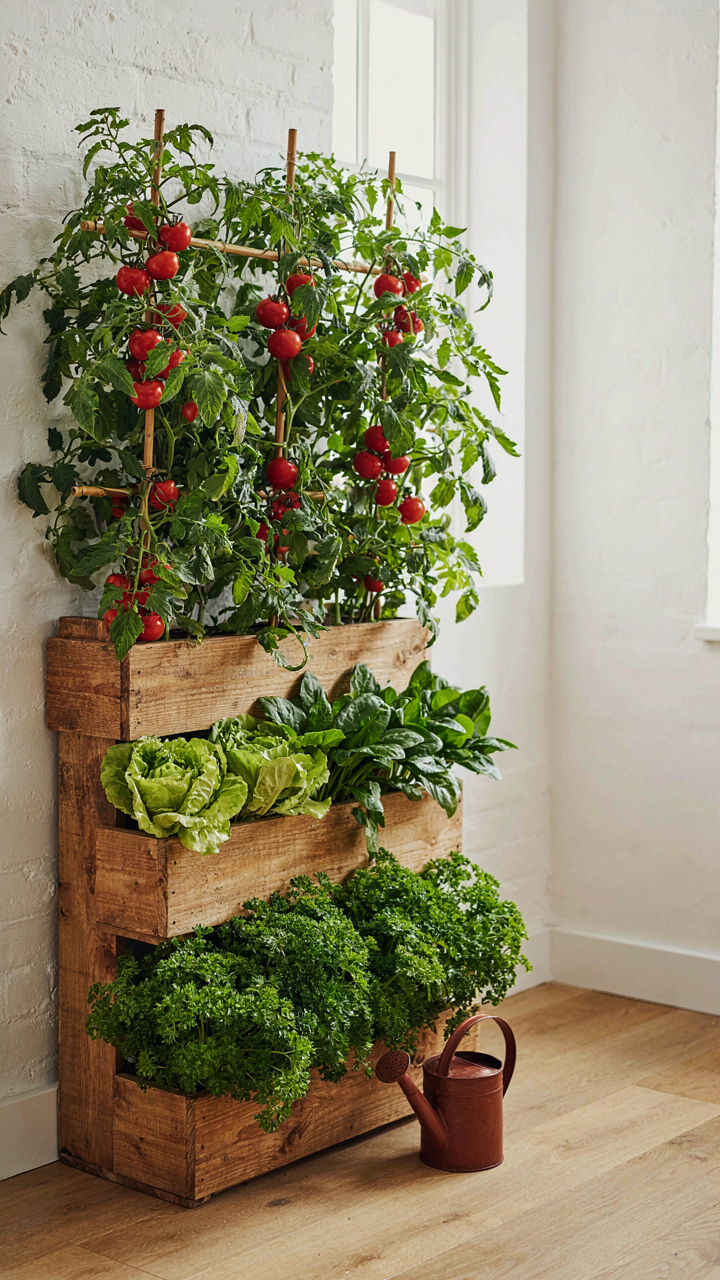
You want this section to make you sound smart at dinner parties, but what you really need is to stop wasting vertical space on plants that shade each other into uselessness. Ecology calls this principle “stratification”—the forest doesn’t plant everything at the same height because it solves a physics problem, not an aesthetic one. Your vertical garden faces identical pressure: the top layer blocks light from reaching the bottom. Forests solve this by stacking species with different light demands.
Tall trees take full sun. Understory plants accept 30 to 50 percent light. Shade-tolerant plants occupy the bottom. In your vertical system, this means tomatoes and peppers climb to maximum height where they monopolize direct light. Lettuce, spinach, and arugula go lower where ambient light suffices. Herbs like parsley tolerate shade between. This isn’t decoration—it’s resource allocation. Each plant type gets exactly what it needs to photosynthesize without competing for the same rays. Measure your yard’s sun exposure at three heights before planting. Position high-demand crops at the top. Adjust species downward based on actual light levels at each tier.
When Soil Runs Out, Rock Faces Teach You Nutrient Recycling
The common advice says vertical gardens need constant feeding because water drains away. That’s incomplete. Cliffside ecosystems teach the real mechanism: when media is scarce, nutrient cycling becomes ruthless. Plants don’t waste anything. They pull precisely what they need, drop leaf litter immediately, and fungi recycle that material back into bioavailable form before it leaves the system.

Your vertical garden’s constraint is actually an advantage if you engineer it. Use a closed-loop substrate—coconut coir mixed with perlite and aged compost—that retains microbial populations. These microbes break down plant debris and convert it to available nutrients within days, not weeks. Top-dress with finished compost monthly. Let spent leaves fall and decompose in place rather than removing them. This mimics the cliff face’s nutrient hoarding. Your feeding schedule drops by 40 percent because you’re recycling what the plant already gave you instead of always adding fresh inputs from outside the system.
Beyond The Gutter Garden: Innovative Material Selection
Durability Versus Cost: Choosing Long Term Investment Materials
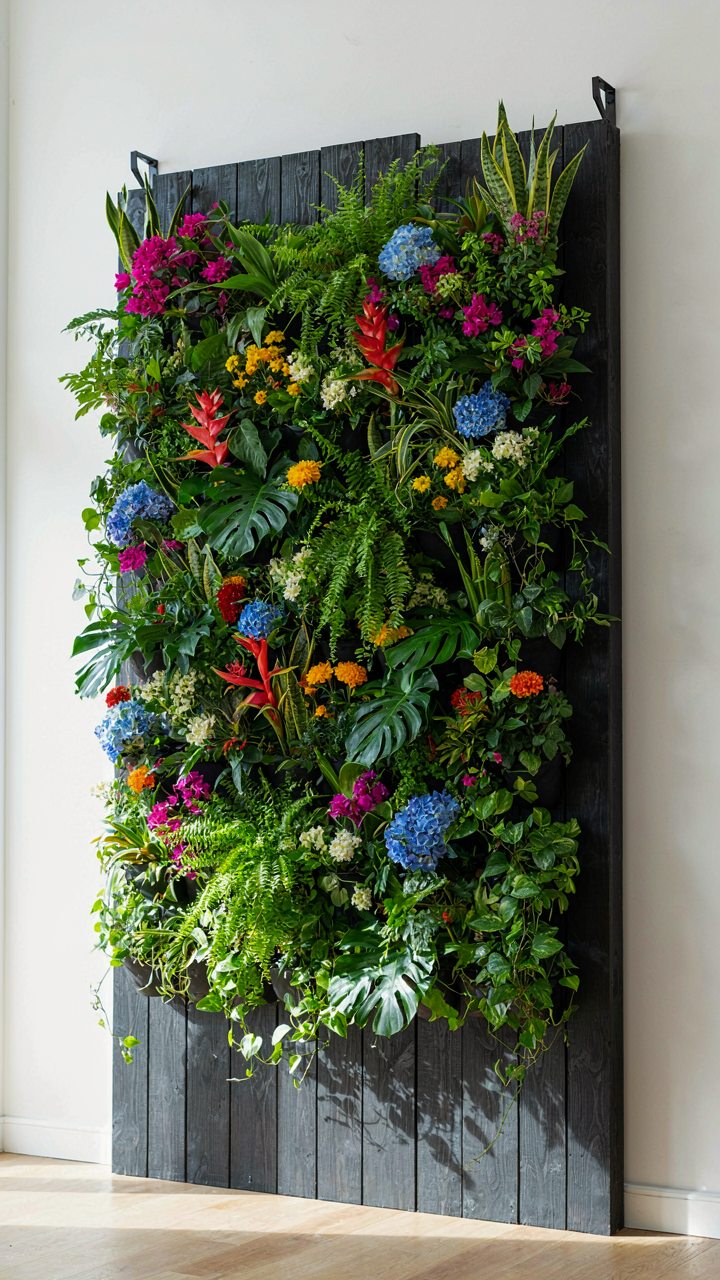
You want to believe a cheap setup will last. It won’t. The real mechanism at work here is simple economics: materials degrade under UV exposure, temperature cycling, and moisture. Pick wrong and you rebuild every two years. Pick right and the system runs for a decade.
Cedar and redwood rot from the bottom up despite their reputation. Composite lumber resists decay better but costs more upfront. Steel rusts without proper coating. Concrete and stone require zero maintenance but demand significant initial labor. The trade-off isn’t romantic, it’s mathematical. Calculate your replacement cost across ten years, not the sticker price today. That number reveals the actual investment.
Recycled Alternatives: PVC Pipe Gardens And Other Plastics
Everyone assumes recycled plastic saves money. Most recycled vertical gardens fail within three to five years because UV degrades the material into brittleness. This isn’t a flaw you prevent, it’s a timeline you manage.

PVC pipe systems work because PVC contains UV stabilizers when manufactured for outdoor use. Verify the pipe grade before buying. Food-grade PVC exists for this reason. Old plastic bottles and reclaimed HDPE degrade faster unless you paint them or position them in shade. The mechanism is straightforward: UV breaks polymer chains. Shade extends the lifespan dramatically. Install your recycled plastic garden on the north side of your structure or under shade cloth, not the south side. This single decision determines whether your system lasts three years or eight.
The Microclimate Matrix: Optimizing For Small Vegetable Gardens
Stagnant Air Kills Plants Faster Than Most Gardeners Admit
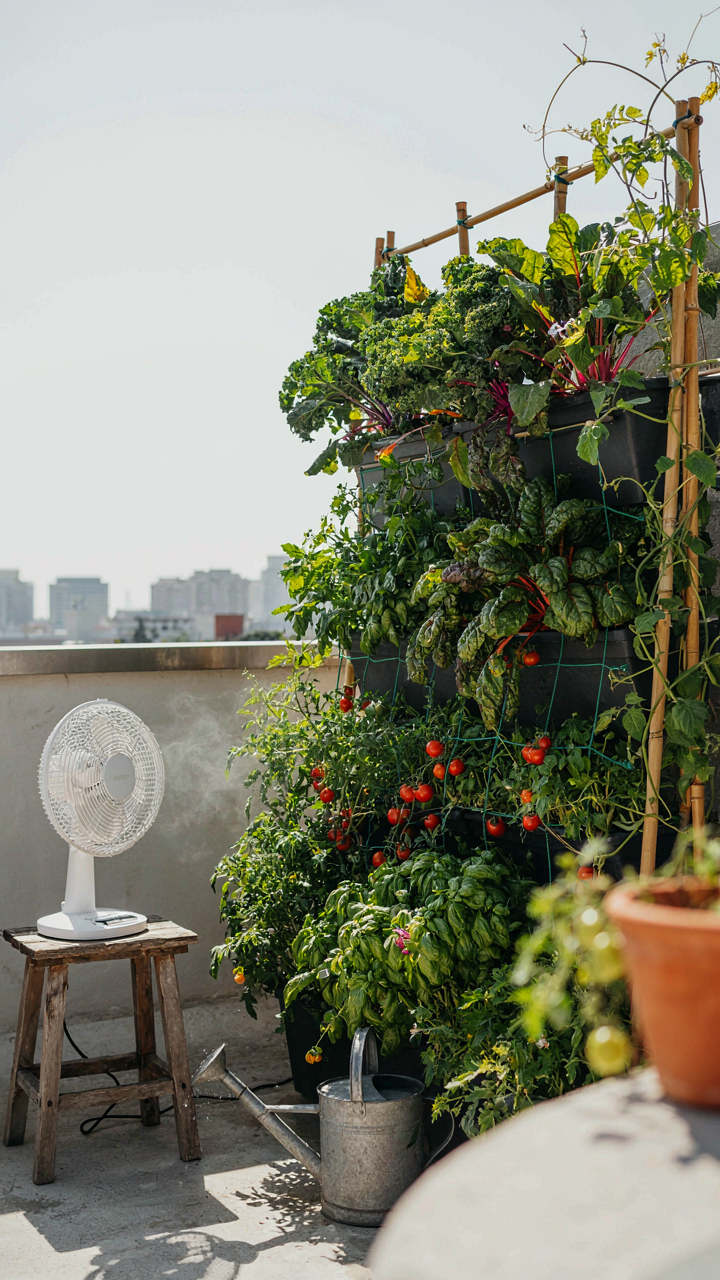
You want dense vertical spacing without the guilt of watching plants rot from the inside out. The real issue isn’t the density itself—it’s what biology calls boundary layer resistance, the invisible wall of still air that traps moisture and invites fungal infection. In a vertical system, stacked plants create pockets where air refuses to move. This isn’t a small problem. It’s the mechanism that turns your compact garden into a disease incubator within weeks.
Active air movement breaks this boundary layer. Position fans to push air horizontally across your vertical structure, not downward. The goal is continuous, gentle movement that dries leaf surfaces and prevents spore germination. A single oscillating fan at ground level works better than exhaust fans mounted high. Run it during daylight hours when humidity peaks. This single change stops powdery mildew, early blight, and damping off before they start. Without it, your vertical yield collapses before your horizontal garden would.
Thermal Mass Compounds Your Square Footage Problem
Temperature swings wreck vertical gardens faster than gardeners realize because small spaces have no thermal inertia. Physics calls this heat capacity—the amount of energy required to change a system’s temperature. Your vertical garden in a small yard loses heat rapidly and gains it unpredictably. A wall-mounted structure absorbs solar radiation during the day and radiates it back at night, but without thermal mass nearby, night temperatures drop sharply. This stresses plants and halts growth cycles.

Add water-based thermal mass directly into your vertical system or adjacent to it. Buried water tanks, PVC pipes filled with water, or even painted black containers absorb heat during peak sun hours and release it slowly overnight. This moderates temperature swings by 5 to 10 degrees Fahrenheit, which extends growing seasons and prevents bolting or stalling. Position thermal mass on the south or west side of your structure. Check soil temperature at planting depth, not air temperature—soil temperature controls germination and root function.
PVC Pipe Garden Ideas: Beyond The Basics
Build Systems That Actually Expand
You want this to feel like you’re building something sophisticated instead of just stapling PVC to a fence. Here’s the mechanism: modular design removes the friction between wanting more plants and actually adding them. Treating your system like architecture instead of decoration means you stop redesigning from scratch.
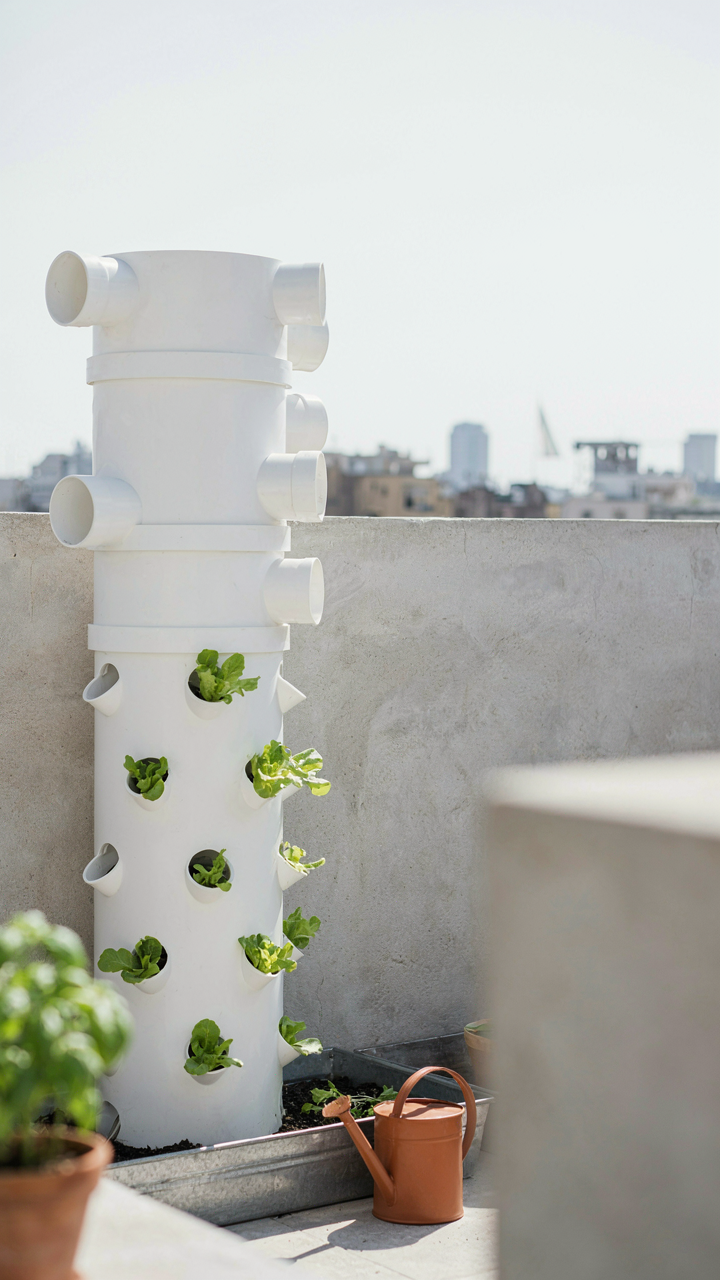
PVC pipe systems work because they’re stackable and reproducible. Build one module, document exact hole placement and spacing, then replicate it. This matters because inconsistency kills workflow. You’re not arranging art. You’re creating a protocol you can execute repeatedly without thinking.
- Horizontal Stacking: Stack complete modules vertically using connector brackets. Each module operates independently, so you add or remove layers without disturbing plants below or above.
- Rotation Stations: Build two identical systems on a rotating base or simply rotate individual modules quarterly. This distributes sun exposure evenly and prevents soil depletion patterns.
- Seasonal Swap: Design modules sized to fit your existing frame. Swap cool-season crops for warm-season varieties by removing and replacing planted sections entirely.
- Split Diameter: Use 4-inch mains with 2-inch branch lines. Smaller branches reduce weight and water pooling while still supporting herbs and leafy greens.
- Clip Based Assembly: Use hose clamps and PVC clips instead of permanent glue. This lets you adjust spacing, repair damaged sections, and reconfigure without cutting new pipe.
The real advantage is iteration without waste. Most gardeners build once, get stuck with mistakes, then abandon the system. Modularity forces you to think in components. You test one module, prove it works, then scale up with confidence. Document everything as you build so your future self doesn’t reverse-engineer your own work.
Holes, Spacing, And The Drainage Truth
The consensus on PVC gardens is wrong: everyone thinks small drainage holes prevent root rot. They don’t. You’re actually creating the opposite problem. Tiny holes clog with mineral deposits and algae, trapping water exactly where you don’t want it.

Use hole sizes matched to your plant type, not guesswork. For herbs and leafy greens, 1.5 to 2 inch holes work. For smaller plants like lettuce seedlings, 1 inch. Drill on the side of the pipe, never the bottom. Bottom holes turn into plugs for root tips, and you’ll waste hours unclogging them with wire. Space holes 6 to 8 inches apart vertically and stagger them horizontally so water flows between rows instead of pooling in one column. Drill into the lower third of the pipe where water naturally settles, not the very bottom. This creates an air pocket that prevents anaerobic conditions while roots access the moisture they need.
The Nutrient Scarcity Model: Feeding Vertical Vegetable Gardens
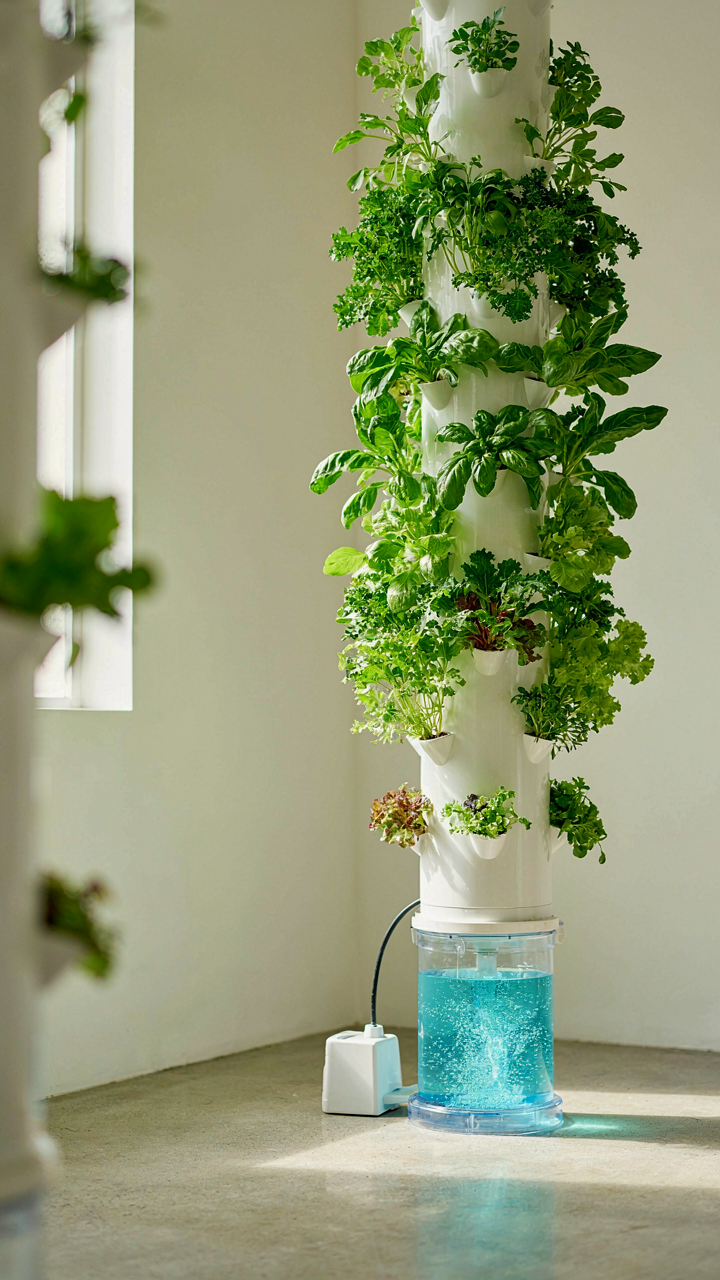
Closed Loop Systems Beat Soil Bleeding
You want vertical gardens because they look efficient. The real problem: they drain nutrients faster than ground soil because water moves through stacked containers without retention. Think in terms of systems engineering—your vertical garden is a closed loop that either recirculates or hemorrhages resources. Hydroponics solves this by capturing runoff and feeding it back up, eliminating the waste soil gardening accepts as normal.
Recirculating systems use gravity and pumps to move nutrient solution through multiple tiers, then collect it in a reservoir below. The plants take what they need. Excess returns. You control concentration precisely—no guessing, no amendments scattered across beds. This matters because vertical space demands density. A single drip line that waters once and loses the rest wastes the entire geometry advantage you built the system for in the first place.
Fermented Plant Matter Beats Buying Input
Most organic vertical gardeners fail because they treat feeding like soil gardening, buying bottled “organic” solutions and assuming it works at scale. It doesn’t. Compost tea and fermented plant juice demand less capital and output more biology than premade fertilizers. You ferment food scraps, plant material, and water in a sealed container for two to four weeks. The result: liquid with active microbes and available nutrients your plants actually absorb.

Make batches every month using kitchen waste, yard trimmings, and a 1:5 ratio of material to water. Dilute heavily before feeding—a quarter-strength solution every week beats full strength once monthly. Vertical gardens need consistent feeding because water drains quickly. Fermented inputs stay biologically active longer than chemical solutions, meaning your nutrient load doesn’t spike and crash. Measure by result: leaves darken, growth accelerates, fruit sets faster. That’s your protocol working.
Pest Resistance Protocol: Defending Your Vertical Garden

Working With Insects, Not Against Them
You want pests gone without spraying chemicals that linger on your food. The real mechanism here comes from ecology: vertical gardens create habitat stratification, the same layering principle that makes natural ecosystems stable. Your wall-mounted plants don’t exist in isolation. They’re microclimates that either attract or repel predatory insects based on what you deliberately plant nearby and how you manage airflow.
Most gardeners treat beneficial insects as an afterthought. They’re not. Ladybugs, parasitic wasps, and lacewings hunt the aphids and mites that destroy crops. The vertical structure gives you precision: plant flowering herbs like dill and yarrow at the base or in adjacent containers. These bloom year-round in mild climates and create landing zones. Spacing matters. Tighter vertical spacing traps heat and humidity, which invites fungal issues and soft-bodied pests. Airflow is your first line of defense. Position your garden where wind or fans can move through it consistently. Physical barriers work next: fine mesh over seedlings stops thrips and whiteflies before populations establish.
Spotting Problems Before They Spread
Early detection in a vertical garden works differently than ground plots because problems escalate faster in condensed space. You need a fixed routine, not random inspections. Check the undersides of leaves three times weekly, rotating which section you inspect. Pests hide there first. Aphids cluster on new growth. Spider mites create fine webbing. Fungal issues show as discoloration before they spread to adjacent plants.

The moment you see one affected plant, isolate it physically or remove the infested section. Don’t wait for confirmation or hope it resolves. Quarantine means moving the container away, not just to another shelf. One untreated mite colony infests your entire vertical system in two weeks. Document what you see: date, pest type, location, plant affected. This data tells you if your barrier strategy failed or if your beneficial insect population needs reinforcement. This log becomes your protocol adjustment mechanism.
Harvest Hacking: Maximizing Yield From Limited Space
Staggered Planting For Year Round Production
You want to believe one planting gives you continuous harvest without effort. It doesn’t. The mechanism is simple: plants mature on a fixed timeline. Lettuce takes 30 to 60 days depending on variety. Beans take 50 to 70 days. Tomatoes take 60 to 85 days. Plant everything at once and you harvest everything at once, then nothing for weeks.
Succession planting means starting new seeds or transplants every two to three weeks in the same vertical space. As one crop finishes and comes down, the next one moves up into that slot. This isn’t clever gardening advice—it’s inventory management applied to vegetables. You’re rotating crops through fixed vertical real estate to compress the timeline between harvests. Plant fast-maturing greens (arugula, spinach, lettuce) every fourteen days. Plant medium crops (beans, peas) every three weeks. The vertical system forces discipline because you can’t hide unused space.
Cut Growth Patterns, Not Just Leaves
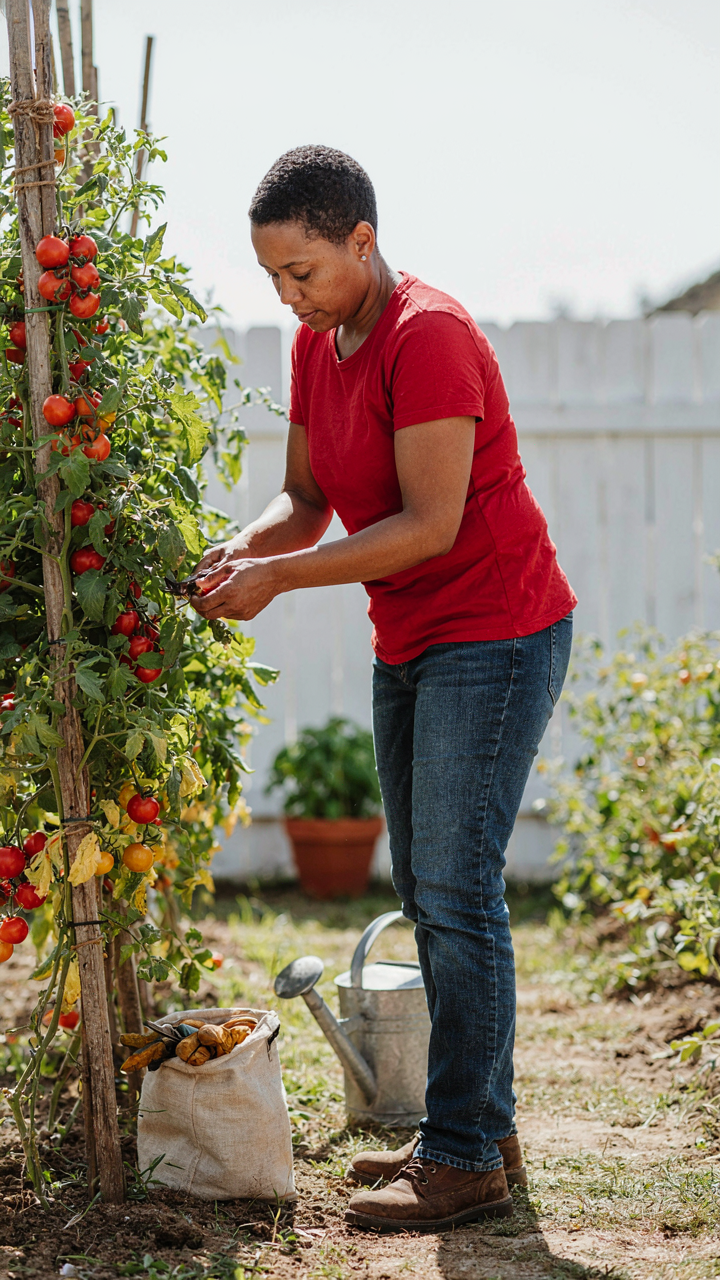
Most people prune wrong because they think the goal is removing leaves. Wrong. The goal is redirecting energy flow to maximize vertical development in constrained space. Botany teaches us apical dominance—the principle that the plant’s top bud suppresses lateral bud growth. Remove the top, and side shoots explode outward. In a vertical system, outward growth is waste. Inward and upward are the only directions that matter.
Pinch off the terminal bud (the very top growing point) when the main stem reaches one foot tall. This forces the plant to branch laterally from lower nodes. Then immediately remove any branches growing outward beyond your trellis footprint. Keep removing lower leaves as they age and yellow—they’re energy drains that block sunlight to new growth above. This pruning protocol directly increases the plant’s vertical stem density, which means more flowering sites per linear inch of trellis. The trade-off is smaller individual leaves, but total biomass per square foot rises measurably.
The Vertical Investment: Long Term Returns, Not Quick Fixes
Automation Cuts Labor Without Cutting Corners
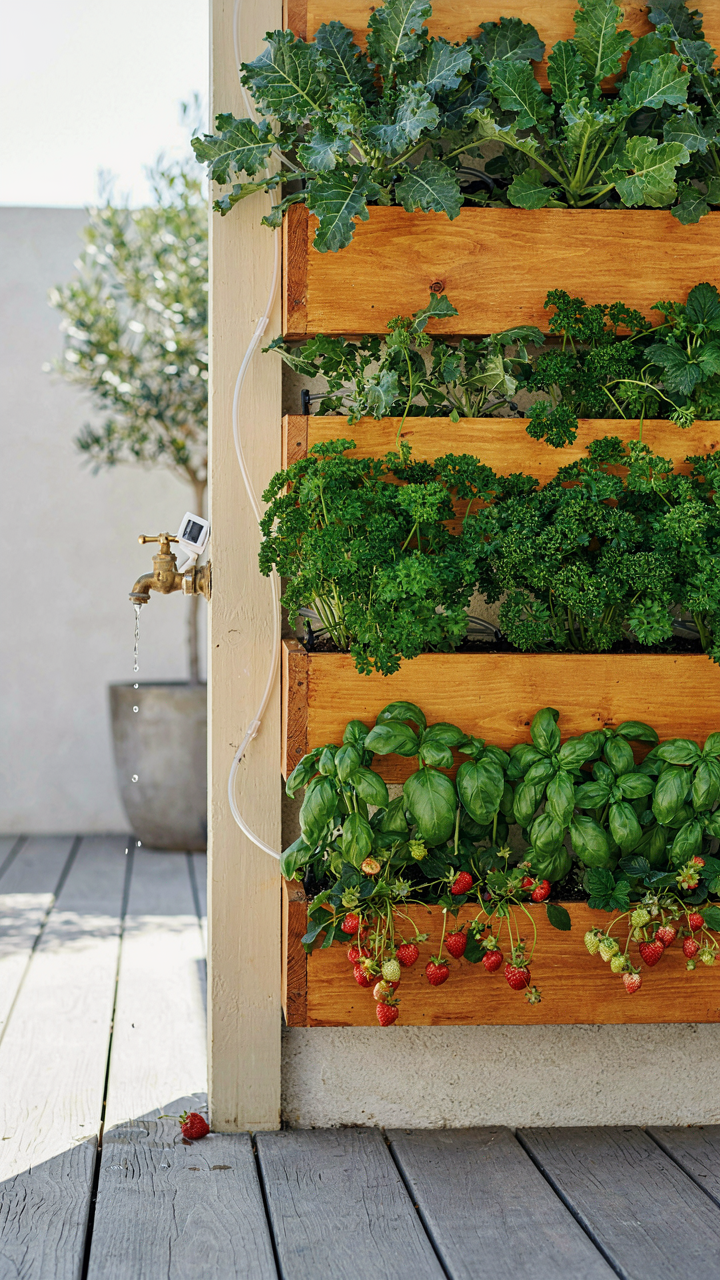
You want passive income from your garden so you stop thinking about watering schedules. That’s not lazy—that’s logistics. Drip irrigation systems on timers do one job: deliver water to the root zone at consistent intervals without human intervention. Gravity-fed systems cost less upfront. Pump-based systems with soil moisture sensors cost more but eliminate guesswork. Either way, you remove the single largest variable that kills vertical gardens: inconsistent moisture. Most people abandon their systems because they forget to water, not because the concept fails.
Automated systems flip the economics. You spend more initially but gain 20-30 hours monthly back. That time compounds into actual harvests instead of failed experiments. Start with drip lines on basic timers—not smart home gadgets. Timers are reliable. Smart sensors fail. Build redundancy into your water source; a backup timer on a separate outlet prevents total crop loss when one fails.
Growing Beyond The Single Tower
Scaling isn’t about buying ten towers and hoping. Economics from agriculture applies here: marginal cost per unit drops as volume increases, but so does your ability to manage variance. One vertical tower functions as a test. Ten towers become a system that requires infrastructure decisions. You need consistent water pressure across all units, so you move from hand-watering to plumbed lines. You need consistent light, so you add grow lights on timers rather than relying on sun exposure.
The real barrier isn’t space—it’s attention. Each additional vertical unit increases failure points exponentially. Add humidity sensors, temperature controls, and nutrient monitoring only after you’ve proven you can run three units flawlessly for an entire growing season. Scaling means documenting what works, then replicating it exactly. One journal entry per week per unit. One spreadsheet tracking yield per square foot. That data tells you whether expansion makes financial sense or whether you’ve optimized a system that only works at small scale.
The Real Obstacle To Your Vertical Garden Isn’t Space, It’s Your Fear Of Challenging Conventional Dirt Logic
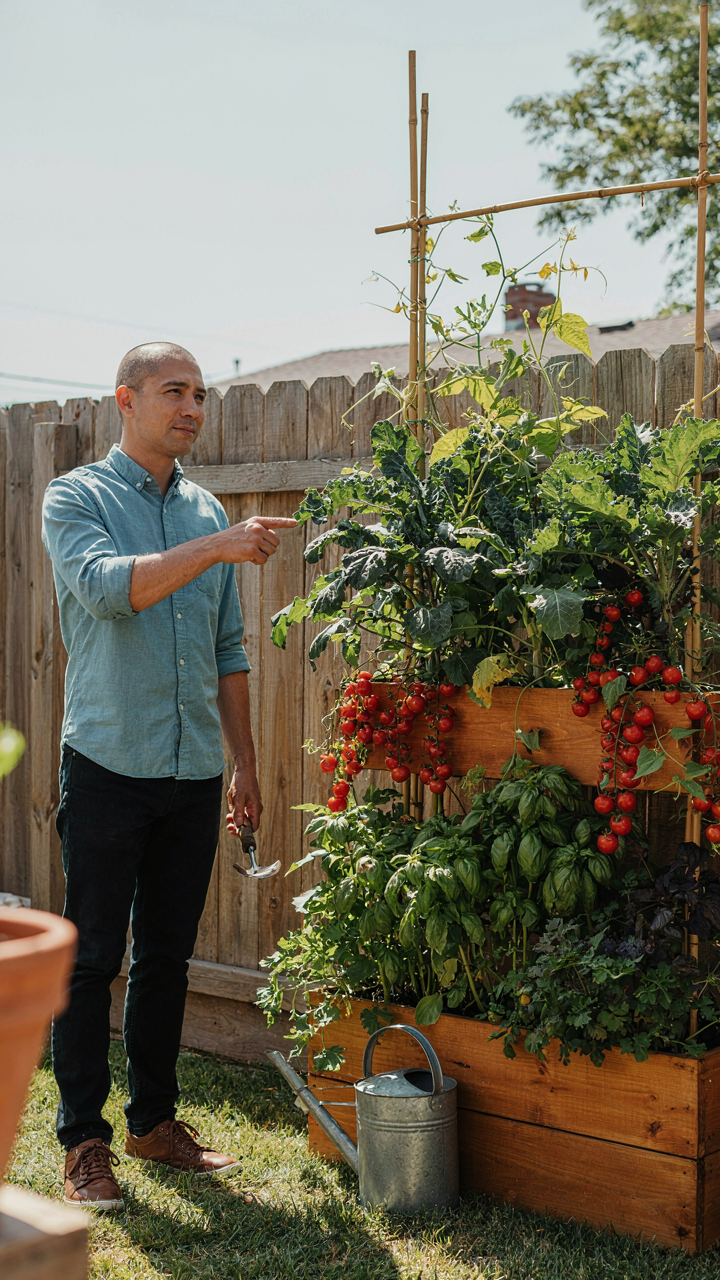
Most people fail at vertical gardening because they’re waiting for permission to try something that looks wrong. You’ve been conditioned to believe food grows in the ground. That’s a limitation someone else invented. Pick one wall in your yard today. Measure it. Find a vertical system that fits. Stop researching and start building. The only thing between you and food at eye level is the moment you stop thinking like a gardener and start thinking like someone who refuses to waste space.