The Illusion Of Randomness: Why Most “Charming” Paths Fail

Haphazard Placement Kills Visual Flow
You want your garden to look effortless, which is exactly why a scattered stone layout destroys it. The real mechanism at work here comes from visual hierarchy, borrowed from graphic design. Just as typography establishes reading order, stepping stone placement establishes movement direction. Random spacing creates cognitive friction—your eye doesn’t know where to go next, so the path feels accidental instead of intentional, and visitors move through your garden without purpose or delight.
The common advice says “space them naturally” or “follow the landscape.” Wrong. Natural-looking paths require deliberate geometry underneath. Stones spaced too far apart force long strides and break rhythm. Stones too close together look timid and waste material. Consistent spacing creates invisible pattern recognition that makes viewers feel guided, not lost. Measure your average stride at two feet. Start there, then adjust by no more than three inches between stones to maintain the illusion of ease.
The Hidden Cost Of Unplanned Yard Paths Walkways
Unplanned paths bleed money through material waste, site rework, and structural failure. Most people lay stones, live with them for a season, then move them when drainage pools or the route feels wrong. That’s not charm—that’s poor planning dressed up as discovery. Every repositioning costs labor time, damages surrounding soil, and leaves shadowed dead zones where plants won’t establish. The math is brutal: one rework cycle doubles your material cost and triples your frustration.
Proper planning means understanding water flow before the first stone goes down. Observe your yard after heavy rain. Water always finds the path of least resistance, and stepping stones sit directly in that path. If you ignore drainage patterns during layout, you’ll be resetting stones within eighteen months as settling occurs under water pressure. Document existing slope grades, identify low points, and design paths that either follow slope lines or include minimal grading. This single decision prevents 80 percent of replanning disasters.
The Unseen Hand: Guiding The Gaze With Garden Walk Path Placement

Where Your Eye Lands First
You want people to see your garden the way you intended. That requires placing stepping stones so they guide attention toward what matters, not away from it. This borrows from visual hierarchy in graphic design, where proximity and positioning control what viewers notice first. Your stones become the grid that channels sight lines. Without intentional placement, eyes wander to whatever is loudest or closest, which is rarely what you want them to see.

Most gardens scatter stones randomly and wonder why the space feels chaotic. The real mechanism is this: each stone placement either reinforces or breaks a viewer’s anticipated path through space. If you position a stone toward a specimen tree, water feature, or architectural element, you’ve created a visual magnet. The path doesn’t just move feet—it moves focus. Place the first stone toward the focal point you want noticed. Every subsequent stone should either continue that line or deliberately shift it to reveal something new.
Movement That Feels Inevitable
Good path flow uses the principle of apparent motion from physics, where objects arranged in sequence appear to move even when static. Your stepping stones create velocity and direction through careful spacing and alignment. Consistent spacing between stones signals to walkers that the path continues; irregular spacing creates hesitation and breaks rhythm. The walker’s body naturally follows what feels smooth and predictable, which means you control experience through stone placement alone.
Most garden advice says to “curve paths naturally.” That’s incomplete. Curves work only when they’re deliberate. Tight, unexpected curves feel awkward; gradual arcs that reveal new areas feel invited. The protocol: establish your start and end point first, then plot stones in increments that feel neither rushed nor stalled. Space them 24 to 30 inches apart for comfortable stride length. Test the walk yourself before finalizing placement. Your stepping stone path succeeds when walkers never think about their feet.
The Desire Path Protocol: Observing Natural Walking Path Garden Tendencies

Watch Where People Actually Walk
You want stepping stones that feel inevitable, not like you’re forcing visitors into some predetermined design fantasy. The mechanism is simple: humans take the shortest, easiest route between two points. This is borrowed from urban planning, where designers call unauthorized foot traffic “desire paths” or “desire lines.” Your garden already contains these invisible routes. People aren’t following your intended path. They’re cutting corners, walking straight through beds, and wearing grass down in patterns you didn’t plan. That’s the data.

Spend two weeks observing foot traffic before laying a single stone. Watch from a window. Track where guests naturally walk from the house to the garden entrance, from the patio to the seating area, from the gate to the back corner. Mark these routes with chalk or stakes. The goal isn’t pretty. The goal is accurate. Your stepping stone path should align with existing desire paths, not compete with them.
Adapt The Layout To Human Movement
Most garden design advice tells you to place paths for “visual flow” or “aesthetic balance.” That’s the wrong priority. Human behavior trumps composition every time. People move toward destinations, not toward beauty. They optimize for effort and time, not for the designer’s vision. Your job is to recognize this and build stepping stones on the routes people already choose.
Once you’ve identified desire paths, position stones along those exact trajectories. Space them at a natural walking stride: roughly 24 to 30 inches apart for average adults. Anchor the path in functional endpoints: doors, seating, water features, tool storage. Don’t force a curve for visual interest if people prefer straight movement. The path earns its place by matching how people actually behave, not by winning aesthetic arguments.
Beyond Flat Slabs: Leveraging Garden Path Slabs For Dimensionality

Stacked Heights And Surface Variation
You want people to notice your path before they walk it—that’s the real reason you care about this section. The mechanism is contrast. Flat, uniform surfaces disappear into the landscape. Varied thickness and texture create rhythm because your eye has to work to process the changes. This isn’t decoration. It’s contrast working like a visual signal that says “here is where you’re meant to walk.”

Thickness variation doesn’t mean random stacking. Flagstone naturally ranges from one inch to three inches. Using that range intentionally forces focal points. Pair thicker slabs at turn points or seating areas. Use thinner material on straightaways where you want the eye to move faster. Surface texture amplifies this effect. Smooth stone reads as formal. Cleft or riven finishes feel textured and slow the visual pace. The combination creates a path that functions as wayfinding without signage.
Layering For Depth Without Chaos
Visual interest comes from strategic repetition, not randomness. Landscape design borrowed this principle from composition and rhythm in music, where variation needs structure to feel intentional rather than accidental. Your stepping stones become a compositional sequence. Every fourth slab can feature a different texture or thickness, creating a visual beat the walker recognizes subconsciously. This pattern makes the path feel designed, not haphazard.
Depth happens when materials sit at slightly different levels. A quarter-inch variation between adjacent stones creates shadow lines that read as depth from a distance. Install thicker slabs flush with grade, then set thinner accent pieces a half-inch lower in a regular interval. The shadow catches light and makes the path feel dimensional. This isn’t about evenness. It’s about controlled irregularity. Every stone should sit stable and level, but the top plane of your path should vary enough that you see it, not just walk it.
The Territory Marking Method: Using Garden Stone Walkway To Define Zones

How Paths Become Boundaries
You want people to move through your garden in a specific way without telling them. Stepping stones work like territory markers in animal behavior—they signal where movement is permitted and where it isn’t. The mechanism is spatial psychology: humans follow visual lines and avoid unmarked ground. A stone path doesn’t just move feet; it moves attention and ownership. When you lay stones, you’re not decorating. You’re establishing which areas belong to the visitor’s experience and which remain off-limits.

The reason this matters is precision. Generic advice says paths make gardens walkable. That’s incomplete. Paths make gardens legible. They tell a story about how the space divides. A winding stone path toward a patio claims that zone. Grass on either side stays marginal. Stones eliminate ambiguity. Visitors read the landscape and comply without friction.
Creating Distinct Functional Areas
The common advice gets this wrong: people think stepping stones should connect point A to point B. Wrong framework. Think of it like urban planning’s “zoning” concept. Zones aren’t about proximity; they’re about function and status separation. Your stone paths are zoning ordinances made physical. One path leads to seating and becomes social space. Another leads to plantings and becomes maintenance access. The stones don’t just move people—they categorize what each area is for.
Install stepping stones as deliberate interruptions, not as connective tissue. A secondary path that branches off a main pathway signals “this zone serves a different purpose.” That branching point is where zoning happens. The spacing and material choice reinforce this: tighter, more formal stone placement around seating areas, looser patterns near plantings. When stones change character, zones change function. Place stones first. Let the garden’s actual uses follow the path, not the other way around.
The Garden Stone Design Blueprint: A Biometric Approach To Flow

Your Body Knows The Distance Before Your Mind Does
You want this section because you suspect generic “place stones six inches apart” advice is leaving money on the table. It is. Biometrics in path design means treating your stepping stones as sensory input devices, not just surface area. Your nervous system processes stride length, visual rhythm, and ground texture before conscious thought arrives. A well-designed stone path doesn’t feel random or forced—it feels inevitable. The mechanism is proprioception: your body’s constant feedback loop about where it exists in space. Most garden designs ignore this entirely and just eyeball placement. Stone paths work when they anticipate how a human body actually moves through space, not how designers imagine it should move.

The real work is measuring, not feeling. Walk the path you’re planning at your natural pace. Count your steps across a ten-foot section. Note where your foot naturally lands. That’s your baseline stride length for casual movement—usually 24 to 30 inches for most adults on level ground. Your stepping stones should either match that interval precisely or break it intentionally at specific moments to signal a change in pace or direction. A path that forces micro-adjustments every three feet exhausts visitors. A path that flows with actual human stride makes people want to linger without understanding why.
The Geometry Of Intention, Not Aesthetics
Human-centric movement mapping is not about making curves look nice—it’s about where people’s eyes naturally focus and where their weight needs stable ground. Standard advice tells you to “follow the garden contours” or “create visual interest.” This is backward. You map the path by tracing how sight lines work first, then load-bearing second. When someone approaches your garden, their gaze locks onto a destination point before their feet move. Your stone sequence should guide them toward that point while their weight transfers predictably between stones. No surprises underfoot. No stones placed just for visual symmetry that disrupt the walking rhythm.
Load distribution on irregular terrain requires accounting for slope and soil drainage. On slopes, stones need vertical stagger—each one slightly higher or lower than the previous, matching the grade change. This prevents puddles from pooling between stones and keeps ankle strain minimal. On flat ground, spacing becomes the variable. Wider gaps between stones work for deliberate, meditative walking. Tighter sequences work for paths where visitors move with purpose. The path’s function determines spacing. A meditation path uses 18-24 inch gaps. A main thoroughfare uses 12-18 inch gaps. Measure once, place twice.
Pathway Stones: Engineering Durability, Not Just Aesthetics

The Foundation Nobody Sees
You want your stepping stones to look settled and permanent because permanence signals that you chose well and maintain your space. But aesthetics fail the moment frost heaves a stone or water pools beneath it. The real game is sub-base engineering, which borrows from civil infrastructure: compaction creates load-bearing capacity. Every stone sits on a foundation layer that must compress uniformly and resist settling.

Most guidance skips this entirely and jumps straight to stone placement. That’s wrong. A weak base guarantees failure within two seasons. Dig out the topsoil and organic matter completely. You need four to six inches of compacted base material, typically crushed stone or gravel, tamped in layers to eliminate air pockets. Each layer compacts before the next goes down. Without this, stones tilt and create trip hazards.
Drainage And Settlement Resistance
Water movement is the mechanism that destroys pathways over time. Think of drainage as the inverse of a dam: instead of holding water back, you’re creating pathways for it to escape before it destabilizes your foundation. Standing water beneath stepping stones accelerates frost heave and shifts the entire structure.
- Slope the base layer: Angle the compacted sub-base at one to two percent grade so water runs off rather than pooling. This single adjustment prevents ninety percent of settling issues.
- Add a permeable membrane: Lay landscape fabric between the base and stone to separate layers while allowing water through. It prevents base material migration into soil below.
- Use perforated drain pipe in wet zones: In areas with poor natural drainage, install perforated pipe beneath the stone bed and run it to a low point. This accelerates water exit.
- Space stones to allow ground drainage: Gaps between stones let surface water drain into the sub-base rather than concentrating around one stone. Closer spacing increases problems in wet climates.
- Choose dense stone material: Porous stone absorbs water and freezes, causing cracking. Select granite, bluestone, or slate over softer materials like sandstone in freeze-thaw regions.
Frost heave happens when water under stones freezes and expands, lifting the entire stone. This occurs most often in spring when freeze-thaw cycles repeat daily. Proper drainage eliminates the water source. Stone selection matters equally: dense materials resist freeze damage better than porous ones. Check regional frost depths and ensure your base sits below the frost line when possible.
The “Negative Space” Principle In Stepping Stone Pathway Ideas
What Surrounds The Stones Matters More
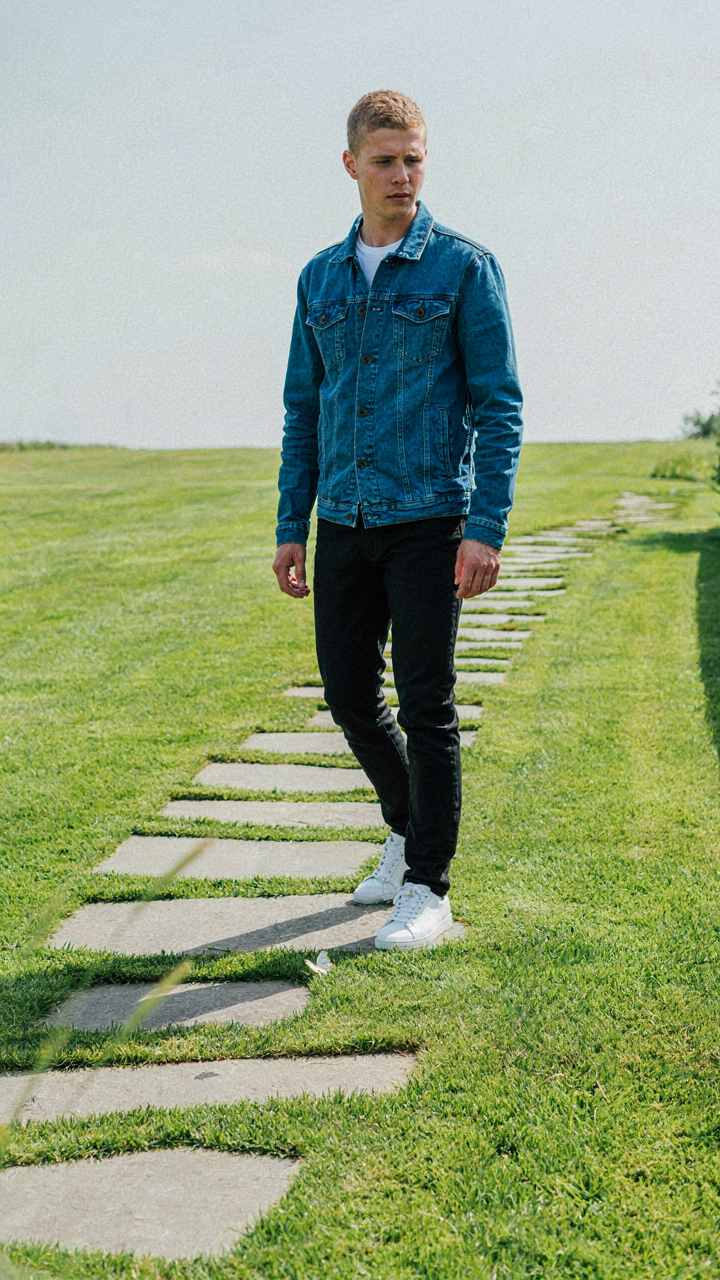
You want your stepping stone path to look intentional instead of like you filled gaps in your yard with rocks. The real mechanism comes from graphic design, where negative space is the emptiness that makes the positive elements readable. Your stones are the positive. Everything else is the negative space doing the actual work.

Most people obsess over stone shape, color, and size. They miss that the ground around those stones determines whether the path reads as a path or a random scatter. Mowed grass, mulch, low groundcover, or exposed soil all function as frames. The frame either clarifies the route or dilutes it. Choose one consistent material for the space between stones and commit to it for the entire pathway.
Absence Creates Direction
The path that works doesn’t add more. It removes confusion by being clear about what isn’t a walking surface. When you plant low creeping thyme or sedge around your stones but leave nothing between them, walkers don’t know where the actual route is. Contrast creates the pathway, not the stones alone.
Hardscape designers use this constantly with gravel beds. The stones sit on gravel that differs from the surrounding lawn or planting area. That single layer of visual separation converts random stepping stones into an actual navigable path. The emptiness around each stone becomes intentional rather than accidental. Apply this to your layout by establishing a single ground treatment that runs the entire length of the path before you place any stones.
Beyond Function: Stepping Stone Pathway As Psychological Anchors
The Reveal And The Redirect
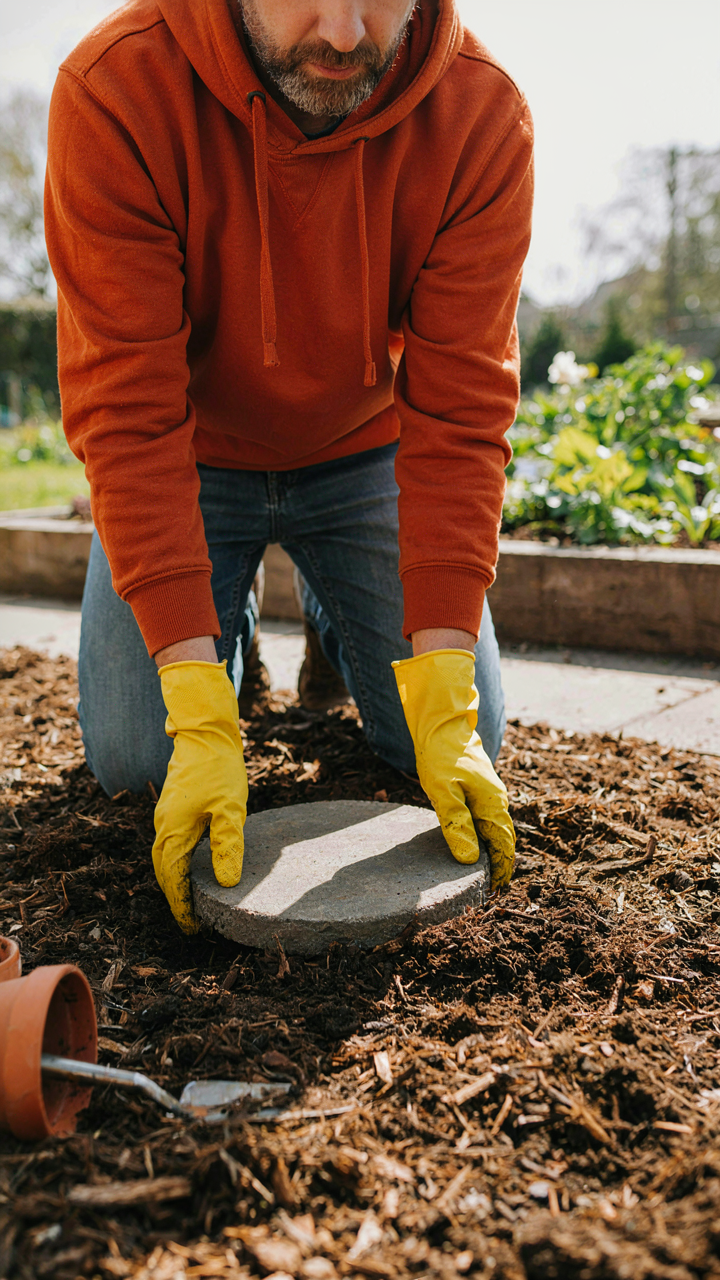
You want this section because you suspect a garden path could say something about your taste without you having to say it out loud. Here’s what actually happens: stepping stones function as visual breaks that interrupt the brain’s default scanning mode. In psychology, this is called the “orienting response”—the mind pauses at novelty before resuming its trajectory. Each stone is a micro-pause. You’re not decorating; you’re architecting attention.

The practical implication is deliberate placement. Stones spaced too evenly create rhythm without tension. Stones placed to obscure the endpoint force the eye to stop predicting and start observing. This isn’t mystical. Your brain literally processes a meandering path differently than a straight one because it can’t anticipate the next visual anchor until it arrives at the current stone.
Pacing Controls The Body, Not The Mind
Most design advice says “vary your stone spacing for visual interest.” That’s incomplete. Neuroscience shows that stepping stone density directly influences walking speed and gait pattern. Closer spacing triggers shorter, more deliberate strides. Wider spacing encourages longer, faster movement. You’re not just looking at the path; your body is reading it before your conscious mind catches up.
The mechanism works because stride length is largely automatic. When stones force shorter steps, parasympathetic activation increases—the nervous system downshifts. This is measurable. Apply it by placing stones 24 to 30 inches apart if you want contemplative movement, 36 to 42 inches if you want purposeful transit. The distance between stones predetermines the mood before anyone walks it.
The “Path Of Least Resistance” Fallacy: Why Easy Isn’t Always Better

Disrupting The Straight Line
You want your garden to feel effortless to navigate because you’re afraid a confusing path makes you look like you don’t know what you’re doing. Here’s the mechanism: a direct route from point A to point B is boring because it removes decision-making. Visitors move through without engagement. The garden becomes scenery instead of an experience. Physics has a term called “desire paths”—the trails people naturally wear into grass when the official route doesn’t match their instincts. Stepping stone paths should create controlled friction, not eliminate it. Curves, partial sight lines, and deliberate detours force the user to slow down and notice. This isn’t decoration. It’s attention architecture. When a path changes direction without clear reason, the brain activates. The visitor asks “why am I going this way?” That question is where memory gets written.
Strategic placement of stepping stones around landscape features instead of past them creates micro-decisions at every turn. A straight path to a seating area takes five seconds. A curved path that reveals the seating area only at the final turn takes thirty seconds and registers as discovery. The difference is material. Plant dense groundcover or low shrubs on the inside of curves. This prevents shortcuts and forces the path’s intended rhythm. You’re not making the walk longer. You’re making it conscious.
Engagement Through Constraint
The common advice is that paths should be intuitive and easy to follow without thought. That’s half-right and half-wrong. Easy navigation is correct. Thoughtlessness is the failure. Constraint in design, borrowed from systems thinking, means removing options to force a specific behavior. Apply this: stepping stones should be spaced at intervals that require deliberate foot placement, not mindless walking. Too close together and they feel childish. Too far apart and they feel unsafe. The gap should be one comfortable stride plus three inches. This forces pace control. Users can’t shuffle or rush without losing their footing. They synchronize their movement to the path, not the other way around.
Width matters equally. A path under two feet wide requires single-file movement. This changes social dynamics and forces attention downward and forward. Wider paths invite distraction and cluster walking. The stepping stones themselves become performance, not just transit. Lay them on a slight grade or in subtle patterns that reward closer inspection. The act of watching your feet becomes part of the experience, not a liability. Install the stones at a consistent height. Variation creates safety issues and breaks the rhythm you’ve built. The mechanism is simple: remove the option to move carelessly, and the user has no choice but to be present.
The Real Obstacle Isn’t Your Material Choice, But Your Aversion To Designing Spatial Command

Most people design stepping stone paths like they’re apologizing for existing. They scatter stones randomly and hope the eye follows. Command your garden space instead. Before you place a single stone, sketch sight lines from your porch, your seating area, your kitchen window. Make the path lead somewhere worth arriving at. The material matters less than the intention behind it. Start today by walking your garden and marking three focal points with stakes. Your stepping stones will find their purpose once you stop treating them like decoration and start treating them like narrative.