The Illusion Of The “Side Yard”: Why Most Paths Fail
Water Moves Where You Don’t See It
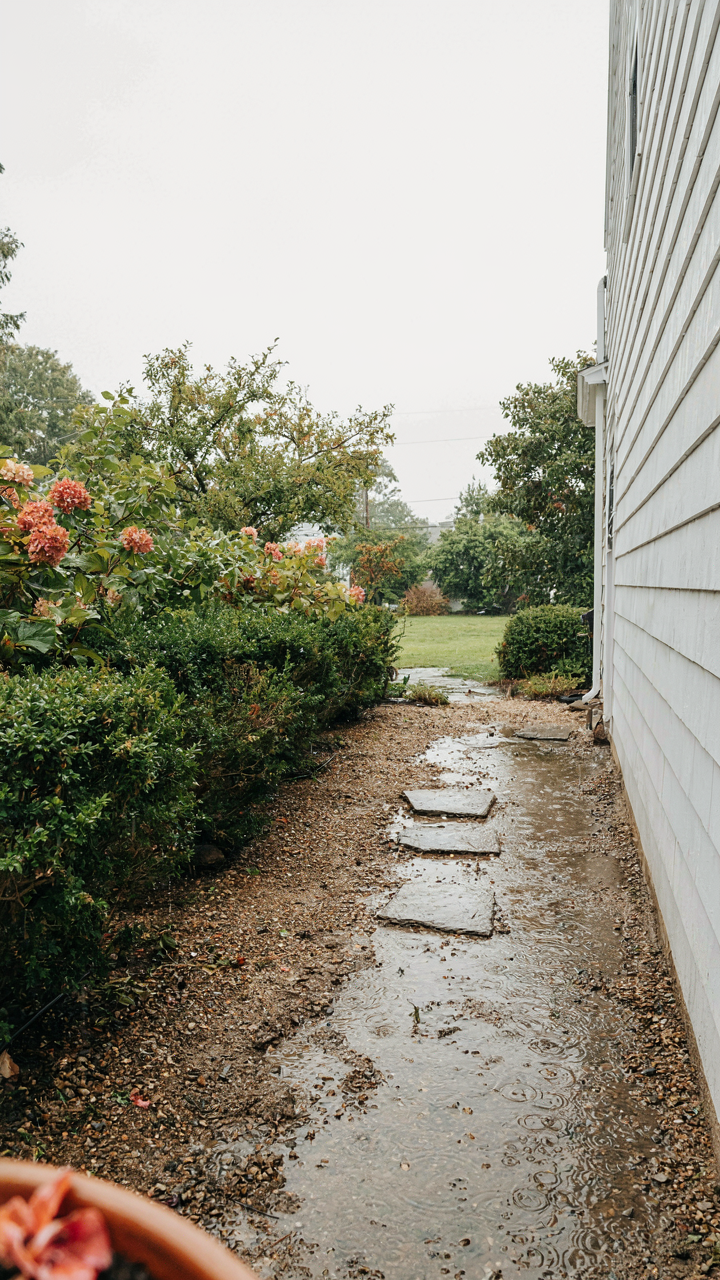
You want a side yard path because you’re tired of mud on the carpet and embarrassed when guests see the neglected strip between your house and fence. But here’s what actually happens: water behaves like capital in economics—it flows to the lowest resistance point, not where you want it to go. Most side yards slope toward the house foundation or sit in a drainage dead zone. You install gravel and stepping stones without reading the terrain, and within two seasons the path becomes a creek bed or a swamp.
The mechanism is drainage gradient. A proper path needs a minimum 2% slope away from structures, which translates to roughly 2.4 inches of drop per 10 feet of distance. Soil compaction beneath your materials determines everything. If you lay gravel on uncompacted earth, water migrates downward and laterally, destabilizing the base. Stepping stones sink. Gravel migrates. The path fails not because you chose the wrong materials, but because you ignored hydrology before installation.
Beauty Without Function Collapses Fast
The design world calls this “form following function,” a principle from the Bauhaus movement in early twentieth-century Germany. Ignore it here and you’ll spend money on aesthetics that won’t survive the first rainfall. Most people plan their side yard path like they’re choosing throw pillows—focusing on how it looks in sunlight rather than how it performs when it rains for three days straight.
Stepping stones need solid base preparation. Gravel needs edging to prevent migration into adjacent soil. The path needs a crown or consistent slope to shed water. A stepping stone set on compacted gravel with no foundation will rock and shift under foot traffic and freeze-thaw cycles. You must solve drainage and stability before you select materials or worry about visual rhythm. Start with site inspection and slope measurement, not Pinterest boards.
The “Gravel Gambit”: Strategic Material Selection For Narrow Garden Spaces
Drainage And Permeability Work Like Hydraulics
You want your side yard to look intentional, not like a mudpit that screams poor planning. Here’s the mechanism: water moves through gravel because particles don’t bond. In hydraulic systems, permeability measures how fast liquid flows through a medium. Your gravel path needs the same principle. Water that pools on concrete or packed soil rots the base, kills stepping stones, and creates liability. Gravel solves this by force of physics, not luck.

Narrow yards trap moisture worse than open spaces. Wind doesn’t dry out tight corridors between fences or buildings. This means you need material that actively sheds water downward, not material that looks good while moisture festers underneath. Pea gravel and crushed stone both drain, but the substrate beneath them determines if water actually escapes or collects in a shallow basin. Most people install gravel on flat ground and wonder why it becomes compacted soup by spring. Install a slight grade (1 to 2 percent slope) to force water toward the yard perimeter or toward planted beds that absorb runoff.
Crushed Stone Versus Pea Gravel Serves Different Jobs
The common take here is wrong: pea gravel looks nicer, crushed stone is tougher. That’s incomplete. Crushed stone has sharp edges that lock together under foot traffic and hold their position. Pea gravel rolls, migrates, and requires raking every season. In a narrow side yard where a path sees regular foot traffic, migration means your stepping stones sink and your edges blur into the lawn. Crushed stone stays where you place it because the angular faces create friction against each other.
Pea gravel belongs in low-traffic zones or as a visual layer over crushed stone. Use crushed limestone or granite chips where people actually walk. These materials compact into a stable base over time instead of spreading into flowerbeds. Install crushed stone at 2 to 3 inches deep, add stepping stones at the same level, and the system stays intact. This isn’t aesthetic preference, it’s material engineering applied to a 6-foot-wide problem.
The Stepping Stone Standoff: Placement As A Design Lever

The Golden Ratio Of Stride: Spacing For Flow
You want people to use your path without thinking about it, which means you need them to walk it without breaking their natural gait. That’s the real game here. Biomechanics governs how stepping stones work: stride length is the distance your body covers in one natural step, and misaligned stones force cognitive load. Most people space stones by eye and wonder why visitors shuffle or skip them.

The human average stride is 24 to 30 inches on flat ground. Space your stepping stones 18 to 24 inches apart, center to center, to let walkers land naturally without reaching or bunching their steps. This isn’t arbitrary. Test it yourself: walk your path at normal pace and mark where your feet naturally land, then adjust stone placement to match that rhythm. Gravel fills the gaps and masks imperfect spacing, but poor spacing still registers as wrong.
Contrast And Texture: Making Stones Pop
The mistake everyone makes is treating stepping stones as purely functional objects instead of visual anchors that guide the eye forward. Texture contrast does that work. A dark stone against light gravel, or a smooth flagstone against a rough pea gravel surface, creates visual momentum that makes the path feel intentional rather than accidental.
Select stones that differ visually from your gravel choice. If you’re using light tan pea gravel, use basalt or slate stepping stones. If you’re using darker river rock, use light granite or limestone. The contrast needs to be immediate enough that someone scanning the yard instantly recognizes the path direction. Place stones in a straight line or gentle curve, never scattered randomly. Consistency in placement makes the contrast work harder.
The “Side Passage” Protocol: Maximizing Utility In Constrained Areas
Stacking Functions Into Narrow Spaces
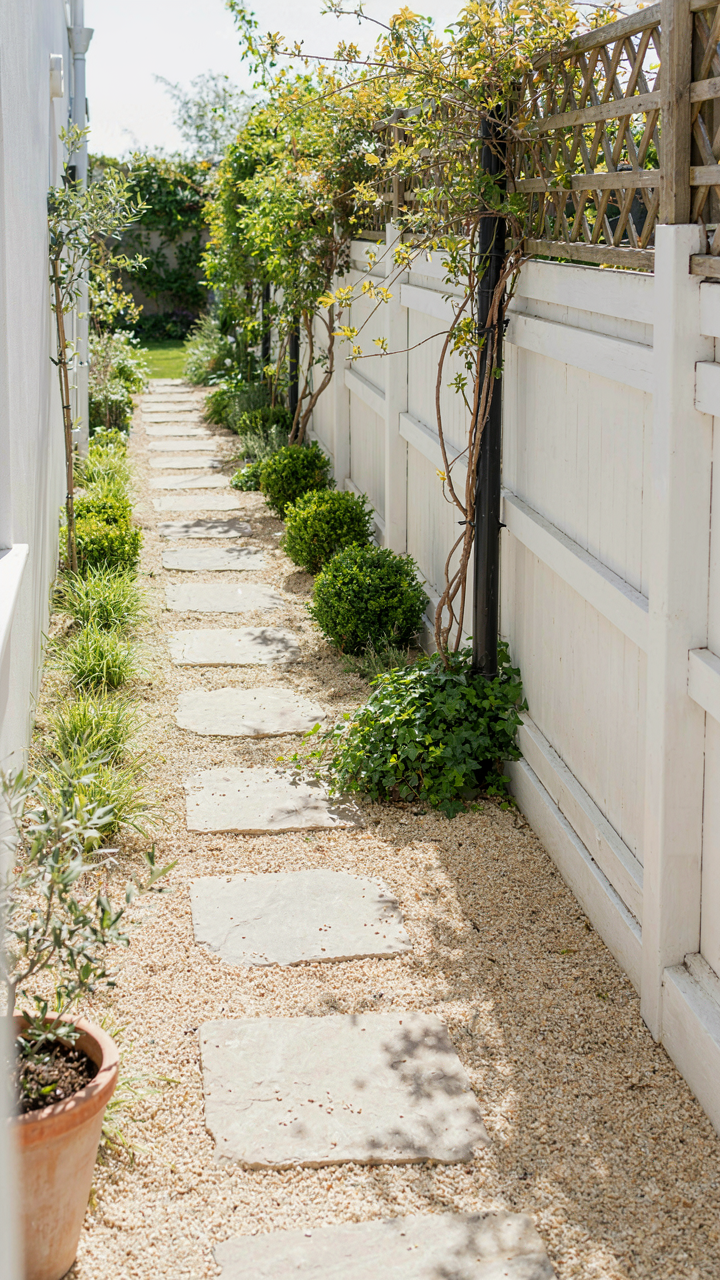
You want your side yard to look intentional instead of like wasted real estate. The real mechanism isn’t decoration—it’s borrowing from urban planning’s concept of “mixed-use zones,” where architects compress multiple functions into tight footprints. Your side path doesn’t have to just move people from front to back. It can work as storage, garden bed, drainage corridor, and visual connector simultaneously.

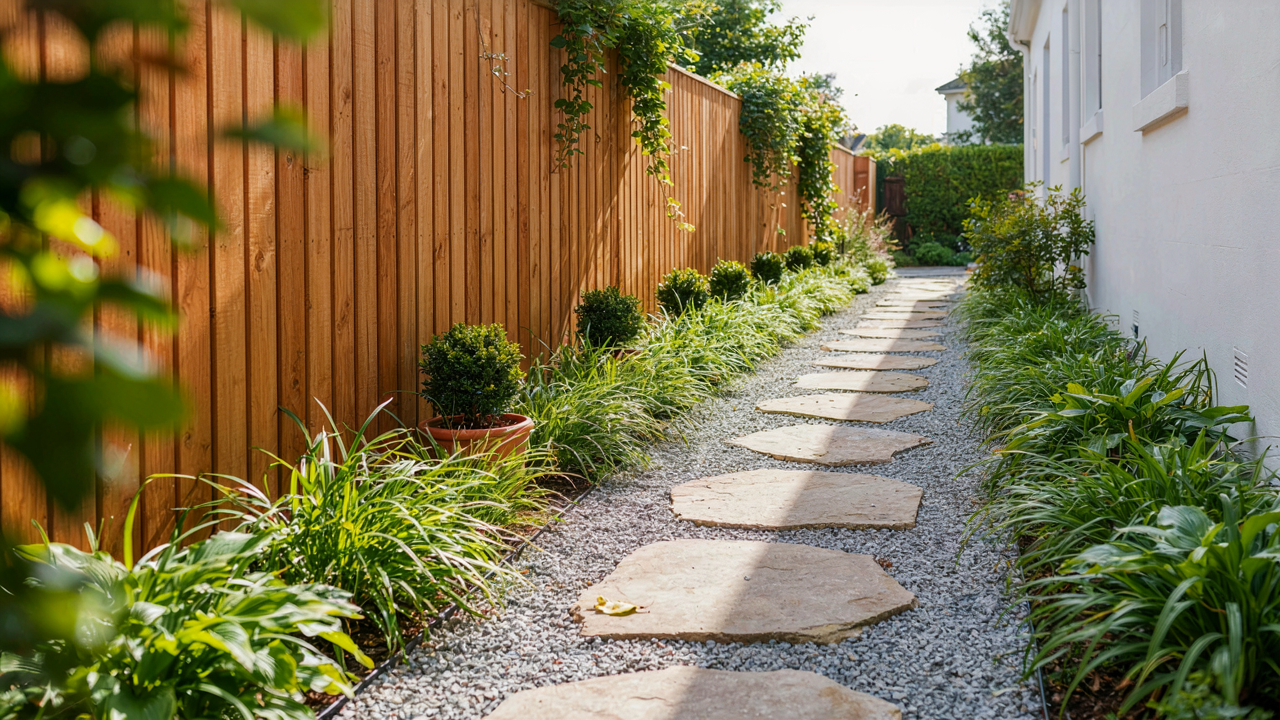
Gravel and stepping stones let you layer these functions without building permanent structures. Place the path as your primary circulation route, then anchor a trellis system along the fence line for climbing plants or shade. Position low maintenance plantings between stones. Run downspouts or French drains alongside the path bed itself. Each element serves the path’s core job while solving a separate problem your property actually has.
Making Small Spaces Feel Larger Than They Are
Wall height and vertical planting matter more in confined areas than square footage. Psychologically, humans read depth first—horizontal sight lines make spaces feel longer. Train climbing plants upward on cables or a slim trellis rather than spreading them outward. This pulls the eye up and along the path simultaneously, creating the illusion of progression.
Position stepping stones in a slight diagonal or gentle curve rather than straight lines. Straight paths in tight spaces feel like tunnels. Paint or stain the rear fence a lighter shade than the entry side—this atmospheric perspective trick makes the back feel farther away than it is. Keep the path material consistent but use stone size or gravel color transitions to mark functional zones without building walls.
The “Backyard Walkway” Blueprint: Connecting Zones, Not Just Yards

Where Your Path Actually Starts
You want people to think your side yard is intentional. That’s the real reason you’re reading this. Most people treat paths like they’re decorative—just a line of stones leading from point A to point B. Wrong. A path is circulation strategy. You’re borrowing from urban planning here: desire lines. In cities, planners watch where people actually walk, then pave there. Your side yard path must follow the natural logic of movement between the spaces people actually use, not where you think they should walk.

Start by mapping actual traffic patterns in your yard. Where do people naturally move when they enter from the driveway? Where do they exit to the back patio? Where do they grab trash cans or check the front? The path should anticipate these routes, not fight them. Gravel and stepping stones work because they signal the path without forcing rigidity. The moment your path feels imposed rather than discovered, people walk around it.
Purpose Points Make Paths Worth Taking
Paths that exist purely for transit die immediately. A destination point transforms a path from necessity into choice. This doesn’t mean installing elaborate features. A bench positioned at a corner, a rain garden at the midpoint, a small seating area where shade naturally falls—these are mechanical anchors. They break the journey into segments and give friction-free reasons to pause. Without them, your path is just a shortcut people use when lazy.
The stepping stone and gravel combo excels here because it allows asymmetrical placement. You can position stones to encourage stops at specific views or functional areas without constraining movement. A well-placed stone near a garden bed, another at a vantage point overlooking your main yard—these signal intentionality without overstating it. Every stone placement should serve movement or pause, never just coverage.
Beyond Concrete: Why Conventional Paths Fall Short
The Rigidity Problem
You want to believe a poured concrete path is a permanent solution. It’s not. Concrete cracks because it can’t move with ground shift, freeze-thaw cycles, and soil settling. One hard winter expands water trapped beneath the surface, and your “permanent” path buckles. Most people ignore this reality until repair costs exceed the original investment.

Physics calls this the problem of thermal stress. Concrete has almost zero give. When soil moves even a quarter inch, concrete’s rigidity forces it to fracture rather than flex. Gravel and stepping stones work differently: they shift with ground movement and reset themselves. The mechanism is simple – distributed weight and loose particles absorb stress instead of concentrating it.
Living Systems Beat Dead Surfaces
The common argument about gravel maintenance misses the actual trade-off. Yes, gravel needs raking. Concrete needs replacement. Over fifteen years, most concrete paths require major repair or full removal. Gravel paths compound in value through ecological function.
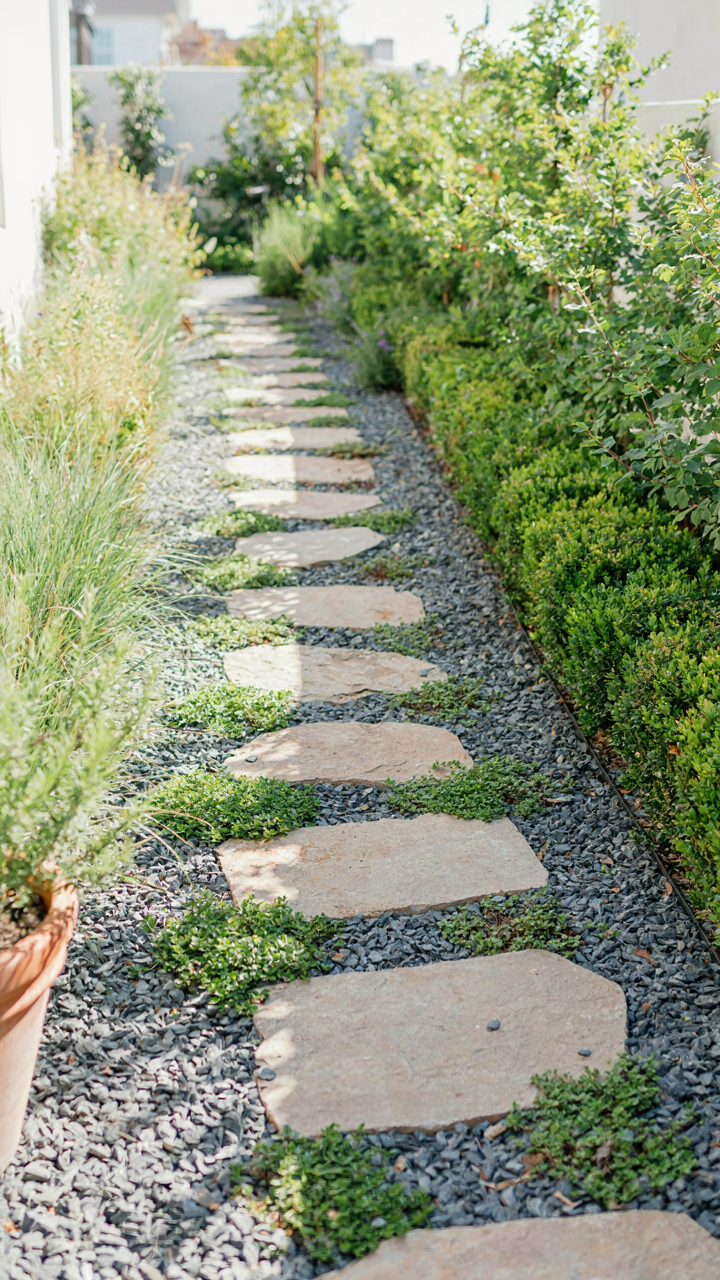
Permeable surfaces let water infiltrate instead of running off to foundation damage or flooding issues. Stepping stones with soil between them support root growth, microbial life, and drainage. A path designed this way doesn’t fight the land; it works with existing hydrology. When you choose stepping stones spaced across loose gravel, you’re choosing a system that adapts rather than a surface that eventually fails. Install stepping stones at 24 to 30-inch intervals and backfill with washed gravel to support water movement through the yard.
Narrow Side Yard Landscaping Ideas: The Art Of Constraint

Plant Selection Through Economic Efficiency
You want to believe a narrow side yard needs variety, but constraint forces clarity. Economics teaches the Pareto Principle: eighty percent of results come from twenty percent of inputs. Apply this to planting. Choose one dominant species that handles your specific conditions—shade depth, soil drainage, foot traffic—and stop. Most narrow yards fail because designers treat them like full landscapes instead of functional corridors.

The mechanism is simple: repetition creates rhythm, and rhythm makes small spaces feel intentional rather than neglected. A single plant repeated at intervals draws the eye forward and disguises the limitation. Use gravel to fill gaps between stepping stones and beneath your chosen plant. This reduces maintenance, eliminates the visual noise of competing species, and channels water exactly where you need it. Three plants doing one job beats twelve plants doing nothing.
Water Movement Mirrors Natural Systems
Biomimicry isn’t poetry—it’s applied physics. Observe how water moves through undisturbed forest floors: it doesn’t rush straight down; it filters through layers and disperses laterally. Replicate this in your side yard path by mimicking slope and material layering. Stepping stones interrupt surface flow. Gravel beneath them acts as a drainage medium. This combination prevents pooling and erosion far better than flat, compacted soil.
The protocol is direct. Grade your path at a two to three percent slope toward the drainage side of your yard. Lay your stepping stones first to establish the walking line. Pack gravel around them in a bowl-like depression, slightly lower than the stones themselves. This creates a capture zone. Water hits the stepping stones, flows into the gravel, and moves laterally through the base layer instead of carving erosion channels. Check your slope with a level and string line before you install anything permanent.
Illumination & Edging: The Unsung Heroes Of Side Walkways

Lighting That Actually Serves A Purpose
You want people to notice your side yard at night because it signals maintenance and intention. Here’s the mechanism: light creates perceived safety and frames your path as deliberate rather than neglected. Path lighting isn’t about romance. It’s about functionality meeting visibility.
Low-voltage LED fixtures mounted along gravel edges or stepping stones consume minimal power while eliminating trip hazards. Position lights at ground level, spaced 4 to 6 feet apart, to cast light downward on the walking surface. Avoid uplighting or ambient wash—that’s theatrical and wastes energy. Solar LED options work in most climates, though they perform poorly in dense shade or far northern latitudes where winter sun angles limit charging efficiency.
Edging: Where Your Path Becomes Intentional
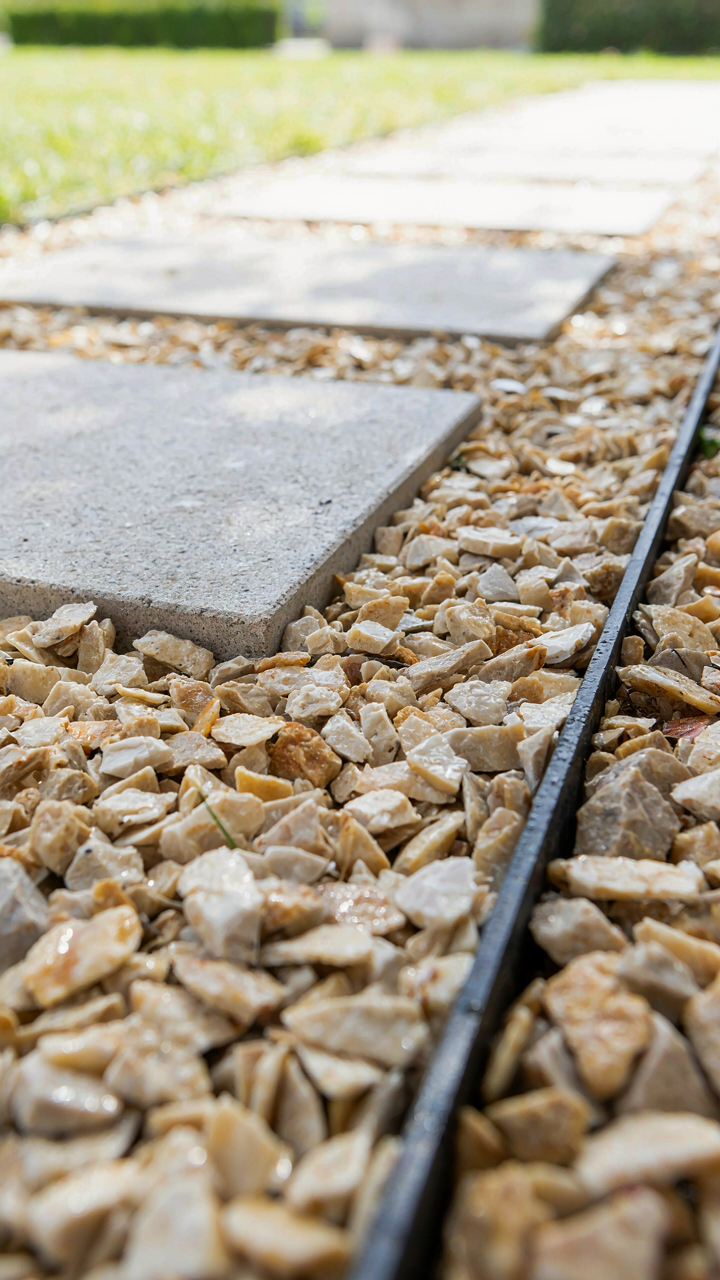
Edging contains gravel migration and defines the boundary between path and surrounding landscape. Without it, your gravel spreads into planting beds within one season, and your stepping stones sink into loose material.
- Metal landscape edging: Steel or aluminum strips create clean lines, last 15+ years, and resist rot. Install 2 to 3 inches below grade to contain gravel and block creep.
- Timber borders: Pressure-treated wood or composite materials offer natural aesthetics but require replacement every 8 to 12 years as wood breaks down. Cedar resists decay longer than pine.
- Plastic edging: Cheap and flexible, but degrades in direct sunlight within 5 to 7 years. Use only in shaded areas or accept frequent replacement.
- Stone curbing: Permanent and visually integrated. Lay 4 to 6 inch stones flush with or slightly above grade to frame the path cleanly and prevent shoulder erosion.
- Permeable pavers at edges: Combine function and aesthetics by using rigid edging pavers that match your stepping stones, creating visual continuity while containing gravel.
Edging height matters more than material choice. Set it at least 2 inches above the gravel surface so mowing equipment and foot traffic don’t scatter material sideways. The edge becomes your path’s perimeter wall—treat it as the structural boundary, not decoration.
The True Obstacle To A Great Side Yard: Your Mindset

Constraints Force Better Design
You’re reading this section because you’re afraid a small or awkward side yard will make you look cheap. Here’s the mechanism: constraint is not the enemy of design. It’s the filter that separates actual decisions from infinite noise. In landscape architecture, this principle mirrors how negative space works in visual composition. Your side yard’s tight dimensions, odd angles, or poor soil don’t limit you. They eliminate bad options and force you toward solutions that actually work for your specific plot.

Most advice tells you to “embrace your space.” That’s patronizing. The real move is understanding that gravel and stepping stones exist precisely because they solve constraint problems. These materials work in side yards because they don’t require perfect conditions, deep root zones, or flat terrain. Your limitations are the only reason this path idea makes sense at all. Without them, you’d be overthinking a simple walkway into something it doesn’t need to be.
Start By Naming What You’re Actually Avoiding
Design paralysis isn’t about not knowing what to do. It’s about not wanting to commit to one thing and lose the fantasy of all other options. You delay choosing gravel color because part of you still imagines a completely different path. You measure twice and buy nothing because you haven’t admitted what your side yard actually is: a functional passage, not a design showcase. The solution is paperwork, not inspiration.
Write down three hard facts about your space: exact dimensions, existing drainage pattern, and realistic maintenance time per month. These aren’t inspirational. They’re the bounds of what matters. Next, photograph your yard from every angle and identify where foot traffic actually happens. The path location will reveal itself. Once you’ve chosen the route and locked in a gravel type and stepping stone style, paralysis ends because the decision framework is set. Execute from there.
The True Obstacle Isn’t Material Choice, But Your Default Assumption That Side Yards Are Merely Functional, Not Fundamentally Transformative

Most people treat side yards like problem spaces instead of opportunity spaces. You see wasted dirt. You see neglect. But gravel and stepping stones aren’t about fixing an eyesore. They’re about reclaiming hidden real estate that shifts how you move through your own property. Stop waiting for the perfect plan. Walk your side yard today. Mark where your feet actually want to go. That worn path you create is your design blueprint. Your property already knows what it needs.