The Cardboard Con: Why Cardboard Alone Won’t Save Your Soil
Carbon Nitrogen Imbalance Kills Decomposition
You want cardboard to disappear fast so you can plant sooner. That’s the real motivation here. But cardboard alone creates a decomposition trap because it’s pure carbon with almost zero nitrogen, and biology requires both to function. Think of it like a stoichiometry problem from chemistry: microbes need specific ratios of elements to build their bodies and reproduce. Cardboard is carbon-heavy fuel with no protein source. Microbes starve before the cardboard breaks down.
Most guides say “just add compost on top” and move on. That misses the actual mechanism. When you layer cardboard without nitrogen-rich material directly beneath or within it, decomposer populations crash. The fungi and bacteria that eat cellulose have nothing to build with. They slow to a crawl. Your cardboard sits as a barrier for months instead of becoming soil. You need to calculate roughly a 30-to-1 carbon-to-nitrogen ratio by weight, which means adding nitrogen sources like grass clippings, manure, or compost directly into contact with the cardboard during layering, not just on top afterward. This forces active decomposition instead of stalling it.
Microbial Desert Under Unbalanced Layers
Cardboard kills microbial communities when placed incorrectly because it creates anaerobic pockets and blocks oxygen flow at the wrong stage. Sheet mulching works when decomposition happens aerobically at first, then transitions. Cardboard laid directly on compacted soil with nothing beneath traps water, suffocates aerobic microbes, and breeds anaerobic bacteria that produce sulfur compounds instead of stable humus. You end up with a smelly, hostile environment that takes longer to mature than if you’d just tilled the soil normally.
The fix is mechanical: break up the soil first, create air channels, then layer cardboard with active nitrogen material between it and the soil. This allows oxygen penetration during the critical decomposition phase. Without this protocol, you’re not building soil. You’re building a mat that eventually rots and becomes usable, but you’ve wasted six to twelve months compared to doing it correctly. Active decomposition requires oxygen availability and carbon-nitrogen balance from day one.
No Till Gardening: The Deconstruct Reconstruct Method
Build Soil Through Intentional Layering
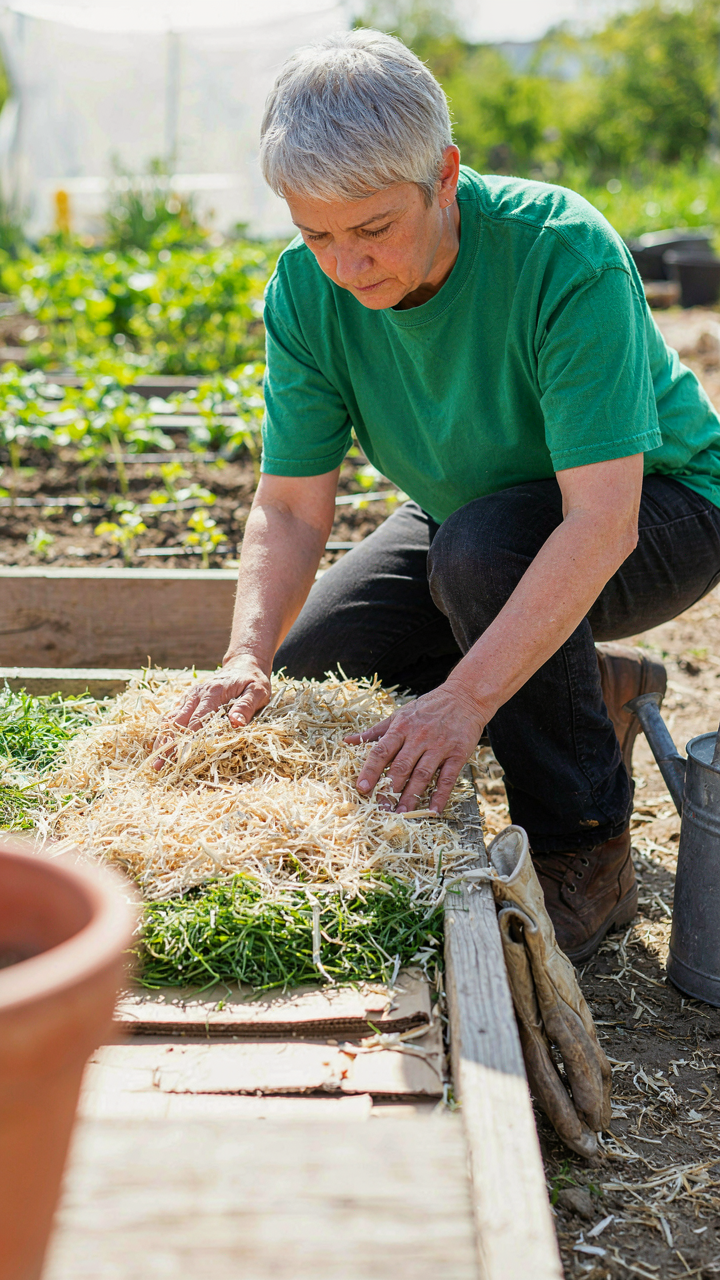
You want this to work because digging feels like failure. The real mechanism: sheet mulching stacks materials in a sequence that forces decomposition to happen in the exact order your soil needs it. You’re not just piling stuff. You’re engineering a timeline where fungi colonize before bacteria dominate, where carbon breaks down faster than nitrogen locks up.

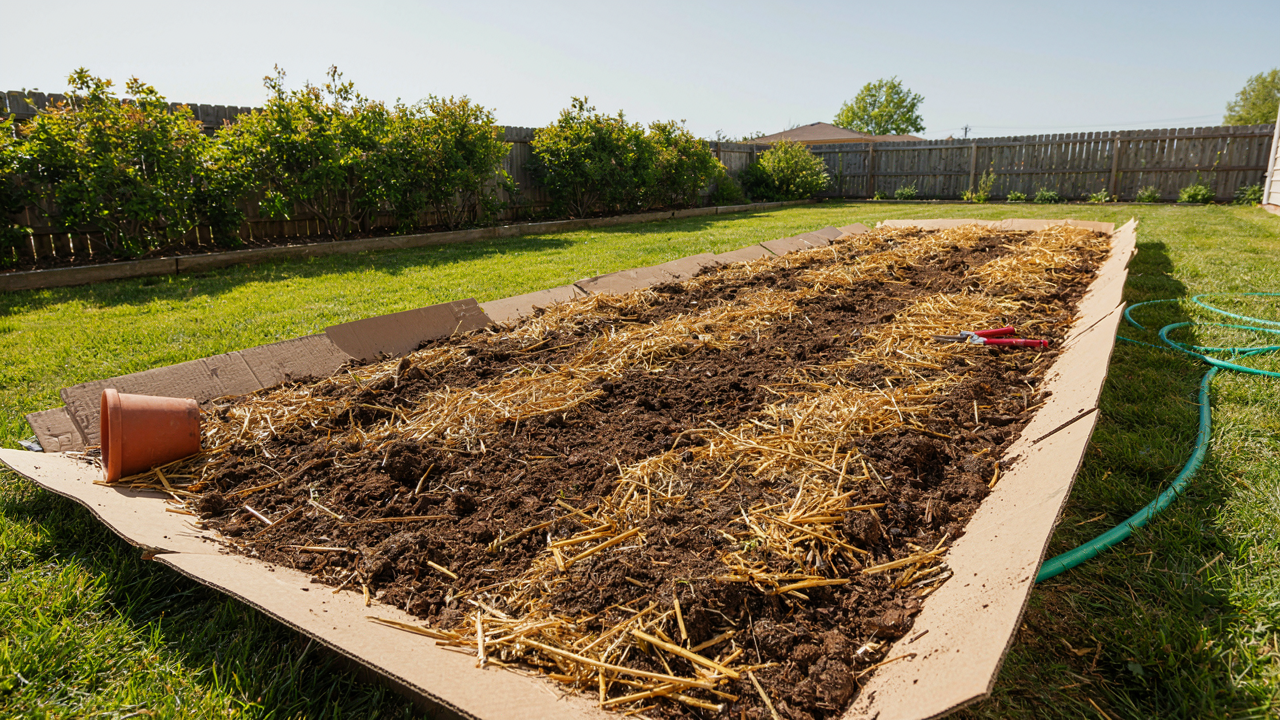
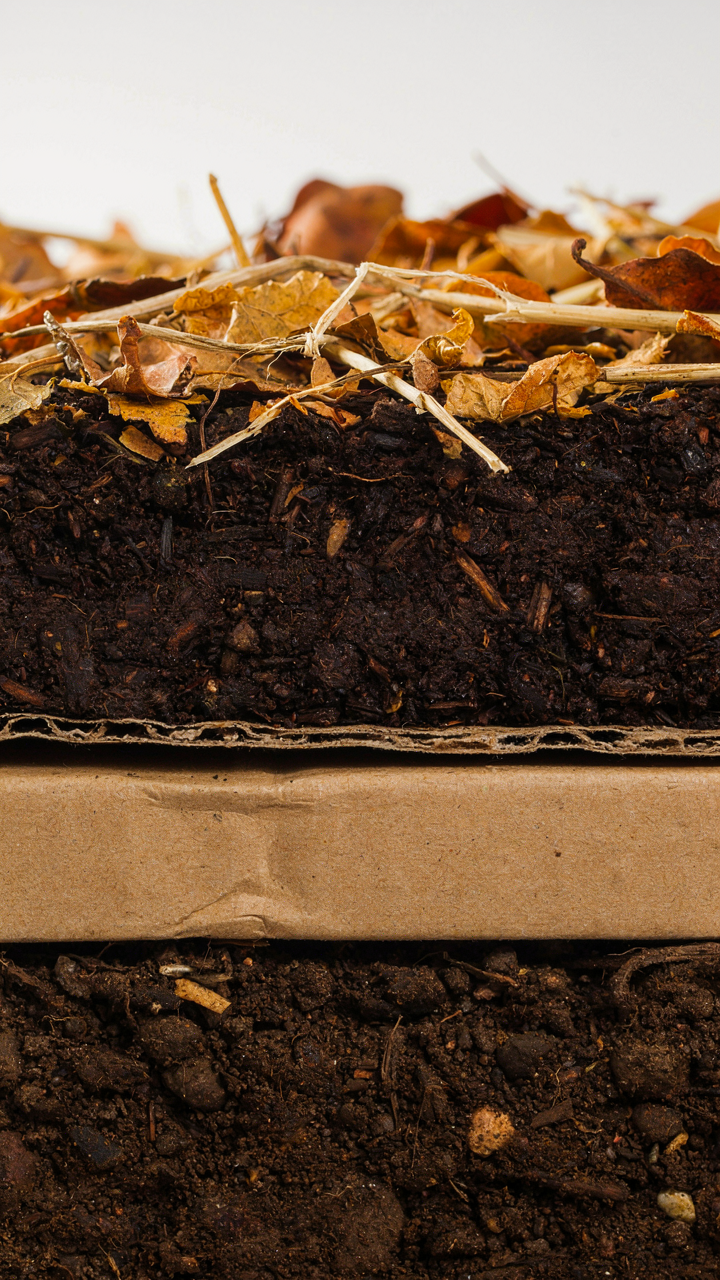
Start with cardboard or newspaper directly on existing grass or compacted soil. This layer blocks light and suffocates existing plants without requiring physical removal. Layer nitrogen-rich materials next: grass clippings, kitchen scraps, compost. Then alternate carbon-heavy layers: shredded leaves, straw, wood chips. Each layer becomes food for the organisms below it. The sequence matters because it determines which decomposers arrive first and which nutrients become available when your plants need them.
Oxygen Flow Determines Everything
Physics governs decomposition. In sheet mulching, you’re managing what engineers call “permeability” – how freely air and water move through the structure. Most people ignore this and build anaerobic zones by accident, creating sludge instead of soil. The fix isn’t complicated but it requires attention.
Intersperse coarser materials vertically through your layers. Wood chips and straw create air channels that run perpendicular to your horizontal strata. Leave the bed exposed to air for at least two weeks before planting if you’ve used fresh materials. This prevents the compaction and methane production that kills the microbial life you’re trying to build. Water the bed moderately after assembly so materials settle but don’t compress into a solid mass. The goal is moist, not waterlogged.
The Ecological Succession Protocol For Weed Management

Pioneer Species Know The Weakness You’re Banking On
You want a weed-free garden without spraying chemicals or pulling weeds for years. That’s the real reason you’re here. Sheet mulching works because you’re hacking ecological succession, the biological framework that governs which plants colonize bare soil. Pioneer species arrive first because they tolerate harsh conditions—poor soil, no competition, intense exposure. Most gardeners miss the mechanism: you’re not eliminating weeds. You’re making conditions inhospitable for them by accelerating the succession timeline.

The cardboard or newspaper layer in your sheet mulch accomplishes one thing: it blocks light from reaching dormant weed seeds in the soil below. This triggers germination failure, not death. Simultaneously, the decomposing organic matter above creates a new, hostile microclimate that favors different species than what your soil naturally selects for. Perennial weeds with deep taproots suffer most because the soft, nitrogen-rich mulch layer doesn’t anchor them—they pull out easily when the few that do germinate reach maturity. You’re not working against nature. You’re redirecting it.
Density Beats Chaos Every Time
Planting density determines competition outcomes, and most people space plants too far apart. When you sheet mulch, your soil fertility explodes in year one and two because the decomposing layers release nutrients faster than established plants demand them. Weeds exploit this surplus. Your response isn’t to add more mulch. It’s to plant densely enough that your chosen species capture available light and root space before weeds establish.
Perennial plants outcompete annuals when they occupy the same footprint because they don’t restart from seed each year. A densely planted perennial bed—spaced at 60 to 70 percent of mature width—shades the soil surface and physically blocks weed seedlings from accessing the mulch layer. Within two seasons, the canopy closes. After that, light becomes the limiting factor, not nitrogen or water. Space your plantings based on their mature spread, then reduce that distance by 30 to 40 percent. This forces earlier competition and faster canopy closure.
Mulching For Sustainable Gardening: Beyond Just Blocking Light
Water Stays In The Soil Where It Belongs
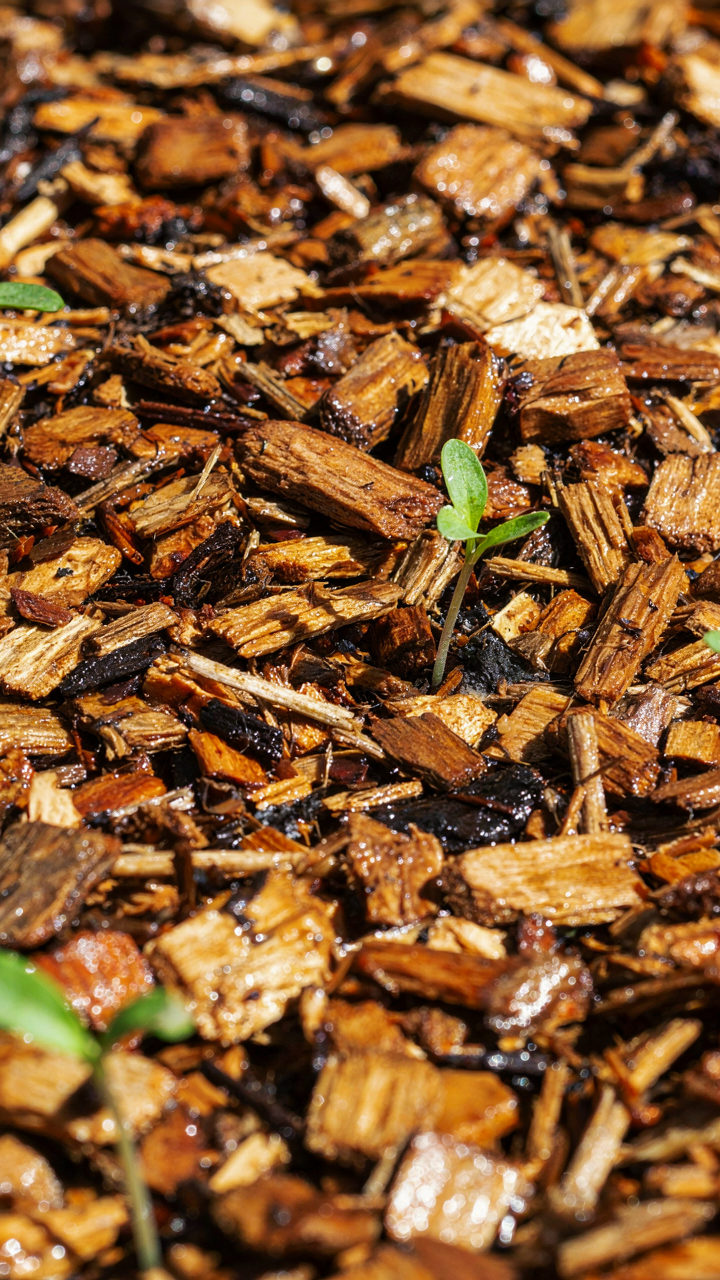
You think sheet mulching matters because it kills weeds. Wrong. The real mechanism is water retention, and most gardeners waste this advantage entirely. Mulch doesn’t create moisture—it prevents evaporation. Bare soil loses water to the sun and wind. Covered soil keeps what rain and irrigation deliver. This difference compounds over months and determines whether your plants survive dry spells or stress.

The math is simple: less water loss means less frequent watering, deeper root penetration, and stable soil conditions. Sheet mulch layers trap moisture in the top six inches where most feeder roots work. You build moisture retention from the first day by layering cardboard or newspaper, then organic matter. The decomposing material itself holds water like a sponge. Your protocol is straightforward—lay cardboard, overlap seams by six inches, then stack compost or aged mulch four to six inches deep over the entire bed.
Soil Temperature Stays Consistent Year Round
Thermal regulation in agriculture is the same principle HVAC systems use in buildings: insulation controls transfer. Sheet mulch acts as insulation for soil. In summer, it blocks direct sun and keeps roots cooler. In spring and fall, it slows rapid temperature swings that shock young plants. Winter mulch prevents frost heave that lifts soil and damages root systems. Consistent temperature means consistent biology—microorganisms and fungi work steadily instead of cycling through dormancy and activity.
Thick mulch creates a buffer zone. Summer soil under bare ground can hit 140 degrees Fahrenheit. Under six inches of mulch, the same soil stays fifteen to twenty degrees cooler. This single detail reduces transplant shock, extends growing windows, and keeps beneficial microbes active longer into fall and winter. When you build your bed, use coarse mulch materials—wood chips or aged bark—because they trap more air. Fine materials compact and lose their insulating value fast.
The Mycelial Network Advantage: Fungi As Your Weed Barrier

Fungal Dominance Shifts Competition
You want weeds gone without effort because pulling them is tedious and herbicides feel wrong. Here’s what actually happens: the mechanism is biological competition. In ecology, “niche dominance” describes when one organism controls resources so completely that competitors starve out. Sheet mulching creates fungal dominance—fungi colonize the decomposing matter faster than weed seeds can establish roots in that same zone.

Weed seeds need bare mineral soil contact to germinate. When fungi and bacteria saturate that layer, they consume nitrogen and create acidic conditions seeds won’t tolerate. The fungi aren’t killing weeds directly—they’re occupying the ecological niche weeds need. Most gardening advice skips this and calls it “smothering,” which is lazy framing. It’s actually resource competition at the microbial level, and fungi always win when given fresh organic matter to colonize.
Nutrient Cycling Through Fungi
Fungi don’t just outcompete weeds—they unlock nutrients weed roots can’t access. Mycorrhizal fungi break down complex carbon compounds in raw mulch layers and trade those nutrients to plant roots in exchange for sugars. This symbiosis creates a nutrient cycle that runs parallel to the one weed roots depend on. Fungi access trapped phosphorus and potassium in decomposing leaves and wood faster than mineral weathering would release it.
When you layer sheet mulch, you’re stacking food for fungi. As decomposition accelerates, fungal networks expand and densify, making the soil beneath increasingly hostile to shallow-rooted weeds while beneficial plants develop deeper mycorrhizal associations. Keep the top layer moist but not saturated—fungi need oxygen to spread. Wet, compacted mulch creates anaerobic conditions that kill fungi and invite algae and mold instead. Layer cardboard at 2 to 4 inches thick, then 6 to 12 inches of mixed organic matter, then maintain moisture at 50 to 60 percent saturation for optimal fungal establishment.
Sheet Mulching Lawn: Converting Turf Into A Living System

Kill The Lawn, Keep The Biomass
You want to avoid the work of hauling dead sod to the dump while pretending you’re being environmentally conscious. The real mechanism is this: the grass and its root structure already contain stored nitrogen and carbon. Killing it in place and layering over it means you’re not losing that biomass to landfill—you’re converting it into the foundation of your bed. The decomposition happens underneath the mulch stack, where anaerobic and aerobic bacteria break down the organic matter into available nutrients for your new plants.

Don’t till the existing lawn. Tilling brings weed seeds to the surface and fractures soil structure you need intact. Instead, mow the grass short, then lay cardboard or several layers of newspaper directly over it. The barrier kills the turf by blocking light while the soil life underneath begins consuming the dead root mass. Within six to twelve months, the grass layer becomes indistinguishable from the mulch above it—a carbon-rich substrate ready to feed your new system.
Stacking Plants For Diversity And Function
Ecology uses the principle of niche differentiation—each organism occupies a unique space where it reduces competition. Apply this directly to your sheet mulched bed: different root depths mean different plants can coexist without fighting for the same resources. A shallow-rooted herb, a mid-depth perennial, and a deep-rooted nitrogen fixer occupy three separate zones in the same bed. You’re not just adding variety for looks. You’re building a system where each plant species handles a specific job.
Plant selection happens in layers after the mulch settles. Nitrogen fixers like legumes pull nitrogen from the air and deposit it into the soil, reducing your fertilizer need. Perennials require less intervention than annuals and establish deeper root systems that improve soil structure. Herbs and ground covers suppress weeds by occupying available space. The sequence matters: plant nitrogen fixers first to build fertility, then add species that benefit from that accumulated nutrient load over the following season.
The Soil Microbiome As A Black Box: A Cybernetic Approach

Observe What Changes, Then Adjust
You want to believe the microbiome works like a machine you can dial in once and forget. It doesn’t. Sheet mulching creates a living system with feedback loops, and you either track them or you’re guessing. Cybernetics—the study of control and communication in systems—maps directly onto this: your mulch layers are inputs, soil biology is the black box, and your outcomes are measurable outputs. Watch the system respond, then calibrate.

The mulch you lay down doesn’t stay static. It breaks down at different rates depending on temperature, moisture, and microbial activity. After two weeks, observe soil moisture retention. After four weeks, check for fungal growth patterns and odor shifts. After eight weeks, dig a cross section and assess decomposition depth. Document what you see without interpretation. Wetter than expected means your layer thickness or material ratio needs adjustment. Slower breakdown signals nitrogen deficiency in your pile. These aren’t problems. They’re data.
Inputs Drive The Entire System
The common advice says “just layer brown and green materials.” That’s lazy. Cybernetics teaches us that system outputs depend entirely on input quality and input timing. Your mulch materials are the only levers you control. Everything else—fungal colonization, bacterial population density, nutrient cycling speed—follows from what you feed the system.
Start with carbon sources that decompose at predictable rates. Shredded hardwood takes months. Straw breaks down in weeks. Compost accelerates the whole process but costs money. Your nitrogen source matters equally: grass clippings spike nitrogen fast, then deplete. Aged manure releases it slower. Food scraps invite pests if layered wrong. Choose materials based on your timeline, then layer them in order of decomposition speed, slowest at the bottom. This sequencing creates staged nutrient release, not chaotic breakdown. Within three months, you’ll see which material combinations your soil biology prefers through weed suppression quality and plant vigor.
Vegetable Garden Mulching Tips: Feeding Your Plants, Not Weeds

Nitrogen Moves Downward, Not Sideways
You want to believe mulch feeds plants uniformly. It doesn’t, and that’s your actual advantage. Think in terms of nutrient economics: nitrogen flows vertically through the soil profile, not horizontally toward competing roots. Sheet mulching exploits this. When you layer compost and aged manure on top of cardboard, decomposition releases nitrogen that percolates down toward your vegetable roots, not into the lateral space where dormant weed seeds sit waiting for activation.

The mechanism is simple. Fresh organic matter on the surface breaks down fastest, creating a concentration gradient. Microbes consume the carbon-rich outer layers first, then work downward into the soil. This downward nutrient flow starves the shallow weed seed bank while feeding deeper vegetable roots. Most gardeners apply mulch too thin or use the wrong materials, so they never see this effect. Build your sheet mulch layer to 4 to 6 inches thick, with finished compost or well-aged manure as your top 1 to 2 inches. Decomposition velocity matters more than volume.
Dense Mulch Creates Root Zone Exclusion
Weeds need oxygen and access at the soil surface. Sheet mulching denies both without denying them to your vegetables. In competition biology, exclusion means controlling the space where competitors can establish. Your sheet mulch bed does exactly that by creating a physical barrier that forces weed germination to occur above the cardboard layer, where seedlings have no access to established soil nutrients or moisture reserves.
The cardboard layer is non-negotiable here. It blocks light penetration and prevents weed seeds from making contact with soil. Over 6 to 12 months, it degrades enough to let your vegetable roots push through, but it remains intact long enough to suppress nearly all weed germination in the active root zone below. Don’t use glossy cardboard or printed materials. Lay pieces with 6-inch overlaps, wet them thoroughly before mulching over top, and watch the weed pressure in your vegetable beds collapse while your plants thrive.
No Dig Garden: Maximizing Biological Work, Minimizing Your Own
Decomposition Without Your Intervention
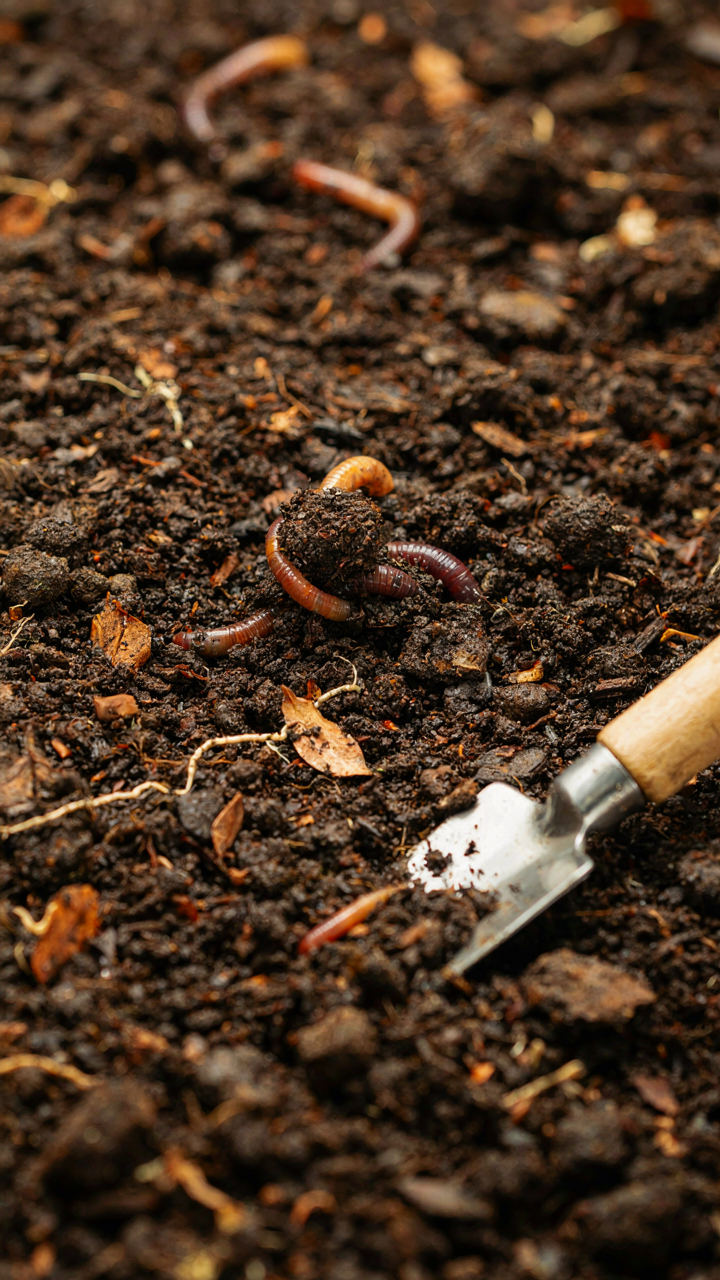
You want the bed to work for you instead of you working for the bed. That’s the real motivation, and it’s earned. Sheet mulching wins because it offloads decomposition to microbes and fungi instead of forcing you into annual tilling. Borrow the economic principle of leverage: you’re paying upfront with layered materials to extract compounding returns as soil biology does the heavy lifting year after year.

Decomposition accelerators—things like compost, aged manure, or nutrient-dense materials—speed microbial colonization of your layers. They work because they feed the organisms already present in your soil and materials. You don’t need commercial products. Finished compost mixed into your brown layers or spread between them gives fungi and bacteria immediate food, cutting decomposition time from months to weeks in warm conditions. The mechanism is simple: faster food availability means faster population growth, faster organic matter breakdown, and faster soil-building.
Strategic Layering For Effort Reduction
The common advice says “just alternate browns and greens.” That’s incomplete and wastes your effort. What matters is material density and decomposition speed. Dense materials decompose slower and suppress weeds longer; nutrient-rich materials decompose faster and feed soil biology quicker. Your layer order determines whether you’re fighting your bed or riding it.
- Cardboard or newspaper base: Creates the foundational weed barrier and lasts 6-12 months while decomposition begins, buying you time before the layer below becomes exposed.
- Coarse brown layer: Wood chips, straw, or shredded leaves create air pockets. Fungi colonize these first because they tolerate lower nitrogen and establish mycelial networks fast.
- Green or nitrogen-rich layer: Grass clippings, kitchen waste, or fresh manure accelerate decomposition in the layer above by creating heat and feeding bacteria and fungi actively.
- Finished compost interlayer: Acts as a microbial inoculant. Spreads established decomposers through the entire bed instead of waiting for them to migrate upward naturally.
- Thick mulch top layer: 4-6 inches of straw or wood chips reduces evaporation and prevents weed seeds from reaching soil. Replenish annually as it breaks down.
The math is blunt: a bed with poor layer choices demands weeding, amendments, and reworking. A bed with strategic layering demands nothing but patience and annual mulch replacement. Your job is choosing materials that exist in your region, stacking them once, then letting biology do the work you’d otherwise repeat every season.
Sheet Mulching With Cardboard: The Material Choices That Matter

What Actually Breaks Down In Your Bed
You want to believe the right carbon layer will solve your weed problem forever. It won’t. What matters is understanding decomposition rates and picking materials that create the right timeline for your specific bed.
Carbon materials don’t all decompose at the same speed. Cardboard breaks down in 6 to 12 months depending on moisture and microbial activity. Shredded leaves last 3 to 6 months. Wood chips can take 2 to 3 years. The mechanism is microbial consumption: fungi and bacteria colonize these materials, metabolize them, and convert them to humus. You’re not burying garbage. You’re feeding a decomposition pipeline that needs the right fuel density and composition to work on your timeline.
Finding Cardboard That Won’t Poison Your Soil
Common advice says any cardboard works. That’s incomplete. Cardboard treated with heavy inks, wax coatings, or fluorescent dyes introduces compounds that break down slowly and can leach into soil. Sourcing matters because the coating determines decomposition speed and soil chemistry.
Corrugated cardboard boxes from retail shipping are your baseline. They use water-based inks and minimal adhesive. Avoid wax-coated boxes, glossy-printed packaging, and anything labeled as waterproofed. Unbleached kraft paper tape is fine. Test by tearing a piece: if it feels waxy or smells chemical-forward, skip it. Layer your cardboard 2 to 3 sheets thick, overlap edges by 6 inches, and wet it before covering with compost to lock it down and accelerate microbial colonization.
The Real Obstacle Isn’t The Weeds, It’s Your Expectation Of A Static, Obedient Ecosystem

You think sheet mulching solves your weed problem. It doesn’t. It shifts the problem. You’re not building a weed-free garden. You’re building a system that suppresses weeds while everything decomposes and evolves. Stop expecting permanence. Start layering cardboard today on one bed and watch what happens over months instead of seasons. Your garden isn’t a problem to solve. It’s a living thing you negotiate with.