Beyond “Easy Care”: The Illusion Of Low Effort Front Porch Landscaping

What “Easy Care” Actually Means
You want a front porch that looks intentional without the work, so you’re hunting for plants that won’t demand anything from you. Here’s the mechanism: “easy care” doesn’t mean the plant thrives on neglect. It means the plant tolerates neglect. That’s a contract with visible decline built in. The plant survives, not flourishes. Your porch looks managed only until it doesn’t, and that happens faster than you think because you’ve trained yourself to ignore it.
Most advice treats “easy care” as a binary property, but that’s wrong. Every plant has minimum thresholds for water, light, and soil composition. Cross below those thresholds and the plant enters survival mode, not dormancy. You see browning leaves, sparse growth, pest vulnerability. The porch still reads as occupied, just poorly. Low maintenance isn’t zero maintenance repackaged as aspirational marketing.
The Hidden Costs Of Chasing Minimal Upkeep
Borrow a term from economics: opportunity cost. Your decision to minimize maintenance work on the front porch doesn’t eliminate work, it shifts it. You either accept visual degradation (the cost of inaction) or you spend money upfront on drought-tolerant specimens, amended soil, and mulch systems that compress watering schedules. Most people choose the first route because the second requires cash now for benefits you won’t perceive as urgent.
The real expense surfaces when clients realize that “minimal care” plants still need seasonal cleanup, occasional pruning, and periodic replacement once they decline below acceptable visual thresholds. You’ve bought convenience on borrowed time. A front porch landscaping plan built on genuine neglect tolerance costs more initially because proper plants and soil systems demand better infrastructure than standard planting.
The 3 Tiered Hierarchy Of Front Porch Landscape Dominance

Foundation Plants: Anchoring Your Aesthetic Authority
You want people to notice your house before they notice anything else on the block. That’s the real motive here, and foundation plants are the mechanism that makes it happen. Think of foundation planting like load-bearing walls in architecture: these plants carry the visual weight of your entire porch. They frame the entryway, define the perimeter, and create the baseline that everything else sits on top of.

Foundation plants work best when they’re evergreen or semi-evergreen, meaning they hold their structure year-round. Boxwoods, junipers, and dwarf Alberta spruces do this without demanding water schedules that chain you to a hose. Place them in clusters of 3 or 5 along the porch base, not scattered singly. Odd numbers create visual stability; even numbers feel accidental. The goal is architectural presence, not garden decoration.
Accent Plants: Strategic Pops Of Undeniable Presence
Most people skip this layer entirely and end up with boring symmetry. The mistake is treating accent plants like decoration instead of visual punctuation. They’re the contrast that makes your foundation plants actually register in someone’s mind. One well-placed flowering perennial or ornamental grass pulls the entire composition forward into specificity.
Accent plants need contrast with what surrounds them: texture difference, height difference, or color variance against the foundation mass. Ornamental grasses next to boxwoods. Purple-leafed plants beside green foundations. A single specimen plant at eye level near the front door. These don’t need constant care if you choose species adapted to your zone. The mechanism is simple: isolation plus contrast equals visual authority.
Uncommon Annuals For Uncommon Front Porch Landscaping
Bold Choices That Defy The Garden Center Default
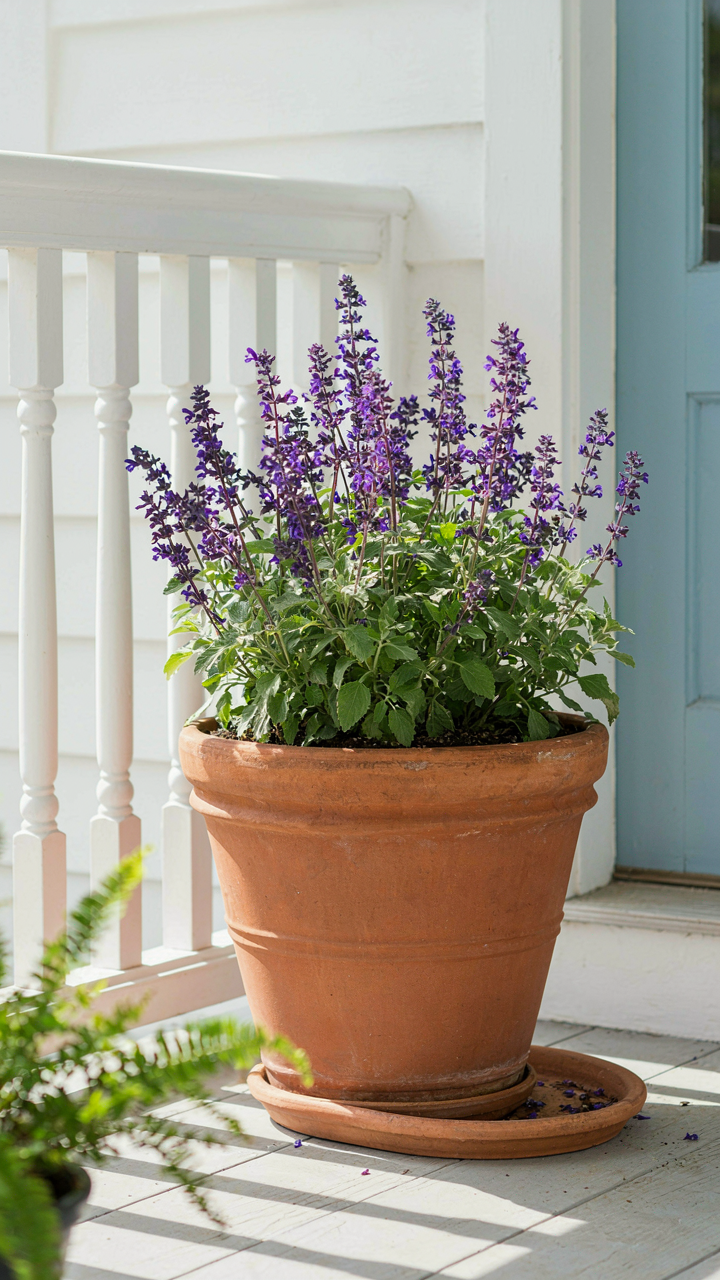
You want your porch to signal taste without screaming for attention. The real motive is differentiation without risk, which means you need plants that look intentional but perform reliably. The mechanism is simple: garden centers stock what moves volume, not what moves perception. They push zinnias and marigolds because they’re foolproof, which is exactly why every porch looks identical. Breaking that pattern requires annuals bred for visual weight, not just survival.
Salvia greggii (autumn sage), diascia, and scaevola deliver structural presence and sustained color from June through frost without the flat, repetitive look of standard bedding plants. These aren’t rare or difficult. They’re just ignored because they don’t fit the bulk-buying playbook. Plant them in front porch containers or beds where they get at least four hours of direct sun. Water deeply when soil surface dries. Unlike impatiens, they handle wind and variable moisture better, which matters on exposed porch entries where conditions shift throughout the day.
Seasonal Impact Maximize Visual Return For Minimal Fuss
Portfolio theory applies to front porch landscaping: concentrate your efforts where returns compound over time. A single well-placed annual that blooms for five months beats five plants that need individual maintenance schedules. Penstemons, cleomes, and verbena bonariensis flower continuously from midsummer through October with zero deadheading required on most varieties. This means maximum visual payoff from minimal intervention.
Start with one statement plant per container or bed section rather than mixing six varieties together. In June, prioritize establishment over bloom. Let roots develop. By July, flowering accelerates dramatically. By August through October, your porch becomes a focal point while neighbors are replanting faded annuals. The protocol: choose one uncommon annual per 8-square-foot porch area, install it early, water it twice weekly for the first three weeks, then step back and let performance speak.
Architectural Plants: The Backbone Of High Porch Landscaping
Structure Over Seasonal Color
You want your porch to look intentional year-round because a neglected front tells visitors you don’t maintain anything. The real mechanism: architecture in landscape design borrows from load-bearing principles in construction. Just as a building needs a structural frame before finishes, your porch needs visual weight from permanent plant forms before you add temporary color. Most people reverse this, planting flowers first and wondering why their space feels hollow in winter.
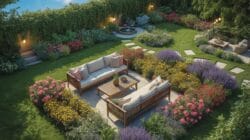
Deciduous shrubs with strong branching patterns, ornamental grasses with persistent seed heads, and evergreen backdrop plants create a skeleton that stands alone. These plants solve the problem most landscapers won’t admit: seasonal plantings fade, but structure endures. When you build on architectural bones, seasonal additions enhance rather than carry the design. Choose plants specifically for their form, not their bloom window.
Evergreen Anchors For Consistent Visual Mass
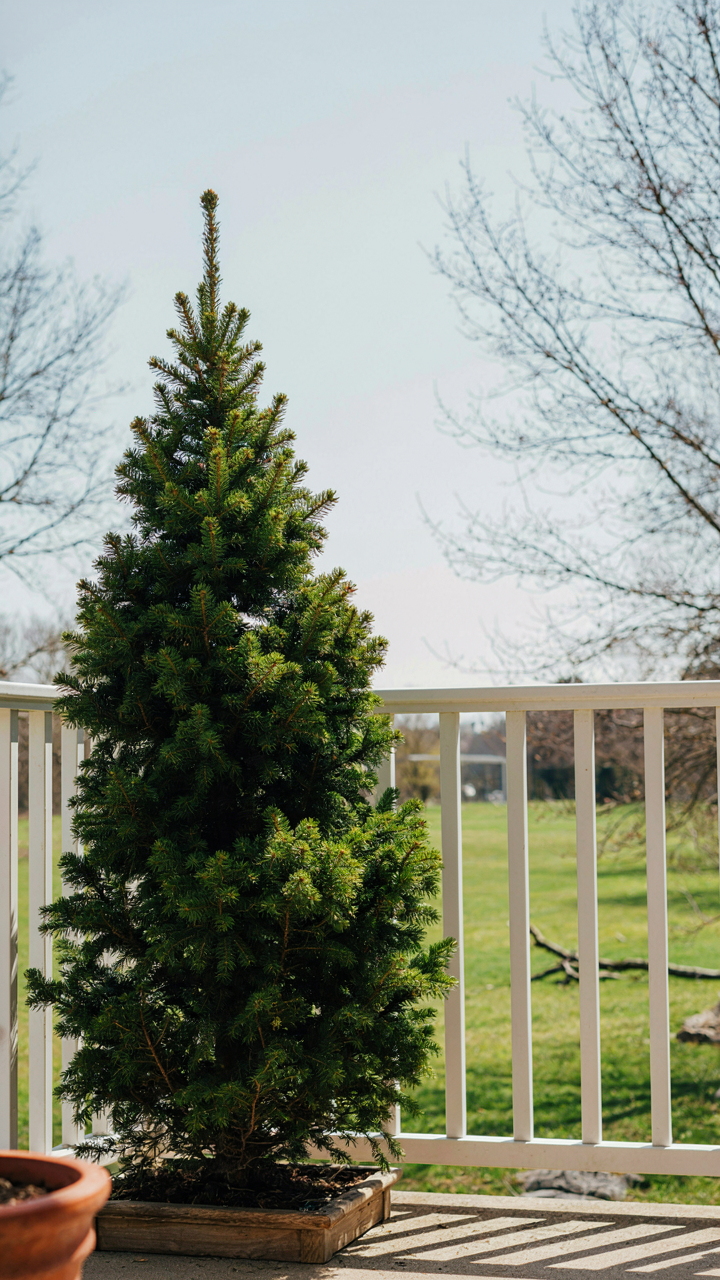
Year-round greenery doesn’t mean boring. Boxwoods, dwarf Alberta spruces, and junipers hold form in all seasons and require minimal intervention once established. The difference between a porch that reads as “finished” and one that reads as “abandoned” is often just the presence of visible green mass in January. You need at least one evergreen per porch zone to anchor the composition.
Plant evergreens in odd numbers and stagger them at varying heights to avoid the static lineup look common in suburban yards. Evergreen structure creates the foundation that lets you experiment with deciduous plants and seasonal annuals without losing visual coherence. A three-evergreen framework costs you one season of establishment, then works for decades with only annual pruning. That trade off is non negotiable for easy care.
The Scarcity Principle Of Open Front Porch Landscaping Ideas
When Empty Space Becomes Your Advantage
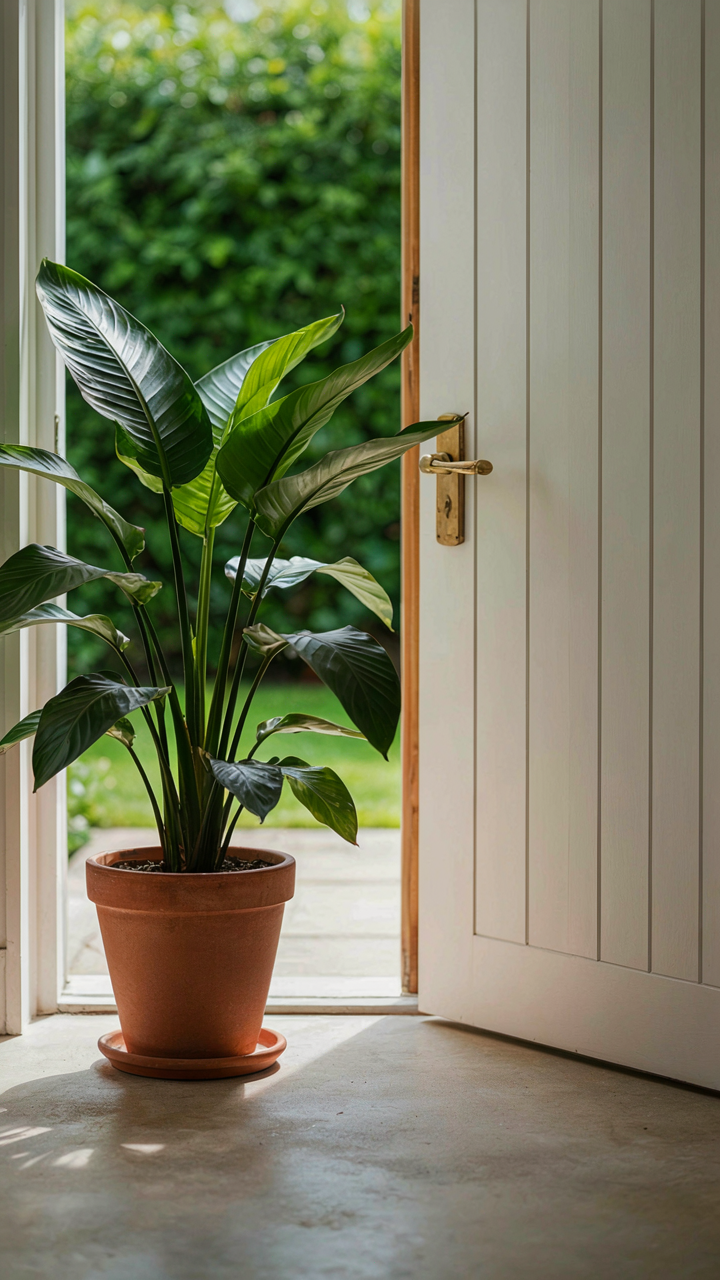
You want permission to do less work while your porch looks better than your neighbor’s. Here’s the mechanism from economics: scarcity increases perceived value. Apply this to your front porch and it flips the entire game. Most people overstuff their porches because they believe density equals quality. The opposite is true. Strategic emptiness makes each plant matter.

Think of your porch as a gallery, not a nursery. One well-placed specimen plant draws the eye harder than six mediocre ones competing for attention. The negative space around it actually amplifies its impact. You’re not fighting for dominance through volume. You’re winning through contrast. This is why expensive landscapers leave yards mostly bare and charge twice as much.
Placement That Does The Work
Focal point placement is the protocol that separates competent from lazy landscaping. Position one statement plant where the front door sightline naturally lands, or where it frames the entryway from the street view. That single plant carries the visual weight of what others waste five plants trying to achieve. The rest of your porch stays clean. Breathing room is not wasted space.
Secondary plants work only when they create intentional asymmetry, not accidental clutter. A paired grouping of two matching containers on either side of your entry reads as design. A scattered arrangement of six pots looks like you couldn’t decide. Your eye moves once, registers the frame, and settles. The placement protocol is this: one focal plant, optional paired symmetry for the entry, everything else stays off the porch until you have a specific reason to add it.
Container Mastery: Elevating Front Porch Landscaping Ideas Entryway
Selecting The Right Vessel
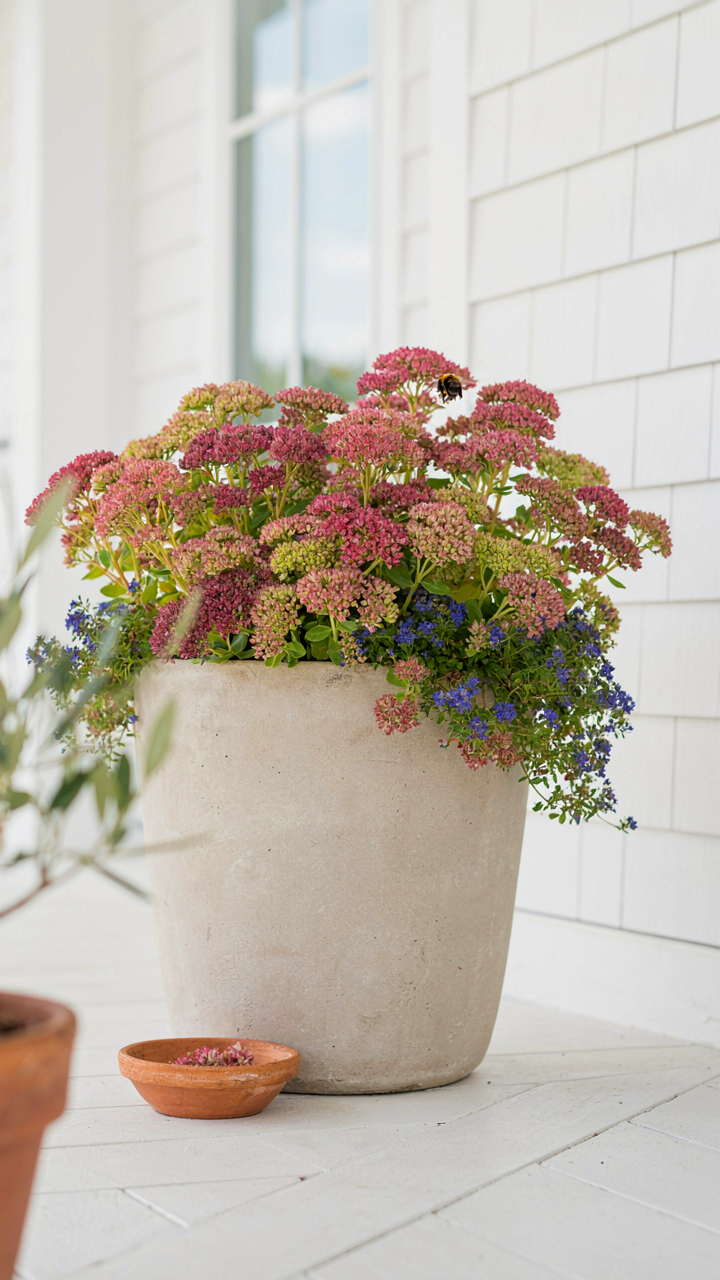
You want containers that look intentional because you’re worried your porch reads as neglected. Here’s what actually matters: drainage is load-bearing architecture for plants. A pot without drainage holes is a plant coffin dressed up as décor. Terracotta breathes, which means soil dries faster, ideal for easy-care plants that hate wet roots. Ceramic glazed pots retain moisture longer, suiting plants that prefer consistent dampness. Size compounds the problem most people ignore. A small pot in a large entry creates visual noise and dries out constantly, forcing you into a watering routine. An oversized container stabilizes soil temperature and moisture, reducing maintenance friction.

The material thickness determines longevity in freeze-thaw cycles. Thin ceramic cracks when water expands inside during winter. Concrete and resin containers withstand temperature swings, which matters if your region has hard freezes. Fiberglass mimics the look of stone or ceramic but handles weather better and weighs far less, important for elevated porches where weight distribution matters. Your vessel choice isn’t aesthetic first. It’s a structural decision that determines whether you’ll water obsessively or barely at all.
Plants That Don’t Demand Constant Attention
The common advice says “pick shade or sun tolerant plants.” That’s lazy thinking. Think in terms of hydrology: water retention capacity is what separates low-maintenance containers from high-demand ones. Hostas and ferns absorb and hold moisture like sponges, meaning they thrive in containers that stay moist but won’t recover if you forget. Sedums and ornamental grasses do the opposite. They store water in leaves and stems, so they tolerate irregular watering and recover quickly from neglect.
- Sedums and Sempervivums: Succulent leaves store water, tolerating weeks without watering. Thrive in shallow containers with fast-draining soil. Perfect for sunny porches with minimal maintenance demands.
- Ornamental Grasses: Feathery or blade-like foliage adds texture and motion. Prefer drier soil, handle temperature swings. Miscanthus and Carex stay contained and won’t strangle adjacent plants.
- Japanese Maples: Deciduous shrubs offering year-round interest through form and fall color. Tolerate container life for years without declining. Require partial shade and consistent but not waterlogged soil.
- Knock Out Roses: Bred for disease resistance and continuous blooming with minimal deadheading. Compact varieties fit containers. Full sun exposure improves performance, though they handle light shade acceptably.
- Hellebores and Heucheras: Evergreen foliage provides structure through winter. Hellebores bloom when nothing else does. Both tolerate shade and don’t wilt dramatically if watered irregularly.
The real mechanism: pair container size with plant hydrology. A ten-gallon pot holding sedums forgives skipped waterings. A five-gallon pot holding ferns demands precision. Match volume to plant biology, and your porch moves from high-maintenance display to a system that functions on its own.
Long Front Porch Landscaping Ideas: The Art Of Visual Flow

Lead The Eye, Don’t Pile It On
You want people to feel something when they approach your porch, not just see a lot of plants. The real mechanism here is narrative architecture—you’re designing a sequence, not a collection. Think of it like cinematography: a long porch demands the same principle filmmakers use. You move the viewer’s attention deliberately from point A to point B to point C. Without this structure, a long porch becomes visual noise, and visitors never settle on what matters.
The mechanics are spatial. Plant heights should shift gradually rather than jump. Ground-level plantings near the foundation lead up to medium shrubs, which frame taller specimens at focal points like columns or entry doors. This creates depth without requiring expensive specimens. The eye travels naturally when elevation changes happen in increments, not random placement. Easy-care plants like junipers, dwarf ornamental grasses, and boxwoods hold these lines because they maintain their shape without constant fussing. Your role is editor, not decorator.
Rhythm Through Repetition Builds Coherence
Most people scatter different plants to add “variety,” which creates visual confusion instead of sophistication. Landscape designers call this the principle of repetition, borrowed from music and visual arts. A long porch needs the same treatment a composition needs—recurring elements that anchor the eye and create anticipation. When you repeat the same plant or color pattern at intervals, your brain registers that as intentional design rather than accident.
The protocol is simple. Choose one plant type to repeat every three to five feet along the porch line. Boxwoods flanking steps. Ornamental grasses at equal distances. A matching shrub repeated instead of random singles. The gaps between repetitions matter as much as the plants themselves. These spaces give structure room to breathe. You’re not creating maximum plant density. You’re creating visual cadence. When visitors walk the porch edge, they sense an underlying order that feels calm, controlled, and maintained.
Beyond Watering: The Unseen Mechanics Of Porch Landscaping

Soil Health: The True Foundation Of Easy Care
You want easy-care plants so you don’t have to think about your porch. That’s the real pitch. But here’s the mechanism nobody states: soil is a living system, not a container. Borrow from biology. A plant doesn’t pull nutrients from soil directly. Microorganisms in that soil break down organic matter and make nutrients available. Dead soil means your plant starves regardless of watering frequency.
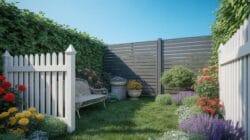
Most porch landscaping fails because people treat soil like inert filler. They buy topsoil, dump it, plant something, then wonder why it struggles. Front porch soil faces real pressure: foot traffic compacts it, roof runoff either floods or drains it too fast, and reflected heat from pavement stresses the root zone. Fix this first. Add 2 to 3 inches of compost annually to the top of beds. Compost feeds the microbiome and improves water retention without creating swamp conditions. This single shift cuts your maintenance load in half.
Pruning For Sustained Vigor And Shape
Pruning isn’t cosmetic trimming. It’s directional resource allocation. Remove dead wood immediately because it signals weakness to the plant and wastes its energy. Prune back one third of new growth each year on easy-care shrubs like boxwoods or junipers. This forces the plant to branch outward rather than grow tall and leggy, keeping it proportional to your porch without constant fussing.
The timing matters. Prune spring bloomers right after flowering, and prune summer bloomers in late winter. Never prune in fall because new tender growth will die in frost. Make cuts just above an outward-facing bud at a 45-degree angle so water sheds off cleanly. A plant that grows dense and compact requires half the attention of one that sprawls. Shape it now so it maintains itself later.
The Real Obstacle Isn’t Plant Choice; It’s Your Desire For Effortless Status Without Genuine Effort

You want a beautiful front porch without actually showing up for it. That’s the real problem. Easy care plants still demand you pick them right for your zone, water them initially, and check on them. Stop looking for the magic plant that needs nothing. Pick one drought tolerant option today and commit to three weeks of actual care. After that, you’ll know if you’re the type who tends things or the type who buys them and forgets. Your porch will reflect which one you actually are.