The Illusion Of “Natural”: Why Your Flagstone Patio Ideas Miss The Point

Natural Versus Unrefined Aesthetics
You want your patio to look “natural” because you’re terrified of seeming like you tried too hard. The mechanism is simple: flagstone itself is refined material. Quarried, cut, sorted, and installed by human hands. Nothing about it is unrefined. The confusion starts here. Natural doesn’t mean untouched. It means the material reads as honest about its origin. Real flagstone shows geological age—color variation, thickness range, surface texture from ancient sediment compression. Fake natural design ignores this and treats flagstone like a blank canvas for wilderness fantasy.
The difference between natural aesthetics and unrefined ones matters because flagstone’s value lives in its visual history, not in hiding it. You arrange stones by size and thickness relationship, not by forcing randomness. You let the stone’s actual color palette dictate your layout. You don’t paint stones, stain them artificially, or install them in patterns so uniform they scream “designed.” Natural means reading the material’s constraints and letting those constraints be visible in the final product.
Contrived Wilderness Designs
The common advice says: mix stone sizes, add moss, create irregular edges, let it look like nature placed it there. This is wrong. That approach abandons design entirely and replaces it with theater. Your flagstone patio isn’t a forest floor. It’s an outdoor room with a specific function—movement, gathering, sight lines. Contrived wilderness designs prioritize appearance over performance and fail at both because the contradiction becomes obvious.
Real restraint in flagstone design means choosing one authentic decision and committing to it fully. Use consistent thickness within sections for stable walking surfaces while varying color naturally. Or run intentional linear patterns that acknowledge human use without fighting it. Install proper grout joints that support drainage rather than pretending stones float freely. The patio that reads most natural is the one where every choice serves either function or honest material expression, never decoration masquerading as accident.
What Kind Of Flagstone For Patio: Beyond Basic Material Choices

Density Wins Against Climate, Not Aesthetics
You want flagstone that looks expensive and lasts forever. The real mechanism is density. Flagstone density determines freeze-thaw resistance, which is what actually kills your patio in cold climates. Physics operates on a simple principle: water enters porous material, freezes, expands, cracks stone. Higher density stone resists this cycle better because less water penetrates the surface.

Slate and bluestone run dense—around 2.7 to 2.8 grams per cubic centimeter. Sandstone and limestone are porous—closer to 2.3 to 2.4. In freeze-thaw regions, this difference determines whether your patio spalls and deteriorates in five years or holds for twenty. Test density by checking water absorption rates. Stones absorbing less than 0.5 percent water perform better in harsh climates than those absorbing 3 to 5 percent.
Source Local, Cut Installation Costs In Half
Most patio builders source flagstone from distributors two states away. Local quarries exist near you and ship stone for 30 to 50 percent less because trucking costs vanish. You also get authenticity—flagstone from your region matches the geological context of your property, which means it weathers predictably over time because it’s adapted to local climate patterns.
Call quarries within 200 miles of your address. Ask what they extract and what thickness they stock for patios. Local stone integrates into existing landscapes because native flora, soil color, and stone all reflect the same geological conditions. This coherence doesn’t guarantee beauty, but it eliminates the jarring feeling of material that looks transplanted from somewhere else.
The “Entropy Maximizer” Method For Flagstone Patio Design

Prioritize Organic Lines Over Rigid Patterns
You want this to look effortless because you think effortless equals expensive and therefore impressive. The real mechanism is simpler: your brain rejects symmetry in natural materials because symmetry signals human control, not authenticity. Flagstone patios that follow rigid grids feel forced regardless of material quality. The solution isn’t random placement—it’s directional variation that mimics how stone naturally settles and breaks under pressure and time.

Lay flagstones with deliberate irregularity in joint width and stone orientation. Vary the direction stones face by 15 to 45 degrees as you move across the patio. Avoid creating visual lines that lead the eye in straight paths. This breaks the grid-like reading your brain expects from human construction, triggering the perception of natural placement instead.
Mimic Natural Erosion And Sediment Flow
Geology teaches us that water and gravity shape stone surfaces through directional force, not random chaos. Apply this principle to your patio’s slope and drainage: stones should orient their longest axis toward the natural fall line of water runoff. This mirrors how sediment aligns in riverbeds and how weathered stone actually arranges itself in nature. Most patios ignore this because installers prioritize leveling over directionality.
When setting flagstones, angle the longest edge of each stone toward where water naturally flows downhill. Stagger joints so water moves across multiple stones rather than pooling in aligned cracks. This creates both a functional drainage pattern and a visual rhythm that reads as geologically honest rather than designed. The result looks settled, not assembled.
Flagstone Patio Ideas: The Unseen Economics Of Longevity

Installation Quality As Long Term Investment
You want to believe a cheaper install saves money. It doesn’t. Economics calls this “total cost of ownership,” and flagstone installation is where that principle separates people who get value from people who get regret. Poor installation creates substrate failure: uneven settling, water pooling, accelerated freeze-thaw damage. A proper base with compacted gravel, sand leveling, and appropriate slope costs more upfront but prevents the cascade of failures that force replacement or constant repair. The installer’s skill determines whether your patio functions as designed or becomes a money pit disguised as a finished project.

The real variable isn’t the stone itself, it’s the prep work nobody sees. Most contractors rush the base to hit margins. Flagstone needs stable, well-draining substrate and consistent bedding. Cutting corners here means the patio shifts within 3-5 years. You either accept this early deterioration or pay to remove and reinstall, which costs 2-3x the original install. Specify compaction testing if you’re serious about longevity. Demand photographic evidence of base prep before stone goes down.
Maintenance Neglected Cost Implications
Flagstone maintenance isn’t optional, it’s deferred expense sitting in your yard. Ignoring it doesn’t make it disappear, it just makes it more expensive when it finally breaks. Water seeps into unsealed stone, freezes, expands, cracks the surface. Weeds establish in joint sand, their roots destabilize edges. Algae growth makes surfaces slick and accelerates decomposition of the stone itself. Annual sealing costs 300-800 dollars depending on size. Replacement of cracked stones, joint re-sanding, and leveling runs 1500-5000 dollars. Skip maintenance for five years and you’ve guaranteed a major intervention.
The mechanism is simple: flagstone is porous. Sealed stone lasts 20+ years with basic care. Unsealed stone deteriorates visibly within 7-10 years depending on climate. A single seasons worth of missed maintenance compounds into years of repair work. Budget 200-400 dollars annually for sealing and joint maintenance. This prevents the 5000-dollar crisis that hits when you finally address neglect. Most homeowners rationalize this cost away, then pay triple when emergency repairs become unavoidable.
Outdoor Flagstone Patio Ideas: Function Dictates Form, Not Trends

Start With How You Actually Use The Space
You want a patio that looks intentional. That’s the real driver here. Nobody admits it, but aesthetic legitimacy matters. The mechanism is simple: your patio’s layout must match your actual behavior patterns, not magazine photos. When form follows function, the space looks composed and stays usable for years. When you reverse it, you get a beautiful space nobody sits in because the layout fights how people naturally move.

Start by defining what happens on this patio before you think about stone color or pattern. Will you eat there? Host groups? Read alone? The primary use case determines everything downstream: the size threshold, the traffic routes, the shade demand, the proximity to the kitchen or entry point. Most people skip this step and inherit someone else’s patio blueprint. That’s why they end up with dead zones and bottlenecks.
Design Around How Bodies Move Through Space
Architects borrow from spatial circulation theory, which maps how people move through environments without friction. Your flagstone patio needs the same applied logic. The threshold matters: is the entry point flush with your door, or does it require a step up? Flagstone naturally accommodates both, but the choice shapes whether foot traffic flows or hesitates. A patio that fights movement kills momentum and feels cramped even if it’s oversized.
Identify the natural desire lines first. These are the paths people actually take, not the paths you want them to take. If your grill sits northeast and your seating faces west, traffic will cut diagonally across the space. Place your flagstone to accommodate that cut, not to force a formal grid that contradicts how bodies actually move. When you install flagstone against the grain of human behavior, you’ll replace it faster than you think.
The “Ecological Integration” Blueprint For Flagstone Patios

Water Flow And Microclimate Design
You want this section because you’re tired of patios that look sterile and disconnected from their surroundings, but you don’t want to sacrifice function. The mechanism is simple: flagstone placement controls where water moves and how temperature and humidity shift across your outdoor space. Think of hydrology, the field that maps water movement through systems. Your patio becomes a hydrological node that either accelerates runoff or slows it, either concentrates moisture or disperses it. Slope matters more than most people admit. A one to two percent grade moves water off the stone without pooling, which kills moss and algae growth. Orient this slope toward planting beds or permeable zones, not toward your foundation or neighbors’ property. Flagstone’s thermal mass also creates microclimates. Dark stone absorbs heat during the day and radiates it at night, warming the air immediately around it. Light-colored flagstone does the opposite, staying cooler and reflecting heat away. Position dark stone where you want warmth and seating comfort. Use light stone where you want to keep ground temperatures lower for adjacent plants.

The real work happens in planning before you lay a single stone. Map your site’s natural water flow by observing where rain collects during a storm. Identify low spots where water wants to gather. Build your patio grade so water either integrates into these natural collection zones or diverts around them completely. If you’re planting around the patio edge, slope stone surfaces toward those planting areas so runoff feeds your plants instead of running off-site. Cold air sinks, so it pools in depressions and low zones. Elevate seating areas slightly above surrounding ground to capture warmer air. Stone color and thickness dictate how fast it heats and cools, which determines how long you can use the patio in shoulder seasons. Choose your stone type and color based on how you want the microclimate to behave.
Stone Placement For Habitat Creation
Don’t believe the common advice that flagstone patios are ecological wastelands. That’s lazy thinking. Strategic stone placement creates habitat corridors, shelter, and microhabitats that support insects and soil organisms. Ecology teaches us about edge effects, where the boundary between two different environments concentrates activity and diversity. Your patio edge becomes an ecological edge. Irregular, staggered stone placement creates more edge than uniform grids do. More edge means more microhabitats where beetles, spiders, and beneficial insects nest and hunt. Flagstone laid with gaps and irregular spacing also allows water to permeate between stones rather than running off the surface. This supports the soil organisms and mycorrhizal networks directly beneath your patio. Tight, mortared joints kill everything underneath. Leave gaps.
Habitat creation isn’t magical thinking; it’s substrate engineering. Place flat stones at ground level to create shelter for ground beetles and hunting spiders that consume pest insects. Tilt larger flagstone pieces slightly or stack them to form crevices where beneficial insects overwinter. Position stone groupings to shade specific areas, creating cooler microclimates for shade-loving plants and organisms. Plant creeping species like sedums or low groundcovers between irregular stone spacing. These fill gaps, reduce bare soil, and provide nectar and shelter. The spacing between flagstones becomes your design variable, not your problem. Wider gaps support more biological activity. Narrower joints sacrifice habitat for easier foot traffic. Choose your patio’s ecological function first, then optimize for human use.
Flagstone Pathways: The Silent Guides Of Outdoor Flow

How Movement Shapes Space Perception
You want people to think your patio is bigger and more intentional than it actually is. Here’s the mechanism: pathways function as kinetic energy conduits, borrowed from physics. In patio design, a pathway is a vector that moves the eye and body through space in predictable patterns. Without them, people wander. With them, people perceive flow, which reads as intentionality and design mastery.

Flagstone pathways work because they create visual momentum. The human eye follows lines. A poorly placed pathway creates friction. A smart pathway guides guests from entry point through the patio’s functional zones without forcing them to backtrack or pause awkwardly. The width matters too. Narrow paths feel cramped; wide ones disperse traffic. Standard residential flagstone pathways run 24 to 36 inches wide. This width feels deliberate without consuming the entire patio footprint.
Curves That Generate Perceived Depth
Straight pathways are lazy. They flatten space and make small patios look even smaller. The common advice says curves are “more natural” and “easier on the eye.” That’s incomplete. Curves work because they obscure the endpoint. When a pathway bends, you can’t see where it ends, so your brain assumes the space continues beyond your line of sight. This is optical depth compression in action.
Gentle curves with a radius of 6 to 10 feet feel intentional without looking fussy. Tight curves under 4 feet read as awkward. When laying flagstone in a curved pattern, keep the inner radius tight and let the outer radius breathe. Stagger the joints rather than radiating them like wheel spokes. Staggered joints absorb settling better and look less mechanical. The curve should guide people toward a focal point, not just meander pointlessly.
Flag Stone Patio Ideas: Debunking The “Low Maintenance” Myth

Plan Ahead Or Pay Later
You want a flagstone patio because you think it’ll be the last outdoor surface decision you make. It won’t. The mechanism is simple: flagstone looks permanent but isn’t. Its durability depends entirely on what happens in the first year, not the tenth. Most people spend money on installation, then abandon the thing to weather and foot traffic. The real cost isn’t the stone. It’s the preventive work that stops small fractures from becoming structural failures.
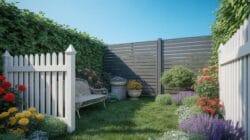
Think of flagstone maintenance like preventive medicine versus emergency surgery. In medicine, you catch problems early through screening. With patios, you catch problems through scheduled inspections and targeted repairs. A sealed joint stays intact. An unsealed joint lets water in, freezes, expands, and cracks the stone. This isn’t about being fussy. This is about understanding that stone is porous and reactive to its environment. You either control that reaction or the ground does.
Seal Joints, Not Stone
Stop telling people to seal flagstone itself. That’s incomplete advice and it shows a misunderstanding of how the material fails. The stone is fine. The joints are where water infiltrates, where ice forms, where weeds root, and where everything falls apart. This is where your attention goes.
Joint material degrades faster than the stone around it. Sand-based joints erode under foot traffic and weather. Polymeric jointing compounds hold longer but still require replacement every five to seven years in climates with freeze-thaw cycles. The protocol is straightforward: inspect joints every spring for gaps wider than an eighth inch, replace compromised material before winter arrives, and never skip this step because you think “it looks fine.” A patio that looks fine is usually one year away from needing expensive stone replacement.
Flagstone Ideas: Avoiding Common Aesthetic Traps
When Restraint Beats Decoration
You want the patio to feel intentional, not accidental. That desire is valid. But most people confuse intentionality with control, then over-plan every detail into visual noise. The mechanism is simple: the more decisions you make upfront, the more competing focal points you create. Flagstone’s natural texture and variation already do the work. Your job is to let it.

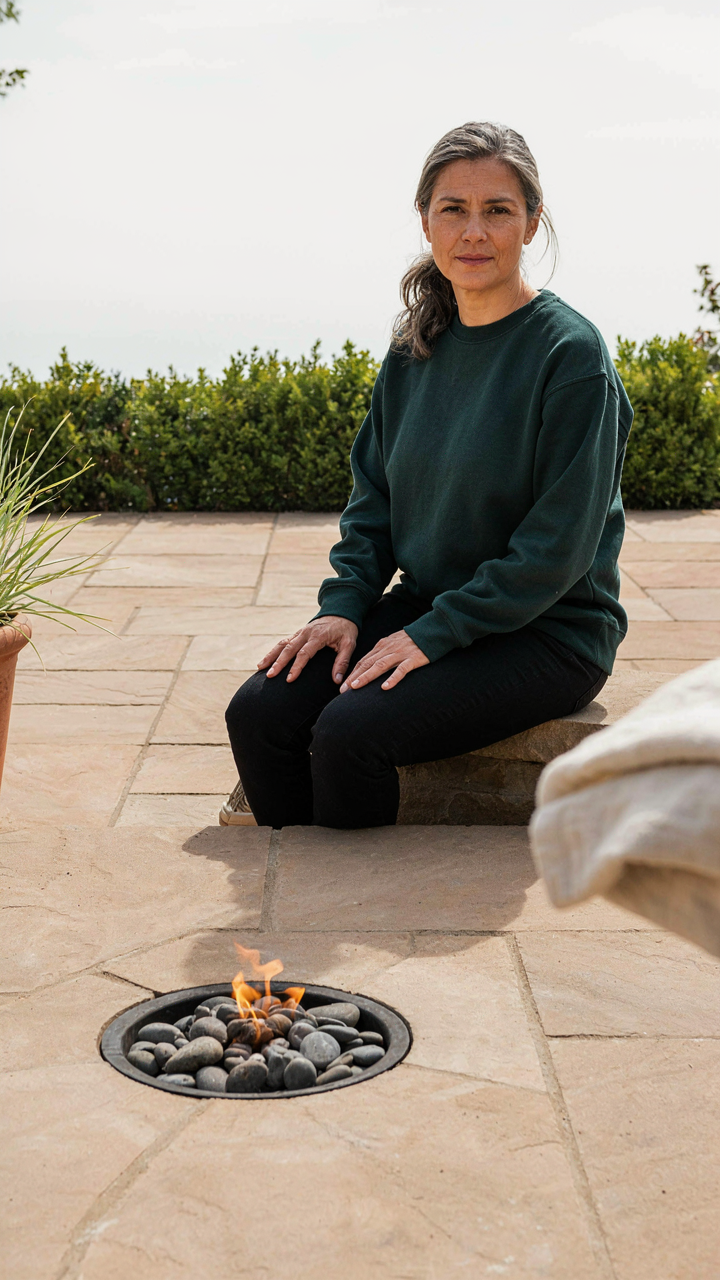
Restraint in patio design operates like signal-to-noise ratio in information design. Too many competing elements drown out the strongest one. A single material type, consistent joint width, and one accent feature (a fire pit, a bench) outperform scattered color, mixed stone sizes, and decorative borders. The eye settles faster. The space feels larger. This isn’t aesthetic philosophy. It’s how human perception processes visual information.
Material Contrast Without The Chaos
Don’t mix five materials thinking variety equals sophistication. It doesn’t. Successful flagstone patios use one primary material with one deliberate secondary element. The contrast must serve a function, not just exist for visual interest. Common advice says “layer textures for depth.” That’s incomplete. You layer textures to guide movement and define zones, not to fill empty space.
- Flagstone plus gravel edge: Creates a boundary without a hard border. The gravel is cheaper and allows water drainage. Keep the gravel width consistent, typically 2 to 3 feet maximum.
- Flagstone plus single-tone pavers for accent: Use a second material only at entries, around a focal point, or as a 12-inch trim. The secondary material must read as intentional, not afterthought.
- Flagstone plus decomposed granite joints: Functional and minimal. It compacts firm, drains water, and doesn’t compete visually with the stone itself.
- Flagstone plus steel edging: Modern. Defines the perimeter sharply. Works if the rest of the design is equally spare. Misses the mark in cluttered layouts.
- Flagstone plus living edge: Leave one or two sides irregular, bleeding into plantings. Creates softness without adding materials. Requires intentional planting discipline to avoid looking overgrown.
The decision point is this: every material you introduce must solve a problem, not decorate. If you can’t name the problem it solves, remove it. Your patio layout stays legible and the flagstone remains the dominant visual story.
Mastering The Art Of Subtlety: True Flag Stone Patio Mastery
The Restraint Principle
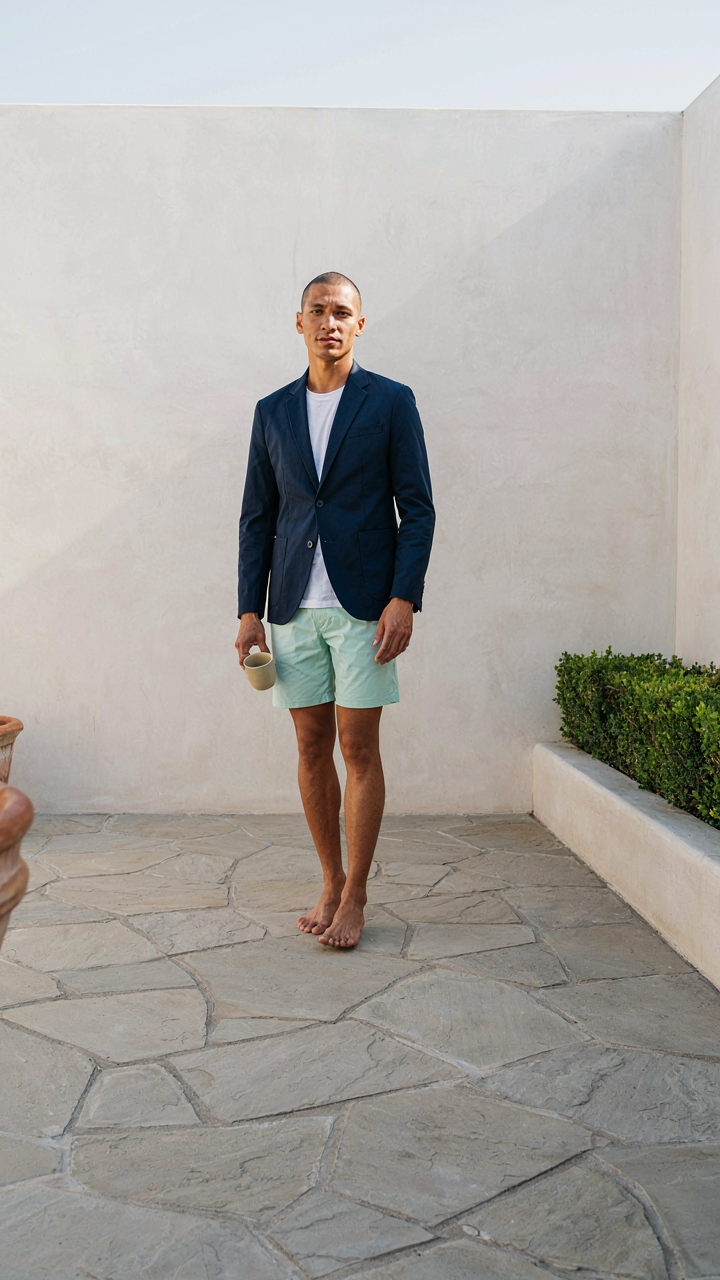
You want people to notice your patio without knowing why it works. That’s the real motive here. The mechanism is simple: restraint beats abundance. In architecture, the concept of negative space determines perceived value. Flagstone patios fail when designers cram texture, color variation, and pattern into every square foot. The strongest patios use one dominant stone size, limit color palette to two to three natural tones, and let large sections breathe without decoration.
The quietest patios feel expensive because they respect the eye’s need for rest. Lay 18×24 inch flagstones in a simple running bond or grid pattern. Mix in subtle color shifts only at edges or transitions. The stone speaks for itself when you stop shouting at the viewer.
Touch Over Trend
Sensory design in hospitality and retail uses surface variation to trigger memory and comfort. Apply this to flagstone: what the body encounters matters more than what the eye sees first. Walking barefoot or in sandals across your patio should reward the foot with texture, not punish it with sharp edges or uniform flatness.
Brushed flagstone surfaces hold your foot slightly, creating micro-grip without appearing rough. Tumbled edges round the corners that would otherwise catch. Laying stones with a slight lip variation (quarter inch between adjacent pieces) creates shadow and tactile interest without looking chaotic. The path people naturally walk should feel intentional, inviting repeated use by foot and by eye.
The Real Obstacle Isn’t The Stone; It’s Your Predictable Thinking
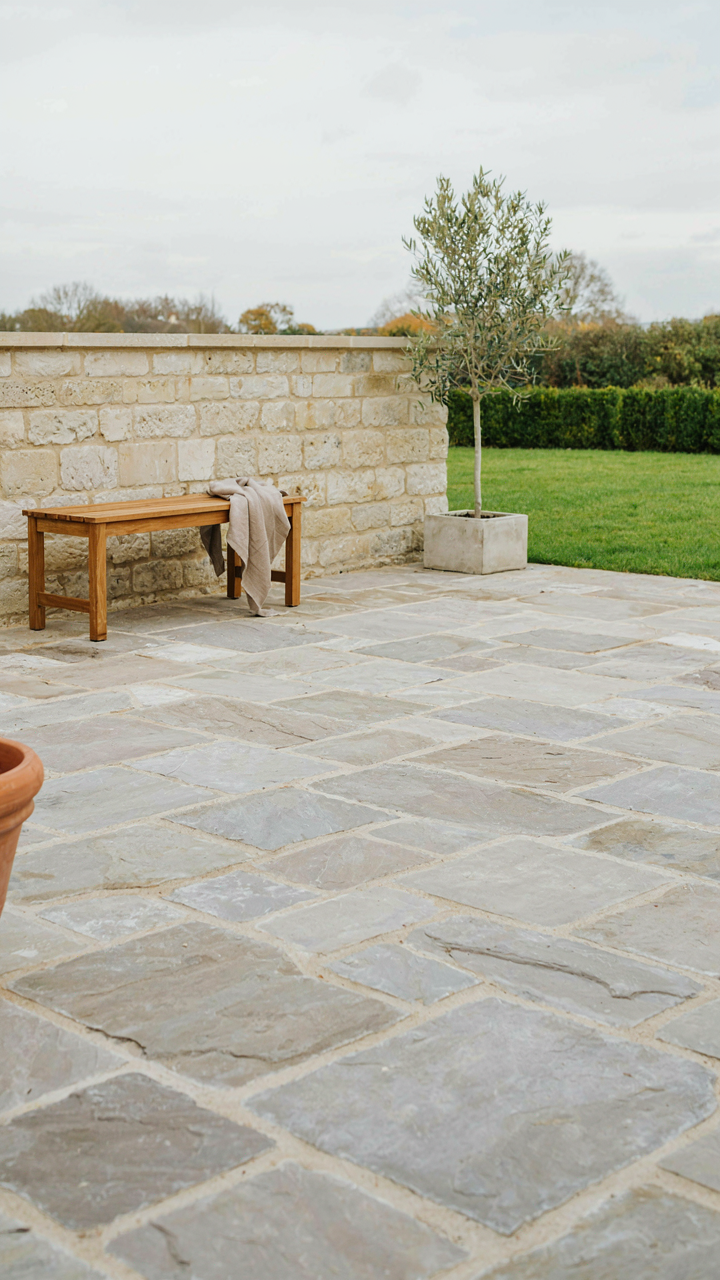
Most people see flagstone and think “patio.” They copy what everyone else built. You see it differently now. The stone doesn’t dictate your space, your imagination does. Stop scrolling inspiration boards and go stand on your land for twenty minutes. Notice the light, the slope, the views. Then build something that couldn’t exist anywhere else. Your patio isn’t a design choice, it’s a statement about who you are.