The Core Philosophy Of Pollinator Garden Design For Autumn
Structural Interest
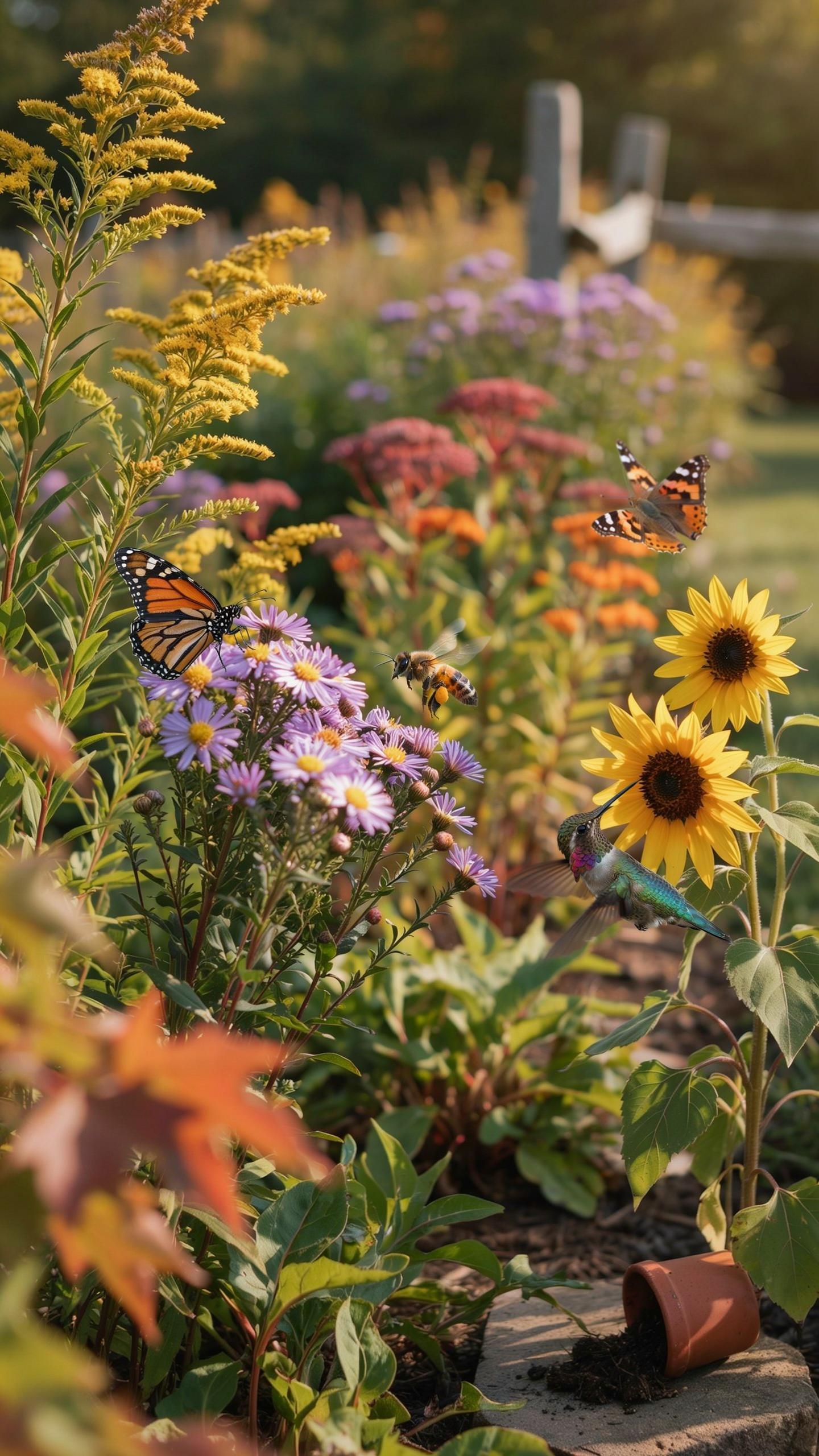
A fall pollinator garden requires deliberate layering of vertical elements and plant architecture. Dead stems, seed heads, and woody structures provide insect overwintering sites. Perennials that retain their form through winter create shelter for beneficial insects during dormancy. Strategic spacing between plants allows air circulation while maintaining protective microclimates. This approach balances aesthetics with function by keeping structural elements visible rather than cutting everything back in late fall.
Hardscape placement matters equally to plant selection. Rocks, logs, and bare ground patches offer hibernation sites for solitary bees and ground beetles. Garden structure designed with autumn in mind reduces maintenance work in spring while supporting wildlife survival through winter. The goal is creating an environment where insects can shelter, not just where flowers bloom.
Native Fall Bloomers
Native autumn flora evolved alongside local pollinator species over millennia. Fall-blooming natives produce pollen and nectar during critical migration periods when food sources become scarce. These plants require minimal amendment once established since they adapted to your soil and climate. Selecting native species eliminates guesswork about hardiness, water needs, and pest resistance. Local pollinators recognize these plants as reliable food sources.
Using native fall bloomers strengthens regional pollinator populations during their most vulnerable season. Many native asters, goldenrod, and Joe-Pye weeds peak when non-native ornamentals decline. These plants support monarch butterfly migration, native bee colonies, and beneficial insects preparing for winter. Native species also produce seeds that feed birds through colder months, creating extended ecological value beyond the flowering period.
Pollinator Garden Ideas For Late Season Aesthetics And Ecological Value
Color Palettes
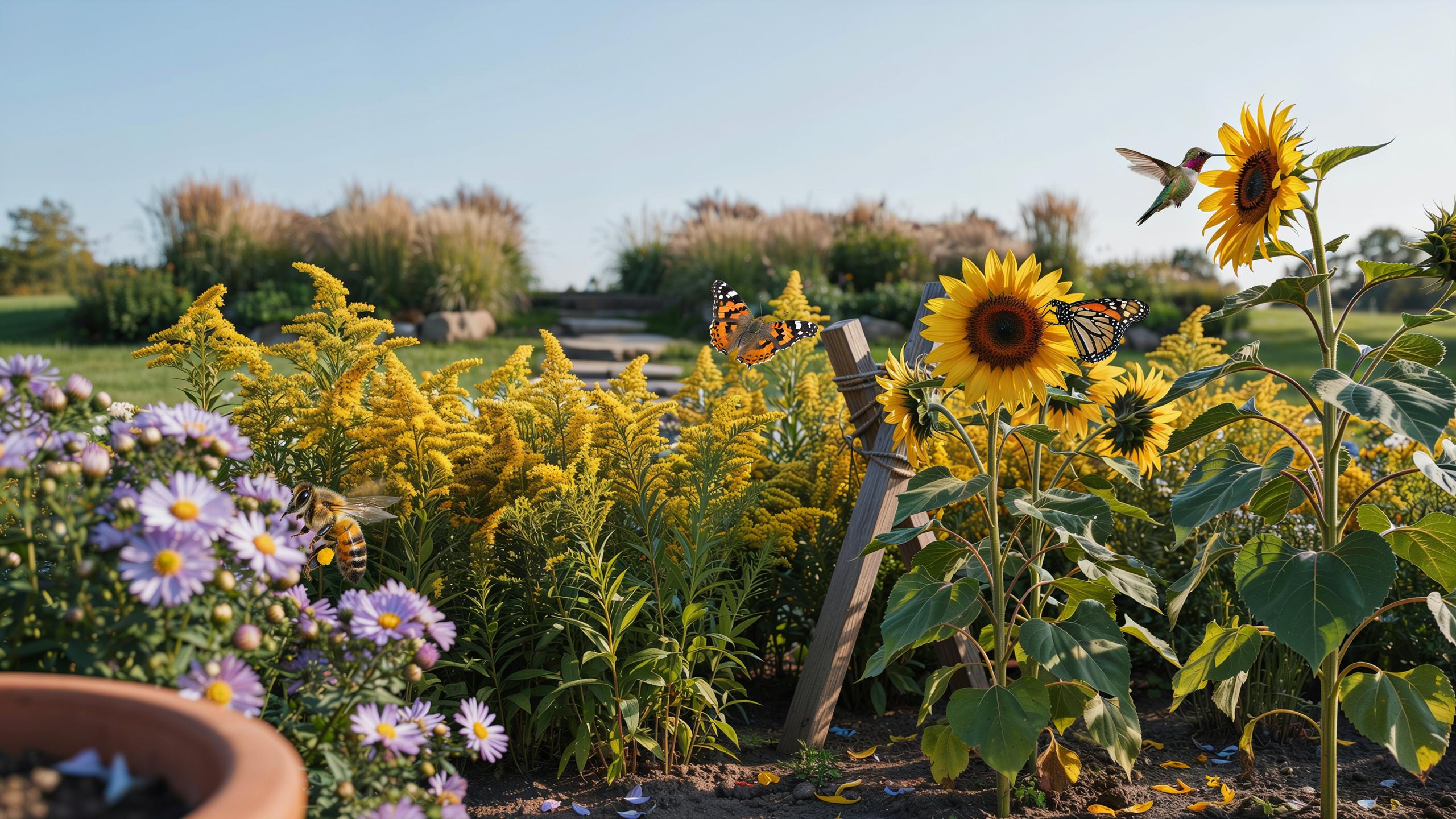
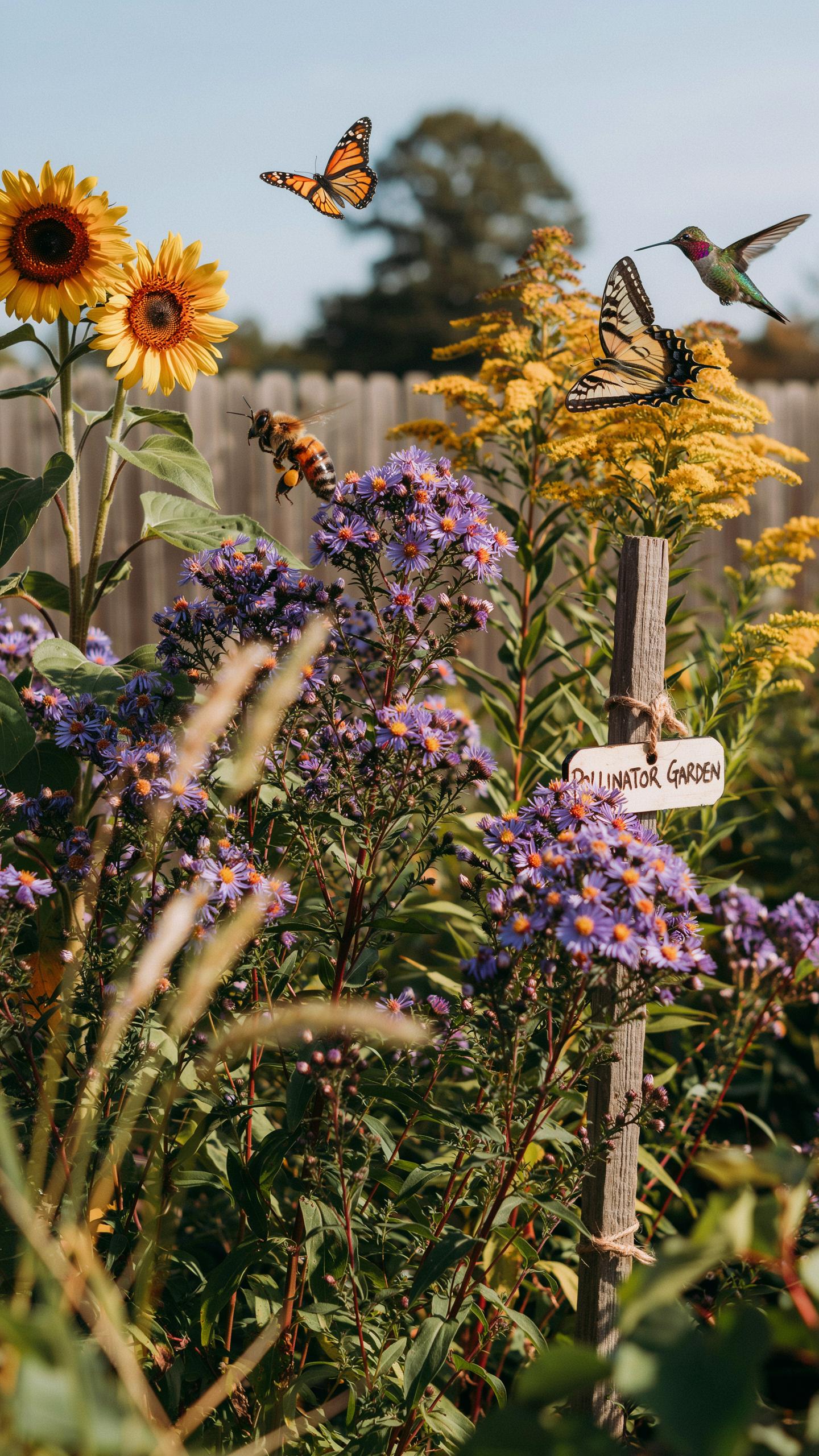
Asters and goldenrods dominate fall pollinator gardens for good reason. Asters bloom from August through November depending on species and location. Goldenrods flower September through frost. Both attract late-season pollinators actively foraging before winter. Purple, pink, and white asters pair functionally with yellow goldenrods. This color combination reflects what native pollinators recognize and seek during resource scarcity.
The visual impact matters less than bloom timing and nectar availability. Asters like Symphyotrichum novae-angliae produce dense flower clusters pollinators exploit efficiently. Goldenrods like Solidago rugosa sustain insect populations into November. Plant these together in drifts of fifteen to twenty plants per species. This density creates recognizable resource patches pollinators can locate and work systematically.
Seed Heads
Leaving seed heads standing through winter supports overwintering insects and early spring pollinators. Many native bees, beetles, and beneficial wasps shelter inside hollow stems of asters and goldenrods. Seed heads also provide food for birds and small mammals that control pest populations come spring. Do not cut plants back in fall. Leave them standing until April when new growth emerges.
Seed head persistence directly correlates with insect survival rates in temperate regions. Research confirms that gardens retaining standing stems support thirty to forty percent more overwintering insects than cleaned-up gardens. Hollow-stemmed plants like asters create ideal cavities for tube-dwelling bee species. The seed head approach requires zero additional work beyond not cutting. This strategy simultaneously builds pollinator populations and reduces fall labor demands.
Plants For Bees And Butterflies That Shine In Fall
Top Fall Plants List
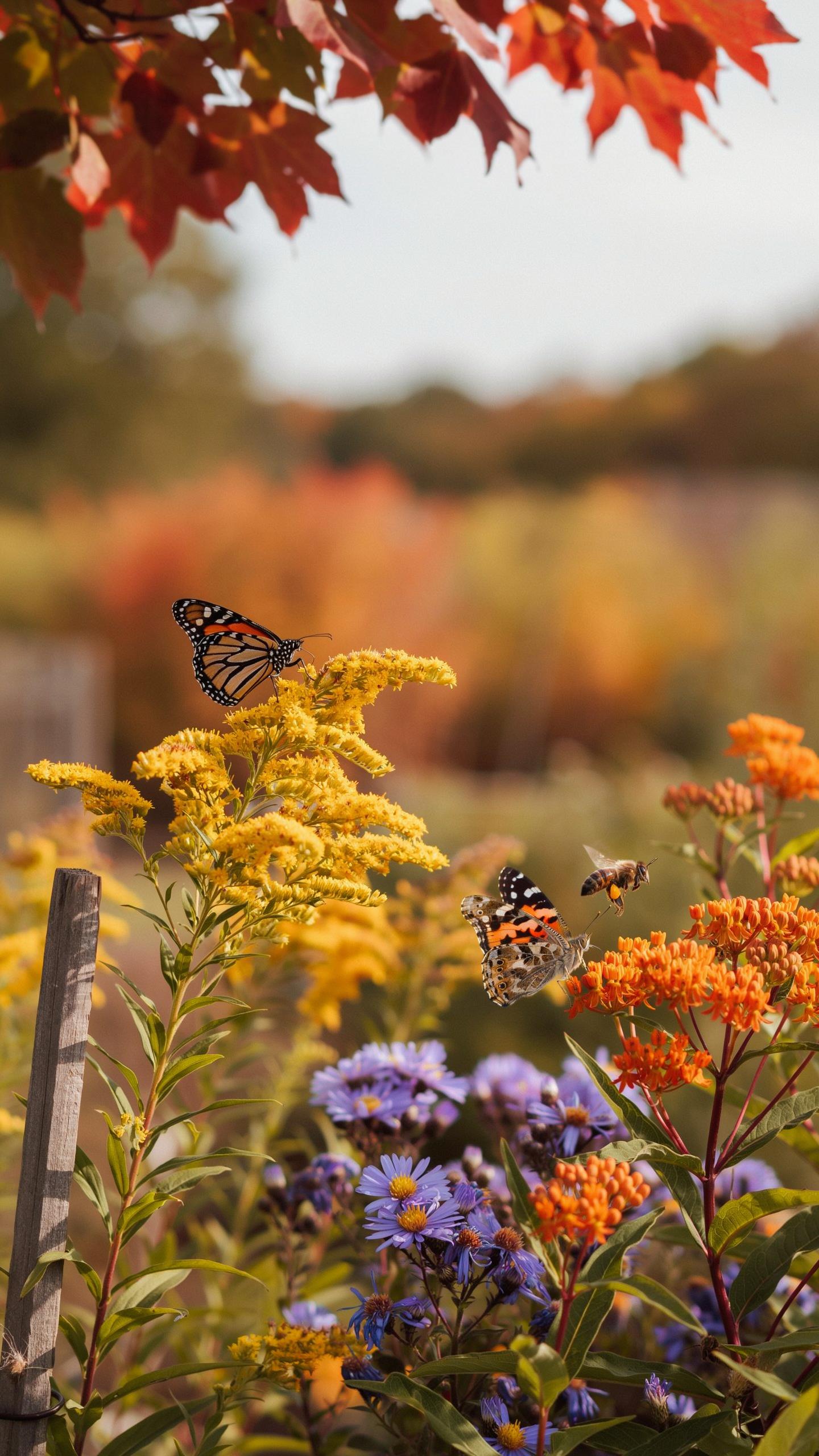
Fall bloomers fuel migrating monarchs and native bees during critical resource gaps. Most nectar sources disappear by late September, forcing pollinators to travel farther or starve. Strategic plant selection closes this gap and supports survival through winter preparation phases.
- Asters (Symphyotrichum species): These native plants bloom September through November, providing dense nectar when few alternatives exist. They support monarch migration and fuel native bee colonies preparing for dormancy.
- Joe Pye Weed (Eutrochium): Tall structure reaches five to seven feet with pink flower clusters. Blooms extend through October and attract numerous bee species and butterflies seeking late-season resources.
- Blazing Star (Liatris): Purple to pink spikes flower from August into November. Native to prairies, it tolerates poor soil and delivers concentrated nectar bees efficiently harvest.
- Black Eyed Susan (Rudbeckia): Yellow blooms persist through hard frost in many regions. Seeds remain available for finches while nectar supports late-migrating monarchs and native pollinators.
- Ironweed (Vernonia): Deep purple clusters emerge in late August and last through October. This native perennial attracts swallowtails and other butterfly species during peak migration periods.
Fall plant selection requires matching bloom timing to pollinator needs. Plant in groups of five or more to create visual targets bees and butterflies locate quickly. This density reduces energy expenditure during foraging, critical when temperatures drop and resources diminish.
Every fallen leaf is a whisper of the earth’s rest, but the late blooms are a promise that the dance of the bees never truly ends. Even as the air cools, the golden light of autumn turns a well-tended garden into a sanctuary of enduring life.
Symphyotrichum Species
Symphyotrichum species represent the backbone of fall pollinator forage across North America. Native asters bloom when gardens go dormant, providing essential calories during monarch migration and bee preparation for winter. These plants evolved alongside native pollinators, creating synchronous timing that supports population survival.
Aster blooms range from August through November depending on species and climate zone. Symphyotrichum novi-belgii flowers mid-September onward in northeastern regions. Symphyotrichum ericoides blooms later, extending resources into November. This staggered timing maximizes forage availability across the full migration window and winter preparation period.
Designing Dynamic Garden Borders To Define The Autumn Landscape
Layering Herbaceous Perennials And Ornamental Grasses For Depth
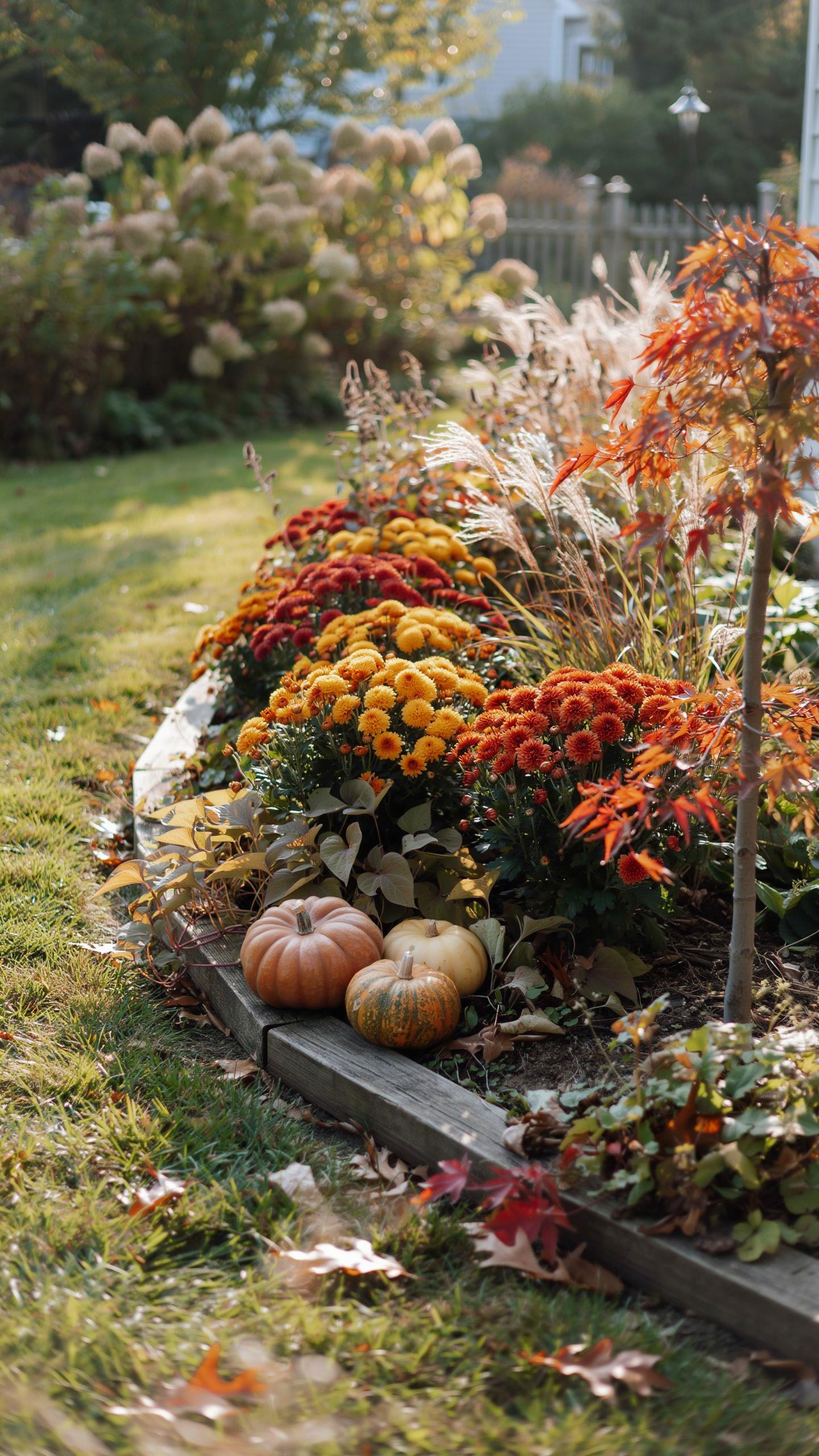
Layering creates visual depth and extends bloom times across fall months. Plant tall grasses in back rows, mid-height perennials in middle sections, and low-growing plants in front. This three-tier structure maximizes light exposure for each plant. Grasses like Panicum and Miscanthus provide structural support and movement. Perennials such as asters and sedums fill gaps with color and texture.
Spacing matters more than density when layering. Plants need room to reach mature width without crowding. Overcrowded borders trap moisture and invite disease. Stagger plantings so mature sizes don’t overlap. This approach reduces maintenance while increasing pollinator access to flowers and landing surfaces throughout the border.
Creating Smooth Transitions From Summer Annuals To Hardier Fall Perennials
Remove summer annuals strategically rather than all at once. Pull spent plants incrementally as fall perennials peak. This prevents bare patches and maintains continuous bloom. Annuals like zinnias and dahlias fade by late September in most zones. Replace them with chrysanthemums and goldenrod that thrive in cooler temperatures.
Timing the transition depends on your climate zone. Northern zones shift plants in late August to early September. Southern zones wait until October or November. Overplant fall perennials among summer plants four to six weeks before the first frost. This overlap hides dying annuals while new plants establish roots and settle into the border structure.
Innovative Pollinator Garden Layout Ideas For Small And Large Spaces
Meadow Style Layouts
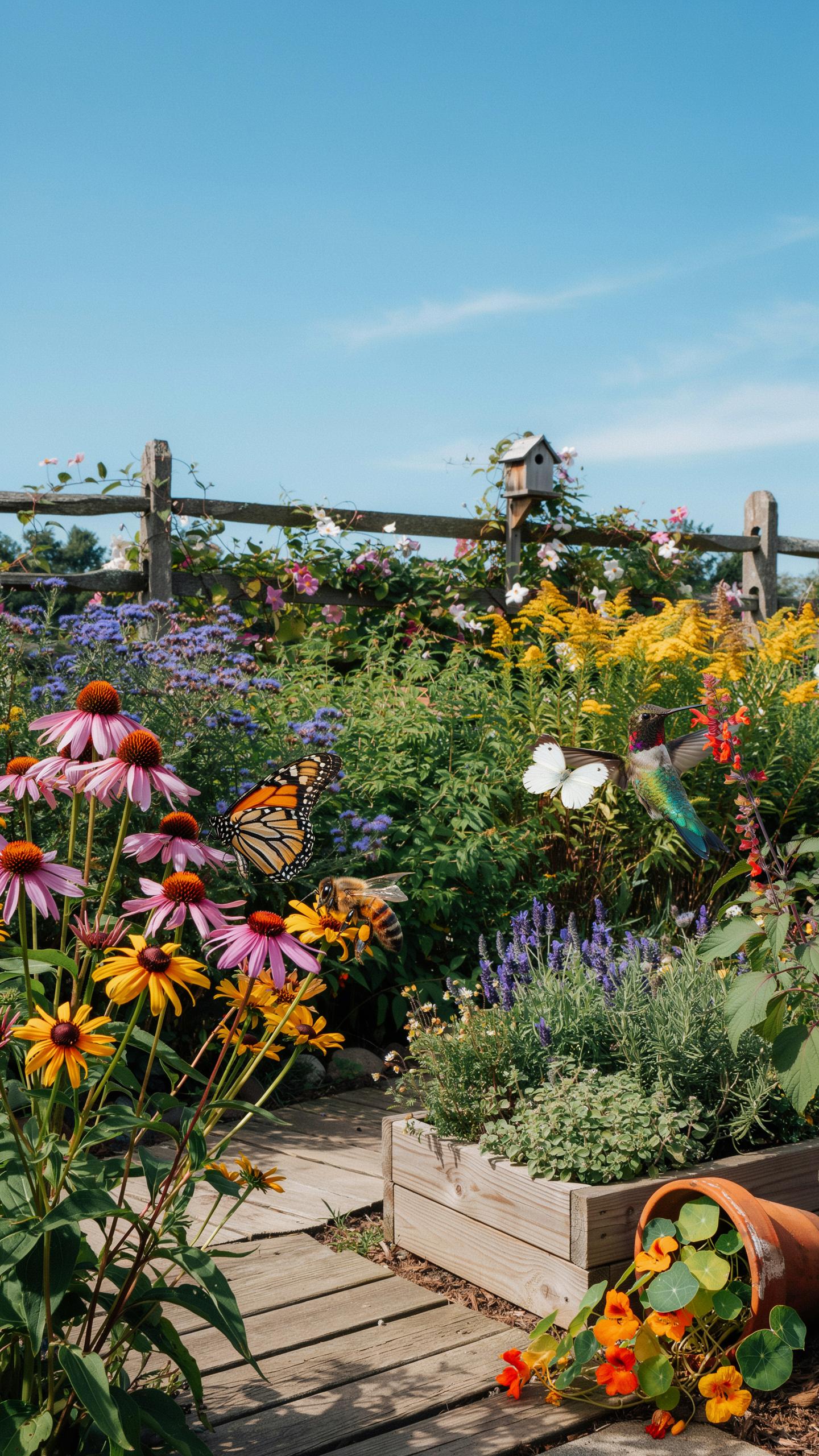
Naturalistic pocket meadows work because they mimic how pollinators actually forage in the wild. Skip rigid grids. Instead, cluster fall bloomers in drifts of three to five plants. Curving paths force pollinators to move through the garden, exposing them to more flower varieties. This layout demands less maintenance than formal beds and creates continuous bloom cycles.
Curving paths serve a tactical purpose beyond aesthetics. They break sightlines and make small spaces feel larger. Width your paths two to three feet for comfortable access and equipment movement. Plant fall bloomers like asters, Joe-Pye weed, and Echinacea on both sides of curves to create natural viewing zones. The irregular layout reduces wind damage and improves pollinator navigation through dense plantings.
Formal Layouts
Formal gardens integrate fall bloomers through defined beds, symmetrical arrangements, and structured repetition. Late-season bloomers like sedums and ornamental grasses anchor corners and edges in formal designs. Use fall bloomers as underplanting beneath spring-blooming shrubs to extend the ecological value of formal spaces. Grid-based planting creates visual order while supporting pollinator populations during critical autumn months.
Formal layouts require strategic sequencing to maintain design impact. Place tall fall bloomers like Helenium and Rudbeckia in back rows, mid-height varieties in middle sections, and short bloomers like Aster dumosus in front. This tiered approach preserves sight lines while delivering consistent nectar and pollen resources. Repeat plant combinations across beds to reinforce formal structure and maximize pollinator recognition of food sources.
Establishing A Robust Garden Pollinator Habitat Ideas And Practices
Habitat Creation Steps
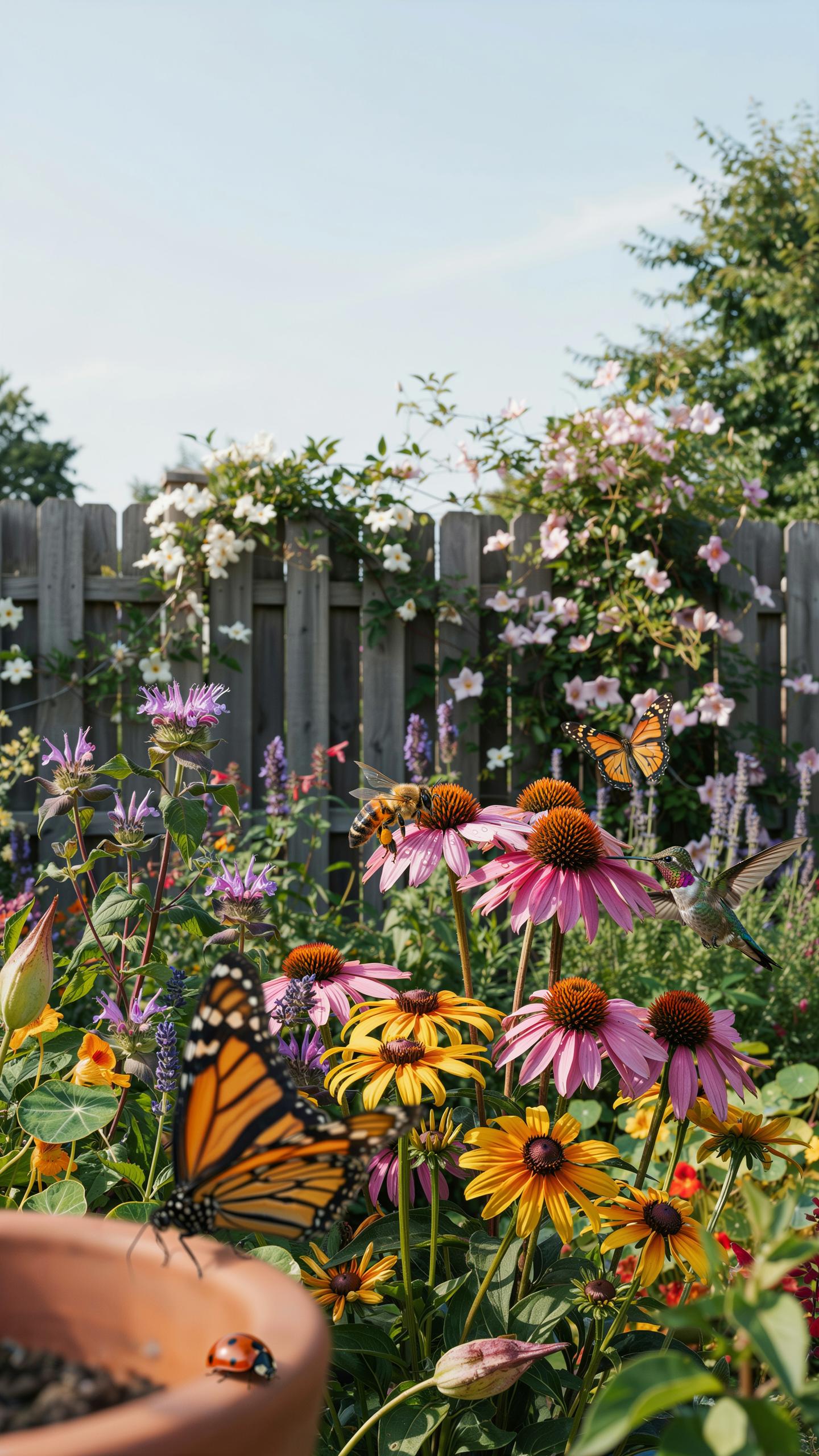
Pollinators need specific infrastructure to survive and reproduce in your garden. Nesting sites vary by species. Bees, butterflies, and other pollinators require different shelter types. Native bees nest in dead wood, hollow stems, and bare ground. Butterflies need host plants for caterpillars and protected areas for chrysalis formation.
- Dead wood piles: Leave branches and logs undisturbed in garden corners. These provide tunnels for solitary bees and shelter for beneficial insects overwintering.
- Bee hotels: Install wooden blocks with drilled holes ranging from 3 to 10 millimeters in diameter. Position them in morning sun and protect from rain with roof overhangs.
- Bare ground patches: Maintain 5 to 10 percent of garden space without mulch or dense planting. Ground-nesting bees burrow into compacted soil and lay eggs in these areas.
- Hollow stem bundles: Bundle dried plant stalks like sunflowers and raspberries. Tie them together and mount horizontally at waist height for cavity-nesting insects.
- Native shrub windbreaks: Plant native shrubs and small trees to block harsh winds. These structures protect pupae and adult insects during fall weather shifts.
Winter shelter requires strategic placement and timing. Remove dead plant material only after spring emergence, typically late March through April depending on location. Leave seed heads and dried stems standing through winter months. This practice provides food sources and protected microhabitats during harsh conditions.
Water Sources Fall
Pollinators drink water throughout fall and need consistent access even during dry periods. Shallow water sources work best because deep water creates drowning hazards. Bees cannot swim and will drown in bird baths or standing water without landing zones.
Create puddling stations using shallow containers filled with sand or pebbles. Add water until sand becomes moist but not waterlogged. Place containers near flowering plants where pollinators forage actively in fall. Refresh water every two to three days to prevent mosquito breeding and bacterial growth. This setup mimics natural puddling behavior where insects gather minerals and hydration simultaneously.
Feeding Bees And Late Emerging Beneficial Insects
Pollen Quality
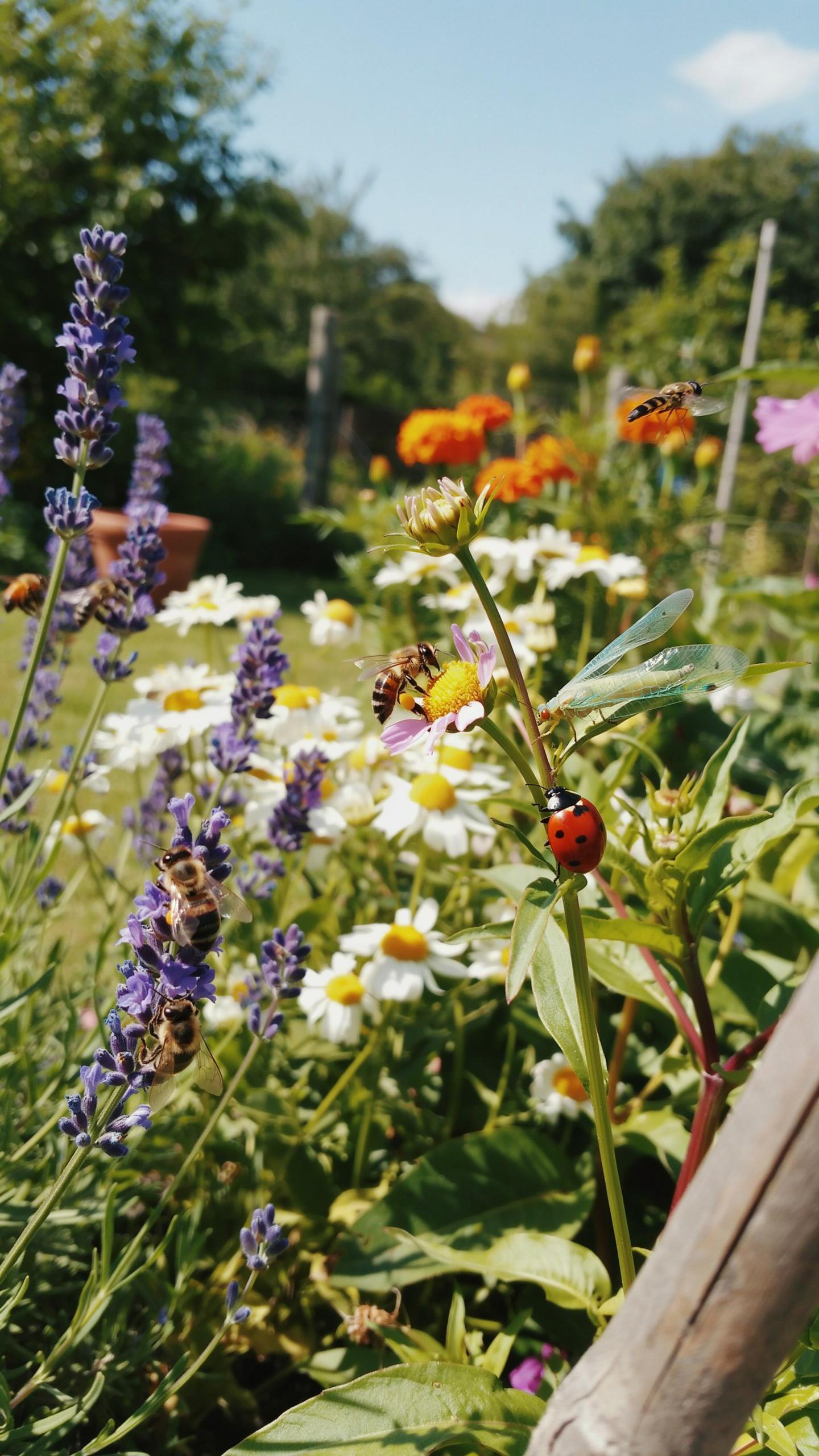
Late season pollen differs significantly from spring pollen in protein and micronutrient content. Fall bloomers produce pollen with varying amino acid profiles depending on species and growing conditions. Bees require specific amino acids for brood development and immune function. Pollen potency declines as temperatures drop, making nutritional density critical for survival preparation.
Nectar composition shifts in fall months. Higher sugar concentrations develop in cooler weather, requiring less foraging time for bees to meet caloric needs. Late bloomers like asters and goldenrod deliver reliable nectar flows when spring and summer sources vanish. Selecting plants with proven nectar yields ensures pollinators access adequate fuel during critical pre-winter weeks.
Bumblebee Queens Diet
Bumblebee queens enter hibernation in late fall after consuming massive amounts of pollen and nectar. A single queen must gain sufficient fat reserves to survive months without food. Fall bloomers provide the final nutrition window before queens seek underground hibernation sites. Queens that fail to access quality forage in September and October do not survive winter.
Fall pollen collection builds lipid stores essential for queen survival and spring colony founding. Worker bees prioritize queen feeding during late season foraging. Plants flowering from September through first frost directly impact colony survival rates. Gardens lacking fall bloomers force bumblebees to exhaust energy searching marginal food sources, reducing overwinter survival rates.
Integrating Natural Garden Pollinator Attractors Into Your Planting Scheme
Scent And Color Attractors
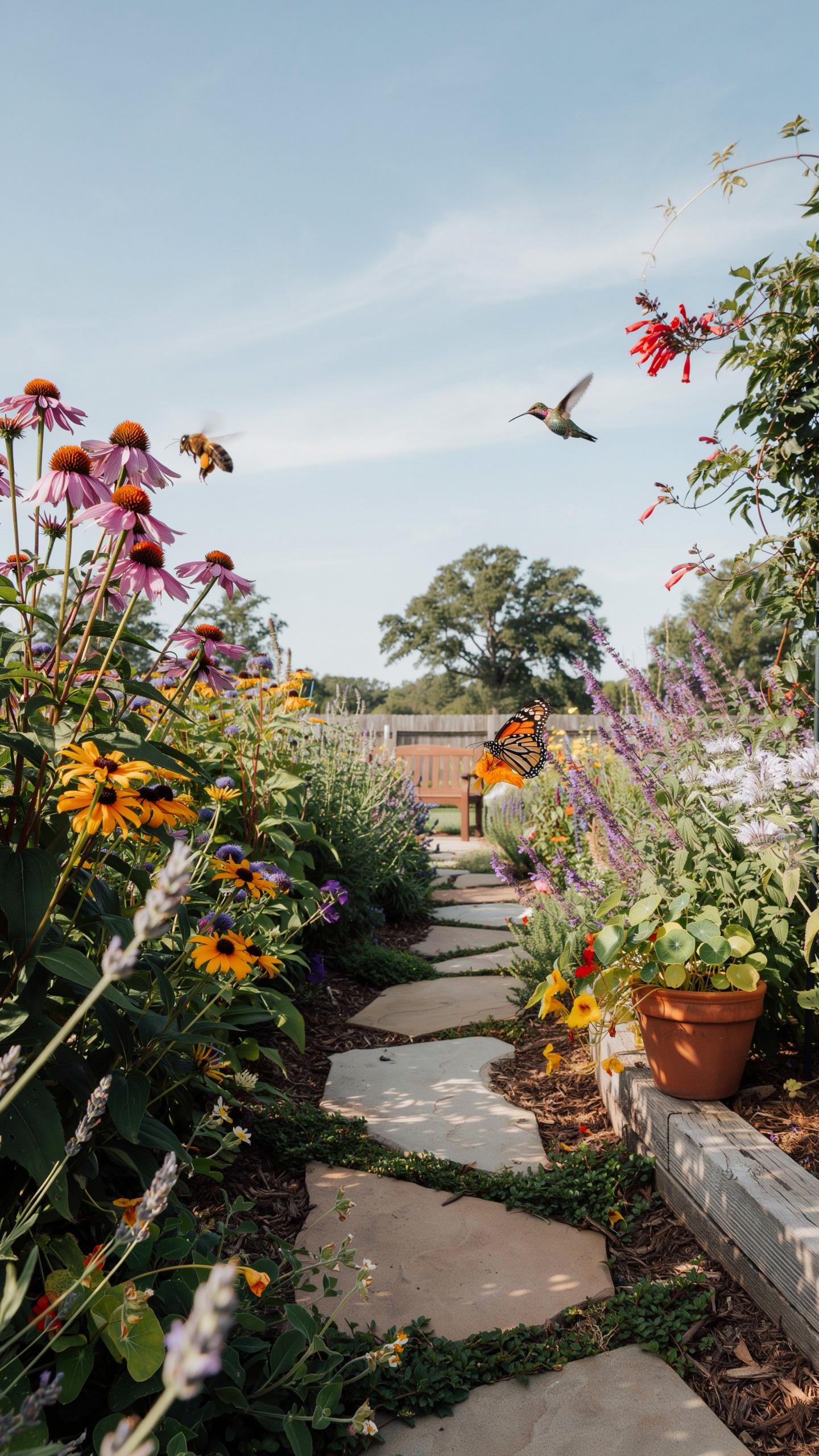
Pollinators navigate gardens using ultraviolet petal patterns invisible to human eyes. These patterns create landing guides that direct insects toward nectar and pollen. Fall bloomers like asters and goldenrod display these UV markers naturally. Scent compounds release most intensely during peak foraging hours, typically mid-morning through early afternoon. Bees prioritize scent cues when light conditions dim in fall months.
Intense scents work as chemical beacons across distances. Fragrant fall bloomers like Joe Pye weed and sedum release volatile organic compounds that travel downwind. Combine high-contrast petal colors with strong fragrance to maximize pollinator visits. Purple, blue, and yellow flowers produce the most effective scent-color combinations for fall foraging. Test scent intensity by visiting your garden during cool morning hours when compounds concentrate.
Companion Planting Attractors
Native shrubs like witch hazel and buttonbush anchor your fall garden structurally. Witch hazel blooms September through November, providing critical food when herbaceous plants decline. Buttonbush flowers July through September and attracts native bees, butterflies, and beetles. These shrubs create windbreaks that protect smaller fall bloomers from damage. Their woody stems support nesting sites for native bees entering dormancy.
Layer native shrubs with understory perennials to create feeding zones at multiple heights. Buttonbush reaches four to six feet tall while surrounding asters remain lower. This vertical structure captures pollinators at different flight levels. Witch hazel’s height provides shelter for fall bloomers below. Position shrubs on garden edges to establish borders that funnel pollinators toward central flowering areas.
Frequently Asked Questions

Why is it important to include late-season flowers in my garden layout?
Integrating fall-blooming plants is essential because many migratory species, like Monarch butterflies, require high-energy fuel for their long journeys. For the local ecosystem, a pollinator garden design fall bloomers focus ensures that bees can stock up on food before winter dormancy. By providing nectar in September and October, you bridge the critical resource gap that occurs after summer perennials fade, keeping your local habitat vibrant and resilient.
Which fall-blooming plants attract the most pollinators?
Asters, goldenrod, and sedum are among the most reliable fall bloomers for attracting bees and butterflies. Anise hyssop and Joe-Pye weed also stay in flower well into autumn and draw in a wide range of pollinator species. Native varieties tend to outperform ornamental cultivars for pollinator value, since local insects have evolved alongside them. Planting a mix of these species in drifts rather than single specimens makes them easier for pollinators to find.
How do I transition my garden from summer blooms to fall bloomers without bare patches?
Stagger your planting so late-summer perennials overlap with early fall bloomers by a few weeks, rather than relying on one wave of flowers to end before the next begins. Interplanting fall bloomers among your summer beds, rather than segregating them into a separate section, keeps the display continuous. Deadheading spent summer flowers promptly also encourages some perennials to rebloom into early fall, further smoothing the transition.