Why Container Garden Trellis Ideas Are The Future Of Urban Gardening
The Rise Of Vertical Growing In Small Spaces
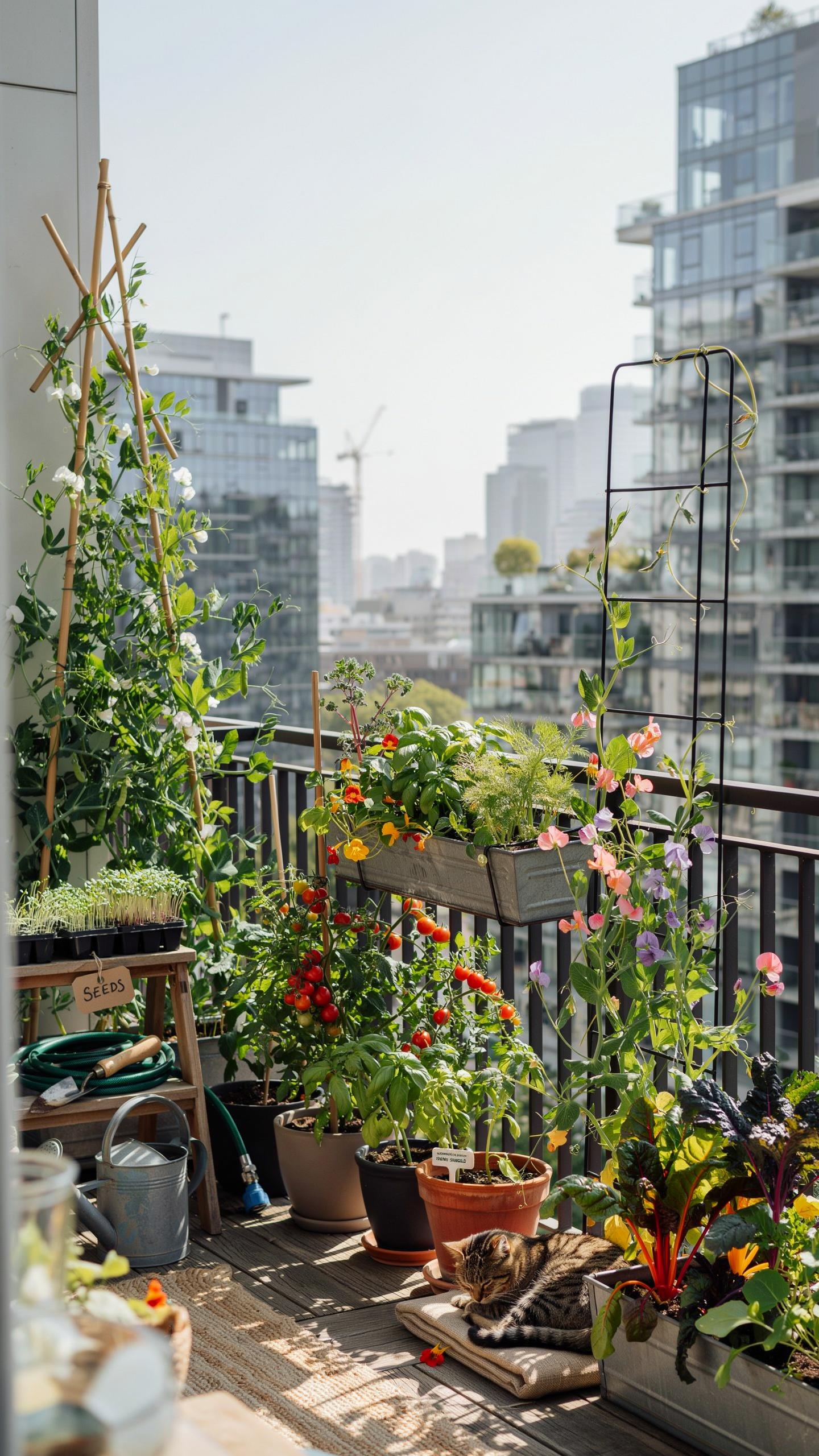
Urban populations face a major space deficit. Traditional horizontal gardening requires land that most city dwellers do not own. Vertical growing solves this problem by using height instead of width. This shift allows residents to produce food on balconies, patios, and fire escapes. Modern urban planning now incorporates green walls and vertical systems to improve air quality and reduce local heat levels.
Vertical systems rely on sturdy support structures to succeed. Growers use materials like cedar, steel, and bamboo to guide plant growth upward. This method mimics natural cliffside or forest edge environments where vines thrive. By moving plants off the ground, gardeners reduce soil-borne diseases and improve air circulation. This strategic use of space makes gardening possible for anyone with a small outdoor area and sunlight.
How Trellises Maximize Yield Without Expanding Your Footprint
Trellises force plants to grow toward the sun. This positioning ensures every leaf receives maximum light exposure for photosynthesis. When plants grow vertically, you can fit more crops into a single pot. Indeterminate tomatoes and climbing beans produce more fruit per square foot when supported. This efficiency is critical for urban farmers who want to maximize their caloric or economic output in tight quarters.
A vertical setup also simplifies the harvesting process. Fruit hangs at eye level rather than hiding under dense foliage on the ground. This visibility prevents over-ripening and reduces pest damage from slugs or rodents. Gravity helps drain water away from the main stem, which prevents rot. Using a trellis turns a single container into a high-production zone. It is a tactical move for high-yield gardening.
Getting Started With A Gardening Trellis In Containers What You Need To Know
Choosing The Right Container Size And Depth For Trellis Planting
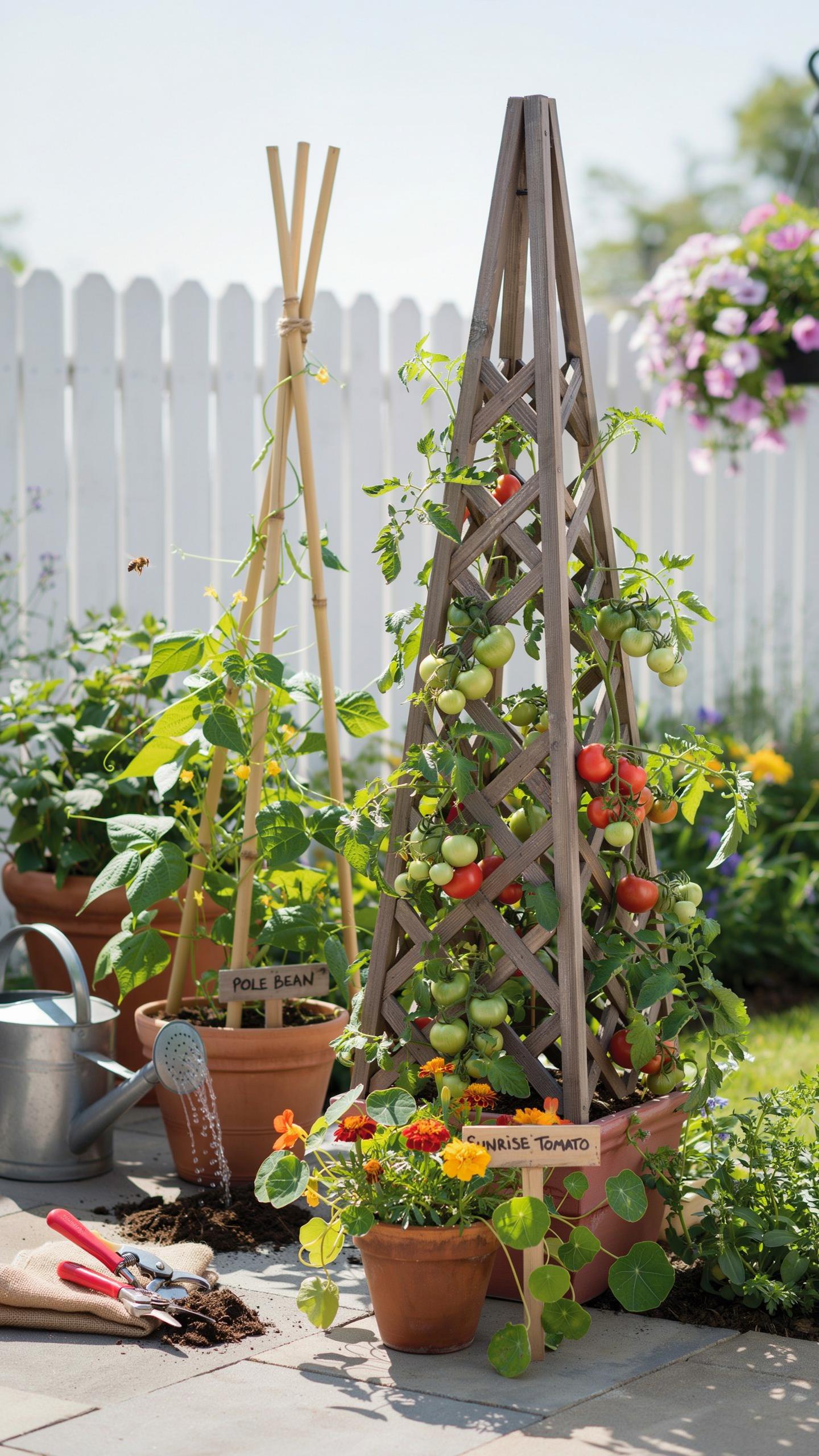
Container gardening with a trellis requires stability and volume. A small pot will tip over when the plant grows tall. Wind creates a sail effect against the trellis structure. You must select a heavy pot with a wide base to counter this leverage. Use a container that holds at least five gallons of soil for most climbing vegetables. This weight secures the vertical structure during storms.
Substrate depth dictates root health and plant height. Deep roots support taller vines and heavier fruit. Tomatoes and beans need at least twelve inches of soil depth to thrive. Shallow containers restrict nutrient uptake and lead to stunted growth. Ensure the pot has drainage holes to prevent root rot. Proper sizing ensures the root ball anchors the trellis firmly against the weight of the harvest.
Essential Materials And Tools For Building Or Installing A Container Trellis
Building a trellis requires durable materials that resist moisture and weight. Wood rot and rusted metal can ruin a crop mid-season. You must select materials based on the lifespan of the plant. Annuals work well with bamboo or light plastic. Perennials require cedar, redwood, or powder-coated steel for long-term durability. Quality fasteners prevent the structure from collapsing under the weight of wet foliage.
- Galvanized Wire: Use this for creating custom grids or mesh patterns. It resists rust and provides enough strength to support heavy vines like squash or cucumbers without snapping or sagging under pressure.
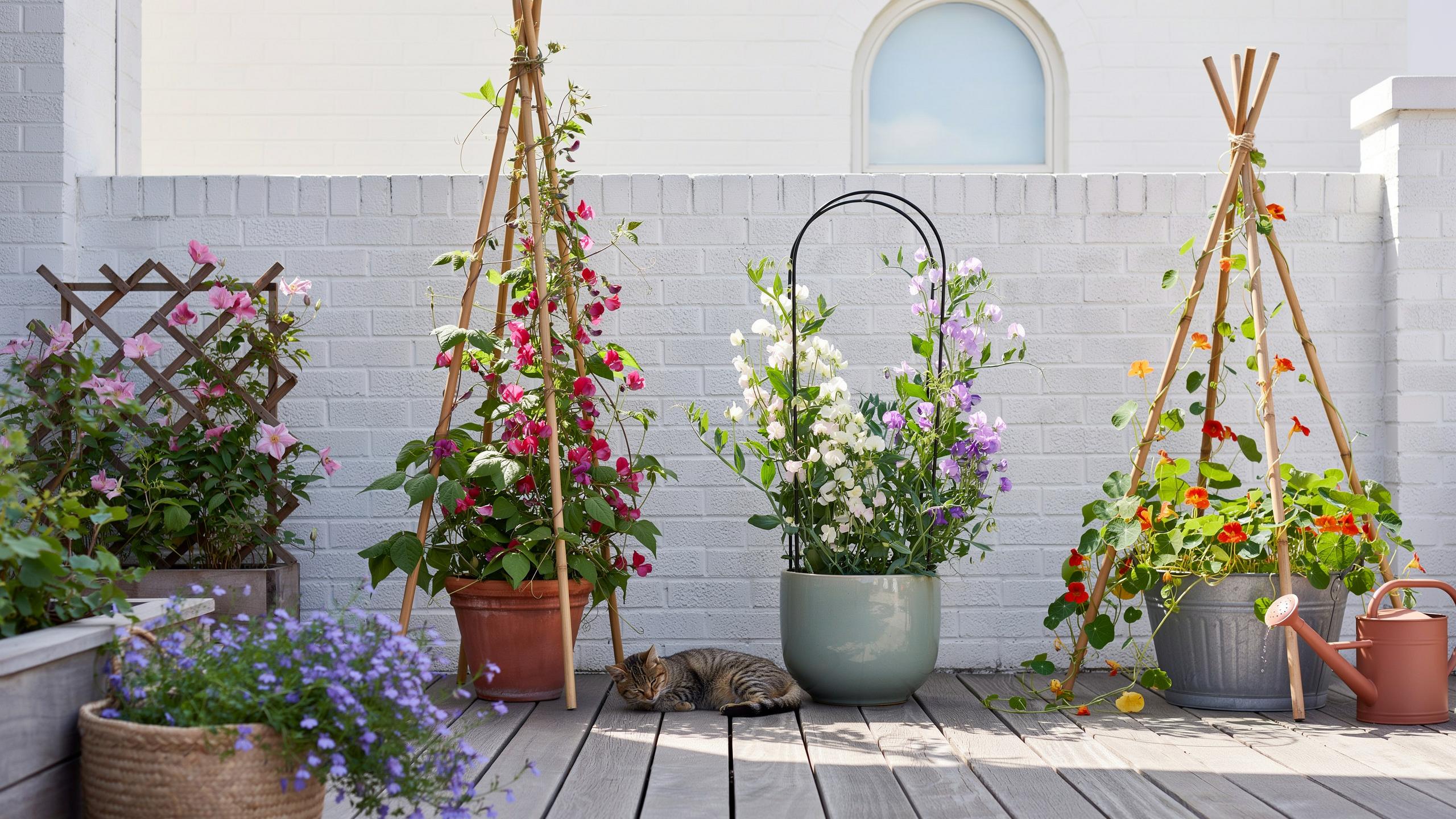
- Bamboo Stakes: These are affordable and lightweight for temporary structures. They work best for fast-growing annuals like sweet peas. Use natural twine to lash them together into a sturdy tripod or teepee shape.
- Cedar Battens: Choose rot-resistant wood for permanent installations. Cedar contains natural oils that prevent decay when in contact with damp soil. It provides a classic look and maintains structural integrity for several years.
- Zip Ties: These provide a fast and secure way to attach mesh to frames. Use UV-rated ties to ensure they do not become brittle and break after exposure to direct sunlight and heat.
- Power Drill: You need this tool to drive screws and create pilot holes in wooden frames. Proper drilling prevents wood from splitting. It also helps you secure the trellis directly to the container wall.
Installation technique determines the success of your vertical garden. You should anchor the trellis at least six inches deep into the soil. For maximum stability, bolt the structure directly to the rim of the container. This prevents the trellis from leaning as the plant grows. Check all connections twice a season to ensure the fasteners remain tight and the frame stays upright.
Cucumber Trellis Ideas For Container Gardens That Actually Work
Why Cucumbers Thrive On A Vertical Cucumber Trellis In Pots
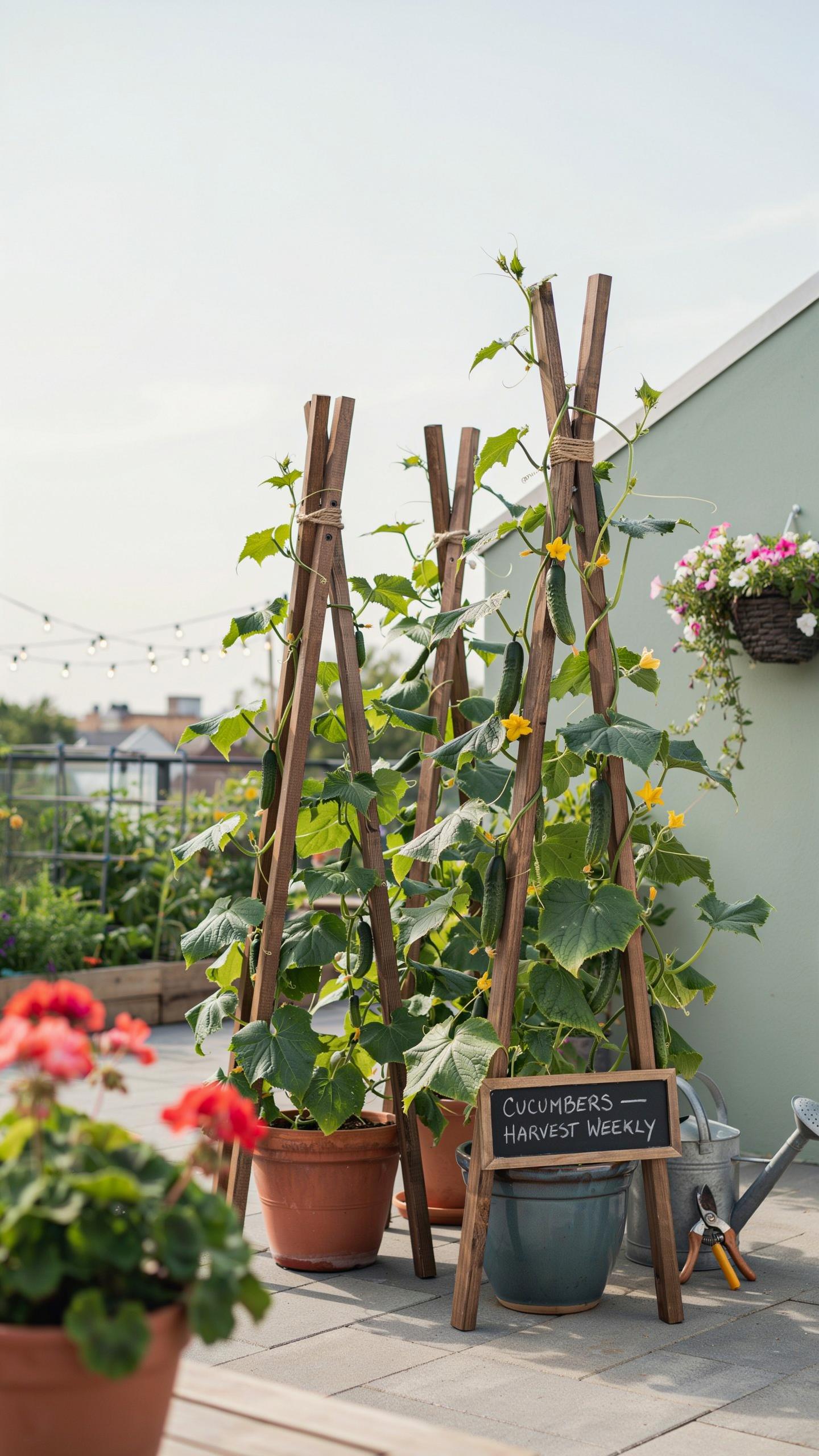
Vertical growing solves the primary threat to container cucumbers which is powdery mildew. Airflow around the leaves stays high when the vines climb upward rather than draping over pot edges. Improved ventilation keeps foliage dry and reduces fungal outbreaks. You also maximize limited floor space by forcing growth into the air. This allows you to grow high yield varieties in small pots that normally require large garden plots.
Cucumbers use specialized tendrils to grip support structures. These structures keep the fruit off the soil where pests and rot usually strike. Vertical fruit grows straighter and develops a more uniform color because sunlight hits all sides equally. Harvesting becomes faster because the cucumbers hang at eye level. You stop searching through dense ground foliage and start picking clean produce directly from the trellis wires or wood slats.
Top Cucumber Supports Trellis Ideas For Balconies And Patios
A-frame trellises and cattle panel arches provide the best stability for heavy vining crops on patios. You can lean two cedar frames against each other to create a self supporting structure. This design resists tipping during high winds. Metal livestock panels offer a rigid grid that supports the weight of large slicer cucumbers. Use heavy duty zip ties to secure these frames directly to your containers for maximum physical leverage.

Teepees made from bamboo or rot resistant cedar stakes work well in deep round pots. Space three or four stakes around the inner rim and tie them at the top. This cone shape creates a stable center of gravity for the container. String or netting wrapped around the stakes gives the tendrils extra points to grab. This method prevents the top heavy vines from pulling the entire pot over during the peak summer growing season.
Wooden Trellis Designs Building A Vegetable Garden With Wooden Trellises In Pots
Types Of Wood That Hold Up Best In Outdoor Container Environments
Wood choice determines the lifespan of a container trellis. Cedar and redwood offer natural resistance to rot and insects due to their inherent oils. These species withstand wet soil contact better than pine or spruce. Use heartwood for the longest durability. Untreated softwoods decay rapidly in damp potting mixes. Choose these durable woods to avoid chemical leaching into your edible garden soil.
Tropical hardwoods like ipe or teak provide maximum density and strength. These woods resist decay for decades but represent a higher cost. Avoid pressure treated lumber in vegetable containers because of potential heavy metal contamination. White oak is another viable alternative because of its tight grain and water resistance. Always seal the wood with food safe oil to extend the life of your vertical structure.
DIY Wooden Trellis Styles That Blend Function With Aesthetic Appeal
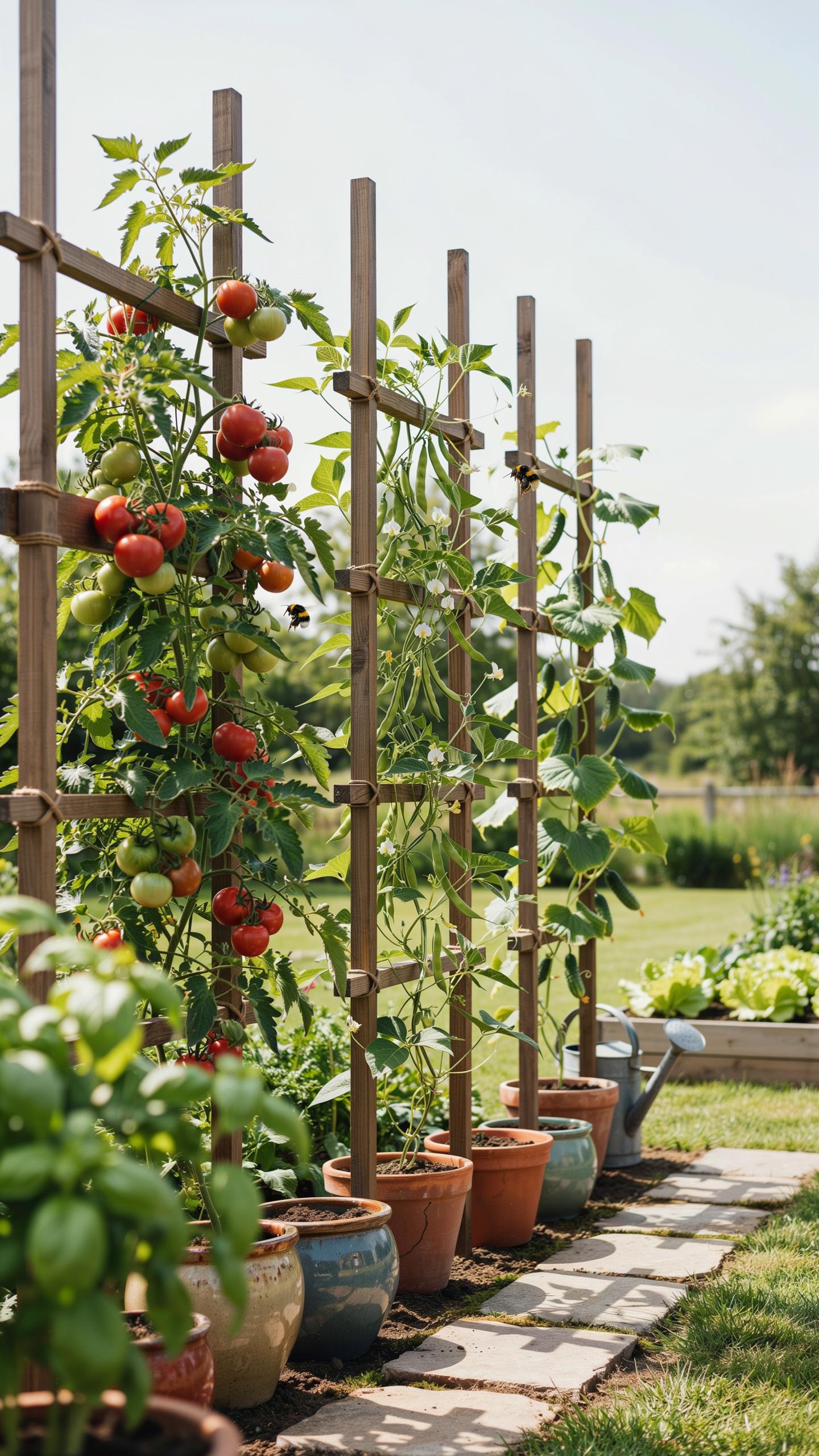
The obelisk design offers the most stability for heavy fruiting crops like tomatoes. This four sided pyramid distributes weight evenly toward the center of the pot. It mimics the formal English garden style while providing multiple grip points for climbing vines. Build these using cedar strips and galvanized screws. Secure the base deep within the container to prevent the structure from tipping.
The fan trellis works best for flat surfaces or wall adjacent pots. These structures allow for maximum airflow and light penetration across the foliage. Horizontal rungs support lateral growth which increases vegetable yields. Practical DIY builders use the ladder method for peas and beans. This simple design uses vertical stakes with crossbars. It provides a clean look and makes harvesting easier during the peak growing season.
Trellis Flowers In Containers Adding Color And Vertical Drama To Your Garden Set Up Ideas
Best Flowering Climbing Plants For Container Trellises
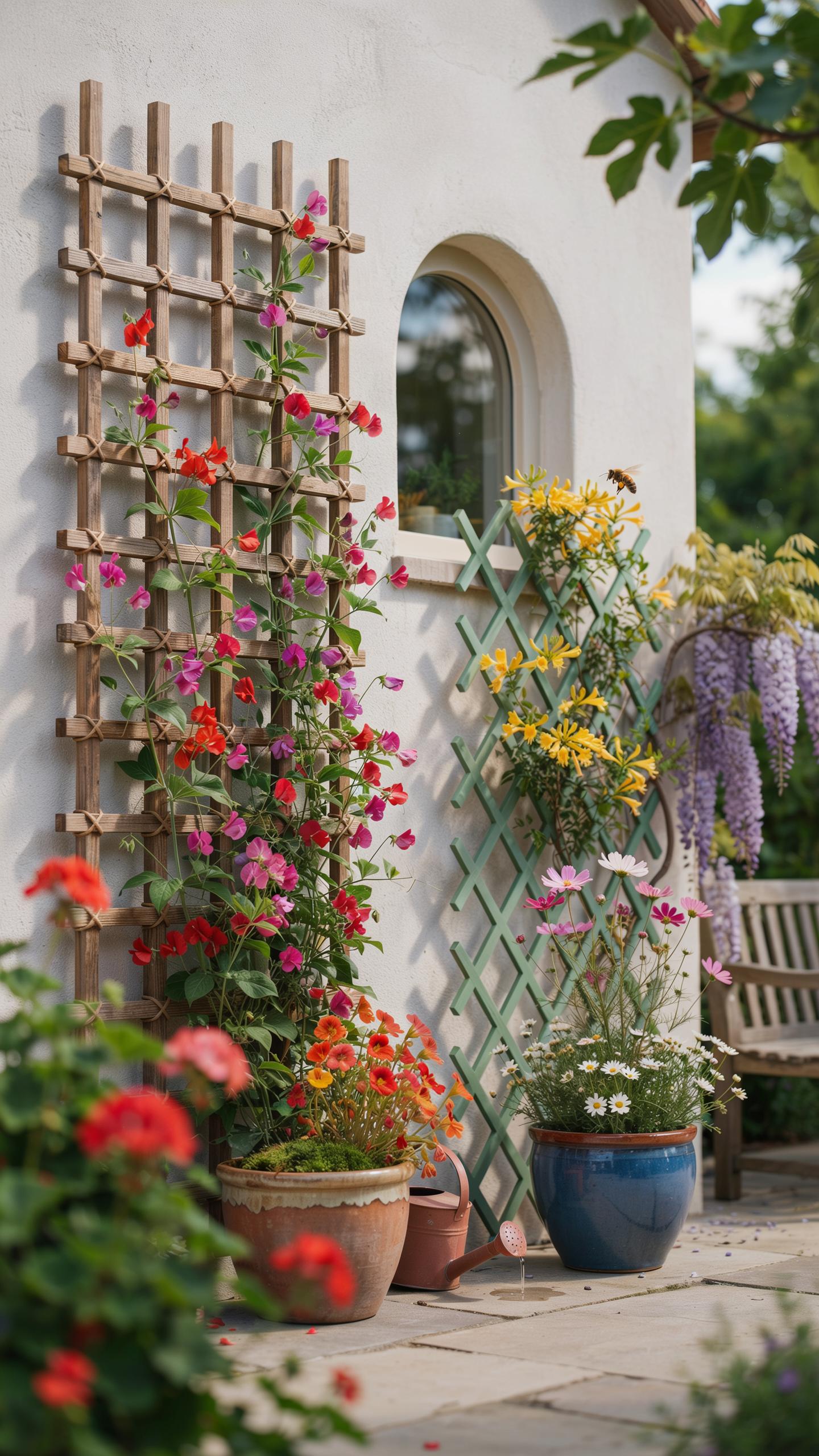
Select species based on root depth and growth habit. Clematis remains the standard for temperate zones. It requires cool roots and warm foliage. Use a deep pot to insulate the root ball. Annuals like Black-eyed Susan vine grow fast. They provide immediate cover in one season. Ensure the support structure matches the plant grip style. Some plants use tendrils while others twine their stems.
Mandevilla and Bougainvillea thrive in hot climates. These plants need sturdy wood or metal supports. Their woody stems become heavy over time. Sweet peas offer fragrance but require early planting in cool weather. Always match the mature weight of the plant to the container base. A top-heavy plant will blow over in high winds. Use heavy ceramic or stone pots for tall flowering perennials.
How To Train Trellis Flowers For Maximum Visual Impact In Small Spaces
Start training vines early in the growth cycle. Use soft garden twine to secure main stems to the frame. Do not tie the knots too tight. Stems need room to expand as they age. Direct the growth horizontally to encourage more blooms. This technique breaks apical dominance. It forces the plant to produce side shoots. More side shoots result in a denser wall of flowers.
Prune dead or weak wood to maintain airflow. Good air circulation prevents powdery mildew in crowded spaces. Monitor the moisture levels daily because containers dry out fast. Vertical plants lose water through their leaves quickly in the sun. Apply a balanced liquid fertilizer every two weeks during the blooming stage. This sustains the energy required for constant flower production. Keep the trellis clean to prevent disease spread.
Cucumber Bed Ideas Reimagined Raised Container Beds With Built In Trellis Systems
How Raised Container Beds With Integrated Trellises Improve Air Circulation And Sun Exposure
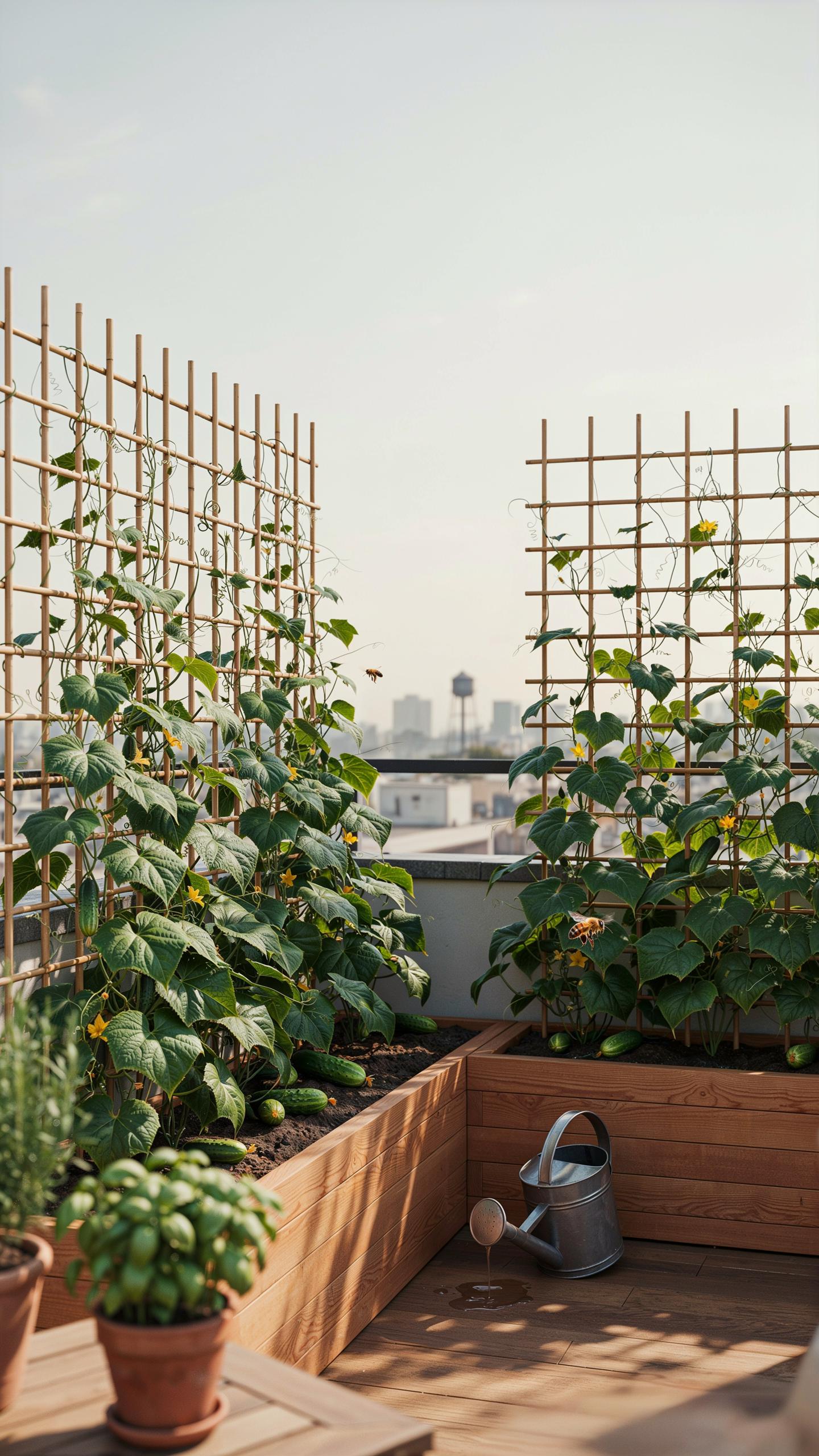
Raised container beds with built-in trellises optimize the vertical plane. Lifting vines off the soil prevents moisture buildup around the stems. Proper air movement creates a dry environment that stops fungal pathogens like powdery mildew from spreading. You gain total control over the microclimate by elevating the foliage. This tactic reduces the risk of soil-borne diseases that often kill ground-trailing crops prematurely.
Vertical growth systems maximize light interception for each leaf. Sunlight hits the entire plant surface instead of just the top layer of a tangled mat. This direct exposure speeds up photosynthesis and fruit development. You eliminate shaded zones where pests typically hide and breed. Strategic trellis placement ensures the sun reaches every part of the cucumber plant. Consistent light leads to uniform fruit color and higher quality.
A garden is a grand adventure, and even the smallest trellis creates a sanctuary where nature dances upward toward the sun.
Planning A Cucumber Bed Layout That Supports High Yield Container Growing
A high-yield layout requires precise spacing within the raised container. Place the trellis on the north side of the bed to prevent it from casting shadows on shorter companion plants. Use heavy duty materials like cedar or powder-coated steel to handle the weight of mature vines. Secure the structure directly to the bed frame for maximum stability. This setup allows for higher planting density without overcrowding the root systems.
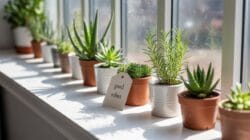
Successful layouts prioritize accessibility and harvest efficiency. Arrange the trellis so fruit hangs away from the main support structure. This prevents misshapen cucumbers and makes picking faster. Position the bed near a consistent water source and ensure the drainage is clear. Tactical planning focuses on the physical needs of the plant and the movements of the gardener. High yields come from strict organization and steady vertical management.
Veggie Garden Trellis Setups Growing More Than Just Cucumbers In Containers
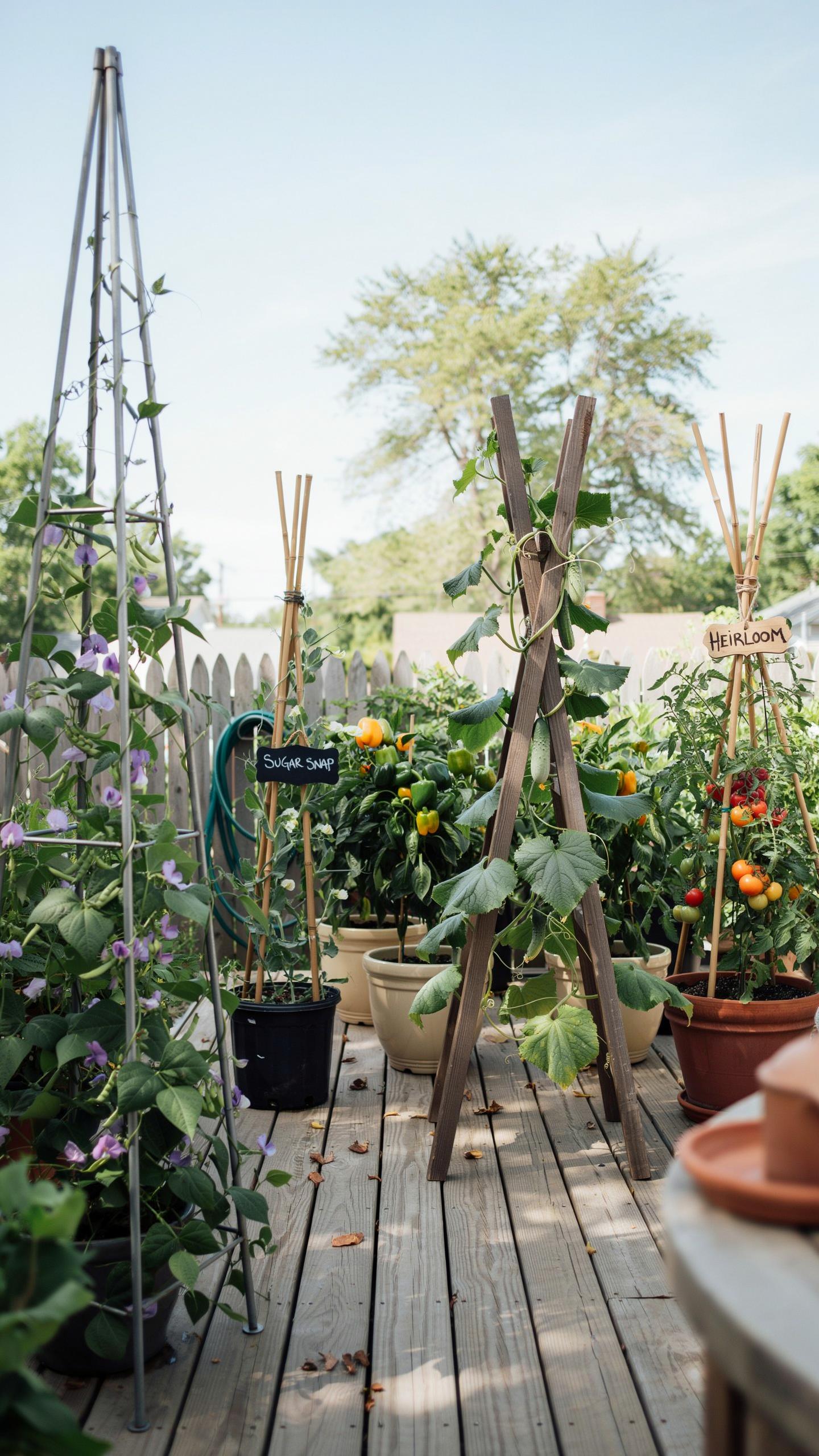
Vegetables That Perform Best On A Container Trellis System
Container trellising maximizes vertical space and improves air circulation. This reduces disease pressure from soil-borne pathogens. Climbing vegetables use tendrils or twining stems to grip supports. You must match the trellis strength to the ultimate weight of the mature crop. Heavy fruits like melons require reinforced structures and slings. Lightweight greens and legumes thrive on simple mesh or thin bamboo stakes.
- Indeterminate Tomatoes: These plants grow continuously throughout the season. They require tall, sturdy cages or vertical strings. Supporting the main stem prevents breakage under heavy fruit loads. It also makes harvesting much easier for the gardener.
- Pole Beans: Direct these vines onto twine or netting. Unlike bush beans, pole varieties produce over a longer period. They utilize vertical height to keep pods off the dirt. This prevents rot and keeps the harvest clean.
- Sugar Snap Peas: These cool-season crops use delicate tendrils to climb. They need thin wire mesh or brushy twigs for grip. Trellising keeps the foliage dry and prevents powdery mildew. It ensures high yields in small balcony containers.
- Malabar Spinach: This heat-tolerant green thrives when other spinach bails. It is a vigorous climber with thick succulent leaves. Use a strong trellis to support its rapid summer growth. It provides a steady supply of greens in tight spaces.
- Small Vining Squash: Select varieties like Tromboncino or small pumpkins. These plants take up significant ground space if left unsupported. Vertical growth keeps the fruit symmetrical and protects it from pests. Ensure the container is heavy to prevent tipping.
Proper vegetable selection depends on your container size and local climate. Short-statured climbers work best for portable pots. Larger perennials or heavy producers need permanent, anchored stations. Monitor growth daily to guide wandering vines back to the support. Prune excess foliage to focus energy on fruit production. This strategic approach ensures your vertical container garden remains productive and manageable all season long.
Companion Planting Strategies To Boost Your Veggie Garden Trellis Container Setup
Smart gardeners plant low-growing crops at the base of trellised vegetables. This technique uses the vertical plant to provide shade for shallow-rooted species. Cool-season greens stay crisp longer under the canopy of tall beans or tomatoes. The bottom crop acts as a living mulch. It keeps the soil cool and retains moisture in the container. This strategy maximizes every square inch of potting mix.
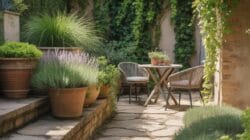
Select companions that offer pest protection or nutrient benefits. Planting marigolds or nasturtiums helps deter harmful insects from your primary vine. Alliums like chives or garlic can repel aphids and mites. Avoid placing heavy feeders together in one pot. Balance the nutrient draw by pairing deep-rooted climbers with surface-level herbs. This creates a self-sustaining ecosystem within the confines of a single planter.
Smart Garden Set Up Ideas Arranging Multiple Container Trellises For Flow And Function
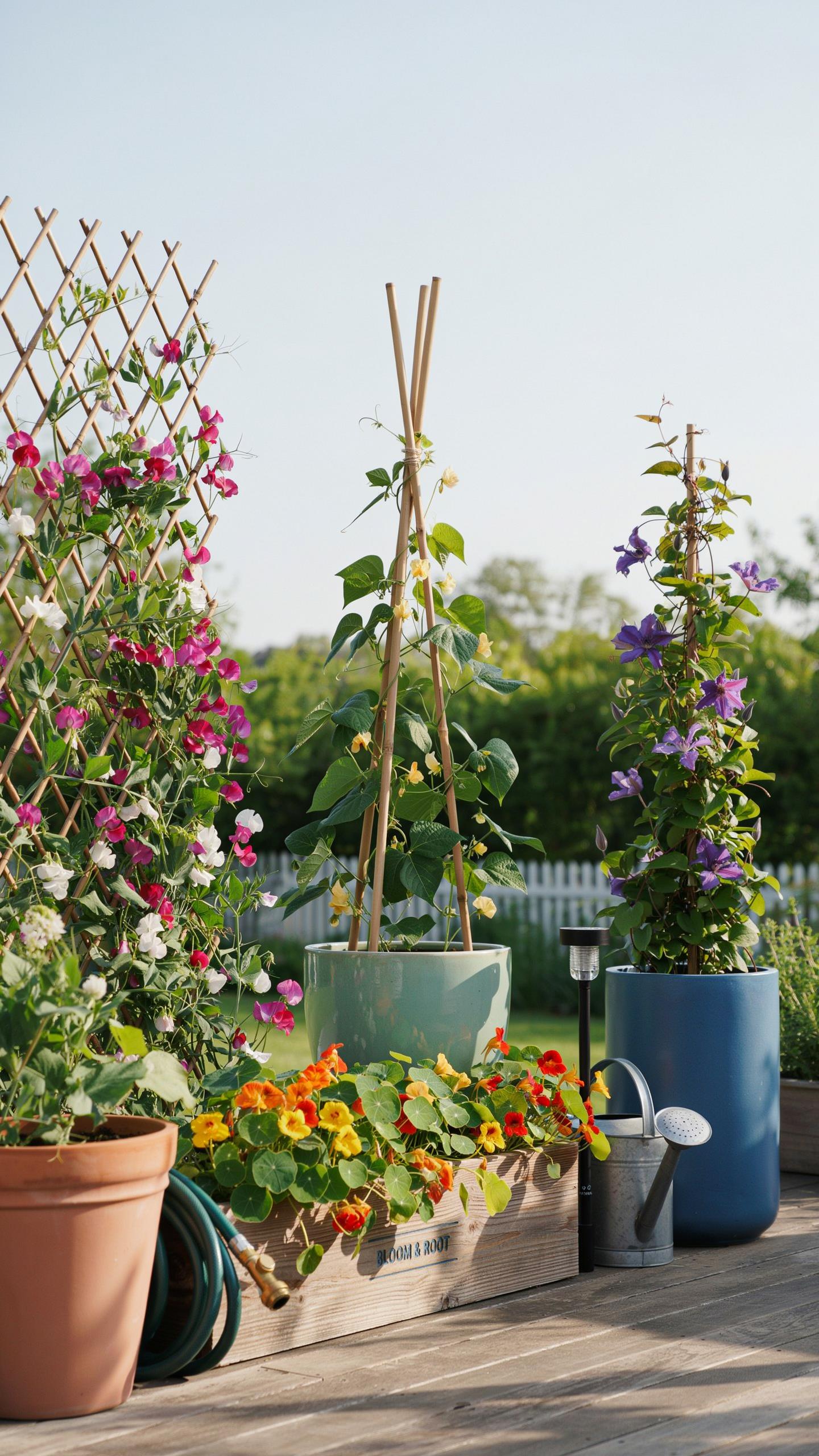
How To Design A Multi Container Trellis Layout For Patios Balconies And Entryways
Effective layout design requires placing the largest containers at the rear of your space. This tactic utilizes vertical height without blocking smaller pots. Place heavy ceramic or stone containers in corners to anchor the arrangement. Position lighter resin or wood planters along walkways to define clear paths. Ensure every trellis receives adequate sunlight based on specific plant needs. Map your water access points before final placement.
Smart spacing prevents overcrowding and airflow issues. Leave at least twelve inches between containers to discourage fungal diseases and pests. Use varying trellis heights to create visual depth in flat areas. Align trellises with structural lines like porch railings or door frames. This creates a cohesive look that mimics built-in architecture. Secure tall trellises to walls or weights to prevent wind damage in high-rise balcony settings.
Using Container Trellises As Natural Privacy Screens And Decorative Dividers
Position rectangular planters in a linear row to create a living wall. This setup blocks sightlines from neighbors while allowing breeze to pass through. Choose dense climbing plants like ivy or jasmine for maximum coverage. Metal grid trellises offer the best structural support for heavy vines. This method replaces expensive permanent fencing with a flexible and mobile solution. It works perfectly for renters or seasonal spaces.
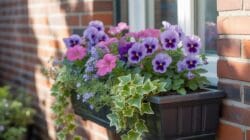
Define specific zones on a large patio using trellis dividers. Use a tall trellis to separate a dining area from a work space. This physical barrier creates a psychological sense of privacy. Angle the containers at forty-five degrees to soften harsh corners. Wood lattices provide a classic aesthetic that fits most home styles. Ensure the base of each container is wide enough to stay stable when the foliage grows heavy.
Seasonal Care And Maintenance For Your Container Garden Trellis Ideas Year Round
How To Winterize And Store Container Trellises Without Damaging Plants Or Structures
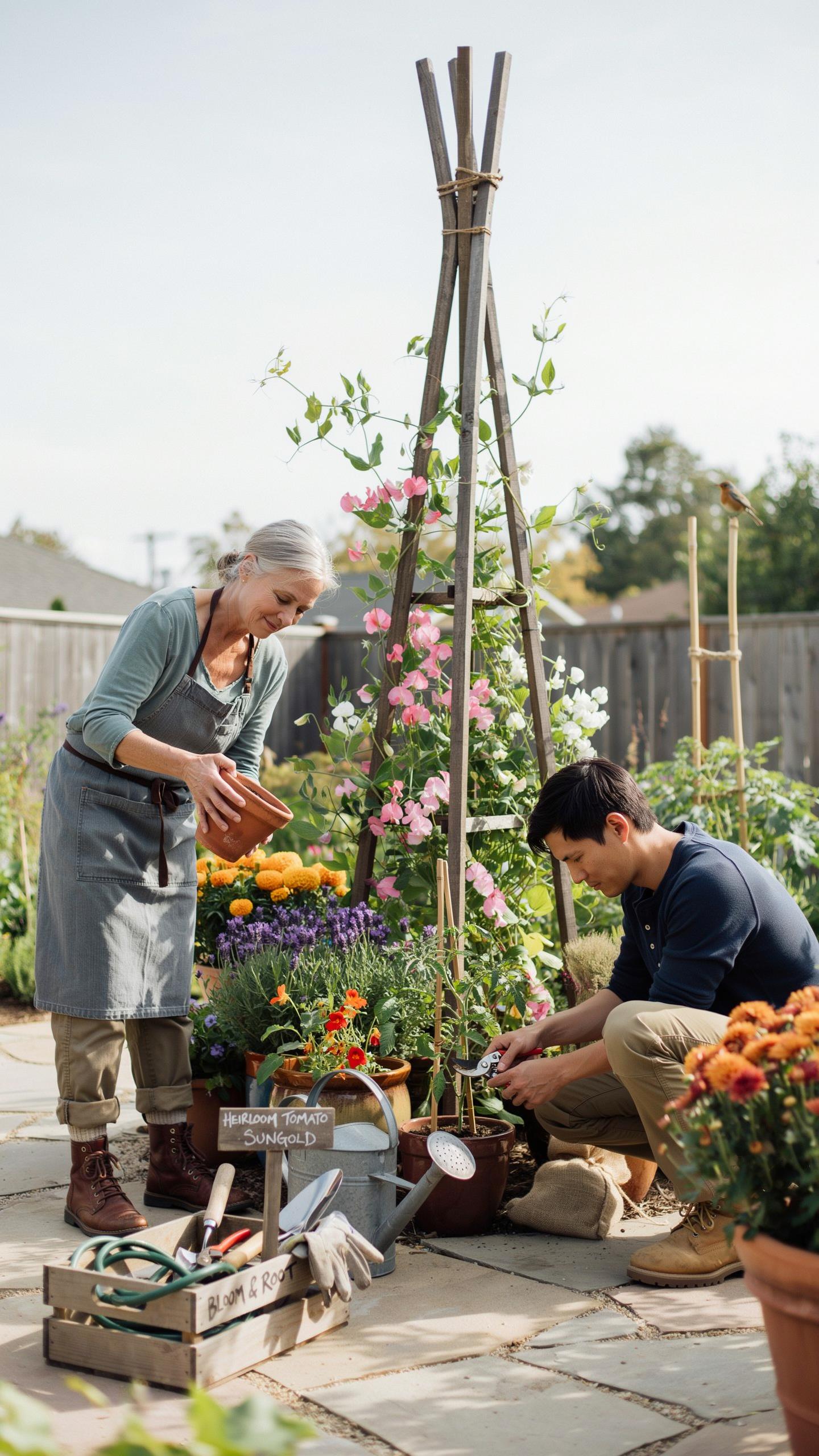
Remove all dead plant matter when the growing season ends to prevent pathogen spread. Detach vines carefully if the plant is perennial. Clean wooden trellises with a mild bleach solution to kill fungus eggs. Metal structures require a check for rust spots. Sand down any rough patches on cedar or redwood before applying a fresh sealant. Proper cleaning ensures the trellis survives high moisture levels during winter.
Store portable trellises in a dry garage or garden shed. Keeping them off the soil prevents rot and corrosion. If the trellis is too large to move, wrap it in breathable burlap. This protects the structure from ice expansion and heavy snow loads. Secure the containers to prevent wind from tipping the vertical structures over. Check the base of the trellis for stability before the ground freezes solid.
Watering, Feeding, And Pruning Routines That Keep Trellis Container Plants Thriving
Water the root zone directly to keep the foliage dry. Wet leaves on a crowded trellis invite powdery mildew and blight. Container soil dries out faster than ground soil due to air exposure on all sides. Use a moisture meter to check deep soil levels daily during peak heat. Consistency prevents the stress that causes vines to drop flowers or fruit prematurely.
Feed your plants with water-soluble fertilizer every two weeks. High-vertical growth requires more nutrients than standard container plants. Prune aggressive runners to maintain airflow within the structure. Remove yellowing leaves immediately to focus energy on new growth. Cut back any stems that grow beyond the top of the trellis. This keeps the weight balanced and prevents the container from falling over during storms.
Budget Friendly And Upcycled Trellis Ideas To Inspire Your Next Container Garden Project
Repurposing Everyday Objects Into Creative And Functional Container Trellises
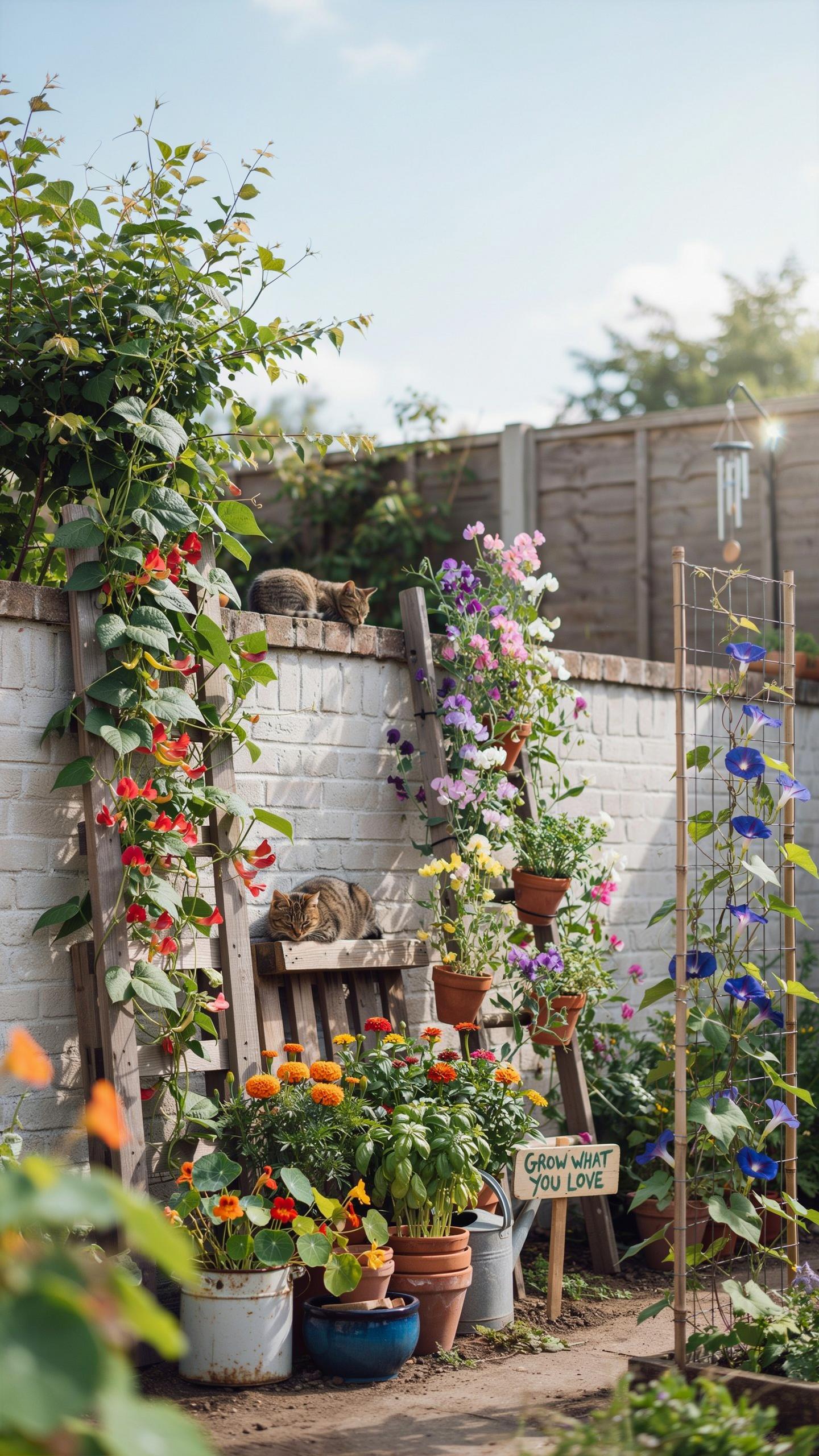
Industrial scrap and household waste serve as effective vertical supports for vines. Old ladders or wooden chairs provide immediate structural height for heavy climbers like squash or cucumbers. Check the structural integrity of these items before deployment. Wood rot or rusted joints can fail under the weight of wet foliage. Repurposed items save money and keep bulky materials out of local landfills.
Worn bicycle wheels and copper plumbing pipes offer clean lines for modern garden designs. Narrow containers benefit from vertical wire mesh or metal bed springs. These materials do not decay when they touch wet soil. Use stainless steel wire or zip ties to secure these frames to your pots. This prevents the wind from tipping your container. Tactical repurposing turns common debris into high performing garden infrastructure.
Where To Source Affordable Trellis Materials Without Compromising On Durability
Construction sites and local classifieds are primary sources for free or cheap materials. Look for untreated cedar scraps or concrete reinforcing wire. This wire, known as remesh, is stiff and lasts for decades. Avoid pressure treated wood because it contains chemicals that can leach into edible plants. Local arborists often provide tree branches for free. Use these to build rustic structures like towers or teepees.
Quality materials do not always require a retail store. Salvage yards often stock metal rods and mesh for a fraction of hardware store prices. Check online community groups for people clearing out old fences or bamboo stakes. These items have already survived years of outdoor exposure. They prove their durability before you even bring them home. Strategic sourcing lowers your overhead costs while maintaining high standards for your garden.
Frequently Asked Questions

What are the best plants to grow using container garden trellis ideas?
If you are new to gardening, focus on climbing varieties that naturally thrive in confined spaces. Flowering vines like sweet peas and clematis are wonderful for creating vertical beauty, while edible options like pole beans, cucumbers, and snap peas work perfectly with various container garden trellis ideas. These plants are generally easy to manage, allowing you to maximize your harvest or floral display even on a small balcony or patio.
How do I properly secure a trellis inside a garden pot or planter?
Stability is crucial for supporting heavy vines. To implement your container garden trellis ideas effectively, insert the support deep into the soil before planting to avoid damaging roots. For top-heavy structures, use a heavy pot made of terracotta or stone to prevent tipping. You can also secure the trellis to a nearby wall or railing using twine or zip ties, ensuring your vertical garden remains upright during windy weather.
Can I create a functional DIY trellis using inexpensive household materials?
Absolutely! You don’t need a large budget to bring these container garden trellis ideas to life. Repurposed items like old wooden ladders, bamboo stakes, or even trimmed tree branches can create a rustic, organic look. You can also use colorful twine or mesh netting stretched between two poles. These affordable, DIY solutions offer an eco-friendly way to add height and character to your home garden without spending a fortune.