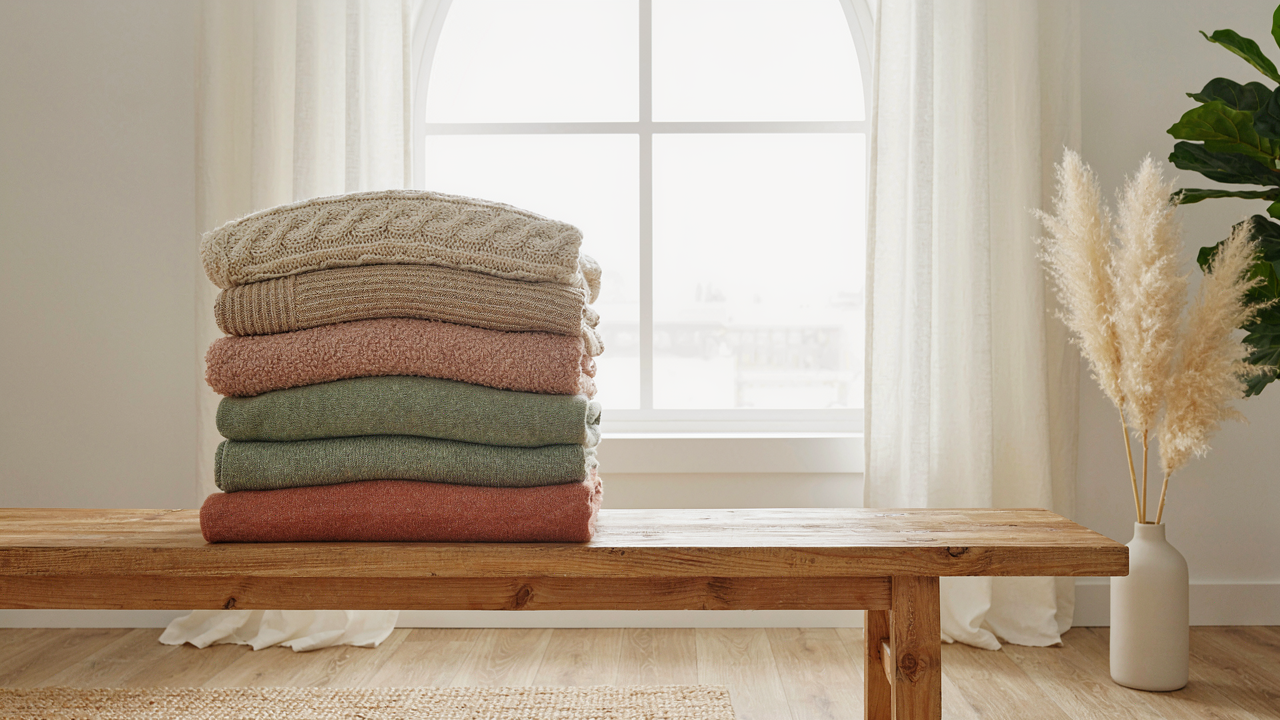
Why Your “Cozy” Decor Fails: The Upcycle Sweater Deception
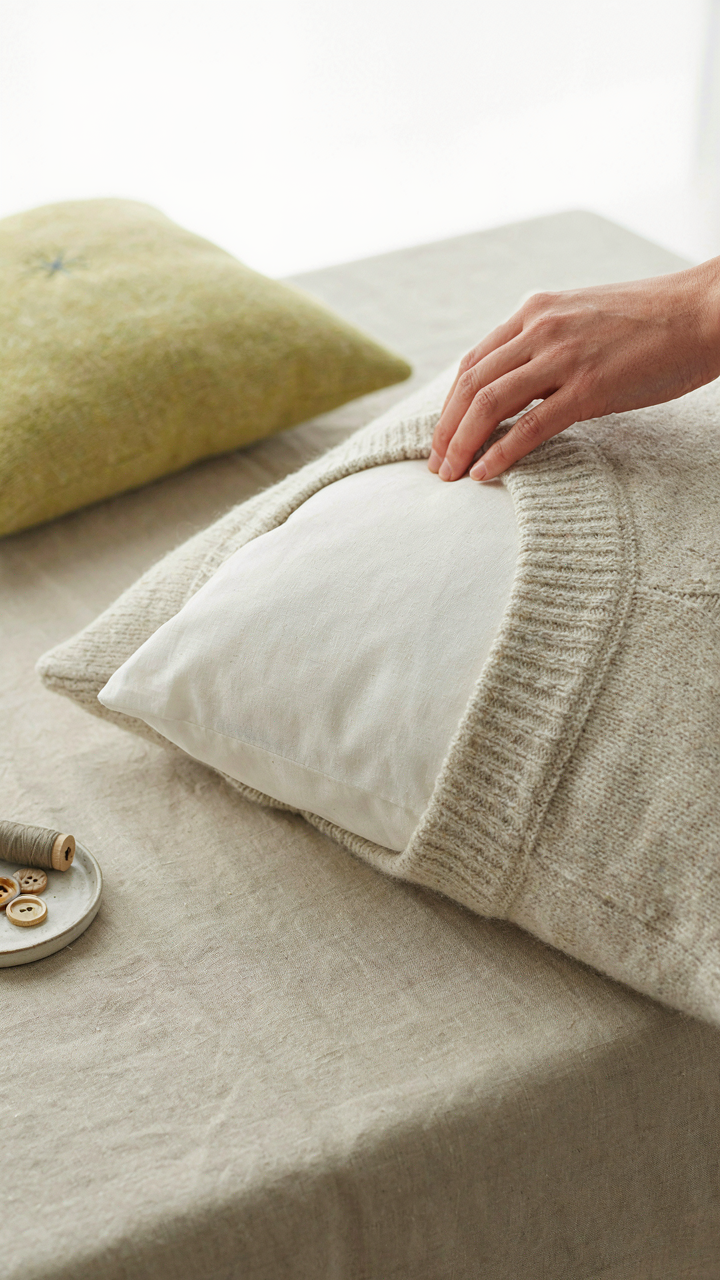
The Sweater You’re Stuffing Wrong
You want people to think you’re the type who recycles. That’s the real motive here, and it matters because it blinds you to the actual problem: most people destroy sweaters during conversion instead of preserving them. The sweater material itself has mechanical properties. It needs tension, not compression. When you stuff a sweater flat into a pillow form, you’re working against the fabric’s original construction. Knitwear is designed to stretch and recover, not to be crushed under synthetic fill.
The common advice says “just sew it shut and throw in filling.” That’s incomplete. You need to understand that sweater knit has grain direction and elasticity. The fill should support the shape without forcing the fabric past its recovery point. Use a firm insert that holds form without making the sweater work harder than it was designed to. The sweater stays intact longer when you match the fill density to the knit weight, not when you maximize plushness.
Function Determines What Actually Works
Everyone focuses on how a sweater pillow looks in the corner. Nobody talks about what it actually does: it regulates microclimate and manages pressure points where your body rests. Temperature retention in textiles depends on fiber density and air pockets trapped within the weave. A sweater pillow works because the knit structure holds dead air better than typical pillow fabrics. This is thermodynamics applied to home comfort, and it’s the real reason to make one.
The sweater pillow fails when people prioritize fluff over construction. A poorly made one goes flat in weeks because the fill shifts and the sweater stretches under uneven load. You need internal structure—a quality pillow form underneath—to anchor the sweater and prevent migration of fill. The sweater is the insulation layer and the aesthetic finish. The form is the support system. When both work together, the pillow stays functional for years. When you skip the form to save money, you get landfill material in three months.
The Minimalist’s Upcycle Sweater Pillows Protocol
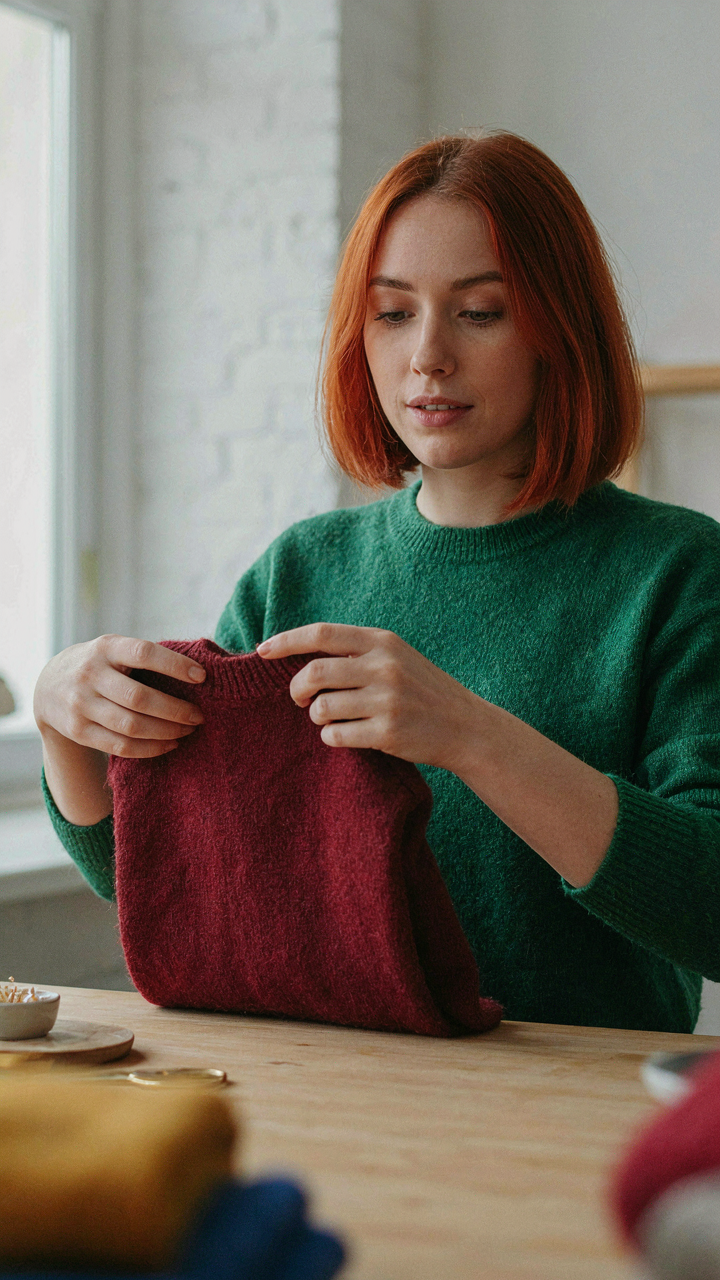
Find The Right Sweater First
You want permission to skip the work of finding quality material. Here’s the mechanism: sweater fiber degrades from wear, washing, and UV exposure, so you’re buying structural integrity, not just aesthetics. Merino wool, cashmere blends, and high-quality acrylic hold their shape longer than cheap synthetics. Examine the fabric for pilling, holes, and stretched-out areas. A sweater with minor fading works fine. One with thin elbows or compromised seams becomes a pillow that deflates visually within months.

Feel the weight of the sweater in your hands. Dense knits support pillow shape. Lightweight, loosely-constructed sweaters shed fibers and won’t maintain structure. Check the fiber content on the tag. Pure wool, wool blends, and quality cotton knits outlast everything else. Avoid sweaters that smell like mold or have permanent stains. The material you choose determines how long your finished pillow stays presentable and holds its form.
Gather What Actually Matters
The common advice tells you to buy a kit. That’s lazy and expensive. You need what works.
- Needle and thread: A heavy-duty needle and matching thread. Cheap needles bend during construction. Match thread color to your sweater to hide seams in the final product.
- Sharp scissors: Dull blades fray edges and tear knit fibers. One pair of quality fabric scissors costs less than replacing a ruined sweater piece.
- Pillow form or filling: Standard pillow inserts are twelve to twenty inches. Polyester fiberfill works as a cheaper alternative. Buy based on your sweater dimensions, not assumptions.
- Measuring tape: Accuracy prevents wasted material. Sweaters have inconsistent dimensions, so measure twice before cutting once.
- Pins or clips: Hold fabric pieces stable while stitching. This prevents shifting that creates uneven seams and weak points.
Skip the decorative supplies. No trim, no embroidery floss, no tassels. Minimalism means function drives form. Your sweater’s texture already provides visual interest. Stitch everything by hand or machine. Both work equally well if your seams are tight and consistent. Buy materials as you start each project, not in bulk. Storage space costs more than buying what you need when you need it.
Deconstructing The Old Sweater: Strategic Cuts For Sweater Pillow Covers
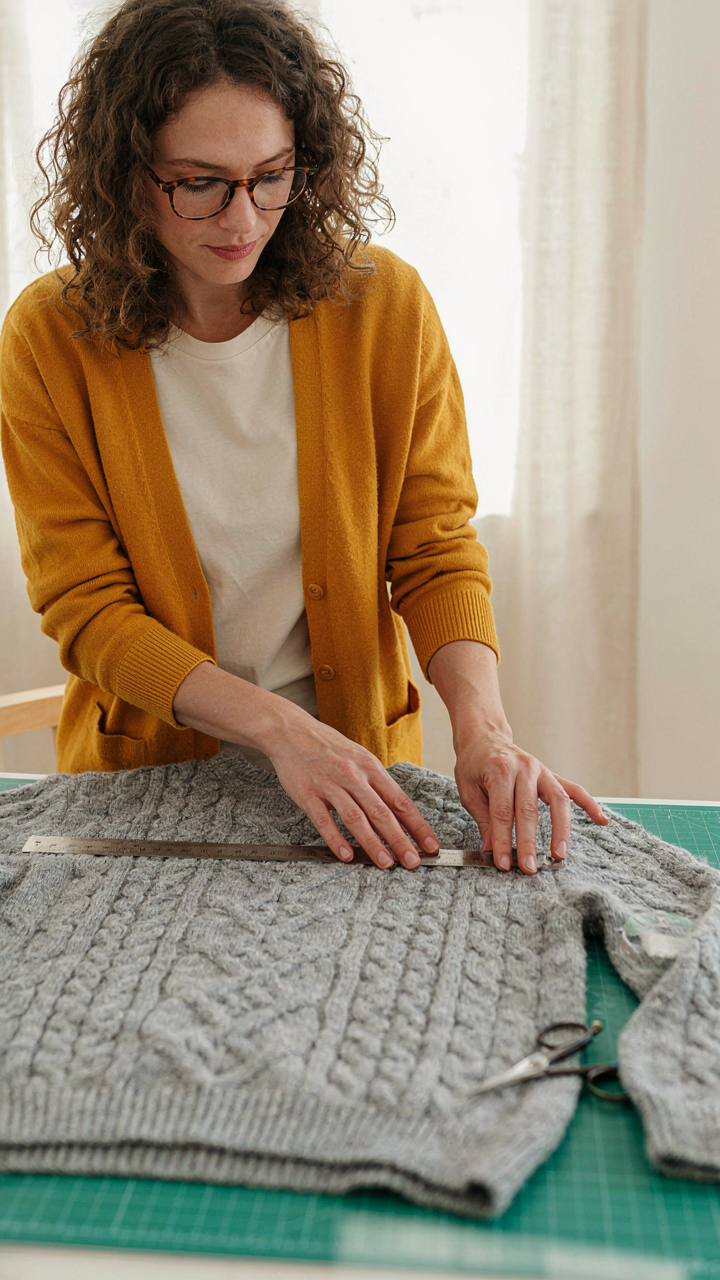
Where The Fabric Actually Holds Up
You want the pillow to look intentional, not like you grabbed whatever was lying around. The mechanism is simple: knit fabric fails where stress concentrates, so you choose sections where the weave density stayed consistent through years of wear. The front and back panels of a sweater represent the safest material. These areas endured repeated flexing but avoided the high-friction zones that break down faster. Armpits, cuffs, and waistbands compress differently during wear and deteriorate in patterns that create weak points.
The chest area of a crew neck sweater is your target. Knit construction here remained stable because body heat and movement distributed pressure evenly. Measure out two rectangular sections from front and back panels, each roughly 16 by 20 inches. This size yields a standard throw pillow cover without forcing you to piece together scraps. Avoid any section showing pilling, thinning, or color fading beyond normal aging. Those visual markers signal fiber breakdown you cannot undo.
Structural Weak Points You Actually Need To Avoid
Most guides say “just cut around the damage,” which misses how knit fabric actually fails. Stretching and repeated stress create micro-fractures in the yarn itself before visible holes appear. Look for areas where the sweater sat tightly against your body for hours daily. Shoulder seams, armpit edges, and the underarm portion of sleeves compressed under constant pressure. The fabric there may look fine but will unravel faster once you cut into it and expose the compromised fibers.
Side seams demand attention because they absorbed most of the garment’s structural load over time. Check the seam line itself and the quarter-inch zone on both sides. If you can see separation between stitches or slight discoloration running along the seam, that entire vertical line is compromised. Cut your panels to avoid seams entirely, or build your pillow cover design around seams as intentional structural elements rather than trying to work through them. This determines whether your pillow cover lasts two years or unravels in six months.
The “No Sew” Illusion: Upcycle Sweater Covers That Last
Fusing Techniques That Actually Hold
You want no-sew because you think it saves time. It doesn’t, if the pillow falls apart in three months. The real mechanism here is thermodynamic bonding: heat and pressure fuse fibers together at the molecular level, which is how fabric adhesives work. Most people skip this entirely and use craft glue, which creates a brittle surface layer instead of true fiber integration.

Fabric fusion adhesives work by penetrating the weave structure of the sweater material. Hot glue guns seem fast but fail because they cool too quickly and never achieve proper molecular bond depth. Spray adhesives designed for textiles offer better fiber penetration, but they require even heat distribution across the entire glued surface to avoid weak points. The protocol: apply adhesive in thin, uniform layers, let it cure fully per manufacturer specs before assembly, and use heat application if the adhesive instructions allow it. This prevents the cover from separating at stress points.
Hidden Closures That Won’t Show
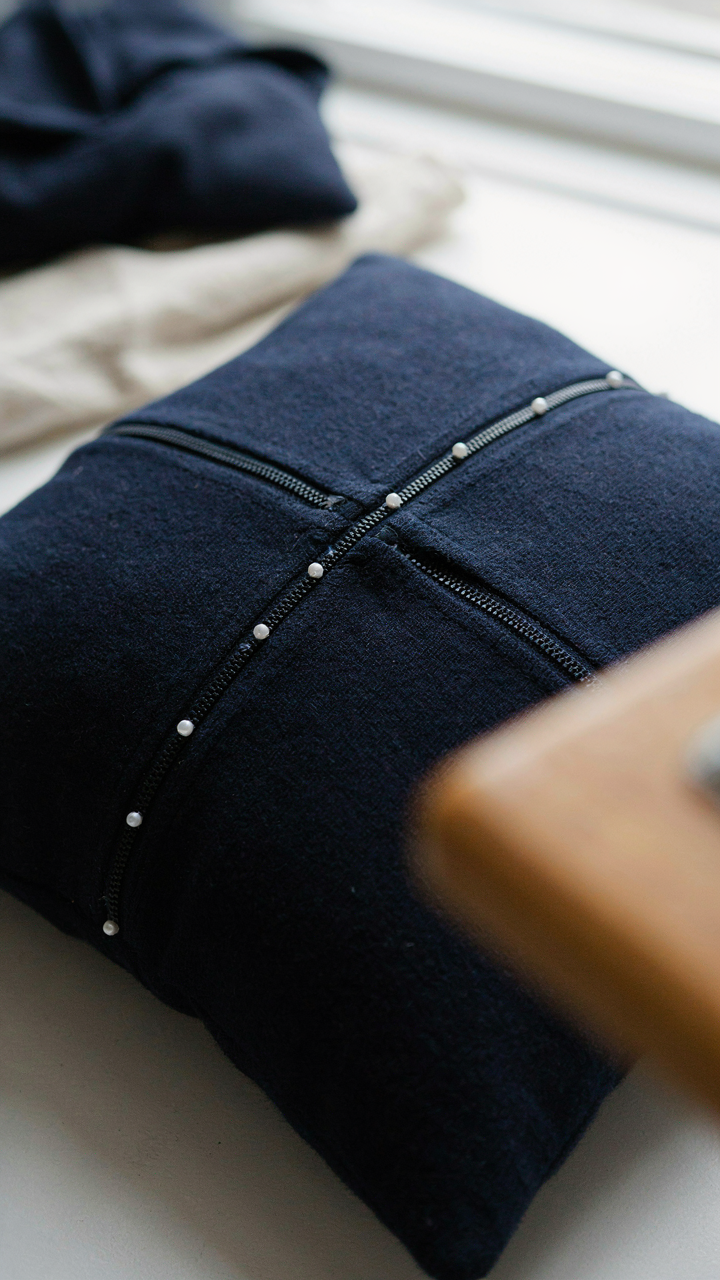
Button, zipper, and snap placement isn’t decoration on upcycled sweater pillows. It’s structural engineering. The closure type you choose determines where stress concentrates when someone sits on the pillow or removes the cover for washing. Most people hide closures poorly, which means they become the failure point within months.
Buttons work best when placed in rows of three or more along one edge, distributing load instead of concentrating it at a single point. Zippers integrated into seams require reinforced stitching on both sides of the sweater fabric to prevent tearing. Snaps are the weakest option but most discreet. If you use snaps, space them two inches apart maximum and backstitch through the sweater into interfacing material for durability. The strongest setup pairs a hidden zipper with button reinforcement on the inside seam, turning the closure into a redundant system that protects against single-point failure.
Engineered Comfort: Filling Your Sweater Pillows
What Actually Costs Money Here
You want to know if stuffing a sweater pillow yourself saves money compared to buying a finished pillow. That’s the real question hiding under “sustainable choices.” The mechanism is straightforward: filling material represents 30 to 60 percent of a finished pillow’s retail price, but you’re paying a markup for convenience and brand distribution, not material quality.

Polyester fiberfill runs 3 to 8 dollars per pound retail and performs identically whether it comes from a major manufacturer or a bulk supplier. Reclaimed fiber from old pillows or clothing costs nearly nothing if you deconstruct it yourself, but demands time. The trade isn’t sustainability versus cost. It’s raw material expense versus your labor and the time your stuffing sits unused in storage.
Pressure And Movement Shape Everything
Fluid dynamics teaches us that density and loft govern how substances move and settle under pressure. Apply that to pillow filling: loft is how much space the material occupies per unit weight, and density is the mass you pack into a given volume. A sweater pillow with high loft compresses easily under your head but loses support over weeks as the filling migrates and settles into lower density zones.
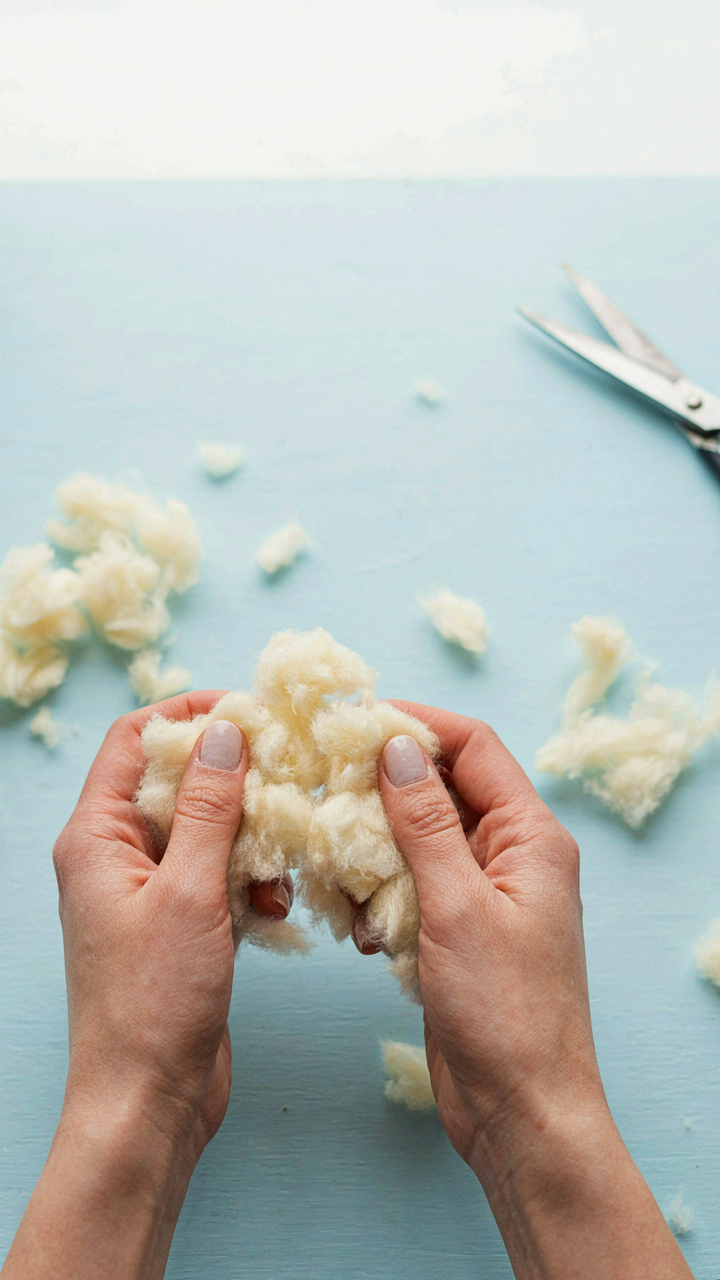
Polyester fiberfill maintains consistent loft because its crimped fibers resist compression and migration. Down clusters collapse under weight and concentrate in the pillow’s center, creating lumps. For upcycled sweater pillows, this means: don’t shred old clothing into fine bits expecting it to stay distributed. Shredded fabric bunches and mats within months. Medium-density reclaimed fiber (hand-torn to roughly fingernail size) resists migration and maintains support for two to three years before requiring refresh.
Beyond Basic: Advanced Sweater Pillow Cover Ideas
When Asymmetry Becomes Strategy
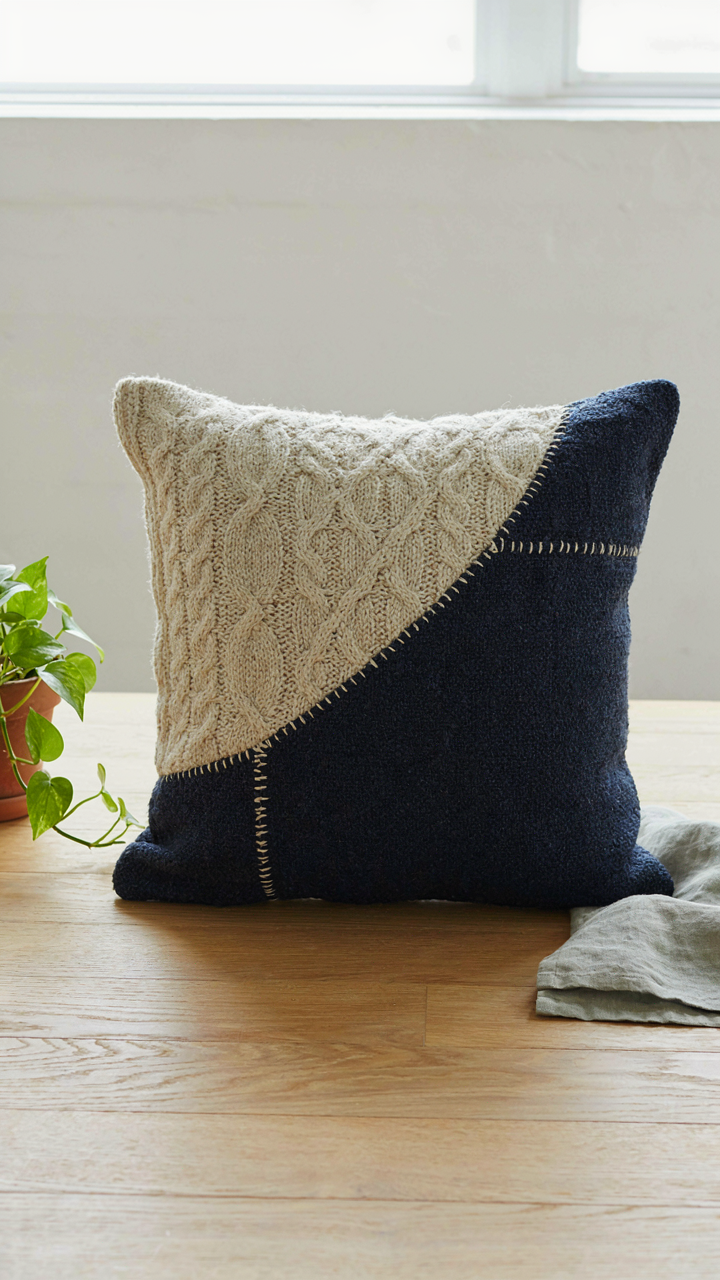
You want to believe your pillow looks intentional, not like you ran out of matching fabric. That’s the real tell. Patchwork design borrows from collage composition: you’re arranging contrast to direct visual weight, not scattering random pieces. Asymmetrical layouts work because the eye reads imbalance as deliberate choice. Sweater panels of different gauges, weaves, and colors force this mechanism. A chunky knit paired against a fine merino, positioned off-center, reads as curated. Symmetry reads as “I had leftover scraps.” Asymmetry reads as “I designed this.”

The execution matters more than the concept. Select two or three sweaters with distinct texture profiles, not just color variations. Cut panels in irregular rectangles rather than perfect squares. Position the heaviest texture or boldest color in one corner, then balance it with a smaller contrasting panel elsewhere. Leave visible seams or topstitching to emphasize the deliberate breaks. This signals craftsmanship over accident. Sew panels before stuffing, then construct the pillow back as a single, unified piece to anchor the visual chaos on the front.
Restraint Over Ornamentation
Everyone adds buttons, fringe, and embroidery to sweater pillows and creates visual noise that cancels itself out. The actual rule is this: one statement element per pillow, positioned as a focal point, not distributed across the surface. Think of embellishment as typography in design, not decoration. A single brass button cluster at the seam intersection works. Random buttons scattered across the front work against you. A subtle satin ribbon edge trim on one seam works. Fringe all over the perimeter fights the sweater texture beneath it.
Choose embellishments that contrast material, not color. If your sweater is matte knit, use a satin or cord trim. If the sweater is textured, a smooth metallic zipper or leather patch creates tension. The material difference signals intention. Place your single element where two seams meet, creating a natural anchor point. Secure everything through the pillow back so stitching never shows on the face. This discipline transforms a casual project into something that reads as considered.
The Longevity Equation: Caring For Your Upcycled Sweater Pillows
Washing Without Destroying The Fibers
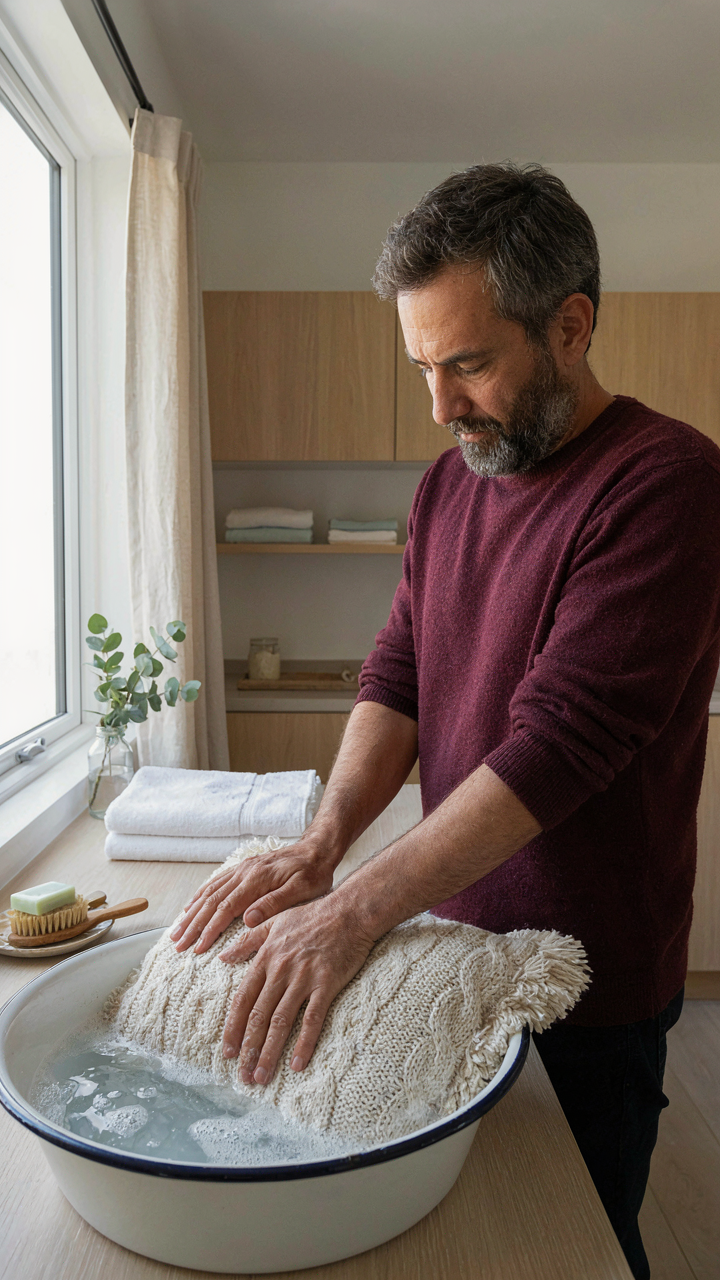
You care about this because a ruined pillow feels like wasted money, even though you paid less for it upfront. The real mechanism is thermal shock and mechanical agitation breaking down the protein structure in wool and cotton blends. Machine washing, even on delicate, creates friction that weakens fibers already compromised by years of wear before upcycling.

Hand wash upcycled sweater pillows in cool water with mild detergent designed for delicates. Submerge for five minutes, gently squeeze soapy water through the fabric, rinse three times in clean cool water, then lay flat to dry. Avoid wringing, twisting, or hanging, which stretches wet fibers and creates permanent deformation in the cover.
Seams And Stuffing Reinforcement Strategy
The common advice here is wrong: most guides treat seams as static structures that either hold or fail. In textile engineering, a seam is a stress concentration point where load transfers unevenly across compressed fibers. Upcycled sweater pillows inherit weak original seams, then you add new stress when stuffing them and compressing them against furniture.
Inspect seams every three months for separation or thread fraying, especially along the zipper line or hand-stitched closures. Reinforce high-stress seams with a ladder stitch from inside the pillow before damage spreads. Replace the inner cover if the outer sweater fabric holds but the lining deteriorates, extending the pillow’s functional life without discarding the original material.
Pillow Crafts As Social Currency: Displaying Your Work
Where They Live In Your Room
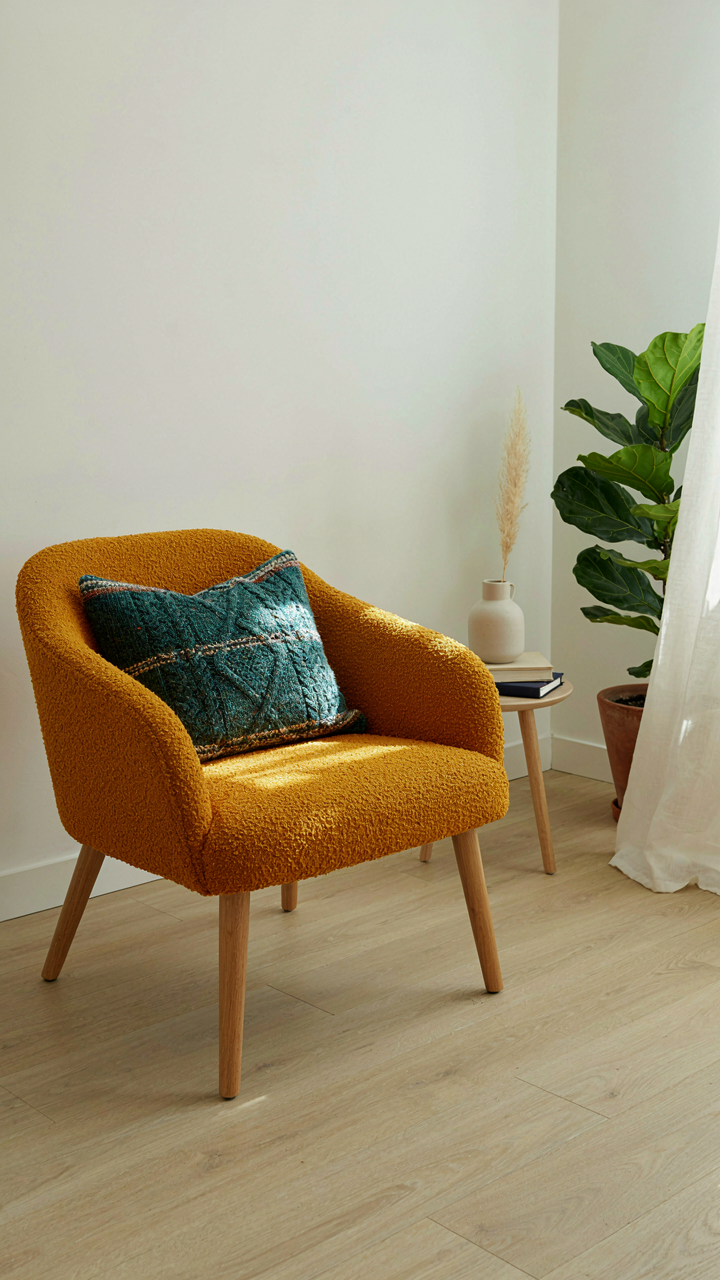
You want people to notice the work you did, and that’s not shallow, it’s human. The real mechanism is visibility hierarchy—borrowed from retail design—where your best pieces occupy the zones people’s eyes land on first. A handmade upcycled sweater pillow on a main seating surface beats one buried on a guest bed. Eye-level placement on a sofa or accent chair makes the craft readable from across the room. Everything else is decoration noise.

The mistake most people make is spreading pillows everywhere hoping something lands. That dilutes impact. Your strongest pieces need dominant real estate: the back of your main couch, the chair in your reading nook, the bench at the foot of your bed. These are the stages where people actually study what you’ve made. Secondary pieces can anchor other zones, but they’re supporting players. Concentration beats distribution.
The Restraint That Actually Signals Taste
Conventional decorating advice says layer textures and mix patterns endlessly. That’s wrong. Abundance signals confusion, not wealth or creativity. Design movements from Scandinavian minimalism to Japanese aesthetics prove that curation—what you exclude—communicates more than volume. One exceptional upcycled sweater pillow stops a conversation. Five mediocre ones train people to stop looking at any of them.
Restraint forces you to display only pieces that justify their space. This creates two effects: first, visitors assume you’re intentional rather than indecisive. Second, your best work actually gets seen instead of camouflaged by companions. Choose three to five standout pillows for your main living area. Rotate others seasonally if you have them. The protocol is simple: count what’s visible, subtract half, keep only what remains exceptional.
The Hidden Value Of Upcycling: More Than Just Pillows
Sustainability Redefined Beyond Trends
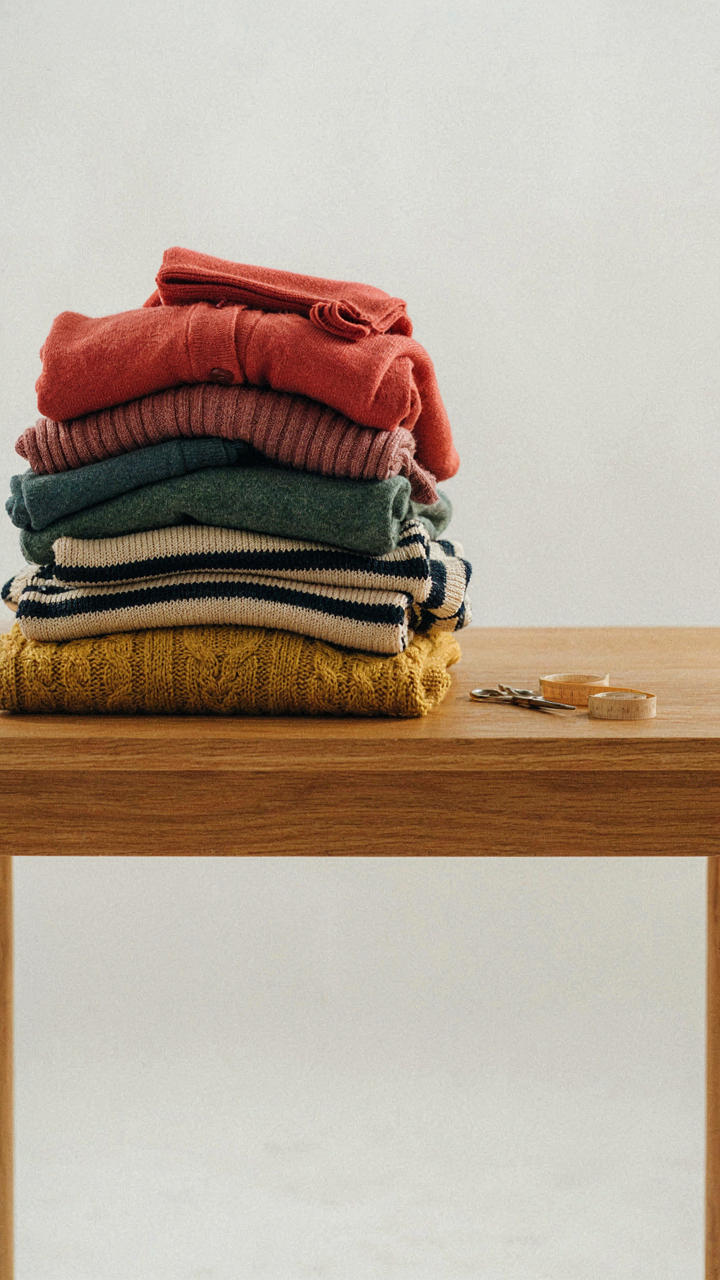
You want the moral permission to buy something without guilt. That’s the real mechanism at work here. But actual sustainability isn’t about feeling better. It’s about reducing the total material throughput of your consumption. When you transform a sweater into a pillow, you’re not creating value from nothing. You’re redirecting an object that already exists in the material economy away from waste streams. The sweater doesn’t magically become more virtuous because you sewed it. It simply stops occupying landfill space or requiring new raw material extraction.

The distinction matters because trend-driven sustainability is temporary. People buy “eco” products, feel resolved, then abandon them when the trend shifts. Upcycling sweater pillows sidestep this because the mechanism is economic, not emotional. You’re working with inventory that’s already paid for. No new production cycle. No new shipping. No new manufacturing footprint. That’s the only definition of sustainability that holds up under scrutiny.
Authenticity Over Manufactured Identity
Economics calls this concept “signaling.” You own objects that broadcast your values to others. Most people buy upcycled products because they want to signal environmental consciousness. But the real power lies in making something that carries your actual history, not a designer’s narrative. An upcycled sweater pillow made from a garment you wore performs a different function than a new “sustainable” pillow from a brand. One contains your biography. The other contains marketing copy.
The mechanism is simple: authentic artifacts require time, not money. A sweater pillow sewn from your old cardigan can’t be replicated at scale by a factory. That scarcity is honest. It emerges from constraint, not artificial limitation. When you choose to keep worn objects in rotation instead of replacing them, you’re making a statement about what you actually value versus what you’ve been conditioned to want. The pillow becomes evidence of your decision.
The Real Obstacle Isn’t Lack Of Skill Or Sweaters, But The Fear Of Unconventional Choices
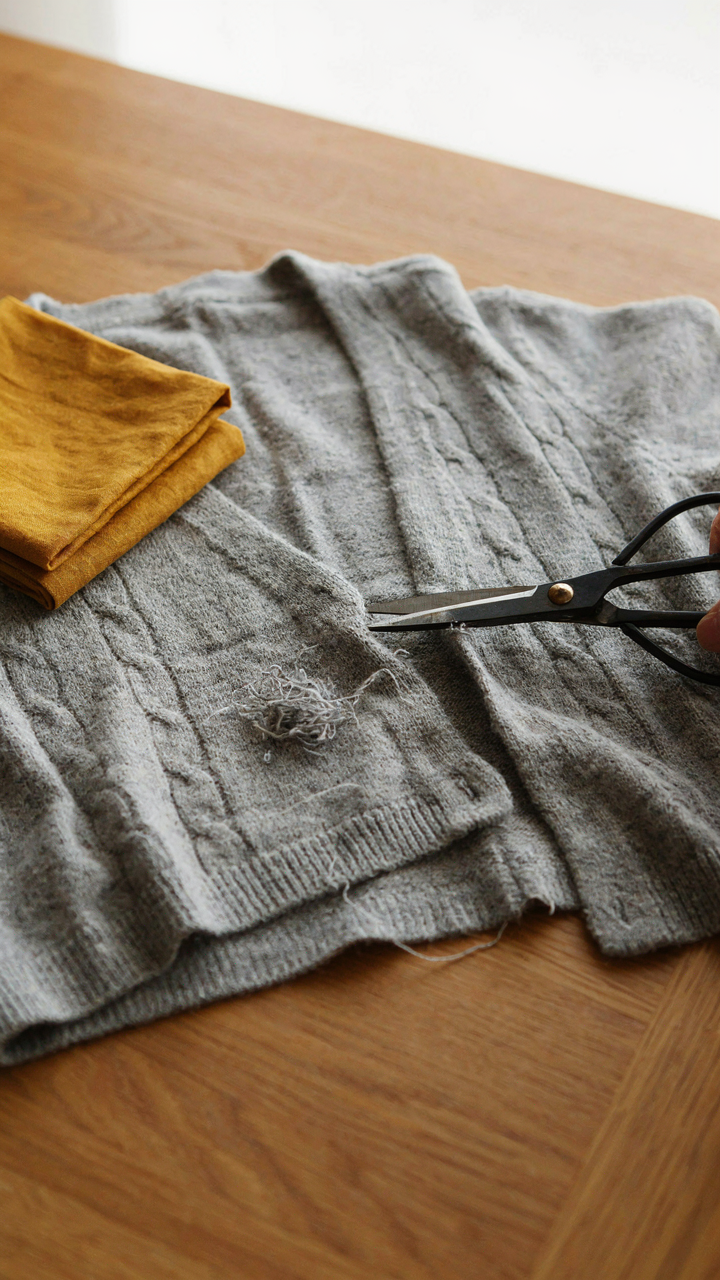
You already own the sweaters. You have the time. What you lack is permission to stop buying mass-produced comfort and start building it. Upcycled sweater pillows work because they reject the algorithm’s design. They’re weird. They’re personal. They’re yours. Today, dig one sweater out of your closet and cut it. Don’t overthink the shape or stitching. Just move. The fear dissolves the moment you commit to something imperfect that you actually made. The homes that feel alive aren’t filled with things that match everything else.