Beyond Instagram: The Tin Can Herb Planters Delusion
Visual Appeal Kills What You’re Growing
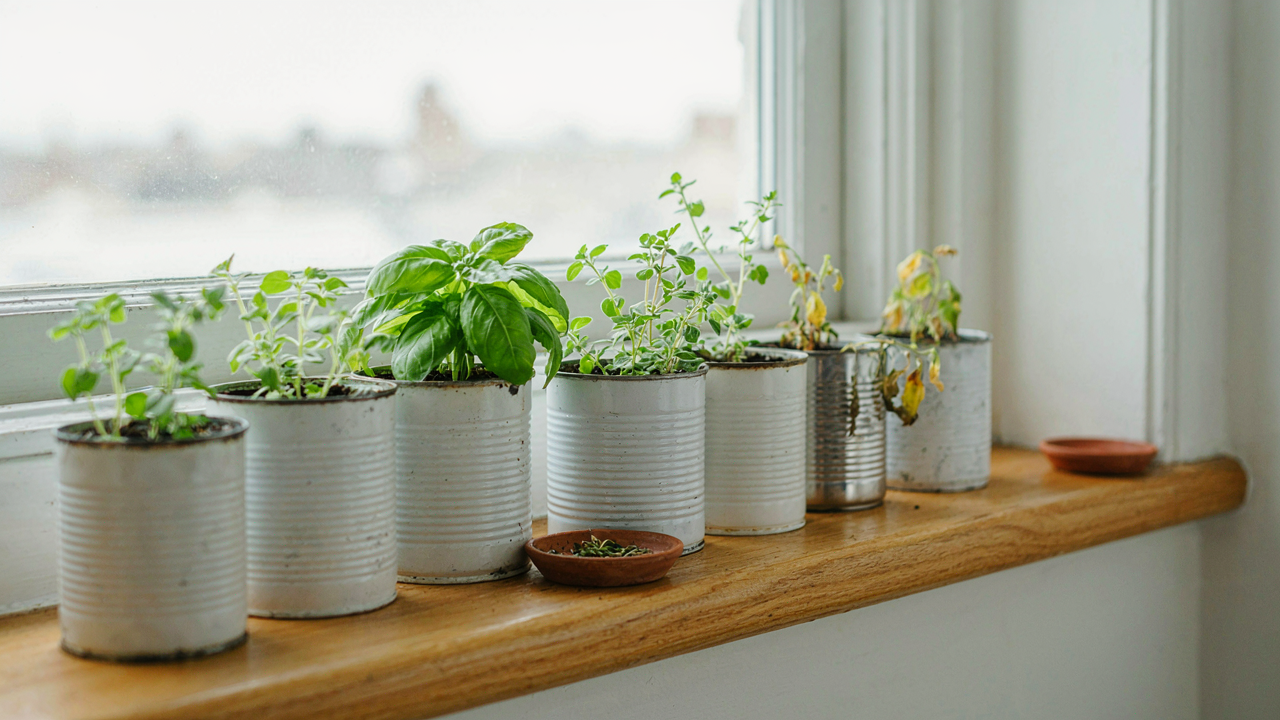
You want people to see your setup and think you’re intentional. Here’s the mechanism: tin cans photograph well because they’re minimal and retro. That aesthetic appeal drives every decision you make about drainage, soil depth, and sun exposure—and it sabotages the plant. Plants don’t care about composition or symmetry. They care about water movement and root space. When you prioritize how a tin can looks on a windowsill, you’re choosing constraint over function. The can itself becomes the limiting variable, not the herb’s actual needs.
Drainage holes punched in the bottom of a tin can look worse than a ceramic pot with integrated saucers. So people skip them. Or they make holes too small, trapping moisture against roots. No drainage hole means no air exchange in the soil. Herbs rot. You blame the seed, the light, your skill. You never blame the aesthetic choice that killed it.
The Real Cost Of Looking The Part
Thermodynamics governs heat retention in any container system—and a tin can violates the principle by creating extreme temperature swings. Metal conducts heat rapidly. A tin can on a sunny windowsill heats up fast, then cools fast at night. The soil temperature fluctuates violently. Herb roots adapted to stable earth encounter stress cycles they didn’t evolve for. Most people don’t measure soil temperature. They measure how the setup looks. That gap between visual appeal and actual growing conditions is where plants die silently.
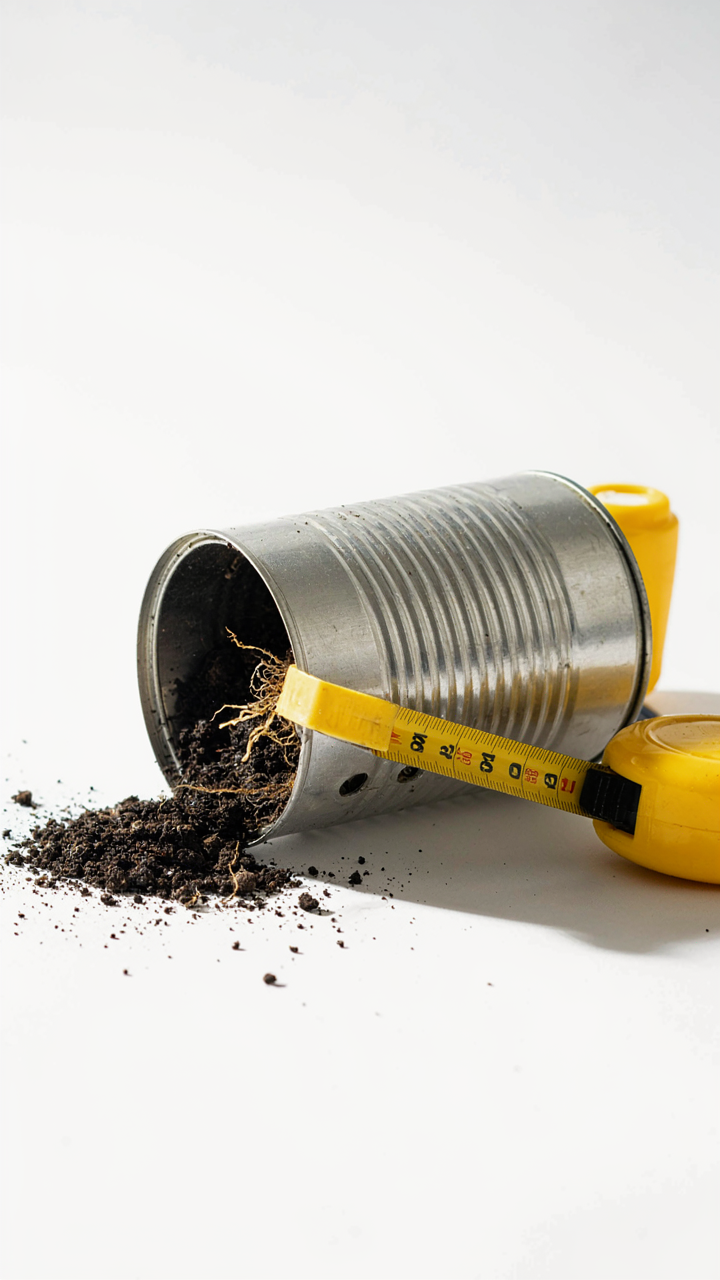
The deeper cost: you’ve committed to a form factor that can’t scale. A four-inch tin can holds roughly two to three inches of usable soil after accounting for drainage material. That’s not enough depth for most herb roots to establish stable moisture and nutrient zones. Mint, basil, and oregano need five to six inches minimum. You substitute a smaller can to keep the aesthetic. The plant suffers a permanent disadvantage. Before you water next time, measure your can’s internal depth and subtract one inch for drainage rock. That number is your herb’s actual growing ceiling.
The 3 Core Principles Of A Thriving Indoor Herb Garden Diy
Light As The Real Constraint
You want an herb garden on your windowsill because you think it makes you someone who grows things. The actual reason it fails is because light is the single input you cannot fake or compensate for. From a physics standpoint, photosynthetically active radiation drives everything in a plant. A tin can reflects and absorbs light differently than ceramic or plastic, meaning your container’s material directly impacts how much usable light reaches the roots and leaves. Most windowsills, even south-facing ones, deliver 2 to 4 hours of genuine high-intensity light daily. Basil, parsley, and thyme all need 6 to 8 hours minimum to survive indoors without leggy growth and flavor loss.

The mechanism is this: insufficient light forces the plant to elongate stems and thin leaves to search for energy. It’s not a disease. It’s starvation. A tin can on a north or east-facing sill will grow green foliage that tastes like nothing because the plant never accumulated the sugars and oils that define herb flavor. Position your tin can planters on a south or west-facing windowsill where direct sun hits for at least 6 hours, or invest in a cheap LED grow light positioned 6 to 12 inches above the soil line and run it 12 to 14 hours daily. The container material matters less than the light schedule.
Drainage Breaks Most Indoor Herb Gardens
The advice that “herbs like moist soil” is incomplete and ruins more tin can gardens than any other mistake. Drainage is not optional. A tin can without drainage holes creates a water prison that suffocates roots in 3 to 5 days. Herbs evolved in Mediterranean and temperate climates where soil dries quickly between rains. Your indoor environment has no air movement, no evaporation, and no natural drying cycle. Without drainage holes at the bottom of the can, water pools around the roots and triggers root rot, which kills the plant silently and completely.
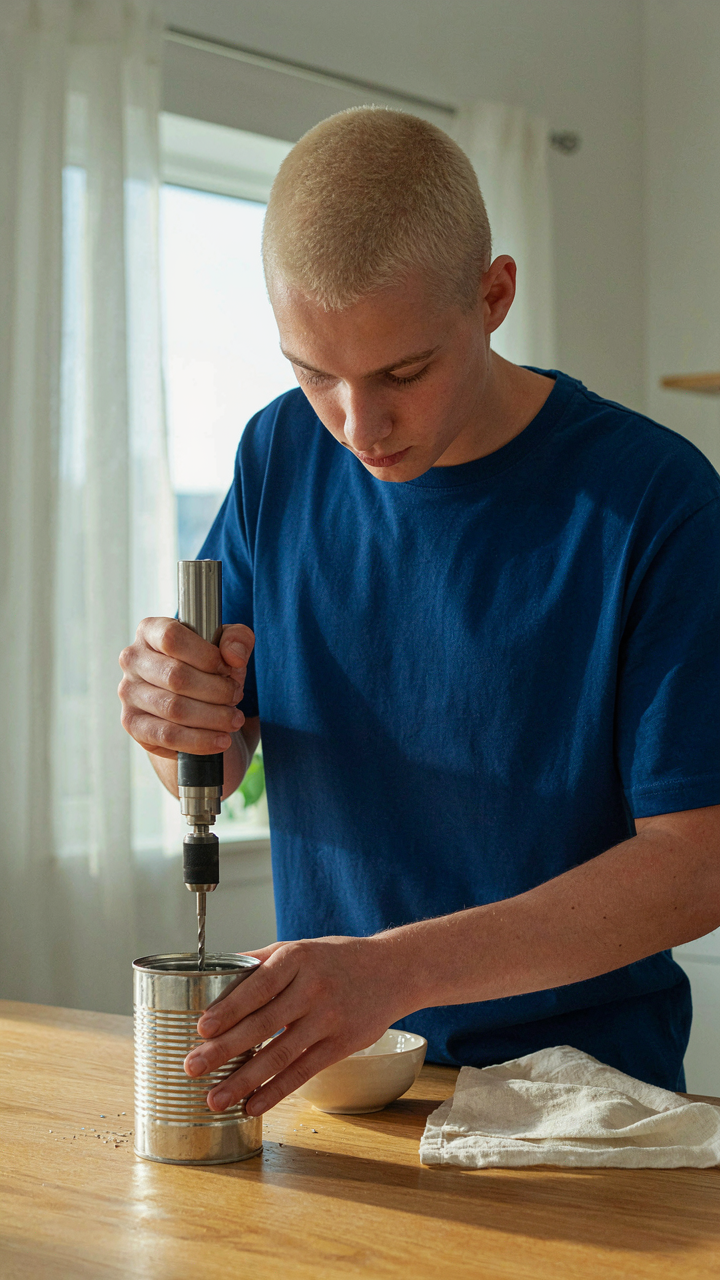
Drill 4 to 6 holes in the bottom of your tin can using a standard metal drill bit. Line the can with a thin layer of newspaper or coffee filter to prevent soil from washing through while water drains freely. Fill the can with a light potting mix that includes perlite or vermiculite for aeration. Water thoroughly until it drains from the bottom, then allow the top inch of soil to dry before watering again. This cycle creates the aerobic conditions that keep roots alive and functional.
Recycled Garden: Your Upcycled Planter Is Not A Miracle Worker
Container Volume Sets The Ceiling
You want to believe that using what you already have makes you resourceful. The mechanism that actually matters is container volume, which functions exactly like carrying capacity in logistics. A tin can holds a fixed amount of soil. That soil holds a fixed amount of water and nutrients. Basil needs 2 to 3 inches of root depth minimum. A standard soup can provides roughly 10 ounces of volume, which translates to about 1.5 inches of usable depth after accounting for drainage hole placement and soil settling.
The constraint is not inspirational. A shallow root system cannot access enough moisture between waterings on a sunny windowsill where evaporation accelerates. Root-bound herb plants stall. They fail to produce new leaves. They wilt faster and recover slower. If your tin can is under 12 ounces, you’re fighting physics, not just poor luck. Measure your can’s height and internal diameter. Calculate volume using the cylinder formula. Compare it against what the specific herb actually requires, not what recycling culture tells you to plant.
Material Breakdown Versus Plant Survival
Forget the narrative that metal oxidizes harmlessly. Tin cans rust from the inside when soil stays wet, and rust particles leach into the root zone. Aluminum cans corrode under acidic soil conditions, which most potting mixes sit at. Neither material is inert the way ceramic or plastic is. The difference matters for long-term plant performance, especially on a sunny windowsill where soil dries and rewets repeatedly.
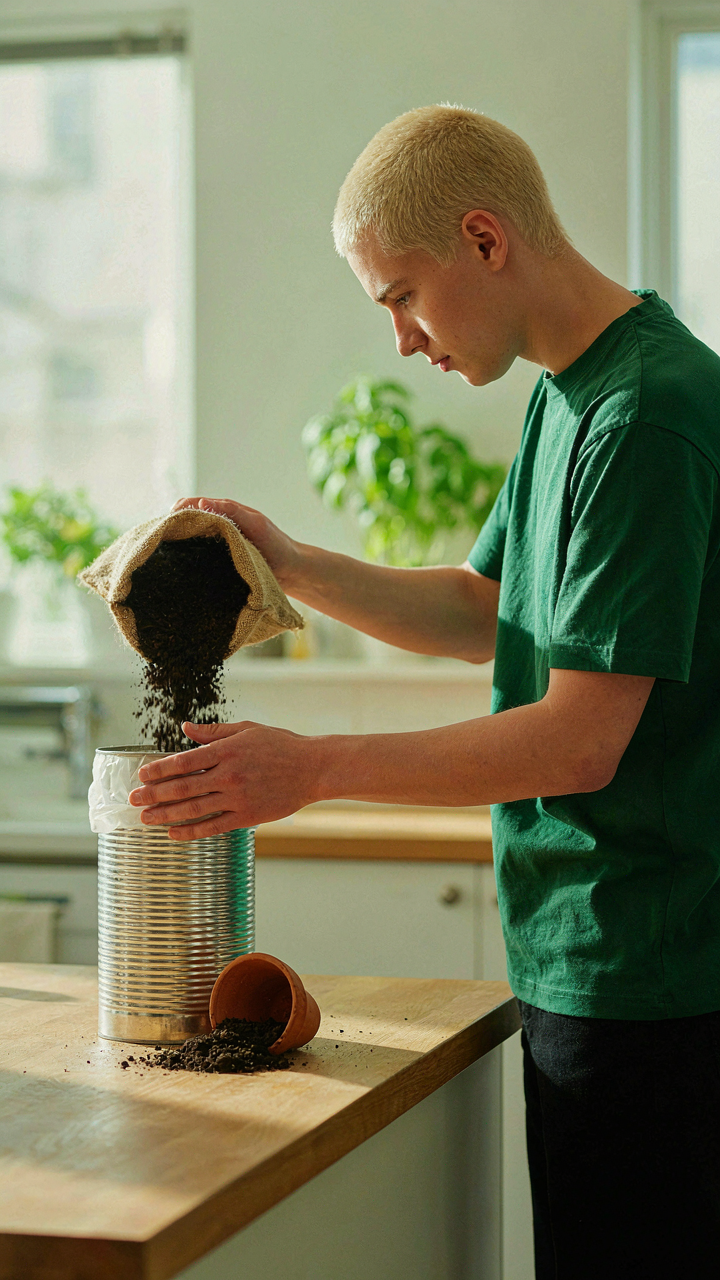
Galvanized tin cans last longer than standard cans because the zinc coating delays the oxidation process. Even then, the coating degrades within one to two growing seasons if drainage is poor. Drill drainage holes immediately after acquiring the can. Line the interior with a thin plastic bag to create a barrier between soil and metal, which adds two to three months of usable lifespan. This is not optional. Without it, you’re cycling dead herbs every few months instead of maintaining productive plants.
The Sun Tax: Why Your Sunny Windowsill Is A Lie
Window Orientation Doesn’t Match What Your Plants Need
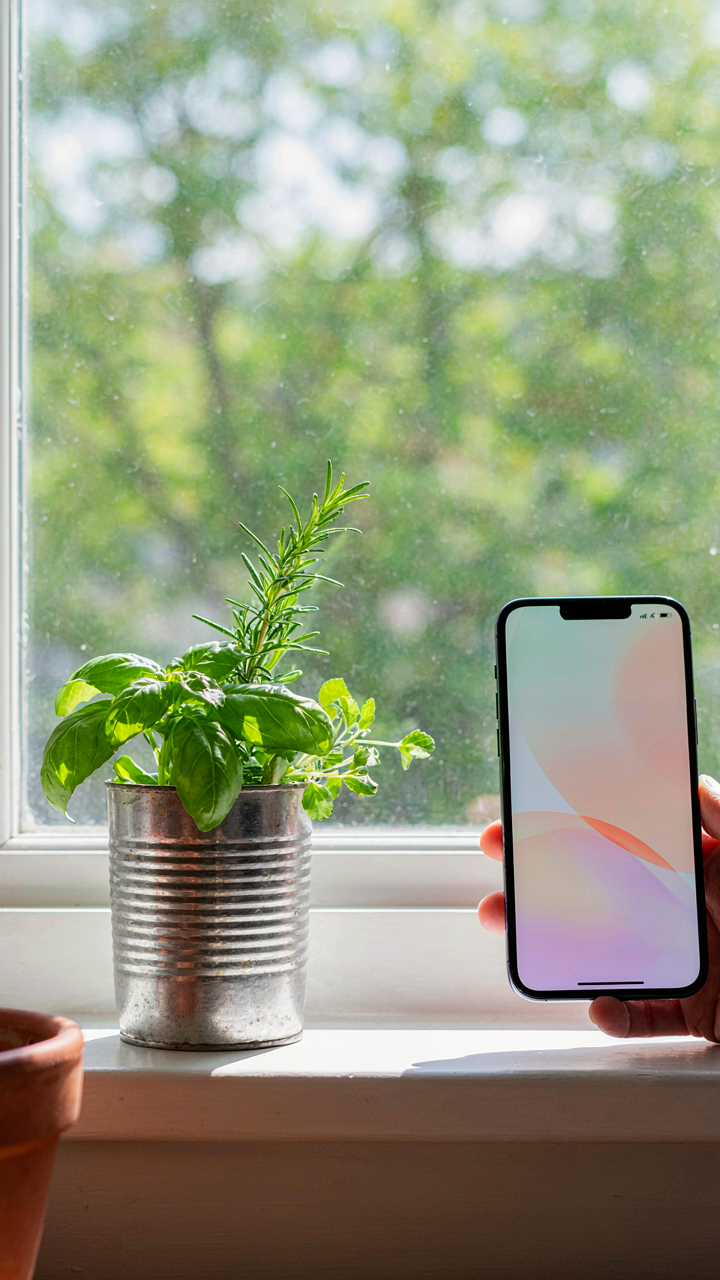
You want to believe your south-facing window is enough because admitting it isn’t means you failed before you started. Here’s the mechanism: lux is the unit that matters, not compass direction. A south-facing window in winter delivers 500-1000 lux at the glass. Most culinary herbs need 2000-3000 lux to thrive. Your windowsill is half-lit and you haven’t measured it.

Window orientation tells you nothing without latitude, season, and obstruction data. A south-facing window in Minnesota differs completely from one in Florida. Reflective surfaces, trees, buildings, and glass thickness all intercept light before it reaches your tin can. Measure actual lux with a smartphone app or meter, not faith. Place the can where it actually receives the light intensity herbs demand, not where the real estate listing promised sunlight.
Seasonal Light Collapse Kills Winter Herbs
The sun moves thirty degrees lower across the sky from summer to winter. That same windowsill that fed your basil in July starves it in January. Photosynthesis doesn’t care about your intentions, only photons. A tin can in the optimal spot in June sits in shade by December because the sun’s arc changes physically, not metaphorically.
Move your cans seasonally or accept reduced growth during low-light months. In winter, push them as close to the glass as condensation allows. Prune aggressively to match the reduced light energy available. Some herb varieties like parsley tolerate lower lux better than others, but none escape the season’s math. Track your windowsill’s light pattern across three months before planting anything permanent in tin.
The Dan Koe Cultivation Protocol For Tin Can Herb Garden
Pick Your Three And Stop Looking
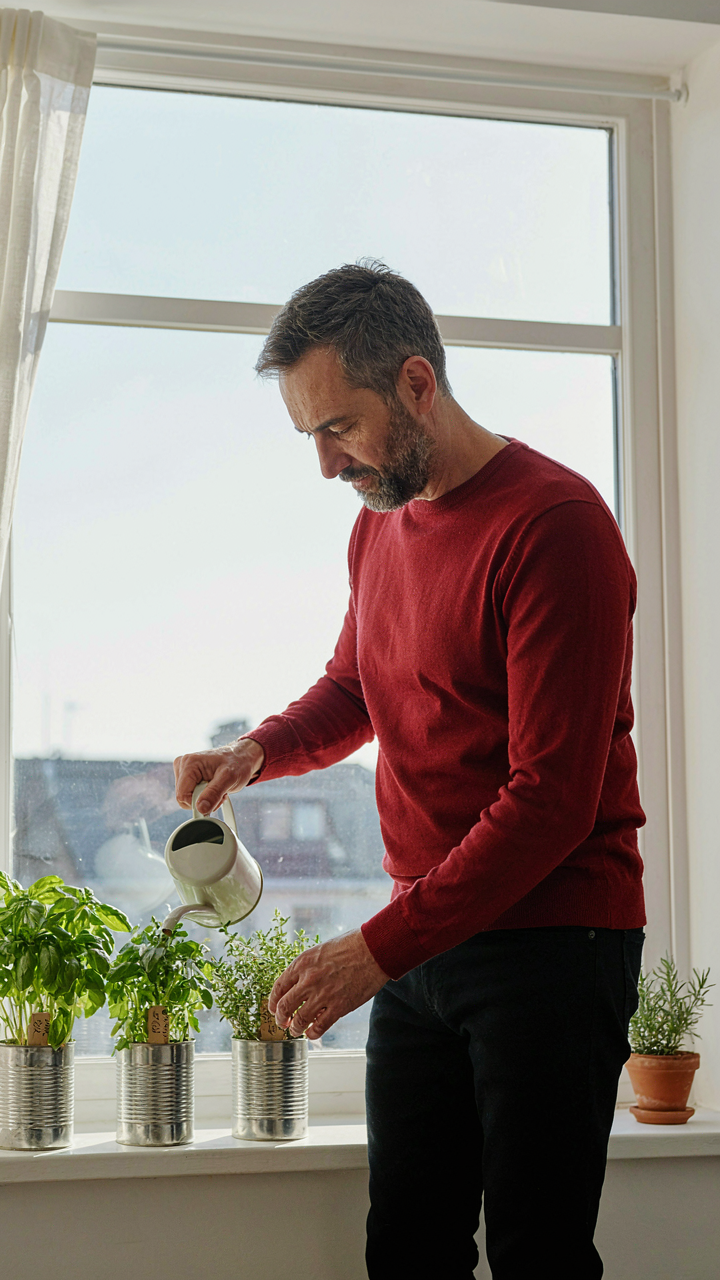
You want permission to obsess over herb varieties instead of actually growing them. Here’s the mechanism: decision paralysis kills execution. Treat herb selection like inventory management, not identity expression. Pick three herbs that thrive in direct sun, fit your tin can dimensions, and solve a real cooking problem. That’s it.

Basil, oregano, and thyme work because they tolerate tin can constraints. They need six to eight hours of sun daily, which a south-facing windowsill delivers. They don’t demand perfect drainage adjustment. They’re profitable to replace if one fails. Stop researching heritage cultivars and start planting what works.
Cluster Your Watering Into One Task
Common advice tells you to water when soil feels dry. That’s maintenance thinking, not efficiency. Batch your watering like a production line: same day, same time, same protocol. This reduces cognitive load and catches underwatering before plants wilt.
Water all your tin cans on Sunday mornings before the temperature peaks. Use room-temperature water to avoid shocking roots. Check soil depth with your finger before adding water. Soil in a tin can drains faster than ceramic, so you’ll water more frequently than you expect. Set a recurring phone reminder for watering day so the task doesn’t compete for your attention throughout the week.
Beyond DIY Herb Garden: The Ecosystem Engineering Approach
What Nature Actually Does Right
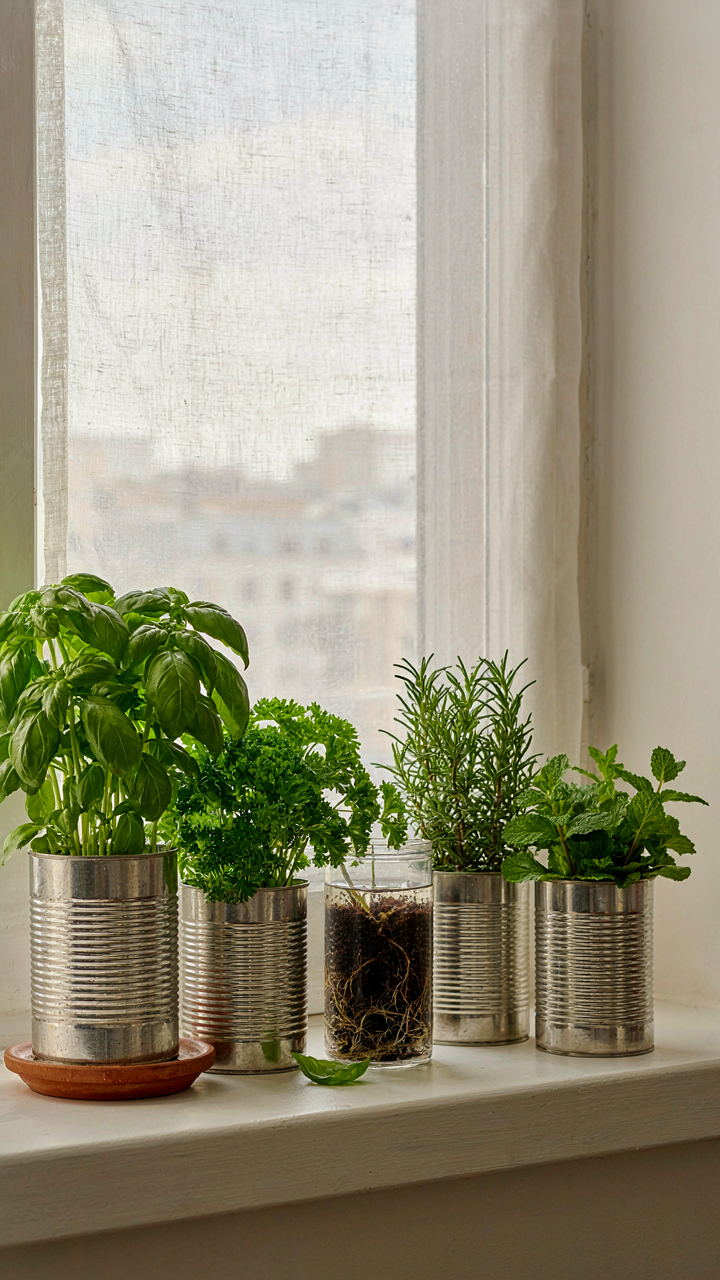
You want to feel like you’re doing something smarter than the standard windowsill setup, and ecosystem thinking gives you permission to believe that. But the real mechanism is this: nature doesn’t optimize single organisms in isolation. It stacks relationships. Ecology, the study of organism interactions, teaches us that resilience comes from redundancy and mutual benefit, not monoculture. A tin can with one herb dies if that herb fails. A tin can system with intentional plant pairing survives setbacks because the plants support each other’s survival conditions.
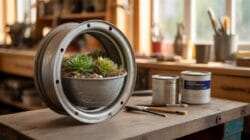
Most people think “ecosystem” means “complicated.” It doesn’t. It means your tin can now functions like a miniature forest floor where competition triggers adaptation rather than collapse. Basil and oregano don’t fight for the same nutrients at the same soil depths. They occupy different ecological niches. The tomato plant roots deeper while cilantro stays shallow. One plant’s shade becomes another plant’s protection from afternoon burn. This isn’t romantic. It’s structural efficiency you can replicate in six inches of soil.
Plant Pairings That Compound Growth
The common advice here is pure theater: “plant things that grow well together” as if that’s actionable. Here’s what actually matters: some plants actively improve the soil or pest resistance of their neighbors through root secretions, leaf compounds, or root-zone biology. Others simply don’t compete for the same resources at the same time. That distinction changes everything.
- Basil and thyme: Basil prefers consistent moisture and warmer zones. Thyme tolerates drought and cooler edges of the windowsill. They occupy different moisture preferences, extending your watering window and reducing failure risk across the tin can.
- Cilantro and parsley: Both shallow-rooted but cilantro bolts fast in heat while parsley stays productive longer. Sequential growth means continuous harvest without replanting the entire container constantly.
- Oregano and marjoram: Nearly identical growing needs but different pest susceptibilities. If spider mites target one, the other survives, keeping the system productive through minor infestations.
- Chives and mint: Chives suppress certain fungal issues in surrounding soil. Mint’s aggressive growth pattern is contained by the tin can boundary while chives benefit from the moisture mint demands.
- Sage and lavender: Both tolerate neglect, prefer drainage, and attract different pollinators and beneficial insects. Multiple insect types mean better pest control and cross-pollination if flowers set seed.
The system works because you stop treating the tin can as one growing zone and start treating it as stacked niches with different light exposure, moisture retention, and root depth. Plant the tallest herbs toward the back of the windowsill. The shortest in front. This creates a light cascade where lower plants get filtered light through upper foliage, reducing evaporation and broadleaf stress. When one plant’s root system reaches maturity, it stabilizes soil structure for the younger companion’s establishment phase. That’s not luck. That’s engineered redundancy. Observe which pairings produce the longest continuous harvest in your specific window angle and light duration, then replicate that exact configuration in new tins.
Debunking The “Tin Can Crafts” For Sustainable Growth
The Novelty Trap And Real Container Lifespan
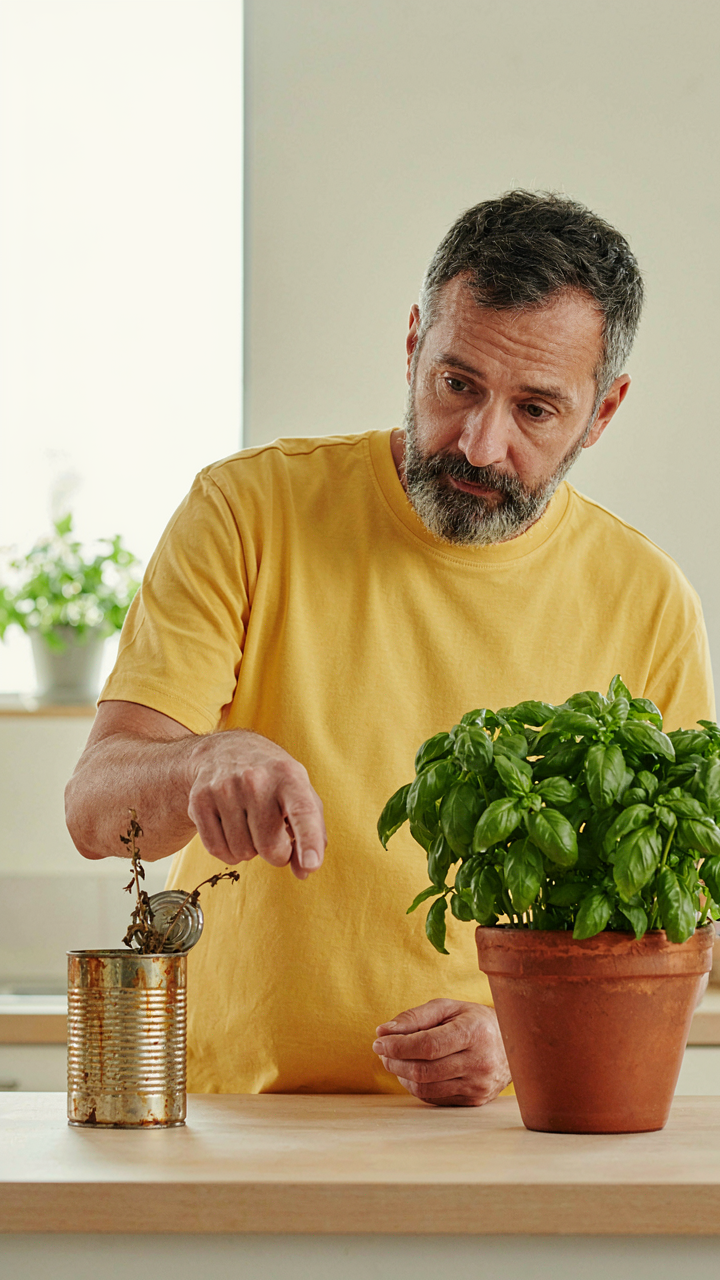
You want to believe tin cans work long-term because admitting they don’t means you wasted money on something Pinterest told you was sustainable. Here’s the mechanism: tin corrodes. Steel rusts. Even lacquered or painted cans break down when exposed to moisture, soil acidity, and constant wet-dry cycles. A tin can holds herbs for one growing season reliably, maybe two if you’re lucky and the rust doesn’t penetrate the sidewalls first.
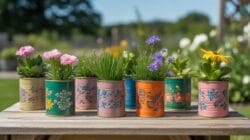
The distinction matters because container longevity follows the same degradation curve as any metal vessel in an aqueous environment. One season of basil or parsley is the realistic window. After that, you’re either replacing the can or moving the herb to something durable. Most people don’t plan for this replacement cycle upfront, which means they’re not actually saving money or reducing waste. They’re just deferring the problem by three months.
When Your Herbs Outgrow The Container
Tin cans max out at one herb per can, sometimes two if you’re ruthless about spacing. The scalability problem isn’t a limitation of tin itself but of surface area and root volume. Basil needs at least five inches of depth and four inches of width to establish a productive root system on a sunny windowsill. A standard soup can gives you that barely. Oregano, thyme, and rosemary demand deeper containers as they mature, and tin won’t expand.
Move to food-grade plastic, ceramic, or glazed terracotta when you reach three or more herbs in rotation. These materials preserve root health through better drainage management and don’t degrade under the same moisture stress. The upgrade point arrives around week eight of growth, when you’re harvesting regularly and roots have established. That’s when you either commit to container rotation or accept lower yields from root-bound plants.
The ROI Of Actual Effort: Beyond Tin Can Garden Ideas
Yield Per Hour Invested
You want to believe a tin can herb planter pays for itself in fresh basil. It doesn’t, and pretending it does wastes your real resource: time. Economics calls this input-output analysis, and tin can gardening reveals a hard truth: the yield-per-hour metric shows why most people quit after week three.
A single tin can holds roughly 16 to 20 ounces of soil. Basil, parsley, or oregano grown this way produces enough for two to four meals per month under ideal windowsill conditions. The setup takes 20 minutes. Maintenance runs five minutes weekly. At six months, you’ve invested roughly 170 minutes for maybe thirty harvests. Compare that to buying a bunch of fresh herbs for three dollars. The can wins on novelty, not efficiency.
What Actually Stops You From Harvesting
The hidden cost isn’t labor. It’s the gap between intention and action when the plant just sits there. You forget it needs water on Tuesday. You notice the soil dried out on Thursday. By Saturday, the stem looks woody and you harvest nothing. Loss aversion psychology calls this the “sunk cost fallacy,” but for plants it operates differently: you abandon the can because daily neglect compounds invisibly until motivation vanishes.
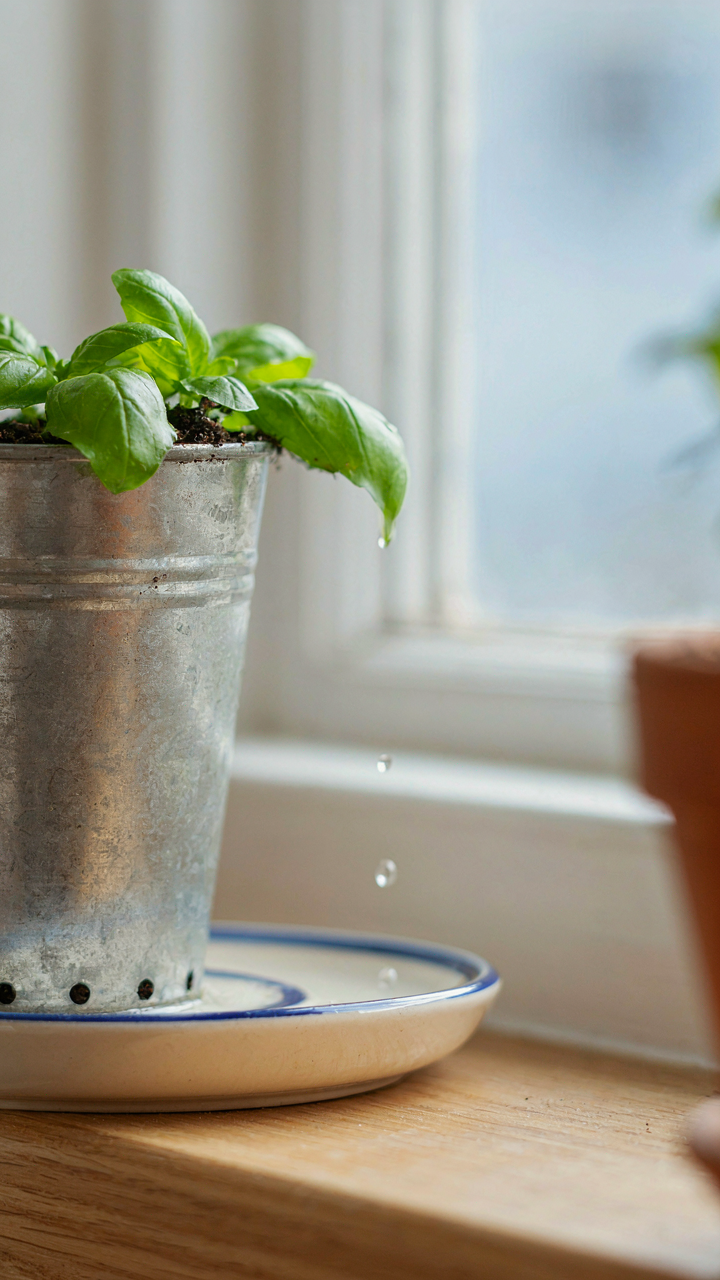
The mechanism is drainage friction. Tin cans lack drainage holes by default. You either drill them and deal with water pooling on your windowsill, or you skip drainage and overwater the roots. Both paths create a maintenance tax that exceeds the herb value. Fix the drainage before planting, or accept that your can becomes a decorative object by month two. Add a saucer beneath the can, drill three quarter-inch holes in the base, and establish a specific watering day. That single protocol shift determines whether you harvest or abandon.
Mastering The Microclimate: Your True Leverage Point
Humidity And Air Circulation Control
You want this section to work because you’re tired of watching herbs wilt for reasons you can’t name. The real mechanism here is vapor pressure deficit, borrowed from plant physiology: the gap between how much moisture the air holds versus how much it could hold. Tin cans trap moisture against the soil surface, raising humidity immediately around the plant. This cuts the plant’s transpiration demand. Less water loss means slower drying cycles and fewer dead leaves. Most growers ignore this and just water more. Wrong move.

The windowsill itself creates a dead zone. Glass reflects heat inward but blocks air movement. Your tin can sits in still air, which compounds the problem. Drill two small holes, one near the soil line and one near the rim, on opposite sides of the can. This creates passive convection without you managing a fan. Air enters the lower hole, warms against the soil, and exits the upper hole. Humidity stabilizes at the plant’s preferred range while excess moisture escapes instead of breeding mold on your herbs.
Temperature Consistency And Plant Response
Tin conducts heat aggressively, which sounds helpful but creates the opposite problem on a sunny sill. Metal absorbs afternoon warmth and transfers it directly to the soil, spiking root temperature by ten to twenty degrees above air temperature in direct sun. Basil and mint tolerate this. Parsley and cilantro shut down photosynthesis when roots exceed seventy-five degrees. Temperature swings damage cell membranes over time. The herb survives but produces weak growth with thin leaves.
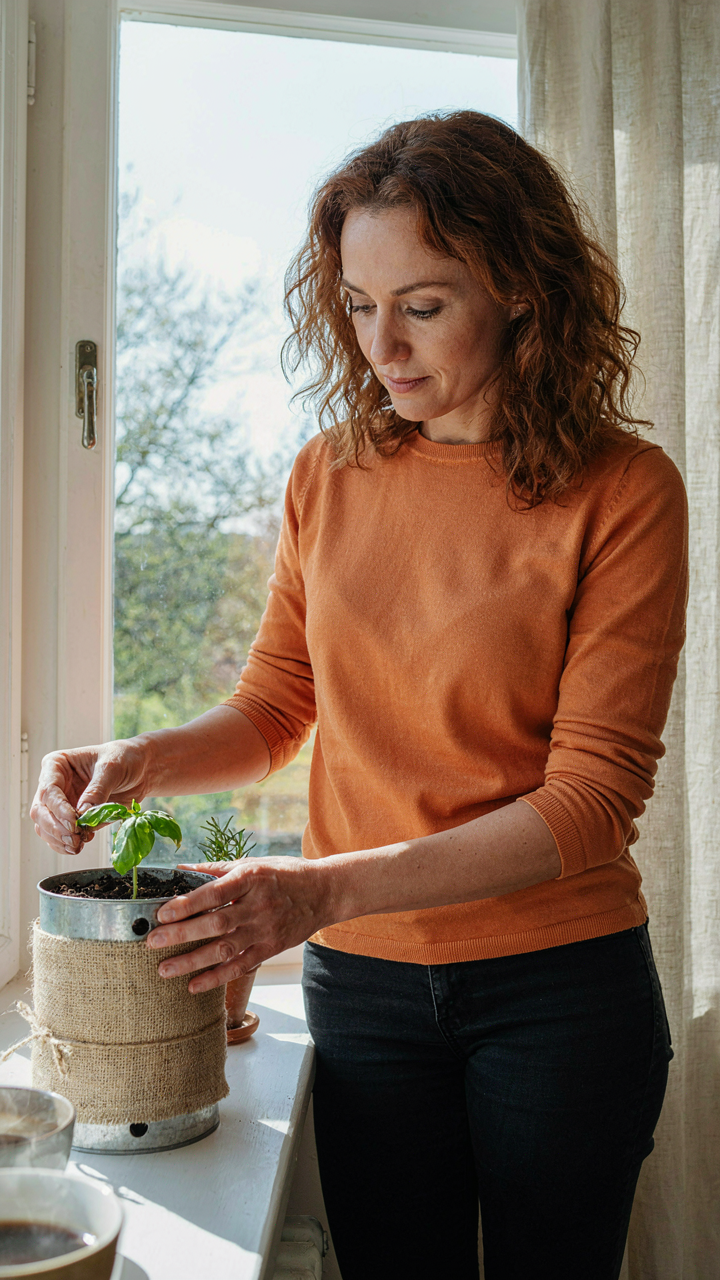
Wrap the lower two-thirds of the tin can in kraft paper or burlap, secured with twine. This reduces radiant heat absorption without blocking the drainage holes you drilled. Paper is breathable, so moisture still escapes. Root temperature stays within five degrees of ambient air temperature, which keeps photosynthesis running at full capacity. Check soil moisture every two days instead of daily. The stable root temperature extends watering intervals and forces you to read the soil instead of guessing.
The Real Problem Isn’t Your Tin Can; It’s Your Unexamined Expectation Of Effort-free Returns
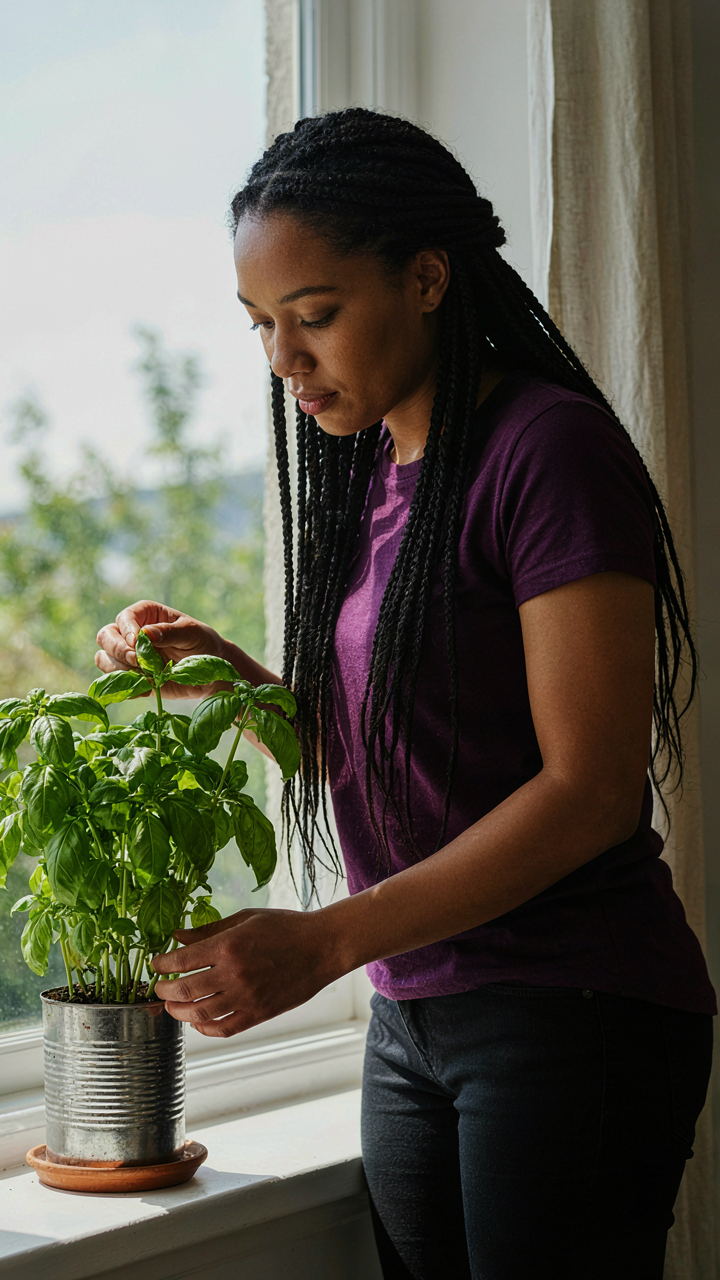
You buy tin can herb planters because you want fresh basil without the work. That’s the lie you tell yourself. Dirt, water, and sunlight demand your attention or they punish you with dead plants. Your windowsill becomes a graveyard of good intentions. Pick one herb today. Commit to watering it on the same day every week. Stop waiting for gardening to be convenient and start treating it like the small discipline it actually is.