The Vertical Advantage: Reclaiming Patio Square Footage With A Ladder Plant Stand
Why Ground Level Thinking Wastes Your Space
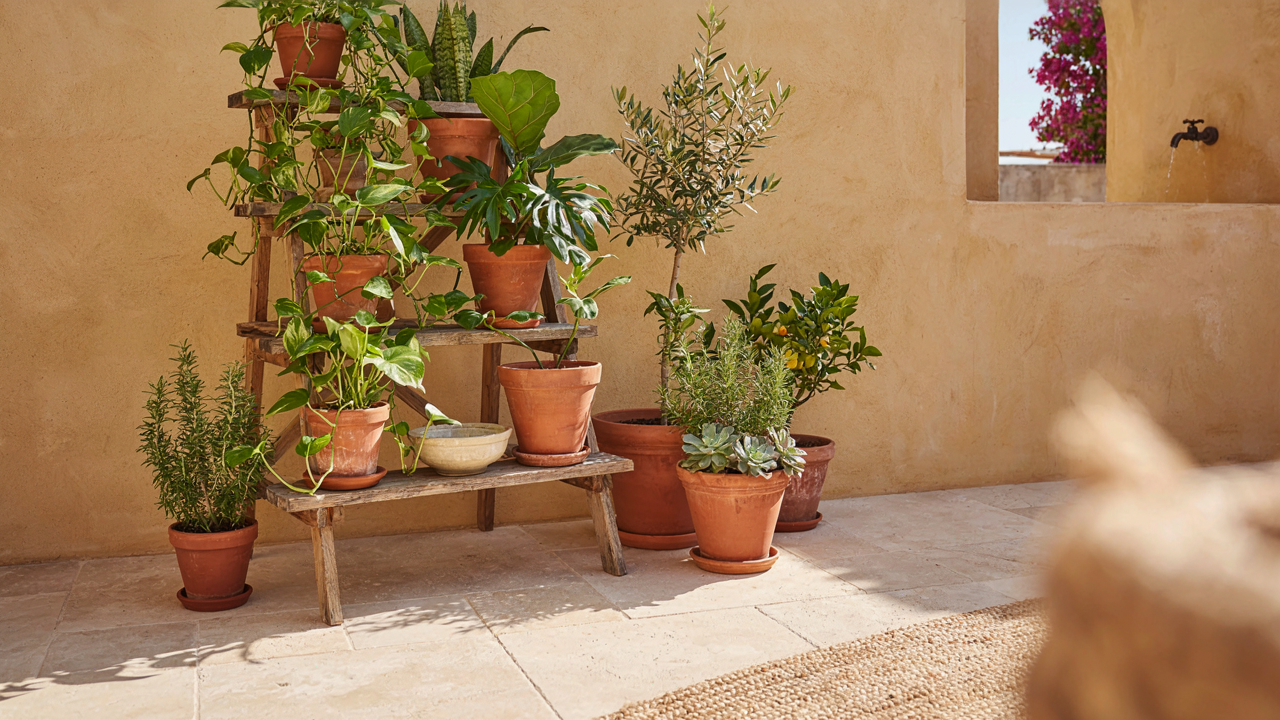
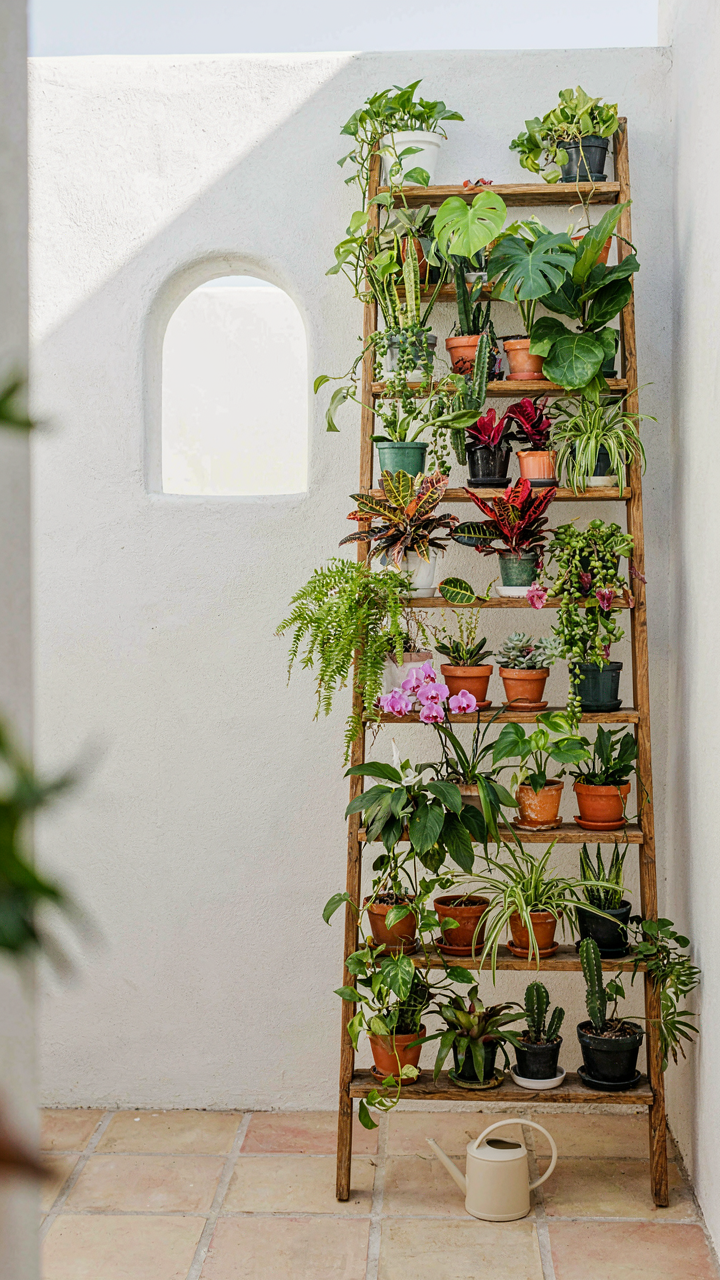
You want more plants without sacrificing the patio space where you actually sit. That’s the real problem nobody names. Conventional planters fail small spaces because they think in terms of footprint instead of volume. A ground-level planter occupies square footage you can’t reclaim. A ladder plant stand uses the same footprint but expands upward, converting dead air into growing real estate. The math is simple: five rungs times four plants per rung equals twenty plants in the space one large planter would occupy.
The ladder plant stand works because it abandons the horizontal bias of traditional gardening. Most people default to spreading plants wide because that’s what they’ve seen. But constraints force better design. When you stack plants vertically on a ladder structure, you’re making a choice to densify, not decorate. The geometry forces efficiency. You stop thinking about whether plants look good and start thinking about yield per square foot. That’s the shift that changes how you actually use a patio.
The Math Of Vertical Growth
Botany uses the term “light compensation point” to describe the minimum light a plant needs to survive. Apply this directly to ladder plant stands: every rung down receives less direct light than the one above it. This isn’t philosophy. It’s physics. The top rung of a ladder plant stand gets full exposure. The bottom rung gets ambient light filtered through the plants above it. You must place shade-tolerant species at the base and sun-demanding plants at the peak, or your lower plants starve.
The second mechanism is air circulation. Ladder structures create channels. Wind and air move through the gaps between rungs instead of stalling around a solid mass like a traditional planter box. This reduces fungal pressure, particularly in humid climates where plants pressed together create microclimates that breed disease. Spacing plants vertically on a ladder also makes watering easier to control—water from above flows through each tier rather than pooling in soil that’s already saturated below. Position the ladder perpendicular to prevailing wind, and you’ve optimized for both growth and maintenance in one layout decision.
Beyond Aesthetics: Engineering Optimal Sunlight Exposure With Your Garden Ladder
Sun Tracking: Angling Your Repurposed Ladder
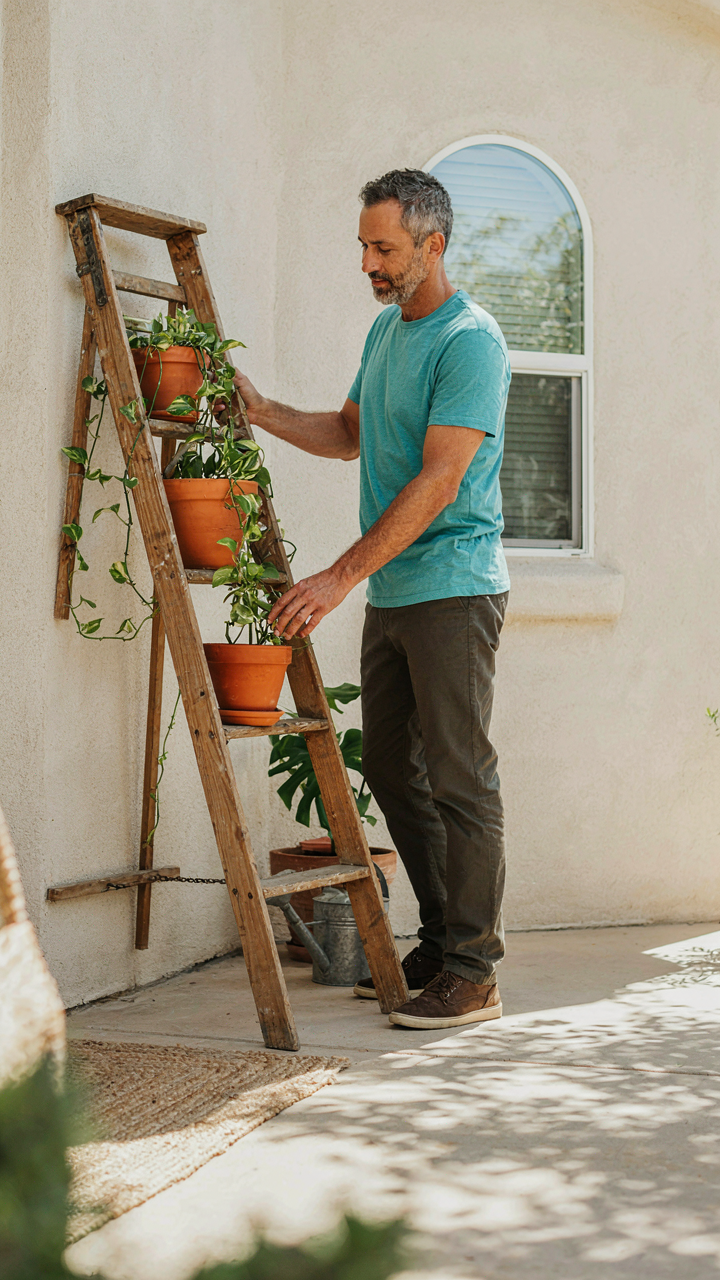
You want this to look intentional, not like you’re solving a problem. Here’s the real mechanism: plants need specific light angles, not just hours. Think of your ladder as a light redirector. The rungs create shadow patterns that shift throughout the day. A ladder angled at 30 to 45 degrees toward your sun’s path captures morning or afternoon light depending on orientation, while vertical placement blocks midday harshness. You’re not arranging plants randomly. You’re positioning the structure itself as a light filter that changes what each tier receives.

Most people rotate their ladder seasonally without understanding why. The sun’s altitude changes 46 degrees between summer and winter solstice. A ladder that works in June won’t work in December without repositioning. Tilt the ladder forward in winter to catch lower sun angles, and recline it slightly in summer to increase shade on lower tiers. This isn’t decoration. This is applying horticultural geometry to a borrowed structure. Check your patio’s shadow map at three time points daily for two weeks before finalizing angle and position.
Tiered Design For Varied Plant Needs
Plants don’t have uniform light requirements, but tiered structures create a false hierarchy based on convenience, not biology. Botanical science recognizes light tolerance as species-specific, not position-specific. Your ladder’s rungs become a light gradient tool if you treat them as such. Shade-tolerant ferns go low where the structure and surrounding patio obstruct direct rays. Sun-demanding succulents occupy the top where nothing interrupts vertical light. Middle tiers hold transition plants that tolerate partial shade. You’re building a microclimate stack, not a decoration.
The real advantage of a repurposed ladder over a solid plant stand is visibility and airflow between tiers. This matters because light reflection bounces between rungs instead of being absorbed by solid surfaces. Place reflective surfaces or light-colored pavers behind your ladder to bounce indirect light onto north-facing plants. Experiment with reflector placement for one full sun cycle before committing to permanent positioning. Measure light levels with a basic light meter app or observe leaf color shifts over weeks. When lower plants receive adequate light and show no stretching toward the sun, your tier heights and spacing are correct.
The Deconstruction Protocol: Preparing Your Old Ladder For Upcycle Garden Conversion

Check The Foundation First
You want this to work because the alternative is throwing money at a new stand, and admitting your salvage project failed. That’s the real pressure. Here’s the mechanism: a ladder’s stability depends entirely on its base geometry and material integrity, not aesthetics. Aluminum ladders flex under lateral load. Wood ladders fail at joints. Steel ladders rust from the inside out. Before you flip it vertical as a plant stand, you need to know what you’re actually holding and where it breaks.
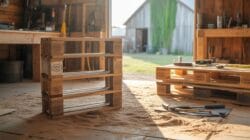
Inspect the ladder’s feet and side rails for stress cracks, particularly where metal bends or wood splits. A stepladder converted to vertical storage inverts the load path, meaning weight now travels down rails that weren’t engineered for that force distribution. Check if the rungs are mortised or bolted. Bolted construction is repairable; mortised joints that crack cannot be reliably reinforced. Material matters here, too. Untreated wood will rot under consistent moisture from plant soil and watering.
Reinforce Before You Plant
Everyone skips this part and installs plants immediately, then watches the whole thing lean six months later. That’s a waste of material and time. The real work is treating the ladder’s structural weak points before any plant touches it. If using wood, apply exterior-grade sealant or polyurethane to all surfaces, especially the joints where water collects. For bolted connections, swap standard fasteners with stainless steel and tighten them to eliminate play. Strengthen the base by adding a wider footplate, welded or bolted perpendicular to the side rails at ground level, increasing the moment arm against lateral tipping.
Sand down any rust on steel ladders and apply rust-converting primer, then topcoat with exterior paint or clear lacquer. Treat wood joints with epoxy consolidant if they show soft spots, allowing it to cure fully before assembly. Test stability by pushing horizontally at the top with firm pressure before loading any plants. The base must not flex or rock. If it does, add diagonal bracing between the side rails near the base using metal angle stock or pressure-treated lumber, fastened with carriage bolts and lock washers.
Minimalist Function: Choosing Plants For Your Recycled Garden Ladder Planter
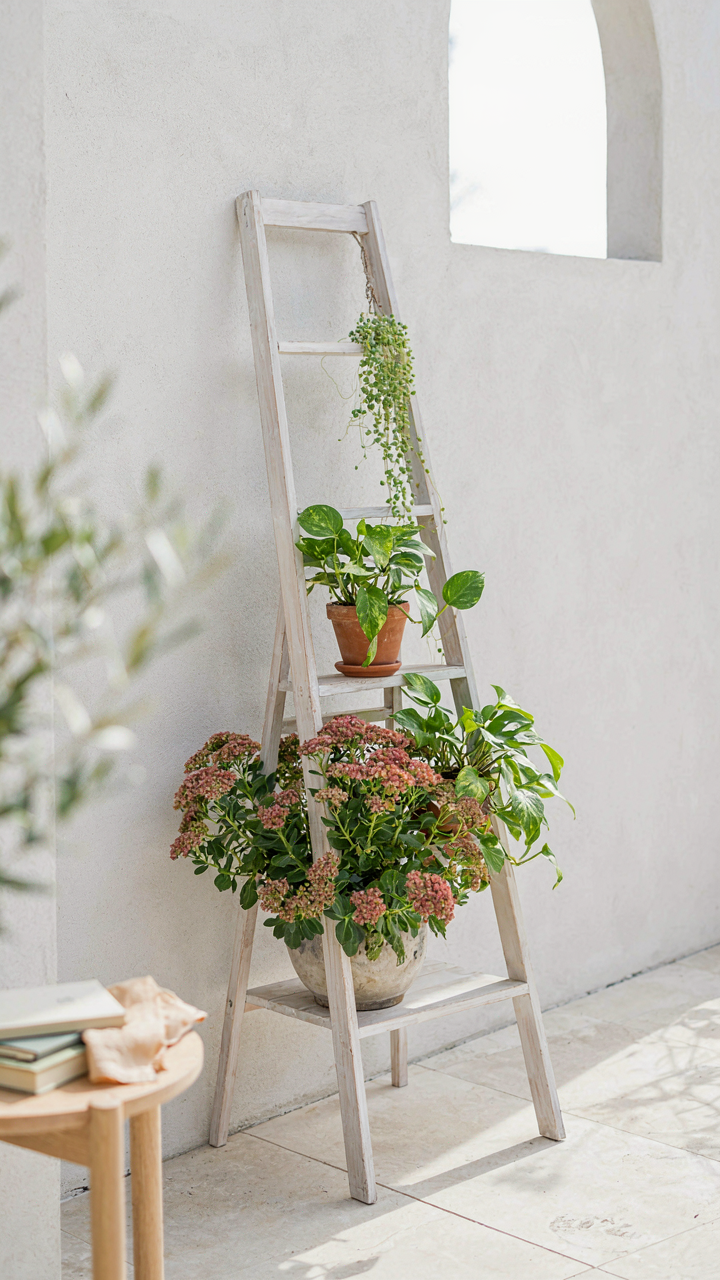
The Right Plant, Right Rung Principle
You want this to look effortless, which is why you’re reading about plant placement instead of just cramming anything into available space. The mechanism is load distribution. In structural engineering, weight capacity decreases as you move up a cantilever. A ladder planter follows the same logic: lower rungs bear more stress from soil, water, and root systems than upper rungs. Heavy plants belong at the base.

Start with weight, not aesthetics. A fully watered hanging basket of pothos on the top rung stresses the ladder structure far less than a dense 15-pound succulent arrangement. The ladder was built to lean at an angle, not to act as a vertical tower. Place trailing or lightweight specimens like string of pearls, creeping fig, or thin-stemmed herbs on upper tiers. Reserve lower positions for compact shrubs, sedums in terra cotta, or dense foliage plants that anchor the display visually and physically.
Water Movement Through Stacked Tiers
Everyone talks about good drainage, then ignores how water actually moves through a stacked system. The real problem isn’t drainage in each pot. It’s cascading overflow from tier to tier, which turns your lower plants into accidental bog gardens. Water exits one pot and lands directly on the plant below instead of the soil around it.
Solve this by spacing pots far enough apart that water drains past the tier beneath it, not onto it. Use saucers on lower rungs to catch this overflow, then manually dump it rather than letting it pool. For tiers holding multiple small pots, position them so gaps exist between containers. This forces water to miss the next tier entirely. Check each pot before watering by pressing soil an inch down. If moisture exists, skip that tier. Ladder planters dry fast due to air exposure on all sides, but the cascading problem masks whether individual pots actually need water.
The Bio Scaffolding Model: Mimicking Nature’s Verticality With Diy Upcycled Planters
How Nature Solves The Stacking Problem
You want to feel like you’ve discovered something original instead of just rearranging objects on your patio. Here’s the mechanism: biology has already solved vertical density. In ecology, niche partitioning describes how organisms occupy specific layers to avoid competing for the same resources. A repurposed ladder plant stand becomes a niche partition tool—each rung captures a different light band, moisture zone, and root depth just like a forest does without design thinking or Pinterest boards.

The difference between stacking plants randomly and stacking them ecologically matters for survival. Random stacking creates shade wars where lower plants starve for light while upper plants dry out faster. Ecological stacking accounts for plant height at maturity, water needs by layer, and light requirements by position. A wooden ladder stand naturally enforces this constraint because the rung spacing forces you to choose plant types that actually work together instead of just fitting aesthetically.
Layering Plants Like A Canopy Arranges Itself
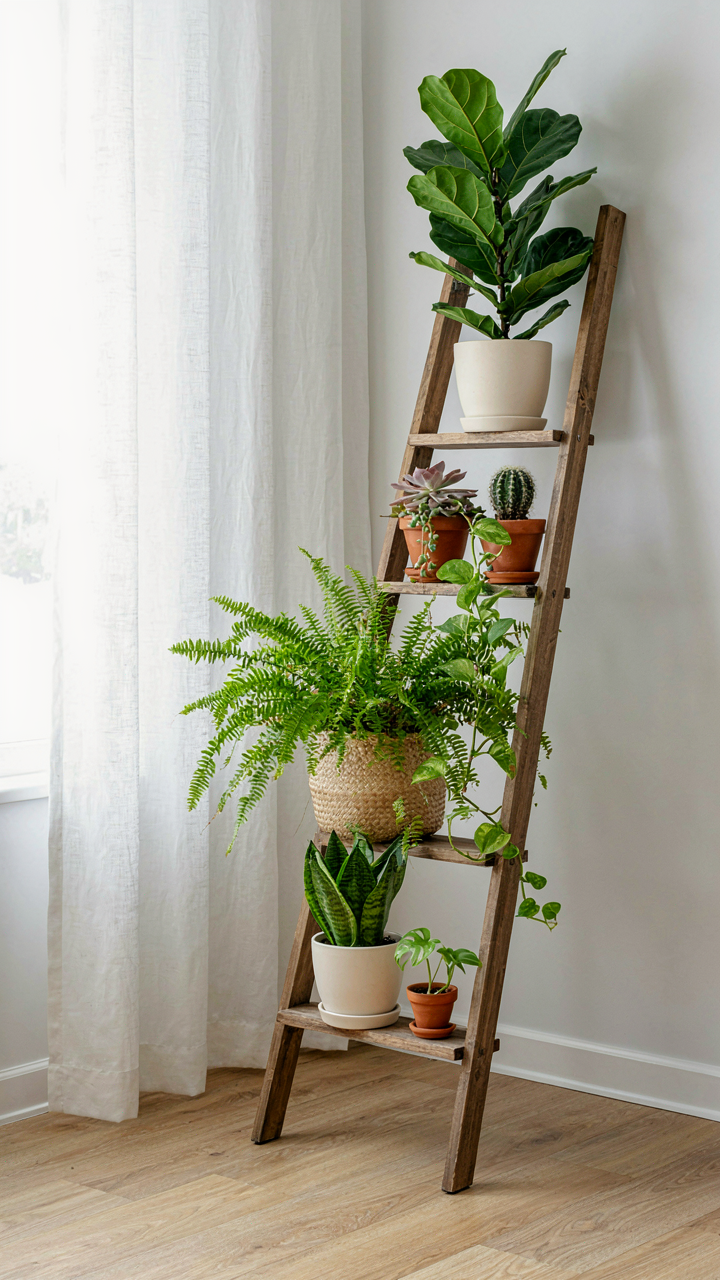
Stop treating your ladder stand like a bookshelf for pots. Forest canopies don’t organize by appearance—they organize by function and survival. The emergent layer (tallest plants) creates shelter and shade. The understory (medium height) filters light and traps moisture. The ground layer (smallest plants) requires shade and humidity to thrive. A four or five rung ladder stand maps directly onto these layers if you match plant traits to position rather than picking plants first.
Place trailing or low light plants on lower rungs where they receive dappled light and benefit from moisture condensation. Position medium height plants in the middle where they catch transitional light. Reserve top rungs for sun demanding species that can handle exposure and wind. This layering protocol means your patio ecosystem becomes self regulating—water flows down, shade protects underneath, and nothing competes directly for the same conditions.
The Unconventional Material Matrix For Your Upcycled Planter
Repurposing Containers Beyond Terracotta Pots
You want permission to ignore what everyone else is doing. The real mechanism here is load distribution: terracotta spreads weight evenly across ladder rungs, but non-standard containers force you to calculate actual stress points and rung capacity. Most people default to pots because they’re safe. That’s the trap.
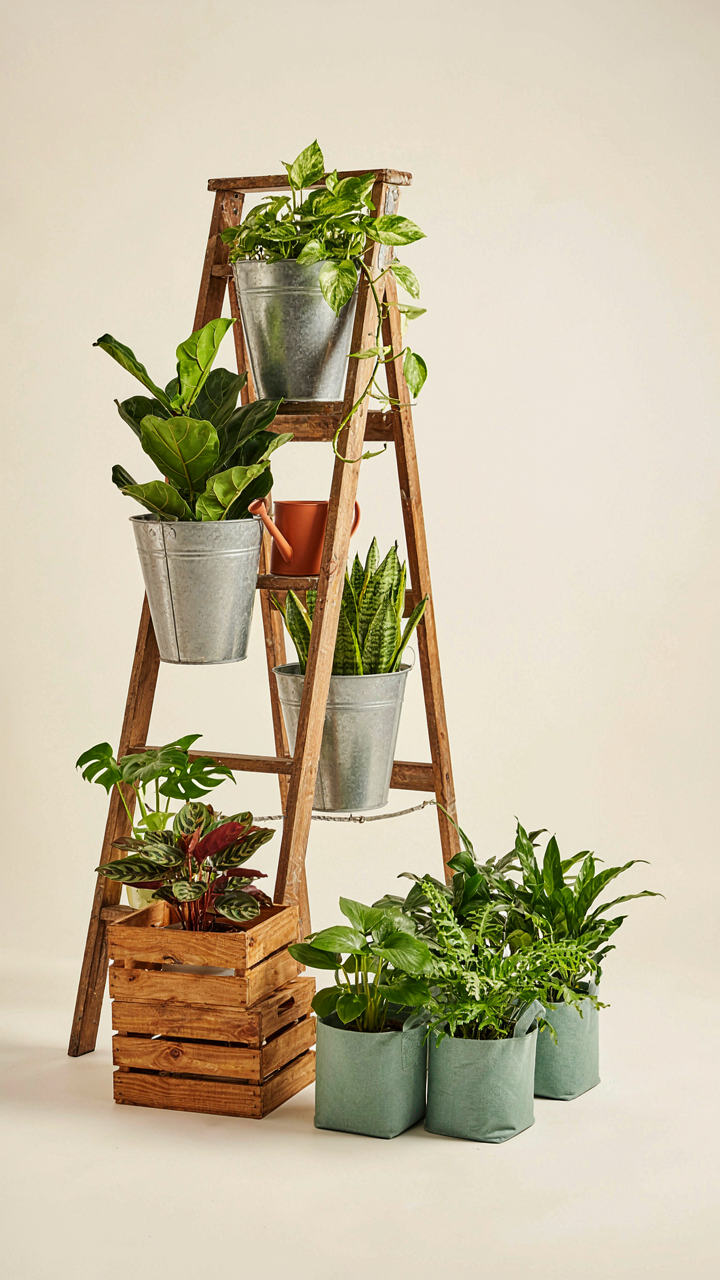
- Wooden crates: Stack horizontally on rungs to hold multiple shallow-rooted plants. Weight concentrates on two contact points, so verify rung thickness handles the load before mounting.
- Metal baskets: Galvanized steel resists rust and weighs less than ceramic. Hanging baskets via S-hooks spreads tension across the rung rather than compressing it vertically.
- Repurposed colanders: Drainage holes exist already. Nest them into rung gaps or wire them directly to ladder sides for vertical space efficiency on narrow patios.
- Fabric grow bags: Breathable material prevents root rot better than solid containers. Roll down the top edge and drape over rungs without additional hardware.
- Old window boxes: Mount lengthwise along ladder sides for trailing plants. The structure already anticipates horizontal weight distribution from its original design.

The material you choose determines whether your ladder functions or fails. Ceramic concentrates force at attachment points. Metal distributes it. Fabric spreads it. Test your chosen container on the ground first with soil and water to measure actual weight, then cross-reference your ladder’s rung thickness and material specifications before installation.
Securing Varied Planters To Ladder Rungs
Mounting methods matter more than aesthetics, and standard advice about “just tying it on” misses the structural reality. A ladder rung is a horizontal beam under tension. When you add weight, you’re not decorating—you’re engineering a cantilever system. The rung bends downward at the attachment point.
Use U-bolts or steel brackets rated for at least triple your container’s loaded weight. Brackets distribute pressure across wider surface areas than rope or wire. Position them so the load sits directly above the rung’s center, not at the edges where bending stress peaks. Tighten fasteners weekly during the first month, as wood settles and metal contracts. Check for movement before watering—wet soil adds another 40 percent to container weight. This isn’t overthinking. It’s the difference between a stable display and a failed installation that damages your patio.
Durability Over Decoration: Weatherproofing Your Ladder Plant Stand Ideas

Finishes That Actually Survive Weather
You want your ladder plant stand to look intentional, not neglected. That’s not decoration—that’s the difference between an asset and eyesore. The mechanism is simple: exterior finishes fail when they can’t expand and contract with temperature swings. Wood moves. Metal rusts. Cheap coatings crack and peel, exposing raw material to UV and moisture. You need finishes engineered for movement, not appearance.

Exterior-grade polyurethane and marine spar urethane work because they flex with wood expansion. Paint-grade exterior latex sits on top and chips. Powder coating on metal bonds at a molecular level during heat cure, making it far more durable than spray paint. Don’t confuse brand names with chemistry. The finish must accommodate seasonal wood movement or it fails within one to two seasons, regardless of how premium the can looks.
Stability Against Wind And Weight Distribution
Borrowing from structural engineering, a repurposed ladder plant stand’s resistance to toppling depends on its center of gravity relative to its base footprint. A narrow ladder with plants stacked high creates leverage against wind. Wide base, low mass distribution, wins. Most people add more plants to fill vertical space. That’s backward. The real move is calculating total weight distribution before assembly, then anchoring or widening the base accordingly.
Use ground anchors rated for your region’s wind load, not guesses. Soil-driven anchors work for established ground. For patio pavers, lag bolts into concrete footings prevent sliding during lateral force. The protocol is simple: measure your stand’s height-to-base ratio, estimate total plant weight when wet, then choose anchoring method based on that calculation, not aesthetics.
Maintenance, Not Just Assembly: Sustaining Your Repurposed Ladder Plant Stand System
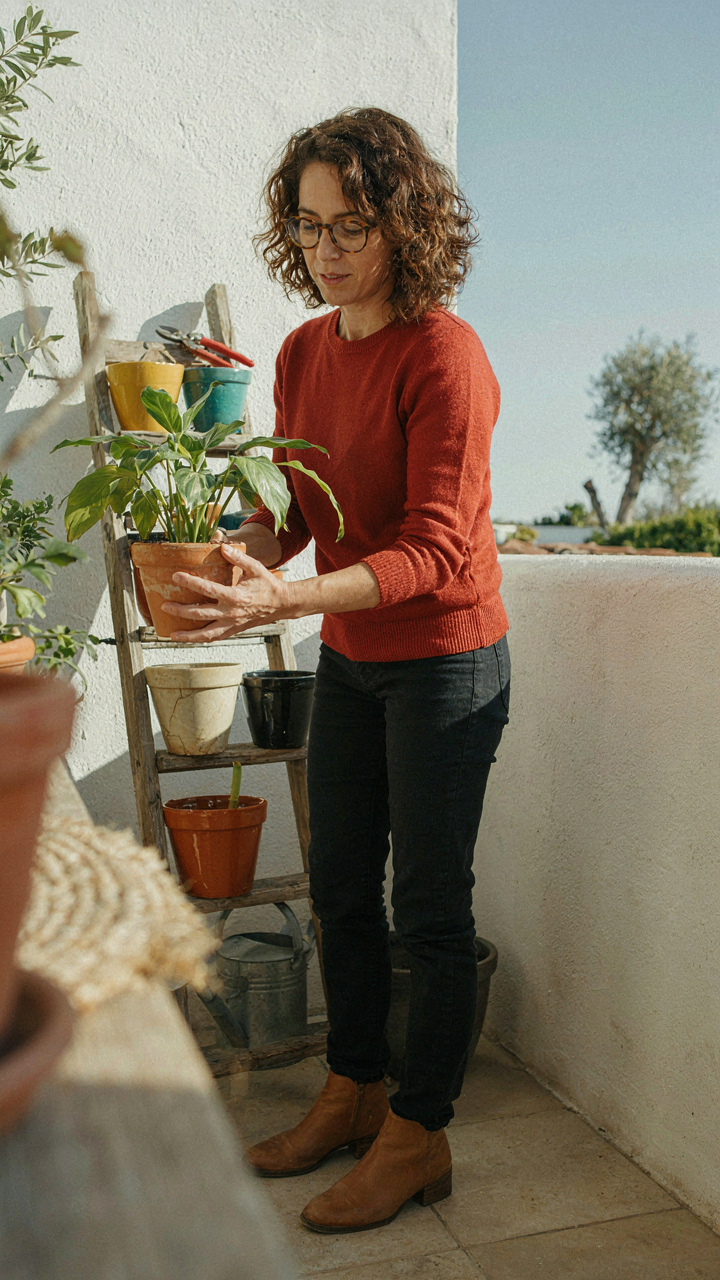
Seasonal Rotation And Plant Health Checks
You want to believe you built something that works once and keeps working. That’s not how biology operates. Your repurposed ladder plant stand sits in an environment that changes quarterly, and plants respond to those shifts by either thriving or dying slowly where nobody notices until it’s too late. Seasonal rotation means moving plants to different rungs based on light exposure changes and temperature swings across spring, summer, fall, and winter.

Most people check plants when they remember. Real maintenance uses a protocol: inspect soil moisture, leaf color, and stem strength every two weeks on a fixed day. You’re looking for early signals of stress, not waiting for collapse. Move sun-loving plants up and forward as summer light angles shift. Shift shade-tolerant varieties lower in winter when patio light becomes scarce. This isn’t guesswork. You’re reading what the plant is telling you and adjusting position before problems compound.
Cleaning And Structural Integrity Inspections
Wood ladders absorb moisture and dust accumulates where it shouldn’t. Metal ladders rust from patio moisture exposure. The mechanism here comes from materials science: oxidation and wood fiber degradation happen continuously whether you monitor them or not, they just accelerate when you ignore them. Most people clean the plants and forget the stand itself. That’s backwards.
Inspect your ladder stand monthly during patio season. Check for soft wood spots by pressing a screwdriver tip into joints and rungs. Look for rust bloom on metal where paint or coating has chipped. Wipe down horizontal surfaces to prevent water pooling. Tighten any bolts or fasteners that loosen from seasonal expansion and contraction. Clean structural integrity before it becomes a failure, not after. Replace compromised rungs before the entire stand shifts under plant weight and topples.
The Return On Ingenuity: Why Your Ladder Plant Stand Is An Asset, Not A Craft Project
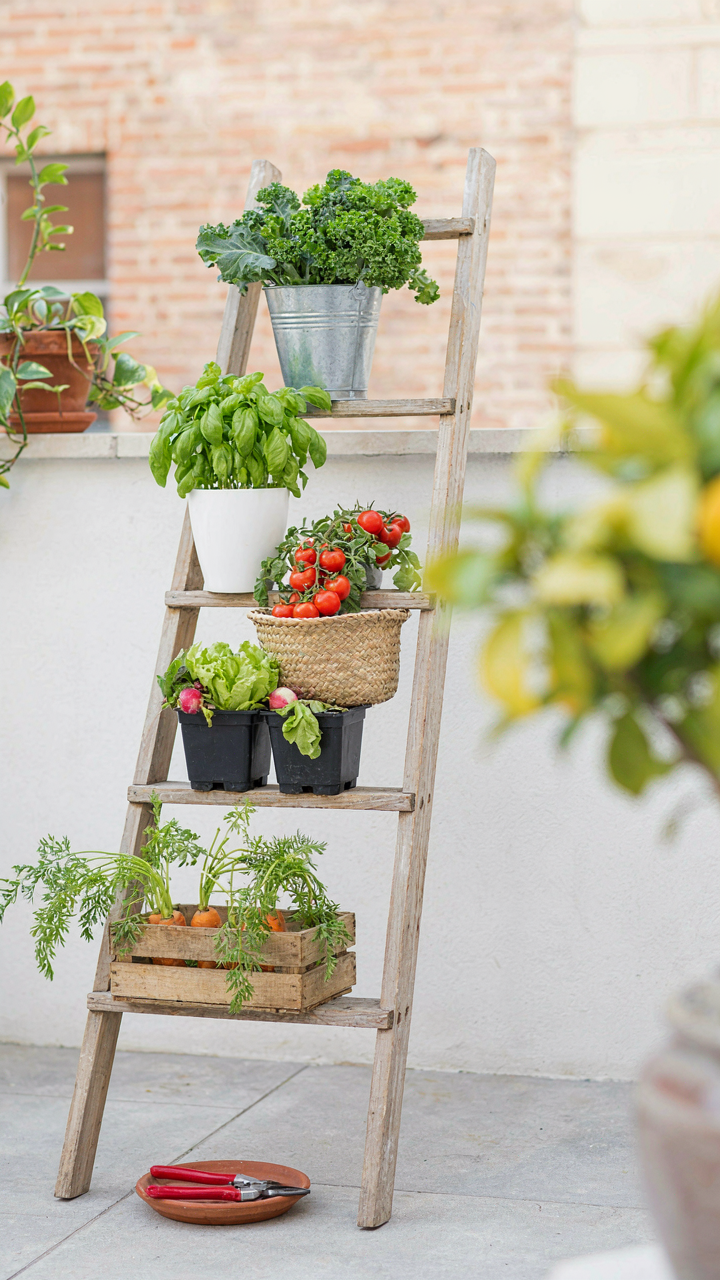
More Plants Per Footprint
You want permission to believe this matters financially. Here’s the actual mechanism: economics borrows from agriculture the concept of yield per unit area. A ladder plant stand compresses vertical growing into minimal floor space. A six-foot wooden ladder holds eight to twelve pots across three tiers where a flat surface holds three. You’re not multiplying plants for aesthetic reasons. You’re extracting more production value from real estate that costs you money whether you use it or not.

The math compounds when you stack functionality. Each tier creates a distinct microclimate zone. Upper tiers catch more light. Lower tiers stay cooler and retain moisture longer. This isn’t clever design. It’s basic physics applied to container gardening. You adjust plant species by tier, matching each to its conditions, and suddenly you’re running three different growing environments in one footprint instead of spreading them across your patio and losing efficiency.
Reclaimed Materials Beat Retail Economics
The conventional advice says upcycling is about sustainability and feeling good. That’s incomplete. The real advantage is stripping out the manufacturing markup entirely. A new tiered plant stand from a garden center runs forty to eighty dollars. An old wooden ladder costs five to fifteen at a salvage yard, or free from a neighbor’s garage. Material cost difference: seventy percent lower. You pocket the difference or reinvest it into soil, pots, and actual plants that generate returns.
Upcycled wood also outperforms new materials in one specific way: stability. Old growth timber from reclaimed ladders is denser and more resistant to warping than the kiln-dried softwood used in budget plant stands today. It handles moisture cycles without degrading as fast. Your structure lasts longer before needing replacement. When maintenance finally comes due, you’ve already extracted years of utility that paid for itself in the first season. The protocol is simple: source the ladder, inspect the joints and rungs for integrity, treat with appropriate wood sealant for patio conditions, then load it.
The Real Obstacle Isn’t A Lack Of Ladders, But A Scarcity Of Imagination In Seeing Waste As Untapped Potential

Most people see a broken ladder and think trash. You should see it as a patio waiting to happen. Stop scrolling design inspiration. Walk to your garage today and grab whatever old ladder sits there collecting dust. Lean it, secure it, populate it with plants. The difference between someone with a boring patio and someone with a distinctive one isn’t budget or taste. It’s the willingness to see what everyone else threw away.