The Myth Of Eco Heroism: Beyond The Plastic Bottle Plant Pots Aesthetic
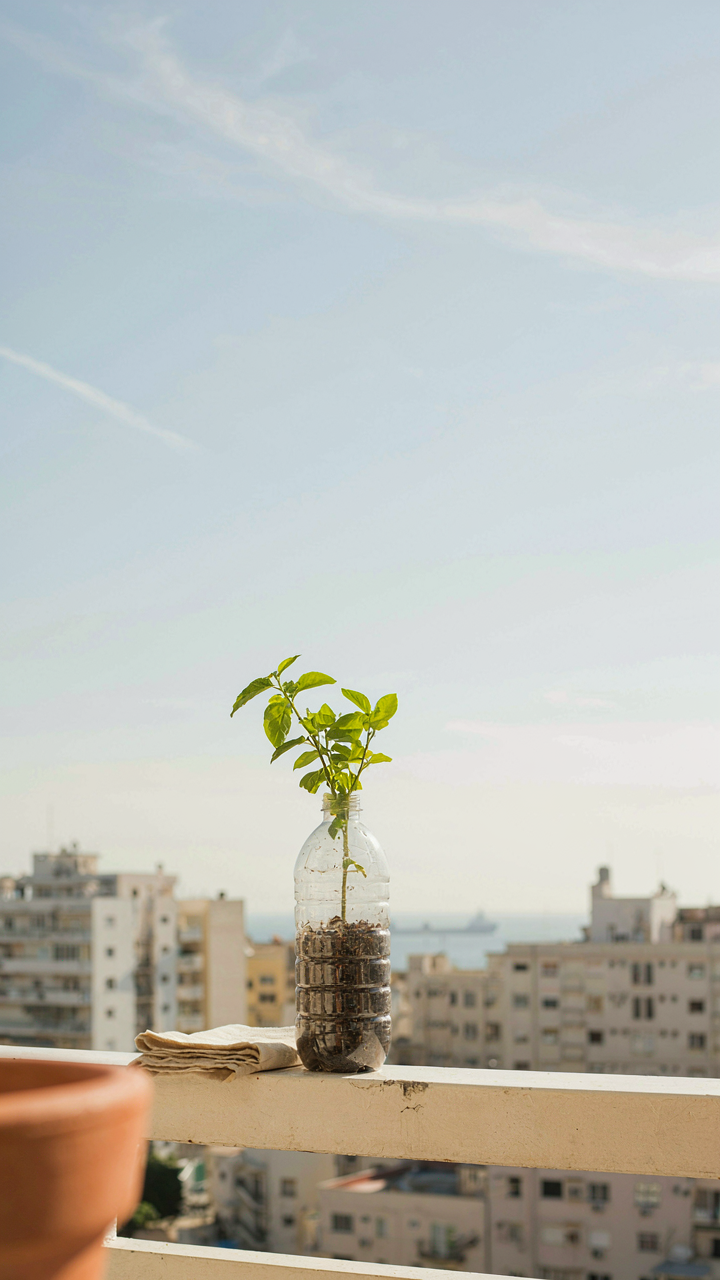
Virtue Signaling Versus Actual Impact
You want to feel like you’re solving something without changing your consumption patterns. That’s the real driver here. The plastic bottle planter became popular because it let people claim environmental credentials while doing exactly what they were already doing: producing waste and then finding a secondary use for it before throwing it away anyway.
Upcycling operates on a false equivalence. Reusing a bottle delays its landfill arrival by months, not years. You still generated the waste initially. You still consumed the beverage. The bottle still ends up discarded eventually. The aesthetic of environmental action replaced the substance of environmental action, and marketing capitalized on that gap immediately.
The Carbon Debt Nobody Mentions
Economics has a concept called “embedded cost”—the total expense hidden inside a finished product before you ever use it. A plastic bottle already carries its full carbon footprint the moment it leaves the factory: petroleum extraction, polymerization, molding, transport, refrigeration. Turning it into a planter changes nothing about that debt.
The bottle’s original production consumed resources and energy. Reusing it doesn’t erase that consumption or create a carbon credit. It simply extends the object’s utility window. If you never bought the beverage in the first place, that carbon footprint wouldn’t exist. Planting in the bottle you already possess is neutral at best. Buying beverages specifically to harvest bottles for planters is actively counterproductive to carbon reduction.
The Structural Flaws: Why Your Bottle Garden System Collapses
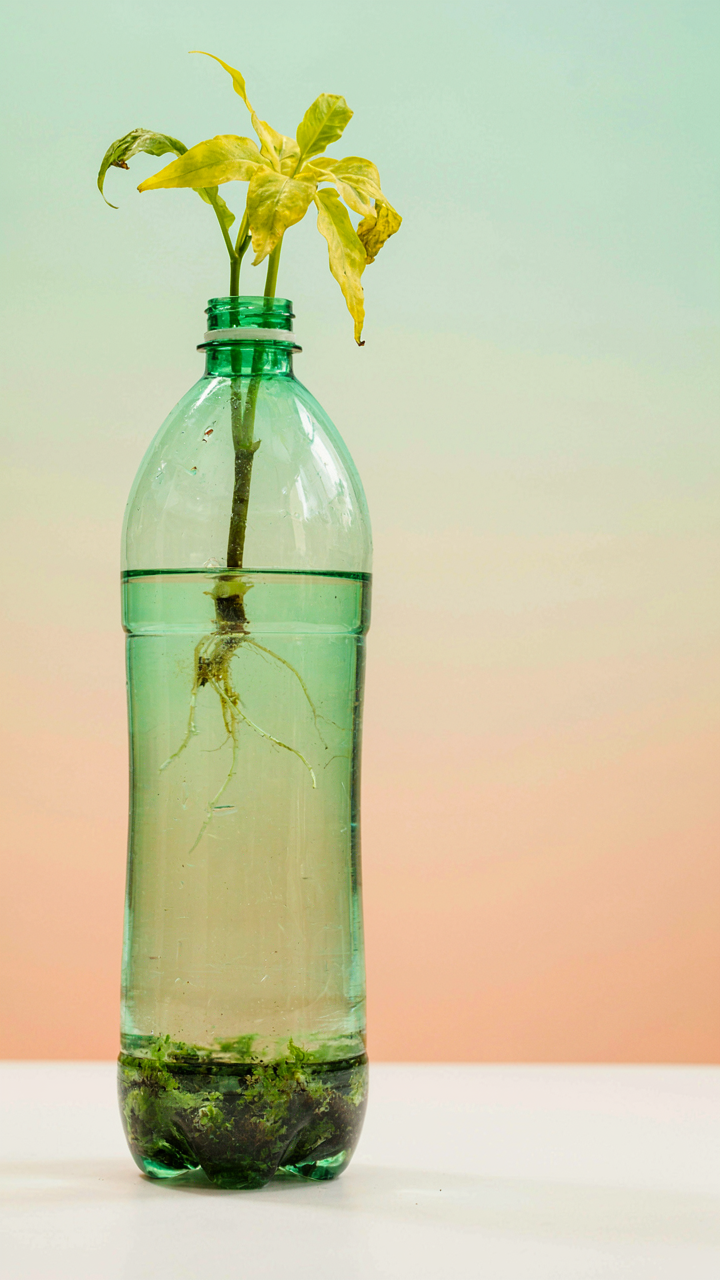
Drainage Collapse And Root Rot Inevitability
You’re attracted to bottle planters because they feel like a no-cost win, but you’re about to learn why that illusion costs you plants. Plastic bottles lack the porous structure that terra cotta and ceramic provide. When you cut drainage holes in the bottle’s base, you’re creating a single point of failure. Water pools around roots because the plastic walls don’t wick moisture away like soil-bound containers do.

Most advice says “just poke holes in the bottom.” Wrong. A two-inch drainage hole in a twelve-inch-tall bottle creates a stagnant microclimate above it. Roots sitting in that zone experience anaerobic conditions within 48 hours of heavy watering. The soil becomes compacted and airless. Fungal pathogens colonize dead root tissue. You then lose the plant and assume you killed it through neglect. The mechanism was structural, not behavioral.
UV Breakdown And Microplastic Migration
Plastics degrade under UV exposure through a process called photodegradation, borrowing terminology from materials science. The polymer chains in clear and translucent bottles fracture when exposed to sunlight for months. Balcony planters take direct sun, accelerating this process. Within one growing season, the bottle walls become brittle. Cracks develop around stress points like the drainage holes or the neck. Small plastic fragments enter the soil and remain there.
These fragments don’t stay contained. Wind and water movement distribute microplastics through the soil bed and into plant tissue over time. Roots absorb and accumulate these particles as they grow. Most growers never notice because the plant still produces foliage for a season or two before stress compounds. The real cost appears later: soil contamination that persists after the bottle fails, and plants that never reach full maturity. Always use opaque bottles or shade your planter setup to slow photodegradation to a manageable rate.
The Bio Unsuitability Of Plastic: A Plant’s Perspective
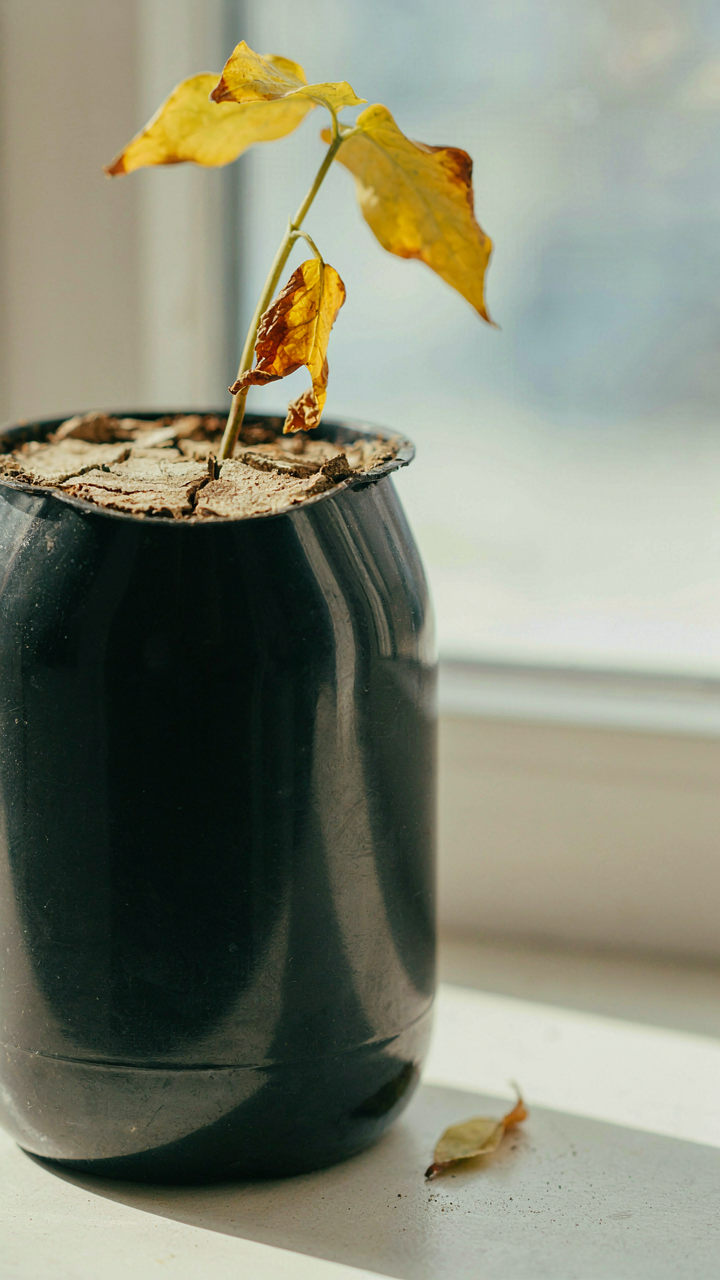
Thermal Swings And Root Shock
You want to believe plastic doesn’t matter because it’s cheap and convenient. Here’s the mechanism: plastic has almost no thermal mass. It absorbs and radiates heat rapidly, creating temperature swings that roots experience as stress events. Biology matters here. A root system in soil normally buffers temperature shifts through the soil’s density and mineral composition. Plastic bottles, especially dark ones in direct sun, swing 15 to 25 degrees Fahrenheit between morning and afternoon, forcing roots into constant adaptation mode rather than growth mode.
This thermal volatility triggers stress responses in the plant before photosynthesis even begins. Roots allocate energy to osmotic adjustment instead of nutrient uptake and cell division. The effect compounds in vertical gardens where bottles receive uneven sun exposure and wind accelerates evaporative cooling. If you want roots to work efficiently, stabilize temperature first. That means either moving bottles out of direct afternoon sun or wrapping them with reflective material to dampen the swing.
Airflow Blockage And Microbial Death
The consensus says “just drill drainage holes.” That misses the real problem. Soil microbiota requires gas exchange at the microscale, not just water drainage. A plastic bottle creates a sealed thermal chamber where oxygen depletion happens faster than in open soil. Anaerobic bacteria proliferate, triggering root rot conditions within weeks even with proper watering. Plastic’s impermeability starves the aerobic microbial community that breaks down nutrients into plant available forms.
Drill holes solve water pooling, not oxygen starvation. You need active air movement through the soil column itself. In balcony setups, orient bottles horizontally when possible to increase surface area contact with air. For vertical arrangements, space bottles 2 to 3 inches apart minimum and position them where wind crosses perpendicular to the bottle face. Without this deliberate gap spacing, you’re growing plants in slow-motion suffocation.
The Aesthetic Deception: Garden Decor Projects That Don’t Impress
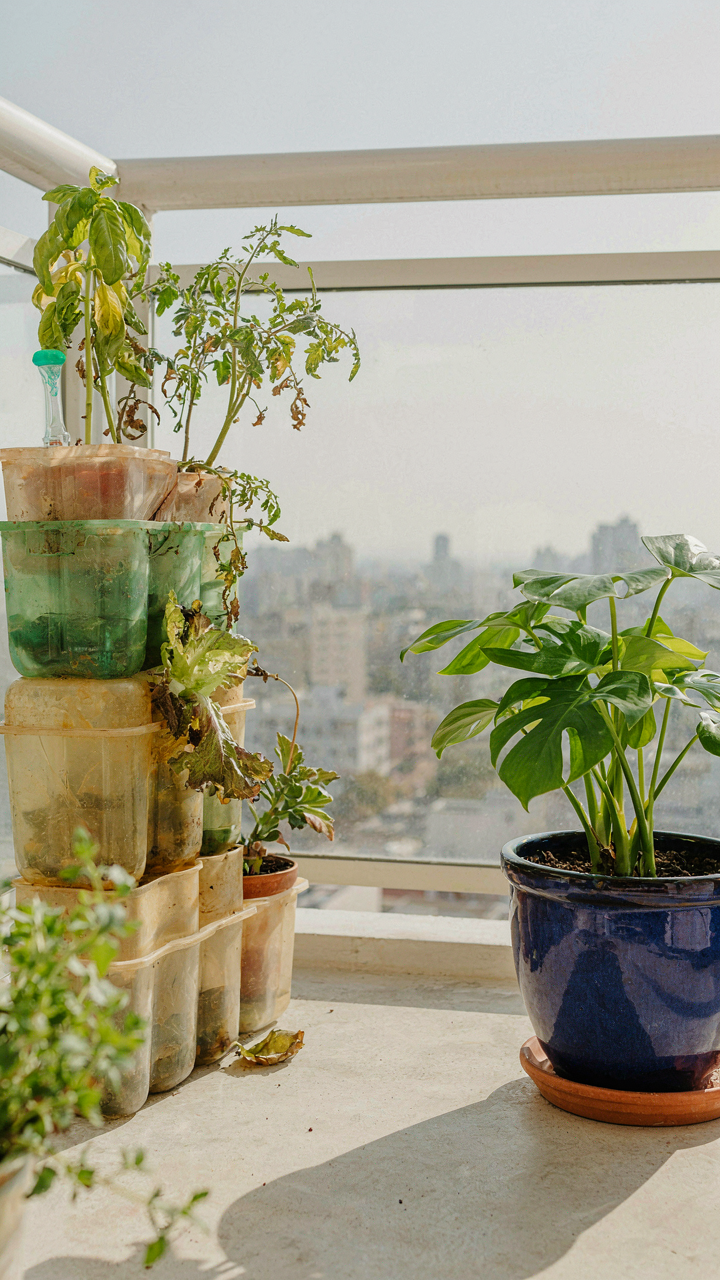
The Ephemeral Charm Of Upcycled Clutter
You want permission to call your bottle tower a design statement instead of admitting it looks like trash you couldn’t throw away. Here’s what actually happens: plastic bottle planters age poorly because UV exposure degrades polyethylene and PET within two to three seasons outdoors. The bottles fade unevenly, develop stress cracks, and the whole structure reads as temporary—which it is. Upcycling borrowed its legitimacy from industrial design movements that repurposed materials intentionally, with aesthetic coherence. Your stacked bottles have neither.

The real mechanism is visual entropy. A well-maintained ceramic pot or wood planter signals care and permanence. A weathered plastic bottle signals abandonment. Your plants may thrive inside it, but the container itself communicates that you ran out of options, not that you made a choice. After one season of sun exposure, the material becomes brittle and discolored, forcing you to either replace the whole structure or live with visual deterioration. Most people do the latter, then rationalize it as “rustic charm.”
When DIY Crosses Into Visual Incoherence
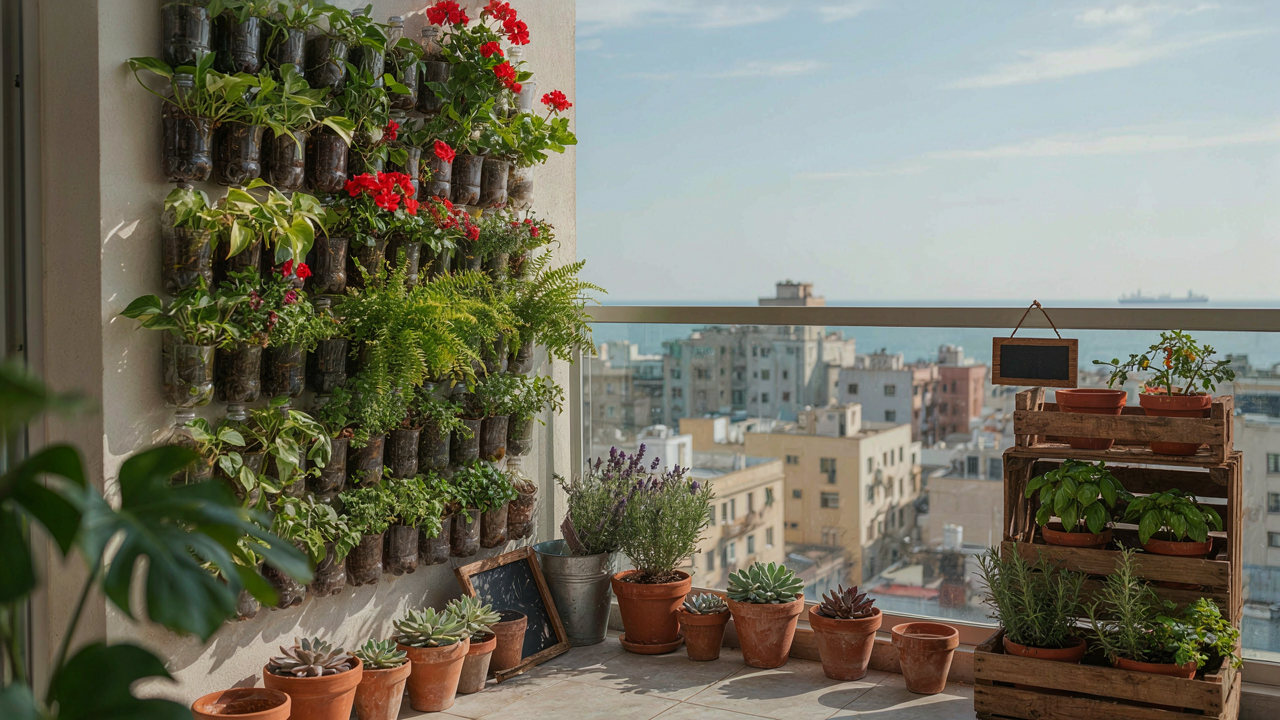
Stop being told that mixed materials and improvisation equal personality. They don’t, unless you’re operating within an intentional design system. A balcony with four different bottle configurations, three paint colors, and random plant sizes creates visual noise, not character. The design principle called rhythm—used in architecture and landscape design—requires repetition or deliberate progression. Bottle planters fail at both when assembled casually.
The rule is simple: if your installation looks different from every angle and doesn’t follow a clear organizational logic, it’s clutter with plants in it. Coherence matters because the human eye organizes visual information into patterns. When patterns break down, attention fractures and the space feels chaotic instead of intentional. Set a hard constraint before building: decide on one bottle size, one orientation method, one color treatment. Execute that consistently across your entire balcony or vertical garden. This discipline transforms the project from amateur hour into something that actually works.
The Hanging Protocol: Beyond Bottle Hanging Plants To Stability
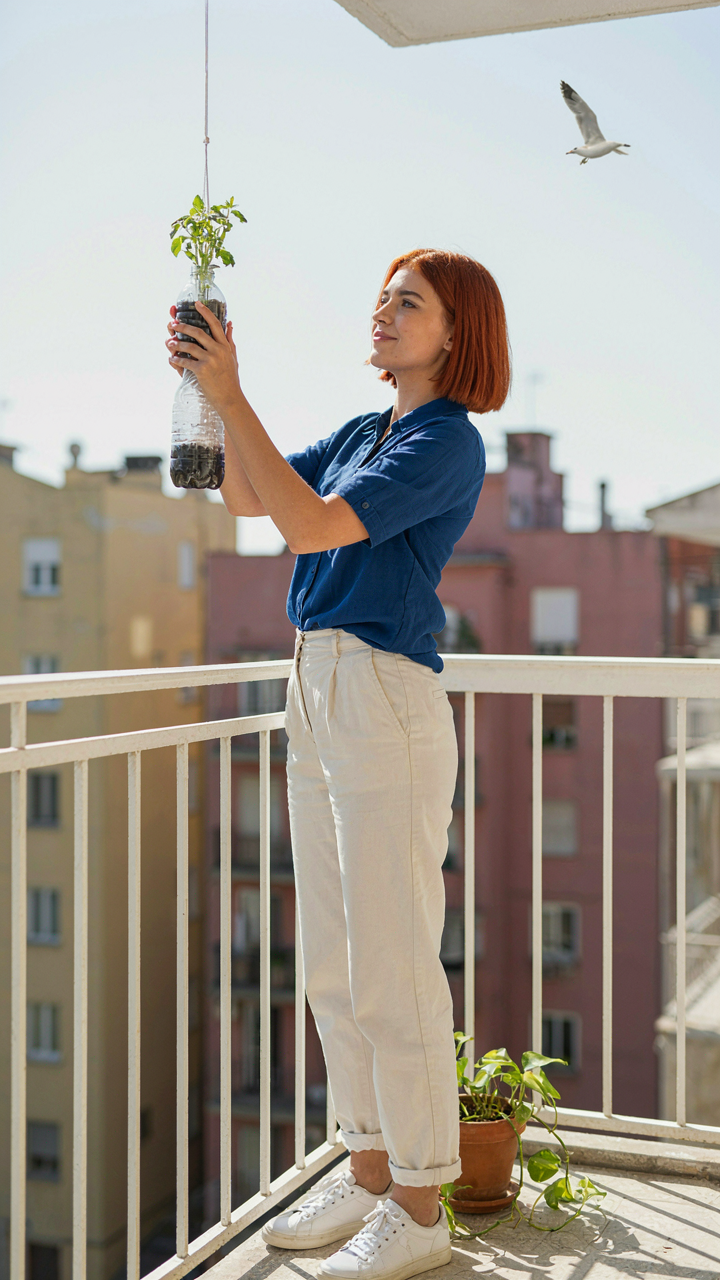
Where Weight Actually Concentrates
You want your bottles to look effortless. That’s the real reason you’re reading this section. Physics doesn’t care about aesthetics. It cares about where mass sits relative to the anchor point. In bottle gardening, most people distribute soil and water evenly, creating a bottom-heavy load that fights gravity the entire time the planter hangs. The mechanism is simple: soil and water together weigh more than the bottle itself. A two-liter bottle holds about 4.4 pounds of water alone. Add wet potting soil, and you’re at six to eight pounds minimum per container. Your hanging hardware is rated for static load, but it’s experiencing dynamic load every time wind moves the structure or someone bumps the balcony railing.

The engineering principle from structural design applies here: load paths. In buildings, engineers trace how force travels from the top down through supports. In bottle planters, force travels from the soil mass upward through the bottle neck, then into your rope or wire, then into the anchor. The weakest point in this path determines failure. Most people reinforce nothing and fail at the anchor. Don’t mount to drywall anchors rated for picture frames. Use lag bolts into solid wood or bolts that thread into structural steel. The bottle won’t fail first.
Designing Against Unexpected Force
Military engineers design fortifications to handle attacks from directions they can’t predict. Balcony wind works the same way. It doesn’t blow straight at your planters. It accelerates around corners, stops abruptly, and reverses direction without warning. Your hanging bottles face lateral force, not just vertical load. A calm day registers zero wind speed. A breezy day registers fifteen miles per hour. That’s not a linear difference. Wind force increases with the square of velocity. At fifteen mph, your bottles experience roughly nine times more lateral pressure than at five mph. The bottle and soil mass act like a pendulum. The longer your rope or wire, the wider it swings under wind load.
Your response isn’t to shorten the hang or use smaller bottles. It’s to reduce the swinging distance by using rigid supports instead of flexible rope alone. Use rope combined with guy lines or rigid stakes angled away from the structure. If you hang bottles on a balcony railing, the railing itself becomes your lateral anchor. Attach a secondary stabilizing line from the bottle to the railing or a fixed post at a forty-five-degree angle downward. This line carries minimal load on calm days but catches the bottle before it reaches maximum swing distance in wind. Test the setup by pushing the hanging bottle horizontally with steady pressure. It should resist movement before the swing distance exceeds six inches.
Beyond Office Trends: The False Promise Of Plant Office Decor
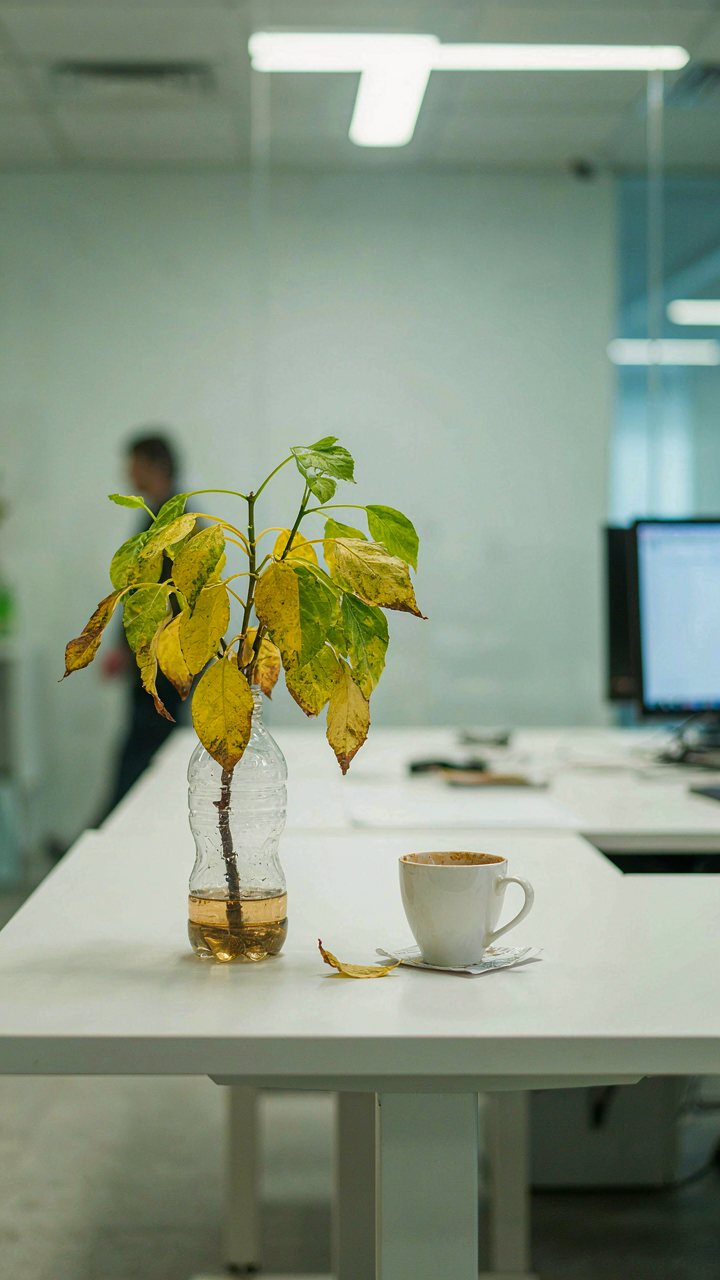
Plant Care Demands Conflict With Interior Design Goals
You want the aesthetic without the responsibility. Here’s the mechanism: plants require consistent conditions—light, humidity, water timing—that office environments actively work against. Fluorescent lighting doesn’t substitute for natural spectrum. HVAC systems create low humidity. People travel. Plastic bottle planters don’t solve this gap; they just make neglect look intentional temporarily.

Most advice says “choose low-maintenance plants.” That’s incomplete. The real problem isn’t plant species. It’s that offices operate on interruption schedules. Plants need continuity. You cannot water on a whim and expect results. After three weeks of irregular care, even hardy species decline. At that point, the planter becomes visual clutter masking failure, not decoration.
When Sustainability Becomes Performative Waste
Economics calls this “moral licensing”—you feel good about one action and permit yourself to ignore systemic problems. Using plastic bottle planters for office décor doesn’t make you environmentally conscious; it makes you feel that way while participating in the same cycle of consumption.
- Replacement rate misconception: Office plants die faster than home plants due to environmental stress, forcing frequent bottle-planter replacements that create disposal overhead, not savings.
- Visual vs. actual sustainability: A plastic bottle repurposed for a plant that dies in six weeks generates guilt purchase of a replacement, negating the conservation premise entirely.
- Supply chain opacity: Most office-grade potting soil and fertilizers come in single-use packaging, offsetting any bottle-reuse benefit through consumable waste.
- Status signaling failure: Dead plants in aesthetic containers send the opposite message. Maintenance neglect becomes visible, undermining the intended professional image.
- Landfill inevitability: Plastic bottles from failed planters still enter waste streams. Reuse extends timeline but doesn’t eliminate end disposal; it postpones it.
The actual metric that matters is survival rate. If your office plant setup kills plants in under two months, stop buying them. Repurpose the bottle planters for balcony or vertical garden systems where you control watering frequency and light exposure directly.
The “Ideas Con Botellas De Plastico” Trap: Innovation Or Imitation?
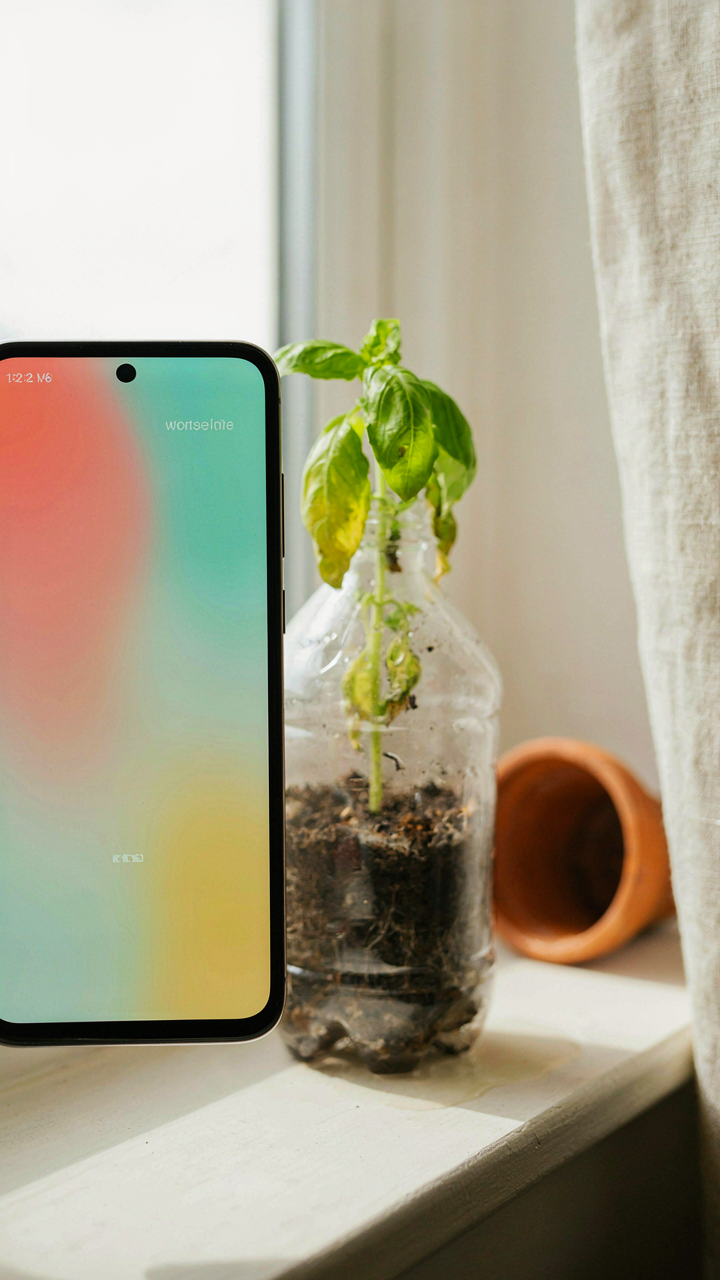
When Viral Becomes Viral Waste
You want permission to believe this is clever so you don’t feel stupid for not thinking of it first. That’s the real mechanism at work when “ideas con botellas de plastico” trends online. The concept isn’t new. Recycled plastic bottle gardening emerged in the 1990s as genuine necessity in regions with limited access to garden infrastructure. What changed is visibility, not innovation. Social media rewards novelty signaling, not actual problem-solving.
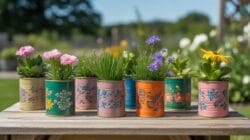
The distinction matters because trending ideas create expectation gaps. A vertical bottle garden solves real constraints: limited floor space, water retention in arid climates, accessible gardening for renters. But viral content strips context. It shows the aesthetic result, not the maintenance load or the failure rate of root systems in narrow bottle necks. You’re consuming imitation of innovation, not innovation itself. The mechanism is simple: remove friction, remove context, add video, watch engagement spike.
The Economics Of Something For Nothing
Psychology calls it loss aversion. Economics calls it arbitrage. Plastic bottle planting exploits both by appearing to extract value from waste. This feels like finding money. The reality is different: you’re outsourcing your design work to material constraints instead of understanding them. Salvaged bottles have inconsistent diameters, uneven drainage holes, brittle plastic that degrades under UV exposure. These aren’t features. They’re problems you inherit by choosing reclamation over purpose-built systems.
The cost calculation flattens the moment you factor in labor. Cleaning bottles, drilling drainage, sourcing soil, replacing failed plantings. A conventional planter costs money upfront. Bottle systems extract time across seasons. The trap isn’t economic inefficiency, it’s hidden cost displacement. You’re not saving money. You’re moving expense from purchase price to invisible maintenance. The protocol is honest accounting: track actual time invested per planter, multiply by your hourly value, then compare to a $15 plastic pot. The number shifts your decision immediately.
Cultivating Plastic Bottle Flowers: A Mismatch Of Intent
The Convenience Trap
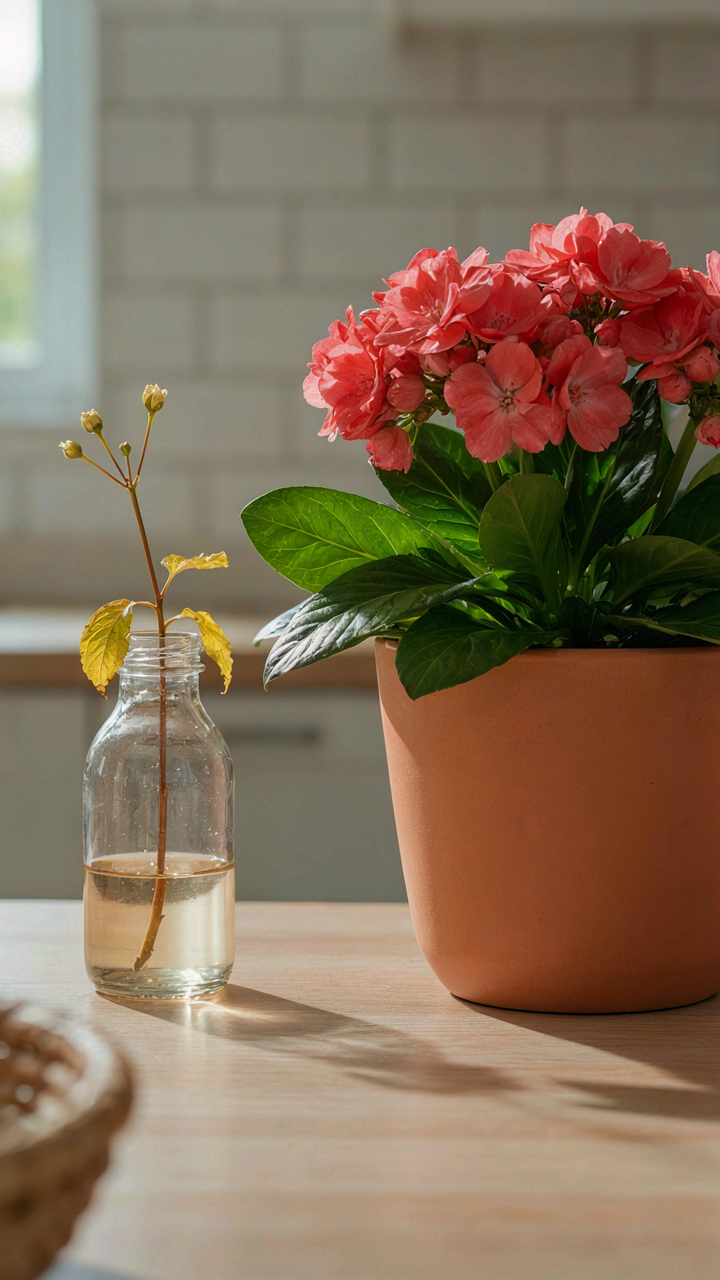
You want flowers on your balcony without the work, and a plastic bottle planter feels like permission to skip the hard parts. Here’s the mechanism: plastic bottles constrain root depth and water retention in ways soil-based systems don’t, which means flowering plants—already metabolically expensive compared to leafy greens—enter a stress state before they even produce buds. The bottle becomes a liability, not a solution.

Flowering plants demand consistency. They pull nutrients faster than vegetative plants, require stable moisture without waterlogging, and need root room to establish the biomass that fuels bloom production. Plastic bottles deliver the opposite: shallow soil depth, temperature swings from sun exposure, and moisture that either pools or drains too fast depending on drainage hole placement. You’re asking a high-demand crop to perform in a low-capacity container.
What Flowering Plants Actually Require
Borrow from horticulture’s nutrient density framework: flowering plants operate on a caloric surplus model, meaning they need more available nutrition per unit of soil than non-flowering plants. A plastic bottle holds maybe one to two liters of soil. That volume cannot retain enough nutrients to sustain flower production across a typical bloom cycle.
- Root Depth: Flowering plants benefit from 8-12 inches of uncompacted soil. Most plastic bottles max out at 6-8 inches, stunting root development and nutrient uptake capacity.
- Soil Volume: A two-liter bottle holds roughly 1.5 liters of actual soil after accounting for drainage material. Petunias, marigolds, and similar balcony flowers need 2-3 liters minimum per plant.
- Drainage Stability: Flowers suffer from both waterlogging and drought stress. Plastic’s thin walls heat up fast in sun, accelerating evaporation and creating irregular moisture cycles.
- Nutrient Availability: Flowers consume nitrogen, phosphorus, and potassium aggressively during bloom. Limited soil volume means nutrients deplete faster and require more frequent supplementation.
- Soil Structure: Plastic bottles encourage soil compaction over time. Compacted soil restricts gas exchange and water movement, choking root function and nutrient absorption.
Flowering plants in plastic bottles work for one season if you treat them like annuals and accept reduced bloom output. Stack bottles vertically, and the weight and water drainage create structural problems that make maintenance harder, not easier. The real trade-off isn’t convenience—it’s accepting stunted flowers or constant intervention to compensate for container limitations.
Outdoor Crafts: The Superiority Of Designed Over Desperate
When Purpose Beats Penny Pinching
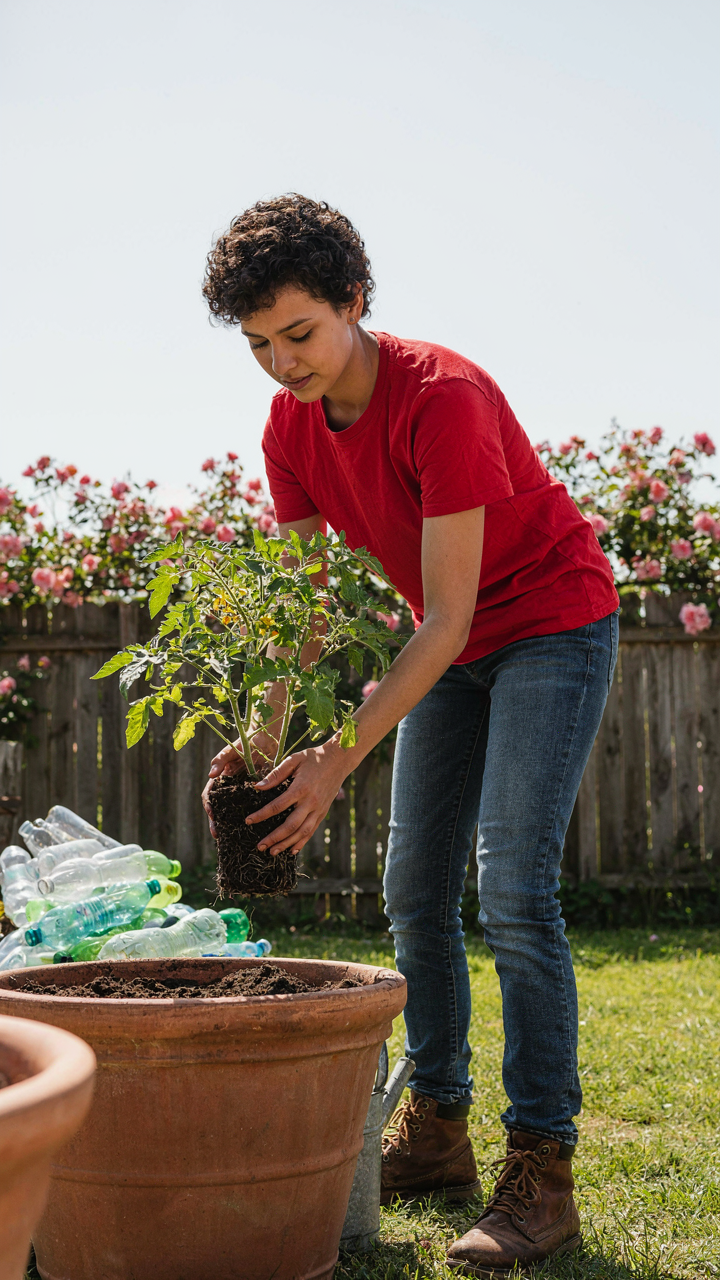
You’re drawn to plastic bottle planters because they cost nothing and make you feel resourceful. The real mechanism is simpler: you’re avoiding commitment. A three-dollar planter forces a decision. A free bottle lets you pretend you’re experimenting. Designed planters demand intention. You choose the size, depth, drainage, and material based on what actually grows there. Bottles are reactive. You grab what’s in the recycling bin and hope it works. That’s not gardening strategy. That’s avoidance dressed as thrift.

When you design a planter system intentionally, you account for root depth, water retention, and seasonal exposure. A tomato needs fifteen inches minimum. A succulent needs three. A designed planter matches the plant. A bottle planter matches whatever liquid you drank last week. The economics of real value start here: one proper planter that lasts five years costs less per season than replacing failed bottles every two months because they cracked, degraded, or never held soil properly in the first place.
The Math Everyone Ignores
Economics teaches us that true cost includes all inputs: material, labor, replacement frequency, and waste. Plastic bottle planters score zero on durability. UV light degrades PET and HDPE plastic within eighteen to thirty-six months depending on climate. You don’t pay upfront, but you pay constantly. A recycled bottle planter costs nothing initially. It costs your time when it splits open and spills soil on your deck. It costs the plant when inconsistent drainage kills it. It costs again when you source and prep a replacement bottle.
A manufactured planter built from durable resin, terracotta, or composite material costs between eight and forty dollars. It handles freeze-thaw cycles, UV exposure, and sustained weight. It lasts minimum five years in temperate climates, often ten or more. Over five seasons, a proper planter averages two to eight dollars per year. The bottle costs zero dollars and demands constant replacement, constant labor, and constant failures. Designed solutions eliminate the hidden tax of perpetual maintenance. Choose the tool built for the job, not the container built for disposal.
The Real Obstacle Isn’t The Lack Of Resources; It’s Your Addiction To Surface-level Solutions Over Sustainable Systems
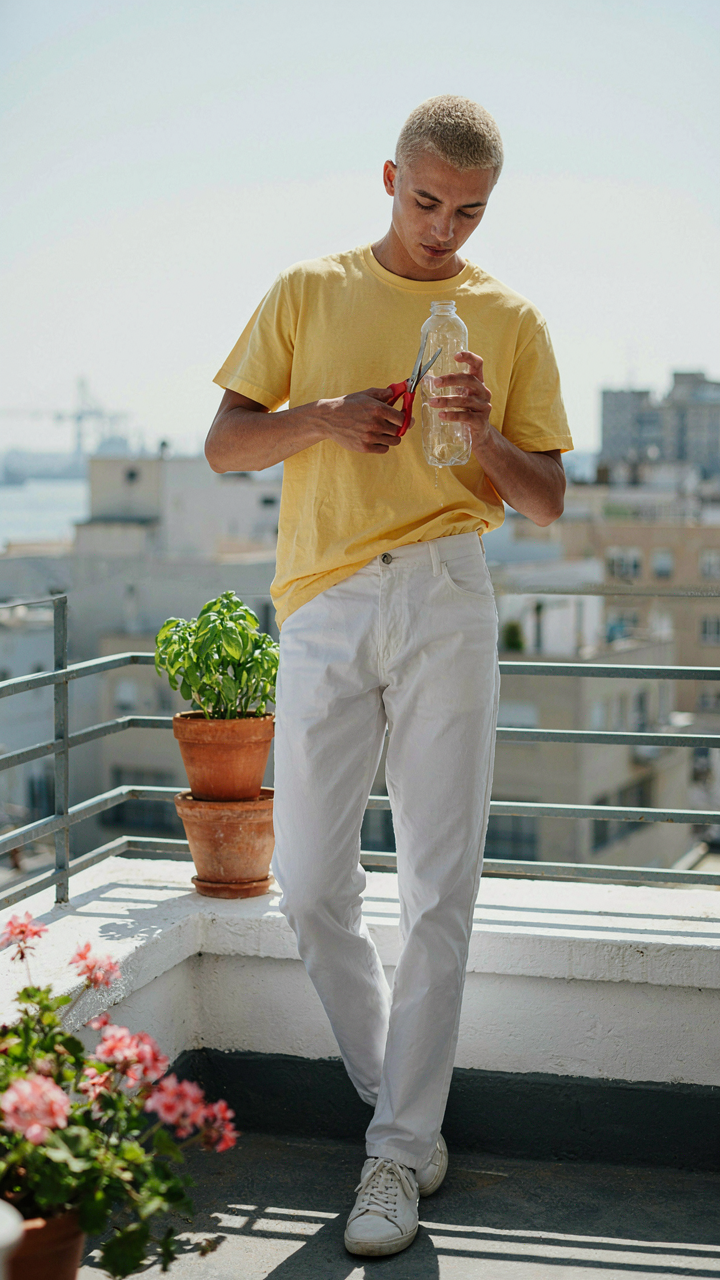
You don’t need perfect conditions or expensive gear to grow food. You need to stop waiting for permission and start using what’s already in your trash. Plastic bottle planters work because you commit to the system, not because they’re magical. Pick one sunny spot on your balcony today. Cut one bottle. Fill it with soil. Plant one seed. The only thing standing between you and a garden isn’t resources—it’s the decision to stop consuming advice and start consuming what you grow.