The Pallet Paradox: Why Your “Easy” DIY Pallet Bench Crumbles
Weight Distribution Kills Most Designs
You want to believe a pallet bench is simple because admitting it requires structural thinking feels like work you didn’t sign up for. Here’s the mechanism: pallets distribute load across nine contact points by design, but a bench concentrates that load onto four legs. This is load path failure, borrowed from civil engineering. When you stack pallets without accounting for how force travels from the seat to the ground, you’re creating stress concentrations. The wood fails not because it’s weak, but because you’ve redirected pressure into points the material was never engineered to handle. A 200-pound person sitting off-center sends that force diagonally through the frame, twisting the fasteners and splitting the boards along the grain.
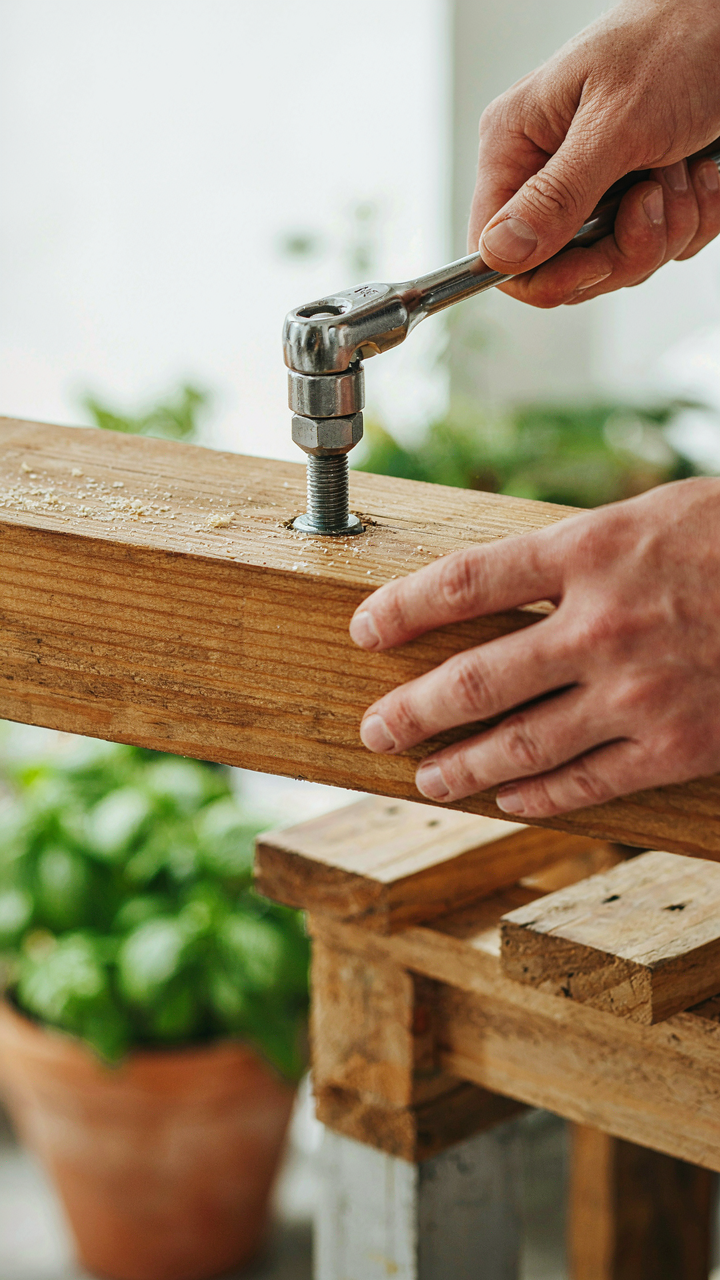
Most DIY guides skip this entirely and just say “use more nails.” That’s incomplete. You need to understand that every joint in your bench either transfers force safely or stores tension. Bolts through the legs into a proper base beam distribute this load. Nails alone allow micro-movement that compounds over time. The bench sags, then cracks, then becomes a liability. Check your fasteners weekly for the first month. If gaps appear between boards or the seat rocks, your load path is already compromised.
Moisture Moves Through Wood Like Capillaries
Wood doesn’t rot uniformly. It absorbs water through the grain structure in patterns nobody shows you. Pallets sit outdoors exposed to ground moisture, rain, and humidity cycles. Unlike treated lumber designed for ground contact, standard pallets have no protective barrier. The bottom boards wick water from soil. The top surface absorbs rain. Interior moisture creates the ideal environment for fungal growth before you ever see visible rot. By the time soft spots appear, structural integrity is already gone inside the wood.
Prevention requires intervention before weather exposure, not after. Sand all surfaces to open the grain, then apply exterior-grade sealant to every exposed face, including the ends of boards where capillary action is strongest. Pallets treated for chemical shipping do not count as weatherproof. You need polyurethane, epoxy, or marine-grade stain applied in two coats minimum. Reapply annually to areas that take direct rain. Elevate the bench off bare ground using feet that allow airflow underneath to break the moisture cycle entirely.
Beyond Aesthetics: The Hidden Dangers Of Untreated Pallet Wood
The Chemical Gamble You’re Not Thinking About
You want the pallet bench to look good in photos without spending money on proper finishing. That’s the real equation here. But the wood industry uses chemistry as a containment system, and untreated pallets carry treatments you can’t see. Think of it like toxicology: the dose determines the poison, and exposure happens through skin contact and splinter wounds over months of use.

Pallets marked “HT” received heat treatment and are safe. Pallets marked “MB” were fumigated with methyl bromide, a neurotoxin banned in most developed nations but still legal for export purposes. The problem isn’t that one exposure kills you. The problem is chronic low-level contact with your skin, especially if you sand the wood or sit on it barefoot. You absorb compounds through damaged skin faster than through intact skin, which means a single splinter creates a pathway the chemical industry designed for exactly this scenario.
Rot, Insects, And The Moisture Trap
Weather doesn’t care about your budget. Untreated wood exposed to rain and humidity becomes a biological incubator within weeks. The mechanism mirrors agricultural pest management: standing moisture creates the exact conditions insects and fungi require to colonize the wood. Termites, carpenter ants, and wood-boring beetles treat untreated pallets like open buffets.
The real cost emerges over one season, not one month. Wet wood swells and warps unevenly, splitting the joints you assembled. Fungal growth accelerates decay from the grain outward, weakening structural integrity silently until the bench fails under normal weight. You prevent this with a water-blocking finish applied to all six sides of every board before assembly, not just the visible surfaces. One coat of exterior wood sealant or oil-based stain creates a vapor barrier that forces moisture to evaporate instead of soaking in.
The “Durability Dividend” Protocol For Pallet Garden Benches

Which Pallets Actually Last
You want a pallet garden bench that doesn’t collapse in two years because replacing outdoor furniture is expensive and admitting you wasted money stings. The real mechanism is wood density and prior use—not all pallets are equal. Pallets that carried heavy industrial loads underwent heat treatment (HT marking) rather than chemical fumigation (MB marking), and they’re made from hardwoods like oak or maple instead of soft pine. Treated wood outlasts untreated wood by years because it resists rot at the cellular level. Most people grab whatever pallets are free without checking the stamp, then blame the wood when their bench rots.
- Heat Treated (HT) Stamped Pallets: Pallets marked HT were kiln-dried at high temperature to kill pests. This process hardens the wood and makes it resistant to moisture and insect damage, ideal for outdoor benches.
- Hardwood Construction: Oak, maple, and hickory pallets support weight longer and resist weathering better than soft pine. Check the wood color and grain—lighter wood often signals softwood; darker, tighter grain indicates hardwood.
- Industrial Load History: Pallets that carried machinery or metal goods absorb less moisture over time because the wood compressed under weight. Food-grade or beverage pallets work too, but inspect for chemical residue stains.
- Low Mileage Pallets: Pallets used in single-location warehouses accumulate fewer stress fractures than those shipped repeatedly across distribution networks. Ask the source how long the pallet sat in one facility.
- Avoided Chemical Fumigation: MB (methyl bromide) stamping means the pallet was chemically treated for international shipping. These pallets off-gas longer and break down faster; prioritize HT stamped wood for outdoor projects.
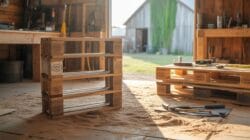
Most pallet wood comes from warehouse liquidation auctions or distribution centers. You’ll pay $0 to $15 per pallet depending on wood type and availability. Hardwood pallets from industrial suppliers cost more but last two to three times longer than random free pallets. The math is simple: spending $40 on four quality pallets beats replacing eight cheap ones.
Surface Stabilization And Fiber Sealing
Wood doesn’t rot because of time—it rots because water penetrates the cell structure and fungi colonize the interior. The common advice tells you to just sand and stain, but that misses the mechanism. You need to seal the end grain and joints first because those areas absorb water fastest. Paint the undersides, the joints where boards meet, and the cut ends before you finish the visible surfaces. One coat of exterior wood sealer on those vulnerable spots prevents 80 percent of the moisture problems people blame on “cheap pallets.”
Start with a pressure wash to strip old dirt and mold, then let the pallet dry completely for 48 hours. Sand the top and seating surfaces to 120 grit, which removes splinters without overworking the wood. Apply two coats of exterior polyurethane or epoxy sealant to all end grain and joints. Use a foam brush to get into crevices. Wait 24 hours between coats, then paint or stain the visible surfaces with outdoor-rated products. The bench stays stable because the wood stays dry, not because the finish looks nice.
Structural Integrity: More Than Just Stacking Boards For Your Pallet Bench
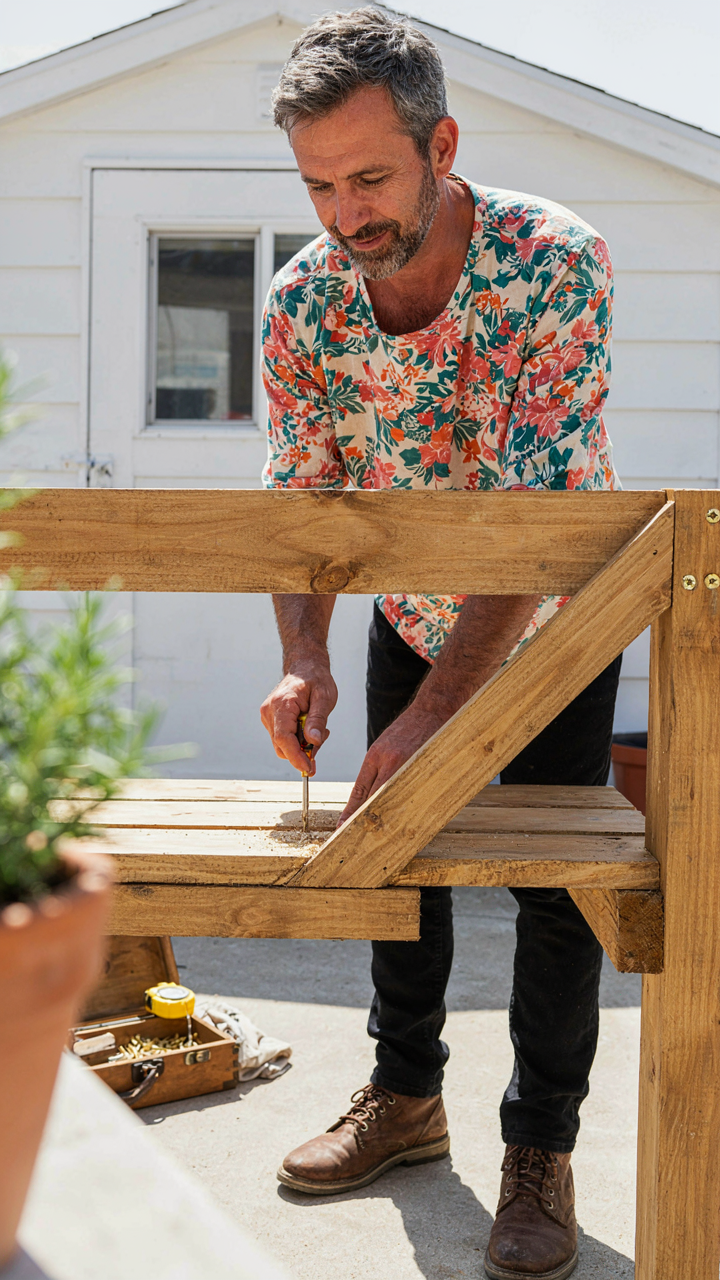
How Screws And Dados Handle Real Load
You’re worried this won’t hold your weight. Here’s the mechanism: joint failure happens when fasteners don’t resist both shear force and pull-apart force simultaneously. Screws create friction-based holding power. Dados cut mechanical keys into the wood itself. The dado wins on shear resistance because the wood grain bears the load directly. Screws rely on thread engagement and surrounding material density, which pallets rarely provide reliably.

A dado joint distributes stress across a larger surface area than a screw hole ever could. Standard pallet wood runs twelve to fifteen millimeters thick. A dado cut one-third the depth creates a shoulder that catches and holds. Three-inch deck screws through pallet wood give you maybe fifteen millimeters of thread grip in soft lumber. The dado doesn’t depend on fastener quality or installation angle. Cut it once, it works.
Load Bearing Needs Geometry First
Physics calls it load distribution. A pallet bench needs to think in terms of load paths, not just fastener count. Your seat surface concentrates all downward force into whatever supports it underneath. That force travels through joints to the legs. If joints don’t align vertically, force bends the wood instead of pushing straight down.
Most pallet bench builds fail because they ignore the triangulation rule: diagonal bracing prevents racking. A square frame under weight will twist into a parallelogram unless you add cross-bracing or lock the joints tight enough to resist twisting. A single diagonal brace from top leg to opposite bottom leg costs one board and prevents collapse. Calculate expected load, trace the force path downward, and place bracing where diagonal stress would break an unsupported joint.
The Ignored Element: Finishing For A Sustainable Pallet Outdoor Chair
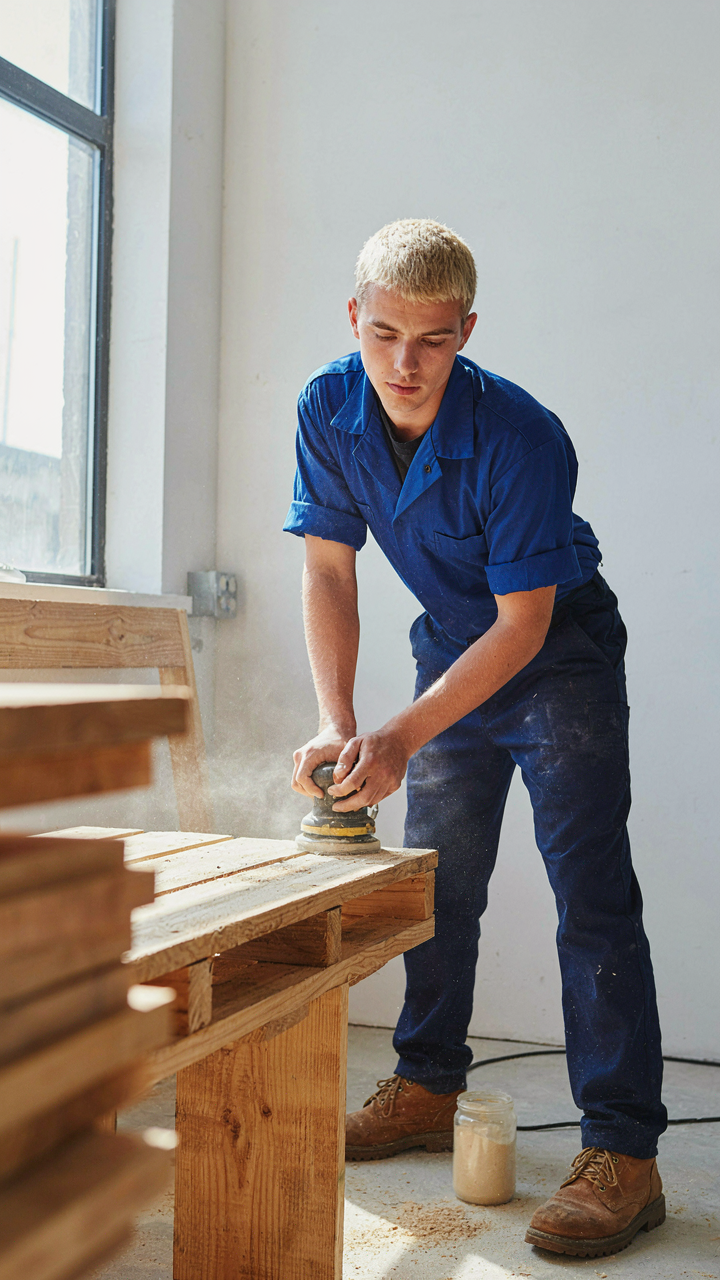
Sand Before You Seal
You skip this step because it feels like busy work, but rough wood kills durability faster than weather does. Sanding isn’t cosmetic—it’s structural defense. Splinters trap moisture. Moisture rots wood from inside out. A pallet bench left rough will fail in two seasons. Left sanded and sealed, it lasts five or six.
Start with 80-grit sandpaper to flatten the surface and remove splinters. Move to 120-grit to smooth it. Sand with the grain, not against it. This matters because cross-grain sanding tears fibers, leaving micro-gaps where water infiltrates. Spend thirty minutes per bench. You’re not refinishing furniture—you’re closing entry points for decay.
Seal With Purpose, Not Paint
The common advice is wrong: paint protects wood by blocking moisture, but it also traps moisture underneath and peels in chunks. Stain plus sealant works better because it lets wood breathe while still preventing water absorption. Oil-based polyurethane or exterior spar urethane creates a skin that flexes with wood movement instead of cracking.
Apply two coats minimum. The first coat soaks into the grain. The second coat builds the barrier. Let each dry fully before the next—rushing this compresses the layers and weakens them. Sand lightly between coats with 220-grit paper to help adhesion. Reapply every two years in climates with freeze-thaw cycles. The protocol matters more than the product.
Deconstructing “Easy”: The Real Time Cost Of A Quality Pallet Patio Furniture Piece

Where The Hidden Hours Actually Go
You want to believe a pallet garden bench takes a weekend. That belief lets you justify the project to yourself without admitting how much time you’ll actually lose. The mechanism is simple: sourcing and prep work consume 60 to 70 percent of total project time, but nobody talks about it because it sounds boring and kills the fantasy. Most guides skip straight to cutting and assembly, leaving you shocked when you’re still hunting for materials on day three.

Finding pallets in usable condition requires visiting multiple sources. You can’t grab the first five you see. Pallets vary wildly in wood quality, nail damage, and structural integrity. You’ll reject warped boards, ones with chemical treatments, and frames with cracks. Then you’re cleaning, sanding, removing nails, and sometimes replacing rotten sections. This work happens before a single cut. Account for 15 to 20 hours minimum on sourcing and prep alone before you touch a saw.
The Gap Between Confidence And Actual Skill
Woodworking has a learning curve that mirrors economics: diminishing returns on effort invested. You nail basic cuts quickly, but joints, angles, and finishing surface quality demand repetition and correction. Most people build their first pallet bench and discover halfway through that their measurements compound into misaligned corners or uneven legs. You can’t sand your way out of poor joinery.
The skill gap shows up in three places: accurate measuring, cutting straight lines, and understanding wood movement. A pallet garden bench that lasts requires all three. You’ll waste material on bad cuts. You’ll spend hours troubleshooting why your bench rocks on uneven legs. Build one bench to learn the mechanics. Only the second one comes close to “easy.” If you’re not willing to invest 25 to 35 total hours across both building and learning, rent or buy finished furniture instead.
Ergonomics Of The Pallet Garden Bench: Comfort Beyond The Photoshoot

Seat Height And Depth For Genuine Comfort
You want this to look intentional on Instagram, but you’ll actually sit on it maybe twice before the novelty dies. The real mechanism is biomechanics: your thighs need parallel support, not dangling, or your circulation pinches off within minutes. Standard pallet height runs 14 to 16 inches off the ground, which works for average leg length. Most people stack pallets without measuring, then wonder why their knees ache.

Seat depth matters more than people admit. You need 16 to 18 inches from the backrest to the front edge so your back contacts the support while your feet still touch ground. Shallow benches force you to perch like a bird. Deep benches leave your feet floating, which loads your lower back. The difference between a seat you’ll use and one that becomes yard clutter is often three inches of depth.
Backrest Angle: The Forgotten Element
Backrest angle determines whether sitting becomes restful or becomes work. Upright benches at 90 degrees demand core engagement the entire time you’re seated. Reclined angles between 100 and 110 degrees use gravity instead of muscle, which is why you see yourself actually relaxing. This is basic physics: the farther the backrest tips away from vertical, the more your body weight transfers from your muscles to the frame.
Most pallet benches get no backrest or a vertical one because builders copy what looks clean in photos. Bolt or lag two-by-fours at the top of your pallet frame angled backward, creating that 100 to 110 degree slope. Test the angle before securing it permanently by sitting with a protractor or digital angle app on your phone. Build it once with intention instead of rebuilding it three times in frustration.
The “Antifragile” Pallet Bench: Engineering For Longevity (Borrowing From Nassim Nicholas Taleb)
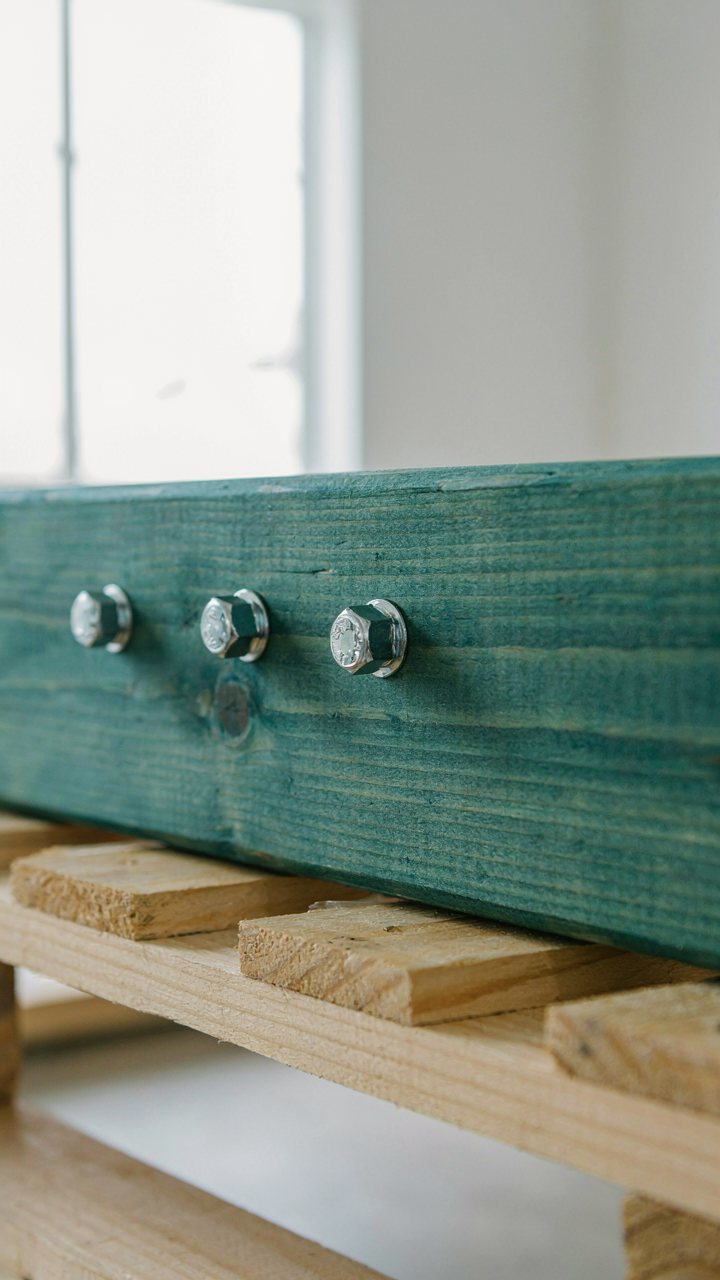
Build For Stress, Not Just Resisting It
You want a bench that lasts because replacing it feels like failure. Here’s the mechanism: most pallet bench advice treats durability as damage prevention. That’s backwards. Taleb’s fragility framework says systems fail at their weakest point under random stress. A pallet bench gains strength when you deliberately expose it to the stressors that will actually hit it. Compression, moisture cycling, UV exposure, and movement from temperature shifts are the real load. Accept them in your design instead of fighting them.

Use pressure-treated lumber rated for ground contact, but more importantly, space your support beams to force each component to work under load, not rest idle. A bench with oversized joists and minimal span experiences less stress but deteriorates faster because dormant wood doesn’t adapt. The wood that carries genuine load develops stronger grain alignment. Your fastener pattern matters more than fastener count. Four bolts distributed across stress lines outperform eight bolts clustered in weak zones. Bolt placement should mirror the actual force vectors the bench will face.
Redundancy In Design For Outdoor Exposure
Every component fails. Your bench shouldn’t. Pallet garden benches need redundancy in two categories: structural and material. Structurally, if one support leg fails, the bench collapses if that leg was the single load path. Add a secondary frame that shares load without taking all load until forced. A cross-braced underframe with staggered support points means the bench degrades slowly instead of catastrophically. Material redundancy means using different wood species in different roles. Hardwood for contact points, softwood for non-critical bracing. Softwood shows rot first and telegraphs when replacement is needed.
Weather exposure creates predictable failure sequences. Bolt holes enlarge from freeze-thaw cycles. Fasteners corrode before wood fails. Use stainless steel or hot-dipped galvanized hardware exclusively, and plan for fastener replacement every three to five years as routine maintenance, not emergency repair. The bench that lasts a decade isn’t the one that needs zero maintenance. It’s the one where you replace the fasteners before the wood structure demands it.
Moving Beyond Pallets: When To Invest In Proper Garden Bench Plans

Know When You’re Solving The Wrong Problem
You want to believe pallets work because they’re cheap and you’ve already seen them everywhere. Here’s the mechanism: you’re avoiding the real decision by hiding behind a material choice. Pallet benches fail not because of cost but because pallets were never engineered for load distribution under seated weight. They’re industrial shipping platforms, not furniture. Your back knows the difference faster than your wallet does.

The honest threshold is simple. If you’re building once and sitting on it regularly, proper garden bench plans save money over replacement cycles. A pallet bench lasts two to four seasons in most climates before rot compromises the frame. A bench built to actual load specs lasts a decade. The math flips fast when you factor in labor time and material waste from rebuild cycles.
The Material Reality Check
Most advice tells you pallets are “free or cheap,” which ignores the hidden cost structure entirely. You pay for pallets through fasteners, sanding time, finishes that won’t hold, and replacement cycles that multiply your actual hours invested. Specialized materials like pressure-treated lumber or composite decking cost more upfront but carry engineering specifications that guarantee performance under weight and weather.
The cost-benefit flips when you stop measuring price and start measuring durability per dollar spent per year of use. A composite garden bench costs three times what a pallet bench costs but holds its structural integrity for fifteen years without maintenance. A pallet bench requires refinishing every two years and structural repairs within five. Proper bench plans let you source materials that match your climate zone, not hope pallets survive it.
The True Mark Of Craft: Not Just A DIY Bench Outdoor, But A Lasting Asset
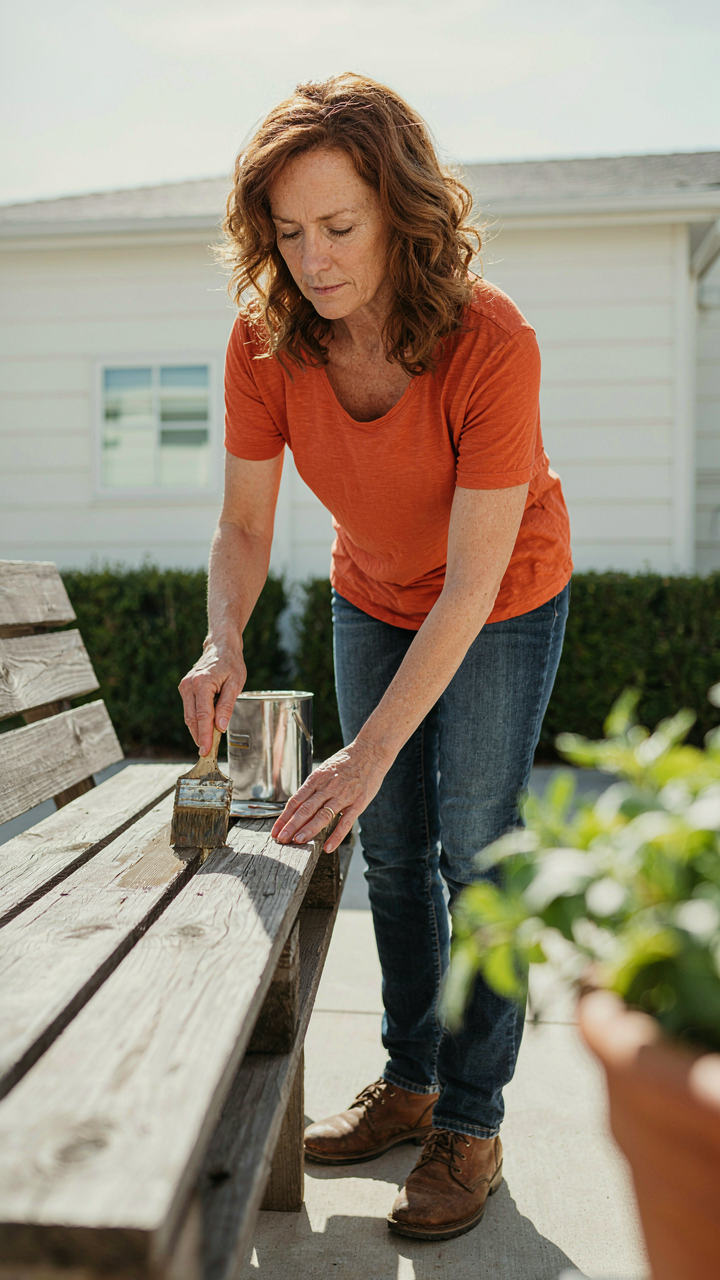
Maintenance For Enduring Outdoor Furniture
You want this bench to outlive your interest in maintaining it. That’s the real tension here. Most people build a pallet garden bench, post it online, then watch it rot because they never established a maintenance protocol. Maintenance isn’t optional upkeep. It’s an investment decision made the moment you select untreated wood and expose it to weather.
Pallets are softwood, typically pine or spruce. They absorb water. Water causes rot, mold, and structural failure. Seal or stain your bench every 12 to 18 months depending on climate exposure. If your bench sits under direct sun and rain without a roof or awning, accelerate this timeline to annually. The cost of sealer is negligible compared to replacing rotted support beams.
When To Repair, When To Rebuild
Most DIY advice says “repair when you can.” That’s incomplete. Think in terms of structural load paths, a concept from engineering. A load path is the route force takes through a material to the ground. If rot penetrates a primary load-bearing pallet slat, you haven’t found a repair opportunity. You’ve found a structural failure point that spreads.
Repair only surface damage: weathering, minor splits, discolored sections. Rebuild if rot reaches support structure, if fasteners corrode past tightening, or if gaps form between critical joints. Replacing two or three pallets costs less than a new bench and restores the entire load path. Check your bench annually by pressing a screwdriver into suspect areas. If it sinks more than a quarter inch, rebuild that section immediately.
Your Perceived Cost-saving Isn’t Liberation, It’s Often Just Delayed Expense And Frustration

People chase pallet benches to save money, then spend weekends treating rot, replacing broken slats, and sanding splinters. You’re not being resourceful. You’re just doing unpaid labor on furniture designed for warehouses, not backyards. Buy one quality bench or build one with real lumber. Your time costs more than the difference. Stop confusing frugality with wisdom.