The Intentional Fragment: Why “Scraps” Are Not Waste

Limited Resources Command Attention
You want permission to make something meaningful from leftovers because spending money on “real” materials feels safer. Economics calls this the scarcity principle: when supply shrinks, perceived value rises. Fabric scraps work the same way. A pile of discarded cotton or silk becomes design material the moment you treat it as finite. Constraints force choices. Choices create composition. Composition demands intentionality.
The mechanic is simple. When you accept that you cannot use every scrap, you start editing. You reject weak colors. You cut pieces with purpose instead of impulse. You build layouts based on what you actually have, not what you wish you had. This friction—this necessary refusal—produces better wall hangings than unlimited material ever could. Abundance breeds indecision. Scarcity breeds clarity.
The Maker’s Mark In Every Piece
Each fabric fragment arrives with history. A worn cotton square from a child’s outgrown shirt. A silk remnant from a dress you wore for years. A linen offcut from a project abandoned or completed. This is not sentimentality. It is factual texture. These pieces carry use-wear, fading, pattern choices made by someone else years ago. When you integrate them into a wall hanging, you anchor the work in a real timeline, not a generic one.
The narrative thread matters because it creates coherence without forced theme. You are not assembling random fabric. You are collecting fragments that actually belong to your life and binding them into visible form. Museums and galleries call this documentation. Makers call it honesty. The protocol is straightforward: sort scraps by origin before design. Group pieces from the same garment or project. Let those relationships inform placement on your hanging. The composition will feel assembled, not arbitrary.
Fabric Wall Hangings: The Anti Mass Produced Aesthetic

Why Mass Production Fails At Meaning
You want your home to signal you’re not following the algorithm. That’s the real driver. Mass-produced wall art fails because it’s designed for statistical averages, not for the actual person living in the space. A fabric scrap wall hanging works in the opposite direction: you’re using constraint—limited materials, imperfect edges, visible seams—as the mechanism that forces specificity. The more limited your scraps, the more your choices matter. Every piece you include becomes intentional because you can’t just scroll to another option.
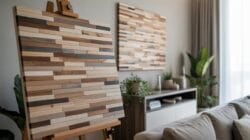
The difference between buying wall art and making it is the difference between wearing a costume and building a uniform. One signals conformity to an external standard. The other signals you’ve developed taste specific enough to defend. Factories can’t replicate this because it requires friction. They optimize it away.
Your Visual Language Isn’t Discovered, It’s Built
Crafting a personal visual language sounds mystical but it’s mechanical. You’re running thousands of micro-decisions about scale, color relationship, and composition. Each fabric scrap decision teaches you something about what you actually prefer versus what you think you should prefer. Start by pulling scraps that genuinely catch your eye without overthinking, then stop and analyze why. Notice patterns in texture, saturation, or era. This isn’t inspiration hunting. It’s data collection on your own taste.
The second piece is execution. Lay out scraps before you commit to any adhesive or stitching. Move them. Live with the arrangement for hours. Your eye will start detecting imbalances you missed at first glance. That uncomfortable feeling when something’s slightly off is your visual language developing in real time. Honor it. A wall hanging that took you two weeks to finalize will teach you more about your aesthetic than any design book because you built it, not consumed it.
The Compositional Alchemy: Turning Fragments Into Cohesion

Balance Odd Shapes Without Rules
You want permission to stop overthinking this. The Rule of Thirds comes from photography and painting, where a grid divides space into nine equal sections. In fabric scrap wall hanging, you’re doing something simpler: placing uneven shapes so your eye doesn’t get stuck searching for a resting point.
The mechanism is asymmetrical balance. Place your largest or darkest scrap off-center, then distribute smaller pieces around it so visual weight spreads across the hanging. One dense cluster on the left needs countering visual mass on the right or top. This isn’t about mathematical precision. It’s about preventing the eye from tilting the whole composition sideways in your mind. Test placement before stitching or adhering anything permanently.
Color Relationships That Actually Work
Forget harmony. The real tension in a fabric scrap wall hanging comes from how wavelengths of dyed fibers interact on the wall under actual light in your actual room. Color theory says complementary colors amplify each other, analogous colors calm the space, and saturation levels create depth.
Scraps in high saturation (bright reds, electric blues) advance toward you visually and demand attention. Muted or grayed fabrics recede. Stack saturated fabrics near each other and they compete for dominance, creating visual noise. Scatter them, and they become focal anchors. Low-saturation backgrounds let saturated pieces breathe. Choose your scraps based on what dominates your room’s existing light and wall color, not on abstract color wheel rules that ignore your specific context.
Sewn Wall Art: Beyond Patchwork To Modern Tapestry

Backing And Anchoring For Pieces That Last
You want your wall hanging to survive five years without sagging, tearing, or looking neglected. The mechanism is simple: fabric fails under its own weight without proper support structure. Backing material carries the load. Use interfacing, felt, or canvas sewn directly to the rear of your scrap composition. This distributes stress across the entire piece instead of concentrating it at mounting points. Heavier backing prevents edge curl and protects seams from tearing at stress points where fabric naturally weakens.

Mounting matters as much as backing. Sew a fabric sleeve or casing along the top edge, then thread a wooden dowel through it. The dowel sits on wall brackets, suspending the entire hanging from a rigid structure rather than nails through fabric. Secure the dowel to brackets rated for the weight you’re hanging. This single protocol change separates pieces that last from pieces that deteriorate within months.
Layering Stitches For Depth And Movement
Most people think patchwork means flat seams. Wrong. The real leverage comes from treating your hanging like architecture, not decoration. Use different stitch techniques to create visual and tactile depth. Running stitch, backstitch, blanket stitch, and cross stitch each catch light differently and add shadow lines that reading distance reveals gradually.
The Modern Tapestry movement of the 1960s proved that thread itself becomes a design element. Visible stitching on top of seams adds another layer without bulk. Chain stitch creates raised lines that cast shadows. Couching lets you lay decorative thread on the surface and anchor it with contrasting thread underneath. Vary your thread weight and color to build rhythm across the piece. Your stitching technique determines whether the hanging reads as flat or dimensional from across the room.
The “Entropy Maximization” Method For Collage Fabric Art Ideas
Thermodynamics Reveals Why Your Scraps Won’t Arrange Themselves
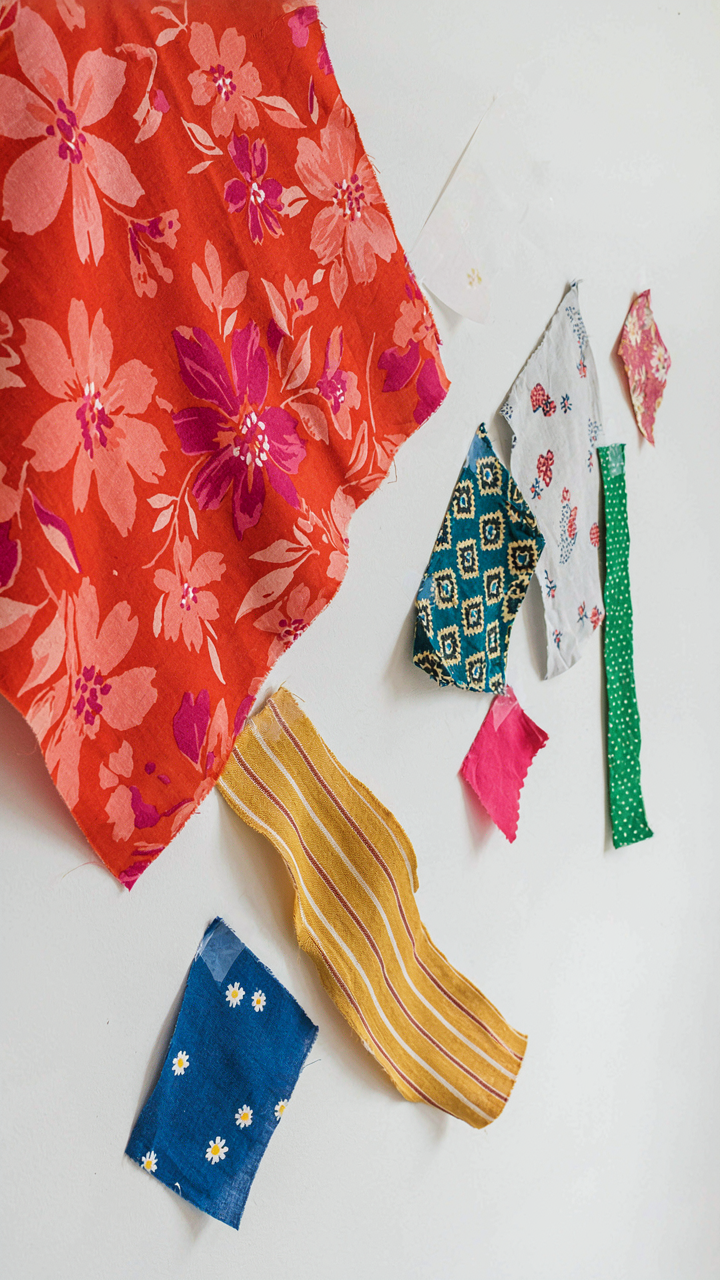
You want permission to make something beautiful without a plan. Here’s the mechanism: thermodynamics teaches us that systems move toward maximum entropy—disorder—unless energy is applied. A fabric scrap wall hanging operates the same way. Your random pile of fabric stays random until you impose a constraint. Entropy doesn’t resolve itself. You do. Start by anchoring one dominant color or pattern to a corner. This creates a gravity well. Everything else arranges around it because you’ve introduced the energy—the intentional choice—that chaos alone never generates.

The mistake most people make is treating arrangement as random assembly. It’s not. You’re fighting entropy by forcing order through decision. Pick your largest or most visually dominant piece first. Mount it. Then ask one question about every scrap you add: does this reduce or increase visual tension? Tension isn’t bad. It’s what makes the eye move. You’re not trying to hide scraps. You’re organizing them so the eye knows where to look and why.
Patterns Emerge When Constraints Do The Work
Disparate fabric pieces create emergent visual patterns only when boundaries exist. Without edges, without rules, you get visual noise. With constraints, intelligence appears. The constraint can be color blocking—all blues on the left, all warm tones on the right. Or it can be scale—large pieces anchor the composition, small pieces create rhythm. Or it can be texture direction—horizontal weave in one zone, vertical in another. The pattern isn’t hiding in your scraps. Your constraints pull it out.
This is why Pinterest boards of fabric collages look intentional while yours looks scattered. The successful ones used constraints. They didn’t start with “what if I put all these together?” They started with “what if everything had to follow this rule?” Constraints feel limiting. They’re actually the opposite. They’re permission to stop second-guessing. The constraint makes the decisions. You execute them. Build your wall hanging by choosing one constraint first—color, scale, texture, or direction—then assemble everything else inside that frame.
Homemade Tapestry: Elevating Fabric Collage Ideas To Art
Building Depth Without Overthinking It
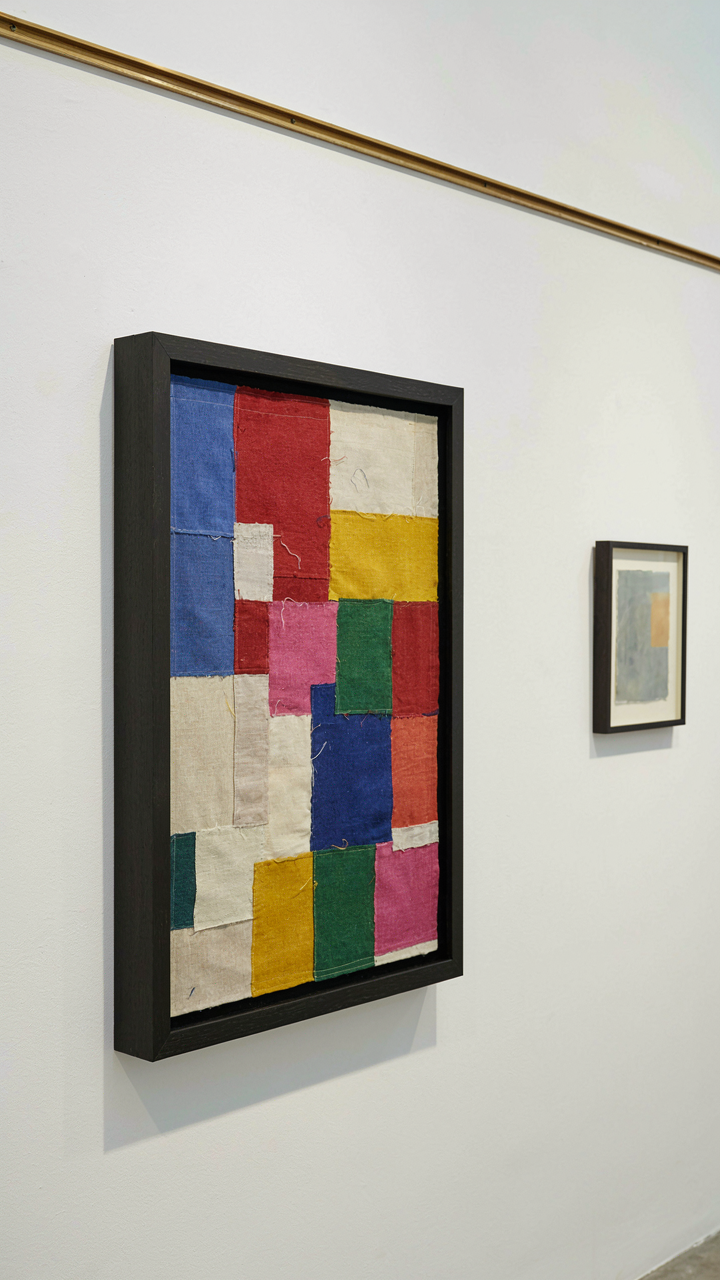
You want this to look intentional, not like you glued scraps to canvas and called it done. The real mechanism is visual hierarchy through overlap and value contrast, borrowed from painting composition. Layering isn’t about stacking random pieces. It’s about controlling what the eye reads first, second, third.

Start with a base layer of larger, neutral or muted fabric pieces. This anchors the piece and gives you something to build against. Then add medium-sized scraps on top, positioning them to cover partial edges of the base layer. The overlap creates shadow lines that read as depth. Finish with small accent pieces placed strategically where you want focal points. This three-tier system forces intentionality and prevents visual noise.
Mounting And Display Methods
The surface you choose determines how the piece reads in your space. Canvas backing gives weight and gallery legitimacy. Wooden frames demand precision and look formal. Stretched linen over panels sits somewhere between, offering texture without the frame constraint.
- Canvas stretchers: Mount fabric scraps directly onto pre-stretched canvas using fabric glue or stitching. Dries fast and hangs immediately with no additional framing required.
- Wooden dowel rods: Thread fabric through top and bottom of scraps, then hang rods from picture hooks. Creates sculptural depth and allows fabric to breathe naturally.
- Quilting hoops: Layer and stitch scraps inside wooden or metal hoops. Cheap to produce, stacks easily for multiple pieces, reads as intentional craft.
- Panel boards: Wrap fabric around foam core or MDF panels using spray adhesive. Lightweight, flat against walls, supports heavier layered compositions without warping.
- Floating frames: Mount finished pieces behind glass in box frames. Protects from dust, elevates presentation, lets light pass through translucent fabrics.
Weight determines longevity. Heavy layered pieces need support that won’t shift over time. Test your mounting method by tilting it at different angles before permanently installing. Verify the wall can hold the load, particularly if using panel boards or wooden frames. The piece should hang level after one installation, not require constant adjustment.
How To Make A Wall Hanging Out Of Fabric: The Unconventional Toolkit

The Tools You Actually Need
You’re worried you don’t have permission to start because you lack the “right” equipment. Stop. You don’t need a workshop. The constraint is the mechanism: fabric scrap wall hangings function through tension, layering, and attachment. Three tools solve this. A needle or basic sewing kit handles fabric-to-fabric bonding. Scissors cut fabric cleanly without fraying on natural fibers like cotton and linen. A level ensures horizontal or vertical alignment, which your eye will betray you on.

Everything else is theater. Rotary cutters, specialized presser feet, and design software don’t make better wall hangings. They make slower decisions. Most people overcomplicate the build phase because they confuse tool ownership with creative capacity. Start with what hangs fabric to wall: a hammer and nails, or adhesive strips rated for fabric weight. Your first hanging teaches you what you actually need in round two.
Sourcing Materials: Beyond The Obvious
Fabric scraps aren’t scarce if you stop thinking retail. Thrift stores sell damaged clothing by weight for two to five dollars per pound. The damage doesn’t matter. A stain on the back of a vintage shirt becomes hidden. Worn seams disappear into layering. You’re buying dyed fiber, not intact garments. Estate sales move fabric inventory fast because sellers undervalue it. Quilters’ stashes are liquidated constantly online. Local textile studios and upholstery shops discard usable scraps daily because disposal costs less than storage.
The real source is people who already sorted fabric into “keep” and “donate” piles. Craigslist free sections, Buy Nothing groups, and community textile exchanges move bulk scraps because the original owners stopped valuing them. You’re not finding treasure. You’re redirecting material already deemed waste. This changes your cost structure from expensive to nearly free and removes the mental barrier of “ruining” good fabric by cutting it into an experimental wall hanging. Collect two to three pounds of mixed scraps before you design anything.
Quilt Wall Hanging Ideas: From Comfort To Confrontation

When The Grid Becomes Prison
You want permission to break the rules because you’re afraid your work won’t look “real” without them. The mechanism is simple: traditional quilting enforces a grid because it solved a manufacturing problem in the 1800s, not because grids are inherently beautiful. The grid controlled fabric waste and standardized production. Once you see that, you realize the grid is a constraint you can discard entirely.

Fabric scrap wall hangings don’t need symmetry, blocks, or repeating patterns. You can stack strips at angles, layer fragments without alignment, or build asymmetrical compositions that look nothing like grandmother’s quilts. The only rule that matters is visual balance, which has nothing to do with mathematical order. Your eye reads weight and distribution faster than it reads geometry.
Emptiness As Active Material
Design borrows from physics the concept of negative space, which operates like a vacuum in fabric work: it exerts force through absence. Most quilters fill every inch because they fear empty walls. Empty space doesn’t weaken a composition—it creates contrast that makes the filled areas hit harder. The contrast is the mechanism.
Create your scrap wall hanging with deliberate gaps, unpieced linen or canvas showing through, or large unstitched sections between clusters of fabric. This isn’t minimalism or laziness. It’s strategic placement of nothing to amplify what remains. Build your hanging in sections, photograph it, then subtract before you finish stitching it down.
The Real Obstacle Isn’t A Lack Of Scraps, But A Lack Of Courage To Defy The Manufactured Aesthetic

You already own the materials for a fabric scrap wall hanging. They’re in your closet, your drawers, your donation pile. The real barrier isn’t resources. It’s permission. You’ve been conditioned to believe that something handmade looks cheap unless it matches an algorithm’s definition of cohesive. That’s a lie designed to keep you buying. Pull out three fabric scraps today and arrange them on your wall. Don’t overthink it. Your imperfection is what makes it actually yours.