The Myth Of The Hidden Gem: Why You’re Looking Wrong
Market Inefficiency Vs. Your Eye
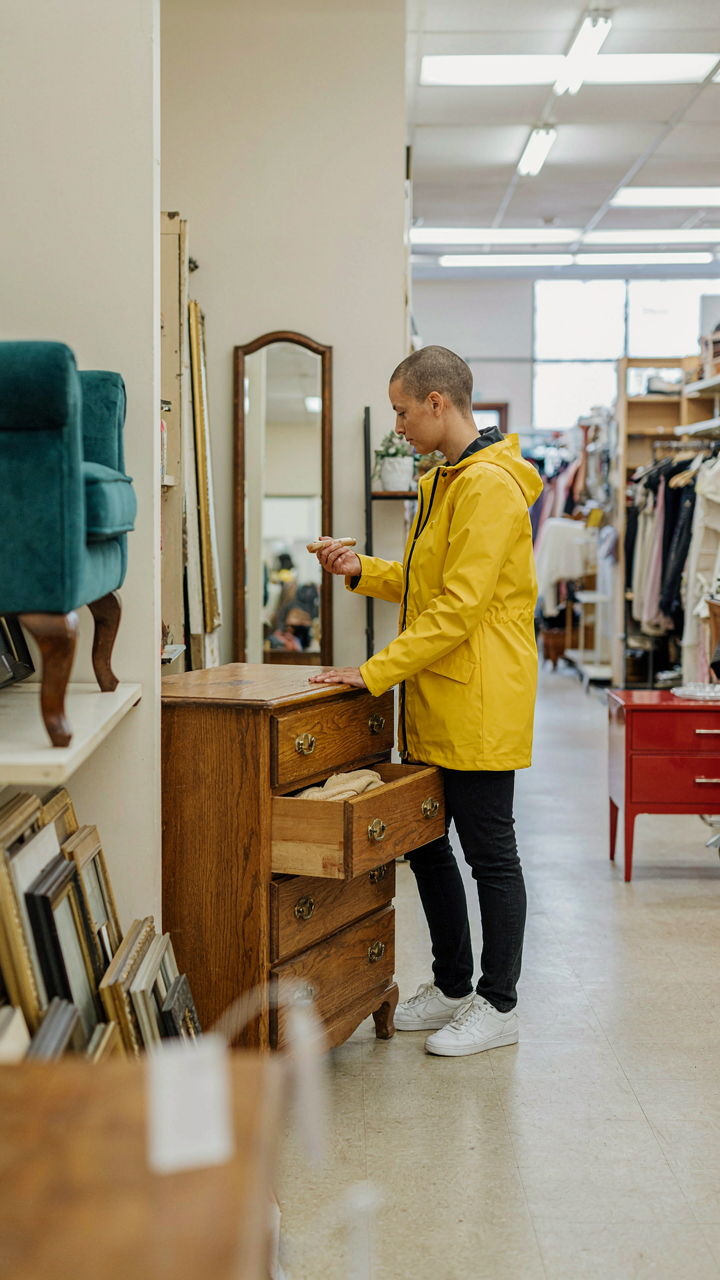
You want to believe thrift stores hide undervalued treasures because it makes you feel like you have an edge everyone else missed. You don’t. Economics calls this information asymmetry, but in thrift flipping it works backwards: the market is efficient at pricing common items, and your eye is trained on what you already know looks good. Most people scan for brand names, condition, or aesthetic trends they’ve seen online. They miss the actual mechanism: thrift pricing reflects volume movement, not inherent value. A worn oak dresser sits untouched for months because shoppers want mid-century modern. That same dresser, refinished and styled correctly, becomes saleable. The inefficiency isn’t hidden. It’s the gap between what moves fast and what moves slow.
Thrift store pricing prioritizes throughput. Staff mark items based on category and condition, not design potential. A stained wingback chair priced at eight dollars isn’t a steal because the seller is clueless. It’s cheap because the store needs it gone. Your job isn’t to spot what the store undervalued. It’s to identify what the store’s customer base rejected, then prove it has utility to a different market. That requires you to stop shopping like a treasure hunter and start shopping like a logistics problem. Look for structural integrity and material quality first, then imagine the piece serving a specific room problem, not just sitting pretty.
Uncovering Overlooked Potential, Not Just Cheap Items
The common advice says hunt for quality materials at low prices. That’s incomplete. You can find solid wood everywhere in thrift stores. Most of it sits because it doesn’t solve anyone’s actual problem. Overlooked potential means the piece addresses a gap in the current market that people in your area need. A real oak bookshelf isn’t valuable because it’s oak. It’s valuable because your market has no affordable tall storage with visual weight, or because the dimensions work in rentals where built-ins aren’t an option. You need to flip items based on local demand patterns, not global design trends. Scout what people actually search for and struggle to find locally. That’s your signal.
Start by documenting what sells in your market and what stalls. Note room sizes, ceiling heights, and layout constraints in homes around you. When you find a piece with good bones, ask whether it solves a real problem for someone specific, not whether it matches an aesthetic you admire. A worn leather sofa with solid frame might appeal to someone furnishing a basement rec room or office, but only if you position it that way. The mechanism isn’t luck or hunting skill. It’s matching overlooked inventory to underserved local demand, then making the case through your presentation.
The “Scarcity Mindset” Trap: Why More Isn’t Better

Curated Collection Beats Cluttered Hoard
You’re afraid of missing out on a deal, so you buy ten things when you need one. That’s the real mechanism here: scarcity thinking rewires your brain to treat abundance as loss. Economics calls this the “endowment effect,” where ownership makes you overvalue objects. In weekend thrift flips, this manifests as buying indiscriminately, then drowning in inventory that never sells because nothing stands out. A room filled with ten mediocre pieces reads as clutter. A room with three intentional pieces reads as design.

The difference isn’t subjective. Curated collections command attention because they force you to make a choice before you buy. This means auditing your space first, identifying what’s missing functionally and aesthetically, then hunting for that specific thing. Most people skip this step and backfill later. You end up with pieces that compete for visual weight instead of complement each other. Restraint is harder than acquisition, but it’s the only variable that separates a styled room from a storage unit.
One Strong Piece Over Ten Weak Ones
Buy the statement sofa instead of five end tables. Buy the credenza instead of scattered shelving units. One impactful piece anchors a room and justifies its cost through use and longevity. Ten weak items create visual noise and force you to justify keeping them. The math is simple: one strong thrift flip does more work than a dozen small ones. It gets photographed, referenced, remembered. It changes the room’s trajectory.
This works because rooms operate on visual hierarchy. Your eye lands on the dominant piece first, then fills in around it. If you lead with ten equal-weight items, your eye fractures and the room feels scattered. Start with thrift finds that solve a real problem: missing seating, dead wall space, storage gaps. Then build around that anchor. This prevents decision paralysis on your next flip and creates a coherent narrative instead of a random assembly of scored deals.
The Value Alchemy Protocol: Turning Dross Into Gold

Breaking Down Before Building Up
You want to believe a coat of paint fixes everything because that’s easier than thinking. It isn’t. The real mechanism here borrows from engineering: deconstruction reveals load-bearing problems. In thrift flips, you deconstruct to identify what’s actually wrong before you reconstruct value. Most people skip this step entirely.

Examine the frame, joints, and structural integrity first. A wobbly chair with good bones needs tightening, not replacement. A dresser with particle board sides needs reinforcement at stress points. Loose veneers, separated panels, and compromised supports determine whether a piece can handle actual use or just looks good in photos. This inspection takes thirty minutes and saves you from investing time in unsalvageable items.
Targeted Fixes Over Surface Treatment
The common advice says refinish everything. That’s lazy thinking born from YouTube videos. Strategic modifications mean identifying the one or two specific problems that prevent sale or use, then solving those. Paint hides damage. Repair builds value.
A mid-century side table with a heat-stained top doesn’t need full refinishing. Strip and sand the damaged area, apply matching stain, seal it. A sofa with frayed piping needs new trim, not reupholstering. A bookcase with one broken shelf needs that shelf replaced, not the entire unit repainted. You target the bottleneck that prevents someone from buying the piece. Identify the exact objection, solve that objection, move the item.
Beyond A Fresh Coat: True Upcycle Decor

When Function Determines Form
You want the thrift flip to feel intentional, not like you’re decorating with leftovers. Here’s the mechanism: objects with original purpose intact outlast objects with borrowed purpose. A wooden ladder wasn’t designed to hold blankets, so it will fail. A ladder was designed to hold weight at angles. That’s structural honesty. The gap between what something was built for and what you’re using it for is where projects collapse, literally or aesthetically.

Start with the object’s load capacity and material limits, not your mood board. A metal filing cabinet from the 1970s holds files because the drawer slides and frame support vertical stacking. Repurpose it as a bar or plant stand only after confirming the frame handles lateral stress. Don’t sand, stain, and bolt legs to something that can’t support the new job. The best upcycles honor the engineering underneath.
Fit The Piece Into What Already Exists
Design schema isn’t decorating theory, it’s constraint mapping from architecture. A midcentury credenza works in your living room because its height echoes your sofa line and its footprint matches the zone your eye expects furniture to occupy. Most thrift flips fail because they violate the spatial syntax already established by your walls, windows, and existing pieces. The new object creates visual conflict instead of resolution.
Measure twice before buying. Note the sight lines in your room: what does your eye hit first from the entry point? Document existing color families, material finishes, and proportional relationships. The thrift flip succeeds when it lands in a gap your room already has, not when it forces a gap open. Scale matters more than style. A refurbished side table works because a side table belongs beside something. A reworked trunk works because trunks sit at the foot of beds or anchor seating clusters. Place the piece before you finish it.
The Law Of Applied Utility Economics For Thrift Flip Ideas

Marginal Utility On Cheap Furniture
You want to believe that flipping a fifty-dollar dresser into a two-hundred-dollar piece proves you’ve unlocked some hidden wealth hack. That’s not what’s happening. Economics calls this marginal utility: the satisfaction you get from each additional unit decreases as you acquire more. A thrift flip works the same way. Your first project delivers massive dopamine because the transformation feels novel. By project five, you’re chasing the same high on diminishing returns.

The real mechanism: cheap furniture has a ceiling. A particle-board nightstand from a thrift store, no matter how well you refinish it, will never function like a solid-wood piece. You can sand it, stain it, add hardware. The structure remains weak. You’re not creating value through flips. You’re redistributing visual appeal while the underlying utility stays flat. The market knows this. Buyers sense it. Your effort compounds into smaller margins the more you flip identical categories of furniture.
Time Against Bespoke Results
People frame this wrong: they compare thrift flips to buying new furniture. Wrong comparison. You should compare thrift flips to either buying used furniture that’s already finished or paying a carpenter to custom-build something. A weekend thrift project consumes ten to fifteen hours. Professional refinishing on a mid-range piece costs eighty to one-fifty dollars and takes a week. You’re trading your time for a result that’s often worse than the professional output.
The opportunity cost isn’t theoretical. Those ten hours could go toward work that pays you directly, building a skill with actual market demand, or even sourcing better pieces to flip. The thrift flip works only if you genuinely enjoy the process itself, not if you’re chasing ROI. If you must flip, pick pieces with structural integrity and minimal prep work. Sand a mid-century chair with good bones. Don’t rebuild a laminate dresser. The mechanism is simple: pre-screen for quality before you buy, or you’re trading time you can’t get back for results that won’t justify the hours.
Thrift Store Art Makeover: The Vandal’s Canvas

When Paint Becomes Strategy
You want permission to destroy something and call it creation. That’s the real draw here. The mechanism is simple: thrift store art operates on the principle of “signal decay.” The original piece lost its value because it stopped communicating anything to anyone. You’re not improving bad art. You’re hijacking a cheap canvas and frame to broadcast your taste instead of someone else’s failed attempt at it.

Paint over the landscape. Drown the generic portrait. The frame is what costs real money new, and thrift stores price frames like they’re still in 1987. You get structural integrity and mounting hardware for three dollars. The art inside is just obstacle to remove. Most people waste mental energy trying to “work with” the original piece. Strip it. Start clean on the same substrate.
Modification As Authorship
Identity gets built through specificity, not through inheriting other people’s choices. When you modify a thrift piece, you’re creating a decision trail that leads back to you, not to some mass-produced factory. This is different from buying blank canvas. You’re layering your intention over existing form, which forces you to commit to a point of view instead of staring at infinite possibility and freezing.
The best modifications use constraint. Add a single bold element. Reframe the composition with tape or paint. Shift the color palette by covering half the piece. Work within the boundaries of what’s already there instead of starting from zero. This teaches you to make choices fast because you can’t hide behind blank space. You either develop a voice or you waste materials. Post the before and after on a wall where you see it daily. The modification becomes proof that you can finish something.
Flea Market Flip Ideas: The Strategic Hunter’s Guide

Finding Hidden Inventory Before Competition Does
You want to believe you have an eye for value. What you actually want is to beat other people to it. The real mechanism is information asymmetry—you need to know where stock moves before the crowd does, which means abandoning the obvious Saturday morning markets and building a system instead.

Serious flippers treat this like reconnaissance. They hit venues on setup days, talk to vendors about incoming inventory, and visit the same locations on predictable schedules. You’re not shopping; you’re mapping supply chains. Establish relationships with booth owners. Ask what they’re bringing next week. Scout estate sales through online listings before they open. This tells you what’s actually available before the filter of public foot traffic distorts the selection.
- Estate sale circuits: Check local listing sites 48 hours before public sales open. Early buyer times exist specifically for this reason. Inventory is freshest and unsifted.
- Vendor relationships: Visit the same flea market monthly and ask vendors directly what categories they specialize in or what’s coming. They’ll tell you if you’re not a tire kicker.
- Off peak timing: Show up Tuesday through Thursday mornings. You’ll find vendors setting up, repricing, and willing to negotiate because foot traffic is dead.
- Online pre-scouting: Check Facebook Marketplace and Craigslist the night before markets. List what’s there, then find it in person. You’ll recognize pieces others miss.
- Auction house previews: Most auction houses let you inspect lots before bidding. You can handle furniture, check construction, and bid strategically without competing with the crowd.
Negotiation works because vendors care about velocity, not ego. They’d rather move three pieces at 40% margin today than hold one piece waiting for full price. Offer cash, buy multiples, and propose clearing a section of their booth. The goal isn’t aggressive haggling; it’s showing them you solve their problem.
Solid Wood Vs. Particle Board: The Non Negotiable Distinction
Everyone says to check for damage. That’s incomplete. You need to separate what kills profit margin from what’s cosmetic noise. This comes from woodworking fundamentals: density and structural integrity determine restoration cost, not finish condition.
Particle board and MDF fail structurally when they absorb water or experience repeated stress. You can’t repair them; you can only replace them. Solid wood can take impact, can be refinished, can support different finishes. Run your hand along the edge of drawers and table undersides. Solid wood shows grain. Particle board shows a laminated edge or brown core. If drawers slide smoothly and joints stay tight under pressure, the frame is sound. Wobble indicates loose joinery, which costs real money to fix. A scratched solid wood finish costs nothing. A compromised particle board structure costs the project.
Check stress points: drawer glides, chair leg joinery, table aprons where leaves attach. Press down and listen. Creaking means joints are failing. Silence means the structure still holds. Look inside drawers and under tables where manufacturing shortcuts show. If you see staples instead of dowels, particle board instead of plywood backing, or gaps at joints, the piece won’t justify your labor.

The Zero Waste Imperative: Real Sustainability, Not Greenwashing
Keep What Actually Works
You care about this section because calling yourself sustainable costs nothing and feels good. The mechanism is simple: most flippers generate waste by treating thrift finds like disposable inventory instead of durable goods with a second life already built in. The moment you buy something to flip, you’ve committed to extracting value from it. Waste happens when you extract poorly, then abandon the piece instead of moving it forward.
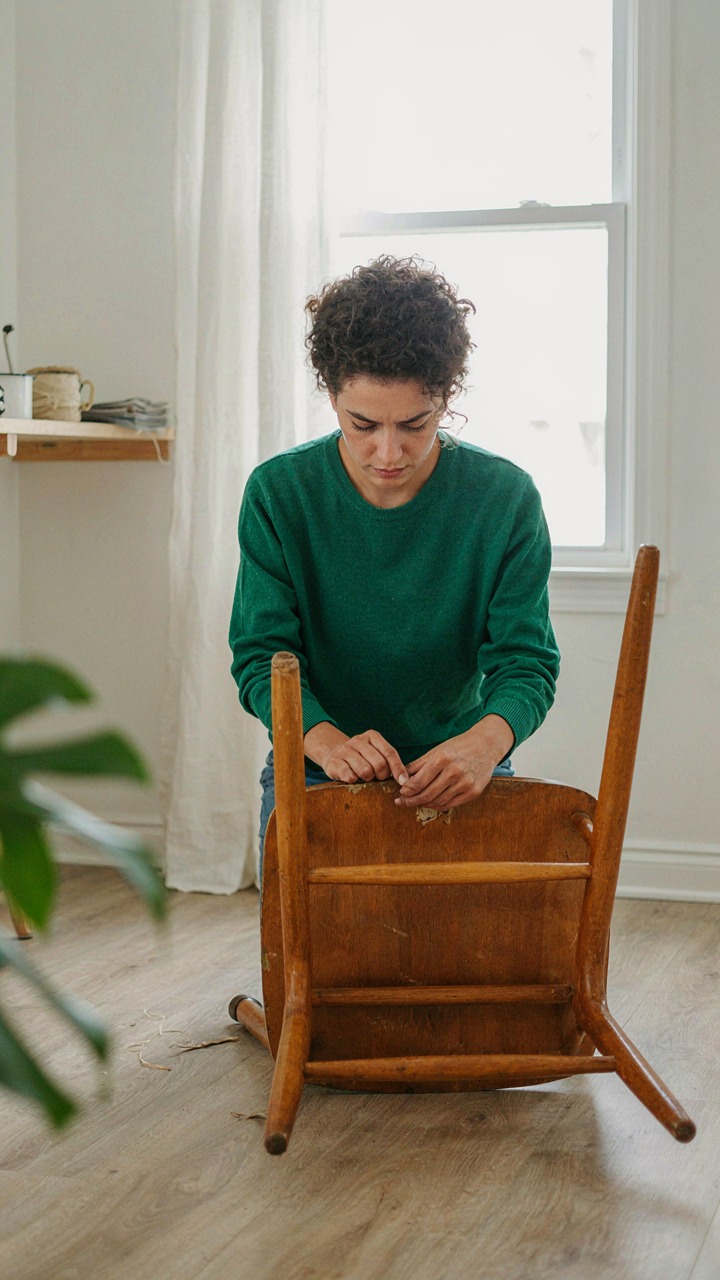
Stop treating paint as a solution to everything. That’s the lazy version of flipping. Real waste reduction means assessing what the piece needs before you touch it. A wood chair needs regluing and new seat fabric, not a spray paint job that locks in the damage underneath. Once you obscure structural problems with finish, you’ve created a liability that lands in a landfill the moment the new owner discovers what you hid.
Built To Last Beyond The Sale
Durability in thrift flips follows the same logic as structural engineering: concentrated stress points fail first. Find them, reinforce them, or don’t flip the piece. Mid-century wood furniture teaches this lesson fast. Loose joinery kills a chair before worn fabric does. A flip succeeds long-term only if the person who buys it won’t bring it back to a thrift store in six months because the back leg snapped.
The real protocol: inspect joints, tighten hardware, and replace fabric or padding with quality materials that match the piece’s original construction method. A worn dresser with solid dovetail drawers gets new pulls and refinished top. A particle board nightstand gets passed over. You’re not being picky, you’re being honest about what will actually survive in someone’s home for years.

The Real Obstacle Isn’t Finding Hidden Gems; It’s Your Inability To See Beyond Their Current Worth

Most people walk through thrift stores blind. They see a scratched table and stop looking. They see worn fabric and move on. Your competition isn’t other flippers. It’s your own imagination gap. Today, visit one thrift store and photograph five items you’d normally reject. Don’t buy them. Just ask yourself what they could become. That single mental shift separates people who flip weekends into cash from people who flip through Instagram inspiration posts. Transformation begins when you stop seeing what something is and start seeing what it could be.