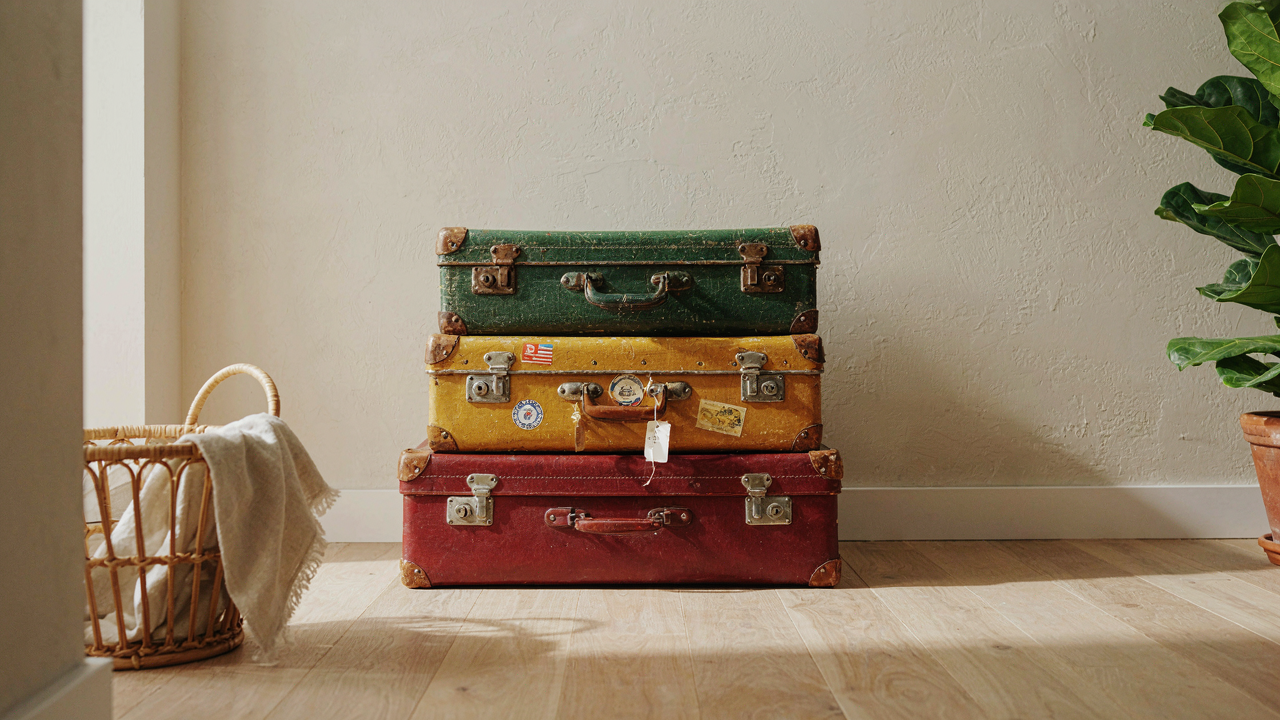
The Function First Imperative: Why Pretty Isn’t Enough

Stop Chasing The Instagram Version
You want this to look intentional so people think you’re the type who collects things with purpose. Here’s the mechanism: most vintage suitcase makeovers fail because they prioritize surface appeal over actual use. A suitcase that can’t hold weight, doesn’t seal properly, or deteriorates within months isn’t decor. It’s visual debt. The economics of display objects demands this trade off: invest in repair first or accept that your makeover becomes garbage faster than you admit it.
Stripping a suitcase down to paint it looks transformative. It isn’t. Real restoration addresses the structural failures that caused the piece to leave circulation in the first place. Broken latches, weakened seams, moisture damage, and deteriorated handles aren’t cosmetic problems. They’re the reason the suitcase stopped traveling. Painting over them preserves the failure underneath. The makeover becomes theater masking collapse.
Utility Determines Which Suitcases Survive Display
Function filters out weak candidates before aesthetics matter. A vintage suitcase that stores blankets or magazines needs a seal that holds and a frame that doesn’t bow. A piece that sits purely as sculptural object still requires materials that won’t off gas into your room or shed dust into the air. The difference between a suitcase that lasts five years as decor and one that lasts twenty is whether the maker prioritized structural integrity or just surface treatment.
Decide what the suitcase will actually do. Hold soft goods. Display on a shelf. Stack with others. This decision determines which repair strategies apply and which makeover techniques waste time. A hard-sided Samsonite from the 1970s tolerates paint and hardware swaps because the material is stable. A soft-sided piece with particle board frames needs reinforcement before any cosmetic work. Check the materials first. Build from structural stability. Then apply finish.
Deconstructing The Vintage Suitcase: Anatomy For Reinvention

What Actually Fails First
You want to know if a suitcase is worth your time because you’re afraid you’ll invest effort into something that collapses the moment you move it. That’s the real question. The mechanism is simple: suitcases fail where stress concentrates, and stress concentrates where materials meet. The hardware—hinges, latches, handle rivets—wears out before the shell does. Leather cracks along creases. Metal rusts from the inside. The frame holding it together becomes the limiting factor, not the aesthetic.

When you assess a vintage suitcase, you’re running a structural load test. Check the corners first where the body panels connect to the frame. Press down on the lid with moderate force. If it flexes unevenly or makes grinding sounds, the frame is compromised. Open and close the latches ten times. Sticky movement means internal corrosion. Brittle plastic or cracked metal means replacement, not restoration. The hinges carry the weight distribution load—inspect the rivets holding them. If they spin or are missing, water damage has already started its work inside.
Where The Real Value Lives
Everyone says “find unique hardware to reuse.” That’s incomplete. The actual components worth salvaging fall into two categories based on replacement economics, not sentimentality. First, the frame structure itself. Vintage suitcases from the 1940s through 1970s often used real wood slats, metal corner braces, and solid riveted construction. These take genuine labor to replicate. A modern suitcase frame costs fifteen to forty dollars to fabricate if you source materials yourself. Second, the exterior shell material. Genuine leather, vulcanized fiber, or hard-sided materials like Hartmann luggage’s polycarbonate precursors hold up through refinishing. Cheap vinyl cracks and cannot be restored without replacement.
The hardware—locks, latches, handles, hinges—carries psychological weight but low practical value in a makeover. You can source vintage reproduction hardware from luggage supply distributors for five to twenty dollars per piece. What you cannot easily replace is the dimensional accuracy of the frame or the integrity of a leather exterior that’s been treated to last fifty years. Tear out the interior fabric and compartments without hesitation. That’s the first demolition step, and everything underneath is your working canvas.
The Container Paradox Method: Reimagining Enclosed Space
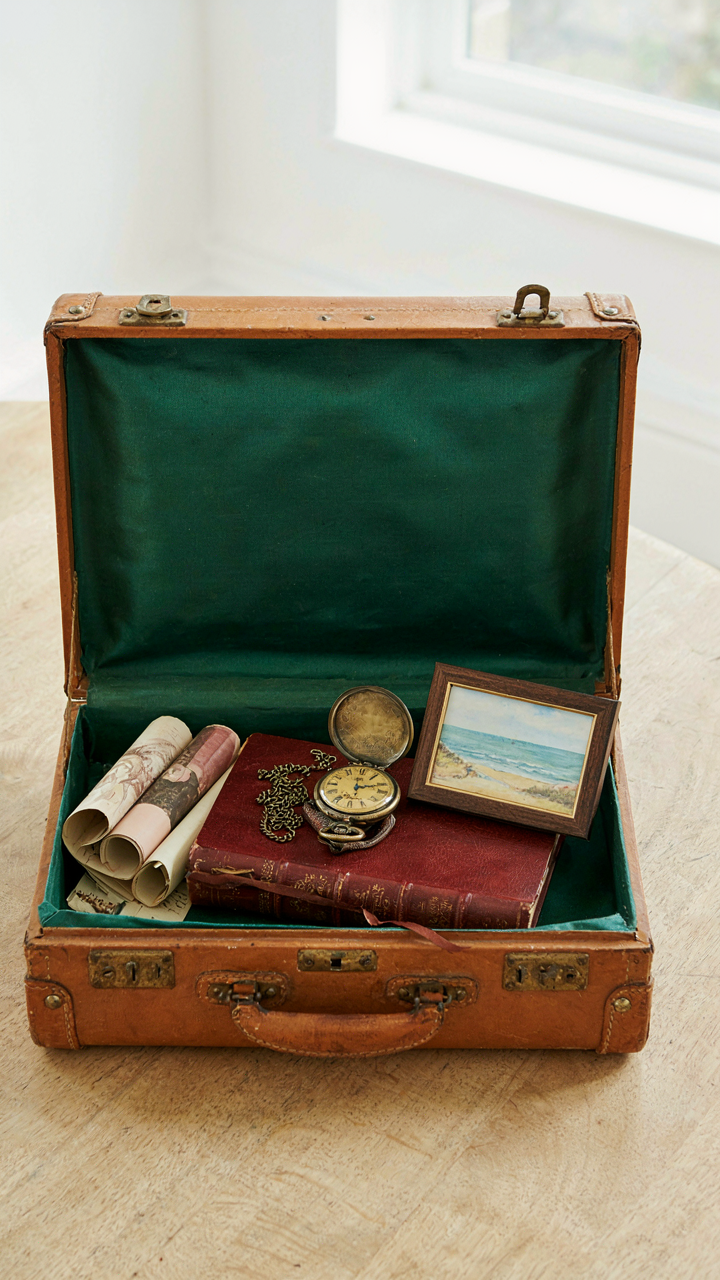
How Density Changes What You See
You want people to notice you have taste without admitting you curated it. That’s the real driver here. In physics, space-time compression refers to how density affects perception of distance. A vintage suitcase works the same way: the denser you pack intentional objects inside, the more the container itself becomes invisible and the contents become a curated statement. Empty suitcases read as props. Packed ones read as history.

The mechanism is straightforward. A vintage suitcase with strategic internal arrangement forces the viewer’s eye inward rather than at the case itself. The exterior becomes a frame. The interior becomes the gallery. This inversion is why people photograph open suitcases on Instagram instead of closed ones. You’re not displaying storage. You’re displaying restraint and selection.
Stacking Reveals Structure
The common advice says to fill suitcases with blankets and linens for softness and visual interest. That’s incomplete. Layered stacking in a suitcase creates visual sections that make each item readable, which means each item contributes to the narrative. Without structure, you get clutter. With structure, you get a collection.
Start with a base layer that’s stable but not visible from the front: rolled textiles, books laid flat, or acid-free tissue. Build the second layer with objects that have dimension: vintage postcards fanned out, a leather-bound journal, a framed photo. Cap it with a single focal piece that anchors the entire composition. This three-tier system turns a suitcase into a controlled diorama instead of a junk drawer with better intentions.
Upcycle Vintage Suitcase Into Modular Furniture Systems

Stackable Units For Dynamic Spaces
You want this to work because it solves the permanence problem. Commit to nothing, rearrange everything. The real mechanism here is modularity borrowed from systems design: each suitcase becomes a discrete unit with standardized dimensions and weight distribution, allowing you to build, collapse, and rebuild without structural failure.

Vintage suitcases already have the right geometry. Their rigid frames and carry handles were engineered for stacking in luggage racks and car trunks. Modern use just extends that logic horizontally across your floor. Stack three matched hard-shell suitcases and you get a side table. Stack five with a plywood top and you get an accent shelf. The load-bearing capacity depends on frame integrity, not sentiment about the piece’s origin.
Integrated Seating And Storage
Most people treat this as decoration plus function running in parallel. They’re wrong. The real move is making the suitcase itself the seat structure, not adding a seat on top of it. Furniture historian Peter Thornton documented how mid-century furniture makers approached dual-purpose pieces: the form serves both functions simultaneously, not sequentially.
A suitcase with reinforced interior bracing and a fitted cushion pad becomes a bench that stores blankets, books, or tools underneath. You need to assess the hinge quality first. Weak hinges fail fast under repetitive opening and sitting pressure. Install piano hinges along the opening edge to distribute force across the full span, not just corner joints. This transforms the suitcase from display object into load-bearing component that you actually use daily.
DIY Vintage Suitcase For Personalized Command Centers

Charging Stations And Tech Organization
You want this because it solves the visual problem of cables destroying your aesthetic without admitting you have too many devices. The mechanism is simple: a suitcase creates compartmentalization, which forces you to make choices about what stays plugged in and what doesn’t. Vintage luggage from the 1960s and 1970s already has internal dividers and fabric pockets designed to separate items. Use those existing structures instead of retrofitting everything.

Line the interior with adhesive-backed fabric or felt to protect devices and hide cable routing. Drill small holes in the suitcase bottom or sides for cable passage, then route power strips and charging cables through the openings. Keep the suitcase elevated on a shelf or desk so cables exit downward and stay hidden. This works because you’re using the suitcase’s original structural logic, not fighting against it.
Mobile Office Or Craft Kits
A mobile office suitcase applies systems thinking from logistics. In warehousing, inventory control relies on fixed storage zones and clear labeling. A vintage suitcase becomes your portable zone where specific tools occupy the same position every time. This eliminates setup time because your brain recognizes patterns, not scattered piles.
- Writing kit: Notebook, pens, index cards, and small reference books in the top tray. Protects materials from spills and keeps them accessible during travel or quick work sessions.
- Sketching supplies: Colored pencils, erasers, rulers, and sketch pads in divided slots. Organized compartments prevent pencil breakage and let you grab your kit without unpacking.
- Sewing or embroidery station: Thread spools on one side, needles and scissors in a small case, fabric swatches in pockets. The suitcase doubles as your project container and storage unit.
- Freelance essentials: Business cards, contracts, calculator, USB drive, and portable charger in front pockets. Everything needed for client meetings stays in one place and moves with you.
- Art supplies cache: Markers, glue stick, tape, small cutting mat, and reference images. A compact kit prevents tool sprawl across your workspace while keeping materials dust-free.
The suitcase latches keep everything compressed during transport so nothing shifts or breaks. When you open it, you see your entire kit at once, which triggers immediate workflow instead of the 10-minute hunt for missing scissors. Close the latch when done and your workspace vanishes, leaving no trace on your desk.
Suitcase Crafts: Cultivating Unexpected Ecosystems

Building Living Worlds Inside Leather
You want permission to justify spending money on something that looks purposeless. That’s the real driver here. But the mechanism is simpler: a suitcase becomes a contained ecosystem, which is ecology’s term for a self-regulating environment. You’re not decorating. You’re building a micro-habitat that functions as display furniture. A vintage suitcase’s enclosed structure naturally traps humidity and controls light exposure, making it ideal for plants that thrive in specific conditions. The leather exterior ages visibly, adding texture that living material can’t replicate alone. The compartments create natural zones for different plant species or soil types, turning a single suitcase into a stratified garden.

Terrariums in suitcases work because the container already solves the hardest problem: containment without looking utilitarian. Line the interior with landscape fabric to prevent soil from degrading the leather. Add a one-to-two-inch drainage layer of pebbles or activated charcoal, then substrate appropriate to your plant selection. Succulents and moss handle low-light interiors. Ferns prefer moisture and shade. The suitcase’s clasp keeps everything compressed, and opening it becomes a small ritual that matters. Viewers notice the intentionality immediately because suitcases signal travel and curation simultaneously.
The Collector’s Display Architecture
Most people hide what they collect. They stack it in closets or leave it boxed. That’s backwards. A vintage suitcase inverts the problem: it makes collection-keeping look like intentional curation rather than hoarding. The suitcase frame signals “this matters enough to preserve,” which changes how viewers perceive the objects inside. Whether you’re storing vintage postcards, old coins, pressed flowers, or small figurines, the external form of the container does the conceptual work before anyone opens it. The suitcase itself becomes the argument for why these items deserve attention.
Organize your collection by creating internal zones using card dividers, small fabric pouches, or vintage boxes. Grouping similar items creates visual rhythm when the suitcase is opened. Scale matters: oversized collections need larger suitcases, while small precious items justify smaller, more refined luggage. The patina of the suitcase exterior should complement the era or aesthetic of what’s inside. Display your suitcase open on a shelf, console, or dedicated display table. Viewers will naturally lean closer because open suitcases signal discovery is invited.
How To Recover A Vintage Suitcase: Beyond Upholstery

The Skeleton Matters More Than The Skin
You want this suitcase to look restored, not just covered up. That’s the real reason you’re reading this section. Most people slap new fabric over a failing frame and call it done. That’s decoration masquerading as restoration. Think in terms of structural engineering: load distribution. A vintage suitcase carries weight at corners and edges, not evenly across the surface. Those stress points fail first.

The frame of a mid-century suitcase uses wood slats or metal bands to anchor corners and edges. These splinter, rust, or separate from the body. Glue fails because old adhesives weren’t formulated for century-long durability. You reinforce before recovering. Check for soft spots along the bottom by pressing firmly. If the wood gives, the frame is compromised. Replace deteriorated wood slats with matching stock before touching the exterior. Secure loose metal bands with stainless steel rivets, not nails. The recovered material will fail if it’s carrying a broken skeleton.
The Right Material Outlasts Shortcuts
Vinyl and polyester won’t age well on display. They crack, fade, and peel at stress points where your suitcase bends or sits against a shelf. Real textile works better because it flexes without splitting. Linen canvas, cotton duck, or wool blend fabrics handle compression and movement the way vinyl cannot.
Source fabric with a tight weave and weight between 10 and 16 ounces. This density resists tearing when you stretch it around corners during installation. Avoid anything thinner than 8 ounces or anything marketed as “easy care” synthetic. Those materials were engineered for clothing, not structural recovery. Use contact cement designed for upholstery, not spray adhesive. Apply it to both the suitcase body and fabric backing, wait 60 seconds for tack, then position without adjustment. Once contact cement sets, repositioning tears the material.
Old Suitcase Ideas Repurposed For Entryway Efficiency
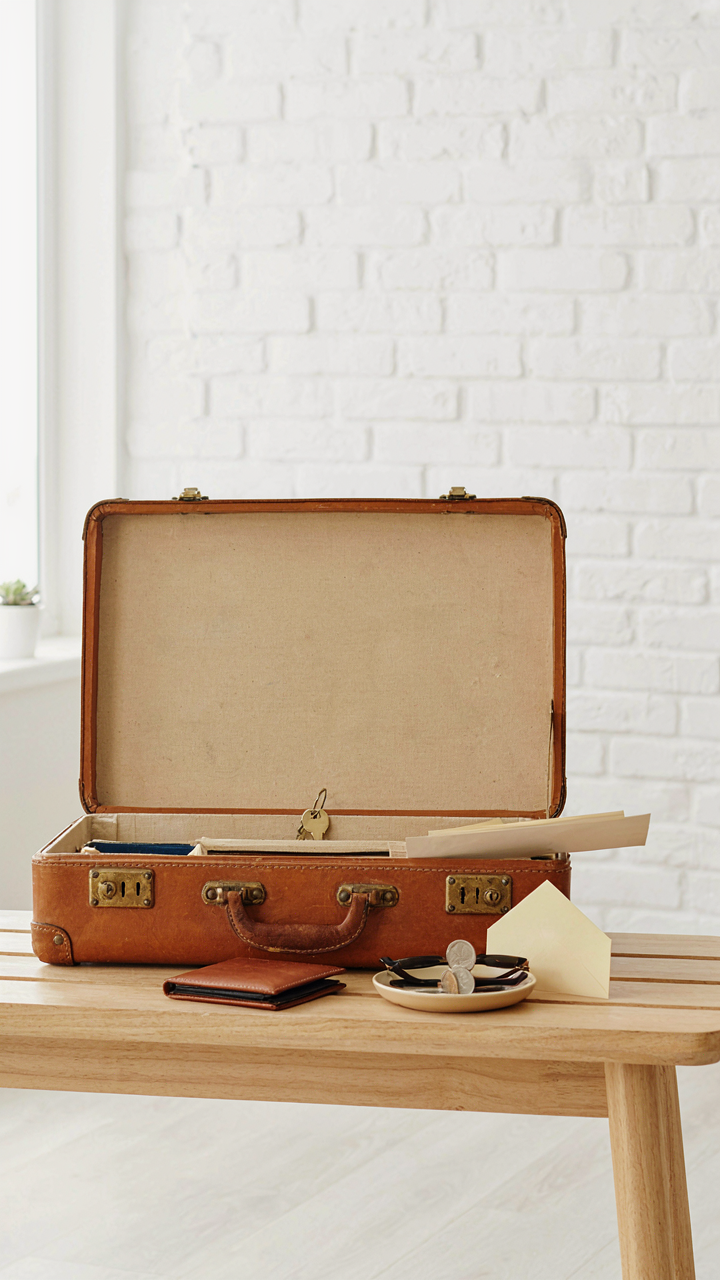
The Catch All Station That Actually Works
You want a reason to keep that suitcase instead of throwing it out, and you’re hoping it solves the chaos by your door. Here’s the mechanism: a suitcase functions as a friction reducer between “stuff in hand” and “stuff stored.” The lid stays open or hinges back, so keys, mail, and papers land in one container instead of spreading across surfaces. This works because it creates a single decision point, not multiple landing zones.

Real catch-all stations use depth strategically. Vintage suitcases offer 4-8 inches of interior space, which contains items without them sliding around. Toss in dividers or small boxes inside to create sections for mail, keys, and receipts. The suitcase sits at eye level on an entryway table or bench. This positioning makes returning items habitual rather than optional. Your brain recognizes the container and deposits objects there automatically.
Shoe Storage Paired With Seating
This solves two problems at once, which is why it works better than pretending you’ll remember to store shoes somewhere else. One suitcase holds four to six pairs without stacking them vertically. Stack two suitcases horizontally to create a low bench, then sit on the top surface to remove shoes before placing them in the lower case. The vintage leather or canvas suitcase exterior hides the functional mechanism inside.
The weight distribution matters here. Older suitcases from the 1960s-1980s used reinforced wooden frames and dense materials that support body weight without buckling. Check the frame integrity by opening and closing the lid five times. Listen for cracking sounds in the seams. A stable suitcase won’t flex under pressure. Position the stacked pair against the wall near your door, set a cushion on top, and you’ve eliminated the step of choosing where shoes go.
Vintage Luggage Decor: Strategic Placement For Impact

One Suitcase Stops The Room
You want permission to buy more stuff without looking like you’re just accumulating clutter. Here’s the mechanism: a single focal point suitcase creates visual rest. Your brain doesn’t process objects in isolation—it reads spatial density. One well-placed vintage suitcase commands attention because it breaks the plane of the wall or shelf. Two suitcases start to feel like a collection. Three feels like you’re running a hotel.

The constraint forces intentionality. Choose a suitcase with genuine visual weight—either through patina, unusual size, or distinctive hardware—and position it where sight lines converge. An entryway console, a bedroom shelf at eye level, or a living room corner works. The suitcase should anchor the space, not compete with surrounding decor. Your furniture layout should guide the viewer’s eye toward it naturally.
The Artifact Display Method
Museums use spatial isolation to communicate historical importance. Apply that same principle: position your suitcase as if it’s telling a specific story, not just sitting there. The mechanism is context clustering—objects around the suitcase should reinforce what era or lifestyle it represents, without explaining it.
If you have a 1950s hardshell suitcase, place it with a period-appropriate travel guide, a vintage map, or travel ephemera nearby. Don’t crowd it. The suitcase itself becomes the primary narrative, and supporting objects create coherence. Avoid mixing eras—a 1940s leather steamer trunk next to modern minimalist art sends a confused signal. Your placement should make someone understand the suitcase’s original purpose before they understand it’s decor. Stack nothing on top of it unless the weight and material can genuinely support it without damage.
Upcycle Suitcase Ideas: Mastering The Art Of Obsolescence

The Patina Principle
You want permission to stop pretending your vintage suitcase needs to look “restored.” That’s the real tension here. In thermodynamics, entropy is the natural state of decay. Apply this to suitcase restoration: the wear marks, scuffs, and discoloration aren’t failures of your makeover. They’re evidence the object survived. The common advice says sand, polish, and refinish until pristine. That’s wrong. It erases the actual value.
The scuff patterns on a 1960s hard-shell Samsonite communicate travel history that no new paint can replicate. A faded fabric exterior shows how sun and time shaped the object. These imperfections become your design language if you stop fighting them. Seal the surface to prevent further deterioration, but leave the visual record intact. Your display piece needs to look lived in, not like you spent three weekends trying to erase its past.
Resisting The Algorithm
Trends in home décor have a shelf life shorter than the suitcases themselves. Right now, stacked suitcases as plant stands. Tomorrow, something else. The mechanism at work here is trend recycling: designers pull from the past, mass-produce the aesthetic, and kill it through repetition. Your makeover survives this only if it’s rooted in the object’s actual function and era, not in what Instagram suggests.
Base your display choices on the suitcase’s original purpose and materials. A leather hard-sided case from the 1950s looks correct as a side table because travelers actually used them that way. A vinyl weekender from the 1970s belongs near a reading chair because that’s where it traveled. When your design choice aligns with the object’s history instead of current taste, it remains relevant through every cycle. Work backward from the suitcase’s construction and intended use, not forward from what’s trending now.
The Real Obstacle Isn’t The Suitcase’s Age, But Your Imagination’s Limits

Most people see a vintage suitcase and think decoration. You should see it as a problem waiting for a solution. The suitcase doesn’t need to match your couch or fit some Pinterest aesthetic. It needs to solve something in your space. Pick one suitcase today. Identify what it could actually do for you, not what it should look like. Your home transforms when you stop decorating and start building things that work.